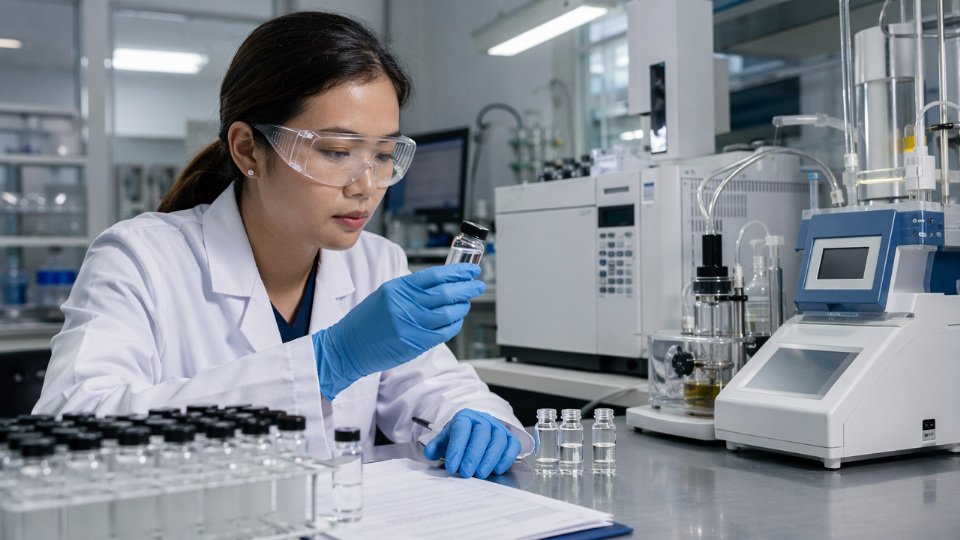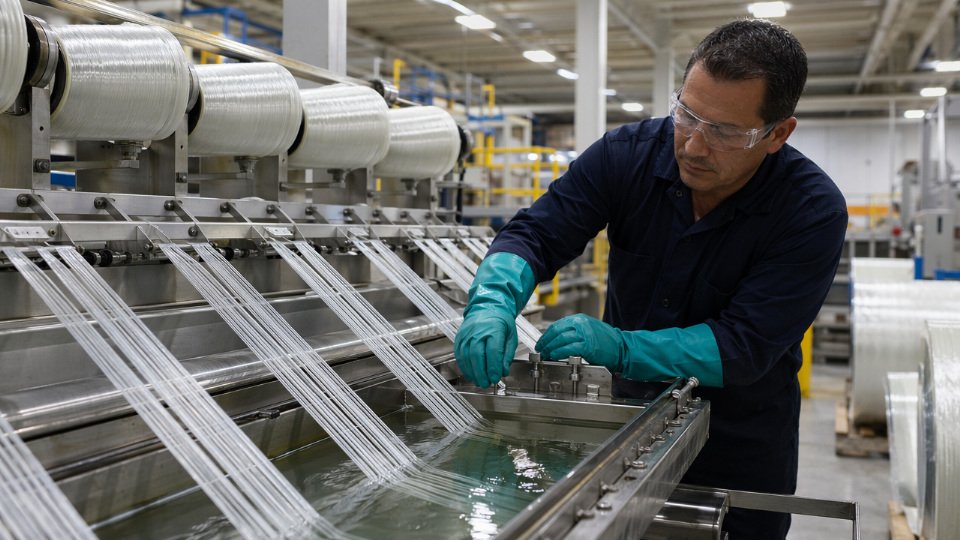
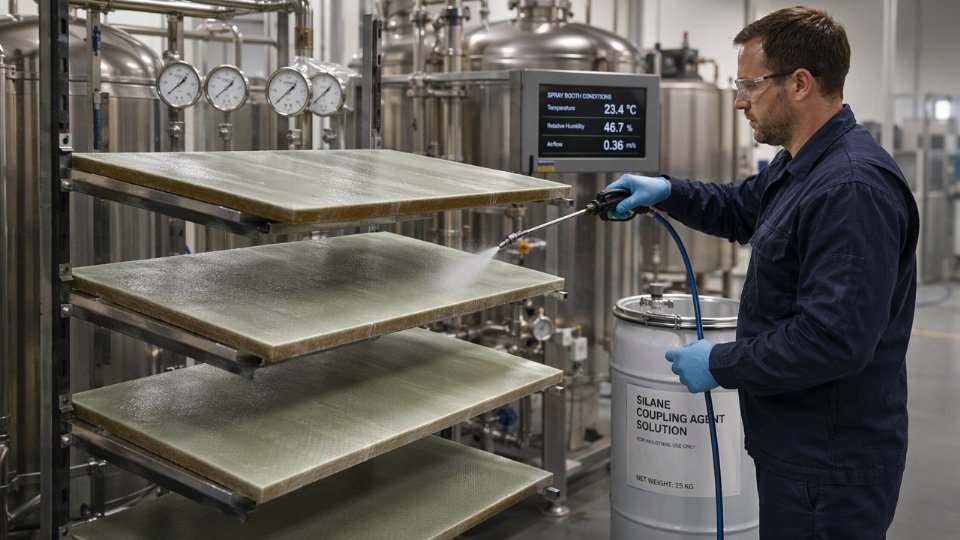
How does moisture, pH, and temperature affect the reactivity of a silane coupling agent?
Learn how moisture, pH, and temperature control silane coupling agent reactivity — and how to set process limits that prevent coating failure and bond loss.
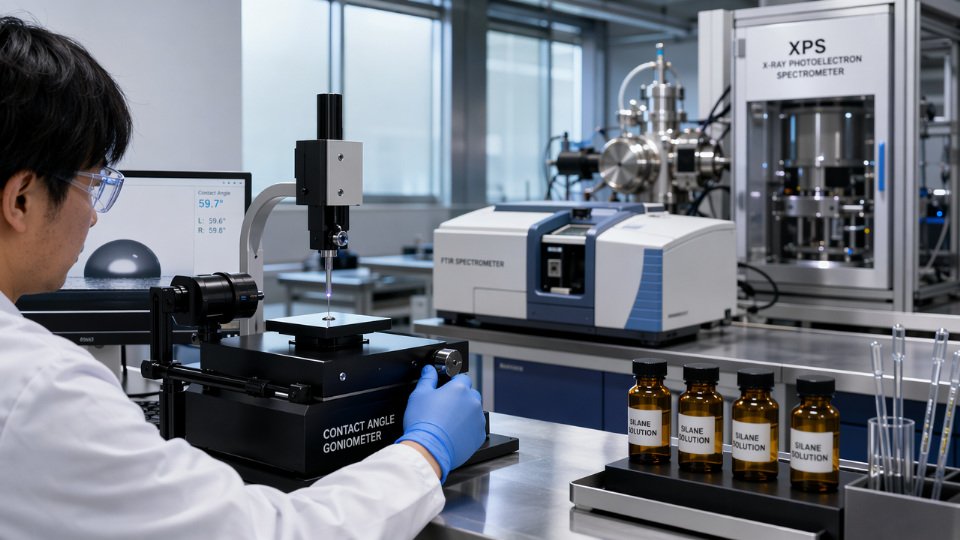
Learn the key methods to test silane coupling agent performance: hydrolysis kinetics, adhesion testing, XPS, FTIR, and accelerated weathering protocols.
Learn how silane coupling agent functional groups determine polymer compatibility, covalent bonding, and wet strength retention in composites and filled systems.
Learn which physical and chemical properties to evaluate in a silane coupling agent — purity, moisture, hydrolysis rate, and more — to prevent delamination and scrap.
Discover how silane coupling agents reduce water absorption by up to 90%, cut chloride penetration, and boost concrete compressive strength by 10-25%.
Learn how silane coupling agents boost adhesion by 200-400% in electronics, semiconductor packaging, and glass treatment to prevent delamination and failures.
Learn how silane coupling agents like TESPT bond silica to rubber, cut rolling resistance 20-30%, and boost tensile strength in tire manufacturing.
Learn how to choose silane monomers by matching organic groups, alkoxy groups, and purity grades to avoid adhesion failures and costly formulation errors.
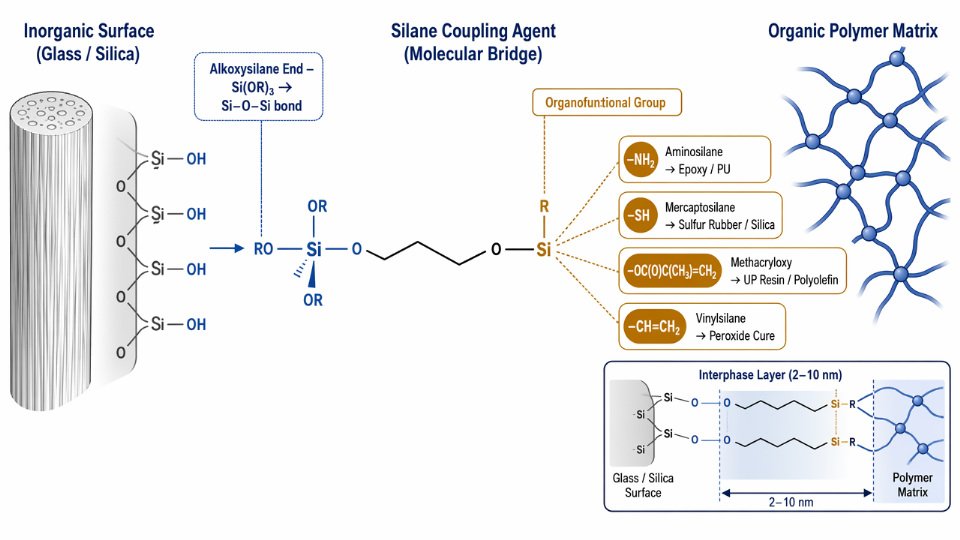
Learn how silane coupling agents bond inorganic substrates to polymer matrices, boosting lap-shear strength by 50-300% in sealants, adhesives, and coatings.
Learn how silane coupling agents bond fiber to polymer matrix in FRP, boosting interfacial shear strength by 30–150% and preventing delamination and moisture failure.