Hydride Silicone Oil (Si–H Functional Silicone Oil) is a modified polysiloxane fluid containing reactive silicon–hydrogen (Si–H) groups attached to the siloxane backbone. Unlike standard dimethyl silicone oil (PDMS), which is chemically inert, hydride silicone oils possess active Si–H bonds that participate in addition reactions, crosslinking, and surface modification chemistry. These materials are widely used as crosslinkers, reactive intermediates, and surface treatment agents in silicone elastomers, coatings, and advanced polymer systems.
SiliconChemicals™ Hydride Silicone Oil (Si–H Functional) is a reactive polysiloxane fluid containing silicon–hydrogen (Si–H) functional groups along the siloxane backbone. These Si–H bonds provide controlled chemical reactivity, enabling addition-cure crosslinking, polymer modification, and surface grafting reactions.
Unlike standard inert dimethyl silicone fluids, this product line is specifically engineered for hydrosilylation-based systems, serving as a crosslinker, reactive intermediate, or surface treatment agent in advanced silicone and hybrid polymer technologies.
| Model Code | Product Type | Si–H Content (%) | Reactive H (mmol/g) | Viscosity (25°C, cSt) | Molecular Structure | Application Positioning |
|---|---|---|---|---|---|---|
| HSO-20-L | Low Hydrogen | 0.10–0.20 | 0.3–0.6 | 20 | Pendant Si–H | Surface modification |
| HSO-50-L | Low Hydrogen | 0.15–0.25 | 0.5–0.8 | 50 | Pendant Si–H | Release coatings |
| HSO-100-M | Medium Hydrogen | 0.30–0.40 | 1.0–1.5 | 100 | Pendant Si–H | RTV crosslinking |
| HSO-200-M | Medium Hydrogen | 0.30–0.50 | 1.2–1.8 | 200 | Pendant Si–H | LSR systems |
| HSO-350-M | Medium Hydrogen | 0.40–0.60 | 1.5–2.2 | 350 | Pendant Si–H | General addition cure |
| HSO-500-H | High Hydrogen | 0.60–0.80 | 2.0–3.0 | 500 | High Si–H density | High crosslink density |
| HSO-1000-H | High Hydrogen | 0.80–1.20 | 3.0–4.5 | 1000 | High Si–H density | Elastomer hardening |
| HSO-2000-H | High Hydrogen | 1.20–1.50 | 4.5–6.0 | 2000 | Multi-functional | Specialty rubber |
| HSO-T-100 | Terminal Si–H | 0.50–1.00 | 2.0–4.0 | 100 | End-functional | Controlled chain extension |
| HSO-T-500 | Terminal Si–H | 0.50–1.00 | 2.0–4.0 | 500 | End-functional | Reactive intermediates |
| HSO-DUAL-300 | Dual Functional | 0.40–0.80 | 1.5–3.0 | 300 | Pendant + Terminal | Hybrid systems |
| HSO-ULV-200 | Ultra-Low Volatile | 0.30–0.50 | 1.0–1.8 | 200 | Purified backbone | Electronics |
| HSO-HT-350 | High Temp Stable | 0.40–0.70 | 1.5–2.5 | 350 | Phenyl-modified Si–H | High-temp elastomers |
| HSO-AERO-500 | Aerospace Grade | 0.50–0.90 | 2.0–3.5 | 500 | Stabilized backbone | Advanced composites |
| HSO-LSR-250 | LSR Dedicated | 0.30–0.50 | 1.2–2.0 | 250 | Controlled MW | Liquid silicone rubber |
| HSO-LED-150 | Optical Grade | 0.30–0.50 | 1.0–1.8 | 150 | Low impurity | LED encapsulation |
| HSO-RELEASE-50 | Release Agent Grade | 0.15–0.30 | 0.5–1.0 | 50 | Low MW | Paper coating |
| HSO-CUSTOM | Custom Reactive | Adjustable | Custom | 20–5000+ | Tailored | OEM system design |
Product List

Hydride Silicone Oil (Si–H Functional Silicone Oil) is a reactive polysiloxane platform designed for addition-cure systems, crosslinking chemistry, and surface modification. Its product range is defined primarily by Si–H content (reactive hydrogen density), viscosity, molecular architecture, and application orientation. Unlike inert silicone fluids, Si–H grades are classified according to crosslinking capacity and reaction control characteristics.
| Category | Si–H Content (%) | Reactive Hydrogen (mmol/g) | Functional Positioning |
|---|---|---|---|
| Ultra-Low Hydrogen | 0.05–0.15 | 0.1–0.5 | Surface modification |
| Low Hydrogen | 0.15–0.30 | 0.5–1.0 | Release coatings |
| Medium Hydrogen | 0.30–0.60 | 1.0–2.5 | RTV / LSR crosslinking |
| High Hydrogen | 0.60–1.20 | 2.5–4.5 | High crosslink density |
| Ultra-High Hydrogen | 1.20–1.50+ | 4.5–6.0+ | Specialty reactive systems |
Higher Si–H content → higher crosslink density potential.
| Structure Type | Description | Typical Use |
|---|---|---|
| Pendant Si–H | Si–H distributed along backbone | General addition cure |
| Terminal Si–H | Si–H at chain ends | Controlled chain extension |
| Dual Functional | Pendant + terminal | Hybrid network systems |
| High MW Crosslinker | Increased backbone length | Elastomer reinforcement |
| Phenyl-Modified Si–H | Stabilized backbone | High-temperature elastomers |
| Viscosity Class | Range (cSt) | Application Direction |
|---|---|---|
| Low | 20–100 | Surface treatment |
| Medium | 100–500 | RTV & LSR curing |
| High | 500–2000 | Elastomer systems |
| Ultra-High | 2000–5000+ | Specialty rubber |
| Custom MW | On request | OEM design |
Viscosity selection impacts mixing efficiency, dispersion, and final mechanical properties.
Optimized for room-temperature vulcanizing silicone systems using platinum catalysis.
Controlled hydrogen density for precise hardness and elasticity tuning.
Used when increased tensile strength and Shore hardness are required.
Low hydrogen content grades designed for hydrophobic treatment and surface grafting.
Low viscosity, controlled Si–H content for paper and film release applications.
Ultra-low volatile, high purity formulations for LED and potting compounds.
Phenyl-stabilized reactive backbone for improved thermal stability.
| Performance Parameter | Coverage |
|---|---|
| Si–H Content | 0.05–1.50%+ |
| Reactive Hydrogen | 0.1–6.0 mmol/g |
| Viscosity | 20–5000+ cSt |
| Architecture | Pendant / Terminal / Dual |
| Customization | Hydrogen density & MW adjustable |
Hydride Silicone Oil is classified based on its reactive hydrogen control capability, not simply viscosity. The correct grade must match:
The product platform therefore serves as a precision crosslinking control system in addition-cure silicone chemistry.
SiliconChemicals™ Hydride Silicone Oil (Si–H Functional) is a precision-engineered reactive polysiloxane fluid containing controlled silicon–hydrogen (Si–H) groups along the siloxane backbone. Designed specifically for addition-cure silicone systems, this product functions as a crosslinker, reactive intermediate, and surface modification agent in advanced elastomer and coating technologies.
Unlike inert dimethyl silicone oils, Si–H functional fluids actively participate in platinum-catalyzed hydrosilylation reactions, enabling precise crosslink density control and high-performance silicone network formation.
SiliconChemicals™ Hydride Silicone Oil is not a lubricant-grade silicone fluid. It is a reactive crosslinking control platform, engineered for addition-cure silicone chemistry and high-performance elastomer systems.
By controlling Si–H content, viscosity, and molecular architecture, formulators gain precise mechanical, thermal, and dimensional performance control.
For OEM system matching, hydrogen density optimization, catalyst compatibility guidance, or custom formulation support, SiliconChemicals™ provides globally reliable, precision-engineered Si–H functional solutions.
Hydride Silicone Oil (Si–H Functional) is a reactive polysiloxane containing silicon–hydrogen (Si–H) bonds along the siloxane backbone. The presence of the Si–H group converts an otherwise inert silicone fluid into a chemically active crosslinking component used primarily in addition-cure silicone systems.
All hydride silicone oils are based on the repeating polysiloxane framework:
−Si−O−Si−-Si-O-Si-−Si−O−Si−
This backbone provides:
The defining reactive bond is:
Si−HSi-HSi−H
A representative structural segment can be written as:
−Si(H)(CH3)−O−-Si(H)(CH3)-O-−Si(H)(CH3)−O−
Where:
Si–H groups may be distributed as:
The core chemistry of hydride silicone oil is hydrosilylation, a platinum-catalyzed addition reaction.
Si−H+CH2=CH−R−>Si−CH2−CH2−RSi-H + CH2=CH-R -> Si-CH2-CH2-RSi−H+CH2=CH−R−>Si−CH2−CH2−R
Under platinum catalysis:
This makes addition-cure systems:
In RTV-2 or LSR systems:
→ Forms a three-dimensional crosslinked network
Crosslink density depends on:
Higher Si–H → higher crosslink density → increased hardness & tensile strength.
The reaction allows precise tuning of:
Because no condensation by-products form, curing results in:
Si–H groups can also react with:
This enables:
| Structural Feature | Functional Impact |
|---|---|
| Siloxane backbone | Flexibility & heat resistance |
| Si–H bond | Reactive crosslinking capability |
| Controlled hydrogen content | Adjustable network density |
| Molecular weight tuning | Viscosity & mechanical control |
| Phenyl modification (optional) | Improved high-temperature stability |
Hydride Silicone Oil is not a lubricant-grade silicone fluid. It is a precision crosslinking agent designed for platinum-catalyzed addition systems.
Its chemical structure allows:
In practical formulation terms:
If your base polymer contains vinyl functionality → you require Si–H reactive crosslinker.
If mechanical properties must be tuned precisely → adjust Si–H density.
If high optical clarity or dimensional stability is required → addition-cure hydrosilylation is preferred.
Hydride Silicone Oil (Si–H Functional) is primarily used in platinum-catalyzed addition-cure systems where controlled crosslinking, dimensional stability, and high-performance elastomer formation are required. Its applications are defined by its ability to participate in hydrosilylation reactions:
Si−H+CH2=CH−R−>Si−CH2−CH2−RSi-H + CH2=CH-R -> Si-CH2-CH2-RSi−H+CH2=CH−R−>Si−CH2−CH2−R
This reaction mechanism underpins the following major industrial uses.
Hydride silicone oil serves as the crosslinker in two-component addition-cure systems.
Used in:
Advantages:
In LSR injection molding, Si–H fluids enable precise control of crosslink density and mechanical properties.
Applications:
Performance benefits:
Hydride-functional crosslinkers are widely used in:
Key requirements:
Low hydrogen-content grades are used in:
Why Si–H is preferred:
Hydride silicone oil can react with unsaturated organic compounds to create hydrophobic surfaces.
Applications:
Si–H groups allow grafting onto organic polymers, enabling:
Phenyl-modified Si–H grades are used in:
| Industry | Primary Function | Recommended Si–H Level |
|---|---|---|
| RTV Systems | Crosslinker | Medium |
| LSR | Precision crosslink control | Medium |
| LED Encapsulation | Optical network formation | Medium |
| Release Coatings | Surface network | Low |
| Surface Treatment | Grafting | Ultra-Low / Low |
| High-Strength Elastomers | High crosslink density | High |
Hydride Silicone Oil is applied wherever:
It functions as a reactive network-forming agent, enabling addition-cure silicone chemistry across elastomers, coatings, encapsulants, and hybrid polymer systems.
Hydride Silicone Oil (Si–H Functional) is used when a formulation requires controlled addition-cure crosslinking, clean reaction chemistry, and precise mechanical property tuning. Its silicon–hydrogen (Si–H) functionality enables platinum-catalyzed hydrosilylation, forming stable Si–C bonds without generating volatile by-products.
The fundamental reaction driving its performance is:
Si−H+CH2=CH−R−>Si−CH2−CH2−RSi-H + CH2=CH-R -> Si-CH2-CH2-RSi−H+CH2=CH−R−>Si−CH2−CH2−R
This chemistry defines why Si–H functional fluids are critical in high-performance silicone systems.
Unlike condensation systems that release alcohols or acetic acid, hydrosilylation:
This is essential for precision molding, optical encapsulation, and electronic potting.
By adjusting Si–H content:
This allows fine tuning of:
For LSR and RTV systems, crosslink precision directly determines product performance.
Hydrosilylation forms stable Si–C bonds, resulting in:
This is critical in automotive, aerospace, and electronics applications.
Because no condensation by-products are generated:
This makes Si–H systems ideal for:
Si–H groups react with unsaturated organic compounds, allowing:
This expands silicone chemistry beyond elastomers into advanced material engineering.
Hydride silicone oil provides:
It supports automated injection molding and large-scale coating lines.
Si–H functionality enables:
This is why addition-cure silicones dominate high-value sectors.
Use Hydride Silicone Oil (Si–H Functional) when your formulation requires:
It is not a lubricant — it is a reactive crosslinking control platform central to modern silicone elastomer and advanced polymer systems.
Selecting the correct Hydride Silicone Oil (Si–H Functional) is not simply a viscosity decision. It requires aligning Si–H content, vinyl content, molecular architecture, stoichiometry, cure kinetics, and mechanical targets.
The core reaction guiding your selection is:
Si−H+CH2=CH−R−>Si−CH2−CH2−RSi-H + CH2=CH-R -> Si-CH2-CH2-RSi−H+CH2=CH−R−>Si−CH2−CH2−R
Below is a structured engineering selection framework.
Hydride silicone oil is used only in systems containing:
If your system is condensation-cure → Si–H grade is not appropriate.
| Target Property | Recommended Si–H Level |
|---|---|
| Soft elastomer | Low (0.15–0.30%) |
| Medium hardness RTV | Medium (0.30–0.60%) |
| High-strength LSR | High (0.60–1.20%) |
| Specialty high-density | Ultra-high (>1.20%) |
Higher hydrogen content increases crosslink density and Shore hardness.
Proper vinyl-to-hydride balance is critical.
Ideal molar ratio:
n(Si−H)/n(Vinyl)≈1.0n(Si-H) / n(Vinyl) ≈ 1.0n(Si−H)/n(Vinyl)≈1.0
• Ratio < 1 → under-crosslinked
• Ratio > 1 → excess Si–H (may affect stability)
Fine-tuning typically occurs between 0.8–1.2 depending on formulation.
| Architecture | When to Choose |
|---|---|
| Pendant Si–H | General RTV / LSR curing |
| Terminal Si–H | Controlled chain extension |
| Dual-functional | Hybrid networks |
| High MW Crosslinker | Improved elasticity |
| Phenyl-Modified | High-temperature applications |
Architecture influences cure rate and final network structure.
| Application | Suggested Viscosity |
|---|---|
| Release coatings | 20–100 cSt |
| RTV elastomers | 100–500 cSt |
| LSR molding | 200–1000 cSt |
| High-strength rubber | 500–2000+ cSt |
Viscosity affects mixing efficiency and dispersion.
Consider:
Higher Si–H content generally accelerates cure.
If your product requires:
| Primary Goal | Recommended Grade Type |
|---|---|
| Soft RTV elastomer | Low Si–H, medium viscosity |
| High hardness LSR | Medium–High Si–H |
| Optical encapsulation | Medium Si–H, ultra-pure |
| Release coating | Low Si–H, low viscosity |
| High-temp elastomer | Phenyl-modified Si–H |
| Custom OEM system | Tailored hydrogen density |
Choose Hydride Silicone Oil based on:
Vinyl content + Target hardness + Stoichiometric balance + Cure kinetics + Processing viscosity
Correct matching ensures:
Packaging: 500 g / 1 kg / 5 kg / 25 kg / 200 kg drums / 1000L IBC container (Customized packaging is available).
Selecting the correct Hydride Silicone Oil (Si–H Functional) determines the final hardness, elasticity, curing speed, optical clarity, and long-term stability of your silicone product. The right hydrogen content and molecular architecture are not optional — they define your network structure and performance ceiling.
At SiliconChemicals™, we provide precision-engineered Si–H functional silicone oils with:
If you share:
• Vinyl content of your base polymer
• Target Shore hardness
• Cure temperature & catalyst type
• Processing method (RTV, LSR, coating, encapsulation)
• Final application environment
Our technical team will recommend a precisely matched Si–H grade to ensure predictable curing, optimized crosslink density, and long-term reliability.
SiliconChemicals™
Precision Reactive Silicone Technology · Controlled Crosslink Engineering · Global Industrial Supply
Contact us today to discuss your formulation requirements and receive a tailored technical solution.
Disclaimer
“The information provided herein is based on general industry experience and is intended for reference purposes only. Actual performance and optimal usage conditions may vary depending on formulation, processing methods, substrate characteristics, and end-use requirements. Users are responsible for conducting their own tests and evaluations to determine suitability for their specific applications. No warranty, express or implied, is made regarding the completeness, accuracy, or applicability of this information.”
Selecting the right silane coupling agent is only the first step. Achieving optimal performance often requires application-specific evaluation and formulation optimization. Our technical team provides comprehensive support to ensure successful implementation across diverse material systems.


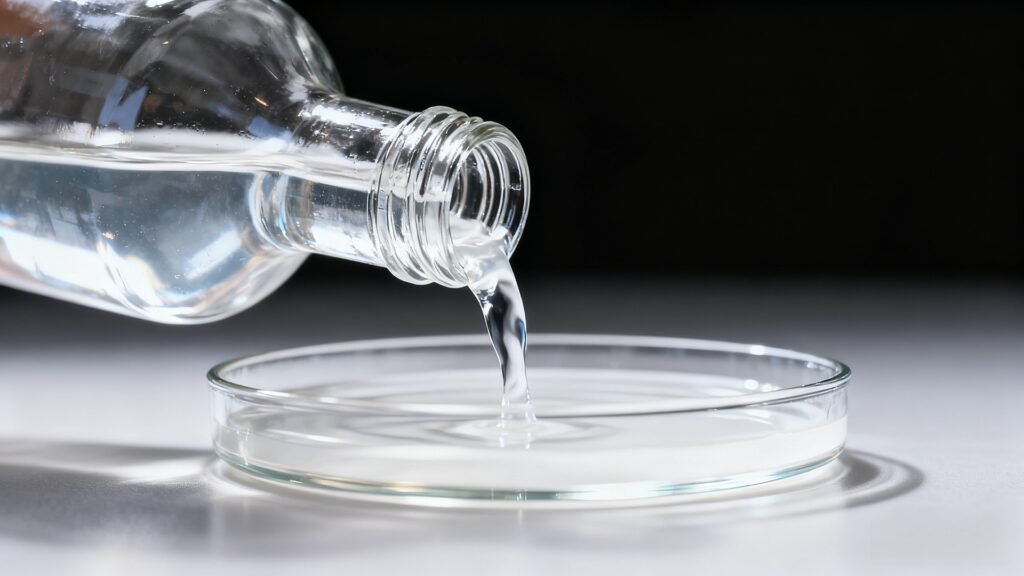


From Standard Supply to Customized Requirements
Built on technical expertise, manufacturing capability, and reliable supply

Supports batch quality verification & application-oriented testing, ensuring consistent performance & reliable product quality.

Stable, scalable manufacturing with standardized processes, supporting both regular supply and bulk industrial demand.
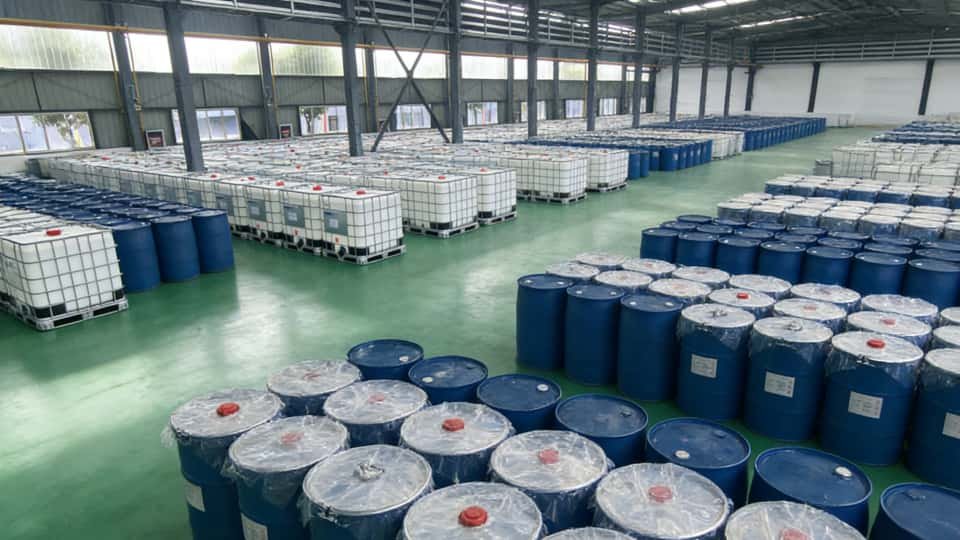
Products are stored under controlled conditions with standardized packaging, enabling efficient order fulfillment and reliable global delivery.

Clear communication and application-focused support, helping customers select suitable products and streamline procurement.
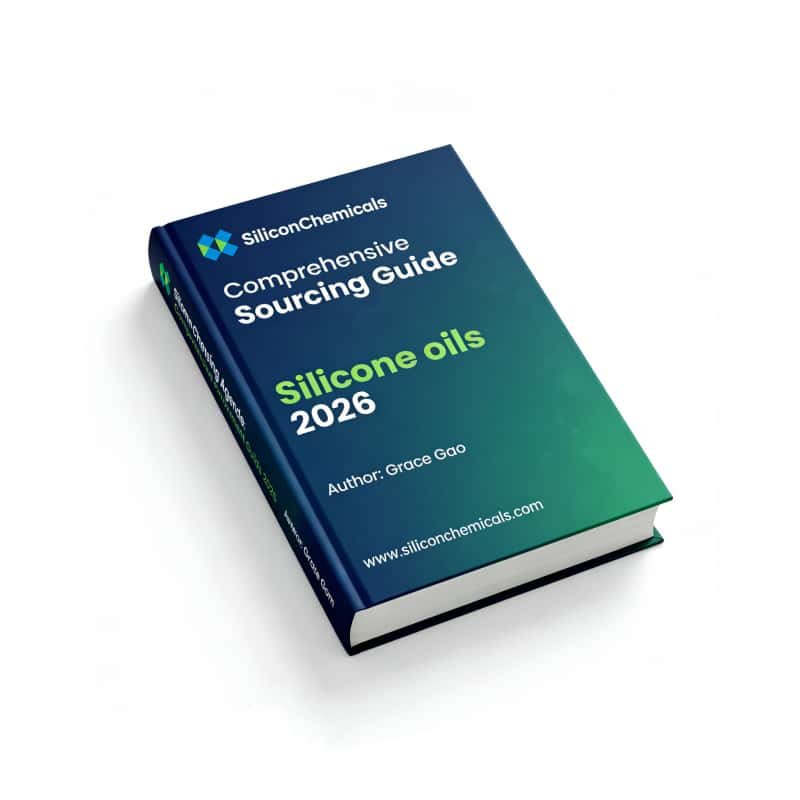
Navigate the complexities of the global Silicone Oil market. This definitive report provides actionable insights, vetted supplier landscapes, and strategic sourcing methodologies to optimize your supply chain in the year ahead.