Phenyl-Modified Silicone Oils are specialty polysiloxane fluids in which part of the methyl groups (–CH₃) on the siloxane backbone are replaced by phenyl groups (–C₆H₅). This aromatic substitution enhances thermal stability, oxidation resistance, radiation tolerance, and refractive index while maintaining the inherent chemical inertness and flexibility of silicone fluids. Compared with standard dimethyl silicone oil (PDMS), phenyl-modified grades perform significantly better in high-temperature, high-radiation, and optically demanding environments, making them widely used in aerospace lubrication, dielectric fluids, heat transfer systems, optical encapsulation, and precision damping applications.
SiliconChemicals™ Phenyl-Modified Silicone Oil is engineered for advanced industrial applications requiring long-term thermal durability and stable physicochemical performance. Available in low-, medium-, and high-phenyl content formulations, our product range covers a broad viscosity spectrum and can be tailored for dielectric insulation, heat transfer efficiency, optical clarity, or high-temperature lubrication. With controlled molecular weight distribution, optimized phenyl substitution ratios, and low volatile content, SiliconChemicals™ ensures consistent quality, global supply reliability, and performance stability in demanding operational environments.
| Model Code | Product Name | Phenyl Content Level | Typical Viscosity (25°C, cSt) | Refractive Index (25°C) | Continuous Temp (°C) | Flash Point (°C) | Application Positioning |
|---|---|---|---|---|---|---|---|
| PMPS-10-LP | Low-Phenyl Silicone Oil 10 cSt | 5–10% | 10 | 1.43–1.45 | 200 | >250 | Low-viscosity heat transfer |
| PMPS-20-LP | Low-Phenyl Silicone Oil 20 cSt | 5–10% | 20 | 1.43–1.45 | 200 | >260 | Damping / lubrication |
| PMPS-50-LP | Low-Phenyl Silicone Oil 50 cSt | 5–10% | 50 | 1.44–1.46 | 220 | >280 | Electrical insulation |
| PMPS-100-LP | Low-Phenyl Silicone Oil 100 cSt | 5–10% | 100 | 1.44–1.46 | 220 | >290 | Dielectric fluid systems |
| PMPS-200-MP | Medium-Phenyl Silicone Oil 200 cSt | 10–20% | 200 | 1.46–1.48 | 250 | >300 | Heat transfer systems |
| PMPS-350-MP | Medium-Phenyl Silicone Oil 350 cSt | 10–20% | 350 | 1.47–1.49 | 250 | >310 | Industrial lubrication |
| PMPS-500-MP | Medium-Phenyl Silicone Oil 500 cSt | 10–20% | 500 | 1.47–1.50 | 260 | >320 | High-temp damping |
| PMPS-1000-MP | Medium-Phenyl Silicone Oil 1000 cSt | 10–20% | 1000 | 1.48–1.50 | 260 | >330 | Aerospace lubrication |
| PMPS-2000-HP | High-Phenyl Silicone Oil 2000 cSt | 20–40% | 2000 | 1.50–1.53 | 280 | >340 | Radiation-resistant fluid |
| PMPS-5000-HP | High-Phenyl Silicone Oil 5000 cSt | 20–40% | 5000 | 1.51–1.54 | 280 | >350 | Optical encapsulation |
| PMPS-10000-HP | High-Phenyl Silicone Oil 10000 cSt | 20–40% | 10000 | 1.52–1.55 | 300 | >360 | LED / optical systems |
| PMPS-HTF-68 | Heat Transfer Fluid Grade 68 | 15–25% | 68 | 1.47–1.49 | 300 | >330 | Closed-loop heat transfer |
| PMPS-HTF-100 | Heat Transfer Fluid Grade 100 | 15–25% | 100 | 1.48–1.50 | 300 | >340 | Thermal oil replacement |
| PMPS-OPT-HighRI | Optical Grade High RI | 25–40% | Custom | 1.52–1.56 | 260 | >330 | Optical & LED use |
| PMPS-RAD-Grade | Radiation Stable Grade | 25–35% | 500–2000 | 1.50–1.53 | 280 | >340 | Aerospace / nuclear |
| PMPS-DAMP-Fluid | Precision Damping Fluid | 10–25% | 1000–50000 | 1.48–1.52 | 250 | >320 | Automotive damping |
| PMPS-ULV | Ultra-Low Volatile Grade | 15–25% | 50–500 | 1.47–1.49 | 270 | >340 | Vacuum / electronics |
| PMPS-EL-Ins | Electrical Insulation Grade | 10–20% | 50–350 | 1.46–1.49 | 240 | >310 | Transformer fluids |
| PMPS-Blend-Custom | Custom Phenyl Ratio | Adjustable | 10–100000+ | Adjustable | Up to 300 | Custom | OEM formulation |
Product List

Phenyl-Modified Silicone Oil (Methyl Phenyl Polysiloxane, PMPS) is structured into a comprehensive product portfolio based on phenyl substitution ratio, viscosity range, and functional industrial performance orientation. Unlike standard PDMS fluids, phenyl-modified grades are engineered to deliver enhanced thermal stability, oxidation resistance, radiation tolerance, and higher refractive index, enabling use in high-temperature, aerospace, optical, and dielectric applications.
| Grade Type | Phenyl Content | Performance Positioning |
|---|---|---|
| Low-Phenyl (LP) | 5–10% | Balanced cost-performance, improved oxidation stability |
| Medium-Phenyl (MP) | 10–20% | High thermal stability, dielectric strength |
| High-Phenyl (HP) | 20–40% | High refractive index, radiation resistance |
| Ultra-High Phenyl (UHP) | 40%+ (custom) | Optical & extreme aerospace performance |
| Viscosity Class | Typical Range (cSt) | Application Direction |
|---|---|---|
| Ultra-Low | 5–20 | Fast heat transfer, low resistance systems |
| Low | 50–100 | Electrical & light lubrication |
| Medium | 200–1000 | Heat transfer & aerospace |
| High | 2000–10000 | Damping & specialty lubrication |
| Ultra-High | 20000–100000+ | Precision damping systems |
| Custom Molecular Weight | On request | OEM engineered solutions |
Engineered for continuous operation up to 280–300°C with strong oxidation resistance and low volatility.
High dielectric strength, thermal endurance, and long service life in transformer and capacitor systems.
Refractive index up to 1.56, optimized for LED encapsulation and optical clarity applications.
Designed for aerospace and nuclear environments where gamma stability is required.
Stable viscosity-temperature characteristics for automotive shock absorbers and precision instruments.
Suitable for vacuum systems and semiconductor manufacturing environments.
Phenyl-Modified Silicone Oil therefore forms a multi-dimensional engineered product platform, covering broad viscosity ranges, phenyl ratios, and industrial performance targets—allowing precise alignment between chemical structure and application demands.
SiliconChemicals™ Phenyl-Modified Silicone Oil is manufactured under controlled phenyl substitution technology to ensure consistent molecular structure, low volatile content, and stable viscosity–temperature behavior. The portfolio includes LP, MP, and HP phenyl grades, as well as dedicated series for heat transfer, optical systems, radiation resistance, electrical insulation, and high-temperature lubrication. Each grade is engineered for long-term thermal stability, oxidation resistance, and reliable global supply performance, making SiliconChemicals™ a dependable partner for advanced industrial and aerospace applications.
Phenyl-Modified Silicone Oil belongs to the methyl phenyl polysiloxane (PMPS) family. Its backbone is the classical siloxane chain:
–Si–O–Si–O–Si–
In conventional PDMS (dimethyl silicone oil), the repeating unit is:
–[Si(CH₃)₂–O]–
In phenyl-modified grades, part of the methyl groups (–CH₃) are replaced by phenyl groups (–C₆H₅), forming mixed repeating units such as:
–[Si(CH₃)(C₆H₅)–O]–
–[Si(C₆H₅)₂–O]– (in high-phenyl content grades)
This partial aromatic substitution alters:
The ratio of methyl to phenyl groups determines the final physicochemical performance.
The phenyl group is an aromatic benzene ring directly bonded to silicon. Compared with methyl groups:
This aromatic character fundamentally upgrades the performance of the siloxane backbone.
The presence of phenyl groups:
This structural change explains the improved high-temperature endurance and radiation stability.
The functional mechanism of phenyl-modified silicone oil can be understood across several performance dimensions:
Phenyl groups increase bond dissociation energy and provide steric shielding around the Si–O backbone. This:
As a result, continuous operation can reach 250–300°C depending on phenyl content.
At elevated temperatures, silicone degradation often initiates via radical formation. The phenyl ring:
This mechanism significantly extends service life in thermal systems.
Refractive index increases with molecular polarizability. The aromatic phenyl ring has:
This increases the refractive index from ~1.40 (PDMS) to as high as 1.56 in high-phenyl grades, making it suitable for optical encapsulation and LED systems.
Under gamma radiation or high-energy exposure:
This makes high-phenyl silicone oils more radiation-stable than standard dimethyl silicone fluids.
Phenyl substitution disrupts orderly molecular packing, reducing crystallization at low temperature. This:
| Structural Feature | Resulting Functional Benefit |
|---|---|
| Aromatic phenyl substitution | Increased thermal stability |
| Higher bond energy | Improved oxidation resistance |
| Increased polarizability | Higher refractive index |
| Steric shielding | Reduced backbone degradation |
| Disrupted crystallinity | Improved low-temp fluidity |
| Electron resonance stabilization | Radiation resistance |
Phenyl-Modified Silicone Oil is not merely a viscosity variant of PDMS — it is a chemically upgraded siloxane platform engineered through aromatic substitution. The phenyl group acts as a structural reinforcement mechanism, enhancing thermal endurance, optical performance, dielectric stability, and environmental resistance.
By adjusting phenyl ratio and molecular weight distribution, performance can be precisely tuned for:
The chemical structure directly dictates performance, making phenyl-modified silicone oil a high-performance engineering fluid rather than a commodity silicone oil.
Phenyl-Modified Silicone Oil (Methyl Phenyl Polysiloxane, PMPS) is widely used in applications requiring enhanced thermal stability, oxidation resistance, high refractive index, and radiation durability. Its aromatic substitution makes it suitable for performance-critical environments where standard dimethyl silicone oils are insufficient.
Used as thermal fluids in closed-loop systems operating continuously at 250–300°C. Phenyl modification improves oxidation resistance and reduces viscosity breakdown, ensuring long service life in industrial heaters, reactors, and precision temperature control equipment.
Applied in high-temperature lubrication systems exposed to thermal cycling and radiation. The enhanced stability of phenyl groups provides improved resistance to oxidative degradation and molecular breakdown under extreme conditions.
Used in specialty transformers, capacitors, and high-voltage dielectric systems where stable dielectric strength and thermal endurance are required. Phenyl-modified grades offer better oxidation stability compared to standard PDMS fluids.
High-phenyl grades provide increased refractive index (up to ~1.56), making them suitable for optical encapsulation, LED light transmission systems, and optoelectronic components requiring clarity and thermal resistance.
Used in nuclear facilities, aerospace systems, and radiation-prone environments. Aromatic phenyl groups help stabilize the polymer backbone against radiation-induced degradation.
Applied in automotive shock absorbers, precision instruments, and motion-control devices. Stable viscosity-temperature behavior ensures consistent damping performance across wide operating ranges.
Used as specialty lubricants in industrial bearings, chain systems, and processing equipment operating under thermal stress where oxidation stability is critical.
Phenyl-Modified Silicone Oil therefore serves as a multi-functional engineering fluid platform, bridging heat transfer, dielectric insulation, optical enhancement, and extreme-environment lubrication applications.
Phenyl-Modified Silicone Oil (Methyl Phenyl Polysiloxane, PMPS) is selected when standard dimethyl silicone fluids cannot meet thermal, optical, or environmental durability requirements. The introduction of aromatic phenyl groups fundamentally upgrades the siloxane backbone, delivering enhanced stability and performance in demanding industrial systems.
Phenyl substitution increases bond strength and steric shielding around the Si–O backbone, significantly improving resistance to thermal degradation and oxidative chain scission. Continuous operation up to 250–300°C becomes achievable, making it ideal for heat transfer and high-temperature lubrication systems.
At elevated temperatures, conventional silicone oils gradually degrade through radical oxidation mechanisms. Phenyl groups stabilize radical intermediates and slow oxidation propagation, extending service life and reducing fluid replacement frequency.
The aromatic ring increases molecular polarizability, raising the refractive index from ~1.40 (PDMS) to as high as 1.56 in high-phenyl grades. This makes phenyl-modified silicone oils suitable for LED encapsulation, optical transmission systems, and precision optoelectronics.
Aromatic structures absorb and dissipate radiation energy more effectively than methyl groups. High-phenyl grades demonstrate improved resistance to gamma radiation and high-energy environments, making them appropriate for aerospace and nuclear applications.
Phenyl-modified grades maintain more consistent viscosity under thermal cycling, providing predictable damping and lubrication performance across wide temperature ranges.
By adjusting phenyl content and molecular weight distribution, performance can be precisely tailored to meet application-specific requirements, including dielectric insulation, vacuum compatibility, high-temperature heat transfer, or optical clarity.
In summary, Phenyl-Modified Silicone Oil is used when thermal endurance, oxidation stability, optical performance, or environmental resistance exceed the capability of standard silicone fluids. It represents a structurally enhanced, performance-oriented upgrade within the silicone oil family, engineered for advanced industrial systems.
Selecting the correct Phenyl-Modified Silicone Oil (Methyl Phenyl Polysiloxane, PMPS) requires aligning chemical structure parameters with your operational environment. The decision should be based on phenyl content, viscosity grade, thermal load, optical requirements, dielectric demands, and environmental exposure conditions.
Below is a structured engineering selection framework.
Temperature is the primary selection factor.
Higher phenyl substitution increases thermal and oxidative stability but may increase cost.
Viscosity selection depends on system design:
| Application | Recommended Viscosity Range |
|---|---|
| Heat Transfer | 20–100 cSt |
| Electrical Insulation | 50–350 cSt |
| Aerospace Lubrication | 200–1000 cSt |
| Optical Encapsulation | 100–5000 cSt |
| Precision Damping | 1000–100000+ cSt |
Always consider viscosity–temperature behavior across the full operating range, not only at 25°C.
If long-term oxidation resistance is critical (e.g., closed-loop thermal systems), prioritize:
This reduces viscosity drift and sludge formation over time.
For LED or optical systems:
Optical-grade fluids require stricter purity control.
For aerospace, nuclear, or high-energy systems:
Phenyl groups improve resistance to radiation-induced backbone cleavage.
If used in electrical systems:
Medium-Phenyl grades typically offer balanced dielectric performance and thermal endurance.
For vacuum or electronics applications:
Quick Engineering Decision Matrix
| Primary Requirement | Recommended Grade Type |
|---|---|
| Cost-balanced thermal fluid | Low-Phenyl (LP) |
| High-temp heat transfer | Medium-Phenyl (MP) |
| Optical high refractive index | High-Phenyl (HP) |
| Aerospace / radiation | High-Phenyl (HP) |
| Electrical insulation | LP or MP |
| Precision damping | Medium to High viscosity MP/HP |
| Vacuum compatibility | ULV Specialty Grade |
Final Engineering Principle
Choose phenyl-modified silicone oil based on:
Temperature Load + Functional Requirement + Environmental Exposure + Viscosity Target
The correct selection is not only about viscosity—it is about matching phenyl ratio and molecular structure to system stress conditions.
Packaging: 500 g / 1 kg / 5 kg / 25 kg / 200 kg drums / 1000L IBC container (Customized packaging is available).
Choosing the right Phenyl-Modified Silicone Oil is not just a material decision — it is a performance investment. Whether your application demands high-temperature stability, optical precision, radiation resistance, or long-term oxidation durability, selecting the correct phenyl ratio and viscosity grade directly impacts efficiency, service life, and operational reliability.
At SiliconChemicals™, we provide engineered phenyl-modified silicone oil solutions tailored to your exact specifications.
We support you with:
If you share your:
Our technical team will recommend the precise grade optimized for your system.
SiliconChemicals™
Precision-Formulated Silicone Solutions
Global Supply · Consistent Quality · Engineered Performance
Contact us today to discuss your application requirements and receive a customized technical recommendation.
Disclaimer
“The information provided herein is based on general industry experience and is intended for reference purposes only. Actual performance and optimal usage conditions may vary depending on formulation, processing methods, substrate characteristics, and end-use requirements. Users are responsible for conducting their own tests and evaluations to determine suitability for their specific applications. No warranty, express or implied, is made regarding the completeness, accuracy, or applicability of this information.”
Selecting the right silane coupling agent is only the first step. Achieving optimal performance often requires application-specific evaluation and formulation optimization. Our technical team provides comprehensive support to ensure successful implementation across diverse material systems.


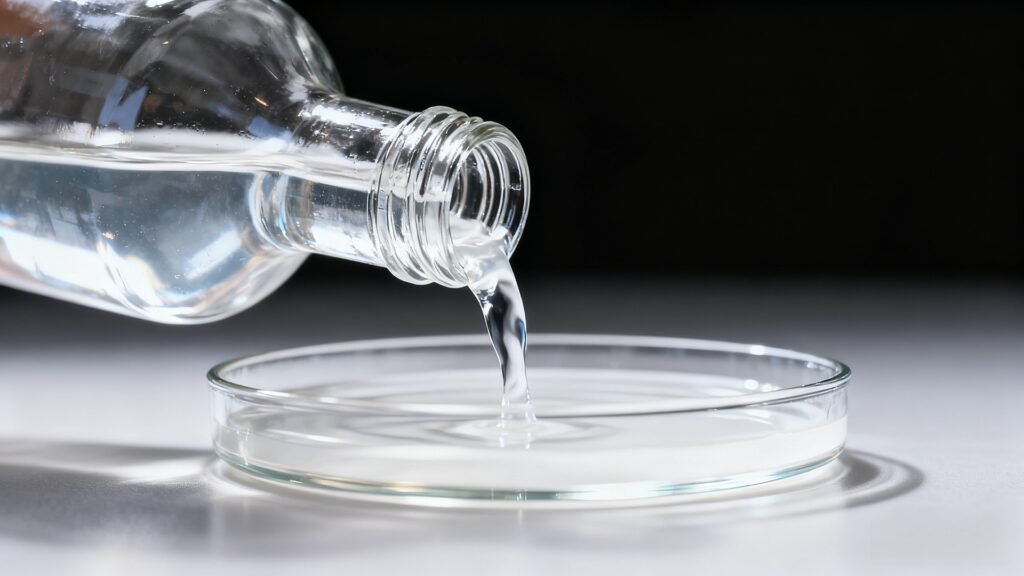


From Standard Supply to Customized Requirements
Built on technical expertise, manufacturing capability, and reliable supply

Supports batch quality verification & application-oriented testing, ensuring consistent performance & reliable product quality.

Stable, scalable manufacturing with standardized processes, supporting both regular supply and bulk industrial demand.
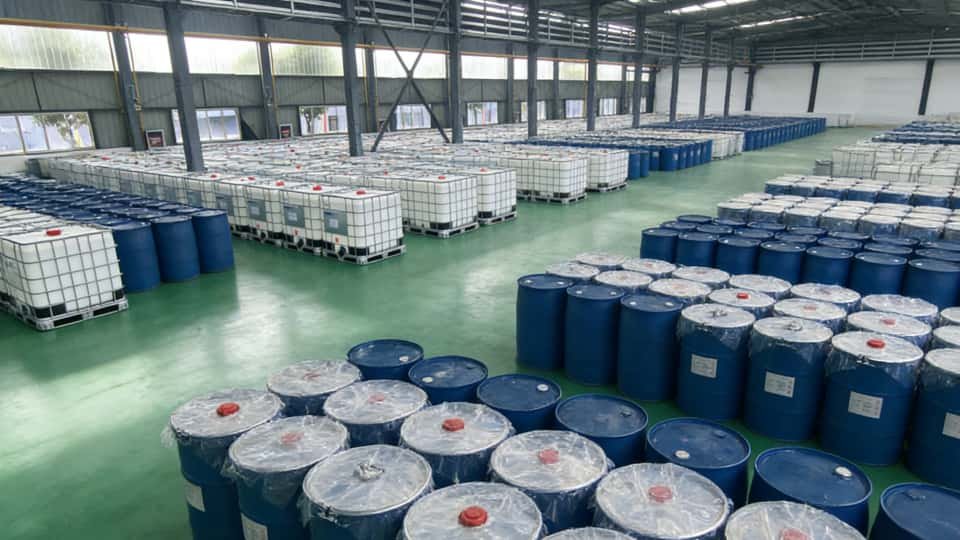
Products are stored under controlled conditions with standardized packaging, enabling efficient order fulfillment and reliable global delivery.

Clear communication and application-focused support, helping customers select suitable products and streamline procurement.
Navigate the complexities of the global Silicone Oil market. This definitive report provides actionable insights, vetted supplier landscapes, and strategic sourcing methodologies to optimize your supply chain in the year ahead.