Product Range & Functional Classification
SiliconChemicals PMPS are offered across a broad, engineering-oriented product range, structured by phenyl content, viscosity, and functional performance, allowing customers to select or customize the optimal grade for demanding thermal, electrical, optical, or radiation environments.
Below is the functional classification framework used to organize SiliconChemicals® PMPS products for clear technical selection and specification alignment.
SiliconChemicals® Methyl Phenyl Silicone Oils (PMPS) cover a complete functional spectrum—from low-viscosity electronic fluids to ultra-low-temperature, radiation-resistant specialty oils—structured to support precise engineering selection, OEM formulation, and long-term reliability.
Looking for the right PMPS grade?
Our technical team supports functional selection, datasheet matching, and custom formulation development to meet your exact application requirements.
Siliconchemicals Methyl Phenyl Silicone Oils (PMPS)
SiliconChemicals Methyl Phenyl Silicone Oils (PMPS) are high-performance silicone fluids engineered with controlled phenyl substitution to deliver exceptional low-temperature fluidity, radiation resistance, stable dielectric behavior, and high refractive index. They are designed for applications where standard PDMS oils cannot meet reliability or performance requirements.
Key advantages
- Reliable operation at −70 °C to −90 °C (grade-dependent)
- Radiation-resistant and thermally stable
- Low dielectric loss for electronics
- High refractive index (≈1.45–1.52) for optical applications
- Available in custom phenyl content and viscosity ranges
Typical uses
Aerospace · Nuclear instrumentation · Precision damping · Electronics encapsulation · Optics & LEDs · Cryogenic systems
SiliconChemicals® PMPS are available as standard grades or customized solutions, supported by professional technical selection and formulation services.
Chemical Structure & Functional Mechanism
SiliconChemicals Methyl Phenyl Silicone Oils (PMPS) derive their performance not from additives, but from fundamental molecular design. The deliberate introduction of phenyl groups into the siloxane backbone alters chain dynamics, intermolecular interactions, and electronic structure—creating a silicone fluid engineered for extreme conditions.
Methyl Phenyl Silicone Oils (PMPS) achieve their unique performance through controlled phenyl substitution within the siloxane backbone, enabling exceptional low-temperature fluidity, radiation resistance, dielectric stability, and optical performance—capabilities that conventional silicone oils cannot deliver.
Typical Applications
SiliconChemicals Methyl Phenyl Silicone Oils (PMPS) are selected where extreme temperature stability, radiation resistance, dielectric reliability, or optical performance is required—conditions under which conventional silicone oils (PDMS) are insufficient.
| Industry / Field | Primary PMPS Function |
|---|
| Aerospace & Space | Low-temperature & radiation stability |
| Nuclear Power | Radiation resistance |
| Precision Instruments | Stable damping |
| Electronics | Dielectric insulation |
| Optics & LEDs | High refractive index |
| Cryogenic Systems | Ultra-low-temperature fluidity |
Need help matching a PMPS grade to your application?
SiliconChemicals® supports application-driven selection, phenyl content optimization, and viscosity tuning—from prototype evaluation to industrial supply.
Why Use Methyl Phenyl Silicone Oils (PMPS) ?
SiliconChemicals Methyl Phenyl Silicone Oils (PMPS) are chosen when standard silicone oils (PDMS) cannot meet performance requirements. Their value lies in molecular-level phenyl substitution, which delivers a combination of thermal, radiation, electrical, and optical advantages that no conventional silicone fluid can provide simultaneously.
Use Methyl Phenyl Silicone Oils (PMPS) when your application demands extreme low-temperature reliability, radiation resistance, stable electrical performance, or optical functionality that standard silicone oils cannot deliver.
Need help deciding if PMPS is right for your system?
SiliconChemicals® provides engineering-grade selection support, phenyl content optimization, and application-driven formulation assistance to ensure optimal performance.
How to Choose the Right Methyl Phenyl Silicone Oils (PMPS)?
Choosing the correct Methyl Phenyl Silicone Oil (PMPS) is an engineering decision, not a catalog choice. The right grade is determined by application environment, functional requirements, and long-term stability targets—with phenyl content and viscosity as the two primary design levers.
Below is a practical, engineering-grade selection workflow used for SiliconChemicals® PMPS.
Quick Selection Matrix
| Application | Recommended PMPS Type |
|---|
| Aerospace actuators | Medium–High phenyl, 100–1,000 cSt |
| Nuclear instrumentation | High phenyl, radiation-resistant |
| Precision instruments | Medium phenyl, stable damping |
| Electronics encapsulation | Electronic-grade PMPS |
| LEDs & optics | Optical-grade PMPS |
| Cryogenic systems | Ultra-low-temperature PMPS |
The right PMPS grade is defined by phenyl content + viscosity + functional purity—not by viscosity alone.
Correct selection ensures stable performance, long service life, and reduced system risk.
Need expert help selecting the right PMPS?
SiliconChemicals® provides engineering-driven selection support, phenyl content optimization, and application-specific formulation services—from concept to industrial supply.
Packaging & Storage
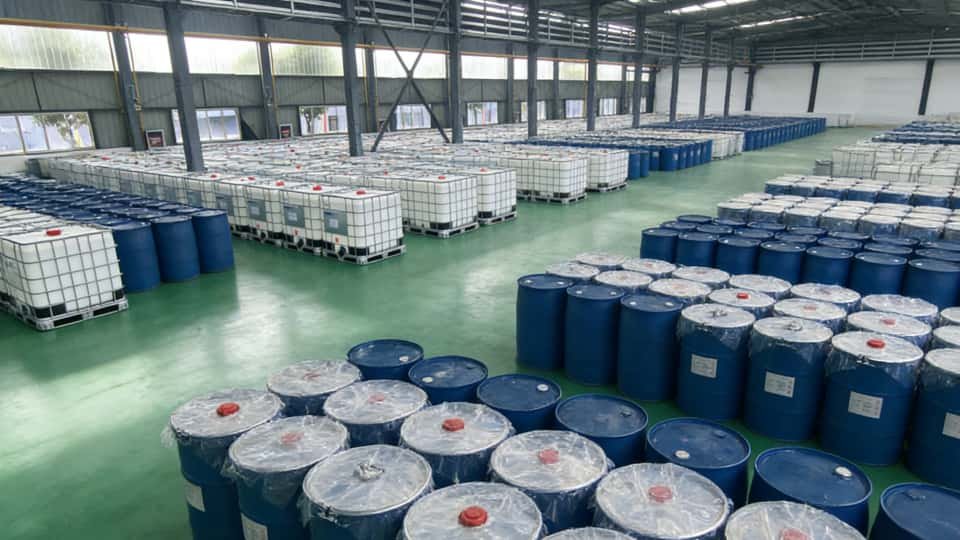
Packaging: 500 g / 1 kg / 5 kg / 25 kg / 200 kg drums / 1000L IBC container (Customized packaging is available).
Need help selecting the right Methyl Phenyl Silicone Oil (PMPS)?
SiliconChemicals supports you with engineering-driven grade selection, including phenyl content optimization, viscosity tuning, and application-specific formulation—from lab validation to reliable industrial supply.
👉 Request datasheets, samples, or a customized PMPS solution today.
Let our technical team help you achieve stable performance, longer service life, and lower system risk.
“The information provided herein is based on general industry experience and is intended for reference purposes only. Actual performance and optimal usage conditions may vary depending on formulation, processing methods, substrate characteristics, and end-use requirements. Users are responsible for conducting their own tests and evaluations to determine suitability for their specific applications. No warranty, express or implied, is made regarding the completeness, accuracy, or applicability of this information.”