Hydroxy-Terminated Silicone Oil (also called Hydroxyl-Terminated Polydimethylsiloxane, OH-PDMS) is a linear polysiloxane fluid with reactive hydroxyl (–OH) groups located at both ends of the polymer chain. Unlike fully capped dimethyl silicone oil (which is chemically inert), hydroxy-terminated silicone oil contains terminal –OH groups that enable condensation reactions, crosslinking, and chain extension, making it a foundational intermediate in RTV silicone rubber, sealants, and silicone elastomer systems.
SiliconChemicals™ Hydroxy-Terminated Silicone Oil is a high-purity linear polysiloxane fluid featuring reactive hydroxyl (–OH) groups at both ends of the polymer chain. This OH-functional architecture enables controlled condensation reactions, making it the foundational base polymer for RTV silicone sealants, adhesives, elastomers, and moisture-curing systems. Unlike fully capped dimethyl silicone fluids, this material is chemically active at the chain ends while maintaining the thermal stability and flexibility of the siloxane backbone.
| Model Code | Viscosity (25°C, cSt) | Approx. Mn (g/mol) | OH Content (%) | Polymerization Degree (n) | Volatile Content (%) | Application Positioning |
|---|---|---|---|---|---|---|
| HTO-100 | 100 | ~800 | 4.5–5.5 | 8–10 | ≤1.0 | Low MW modifier |
| HTO-200 | 200 | ~1,200 | 3.5–4.5 | 12–15 | ≤1.0 | Sealant additive |
| HTO-350 | 350 | ~1,800 | 2.8–3.5 | 18–22 | ≤1.0 | RTV base modifier |
| HTO-500 | 500 | ~2,200 | 2.3–3.0 | 22–28 | ≤1.0 | Adhesive systems |
| HTO-1000 | 1,000 | ~3,000 | 1.8–2.5 | 30–40 | ≤1.0 | RTV elastomer base |
| HTO-2000 | 2,000 | ~4,500 | 1.2–1.8 | 45–60 | ≤0.8 | Condensation rubber |
| HTO-5000 | 5,000 | ~7,000 | 0.8–1.2 | 70–90 | ≤0.8 | High-strength RTV |
| HTO-10000 | 10,000 | ~12,000 | 0.6–0.9 | 120–150 | ≤0.8 | Industrial sealants |
| HTO-20000 | 20,000 | ~18,000 | 0.4–0.7 | 180–220 | ≤0.7 | Construction caulk |
| HTO-50000 | 50,000 | ~35,000 | 0.3–0.5 | 300–400 | ≤0.5 | High-performance rubber |
| HTO-80000 | 80,000 | ~50,000 | 0.25–0.4 | 450–600 | ≤0.5 | Structural sealant |
| HTO-100K | 100,000 | ~65,000 | 0.20–0.35 | 600–750 | ≤0.5 | Industrial elastomer |
| HTO-150K | 150,000 | ~90,000 | 0.15–0.25 | 800–1,000 | ≤0.3 | High-modulus RTV |
| HTO-200K | 200,000 | ~120,000 | 0.10–0.20 | 1,100–1,300 | ≤0.3 | Specialty elastomer |
| HTO-ULV-5000 | 5,000 | ~7,000 | 0.8–1.2 | 70–90 | ≤0.2 | Electronics grade |
| HTO-OPT-2000 | 2,000 | ~4,500 | 1.2–1.8 | 45–60 | ≤0.3 | Optical applications |
| HTO-HT-10000 | 10,000 | ~12,000 | 0.6–0.9 | 120–150 | ≤0.5 | High-temp RTV |
| HTO-REINF-50000 | 50,000 | ~35,000 | 0.3–0.5 | 300–400 | ≤0.5 | Reinforced elastomer base |
| HTO-ULTRA-100K | 100,000 | ~65,000 | 0.20–0.30 | 600–750 | ≤0.2 | Premium sealant |
| HTO-CUSTOM | Adjustable | Custom | Custom | Custom | Custom | OEM formulation design |
Product List

Hydroxy-Terminated Silicone Oil (OH-PDMS) is a linear α,ω-dihydroxyl polysiloxane designed primarily for condensation-cure silicone systems. Its product range is defined by molecular weight (Mn), viscosity, hydroxyl content, volatility control, and application orientation.
The fundamental structure is: HO−(−Si(CH3)2−O−)n−HHO-(-Si(CH3)2-O-)n-HHO−(−Si(CH3)2−O−)n−H
The value of n determines molecular weight, viscosity, and final mechanical performance after curing.
| Viscosity Class | Range (cSt) | Molecular Weight Orientation | Primary Use |
|---|---|---|---|
| Low MW | 100–1,000 | Short chain (low n) | Modifier & viscosity adjustment |
| Medium MW | 1,000–10,000 | Moderate chain | RTV elastomer base |
| High MW | 10,000–100,000 | Long chain | Sealants & rubber base |
| Ultra-High MW | 100,000–200,000+ | Very long chain | Structural elastomer systems |
| Custom MW | Adjustable | Tailored | OEM formulation design |
Higher viscosity → stronger final elastomer after crosslinking.
| OH Content Level | Typical Range | Functional Effect |
|---|---|---|
| High OH | 3–5% | Faster curing, softer network |
| Medium OH | 1–3% | Balanced crosslink density |
| Low OH | 0.1–1% | Higher modulus, stronger elastomer |
| Ultra-Low OH | Custom | Specialty high-performance systems |
OH content directly influences condensation reaction rate and network density.
| Grade Type | Volatile Content | Application |
|---|---|---|
| Standard Industrial | ≤1.0% | General RTV production |
| Low Volatile (LV) | ≤0.5% | Construction sealants |
| Ultra-Low Volatile (ULV) | ≤0.2% | Electronics & optical |
| High-Purity Grade | Controlled | Premium applications |
Lower volatility improves dimensional stability and mechanical consistency.
🔹 RTV-1 Base Polymer
For moisture-cure one-component sealants.
🔹 RTV-2 Condensation Cure Grade
Used in two-component elastomer systems.
🔹 Construction Sealant Grade
Optimized for caulking and joint sealing.
🔹 Adhesive & Potting Grade
Balanced viscosity and crosslink control.
🔹 Silicone Rubber Manufacturing Base
High MW backbone for reinforced rubber systems.
🔹 Optical / Electronic Grade
Low impurity, low volatile formulations.
Hydroxy-Terminated Silicone Oil can be functionally categorized as:
| Functional Role | Description |
|---|---|
| Base Polymer | Backbone of condensation-cure systems |
| Chain Extender | Reacts with silane crosslinkers |
| Viscosity Modifier | Adjusts processing rheology |
| Network Former | Forms Si–O–Si crosslinked structure |
| Mechanical Property Tuner | Controls elasticity and modulus |
| Parameter | Coverage Range |
|---|---|
| Viscosity | 100 – 200,000+ cSt |
| Mn | ~800 – 120,000+ g/mol |
| OH Content | 0.1% – 5.5% |
| Volatile Content | ≤0.2% – 1.0% |
| Customization | MW & OH adjustable |
Hydroxy-Terminated Silicone Oil is classified primarily by:
Molecular Weight + OH Content + Volatile Control + Application Orientation
It serves as the core polymer platform for condensation-cure silicone chemistry, where mechanical performance is governed by:
SiliconChemicals™ Hydroxy-Terminated Silicone Oil (OH-PDMS) is a high-purity α,ω-dihydroxyl polydimethylsiloxane engineered as the core base polymer for condensation-cure silicone systems. With reactive hydroxyl (–OH) groups at both chain ends, this material enables controlled crosslinking, chain extension, and network formation in RTV sealants, adhesives, and elastomers.
The molecular structure is: HO−(−Si(CH3)2−O−)n−HHO-(-Si(CH3)2-O-)n-HHO−(−Si(CH3)2−O−)n−H
Where the polymerization degree (n) determines molecular weight and viscosity.
SiliconChemicals™ Hydroxy-Terminated Silicone Oil is a condensation-reactive silicone base platform, optimized for moisture-curing sealants and elastomer systems where:
By controlling molecular weight and hydroxyl content, formulators can precisely balance processing performance and final elastomer properties.
Hydroxy-Terminated Silicone Oil (OH-PDMS) is a linear α,ω-dihydroxyl polysiloxane in which reactive silanol (–Si–OH) groups are located at both ends of the polymer chain. These terminal hydroxyl groups provide condensation reactivity while the siloxane backbone maintains flexibility and thermal stability.
The fundamental repeating unit:
−Si−O−Si−-Si-O-Si-−Si−O−Si−
This backbone is responsible for:
The backbone itself is chemically stable; reactivity occurs at the chain ends.
The defining molecular structure:
HO−(−Si(CH3)2−O−)n−HHO-(-Si(CH3)2-O-)n-HHO−(−Si(CH3)2−O−)n−H
Where:
These terminal silanol groups are the active sites for crosslinking.
Hydroxy-Terminated Silicone Oil participates primarily in condensation curing chemistry.
Under the presence of crosslinkers (alkoxy, acetoxy, oxime silanes):
Si−OH+Si−OR−>Si−O−Si+ROHSi-OH + Si-OR -> Si-O-Si + ROHSi−OH+Si−OR−>Si−O−Si+ROH
This reaction:
Moisture in air hydrolyzes alkoxy silanes to form silanol intermediates:
Si−OR+H2O−>Si−OH+ROHSi-OR + H2O -> Si-OH + ROHSi−OR+H2O−>Si−OH+ROH
Subsequent condensation forms crosslinked silicone rubber.
This is the fundamental mechanism behind:
Hydroxyl groups also allow:
By varying OH content and molecular weight, formulators control final elastomer hardness and elasticity.
| Structural Element | Functional Impact |
|---|---|
| Siloxane backbone | Flexibility & durability |
| Terminal –OH groups | Condensation reactivity |
| Higher molecular weight | Increased tensile strength |
| Higher OH content | Faster cure, softer network |
| Lower OH content | Slower cure, higher modulus |
| Feature | OH-Terminated (Condensation) | Si–H (Addition) |
|---|---|---|
| Reaction Type | Condensation | Hydrosilylation |
| By-Products | Alcohol / acid | None |
| Cure System | Moisture or catalyst | Platinum catalyst |
| Cost | Lower | Higher |
| Optical Clarity | Moderate | High |
SiliconChemicals™ Hydroxy-Terminated Silicone Oil functions as:
Its reactivity is localized at the chain ends, allowing controlled network formation while preserving the intrinsic flexibility and environmental resistance of the siloxane backbone.
Hydroxy-Terminated Silicone Oil (OH-PDMS) is the foundational base polymer for condensation-cure silicone systems. Its terminal silanol (–Si–OH) groups react with silane crosslinkers to form durable Si–O–Si networks.
The core condensation mechanism is:
Si−OH+Si−OR−>Si−O−Si+ROHSi-OH + Si-OR -> Si-O-Si + ROHSi−OH+Si−OR−>Si−O−Si+ROH
This reaction enables the following industrial applications.
PDMS is widely used as a functional fluid and processing aid in industrial environments.
Typical uses
Why PDMS
PDMS is the core building block of silicone elastomer systems.
Typical uses
Why PDMS
PDMS is trusted in electronics for its electrical insulation and thermal stability.
Typical uses
Why PDMS
Select PDMS grades are used in medical and healthcare products where material safety and stability are critical.
Typical uses
Why PDMS
PDMS is applied in food-contact environments using compliant grades.
Typical uses
Why PDMS
Functional-modified PDMS plays a key role in surface treatment and finishing.
Typical uses
Why PDMS
PDMS contributes to surface control and performance enhancement in coatings.
Typical uses
Why PDMS
Specialty PDMS grades are used in high-reliability and controlled environments.
Typical uses
Why PDMS
| Industry | Functional Role | Recommended MW Level |
|---|---|---|
| Construction | Sealant base polymer | High MW |
| Mold Making | Elastomer network | Medium–High MW |
| Electronics | Potting base | Medium MW |
| Adhesives | Structural bonding | Medium–High MW |
| Rubber Manufacturing | Polymer backbone | High MW |
| Textile Processing | Modifier/intermediate | Low MW |
Hydroxy-Terminated Silicone Oil is preferred where:
It serves as the condensation-reactive backbone for large-volume RTV sealant and elastomer production worldwide.
Hydroxy-Terminated Silicone Oil (OH-PDMS) is used because it provides a reactive yet stable silicone backbone for condensation-cure systems. Its terminal silanol (–Si–OH) groups allow controlled crosslinking, while the siloxane chain delivers flexibility, thermal stability, and environmental resistance.
The fundamental curing mechanism is:
Si−OH+Si−OR−>Si−O−Si+ROHSi-OH + Si-OR -> Si-O-Si + ROHSi−OH+Si−OR−>Si−O−Si+ROH
This chemistry defines why OH-terminated silicone oils remain the backbone of global RTV sealant and elastomer production.
Hydroxy-terminated silicone oils react with silane crosslinkers under ambient moisture.
Why this matters:
This makes them dominant in architectural sealants.
Compared to platinum addition systems:
For construction and industrial markets, cost-performance balance is critical.
By varying:
You can control:
Higher molecular weight → stronger elastomer network.
The siloxane backbone provides:
This explains widespread use in outdoor applications.
Condensation systems integrate well with:
These improve adhesion to:
Essential for structural glazing and sealing.
Hydroxy-terminated silicone oil offers:
This supports large-scale sealant production lines.
Beyond sealants, it serves as:
Its dual-end reactivity makes it a flexible formulation tool.
Use Hydroxy-Terminated Silicone Oil when your system requires:
It is the industrial backbone of RTV sealant and condensation-cure elastomer technology, combining reactivity at the chain ends with stability along the siloxane backbone.
Choosing the correct Hydroxy-Terminated Silicone Oil (OH-PDMS) requires aligning molecular weight, hydroxyl content, crosslinker system, cure environment, and final mechanical targets. It is not simply a viscosity decision — it is a network design decision.
The fundamental condensation mechanism guiding selection is:
Si−OH+Si−OR−>Si−O−Si+ROHSi-OH + Si-OR -> Si-O-Si + ROHSi−OH+Si−OR−>Si−O−Si+ROH
Below is a structured engineering selection framework.
Hydroxy-terminated silicone oil is used in:
If your system uses platinum addition cure → you need Si–H functional silicone, not OH-terminated.
Mechanical performance is controlled primarily by molecular weight.
| Target Property | Recommended Viscosity Range |
|---|---|
| Flowable modifier | 100–1,000 cSt |
| Soft sealant | 1,000–5,000 cSt |
| General RTV | 5,000–20,000 cSt |
| Structural sealant | 20,000–100,000 cSt |
| High-modulus elastomer | 100,000+ cSt |
Higher viscosity → longer polymer chains → stronger final network.
OH concentration influences reaction rate and crosslink density.
| OH Level | Effect |
|---|---|
| High (>3%) | Faster cure, softer elastomer |
| Medium (1–3%) | Balanced performance |
| Low (<1%) | Slower cure, higher modulus |
For thick sealants, moderate OH is usually preferred to control pot life.
Ensure compatibility with:
Different crosslinkers influence:
Key factors:
Higher viscosity grades may require stronger mixing systems.
If your application requires:
Environmental exposure affects grade selection.
For high-performance systems:
Lower volatility improves dimensional stability and mechanical consistency.
| Primary Goal | Recommended Grade Profile |
|---|---|
| Easy processing | Low–Medium MW |
| General construction sealant | Medium–High MW |
| High-strength structural | High MW, low OH |
| Electronics potting | Medium MW, low volatile |
| Cost optimization | Medium MW standard grade |
Choose Hydroxy-Terminated Silicone Oil based on:
Target hardness + Cure mechanism + Crosslinker type + Processing capability + Environmental requirements
Correct selection ensures:
If you provide:
I can give a precisely matched OH-PDMS grade recommendation for your formulation.
Packaging: 500 g / 1 kg / 5 kg / 25 kg / 200 kg drums / 1000L IBC container (Customized packaging is available).
Choosing the right Hydroxy-Terminated Silicone Oil (OH-PDMS) determines your sealant’s cure speed, final hardness, tensile strength, processing stability, and long-term durability. The correct molecular weight and hydroxyl content are not minor adjustments — they define your entire network structure.
At SiliconChemicals™, we provide precision-engineered OH-terminated silicone oils with:
If you share:
Our technical team will recommend a precisely matched OH-PDMS grade to ensure stable production, predictable curing behavior, and optimized mechanical performance.
SiliconChemicals™
Condensation-Cure Silicone Engineering · Controlled Polymer Architecture · Global Industrial Supply
Contact us today to discuss your formulation requirements and receive a tailored technical solution.
Disclaimer
“The information provided herein is based on general industry experience and is intended for reference purposes only. Actual performance and optimal usage conditions may vary depending on formulation, processing methods, substrate characteristics, and end-use requirements. Users are responsible for conducting their own tests and evaluations to determine suitability for their specific applications. No warranty, express or implied, is made regarding the completeness, accuracy, or applicability of this information.”
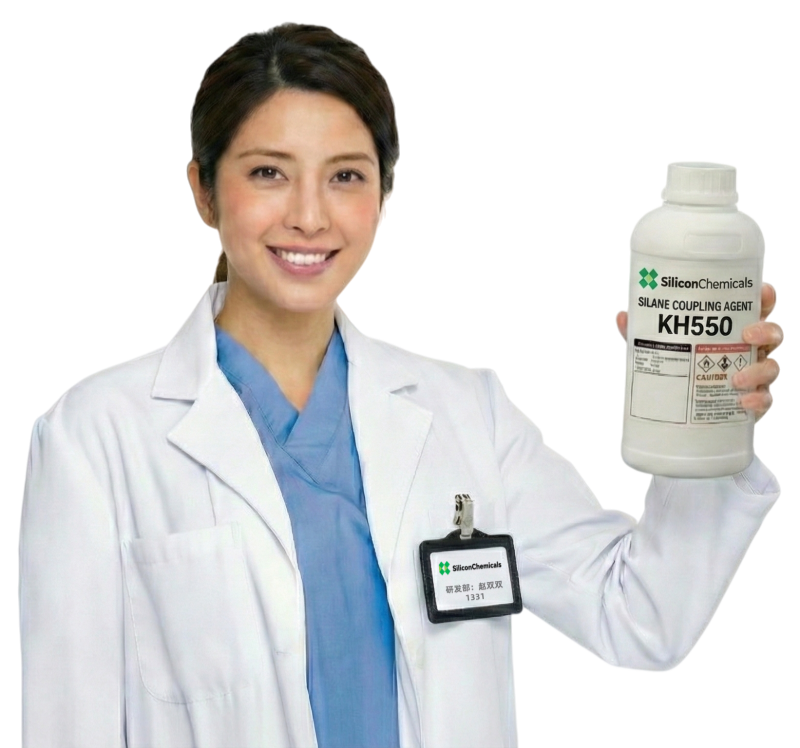
Selecting the right silane coupling agent is only the first step. Achieving optimal performance often requires application-specific evaluation and formulation optimization. Our technical team provides comprehensive support to ensure successful implementation across diverse material systems.


From Standard Supply to Customized Requirements
Built on technical expertise, manufacturing capability, and reliable supply

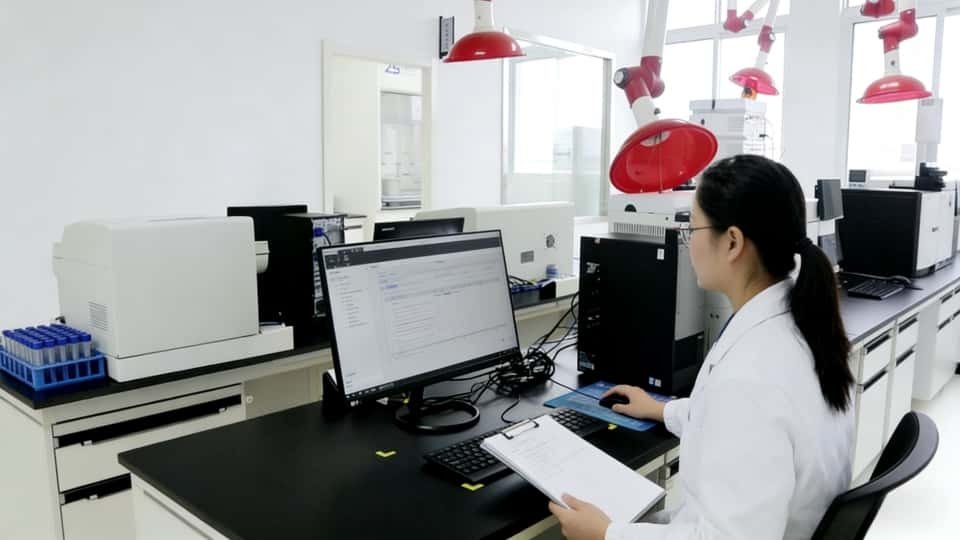
Supports batch quality verification & application-oriented testing, ensuring consistent performance & reliable product quality.

Stable, scalable manufacturing with standardized processes, supporting both regular supply and bulk industrial demand.
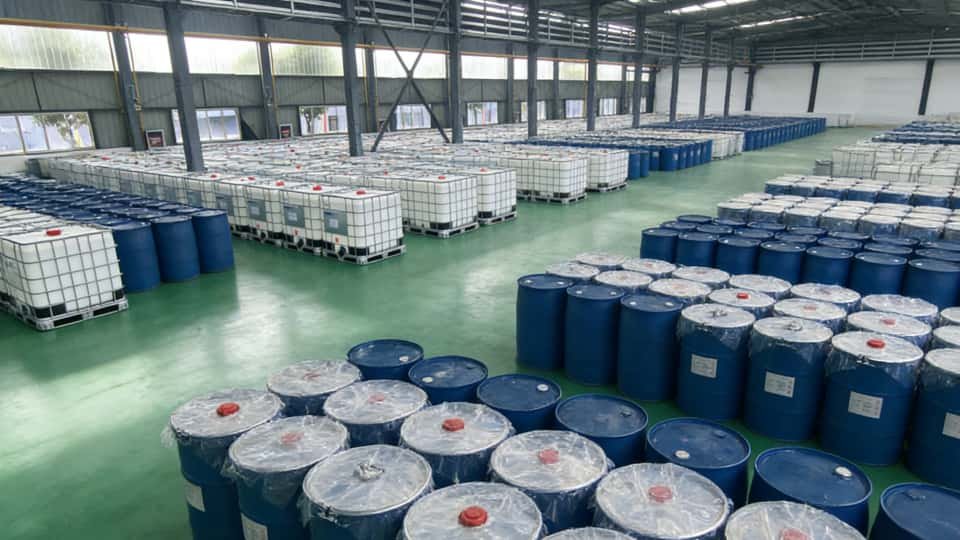
Products are stored under controlled conditions with standardized packaging, enabling efficient order fulfillment and reliable global delivery.

Clear communication and application-focused support, helping customers select suitable products and streamline procurement.
Navigate the complexities of the global Silicone Oil market. This definitive report provides actionable insights, vetted supplier landscapes, and strategic sourcing methodologies to optimize your supply chain in the year ahead.