Mercapto-Functional Silicone Oil (SH Silicone Oil) is a reactive polysiloxane containing thiol (–SH) functional groups attached to a siloxane backbone. The backbone provides flexibility, thermal stability, and low surface energy, while the mercapto groups introduce high chemical reactivity toward unsaturated compounds, epoxy resins, and metal surfaces. The defining functional group is: −SH-SH−SH
Mercapto-functional silicones are widely used in addition reactions (such as thiol–ene click chemistry), epoxy curing systems, adhesion promotion, and surface modification applications. They are valued for fast reaction kinetics, low curing temperature requirements, improved adhesion to inorganic substrates, and enhanced flexibility in hybrid polymer systems. In formulation engineering, SH-functional silicone oils act as reactive modifiers, crosslinking agents, or adhesion promoters rather than inert silicone fluids.
| Model Code | SH Content (%) | SH Equivalent Weight (g/eq) | Viscosity (25°C, cSt) | Molecular Architecture | Reactive Positioning | Typical Application |
|---|---|---|---|---|---|---|
| SH-050-L | 0.5–0.8 | 6,000–10,000 | 100 | Terminal | Low reactivity modifier | Surface treatment |
| SH-080-L | 0.8–1.2 | 4,200–6,000 | 300 | Terminal | Flexible modifier | Epoxy additive |
| SH-120-M | 1.2–1.8 | 2,800–4,200 | 800 | Pendant | Balanced | Thiol–ene systems |
| SH-150-M | 1.5–2.2 | 2,200–3,000 | 1,500 | Pendant | Medium | UV curing systems |
| SH-200-M | 2.0–2.8 | 1,700–2,200 | 3,000 | Pendant | Crosslink assist | Epoxy curing |
| SH-250-H | 2.5–3.2 | 1,400–1,800 | 5,000 | Multi-functional | Crosslinking grade | Hybrid elastomer |
| SH-300-H | 3.0–3.8 | 1,200–1,500 | 8,000 | Multi-functional | High density | Structural adhesive |
| SH-350-X | 3.5–4.5 | 900–1,200 | 12,000 | Multi-functional | High reactivity | Rapid cure systems |
| SH-400-X | 4.0–5.0 | 800–1,000 | 15,000 | High-density | Extreme crosslink | Specialty elastomer |
| SH-UV-180 | 1.8–2.5 | 1,700–2,200 | 2,000 | Controlled MW | UV click chemistry | UV coatings |
| SH-EP-200 | 2.0–2.8 | 1,600–2,100 | 2,500 | Balanced | Epoxy curing | Industrial epoxy |
| SH-ADH-150 | 1.5–2.2 | 2,000–3,000 | 1,800 | Adhesion-optimized | Metal bonding | Adhesive systems |
| SH-LV-120 | 1.2–1.8 | 3,000–4,000 | 900 | Low volatile | Electronics grade | Encapsulation |
| SH-HT-250 | 2.5–3.5 | 1,300–1,700 | 4,000 | Phenyl-modified | High temperature | Heat-resistant elastomer |
| SH-CUSTOM | Adjustable | Custom | 100–20,000+ | Tailored | OEM | System design |
Product List

Mercapto-Functional Silicone Oil (SH Silicone Oil) is classified primarily by SH content, molecular architecture, viscosity, and reactive positioning. Unlike inert silicone fluids, SH-functional grades participate in thiol–ene addition, epoxy curing, metal coordination, and hybrid polymer crosslinking.
The defining reactive group is: −SH-SH−SH
| SH Level | Typical Range | Reactive Behavior | Industrial Positioning |
|---|---|---|---|
| Ultra-Low | 0.5–1.0% | Surface modification | Flexibility modifier |
| Low | 1.0–1.5% | Adhesion enhancement | Epoxy additive |
| Medium | 1.5–3.0% | Balanced crosslinking | UV & thiol–ene systems |
| High | 3.0–4.5% | High reactivity | Structural adhesives |
| Ultra-High | 4.5–5.5%+ | Rapid curing | Specialty elastomers |
Higher SH % → increased crosslink density potential.
| Structure Type | Description | Functional Role |
|---|---|---|
| Terminal SH | End-functional chains | Controlled chain extension |
| Pendant SH | Distributed along backbone | Hybrid network formation |
| Multi-functional | High SH density | Crosslinking agent |
| Phenyl-modified | Enhanced thermal stability | High-temp systems |
| Low-Volatile Grade | Controlled purity | Electronics & optical |
Architecture influences curing kinetics and final mechanical properties.
| Viscosity Class | Range (cSt) | Processing Orientation |
|---|---|---|
| Low | 100–1,000 | Coating modifiers |
| Medium | 1,000–5,000 | Adhesives & UV systems |
| High | 5,000–20,000 | Elastomers & sealants |
| Custom MW | Adjustable | OEM formulation design |
Viscosity determines dispersion behavior and processing stability.
🔹 Thiol–Ene Click Chemistry Grade
Designed for rapid addition reactions under UV or thermal initiation.
🔹 Epoxy Curing Modifier Grade
Enhances flexibility and adhesion in epoxy systems.
🔹 Adhesion Promotion Grade
Improves bonding to metal, glass, and mineral substrates.
🔹 Hybrid Elastomer Crosslinking Grade
Provides flexible yet durable 3D networks.
🔹 UV-Curing System Grade
Optimized for low-temperature, fast-curing coatings.
🔹 High-Temperature Resistant Grade
Phenyl-modified for improved thermal stability.
🔹 Electronics & Low-Volatile Grade
Controlled impurity and volatile profile for sensitive systems.
Example thiol–ene addition:
R−SH+CH2=CH−R′−>R−S−CH2−CH2−R′R-SH + CH2=CH-R’ -> R-S-CH2-CH2-R’R−SH+CH2=CH−R′−>R−S−CH2−CH2−R′
Example epoxy reaction:
R−SH+Epoxy−>ThioetherlinkageR-SH + Epoxy -> Thioether linkageR−SH+Epoxy−>Thioetherlinkage
These reactions allow SH silicone oils to form covalent hybrid networks.
| Parameter | Coverage Range |
|---|---|
| SH Content | 0.5% – 5.5%+ |
| Equivalent Weight | 800 – 10,000 g/eq |
| Viscosity | 100 – 20,000+ cSt |
| Architecture | Terminal / Pendant / Multi-functional |
| Customization | MW & SH density adjustable |
Mercapto-functional silicone oils are classified based on:
Reactive density + Molecular design + Processing viscosity + Target curing chemistry
They are selected when formulators require:
This product range supports advanced UV systems, epoxy modification, hybrid elastomers, and specialty adhesive engineering.
Ready to enhance curing speed, adhesion strength, and hybrid network performance? SiliconChemicals™ Mercapto-Functional Silicone Oil (SH) delivers controlled thiol reactivity and engineered siloxane flexibility for advanced coatings, adhesives, UV systems, and epoxy formulations. Share your target curing chemistry, SH content requirement, viscosity range, and application environment — our technical team will recommend a precisely matched grade to optimize crosslink density, processing stability, and long-term durability. Contact SiliconChemicals™ today to engineer your next-generation reactive silicone system.
Mercapto-Functional Silicone Oil (SH Silicone Oil) is a reactive polysiloxane in which thiol groups are chemically bonded to a flexible siloxane backbone. The structure combines the durability of silicone chemistry with the high reactivity of sulfur-based functional groups.
The base polymer framework:
−Si−O−Si−-Si-O-Si-−Si−O−Si−
This backbone provides:
The backbone remains relatively inert; reactivity is introduced through functional modification.
The defining reactive group:
−SH-SH−SH
Characteristics of –SH:
SH groups may be:
Mercapto-functional silicone oils participate in several important polymer reactions.
R−SH+CH2=CH−R′−>R−S−CH2−CH2−R′R-SH + CH2=CH-R’ -> R-S-CH2-CH2-R’R−SH+CH2=CH−R′−>R−S−CH2−CH2−R′
Features:
Used in UV-curable coatings and advanced hybrid networks.
R−SH+Epoxy−>ThioetherlinkageR-SH + Epoxy -> Thioether linkageR−SH+Epoxy−>Thioetherlinkage
This reaction:
Common in epoxy adhesives and industrial coatings.
Thiol groups can coordinate with metal atoms, forming strong interfacial bonds.
Functional benefit:
| Structural Element | Functional Impact |
|---|---|
| Siloxane backbone | Flexibility & weather resistance |
| Higher SH density | Faster curing & higher crosslink density |
| Lower SH density | Flexibility modifier |
| Multi-functional SH | 3D network reinforcement |
| Longer silicone chain | Improved hydrophobicity |
The siloxane segment provides softness and environmental resistance, while SH groups enable covalent bonding within organic matrices.
When incorporated into polymer systems:
This combination yields:
SiliconChemicals™ Mercapto-Functional Silicone Oil functions as:
It is not an inert silicone fluid — it is a reactive sulfur-functional silicone platform for advanced polymer engineering, enabling precise control over curing speed, network density, and interfacial bonding strength.
Mercapto-Functional Silicone Oil (SH Silicone Oil) is widely used in polymer systems where fast reactivity, strong interfacial bonding, and flexible hybrid network formation are required. The thiol group: −SH-SH−SH
enables participation in addition, curing, and adhesion mechanisms across multiple advanced chemistries.
One of the most important applications.
Reaction example:
R−SH+CH2=CH−R′−>R−S−CH2−CH2−R′R-SH + CH2=CH-R’ -> R-S-CH2-CH2-R’R−SH+CH2=CH−R′−>R−S−CH2−CH2−R′
Used in:
Benefits:
SH groups react with epoxy rings to form thioether linkages.
Applications:
Advantages:
Mercapto groups exhibit strong interaction with metal surfaces.
Used in:
Improves:
SH-functional silicone oils integrate flexible siloxane segments into organic matrices.
Applications:
Result:
Silicone backbone reduces surface tension while SH ensures bonding.
Used in:
Enhances:
Low-volatile grades are used in:
Provides:
| Industry | Functional Role | Recommended SH Level |
|---|---|---|
| UV Coatings | Crosslinking agent | Medium |
| Epoxy Systems | Curing modifier | Low–Medium |
| Adhesives | Adhesion enhancer | Medium |
| Sealants | Hybrid elastomer bridge | Medium–High |
| Protective Coatings | Surface modifier | Low–Medium |
| Electronics | Precision curing | Controlled SH |
Mercapto-Functional Silicone Oil is selected when formulators require:
It serves as a reactive sulfur-functional silicone platform for advanced UV, epoxy, adhesive, and hybrid polymer engineering systems.
Mercapto-Functional Silicone Oil (SH Silicone Oil) is selected when formulators require fast reaction kinetics, strong interfacial bonding, flexible hybrid network formation, and durable performance under environmental stress. Unlike inert silicone fluids, SH-functional grades chemically integrate into polymer systems through thiol chemistry.
SH groups react efficiently with carbon–carbon double bonds:
R−SH+CH2=CH−R′−>R−S−CH2−CH2−R′R-SH + CH2=CH-R’ -> R-S-CH2-CH2-R’R−SH+CH2=CH−R′−>R−S−CH2−CH2−R′
Why it matters:
Ideal for UV coatings, inks, and precision systems.
In epoxy systems, SH groups open epoxy rings to form stable thioether linkages.
Benefits:
Used in structural adhesives and industrial floor coatings.
Thiol groups exhibit strong affinity for metal surfaces.
Why use SH silicone oil:
Critical for metal-bonding adhesives and protective primers.
The siloxane backbone:
−Si−O−Si−-Si-O-Si-−Si−O−Si−
provides:
When chemically bonded through SH reactions, silicone segments remain permanently embedded within the network.
Unlike non-reactive silicone additives, SH-functional silicone oils:
This is especially important in coatings and sealants.
By adjusting SH content, formulators can tune:
Higher SH density → higher crosslink potential.
Use Mercapto-Functional Silicone Oil (SH) when you need:
It is not a passive silicone fluid — it is a reactive sulfur-functional silicone platform for advanced polymer engineering, combining silicone durability with thiol-driven chemical bonding.
Selecting the correct SH-functional silicone oil requires balancing reactive density, curing mechanism, molecular architecture, viscosity, and final mechanical targets. The thiol group: −SH-SH−SH
determines reaction speed and crosslink density, while the siloxane backbone controls flexibility and durability.
First determine the primary reaction system:
R−SH+CH2=CH−R′−>R−S−CH2−CH2−R′R-SH + CH2=CH-R’ -> R-S-CH2-CH2-R’R−SH+CH2=CH−R′−>R−S−CH2−CH2−R′
Recommended: Medium SH content (1.5–3.0%)
SH opens epoxy rings to form thioether linkages.
Recommended: Low–Medium SH content (1.0–2.5%)
Recommended: Medium–High SH content (2.5–4.0%)
| Target Performance | Recommended SH Level |
|---|---|
| Surface modifier | 0.5–1.5% |
| Flexible coating | 1.5–2.5% |
| Adhesive system | 2.0–3.0% |
| Structural network | 3.0–4.5% |
| Rapid cure | 4.5%+ |
Higher SH → faster cure and stronger 3D network.
Proper functional balance is critical.
General design principle:
SH:C=C≈1:1SH : C=C ≈ 1 : 1SH:C=C≈1:1
or
SH:Epoxy≈1:1SH : Epoxy ≈ 1 : 1SH:Epoxy≈1:1
Incorrect ratio may cause:
| Architecture | When to Use |
|---|---|
| Terminal SH | Controlled chain extension |
| Pendant SH | Uniform hybrid integration |
| Multi-functional | High crosslink density |
| Phenyl-modified | High-temperature systems |
| Low-volatile | Electronics & precision |
Architecture influences network uniformity and mechanical balance.
| Viscosity (25°C) | Recommended Use |
|---|---|
| 100–1,000 cSt | UV coatings & modifiers |
| 1,000–5,000 cSt | Adhesives & epoxy systems |
| 5,000–20,000 cSt | Elastomers & sealants |
Higher viscosity may require stronger mixing equipment.
If your application demands:
For outdoor or harsh environments:
| Primary Goal | Recommended Profile |
|---|---|
| Improve flexibility | Low SH, medium MW |
| Enhance adhesion | Medium SH |
| Increase cure speed | Medium–High SH |
| Structural strength | High SH multi-functional |
| UV click efficiency | Medium SH optimized grade |
Choose Mercapto-Functional Silicone Oil based on:
Reaction mechanism + SH equivalent weight + Target crosslink density + Processing viscosity + Environmental durability
Correct selection ensures:
Packaging: 500 g / 1 kg / 5 kg / 25 kg / 200 kg drums / 1000L IBC container (Customized packaging is available).
Choosing the right Mercapto-Functional Silicone Oil (SH) directly impacts curing speed, adhesion strength, crosslink density, and long-term durability. The correct SH content and molecular architecture are critical to achieving balanced flexibility, mechanical performance, and stable processing behavior.
At SiliconChemicals™, we provide precision-engineered SH-functional silicone oils with:
If you share:
Our technical team will recommend a precisely matched SH-functional silicone grade to ensure optimized stoichiometry, controlled network formation, and reliable long-term performance.
SiliconChemicals™
Reactive Silicone Engineering · Hybrid Polymer Innovation · Global Industrial Supply
Contact us today to develop your next-generation high-performance reactive silicone system.
Disclaimer
“The information provided herein is based on general industry experience and is intended for reference purposes only. Actual performance and optimal usage conditions may vary depending on formulation, processing methods, substrate characteristics, and end-use requirements. Users are responsible for conducting their own tests and evaluations to determine suitability for their specific applications. No warranty, express or implied, is made regarding the completeness, accuracy, or applicability of this information.”
Selecting the right silane coupling agent is only the first step. Achieving optimal performance often requires application-specific evaluation and formulation optimization. Our technical team provides comprehensive support to ensure successful implementation across diverse material systems.


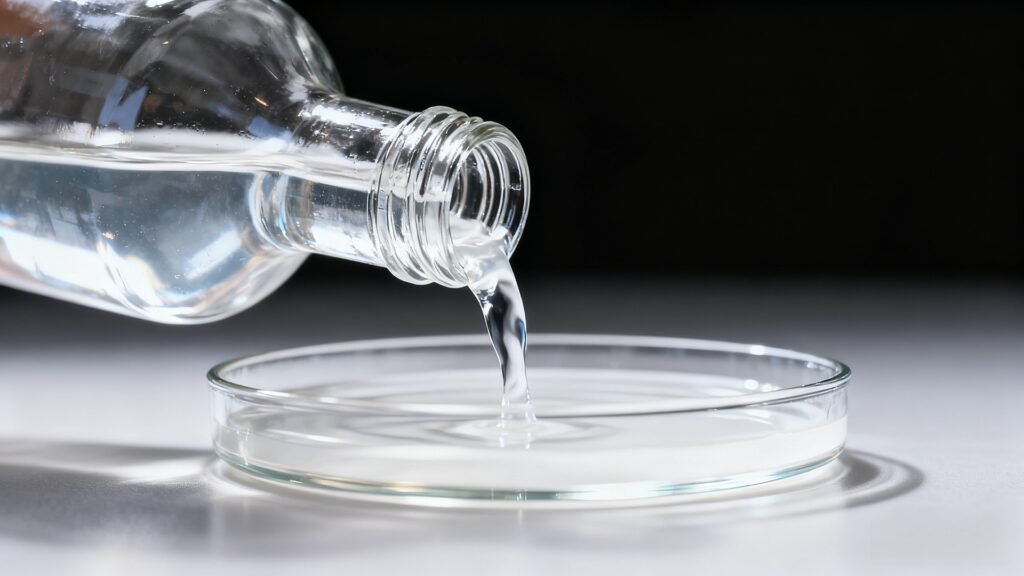


From Standard Supply to Customized Requirements
Built on technical expertise, manufacturing capability, and reliable supply

Supports batch quality verification & application-oriented testing, ensuring consistent performance & reliable product quality.

Stable, scalable manufacturing with standardized processes, supporting both regular supply and bulk industrial demand.
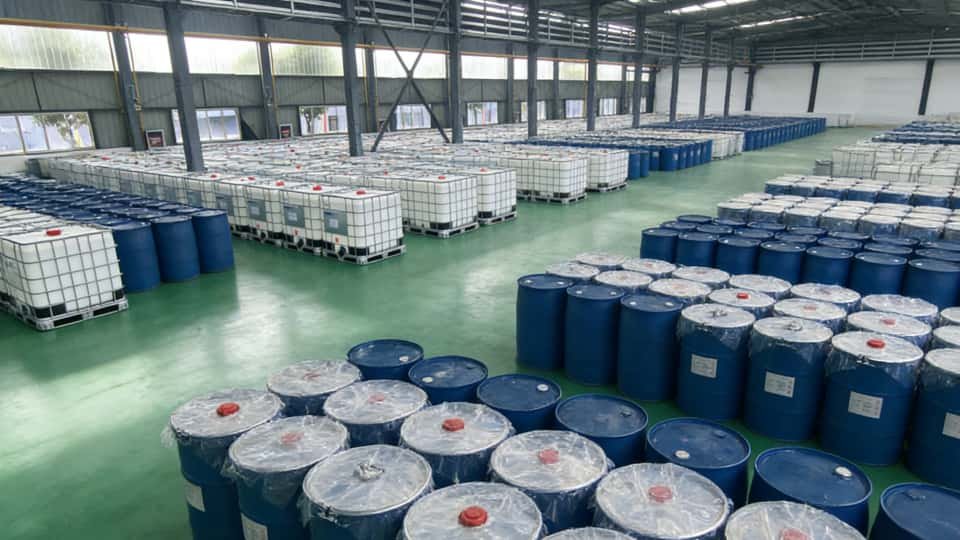
Products are stored under controlled conditions with standardized packaging, enabling efficient order fulfillment and reliable global delivery.

Clear communication and application-focused support, helping customers select suitable products and streamline procurement.
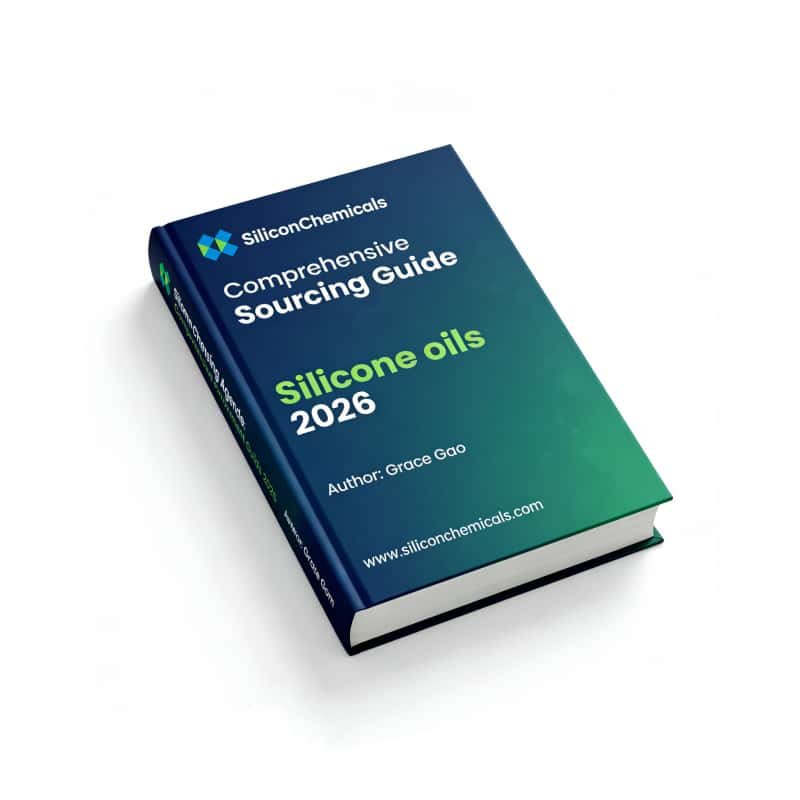
Navigate the complexities of the global Silicone Oil market. This definitive report provides actionable insights, vetted supplier landscapes, and strategic sourcing methodologies to optimize your supply chain in the year ahead.