Specify the wrong silane monomer and the problems don’t announce themselves immediately — they show up six weeks later as adhesion failures, filler agglomeration, or coating delamination on parts already in the field. At that point you’re looking at scrap runs, warranty returns, and the kind of root-cause investigation that consumes an engineering team for months. The global silane coupling agent market runs north of USD 2.1 billion and is growing at roughly 7% annually, which tells you how widely industry depends on these molecules — and how costly it is when the wrong one gets locked into a formulation or a procurement contract.
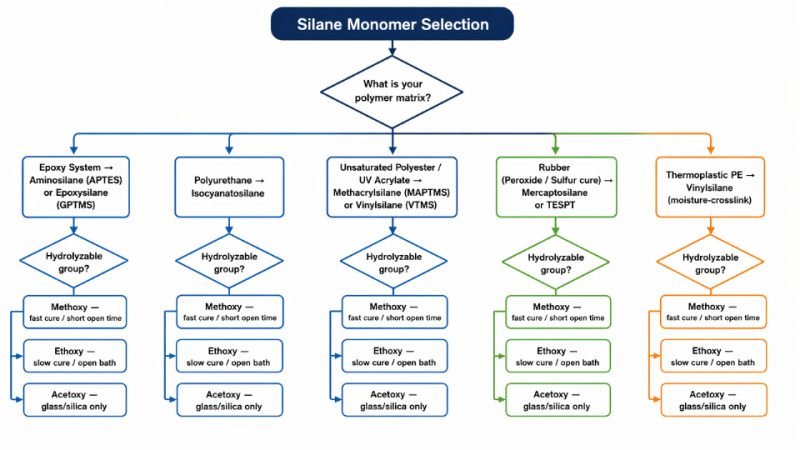
Choose a silane monomer by matching three things in sequence: the reactive organic group to your polymer or resin chemistry, the hydrolyzable alkoxy group to your process conditions and substrate moisture sensitivity, and the purity grade to your application’s tolerance for trace contaminants. Get all three right and you gain durable interfacial bonding, reduced filler loading, and predictable shelf life. Miss any one of them and you introduce failure modes that no downstream process adjustment can fully correct.
What makes silane selection genuinely difficult is that the same molecule can perform exceptionally in one system and actively destabilize another — not because the chemistry is exotic, but because the interaction between functional group reactivity, hydrolysis kinetics, and substrate surface chemistry is tightly coupled. The rest of this guide unpacks that coupling in terms a plant engineer or procurement manager can act on directly.
 based on polymer system and process conditions](https://siliconchemicals.com/wp-content/uploads/2026/06/how-to-choose-silane-monomers-01-hero.jpg)
Mapping the [Silane Monomer](https://siliconchemicals.com/silane-monomers/) Landscape: Functional Groups, Structural Classes, and What Each Does
Before you can evaluate purity grades, hydrolysis behavior, or supplier lead times, you need to know which functional group class your application actually demands. Get this wrong and no amount of process optimization recovers the performance gap. The taxonomy below organizes silane monomers by their organic reactive group — the end that bonds to your polymer, resin, or rubber matrix — because that chemistry, not the silicone backbone, drives application fit.
Aminosilanes
3-Aminopropyltriethoxysilane (APTES) and its trimethoxy analog are workhorses for epoxy, polyurethane, and nylon-glass fiber composites. The primary amine is a strong nucleophile: it opens epoxy rings directly, reacts with isocyanates, and forms hydrogen bonds with polyamide chains. Bis-amino silanes (such as AEAPTMS, bearing both primary and secondary amine) add a secondary amine that reacts more slowly and selectively — useful when you want staged crosslinking or need to reduce pot-life problems in two-part epoxy systems. The trade-off is real: primary amines give faster cure and stronger initial bond strength; secondary amines give better hydrolytic durability in humid environments because the lower basicity reduces siloxane bond reversion at the interface. For glass fiber sizings going into structural laminates, that durability difference shows up as a 15–30% retention gap in wet flexural strength after accelerated aging.
Epoxysilanes
Glycidoxypropyltrimethoxysilane (GPTMS) is the first choice for epoxy-based coatings, structural adhesives, and dental composites. The glycidyl ether ring opens with amines, carboxylic acids, and anhydrides under mild heat, integrating the silane directly into the cured network rather than leaving it as a pendant species. The trimethoxy version hydrolyzes and condenses faster than the triethoxy analog — relevant when you’re running a short dip-coat process and need rapid siloxane network formation on the substrate before the epoxy topcoat lands.
Vinylsilanes
Vinyltrimethoxysilane and vinyltriethoxysilane are cost-efficient options for peroxide or radiation crosslinking of polyolefins — primarily wire and cable insulation, where XLPE dominates. The vinyl group participates in free-radical crosslinking but cannot polymerize by addition alone under most processing conditions, so these silanes do not build molecular weight in the resin; they only create crosslink bridges between polymer chains and the inorganic surface. Unit cost is typically among the lowest in the functional silane range, which matters when you’re treating filler at 0.5–1.5% by weight of a high-volume compound.
Methacryloxysilanes
MEMO (3-methacryloxypropyltrimethoxysilane) integrates into UV-cure and peroxide-cure systems through standard free-radical polymerization — the methacrylate double bond copolymerizes with acrylic or methacrylic monomers in the resin matrix. Dental composites, UV-cure hard coatings on plastic optics, and radiation-cured adhesives are the primary domains. Unlike vinylsilanes, MEMO can build into the polymer backbone, not just crosslink it.
Mercaptosilanes
MPTMS (3-mercaptopropyltrimethoxysilane) and polysulfide silanes (TESPT, the bis-triethoxysilylpropyl tetrasulfide used in green tire compounds) are the dominant silane class in precipitated silica–rubber systems. The sulfur functionality integrates into the sulfur-vulcanization network while the alkoxysilyl end bonds to silica. The dynamic silica network formed by TESPT is precisely what reduces rolling resistance in high-silica passenger tire treads. Mixing temperature control is critical: above 150°C, premature silanization consumes the coupling agent before silica dispersion is complete, costing both performance and money.
Polysulfide silanes such as TESPT improve fuel efficiency in tire compounds by enabling silica to replace carbon black as the primary reinforcing filler, reducing rolling resistance.True
This is well-established tire industry chemistry. Silica-silane systems reduce hysteretic energy loss at operating temperatures compared with carbon black compounds, which is the technical basis for low-rolling-resistance tire labeling.
Alkylsilanes and Arylsilanes
Propyl-, octyl-, and phenyltrialkoxysilanes modify surface energy without forming any covalent bond to an organic polymer matrix — that is the point. They are hydrophobic surface treatments for mineral fillers, anti-blocking agents for film applications, and water-repellency treatments for masonry. No functional group means no polymer integration, which means compatibility with the final matrix is irrelevant; what matters is alkyl chain length versus the degree of hydrophobicity required and the processing temperature the treated filler will see.
Chlorosilanes and Acetoxysilanes
These carry the highest surface reactivity in the silane family but release HCl or acetic acid as hydrolysis by-products. Corrosion risk to equipment, worker exposure limits, and waste acid handling push them into niche industrial applications — rapid vapor-phase surface treatment of glass, certain high-throughput textile finishing lines — where the speed advantage justifies the process engineering burden. Never substitute these into a formulation designed around alkoxysilanes without reviewing your ventilation and materials-of-construction specifications first.
Isocyanatosilanes and Ureidosilanes
3-Isocyanatopropyltriethoxysilane and ureidopropyltriethoxysilane are the go-to options for polyurethane sealants and moisture-cure adhesives. The isocyanate group reacts with surface hydroxyls, amines, and water — which means moisture sensitivity during storage and handling is not a theoretical concern but a real shelf-life variable. Packaging in sealed, nitrogen-blanketed containers is non-negotiable; partial hydrolysis before use raises viscosity unpredictably and reduces crosslink density in the cured sealant. Ureidosilanes are less reactive and more handling-tolerant, making them preferable when process control over moisture is limited.
| Functional Class | Primary Application | Key Reactive Partner | Handling Watch Point |
|---|---|---|---|
| Aminosilane | Epoxy composites, PU, nylon fiber sizing | Epoxy rings, isocyanates | Amine volatility; skin sensitization |
| Epoxysilane | Epoxy coatings, adhesives, dental | Amines, acids, anhydrides | Trimethoxy grade: fast hydrolysis |
| Vinylsilane | Polyolefin cable insulation, XLPE | Free-radical initiators | Low reactivity without initiator present |
| Methacryloxysilane | UV/peroxide coatings, dental composites | Acrylate/methacrylate resins | Light sensitivity during storage |
| Mercaptosilane / Polysulfide | Tire compounds, rubber-[silica](https://siliconchemicals.com/silica/) | Sulfur vulcanization network | Temperature-controlled mixing required |
| Alkyl/Arylsilane | Filler surface treatment, hydrophobization | None (surface only) | Chain length vs. hydrophobicity trade-off |
| Chloro/Acetoxysilane | Vapor-phase treatment, textile finishing | Surface –OH groups | Corrosive by-products; ventilation critical |
| Isocyanato/Ureidosilane | PU sealants, moisture-cure adhesives | –OH, –NH₂, moisture | Strict moisture exclusion in storage |
Decoding Hydrolysis and Condensation Kinetics: Methoxy vs. Ethoxy vs. Acetoxy Leaving Groups
The organic functionality on a silane monomer gets most of the attention in formulation discussions, but the leaving group — the alkoxy or acyloxy substituent on silicon — governs how fast the monomer reacts with moisture, how long your working window lasts, and what byproducts you’re managing on the plant floor. Getting this wrong doesn’t produce a subtle performance dip; it produces gelled primer batches, delaminating coatings, or corroded copper busbars.
The Reaction Sequence You’re Actually Engineering
Hydrolysis and condensation are not a single event. Si–OR bonds hydrolyze stepwise in the presence of water, generating silanol intermediates (Si–OH). Those silanols then undergo self-condensation to form siloxane oligomers (Si–O–Si), and the oligomers either chemisorb onto substrate surface hydroxyls or co-condense with other surface species to form the interphase zone. Each step has its own rate constant, and each step is influenced by pH, temperature, water activity, and the specific leaving group. When a formulator says a silane “didn’t work,” the failure is usually located in one of these steps — not in the organic functional group chemistry.
Trimethoxysilanes: Speed at a Cost
Trimethoxysilanes hydrolyze 3–5x faster than their triethoxy analogs under equivalent pH and temperature conditions. That speed is genuinely useful in aqueous primer systems and high-throughput industrial lines where cycle time is constrained. A 1 wt% aqueous solution of aminopropyltrimethoxysilane at pH 5 achieves greater than 95% hydrolysis in under 5 minutes at 25°C. That’s a meaningful process advantage if you’re running a glass fiber sizing operation or a rapid-cure adhesive primer.
The tradeoff is methanol. Every hydrolyzed methoxy group releases one equivalent of methanol. OSHA sets the PEL at 200 ppm TWA, and in enclosed mixing or application areas, trimethoxysilane formulations can breach that threshold faster than operators expect — particularly at elevated temperatures or in spray applications. Ventilation engineering controls and air monitoring are not optional; they’re part of the process design.
Trimethoxysilanes release methanol during hydrolysis, which is subject to OSHA's 200 ppm TWA permissible exposure limit in occupational settings.True
Methanol is a known neurotoxin and OSHA 29 CFR 1910.1000 Table Z-1 lists a 200 ppm PEL (TWA). Each mole of trimethoxysilane can release up to 3 moles of methanol on full hydrolysis, making ventilation controls essential in confined or spray application environments.
Triethoxysilanes: The Formulator’s Working-Window Lever
The slower hydrolysis of triethoxysilanes — that same 1 wt% APTES ethoxy analog requires 15–20 minutes for comparable hydrolysis at 25°C and pH 5 — is frequently misread as a disadvantage. In solvent-borne coating systems, in two-component adhesives with pot-life requirements measured in hours, and in high-temperature cure cycles where the cure oven does the work, that slower rate is exactly what you need. Ethanol byproduct is benign at the concentrations encountered in typical industrial use and does not create the exposure control burden that methanol does. For most coatings and adhesives work, triethoxysilanes are the lower-risk starting point.
Acetoxysilanes: Fast but Substrate-Selective
Acetoxysilanes hydrolyze essentially on contact with ambient moisture, releasing acetic acid. The fast cure makes them attractive for room-temperature vulcanizing sealants — the characteristic vinegar odor of some RTV silicone sealants comes directly from this reaction. The problem is that acetic acid at the interphase is corrosive to copper, brass, and zinc substrates, and it etches calcium carbonate surfaces including marble and polished concrete. Specify acetoxysilanes on a copper electrical enclosure or a marble facade and you’ll see the consequences within weeks. Substrate compatibility screening is non-negotiable before committing to this leaving group.
pH as a Process Variable, Not Just a QC Parameter
Hydrolysis kinetics are acid-catalyzed below pH 4 and base-catalyzed above pH 8. Between those boundaries, especially near neutral pH, hydrolysis slows and pot life extends — which is why formulators targeting shelf-stable aqueous silane solutions typically buffer to pH 4.5–6. This is a deliberate engineering lever, not incidental chemistry. Pushing pH below 4 accelerates hydrolysis but also drives rapid condensation and oligomerization, which can shorten usable pot life despite faster Si–OH generation.
Concentration and the Monolayer vs. Multilayer Decision
Dilute silane solutions — typically below 2 wt% — favor monomeric or small oligomeric silanols. At that concentration, you’re depositing thin, near-monolayer interphases: appropriate for glass fiber sizings, electronic substrate treatments, and applications where bond density at the interface matters more than interphase thickness. Concentrated solutions accelerate oligomerization, producing thicker multilayer interphase zones that can improve mechanical energy dissipation in rubber compounding or fiber-reinforced composites, but can also become a weak boundary layer if the oligomer network is poorly cross-linked. The right concentration is application-specific; running a standard glass sizing process at 5 wt% because “more is better” is a reliable path to fiber pull-out failure.
| Leaving Group | Relative Hydrolysis Rate | Byproduct | Key Application Fit | Primary Risk |
|---|---|---|---|---|
| Trimethoxy | Fast (baseline) | Methanol | Aqueous primers, short-cycle processes | Methanol exposure; short pot life |
| Triethoxy | 3–5x slower | Ethanol | Solvent coatings, long pot-life adhesives | Slower cure may require elevated temperature |
| Acetoxy | Near-instantaneous | Acetic acid | RTV sealants, fast ambient cure | Corrosive to Cu, brass, marble, carbonates |
Substrate-Specific Selection Logic: Glass, [Silica](https://siliconchemicals.com/silica/), Metal Oxides, and Polymer Surfaces
Knowing which functional group a silane carries is only half the decision. The other half is understanding what the substrate surface actually offers in return — specifically, the density of reactive hydroxyl sites, the oxide chemistry, and whether the surface needs pre-treatment before any silane can form a durable covalent bond. Get this wrong and you are not depositing a coupling layer; you are depositing a weakly adsorbed film that fails under humidity cycling or thermal stress.
Glass and E-Glass Fibers
Glass and E-glass present the most forgiving bonding environment in industrial practice. Surface silanol density runs around 4–5 OH/nm², giving any trialkoxysilane plenty of anchor points. The silane-surface bond is rarely the weak link here. Selection therefore pivots entirely to the organic functional group and its compatibility with the resin matrix. Aminosilanes (3-aminopropyltriethoxysilane, for example) are the workhorses for epoxy-laminated composites and structural adhesives. Methacryloxysilanes match free-radical-cured polyester and vinyl ester systems. Vinylsilanes work in peroxide-cured rubber composites but perform poorly with epoxy. Using an aminosilane in a polyester system will not create a catastrophic bond failure on day one — it creates a latent weakness that shows up as delamination after 500 hours of wet aging, which is far harder to trace back to the silane choice.
Fumed and Precipitated Silica
Surface hydroxyl density on silica is lower than on glass — typically 2–4 OH/nm² depending on thermal history and manufacturing route. Precipitated silica used in tire compounds responds well to mercaptosilanes and bis-sulfido silanes (TESPT being the industrial standard), which react with the sulfur-cure network. Fumed silica destined for hydrophobic surface modification in coatings or filled polyolefins takes octyltriethoxysilane or hexamethyldisilazane treatment, reducing the silanol population and preventing moisture re-adsorption that causes viscosity drift during storage.
Bis-sulfido silane (TESPT) is the most widely used silane coupling agent for silica-reinforced rubber tire treads.True
TESPT reacts with silica surface silanols during mixing and co-vulcanizes with the rubber network through its polysulfide bridge, a mechanism well-established in tire compounding literature and standard practice across major tire producers since the 1990s.
Aluminum and Aluminum Oxide
Freshly formed aluminum oxide carries a naturally hydrated surface that bonds aminosilanes and epoxysilanes strongly. The practical problem is contamination. Rolling oils, draw lubricants, and atmospheric organics block silanol access. An alkaline degreaser wash followed by a dilute acid rinse to bring surface pH to 4–5 optimizes both cleanliness and the protonation state of surface hydroxyls, maximizing silane coverage. Skip the acid step and coverage is patchy; you get peel-strength gains in the 40–60% range rather than the 80–120% achievable with a proper pre-treatment sequence.
Steel and Iron Oxides
Steel is the difficult substrate. Native iron oxide presents limited hydroxyl density compared to silica or alumina, and the surface is heterogeneous. Mechanical abrasion (grit blast to Sa 2.5) or phosphoric acid etching before silane priming is not optional — it is the only way to generate enough reactive sites. Bis-sulfide silanes applied to blast-cleaned steel consistently reach 500-hour neutral salt spray (NSS) resistance in published corrosion testing, which places them competitive with zinc chromate primers in non-aviation contexts.
Calcium Carbonate and Other Mineral Fillers
Calcium carbonate presents low inherent silane reactivity. The standard industrial answer is stearic acid or fatty acid salt surface treatment, not silane. Phosphonate-functional silanes show some promise for CaCO₃ and talc, but these remain niche and commercially limited for now. Do not force a trialkoxysilane onto an alkaline mineral filler expecting coupling-agent performance — the hydrolysis and re-condensation behavior is entirely different from silica chemistry.
Polymer Substrates: Polyolefins, PTFE, and Similar Surfaces
These surfaces contain no surface hydroxyl groups. Corona, plasma, or flame pre-treatment is a hard prerequisite — not a process refinement. These treatments oxidize the surface layer, generating carbonyl, carboxyl, and hydroxyl species that silane adhesion promoters can subsequently react with. Without activation, the silane sits on a non-polar surface and peels off with minimal force. Activation level degrades over time (hours to days depending on the treatment and ambient humidity), so silane application must follow pre-treatment promptly.
| Substrate | Recommended Silane Class | Surface Pre-treatment | Peel-Strength Improvement vs. Untreated |
|---|---|---|---|
| E-glass fiber (epoxy matrix) | Aminosilane (e.g., APTES) | None required; sizing bath pH 4–5 | 60–120% |
| E-glass fiber (polyester matrix) | Methacrylosilane | None required | 50–100% |
| Fumed/precipitated silica (rubber) | Bis-sulfido silane (TESPT) | None; mixing temperature control critical | 40–90% |
| Fumed silica (coatings/plastics) | Octyltriethoxysilane | None | Surface energy reduction, viscosity control |
| Aluminum / aluminum oxide | Aminosilane or epoxysilane | Alkaline degrease + pH 4–5 acid rinse | 80–120% |
| Steel / iron oxide | Bis-sulfide silane | Grit blast (Sa 2.5) or phosphoric acid etch | 50–100%; NSS up to 500 h |
| Calcium carbonate | Fatty acid (silane not preferred) | None standard | Limited; phosphonate silanes under evaluation |
| Polyolefin / PTFE | Aminosilane or epoxysilane (post-activation) | Corona, plasma, or flame activation | 30–80% (highly process-dependent) |
Improvement ranges depend on silane concentration, cure conditions, substrate surface roughness, and resin system. Treat these as working benchmarks, not guaranteed specifications.
Matching Silane Chemistry to Resin and Polymer Matrix Systems
Functional group mismatch is one of the most common — and quietly expensive — formulation errors in silane application. The silane bonds to the substrate perfectly, but if the organic terminus cannot participate in the host polymer’s cure chemistry, you get a molecular anchor attached to nothing that matters mechanically. The result shows up weeks later as delamination, cohesive failure in the interphase, or moisture-driven adhesion loss that passes initial QC and fails in the field.
Epoxy Resins: Two Valid Pathways, One Critical Dose Limit
Both aminosilanes and epoxysilanes work in epoxy systems, but they work differently and are not interchangeable without consequence.
Aminosilanes (3-aminopropyltriethoxysilane, N-aminoethyl-3-aminopropyltrimethoxysilane) react directly with epoxide rings through ring-opening addition. They are stoichiometrically consumed in the cure reaction — meaning every amine molecule on the filler surface participates in crosslink formation, which is why aminosilane-treated glass fiber in epoxy composites can raise interlaminar shear strength by measurable margins. The risk is overdosing. Above roughly 1.5 wt% on filler surface area, excess free amine acts as a plasticizer, suppressing Tg by 5–15 °C depending on resin system and filler loading. In structural or high-temperature applications, that Tg depression is not acceptable.
Epoxysilanes (3-glycidoxypropyltrimethoxysilane, GPTMS) co-cure as part of the epoxy network itself. They are the preferred choice when the formulation uses an amine hardener, because the epoxy terminus on the silane reacts with amine curing agent alongside the bulk resin — no stoichiometric disruption, no plasticization risk at normal loading levels.
Polyurethane and Moisture-Cure Systems
Isocyanatosilanes — 3-isocyanatopropyltriethoxysilane being the standard commercial grade — give you a reactive NCO terminus that integrates directly into the urethane backbone through reaction with hydroxyl or amine groups. This produces a genuine covalent bridge between the silane network at the substrate and the urethane polymer chain. For one-component moisture-cure formulations, use a blocked isocyanatosilane; the blocking group deprotects at elevated temperature or under specific cure conditions, preventing premature NCO reaction with ambient moisture during storage.
Aminosilanes in polyurethane systems behave as chain extenders. That can be useful for controlling segment length in two-component systems, but in one-component formulations the free amine will react with isocyanate groups in the prepolymer immediately — shortening pot life from hours to minutes if the loading is not carefully controlled.
Polyolefin Wire and Cable: The Sioplas Grafting Process
Crosslinking polyethylene or polypropylene with vinyltrimethoxysilane follows a peroxide-initiated free-radical graft mechanism. The peroxide generates radicals on the polyolefin backbone; vinylsilane grafts onto those sites at typical loadings of 0.5–2.0 wt% silane, depending on peroxide concentration, processing temperature (usually 180–220 °C in the extruder), and residence time. After extrusion, moisture crosslinking through silanol condensation completes the network. Graft efficiency matters here: ungrafted vinylsilane that remains as free monomer can volatilize during processing, creating porosity in the insulation layer.
Vinyltrimethoxysilane grafted polyolefin crosslinked by moisture (Sioplas process) is a commercially established wire insulation technology.True
The Sioplas process has been in industrial use since the 1970s for XLPE wire and cable insulation, widely documented in polymer processing literature and cable standards such as IEC 60502.
Acrylic and UV-Cure Coatings
Methacryloxysilanes (3-methacryloxypropyltrimethoxysilane, MPS) co-polymerize directly into acrylic backbones through the methacrylate double bond. In UV-cure clear coats applied to glass or metal substrates, this eliminates the need for a separate adhesion primer — the silane simultaneously anchors to the substrate via silanol condensation and copolymerizes into the coating film. Practical loading is typically 0.5–3.0 wt% on total formulation solids; above that range, excess unreacted silane can compromise film clarity and water resistance.
Rubber Compounds with Silica Filler
Bis-(triethoxysilylpropyl)tetrasulfide — TESPT, sold commercially as Si-69 — remains the industry workhorse for silica-reinforced tire treads. The tetrasulfide bridge provides both a coupling function and a sulfur donor during vulcanization. Dynamic coupling between silica particles through TESPT reduces rolling resistance by 15–25% in tire tread formulations compared to carbon black reference compounds, which is why green tire technology shifted heavily toward precipitated silica over the past three decades. Processing temperature control is critical: above 150 °C during mixing, premature sulfur release from the tetrasulfide can cause scorch.
Silicone and Hybrid MS/SPUR Polymers
Alkoxysilane-terminated prepolymers — MS polymers and silane-terminated polyurethanes (SPUR) — cure through the same Si–OR condensation mechanism as conventional coupling agents. The architectural choice between trifunctional (T-type, RSi(OR)₃) and difunctional (D-type, R₂Si(OR)₂) terminal groups directly controls crosslink density and final modulus. T-functional termination gives tighter networks with higher modulus and lower elongation at break; D-functional termination produces softer, more elastic sealants. This is a deliberate formulation lever, not a secondary consideration.
Mismatches That Cost You Product
Three combinations appear repeatedly in failure investigations:
| Silane | Matrix | Why It Fails |
|---|---|---|
| Vinylsilane | Epoxy resin | No co-cure pathway; vinyl group does not react with epoxide or amine hardener |
| Aminosilane | Acid-anhydride epoxy | Immediate salt formation; white haze, loss of optical clarity, disrupted cure stoichiometry |
| Mercaptosilane | Peroxide-free polyolefin | Thiol activation requires radical initiator; no grafting occurs without peroxide or radiation |
Getting the organic functionality matched to cure chemistry is not a refinement step — it is the foundation. Every other optimization in loading level, hydrolysis condition, or substrate pre-treatment builds on getting this pairing correct first.
Processing Conditions That Govern Silane Performance: Temperature, Concentration, Solvent, and Application Method
Selecting the right silane chemistry is only half the job. A perfectly matched epoxysilane will still deliver brittle interfaces and adhesion failures if the concentration is wrong, the solvent system drives premature condensation, or the cure cycle gets cut short on a busy production shift. Process parameters are where chemistry either works or wastes your budget.
Concentration: Thin Is Almost Always Better Than Thick
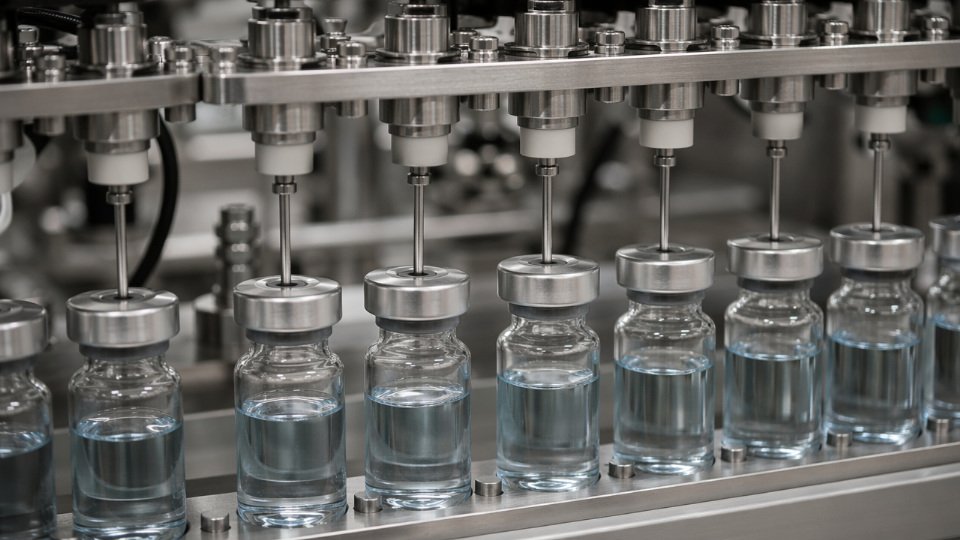
For glass-fiber sizing and primer applications, working concentrations of 0.1–0.5 wt% in aqueous solution are standard. For filler surface treatment in dry compounding — precipitated silica, ground calcium carbonate, kaolin — you typically need 0.5–2 wt% relative to filler weight, depending on the filler’s BET surface area. Higher surface area means more silanol coverage required, not a license to dump in extra silane.
Overdosing is the mistake that looks harmless until your tensile or peel data comes back wrong. When silane deposits build up into thick, multilayer interphases, the outer layers are held together only by weak Si–O–Si condensate bonds, not anchored to the substrate. That interphase becomes the failure plane. The composite fractures cohesively through the silane layer, not at the interface — and you lose the substrate’s mechanical advantage entirely. Keep concentration at the low end of the functional range and verify with carbon analysis or thermogravimetric analysis on treated filler before scaling up.
Solvent Selection and pH Control
Aqueous systems are the default choice for environmental compliance and cost. Trimethoxysilanes need pH held at 3.5–5.5; triethoxysilanes are more forgiving at pH 4–6. Dilute acetic acid is the standard acidifying agent — cheap, volatile, and it doesn’t introduce ionic contamination the way hydrochloric acid would. Drift outside that pH window and you get either insufficient hydrolysis (too alkaline) or runaway self-condensation into oligomeric siloxane gels (too acidic, or too long a hold time at temperature).
For spray application on metal substrates — pre-treatment of steel or aluminum ahead of powder coating or adhesive bonding — an ethanol-water blend, typically 95:5 EtOH:H₂O by volume, keeps the silane dissolved, slows hydrolysis enough for even surface deposition, and evaporates cleanly. It is not appropriate for high-volume production where solvent emissions require permits; aqueous systems are preferred at scale.
Pre-hydrolyzing APTES in 0.1% acetic acid for 30 minutes before substrate contact reduces self-condensation byproducts and improves monolayer uniformityTrue
Pre-hydrolysis converts alkoxysilane groups to silanols before substrate contact, minimizing oligomeric condensate that would otherwise deposit as irregular multilayer aggregates rather than a uniform bound monolayer. This is well-established in surface science literature and standard practice in semiconductor and optical-coating applications.
For precision optical components and printed circuit board laminates, pre-hydrolysis before a solution dip-coat is not optional — it is the procedure.
Cure Temperature, Time, and Humidity
Trimethoxysilanes will cure at ambient temperature if relative humidity stays above 40%. That is adequate for field priming of metal joints or on-site glass surface treatment. It is not adequate for epoxysilanes in structural bonding or composite laminate applications, where elevated cure at 100–150°C for 30–60 minutes is necessary to complete Si–O–substrate condensation and achieve maximum bond density. Cutting the oven time to save cycle time is a common production pressure that shows up six months later as adhesion failures in the field.
Dry blending of filler in a Henschel mixer runs 80–120°C for 5–15 minutes. Below 80°C, physi-sorbed water on filler surfaces interferes with silane bonding. Above 120°C, volatile silane loss accelerates, especially with trimethoxysilanes.
Storage, Handling, and Safety
Moisture is the single biggest threat to silane shelf life. Store in sealed containers under a dry nitrogen blanket. Trimethoxysilanes in unopened, properly sealed containers hold specification for 12–18 months; once opened, re-test at 6-month intervals using GC purity and viscosity — viscosity creep is the first sign of oligomerization.
Methanol released from trimethoxysilane hydrolysis requires local exhaust ventilation at mixing stations. Isocyanatosilanes demand a moisture-barrier respirator and impermeable gloves — NCO groups react with skin moisture as readily as they react with your substrate. Flash points across common silane monomers run 60–110°C depending on the alkoxy group and organic functional chain; confirm the specific value on the SDS before designing ventilation or electrical classification for the work area.
Purity Grades, Quality Specifications, and How to Evaluate a Silane Supplier’s Technical Credentials
Procurement teams that treat silane monomers as a commodity purchase — comparing price per kilogram and little else — consistently encounter the same problems six to eighteen months into production: inconsistent adhesion performance, packaging failures from premature hydrolysis, and corrosion incidents traced back to residual chloride. The analytical parameters on a certificate of analysis are not bureaucratic paperwork. They are direct predictors of what the material will do on your production line.
GC Purity and What the Number Actually Means
Gas chromatography purity is the first figure to examine, but the threshold you require depends entirely on your application. Industrial coupling agent applications — rubber compounding, mineral filler treatment, construction sealants — typically run at 97% minimum GC purity without measurable performance loss. Electronic and semiconductor applications are a different matter entirely. Surface passivation layers, underfill formulations, and optical coatings demand 99%+ purity, and the price premium for that specification runs 30–80% above industrial grade, depending on functional group complexity and synthesis difficulty.
Refractive index should be specified with traceable reference values for each grade. A trimethoxysilyl-propyl methacrylate (MEMO) at industrial grade carries a slightly different RI range than the same molecule at semiconductor grade; the difference is real and measurable. If a supplier’s CoA lists refractive index as a range spanning ±0.003 or wider, treat that as a process control red flag.
Water content by Karl Fischer titration deserves attention that it rarely receives. For trimethoxysilanes specifically, keep specification below 200 ppm moisture in the packaged product. The reason is straightforward: trimethoxysilanes hydrolyze 3–5x faster than their triethoxysilane counterparts under the same conditions. At 200+ ppm moisture in the drum, you are already initiating condensation inside the packaging, reducing active monomer content before the material ever reaches your mixing vessel. Slow-moving inventory in a humid warehouse can make this worse. Specify your incoming QC limit, measure it on receipt, and reject material that fails.
Color measurement via APHA scale matters specifically for optical adhesives, lens coatings, and transparent composite matrices. Specify APHA below 20 for these uses. A yellow-tinted silane in a UV-cure optical formulation will shift your final product’s transmission spectrum in ways that are difficult to correct downstream.
Lot-to-Lot Consistency: The Most Diagnostic Test You Can Run
Request three to five consecutive historical CoA lots from any candidate supplier and calculate the standard deviation on GC purity across those lots. A manufacturer with mature distillation processes and proper process analytical technology should hold ±0.3% or tighter. Wider variation than that — say ±0.8% across five lots — almost always signals one of two things: blending off-spec batches to average out to a passing number, or a distillation column that is not running under consistent reflux and cut-point control. Neither situation is acceptable for a qualified production input.
Trace Metal Content: Non-Negotiable for Electronic Applications
For any silane entering semiconductor surface treatment, wafer-level packaging, or high-reliability electronics assembly, specify trace metals by ICP-MS. The numbers that matter: Na, K, Fe, and Cu each below 1 ppm. These elements act as mobile ion contaminants in oxide and nitride dielectric layers and as catalytic degradation initiators in cured silane films. Standard industrial grades may carry 10–50 ppm of these metals without any consequence in rubber or construction applications, but the same material used on a semiconductor surface becomes a reliability liability.
Hydrolyzable Chloride: The Corrosion Variable Procurement Often Misses
Most commercial silanes are synthesized through chlorosilane intermediates. Residual hydrolyzable chloride — Cl⁻ released when the silane contacts moisture — is a direct corrosion initiator on metal substrates and an ionic contamination risk in electronics. For corrosion-sensitive applications, including adhesion promoters on aluminum, steel, or copper surfaces, specify hydrolyzable chloride below 10 ppm. Do not accept a supplier’s verbal assurance on this parameter; require ion chromatography data on the CoA.
Suppliers who cannot provide ICP-MS and Karl Fischer data on request are unlikely to be running dedicated analytical quality control.True
These are standard, relatively low-cost analytical methods for any manufacturer with a genuine in-house QC laboratory. Inability or unwillingness to provide this data on request is a reliable indicator that quality control is outsourced, intermittent, or absent.
Supplier Qualification: The Checklist That Separates Manufacturers from Traders
When qualifying a new silane supplier, work through these criteria in sequence rather than treating them as optional boxes:
| Qualification Criterion | Minimum Acceptable Standard | Why It Matters |
|---|---|---|
| ISO 9001 certification | Current, with scope covering silane production | Confirms documented process control and nonconformance handling |
| In-house GC-MS and Karl Fischer | Both instruments on-site, calibration records available | Rules out outsourced QC with delayed turnaround and sampling chain-of-custody gaps |
| Dedicated silane production lines | No shared vessels with unrelated chemistries | Cross-contamination from toll manufacturing with shared equipment is a real and documented source of trace impurities |
| Annual capacity | 1,000 MT/year minimum as proxy for process maturity | Small-batch custom synthesis does not produce the process consistency that industrial buyers require |
| Process safety documentation | PSM or equivalent hazard review for chlorosilane handling | Indicates engineering rigor, also affects your supplier’s insurance and continuity risk profile |
| REACH and regulatory dossiers | Available for EU-destined shipments | Non-negotiable if you are importing into Europe |
SiliconChemicals operates vertically integrated production within China’s established organosilicon industrial clusters in Zhejiang and Jiangxi, with in-house capacity spanning trichlorosilane synthesis through finished silane product across product lines exceeding 10,000 MT/year in aggregate. ISO 9001 certification and full REACH compliance documentation are available for EU customer qualification packages.
The Sample Request Protocol That Prevents Costly Surprises
Never qualify a silane supplier on CoA review alone. Request a 500 g sample accompanied by the full CoA for that specific lot number. Run independent GC verification in your own lab — or through a third-party analytical lab if you lack in-house GC — before placing any trial order. Then prepare application coupons using your actual substrate and cure conditions. Performance on a coupon under your process conditions is the only test that genuinely predicts production behavior. Technical data sheets should specify recommended use concentrations, compatible solvents, and cure temperature windows. If a supplier cannot provide a TDS with those parameters, that absence tells you something about their application development capability.
Regulatory Compliance, REACH, RoHS, and Global Trade Considerations for Silane Procurement
Compliance has moved from a back-office checkbox to a hard gate that stops shipments, kills approvals, and triggers reformulation. If you are specifying a silane for a product sold into the EU, US, or Japan, treat regulatory status as a co-equal criterion alongside functional group chemistry and hydrolysis kinetics — not an afterthought once the formulation is locked.
REACH Registration: What Buyers Actually Need to Verify
Most commercial silane monomers with significant EU market volume are already pre-registered or fully registered under REACH. The practical obligation for an EU-based formulator or compounder purchasing from a non-EU manufacturer is to confirm the supplier holds a valid REACH registration — or that an Only Representative (OR) has been appointed under Article 8 to fulfill the registration obligation on their behalf. Without one of these in place, the EU importer becomes the registrant by default, which carries full dossier and tonnage-band compliance obligations most buyers are not equipped to manage.
Key registered substances to cross-check before procurement include APTES (3-aminopropyltriethoxysilane, EC 213-982-4), GPTMS (3-glycidoxypropyltrimethoxysilane, EC 213-471-9), and MPTMS (3-mercaptopropyltrimethoxysilane, EC 219-784-2). Ask your supplier for the REACH registration number in writing — a confirmation letter, not just a verbal assurance on a call.
SiliconChemicals maintains REACH registration documentation and Only Representative arrangements covering its standard silane coupling agent product lines for EU export.True
This is a stated supplier capability consistent with export-oriented Chinese organosilicon manufacturers supplying EU markets at commercial volume; buyers should still request specific registration numbers per substance for their CoA files.
SVHC and CMR Status: The Amino-Functional Silane Problem
Certain amino-functional silanes and their hydrolysis products have been evaluated under REACH for reproductive toxicity and sensitization endpoints. Classification can shift between REACH amendment cycles. Before formulating an aminosilane primer or adhesion promoter into any consumer-contact product — flooring adhesives, textile treatments, personal care packaging — pull the current SDS and check the CMR category. A silane that was unclassified two years ago may carry H360 (reproductive toxicity, Cat. 1B) in a revised SDS today. Your formulation sign-off process needs a live SDS date check, not a static one pulled at initial qualification.
Halogen-Free and RoHS Compliance: The Chlorosilane Residual Issue
Chlorosilane synthesis routes leave residual organically bound chlorine in the finished alkoxysilane. For standard industrial grades this rarely causes problems, but in PCB laminates, underfill encapsulants, and conformal coatings that require IEC 61249-2-21 halogen-free certification, even low residual chlorine can push a formulation out of compliance. The threshold under that standard is total organically bound chlorine below 900 ppm. Request explicit confirmation of this parameter on the CoA — not just a generic “halogen-free” declaration, which has no standardized meaning. Electronic-grade silanes from a supplier operating dedicated low-halogen production lines will typically come in well under this threshold; standard industrial-grade product may not, particularly from campaigns that follow chlorosilane-route batches in shared equipment.
TSCA Inventory Status for US Market Access
Commercial import and sale in the United States requires TSCA inventory activity. The major commodity silanes — APTES, GPTMS, VTMS, DAMO-T, and their close structural analogues — are active on the public TSCA inventory. Specialty or low-volume silanes may require a pre-manufacture notice (PMN) or exemption filing before first US import. SiliconChemicals maintains CDX TSCA submission records for its standard product lines, which it can provide as a TSCA certification letter for inclusion in your US customs documentation package.
HS Classification, Export Controls, and Duty Planning
Organosilicon compounds — organosilanes included — are generally freely exportable from China with no strategic export license requirements under current MOFCOM schedules. The correct HS code for most functional alkoxysilane monomers falls under 2931.90 (other organo-inorganic compounds). Misclassification into a neighboring heading can trigger reclassification audits and retroactive duty assessments. The EU MFN tariff on HS 2931.90 silanes ran approximately 6.5% in 2024; confirm the current rate at time of order, as MFN schedules update annually. For buyers operating under GSP eligibility, a properly issued Form A certificate of origin can reduce or eliminate this duty, provided the supplier can issue it against verified country-of-origin criteria.
The Minimum Documentation Package for a Compliant Shipment
Do not release a purchase order for a silane destined for regulated markets without confirming you will receive all of the following before goods ship: a 16-section GHS-format Safety Data Sheet current within 36 months, a Certificate of Analysis traceable to the production batch, a REACH registration letter or OR contact details, a TSCA certification letter, and a country-of-origin declaration. For ocean freight, confirm UN packaging compliance — most liquid alkoxysilanes classify as UN 1993, Flammable Liquid, Class 3, Packing Group II or III depending on flash point, and the shipping documentation must reflect this exactly. Standard commercial silane shipments from Chinese manufacturers to European ports run 2–4 weeks ex-works plus 3–4 weeks ocean transit; factor this into safety stock calculations, particularly for seasonal demand peaks where port congestion can add another week or more.
Total Cost of Ownership Analysis: Price per Kilogram vs. True Performance Value
Unit price is the wrong lens for silane procurement. A purchasing manager who selects vinyltrimethoxysilane at USD 2.5/kg over a USD 3.8/kg alternative because the spec sheet looks similar is optimizing the wrong variable — and will find out on the production floor, usually at the worst possible moment.
What the Price Spread Actually Tells You
Current 2024 indicative FOB China pricing spans roughly an order of magnitude across the silane monomer family: vinyltrimethoxysilane runs USD 2.5–4.0/kg (depending on order volume and purity tier), APTES lands at USD 5–8/kg, GPTMS at USD 6–9/kg, TESPT (Si-69) at USD 8–12/kg, and isocyanatosilanes at USD 15–25/kg depending on isocyanate content and moisture-control packaging requirements. That spread exists because reaction complexity, raw material cost, and synthesis difficulty differ substantially. It does not mean the cheaper product delivers worse value. It means the value-in-use calculation has to be done explicitly, not assumed.
The Purity ROI Calculation That Changes the Conversation
Consider a composite manufacturer applying 0.3 wt% aminosilane sizing to glass fiber reinforcement. Switching from a 97% industrial-grade material to a 99%+ high-purity grade adds roughly USD 0.8/kg to the silane purchase cost. At 0.3 wt% loading, that translates to less than USD 0.003/kg of finished composite — a rounding error on the bill of materials.
The operational consequence is not a rounding error. Aminosilane purity affects the uniformity of the siloxane monolayer on fiber surfaces. At 97% purity, residual hydrolysis byproducts and oligomeric contaminants compete for surface hydroxyl sites and disrupt interfacial bonding consistency. A realistic outcome in a glass fiber/epoxy laminate application: delamination reject rates of 1.8–2.5% at industrial grade versus 0.3–0.6% at high-purity grade — figures that depend on cure conditions, fiber surface area, and resin formulation. If the composite sells at USD 8–14/kg and rework or scrap costs run 60–80% of finished product value, the net ROI of upgrading purity sits in the 10:1 to 18:1 range. That is a number procurement managers can act on.
Upgrading from 97% to 99%+ aminosilane purity typically costs less than USD 0.005/kg of finished composite at standard loading ratesTrue
At 0.3 wt% silane loading, a USD 0.8/kg price premium on the silane itself adds USD 0.0024/kg to composite material cost — well under one cent per kilogram of finished part.
Filler Loading Efficiency as a Cost Offset
A well-selected silane at the right concentration does more than improve adhesion — it changes what you can put in the compound. In silica-filled rubber, an appropriately matched bifunctional silane such as TESPT can increase allowable precipitated silica loading by 15–25 phr before viscosity becomes unprocessable. That silica volume directly offsets polymer volume. Rubber polymer costs USD 2–5/kg depending on type; precipitated silica runs USD 0.8–1.4/kg. Even at the lower end of loading improvement, the compound cost reduction from polymer displacement can exceed the entire cost of the silane treatment by a factor of three or more.
Pot Life Economics in Adhesive and Sealant Lines
Trimethoxysilanes hydrolyze 3–5x faster than their triethoxy analogs under equivalent conditions. In a continuous adhesive production line, that kinetic difference has a direct dollar value. A methoxy-functional sealant formulation with a 4-hour usable pot life will generate batch waste during shift changes, equipment cleaning cycles, and any unplanned line stoppage. The ethoxysilane analog that extends pot life to 10–14 hours may carry a 10–15% price premium per kilogram of silane, but eliminating two wasted batches per week in a mid-volume operation recovers that premium within days. The calculation depends on batch size, line speed, and waste disposal costs, but the directional logic is consistent.
Supply Chain Stability as a Quantifiable Cost
Sourcing exclusively on spot price from multiple commodity traders introduces quality variance that rarely shows up until it causes a production problem. Lot-to-lot variation in hydrolysis rate, residual acidity, or moisture content can shift cure windows enough to move reject rates by 0.5–2.0 percentage points — silently, across multiple production runs, before the root cause is identified. The investigation cost alone — lab time, line downtime, customer complaint handling — typically runs USD 5,000–25,000 per incident depending on facility size and product complexity.
A long-term supply agreement with a vertically integrated manufacturer enables vendor-managed inventory, locked pricing corridors within agreed tolerance bands, and direct technical service access. For a mid-size compound manufacturer purchasing 20–100 tonnes of silane annually, the combination of reduced procurement overhead, fewer quality incidents, and access to application engineering support is realistically worth USD 30,000–120,000 per year — far exceeding any spot-price savings.
Environmental Cost Accounting
Chlorosilane-based surface treatments carry a waste treatment tail that rarely appears in the silane purchase price. HCl generation during application requires neutralization, wastewater pH management, and in many jurisdictions, documented disposal reporting. Switching to an aqueous triethoxysilane primer system eliminates that waste stream. Conservative estimates put HCl waste treatment costs at USD 0.5–1.5/kg of treated substrate depending on local disposal rates and treatment system amortization. For a facility treating several hundred tonnes of substrate annually, that is a compliance cost reduction worth modeling explicitly before the next contract renewal.
Frequently Asked Questions About Selecting and Using Silane Monomers
Can I substitute a trimethoxysilane with the triethoxysilane analog without retesting?
Not safely — and the practical consequences are more serious than most formulators expect. Trimethoxysilanes hydrolyze 3–5× faster than their triethoxysilane counterparts under equivalent pH and temperature, so switching analogs reshapes your open time, pot life, and condensation window in ways that compound through every downstream step. The by-product profile also changes: methanol evolves from methoxy systems, ethanol from ethoxy systems. In enclosed-mold or low-ventilation processes, that distinction has both toxicological handling implications and solubility effects on the interface itself.
On fast-cure cycles — typical in injection overmolding or hot-press lamination — adhesion performance can drop 10–20% simply because the slower-hydrolyzing triethoxysilane hasn’t reached adequate silanization density before the matrix vitrifies. Always run peel-strength or lap-shear coupon tests at your actual cure time and temperature before approving the substitution. A desk-based assumption that the analogs are interchangeable is one of the more expensive shortcuts on a production line.
What is the shelf life of an opened silane container, and how should partially used drums be stored?
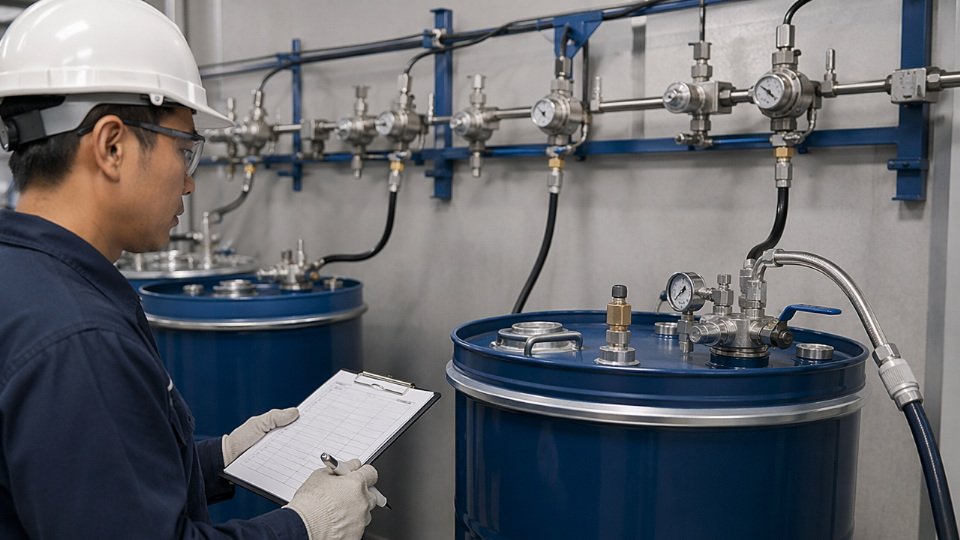
Reseal the drum immediately under a dry nitrogen blanket — atmospheric moisture begins hydrolysis within minutes in humid plant environments. Store below 25°C, away from direct sunlight and moisture ingress. Under those conditions, expect 6–9 months of residual workable shelf life for trimethoxysilanes; triethoxysilanes are marginally more forgiving but not immune. If a drum has been stored for more than three months after opening, run a Karl Fischer moisture test and a GC purity check before committing it to production. The cost of a $40 moisture test is trivial against a rejected batch or a delamination failure discovered in the field.
How do I tell if silane in a drum has already hydrolyzed or polymerized?
Visual cloudiness or gel particles are definitive go/no-go signs — stop there. If the material looks borderline clear, confirm degradation analytically: GC purity falling below the certificate specification, or viscosity increasing more than roughly 20% above the CoA value, both indicate oligomeric condensate has formed. Degraded silane delivers inconsistent surface coverage because the partially polymerized species compete with intact monomer for surface hydroxyl sites and produce an irregular, patchy coupling layer. Using it anyway typically shows up as scatter in adhesion test data, not a clean, repeatable failure — which makes root-cause analysis needlessly difficult.
Is there a universal [silane coupling agent](https://siliconchemicals.com/silane-coupling-agents/) that works across all substrates and resins?
No. This myth persists in the market and it reliably produces underperforming products. Functional group, hydrolysis rate, and substrate surface chemistry must all align simultaneously. An aminosilane that bonds excellently to silica in an epoxy system will contribute almost nothing in a peroxide-cured polyolefin. The earlier sections of this article exist specifically to replace the “one silane for everything” shortcut with a structured selection logic.
A single silane coupling agent can serve as a universal primer across all substrate and resin combinations.False
Silane performance depends on functional group reactivity matching the resin cure chemistry, hydrolysis rate matching the process window, and surface hydroxyl density matching the substrate. No single molecular structure satisfies all three variables across dissimilar systems.
How much silane should I use for optimum filler surface coverage, and can I overdose?
Theoretical monolayer coverage is calculable. APTES, for example, occupies approximately 0.44 nm² per molecule. For a precipitated silica with a BET surface area of 200 m²/g, the monolayer-equivalent loading works out to roughly 3–4 wt% APTES on filler — though the precise optimum shifts with filler moisture content, mixing energy, and solvent system. Overdosing past the monolayer produces brittle polysiloxane multilayers rather than a well-anchored molecular bridge. Composite tensile and flexural strength both drop, and the excess silane can plasticize the interface zone or bleed out during processing. More is not better here; it is simply waste that weakens the part.
Can SiliconChemicals provide custom silane blends or specialty functional silanes outside the standard catalog?
Yes. SiliconChemicals offers toll synthesis and custom functional silane development for minimum order quantities from 500 kg. Typical lead time for custom synthesis runs 8–12 weeks, including analytical validation against agreed specifications. If you have a target functional group, an unusual backbone length requirement, or need a specific co-reactant blend ratio locked in at the manufacturing stage rather than blended on your floor, contact the technical sales team with your application data. Starting that conversation early — before you’ve committed to a formulation architecture — tends to produce better outcomes than arriving with a finished spec that needs reverse-engineering.
What compliance documentation does SiliconChemicals provide for customers importing silanes into the EU and US?
SiliconChemicals provides REACH registration letters or Only Representative details where applicable, full 16-section GHS-compliant Safety Data Sheets in English, Certificates of Analysis with traceable analytical data tied to the production batch, and letters of conformity for TSCA for US-bound shipments. For customers in regulated end-use sectors — automotive, medical device, or food-contact adjacent applications — it is worth requesting the documentation package before placing a first purchase order rather than discovering gaps at customs or during a customer audit.