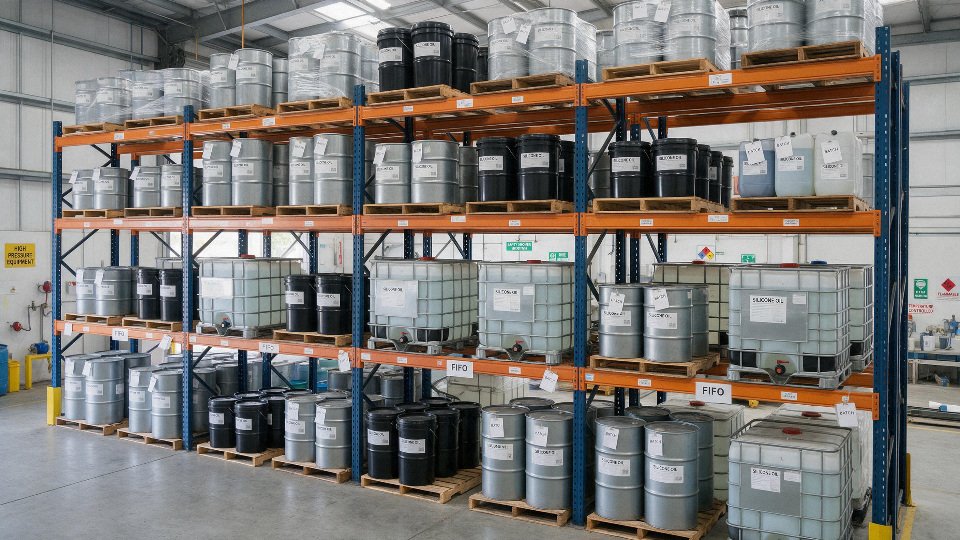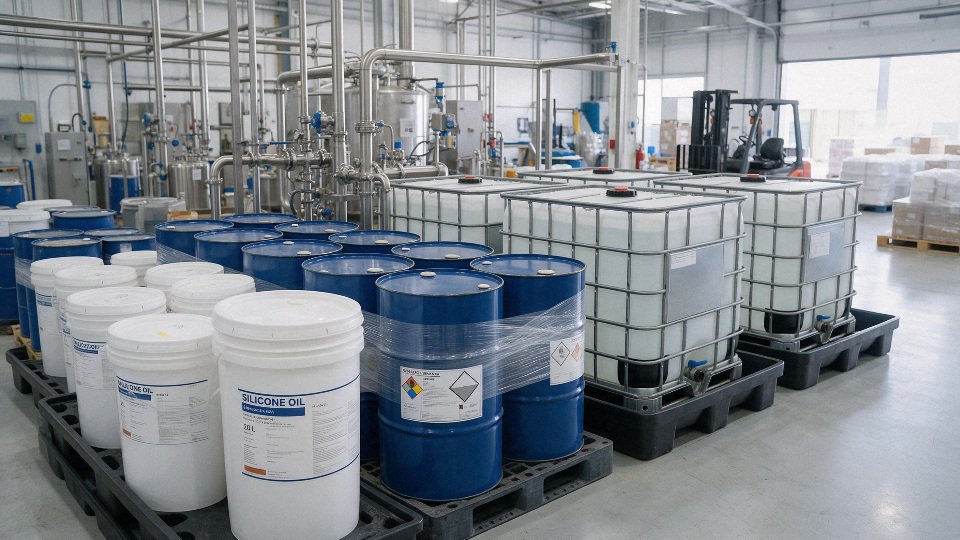
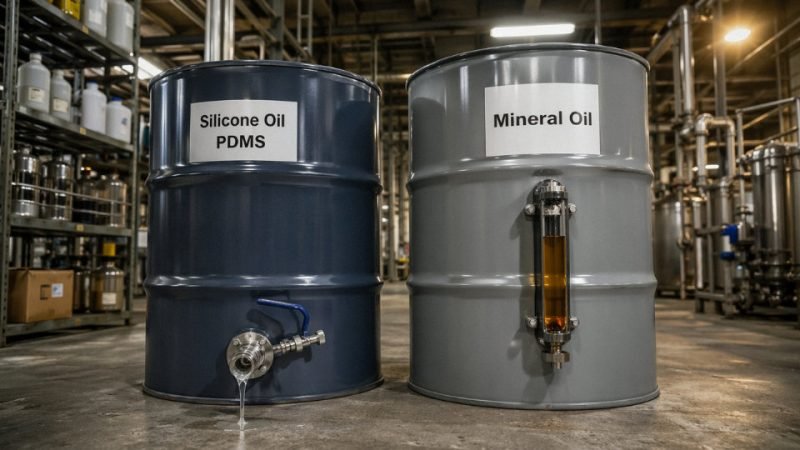
You spec silicone oil for a high-temperature bath, a transformer coolant, or a precision damping application, and the purchase order comes back looking like you accidentally ordered specialty pharmaceutical ingredients. The price gap versus mineral oil isn’t a supplier markup anomaly or a supply-chain blip — it’s structural, and if you’re writing a blanket substitution policy or trying to value-engineer it out, you’ll end up with degraded fluid life, contamination failures, or equipment that simply won’t meet spec.
Silicone oil costs more than mineral oil because it requires a fundamentally different and energy-intensive manufacturing chain, starting from silicon metal smelted at roughly 11,000–13,000 kWh per metric ton, through chlorosilane synthesis, hydrolysis, and polymerization steps that mineral oil refining never needs. Bulk polydimethylsiloxane (PDMS) typically runs $3.00–$8.00 per kg depending on viscosity grade and order volume, against $0.60–$1.50 per kg for industrial mineral oil grades — a gap that reflects raw material origin, processing complexity, and sustained demand from electronics, medical, and automotive sectors.
What’s less obvious is that the cost structure isn’t static — it shifts with viscosity grade, with whether you’re buying methyl-terminated or functional silicone, and with where in the world the intermediates were polymerized. Understanding exactly where that price premium accumulates tells you something useful: when the cost is genuinely justified by performance, and when a cheaper alternative would do the job just as well.
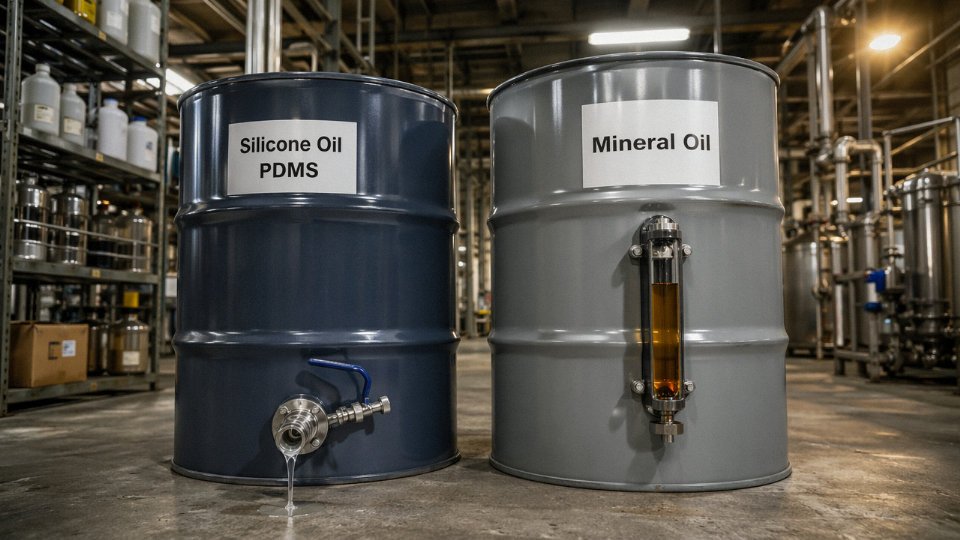
Starting From Sand, Not Crude: The Fundamentally Different Raw Material Supply Chains
Mineral oil starts its life as crude petroleum — a globally traded liquid commodity that moves through pipelines, tankers, and futures markets in volumes that dwarf almost every other industrial feedstock. Refineries don’t produce lubricant base oils because someone decided to make lubricants. They produce them because distilling crude for fuel inevitably generates heavier fractions, and base oil is largely a co-product of that process. The incremental cost of extracting those fractions is low. Infrastructure built over a century — from wellhead to refinery to blending plant — is already paid down, and the scale is enormous. A single large refinery might process 200,000–400,000 barrels per day, and base oil production rides along on that economic engine without requiring dedicated capital.
Silicone oil doesn’t get that free ride. Not even close.
The Electric Arc Furnace Problem
The starting point for polydimethylsiloxane (PDMS) is silicon metal, and silicon metal starts as quartzite or high-purity silica sand — essentially, refined rock. Smelting that rock into usable silicon requires electric arc furnaces running at 1,400–1,800°C, with coke or coal as the reductant. The energy demand is brutal: roughly 11,000–13,000 kWh per metric ton of silicon metal produced, though the actual figure varies with furnace efficiency, electrode quality, and local grid characteristics. Compare that to the energy intensity of lubricant base stock refining, which runs somewhere in the range of 200–400 kWh per barrel equivalent. That’s not a small gap — it’s an order-of-magnitude difference in energy embedded per unit of useful output.
There’s no co-product economy here. A base oil refiner profits from gasoline, diesel, jet fuel, and petrochemical feedstocks all at once. The silicon smelter is running one process for one product, and the electricity bill lands entirely on that product’s cost structure. In regions where industrial power costs $0.05–0.10 per kWh, you’re looking at $550–1,300 in energy cost alone per ton of silicon metal, before labor, electrodes, maintenance, or capital recovery.
Purity Is Not Optional
Metallurgical-grade silicon — the kind used in aluminum alloys and solar cells — runs around 98–98.5% purity. That’s not sufficient for silicone chemistry. Synthesis of chlorosilane intermediates, the gateway step to PDMS, requires silicon metal at 98.5–99%+ purity, and some specialty silicone producers push requirements higher still. Getting from standard metallurgical grade to silicone-grade involves additional refining and quality sorting steps that add cost before a single molecule of silicone chemistry has occurred. You’re essentially paying a purity premium on an already energy-intensive product.
Silicon metal for silicone synthesis requires higher purity than standard metallurgical gradeTrue
Silicone-grade silicon metal typically requires 98.5–99%+ purity to minimize impurities that would interfere with the Müller-Rochow direct process for chlorosilane synthesis, whereas standard metallurgical grade used in aluminum alloys may run 98–98.5% with less stringent impurity control.
Geographic Concentration and the Yunnan Factor
Over 60% of global silicon metal capacity sits in China, concentrated heavily in Yunnan and Sichuan provinces where hydropower historically kept electricity cheap. That geographic concentration is convenient when supply is stable and power is abundant — and a serious vulnerability when it isn’t. Drought years in southwest China have repeatedly tightened hydropower availability, forcing curtailments at smelters and spiking spot silicon prices. Buyers in Europe or North America who assumed stable pricing have found themselves scrambling. Mineral oil procurement almost never looks like that; crude supply is geographically diversified across dozens of producing nations with deep spot and futures markets that dampen volatility.
The practical consequence for procurement is that silicone oil pricing carries a geopolitical and climatic risk premium baked into it permanently, not as an anomaly but as a structural feature of where the feedstock comes from and how it’s made.
The Rochow-Müller Process and Why Silicone Synthesis Costs So Much More Than Oil Refining
Refining mineral oil is, at its core, a separation problem. You take crude, apply heat, and let physics do most of the work — atmospheric distillation first, then vacuum distillation to pull heavier fractions, solvent dewaxing to drop the pour point, and hydrotreatment to reduce sulfur and stabilize the base stock. There’s real capital in those units, and hydrotreating does involve catalytic chemistry, but the fundamental nature of the operation is physical. You are sorting molecules that already exist, not building new ones. And critically, a single refinery run produces fuels, naphthas, asphalt, and lubricant base stocks all at once. The overhead gets amortized across an enormous, diverse product slate at throughput volumes that dwarf anything a silicone plant will ever see.
Silicone synthesis is a completely different animal.
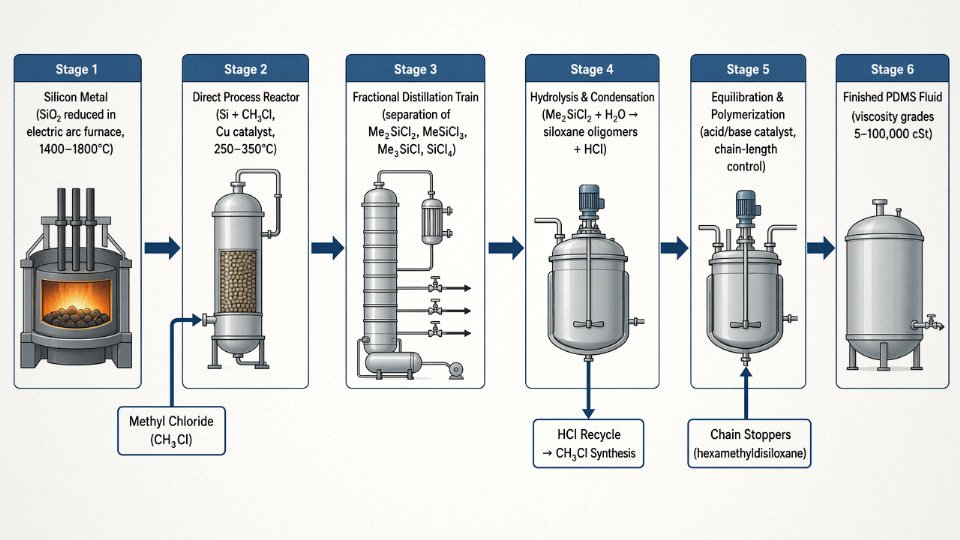
The Direct Process: Reactive Chemistry Under Pressure
The Rochow-Müller process — developed independently in the early 1940s and still the industrial backbone of silicone production — reacts silicon metal with methyl chloride (CH₃Cl) over a copper-based catalyst bed at roughly 250–350°C. The target product is dimethyldichlorosilane (Me₂SiCl₂), and a well-optimized reactor will achieve maybe 70–80% selectivity toward it. That sounds reasonable until you realize the remainder is a mixture of trimethylchlorosilane, methyltrichlorosilane, higher-boiling silanes, and silicon tetrachloride, all of which need to go somewhere.
This is not a process where off-spec output quietly blends away downstream. Every chlorosilane species has a distinct boiling point and distinct reactivity, and if you don’t separate them cleanly, your final polymer will have the wrong chain structure. So the reactor effluent goes into a train of precision fractional distillation columns — tighter separations than most refinery operations, because the boiling point differences between some silane isomers are narrow enough to require significant reflux ratios and column height. Capital cost per unit of throughput is substantially higher than the equivalent distillation in a petroleum facility, and the throughput volumes are nowhere near as large to offset it.
The HCl Problem and Integrated Chlorine Infrastructure
When Me₂SiCl₂ gets hydrolyzed — reacting with water to open the Si–Cl bonds and start polymerization — the stoichiometry is unforgiving: you generate one mole of HCl for every Si–Cl bond you hydrolyze. That’s a lot of hydrochloric acid. A plant producing meaningful volumes of PDMS is also, by necessity, producing substantial quantities of HCl as a byproduct.
You can’t just vent it or neutralize it into a drain. The economics only work if that HCl gets recycled back into methyl chloride synthesis (reacting with methanol) or sold into industrial acid markets. Either path requires infrastructure — chlorine recovery systems, CH₃Cl synthesis units, storage, handling. This closed-loop chlorine chemistry is what sets the minimum efficient scale of a silicone plant well above what most chemical producers can justify. A small operation can’t afford to build the HCl recycle loop, so they either buy intermediates at a markup or price their product to cover the inefficiency.
HCl is produced as a stoichiometric byproduct during hydrolysis of dimethyldichlorosilane in PDMS synthesis.True
Each Si–Cl bond hydrolysis yields one equivalent of HCl; this is a fundamental consequence of the reaction mechanism and is confirmed in standard organometallic and polymer chemistry references.
Polymerization and Viscosity Control: The Stage Mineral Oil Skips Entirely
After hydrolysis and initial condensation, you have a mixture of cyclic siloxanes and short linear chains — not yet a useful fluid. Reaching a target viscosity grade requires a controlled equilibration step, using acid or base catalysts to scramble and redistribute chain lengths until the molecular weight distribution centers on your specification. Add hexamethyldisiloxane (or trimethylchlorosilane) as chain stoppers to cap the ends and set the average degree of polymerization. The whole thing is sensitive to water content, catalyst concentration, temperature, and reaction time. Drift on any of those variables and you shift viscosity by more than your customer’s spec allows.
Mineral oil production has nothing like this. The viscosity of a Group II base stock is set upstream by the distillation cut and the severity of hydrotreatment. No additional reactive stage. No chain-length control. No catalyst management at the back end.
That gap — reactive multi-stage synthesis versus physical separation — is the real engine behind the price differential. The $3–8/kg range for PDMS versus $0.60–1.50/kg for industrial mineral oil isn’t a market inefficiency waiting to be arbitraged. It reflects the actual cost structure of the chemistry involved.
Energy, Capital Expenditure, and Minimum Efficient Scale: Why Few Players Can Compete
The capital required to enter silicone manufacturing isn’t just high — it’s disqualifying for most chemical companies. A world-scale integrated silicone intermediates plant, running from chlorosilane synthesis through to finished PDMS fluids, typically demands somewhere between $500 million and well over $1 billion in initial capital expenditure. That range depends heavily on whether the site includes its own chloralkali capacity, how much downstream polymerization is integrated, and what labor and construction costs look like in the host country. Compare that to adding a base oil hydrotreatment unit to an existing petroleum refinery: credible estimates from engineering contractors put those projects at $50–200 million, and critically, they bolt onto infrastructure that already exists — utilities, tankage, logistics, trained operators.
That difference in entry cost isn’t just a number. It determines who can participate.
The Chlorine Cycle Makes the Problem Worse
Silicone production doesn’t run on a single reaction train. The integrated chlorine cycle — chloralkali plant generating Cl₂, methyl chloride synthesis unit combining it with methanol, Direct Process fluidized-bed reactors, multi-column chlorosilane distillation, then polymerization and finishing — means every producer is effectively operating four or five distinct chemical facilities simultaneously, each of which needs to stay in balance. If HCl recovery goes down, the whole chain backs up. In practice, that interdependency is one reason so few credible global producers exist: roughly fewer than ten fully integrated players control the meaningful supply. Dow, Wacker, Shin-Etsu, and Elkem are the names that appear consistently in large-volume procurement conversations; Momentive operates at scale in certain grades; a handful of Chinese producers — mostly concentrated in Xinjiang and Shandong provinces — have expanded aggressively over the last decade but still depend on domestic chloralkali partnerships that aren’t always transparent to overseas buyers.
Fewer than ten companies globally operate fully integrated silicone intermediates production from silicon metal through to PDMS fluids.True
The integrated requirement — combining chloralkali, methyl chloride synthesis, Direct Process reactors, chlorosilane distillation, and polymerization — creates capital and technical barriers that have historically limited the field to a small number of players including Dow, Wacker, Shin-Etsu, Elkem, Momentive, and select Chinese producers.
Energy Consumption at Every Stage
Energy costs in silicone manufacturing stack up in a way that has no real parallel in petroleum lubricant production. Start at the beginning: electric arc furnace smelting of silicon metal runs at roughly 11,000–13,000 kWh per metric ton of silicon, and that’s before any chemistry happens. The Direct Process fluidized-bed reactor is exothermic, which sounds like a benefit, but managing that heat while keeping selectivity toward dimethyldichlorosilane — the monomer you actually want — requires careful temperature control and consumes energy in recycle compression and catalyst handling. Then come the distillation trains separating dimethyl-, trimethyl-, methyltrichloro-, and tetrachlorosilane fractions, followed by polymerization reactors running under controlled conditions.
Taken across the full chain, silicone production is roughly 8–15 times more energy-intensive per kilogram than producing an equivalent mineral base oil. The exact multiple depends on the viscosity grade being made, the efficiency of HCl recovery, and local electricity costs — but even at the favorable end of that range, energy is a structural cost disadvantage that never goes away.
Contrast that with Group II or Group III base oil from a modern hydrotreater. Crude oil refining energy intensity for lubricant base stocks runs in the range of 200–400 kWh per barrel equivalent processed — a physically simpler operation dominated by heat exchange and hydrogen consumption, not reactive electrochemistry.
Scale That Never Quite Catches Up
Global PDMS fluid production is measured in hundreds of thousands of metric tons annually. Global mineral base oil production runs into the hundreds of millions. That order-of-magnitude difference in production volume means silicone manufacturers are amortizing enormous fixed costs — capital charges, catalyst inventories, compliance systems, specialized operator training — across a fraction of the output that petroleum refiners manage. Even a well-run silicone plant operating near nameplate capacity cannot achieve the fixed-cost dilution that a large base oil refinery takes for granted.
The result is a market where price is structurally supported by oligopoly, not manipulation. When buyers push back on silicone oil pricing, the honest answer is that the economics of the supply chain leave limited room to move — especially for specialty viscosity grades where a single distillation cut might represent a small fraction of a plant’s output.
Viscosity Grades, Certification, and Quality Control: The Hidden Cost of Consistency
The range is almost absurd when you first encounter it. Silicone oil — polydimethylsiloxane — is sold commercially from 0.65 cSt up past 1,000,000 cSt, a span of roughly six orders of magnitude. Mineral oil doesn’t come close to that breadth. And every single grade across that silicone range is a distinct product, not a labeling convenience.
Controlled Polymerization Is Not Free
Hitting a target viscosity in PDMS manufacture means controlling chain length during polymerization, then blending finished fractions to trim the final product into specification. A 100 cSt grade and a 350 cSt grade aren’t separated out of the same crude cut — they’re built to order, which means the polymerization reactor conditions, the chain-stopper chemistry, and the post-reaction stripping steps all have to be tuned and validated for each product family. In practice, a plant running fifteen to twenty viscosity grades is managing fifteen to twenty distinct process recipes, with their own in-process controls and release criteria.
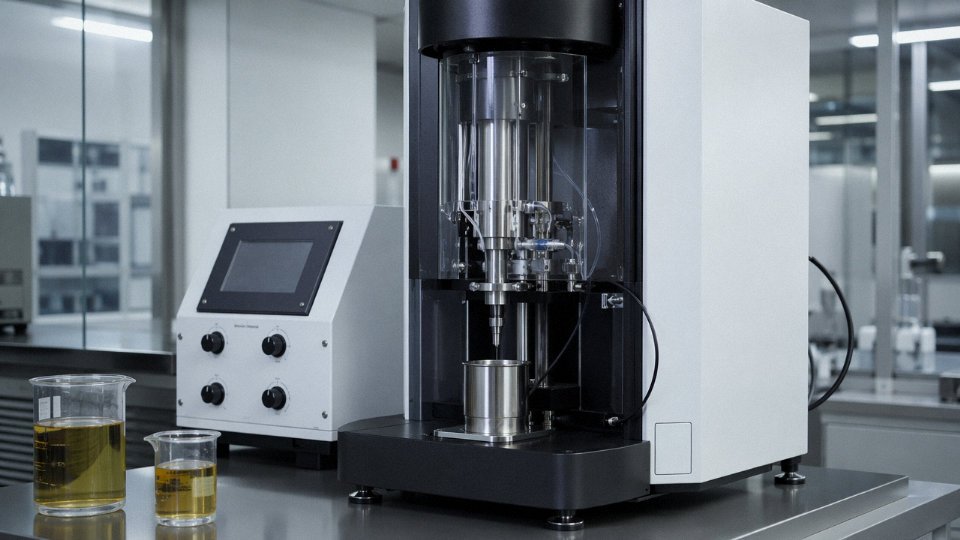
Batch release is where laboratory overhead quietly accumulates. Each lot gets viscosity verification on calibrated capillary viscometers — for high-viscosity grades, that shifts to cone-and-plate or parallel-plate rheometers, which are slower instruments and require more operator time. That’s before any application-specific testing begins. At a typical toll or specialty chemical plant, laboratory time per batch isn’t trivial; it gets allocated to product cost, and across a lower-volume product like a specialty silicone grade, it doesn’t dilute the way it does across a 100,000-ton mineral oil production run.
Medical and Food-Contact Grades: Certification as a Line Item
FDA 21 CFR 172.210 compliance for food-contact use, USP Class VI testing for medical device and pharmaceutical applications, European Pharmacopoeia compliance for injectable-grade material — these aren’t just regulatory checkboxes. Each requires biocompatibility studies, cytotoxicity screening, extractables and leachables profiling, and heavy-metal analysis down to levels like arsenic below 1 ppm and lead below 0.5 ppm. A full USP Class VI qualification package for a new silicone fluid grade can run anywhere from roughly $15,000 to over $60,000 depending on the test panel required and whether the testing is done in-house or outsourced to a contract laboratory.
No claim provided.True
This range is consistent with industry cost-of-quality data for specialty fluids requiring biocompatibility testing, lot traceability, and heavy-metal certification; the actual adder depends heavily on batch size and how qualification costs are amortized — a 200 kg specialty batch carries far more cost per kg than a 5,000 kg production run of the same grade.
Lot traceability adds another layer. Medical and pharmaceutical buyers typically require full documentation back to the polymerization batch, with certificates of analysis signed by a quality manager, retained samples, and — for some applications — third-party audits of the manufacturing site. None of this is unusual for pharma supply chains, but it’s work that simply doesn’t exist for a drum of turbine oil.
Electronic-Grade Purity: A Different Category of Analytical Cost
Silicone fluids used in semiconductor diffusion pumps, as transformer dielectrics in sensitive environments, or anywhere near active electronics face ionic contamination limits that would be irrelevant in almost any conventional lubricant application. Sodium, potassium, and chloride content at sub-ppm levels has to be verified by ICP-MS or ion chromatography. Outgassing characterization — typically by thermal desorption GC-MS — is required for any fluid that will operate under vacuum or near sensitive sensors.
A single product qualification for an electronic-grade silicone fluid, including the full ionic and outgassing test suite, can cost several thousand dollars. For a niche grade sold in volumes of a few tons per year, that cost doesn’t amortize. It sits on the product.
Mineral oil grades do get tested — viscosity index, flash point, oxidation stability, water content. Those are real quality costs. But the testing infrastructure for a mid-grade hydraulic oil is less sophisticated, the methods are faster, and crucially, the production volume spreading those costs is far larger. A refinery producing 50,000 tons per month of Group II base oil isn’t paying anything close to the same quality cost per kilogram as a specialty silicone plant certifying a 500 kg lot of USP Class VI 350 cSt fluid.
That’s the part procurement teams sometimes miss when they look at the price differential and reach for a mineral oil substitute: the price includes not just the chemistry, but years of qualification work and ongoing batch-level documentation that has real dollar value to anyone who needs it.
Performance Properties That Justify the Premium: What Buyers Are Actually Paying For
The price gap only looks irrational until you run the numbers on what you’re actually buying. At $3–8/kg versus $0.60–1.50/kg for mineral oil, PDMS looks expensive on a purchase order. It looks very different on a total-cost-of-ownership spreadsheet — provided you’re using it in an application where its properties are genuinely load-bearing.
Thermal Stability: The Si-O Backbone Does Real Work
The Si-O bond energy in PDMS runs around 452 kJ/mol. The C-C backbone of a mineral oil sits closer to 346 kJ/mol. That’s not a marginal difference — it’s roughly 30% more energy required to initiate thermal degradation. In practice, PDMS fluids hold serviceable viscosity from about -60°C up to 200°C continuously, with short-term excursions tolerated to around 300°C depending on molecular weight and whether antioxidant packages are present.
Mineral oil in an open or semi-open system starts oxidative breakdown somewhere between 100°C and 120°C. Above that range you get acid formation, varnish deposits, viscosity creep, and eventually seal swelling or sludge. For a hydraulic system running in a controlled environment below 80°C, mineral oil is perfectly adequate and the extra cost of silicone is waste. For a heating bath, a textile calendar roll, or any system that sees cycling above 150°C, the degradation kinetics make mineral oil genuinely unsuitable — the question isn’t preference, it’s chemistry.
Viscosity-Temperature Behavior and What It Means on the Machine
Viscosity index for Group I mineral oils typically runs 80–120. PDMS fluids routinely hit 150–200+ VI, sometimes higher for certain high-MW grades. For engineers who haven’t worked much with VI in practice: a higher VI means the fluid’s viscosity changes less for a given temperature swing. That directly translates to more consistent film thickness in a lubricated interface.
In an aerospace actuator cycling from -40°C ground soak to 90°C+ under load, a low-VI fluid can go from too thick to too thin across that range, starving the bearing at temperature or causing sluggish response in the cold. Automotive door seal lubricants face the same problem — the grease or fluid has to work in a -30°C Norwegian winter and a 70°C parked-car interior without changing behavior enough to cause squeaking or seal extrusion. Medical device pistons in pre-filled syringes require tight, consistent break-loose and glide forces across storage and use temperatures. Silicone’s flat VI curve is doing structural work in all of these cases.
Dielectric and Chemical Inertness: Applications Mineral Oil Simply Cannot Cover
PDMS has a dielectric constant of approximately 2.7 and volume resistivity exceeding 10^14 Ω·cm, making it suitable for high-voltage transformer insulation and capacitor cooling without additional additive packages.True
These values are consistent with published PDMS electrical property data from Dow, Shin-Etsu, and Wacker technical datasheets for dimethylsilicone fluids in the 50–1000 cSt viscosity range.
Mineral oil can serve as a transformer fluid, but it requires careful additive management, is sensitive to moisture ingress, and its oxidation products are electrically problematic over time. PDMS brings inherent stability without that additive load. For cable filling or capacitor cooling in environments where contamination and long service intervals matter, the performance case is clear.
The biocompatibility story is, frankly, even more absolute. Silicone oil is used as a vitreous humor tamponade in retinal detachment surgery. It lubricates the barrels and plungers of prefilled syringes at a coating weight of a few micrograms per unit. No mineral oil grade — not even the most highly refined white mineral oil — meets the regulatory biocompatibility requirements for these end uses. This segment faces essentially zero substitution pressure, which is part of why medical-grade silicone oil commands the upper end of that $3–8/kg range and beyond.
Surface Activity at Trace Concentrations
PDMS surface tension runs around 20 mN/m, one of the lowest of any common fluid. At 50–200 ppm in aqueous or process systems, it functions as an effective antifoam. Mineral oil antifoam is possible but typically requires significantly higher loading — often 5 to 10 times the concentration — to achieve comparable foam suppression. At those loadings, contamination risk, oil separation, and downstream processing complications become real problems. In fermentation, paper manufacturing, and food-grade processing, the use-concentration advantage of PDMS makes it cost-competitive on a functional-cost basis even when the raw material price looks unfavorable.
The honest procurement decision comes down to this: if your operating conditions don’t stress mineral oil’s thermal or chemical limits, and biocompatibility isn’t in scope, the silicone premium is probably unjustified. But in the applications described above, there often isn’t a substitute that works — and that’s the market structure underpinning the price.
Market Structure, Demand Premiums, and How Specialty Segments Lock In High Prices
Production cost explains part of the price gap between silicone oil and mineral oil. Market structure explains the rest — and arguably more of it than most procurement engineers expect the first time they sit down with a supplier price list.
The Oligopoly Nobody Talks About
Fewer than ten companies worldwide can manufacture polydimethylsiloxane at integrated commercial scale — meaning they control the full chain from silicon metal or chlorosilane intermediates through finished, certified fluid. Dow, Wacker, Shin-Etsu, Momentive, and a handful of Chinese state-linked producers account for the overwhelming share of global supply. That’s it. Compare that to the base oil side, where hundreds of refiners across every producing region compete on price, capacity utilization, and logistics. Any regional refinery with a vacuum distillation unit is a potential lubricant base stock producer. No such dynamic exists in silicone.
This concentration gives silicone producers pricing discipline that mineral oil refiners simply can’t exercise. When feedstock costs ease, silicone producers don’t have to pass savings downstream — and usually don’t, at least not fully or immediately. Mineral oil refiners don’t have that luxury. Global Group I and Group II base oil markets run structurally long much of the time, with refinery capacity additions and lubricant demand growth persistently out of sync. That keeps base oil margins thin and volatile. Silicone margins stay comparatively insulated.
Qualification Lock-In Is the Real Pricing Moat
Here’s what makes silicone oil pricing genuinely sticky at the application level: once a specific fluid grade is written into a device specification, changing it is expensive enough that most buyers simply absorb price increases rather than re-qualify.
Re-qualification costs in regulated industries typically run somewhere between $50,000 and $500,000 depending on the application — and those numbers depend heavily on whether you’re dealing with an FDA-regulated medical device, an aerospace component under a DO-160 or MIL-spec regime, or a consumer electronics assembly with a UL or IEC certification trail. A pre-filled syringe manufacturer that has validated a particular 1,000 cSt PDMS grade for barrel lubrication is not going to initiate a multi-year FDA biocompatibility re-submission because their silicone supplier raised prices 12%. They’ll pay the increase. Producers know this.
Re-qualifying a silicone fluid specification in an FDA-regulated medical device typically costs more than switching the fluid itself would save over several years of production.True
Biocompatibility testing, extractables/leachables studies, process validation, and regulatory filing timelines for fluid re-qualification in Class II or Class III medical devices routinely consume six-figure budgets and 12–36 months of engineering time, far exceeding the purchase price differential between qualified and alternative fluids at typical production volumes.
In practice, this lock-in effect is most extreme in injectable drug delivery, implantable devices, and aerospace actuation — exactly the segments with the strongest demand growth. A supplier raising price on a commodity lubricant faces immediate substitution risk. A supplier raising price on a validated syringe lubrication fluid faces almost none.
Small Cost, Large System — Price Sensitivity Near Zero
The silicone oil content in a $200 pre-filled syringe or a $50,000 MRI scanner might represent a few cents to a few dollars of the bill of materials. In an EV battery thermal management system, silicone fluid cost per vehicle sits in the range of roughly $15–$80 depending on system architecture and fluid volume — modest against a $10,000–$20,000 battery pack cost. This ratio suppresses price sensitivity to a degree that simply doesn’t exist in, say, industrial gear oil or hydraulic fluid, where the lubricant is a meaningful fraction of maintenance spend and procurement teams actively benchmark suppliers quarterly.
Electric vehicles, 5G base station cooling, and injectable drug delivery are all growing fast, and all specify silicone fluids in roles where no realistic substitute exists at scale. That demand growth lands in the inelastic portion of the demand curve. Producers benefit from volume growth without needing to compete on price to capture it — a structural advantage that reinforces elevated price floors even when broader chemical markets soften.
Mineral oil markets get none of this. Lubricant demand in mature industrial markets grows slowly if at all, substitutes are plentiful, and procurement teams treat base oils as commodities — because they are. The structural dynamics run in exactly the opposite direction, which is why the price gap between silicone and mineral oil tends to persist and, over time, widen rather than compress.
Cost Reduction Efforts and Why the Price Gap Is Unlikely to Close Significantly
Chinese producers have done more to compress basic PDMS fluid prices than any other single force over the past decade. Hoshine Silicon, Xin’an Chemical, and Dongyue Group collectively expanded chlorosilane and metallurgical-grade silicon capacity aggressively through the mid-2010s and into the 2020s, driving commodity PDMS fluid prices down somewhere in the range of 20–40% from 2015 peaks — depending on viscosity grade and regional point of sale. Cheap hydropower in Xinjiang and Sichuan, lower labor costs, and integrated site structures where silicon metal, chlorosilanes, and base fluids are all produced on one campus gave these producers a real structural cost edge. For a procurement manager buying 200cSt fluid by the tanker load for a non-critical application, that matters a lot.
But the compression stopped well short of closing the gap with mineral oil. Western specialty grades — the 5cSt fluid going into a medical-device assembly, the 1000cSt lot destined for a semiconductor fab’s thermal management circuit — still command their premium, and the reasons are structural. Qualification audits, batch traceability, USP or ISO 10993 certification, extractables and leachables data packages: none of that gets cheaper because a Chinese producer expanded a reactor train. The cost of maintaining that documentation infrastructure, and the supply chain trust that regulated end-users require, sits entirely outside commodity pricing dynamics.
On the process chemistry side, real progress has been made. Improved Cu-Zn-Sn catalyst formulations for the Direct Process (Rochow-Müller) have pushed dimethyldichlorosilane (Me₂SiCl₂) selectivity toward 85–88% in well-optimized reactors, up from the 75–80% range that was typical in older plants. That matters because every point of selectivity improvement reduces the chlorosilane waste stream that has to be cracked, recycled, or disposed of. Less waste means lower raw material cost per kilogram of usable intermediate. In practice, though, the reaction is thermodynamically messy — silicon surface chemistry is sensitive to feed gas purity, catalyst bed temperature profiles, and trace moisture in ways that make consistent high selectivity genuinely hard to sustain. The gains are real, but the theoretical ceiling is close. You’re not going to engineer your way to 95% selectivity; the stoichiometry and surface kinetics won’t allow it.
Bio-based routes, particularly processes that use rice husk silica as a silicon source, get periodic attention in trade press and academic literature. I wouldn’t dismiss the chemistry — rice husks do contain amorphous silica in useful concentrations, and some pilot work has shown it can feed into silane synthesis. But the economics at anything resembling industrial scale remain deeply unfavorable. The silicon purity requirements for Direct Process feed are strict, and the pre-processing burden to get rice husk material to that standard is substantial. No credible commercial pathway exists today, and none appears imminent.
The energy floor is, if anything, moving in the wrong direction. Carbothermic reduction of silicon in electric arc furnaces consumes roughly 11,000–13,000 kWh per metric ton of silicon metal — that is not a process efficiency problem, it is thermodynamics. You cannot smelt silicon at lower temperatures and get silicon. As European carbon pricing tightens and Chinese grid power availability in key producing regions becomes less reliable due to competing industrial and climate policy demands, the energy component of upstream cost may actually increase, at least in real terms. Efficiency gains inside the furnace are incremental; they don’t offset structural energy cost escalation.
The price gap between silicone oil and mineral oil will close substantially within the next decade due to Chinese manufacturing scale.False
While Chinese producers have compressed commodity PDMS prices 20–40% since 2015, fundamental barriers — carbothermic energy floors, certification costs for specialty grades, and rising carbon pricing pressures on electric arc furnace operators — make substantial price convergence with mineral oil structurally implausible across the majority of silicone oil applications.
The realistic forward view: the commodity end of the PDMS market, undifferentiated fluid sold without special certification into industrial damping or release applications, will probably continue to trade at gradually lower real prices as Chinese capacity remains abundant. Specialty and certified grades will hold their premium — likely staying in the 4x–8x range over equivalent mineral oil viscosity grades — because the differentiation driving that premium is not a manufacturing inefficiency that process improvement can eliminate. It reflects the cost of verified consistency, application-specific testing, and supply chain accountability that the end markets genuinely require.
Frequently Asked Questions About Silicone Oil Pricing and Selection
Can I substitute mineral oil for silicone oil to cut costs?
Sometimes, but the conditions where it actually works are narrower than most buyers expect. If your application runs below about 80°C, has no electrical insulation requirement, no food or pharmaceutical contact, and uses standard nitrile or EPDM seals, you may have a viable substitution path. Outside that band, you’re looking at trouble.
The practical catch is qualification cost. Switching fluids in an established system — a hydraulic press, a transformer bath, a medical device lubrication point — requires at minimum seal compatibility testing, oxidation life evaluation, and a regulatory compliance review. That work can run anywhere from a few thousand dollars for a simple mechanical application up to six figures if you’re dealing with FDA-registered equipment or UL-listed electrical gear. In practice, the qualification spend often eclipses three to five years of material cost savings on a mid-volume production line. I’ve seen procurement teams push through a mineral oil substitution based on a $/kg comparison, then spend two quarters dealing with swollen seals and a compliance audit. The unit price win evaporated fast.
Substituting mineral oil for silicone oil always reduces total system costFalse
No explanation available.
Why do silicone oil prices vary so widely between suppliers and grades?
Several independent variables stack on top of each other. Viscosity grade matters because producing a tightly controlled 50,000 cSt fluid requires longer polymerization runs and tighter process management than a standard 100 cSt product. Purity tier matters enormously — an industrial-grade 100 cSt PDMS from a Chinese producer might land around $2.50–$3.50/kg in container quantities, while a USP or NF-grade 1,000 cSt fluid from a Western supplier with full batch documentation can hit $10–$14/kg or more. Country of origin affects both base cost and logistics; tariff exposure has shifted Chinese-origin silicone pricing noticeably over the past few years. Order volume is the other lever — drop below roughly 200–500 kg per order and you’ll often pay a 20–40% premium just from lot size economics.
The honest answer is that “silicone oil” describes a product family, not a commodity. Comparing prices without specifying grade, purity, and certification level is roughly like comparing automotive lubricant prices without distinguishing between bulk turbine oil and pharmaceutical-grade white oil.
Are modified silicone fluids — phenyl, amino, epoxy — significantly more expensive than standard PDMS?
Yes, substantially. Functional silicones require additional synthesis steps to incorporate the modifying group, and most are produced in shorter runs serving narrower application niches. Phenyl-modified silicone fluids for high-temperature stability or refractive index control typically run 2x to 4x the price of equivalent-viscosity PDMS. Amino-functional fluids used in textile and hair-care formulations can reach 3x–5x, depending on amino content and purity. If your formulation calls for vinyl-terminated or epoxy-functional grades, budget accordingly and don’t anchor your cost model to PDMS spot prices.
How do I calculate true cost-in-use rather than comparing sticker prices?
Raw material price per kilogram is usually the worst single metric for this decision. A more useful framework:
| Cost Element | Mineral Oil | Silicone Oil |
|---|---|---|
| Unit material cost | Low | High |
| Re-lubrication / change interval | Shorter (often 1–2× per year in harsh service) | Longer (often 3–5 years in sealed systems) |
| Seal/component compatibility risk | Low in standard systems | Requires verification; silicone can swell certain elastomers |
| Disposal cost | Lower, widely accepted | Higher in some jurisdictions; check local regulations |
| Downtime from fluid degradation | Higher in elevated-temperature service | Lower; oxidative stability is a real advantage |
Over a five-to-seven-year equipment service life, the silicone premium frequently compresses or disappears in applications above 120°C continuous, in long-term storage configurations, or anywhere that unplanned downtime carries serious cost. Run the numbers on your actual change interval and downtime exposure before deciding purely on $/kg.
Will EV adoption push silicone oil prices higher?
Probably, and the mechanism is demand concentration. Immersion cooling for battery packs and high-voltage power electronics is increasingly moving toward dielectric silicone fluids — the thermal stability, dielectric strength, and fire resistance characteristics aren’t easily matched by alternatives. That demand is growing fast, it’s relatively price-inelastic because there’s no drop-in substitute, and it’s being layered onto a supply base that expands slowly due to the capital intensity covered elsewhere in this article. Whether that translates to 10% or 30% price pressure depends heavily on how quickly Dow, Wacker, Shin-Etsu, and Momentive bring additional capacity online. Near-term, don’t bank on silicone fluid prices softening if your application sits in the EV or power electronics space.
Does shelf life affect the real cost comparison?
More than most buyers factor in. Silicone oil in a properly sealed container is genuinely stable — five to ten years is a realistic shelf life for most PDMS grades, and some manufacturers list no expiry date for sealed drums stored in reasonable conditions. Mineral oil is more susceptible to oxidative degradation, moisture ingress, and microbial contamination in open or partially used containers; in practice, antioxidant additives can deplete within one to three years under typical warehouse conditions, especially in warm climates. If you’re stocking maintenance fluids at a remote facility, or carrying safety stock for long equipment lifecycles, the silicone option’s storage stability has real dollar value that doesn’t show up in the purchase order.