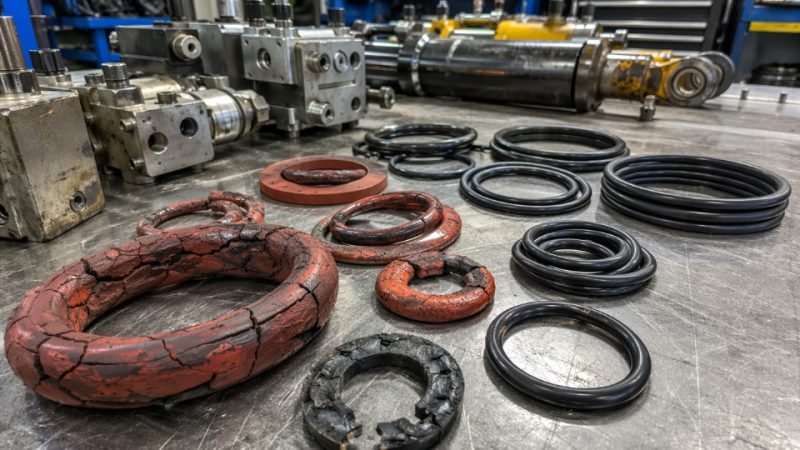
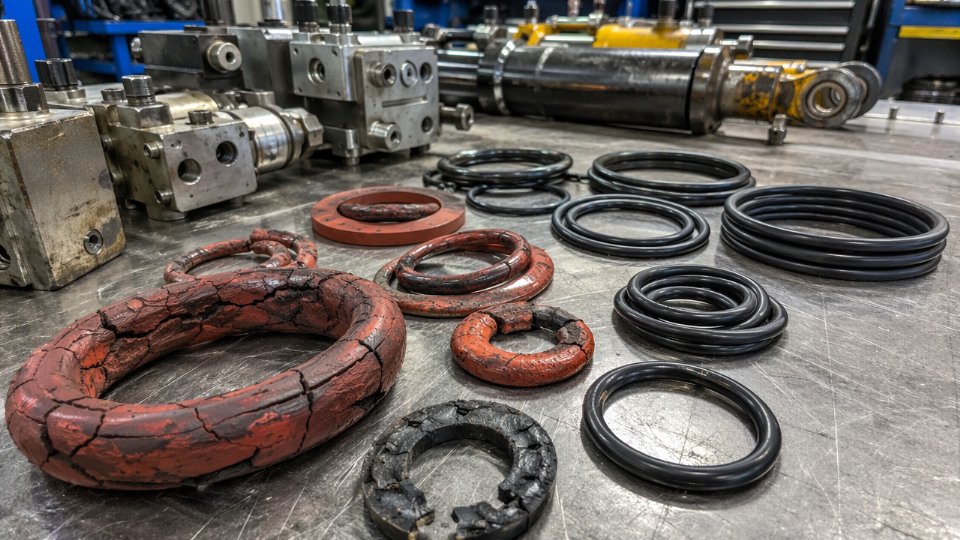
Specifying silicone because it worked last time is one of the most reliable ways to schedule an unplanned shutdown. A gasket swells shut, a seal dissolves in process fluid, or a high-cycle joint tears after a few thousand flexes — and by the time the root cause reaches the maintenance debrief, the line has already lost hours and the scrap bin is full. The wrong elastomer choice rarely announces itself at installation; it announces itself at 2 a.m. on a Sunday.
Silicone should not be used in continuous contact with non-polar hydrocarbon solvents, fuels, or mineral oils; in dynamic high-load sealing applications where tensile strength below 10 MPa creates fatigue risk; or in sustained operating temperatures above 200–230°C in oxidizing environments. In those conditions, PTFE, EPDM, neoprene, or Viton will outperform silicone on service life and total cost.
What makes this harder than it looks is that silicone genuinely excels across a wide range of conditions — broad temperature range in static, clean environments; excellent UV and ozone resistance; FDA compliance for food contact — so the material has an earned reputation that can quietly travel into applications it was never designed for. Understanding exactly where that reputation stops being valid is worth more, practically, than any general-purpose materials datasheet.
Hydrocarbon Oil and Fuel Environments Where Silicone Swells and Fails
Standard silicone rubber and hydrocarbon fluids are chemically incompatible in a way that goes beyond simple degradation — the failure mode is mechanical and rapid. Understanding why requires a short look at polymer chemistry before reaching the practical rules.
The Solvation Mechanism Behind Volumetric Swell
Silicone’s backbone is an alternating silicon-oxygen chain (Si-O-Si) with methyl or vinyl side groups hanging off each silicon atom. Those methyl groups are nonpolar and have low cohesive energy density. When a nonpolar hydrocarbon solvent — mineral oil, diesel, gasoline, ISO VG 46 hydraulic fluid, jet fuel — contacts the elastomer, its molecules are energetically similar enough to diffuse between the polymer chains. The solvent essentially dissolves into the network. The chains push apart. Volume increases.
The practical result: silicone O-rings, gaskets, and hose liners can swell 20–80% by volume depending on the specific fluid, immersion temperature, and cure system. That range matters. A ring swelling 20% in cool mineral oil may still function temporarily; the same ring at 80°C in aromatic-rich gasoline can reach 60–70% swell within hours, losing all sealing force as the contact stress drops to near zero.
Silicone rubber can swell 20–80% by volume in nonpolar hydrocarbon solvents such as toluene, hexane, and mineral oilTrue
This is well-documented in elastomer chemical resistance literature and ASTM D471 immersion testing. The range depends on fluid polarity, aromatic content, temperature, and silicone grade. Standard PDMS-based silicones consistently show the highest swell rates among common sealing elastomers in these media.
Swell Rate Comparison Across Common Fluids
The table below uses ASTM D471 immersion data (70 hours, 23°C unless noted) as a practical reference. Actual service values depend on temperature, immersion duration, and fluid additive packages.
| Fluid | Standard Silicone (VMQ) | Fluorosilicone (FVMQ) | FKM (Viton) | NBR (Nitrile) | PTFE |
|---|---|---|---|---|---|
| ISO VG 46 hydraulic oil | 30–60% | 5–15% | <5% | 3–8% | <2% |
| Automotive gasoline E10 | 40–80% | 10–20% | <5% | 15–35%* | <2% |
| Jet fuel (Jet-A) | 35–70% | 8–18% | <5% | 20–40%* | <2% |
| Toluene (aromatic reference) | 60–80% | 20–35% | 8–15% | High — avoid | 10 Hz) | Crack propagation, fatigue | EPDM or fabric-reinforced NR |
| Anti-vibration mount (>0.5 MPa peak) | Permanent set, creep | Natural rubber or NR-SBR blend | |||
| Structural expansion joint | Tear failure under peel load | Polysulfide or polyurethane sealant |
The operational warning here is straightforward: silicone is specified heavily in food, medical, and high-temperature static sealing precisely because those environments reward its chemical inertness. When procurement replicates that specification into mechanical, dynamic, or abrasion-intensive service positions without re-evaluating load conditions, the result is premature failure, increased spare parts consumption, and in the case of rod seals or diaphragms, potential contamination of the process fluid. Mechanical load applications demand a tensile and abrasion audit before any elastomer selection is confirmed.
Concentrated Acid, Base, and Steam Exposure That Degrades Silicone Faster Than Expected
Silicone’s reputation for chemical inertness is partly deserved and partly dangerous mythology. It handles dilute aqueous solutions, mild alcohols, and many polar solvents well enough. But push it into alkaline cleaning circuits, pressurized steam systems, or concentrated acid service, and the degradation timeline compresses from years to months — sometimes weeks.
The Hydrolysis Mechanism Engineers Often Overlook
The core vulnerability is structural. Silicone’s Si-O-Si backbone, the same repeating bond that gives it thermal flexibility, is susceptible to nucleophilic attack by water at elevated temperature and by hydroxide ions at high pH. Steam above roughly 150°C carries enough energy to accelerate this cleavage meaningfully. Strong alkalis — anything sustained above pH 10 — catalyze the reaction even at moderate temperatures.
What you see on the plant floor follows a predictable sequence: the seal surface develops a sticky, gummy texture as low-molecular-weight siloxane oligomers migrate to the surface. Dimensional loss follows as the crosslinked network breaks down. In the final stage, the part loses structural coherence entirely and can leave debris in the process stream — a particularly serious failure mode in pharmaceutical or food-contact applications where contamination carries regulatory consequences.
Silicone gaskets in saturated steam at 180°C and 10 bar show a 60–80% increase in compression set within 500 service hoursTrue
Compression set measures permanent deformation under load; values above roughly 40–50% typically mean a gasket has lost the recovery force needed to maintain a reliable seal. Steam hydrolysis of the Si-O-Si backbone accelerates relaxation significantly compared to dry-heat aging at the same temperature.
For comparison, EPDM — which has a carbon-backbone with no comparable hydrolysis pathway — retains sealing performance well past 2,000 hours under the same saturated steam conditions. That is a 4× service life advantage before you factor in the cost of unplanned shutdowns for gasket replacement. The economic case against silicone in steam service is not subtle.
Concentrated Acid Attack
Silicone holds up adequately against dilute acids, so engineers sometimes extrapolate incorrectly to concentrated duty. The behavior changes sharply past certain thresholds. Sulfuric acid above roughly 60% concentration attacks silicone at measurably accelerated rates, with the attack rate increasing further with temperature. Hydrochloric acid above approximately 20% concentration causes similar degradation. Nitric acid is more aggressive still, particularly because it combines oxidative and acidic attack — silicone’s methyl side groups are vulnerable to oxidative scission in a way that fluoroelastomers are not.
The practical failure consequence here is often dimensional: swelling followed by hardening and cracking rather than the gummy disintegration seen in alkaline service. Either way, the seal loses its compression load path and leaks.
Where This Actually Bites in Industry
Three process environments account for the majority of avoidable silicone failures in chemical exposure service.
Pharmaceutical autoclave systems run saturated steam at 121–134°C repeatedly. Even at 121°C, cycle counts in the hundreds start to show measurable compression set increases in silicone door gaskets. Facilities that switch to EPDM typically extend replacement intervals by a factor of three to five, depending on autoclave cycle frequency and dwell time.
Food-grade CIP circuits using caustic soda (NaOH) at 1–2% concentration and 70–85°C represent a slower but equally certain degradation path. pH in these circuits typically runs 11–13, which places the process squarely in the accelerated hydrolysis zone. Silicone tubing and gaskets in CIP service should be considered a maintenance liability, not a long-term asset.
Steam-jacketed reactors in fine chemical and agrochemical plants combine temperature, moisture, and occasional solvent or acid contamination in a way that defeats silicone on multiple fronts simultaneously.
Material Selection for Aggressive Chemical-Thermal Service
| Environment | Silicone Risk | Preferred Alternative | Key Reason |
|---|---|---|---|
| Saturated steam, >150°C | High — hydrolysis, compression set loss | EPDM | Carbon backbone resists steam hydrolysis |
| Alkaline CIP, pH >10 | High — surface tackiness, dimensional loss | EPDM | Alkali-stable, FDA grades available |
| Concentrated H₂SO₄ (>60%) | High — oxidative/acid attack | PTFE | Near-universal acid resistance |
| Concentrated HCl (>20%) | Moderate-high at elevated temperature | PTFE | Non-reactive to halogen acids |
| Combined chemical-thermal extremes | Very high | FFKM (perfluoroelastomer) | Best-in-class chemical and thermal resistance; cost is significant |
FFKM is the right answer for the most severe combined environments — a reactor seal exposed to aggressive acids at 200°C plus steam cleaning cycles — but it carries a price premium of 10–30× over EPDM that needs justification. Where the environment is purely steam or alkaline, EPDM gives you the performance without the cost. Where concentrated acids are the primary threat at moderate temperature, PTFE sheet or envelope gaskets are usually the lower-cost, correct solution.
The operational warning worth stating plainly: silicone’s excellent behavior in a short commissioning period can mask the onset of hydrolytic degradation. Compression set increases gradually and is not visible during routine inspection without measurement. Schedule periodic torque-check or compression measurement intervals on silicone-sealed flanges in any steam or alkaline service — or better, specify the right material from the start and eliminate the monitoring burden entirely.
Electrical Applications With High-Voltage Tracking and Arc Resistance Requirements
Silicone’s reputation as an electrical insulator is well-earned at the bulk material level. Dielectric strength runs 15–25 kV/mm depending on compound formulation and thickness, which is why it appears in cable jackets, connector boots, and transformer components worldwide. The problem surfaces — literally — when sustained arc discharge or persistent leakage current contacts the material. What happens at the surface under those conditions is mechanically different from bulk dielectric performance, and conflating the two has caused premature failures in outdoor switchgear and rail installations that were otherwise correctly specified.
Surface Tracking Versus Bulk Dielectric Strength
When an arc strikes silicone repeatedly, the silicone backbone oxidizes and leaves behind a silica (SiO₂) ash residue. In dry, clean conditions that residue is non-conductive, which is genuinely one of silicone’s advantages over carbon-forming organics. The nuance — and the operational hazard — is that in humid, polluted, or salt-laden environments the picture changes. Contaminant films bridge across the silica residue, leakage current intensifies at those bridges, and erosion tracking deepens over dozens or hundreds of thermal cycles. The insulator does not fail in one dramatic arc event; it erodes gradually until creepage distance is no longer adequate for the rated voltage.
Comparative tracking index (CTI) captures a material’s resistance to this incremental surface failure. Standard silicone rubber tests in the 400–600 V range. Epoxy resin typically tests lower, 150–250 V, which looks worse on a datasheet. But that comparison misreads the risk: epoxy forms a conductive carbonized track that propagates aggressively once initiated, while silicone’s silica ash is self-limiting under dry conditions. The real-world outcome depends heavily on whether the installation stays dry — a condition you cannot guarantee on coastal transmission hardware or in tunnel environments where condensation cycles daily.
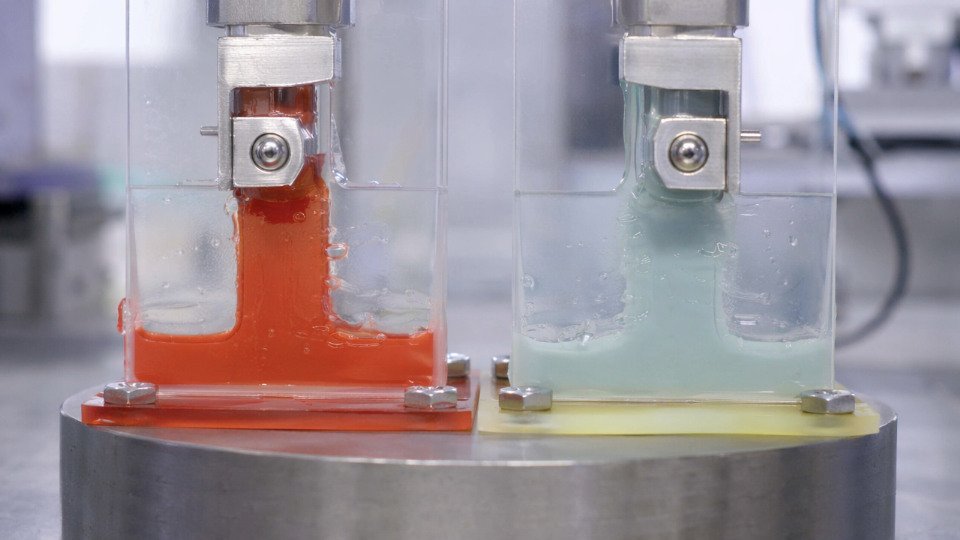
Silicone's silica ash residue after arcing is non-conductive, making it inherently safe in high-voltage outdoor applications.False
Silica ash residue is non-conductive in dry conditions, but in humid or contaminated environments — coastal installations, industrial pollution — contaminant films bridge across the residue and sustain leakage current, leading to erosion tracking. The ash's non-conductivity is conditional, not absolute.
Outdoor Insulators Above 11 kV in Polluted Environments
Above 11 kV, the relevant failure mode for outdoor polymer insulators is not dielectric puncture — it is erosion from repeated dry-band arcing along contaminated surfaces. Silicone rubber housing with standard PDMS formulation degrades measurably under this loading. A distribution line running through coastal or industrial zones can see insulator surface resistance drop by one to two orders of magnitude within two to four years if the compound lacks adequate filler reinforcement. The correct specification for this environment is high-temperature-vulcanized (HTV) silicone loaded with aluminum trihydrate (ATH) filler, typically 40–60 phr depending on the arc resistance target. ATH releases water vapor on heating, suppressing arc temperature and slowing erosion. This is a distinct product from general-purpose RTV or LSR silicone; substituting one for the other because “it’s all silicone” is an engineering error with real downtime consequences.
Flame Class Conflicts in Rail, Marine, and Tunnel Wiring
Standard silicone rubber without additive packages does not achieve UL 94 V-0 flame classification. Reaching V-0 typically requires halogenated flame retardants — and that directly conflicts with low-smoke zero-halogen (LSZH) specifications mandatory in rail rolling stock, marine cable runs, and road tunnel infrastructure. An engineer specifying silicone cable jackets for a metro project because of the material’s temperature rating may inadvertently fail the LSZH requirement, triggering a full re-qualification process mid-project. Some halogen-free silicone compounds with mineral filler packages can reach V-1 or V-0 while staying LSZH-compliant, but they require explicit verification against both IEC 60754 halogen content limits and UL 94 simultaneously — not one or the other.
Selecting Alternatives for Specific High-Voltage Contexts
| Application | Why Standard Silicone Falls Short | Preferred Alternative |
|---|---|---|
| Indoor HV switchgear (dry, clean) | Tracking risk manageable but space constraints favor higher CTI | Cycloaliphatic epoxy resin, PBT, or PPS thermoplastic |
| Outdoor HV insulators, polluted zones | Erosion tracking under contaminated leakage current | ATH-filled HTV silicone (purpose-formulated) |
| Rail/tunnel cable jackets, LSZH mandatory | Standard V-0 grade requires halogens | Halogen-free silicone compound, verified per IEC 60754 |
| Arc-flash enclosure liners | Surface carbonization risk at repetitive arc exposure | Glass-reinforced thermoset or cycloaliphatic epoxy |
For indoor high-voltage switchgear operating in controlled environments, cycloaliphatic epoxy and high-CTI engineering thermoplastics like PBT and PPS offer more predictable surface resistance under sustained voltage stress. Their lower CTI numbers relative to silicone are acceptable in dry, clean switchgear cabinets where surface contamination is managed. Move that same component outdoors, and the calculus reverses — which is why the selection question needs to start with the installation environment, not the material datasheet.
Food, Pharmaceutical, and Medical Contexts Where Silicone Migration and Extractables Are a Regulatory Problem
Silicone’s reputation for biocompatibility is well-earned in many implant and device categories, but that reputation gets over-extended into food processing and pharmaceutical manufacturing in ways that create real compliance exposure. The core issue is not toxicity in the acute sense — it is extractables: low-molecular-weight species that migrate out of the bulk material into whatever fluid contacts it. In drug and food applications, that migration has regulatory consequences that can halt a product launch or trigger a recall.
Cyclic Siloxane Oligomers and REACH Classification
Polydimethylsiloxane networks are never perfectly complete. Residual cyclic siloxane oligomers — principally D4 (octamethylcyclotetrasiloxane), D5, and D6 — remain trapped in the elastomer matrix, particularly when cure conditions are inadequate or post-cure steps are skipped. When the material contacts food or aqueous pharmaceutical solutions, those oligomers partition into the liquid phase at concentrations that depend on contact time, temperature, and the polarity of the product.
D4 is classified as a Substance of Very High Concern (SVHC) under REACH Regulation (EC) No. 1907/2006, primarily because of its persistent, bioaccumulative, and toxic (PBT) profile. D5 carries a similar designation. This matters operationally: a silicone gasket running on a pharmaceutical fill line or a food-grade hose carrying aqueous solution at elevated temperature will leach measurable D4 unless the compound has been specifically formulated, post-cured, and tested to demonstrate migration below thresholds. Most catalog-grade silicone sheet or tubing has not been through that process.
D4 (octamethylcyclotetrasiloxane) is classified as a Substance of Very High Concern (SVHC) under REACH regulation due to its PBT properties.True
The European Chemicals Agency (ECHA) added D4 to the SVHC candidate list based on its persistent, bioaccumulative, and toxic classification. This classification triggers disclosure and restriction obligations under REACH.
FDA and EU Food-Contact Compliance Is Compound-Specific, Not Generic
FDA 21 CFR 177.2600 permits certain silicone elastomers in food-contact applications, but the regulation specifies ingredient and extraction limits at the compound level. EU Regulation 10/2011 on plastic materials takes a similar position, though silicone is more accurately governed under the framework directive for non-plastic materials — either way, compliance must be demonstrated by the finished formulation, not inferred from the fact that the base polymer is silicone. Procurement teams who specify “food-grade silicone” without demanding a Declaration of Compliance tied to the specific compound and intended use conditions are accepting undisclosed risk. The supplier’s standard product data sheet is not a compliance document.
Injectable Drug Manufacturing: Extractables and Leachables Studies
The burden intensifies sharply for parenteral drug contact. FDA’s guidance on container-closure integrity and the ICH Q3C/Q3D/E&L framework require manufacturers to demonstrate that extractable compounds from tubing, stoppers, and gaskets do not appear in the finished drug product above safety threshold values. Running a full extractables and leachables study for silicone tubing in a protein biologics process typically costs between $50,000 and $250,000 depending on the number of analytes and the duration of the study — and the outcome is not guaranteed. Some silicone formulations fail qualification outright, requiring reformulation or a material change late in process development, which is among the more expensive timeline disruptions in pharmaceutical scale-up.
[Silicone Oil](https://siliconchemicals.com/silicone-oil/) and Protein Aggregation in Pre-Filled Syringes
A separate but related problem is silicone oil contamination in pre-filled syringe barrels. Syringe barrels are conventionally lubricated with silicone oil to allow smooth plunger movement. In biologic drug formulations — monoclonal antibodies, in particular — silicone oil droplets can act as nucleation sites for protein aggregation. Aggregated protein in an injectable product is a safety concern and a regulatory non-starter. The industry response has been a shift toward baked-on (cross-linked) silicone coatings, which dramatically reduce free oil, or fully silicone-free barrel designs using cyclic olefin copolymer (COC) or cyclic olefin polymer (COP) substrates. If you are specifying primary packaging for a biologic, the default assumption that a standard siliconized syringe is acceptable must be validated, not assumed.
What Engineers and Procurement Managers Should Actually Specify
Platinum-catalyzed liquid silicone rubber (LSR) consistently shows lower extractables than peroxide-cured grades because the cure mechanism leaves fewer residual organic fragments. Post-curing at 200°C for 4 hours or more drives off the bulk of residual volatiles — skipping this step to save cycle time is a common process shortcut that creates downstream compliance problems. For the highest-sensitivity pharmaceutical fluid paths, fluoropolymer tubing (PTFE, FEP, or PFA) offers a materially lower extractables profile than any silicone grade; the trade-off is reduced flexibility and higher cost, but in injectable drug manufacturing, that trade-off is usually worth making. At minimum, request a full extractables study report from the supplier — not a certificate of conformance alone — and verify that the test conditions (solvent, temperature, contact duration) match your actual process parameters.
Outdoor Structural Glazing and Construction Joints With Inadequate Paintability and Adhesion Failure Modes
Silicone dominates construction sealant specifications for good reason — UV stability, temperature cycling resistance, and long-term elasticity are genuine advantages. But those same properties create problems the moment a project demands a painted finish, involves porous natural stone, or requires bonding to substrates that silicone fundamentally does not wet. Specifying silicone in those contexts does not just produce a suboptimal result; it produces one that cannot be corrected without full joint removal.
Why Silicone Cannot Be Painted and What That Costs in Practice
Cured silicone has a surface energy in the range of 20–22 mN/m. Most architectural paints and coatings require a substrate surface energy of at least 35–38 mN/m to wet out and form a durable film. The gap is not marginal — it is fundamental. Paint applied over cured silicone will peel within weeks under outdoor UV and thermal cycling, regardless of primer selection. This is not a quality-control failure; it is a materials physics problem.
The practical consequence shows up repeatedly in curtain wall and facade retrofit projects. A perimeter joint is sealed with standard neutral-cure silicone, the specification calls for the joint face to be overcoated to match the adjacent powder-coated panel color, and the paint contractor either raises the alarm immediately or — more expensively — completes the work and the client discovers the failure at final inspection. Full re-sealing is then required: cut out, clean, re-prime, re-seal, re-paint. Labor and material costs for that rework cycle on a mid-size facade typically run two to four times the original sealant installation cost, depending on scaffold access and panel complexity.
Where joints must be painted or color-matched, polyurethane sealants or hybrid MS-polymer (silane-modified polymer) products are the correct specification. Both accept paint after a standard tack-free cure period and maintain adhesion through normal facade movement cycles.
Silicone Bleed Onto Porous Substrates
Low-modulus and neutral-cure silicone formulations contain plasticizing oils — typically silicone fluid fractions — that migrate outward from the uncured or freshly cured bead by capillary action into adjacent porous materials. Limestone, granite, sandstone, brick, and uncoated concrete are all susceptible. The migration radius can extend 15–40 mm from the joint edge depending on stone porosity and temperature, and the resulting dark staining is not surface contamination. The oil has penetrated into the pore structure.
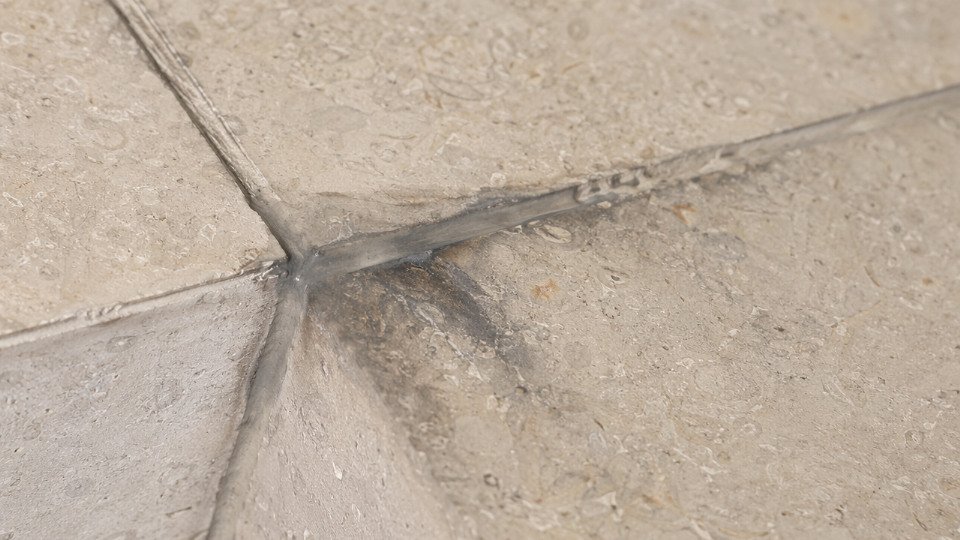
Silicone oil bleed staining on natural stone cannot be reliably removed without damaging the substrate surface.True
Once low-molecular-weight silicone oils migrate into the porous matrix of limestone or granite, solvent cleaning partially extracts the contamination but typically drives it deeper or damages the stone finish; full remediation requires mechanical grinding or re-facing of the affected area.
For joints adjacent to porous stone, the correct material is either a specifically formulated low-bleed silicone carrying documented test data for that stone type, or more reliably a silane-terminated polymer (STP) sealant, which does not contain mobile plasticizer fractions and bonds well to stone without a separate primer in most cases.
Adhesion Failures on Specific Construction Substrates
Silicone does not bond reliably — without specialized primers — to EPDM roofing membranes, polyethylene, polypropylene, or powder-coated aluminum. Primer omission is consistently the leading cause of silicone joint delamination in curtain wall construction, and it tends to be a slow failure: adhesion looks acceptable at installation, then progressively loses contact over 12–36 months of thermal cycling.
| Substrate | Silicone Adhesion (No Primer) | Required Intervention | Practical Alternative |
|---|---|---|---|
| Powder-coated aluminum | Poor to marginal | Dedicated silicone primer, surface prep protocol | MS-polymer with standard primer |
| EPDM roofing membrane | Poor | Specialized EPDM-compatible silicone primer | Polyurethane sealant |
| Polypropylene / polyethylene | None | Not reliably achievable | Mechanical fastening required |
| Natural stone (porous) | Moderate, bleed risk | Low-bleed product + primer | STP sealant |
| Anodized aluminum | Good | Standard cleaning sufficient | — |
The primer dependency is not just a specification note — it is a site supervision and inspection requirement. On projects where dozens of subcontractors are applying sealant across multiple shifts, primer step omission is a real operational risk that needs hold-point inspection built into the quality plan.
Structural Silicone Glazing: Certification Is Not Optional
Structural silicone glazing (SSG) — where silicone is the primary load-transferring bond between glass and frame in a unitized curtain wall — operates under a formal certification framework. In Europe this is governed by ETAG 002 and its successor EAD 090001-00-0401, which require the specific silicone product to have undergone defined durability testing, tensile and shear characterization, and system-level qualification. The sealant, the substrate, the primer, and the cleaning agent are all qualified together as a system.
Substituting a non-certified or lower-cost silicone into an SSG specification — even one from the same manufacturer’s product range — voids the structural qualification. The consequences extend beyond performance: in most jurisdictions, an SSG installation using non-certified materials creates a liability exposure for the facade contractor and the specifying engineer that standard professional indemnity insurance may not cover. The cost differential between a certified SSG silicone and a standard construction silicone is small relative to that exposure.
Cost, Lead Time, and Processability Constraints That Make Silicone the Wrong Business Choice
Technical exclusion criteria dominate most material selection discussions, but a material can pass every functional test and still be the wrong choice. When EPDM or neoprene meets the service requirements, choosing silicone because it is familiar or perceived as premium costs real money — and in high-volume production, the gap compounds quickly.
Raw Material Cost Differential at Scale
General-purpose silicone rubber compounds typically run $8–25 per kg, depending on grade, filler loading, and supplier. That range sits well above EPDM at $2–6 per kg and neoprene at $3–8 per kg. The exact premium depends on silicone grade (HTV, LSR, or RTV), current platinum spot prices (which directly affect catalyst cost), and order volume. At low quantities the difference is manageable. At production volumes above roughly 50,000 parts per year for a mid-size seal or gasket, the material cost delta becomes a line item that procurement managers escalate. A sealing profile running at 200,000 units annually — a common automotive or HVAC scenario — can represent $40,000–$120,000 in annual material savings by switching to a functionally equivalent EPDM compound. That is not a rounding error.
Processing Complexity and Assembly Scrap
Silicone does not solvent-weld. It cannot be bonded with standard cyanoacrylate or epoxy adhesives without prior surface treatment — typically plasma activation, corona discharge, or priming with organosilane chemistry. Each of those steps adds equipment, cycle time, and a potential failure mode. On automated assembly lines, any surface that requires pre-treatment before bonding introduces yield risk. Silicone’s low surface energy (roughly 20–22 mN/m) actively resists adhesion, which is useful in release applications and a liability everywhere else.
Co-extrusion with dissimilar materials — common in multi-durometer seals, foam-solid composite profiles, or over-molded assemblies — is straightforward with thermoplastic elastomers and manageable with EPDM. With silicone, material compatibility at the interface is restricted, and the processing windows are narrow enough that scrap rates on new product introductions regularly run 15–30% higher than comparable TPE or EPDM lines until processing is dialed in.
Tooling Capital and Cure System Barriers
Liquid silicone rubber injection molding requires temperature-controlled, flash-free tooling. Tool costs realistically fall between $50,000 and $200,000 per cavity set, depending on part complexity, number of cavities, and tolerance requirements. The platinum-catalyzed addition-cure system demands strict contamination control — sulfur compounds, nitrogen-containing materials, and certain plasticizers can poison the catalyst and produce entire shot batches that never cure. Any shop running mixed elastomer production needs physical separation protocols, and that overhead is rarely visible in a simple per-part cost calculation.
For small-batch or prototype work, the capital barrier is often prohibitive. EPDM compression or transfer molds can be built for $5,000–$20,000 with shorter lead times, making iteration faster and cheaper.
Recyclability and Regulatory Compliance Costs
Silicone is a thermoset. It does not enter standard thermoplastic recycling streams, and most regional recycling infrastructure has no pathway for it. That is increasingly relevant as extended producer responsibility legislation expands in the EU and UK. Separately, cyclic siloxanes — particularly D4 (octamethylcyclotetrasiloxane) and D5 (decamethylcyclopentasiloxane) — are listed as Substances of Very High Concern under EU REACH. Supply chain compliance documentation, substance declarations, and potential reformulation obligations all carry administrative cost that procurement teams must now budget for.
Silicone's total cost of ownership is typically 2–4x higher than EPDM or neoprene when tooling amortization, material cost, and processing complexity are fully accounted for in equivalent service applications.True
No explanation available.
When the TCO Math Closes the Argument
The practical test is straightforward: list the functional requirements, identify which alternatives meet all of them, then run a full TCO comparison including tooling amortization, material cost at projected volume, processing yield, bonding and assembly steps, and compliance overhead. For outdoor weather seals, HVAC gaskets, low-pressure water seals, and most vibration damping applications below 150°C, EPDM clears the functional bar. In those cases, silicone’s cost profile is a liability, not a premium feature.
Frequently Asked Questions About Silicone Limitations and Material Selection
Can silicone be used with all food and beverage products?
No — and this distinction matters at the compound level, not just the polymer level. Silicone handles most aqueous and low-fat food media well. The problem emerges with high-fat products: vegetable oils, dairy cream, and fatty emulsions act as extraction media, drawing low-molecular-weight siloxane oligomers out of the bulk material over repeated contact cycles. The rate depends on temperature, contact duration, and the specific compound formulation — not all food-grade silicone is identical. Verify compliance against FDA 21 CFR 177.2600 or EU Regulation 10/2011 at the finished compound level, not merely at the base polymer. A certificate that says “silicone” without referencing the specific compounded formulation tells you almost nothing useful for a fatty-food application.
FDA 21 CFR 177.2600 approval applies to the specific silicone compound, not to silicone as a generic material class.True
FDA food contact regulations require compliance of the actual formulated article, including curing agents, fillers, and processing aids, not simply the base polymer. Different silicone compounds from the same manufacturer can have different compliance status.
Is silicone safe to use in outdoor electrical enclosures?
For weathering, UV exposure, and ozone resistance, standard silicone performs well and is a legitimate choice. The boundary condition is voltage. In high-voltage environments above roughly 11 kV — particularly in polluted or coastal atmospheres where conductive contamination accumulates on surfaces — you need silicone specifically formulated and certified for tracking resistance. Standard silicone can form a conductive carbon track under arc conditions; HTV (high-temperature vulcanized) silicone with appropriate ATH (aluminum trihydrate) loading and documented tracking resistance testing is a different product category. Do not assume any silicone part covers both duties.
Why does silicone sealant stain my stone facade?
Most neutral-cure silicone sealants contain plasticizing polydimethylsiloxane oils that remain mobile after cure. In porous substrates — sandstone, limestone, unpolished granite, terracotta — these oils wick outward by capillary action and leave a darkened, oily halo that is nearly impossible to remove without damaging the face. The fix is straightforward before application: specify a non-staining neutral-cure silicone, which uses a non-migrating cross-linking system, or switch entirely to an MS-polymer (modified silane) sealant designed for natural stone. Discovering this after pointing two thousand square meters of stone cladding is an expensive lesson in substrate-sealant compatibility.
What is the maximum continuous service temperature for silicone?
Standard grades in open air: roughly 200–230°C for sustained service. Above that range, oxidative chain scission accelerates and mechanical properties drop off faster than most published data sheets suggest, because those figures often reflect short-duration testing rather than thousands of operating hours. In steam or alkaline environments the practical ceiling is far lower — closer to 120–150°C for reliable long-term seal integrity. Steam hydrolysis attacks the siloxane backbone progressively, so an autoclave gasket rated at 200°C in dry heat may fail within months under saturated steam cycling at 134°C.
Can I use silicone for dynamic O-ring seals in hydraulic cylinders?
Generally no. Silicone’s tensile strength of roughly 5–10 MPa and poor abrasion resistance make it unsuitable for the reciprocating contact and pressure extrusion loads in hydraulic rod and piston sealing. NBR is the standard choice for mineral oil circuits operating below about 100°C. For higher temperatures or synthetic hydraulic fluids — phosphate esters, polyol esters — FKM is the correct upgrade. Fitting a silicone O-ring in a hydraulic cylinder because it was available in the right size is a reliable way to schedule an unplanned maintenance event within a few thousand cycles.
Is fluorosilicone (FVMQ) a solution to all silicone’s chemical resistance limitations?
It solves one specific problem — aliphatic hydrocarbon resistance — and introduces others. FVMQ offers meaningfully better resistance to fuels and mineral oils compared to standard silicone, but its tensile strength still sits below FKM, it has poor resistance to ketones and esters, and it costs significantly more than either standard silicone or NBR. Treat it as a targeted upgrade for applications that genuinely need both fuel resistance and low-temperature flexibility, not as a drop-in fix for every situation where standard silicone has failed.
What should replace silicone in a steam autoclave gasket application?
EPDM is the practical first choice for saturated steam up to around 180°C — it handles steam hydrolysis far better than silicone and costs considerably less than fluoropolymer alternatives. For superheated steam above 200°C, the options narrow: PTFE-encapsulated gaskets handle aggressive steam well and resist most co-present chemicals, while spiral-wound metallic gaskets with a flexible graphite filler are the right answer for high-pressure superheated steam service where dimensional stability under bolt load matters as much as chemical resistance. Selecting based purely on temperature rating without accounting for steam saturation state and pressure cycling is a consistent source of premature gasket failures in process plant maintenance logs.