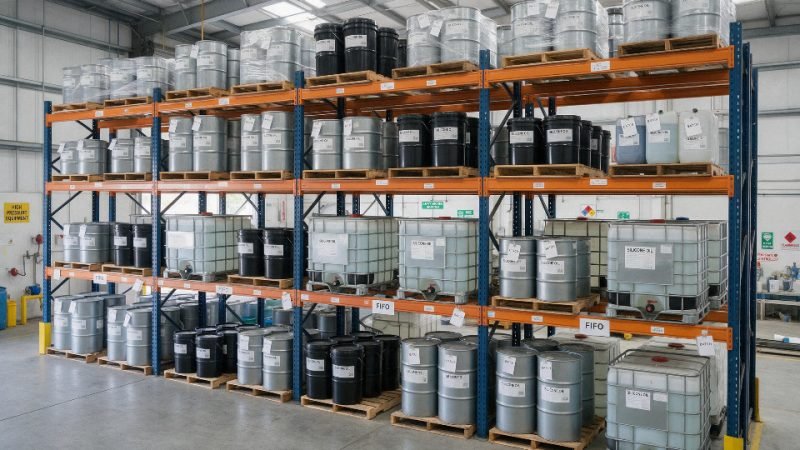
Drums of silicone oil do not usually fail overnight; they drift out of confidence. A pail that sat through a hot summer, a tote opened and reclosed too many times, or stock with unclear batch rotation can leave production and QC arguing over whether the material is still usable. That uncertainty turns into line delays, extra retained-sample checks, and sometimes scrap or warranty exposure if a viscosity shift or contamination problem shows up after the product is already in the process. The practical fix is to treat shelf life as a grade-and-storage question, not a single calendar date.
Most silicone oils have an unopened shelf life of about 12-36 months when stored under controlled conditions, with the actual limit depending on grade, packaging, and storage history. For most bulk storage, a working rule is roughly 5-30°C with minimal thermal cycling, and retained-quality checks often look for viscosity staying within about ±5-10% of the original specification, subject to end-use requirements.
The catch is that “still usable” and “still within specification” are not always the same thing. A lubricant, release aid, cosmetic intermediate, and dielectric fluid can tolerate very different kinds of aging, so the date on the label is only part of the answer. The more useful question is what actually changes in silicone oil over time, what storage conditions accelerate it, and when a simple re-test is enough versus when the batch should not go near production.
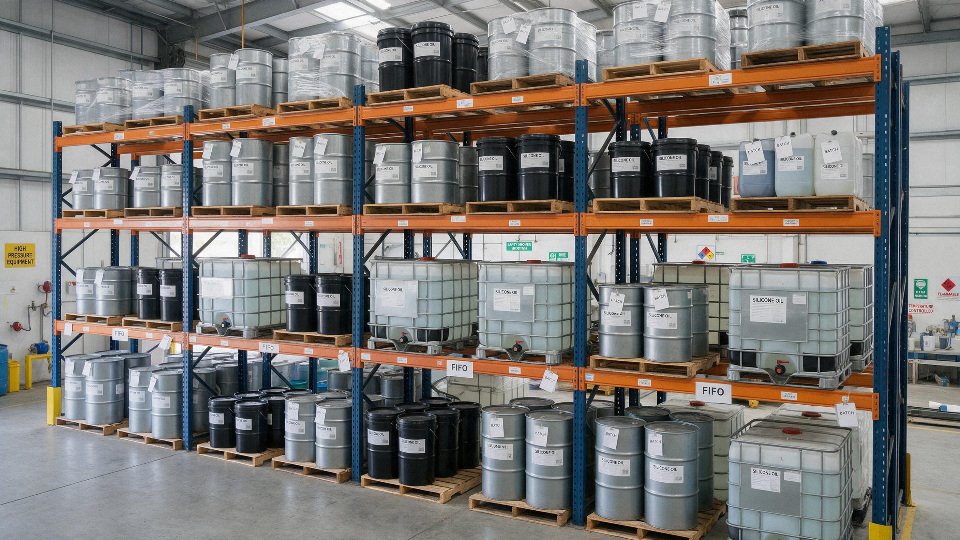
Chemistry behind stability
Silicone oil is generally stable in storage because the siloxane backbone is unusually resistant to the slow oxidation and polymer breakdown that age many organic oils. That said, the phrase “silicone oil” covers everything from simple dimethyl fluids to reactive, emulsified, or catalyst-sensitive specialty products, and their shelf life can differ sharply even when the containers look almost identical on the pallet.
At the molecular level, the starting advantage is the Si–O–Si backbone. Compared with many hydrocarbon fluids, silicone oils usually have lower unsaturation, better resistance to oxygen attack in normal warehouse conditions, and a wider practical temperature tolerance before they thicken, gel, or form degradation products. In plain terms, a clean, well-packaged silicone fluid usually has fewer easy chemical failure routes sitting in storage than a mineral oil, natural oil, or some synthetic organics.
That does not mean all silicone oils “last forever.” The base chain may be stable, but side groups, residual catalysts, trace moisture, packaging, and formulation additives often decide what actually limits usable shelf life in stock.
Why the siloxane structure is inherently stable
The core reason is the siloxane chain itself. Si–O bonds and the geometry of the siloxane backbone give these fluids a combination of flexibility and chemical durability that is hard to get from carbon-chain oils. The fluid stays mobile over a broad temperature range, and under ordinary storage it is often less prone to forming gums, varnish, or oxidative sludge.
A few structural points matter in practice:
- Low unsaturation in standard silicone fluids
- Many common dimethyl silicone oils do not have the double-bond-rich structure that makes some organic oils vulnerable to oxidative attack.
- Fewer reactive sites usually means slower property drift in sealed storage.
- Broad thermal tolerance
- Most silicone oils handle normal warehouse temperatures well, roughly within the common recommended storage band of about 5–30°C for bulk storage.
- Repeated heating and cooling cycles are still a problem because they drive breathing in drums, condensation, and sometimes separation in modified products.
- Chemical inertness of the base fluid
- Non-reactive silicone oils are usually compatible with many container materials and less likely to attack packaging from the inside.
- That benefit shrinks once the product contains functional groups, emulsifiers, solvents, or residual processing chemistry.
The practical result is that pure, non-reactive dimethyl silicone oil is often storage-stable enough that nominal shelf life is driven as much by quality-control policy and packaging as by actual chemical collapse. The boundary is simple: once the product is functionalized, compounded, or repeatedly exposed to air and moisture, the chemistry starts to matter much more than the reputation of “silicone” as a stable fluid.
Storage behavior differs by silicone oil family
Not all grades age the same way. Buyers get into trouble when they assume one retained sample protocol covers every silicone fluid in the plant.
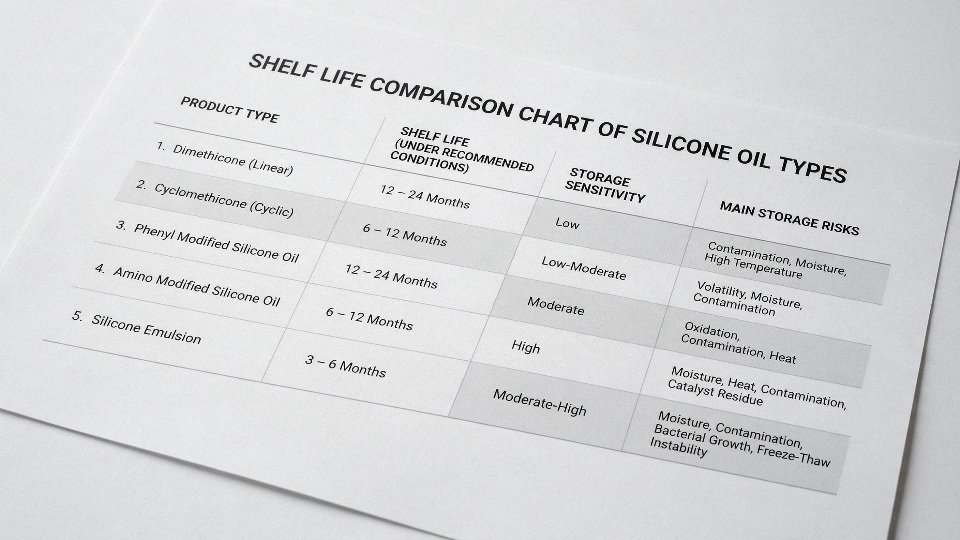
| Silicone fluid family | Typical storage stability tendency | Main storage risks |
|---|---|---|
| Polydimethylsiloxane (PDMS) | Usually the most stable in unopened, clean packaging | Contamination, volatile loss in low-viscosity grades, packaging ingress |
| Phenyl-modified fluids | Often stable, sometimes better low-temperature behavior | Oxidation or property drift depends on exact phenyl level and formulation |
| Amino-functional fluids | More storage-sensitive than PDMS | Moisture interaction, discoloration, compatibility shift, residue reactivity |
| Epoxy-functional fluids | Can be materially more sensitive | Hydrolysis, side reactions, catalyst residue effects, viscosity drift |
| Polyether-modified silicones | Often less forgiving in storage | Moisture pickup, haze, separation, microbial issues in water-containing systems |
| Silicone emulsions | Usually shortest practical storage window | Freeze-thaw damage, phase separation, microbial growth, pH drift |
PDMS and other non-reactive fluids
Straight dimethyl silicone fluids are the benchmark for storage stability. If they are kept sealed, clean, and inside the recommended temperature range, they often show little change for long periods. In retained-sample checks, viscosity often remains within roughly ±5–10% of original specification when the product is still in good condition, though the actual acceptance band depends on the end use.
Even here, low-viscosity fluids can lose volatiles if packaging is poor or repeatedly opened. A drum that “breathes” through bad seals or gets sampled every week with a dirty thief is not the same thing as an unopened factory-sealed pail.
Phenyl-modified fluids
Phenyl substitution is used for specific thermal, refractive, or low-temperature performance targets. Storage stability can still be good, but these are not automatically interchangeable with PDMS from a shelf-life standpoint. Depending on formulation, they may show color drift or property changes before a standard dimethyl fluid would.
Amino-, epoxy-, and other functional silicones
This is where storage windows tighten. Functional side groups are there because the fluid needs to bond, wet, crosslink, or interact with another phase in the process. The same reactivity that makes the product useful can create storage sensitivity.
Common issues include:
- Moisture-driven side reactions
- Slow oxidation of functional groups
- Residual catalyst or neutralization imbalance
- Color change without dramatic viscosity shift
- Compatibility change with the downstream resin, textile, paper coating, or release system
Amino-functional fluids, for example, can darken or shift in odor while still “looking usable” at first glance. Epoxy-functional grades may hold viscosity for a while but lose predictable application behavior if hydrolysis or side reactions have started.
Polyether-modified silicones and emulsions
These are often the grades that surprise procurement teams. The silicone segment may still be stable, but the polyether or water-based structure introduces new failure modes: moisture sensitivity, haze, emulsion break, pH drift, and in some systems microbial growth. A tote that sat through winter nights and warm daytime swings can separate even if the batch was fine when shipped.
The main ways silicone oils deteriorate in storage
Storage failure is usually not one single reaction. It is a chain of small insults that eventually push the fluid out of spec or out of process reliability.
- Moisture interaction
- Most important for reactive or functional grades.
- Water can trigger hydrolysis, condensation, emulsion instability, or side-group degradation.
- Repeated opening is often worse than one short exposure because every open-close cycle exchanges humid air into the headspace.
- Oxidation of functional side groups
- The siloxane backbone may remain intact while amino, epoxy, organic modifiers, or additives slowly oxidize.
- Early signs can be color shift, odor change, or downstream cure inconsistency rather than gross viscosity change.
- Catalyst residue effects
- Trace residual catalysts from manufacturing can keep working, slowly.
- Depending on the chemistry, that can mean chain scission, condensation, or gradual viscosity increase.
- This is one reason two nominally similar specialty fluids from different producers may age differently.
- Volatile loss
- Common in lower-viscosity fluids or blends containing light fractions.
- Loss of volatiles can raise viscosity and change wetting, spread, or dielectric behavior.
- A partly used drum with large headspace is much more exposed than a full sealed container.
- Contamination-driven instability
- Plant-floor contamination is a routine problem: water from a washdown area, iron fines from a pump change, wrong transfer hose, residual solvent in a day tank.
- Even tiny contamination can destabilize high-purity or reactive grades.
- Phase separation in formulated products
- Especially relevant to emulsions, modified silicones, and additive packages.
- Once separation occurs, gentle remixing may or may not recover the original product. You cannot assume it is fine just because it looks uniform after stirring.
Why viscosity alone is not enough
A fluid can pass a quick viscosity check and still be a bad production risk. Viscosity is useful, but it is only one screening parameter.
Other condition indicators often move first:
- Color
- Odor
- Acid value, where relevant
- Volatile content
- pH in emulsions or aqueous systems
- Clarity or haze
- Compatibility with the intended substrate or formulation
- Application-specific performance such as release, leveling, defoaming, softness, or dielectric behavior
If viscosity is still within the original range, silicone oil is always usable past shelf life.False
Viscosity can remain acceptable while color, volatiles, acid value, emulsion stability, reactivity, or end-use performance have already shifted. Retained property checks need to match the application, not just one bulk number.
In practice, a retained sample review for an expired drum should ask a harder question than “Has the viscosity moved?” It should ask whether the fluid still does the job consistently in the actual process window.
Why packaging and handling matter as much as chemistry
For high-purity and specialty grades, storage behavior is often limited by the package system more than by the silicone backbone. Headspace oxygen, moisture ingress, liner compatibility, seal quality, and container permeability all affect how fast the product drifts.
Watch these factors closely:
- Large headspace after partial use
- Increases air and moisture exposure.
- Speeds volatile loss and oxidation in sensitive grades.
- Container type
- Steel drums, lined drums, fluorinated HDPE, and small sample bottles do not behave the same.
- Permeation and seal integrity vary enough to matter over months.
- Repeated opening
- Common in maintenance stock and pilot plants.
- Every opening adds contamination risk and atmospheric exchange.
- Thermal cycling
- Day-night warehouse swings can pull moist air in and out.
- This is a bigger issue than many buyers expect, especially in coastal plants or non-climate-controlled storage.
So while the chemistry explains why silicone oils are often long-lived, actual shelf life is decided by the whole chain: fluid family, residual reactivity, package barrier, storage discipline, and the properties your process cannot afford to lose first.
Shelf life by product type
A practical working range for unopened silicone oil is usually 12 to 36 months under controlled storage, but that range only holds for the simpler, less reactive product families. Once you move into functional fluids, emulsions, compounded products, or tightly regulated grades, shelf life is often set by contamination risk, package integrity, or additive stability long before the siloxane backbone itself becomes the problem.
The mistake I see in purchasing is treating “silicone oil” as one warehouse class. It is not. Two drums can both be labeled silicone fluid and behave completely differently after a year on the rack because the failure mode is different: one is driven by slow oxidation, another by moisture pickup, another by emulsion instability, and another by a trace metal or amine contamination that would not matter at all in a release-agent application but is a reject in electronics or personal care.
All silicone oils can be assigned the same shelf life if viscosity stays within spec.False
Viscosity is useful, but it does not capture all shelf-life failure modes. Functional-group reactivity, emulsion stability, additive degradation, odor, color, trace contamination, and documentation validity can all make a product unacceptable even when viscosity has changed very little.
Standard dimethyl silicone oil
For straight dimethyl silicone oil, extended retention is often realistic if the product is unopened, clean, and kept roughly in the 5-30°C range without repeated hot-cold cycling. In most industrial applications, this is the least troublesome category from a storage standpoint because the fluid is chemically quiet and not especially eager to react with air or moisture under normal warehouse conditions.
Typical uses include:
- Lubrication and damping
- Heat transfer within the grade’s operating limits
- Release and anti-stick service
- Textile and fiber processing
- Polishes and general industrial formulations
- Dielectric and insulating applications, where the specific grade permits
What makes dimethyl grades easier to store is their low side-group reactivity. The siloxane chain is not immortal, but in a sealed package it usually does not have many active pathways available. In practice, the main risks are less about chemistry and more about housekeeping:
- Dirty transfer equipment
- Drum breathing from repeated opening
- Mislabeling or lot mix-up
- Water ingress through damaged bungs or poor reclosure
- Temperature history causing temporary viscosity shift or handling complaints
A common retention check is viscosity versus the original specification or certificate. Many plants use something like ±5-10% as a practical screen, depending on the end use. That is not a universal release criterion; a mold-release operation may tolerate a wider drift than a precision damping fill, and a customer-spec viscosity window always overrides a generic internal rule.
The conclusion changes if the oil is being held for a highly sensitive application. A dimethyl fluid that is perfectly acceptable as a general-purpose lubricant may still be out of bounds for electronics cleaning, medical-adjacent processing, or any use where trace volatiles, particulates, or documentation continuity matter as much as the base chemistry.
High-viscosity and ultra-high-viscosity silicone fluids
These grades often store as well as, or in some respects better than, lower-viscosity dimethyl fluids from a volatility standpoint, but they create more plant-floor trouble. The shelf-life risk is less about rapid chemical breakdown and more about handling damage, contamination during transfer, and false quality alarms caused by temperature history.
The mechanism is straightforward. As viscosity climbs, the fluid moves slowly, traps bubbles longer, clings to drums and transfer lines, and is harder to homogenize after sitting. If a tote spends a cold week in winter storage and then gets sampled before the bulk has warmed evenly, the sample can look “off” even though the product is still sound. I have seen perfectly good high-viscosity fluid quarantined because the top-layer sample was taken too soon after moving it indoors.
Watch for these practical issues:
- Sampling error: top, bottom, and wall-adhered material may not represent the bulk unless the product is conditioned properly
- Contamination retention: a small amount of dirt, fiber, gasket debris, or residual solvent stays in the fluid and is hard to disperse or filter out
- Pump selection problems: gear pumps, follower-plate systems, or warmed transfer lines may be needed; rough handling introduces air and shear heat
- Apparent viscosity drift: repeated cooling and reheating can change what operators see at receipt, even when permanent degradation is limited
The trade-off is simple. Higher viscosity usually helps with lower evaporation loss and can support applications needing body, film strength, or damping, but it raises labor, transfer difficulty, and false-reject risk in storage. The preferred choice flips if your plant lacks temperature-controlled storage or proper unloading equipment; then a lower-viscosity grade blended at point of use may be easier to manage than a single ultra-high-viscosity fluid held for months.
Phenyl silicone fluids
Phenyl-modified silicone fluids are often chosen where low-temperature fluidity, thermal behavior, or radiation-related performance is better than standard dimethyl grades. Storage life can still be good, often in the same broad unopened commercial range, but buyers should be more alert to oxidation history, color shift, and application-specific acceptance criteria.
These fluids are not automatically fragile. What changes is the consequence of a small shift. In some optical, electrical, or specialty heat-transfer uses, slight color development or subtle compositional change matters sooner than it would in a general industrial lubricant.
Points worth checking:
- Original color and clarity standard
- Headspace condition in partially used containers
- Any antioxidant or stabilizer package declared by the supplier
- End-use sensitivity to odor, color, dielectric properties, or residue
Where oxidation is a concern, storage discipline matters more than the nominal product family. A well-sealed phenyl fluid in a stable warehouse may age better than a basic dimethyl oil that has been opened repeatedly beside a hot process line.
Reactive silicone fluids
Hydroxyl-, amino-, epoxy-, methacrylate-, hydrogen-, and alkoxy-functional silicone fluids usually have shorter and more condition-sensitive shelf life because the functionality that makes them useful in formulation also gives them more ways to age. If you are buying these for downstream reaction, adhesion promotion, cure, or surface modification, treat the supplier shelf-life date as a process-control limit, not a casual guideline.
This category deserves to be split by failure mode, because “reactive” is not one thing.
Moisture-sensitive or condensation-prone grades
Common examples include:
- Hydroxyl-functional fluids
- Alkoxy-functional fluids
- Some hydrogen-functional systems, depending on formulation
Main risks:
- Moisture pickup
- Condensation or pre-reaction in the package
- Gel particles or haze
- Viscosity increase from chain extension or side reactions
Catalyst- or impurity-sensitive grades
Common examples include:
- Hydrogen-functional fluids used in addition systems
- Epoxy- and methacrylate-functional fluids used in coating or treatment packages
Main risks:
- Trace metals or amines triggering side reactions
- Peroxide, inhibitor, or catalyst imbalance
- Reduced reactivity where a formulator expects a certain cure response
Air/heat/light-sensitive functional grades
Common examples include:
- Amino-functional fluids
- Methacrylate-functional fluids in some formulations
Main risks:
- Color darkening
- Odor change
- Gradual loss of target reactivity
- Package headspace effects after repeated opening
The mechanism matters commercially. A reactive fluid may still “look fine” and pass a simple viscosity check while failing in the customer’s line through slower cure, unstable emulsion formation, poor hand feel, weak anchorage, or inconsistent release. For reactive grades, shelf life should be tied to a retained-sample performance check whenever the application is high-value or hard to rework.
Silicone emulsions and water-based dispersions
This is the category where buyers get caught most often. Silicone emulsions and dispersions have materially different shelf-life limits because the water phase, emulsifier system, and biostability now matter just as much as the silicone itself.
Typical storage risks include:
- Freeze-thaw damage
- Creaming or phase separation
- Emulsion breakage
- Microbial growth
- pH drift
- Container swelling or gas formation in badly contaminated product
A stable emulsion can often be recovered from mild separation by proper mixing, but once the emulsion breaks, that is usually not a paperwork issue; it is a usability issue. You will see oiling-out, irreversible coagulum, or poor application uniformity. In coating or textile lines, that turns directly into streaks, deposit build-up, or finish inconsistency.
The trade-off here is that emulsions improve handling, dilution, and application safety in many plants, but they are less forgiving in storage than neat fluids. The conclusion stops holding if the warehouse can freeze. One bad winter weekend can do more damage to a water-based silicone product than a year of correct storage would.
Filled, compounded, fragranced, dyed, or additive-containing silicone oils
In these products, shelf life is often set by the weakest component rather than the siloxane base fluid. The base oil may be stable, but the additive package can settle, react, discolor, lose activity, or create compatibility problems over time.
Common shelf-life limiters are:
- Fillers settling or hard-packing
- Pigment separation or color shift
- Fragrance fade or off-odor development
- Corrosion inhibitor depletion
- Antifoam package instability
- Solvent loss where the product is not a 100% active fluid
- Incompatibility between additive and package liner
This is where procurement needs the most specific supplier data. A “silicone oil with additive” cannot be responsibly assigned the shelf life of the underlying silicone polymer unless the full formulation has been tested in its actual package.
Pharmaceutical, personal care, food-contact, electronics, and precision-process grades
These grades may have similar chemical stability to industrial material, but their usable shelf life is often shorter because the acceptance window is tighter. The reject reason is frequently not bulk degradation; it is loss of confidence in purity, trace contamination control, packaging integrity, or documentation continuity.
Check these items separately:
- Lot traceability and retained COA validity
- Packaging cleanliness and seal condition
- Particle, color, odor, and volatile profile where relevant
- Change-control status from the supplier
- Regulatory or customer documentation tied to the lot
- Requalification requirements after extended storage
For these grades, the practical question is not “Can the fluid still function?” It is “Can this exact lot still be released into a controlled process with the evidence the customer, auditor, or regulator expects?” Those are different questions, and they should be managed that way in stores and QA.
Storage conditions that matter
For most silicone oils, storage conditions decide whether the product still behaves like the original specification at month 24 or starts drifting much earlier. In practice, the biggest shelf-life losses come less from dramatic chemical breakdown and more from ordinary handling problems: heat soak, temperature cycling, moisture pickup, poor closure, and contamination during transfer.
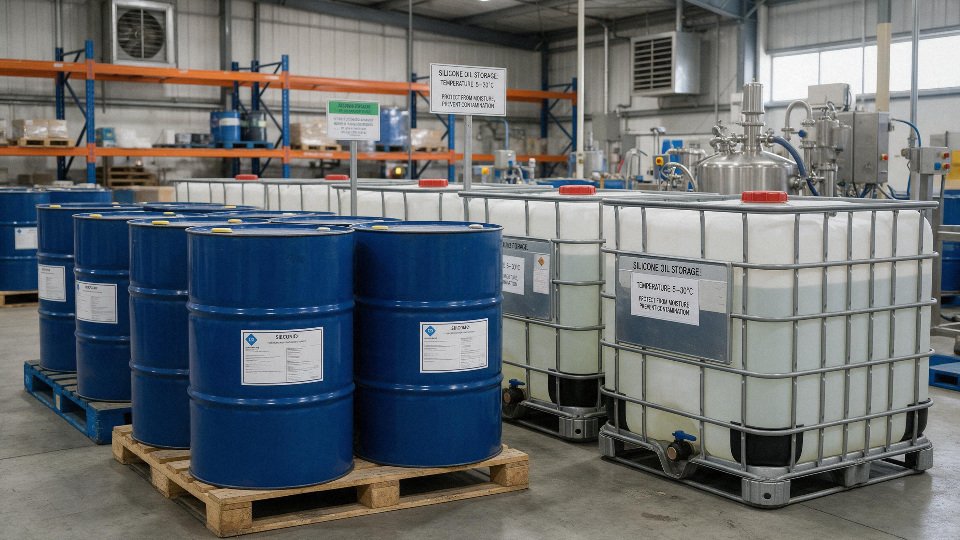
A sealed drum sitting in a clean warehouse at about 5-30°C is a different situation from a half-used pail parked near a roller door, or an IBC that spent six weeks in a hot container yard. Buyers sometimes focus on the nominal shelf-life statement and miss the actual damage path. The supplier’s date is only part of the story; the storage history matters just as much.
Temperature control
Sustained heat is the most common warehouse-side stress. Most silicone oils tolerate moderate ambient temperatures fairly well, but long exposure to elevated temperature can still shift viscosity, accelerate additive degradation in modified grades, and increase volatile loss from partially filled containers. On a plant floor, this often happens quietly: drums stored near steam lines, on mezzanines under a metal roof, or in shipping containers that see daytime temperatures far above the outside air.
Repeated thermal cycling causes a different problem. A product that warms during the day and cools at night can show:
- Temporary viscosity variation at receipt or pre-use inspection
- Condensation on the inner headspace if moist air is present
- Expansion and contraction stress on seals and closures
- Phase instability in emulsions or certain formulated products
That last point matters. A standard dimethyl silicone fluid may recover after being brought back to a stable temperature and mixed appropriately, but emulsions are much less forgiving. Freezing can break emulsion structure, leading to separation that does not fully reverse. If the product is an emulsion, dispersion, or heavily modified formulation, winter storage and cold-route transport need a tighter review than the base fluid itself.
There is also a practical lab issue here. Incoming viscosity readings can look “out of spec” simply because the sample was tested too cold or too warm. Typical retained-quality checks often use an acceptance band of roughly ±5-10% versus the original specification, depending on end use, but that comparison only means anything if temperature conditioning and test method are controlled. I have seen good material quarantined because someone sampled a cold drum straight off the dock.
Repeated thermal cycling can reduce the useful storage life of some silicone oil products even when peak temperature is not extreme.True
The main risk is not always bulk chemical degradation. Cycling can drive condensation, stress seals, alter apparent viscosity during testing, and destabilize emulsions or formulated grades. The effect depends strongly on product type and packaging condition.
Moisture exposure
Moisture is a minor issue for some inert silicone fluids and a major one for hydrolyzable or reactive grades. If the product contains moisture-sensitive functional groups, even brief exposure during drum opening, transfer, or poor resealing can start changes that are slow at first and expensive later: viscosity drift, gel particles, haze, reduced reactivity, or shortened pot life in downstream use.
The highest-risk situations are usually these:
- Repacking from the original container into smaller shop containers
- Drawing repeatedly from a partially used drum with large headspace
- Using pumps, hoses, or dip tubes that were not dried after washdown
- Outdoor unloading in humid or rainy conditions
- Nitrogen-free storage of moisture-sensitive grades after opening
Transfer practice matters more than people like to admit. A clean fluid moved through a wet diaphragm pump or a hose with residual rinse water is no longer the same product, even if it still looks clear. For reactive grades, this is where shelf life often stops being a calendar question and becomes a handling-discipline question.
Air and oxygen contact
Air exposure is usually manageable for standard silicone oils, but certain functional fluids, additive-containing products, and partially used containers are more vulnerable. Oxygen can contribute to slow oxidation in susceptible materials, while simple headspace breathing allows loss of low-volatility components over time. Neither mechanism is dramatic on day one. Over months, they can be.
Watch large headspace in drums and IBCs. The less product left in the container, the more vapor exchange and the more opportunity for:
- Oxidative change in sensitive grades
- Volatile loss
- Moisture entry through breathing
- Skinning or residue formation around the closure area
This is one reason repacking into appropriately sized, compatible containers often preserves quality better than keeping 15% product in a half-empty IBC for six months.
Light exposure
For many standard clear silicone fluids, ordinary indoor light is not the dominant storage risk. Direct sunlight is still worth avoiding because it adds heat load and can stress packaging, but UV itself is usually a secondary concern compared with temperature and contamination.
The conclusion changes for these categories:
- Dyed products
- Additive-containing formulations
- Certain modified silicone materials
- Products sold for optical, cosmetic, or appearance-sensitive applications
In those cases, prolonged light exposure can contribute to color shift, additive instability, or performance drift. If the end use is appearance-critical or highly regulated, use opaque packaging and keep warehouse exposure controlled rather than assuming “silicone is stable” covers everything.
Container material and closure integrity
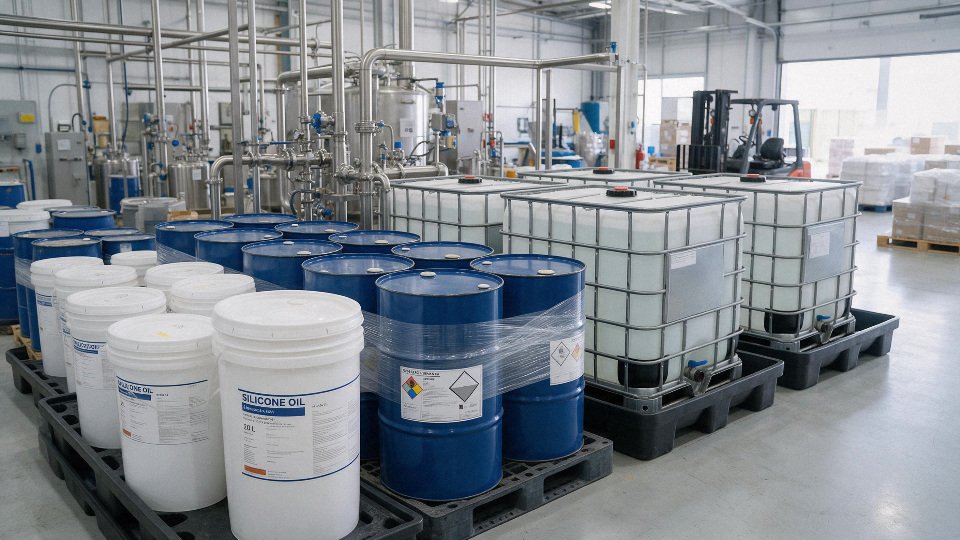
Container choice is not just a shipping detail; it is part of product preservation. Common packaging options each have strengths and limits:
| Container type | Typical strengths | Typical watchpoints |
|---|---|---|
| Lined steel drum | Good barrier, strong for export handling | Liner compatibility, bung seal condition, corrosion if damaged |
| HDPE pail/drum | Chemically resistant, common for many grades | Higher vapor permeability than metal, closure damage, deformation in heat |
| IBC | Efficient for volume handling | Large headspace after partial use, valve cleanliness, pallet/frame damage |
| Fluorinated plastic container | Improved barrier for some materials | Must verify actual compatibility and purity requirements by grade |
Seals, gaskets, and closures deserve more attention than they usually get. A good drum with a poor bung seal is a bad package. For high-purity applications, even gasket material compatibility can matter if extractables or contamination are concerns. This is not something to guess at; it needs confirmation against the specific grade and application.
Warehouse hygiene and transfer discipline
A silicone oil can leave the supplier in excellent condition and be downgraded by the user’s own handling system. The usual contamination sources are painfully ordinary:
- Dust from open warehouse traffic
- Metal fines from nearby fabrication
- Residual cleaning chemicals in pumps or totes
- Water ingress from outdoor staging
- Cross-contamination from reused transfer lines
- Wrong-label or mixed-lot decanting during busy shifts
The mechanism is straightforward: contamination changes either chemistry, cleanliness, or both, and the damage often shows up downstream as foaming, surface defects, poor release, inconsistent coating, filter plugging, or unexplained QC drift. The trade-off is also straightforward. Shared transfer equipment saves labor and capital, but it sharply increases contamination risk unless cleaning validation is disciplined.
Logistics stress factors
Long-distance distribution adds another layer of risk that a factory-only storage policy does not capture. Ocean transit can expose product to hot containers, cold snaps, port delays, and rough handling in a single shipment. Partial pallet damage may not rupture a package, but it can weaken seals enough to start slow ingress or leakage.
For imported material or multilayer distribution, keep these controls in place:
- Lot traceability from manufacturer through distributor to plant
- Receipt inspection for dented drums, stressed valves, and broken tamper evidence
- Quarantine procedure for freeze exposure, overheating, or visible separation
- Storage-history review when shelf life on paper looks acceptable but transport was abnormal
If the product has crossed climates, changed warehouses, and sat in port for two extra weeks, shelf life should be judged from both age and exposure record. That is the point where retained samples, viscosity checks, water-content testing, or application trials start earning their keep.
Failure signs and testing
A silicone oil that has aged badly usually tells on itself before it reaches the process, but not always in the obvious way. Visible defects such as haze, sediment, gel specks, phase separation, skinning, or unexplained drum pressure are strong hold points; a clean-looking sample still needs property and application checks if the lot is old, has been temperature-cycled, or came through questionable storage.
A practical keep-or-reject decision works best in layers: first visual and handling checks, then simple physical tests, then chemistry and application-specific validation where the product value or process risk justifies it. That sequence keeps the lab bill sensible and catches the common failures early.
Visual indicators that deserve attention
Start with what operators can see while receiving, decanting, or sampling. A surprising amount of bad stock is discovered with a flashlight and a clear sample bottle.
- Haze or turbidity
- Often points to moisture pickup, fine insolubles, early incompatibility, or partial degradation.
- Some modified silicone fluids are naturally less water-clear than straight dimethyl oils, so compare against the original approved retain or supplier standard rather than memory.
- Sediment or settled fines
- May be catalyst residue, filler carryover, corrosion products from the container, or gelled polymer fragments.
- If the sediment redisperses only with aggressive mixing, treat that as a warning, not a fix.
- Gel particles or stringy material
- Usually a sign of localized crosslinking, contamination, or side reactions in reactive grades.
- Even a few soft gels can plug metering valves, felt filters, slot dies, or fine spray nozzles.
- Phase separation
- Relevant for emulsions, blends, or modified fluids more than for simple silicone oils.
- A separated top or bottom layer means the sample is not representative until mixed correctly, but if separation persists after the normal remix procedure, the lot is no longer stable enough for many uses.
- Unexpected darkening
- Can come from oxidation, thermal history, contamination, or metal contact.
- Color shift alone does not always mean performance loss, especially in non-critical industrial uses, but it is a trigger for more testing.
- Skin formation at the surface
- Commonly seen in partially used pails or drums with repeated air exposure.
- This matters because the skin itself may be easy to strain out, yet it often indicates broader reactivity or contamination in the headspace-exposed layer.
- Container pressure anomalies
- Swollen pails, bulged liners, vacuum collapse, or a hiss on opening should not be ignored.
- Pressure change can reflect thermal cycling, volatile loss, contamination, or gas generation from side reactions. Verify safe opening procedures against the site rules and the product documentation.

Physical property checks: the first lab screen
For most plants, these are the most cost-effective tests because they are quick, comparable to the original certificate, and good at catching drift.
- Viscosity at a defined temperature
- Measure at the temperature used in the original specification or retained sample comparison, not “room temperature” unless room temperature is tightly controlled.
- Small temperature errors create misleading viscosity differences, especially in medium and high viscosity grades.
- Typical retained-quality acceptance is often around ±5-10% versus the original specification, but the usable limit depends heavily on the application. A defoamer carrier may tolerate more drift than a precision damping fluid.
- Density
- Useful as a fast cross-check for contamination, wrong-grade mix-up, or volatile loss.
- It is less sensitive than viscosity for many aging modes, but if both viscosity and density move together, the signal is stronger.
- Refractive index
- Helpful for identity confirmation and detecting compositional drift in some grades.
- In practice, it is most useful when the plant has historical data and knows the normal spread of that exact product.
- Pour behavior or low-temperature flow
- Not just a cold-room curiosity. Product that has seen winter transport or unheated storage can show waxy appearance, sluggish pour, or incomplete recovery after warming.
- If the application relies on metering consistency at startup, poor pour behavior is a process problem long before it becomes a chemistry problem.
- Volatiles or weight loss
- Relevant where a silicone oil must maintain a defined volatile profile, flash behavior, evaporation rate, or bath stability.
- This check often exposes product that sat warm for months with poor closure or repeated drum opening.
The mechanism here is straightforward: aging or contamination changes molecular distribution, and that shows up first as altered flow, volatility, or optical properties. The trade-off is that these tests are efficient but not complete. A lot can pass viscosity and still fail badly in service because the critical defect sits in trace contamination or surface chemistry rather than bulk properties.
Chemical and purity tests: where basic screening stops being enough
If the fluid is going into electronics, medical, cosmetics, validated coating lines, or any process where one bad lot causes a week of cleanup, this level of testing is usually justified.
- Moisture
- Important for hydrolysis-sensitive or reactive systems, and for any process where water drives foaming, instability, or side reactions.
- Karl Fischer is commonly used where precision matters.
- Acid value
- A rise can indicate degradation, contamination, or residual reaction by-products.
- Low levels may still matter if the downstream system contains sensitive metals, catalysts, or alkaline additives.
- Hydroxyl value
- Relevant for hydroxyl-functional fluids and for confirming whether reactive sites remain within expected range.
- Drift here can alter cure response, compatibility, or emulsion behavior.
- Active content
- Especially important for emulsions, modified fluids, or formulated products where the useful silicone fraction matters more than total mass.
- Residual catalyst
- Platinum, tin, acid, base, or other catalyst residues can create late-stage issues in blending or end-use processing.
- This is one of those hidden causes of “it looked fine in receiving but misbehaved on the line.”
- Ionic contamination
- Critical for electronic, dielectric, semiconductor-adjacent, and some high-purity applications.
- Very low ionic residues can drive corrosion, conductivity drift, or reliability problems that will not show up in a drum-side inspection.
- Gas chromatography for volatile profile
- Used when the distribution of low-boilers matters, or when contamination by solvents or wrong materials is suspected.
- It is also useful after long hot storage, because the average viscosity can remain near target while the volatile tail has shifted enough to change odor, evaporation, wetting, or bath life.
A silicone oil can remain within viscosity specification yet still fail downstream performance because of trace contamination or altered surface activity.True
Bulk viscosity reflects average molecular flow behavior, not the presence of low-level ionic contamination, catalyst residues, incompatibles, or subtle changes in surface-active components. Those defects can disrupt wetting, foam control, release, dielectric performance, or emulsion stability without producing a large viscosity shift.
Performance validation: test the job, not just the fluid
If the product has a defined function in the plant, the shortest path to a confident decision is often a controlled use test with a retained good lot beside it.
- Defoaming: compare knockdown speed and persistence in the actual foaming medium.
- Release: run peel or release-force checks on the actual substrate and cure conditions.
- Lubrication: assess friction, wear, or startup smoothness under the plant’s load and speed window.
- Dielectric use: verify electrical properties against the applicable method and current product requirement.
- Thermal bath service: check appearance, volatiles, and operating stability after heating under representative conditions.
- Textile hand: compare feel, softness, slickness, and yellowing tendency on the actual fabric and finish recipe.
- Cosmetic sensory: evaluate slip, spread, residue, odor, and appearance in the actual formulation base.
- Process compatibility: confirm no fish-eyes, craters, separation, cure inhibition, filter plugging, or unexpected foam in the real system.
This is where the conclusion often flips. A slightly aged lot that is acceptable in a low-demand release application may be unusable in a cosmetic serum or precision dielectric fluid, even if both lots “pass” the same incoming viscosity check.
Sampling protocol: bad samples create bad decisions
Do not trust the first dip from the top of a drum unless you are trying to diagnose stratification itself.
- Review the container history
- Unopened or partial?
- Stored indoors or outside?
- Any freeze-thaw, summer heat, or long transit delay?
- Inspect the container before opening
- Check for dents near the chime, rust, liner damage, seal failure, or bulging.
- Use clean, compatible tools
- Dry stainless or approved inert samplers are typical.
- Avoid shop-rag lint, reused solvent bottles, and sample thieves that still smell like the last product.
- Account for stratification
- For pails and drums, sample from upper, middle, and lower zones if separation is suspected.
- For tanks, sample after proper circulation time, not just after bumping the agitator for two minutes.
- Avoid introducing moisture or dirt
- Open containers only as long as needed.
- In humid plants, this matters more than people think, especially on night shift when lids get left loose.
- Label and compare properly
- Record temperature, location, container number, and whether the sample was pre- or post-mixing.
- Keep a retained approved sample if the product is operationally important.
Interpretation limits: where off-spec can and cannot be lived with
Some off-spec lots can still be used safely in low-criticality internal applications after a documented risk review. A plant may downgrade an older silicone oil for non-critical lubrication, temporary release duty, or maintenance use if contamination risk is low and a bench trial confirms acceptable behavior.
That logic stops holding when the process is tightly validated or failure is expensive to unwind. For regulated, electronic, medical, cosmetic, food-contact-adjacent, or high-purity applications, an aged lot that shows unexplained change should not be cleared on appearance and viscosity alone. In those cases, supplier review, current specification check, and application-specific testing are the minimum sensible path.
The awkward part is that silicone fluids often age quietly. They can look acceptable, pump normally, and still destabilize an emulsion, poison a downstream catalyst, alter surface slip, or create intermittent defects that operators blame on the machine for a week. That is why the right question is not “has the shelf life date passed?” but “what changed, what matters for this use, and how sure are we?”
Opened container management
Once a silicone oil container is opened, the practical usable life usually becomes much shorter and far less predictable than the original unopened shelf-life rating. The main change is not that silicone oil suddenly becomes unstable; it is that the plant now controls the contamination and exposure history instead of the packaging supplier.
Opening changes the risk model in four ways:
- Air contact increases
Oxygen exposure is not equally critical for every silicone oil, but air contact does allow slow oxidation in sensitive formulations and, just as importantly, repeated exchange with humid ambient air. - Moisture can enter
This matters most for moisture-sensitive modified grades, reactive blends, or oils used in applications where trace water creates downstream defects. In a humid plant, a drum opened in the morning and left breathing all shift can pick up more moisture than buyers expect. Particles enter through handling
Dust, rust flakes from damaged closures, fibers from wiping rags, and residue from pumps or hoses are common plant-floor contamination sources. The material may still look clear in a sample jar yet fail a fine-filtration or coating application later.Temperature swings get worse
A sealed pack in stable warehousing is one thing; an opened pail moved between warehouse, production floor, and a warm mezzanine is another. Repeated heating and cooling drives condensation risk and can shift viscosity slightly, especially in partially filled containers with large headspace.
The exposure pattern matters more than the calendar alone. A 1 kg or 5 kg pack opened once, used up promptly, and discarded presents a very different risk than a 200 L drum opened twice a week for three months.
One-time use packs, repeatedly opened drums, and bulk tanks are not the same problem
Small packs are usually the safest format for low-volume or quality-critical use because they limit cumulative exposure. You pay more per kilogram and generate more packaging waste, but you cut the chances of moisture pickup, dirt ingress, and lot-mixing mistakes.
Repeatedly opened drums are where most preventable problems start:
- operators crack the bung and leave it loose
- transfer wands get shared across materials
- the drum sits half full for weeks
- no one marks the opening date
- fresh material gets added on top of older residue
Bulk tanks can be well controlled or badly managed; there is not much middle ground. If the tank is closed, dry, clean, and fitted with proper vent protection or inert gas blanketing where the product justifies it, bulk storage can be stable. If it breathes freely through a poor vent arrangement and the transfer loop is rarely cleaned, the contamination risk can exceed that of drums despite better logistics.
Operating controls that actually preserve opened material
Use controls that match the product value and sensitivity, not a generic warehouse rule.
- Reseal immediately after drawdown
Close bungs, lids, and valves as soon as the transfer is complete. “We will come back in an hour” is how drums collect airborne dust and moisture. Minimize headspace
A nearly empty drum is a high-risk package because every thermal cycle exchanges more air relative to the remaining liquid volume. Decanting into a smaller, clean compatible container can make sense if traceability is maintained.Use nitrogen blanketing when justified
Nitrogen is useful for moisture-sensitive or higher-value materials where air exposure has a known quality cost. It is not a magic fix for poor housekeeping, and it must be dry, clean, and properly regulated. For many standard silicone oils, tight resealing and good transfer hygiene are enough.Keep transfer equipment clean and dedicated where possible
Dedicated hoses, pumps, and fill lances prevent cross-contamination. If sharing is unavoidable, define a cleaning and verification routine. In practice, the weakest point is often the hose left capped badly on a dusty rack.Control dispensing points
Avoid open buckets and improvised funnels. Closed transfer with clean quick-connects is better, especially for lower-viscosity oils used in precision processes.
Use-by discipline after opening
Do not rely on the supplier’s unopened shelf-life date once the package has been opened. Set an internal open-container control system:
- record lot number
- record date opened
- record operator or department
- define an internal review or use-by date
- apply FIFO/FEFO logic for opened stock, not just sealed stock
A practical approach is to review opened containers at shorter intervals than unopened inventory, with the interval based on grade sensitivity, handling frequency, and application criticality. There is no single responsible universal number here; the right limit depends on product type, ambient humidity, cleanliness of the transfer system, and the consequence of failure in the end use.
Filtering an opened silicone oil can restore it to original condition.False
Filtration can remove suspended particles if the fluid has not chemically degraded, but it cannot reverse oxidation, moisture-related changes, additive separation, or emulsion instability.
When filtration helps, and when it does not
Filtration is useful when the problem is particulate cleanliness. It can help salvage material contaminated by dust or minor handling debris, assuming the oil is otherwise still on specification.
Filtration does not fix:
- chemical aging
- viscosity drift outside acceptable limits
- moisture pickup dissolved into the fluid
- phase separation driven by formulation breakdown
- emulsion breakage in emulsified systems
That distinction matters commercially. Running aged material through a filter may make it look cleaner while leaving the actual failure mechanism untouched. Then the plant loses time twice: once on the attempted salvage, and again on the process upset.
One common mistake is topping off an older, partially used drum with fresh silicone oil. It looks tidy from an inventory standpoint, but it destroys traceability and makes later failure analysis messy. If a batch goes off-spec, no one can tell whether the cause was the older residue, the newer lot, or contamination introduced during transfer. In a plant that cares about yield and root-cause discipline, that practice should be stopped.
Procurement and specification control
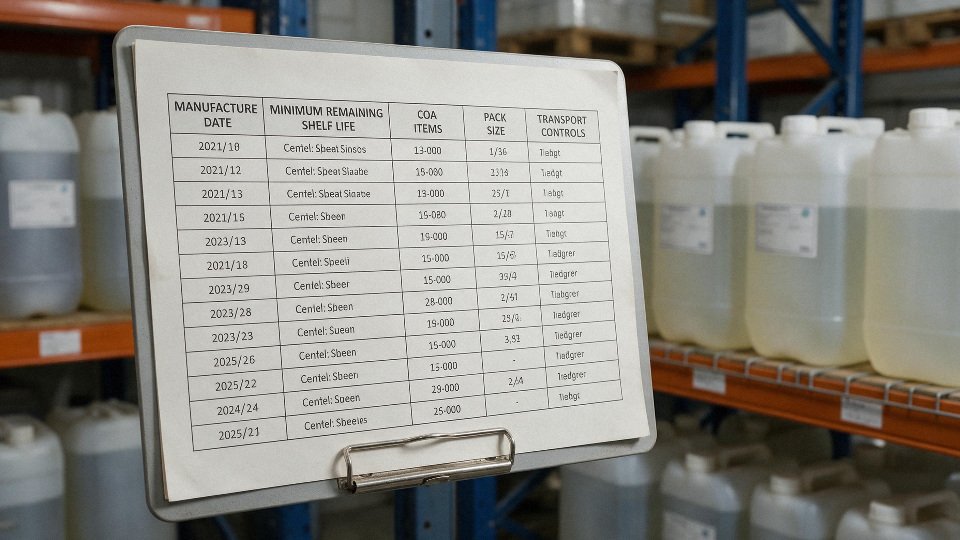
A workable silicone oil shelf-life specification has four parts: date control, condition control, evidence control, and inventory control. If purchasing only asks for “shelf life 24 months,” older stock can still slip in, the stated life may apply only to sealed original drums, and your plant ends up carrying the aging risk rather than the supplier.
Most of the trouble starts in the gap between the supplier data sheet and the purchase order. Sales literature may state a typical unopened shelf life of 12–36 months under controlled storage, but unless the PO, quality agreement, and incoming inspection criteria all point to the same rule set, people will interpret it differently. One buyer assumes shelf life means from manufacture date; another warehouse treats it as from shipment date; production opens a 200 kg drum for a trial, then the remainder sits half-used for three months and gets blamed on “bad material.”
Write the date requirements so there is no room for interpretation
Put the following items explicitly into the purchase specification or quality agreement:
- Manufacturing date definition
- Require the actual manufacturing date or batch completion date on the label and shipping documents.
- Do not accept vague wording such as “production period” or “inspection date” as a substitute.
- Retest date, if the supplier uses one
- If a supplier manages some grades by retest date rather than fixed expiry, require that the retest basis be stated.
- Ask what properties are rechecked and who authorizes extension. A retest date without a defined requalification protocol is not much protection.
- Minimum remaining shelf life on receipt
- Set a receiving threshold that matches your consumption cycle.
- For fast-moving commodity fluids, buyers often accept less remaining life than they would for slow-moving modified grades. The right threshold depends on your usage rate, internal release hold time, and safety stock policy.
- Packaging condition limitation
- State clearly whether the declared shelf life applies only to unopened original packaging.
- This matters because many disputes come from material that was technically within the supplier’s stated shelf life but had already been opened, repacked, or partially decanted on site.
- Nonconformance handling
- Require written approval before shipping short-dated material.
- Tie that approval to lot-specific review, not blanket commercial acceptance.
That sounds bureaucratic, but it prevents a common plant-floor mess: procurement buys discounted inventory with six months left, QC holds it for two weeks, production consumes one-third, and the rest becomes old stock before the next run.
Require a useful CoA, not a decorative one
Appearance and nominal viscosity alone are too thin for many applications. They may be enough for low-risk uses such as a general-purpose release, defoaming, or noncritical lubrication duty, but they do not tell you much about contamination, substitution risk, or whether a specialty fluid still fits the process window.
Ask the supplier which certificate of analysis items are actually controlled for that grade, then match them to application risk:
| Application type | Usually meaningful CoA / release items | Why buyers should care |
|---|---|---|
| General commodity silicone fluid | Viscosity, appearance, specific gravity if standard for the grade | Confirms broad identity and handling behavior |
| Process-sensitive coating or release use | Viscosity, volatile content if relevant, key functional parameter for modified fluid | Small shifts can change wetting, transfer, or cure interaction |
| Electronics or precision cleaning adjacent use | Tighter viscosity control, particle or cleanliness-related controls if offered, water content where relevant | Residue behavior and consistency matter more than visual clarity |
| Personal care, food-contact, or regulated-adjacent systems | Grade-specific purity documentation, traceability, and any applicable supporting declarations from supplier | Documentation burden is often as important as the fluid itself |
| Medical-adjacent or validation-heavy use | Change-control commitment, lot traceability, retained sample support, tighter release profile | Requalification cost can exceed the material cost |
Do not specify every imaginable test “just to be safe.” Every extra release item either adds cost, lengthens lead time, or gets ignored because no one uses the result. The point is to control the failure mode that matters in your process.
A more detailed CoA always reduces procurement risk.False
It reduces risk only when the tested properties are linked to the application failure mode. Extra generic tests can raise cost and paperwork without improving acceptance decisions.
Match pack size to consumption rate
If a plant uses 20 kg per week, buying a 200 kg drum may look economical on unit price and freight, but open-container exposure can become the dominant aging mechanism after first use. That is especially true for lower-volume specialty modified grades, where each opening event introduces handling variation, headspace exposure, possible moisture ingress, and more chances for shop-floor contamination from pumps, hoses, or reused caps.
Procurement should check these points before fixing pack size:
- Typical weekly or monthly consumption by SKU
- How long a container stays open after first use
- Whether the line uses closed transfer or open pouring
- Whether partial containers are returned to storage
- How often the material is switched between lines or rooms
The trade-off is straightforward: smaller packs cost more per kilogram and create more packaging waste, but they often cut scrap, reinspection, and old-stock disposal. For slow-moving specialty fluids, the lowest landed price per kg is often not the lowest total cost per accepted kg used in production. That conclusion weakens only when usage is high, transfer is closed and clean, and inventory turns fast enough that open-life exposure stays short.
Ask for storage and transport controls, not just shelf-life statements
A serious supplier should be able to provide handling guidance beyond “store in a cool, dry place.” For most silicone oils, bulk storage around 5–30°C is typical practice, with repeated thermal cycling avoided where possible. But buyers should still ask for grade-specific instructions on these points:
- Recommended storage temperature range
- Protection from freezing or cold-thickening during winter shipment, if relevant
- High-temperature exposure limits during summer transport or port delays
- Any need for dry nitrogen blanket, special liners, or moisture control
- Container orientation, resealing, and decanting guidance
- Action after suspected temperature excursion
Winter and summer controls are not just logistics trivia. Repeated cold-to-warm cycling can drive condensation around closures or complicate viscosity acceptance checks; hot containers can change handling behavior at receipt, and impatient operators sometimes sample before the drum has equilibrated.
Buy commodity fluid one way; buy critical application material another
Not all silicone oil sourcing needs the same discipline.
For commodity fluid purchasing, the usual priorities are:
– Correct grade identity
– Stable viscosity band
– Practical packaging
– Reliable delivery
– Reasonable shelf-life balance versus stock turns
For critical application sourcing such as electronics, medical-adjacent, personal care, or food-contact systems, add these requirements:
– Formal change notification
– Strong lot traceability
– Documented retention sample practice
– Defined requalification support
– Cleaner packaging controls
– Better evidence behind shelf-life or retest claims
The mechanism here is commercial as much as chemical. In regulated or validation-heavy environments, a borderline lot does not just risk product performance; it can trigger paperwork, customer deviation requests, repeat testing, and line holds. That is why a material that is perfectly acceptable in a commodity use may be commercially unacceptable in a controlled application.
Audit the supplier on the points that affect aging risk
A short supplier audit checklist will tell you more than a polished brochure:
- Batch consistency
- How tight is the process control for the grade you buy?
- Are key properties trended lot to lot?
- Packaging hygiene
- How are drums, pails, or IBCs prepared and filled?
- Are closures, liners, and fill lines managed to prevent contamination?
- Retention sample practice
- Does the supplier keep retention samples by lot?
- For how long, and under what storage conditions?
- Stability data
- Is shelf-life support based on actual retained-sample review, accelerated work, historical experience, or just a default commercial statement?
- If the answer is vague, treat the date conservatively.
- Requalification support
- Can the supplier review an aging lot against current spec?
- Will they advise what tests matter for extension decisions?
A buyer does not need a pharmaceutical-grade audit for every silicone fluid. But if the material is slow-moving, modified, application-sensitive, or difficult to replace, it is worth checking whether the supplier can support a practical requalification path before old inventory becomes a write-off.
Application risk differences
A drum that is perfectly usable in one process can be a reject in another. Silicone oil age only matters in relation to what the fluid must still do at the point of use, what it can contaminate if it drifts, and how expensive failure would be. That is why a simple “still clear, still pours” check is enough for some utility uses and nowhere near enough for electronics, food-contact, or premium surface-finishing work.
The mechanism is straightforward: different applications are sensitive to different parts of the fluid property set. One buyer cares mainly about bulk viscosity staying within roughly the original range; another is really buying dielectric behavior, low volatiles, odor neutrality, or formulation response at a surface. The trade-off is commercial as much as technical. Relaxing acceptance on older stock can reduce write-offs, but the wrong relaxation point shifts cost downstream into scrap, bath instability, customer complaints, or line stoppages. This section stops being broadly predictive once the silicone oil is part of a proprietary blend or regulated end use; then the supplier’s current specification, application test, and compliance documents govern more than any generic storage rule.
Heat transfer and bath fluids
For heat-transfer or thermal-bath duty, appearance is a weak acceptance criterion. What matters more is whether the fluid has retained thermal behavior, stayed reasonably clean, and avoided a build-up of volatile or oxidized fractions that can change bath performance at temperature.
Watch these points first:
- Volatility profile
- Older material with a higher light-ends fraction can increase evaporative loss, vent loading, odor, and condensate deposits around heaters or covers.
- This matters more as operating temperature approaches the upper working range of the fluid.
- Oxidation cleanliness
- Fine haze, sediment, or darkening may indicate oxidation products or contamination.
- In bath systems, those by-products can plate onto hot surfaces, hurt heat transfer, and accelerate heater fouling.
- Viscosity retention
- A moderate viscosity drift may still be tolerable in some open-bath service, but in pumped systems it changes circulation behavior and heat-transfer coefficient.
- Typical retained-quality checks often compare against the original specification with acceptance somewhere around ±5-10%, but the actual limit depends on pump design, control tuning, and process temperature.
- Water and particulate contamination
- Even small contamination loads can cause nuisance issues: sputtering in hot baths, filter loading, valve sticking, and messy residue on parts.
A plant-floor mistake I see often is approving an old drum because it still looks bright under warehouse lighting. That tells you almost nothing about light volatiles, dissolved oxidation products, or how the fluid behaves after eight hours at operating temperature.
Lubrication and damping uses
In lubrication, damping, and dashpot-type uses, age acceptance usually turns on consistency. If viscosity shifts, low-temperature flow worsens, or trace contamination gets into close-clearance hardware, the equipment “feel” changes long before anyone sees dramatic visual defects.
Key decision points:
- Viscosity consistency across the service temperature range
- Damping devices, metering components, and precision mechanisms are often selected around a narrow viscosity band.
- A fluid that is slightly off at 25°C can be noticeably off at winter startup temperatures.
- Low-temperature flow
- Older stock may still pass a room-temperature viscosity check yet respond sluggishly in cold storage or unheated plants.
- This is where a simple single-point lab test can miss a field problem.
- Elastomer compatibility
- If the oil contacts seals, hoses, gaskets, or soft components, contamination or formulation drift can alter swell behavior.
- The fluid itself may be stable, but package contamination from poor handling can create the compatibility issue.
- Cleanliness
- Fine solids, rust flakes from reused transfer gear, or mixed-in residues from another lubricant cause disproportionate trouble in valves, small orifices, and instrument-grade assemblies.
The preferred decision flips when the application moves from general lubrication to precision damping or sealed-life assemblies. In the first case, a retested older lot may be acceptable. In the second, replacement is often cheaper than diagnosing field variability later.
Release agents, defoamers, and process aids
These are the applications where buyers get caught out most often, because the bulk fluid may look fine while performance at the interface has already drifted. Surface activity, spreading behavior, and compatibility with the host formulation can shift before viscosity or color moves enough to trigger a warehouse rejection.
Common failure paths include:
- reduced release uniformity on molds or belts
- poorer defoaming response despite normal appearance
- fish-eyes, craters, or slip variation in coatings and inks
- instability after let-down into the customer’s formulation
- carryover issues from trace contamination with water, surfactants, or another silicone grade
If older silicone oil still meets viscosity, it will usually perform normally as a release or defoaming aid.False
These functions depend heavily on interfacial behavior and formulation compatibility, which can drift or be disrupted by low-level contamination before bulk viscosity changes enough to show a problem.
In practice, the right acceptance test is often a bench application trial, not just a certificate review.
Electrical and electronic uses
For electrical insulation, electronics processing, or adjacent high-reliability uses, older stock can be unacceptable even when it is visually normal and near-spec on viscosity. Dielectric behavior, ionic purity, moisture, and outgassing risk are the real gatekeepers.
Pay close attention to:
- dielectric strength and dielectric loss requirements
- moisture pickup during storage or repeated opening
- ionic or particulate contamination from handling
- volatile content where outgassing can affect assemblies, optics, or enclosed devices
This is one of the clearest boundaries in the whole shelf-life discussion: if the oil goes anywhere near high-voltage insulation, sensitive electronics, or vacuum/low-outgassing environments, rely on current test data and supplier documentation rather than calendar age alone.
Textile, coating, and personal care applications
In textile finishing, coatings, and personal care formulations, the first signs of aging are often commercial rather than purely physical. The oil may still function chemically, but color, odor, hand feel, emulsion behavior, or blend compatibility starts to drift outside what the customer will accept.
Check these first:
- Color and odor
- Minor oxidative change that means little in an industrial bath can kill acceptance in a cosmetic or premium-finish product.
- Emulsion stability
- If the oil is emulsified or later converted into an emulsion, older stock may separate faster or need higher shear and surfactant correction.
- Formulation interaction
- Small changes in the silicone phase can alter gloss, slip, foam, hand feel, wetting, or leveling.
Pharma-, food-, and high-purity process contexts
In regulated or high-purity environments, the technical question is only half the decision. Documentation gaps, uncertain storage history, broken seals, or traceability breaks will often disqualify stock even if the fluid still tests acceptable on core properties.
Use a conservative screen:
- lot traceability intact
- original packaging and seal condition verified
- current compliance documents matched to the intended use
- retest plan defined before release to production
- quality approval based on both test data and document review
That feels strict, but it is usually cheaper than defending a deviation later. In these contexts, inventory optimization comes second; release decisions are driven by risk exposure, auditability, and the cost of being wrong.
Frequently asked questions
Does silicone oil expire if unopened?
Yes, but not in the same way a reactive adhesive or moisture-cure sealant does. An unopened silicone oil in sound packaging, stored under controlled conditions, often remains usable for about 12-36 months, sometimes longer for very simple grades, but the practical limit is set by retained conformity to spec, not by the calendar alone.
What usually changes first is not dramatic chemical breakdown. In practice, buyers see issues from packaging integrity, contamination during filling, thermal cycling in transit, or additive drift in modified grades. A clean, straight PDMS fluid in a sealed drum stored around 5-30°C is a different risk profile from an emulsion, functional silicone fluid, or product repacked into small containers with more headspace.
Can silicone oil still be used after the labeled shelf life?
Often yes, if it passes requalification against the properties that matter for the job. The label date is usually the supplier’s supported storage period under stated conditions; it is not universal proof that the product is bad on day one after expiry.
The catch is application risk. For a non-critical release, defoaming, or general lubrication duty, a retained sample that still meets appearance, viscosity, and any key functional check may be perfectly serviceable. For medical, electronics, high-voltage insulation, or tightly qualified coating processes, the acceptance window is narrower and the supplier’s declared shelf life may be a hard commercial or regulatory boundary. If you want to use aged stock, test against the original specification and your process-critical performance, not just a visual check.
How long does silicone oil last after opening?
Once opened, usable life becomes much more site-dependent than the original shelf life. In a disciplined plant, material may stay acceptable for weeks or months after opening; in a humid, dusty production area with repeated decanting, condition can drift quickly.
The main variables are:
– How much air and moisture enter the container
– Whether the cap is reclosed tightly and promptly
– Container size versus consumption rate
– Cleanliness of pumps, hoses, funnels, and dip tubes
– Ambient temperature swings between day and night
A half-empty pail opened every shift is usually higher risk than a drum under dry nitrogen blanket with a closed transfer loop.
What is the best storage temperature for silicone oil?
For most silicone oils, about 5-30°C is the practical target. Stability is usually best when temperature is moderate and steady, with as little repeated heating and cooling as the warehouse can manage.
Repeated thermal cycling matters because it can drive condensation on container internals, stress seals, and promote phase issues in modified products. A drum sitting near a loading door in winter and then in direct summer sun will age differently from one in a climate-controlled chemical store. Verify any narrower limit against the supplier’s current product documentation.
Can freezing damage silicone oil?
Sometimes, depending on the grade. Many neat silicone oils tolerate low temperatures better than water-based products, but freezing or very low-temperature storage can still cause temporary cloudiness, viscosity shift, additive separation, or package damage.
The preferred choice flips by product type:
– Simple silicone fluids: often recover after controlled warming and mixing, if no contamination occurred
– Emulsions or modified systems: much more likely to separate irreversibly or lose performance
Do not force-thaw with a hot plate, steam lance, or direct drum heater unless the supplier explicitly allows it. Gentle return to room temperature and reinspection is the safer route.
Does silicone oil absorb water?
Most neat silicone oils are not strongly hygroscopic, but that does not mean water is irrelevant. They can still pick up small amounts of moisture from poor handling, condensation, wet transfer equipment, or damaged packaging, and some formulations are more sensitive than others.
Water causes trouble through the process, not just the chemistry. It can change dielectric behavior, create haze, interfere with coating uniformity, promote foaming behavior changes, or distort viscosity readings. In opened containers, the usual culprit is not the base fluid “soaking up” moisture aggressively; it is humid air exchange and bad housekeeping.
How can I tell whether old silicone oil is still good?
Start with a basic hold-or-release screen:
1. Check label, batch number, manufacture date, and storage history.
2. Inspect the container for leaks, bulging, rust at closures, or broken seals.
3. Look at the fluid for haze, sediment, gel particles, skin formation, or phase separation.
4. Compare odor only if you know the normal product profile; odor alone is weak evidence.
5. Test viscosity against the original specification or retained reference.
6. Add any application-critical tests such as water content, appearance after heating, dielectric properties, or bench performance.
A common retained-quality screen is viscosity staying roughly within about ±5-10% of original specification, but that is not a universal release limit. It depends on the end use.
A silicone oil that looks clear is automatically fit for use.False
Clear appearance helps, but it does not confirm viscosity, water content, dielectric behavior, or functional performance in the intended process.
Is discoloration always a rejection criterion?
No. Slight color change can be harmless in some industrial uses, especially where the fluid is not visible in the finished product and all critical properties still pass.
It becomes a reject issue when:
– The application is optical, cosmetic, medical, or customer-facing
– Color shift signals overheating, contamination, or additive degradation
– The specification explicitly limits color
– The discoloration comes with haze, sediment, or odor change
Can I mix old and new batches?
Usually not before qualification. Mixing can hide a marginal batch inside a good one and turn one controllable problem into a full-lot traceability problem.
If blending is considered, check these first:
– Same product code and revision
– Same viscosity grade and additive package
– Acceptable test results on the older batch
– No customer or regulatory restriction
– Clear batch-level traceability after blending
Should I rely on supplier shelf life or my own requalification tests?
You need both. Supplier shelf life sets the supported storage window under defined conditions; your requalification confirms whether the actual material, after your transport and warehouse history, is still fit for your process.
That balance changes with risk. For low-consequence industrial use, a sensible incoming and retained-sample program may let you use material beyond label life with confidence. For regulated or tightly validated applications, supplier guidance, current COA limits, and formal reapproval usually outweigh internal convenience.
Verify your usable stock window
A workable stock decision comes down to five checks: what grade you have, whether the package is still sealed, how it was stored, how old it is versus the stated shelf life, and how sensitive the end use is. If any one of those factors is unfavorable, stop treating calendar age as the whole answer; the material moves from routine use into either requalification or replacement.
Start by gathering the minimum records before anyone in production makes a keep-or-scrap call. Without these, most plants end up arguing from memory, and memory is usually wrong after a few months on the rack.
- Batch or lot number
- Production or filling date
- Supplier-stated shelf life and storage conditions
- Opening date, if the package has been opened
- Package size and closure condition
- Storage temperature history, even if only from warehouse logs rather than continuous data
- Visual inspection notes: clarity, haze, sediment, skinning, phase separation, damaged drum, leaking cap
- Latest test data, if any: viscosity, appearance, moisture or other application-relevant checks
- Intended application and its criticality: general lubricant, release, additive, electronic use, cosmetic use, process intermediate, and so on
Decision path for usable stock
Use this sequence. It is simple on purpose; if a site needs a six-page disposition form for routine silicone oil, the process usually becomes slower than the risk justifies.
- Confirm product type
- Standard PDMS fluids in unopened original packaging usually tolerate storage best.
- Functional, modified, emulsified, or specialty grades tend to have tighter practical storage limits.
- If the product is a blend for a narrow process window, assume less tolerance until data says otherwise.
- Check package status
- Unopened, intact original packaging: proceed to age and storage review.
- Opened package, damaged seal, transferred container, or headspace repeatedly exposed: shift one risk level higher.
- If material was decanted into unlined or poorly identified containers, treat traceability and contamination risk as a separate rejection trigger.
- Review storage history
- Storage roughly within about 5-30°C, without repeated hot-cold cycling, supports normal use.
- Unknown history, summer overheating near a roofline, winter freezing, or repeated outdoor transfer is enough to justify hold-for-test.
- Thermal cycling matters because it drives breathing in partly filled containers, which can pull in moisture or air and amplify small contamination issues.
- Compare age with stated shelf life
- Within shelf life and no red flags: likely suitable for normal use.
- Near expiry or moderately beyond expiry: hold for requalification, not automatic scrap.
- Far beyond shelf life with weak records: replacement is usually cheaper than process disruption, especially for critical applications.
- Set the decision by application criticality
- Low-criticality use with broad process tolerance may accept material that passes basic checks.
- High-criticality use needs tighter evidence, often including viscosity and application-specific tests.
- The conclusion flips here: a drum that is acceptable for a general release application may be completely unsuitable for electronics, coatings with appearance sensitivity, or any process where slight viscosity drift changes metering.
Three practical outcomes
| Outcome | Typical conditions | Action |
|---|---|---|
| Use as normal | Unopened or well-controlled opened stock, within shelf life, clean appearance, acceptable records, non-problematic storage | Release to production under normal controls |
| Hold for requalification testing | Near or past shelf life, opened package, incomplete storage history, minor appearance concern, higher-value stock | Quarantine and test against agreed acceptance criteria |
| Replace immediately | Severe contamination signs, phase separation, major container damage, no traceability, clearly abusive storage, failed key test | Block use and arrange replacement |
When to involve the supplier
Bring the supplier in early if the material has aged past its labeled shelf life, if the specification has changed since you bought it, or if your application is sensitive enough that a generic viscosity check is not enough. In practice, the most useful support is usually one of these:
- Retained sample comparison against the original batch, if available
- Review of the current specification versus the version on your purchase date
- Application-specific acceptance limits rather than a blanket expired/not expired answer
- Guidance on whether a viscosity shift in the range often seen for retained checks, roughly ±5-10% versus original specification depending on end use, is acceptable for your process
Expired silicone oil must always be discarded immediately.False
Shelf life is a control point, not a universal technical failure point. Material slightly beyond stated shelf life may still be usable if storage was controlled and requalification data supports the intended application.
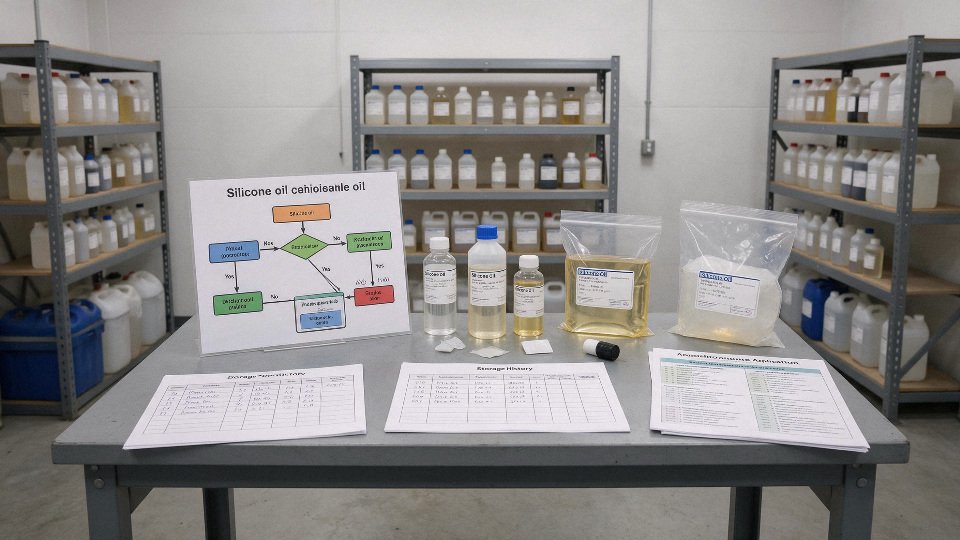
The next buying decision should match consumption, not just unit price. If stock regularly expires after opening, ask for packaging aligned to your actual drawdown rate, confirm the minimum remaining shelf life you need at receipt, and send the supplier the batch number, product type, age, storage history, visual findings, and latest test data so they can advise whether to requalify the lot or supply fresh material.