A lot of silicone oil packaging trouble starts after production, not during it: leaking drum bungs, IBCs filled too aggressively, dirty containers contaminating a clear fluid that should have gone out clean. On the plant floor, that turns into rework, pallet instability, transport claims, and awkward calls between production, warehouse, and procurement because nobody wants to own a shipment that arrived with residue on the valve or a label mismatch. The money loss is rarely just the container cost; it shows up in rejected goods, extra handling, slower customs clearance, and customers quietly tightening incoming inspection on the next order. The practical fix is straightforward: match the package format to volume, handling method, and export route, then control filling, sealing, labeling, and cleanliness with the same discipline you apply to the product itself.
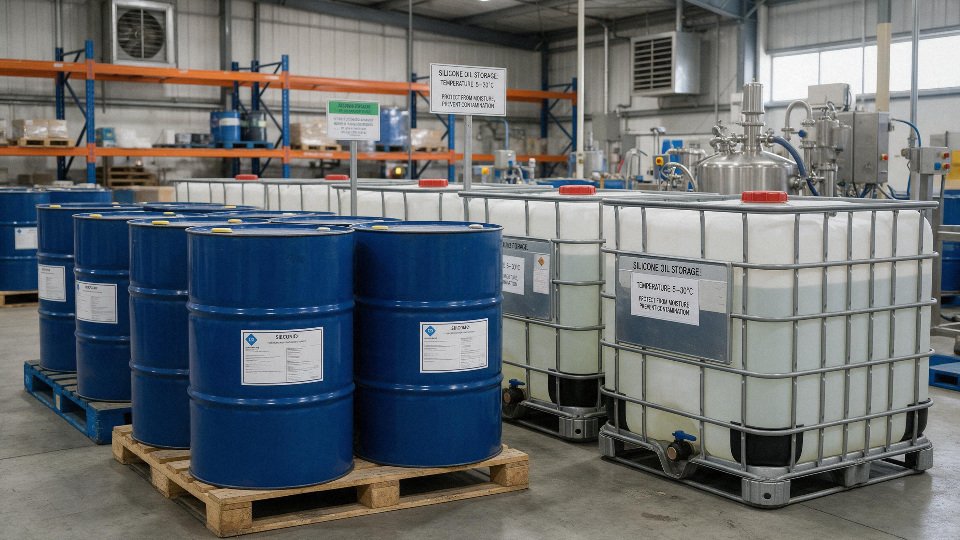
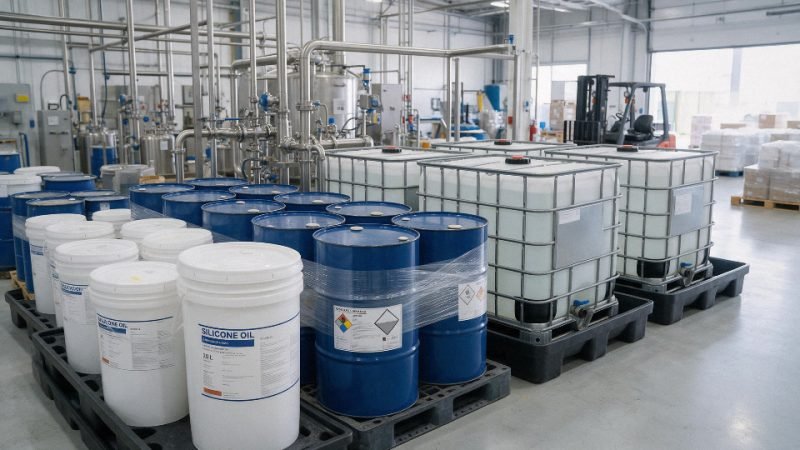
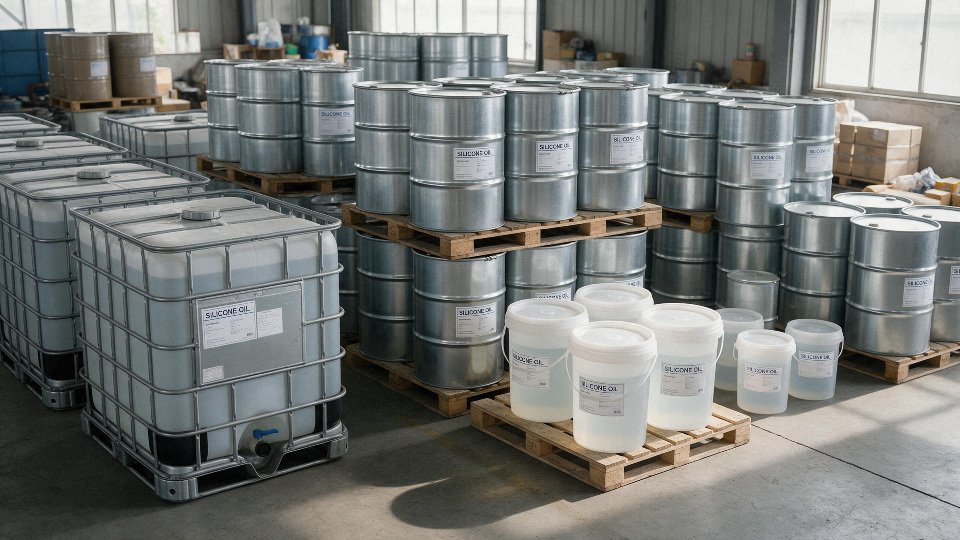
Silicone oil is commonly packaged in 20-25 L pails, 200 L steel drums, 1,000 L IBCs, and ISO tanks for bulk export. The right choice depends on order volume, viscosity, customer handling equipment, and shipping mode, and containers are typically not filled to full nominal volume because headspace is needed for thermal expansion.
That sounds simple until you get into the details that actually decide whether a package works in service or becomes a logistics problem. A 200 L drum is not automatically the right answer for every industrial order, and an IBC that looks efficient on paper can be the wrong choice if the customer decants manually, stores outdoors, or needs tighter contamination control than the warehouse routine can deliver.
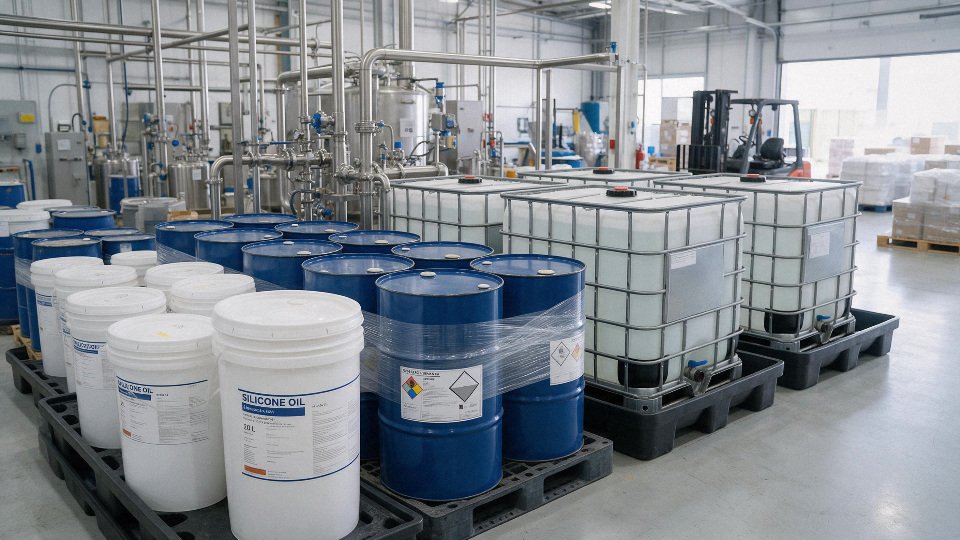
Packaging formats
Silicone oil is commonly packed in everything from small sample bottles to ISO tanks, but the right format depends less on nominal volume than on how the product will be stored, moved, discharged, and protected from contamination. For many buyers, the best package is the one that minimizes total handling loss and quality risk at their actual consumption rate, not the one with the biggest nameplate capacity.
A maintenance shop buying a few pails a month has a different packaging logic from a release-coating plant taking regular bulk deliveries. Viscosity matters, cleanliness matters, export mode matters, and so does the simple question nobody asks early enough: who will actually empty the package, with what pump, in what temperature range, and how clean does that transfer need to stay?
Small containers: bottles, cans, and pails
Small packs are usually the right choice for samples, laboratory work, maintenance demand, specialty grades, and any application where partial-use control matters more than packaging cost per kilogram. They cost more per unit of product, but they often save money by reducing contamination, over-issue, and stale inventory.
Typical uses include:
- Product qualification samples
- Pilot-scale production
- Maintenance lubrication or release-agent top-up
- High-value specialty modified silicones
- Multi-grade plants where opening a large container creates cross-contamination risk
- Downstream resale into smaller channels
Operationally, small containers work because they shorten the exposure window. A 20-25 L pail opened, used, and closed in one shift is easier to manage than a 200 L drum sitting half-empty for six weeks, breathing humid air through every temperature cycle. In plants near the coast or in monsoon climates, that matters more than people admit.
Common formats include:
- Bottles
- Best for samples, QC retainers, R&D, and very small production batches
- Easy to label by lot and retain for traceability
- Good choice where the user needs to decant by hand under controlled conditions
- Cans
- Used where a stronger, more solvent-style pack is preferred
- Helpful for niche distribution and smaller commercial packs
- Can offer better dent resistance than thin bottles, depending on construction
- Pails
- Widely used for maintenance, contract manufacturing, and medium-value specialty grades
- Easier to move without forklifts
- Practical where partial issue and resealing are routine
The mechanism here is simple: smaller packs reduce the number of product transfers and shorten open-container dwell time, which lowers the chance of dust ingress, wrong-lid mix-ups, and pump contamination. That benefit grows when the silicone oil is high purity, low-volume, or used intermittently.
The trade-off is obvious but often underestimated:
- Higher packaging cost per kilogram
- More manual handling
- More labels, more units, more receiving scans
- More packaging waste unless a return or recycling system exists
If the site consumes material quickly through a fixed transfer setup, small packs stop making sense fast.
Steel drums: the standard industrial pack
For a large share of industrial silicone oil trade, the 200 L steel drum remains the default because it balances transport robustness, export familiarity, handling flexibility, and acceptable unit economics. It is not glamorous, but it survives rough yards, mixed freight, and imperfect forklift habits better than many alternatives.
Steel drums stay common for a few practical reasons:
- Accepted and understood across global logistics networks
- Compatible with standard drum pumps, drum tippers, and handling equipment
- Reasonably robust in containerized export
- Suitable for a wide range of viscosities
- Easier to segregate by batch than bulk systems
- Lower consequence if one package is damaged compared with a full tote or bulk tank
Open-head vs tight-head drums
The distinction matters.
| Drum type | Best fit | Why used | Practical limit |
|---|---|---|---|
| Tight-head steel drum | Routine liquid shipment, cleaner closed transfer | Better seal control, less open exposure, suitable for pumping through bungs | Harder to inspect or manually recover residue |
| Open-head steel drum | Higher viscosity grades, applications needing wide-mouth access, liner insertion or manual cleaning | Easier filling, inspection, scraping, and liner placement | More operator exposure once opened; lid reassembly discipline matters |
In practice:
- Tight-head drums are preferred when the product can be pumped cleanly and the buyer wants a more closed handling route.
- Open-head drums are useful when viscosity is higher, product recovery matters, liners are used, or the customer may need direct access for heating blankets, scooping, or manual decanting.
Steel drums outperform larger packs when:
- The buyer needs batch segregation
- Consumption is moderate rather than continuous
- Export handling is rough or transshipment is likely
- The receiving site lacks clean bulk unloading capability
- Damage containment matters more than labor efficiency
They do carry more tare and create more handling steps than IBCs or bulk systems, so they are not automatically the cheapest answer for medium-volume users.
Plastic drums and pails
Plastic drums and pails can be a very good fit for silicone oil where chemical compatibility, lower tare weight, and cleaner internal surfaces are priorities. They are especially useful in facilities that value easier manual handling and where logistics conditions are controlled.
Their advantages usually include:
- Lower empty-pack weight
- Reduced corrosion concerns compared with steel
- Smooth internal surfaces that can help product recovery
- Often suitable for cleaner-looking presentation in specialty channels
- Useful where the buyer wants a non-metal contact surface
But this category has boundaries, and they matter on export jobs.
Key limits to check:
- Stacking strength: not all plastic drums tolerate prolonged warehouse stacking, especially in warm conditions
- Temperature cycling: repeated hot-cold cycles can affect shape stability and closure integrity
- Forklift abuse resistance: side impacts and tine contact are less forgiving than with steel
- Long sea transit: package deformation risk rises if stowage is poor or container temperatures climb
A plastic pail that behaves perfectly in domestic palletized delivery may not hold up the same way after weeks in a container crossing hot ports and rough inland transfer. That is where procurement teams get burned by choosing on tare weight alone.
Plastic drums are always better than steel drums for silicone oil because they do not rust.False
Plastic avoids external rust concerns, but package selection also depends on stacking load, export handling severity, closure performance, temperature exposure, and the customer's unloading method. Steel drums remain preferable in many industrial and export lanes.
IBC totes for medium-volume users
For many medium-volume industrial buyers, the 1,000 L IBC is the practical sweet spot between drums and bulk. It reduces packaging labor, improves warehouse cube utilization, and gives cleaner, faster discharge when the tote hardware is good and the site has proper handling discipline.
Why IBCs work well:
- Fewer packages to receive and manage
- Better palletized warehouse efficiency
- Faster connection to pumps or process lines
- Lower labor than handling multiple drums
- Less packaging waste per unit of product
- Better for repetitive issue into day tanks or production vessels
The hidden variables are usually not the bottle, cage, or nominal volume. They are these:
- Valve quality: poor outlet valves leak, trap product, or create air-ingress problems
- Pallet integrity: weak or damaged bases cause handling failures long before the inner bottle fails
- Residue and drainability: high-viscosity oils may not discharge cleanly without time, warmth, or slope
- Cleanliness history for reconditioned units: this must be controlled, not assumed
The trade-off flips when the site consumes slowly. An IBC partly used over a long period can become a housekeeping and quality problem, especially if the transfer connection is opened repeatedly in a dusty production area. Good for regular flow; not always good for intermittent use.
Bulk road tankers and flexitanks
For large domestic consumption sites, road tankers can deliver the lowest logistics cost per unit if the product lane is steady and the receiving system is set up properly. Flexitanks can also reduce packaging cost in some export or long-haul container moves, but they demand tighter control than buyers sometimes expect.
Use these formats when the site has:
- High and regular consumption
- Dedicated receiving tanks
- Suitable pumps, hoses, and connection standards
- A documented unloading procedure
- Contingency for temperature-sensitive discharge behavior
- Clear tank identification and segregation control
Bulk systems save on:
- Package cost
- Drum or tote disposal
- Receiving labor
- Forklift movements
- Yard congestion
They introduce different risks:
- One contamination event affects a much larger volume
- Unloading errors become higher consequence
- Cleaning validation between products matters
- Residual product in hoses and tanker bottoms can distort yield accounting
- Flexitanks depend heavily on route quality, filling discipline, and discharge setup
This is where the “largest pack is cheapest” assumption often breaks down. If a plant lacks heated unloading, proper hose management, or dedicated storage, bulk can create more loss and downtime than it saves on freight.
ISO tanks for export bulk movements
For regular export lanes with sufficient volume, ISO tanks are usually the right bulk format because they offer repeatable equipment, controlled cleaning programs, and better integration with port and intermodal systems than ad hoc bulk solutions. They make most sense when the business is stable enough to support disciplined tank turnaround and product segregation.
Best-fit cases include:
- Repeated shipments on established international lanes
- High-volume customers with tank infrastructure
- Dedicated or semi-dedicated product programs
- Buyers requiring stronger control over previous-cargo cleanliness
- Supply chains where reducing drum and tote handling is a clear cost lever
The mechanism is commercial as much as technical. Once the lane is regular, ISO tanks can cut repeated packaging labor, reduce package waste, and stabilize unloading routines. That value depends on cleaning control, prior-cargo management, and the customer’s ability to receive bulk without creating delay charges or contamination exposure.
Cleaning protocol is not a box-tick item here. It needs to match the product family, purity expectation, and customer sensitivity. For some grades, “tank available” is not enough; prior cargo and certified cleaning history have to be reviewed.
Niche formats: bag-in-box, lined drums, and private-label packs
These formats serve narrower channels, but they are useful where standard industrial packs do not fit the route to market or the quality requirement.
Bag-in-box
Used mainly for smaller downstream resale, controlled dispensing, or applications that benefit from a collapsible inner layer reducing air contact. Not universal for silicone oil, but relevant in some specialty distribution channels.
Lined drums
Useful when product purity, package cleanliness, or easier residue recovery justifies the extra material and handling step. They can help where direct drum-contact concerns exist, though liner selection must suit the product and filling method.
Custom private-label packs
Common for distributors, maintenance channels, and downstream consumer-facing or branded industrial resale. The technical issue is less the label and more whether pack, closure, traceability, and fill control still hold to the same standard as the base industrial pack.
Routine outbound checks should still include:
- Product identity
- Net weight
- Seal integrity
- Label compliance
- Container cleanliness
And regardless of format, silicone oil packages should not be filled right to nominal brim capacity. Headspace is normally left to accommodate thermal expansion during storage and transport, especially where container temperatures can swing significantly between filling, warehousing, port storage, and final receipt.
Container material compatibility
For standard dimethyl silicone oils, several container materials are broadly workable; the right choice usually comes down to contamination risk, closure reliability, and how the product will be emptied at the customer’s site. Compatibility is not just “will the package survive the liquid”; it is also whether the package adds trace contamination, sheds particles, holds odor, or leaves too much valuable product behind.
A steel drum that is fine for a general industrial lubricant can be the wrong answer for a low-volatility cosmetic intermediate or an electronics-adjacent fluid. The fluid may not attack the container in any obvious way, yet the closure liner, valve seat, rust bloom, residual cleaning chemistry, or worn IBC interior can still create a quality problem.
Main container body materials
Carbon steel
Carbon steel drums remain common for silicone oil because they are mechanically robust, stack well, and handle export abuse better than many plastics. For standard grades with moderate purity requirements, plain or properly coated steel is often commercially sensible, especially in 200 L drum logistics.
The weak point is usually not gross chemical attack. Standard silicone oils are generally not aggressive toward steel under normal storage conditions. The trouble starts with secondary effects:
- Internal rust if moisture gets into the package or if the drum was not truly dry before filling
- Particle generation from worn interiors, dents, or poor refurbishment
- Contamination from previous contents in reused drums
- Metal contact concerns for purity-sensitive or specialty modified fluids
For routine industrial use, these risks are manageable with clean, dedicated packaging control. For higher-spec material, they become harder to justify unless the interior condition is tightly controlled and verified lot by lot.
Stainless steel
Stainless steel is the safer metal option when purity, cleanability, and reuse discipline matter. It is commonly preferred in bulk systems, tote tanks, and transfer equipment for products where trace contamination or odor carryover would be costly.
Its value is operational as much as chemical. Stainless is easier to clean to a repeatable standard, less prone to visible corrosion, and better suited to multi-cycle service where the same package or tank sees repeated filling. That said, stainless is not automatically “clean.” Weld scale, poor passivation, dead legs around valves, and badly maintained gaskets can still create particles or retain previous product.
The trade-off is cost. Stainless packaging and handling hardware carry a higher capital and maintenance burden, so the case for it strengthens as one or more of these conditions apply:
- Higher product value
- Tighter color, odor, or particle limits
- Greater reuse frequency
- More difficult cleaning validation
- More severe customer audit expectations
HDPE and fluorinated plastics
HDPE pails and IBC bottles are widely used because they are light, practical, and resistant to many silicone oils in the simple “won’t soften or crack” sense. For many standard products, they perform well enough and simplify handling in 20–25 L and 1,000 L formats.
Where buyers get caught out is assuming basic chemical resistance equals full compatibility. Plastics can introduce other issues:
- Permeation of low-molecular-weight components or odor
- Adsorption of trace additives onto the wall
- Static dust attraction on outer surfaces during filling
- Difficulty removing residual oily film during reuse
- Stress cracking risk if the package also sees incompatible cleaners or rough handling
Fluorinated plastic containers improve barrier performance and can reduce permeation concerns versus standard HDPE. They are worth considering for lower-viscosity silicone oils, odor-sensitive products, or modified systems with components more likely to interact with ordinary polyolefins. The benefit is situational, not universal; actual suitability depends on the formulation, storage time, and temperature profile.
Coated interiors
Interior coatings are used when suppliers want the mechanical advantages of steel without direct metal contact. This can work well, but only if the coating system is compatible with the silicone oil and stays intact through filling, transport, and discharge.
Failure modes are familiar to anyone who has inspected returned drums:
- Coating chips at the chime or bung area
- Softening or staining after long storage
- Extractables from the coating into sensitive formulations
- Hard-to-see damage after aggressive cleaning in reuse loops
A coated drum is not inherently cleaner than bare stainless or dedicated HDPE. It is a controlled compromise, and it only stays a good compromise if inspection discipline is strong.
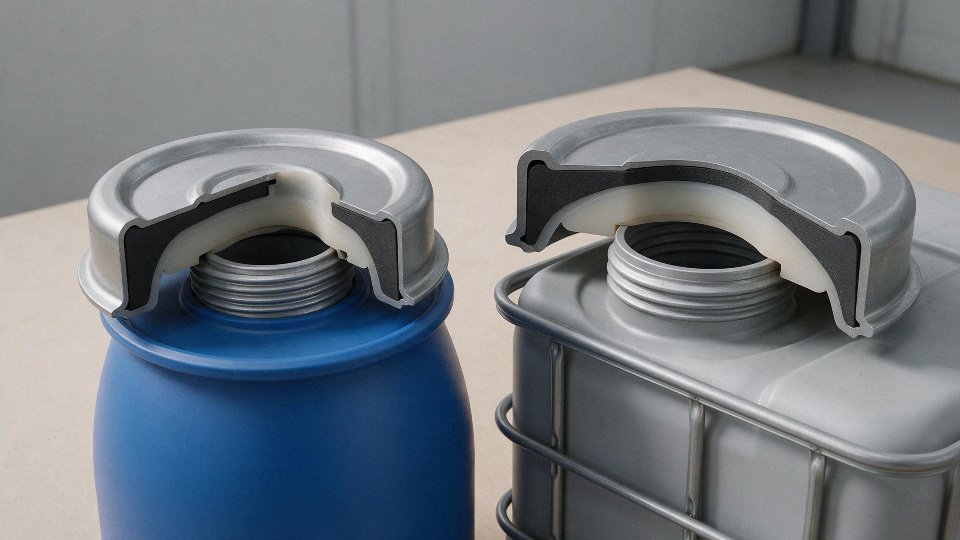
Closure systems are often the real compatibility point
In practice, leakage and contamination problems show up at the closure before they show up in the drum wall. Low-viscosity silicone oils will find a marginal seal surprisingly fast, especially after temperature cycling in transit.
The closure system needs to be reviewed as an assembly, not as individual parts:
- Caps and bungs: thread quality, torque consistency, dimensional stability
- Valve bodies and seats: compatibility with the fluid and any cleaning chemicals
- Gasket elastomers: swelling, compression set, extractables, odor contribution
- Induction seals and liners: adhesion reliability, foil integrity, liner material suitability
Silicone-compatible gasket selection is not one-size-fits-all. Some elastomers seal well initially but soften, swell, or relax enough over time to create weeping. Others stay dimensionally stable but contribute trace extractables that matter in personal care or specialty coating applications. Where purity matters, the buyer should ask not only what gasket is used, but whether it is dedicated to that product family and whether migration risk has been assessed for the intended storage period.
The closure liner or gasket can be a bigger contamination risk than the container wall for silicone oil.True
For many silicone oils, the bulk liquid does not significantly attack steel or HDPE. Trace extractables, odor transfer, or seal failure more often originate from gaskets, liners, valve seats, or reused closure components, especially during long storage or export temperature cycling.
Purity-sensitive applications need tighter packaging discipline
For personal care, electronics-related fluids, release coatings, and specialty modified silicone systems, acceptable packaging narrows quickly. The issue is usually trace-level contamination, not visible package failure.
Typical concerns include:
- Metal ions or rust fines affecting stability or appearance
- Organic extractables from liners, seals, or coatings
- Odor pickup from reused containers or warehouse exposure
- Particle shedding from valve wear, damaged coatings, or dirty filling heads
- Cross-contamination from previous products in reused IBCs or tanks
A release-coating customer may care about tiny contamination because it changes cure behavior or surface performance. A personal care buyer may reject a lot over odor or appearance long before any gross compatibility problem appears. Electronics-related uses can be even less forgiving, though the actual limits vary too much by application to generalize safely without customer specifications.
Liners and inner bags
For high-value products, liners and inner bags can solve several practical problems at once:
- Prevent direct metal contact
- Reduce residue left on the container wall
- Improve discharge of high-viscosity fluids
- Simplify cleaning or eliminate cleaning validation in some single-use systems
- Reduce cross-contamination risk in partial-dedication packaging
They are especially useful where the product is expensive enough that retained residue matters commercially. A few percent hold-up in a sticky specialty silicone is one thing in a low-value industrial grade and something else entirely in a premium modified fluid. The limitation is that the liner material itself now becomes part of the compatibility review; if it wrinkles, sheds, traps pockets of product, or interferes with bottom discharge, the theoretical benefit disappears.
Viscosity changes what “good compatibility” means
Low-viscosity silicone oils put the emphasis on leak-tightness and permeation control. They will exploit small defects in cap liners, valve seats, bung threads, and induction seals, particularly after the package sees warm days, cool nights, and vibration in transit.
High-viscosity grades shift the problem. The package may seal well enough, but discharge becomes slow and residue losses rise. That changes the material preference:
- Smooth interior surfaces become more valuable
- Wide openings help more than they do for thin fluids
- Liners or inner bags can materially reduce retained product
- Valve and outlet geometry matter more than nominal container material
This is one of those points buyers sometimes miss. A package can be chemically compatible yet commercially poor because too much product stays stuck to the wall or shoulder.
Reuse, cleanability, and hidden compatibility issues
Multi-use packaging adds another layer. A container that is chemically compatible in one cycle may still be a bad choice across repeated reuse if it is hard to clean, absorbs odor, or accumulates residue in corners, valves, or seams.
Across reuse cycles, compatibility includes:
- Cleanability to the required residual level
- Resistance to adsorption and ghosting from prior contents
- Ability to inspect the wetted surface properly
- Stability of coatings, gaskets, and valve internals over repeated service
- Low particle generation as the package ages
That conclusion holds for standard and modified silicone oils alike, but it weakens once the packaging is single-use and dedicated. In that case, the cleanability burden drops, and first-fill purity plus seal performance usually become the deciding factors.
Filling and sealing controls
A sound silicone oil packaging operation is mostly won or lost in routine discipline: correct container, verified clean path, controlled fill, and a closure that stays tight after a month in a hot container yard. Silicone oil itself is usually stable; the failures that trigger complaints are far more often packaging-side failures such as wrong grade, particulate pickup, underweight drums, or slow leaks at the closure.
The workflow is straightforward on paper, but each step has to be executed like a batch-critical operation rather than a warehouse task.
Typical packaging workflow
- Container inspection
- Check the incoming drum, pail, or IBC for correct type and approved supplier status.
- Inspect body condition: dents at chimes, rust, pinholes, distorted necks, damaged valve housings, cracked lids, or compromised inner bottles on IBCs.
- Confirm the closure set matches the product and export route: bung type, gasket material, cap style, tamper-evident parts, valve specification where applicable.
- Cleaning verification
- For new containers, verify they meet the cleanliness standard defined for that product grade.
- For any reusable transfer equipment or returnable bulk package, confirm prior cleaning release status, not just a verbal “it was washed.”
- Practical checks often include visual inspection with good lighting, wipe checks where relevant, and review of cleaning records for tanks, hoses, pumps, and filling heads.
- Product line clearance
- Confirm the line is cleared of the previous product, labels, paperwork, and residual packaging components.
- Physically isolate or remove wrong labels and unused closures from the area.
- Verify the correct hose routing and tank source. In plants with several clear, low-odor silicone fluids, this step matters more than many people expect.
- Batch confirmation
- Match batch number, product code, viscosity grade, and customer order before filling starts.
- Release only against approved QC status.
- Confirm any customer-specific packaging note, such as net weight target, pallet pattern, or export marking.
- Filling
- Select the filling method based on viscosity, package size, and accuracy requirement.
- Start-up containers are often checked more closely for fill stability before the run is released.
- Net-weight control
- Tare verification, in-process weight checks, and end-of-run reconciliation are used together.
- High-value or export lots usually justify tighter check frequency than domestic commodity runs.
- Sealing
- Apply closures to defined torque or closure-setting standard.
- Inspect bungs, lids, gland seals, valve caps, and tamper-evident features.
- Leak-risk points get immediate verification rather than waiting until pallet wrap is complete.
- Labeling
- Apply the correct identity, batch reference, net content, handling marks, and any regulatory or customer-required labeling.
- Check print legibility and adhesion; labels that lift in humid warehouses create downstream receiving problems.
- Palletization
- Use the correct pallet type, stacking pattern, load orientation, and restraint method.
- Heavy silicone oil packages move differently from dry goods; if the pallet pattern is sloppy, strap tension and wrap quality become leak-prevention controls, not just logistics details.
Why fill level is not the same as “fill it as full as possible”
For silicone oil, the right fill target is the one that leaves controlled headspace while still meeting the legal and commercial net-content requirement. Overfilling may look efficient, but it creates expansion pressure during storage and transport, especially when packages move from a cool filling room to a summer warehouse, a hot truck body, or a sun-exposed container.
This is the mechanism that catches buyers by surprise. Liquid volume changes with temperature; if the package is filled too near the nominal brim, thermal expansion has nowhere to go. The result can be:
– pressure at the bung or lid gasket,
– valve sweating on IBCs,
– panel bulging on thin-wall containers,
– slow seepage that only appears after days in transit.
That is why typical fill control aims below absolute container capacity. The exact headspace depends on several inputs:
– silicone oil grade and density,
– expected filling temperature,
– likely transport and storage temperature range,
– container geometry,
– closure design,
– destination legal metrology requirement if sold by net weight or declared volume.
A 200 L drum, for example, is a packaging format, not a promise that every product should be filled to the physical maximum. In practice, fill targets are set so the shipment remains compliant and physically stable across the expected temperature swing. The conclusion stops holding if the supply chain temperature profile changes sharply; a fill plan that works for temperate domestic trucking may not be safe for tropical export in dark containers. That is one of those details procurement teams rarely see until claims arrive.
Filling methods by viscosity and package type
Different silicone oil viscosities do not behave the same at the filling head, and the wrong method shows up as poor accuracy, drips, air entrainment, or painfully slow throughput.
| Filling method | Best fit | Main advantage | Main limitation |
|---|---|---|---|
| Gravity filling | Low-viscosity grades, small to medium packs | Simple, low shear, low equipment cost | Slower control response; less suitable for high viscosity |
| Pump filling | Broad mid-range viscosity service, drums and IBCs | Flexible layout, better throughput | Pump choice matters; some pumps can aerate product |
| Mass-flow filling | Higher accuracy applications, batch-controlled export lots | Better net-weight consistency across temperature shifts | Higher instrumentation cost; needs calibration discipline |
| Heated filling | Very high-viscosity grades that do not handle well at ambient | Improves flow and cycle time | Temperature control must avoid product or packaging issues |
A few practical points matter here:
- Gravity filling works well for lower-viscosity silicone oils where product flows cleanly and repeatably. It is simple, but accuracy can drift if viscosity or temperature shifts through the day.
- Pump filling is common because it handles plant layouts better. The pump type has to suit the fluid. Positive displacement systems are often chosen for heavier grades, but seal design and cleanability need attention.
- Mass-flow or weigh-based filling is often preferred when net-content control is commercially sensitive. Weight-based systems are less exposed to temperature-driven volume variation, which is useful for export packing and customer audits.
- Heated filling is used for very high-viscosity grades that are difficult to transfer at ambient conditions. Heat lowers viscosity, which improves fill speed and reduces tailing at the nozzle. The trade-off is that once product temperature rises, headspace and cooling contraction need to be considered carefully, and the package itself must be suitable for the fill temperature. You do not want a fast fill today and a deformed liner tomorrow.
Contamination-control measures
Silicone oil can tolerate a lot chemically, but customers often will not tolerate a small amount of dirt, fibers, rust fines, water, or the wrong viscosity grade.
Key controls usually include:
- Filtered transfer
- Final-stage filtration sized to the product and customer cleanliness expectation.
- Filter integrity and changeout control, not just “there is a filter in the line.”
- Dedicated or segregated lines
- Especially important for products with close appearance but different viscosity or modification chemistry.
- If full dedication is not practical, validated flushing and line-clearance controls are needed.
- Closed filling systems
- Reduce airborne particulate pickup and operator exposure.
- Particularly useful for cleaner grades and export shipments with long residence time before use.
- Nitrogen blanketing where needed
- Not universally required for every silicone oil, but it may be used where moisture pickup, oxidative exposure of associated components, or headspace control is a concern.
- The need should be set by product-specific requirements, not assumed across all grades.
- Anti-mixup discipline
- Barcode or batch-sheet checks.
- Color or line coding where sensible.
- Physical separation of similar labels and packages.
- First-pack verification after every changeover.
Because silicone oil is chemically stable, packaging contamination controls can be relaxed compared with more reactive fluids.False
Chemical stability does not prevent customer complaints caused by particulates, cross-contamination, wrong grade filling, moisture pickup in sensitive applications, or packaging debris introduced during handling.
Seal integrity, leak prevention, and export robustness
A seal that passes at the filler does not always pass after vibration, thermal cycling, and rough forklift handling. That is why closure control needs both installation discipline and post-fill verification.
Typical practices include:
- Torque specification
- Bung caps, screw caps, and lid rings should be applied to a defined setting.
- Under-torque risks leakage; over-torque can damage threads, distort gaskets, or make customer opening difficult.
- Correct bung and gasket design
- Closure geometry has to match the container neck finish and the selected gasket material.
- A good drum with the wrong gasket is still a poor package.
- Tamper evidence
- Seals, tear bands, cap indicators, or ring clips provide receiving confidence and support complaint investigation.
- Leak testing
- Methods vary by pack type: inversion hold, wipe inspection around bungs, valve-seat checks on IBCs, or observed stabilization after filling.
- The right method depends on package style; there is no single universal test.
- Secondary containment for long export lanes
- Absorbent pads, lined pallets, overwrap discipline, or bagged pallet units may be used where voyage duration and transshipment risk justify the added cost.
The trade-off is simple: tighter closure control and more robust export packing add labor and consumable cost, but a single leaking pallet can erase that saving very quickly through claim value, disposal cost, and customer downtime.
Traceability and packaging records
If there is a complaint, the supplier needs to trace not just the product batch, but the packaging event. Without that, even a small issue becomes expensive to investigate.
A useful packaging record usually links:
- product batch and QC release status,
- container or packaging lot,
- fill date and line,
- operator and checker sign-off,
- tare and net-weight records,
- closure or torque check records where applicable,
- label version used,
- pallet or shipment identification,
- retention sample tied to the shipped lot,
- certificate documentation linked to that shipment batch.
Routine outbound checks commonly cover:
– product identity,
– net weight,
– seal integrity,
– label compliance,
– container cleanliness.
In practice, this paperwork is not bureaucracy for its own sake. It is what separates a supplier who can isolate one pallet, one shift, or one closure lot from a supplier who has to quarantine an entire shipment because nobody can prove where the error entered the process.
Transport and export logistics
For silicone oil, the right package on paper can become the wrong package once freight mode and destination are added. A 200 L drum, 1,000 L IBC, 20-25 L pail, or ISO tank each works under certain conditions, but international movement changes the decision because transport stresses, port dwell time, climate swing, and unloading conditions often drive package failure before chemical incompatibility does.
Truck, sea, rail, and intermodal shipments do not punish packaging in the same way. On short domestic truck routes, the main issues are vibration, occasional impact from rough roads or forklift handling, and a few loading cycles. Sea freight is harsher in a different way: long duration, repeated low-level vibration, container stacking loads, salt-laden humidity around the shipment environment, and temperature cycling during day-night and port-to-port movement. Rail can be the roughest on shock and coupling impact, especially if the route involves multiple yards. Intermodal combines all of them, which is why a package that survives a local truck move can still fail after truck-to-rail-to-port-to-vessel-to-truck handling.
That matters because silicone oil itself is usually stable, but the package system is not infinitely forgiving. The failure path is usually mechanical first, then quality-related afterward:
- Repeated vibration can loosen bungs, cap seals, valve assemblies, or overcaps if torque control and secondary retention are poor.
- Compression during stacking can distort drums, stress IBC cages, or shift pallet loads if the load pattern is weak.
- Temperature cycling changes internal pressure and can expose marginal seals.
- Long dwell times in ports or yards increase the chance of package creep, pallet fatigue, corrosion on exposed metal surfaces, label damage, and unnoticed leakage progression.
In practice, the transport mode often flips the packaging choice. A buyer may prefer IBCs for receiving efficiency, but if the destination has poor forklift practice, long inland transshipment, or rough rail legs, steel drums can end up with lower total delivered risk. The reverse is also true: where unloading is controlled and receiving systems are set up for bottom discharge, IBCs can cut handling labor and residual product loss enough to justify the higher unit package cost.
How freight mode changes packaging priorities
| Freight mode | Main stress pattern | Typical packaging implication |
|---|---|---|
| Truck | Road vibration, curb/forklift impact, moderate dwell | Pails and drums are common; pallet stability matters more than long-term compression resistance |
| Sea | Long duration vibration, temperature cycling, port dwell, container load shift | Strong preference for secure palletization, drum lashing, IBC restraint, label durability, and headspace control |
| Rail | Shock loads, coupling impacts, multi-yard handling | Favors robust closure systems and stronger unit load containment |
| Intermodal | Combined handling and repeated transfers | Usually requires the most conservative securing method, not just the lowest package cost |
The weak point is often not the container body. It is the unit load: pallet deck quality, stretch wrap tension, drum-to-pallet fixation, IBC restraint, and container stuffing pattern. I have seen sound drums arrive with dented chimes and loosened closures simply because they were loaded tightly in one axis and allowed to walk in the other.
Export palletization, lashing, and container loading
For ocean freight, movement control inside the container is the whole game. The objective is simple: prevent the packages from gaining momentum. Once a drum row or IBC starts moving a few centimeters per cycle, damage accelerates fast.
For palletized pails and drums, the usual controls include:
- Pallet selection matched to load and route
- Heat-treated export pallets where required for international movement
- Adequate deck thickness and bottom support for the actual gross load, not just the nominal package count
- Dry pallets; wet or green wood can shrink, twist, or stain labels during transit
- Load pattern that keeps the center of gravity stable
- Interlocked or column stacking depending on package geometry and compression needs
- No overhang beyond pallet edges
- Even weight distribution so one pallet runner is not taking most of the load
- Containment
- Stretch wrap or hooding with enough force to stabilize, but not so much that pails deform
- Edge protection where straps are used
- Anti-slip sheets if the route is rough or dwell times are long
- Container restraint
- Blocking, bracing, airbags, timber, or lashing as appropriate to stop fore-aft and lateral shift
- Void management; empty space is where damage starts
- Load heavier units low and distribute them so the container floor and axle limits are respected
For drums shipped loose in containers, drum lashing and row blocking matter more than many buyers expect. Drums are tough, but a few impacts over a long voyage can deform chimes, abrade coatings, or stress closures. For IBCs, the cage gives a false sense of security. The bottle and valve area still need protection, and the IBC must be secured against both sliding and tipping. Bottom valve orientation and access should be checked before final loading; otherwise the customer may have to rotate or re-handle the unit at destination.
Documentation and marking: not glamorous, but where shipments get delayed
A technically sound shipment can still be held up by weak marking or inconsistent documents. At minimum, exported silicone oil packages and shipping documents usually need consistent presentation of:
- Product identification
- Batch or lot number
- Net weight
- Gross weight
- Package count
- Handling marks
- Country of origin statement where required
- Destination-specific compliance labels or language requirements where applicable
Routine outbound checks commonly include product identity, net weight, seal integrity, label compliance, and container cleanliness. That sounds basic because it is basic. It is also where avoidable claims and customs questions usually start.
Most silicone oils ship as non-dangerous goods.True
Many standard silicone fluid grades are not classified as dangerous goods for transport, but classification depends on the exact formulation, flash point, additives, and applicable mode-specific rules. Any modified grade or additive package must be checked against current SDS and transport regulations before shipment.
If a specific silicone fluid grade includes solvents, reactive additives, or other components that change the hazard profile, dangerous goods rules may apply. That is not something to guess from product family name alone. The current SDS, UN classification if any, and mode-specific rules for sea, air, road, or rail have to match the shipped grade and packaging configuration.
Climate planning: cold unloading and hot expansion
Cold weather usually creates handling problems before it creates chemical problems. As temperature falls, viscosity rises, sometimes sharply enough that unloading becomes slow, pump suction gets ugly, and residue left in the package goes up. A fluid that pours well in a warm warehouse may behave very differently after sitting in a winter container yard.
That leads to a few practical checks:
- Confirm whether the customer can warm the product safely before use or unloading.
- Avoid promising unloading times without knowing viscosity-temperature behavior for the exact grade.
- Consider smaller packages where manual handling and staged warming are more practical than trying to empty a cold IBC.
Hot climates bring the opposite issue. Silicone oil expands with temperature, so fill control should leave headspace rather than pushing to nominal full volume. The mechanism is straightforward: higher temperature increases liquid volume, reduced headspace increases internal pressure swings, and that pressure loads closures and seals during transit. If the package is overfilled, a shipment that was tight at dispatch can sweat or leak after sitting in a hot container stack.
The usual recommendation holds only within the expected transit temperature range. If the route includes extreme heat exposure, dark container storage, or long port dwell in summer, headspace policy and closure verification need to be reviewed against the actual route, not a standard warehouse condition.
Returnable versus one-way packaging
Regional closed-loop programs can justify returnable packaging, especially for high-volume customers with predictable lanes and disciplined receiving operations. IBC return systems, reconditioning loops, and repeated drum recovery can work when transit distance is manageable and empty return freight is practical.
One-way packaging is usually the better fit for long-distance export because:
- Empty returns are expensive and slow
- Cross-border cleaning and reconditioning arrangements are harder to control
- Damage responsibility becomes murky once empties enter third-party networks
- Packaging availability at origin is often more reliable with one-way systems
The economics are not just package purchase price versus reuse count. They also include reverse logistics, cleaning validation, inspection labor, loss rate, and the cost of one contaminated return entering a sensitive product stream.
Freight optimization is not just “bigger package = lower cost”
The cheapest packaging per liter is not always the cheapest delivered system. Freight optimization depends on several interacting factors:
- Cube utilization: how efficiently the package fills the pallet and container footprint
- Weight breakpoints: some routes hit freight thresholds where adding product stops being efficient
- Port handling equipment: some destinations handle palletized drums well but treat IBCs poorly, or the opposite
- Customer receiving infrastructure: pump type, forklift capacity, dock layout, and storage racking all matter
- Damage claim history: if one format keeps arriving with valve damage or shifted loads, the nominal freight savings disappear quickly
A good packaging decision for export is usually made backward from the destination: how the customer receives, stores, opens, unloads, and disposes of the package. If those conditions are not known, the safer choice is usually the more conservative load stability option, even if its packaging cost per unit is a bit higher.
Storage and handling conditions
Silicone oil usually stores well, but the package only keeps doing its job if the warehouse and handling discipline are decent. A clean, dry, shaded storage area with controlled stacking, protected closures, and careful dispensing will preserve product quality far better than simply keeping drums under a roof. Once packs are heat-cycled, left dirty around the bung, or opened and re-opened without control, the risk shifts from chemical instability to contamination, misidentification, and handling damage.
For general storage, the priorities are straightforward:
- Keep containers in a dry indoor area or under reliable covered storage.
- Protect them from direct sun and local heat sources such as steam lines, unit heaters, furnace walls, and hot loading bays.
- Store where labels stay readable and do not soften, peel, or smear from condensation or oil film.
- Prevent standing water, dust fallout, and debris accumulation on lids, drum tops, and IBC frames.
- Verify any ignition-risk precautions against the current safety data sheet and local site rules; not every silicone oil presents the same handling basis, especially if the product is modified, blended, or shipped with residual volatiles.
Heat matters less because most silicone oils suddenly “go bad” in storage and more because temperature swings work on the package. Product expands, headspace pressure changes, liners relax, labels fail, and drums breathe slightly through repeated day-night cycles. In practice, a warehouse corner near a roller door in summer can age packaging faster than a darker aisle five meters away.
Stacking and warehouse placement
The safe stack is the one your package type, pallet condition, and handling method can actually support day after day. Top-load capacity is package-specific, so the supplier’s packaging guidance and the container maker’s rating take precedence over warehouse habit.
- 200 L drums
- Store upright unless the closure system and racking are designed for horizontal storage.
- Use sound pallets or drum cradles; broken deck boards create point loading and fork damage.
- Do not stack beyond the confirmed package limit.
- Leave enough aisle space for drum grab access or forklift positioning without scraping chimes or bungs.
- 20-25 L pails
- Stack only to the tested height for that pail design and lid type.
- Watch for lid distortion in warm storage; that is often the first sign the stack is too ambitious.
- Keep pails on flat pallets, not mixed overhangs.
- 1,000 L IBCs
- Store on level floors with intact pallets and undamaged cages.
- Respect the IBC’s rated stacking limit, which may change depending on whether it is full, partially full, or in transport staging.
- Maintain clear access to the discharge valve; operators should not need to climb around neighboring units to connect hoses.
A common warehouse mistake is packing lanes too tightly. That saves floor space but increases collision damage, makes label checks harder, and encourages operators to move the wrong batch because the nearest pallet is easier to reach.
Inventory control through warehouse life
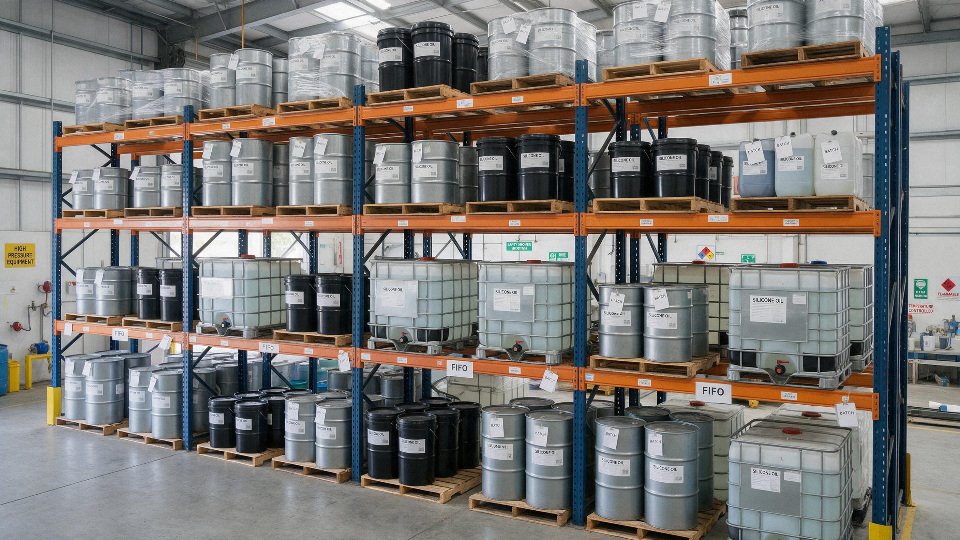
FIFO is the basic rule, but for silicone oil it should be batch-visible FIFO, not just date-visible FIFO.
- Keep batch numbers, product names, and any internal lot tags visible from the aisle.
- Segregate similar-looking grades to prevent issue errors, especially where viscosities or modified silicone types share the same package format.
- Retain certificates, release records, and incoming or outbound inspection status with the warehouse record, not only in purchasing files.
- If labels are at risk of damage, apply warehouse ID tags without covering the original manufacturer information.
Silicone oil inventory quality is often limited by package condition and handling cleanliness before it is limited by intrinsic chemical stability.True
Many silicone oils are storage-stable, but warehouse contamination, damaged closures, missing identification, and poor dispensing discipline are common practical causes of unusable stock.
Dispensing and partial-use control
The right dispensing method depends on package size, viscosity, and cleanliness requirement.
- Drums: use dedicated pumps, follower systems, or drum tippers suited to the product viscosity. Clean the bung area before opening. If heating is needed to improve flow, use controlled warming methods approved for the package and product; do not improvise with open flame, steam hoses against the shell, or uncontrolled band heaters.
- Pails: pour only if the product is low enough in viscosity and the use point tolerates that exposure. For cleaner transfer, use small transfer pumps or spouts dedicated to that grade.
- IBCs: use the bottom valve with compatible fittings and a clean hose set. Protect the valve outlet with caps when disconnected.
Contamination usually enters during partial use, not at original filling. Dust from carton handling, water from washdown overspray, and the wrong pump left over from another batch are more common than dramatic package failure. If product is decanted into smaller containers, those containers need their own identification and cleanliness control. Do not pour unused decanted material back into the original pack unless there is a defined quality procedure to justify it.
After first opening and practical storage life
Once opened, reseal promptly and keep headspace exposure as short as practical.
- Refit caps, bungs, and valve covers immediately after draw-off.
- Keep opened packages in cleaner zones than unopened bulk stock where possible.
- If a container will be used repeatedly over weeks, inspect closure condition and the cleanliness of contact surfaces each time.
- Quarantine any pack with damaged seals, unreadable identity, or visible contamination until quality review clears it.
Many silicone oils have long shelf-life potential, sometimes longer than buyers initially expect. The boundary is simple: that storage life assumption stops holding if the package is no longer clean, sealed, identifiable, and mechanically sound. At that point, the product may still be chemically acceptable, but it is no longer automatically usable inventory.
Packaging failures
Most silicone oil packaging failures are not dramatic transit accidents; they are small control lapses that stay hidden until the drum is on a customer’s floor, the IBC valve is opened, or the batch is sampled into a clean process. The practical risk is that a package can look acceptable at dispatch and still fail in leakage, cleanliness, identification, or discharge because the weak point sat in the closure, the handling path, or the customer’s unloading method.
That matters commercially as much as technically. A few kilograms leaked from a drum bung sounds minor until the receiver quarantines the whole lot, claims cleanup cost, and pushes your next shipment into tighter incoming inspection. In my experience, buyers who treat packaging failure as only a transport issue usually miss half the causes.
Leakage failures
Leakage in silicone oil packaging usually starts at interfaces, not through the container wall. Poor closure torque, cross-threaded bungs, damaged cap liners, valve defects on IBCs, dented chimes, and overfilled containers are the usual culprits.
Common leakage paths include:
- Drum bung leakage
- Under-torqued bungs loosen under vibration
- Over-torqued bungs deform threads or crush sealing elements
- Bung seats contaminated with oil before final closure reduce sealing reliability
- IBC bottom valve leakage
- Valve body not fully seated after filling
- Gasket damage or wrong gasket material
- Impact during forklift handling bends the outlet or stresses the valve flange
- Lid or pail closure leakage
- Uneven lid seating
- Deformed rim after rough stacking
- Seal damage during opening/reclosing in partial-use situations
- Thermal overfill
- Filling too close to nominal volume leaves no expansion headspace
- Temperature rise in a container yard or enclosed trailer increases internal pressure
- Product then seeps past otherwise acceptable seals
The mechanism is straightforward: silicone oil is often low in volatility, but it is mobile enough that any loss of sealing compression shows up as weeping, film buildup, or slow drip leakage. A closure that survives the packing line may not survive two days of vibration plus daytime heat if headspace was too tight or the bung gasket was already marginal.
The trade-off is familiar on the plant floor. Tightening closures harder feels safer, but beyond the recommended range it can create the failure you were trying to avoid. The better control point is consistent closure application, thread condition, seal quality, and leaving thermal expansion space rather than chasing leaks with brute force.
Contamination failures
For many silicone oil grades, contamination is the more expensive failure because it may not be visible. Clean appearance does not mean clean package.
Typical contamination routes are:
- Dirty new containers
- Dust, metal fines, packaging debris, or residual moisture inside nominally clean drums or pails
- Reused packaging with inadequate cleaning
- Residual chemicals from prior service
- Wash water or detergent traces
- Odor carryover that signals poor control, even if chemistry is not immediately obvious
- Airborne contamination during filling
- Open filling under dusty plant conditions
- Fiber, carton dust, or ambient particulate entering containers before closure
- Wrong transfer line or shared filling path
- Cross-contamination from a previous batch or another silicone grade
- More serious when viscosity or modification chemistry differs and the receiving customer relies on tight process consistency
- Incompatible gasket or seal material
- Swelling, extractables, or minor shedding from low-grade sealing components
- Usually a packaging-component quality issue rather than a silicone oil issue
A package can remain leak-free and still be unfit for use because contamination often enters during preparation or transfer rather than through visible package damage.True
Leak integrity and product cleanliness are different control outcomes. A sealed container can still carry particulate, wrong-product residue, or gasket-derived contamination introduced before final closure.
This is where reused packaging needs a hard look. In some supply chains it is commercially attractive, but the boundary is strict: once the customer application is sensitive to trace contamination, odor, appearance, dielectric behavior, or downstream formulation consistency, reused packs without validated cleaning become a false economy.
Misidentification failures
A clean, intact package with the wrong label is still a failed package. Batch mix-ups are less common than handling damage, but they create the deepest commercial damage because they undermine traceability and trust.
Failure modes include:
- Wrong product name or grade on the label
- Correct product, wrong batch number
- Private-label artwork applied to the wrong lot
- Multilingual label or shipping document inconsistencies
- Unit-of-measure confusion between net weight and nominal volume
- Partial pallet relabeling after repacking or split-order preparation
These problems appear in ordinary ways: one roll of labels loaded onto the wrong line, a warehouse operator swapping two visually similar drums, or export documentation translated differently from the internal batch record. Silicone oils often look similar in the package, so visual checks alone are weak protection.
Prevention depends on matching controls, not just better printing:
- Scan or double-verify product code before filling
- Reconcile batch record, label, and shipping document before pallet release
- Separate similar SKUs physically in staging
- Confirm private-label versions against the approved artwork and internal code
- Keep traceability readable through the full logistics chain, not only at dispatch
Handling failures in warehousing and transport staging
A surprising amount of packaging damage happens before the truck leaves the site or after it reaches the customer’s dock. Forklift contact, poor pallet condition, and rushed container loading do more damage than many people admit.
Watch for:
- Drum denting
- Often at the sidewall or chime from fork contact
- May not leak immediately, but can distort bung seating
- Pallet collapse or poor load stability
- Weak or wet pallets
- Uneven drum or pail placement
- Stretch wrap applied for appearance rather than restraint
- IBC cage damage
- Bent cage members reduce load integrity
- Base damage affects valve protection and stack stability
- Puncture and abrasion
- Contact with forks, container walls, or unsecured cargo hardware
- Valve breakage during movement
- Bottom outlets on IBCs are exposed if not properly guarded
- One bad forklift angle can turn a usable unit into a spill event
Discharge failures with high-viscosity grades
High-viscosity silicone oil exposes a packaging weakness that outbound inspection often misses: the product arrives intact but cannot be unloaded efficiently. That is a packaging failure from the customer’s point of view.
Typical symptoms are:
- Slow or incomplete flow from drum or IBC
- Residual product trapped in corners or below outlet level
- Valve blockage or apparent blockage because the product does not feed well
- Customer pump, hose, or line size unsuitable for the delivered viscosity
- Need for warming, inversion, follower plates, or different discharge hardware not considered during package selection
The mechanism here is operational. As viscosity rises, gravity discharge becomes less reliable, air replacement into the package matters more, and outlet geometry starts to control unloading time. A container chosen for freight efficiency may become a poor choice at the point of use.
The trade-off flips depending on the customer setup. A 1,000 L IBC may reduce handling cost versus multiple drums, but if the receiving site has no suitable pump, no temperature conditioning, and limited valve clearance, the nominally better pack creates labor, residue loss, and line delays. For high-viscosity grades, discharge design needs to be reviewed as early as transport design.
Aging and long-storage failures
Long storage turns small packaging weaknesses into visible failures. Seals lose resilience, labels fade or detach, carbon steel drum exteriors develop rust in humid storage, and traceability gets weaker every time a pallet is moved.
The common late-stage problems are:
- Compromised closure seals after long dwell time
- Label fading, smearing, or detachment
- Exterior corrosion on carbon steel packaging in damp warehouses or coastal environments
- Missing or unreadable batch identification after repalletizing
- Dust accumulation around closures that complicates clean opening at the customer site
This section’s main conclusion stops holding if the product is repacked, partially used, or stored outside the original recommended conditions; then the package risk is no longer just the supplier’s original pack performance, but the customer’s storage discipline as well. That is why failure review should trace the whole chain from filling line to final discharge, not stop at the outbound inspection record.
Supplier qualification criteria
A supplier is qualified for silicone oil packaging only if they can show repeatable control from empty container receipt to delivered pack at your dock, not just offer the right drum or IBC on a quotation. For most industrial buyers, the safest supplier is the one whose packaging discipline matches your contamination risk, export route, and receiving method, even if their package menu is narrower than a competitor’s.
A buyer looking at silicone oil for textile, release, personal care, defoamer, or formulation use will not apply the same packaging standard to every grade. Low-risk bulk transfer into a blending tank can tolerate a simpler packaging setup than high-purity material headed into a customer-sensitive line, a contract packer, or a regulated end market. That is where qualification usually goes wrong: procurement compares package availability, while production and quality live with leakage, mislabeled drums, or off-spec cleanliness six weeks later.
Assess packaging standardization
Start by checking whether the supplier runs packaging as a controlled standard or as a flexible warehouse activity.
Ask for these points in writing:
- Available pack sizes
- 20-25 L pails
- 200 L steel drums
- 1,000 L IBCs
- ISO tank capability for bulk export, if relevant
- Documented pack specifications for each format
- Nominal fill range or net weight target
- Container material and closure type
- Gasket or liner specification where used
- Pallet type, pallet pattern, stretch-wrap method, and strapping method
- Consistency across batches
- Same approved container source, or controlled alternates
- Same closure design and torque standard
- Same labeling format and placement
- Same pallet footprint for warehouse fit and container loading
If they cannot send a basic packaging specification sheet per format, expect inconsistency later. In practice, this shows up as one shipment on closed-head drums with solid bung seals, the next on a slightly different drum with a different gasket compression, and suddenly your unloading adapter no longer seats correctly.
The mechanism is straightforward: small variations in drum geometry, valve design, cap fit, or pallet overhang affect leak risk, handling damage, and receiving efficiency. A buyer often notices the commercial effect before the technical cause. Forklift touches more pallets, drums shift in transit, operators need different tools, unloading slows down, and one damaged pack can turn into a shortage claim.
Verify the quality systems behind packaging
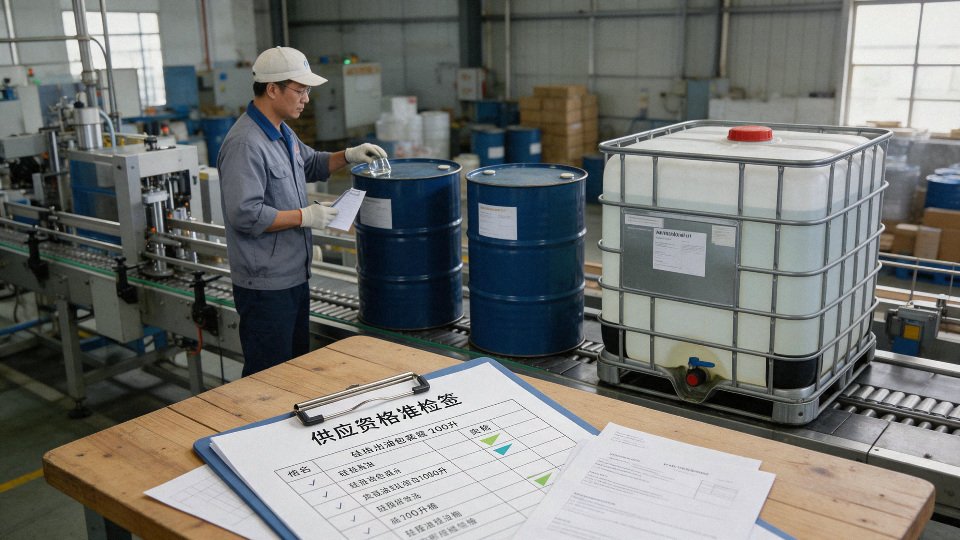
A supplier’s quality system around packaging matters more than the package list itself. You want evidence that the line is controlled before, during, and after filling.
Check for these controls:
- Incoming empty-container inspection
- Cleanliness
- Visible dents, rust, deformation, or valve damage
- Closure and seal completeness
- Correct labeling stock and print quality, where pre-printed packs are used
- Line clearance
- Confirmation that the previous product, labels, and records are removed
- Verification that the correct silicone oil grade is connected to the line
- Status check on hoses, pumps, and filters where applicable
- Calibrated filling equipment
- Calibration records for scales, load cells, or flow-based filling systems
- Defined fill tolerances by package size
- Headspace control for thermal expansion rather than filling to nominal brim volume
- Seal checks
- Closure torque or equivalent sealing verification
- Bung, cap, valve, or tamper-seal inspection
- Routine leak-check method, where used
- Traceability
- Batch-to-pack linkage
- Container lot or packaging material linkage where available
- Filling date, operator, line, and inspection record retention
A filled drum without line-clearance discipline can be the right weight and still be the wrong product.True
Packaging failures are not limited to leaks. Misidentification, cross-labeling, and residue carryover are common operational risks if line changeover is not controlled and recorded.
If your operation is sensitive to trace contamination, ask a harder question: are the same pumps, hoses, and filling heads used across multiple silicone families, modified grades, or non-silicone products? The answer can flip supplier suitability. A versatile line is commercially efficient, but for high-purity or customer-critical grades, dedicated or tightly segregated packaging equipment is often worth more than broad flexibility.
Review export capability
Export packaging competence is not the same as domestic shipping experience. A supplier may pack well for truck delivery and still underperform once the product goes through port handling, container stuffing, customs inspection, humidity swings, and long sea transit.
Request evidence on:
- Container loading experience
- Typical stuffing pattern for drums or IBCs
- Weight distribution practice
- Dunnage, blocking, or anti-shift measures
- Compliance paperwork
- Packing list accuracy
- Label compliance support for destination market requirements
- Ability to align shipping marks, batch references, and product identity across documents
- Damage-prevention record
- Leakage or transit-damage trend, if tracked
- Corrective actions taken after export claims
- Experience with hot-climate or cold-climate destinations
A supplier does not need perfect global paperwork knowledge for every country, but they should know where their responsibility ends and what they can support. If they guess, you will pay for that at the port.
Ask about packaging customization
Customization is useful only when it is controlled. Otherwise it introduces avoidable variation.
Review whether they can support:
- Private labeling
- Customer-specific net weights
- Alternative liner or closure options
- Dedicated packaging lines for food-contact, cosmetic, or high-purity service, where relevant
- Customer-required pallet standards or warehouse labels
The trade-off is simple: customization can reduce your receiving labor and improve fit with downstream use, but each extra variant increases the chance of setup error unless the supplier has disciplined change control. A good sign is that they can explain which options are routine, which require MOQ or line scheduling, and which they will not offer because the control risk is too high.
Examine complaint handling and corrective action speed
When packaging fails, speed matters almost as much as root-cause accuracy. Shortages, leakage, wrong labels, and contamination claims can stop a line, trigger customer holds, or create a full warehouse quarantine.
Ask for their complaint process:
- Response time for an initial technical review
- Required evidence from the customer
- Photos
- Retained labels
- Weight records
- Sample retention
- Containment action method
- Root-cause and corrective-action timeline
- Replacement, credit, or return handling path
A supplier with a neat presentation but no disciplined complaint workflow will be painful when something goes wrong. In my experience, the better suppliers can tell you who owns the first response, who decides containment, and how they separate actual packaging failure from mishandling at the consignee.
Request evidence, not assurances
Use a short evidence checklist during qualification:
- Photos of actual packing lines, not only catalog containers
- Packaging datasheets for each proposed format
- Example label set and traceability format
- COA linkage to packaged lot identity
- Sample-shipment performance, especially for export lanes
- References from customers in similar industries or with similar handling conditions
The strongest supplier is rarely the one saying yes to every package request. It is usually the one that can define its standard, show where it has control, and tell you plainly where customization, purity expectations, or export conditions need extra verification. If your receiving process is tight, qualify to that boundary rather than buying on pack size and unit price alone.
Frequently asked questions
Is silicone oil usually packed in drums or IBCs?
That depends mainly on order volume, customer handling setup, and how quickly the product will be consumed after opening. For many industrial shipments, 200 L drums and 1,000 L IBCs are the standard working formats; smaller 20-25 L pails are common for lab, maintenance, trial, or lower-volume specialty use.
- Drums are usually preferred when:
- consumption is moderate rather than continuous
- the customer wants easier lot segregation
- manual or semi-manual dispensing is common
- export routes are rough enough that a more rigid package is preferred
- IBCs make more sense when:
- annual usage is high
- the plant has forklift access and bottom-discharge handling
- fewer packages reduce labor and packaging waste
- receiving wants faster unload and simpler inventory counting
In practice, a buyer using one IBC over a long period can create more contamination risk than a faster-turn drum program. Package size should match the plant’s actual drawdown rate, not just freight efficiency.
Can silicone oil be shipped in plastic containers?
Yes, many silicone oils can be shipped in plastic containers, especially HDPE pails and IBC inner bottles, but compatibility must be checked against the exact grade, purity requirement, and shipping conditions. Plastic is common in the market; it is not automatically the right choice for every viscosity, destination climate, or cleanliness standard.
- Typical plastic formats:
- 20-25 L pails
- HDPE jerrycans for small-volume supply
- composite IBCs with plastic inner bottle and external cage
- Verify before approving:
- closure and gasket compatibility
- valve cleanliness on IBCs
- temperature exposure during ocean freight or outdoor storage
- whether trace extractables matter for the end use
All silicone oil can be packed in plastic without any qualification work.False
Many grades are routinely shipped in plastic containers, but the decision still depends on product purity, package component compatibility, freight temperature exposure, and the customer's end-use sensitivity.
Does high-viscosity silicone oil need special packaging?
Usually yes, or at least special handling provisions. As viscosity rises, filling slows down, drainability gets worse, and residue left on container walls becomes a larger commercial issue because the customer pays for product that may not discharge easily.
- What typically changes with higher viscosity:
- slower filling speeds
- stronger need for wider discharge openings or more suitable valves
- more attention to cold-weather shipment
- greater importance of container geometry for emptying
- What buyers should ask:
- how the product is filled at the supplier’s temperature range
- whether the customer will need drum pumps, follower plates, warming, or decanting aids
- whether net weight or usable discharge yield is the commercial concern
A thin silicone fluid and a very high-viscosity grade may both fit in the same nominal package size, but they do not behave the same once the operator tries to empty them on a January morning.
How much headspace should a silicone oil container have?
There is no single universal percentage that can be stated responsibly across all package sizes and shipment conditions. The correct target is to leave enough thermal expansion headspace rather than filling to full nominal volume, and that target depends on the product grade, fill temperature, destination climate, and transport mode.
- Inputs that matter:
- fill temperature at packing
- expected maximum cargo temperature in transit
- container size and geometry
- whether the shipment will see long ocean transit or hot yard storage
- What suppliers typically control:
- net weight rather than “filled to the brim” volume
- consistent fill setpoints by package type
- verification that closures remain secure after temperature cycling
If a supplier cannot explain how fill level is set for hot-weather export, that is worth pushing on.
Are silicone oil packages reusable?
Sometimes, but only under controlled conditions. Steel drums, pails, and some IBC systems may be physically reusable, yet reuse is a quality and liability decision before it is a sustainability decision.
- Reuse is more realistic when:
- the same product returns into the same package type
- the package can be inspected and cleaned to a defined standard
- seals, valves, and closures can be replaced
- Reuse becomes risky when:
- the product is high-purity or contamination-sensitive
- residue from a prior lot cannot be fully removed
- the package has denting, valve wear, rust, odor, or label confusion
- export regulations or customer rules restrict reuse
Many plants say they want reusable packaging until they see the cost of inspection, cleaning validation, and rejection handling.
How should partially used containers be resealed?
- Close the original bung, cap, or valve immediately after dispensing.
- Wipe product from threads, gasket faces, and outlet surfaces before resealing.
- Keep the package upright; do not store a partly used drum on its side unless the closure system was designed for it.
- Protect from dust, washdown splash, and humid air during use.
- If the original seal or closure is damaged, replace it with the correct compatible component, not a “close enough” shop substitute.
- Relabel the package if your plant’s internal system requires opened-date, remaining quantity, or lot traceability.
A lot of contamination starts during use, not at the supplier. Open-package discipline on the customer side matters more than people like to admit.
What labels should appear on export packages?
At minimum, export packages should carry product identity, lot or batch traceability, net weight, and handling or regulatory markings required for the destination and transport mode. Label compliance also needs to match the commercial documents; mismatch between drum label, packing list, and customs paperwork creates avoidable holds.
Routine outbound checks commonly include:
- product identity
- net weight
- seal integrity
- label compliance
- container cleanliness
For international shipments, verify current country-specific and mode-specific requirements with the supplier and forwarder. Label rules can change, and they are not something to guess from an old shipment photo.
When is bulk shipment better than drums?
Bulk shipment, typically by ISO tank for export, becomes more attractive when volume is high, unloading is controlled, and the customer can receive large homogeneous lots without long open-storage exposure. It usually lowers packaging waste and handling labor, but it also concentrates risk into fewer units and demands better receiving discipline.
- Bulk is often the better fit when:
- consumption is continuous or high-volume
- the customer has proper tank receiving capability
- cleaning and previous-cargo controls are documented
- freight economics favor one large movement over many packages
- Drums or IBCs stay preferable when:
- the customer needs lot separation
- usage is intermittent
- multiple grades are ordered in parallel
- the receiving site lacks suitable tank infrastructure
Confirm your packaging specification
The right silicone oil package is the one that survives your logistics route, matches how your plant actually unloads and stores material, and does not force unnecessary handling cost. For most buyers, the decision comes down to four workable lanes: small qualification packs for approval work, drums for flexibility, IBCs for repeat medium-volume consumption, and bulk shipment only when demand, unloading hardware, and supply stability are already proven.
Start by translating plant conditions into a package choice instead of ordering by habit. A 1,000 L IBC looks cheaper per kg on paper, but if the receiving site has no proper discharge setup, no covered storage, or only occasional consumption, that saving disappears into messy decanting, residue loss, and handling risk.
What to define from your operating reality
Use these inputs before you ask for a quotation:
- Annual and monthly consumption
- Low or uncertain demand usually justifies pails or drums.
- Recurring medium demand often fits IBCs.
- Stable, high-volume programs may justify ISO tank or other bulk arrangements, but only if unloading and tank management are already in place.
- Typical order size
- If you buy in mixed lots across several grades, drums are often easier to allocate by line or site.
- If one grade moves steadily, IBCs reduce packaging count, forklift moves, and drum disposal.
- Viscosity grade
- Higher-viscosity silicone oils can slow discharge, especially in cool weather.
- That affects whether a bottom-discharge IBC is practical, whether drum warming is needed, and how much heel loss you should expect. The package may be chemically suitable but operationally wrong.
- Purity sensitivity and end use
- If the oil goes into release coating, personal care intermediates, electronics-related processing, or other contamination-sensitive service, closure integrity, container cleanliness, and reuse policy matter more than headline package size.
- Unloading equipment
- Confirm what the receiving site actually has: drum tilter, pump, IBC valve connection, forklift capacity, bunded storage, tank farm access.
- I have seen buyers specify IBCs while the plant only had drum pumps on hand. That turns a clean transfer into a manual workaround.
- Storage constraints and destination climate
- Check indoor vs outdoor storage, stack limits, summer temperature peaks, and winter discharge temperature.
- Headspace, seal design, and pallet stability matter more on long export routes and hot-climate deliveries because thermal expansion and repeated handling put the package under stress. A format that works on a short domestic route may stop being the best choice after ocean freight and port dwell time.
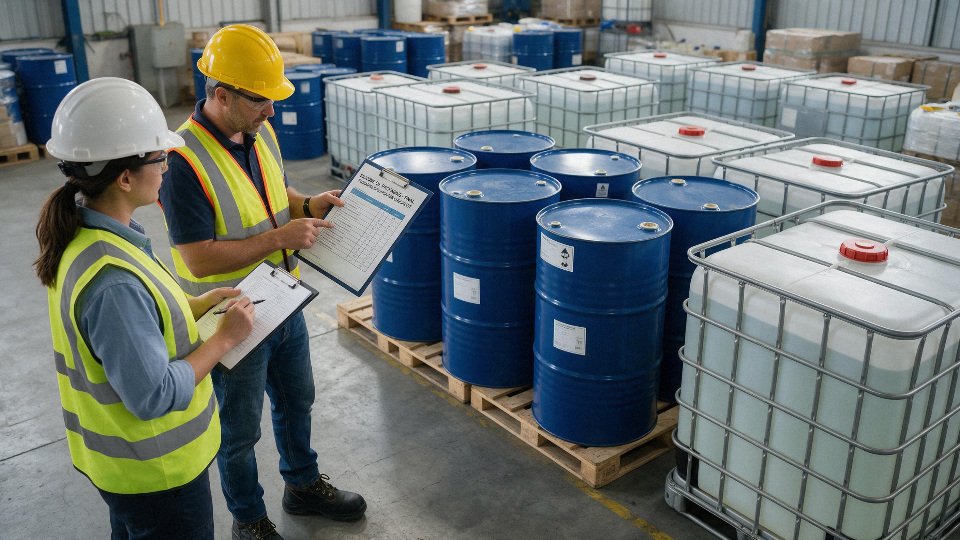
Verification checklist before ordering
Confirm these points in writing:
- Package type and nominal size
- Required net weight or fill basis
- Container material and any liner requirement
- Closure and gasket specification
- Pallet type, palletization method, and wrap/strapping expectation
- Label content and placement
- Required shipment documents
- Whether the container is one-way, returnable, or not intended for reuse
Match the purchasing strategy to the demand pattern
- Trial or qualification stage: use small packs or limited drum quantities so QC, process, and handling teams can approve the grade without tying up stock.
- Flexible multi-site demand: drums remain the easiest option when usage is spread across several plants or lines.
- Recurring medium demand: IBCs usually improve handling efficiency if the same grade is consumed predictably.
- Stable high-volume program: bulk shipment can lower unit packaging cost, but only after discharge method, storage tank compatibility, scheduling discipline, and contingency supply are cleared.
What to request from the supplier before approval
Ask for:
- Package photos or basic drawings
- Compatibility confirmation for the silicone oil grade and package components
- Filling tolerance or fill-control basis
- Seal method
- Available transport or handling test history, if applicable
- Sample-shipment plan for approval
SiliconChemicals can support silicone oil packaging selection based on grade, destination, and consumption pattern.True
Supported by the company profile as an integrated supplier of organosilicon materials serving global industrial customers, and by the provided packaging and export-related information assets.
If you are ready to lock the specification, send SiliconChemicals your silicone oil grade, destination country, monthly consumption, preferred package size, unloading method, and any labeling or document requirements. Clear part or package-use photos help. From there, SiliconChemicals can recommend a packaging configuration and prepare a commercial quotation aligned to your application and shipment route.