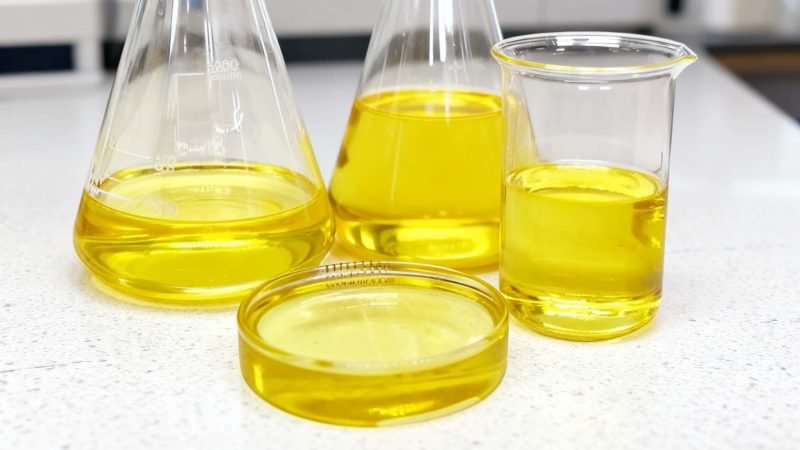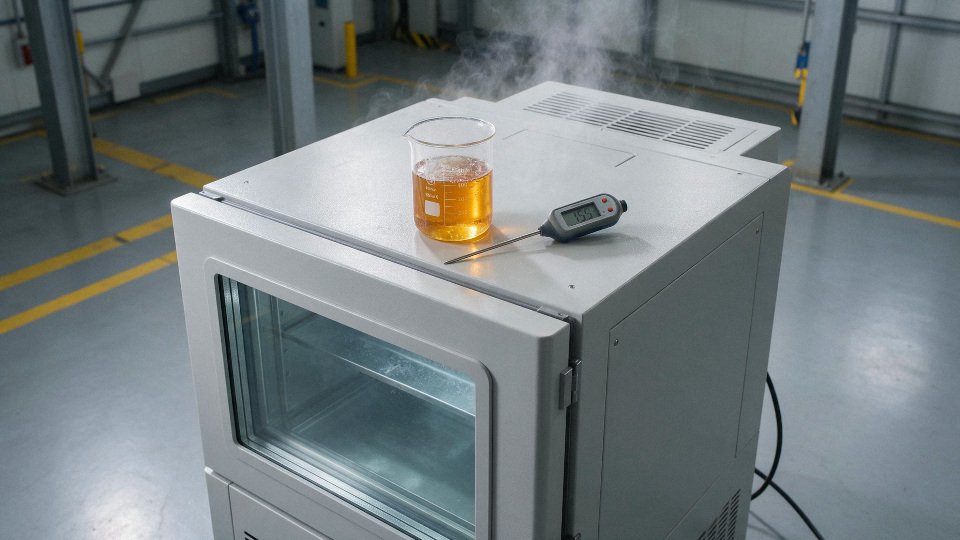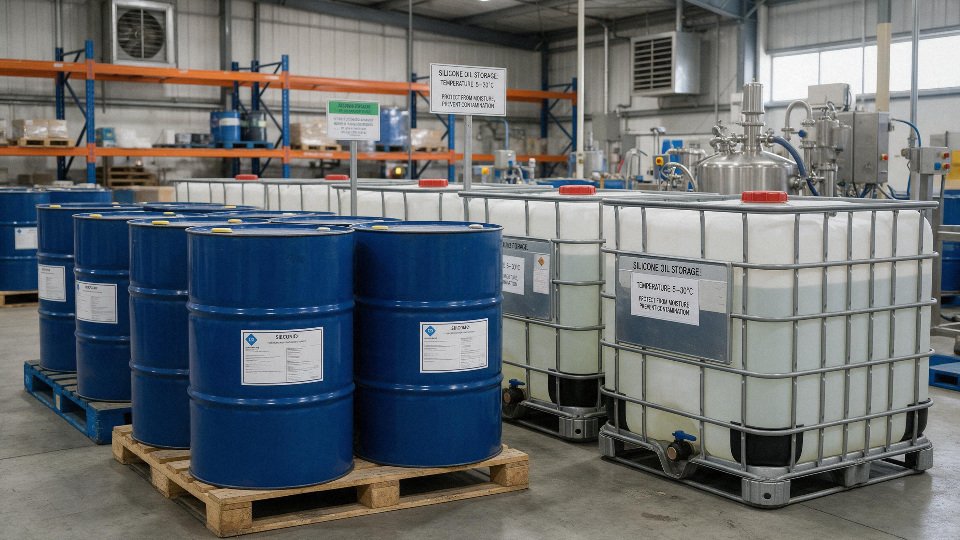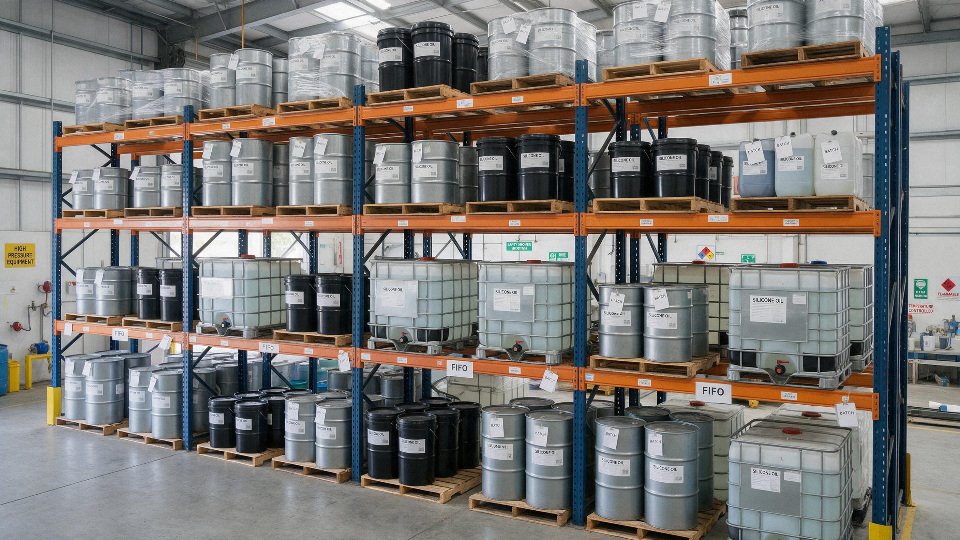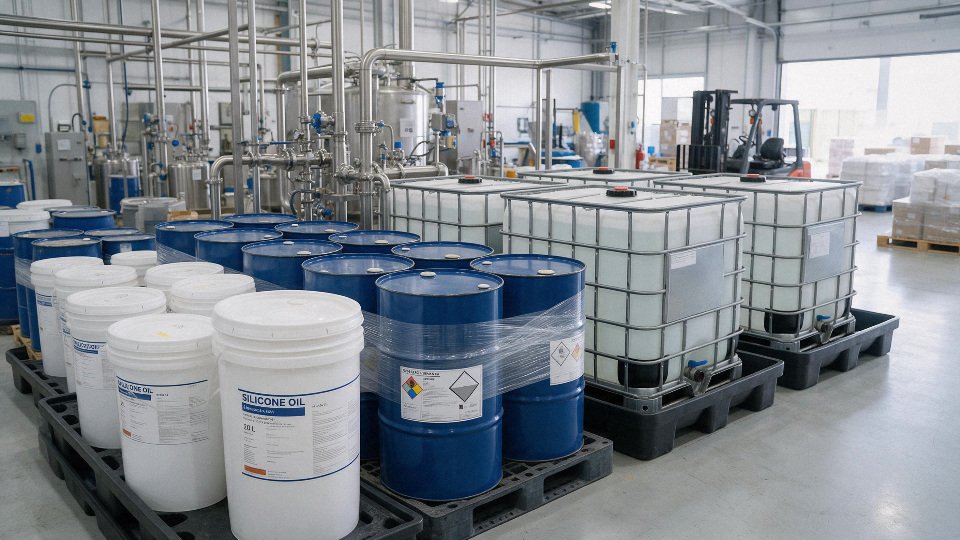
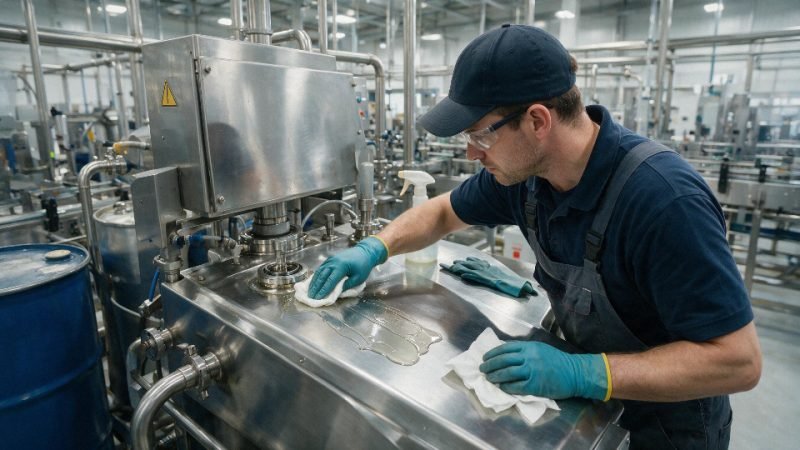
Silicone oil is awkward stuff on a plant floor because it does not behave like ordinary mineral grease or water-based residue. It creeps into seals, smears across stainless, hangs on polished molds, and keeps defeating rinse cycles that look fine on paper. The cost is rarely just the dirty part: you lose coating adhesion, create fish-eyes in paint or ink, contaminate downstream baths, and burn labor on repeat cleaning. In procurement terms, the wrong solvent choice usually shows up later as scrap, line stoppage, solvent overuse, or a safety review you did not plan to have.
Silicone oil is usually dissolved or displaced best by selected hydrocarbon solvents, aromatic solvents, and certain oxygenated solvent blends, but the right choice depends heavily on PDMS viscosity, residue thickness, substrate compatibility, temperature, and flash-point limits. No single solvent is universally “best,” and stubborn films often need a combination of solvent chemistry, agitation, and time rather than stronger chemistry alone.
What makes this topic tricky is that silicone oil covers a very wide viscosity range, from very mobile fluids around 0.65 cSt to heavy grades above 1,000,000 cSt, and that changes removal behavior more than many buyers expect. A solvent that wipes off a light transfer oil at ambient temperature may barely soften a thicker PDMS film unless you add dwell time, mild heat, or mechanical action. That is where the useful decisions start.
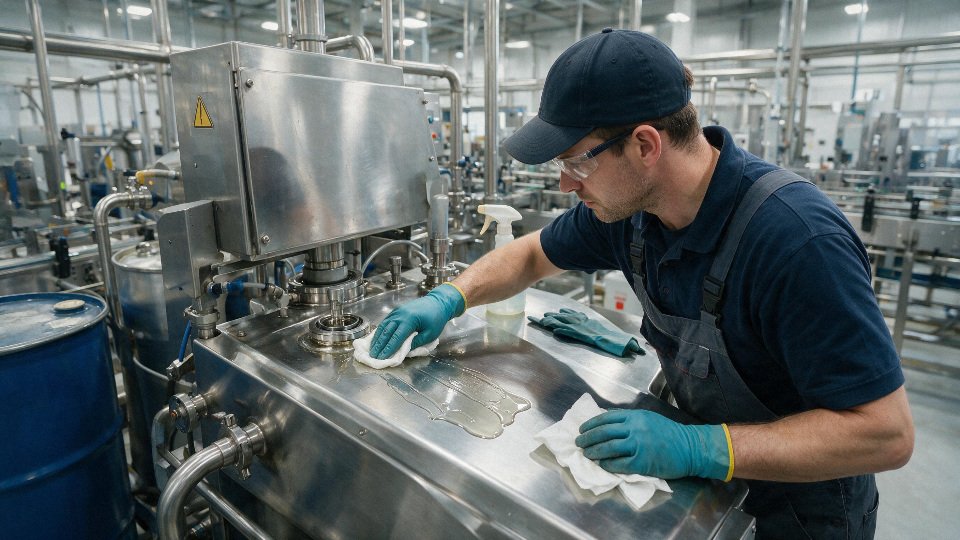
Why some solvents work
A solvent works on silicone oil when its molecules can enter, separate, and keep apart the flexible siloxane chains faster than the process loses that advantage to evaporation, poor wetting, or mixed contamination. For common PDMS fluids, good performance usually comes from compatibility with the polymer’s largely nonpolar, highly polarizable character, not from brute “strength” in the way buyers often think about acids, alkalis, or very polar cleaners.
The starting point is the structure of the fluid itself. Most industrial “silicone oil” is polydimethylsiloxane, or PDMS, built on a Si–O–Si backbone with methyl groups presented outward along the chain. That matters on the plant floor for two reasons:
- The siloxane backbone is very flexible, so the chain moves and spreads easily over metal, glass, elastomers, and painted surfaces.
- The methyl-rich outer surface gives the fluid low surface tension and a slippery, water-repelling character.
- Intermolecular cohesion is relatively low compared with many organic liquids, which is why silicone oils can wet into tight crevices and leave very thin, persistent films.
- That same low cohesion does not mean “everything dissolves it.” It means the solvent still has to interact favorably enough with the chain to penetrate and keep it in solution.
This is why silicone oil can be highly spreadable yet still resist water, short alcohol rinses, or the wrong aqueous degreaser. In practice, operators often mistake easy spreading for easy cleaning. Those are different problems.
Solubility parameter logic without turning it into a chemistry lecture
If you strip the theory down to purchasing and process relevance, PDMS tends to dissolve better in solvents whose interaction profile is dominated by compatible dispersion forces and polarizability, rather than strong hydrogen bonding. Water is the obvious miss. Short-chain alcohols by themselves are often disappointing for the same reason: they are polar protic liquids, and their self-association through hydrogen bonding works against good compatibility with a methyl-rich silicone phase.
That is why a beaker test can look strange to people used to mineral oils. A solvent that feels “stronger” in general plant use may do less on silicone than one with better PDMS affinity. The useful question is not “Which solvent is strongest?” but:
- Does it wet the contaminated surface?
- Does it penetrate the silicone layer?
- Does it stay on the part long enough to carry dissolved material away?
- Does it also deal with the other soils present?
A practical way to think about it: if the solvent family routinely handles hydrophobic, low-polarity polymers and oils, it has a better chance with silicone fluid than a highly polar cleaner does. That still leaves big differences among solvent families.
How the main solvent families usually behave
No family is uniformly good or bad; grade, boiling range, additives, and contamination load all matter. Still, some broad tendencies are reliable enough to guide early screening.
| Solvent family | Expected affinity for common PDMS fluids | Typical practical issues |
|---|---|---|
| Aliphatic hydrocarbons | Fair to good, especially for lower-viscosity silicone residues | Can be slow on heavy or aged films; flammability often limits use |
| Aromatic hydrocarbons | Often good to very good | Strong odor/VOC profile in many cases; material compatibility must be checked |
| Chlorinated solvents | Often effective on neat silicone oils | Regulatory, health, waste, and elastomer-compatibility constraints can dominate |
| Ethers and glycol ethers | Often useful, especially in blends | Can improve wetting and penetration; worker exposure review needed |
| Ketones | Mixed; some can work reasonably, some disappoint | Fast evaporation can cut contact time; seal and coating attack can become the real problem |
| Esters | Mixed to good depending on structure | Hydrolysis sensitivity, odor, and substrate compatibility need checking |
| Oxygenated hydrocarbon blends | Often selected in formulated cleaners rather than as pure solvents | Chosen to balance solvency, evaporation, rinseability, and safety |
A few plant-floor notes behind that table:
- Aliphatic hydrocarbons often remove fresh, low-to-medium viscosity silicone oil acceptably, but they can get slow once the residue is thick, oxidized, or loaded with fines. The part comes out looking cleaner than it actually is, then fisheyes show up in paint.
- Aromatics tend to have stronger affinity for many silicone fluids because their polarizability helps the chains separate and stay solvated. The trade-off is usually EHS burden and substrate attack risk.
- Chlorinated solvents have historically looked very good in pure solvency terms, but many plants cannot justify them once ventilation, exposure controls, waste handling, and compliance are included.
- Ethers, esters, and oxygenated blends are where many formulated cleaners earn their keep. One component attacks the silicone phase, another helps wet a metal surface still carrying machining oil, corrosion inhibitor, or particulate.
Water does not dissolve PDMS, so water-based cleaners cannot remove silicone oil.False
Water itself is generally a poor solvent for PDMS, but formulated aqueous cleaners can remove silicone through emulsification, surfactant-assisted wetting, alkaline builders, and mechanical action such as spray impingement, ultrasonics, or agitation. Removal and dissolution are not the same mechanism.
Viscosity and molecular weight change the cleaning time, not just the product code
A low-viscosity silicone fluid, say a few cSt to a few hundred cSt, often responds quickly if the solvent is compatible. Once you move into much higher viscosities, and the broader commercial range can run from about 0.65 cSt to well above 1,000,000 cSt, the limiting step often shifts from thermodynamics to mass transfer.
The mechanism is straightforward:
- The solvent has to wet the residue and contact the film continuously.
- It must diffuse into the silicone layer.
- The swollen layer has to loosen from the substrate or keep dissolving outward.
- Flow has to carry the dissolved or swollen material away so fresh solvent can reach the interface.
With very viscous PDMS, steps 2 through 4 slow down sharply. The solvent may be “right” on paper and still look weak in production because the dwell time is too short, spray pressure is too low, or the residue layer is too thick. I have seen this in wipe cleaning around pump seals: the first pass smears, the second pass softens, the third finally lifts because fresh solvent and mechanical shear have had time to work.
This is where the preferred choice can flip. A slower-evaporating solvent with only moderate silicone affinity may outperform a very compatible fast solvent because it maintains contact longer and avoids skinning over the residue.
Temperature helps, until something else becomes the bottleneck
Moderate heat often improves silicone removal. Ambient to about 60 C is a common practical band for cleaning trials, provided safety and compatibility are checked first. The benefits come through several paths:
- Silicone viscosity drops as temperature rises, so the residue flows and diffuses more easily.
- Solvent viscosity also drops, improving wetting and penetration.
- Dissolution and rinse-off rates usually improve because mass transfer gets faster.
The limit is rarely chemistry alone. It is usually one of these:
- Solvent evaporation increases, cutting actual contact time
- Flash point margin shrinks; many aliphatics are below 0 to 65 C, while many aromatic or higher-boiling options run roughly 25 C to above 100 C
- VOC concentration in the enclosure or operator zone rises
- Elastomers, hoses, sight glasses, and tank linings see more aggressive exposure
- Drag-out losses go up and the bath ages faster
So moderate heating is often worth testing, but the conclusion stops holding once evaporation, fire risk, or material compatibility overtakes the gain in dissolution rate. At that point, changing solvent package or delivery method is smarter than adding more heat.
Why neat-solvent success often fails on the line
A common lab mistake is to test a drop of clean silicone oil in a glass vial, find a solvent that clears it instantly, and assume the problem is solved. Production residues are rarely neat PDMS. They may contain:
- Fillers such as silica or mineral solids
- Surfactants or release-agent additives
- Metal soaps from lubricants or stamping compounds
- Carbonized or oxidized deposits from heat exposure
- Mixed hydrocarbon oils and greases
- Partially cured silicone networks that swell but do not truly dissolve
That last one matters. Once the silicone has crosslinked far enough, the cleaner may only swell the residue. Swelling can still help removal if there is brushing, spray impingement, ultrasonics, or a follow-up wipe, but the process window gets narrower.
Why co-solvent packages and water-based systems still make sense
The best commercial cleaner is often not the single solvent with the highest PDMS affinity. It is the package that handles the whole contamination set while staying inside the plant’s safety and cost limits.
A co-solvent package typically assigns different jobs to different components:
- One solvent dissolves or swells the silicone fraction
- Another improves wetting on metal, plastic, or coated substrates
- Another slows evaporation to preserve dwell time
- A surfactant or coupling agent helps rinseability
- The blend may also target mineral oil, wax, or particulate carryover
That is also why water-based cleaners can work in practice. Water does not dissolve PDMS, but a formulated aqueous cleaner can still remove it by:
- Lowering interfacial tension so the cleaner wets under the silicone film
- Emulsifying detached silicone droplets
- Suspending solids and mixed soils
- Using alkalinity or builders to break the hold of other co-contaminants
- Applying mechanical energy through spray, agitation, or ultrasonics
If the residue is mostly fresh silicone fluid on a robust metal part, a solvent system may be faster and simpler. If the line needs low flammability, easier rinsing, or compatibility with mixed soils, a water-based formulation may win even though the removal mechanism is indirect.
Effective solvent families
No single solvent family wins across all silicone-oil cleaning jobs. Aliphatic hydrocarbons are often the practical first pass for general PDMS removal, aromatics usually cut faster into heavier residues, and everything else earns its place when flammability, substrate compatibility, mixed soils, or regulatory limits override neat solvency. The wrong buying habit is to compare only “does it dissolve silicone”; the right one is to compare removal rate, evaporation behavior, exposure profile, residue risk, and what the next process step can tolerate.
Silicone oils span roughly 0.65 cSt to well over 1,000,000 cSt, and that changes the job. A low-viscosity PDMS film on stainless behaves like a degreasing problem; a partially oxidized, dust-loaded, high-viscosity smear on painted guards behaves more like softening and lift-off. The mechanism matters: a solvent that wets well and diffuses into the silicone layer can reduce viscosity and interfacial adhesion enough for wiping or spray impingement to remove it, even if “solubility” on paper looks similar to another option. In practice, line speed and how much mechanical help you have often matter as much as the solvent family itself.
Aliphatic hydrocarbons
Hexane, heptane, isoparaffins, and mineral spirits are the workhorses for many silicone-oil cleaning tasks. They are widely available, familiar to maintenance teams, and often effective on uncured or lightly aged silicone fluids, especially where the contamination is mostly PDMS rather than a baked composite of silicone, carbon black, oxidation products, and process dust.
Where they tend to work well:
- Low- to medium-viscosity silicone oils on metal parts
- General degreasing stations, wipe cleaning, and immersion tanks
- Mixed hydrocarbon-compatible soils where one cleaner must handle oil, grease, and silicone
- Plants that need globally available commodity supply rather than a niche specialty cleaner
What buyers usually discover after the first trial is that “aliphatic hydrocarbon” is not one behavior. Drying speed, odor, and flash point can swing a lot from light hexane-type cuts to heavier mineral spirits. Typical flash points run from below 0 C up to around 65 C depending on blend and boiling range, and that directly affects ventilation design, classified-area implications, and how aggressively operators can use heated wash tanks. A light fast-drying solvent may improve throughput but can raise vapor exposure and fire controls; a heavier isoparaffin may be easier to handle but leave parts wetter longer and slow the line.
Residue profile is the trade-off that gets missed. Heavier aliphatic blends can leave the part “clean enough” for assembly but not clean enough for coating, bonding, or optical inspection if drainage is poor. That is not always solvent residue in the strict sense; sometimes it is redistributed silicone left behind because the fluid was diluted and spread rather than fully carried off. On a shop floor, you see this as fisheyes later, not at the washer.
Aromatic hydrocarbons
Toluene and xylene are usually stronger performers against many silicone fluids, greases, and some gum-like residues than aliphatics. Their advantage is faster penetration into heavier deposits and a stronger tendency to reduce viscosity quickly, which helps when maintenance is trying to strip tenacious buildup from metal tooling, pumps, doctor blades, or coating-line hardware.
They are commonly chosen when:
- The silicone layer is heavy, tacky, or partly aged
- A simple wipe-down with mineral spirits is too slow
- The substrate is robust metal and downstream odor concerns are manageable
- The plant can support tighter exposure controls
That stronger action comes with a commercial and operational cost. Odor is sharper, worker acceptance is usually worse, and many sites face stricter internal controls or regulatory scrutiny on aromatic use. Flash points vary by product, often from roughly 25 C upward for common aromatic solvents, so they are not automatically safer from a fire standpoint than all aliphatics. If the cleaning station sits near ovens, sealing equipment, or hot manifolds, that matters very quickly.
The boundary here is important: aromatics are often preferred for tough silicone residues, but that preference weakens fast when plastics, printed graphics, elastomer seals, or fresh coatings are in the same cleaning envelope. They can solve the silicone problem and create a substrate problem in the same shift.
Chlorinated solvents
Perchloroethylene and methylene chloride, where legally permitted and technically justified, can be very strong silicone-oil cleaners. Their historic appeal was straightforward: high cleaning power, good penetration, and in some cases nonflammability advantages that made them attractive for vapor degreasing and enclosed precision cleaning equipment.
They still show up in discussions for:
- Heavy industrial cleaning where flammability is a hard constraint
- Enclosed systems designed around chlorinated chemistry
- Legacy processes with validated cleaning outcomes and waste infrastructure
But modern procurement has to treat this family as constrained, not default. Toxicological concerns, regulatory restrictions, waste handling requirements, air permitting, and customer policy bans limit use in many regions and industries. Even where technically allowed, the total cost picture often changes once you include containment, operator training, solvent recovery, hazardous waste disposal, and the risk of future compliance changes. A solvent can be excellent in the tank and still be the wrong purchase for the business.
Chlorinated solvents remain broadly practical first-choice cleaners for modern silicone-oil removal programs.False
They can be effective, but toxicology, regulation, waste handling, customer restrictions, and equipment requirements often make them a limited or legacy option rather than a broadly practical first choice.
Ether and ether-like solvents
Certain glycol ethers and cyclic ethers can be useful, especially in formulated cleaners designed for mixed soils. Their value is not always maximum silicone solvency in neat form; it is often balance. They can help bridge oily contaminants, processing additives, and some polar residues in one bath, which is why formulators use them in maintenance cleaners and specialty precision-cleaning blends.
Use them carefully when:
- The soil is not pure silicone oil
- One cleaner must handle release agents, light varnish, and process grime together
- Longer wet contact is acceptable
- The process can verify compatibility with plastics, labels, and operator exposure limits
The trade-off is that their broad utility often comes with more compatibility work. Some glycol ethers are hard on certain coatings and plastics, and drying can be slower than buyers expect from a “stronger” solvent. If the line needs a completely dry part before vision inspection or adhesive application, a cleaner that works chemically may still be a bottleneck operationally.
Ketones and esters
MEK, acetone, ethyl acetate, and related solvents are often over-assumed to be universal degreasers for silicone. They are not. Some can help thin, loosen, or undercut certain silicone residues, particularly in blends, but they are not consistently the best standalone choice for all silicone oils.
Their practical use cases include:
- Spot cleaning where rapid evaporation is valuable
- Formulated blends where they accelerate drying or improve wetting
- Situations where the silicone contamination is light and mixed with other removable soils
Weak points are just as important:
- Performance can be inconsistent on higher-viscosity or more tenacious PDMS residues
- Fast evaporation can reduce dwell time before the solvent has penetrated the deposit
- Attack on plastics, adhesives, inks, and painted surfaces is common enough that it must be checked, not assumed away
This is a good example of mechanism beating intuition. A very fast solvent can look aggressive because it flashes quickly and chills the surface, but if it leaves before it has diffused into the silicone layer, the actual cleaning result may be worse than with a slower hydrocarbon that stays wet long enough to do the job.
Specialty siloxane-compatible fluids and formulated blends
For precision cleaning, electronics, coating lines, and sensitive assemblies, specialty fluids and multi-component blends often outperform commodity solvents because they are tuned around the whole process, not just solvency. That can mean lower residue, tighter materials compatibility, controlled evaporation, or better behavior around optics, seals, and fine-feature parts.
These options make sense when:
- Standard solvents clean adequately but damage the substrate
- Residue thresholds are tight
- Rework is expensive, and inconsistent cleaning costs more than the solvent itself
- The contamination includes silicone plus flux residues, additives, or particulate load
Buyers should be careful with supplier claims here. Performance is often very application-specific, and one supplier’s “silicone remover” data may not transfer to your fluid viscosity, your substrate, or your cleaning method. Ask what was actually tested: neat PDMS, cured silicone, mixed shop soil, immersion, ultrasonics, spray-in-air, or vapor phase. Those are different jobs.
Water-based and semi-aqueous systems
Water-based and semi-aqueous cleaners with surfactants, builders, or terpene components are often chosen for EHS policy, operator acceptance, or wastewater strategy rather than maximum silicone solvency alone. They are especially useful when silicone oil is only one contaminant in a broader soil package.
They fit best in:
- Parts washing lines already built around aqueous cleaning
- Operations trying to reduce VOC handling
- Mixed soils where detergency and mechanical action can carry much of the load
- Plants willing to rinse and dry parts properly
The trade-off is straightforward: they often rely more heavily on temperature, agitation, spray pressure, and rinse quality than solvent-only systems. Typical cleaning temperatures for silicone removal run from ambient to about 60 C, with higher temperatures only after compatibility and safety review. If the washer has weak impingement, overloaded filters, and poor rinse management, changing chemistry alone rarely rescues performance.
Across all families, compare these factors before you issue a PO:
- Cleaning target: low-viscosity fluid, heavy grease, gum, aged residue, or mixed soil
- Substrate sensitivity: metals, plastics, coatings, elastomers, adhesives, printed marks
- Drying behavior: line takt time, trapped solvent risk, need for rinse or secondary drying
- Flash point and ignition risk: especially near heaters, ovens, and open maintenance work
- Worker exposure and odor threshold: what the ventilation and PPE program can actually support
- Residue after evaporation or rinsing: critical for coating, bonding, electrical, and optical processes
- Waste and wastewater path: spent solvent, still bottoms, emulsified oils, rinse-water treatment
- Supply consistency: commodity availability versus dependence on a proprietary blend
If two solvent families remove silicone equally in a beaker, pick based on what happens after cleaning: can the part move straight into coating, sealing, assembly, or packing without introducing another failure mode? That is where a lot of “good cleaners” get rejected on the plant floor.
Poor choices and common mistakes
Most failed silicone-cleaning trials come from a simple mismatch: the solvent may look active in a beaker, yet fail on the actual part because the oil is too viscous, too aged, too thinly spread, or sitting on a substrate that cannot tolerate the chemistry. If you want to avoid wasted tests, treat silicone removal as a contamination-and-substrate problem, not just a solvent lookup exercise.
Water is the first dead end. Silicone oil is hydrophobic and not meaningfully soluble in water, so plain water washing usually does little beyond moving loose dirt around.
In practice, when operators say “hot water removed it,” one of three things usually happened:
- A detergent or surfactant package actually did the work
- Heat lowered the oil viscosity enough for mechanical action to lift it
- Spray pressure, brushing, or wiping physically displaced the film
That distinction matters in procurement. If a trial report credits water alone, ask what was in the tank, what temperature was used, and whether the line had impingement nozzles, ultrasonics, or hand wiping. Otherwise you end up buying a washer for a chemistry problem the washer cannot solve by itself.
Water alone is usually ineffective for dissolving silicone oil.True
PDMS-based silicone oils are hydrophobic and generally insoluble in water. Apparent cleaning is often due to surfactants, heat, or mechanical force rather than water acting as a true solvent.
Short-chain alcohols are another common overestimate, especially methanol, ethanol, and isopropanol. They are useful plant solvents for many soils, they dry fast, and they often make a surface look cleaner. That does not mean they dissolve heavier silicone oils well.
What they often do instead:
- Remove adjacent contaminants such as light hydrocarbons, dust binders, or fingerprints
- Reduce visible smearing during wiping
- Thin only the lightest silicone fractions
- Improve temporary appearance without fully lifting the silicone residue
This is why IPA wipe tests can be misleading on maintenance benches. A part can come off the rag looking clean, then still give paint fisheyes or adhesive wet-out problems an hour later. The mistake is worse with high-viscosity PDMS fluids, where the alcohol may wet the film but not carry enough silicone into solution to prevent redeposition.
Very fast-evaporating solvents create a different failure mode. On paper they may show acceptable compatibility with silicone oil, but on a warm line or under airflow they can flash off before they penetrate a viscous film. The thicker the contamination, the more contact time starts to matter.
Mechanistically, penetration has to happen before dissolution and removal. If evaporation outruns penetration, the solvent strips only the top of the film and leaves the bulk behind. That is why a low-boiling solvent can look strong in a small glass-jar test on fresh oil, yet perform poorly on conveyor parts, heated molds, or textured surfaces with trapped residue.
The preferred choice flips when contamination is extremely thin and fresh. In that case, a faster solvent may be acceptable because penetration distance is short and drying speed helps throughput. Once the film is heavier, dusty, or high-viscosity, a slower system often cleans better even if the bench-top “solubility impression” looks less dramatic.
Single-solvent screening on fresh, neat silicone oil also causes expensive false confidence. Plant contamination is rarely neat for long. After oven exposure, rework heat, or even weeks in service, the residue may be:
- Oxidized on the surface
- Loaded with dust, fillers, or metal fines
- Mixed with process oils, release agents, or grease
- Partially cured or gelled
- Driven into pores, knurling, fabrics, or micro-scratches
That changes the removal path. What used to be a simple dissolution job becomes a combined solvency, wetting, and mechanical-release job. A supplier who tests only against fresh fluid in a vial has not replicated your process condition.
Substrate damage is the mistake that shows up after the cleaning trial seems to succeed. A solvent can remove silicone perfectly and still be the wrong choice if it attacks the part, fixture, or downstream bond line.
Common hidden damage paths include:
- Extracting plasticizers from flexible plastics or seals
- Stress crazing in acrylic
- Whitening or cracking in polycarbonate
- Softening paints, inks, or protective coatings
- Swelling adhesive layers or weakening bonded joints
- Attacking labels, potting compounds, or connector housings
This is where lab purity talk stops being useful. On the plant floor, the part is usually a stack of materials, not one clean coupon. Verify against the actual assembly, especially if cleaning temperatures rise above ambient. Common silicone-removal work is done from room temperature up to roughly 60 C; above that, both cleaning rate and substrate risk can change quickly and need a fresh compatibility review.
A counter-intuitive issue is over-dilution. Teams often add a weaker co-solvent or rinse medium to cut cost, odor, or flammability, then wonder why a faint silicone film appears after drying.
What is happening is straightforward:
- The original solvent system holds the silicone in solution
- Dilution shifts solvency below the point needed to keep it dissolved
- Silicone precipitates or separates as very fine droplets
- Those droplets redeposit as a thin, hard-to-see film
This shows up a lot in multi-stage cleaning when an effective solvent is followed by an incompatible rinse, or when spent solvent is topped up with a cheaper diluent until the bath no longer carries the contamination load it once did.
The last mistake is relying on visual cleanliness as the success criterion. Silicone residues can remain at very low surface levels and still cause process failures:
- Paint fisheyes or crater defects
- Poor adhesive bonding
- Seal leakage or gasket slip
- Coating dewetting
- Optical haze, rainbowing, or reject-level cosmetic defects
If the next operation is coating, bonding, sealing, printing, or optical inspection, visual appearance is only a screening step. The useful verification method depends on the process: adhesion testing, wetting checks, defect counts, or a controlled downstream trial usually tells you more than a clean-looking surface ever will.
Substrate and process compatibility
A solvent that dissolves silicone oil well on the bench can still be the wrong production choice once you factor in substrate attack, seal life, drying behavior, downstream adhesion, and EHS controls. In practice, the acceptable solvent window is set as much by what the part and the line can tolerate as by how fast the fluid cuts PDMS.
The mistake I see most often is buying around solvency alone. That works for a lab wipe test on a stainless coupon; it fails when the same chemistry has to run through aluminum manifolds, polycarbonate sight glasses, NBR pump seals, painted housings, and a downstream bonding station that rejects any trace residue.
Metals and glass: usually tolerant, but not automatically safe
Steel, stainless, glass, and many ceramic surfaces usually tolerate the solvent families commonly used for silicone oil removal. The catch is not usually gross attack of the base material. It is what happens around the base material: corrosion after water carryover, staining on reactive alloys, trapped solvent in close-clearance assemblies, or inhibitor mismatch.
A few points matter on the plant floor:
- Carbon steel
- Often tolerates hydrocarbon and aromatic cleaners reasonably well during short exposure.
- Becomes vulnerable when the cleaning system introduces water contamination, humid air, or alkaline carryover from a prior wash stage.
- Flash rust is common after cleaning if drying is incomplete, especially on machined surfaces with fresh metal exposure.
- Stainless steel
- Generally forgiving, which is why so many test rigs are built from it.
- Not immune to residue problems; if the solvent leaves nonvolatile carryover, downstream coating or adhesive performance can still fail.
- Aluminum
- Usually compatible with many nonaqueous silicone-cleaning solvents, but surface appearance can change if the part has conversion coating, anodize, or trapped alkaline residues from upstream processing.
- Precision aluminum assemblies with blind holes or threaded pockets often need controlled drying because retained solvent can bleed out later.
- Magnesium and reactive light alloys
- Need a tighter review. Some solvent systems are acceptable; some combinations of contamination, moisture, and surface condition are not something you should approve from a datasheet alone.
- If magnesium is in scope, verify against supplier guidance and run a controlled compatibility test.
- Glass
- Chemically tolerant in most cases, but watch for drying marks, surfactant residues, and cosmetic haze from formulation additives rather than attack on the glass itself.
The mechanism here is simple but easy to miss: once silicone oil is dissolved, it moves into joints, threads, surface roughness, and capillary gaps that were not heavily wetted before. A solvent that cleans aggressively but evaporates too fast may redeposit contamination at the edge of the drying front; one that evaporates too slowly may sit in assemblies long enough to trigger corrosion or bleed-out complaints.
If the part is a precision-machined assembly, ask three practical questions before approving the solvent:
- Does the fluid contain corrosion inhibitors, and are they acceptable for the next process?
- How much water can the system pick up in normal operation?
- Can the plant actually dry internal cavities and fastener interfaces, not just exposed surfaces?
Engineering plastics: case-by-case, no shortcuts
Plastics are where broad solvent recommendations usually break down. A solvent family that is effective on silicone oil can be perfectly usable on PEEK or PTFE and a complete mistake on polycarbonate, ABS, acrylic, or some blends.
Common failure modes are not always immediate melting. More often you see:
- Environmental stress cracking
- Swelling with dimensional shift
- Embrittlement after drying
- Surface whitening or haze
- Loss of gloss
- Crazing around molded-in stress points, screw bosses, or snap fits
The higher-risk groups often include:
- Aromatic solvents
- Chlorinated solvents
- Ketones
- Some ether-based solvents or blended oxygenates
That does not mean these are always unusable. It means a resin name alone is not enough. Filled grades, molded stress history, colorants, flame-retardant packages, and prior heat exposure all change the result. A polycarbonate inspection window that looks fine after a 30-second wipe can craze a day later, especially if the part was already under assembly stress.
Use a simple qualification sequence:
- Confirm the exact polymer grade if possible, not just “plastic housing.”
- Test both short contact and worst-case dwell.
- Inspect immediately, then again after 24 to 72 hours.
- Check stressed areas first: corners, bosses, press fits, ultrasonic weld zones.
- Recheck fit and function, not just appearance.
The main trade-off is speed versus substrate margin. Stronger silicone solvents often reduce cleaning time and labor, but the preferred choice flips when the part mix includes solvent-sensitive plastics or cosmetic surfaces with low damage tolerance.
Elastomers, seals, hoses, and gaskets: the hidden failure point
In recirculating wash systems, the part may survive while the equipment quietly starts failing. Seal compatibility is one of the most expensive blind spots in solvent selection because it shows up later as pump leakage, hose softening, filter housing seepage, or valve sticking.
Do not assume all “rubber” behaves the same:
- NBR
- Common and inexpensive.
- Frequently vulnerable to swelling or hardening depending on solvent class and temperature.
- Often the first seal material to expose a bad solvent choice.
- EPDM
- Strong in some aqueous and polar service conditions.
- Can perform poorly with many hydrocarbon-rich solvent systems.
- FKM
- Often a safer choice for many aggressive organic solvents, but not universal.
- Cost is higher, and compounded grades vary.
- Silicone rubber
- Good high-temperature elastomer in many applications.
- Can swell significantly in solvents that dissolve silicone oils, which should not surprise anyone, but it still catches buyers out.
- Fluorosilicone
- Often chosen where fuel and solvent resistance must exceed standard silicone rubber.
- Better in some mixed-exposure cases, but again, verify the exact formulation.
If a solvent dissolves silicone oil well, silicone rubber seals in the same system may be a compatibility risk.True
This is directionally true because like-chemistry interactions that promote PDMS swelling or dissolution can also affect silicone elastomers. Actual seal life still depends on crosslink density, formulation, temperature, and exposure time, so it requires supplier confirmation and soak testing.
If the cleaner will be heated, the compatibility margin usually narrows. Even moving from ambient to 50 to 60 C can change seal swell enough to matter in pumps and spray manifolds.
Coated, plated, anodized, and bonded surfaces need post-dry inspection
Decorative and functional surfaces fail in subtler ways than bare metals. A solvent may remove silicone perfectly and still create a rejectable part after evaporation.
Check for:
- Gloss loss
- Color shift
- Blush or haze
- Softening of paint or powder coat
- Delamination at edges
- Attack on screen printing or pad printing
- Adhesion loss in bonded joints
- Changes in anodized appearance
- Staining or darkening on plated finishes
Bonded parts deserve special caution. Some solvents wick into bond lines, especially with edge exposure or porous substrates, then emerge later during cure, paint bake, or field service. The damage may show up as reduced adhesive strength rather than visible surface change.
Electronics and precision assemblies: residue control matters more than bench solvency
For electronics, sensors, optics-adjacent components, and tight-tolerance mechanisms, the target is not just “silicone gone.” The cleaner also has to leave very little behind, avoid ionic contamination, and evaporate in a controlled way without trapping fluid under components or inside connectors.
Watch these failure modes:
- Residue left after evaporation
- Extractables from the cleaner itself
- White film or drying marks under low airflow
- Solvent entrapment beneath packages, shields, labels, or flex circuits
- Swelling of potting compounds, wire insulation, or connector plastics
- Migration of dissolved silicone into areas that are harder to clean than the original spot
Low-residue performance is partly chemistry and partly process. A slower solvent may clean well but remain under bottom-terminated components; a very fast solvent may chill the surface, condense moisture, and redeposit contamination unevenly. For critical assemblies, supplier cleanliness data, current equipment documentation, and a production-representative trial matter more than a hand-cleaning demo.
Process method changes the solvent requirements
The cleaning method can overturn what looked like the best solvent choice.
| Process method | Solvent traits usually favored | Main constraint to verify |
|---|---|---|
| Immersion | Good soil-loading capacity, manageable evaporation, material compatibility | Drag-out loss, drying time, worker exposure |
| Wipe cleaning | Fast cut, moderate evaporation, low residue | Redeployment of silicone across the surface, rag compatibility |
| Spray wash | Seal compatibility, controlled viscosity, flash point appropriate to enclosure | Pump/seal life, mist control, fire zoning |
| Ultrasonic cleaning | Cavitation-compatible fluid properties, low residue | Attack on delicate assemblies, trapped solvent |
| Vapor degreasing | Stable vapor behavior, very low residue, equipment-specific compatibility | Current equipment limits, worker safety, regulatory status |
| Inline web cleaning | Fast evaporation, low residue, consistent wetting | Solvent recovery, web speed, ignition control |
The boundary here is straightforward: a solvent recommendation based on static coupon cleaning stops being reliable once the production method changes fluid residence time, aeration, temperature, or contamination loading.
Downstream operations often require a cleaner after the cleaner
If the part will be coated, printed, bonded, sealed, or plasma treated, the primary silicone-removal solvent may not be the final chemistry touching the surface. In many lines, a residue-sensitive final rinse is what separates “visibly clean” from “process-clean.”
That rinse step becomes more important when:
- The primary cleaner contains inhibitors or stabilizers
- The silicone load is high
- The substrate has fine texture or porosity
- Adhesion performance is tight
- The customer has strict contamination declarations or extractables limits
Bench results still matter, but production approval should sit on the full window: part materials, seal set, cleaning method, drying method, downstream process, and EHS burden. A solvent that saves five minutes in testing is not much of a win if it forces new fire zoning, tougher exposure controls, harder wastewater handling, or customer declaration issues that procurement has to explain later.
Testing and verification methods
A solvent that looks excellent in a beaker can still fail on the line because the contamination is older, thicker, mixed with other soils, or sitting on a substrate the cleaner attacks before it removes the silicone. The practical way to avoid that mistake is to test in stages: define the soil, run a controlled bench screen, verify cleanliness with at least two methods, then advance only the candidates that still hold up under realistic operating conditions.
Define the contamination before you compare cleaners
Start here. If the contamination description is vague, the test result will be vague too, and purchasing will end up comparing supplier claims instead of process capability.
Record these basics for every sample or production condition:
- Silicone type
- Straight PDMS fluid
- Silicone grease
- Emulsion residue
- Modified silicone, if known
- Cured or partially crosslinked residue, if suspected
- Approximate viscosity
- If you know the product grade, record it.
- If not, estimate the band: very low viscosity fluid, medium oil, heavy oil, grease-like.
- This matters because a 5 cSt fluid and a 100,000 cSt residue do not respond the same way, even with the same chemistry.
- Residue condition
- Fresh spill or carryover
- Aged residue
- Heat-exposed or baked-on film
- Repeatedly cycled contamination from a bath or machine surface
- Co-contaminants
- Mineral oil or process oil
- Wax
- Carbon or char
- Metal fines
- Silica, fillers, pigments
- Dust or abrasive particulate
- Location and geometry
- Open flat surface
- Threads, blind holes, narrow gaps
- Porous or roughened surface
- Assemblies with trapped liquid zones
The mechanism is straightforward: co-soils often change the limiting step. A solvent may dissolve silicone oil itself quite well, but if the residue is held inside carbonaceous deposits or thickened with fillers, mass transfer becomes the bottleneck, not pure solubility. That is one reason plant complaints often sound inconsistent: “it worked on the fresh parts but not after shutdown weekend.”
Build a bench test that is actually comparable
Use a simple screen, but control it tightly enough that one candidate is not getting a gentler test than another.
Set up the bench screen with:
- Standard test coupons
- Use the actual production substrate where possible.
- If several materials are involved, include all of them.
- Flat coupons are fine for the first pass, but keep at least one representative geometry coupon if the line has pockets or crevices.
- Measured soil loading
- Apply a known mass of contamination per coupon.
- Weigh coupons before and after soil application.
- If the process produces irregular contamination, prepare both a standard loading and a heavy loading set.
- Controlled contact time
- Keep exposure windows fixed, for example short, medium, and long dwell.
- Do not compare one solvent at 30 seconds against another at 5 minutes and call it equivalent.
- Agitation level
- Static soak
- Mild hand or orbital agitation
- Ultrasonic, if that is how the plant will run
- Spray impingement, if relevant
- Temperature
- Test at the intended operating range, typically ambient up to about 60 C unless reviewed otherwise.
- Temperature often speeds removal by lowering viscosity and improving diffusion, but the trade-off is higher vapor load, faster loss rate, and more compatibility risk.
- Replicates
- Run at least three coupons per condition if you want numbers worth discussing in a buying meeting.
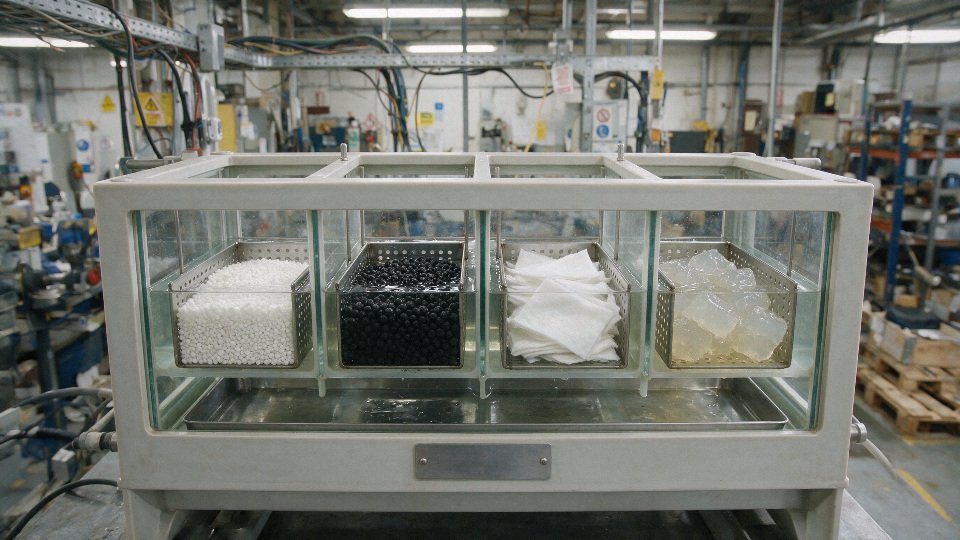
A common error is screening only under ideal fresh-solvent conditions. That tells you the chemistry has potential, not that the process is robust. If production ever sees aged bake-on residue or heavy silicone grease, include that from the start or the ranking can flip later.
Measure removal speed and final cleanliness separately
Fast visible removal is not the same as clean. You need one method for how much soil left the part and another for whether the surface is clean enough for the next operation.
Use a combination of these checks:
| Method | What it tells you | Best use | Limitation |
|---|---|---|---|
| Gravimetric loss | Mass of contamination removed | Bench ranking, loading-capacity work | Can miss thin residual films or confound with solvent retention |
| Optical inspection | Visible residue, streaks, haze, trapped soil | Quick screening, geometry effects | Poor at detecting very thin silicone films |
| Contact angle or dyne behavior | Surface wetting change after cleaning | Coating/adhesion-sensitive parts | Surface roughness and mixed residues can skew results |
| ATR-FTIR | Chemical confirmation of residual silicone on surface | Failure analysis, close comparison | Requires access to instrument and suitable surface |
| Paint fisheye counts | Process-specific coating interference | Paint and coating lines | Needs controlled coating procedure |
| Bond strength testing | Functional cleanliness for adhesion | Bonded assemblies | Slower and more expensive than screening tests |
In practice, a gravimetric result plus one surface-sensitivity check is a reasonable minimum. For paint or adhesive service, process-specific testing matters more than a pretty lab coupon. A cleaner that leaves trace residue can still look good by weight and fail badly in fisheye or bond tests.
Check evaporation behavior and cleaner residue
Some formulated cleaners remove silicone well because they contain strong active components plus slower, nonvolatile ingredients. That can be a good trade in a closed wash system and a bad one before coating, bonding, or electronics assembly.
Check these points explicitly:
- Dry-down appearance
- No visible film, spotting, or oily trace after evaporation
- Nonvolatile residue
- Evaporate a measured amount on clean foil, glass, or a representative substrate and inspect or weigh residue where practical
- Recontamination risk
- Parts that look clean when wet can show surface defects after full dry-down
- Rinse requirement
- If the chemistry needs a follow-on rinse to meet cleanliness, include that step in the cost and cycle-time comparison
A cleaner that dissolves silicone oil quickly can still be unsuitable if it leaves nonvolatile residue that disrupts coating, bonding, or electronics performance.True
Removal power and residue-free drying are separate performance criteria. Many blends trade one against the other, so both must be tested.
Run compatibility panels on the whole system, not just the part
This is where a lot of otherwise sound projects get delayed. The solvent is fine on stainless steel and disastrous on an EPDM seal, printed label, sight tube, or filter adhesive.
Include these materials in the compatibility panel:
- Primary part substrates
- Metals
- Plastics
- Elastomers
- Coatings
- Hidden equipment materials
- Pump seals
- O-rings
- Valve seats
- Tubing
- Hose liners
- Gasket sheets
- Filter media
- Tank linings
- Labels and ink markings
- Exposure conditions
- Short splash contact
- Continuous immersion
- Elevated temperature
- Cyclic exposure and dry-down
Look for swelling, embrittlement, softening, extraction, cracking, label loss, and filter collapse. The trade-off here is obvious but easy to ignore: the strongest cleaner in the lab may drive the highest maintenance burden in service. That is usually where the preferred choice flips toward a slightly slower but more equipment-tolerant chemistry.
Include operating metrics before you scale up
Bench cleaning performance is only half the procurement decision. The line has to live with the chemistry every shift.
Track these metrics during bench and pilot work:
- Bath life
- How quickly performance drops as silicone loading rises
- Loading capacity
- How much contamination the solvent can carry before removal rate or final cleanliness falls off
- Filtration and separation behavior
- Whether particulates can be filtered
- Whether oils separate or stay dissolved
- Whether sludge forms
- Recyclability
- Can the solvent be recovered practically by distillation or another method, if that matters to the site
- Worker acceptability
- Odor
- Irritation complaints
- Ease of handling
- Housekeeping burden from vapor or drag-out
- Ventilation demand
- Estimate from volatility, operating temperature, tank design, and local controls
- This cannot be generalized responsibly without the actual setup and solvent data sheet
Use a stage-gate decision matrix
Do not jump from a promising jar test to a plant purchase order. Move candidates through gates with written pass-fail criteria.
- Bench screen
- Pass if it removes the defined contamination within target dwell time
- No disqualifying residue
- No obvious substrate attack
- Pilot trial
- Test loaded bath behavior, repeat cleaning, dry-down, and maintenance impact
- Confirm functional cleanliness with the actual downstream process
- Line trial
- Verify cycle time, ventilation adequacy, waste handling, operator acceptance, and true cost per cleaned part
Typical pass-fail categories should include:
- Cleanliness target
- Maximum cycle time
- Substrate compatibility
- Equipment compatibility
- Safety and handling requirements
- Compliance review status
- Cost per part or per square meter cleaned
- Waste and recovery burden
The main conclusion stops holding if the production soil changes materially from the test soil. A solvent approved on fresh low-viscosity carryover may be the wrong answer for a quarterly maintenance cleanout involving baked residue and grease-thickened deposits. If you send a supplier representative samples, photos, contamination history, substrate list, and the downstream quality criterion, you will usually get a much more useful recommendation than if you ask only which solvent “dissolves silicone oil.”
Safety and compliance factors
A solvent that removes silicone oil well can still be the wrong choice if it creates an ignition hazard, triggers reporting obligations, fails a customer restricted-substance screen, or leaves you with an expensive waste stream. In practice, EHS approval often narrows the solvent list harder than cleaning performance does, especially in plants handling plastics, electronics, food-related parts, or export programs.
Flammability is usually the first gate because many effective silicone solvents sit somewhere between “easy to ignite” and “manageable only with disciplined controls.” Light aliphatic hydrocarbons can have flash points below 0 to 65 C depending on cut and formulation; many aromatics and higher-boiling solvents land roughly from 25 C to above 100 C; ketones and some ethers can be quite volatile and generate ignitable vapor quickly. That matters on the floor because vapor generation, not just liquid volume, drives risk near pumps, wipe stations, dip tanks, and ultrasonic units.
A few practical distinctions matter:
- Low-flash aliphatic and ether-type cleaners
- Fast evaporation can help drying and line speed.
- They reach flammable vapor concentration sooner, especially in warm rooms or enclosed cabinets.
- Static control, bonded containers, rated pumps, and strict hot-work separation become non-negotiable.
- Aromatics and ketones
- Often stronger on oily films and some compounded residues.
- Vapor inhalation risk is usually more acute than operators expect because odor is not a reliable exposure limit indicator.
- Seal compatibility and coating attack often become the hidden cost.
- Higher-boiling hydrocarbon blends
- Lower vapor pressure can reduce peak airborne concentration and fire frequency.
- They tend to dry slower, leave more drag-out, and increase residue-management burden unless you add heated drying or air knives.
The mechanism here is simple: as volatility rises, vapor concentration builds faster in the breathing zone and around ignition sources; as flash point drops, the margin between normal operating temperature and ignitable conditions shrinks. A cleaner that works beautifully at ambient may become a very different hazard at 45 to 60 C in a heated wash step. Any temperature increase used to improve silicone removal has to be reviewed against the actual solvent SDS, equipment classification, and ventilation design, not assumed safe from category alone.
Occupational exposure is the next filter. Most hydrocarbon, ketone, aromatic, and ether-based cleaners can cause:
- Inhalation exposure during manual wiping, open-top tanks, drum filling, and filter changes
- Skin defatting from repeated contact
- Eye irritation from splash or mist
- Longer-term toxicological concerns that vary sharply by ingredient and jurisdiction
That is why industrial hygiene review should cover more than gloves on a poster:
- Local exhaust at source, not only general room ventilation
- Glove selection by chemical compatibility and breakthrough time
- Face shield or goggles for transfer and maintenance tasks
- Air monitoring where evaporation is significant or use is repetitive
- Training on rag handling, spill absorbents, and closed-lid discipline
The preferred solvent can flip here. A stronger aromatic or ether cleaner may cut cleaning time in half, but if it requires respiratory controls, explosion-rated ventilation upgrades, and medical surveillance, the total operating burden may outweigh the process gain.
Regulatory screens are where procurement often gets surprised. Depending on market and customer base, you may need to review:
- VOC status under local air rules
- HAP content in the US or equivalent hazardous air pollutant lists elsewhere
- REACH SVHC exposure for EU-facing supply chains
- RoHS-adjacent or customer restricted-substance requirements, even though process chemicals are not always directly covered in the same way as finished components
- Sector rules from automotive OEMs, electronics assemblers, aerospace primes, or medical-device quality systems
A solvent can be technically effective and still be commercially unusable because the customer will not approve its composition disclosure or restricted-substance profile.True
This is common in automotive, electronics, medical, and multinational contract manufacturing supply chains where process-chemical declarations are reviewed alongside parts and packaging.
Chlorinated solvents deserve separate treatment. Some legacy materials have strong cleaning performance and nonflammability advantages, but they can bring major permitting, transport, exposure, reporting, and disposal burdens. In many plants, that burden now outweighs their process benefit unless there is a tightly controlled, closed system and a clear regulatory basis for use. That conclusion stops holding in a few specialized operations with engineered containment and established compliance infrastructure, but it is no longer a casual purchasing decision.
Waste handling often decides the actual cost per cleaned part. Check these points early:
- Whether spent solvent remains recyclable by on-site or off-site distillation
- Whether dissolved silicone and solids create sludge that must be managed separately
- Whether the waste becomes hazardous under local classification rules after use, even if virgin solvent purchasing looked straightforward
- Whether semi-aqueous systems shift the problem into emulsified wastewater that your treatment plant cannot break effectively
- Whether drag-out losses are large enough to justify rinse-stage recovery
For food-contact, medical, electronics, and automotive work, documentation can matter as much as cleaning power:
- Full or reviewable formulation disclosure
- Consistent batch-to-batch composition
- SDS and regulatory statements current for destination markets
- Change-notification control
- Traceability tied to incoming lot and production use records
If a supplier cannot support that paperwork, the solvent may never get through customer audit, no matter how well it cuts silicone oil in the lab.
Supply and formulation strategy
A cheap drum rarely delivers the lowest cleaning cost. Repeatable silicone removal usually depends as much on formulation quality, supply discipline, and residue diagnosis as on raw solvent strength. Procurement gets better results when it buys a controlled cleaning system for a defined contamination problem, not just a solvent name.
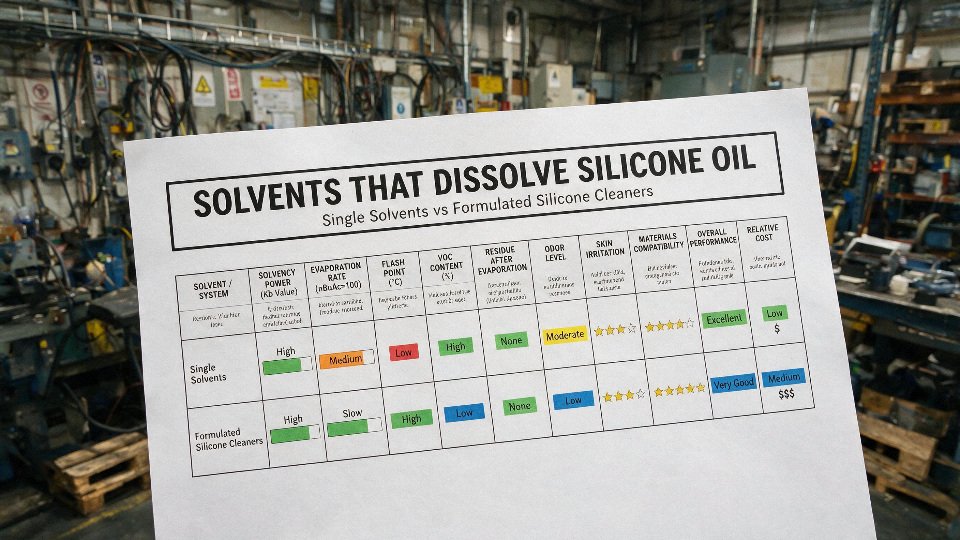
Single solvents still have a place. If the residue is mostly one silicone oil grade, the substrate is robust, and the process has decent ventilation, fire control, and drying capacity, a commodity solvent can be the cleanest answer commercially and operationally. You get simple incoming inspection, straightforward replenishment, and fewer unknown additives.
Formulated cleaners earn their keep when the contamination is mixed, aged, thin but stubborn, or sitting on sensitive parts. That often means silicone oil plus dust, release agents, oxidation products, metal fines, fingerprints, or surfactant carryover. In those cases, a blended product can combine dissolution, wetting, penetration, controlled evaporation, and lower residue risk better than a single solvent. The trade-off is that you now have more variables to control: additive residue, bath aging behavior, emulsion tendency if water gets in, and compatibility with seals, adhesives, optics, or downstream coating.
When to buy a single solvent and when to buy a formulated cleaner
- Choose a commodity single solvent when:
- the silicone contamination is well characterized
- the substrate is metal, glass, or another solvent-tolerant surface
- drying marks are acceptable or easy to manage
- the process is wipe, flush, or simple immersion
- engineering controls already handle flammability and vapor exposure
- Choose a formulated cleaner when:
- the residue is not pure silicone oil
- parts have mixed materials or tight cleanliness specs
- the line needs lower odor, slower evaporation, or better worker handling
- you need longer bath life or lower solvent consumption per part
- reject cost is high enough that a more stable process is worth paying for
A lot of plant teams miss the mechanism here. Cleaner performance is not only about how fast the silicone dissolves at first contact. Additives can change wetting on low-energy silicone films, slow evaporation enough to keep soils mobile, or suppress redeposition during drying. The flip side is equally practical: if the formulation leaves nonvolatile residue or decomposes under heat, you may solve visible oil but create paint defects, bonding failures, or spotting.
Quality variables that matter in supply
For silicone cleaning, these incoming quality points deserve their own line on the specification sheet:
- Purity: low-level contaminants can change solvency and odor noticeably
- Water content: especially important where water reduces cleaning speed, affects phase stability, or causes drying issues
- Nonvolatile residue: critical for precision parts, coating lines, electronics, and optics
- Stabilizers or inhibitor packages: useful in some systems, but they must be declared and assessed for downstream compatibility
- Odor profile: not just a comfort issue; strong or variable odor often triggers operator complaints and process workarounds
- Lot-to-lot consistency: shifts here show up as variable cleaning time, drying rate, and defect rates
Low nonvolatile residue is often more important than headline solvent power for final-clean applications.True
If the solvent removes silicone quickly but leaves its own residue, the process may still fail coating, bonding, optical, or electronics cleanliness requirements.
Why supplier knowledge matters
If a supplier understands organosilicon chemistry, it can often help identify the residue itself: straight PDMS, modified silicone, silicone surfactant, release coating transfer, antifoam carryover, or thermally altered deposits. That changes the decision. A fluid in the 10 cSt range behaves very differently in cleaning from a heavily thickened or modified silicone, and what looks like “hard-to-dissolve silicone oil” is sometimes a mixed contaminant or partially cured film.
That kind of diagnosis also opens a cheaper path upstream. Instead of escalating to a hotter or more aggressive cleaner, some users can reduce cleaning demand by changing:
- silicone fluid viscosity
- additive package
- application amount
- application method
- carryover control between process steps
In practice, reducing over-application by a small amount can save more than a solvent change, especially on high-throughput lines where every extra wipe, rewash, or drying minute multiplies fast.
Buy on landed cost, not drum price
A procurement comparison should include at least:
- solvent consumption rate per part or per square meter
- bath life before loss of performance
- drying time and drying energy
- labor per cleaning cycle
- reject and rework reduction
- waste handling and disposal cost
- downtime for bath change, ventilation issues, or slow drying
- damage risk to fixtures, seals, labels, and part surfaces
A slower-evaporating cleaner may look expensive on a per-kilogram basis but still win if it cuts usage and extends bath life. The boundary is process speed: if the line cannot tolerate longer drain or dry time, the economics can reverse quickly.
Global supply details that decide whether the program runs smoothly
- packaging options: pails, drums, IBCs, bulk
- dangerous-goods classification and transport constraints
- export paperwork and SDS quality
- lead time stability across regions
- regional compliance support and product declarations
- change-control discipline if formulation or source changes
If the cleaning process has to run the same way in more than one plant, those logistics details are not paperwork noise; they are process variables. A solvent that tests well but arrives with inconsistent lead times, incomplete documentation, or shifting composition will eventually show up as downtime, expedited freight, and hard-to-explain quality drift.
Frequently asked questions
Does acetone dissolve silicone oil well enough for production cleaning?
Acetone is usually a fast wipe solvent, not a dependable primary remover for heavy silicone oil loads. It can help lift light films or reduce surface smearing on some low-viscosity residues, but on thicker PDMS contamination it often gives a false clean: the rag looks dirty, the part looks dry, and silicone is still sitting in pores, corners, or texture.
Why it disappoints in production is mostly a contact-time and solvency issue. Acetone flashes off fast, so even where it has some effect, it may not stay wet long enough to solvate and carry away the oil. On a smooth stainless fixture, that may be acceptable for a quick pre-clean. On cast aluminum, bead-blasted steel, cable jackets, or any rough molded plastic, it tends to spread contamination before it fully removes it.
Use acetone carefully if all of these are true:
- The silicone contamination is light
- The PDMS viscosity is low to moderate
- The surface is smooth and non-porous
- You can follow with a clean-wipe verification step
- The substrate is confirmed acetone-compatible
It is a poor first choice where you have:
- High-viscosity silicone oil or grease
- Repeated contamination around seals, pumps, or filling heads
- Paint, adhesive, or coating prep
- Plastics prone to stress cracking
- Large-area manual cleaning where evaporation outruns cleaning action
In practice, acetone often works best as a secondary solvent in a staged process, not as the whole process.
Is isopropyl alcohol effective on silicone contamination?
IPA is serviceable for light residual contamination and final wipe work, but it often underperforms on heavy PDMS residues. If the silicone layer is thick, high-viscosity, or has picked up dust and process fines, IPA tends to smear, thin, and redistribute rather than fully remove.
The reason is simple: alcohols are not usually the strongest match for silicone oil solvency, especially as PDMS viscosity rises. Once you move from a faint transfer film to a grease-like residue, the cleaning mechanism shifts. You no longer need only wetting; you need enough solvency and dwell time to break the residue bulk and keep it suspended until it is wiped or rinsed away.
Typical cases where IPA is still useful:
- Removing fingerprints carrying trace silicone
- Final wipe after a stronger primary cleaner
- Electronics work where residue control matters and materials are limited
- Small parts cleaned immediately after fresh contamination
Cases where IPA often disappoints:
- Syrup-like or grease-like silicone residues
- Dried deposits around dosing equipment
- Textured plastic housings
- Parts going into paint or adhesive service without a stronger pre-clean
If a team says “IPA cleaned it” but fisheyes still show up in paint, that result is not unusual.
What solvent removes cured silicone versus uncured silicone oil?
Uncured silicone oil is usually removable with a suitable organic solvent or formulated cleaner; cured silicone elastomer is a different problem entirely. Once crosslinked, silicone does not truly dissolve in the same practical sense as a free-flowing oil. What you often get is swelling, softening, edge lift, and slower mechanical removal.
For uncured silicone oil, the workable options are usually:
- Hydrocarbon solvents
- Aromatic-containing blends where allowed
- Specialty formulated silicone removers
- Some water-based emulsifying cleaners in wash systems
For cured silicone sealant, gasket residue, or heat-aged silicone, the realistic sequence is often:
- Apply a remover that can swell or soften the material
- Allow adequate dwell time
- Scrape or wipe mechanically
- Repeat as needed
- Finish-clean the surface film before recoating or bonding
That distinction matters commercially. Plants lose time when they buy a “silicone solvent” expecting it to melt cured gasket residue off flanges in one pass. Usually it will not.
Can mineral spirits or heptane be used safely on plastics and painted parts?
Sometimes yes, but only after a compatibility check on the exact plastic, coating, ink, and dwell time. Neither mineral spirits nor heptane is universally “plastic-safe,” and painted parts are especially tricky because the base polymer may survive while the coating dulls, softens, or lifts at edges.
A few practical checks matter more than the solvent name alone:
- Plastic type: ABS, polycarbonate, acrylic, and some blends are much less forgiving than PE or PP
- Part stress state: molded-in stress can turn a marginal solvent into a cracking problem
- Paint chemistry: epoxy, PU, acrylic, and UV systems behave differently
- Exposure mode: wipe, soak, vapor, and recirculating spray are not equivalent
- Temperature: ambient is one thing; warmed cleaning up to about 60 C can change the result fast
Heptane often cleans silicone better than many mild alcohol wipes, but it is also more flammable and not automatically safer for finishes. Mineral spirits may be gentler on some coatings, but residue, slower drying, and odor can create their own production headaches.
Are water-based cleaners capable of removing silicone oil in automated wash systems?
Yes, if the cleaner is formulated to emulsify or displace silicone and the wash system provides enough mechanical energy. Plain water does not remove silicone oil well. A proper alkaline or surfactant package, spray impingement, temperature, and rinse control are what make the system work.
The trade-off is straightforward. Water-based systems can improve fire safety, worker handling, and large-batch cleaning economics, but they are less forgiving when the line has poor bath maintenance or weak rinse stages. Once the bath is overloaded with oil, performance falls off quietly and parts may leave looking clean while still carrying silicone traces.
Watch these variables closely:
- Bath concentration
- Temperature
- Spray pressure or agitation
- Residence time
- Oil loading and skimming
- Rinse quality
- Drying completeness before downstream finishing
The section’s main conclusion stops holding when the residue is very heavy, baked, or highly localized in crevices. At that point, a water-based wash may need a solvent pre-clean or a separate spot-treatment step.
Which solvent family is best for high-viscosity silicone grease or baked-on residues?
For high-viscosity grease, stronger hydrocarbon or specialty formulated silicone cleaners are usually the first place to look. For baked-on residues, there often is no single best solvent family because heat changes the residue and the surface bond; the practical answer becomes chemistry plus time plus mechanical help.
A rough decision path:
- Soft, heavy silicone grease: hydrocarbon solvents or formulated blends with longer wet contact
- Thick residue in valves, pumps, or filling parts: higher-solvency blends with soak or recirculation capability
- Heat-aged or semi-cured deposits: swelling agents plus brushing, scraping, or ultrasonic assist
- Fully cured or charred residue: chemical softening may be limited; mechanical removal may dominate
A stronger solvent always cleans silicone faster.False
Cleaning rate depends on residue state, viscosity, film thickness, wetting, dwell time, temperature, and whether the solvent remains in contact long enough to lift and carry away the material. Very fast solvents can lose on heavy PDMS because they evaporate before the bulk residue breaks down.
How can I verify that silicone is truly gone before painting, bonding, or coating?
Do not rely on appearance alone. Silicone residues can be invisible and still cause fisheyes, bond failure, or coating dewetting.
Use a combination of checks:
- White cloth or swab test
Wipe with a clean, compatible solvent and inspect the wipe for oily transfer or drag pattern changes. - Water-break observation
Useful on some metal surfaces, but not definitive for all substrates or all downstream processes. Contact-angle or dyne testing
Better than a visual guess when surface energy matters, though interpretation depends on the substrate.Trial coating or bond coupon
Often the most honest production-relevant check.Analytical surface testing
Methods such as FTIR or other lab surface analysis can help where failure cost justifies the effort.
If the part is going into paint, adhesive bonding, or optical coating, the safest verification is usually a cleaned sample run through the actual downstream process.
What information should I send a supplier before asking for a solvent recommendation?
Send the application details that control solvency, compatibility, and process economics. Vague requests get vague answers.
Include at least:
- Silicone type, if known: PDMS oil, grease, emulsion, release agent, antifoam, cured sealant
- Approximate viscosity or consistency
- Whether the residue is fresh, oxidized, baked, or mixed with dust, metal fines, carbon, or other oils
- Contaminated area size and geometry
- Substrate materials
- Paint, plating, adhesive, or coating sensitivity
- Cleaning method: wipe, soak, spray, ultrasonic, batch wash, inline wash
- Temperature range available
- Drying limits and residue tolerance
- Required cleanliness standard or downstream failure mode
- Local safety or VOC restrictions
- Photos of the part and residue, or ideally a contaminated sample
If a supplier sees the part, the residue condition, and the downstream requirement, the recommendation gets much sharper. Without that, most of the risk just stays with the buyer.
Your solvent selection checklist
The right next step is usually not “find the strongest solvent,” but “find the solvent-process combination that removes your specific silicone contamination without creating a new quality, safety, or materials problem.” In practice, the shortlist gets small very quickly once you lock down the contamination state, the substrate, the cleaning method, and the cleanliness standard that actually matters on your line.
- Confirm what the contamination actually is
- Uncured silicone oil: free PDMS fluid, often easiest to dissolve if viscosity is not extreme. Low-viscosity oils behave very differently from heavy grades above a few thousand cSt.
- Silicone grease: usually silicone oil plus thickener, and sometimes fillers. The solvent may dissolve the oil phase but leave a soap- or silica-rich residue behind.
- Mixed process soil: silicone plus cutting oil, dust, carbon, metal fines, mold release, adhesive residue, or oxidation. This is where a solvent that looks excellent in a beaker can fail on parts.
- Cured or partially cured silicone residue: not a normal solvency problem anymore. Many solvents only swell or soften it, which may still help removal, but the mechanism and cycle time change.
- Shortlist solvent families by cleaning mechanism
- Use aromatic, aliphatic, ester, ether, or formulated blend options based on whether you need:
- fast dissolution of free silicone oil,
- penetration into viscous films or grease,
- residue lift from textured surfaces,
- slower evaporation for soak or wipe cleaning.
- Then remove any candidate that fails:
- substrate compatibility,
- coating or adhesive compatibility,
- elastomer seal compatibility,
- VOC, flammability, or exposure limits in your plant,
- wastewater or disposal constraints.
The mechanism matters because removal is usually a chain: wet the film, reduce viscosity, detach the contaminant, then carry it away before redeposition. A solvent with high neat solvency but very fast flash-off can lose on vertical parts or warm surfaces; a slower solvent may clean better but extend drying time and raise residue risk.
- Use aromatic, aliphatic, ester, ether, or formulated blend options based on whether you need:
Define the cleaning method before comparing products
- Wipe
- Dip or soak
- Spray
- Ultrasonic
- Inline wash
- Manual rework
Set pass-fail criteria in advance:
- visible residue,
- gravimetric removal,
- contact angle or water-break,
- adhesion performance,
- paintability,
- electrical leakage,
- particle count,
- recontamination after drying.
If procurement compares products without a fixed cleanliness metric, the decision often drifts toward price per drum instead of cost per acceptable part.
Ask suppliers for the data that prevents retesting
- Typical purity or composition range
- Nonvolatile residue
- Flash point
- Drying behavior
- Material compatibility guidance
- Compliance and SDS documentation
- Recommended use concentration and temperature
- Suggested trial method on silicone oil, grease, or mixed soil
A higher-boiling solvent is always safer for silicone cleaning.False
Higher boiling point may reduce vapor pressure, but safety also depends on flash point, exposure limits, ventilation, ignition sources, residue behavior, and the actual cleaning method. Verify against current SDS data and plant controls.
Run a bench test, then a limited pilot
- Use your own contaminated parts or representative coupons.
- Test at ambient first; if needed, move upward carefully, often only to about 40 to 60 C after compatibility and safety review.
- Hold variables steady: soil loading, dwell time, agitation, rinse, and drying.
- Check downstream performance, not just immediate visual cleanliness.
- Choose on total process fit
- Balance solvency, cycle time, worker handling, fire risk, residue, equipment impact, and supply consistency.
- The preferred option often flips when the line changes from manual wipe cleaning to closed equipment, or from bare metal parts to plastic assemblies.
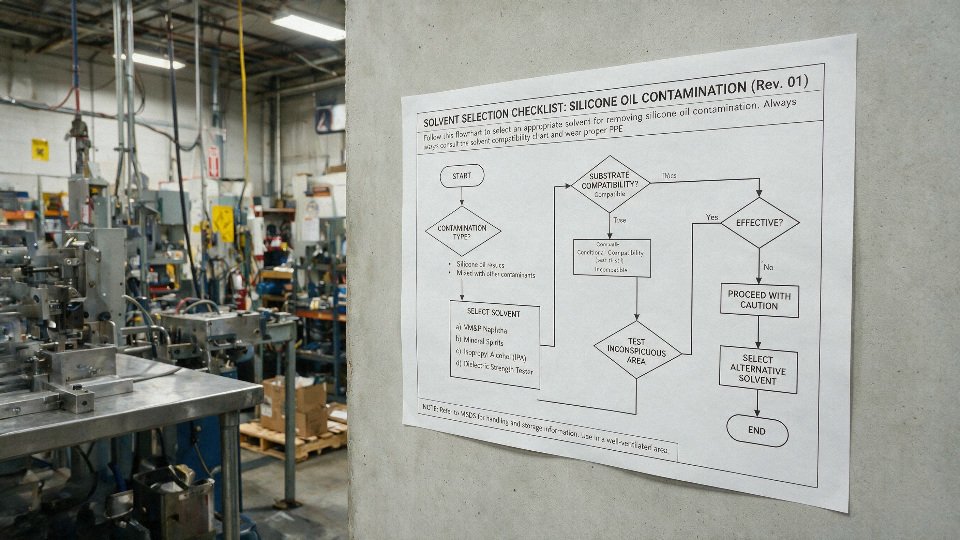
If you are screening options with a supplier, send the substrate material, contaminant type, approximate layer thickness, working area, required finish, target cleaning rate, and clear part photos or representative samples. SiliconChemicals can review the application, discuss suitable organosilicon-related material options, and arrange sample evaluation based on your process conditions.