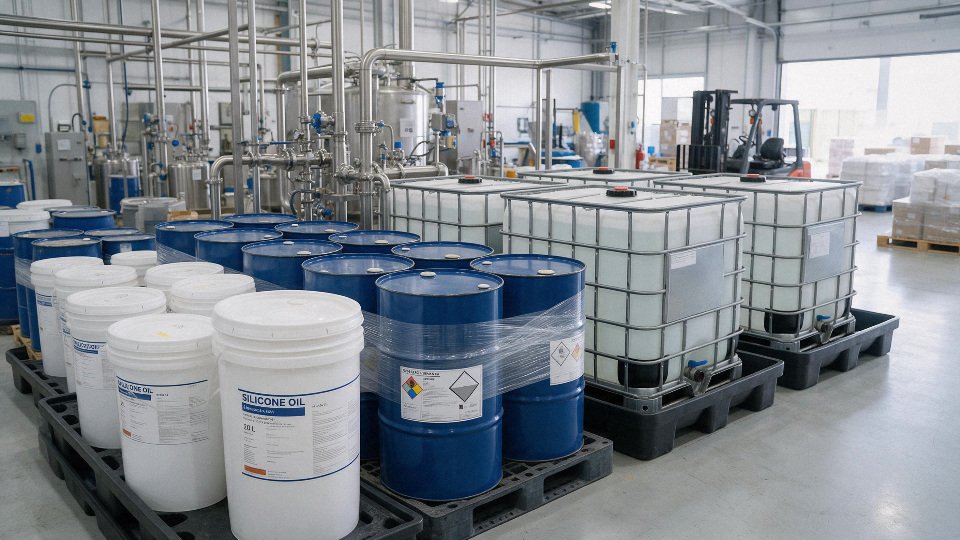
Specify “silicone lubricant” on a purchase order without distinguishing oil from grease and you will eventually find out the hard way — seized actuator rods on a packaging line at 2 a.m., or a $40,000 transformer bushing that cracked because someone packed it with a thickener-based grease when a thin fluid film was what the designer specified. The two products share a base chemistry but behave completely differently under load, in confined spaces, and across temperature cycles, and swapping one for the other is rarely a neutral decision.
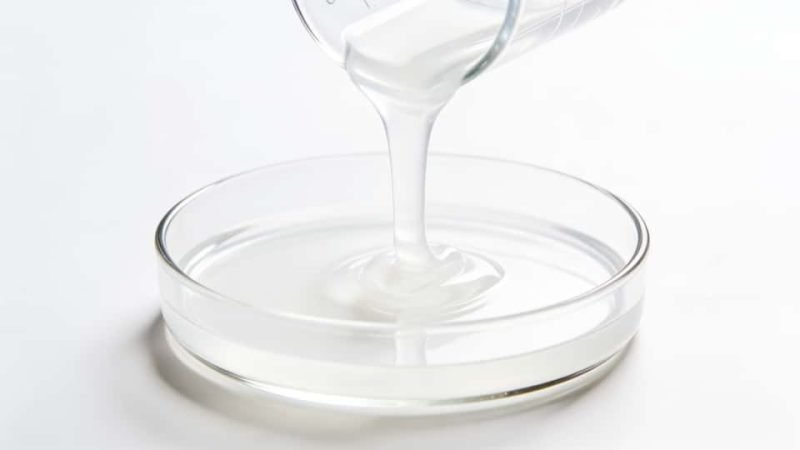
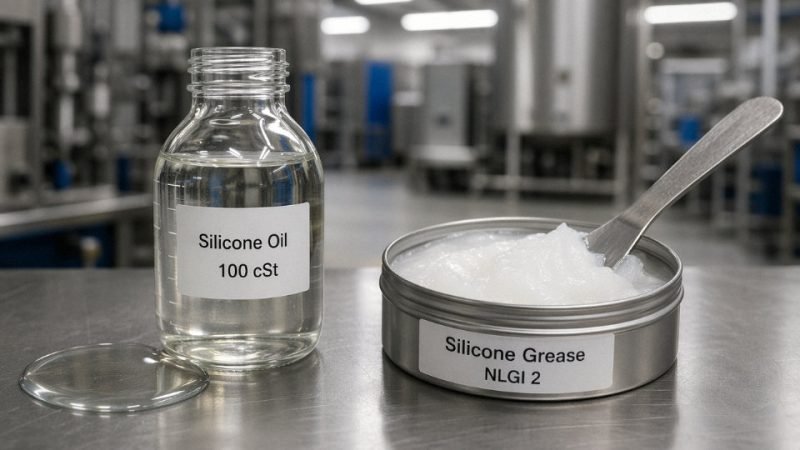
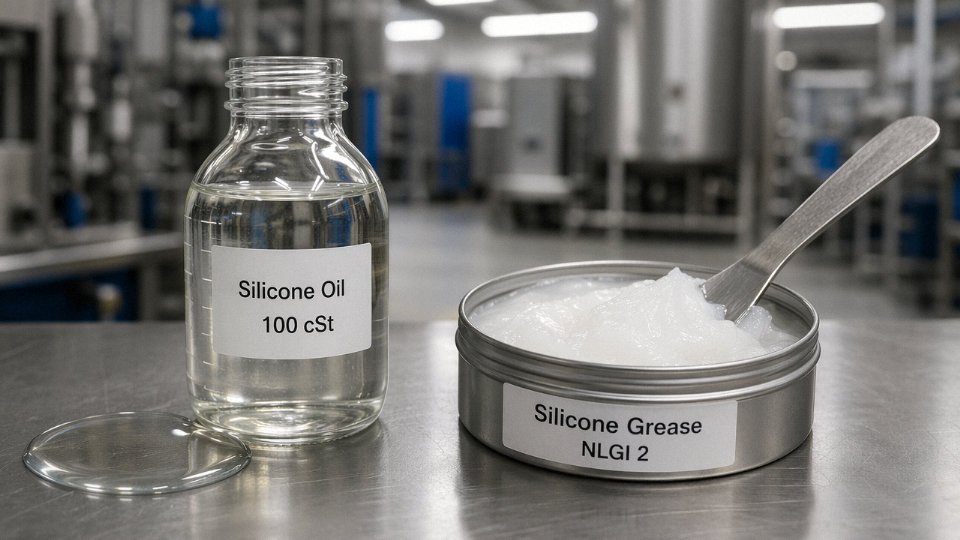
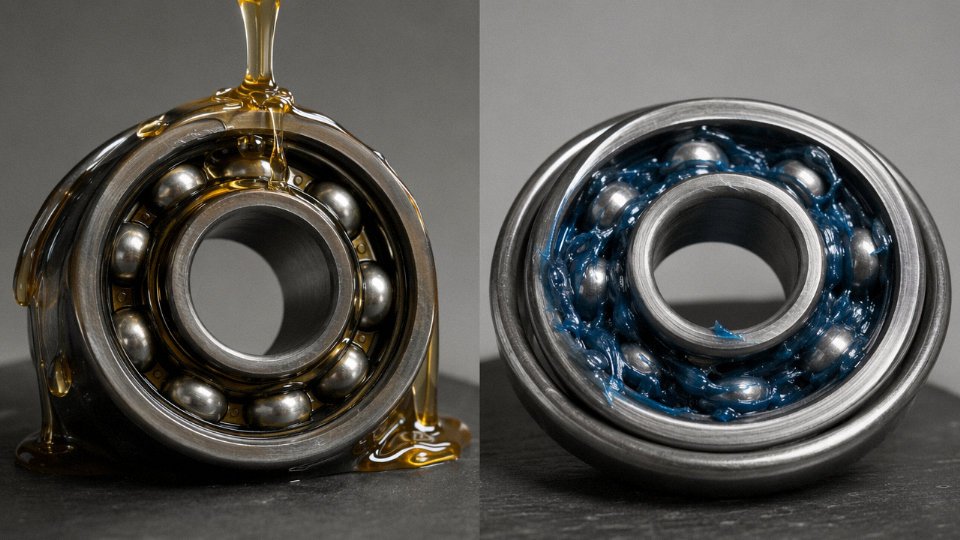
Silicone oil is a pourable, thickener-free polydimethylsiloxane (PDMS) fluid; silicone grease is that same base oil blended with a solid thickener — usually PTFE, fumed silica, or a metal soap — to create a semi-solid that stays where you put it. Silicone oil suits dynamic, circulating, or high-speed applications; silicone grease suits static seals, slow-moving joints, and anywhere a fluid would migrate away. They are not interchangeable.
What makes the choice genuinely tricky is that viscosity range alone spans roughly 0.65 cSt to something approaching 2,500,000 cSt at 25°C for the oil side, while the grease side introduces an entirely separate variable — thickener chemistry — that governs everything from dropping point to chemical compatibility with plastics. Get comfortable with both axes and the decision gets a lot cleaner.
Chemical Composition and Physical State: What Each Product Actually Contains
At the molecular level, both silicone oil and silicone grease start from the same backbone: polydimethylsiloxane, usually abbreviated PDMS. The repeating unit is a silicon-oxygen (Si-O) chain — siloxane linkages — with two methyl groups hanging off each silicon atom. That structure is why silicones behave so differently from hydrocarbon lubricants. The Si-O bond energy is higher than C-C, the methyl groups rotate freely, and the backbone itself is unusually flexible at low temperatures. The practical result: a fluid that stays pourable at -55°C and doesn’t flash or decompose until well above 200°C continuous service.
What determines viscosity is simply chain length — molecular weight. Short chains (low degree of polymerization) give you the thin, water-like 0.65 cSt grades used in diffusion pump fluids and release agents. Push the polymerization further and you get into the 1,000–60,000 cSt range that covers most industrial lubrication and damping applications. Keep going and you reach the gum-like 500,000–2,500,000 cSt grades, which are barely pourable at room temperature and serve as the base stock for many silicone greases. The viscosity index on PDMS typically runs 250–400, compared with 90–110 for a conventional mineral oil — which means temperature swings that would turn a mineral-oil lubricant into water or tar barely affect a silicone’s viscosity. That matters enormously in applications cycling from ambient to process heat.
How Thickener Choice Defines the Grease
Silicone grease is not a chemically distinct material — it is a high-viscosity PDMS base stock gelled by a solid thickener. The thickener choice drives almost everything: service temperature ceiling, load capacity, consistency grade, and whether the product qualifies for food contact. The four systems you’ll encounter in industrial catalogs are worth understanding individually.
PTFE micro-powder thickeners dominate the market for good reason. PTFE is chemically inert to almost everything, contributes dry-film lubricity, and doesn’t react with the PDMS base. Most PTFE-thickened silicone greases carry a dropping point above 250°C — in practice, the grease doesn’t really “drop” in the conventional sense so much as bleed oil at sustained high temperatures. They’re the default choice for O-ring assembly, valve stems, and any food-equipment application where NSF H1 registration matters.
Fumed silica thickeners give a thixotropic structure that recovers viscosity after shear — useful in vertical applications where you don’t want the grease to migrate. Thermal stability is excellent, though fumed silica greases can feel “grabby” and are harder to apply with automated dispensing equipment. In my experience, maintenance crews underestimate how much torque a fumed-silica grease adds to small mechanism pivots if over-packed.
Lithium soap keeps costs down and is familiar to anyone who’s worked with conventional greases. The catch: thermal limit around 150°C, which undercuts one of the main reasons you’d choose a silicone base in the first place. Reasonable for ambient-temperature electrical connectors; wrong choice for anything near a heat source.
Organoclay (hectorite or bentonite derivatives) shows up in specialty high-load and wide-temperature greases. Less common, but you’ll find it in aerospace and military specifications.
| Thickener | Max Service Temp | Typical NLGI Grade | Common Application |
|---|---|---|---|
| PTFE micro-powder | ~230°C | 1–2 | O-rings, food equipment, valves |
| Fumed silica | ~220°C | 1–3 | High-temp bearings, vertical surfaces |
| Lithium soap | ~150°C | 2–3 | Electrical connectors, low-cost general use |
| Organoclay | ~200°C | 0–2 | Aerospace, wide-temp specialty joints |
Beyond Dimethyl: The Broader Fluid Family
Standard PDMS covers most applications, but engineers specifying for edge conditions need to know the variants. Methylphenyl silicone oil substitutes some methyl groups with phenyl groups — bulkier, higher-MW side chains that improve oxidation resistance and, critically, radiation resistance. You’ll see methylphenyl grades in nuclear facility components and aerospace actuators where gamma exposure degrades standard PDMS over time.
Fluorosilicone (PVMQ) replaces methyl groups with trifluoropropyl groups. The result is a fluid with genuine resistance to fuels, hydraulic fluids, and aggressive solvents — the standard PDMS would swell elastomers and absorb hydrocarbons in those environments. Fluorosilicone is expensive, roughly 4–8× a comparable PDMS grade depending on viscosity and supplier, and it’s poor at low temperatures compared with standard silicone, so it’s not a casual upgrade.
Silicone oil inherently provides extreme-pressure (EP) protection equivalent to EP-additive mineral greasesFalse
Neat PDMS has low film strength under high contact stress. Standard silicone oils and most silicone greases carry no EP additives; MoS2 or zinc-compound EP packages are occasionally blended into heavy-duty silicone greases but are not standard, and even those formulations underperform dedicated EP gear oils under boundary lubrication conditions.
Additive packages in both forms are minimal compared with mineral-oil lubricants — one of silicone’s genuine disadvantages in high-load sliding contact. Phenolic or amine antioxidants appear in some formulations, particularly those intended for oxygen-rich or elevated-temperature environments. Corrosion inhibitors are common in greases used on metal hardware. What you almost never see in a catalog silicone oil is an EP additive, because PDMS forms a poor adsorption film on metal surfaces under pressure. If a vendor is claiming boundary-lubrication protection from a plain silicone oil with no listed EP package, that’s worth scrutinizing closely.
Rheology and Flow Behavior: How Viscosity and Consistency Govern Lubrication Mechanisms
The single biggest source of misapplication between silicone oil and silicone grease isn’t chemistry — it’s flow behavior. Engineers who treat them as interchangeable forms of the same product tend to find out the hard way, usually when a bearing runs dry or a housing floods with low-viscosity fluid after the first heat cycle.
Newtonian vs. Non-Newtonian: What the Difference Costs You in Practice
Silicone oil — PDMS in any viscosity grade — behaves as a Newtonian fluid. Viscosity is a clean function of temperature and shear rate doesn’t change it. That predictability is genuinely useful: you can calculate film thickness, flow rate through a clearance, or pump delivery with reasonable confidence. The PDMS viscosity-temperature relationship is flatter than mineral oil (higher viscosity index, typically 150–200+ depending on grade), so a 100 cSt oil at 25°C might drop to roughly 20–35 cSt at 100°C — still workable, and calculable.
Silicone grease is a different animal. It’s a thixotropic or Bingham plastic system depending on the thickener, which means it resists flow until a yield stress is exceeded, then shears thin. During bearing startup — especially cold startup — a grease-filled cavity churns. The grease is mechanically worked, releases base oil into the contact zone, and the unworked portions temporarily resist the rolling elements. This churning generates heat and elevated torque for anywhere from a few seconds to several minutes depending on bearing size, speed, and ambient temperature. In a 6205-size bearing running at 3,000 rpm, churning losses during the first 60–90 seconds can raise power consumption by 15–40% transiently before the grease redistributes. That’s usually harmless in continuous-duty motors but matters in precision positioning drives or battery-powered systems where startup efficiency is constrained.
NLGI Consistency and Matching Grade to Geometry
The NLGI system gives you a standardized language for grease stiffness, and it’s worth knowing where silicone greases actually sit within it.
| NLGI Grade | ASTM D217 Worked Penetration (0.1 mm) | Consistency Description | Representative Silicone Grease Use Cases |
|---|---|---|---|
| 000 | 445–475 | Semi-fluid | Enclosed gear housings, worm drives |
| 00 | 400–430 | Very soft | Centralized lubrication systems |
| 1 | 340–370 | Soft | Light-duty bearings, food-contact applications |
| 2 | 265–295 | Medium paste | General-purpose bearings, electrical connectors |
| 3 | 220–250 | Firm paste | Sealing applications, valve stems |
| 4 | 175–205 | Very firm | O-ring assembly, static seals |
Most commercial silicone greases land in NLGI 1–2. Specialty dielectric or sealing compounds — the kind you’d use on rubber O-rings in hydraulic fittings or high-voltage connector interfaces — typically run NLGI 3–4. Grades above 4 exist but are uncommon in silicone formulations; PTFE-thickened silicone greases in the NLGI 3–4 range generally show dropping points above 250°C, which is part of why they’re specified for elevated-temperature static seals rather than dynamic bearings.
EHD Film Formation and the Speed Threshold That Changes Everything
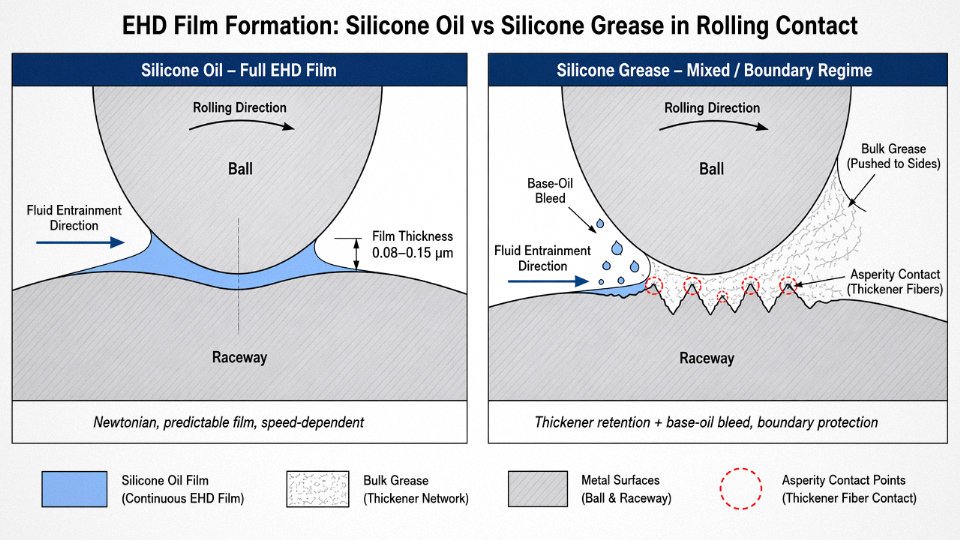
Elastohydrodynamic lubrication theory predicts film thickness from viscosity, speed, and contact geometry. For a 6205 deep-groove ball bearing running at 1,000 rpm with ISO VG 100 silicone oil (roughly 100 cSt at 40°C), calculated EHD film thickness at the inner-race contact is in the range of 0.08–0.15 µm under moderate load — thin, but typically sufficient to separate surfaces if the bearing is well-aligned and surfaces are ground to Ra 300,000) | High | 5 | 2 | Oil-mist or recirculating oil strongly preferred at high DN |
| Food safety / NSF H1 compliance | Medium | 4 | 5 | Both available; grease documentation often cleaner |
| Substrate sensitivity (plastics, elastomers) | Medium | 3 | 4 | Grease stays put; oil migration onto incompatible polymers is a real risk |
| Relubrication access difficulty | Medium | 3 | 4 | Hard-to-reach points favor longer-interval grease |
| Capital budget for dispensing hardware | Medium | 2 | 4 | Oil systems require more upfront infrastructure |
| Total procurement simplicity | Low | 3 | 4 | Grease wins on SKU count and storage |
Multiply each score by its weight (High = 3, Medium = 2, Low = 1) and sum. In practice, a 100-bearing food-processing line with moderate speeds and regular washdown access will almost always score grease higher over a five-year horizon — lower capital, simpler compliance, and tolerant of the occasional missed relubrication interval. Shift the same calculation to a high-speed spindle application above DN 500,000, and the oil system wins decisively despite its upfront cost, because bearing life extension alone pays back the hardware investment within 18–30 months at typical replacement and downtime rates.
The real procurement mistake is treating this as a materials cost decision. It isn’t. It’s a maintenance system decision that happens to involve buying a lubricant.
Frequently Asked Questions About Silicone Oil vs Grease
Can you mix silicone oil and silicone grease?
Technically the base fluids are compatible — both are PDMS, so you won’t get an immediate violent reaction. The problem is structural. Silicone grease is a grease because a thickener (usually PTFE, fumed silica, or a soap) has been worked into the oil to create a semi-solid matrix. Adding free oil dilutes that matrix. The NLGI consistency drops unpredictably — you might start at NLGI 2 and end up somewhere between 0 and 1, or worse, with an inconsistent product that behaves differently from one end of the bearing to the other.
Under thermal cycling, the thickener can phase-separate, leaving pools of free oil and dry clumps of thickener in the same cavity. In a precision ball screw or a medical valve, that’s a real problem. In a low-stakes application like a rubber grommet, it probably doesn’t matter much. The rule in practice: never intentionally mix them, and if cross-contamination happens in a precision mechanism, clean out and recharge.
Is silicone grease electrically conductive?
Standard PDMS silicone grease is an excellent insulator. Volume resistivity typically runs 10¹⁴–10¹⁵ Ω·cm, which is why it’s used specifically to seal and insulate spark plug boots, high-voltage cable terminations, and switchgear contacts against moisture ingress. You’re applying it to prevent electrical problems, not cause them.
Standard silicone grease is electrically conductiveFalse
Unfilled PDMS silicone grease has volume resistivity of 10¹⁴–10¹⁵ Ω·cm and is a strong electrical insulator. Conductive silicone greases exist but contain metal or carbon particle fillers and are sold as separate, clearly labeled products.
Conductive silicone greases do exist — they contain silver flake, nickel particles, or carbon black and are used for EMI gasket interfaces and ground plane connections. These are distinct, clearly labeled products. If someone on the shop floor grabs the wrong jar, the consequences range from a failed EMI shield to a short circuit. Keep them in separate storage with different color labels.
Why does silicone oil damage some rubber seals?
Low-viscosity PDMS chains are small enough to diffuse into elastomer networks, causing swelling. The worst case is silicone rubber (VMQ) in contact with silicone oil — same Si-O backbone chemistry creates high chemical affinity, and the seal absorbs oil aggressively. I’ve seen VMQ O-rings swell 20–30% in volume after prolonged silicone oil exposure, losing all sealing force.
FKM (Viton), EPDM, and PTFE are the practical choices for silicone oil service. EPDM swells slightly with some oils depending on viscosity grade, so test before committing to a design. Higher viscosity grades (above roughly 1,000 cSt) cause less swelling simply because the larger polymer chains can’t penetrate the elastomer network as easily.
Can silicone grease work as a thermal interface material for electronics cooling?
Yes — and it was the original TIM before the market fragmented into dozens of specialty products. Standard unfilled PDMS silicone grease sits around 0.7–1.0 W/m·K thermal conductivity, which is adequate for low-to-moderate heat loads. Metal-particle and ceramic-filled formulations reach 3–12 W/m·K depending on filler loading and particle type.
Pure silicone oil is not suitable for this. Under clamping pressure and repeated heat cycles, it migrates out of the interface gap and the thermal resistance climbs back toward an air gap. Grease stays put because the thickener resists pump-out.
What is the shelf life of each product?
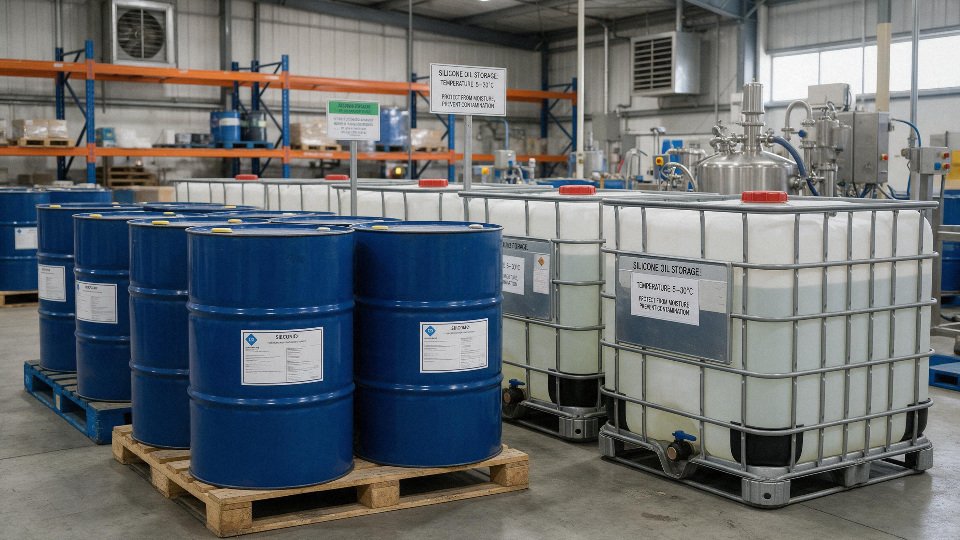
Sealed silicone oil stored cool and dark is, for practical purposes, indefinitely stable. PDMS doesn’t oxidize readily and doesn’t polymerize further in storage. Major suppliers often state 5–10 years, but that’s a conservative commercial number rather than a chemical limit.
Silicone grease is a different story — shelf life is typically 3–5 years unopened. The base oil is still fine, but the thickener structure can slowly degrade, and any additive package (antioxidants, corrosion inhibitors) has a finite service life. A grease that’s been stored for seven years in a warm warehouse may still look acceptable but perform differently on a worked-penetration test.
Are silicone lubricants safe for oxygen service?
No. This misconception causes real accidents. PDMS silicone oil and grease are not approved for high-pressure oxygen service despite their general chemical inertness. Silicone oils can ignite in oxygen-enriched atmospheres above certain pressure and contamination thresholds. For any oxygen service application — medical gas valves, cylinder regulators, aerospace O₂ lines — use only PFPE-based products (Krytox, Fomblin, or equivalent) that have been tested and certified per ASTM G86 and CGA G-4.1. This is not a “check with your supplier” situation; it’s a hard no until you have formal certification in hand.
How do I remove silicone grease before bonding or painting?
Two stages, in order. First, wipe with a hydrocarbon solvent — heptane, hexane, or mineral spirits — to dissolve and remove the bulk of the grease. Second, follow immediately with isopropanol (IPA) to pick up residual PDMS traces. Finish with a clean dry IPA wipe and run a water-break test: water should sheet uniformly across the surface with no beading. Any bead means silicone is still there.
The hard reality is that once silicone oil has absorbed into a porous substrate — cast aluminum, unsealed composite, open-grained wood — complete removal is nearly impossible without abrasive surface preparation. Adhesive bonds made over silicone-contaminated surfaces fail cohesively in the adhesive or at the interface, sometimes weeks after assembly when the part is already in the field. Prevention — keeping silicone lubricants away from bonding areas entirely — is far easier than remediation.