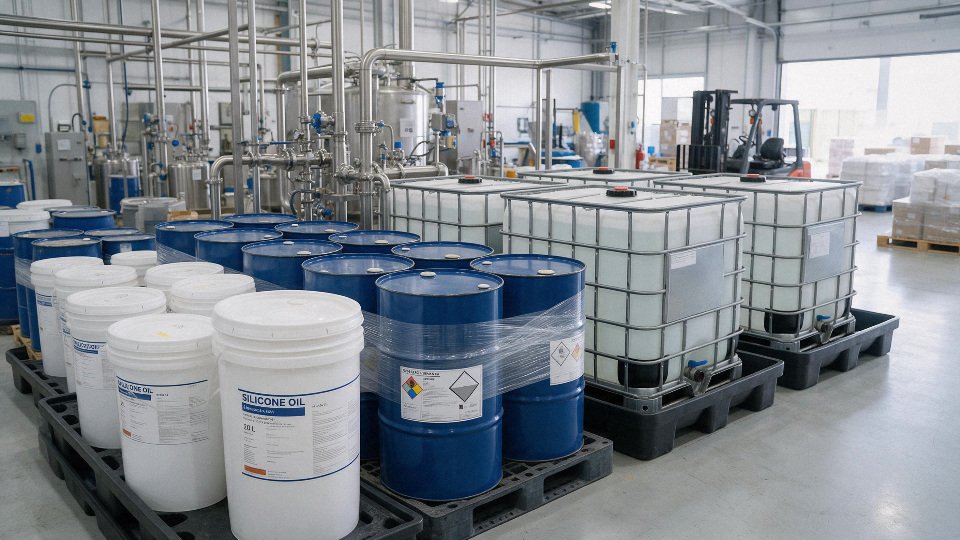
Plants get into trouble with silicone oil when it is treated like just another “lubricant” and bought on viscosity alone. That shortcut leads to seal swell assumptions that do not hold, heat-transfer expectations that are too optimistic, or release and wetting behavior that contaminates downstream coating, printing, or bonding. The cost shows up fast: scrap from surface defects, line stoppages to flush tanks and hoses, and procurement churn because the material name sounded interchangeable when the chemistry was not.
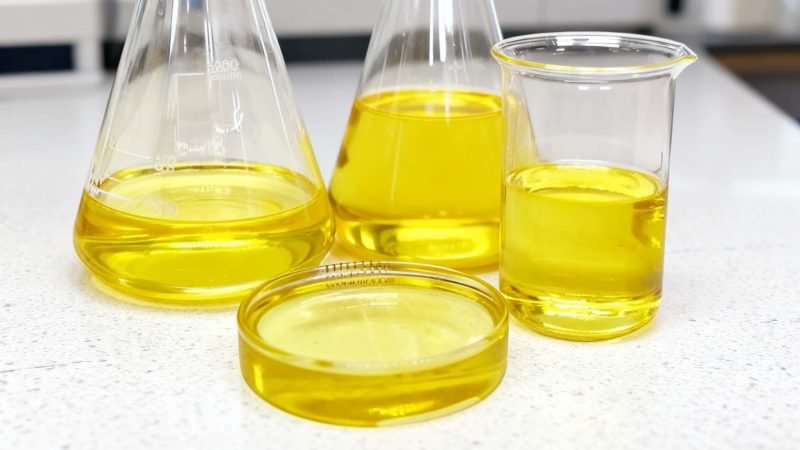
Silicone oil is usually a silicone fluid based on siloxane chemistry, most commonly polydimethylsiloxane (PDMS), not a mineral or vegetable oil. It is selected for properties such as broad viscosity range, low surface tension, and useful thermal stability, with many dimethyl grades used roughly from -50 C to 200 C depending on the formulation, equipment, and service conditions.
That simple definition is where most purchasing mistakes start, not where they end. “Silicone oil” covers a wide spread of chemistries, viscosities from roughly 0.65 cSt to well above 1,000,000 cSt at 25 C, and application behaviors that can be helpful in one process and a complete nuisance in the next. The useful question is not just what type of oil it is, but what kind of silicone fluid you are actually buying, and what that choice does to your process window.
Chemical identity
Silicone oil is a synthetic organosilicon polymer fluid built on a siloxane chain, not a mineral oil and not a natural fatty oil. In industrial buying, the default meaning is usually a linear, end-blocked polydimethylsiloxane fluid, but that shorthand breaks down fast once phenyl, amino, polyether, fluorinated, or other functional groups are introduced.
At the molecular level, the backbone is the key distinction: alternating silicon and oxygen atoms form a repeating Si–O–Si–O chain. Attached to the silicon are organic side groups, most often methyl groups, and those side groups are what make the fluid act like a usable liquid instead of a brittle inorganic material. The Si–O bond geometry is relatively flexible, so the chains move easily against each other. That is one reason many silicone fluids keep workable flow over a wide temperature window compared with many hydrocarbon oils.
What the siloxane backbone actually means in practice
If you strip away the trade names and grade labels, silicone oil performance starts with three molecular features:
- Backbone composition
- Siloxane backbone: alternating silicon and oxygen atoms
- Different from carbon-carbon hydrocarbon chains in mineral oils and PAOs
- Different again from ester structures in vegetable oils and many synthetic esters
- Side-group chemistry
- Methyl groups give the classic dimethyl silicone fluid behavior
- Phenyl groups shift low-temperature and thermal/radiation behavior
- Functional groups such as amino, hydroxy, vinyl, or polyether add reactivity or change wetting, compatibility, or emulsification behavior
- Chain length and end groups
- Shorter chains behave more like volatile fluids
- Longer chains raise viscosity and film persistence
- End-blocking controls stability and reactivity in storage and use
That chemistry shows up on the plant floor in ways buyers care about. A low-surface-tension fluid, often around 20 to 21 mN/m for many PDMS fluids at room temperature, will creep, spread, and contaminate adjacent surfaces far more easily than a conventional lube oil. Good if you want release or defoaming. Bad if you are trying to paint, bond, or print downstream. I have seen one “harmless” silicone carryover cause a week of coating adhesion complaints because nobody recognized that the fluid was not just “another clear oil.”
The main commercial families of silicone fluids
The most common industrial grade by a wide margin is linear polydimethylsiloxane, often abbreviated PDMS fluid or dimethyl silicone oil. This is the standard material used in many heat transfer, lubrication, damping, release, personal care, dielectric, and process-aid applications, provided the rest of the formulation and operating conditions fit.
Beyond that base family, the market includes several materially different silicone fluids:
| Family | Typical structural feature | Why it is used | What changes operationally |
|---|---|---|---|
| Dimethyl silicone fluid | Mostly methyl side groups | General-purpose fluid behavior | Broad viscosity range, good temperature stability, low surface tension |
| Methyl phenyl silicone fluid | Some phenyl substitution | Better low-temperature flexibility or improved thermal/light behavior in some systems | Different solvency, density, cost, and compatibility |
| Amino-modified silicone | Amino functional groups | Softening, surface treatment, textile and coating effects | More reactive surface behavior; can interact strongly with substrates |
| Hydroxy-terminated silicone | Silanol end groups | Intermediate for further reaction or formulation | Higher reactivity; storage/moisture sensitivity can matter |
| Vinyl-functional silicone | Vinyl groups on chain or ends | Crosslinking systems, reactive formulations | Not just a fluid property issue; now cure chemistry matters |
| Fluorinated silicone fluid | Fluoro-containing groups | Specialized chemical resistance or extreme-environment performance | Higher cost, different compatibility profile |
| Polyether-modified silicone | Polyether segments grafted or linked | Wetting, leveling, emulsification, defoaming control | Water affinity and foam behavior can change dramatically |
The trade-off is straightforward: unmodified dimethyl fluids are usually the cleanest place to start if you need predictable baseline silicone-fluid behavior. As soon as you move into functional or modified silicones, you gain a specific performance lever, but you also give up the simplicity of treating the material as a generic “silicone oil.” Compatibility, regulatory status, storage stability, and downstream surface effects often change with it.
Cyclic, linear, and end-blocked: terms buyers should not mix up
In industrial trade, “silicone oil” usually means a linear silicone fluid, not a cyclic siloxane. That distinction matters in specifications, customs descriptions, formulation work, and EHS review.
Cyclic siloxanes
These are ring-shaped molecules rather than long chains. They are lower in molecular weight, typically more volatile than high-viscosity linear fluids, and are often used as intermediates, processing materials, or in applications where temporary spreadability and evaporation are part of the design. They are not usually what a maintenance team means when ordering bulk silicone oil for damping, lubrication, or heat-transfer-related service.
Linear silicone fluids
These are chain molecules. As the chain length increases, viscosity rises and volatility usually drops. This is the core category behind the very wide commercial viscosity span, from very low-viscosity fluids around 0.65 cSt up to materials above 1,000,000 cSt at 25 C, depending on molecular weight distribution and product design.
End-blocked polymers
Most commercial linear silicone oils are end-blocked, commonly with non-reactive groups that stabilize the chain ends. End-blocking reduces unwanted condensation or further reaction during storage and normal service. In procurement terms, this is why a standard dimethyl silicone oil drum can behave like a relatively stable fluid product, while a hydroxy-terminated silicone of similar apparent viscosity may behave more like a reactive intermediate.
All silicone oils are chemically interchangeable if the viscosity is the same.False
Viscosity alone does not define silicone fluid behavior. Backbone type, side-group chemistry, end groups, volatility profile, and formulation additives can change wetting, compatibility, oxidation resistance, reactivity, and process performance even when two products have similar cSt values.
Why silicone oil is not “just another oil”
Chemically, silicone oil is not a triglyceride oil like vegetable oil and not a refined hydrocarbon fraction like mineral oil. It is a polymeric synthetic fluid. That single classification difference affects several practical behaviors:
- Oxidation behavior
- Silicone fluids generally do not oxidize the same way hydrocarbons do
- They can still degrade, especially with heat, catalysts, air exposure, contamination, or confinement effects
- The failure mode may be viscosity shift, volatile loss, gel formation, deposits, or surface residues rather than the exact sludge pattern buyers expect from mineral oils
- Volatility profile
- Low-viscosity grades can show meaningful evaporative loss
- High-viscosity grades are much more persistent on surfaces
- You cannot generalize evaporation rate from the term “silicone oil”; you need viscosity grade, molecular distribution, and operating temperature
- Material compatibility
- Silicone fluids are often compatible with many materials, but not universally
- Swelling, extraction, or seal issues can show up with certain elastomers, plastics, coatings, and adhesives
- Contamination sensitivity in painting, printing, and bonding environments is a frequent operational issue
That last point is where mistakes get expensive. A buyer may specify “100 cSt silicone oil” assuming any supplier’s product will be equivalent. If one product is a straight dimethyl fluid and the other is polyether-modified or amino-functional, they may have similar nominal viscosity and completely different plant behavior: one may separate cleanly, the other may emulsify; one may be benign on a metal surface, the other may alter adhesion or cure in a downstream coating line.
How molecular weight drives the way the fluid behaves
Longer siloxane chains generally raise viscosity because the chains entangle and resist flow. That same increase in molecular weight usually lowers volatility and improves film persistence, so the fluid stays on the part longer and is less likely to flash off in warm service. The trade-off is that very high-viscosity grades are harder to pump, meter, degas, and clean out of lines, especially in winter or in plants using long small-bore transfer hoses.
Shorter-chain fluids go the other way:
- Lower viscosity
- Easier dosing and spreading
- Higher mobility into small gaps
- Usually higher evaporative loss and lower lasting film thickness
This is also the boundary on the broad statement that silicone oil has a wide service-temperature capability. Many dimethyl silicone oils are used continuously somewhere around -50 C to 200 C, depending on grade and system design, but that does not mean every silicone fluid will run anywhere in that band without issue. Volatility, oxidation environment, residence time, contamination, and the hardware itself all matter. A lightly loaded, open-surface application behaves differently from a sealed damping unit or a heat-transfer loop with hotspots.
If you are comparing products across suppliers, ask for the chemical family, whether the fluid is linear or cyclic, whether it is end-blocked or reactive, and whether it is modified with functional groups. Without that, “silicone oil” is too broad to be a specification.
Property profile
Silicone oil’s value in equipment service comes from a specific combination of traits: it stays usable over a wide temperature window, wets surfaces very easily, resists oxidation better than many mineral oils in moderate heat, and remains electrically insulating. That mix is why it shows up in heat-transfer loops, damping devices, textile finishing, release systems, electrical components, and defoamers. It also explains why people sometimes buy it for the wrong job: good specialty-fluid behavior does not automatically mean best general-purpose lubricant behavior.
The practical distinction from conventional oils is not one headline property but how several properties stack together. A petroleum oil may give better boundary lubrication in a loaded gearbox. A silicone oil may stay fluid at low temperature, spread faster on a substrate, and survive heat exposure with less sludge formation. The right choice depends on which failure mode hurts you first: startup drag, varnish, wetting defects, electrical leakage, evaporation loss, seal compatibility, or wear under load.
Viscosity behavior across temperature
One reason engineers reach for silicone oil is its relatively high viscosity index. In plain plant terms, it does not thin out as aggressively when hot or thicken as badly when cold as many hydrocarbon oils of similar nominal viscosity. That matters in systems that see winter startup, cyclic heating, or poor ambient control.
Typical kinematic viscosity grades can run from about 0.65 cSt to well above 1,000,000 cSt at 25 C, but that room-temperature number alone is not enough for selection. What matters is the viscosity at your actual operating and startup temperatures. A fluid that feels “heavy” in the drum can still remain pumpable in a cold dosing skid, while a light grade that handles beautifully at room temperature may evaporate too fast on a heated web line.
Mechanistically, the benefit comes from how the siloxane backbone responds to temperature. The viscosity change with temperature is comparatively moderate, so these fluids often retain:
– Better low-temperature flow
– Lower startup torque in dampers, small pumps, and instrument mechanisms
– More consistent film behavior across temperature swings
– Less dramatic timing drift in dashpots or controlled-motion devices
That does not mean all silicone oils behave the same. Viscosity grade still dominates:
– Low-viscosity grades flow very easily and are useful where penetration, spreading, or low drag matter, but they are usually more prone to evaporation and migration.
– Mid-range grades often suit damping, release, textile finishing, and general process use.
– High-viscosity grades give better residence, cling, and damping force, but dispensing, deaeration, and cleanup become harder.
The main trade-off is straightforward: easier flow and faster wetting usually come with higher volatility and lower staying power. If you are trying to hold a stable film on a hot mold surface or inside a vented assembly, the grade choice can flip from “as thin as possible” to “thick enough to remain in place.”
Thermal stability and oxidation resistance
For many dimethyl silicone oils, continuous service is often roughly in the range of -50 C to 200 C, depending on grade, exposure conditions, and system design. That makes them attractive anywhere mineral oils struggle with cold flow or where moderate-to-high heat exposure causes oxidation, gum, or varnish.
The useful point for buyers is this: silicone oil is usually more heat-tolerant than common hydrocarbon oils in open or mildly oxidative service, but it is not immune to thermal breakdown. Long exposure to heat, catalytic metal surfaces, contamination, air entrainment, or hot spots can still drive viscosity change, volatile loss, deposits, or decomposition products.
In practice, service life depends heavily on:
– Bulk temperature versus local film temperature
– Residence time at peak temperature
– Air exposure in open baths versus sealed systems
– Presence of contaminants such as acids, alkalis, metal fines, salts, or process carryover
– System design details like dead legs, poor circulation, and overheated heater surfaces
The mechanism is worth stating because it affects procurement decisions. A clean, closed, well-controlled thermal system can keep a silicone fluid stable for a long period because oxidation pathways are limited and the fluid sees relatively uniform temperature. The same fluid in an open, dirty process tank with intermittent overheating may lose volatiles, change viscosity, or foul surfaces much sooner. I have seen buyers blame the fluid when the real issue was a heater sheath running too hot under low flow.
Silicone oil can handle any high-temperature application without degradation.False
Silicone oils often outperform many hydrocarbon oils in moderate-to-high temperature service, but stability still depends on grade, oxygen exposure, contamination, hot spots, and equipment design. Actual upper limits must be verified against supplier data and the operating system.
The boundary on the usual “high-temperature advantage” is severe heat, catalytic contamination, and poorly controlled local temperatures. Once those dominate, the fluid’s reputation stops helping and the hardware starts deciding fluid life.
Low surface tension: wetting, spreading, release, and foam behavior
Many polydimethylsiloxane fluids have surface tension around 20 to 21 mN/m at room temperature, which is low compared with many conventional oils. That low surface tension is one of the most commercially important differences because it changes how the fluid behaves on real surfaces, not just in a datasheet.
You see the effect in four common ways:
1. Spreading and wetting
Silicone oil will often spread rapidly over substrates, helping create a thin, uniform layer. That is useful in textile finishing, fiber treatment, thread lubrication, and some coating aids.
- Release behavior
On molds, dies, rubber-contact surfaces, or process tooling, the low-energy film can reduce sticking and help part release. The gain is lower scrap and less mechanical force needed at demold. - Foam control
Because of its interfacial behavior, silicone oil is widely used in defoamer systems. A small amount can destabilize foam films and help bubbles break, especially in aqueous systems. The exact performance depends on formulation, dispersion, and process chemistry; defoaming is not just “add silicone and walk away.” Surface defects if misapplied
The same spreading power can become a contamination problem. A trace amount carried into a paint line, adhesive operation, or print surface can cause craters, fisheyes, poor adhesion, or rework headaches that maintenance never enjoys tracing.
So the trade-off here is sharp. You gain release, wetting, slip, and foam knockdown; you may sacrifice downstream coatability or bonding if the process is not isolated. In mixed plants, this is one of those housekeeping issues that matters more than the purchasing team expects.

Electrical behavior: insulation and damping
Silicone oil is also valued as an electrical insulating and damping fluid because it typically combines low electrical conductivity with good dielectric behavior and stable viscosity over temperature. In electrical assemblies, that means it can help insulate live components while also dissipating heat or controlling motion.
Common uses include:
– Electrical insulation media in selected components
– Damping fluids in instruments, gauges, switches, and dashpots
– Potting-related or cushioning roles where both dielectric and flow behavior matter
The practical benefit is consistency. If the fluid’s viscosity stays reasonably controlled over temperature, a switch or damper tends to feel more predictable from cold startup to warm running. If the fluid also remains electrically non-conductive, leakage risk stays low, assuming contamination is controlled.
That last clause matters. Moisture, ionic contamination, wear debris, and process ingress can degrade effective electrical performance. For critical insulation duty, buyers should verify current supplier dielectric data, component compatibility, and the actual service environment rather than assuming all silicone oils are interchangeable.
Compressibility, lubricity, shear stability, and volatility
Silicone oils are often described as compressible relative to many mineral oils. In damping and cushioning applications, that can be useful because it contributes to controlled response rather than rigid hydraulic behavior. In precision hydraulic power transmission, though, that same trait may be less desirable.
Their shear stability is generally good because the polymer structure does not rely on the same temporary viscosity improver package logic used in some formulated oils. Where a system repeatedly shears the fluid, that can help maintain more stable behavior over time. Still, contamination and thermal stress can change apparent performance long before pure mechanical shear becomes the limiting issue.
Lubricity is where many non-specialists get caught out. Silicone oil feels slick, and it does reduce friction in many light-duty contacts, plastics, elastomers, and release-style applications. But for loaded metal-on-metal boundary lubrication, silicone oil is not automatically superior and is often not the preferred choice. The reason is simple enough:
– Boundary films under high load behave differently than bulk fluid viscosity suggests
– Additive response is not the same as with fully formulated mineral or ester lubricants
– Extreme-pressure and anti-wear performance may be inadequate for gears, heavily loaded bearings, or sliding steel contacts unless a specific formulation is designed for that duty
In practice, silicone oil often excels in:
– Light mechanisms
– Plastic or rubber contact interfaces
– Release and anti-stick roles
– Damping and control motion
– Electrical insulation
– Specialty process aids
It is often a poor assumption for:
– Heavy gear service
– Loaded journal or rolling-element bearings without application-specific validation
– General replacement of formulated industrial lubricants in wear-critical metal contacts
Volatility follows viscosity grade more than many buyers expect. As a rough rule:
– Low-viscosity grades evaporate or migrate more readily, especially on heated surfaces or in open systems
– Mid-range grades are a balance between flow and retention
– High-viscosity grades usually stay put better but are harder to meter, mix, and remove
If your process runs hot and open to air, ask for volatility or mass-loss data under relevant conditions. A room-temperature viscosity spec will not tell you enough.
Hydrophobicity and chemical resistance boundaries
Silicone oil is strongly water-repellent and hydrophobic, which makes it useful for water-shedding surface treatments, moisture-resistant films, and applications where water pickup needs to stay low. That property helps in textiles, paper treatment, mold release, and some protective coatings.
But chemical resistance is not universal, and this is where overconfident substitution causes trouble. Silicone oils are not equally resistant to all:
– Organic solvents
– Strong acids
– Strong alkalis
– Oxidizing chemicals
– Process gases
– Fuel components
– Cleaning agents
– Contaminants carried in from the line
Some systems swell seals not because the silicone fluid is “aggressive” in a general sense, but because a specific elastomer, solvent blend, or contaminant package changes compatibility. Others fail because alkaline washdown residues or acidic byproducts attack the fluid or the interface around it. Compatibility needs to be checked against the actual fluid grade, concentration, temperature, and dwell time.
That is why silicone oil should be bought as an application-specific engineering fluid, not as a premium catch-all oil. If the job is stable viscosity, electrical insulation, wetting control, release, foam control, hydrophobicity, or temperature range, it can be an excellent fit. If the job is heavily loaded metal wear protection, aggressive chemical exposure, or a contamination-sensitive paint line, selection needs a tighter review.
Silicone oil versus other oils
Silicone oil is not a better version of every other oil class; it is a different fluid family with a very specific performance pattern. It usually wins where low surface tension, wide temperature stability, electrical behavior, damping consistency, or material release matter, and it often loses where boundary lubrication, additive response, solvency, or low purchase price drive the job.
That distinction sounds obvious on paper, but it gets blurred in buying conversations all the time. A maintenance team says “we need a high-temperature oil,” procurement hears “synthetic oil,” and the quote request goes out with no mention of whether the duty is lubrication, heat transfer, foam control, release, or cosmetic feel. That is how plants end up trialing the wrong fluid class and then blaming the chemistry for a specification problem.
Silicone oil vs mineral oil
Mineral oil and silicone oil overlap only at the broadest level: both are fluids called “oil.” Chemically, mineral oil is a petroleum-derived hydrocarbon mixture, while most industrial silicone oils are siloxane polymers, commonly dimethyl-based. That difference shows up immediately in temperature behavior, oxidation pattern, surface wetting, and compatibility with elastomers and additives.
A practical comparison is easier in table form first, then the exceptions.
| Parameter | Silicone oil | Mineral oil |
|---|---|---|
| Base chemistry | Organosilicon polymer | Petroleum hydrocarbon mixture |
| Typical continuous temperature behavior | Often roughly -50 C to 200 C for many dimethyl grades, depending on grade and system design | Strongly grade-dependent; commonly narrower practical range |
| Surface tension | Commonly around 20 to 21 mN/m at room temperature for many PDMS fluids | Usually higher than silicone oil |
| Oxidation tendency | Generally good oxidative stability in suitable service | More prone to oxidation and varnish/sludge formation at elevated temperature |
| Lubricity under boundary contact | Often weaker unless the application is designed around it | Usually better in many general machine lubrication duties |
| Additive response | Limited compared with hydrocarbon lubricant systems | Broad additive technology available |
| Cost structure | Higher fluid cost per kg or L | Usually lower purchase cost |
Temperature range is one of the usual reasons engineers move toward silicone oil. Many dimethyl silicone oils remain usable at temperatures where mineral oils are already getting thick, oxidizing hard, or volatilizing outside tolerance. The mechanism is molecular: the siloxane backbone stays mobile over a broad range, so viscosity shift with temperature can be favorable for some duties. That matters in instruments, dampers, release systems, and specialty thermal or dielectric applications.
But that same chemistry does not automatically make silicone oil the better machine lubricant. In rolling or sliding contacts where anti-wear additives, extreme-pressure chemistry, and oil-film behavior under mixed lubrication decide equipment life, mineral oils often outperform plain silicone fluids simply because the whole lubricant system is built around additive packages and metal-surface interaction. If the job is “lubricate gears, bearings, chains, or hydraulic components,” plain silicone oil is usually the wrong first choice unless the equipment designer explicitly calls for it.
Seal compatibility is another place where mistakes get expensive. Silicone oil can swell some elastomers differently from mineral oil, and the reverse is also true. NBR, FKM, EPDM, silicone rubber, and fluorosilicone can all behave differently depending on formulation, temperature, and dwell time. There is no responsible universal compatibility chart that replaces an actual seal-material check against the supplier’s current data and, for critical service, a soak test.
Cost structure needs a plant-floor view, not just a price-per-drum view:
- Mineral oil usually wins on upfront cost.
- Silicone oil can reduce replacement frequency in some thermal or specialty duties.
- Leakage can become more visible because low surface tension helps silicone fluids migrate through marginal seals and fittings.
- Cleanup cost may rise if the fluid spreads over a large area or contaminates paint, bonding, or coating processes downstream.
That last point gets overlooked. A tiny leak of silicone fluid near a paint line can become a much bigger problem than a similar leak of mineral oil.
Silicone oil vs PAO and other synthetic hydrocarbons
Against PAO and similar synthetic hydrocarbons, silicone oil loses more often in mainstream lubrication. PAO is usually the better choice for engineered lubricants that need good low-temperature flow, strong oxidative stability, and robust additive compatibility in bearings, gearboxes, compressors, and circulating systems.
The key mechanism is additive response. PAO behaves like a highly refined hydrocarbon base stock, so formulators can build anti-wear, antioxidant, corrosion-inhibiting, and detergency packages around it with a lot of established practice behind them. Silicone oil does not accept that same toolkit in the same way, and its intrinsic lubricity under boundary conditions is often weaker. So while silicone oil can look attractive on a data sheet because of thermal stability or dielectric properties, PAO often gives better wear control in actual machine elements.
Use cases where PAO may outperform silicone oil include:
- Rolling-element bearings
- Gear drives
- Air compressors
- Hydraulic systems
- Circulating oil systems with additive-dependent protection
- Applications where OEM lubricant approval is required
Where silicone oil pulls ahead is usually outside conventional machine lubrication:
- Damping and dashpot fluids
- Dielectric fluids
- Release and surface-treatment functions
- Certain heat-stable specialty process duties
- Applications needing very low surface tension or specific sensory feel
There is a trade-off here. Silicone oil can remain serviceable across a broad temperature window, but PAO often gives a better balance of lubricity, additive flexibility, and OEM acceptance. The choice flips if the application is not really “lubrication” in the tribological sense but controlled flow, wetting, release, insulation, or damping.
Silicone oil vs ester-based fluids
Ester fluids are more polar than silicone oils, and that changes almost everything: solvency, lubricity, deposit behavior, water interaction, and cleanliness in service. Esters often wet metal surfaces better, dissolve residues better, and provide stronger lubricity than plain silicone oils. That makes them attractive in high-performance lubricants, compressor oils, and formulations where cleanliness and film strength matter.
Silicone oil is far less solvent-like. In practice, that can be good or bad.
- Good when you do not want the fluid attacking coatings, extracting plasticizers, or mobilizing old deposits.
- Bad when you need the oil to keep systems clean, carry additive chemistry, or dissolve contamination.
Hydrolysis is the boundary condition that matters with esters. Some ester-based fluids can degrade in the presence of water, especially at elevated temperature, depending on ester type and formulation. Silicone oil is not selected on “hydrolysis resistance” in the same way because its service logic is different, but moisture, contamination, catalysts, and system design still affect life. You cannot generalize one ester family against all silicone fluids or the other way around.
At high temperature, residue behavior depends heavily on formulation and exposure conditions. Ester systems may leave deposits through oxidation or thermal breakdown; silicone systems can also form residues, especially if overheated, exposed to catalytic contaminants, or used outside the intended environment. Claims that one whole class is “clean-burning” or “residue-free” should be treated carefully.
Silicone oil always leaves less high-temperature residue than ester fluids.False
Residue tendency depends on fluid chemistry, exposure temperature, oxygen availability, contamination, catalytic metals, dwell time, and formulation. Some ester systems stay very clean in designed service, while silicone fluids can also form deposits when overstressed.
Silicone oil vs vegetable oils
Vegetable oils are typically chosen for biodegradability or specific food-chain-related formulation paths, not because they are a direct substitute for silicone oil. They are triglyceride-based, more polar, and generally more biodegradable than standard silicone fluids, but they are usually more vulnerable to oxidation and long-term stability problems in hot industrial service.
The common confusion comes from food and incidental-contact discussions. A buyer asks for a “safe oil” and means one of several very different things:
- Biodegradable
- Food-grade registered or compliant
- Low-toxicity for incidental exposure
- Cosmetic or personal-care suitable
- Process-safe around packaging or release surfaces
Those are not interchangeable requirements. Silicone oil may be used in some food-contact-adjacent or personal-care contexts only in the correct grade, purity, and regulatory pathway. Vegetable oil may fit a biodegradability target better but fail badly on oxidation stability in a hot, oxygen-rich machine environment. In practice, old fryer logic does not belong in a production gearbox.
Silicone oil vs silicone grease
Silicone grease is not simply “thicker silicone oil.” It is usually a silicone fluid combined with a thickener system, often for stay-put lubrication, sealing, moisture resistance, or assembly use. The thickener changes retention, bleed behavior, application method, and leakage control.
Use silicone oil when the job needs a flowing fluid:
- Damping
- Metered dispensing
- Heat transfer in a designed system
- Fluid filling
- Low-viscosity wetting or release
- Antifoam or process-fluid formulation
Use silicone grease when the job needs material to remain in place:
- O-rings and valve lubrication
- Electrical connector protection
- Slow-moving plastic or rubber interfaces
- Sealing support
- Assembly lubrication where runoff is unacceptable
The mistake I still see is someone specifying a high-viscosity silicone oil to solve leakage when the actual need is a grease or a paste. Viscosity alone does not create retention if the geometry, orientation, vibration, and clearances are working against you.
Procurement risk: “silicone oil” is often the wrong buying description
A surprising share of RFQs that say silicone oil are really asking for a function, not a fluid family. If the request stays vague, the supplier may quote a standard dimethyl fluid because that is the cleanest interpretation, and the application fails for reasons that were never discussed.
Commonly confused product types include:
- Straight silicone oil: base fluid, usually for blending, damping, dielectric use, or specialty process duties
- Silicone emulsion: water-based system for textile, release, polishing, or surface-treatment applications
- Antifoam compound or defoamer: designed to control foam in process liquids; not interchangeable with neat silicone fluid
- Heat transfer fluid: requires thermal design data, viscosity-temperature profile, volatility, and system compatibility review
- Damping fluid: selected by torque, temperature drift, and motion profile, not just by nominal viscosity
- Mold release fluid: often requires dilution method, substrate compatibility, and downstream paint/print considerations
- Cosmetic-grade ingredient: purity, sensory properties, and regulatory suitability are central
- Modified silicone fluid: amino-, polyether-, phenyl-, or other functional types for very different end uses
If you are buying for production rather than lab evaluation, the inquiry should at least state:
- What the fluid must do: lubricate, damp, transfer heat, release, defoam, insulate, soften feel, or carry another ingredient
- Substrate or equipment materials in contact
- Operating temperature range
- Exposure to air, water, shear, catalysts, or contaminants
- Whether leakage, residue, paintability, or food/cosmetic pathway matters
- Viscosity target at a stated temperature, usually 25 C if that is how the supplier grades it
That level of detail does not slow procurement down. It usually prevents the two-month loop of ordering the wrong drum, running a poor trial, and then discovering the plant asked for “silicone oil” when it actually needed a formulated emulsion or a purpose-built antifoam.
Industrial use cases
Silicone oil shows up across very different industries because the useful property is not always the same one. In one plant it is chosen for viscosity stability in a damper, in another for dielectric behavior, in another for slip and hand feel in a textile finish. The mistake buyers make is treating “silicone oil” as a single-use commodity; in practice, the preferred fluid family, viscosity grade, volatility profile, and purity level change with the application route.
A low-viscosity fluid that spreads well in a household polish may be the wrong choice for a dashpot, and a thermally stable dimethyl silicone fluid that works in a sealed heat-transfer loop may still be unsuitable for food-contact or medical-adjacent service without the right compliance package. That boundary matters, because silicone oil’s broad utility comes from tunability, not from one universal grade.
Lubrication and damping fluids
For damping, instrument filling, and specialty lubrication, silicone oil is usually selected because it holds viscosity more consistently across temperature than many hydrocarbon oils and keeps flowing at low temperature. That is why you see it in dashpots, fan clutches, valve damping, gauges, optical mechanisms, small actuators, and other precision devices where startup behavior and repeatable drag matter more than extreme load-carrying.
The main application groups include:
- Dashpots and motion-control dampers
- Used where controlled movement is needed instead of free travel
- Viscosity selection sets the damping curve; too low and the device feels loose, too high and return speed drops or cold-start response becomes sluggish
- Automotive fan clutches and viscous couplings
- High-viscosity grades are common in torque-transfer functions
- Shear stability and volatility matter because fluid loss changes coupling behavior over time
- Instruments and gauges
- Used to damp pointer flutter or stabilize motion
- Cleanliness matters more than people expect; trace particulates can affect narrow clearances
- Valves and small precision mechanisms
- Chosen for smooth actuation, seal wetting, or controlled resistance
- Material compatibility with elastomers and plastics still has to be checked case by case
- Light specialty lubrication
- Best where low surface tension, oxidation resistance, or temperature stability is useful
- Not the default answer for heavy-load metal-to-metal tribology; boundary lubrication performance may require additives or a different fluid class
The mechanism is straightforward: viscosity governs drag force, and viscosity-temperature behavior determines whether that drag stays usable from winter startup to hot operation. In practice, this is why a lab instrument in an air-conditioned room and a vehicle-mounted device in a cold climate should not be specified from the same one-line fluid description.
The trade-off is just as important. Higher viscosity improves damping and can reduce leakage through clearances, but it raises response time, can trap air longer during filling, and may increase assembly difficulty. The preferred choice flips if the device needs very fast movement or has a narrow fill tolerance.
Heat transfer and thermal management
Silicone oil is used as a heat-transfer medium where wide temperature capability, oxidation resistance, and manageable viscosity are needed, especially in closed systems. Many dimethyl silicone oils can operate roughly from -50 C to 200 C in continuous service, but the usable window depends on grade, system design, residence time, expansion control, and how much contact the hot fluid has with air.
Typical uses include:
- Closed-loop heat transfer units
- Temperature-control jackets and baths
- Electronics or specialty equipment thermal management
- Laboratory and pilot-scale heating systems
What drives selection here is not just bulk temperature. You also need to look at:
- Volatility at operating temperature
- Lower-viscosity fluids may circulate easily but can evaporate faster if the system vents or runs hot
- Closed-system design
- Expansion tanks, seals, venting, and nitrogen blanketing can make the difference between long fluid life and frequent top-ups
- Fluid purity
- Contaminants accelerate fouling, change dielectric behavior, and can create odor or deposits at hot spots
- Pumpability
- Cold-start viscosity affects pump sizing, cavitation margin, and line pressure drop
A common plant-floor issue is specifying the fluid from the maximum process temperature alone. If the loop has a hot-film area at the heater surface, local temperature can run well above bulk fluid temperature, which pushes volatilization and degradation sooner than expected. For any serious heat-transfer duty, the supplier should review the actual loop design, not just the target setpoint.
Electrical and electronic uses
In electrical service, silicone oil is valued for dielectric performance, thermal stability, and moisture resistance, but the duty can vary a lot. Some applications use it as an insulating or dielectric fluid; others use it around potting, encapsulation, or thermal interface systems as a processing aid, wetting modifier, or flow-adjustment component.
Representative uses:
- Dielectric and insulating fluids in specialty equipment
- Fluid filling for selected sensors or electronic assemblies
- Potting and encapsulation process adjustment
- As a flow or release aid in some formulated systems
- Thermal interface modification
- As part of compounds or modified fluids used to improve contact behavior and heat flow consistency
The buyer’s mistake here is assuming all silicone oils are interchangeable once dielectric strength sounds “good enough.” In electronics work, ionic contamination, volatile content, and compatibility with substrates, adhesives, and housings can matter more than the headline fluid family.
Textile, leather, and fiber processing
In textiles and leather finishing, silicone oil is rarely used as a neat fluid by itself; it is usually part of a formulated finish, emulsion, or modified silicone system. The target properties are softness, slip, smooth sewability, reduced fiber-to-metal friction, and hand adjustment on the finished substrate.
You typically see silicone-based systems used for:
- Softening and hand feel modification
- Slip and sewability improvement
- Fiber lubrication during processing
- Surface gloss and smoothness control
- Antistatic modification through blended formulations
Here the mechanism is surface control. Silicone materials reduce friction and alter how the substrate feels and moves, but too much surface mobility can create downstream trouble, such as printing issues, bonding difficulty, or uneven rewettability. The right choice depends on whether the process values softness, reprocessability, dyeing behavior, or surface durability most.
Personal care, household, and consumer products
In consumer formulations, silicone oils are used for spreading, gloss, conditioning, lubrication, and sensory tuning. Low surface tension, often around 20 to 21 mN/m for many polydimethylsiloxane fluids at room temperature, helps them wet and spread thinly on surfaces, hair, skin, or household substrates.
Common use families include:
- Hair and skin conditioning systems
- Gloss and shine products
- Polishes and surface-care products
- Sensory modifiers in creams, lotions, and related formulations
This is not a generic industrial-fluid market. Purity, residual profile, odor, formulation compatibility, and applicable regulatory expectations are much tighter than in many technical uses. A drum that is perfectly serviceable for industrial release-agent blending may be completely wrong for a consumer formulation.
Process industry formulation roles
A large share of silicone oil volume goes into formulated products rather than direct-fill equipment uses. Depending on chemistry and viscosity, it can serve as:
- Defoamer base fluid
- Release-agent component
- Polishing aid
- Water-repellent ingredient
- Carrier in specialty formulations
Silicone oil can be treated as a universal base fluid across all process formulations.False
Formulation performance depends on viscosity, compatibility, emulsifiability, volatility, regulatory status, and how the silicone phase interacts with surfactants, resins, solids, and the target substrate. A grade that works in a defoamer can fail badly in a release or textile finish system.
This is where formulation route matters most. As a defoamer base, the silicone phase needs the right balance of insolubility and dispersibility; too compatible with the system and foam control weakens, too incompatible and you get defects or poor persistence. As a release or water-repellent component, substrate anchoring and cure route often matter more than the base fluid alone.
Medical, food-related, and pharmaceutical-adjacent uses
Only specific compliant grades belong in medical, food-related, or pharmaceutical-adjacent service. Generic industrial silicone oil is not an acceptable shortcut, even if the base chemistry sounds similar.
Typical controlled-use areas include:
- Selected food-processing or food-contact-related systems
- Medical-device-adjacent lubrication or process use
- Pharmaceutical processing support roles
- Controlled personal-care or hygiene applications
Before purchase, buyers should verify:
- The exact grade identity and intended-use statement
- Applicable compliance documents for the target market
- Lot-level traceability and change-control expectations
- Packaging cleanliness and contamination controls
- Whether the supplier supports the specific end use, not just the chemistry class
If the application touches regulated markets, the decision stops being “which silicone oil viscosity do I need?” and becomes “which qualified grade, under which documented use conditions, from which controlled supply chain?” That is usually where a cheap substitute becomes expensive.
Selection criteria
Start with function, not viscosity. The right silicone oil grade is the one that matches what the fluid must do in the process, on the part, and over the service interval; a cSt number alone is rarely enough. In practice, two fluids with similar nominal viscosity can behave very differently once you factor in volatility, end-group chemistry, additive compatibility, cleanliness level, and how the fluid contacts neighboring materials.
A buyer who starts with “we need 100 cSt” usually ends up backtracking after a trial, because the unanswered questions are the expensive ones: Does it need to stay on a vertical surface? Will it see 180 C in an open tray? Is a trace of transfer onto paintable parts unacceptable? Is the fluid part of the product, or just part of the process?
Step 1: Define the actual function
Before comparing grades, pin down the primary job of the fluid. That sounds obvious, but on plant floors the same silicone oil gets asked to solve three different problems at once, and the compromise is where trouble starts.
Use this checklist first:
- Lubrication
- Are you reducing friction in a light-duty mechanism, plastic-to-plastic interface, or elastomer contact?
- Is boundary lubrication enough, or do you need load-carrying performance that may require a compounded product rather than neat silicone oil?
- Is migration acceptable, or must the film stay put?
- Dielectric insulation
- Is the fluid in a closed electrical assembly, transformer-like unit, sensor, or potting-related process?
- Are low ionic contamination and stable electrical behavior more important than lubricity?
- Will the fluid contact copper, solder residues, or seal materials over long periods?
- Release
- Is it acting as a mold release, web-processing aid, or anti-stick treatment?
- Is transfer to the finished part acceptable, or will downstream printing, bonding, or coating make any residue a defect?
- Do you need temporary release or a durable low-energy surface?
- Antifoam or defoaming
- Is the goal fast foam knockdown, sustained air-release control, or both?
- What is the host system: aqueous, solventborne, resin, fermentation broth, cleaner, or oil?
- Is silicone oil itself suitable, or do you actually need a formulated antifoam with hydrophobic silica or an emulsified system?
- Heat transfer
- Is the fluid circulating in a closed loop, jacket, bath, or test bench?
- What is the bulk fluid temperature and the hot-surface temperature? Those are not the same, and the hotter surface often drives degradation.
- Is oxidation exposure limited, or is the system open to air?
- Damping
- Is the requirement smooth movement in instruments, hinges, dashpots, or consumer mechanisms?
- Do you need stable torque over temperature, or simply slow motion at room temperature?
- How much bleed or creep can the assembly tolerate?
- Cosmetic or sensory effect
- Is the fluid contributing slip, spreadability, gloss, softness, or a dry after-feel?
- Is volatility desired for lighter feel, or is persistence needed?
- Are odor, color, and formulation clarity tightly controlled?
That first step matters because the preferred chemistry can flip. A dimethyl silicone fluid may suit damping or heat transfer, while a modified silicone may be chosen for spreading, wetting, or compatibility in a formulation. For foam control, the “best silicone oil” is often not a neat fluid at all.
Viscosity selection: what the cSt number really needs to match
For many grades, kinematic viscosity spans from about 0.65 cSt to well above 1,000,000 cSt at 25 C. That range tells you silicone oil is not one product family in practical use; it is a broad toolbox.
Here is the working logic buyers and engineers actually use:
| Selection factor | Lower-viscosity fluids tend to suit | Higher-viscosity fluids tend to suit |
|---|---|---|
| Temperature startup | Better flow at low temperature | Slower response when cold |
| Dispensing and metering | Fine spray, light coating, fast dosing | Bead, drop, heavy film, slower metering |
| Film persistence | Easier spreading, thinner residual film | Better stay-put behavior, thicker film |
| Leakage and migration | Higher risk of creep and migration | Lower tendency to run, but can still transfer |
| Damping | Too light for strong damping | Better for controlled motion and torque |
| Sensory/cosmetic feel | Lighter, faster spread, less greasy feel | Richer slip, more cushion, more persistence |
The mechanism is straightforward. As viscosity rises, internal fluid resistance rises with it, so the film resists squeeze-out and movement better. That usually improves persistence and damping, but it also makes pumping, metering, and cleanup harder. On a line with needle dispensers or fine atomizing nozzles, very high viscosity can turn a stable process into stringing, inconsistent shot weight, or operator “adjustments” that never quite recover.
Temperature complicates the picture. Many dimethyl silicone oils remain serviceable over a broad range, often roughly -50 C to 200 C in continuous duty depending on grade and system design, but the section’s main conclusion stops holding if the fluid sees severe hot spots, open-air oxidation, or unusually high shear in a thin lubricating contact. In those cases, the nominal room-temperature viscosity tells only part of the story.
Pick viscosity against these operating realities:
- Temperature range
- For cold-start flow or light spread, lower viscosity is often preferred.
- For elevated-temperature film retention, you may need more body, but not so much that the system cannot circulate or meter it.
- Shear environment
- High-speed gears, rolling elements, and loaded contacts can exceed what neat silicone oil handles well.
- If the fluid is sheared hard, mechanical stability and actual tribological fit matter more than simply choosing a thicker grade.
- Leakage tolerance
- If any creep onto sensors, optics, labels, or electrical contacts is unacceptable, go beyond viscosity and examine volatility, migration tendency, and system sealing.
- Film persistence
- Vertical surfaces, exposed hinges, and open slides usually need more than a low-viscosity wipe-on film.
- Dispensing method
- Spray, mist, dip, roll coat, syringe, and automated volumetric dosing each narrow the workable viscosity window.
- Target feel or spreading behavior
- In personal care and specialty formulations, the same “silicone oil” label can cover very different sensory outcomes.
A common plant-floor mistake is compensating for the wrong viscosity with process changes. Operators open air pressure, warm the drum with a band heater, swap nozzle IDs, and get through the shift, but they also widen quality variation and make procurement think the grade is acceptable when it is only barely workable.
Volatility and flash behavior: open systems change the answer
In closed systems, moderate volatility may be tolerable. In open baths, heated surfaces, release applications, and contamination-sensitive rooms, it can dominate the decision.
Lower-molecular-weight fractions evaporate more readily. That affects you through several paths:
- Mass loss at temperature
- The fluid level drops, requiring top-up and shifting performance over time.
- Residue change
- As lighter fractions leave, the remaining fluid can become effectively heavier, changing damping, wetting, or coating weight.
- Deposits and transfer
- Volatile silicone fractions can condense on nearby surfaces, optics, sensors, or paint lines.
- Workplace and process cleanliness
- Even when not a safety incident, vapor or mist can become a nuisance in enclosed equipment or quality-critical areas.
For open high-temperature service, ask for volatility data and test conditions, not just flash point. Flash behavior matters for safe handling, but it does not by itself predict whether the fluid will slowly disappear from a heated open pan or contaminate a downstream surface. Those are different phenomena. In contamination-sensitive production, especially near coating, printing, or painting, trace airborne silicone can cause expensive rework.
Selecting by flash point alone is enough for heated silicone-oil applications.False
Flash point addresses ignitability under defined test conditions. It does not reliably predict evaporation rate, mass loss, condensable carryover, or contamination risk in an open heated process. Those need volatility or weight-loss data under relevant conditions.
Compatibility: where good fluids create bad downstream defects
Silicone oil is broadly compatible with many materials, but “broadly” is not a purchasing specification. The failures show up at interfaces.
Check compatibility with:
- Elastomers and seals
- Some rubbers tolerate silicone fluids well; others can swell, soften, or change compression set enough to create leaks.
- Verify with the exact seal compound, not just “EPDM” or “NBR” on a drawing. Different formulations behave differently.
- Plastics
- Stress-crack risk, haze, dimensional change, or cosmetic marking can appear in some clear or stressed plastics.
- Snap-fit housings and transparent covers deserve special testing.
- Coatings, paints, inks, and adhesives
- This is where silicone contamination gets expensive fast.
- Trace transfer can cause fisheyes, cratering, poor ink wetting, adhesive bond loss, or repaint rejection.
- Process chemicals
- Cleaning baths, solvents, surfactants, and resin systems can alter spreading, emulsify the fluid, or redistribute it into places you did not intend.
- Substrates being treated
- Release on paper, film, rubber, metal, or composites depends on surface energy, roughness, temperature, and downstream conversion steps.
The trade-off is sharp here: the same low surface tension that makes silicone oil useful, often around 20 to 21 mN/m for many polydimethylsiloxane fluids at room temperature, is also what lets tiny amounts spread into areas where they become coating defects. If the part will later be painted, printed, bonded, or plasma-treated, challenge the use of free silicone early rather than trying to clean it off later. In many plants, that cleanup never gets fully reliable.
Purity and consistency: commodity thinking fails in critical applications
For electronics, medical-related manufacturing, optics, and cosmetic formulations, appearance and cleanliness are not side issues. They are part of fitness for use.
Review these points with the supplier:
- Color and clarity
- Needed where visual appearance matters or where haze indicates contamination.
- Odor
- Important in cosmetics, enclosed consumer products, and some medical-related assembly environments.
- Particulate control
- Critical for optical coatings, precision assemblies, and filtration-sensitive systems.
- Ionic residue
- Especially relevant around electronics and sensitive electrical components.
- Batch-to-batch consistency
- Viscosity, volatility distribution, and appearance should not drift enough to force line requalification.
If your process is sensitive, ask how the supplier controls lot uniformity and what typical certificate-of-analysis items are available. A fluid that is perfectly acceptable for general lubrication may be unusable in an optical assembly room.
Documentation and regulatory fit
Procurement usually gets pulled in here after engineering has already shortlisted a grade. Better to check it up front.
Typical document and compliance checks include:
- Safety Data Sheet
- Technical Data Sheet
- REACH-related information
- Food-contact status, if relevant
- Allergen or impurity declarations where required
- Change control expectations
- Packaging, labeling, and lot traceability
Do not assume one supplier’s paperwork package matches another’s. For regulated or customer-audited programs, confirm how formulation changes, raw-material substitutions, or manufacturing-site changes are communicated.
The advanced mistake: viscosity is not the whole specification
A lot of failed selections come from treating silicone oil as if it were a one-axis product family. It is not.
In critical applications, end groups, volatility distribution, and modification chemistry can matter more than nominal viscosity. Two fluids labeled at the same cSt may differ in evaporation tendency, surface behavior, compatibility in a formulation, or contamination risk. That is why a release process, cosmetic formula, or electronics assembly can pass with one supplier grade and fail with another that looks equivalent on the front page of the data sheet.
If the application is sensitive, send the supplier the actual service conditions: substrate material, contaminant or contact media, approximate film thickness or dose, temperature profile, working area, required finish, target rate, and clear part photos or samples. That usually shortens qualification far more than debating viscosity in isolation.

Performance limits
Silicone oil solves a lot of temperature, wetting, dielectric, and release problems, but it is easy to oversell if you ignore where it breaks down. Standard silicone fluids are usually poor choices for heavily loaded sliding contacts, contamination-sensitive finishing lines, and any system where trace carryover, gas entrainment, or material compatibility can shut a process down faster than the fluid itself fails.
A plant usually gets into trouble with silicone oil in one of two ways: either someone treats it like a universal premium lubricant, or someone assumes “chemically inert” means “harmless everywhere.” Neither holds up on the floor.
Load-carrying limits in gears, bearings, and heavily loaded contacts
Silicone oil is not a direct drop-in replacement for EP gear oil. Its lubricity profile is useful in many light to moderate service conditions, but under high unit loading, shock loading, or boundary lubrication, standard dimethyl silicone fluids generally do not form the same kind of chemically protective extreme-pressure film that sulfur-phosphorus or other EP additive systems are designed to create in mineral or synthetic gear oils.
What that means in practice:
- Rolling bearings with good film formation and moderate load may run acceptably if the whole grease or fluid system is designed around silicone chemistry.
- Worm gears, enclosed gears, splines, cams, and slow heavily loaded slides are a different matter.
- Startup, low-speed/high-torque, and intermittent shock conditions are where many bad substitutions show up first.
The mechanism matters here. In a full hydrodynamic regime, viscosity carries the load. Once speed drops, load rises, or contact geometry gets harsh, you move toward mixed or boundary lubrication. Standard silicone oil does not inherently provide the same sacrificial surface chemistry as purpose-built EP packages, so wear, micropitting, scuffing, or surface distress can appear even if the viscosity looked adequate on paper.
The trade-off is straightforward:
- Silicone oil may give you:
- wider usable temperature range
- oxidation resistance in some service windows
- low surface tension
- dielectric advantages
- You may give up:
- EP performance
- antiwear robustness under boundary conditions
- compatibility with existing additive strategy and seal package
That conclusion stops holding if the lubricant is not a plain silicone oil but a fully engineered silicone-based grease or specialty formulation validated for the contact type. The burden is on testing and supplier data, not on the word “silicone.”
Contamination risk in painting, coating, printing, and bonding
In finishing operations, trace silicone contamination can cause expensive, very visible defects. A few droplets on a glove, an overfilled pump seal, mist from a nearby line, or residue on returnable totes is enough to create craters, fisheyes, wet-out failure, print skips, or bond-line adhesion loss.
Typical failure modes include:
- craters or fisheyes in paint and coatings
- poor ink transfer or local dewetting in printing
- adhesive bond failure or variable peel strength
- recoat defects that only appear after curing
- chronic “mystery rejects” traced back to maintenance products
This happens because silicone fluids have very low surface tension, commonly around 20 to 21 mN/m for many PDMS fluids at room temperature. They spread aggressively and can locally disrupt the surface energy balance that paints, inks, and adhesives need for uniform wetting. In a shop that sprays, laminates, or screen prints, silicone contamination often travels farther than people expect through aerosol, rags, compressed air hoses, or shared tooling.
The plant-floor lesson is simple:
- Keep silicone service tools segregated.
- Do not store silicone fluids near coating raw materials or open finishing lines.
- Audit release agents, defoamers, greases, and hand-applied maintenance products.
- Treat recurring fisheyes as a contamination investigation, not just a coating formulation problem.
Trace silicone carryover can cause fisheyes and adhesion defects in coating and bonding operations.True
This is well-established industrial practice. The severity depends on coating chemistry, substrate energy, cure route, and contamination level, but the risk is real even at very low carryover.
Gas solubility, compressibility, and air release in fluid systems
Silicone oil can underperform in hydraulic-style or vacuum-adjacent service if you ignore dissolved gas behavior. Compared with conventional hydraulic fluids, some silicone fluids can show less favorable compressibility and gas-handling behavior for precision power transmission, especially where rapid cycling, servo stability, or cavitation margin matters.
Watch for these symptoms:
- soft or inconsistent actuator response
- erratic pressure control
- foam persistence or delayed air release
- drift in metering or damping behavior
- vacuum-side outgassing concerns in adjacent chambers
The mechanism is not just “air in oil.” Dissolved gas, entrained bubbles, and fluid compressibility affect how quickly pressure builds and how accurately force or motion transfers through the system. In a slow clamp circuit, you may get away with it. In a high-response hydraulic servo or fine dosing loop, the same behavior can become unacceptable.
You need application data to judge this properly:
- operating pressure range
- pump type and speed
- reservoir residence time
- return-line deaeration design
- temperature profile
- acceptable control lag or compliance
Without those, any blanket statement about hydraulic suitability is guesswork.
Thermal degradation, deposits, and viscosity drift
Many dimethyl silicone oils have useful continuous service windows roughly from -50 C to 200 C, depending on grade and system design. Above that, or even below that in the wrong environment, degradation can accelerate.
Common triggers are:
- excessive bulk or film temperature
- hot spots on heaters, seals, or bearing housings
- contact with catalytic metal salts or reactive residues
- poor ventilation in open or semi-open heated systems
- contamination from acids, alkalis, or oxidizing chemicals
Failure does not always look dramatic at first. You may see:
- viscosity drift
- volatile loss
- gel or deposit formation
- residue on heater surfaces
- transfer-line fouling
- smoke or odor changes during overheating events
A thin film on a hot platen degrades very differently from a large, well-mixed reservoir at the same nominal setpoint. That is one of the most common specification mistakes I see: buyers rely on a bulk temperature number and ignore local metal temperature, dwell time, and air exposure.
Compatibility with elastomers, plastics, and process chemicals
Silicone oil is not universally compatible with every seal, hose, plastic sight glass, adhesive, or resin-rich composite. Swelling, softening, extraction of plasticizers, or environmental stress cracking can show up depending on the polymer grade and exposure time.
Materials that deserve specific verification include:
- elastomers in seals, valve seats, and hose liners
- clear plastics used for level indicators and guards
- cable jackets and molded electrical parts
- adhesive-backed labels, tapes, and gasketing
- process-side polymers exposed during cleaning, mixing, or filling
Do not rely on generic “compatible/incompatible” charts alone. The boundary condition here is formulation detail: filler package, cure system, residual monomer, temperature, and mechanical stress often decide whether a material survives or fails.
Environmental and handling issues
Silicone oil is often handled as a relatively stable specialty fluid, but that should not be confused with universal safety or zero environmental concern. A small spill can create an immediate low-traction hazard on painted concrete, ladder rungs, mezzanine grating, or forklift approaches, and it tends to spread into a very thin, stubborn film that housekeeping crews hate.
A practical handling checklist:
- contain leaks early; small leaks travel
- use absorbents and cleaners that actually remove film, not just the visible pool
- keep spill response near pumps, fill points, and drum taps
- review drain routing so washdown does not spread contamination
- verify disposal and regulatory status for the exact product and jurisdiction
Regulatory assumptions are where procurement sometimes gets lazy. Product stewardship, workplace exposure expectations, food-contact status, medical use suitability, and environmental reporting all depend on the exact chemistry, additives, and market destination. The SDS is the start, not the whole answer. If the application sits near regulated manufacturing, export compliance, or customer-restricted substances, get that review done before the PO goes out.
Supply and quality controls
A silicone oil purchase order is only as good as the specification discipline behind it. For industrial buying, the job is not simply “match the viscosity grade”; it is to lock down the few variables that drive process behavior, qualify whether the supplier can hold them batch after batch, and make sure packaging, documentation, and change control are strong enough that a good lab sample does not turn into a poor production lot six months later.
The specification set should stay tight and functional. Too many buyers either ask for one line item, usually viscosity, or they overbuild a spec copied from a downstream product standard that the fluid itself was never meant to meet.
Critical specification items buyers should request
At minimum, most industrial silicone oil procurements should define these items clearly:
- Kinematic viscosity at a stated temperature
- Usually specified at 25 C for many silicone fluids.
- This is the first sorting parameter, but not the whole story.
- A 100 cSt fluid and another nominally 100 cSt fluid can behave differently in filling, wetting, foam control, or heat-transfer duty if volatility and molecular weight distribution are not controlled the same way.
- Volatility or loss on heating
- Particularly relevant in high-temperature service, open systems, release coatings, textile finishing, cosmetics, and any process sensitive to fogging or weight loss.
- The mechanism is straightforward: lower-molecular-weight fractions evaporate first, which shifts viscosity over time, increases consumption, and can leave deposits elsewhere in the system.
- Buyers should confirm the test method and conditions. A weight-loss number without time and temperature is not decision-grade.
- Refractive index, where relevant
- Important when the silicone fluid is used in optical, personal care, specialty coating, or formulation work where composition consistency matters.
- It is often a useful identity and uniformity check, not a standalone acceptance criterion.
- Moisture
- Critical for hydrolysis-sensitive formulations, electronic applications, some modified silicone systems, and processes where entrained water causes haze, microbubbles, or unstable viscosity.
- In practice, moisture matters more in opened containers than many plants expect, especially in humid seasons and partly used drums.
- Acid value
- Low acid value is typically expected for stable, well-controlled fluids.
- This becomes more important when the oil contacts sensitive elastomers, catalysts, metal surfaces, or downstream reactive formulations.
- Color
- Usually an appearance and contamination control item.
- For commodity dimethyl fluids, color drift can be an early signal of oxidation, contamination, or inconsistent purification.
- Density
- Useful for mass-volume conversion, tank calibration, and as a secondary consistency check.
- Not usually the primary acceptance variable, but it helps catch obvious off-spec lots.
- Appearance
- Clear, free from haze, suspended solids, gel, or visible contamination.
- A simple visual check still matters on the receiving dock. If a silicone oil that should be water-clear arrives slightly cloudy, quarantine it first and ask questions second.
A practical spec often combines a few release-critical items with a few identity checks. If every batch must run the same way in dosing pumps, coating heads, defoamer blends, or thermal systems, viscosity alone is not enough.
Why upstream integration matters
Suppliers with control over siloxane intermediates and polymerization usually have an edge in consistency, lead time, and problem-solving. That does not automatically make every integrated producer better, but it changes what they can control.
Here is why it matters:
- Consistency of feedstock
- Variation in upstream cyclics or intermediates can widen molecular weight distribution.
- That can show up downstream as volatility drift, off-target viscosity, or different foam behavior.
- Lead time control
- Integrated producers are generally less exposed to spot-market disruptions in key organosilicon raw materials.
- This matters when demand spikes or when a buyer needs repeat shipments on a fixed production calendar.
- Customization capability
- Tailored viscosity windows, stripped low-volatiles grades, or modified silicone structures are easier to develop when the supplier controls more of the chain.
- If the supplier is only repacking or trading, their room to adjust is limited.
- Change response
- When a batch issue appears, integrated manufacturers can usually trace back into intermediate lots and process conditions faster than distributors can.
This is one area where China-based organosilicon supply can be commercially attractive. Large production clusters often support good scale, competitive cost, and broad grade availability. The boundary is obvious, though: those advantages only hold if the supplier also has reliable QC, export execution, and technical support that can answer a non-routine question without disappearing into sales language.
Batch control, traceability, and certificates
A buyer qualifying a silicone oil supplier should look beyond the sample COA and ask how production lots are actually controlled.
Key controls worth verifying:
- Batch numbering linked to production records
- Raw material lots
- Process date
- Reactor or line identification where relevant
- Final packaging date
- Retention samples
- Kept for a defined period, long enough to investigate complaints after the material has been consumed downstream.
- This sounds basic, but it saves arguments when a customer reports haze, odor, or viscosity shift months later.
- Routine QC methods
- Viscosity measurement at the specified temperature
- Moisture testing where required
- Volatility or heating-loss checks for heat-sensitive uses
- Visual appearance, color, density, and other agreed release items
- Certificate practice
- COA for shipment-specific values
- TDS for typical properties and handling guidance
- SDS aligned with the destination market’s current requirements
- If regulatory or sector-specific declarations are needed, confirm them before qualification, not after the container is on the water
A TDS is not a substitute for a batch COA.True
A TDS gives typical or nominal product information, while a COA confirms the actual release data for the shipped batch. Procurement and QA teams should require both where batch conformity matters.
For higher-risk applications, buyers should also ask about formal change notification. A small process adjustment, different stripping condition, or alternate package liner can be irrelevant for one use and qualification-breaking for another.
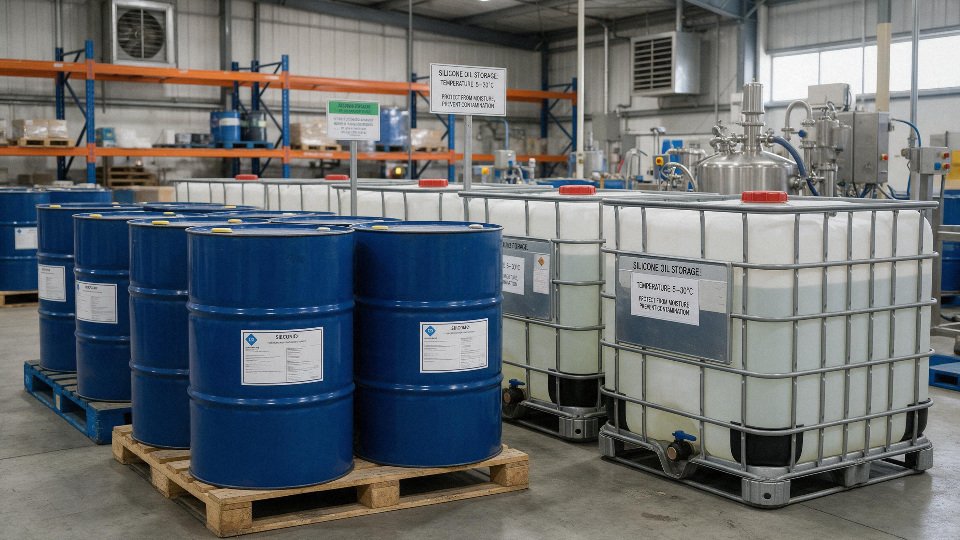
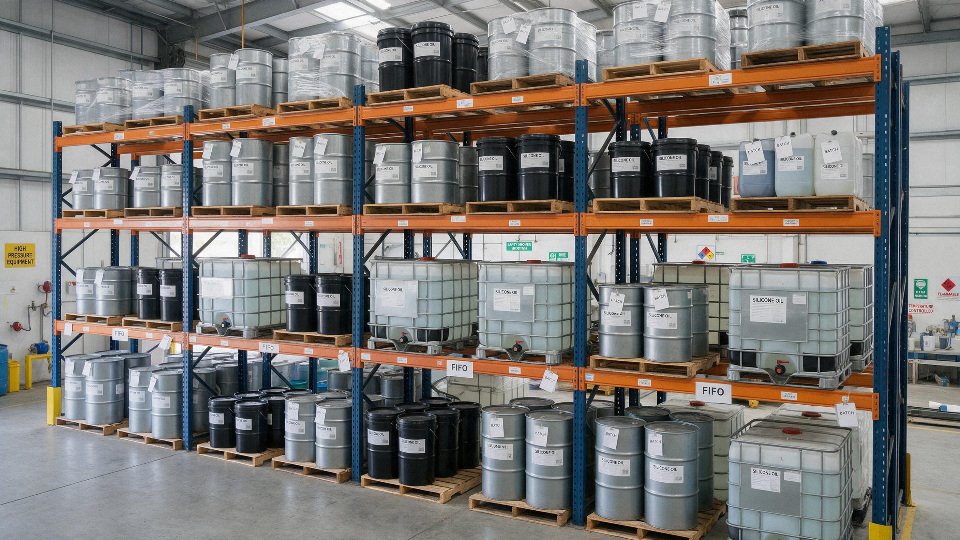
Packaging, logistics, and storage
Packaging should match both consumption rate and contamination sensitivity.
Common options include:
- Pails and small drums
- Suitable for specialty grades, lab use, and low-volume plants
- Higher handling labor per kilogram
- Standard drums
- Common industrial format
- Reasonable balance of freight efficiency and manageable lot size
- IBCs
- Efficient for medium to high usage
- Better for pump-out systems, though cleanliness and valve compatibility need checking
- Isotanks or bulk
- Best for large, stable demand
- Requires stronger unloading discipline and tank cleanliness control
Nitrogen blanketing is not universal for every silicone oil, but it can be sensible for moisture-sensitive modified grades, long storage periods, or applications with tight appearance and water limits. Export shipments also need correct labeling, palletization, seal control, and documents that match the destination’s customs and hazard communication requirements.
Storage recommendations are usually simple but easy to violate on busy sites:
- Keep containers tightly closed
- Avoid water ingress and dirty transfer equipment
- Protect from prolonged overheating and direct sun exposure
- Rotate stock by lot
- Re-check critical properties if material has been stored for extended periods or partially used repeatedly
One recurring plant-floor issue is not chemistry but housekeeping: an open drum with a loose bung, a reused transfer wand, or rainwater sitting around the lid chime. That is enough to turn a good batch into a receiving complaint.
Commodity fluids versus tailored grades
Standard dimethyl silicone fluids are usually the easiest category to source and dual-qualify. Modified grades, reactive grades, or application-tuned fluids are different. They often need joint development, pilot validation, and a written change-management path covering formulation, process conditions, and acceptance limits.
For those tailored products, buyers should insist on:
- Agreed target properties and test methods
- Pilot or line-trial approval criteria
- Defined raw-material and process change notification
- Clear ownership of requalification triggers
- Complaint investigation workflow with retained samples on both sides
If the fluid is going into a sensitive formulation, bring procurement, QA, and process engineering into the qualification together. That is usually cheaper than discovering after scale-up that the “equivalent” material matches the brochure but not the line behavior.
Frequently asked questions
Is silicone oil the same as mineral oil?
No. Silicone oil is an organosilicon fluid, while mineral oil is a petroleum-derived hydrocarbon oil. They can overlap in some duties such as light lubrication or heat transfer, but they differ in chemistry, temperature behavior, surface properties, seal compatibility, and how they interact with coatings, elastomers, and process contamination controls.
Silicone oil and mineral oil are interchangeable in most industrial applications.False
They may overlap in a few low-demand uses, but the fluid chemistry is different enough that seal swell, wetting behavior, oxidation stability, cleanability, and product-contact requirements often change the selection.
Is silicone oil synthetic or natural?
Synthetic. Industrial silicone oils are manufactured organosilicon fluids, not naturally occurring oils. In procurement terms, that matters because consistency depends on controlled polymerization, end-group control, stripping of low boilers, and batch-to-batch QC rather than crude source variability.
What is the most common chemical behind silicone oil?
The most common base fluid is polydimethylsiloxane, usually abbreviated PDMS. That is the standard starting point for many industrial silicone oils because it gives a wide viscosity range, low surface tension, and useful thermal stability; once the application gets more specialized, suppliers may shift to modified silicones rather than plain PDMS.
**Can silicone oil be used as a lubricant?****
Yes, but only in the right lubrication regime. Silicone oil works well in light-duty, boundary, plastic-compatible, water-repellent, or temperature-exposed applications, yet it is usually not the first choice for heavily loaded metal-to-metal contacts such as gearboxes or high-load bearings.
In practice, the trade-off is simple:
– Good points:
– Broad usable temperature window for many dimethyl grades, roughly from about -50 C to 200 C depending on grade and system design
– Low surface tension, often around 20 to 21 mN/m, which helps spreading and release
– Useful lubricity on plastics, rubber, and light mechanisms
– Limits:
– Lower load-carrying capability than many EP-formulated hydrocarbon or synthetic PAO lubricants
– Can migrate into places you do not want it, especially around paint, printing, bonding, or optical assembly
– Additive response is different from conventional lube packages
If the duty involves shock load, sliding steel-on-steel, or strict antiwear targets, ask for test data under your actual contact conditions rather than assuming “lubricant” means “works everywhere.”
**Is silicone oil safe for food, medical, or cosmetic use?****
Sometimes, but grade and documentation decide it. A silicone oil being chemically similar to a food-contact, medical, or cosmetic fluid does not make the industrial grade acceptable for that use.
Request these before treating it as suitable:
– Exact product grade and intended regulatory positioning
– Current compliance statements relevant to your market
– Purity and volatile content data
– Packaging controls and traceability
– Change-control commitment
For these sectors, you should verify against current supplier documentation and the applicable regulation in your country, not a generic website statement.
**How do viscosity grades affect performance?****
Lower-viscosity silicone oils flow, spread, and damp less; higher-viscosity grades cling better, seal better, and provide stronger damping, but they pump harder and can trap bubbles longer. Commercially, this is where many buying mistakes start: a fluid that looks fine on a datasheet at 25 C may become too mobile at process temperature or too sluggish in winter startup.
Typical silicone oil grades span from about 0.65 cSt to well above 1,000,000 cSt at 25 C. What matters is not the headline number alone, but:
– Operating temperature range
– Pump or dispensing method
– Required film retention
– Response time in dashpots or dampers
– Degassing and filling behavior
– Whether carryover or migration is a contamination risk
**Does silicone oil evaporate or degrade at high temperature?****
Yes. Silicone oil is often chosen because it handles heat better than many conventional oils, but it is not immune to volatility, oxidation effects, or viscosity change. Lower-viscosity grades generally show more evaporative loss, and open systems age faster than closed systems. Airflow, residence time, hot spots, metal catalysts, and contamination all matter. For a heated bath, seal pot, or textile line, ask for volatility data and confirm performance in a thermal-aging test that matches your dwell time.
What materials are incompatible with silicone oil?****
The biggest issues are usually process incompatibility, not outright chemical attack. Watch these categories:
– **Coatings, inks, and adhesives: even trace carryover can cause fisheyes, craters, and bonding failures
– Some elastomers: swell or property shift can occur depending on polymer type, filler system, temperature, and exposure time
– Porous materials and clean surfaces: silicone migration can be hard to remove once it gets into a line
– Oxygen or highly specialized chemical service: compatibility must be confirmed case by case
If the plant paints, prints, bonds, plates, or plasma-treats parts downstream, silicone contamination control needs to be discussed before approval.
**How is silicone oil different from silicone grease?****
Silicone oil is a fluid. Silicone grease is usually silicone oil thickened with silica or another thickener system to make a semi-solid lubricant or sealant. That changes how it stays in place, how it is dispensed, and how it behaves under shear. Buyers sometimes switch between the two because the chemistry sounds similar; on the floor, that usually ends in feed problems, poor metering, or the wrong film staying where it should not.
What information should I request from a supplier before purchase?
– Product name and chemical type
– Kinematic viscosity at the stated temperature, usually 25 C
– Viscosity tolerance and batch consistency approach
– Appearance, density, refractive index if relevant, and volatile content
– Thermal-use guidance for your system type
– Packaging size, lining material, and shelf-life recommendation
– Certificate of analysis and SDS
– Regulatory or application-specific declarations, if needed
– Sample availability for compatibility and process testing
– Change-notification policy
– Lead time, minimum order quantity, and Incoterms
Your grade verification checklist
Treat “silicone oil” as a fluid family, not a finished specification. In practice, the right grade is verified by job function, viscosity, modification chemistry, purity, and material compatibility; the generic word oil is nowhere near enough to buy against if you care about stable performance, low scrap, and repeatable supply.
A lot of purchasing mistakes start the same way: one side asks for “100 cSt silicone oil,” the other ships a standard dimethyl fluid, and only later does production discover the application actually needed better low-temperature flow, a reactive end group, lower volatiles, or cleaner release on a sensitive surface. That is why grade confirmation needs to happen before PO issue, not after the first drum lands at receiving.
Buyer checklist
Use this list to lock the requirement down before requesting quotes or samples:
- Define the application goal
- Heat transfer, lubrication, damping, release, defoaming, wetting, textile treatment, personal care formulation, dielectric use, or chemical intermediate
- State what “success” looks like: lower drag, longer dwell, cleaner release, better slip, fewer bubbles, controlled reactivity, or surface modification
- Set the operating temperature window
- Normal running temperature
- Start-up low temperature
- Short excursion or upset temperature
- Whether the fluid sees air, pressure, shear, or hot metal surfaces
Many dimethyl silicone oils are used roughly from -50 C to 200 C, but that is not a blanket approval. Actual limit depends on residence time, ventilation, contamination, and equipment design.
- Specify the viscosity target
- Nominal kinematic viscosity at 25 C
- Acceptable tolerance range
- Whether pumpability, film retention, or damping response matters most
If the process depends on flow through fine metering hardware, seal clearance, or atomization, viscosity tolerance matters more than buyers sometimes expect.
- List all contact materials
- Metals
- Elastomers and seals
- Plastics
- Coatings
- Substrate surface itself
Compatibility problems often show up first in hoses, sight glasses, gasket swell, or downstream paint/print defects rather than in the fluid drum.
- Clarify open or closed system
- Open bath, wipe-on, spray, vacuum, recirculating loop, sealed damper, or blend component
- Risk of carryout, evaporation, airborne transfer, or contamination of adjacent process steps
- State regulatory or documentation needs
- Food-contact relevance
- Cosmetic or personal care expectations
- REACH, RoHS, customer restricted-substance screens
- Internal supplier qualification package
- Define contamination sensitivity
- Can the process tolerate trace transfer?
- Will silicone interfere with bonding, coating, printing, or painting?
- Is low odor, low volatile content, or high purity required?
When to ask for standard dimethyl fluid versus a specialty grade
Start with a standard dimethyl silicone fluid when you need broadly balanced lubricity, thermal stability, water repellency, dielectric behavior, or damping without a reactive function. It is usually the first candidate for general industrial use because it is widely available across a very broad viscosity range, commonly from about 0.65 cSt to well above 1,000,000 cSt at 25 C.
Ask about phenyl-modified grades if low-temperature behavior, thermal stability in demanding service, or optical/refractive properties are driving the selection. Ask about amino-modified grades when you need affinity to certain substrates, softening, lubrication on fibers, or a more interactive surface effect rather than an inert fluid film. Ask about polyether-modified grades when dispersion, wetting, emulsification, or controlled compatibility with more polar systems matters. Request hydroxy-terminated or other reactive specialty grades when the silicone fluid is not just a service medium but a formulation building block, intermediate, or precursor for further reaction.
The choice flips once the fluid must do chemistry, not just provide a physical effect. A cheap dimethyl grade can look attractive on a quote sheet, but if the process needs reactivity or stronger substrate interaction, the “savings” usually come back as rework, unstable formulation behavior, or poor line consistency.
Supplier validation steps
- Review the technical data sheet
- Viscosity
- Appearance
- Volatile content if relevant
- Density, refractive index, flash point, or other application-critical data
- Any stated temperature guidance and test method references
- Review the SDS
- Handling controls
- Storage conditions
- Hazard classification
- Spill and disposal considerations
- Run a sample test
- Bench test first
- Then a controlled production trial on actual substrate and equipment
A lab beaker result is useful, but it does not tell you how the oil behaves through your pump, nozzle, felt roller, or heated recirculation loop.
- Confirm batch-to-batch consistency
- Ask what properties are routine release tests
- Ask how viscosity and key quality points are controlled
- If your process is sensitive, request retention sample practice or agreed COA items
- Check packaging and logistics fit
- Drum, pail, IBC, or bulk
- Cleanliness expectations
- Lead time
- Lot traceability
- Storage stability under your site conditions
If you want a usable recommendation instead of a generic product list, send the application details that actually govern grade selection: substrate material, contaminant or process medium, approximate layer thickness or add-on level, working area, required finish, target throughput or dosing rate, operating temperature range, and clear part photos or representative samples where relevant. SiliconChemicals can review those inputs and recommend a suitable silicone oil grade or a customized organosilicon solution for sample evaluation and pilot testing.