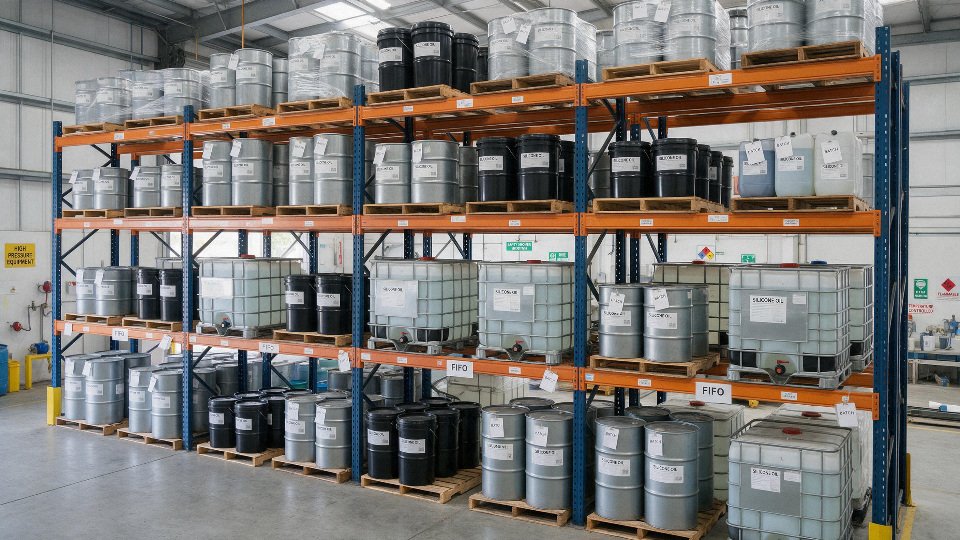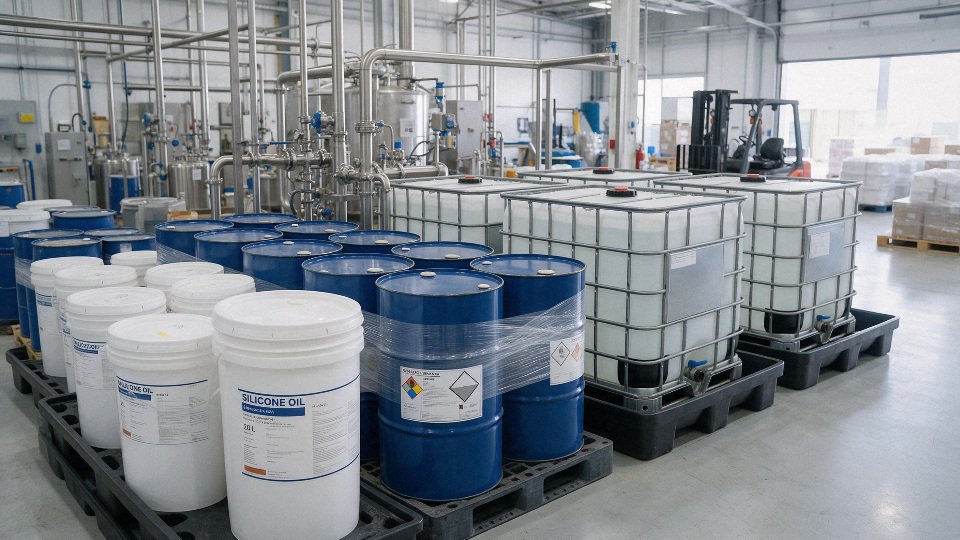
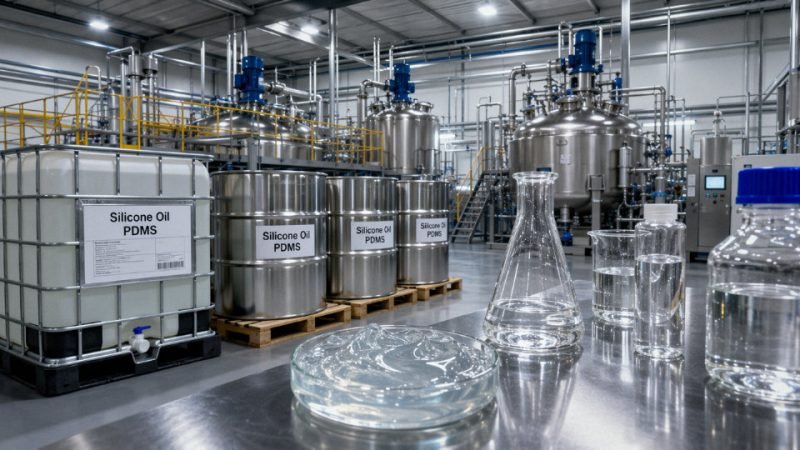
Silicone oil shows up in so many product categories that procurement teams often underestimate how fragmented the supply base actually is. Buy from the wrong tier of supplier for the wrong application — say, a cosmetic-grade fluid used in a transformer cooling circuit, or an industrial batch diverted into a personal care line — and you are looking at equipment failures, regulatory non-compliance, or a product recall. The grade distinctions matter, the end-market certifications matter, and the pricing logic is completely different depending on which sector is pulling demand that quarter.
Silicone oil is consumed most heavily in personal care and cosmetics (roughly 28–32% of global volume), followed by industrial applications such as release agents, textile finishing, and electrical insulation. Asia-Pacific dominates geographically, accounting for around 45–50% of worldwide demand, driven primarily by manufacturing scale in China, Japan, and South Korea. The global market sat at approximately USD 2.1–2.4 billion in 2023, with a projected CAGR of 5.8–6.5% through 2030.
What makes this market genuinely interesting to analyze — and genuinely difficult to source for — is that the same base chemistry, polydimethylsiloxane, threads through industries that have almost nothing else in common. A hair serum and a hydraulic damper fluid can both trace back to the same upstream reactor. That shared origin creates surprising supply-chain entanglements, and understanding which end markets are actually driving volume growth tells you a great deal about where price pressure will come from next.

Personal Care and Cosmetics: The Single Largest End-Use Market
Personal care consistently holds the top position in silicone oil consumption tables — somewhere in the 28–32% range by volume globally, depending on how you classify borderline categories like medicated skincare and topical pharmaceuticals. That share has been remarkably stable for over a decade, which tells you something: cosmetic chemists have found it genuinely difficult to replicate what silicone oil does, and most attempts with petrochemical or plant-derived alternatives have involved real performance tradeoffs.
Which Products Are Actually Driving the Volume
Hair care is the single biggest pull within personal care — conditioners, leave-in treatments, and smoothing serums together account for a substantial slice of the sector’s silicone oil draw. Low-viscosity PDMS, typically in the 5–50 cSt range, is preferred here because it spreads across hair fiber easily, doesn’t weigh the strand down, and flashes off (or distributes to a near-invisible film) quickly at application. Dimethicone at 350 cSt is the workhorse for rinse-off conditioners — thick enough to provide the tactile “slip” that consumers interpret as conditioning, yet water-dispersible enough to formulate into an emulsion without enormous surfactant loads.
Skin-feel enhancers and serums tend to run lighter, 5–20 cSt, because the brief sensory window between application and absorption is where the formulator is competing. Foundations and primers shift the viscosity requirement up considerably — 200–1,000 cSt grades give the long-wear film formation and the slight occlusive feel that helps color products sit uniformly on skin. Antiperspirants are a different story: they typically use lower-viscosity cyclopentasiloxane or linear PDMS as a carrier fluid for the active aluminum salt, prioritizing fast dry-down and absence of tacky residue.
Why Formulators Keep Reaching for Silicone Oil
The honest answer is that silicone oil occupies a specific functional niche that is hard to fully replicate. It provides slip without greasiness — mineral oil gives slip, but it leaves an occlusive, heavy-feeling residue most consumers dislike. Plant-derived esters (isopropyl myristate, caprylic/capric triglycerides) improve skin feel but can compromise long-wear stability and have their own comedogenicity concerns depending on the formulation.
Silicone oil (PDMS) is non-comedogenic in typical cosmetic use concentrationsTrue
PDMS has a high molecular weight and does not penetrate the follicular opening at usage levels common in cosmetics; it is broadly listed as non-comedogenic in dermatological reference sources, though individual product formulation and usage pattern still matter
Silicone oil also doesn’t oxidize or go rancid the way fatty oils do, which simplifies preservation and extends shelf stability — a real procurement and supply chain advantage that doesn’t always get highlighted in formulation discussions.
Regulatory Pressure Is Reshaping Grade Mix, Not Killing Demand
The EU restriction on cyclic siloxanes — specifically D4, D5, and D6 — in rinse-off cosmetic products has been in force since 2020, capped at 0.1% by weight per cyclomethicone or cyclopentasiloxane-containing ingredient. This was a meaningful disruption for formulators who had leaned heavily on cyclopentasiloxane (D5) as a carrier in hair serums and antiperspirants because of its exceptionally fast dry-down. The practical result has been a shift toward linear PDMS grades, often in the 6–10 cSt viscosity range, as functional substitutes. Some formulators moved toward higher-viscosity blends — 350–500 cSt — to compensate for the lost sensory performance.
Demand hasn’t dropped. It has redirected. Suppliers who had capacity in linear PDMS grades saw order volume increase noticeably after the restrictions took hold, and procurement teams that hadn’t pre-qualified alternate grades found themselves scrambling. The lesson there is fairly obvious in hindsight.
Leave-on products (moisturizers, foundations, sunscreens) are unaffected by the cyclic siloxane restriction, and that’s where a lot of incremental formulation activity is now concentrated. Asia-Pacific markets, particularly South Korea and Japan, face less immediate regulatory pressure on cyclics, which partly explains regional consumption patterns that still look heavier in D5-equivalent grades than European equivalents.
Electrical and Electronics Manufacturing: Dielectric and Thermal Management Applications
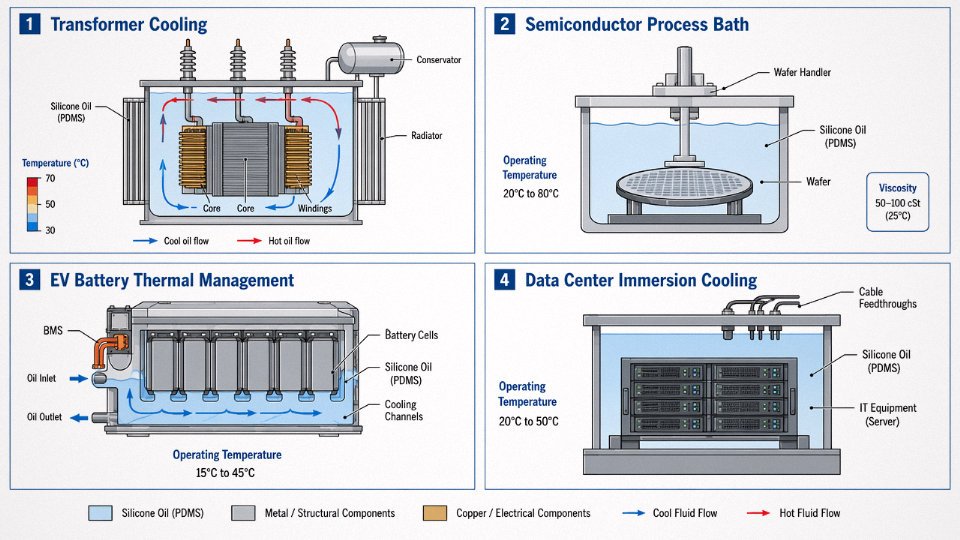
The electronics sector doesn’t get the same headlines as cosmetics when silicone oil volumes are discussed, but it’s arguably the more technically demanding market — and in several respects, the harder one to substitute away from. Across transformer stations, semiconductor fabs, EV battery packs, and now data-center immersion tanks, PDMS fluids are doing work that mineral oil and synthetic esters simply can’t match at the same combination of temperature range, dielectric strength, and chemical inertness.
Transformer Cooling and High-Voltage Switchgear
Power transformers running on silicone-based dielectric fluid have been around since the 1970s, and the application remains one of the most volume-significant in this sector. A medium-viscosity PDMS fluid — typically in the 50–100 cSt range — offers a flash point well above 300°C and won’t form corrosive acids as it ages the way some mineral oils do. For indoor switchgear in hospitals, tunnels, or densely packed urban substations, that fire-resistance profile matters enormously to the facility owner even if it costs more per liter upfront.
Continuous operating temperatures up to roughly 200°C are well within spec for standard PDMS grades, and some phenyl-modified variants push usable range higher still for specialized high-voltage applications. In practice, most distribution transformers run nowhere near those thermal limits — the value proposition is the safety and longevity margin, not peak performance.
Semiconductor Process Baths and Conformal Coating
Semiconductor manufacturing uses silicone oil in a more controlled, smaller-volume way but with extremely tight specification requirements. Fluorinated and standard PDMS fluids appear in wafer-level thermal management baths and as carrier fluids in certain cleaning and encapsulation processes. Viscosity tolerance in these applications is often ±2–3 cSt of nominal — a batch that drifts out of spec doesn’t get blended back; it gets rejected, which is why semiconductor-grade silicone oil commands a significant price premium over industrial grades.
Conformal coating formulations for PCBs use silicone oil as both a carrier and a functional component, providing moisture resistance across a wide temperature swing — relevant for automotive electronics cycling between −40°C and well over 100°C under hood.
Who’s Driving Volume — and Where
The electronics segment accounts for roughly 15–18% of total global silicone oil consumption by volume, with the actual figure depending heavily on how EV and energy-storage applications get classified. Japan and South Korea anchor demand through their semiconductor and consumer electronics manufacturing bases; Germany and the United States contribute through industrial power infrastructure, automotive electronics, and defense-related electronics. These four markets collectively represent a disproportionate share of high-specification, higher-margin volume — not necessarily the largest tonnage, but the kind of demand that supports technical-grade pricing.
Silicone oil used in transformer cooling provides higher fire resistance than conventional mineral oilTrue
PDMS-based dielectric fluids have flash points typically above 300°C compared to roughly 140–170°C for standard mineral transformer oils, making them the preferred choice for fire-sensitive indoor installations per IEC and IEEE standards.
Immersion Cooling, EV Batteries, and 5G Infrastructure
Three growth vectors are pushing electronics-sector demand upward faster than the broader market average. Data-center immersion cooling — where servers sit directly in a dielectric bath — has moved from pilot project to serious infrastructure consideration at hyperscale operators. Low-viscosity PDMS in the 1–5 cSt range works well here; the engineering challenge is mostly around fluid containment and pump seal compatibility, not the fluid itself.
EV battery thermal management is the other high-growth story. Liquid-cooled battery modules increasingly use silicone-based thermal interface materials and, in some architectures, direct immersion or flow-through cooling with PDMS fluids. The temperature window for lithium-ion cells — keep them between roughly 15°C and 45°C during charge and discharge — demands a fluid with consistent viscosity across a wide ambient range, and that’s a specification silicone oil handles well.
5G base station rollout, particularly in high-density urban deployments and extreme-climate regions, has increased demand for reliable dielectric fluids in outdoor cabinet power supplies and small-cell infrastructure. The volumes per installation are small; the aggregate across hundreds of thousands of installations is not.
Automotive and Transportation: Lubricants, Dampers, and Under-Hood Fluids
The automotive sector isn’t the largest consumer of silicone oil by volume — personal care holds that title — but it’s arguably the most technically demanding one. Substitution is rarely straightforward, and the wrong fluid choice doesn’t just cause wear; it can mean a warranty claim, a recall, or a safety incident. Automotive accounts for roughly 12–15% of global silicone oil consumption by volume, though that share shifts depending on how you slice OEM versus aftermarket and whether you count silicone-based greases and compounds alongside pure fluids.
Viscous Damper Fluids: The High-Viscosity Workhorse
Fan clutch dampers and torsional vibration dampers are where silicone oil earns its keep in the drivetrain. These applications use extremely high-viscosity PDMS grades — typically 100,000 cSt up to 1,000,000 cSt, though the exact spec depends on operating temperature range, clutch geometry, and the torque transfer curve the engineer is targeting. The fluid has to stay stable across a thermal swing from a cold northern European winter start to sustained highway operation, without oxidizing, shearing out, or migrating past the seals.
Mineral oils can’t reliably do this. The viscosity-temperature relationship is too steep, and the oxidation stability at sustained under-hood temperatures — easily 120–140 °C in a poorly ventilated bay — is inadequate. This is one of those applications where silicone oil genuinely has no cost-competitive substitute, which is why OEM damper fill volumes have been consistent for decades regardless of broader market fluctuations.
Seals, Airbags, and the Small-Volume, High-Criticality Applications
Door and window seal lubrication sounds trivial until you’re managing a warranty database. Low-viscosity PDMS (usually 50–1,000 cSt, depending on climate and seal durometer) applied during assembly prevents the squeak and stick complaints that drive dealers and fleet operators mad, particularly in cold climates where EPDM seals stiffen up. In practice, getting the application volume right matters — too little and you get noise complaints within six months, too much and you contaminate the glass channel.
Airbag fabric coating is a smaller but safety-critical application. The coating lubricates the folded fabric so the bag deploys at the correct rate and doesn’t tear. Amino-modified silicone oils are commonly used here because they bond more durably to nylon and polyester substrates than plain PDMS. This isn’t a high-volume application in tonnes, but the performance specification is tight and qualification changes are slow and expensive, which effectively locks in supply relationships.
Brake fluid thermal management is different again — here the role is less about lubrication and more about maintaining dielectric properties and heat dissipation in certain ABS module and caliper configurations. The volumes are small but the specification tolerance is narrow.
OEM Versus Aftermarket: A Real Demand Split
OEM consumption is driven by production volumes and is relatively predictable. Aftermarket demand is spikier and more price-sensitive. A plant rebuilding fan clutches for heavy-duty trucks, for instance, might buy 200-litre drums of high-viscosity PDMS from a distributor rather than direct from a silicone manufacturer — and they’re more likely to switch suppliers based on price if performance specs are broadly met.
The EV Transition: Demand Shifting, Not Shrinking
The obvious concern is that electrification kills silicone oil demand in powertrain applications. Fewer combustion engines means fewer viscous fan clutches. That part is real.
What’s replacing it is more interesting. Battery pack thermal management in EVs increasingly relies on silicone-based dielectric fluids for immersion cooling, particularly in high-performance and commercial EV platforms where thermal runaway risk is a genuine engineering constraint.
Silicone oil is being evaluated and adopted for direct immersion cooling of EV battery cells due to its electrical non-conductivity, thermal stability, and chemical inertness toward cell casing materials.True
Multiple EV thermal management system developers have published technical work on dielectric immersion fluids including PDMS-based silicone oils, and Tier 1 suppliers have announced silicone-fluid battery cooling systems for commercial vehicle platforms.
Electric motor potting compounds — where silicone oil modifies the viscosity and flexibility of encapsulant formulations — are growing as EV motor production scales. Charging connector lubrication is a smaller but real application, particularly for high-cycle commercial charging infrastructure where connector wear is a maintenance problem.
The net effect on volume is roughly neutral to slightly positive through the late 2020s, though the grade mix is shifting toward lower-viscosity, higher-purity PDMS and away from the very high-viscosity damper fluids. Procurement managers sourcing for Tier 1 automotive suppliers should be tracking that grade transition now, because supply lead times for specialty low-viscosity electronic-grade PDMS are already longer than for industrial damper fluid grades.
Industrial Manufacturing and Process Industries: Release Agents, Defoamers, and Mold Lubricants
The industrial processing sector doesn’t dominate silicone oil headlines the way cosmetics does, but it quietly absorbs somewhere between 18–22% of global consumption by volume — and that share depends heavily on construction activity, packaging growth, and how aggressively Asian rubber and plastics manufacturers are running their lines in any given year. This is a diffuse, unglamorous market spread across dozens of sub-sectors, which is exactly why procurement teams often underestimate total spend until someone does a cross-plant audit and finds six different suppliers selling essentially the same 350 cSt PDMS under different trade names.
Defoamers in Pulp-and-Paper, Wastewater, and Food Processing
Start with defoaming, because this is where polydimethylsiloxane earns its keep most consistently. In a kraft pulp mill, foam is not a nuisance — it’s a process killer. Black liquor, white water circuits, and flotation deinking stages all generate foam aggressively, and petroleum-based antifoams struggle above roughly 70–80°C and lose effectiveness fast in high-surfactant environments. PDMS-based compounds work at dosage rates typically in the 10–40 ppm range, sometimes lower on a well-tuned system, versus 80–150 ppm for hydrocarbon alternatives. That difference matters when you’re dosing continuously into a 400-ton-per-day machine.
Wastewater treatment plants — municipal and industrial alike — run into the same physics. Aeration basins are designed to push oxygen in, which inevitably generates foam, and biological treatment stages produce surfactant-rich effluent that compounds the problem. PDMS defoamers survive the wide pH swings and temperature variation that a biological reactor sees over a 24-hour cycle. The chemistry isn’t complicated: the low surface tension of silicone (roughly 20–21 mN/m for typical 1000 cSt PDMS) lets it spread rapidly across a foam lamella and destabilize it before the bubble column gets out of control.
Food processing is where grade selection gets serious. Approved food-contact grades — compliant with FDA 21 CFR 173.340 and equivalent EU regulations — carry a meaningful price premium, typically 15–30% over industrial grades depending on viscosity and supplier. Fermentation vessels, cooking oil processing lines, and beverage bottling foam control all use these approved grades. A mistake here — using an industrial-grade defoamer in a food-contact application — creates a recall risk that dwarfs any cost savings. This is not a theoretical concern; it surfaces in supplier qualification audits more often than it should.
Release Agents in Rubber, Plastics, and Concrete
Rubber molding — compression, transfer, injection — depends on consistent release. PDMS-based mold release, usually in the 200–1000 cSt viscosity range depending on mold geometry and cure temperature, reduces cycle time by preventing adhesion without contaminating the part surface or degrading the mold cavity finish over repeated shots. Tire manufacturing specifically runs high-volume, high-temperature presses where petroleum-based releases break down and cause sticking or smoke — silicone release agents handle 160–200°C vulcanization cycles without decomposing.
Blow molding and injection molding for plastics use silicone mold lubricants more selectively, usually where part geometry makes ejection difficult or where surface finish requirements are tight. The trade-off: excess silicone on a plastic surface interferes with downstream painting or bonding. Getting the application rate wrong costs more in rework than it saves in cycle time.
Concrete form stripping is a high-volume, lower-specification application — diluted PDMS emulsions applied to formwork before pours. It’s not technically demanding, but the volumes across construction-intensive markets are substantial.
PDMS-based defoamers are effective at significantly lower dosage rates than petroleum-based antifoams in high-temperature, high-surfactant industrial processesTrue
The low surface energy and thermal stability of polydimethylsiloxane allows surface spreading and foam destabilization at 10–40 ppm in many pulp, wastewater, and food processing applications, where hydrocarbon antifoams typically require 80–150 ppm and degrade faster under sustained heat and surfactant load.
Fastest-Growing Sub-Sectors Within Industrial Processing
Flexible packaging is growing fastest right now, driven by the shift away from rigid containers across food, pharma, and consumer goods — and silicone release liners underpin virtually every pressure-sensitive label and tape that packaging line runs. Silicone rubber compounding, used in gaskets, seals, and extruded profiles, consumes PDMS as a plasticizer and process aid in meaningful quantities. Construction sealant manufacturing — polyurethane and silicone sealants both — uses silicone oil as a rheology modifier and release component.
Growth rates across these three sub-sectors are running roughly 6–9% annually in Asia-Pacific, slower (3–5%) in mature Western markets, and the difference is largely driven by new manufacturing capacity rather than per-unit consumption changes.
Medical Devices and Pharmaceutical Manufacturing: High-Purity Demand with Premium Pricing
The medical and pharmaceutical segment sits at a peculiar position in the silicone oil market — small by volume, outsized by value. Rough industry estimates put it at around 8–10% of total silicone oil consumption, yet it contributes somewhere between 15–20% of total revenue. That gap between volume share and revenue share tells you everything about why specialty chemical distributors and silicone producers treat this segment with unusual attention. The exact split depends heavily on product mix; a plant running mostly USP-grade syringe lubricants will see fatter margins than one supplying bulk defoamer to a paper mill, even if the paper mill consumes ten times the tonnage.
Core Applications and Why Silicone Oil Is Difficult to Replace
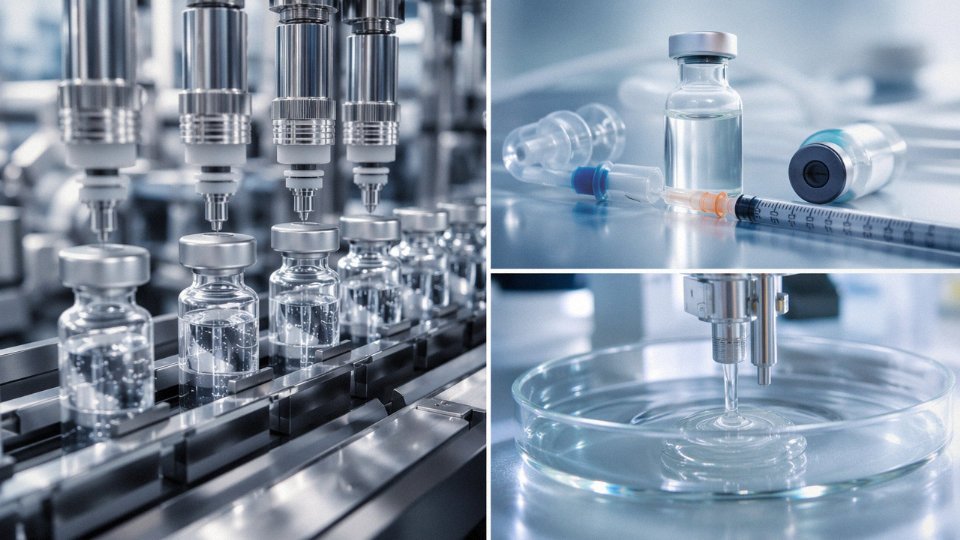
Syringe barrel lubrication is probably the most widely cited medical application, and for good reason — it’s genuinely difficult to replace with anything else. A thin film of low-viscosity PDMS, typically in the 350–1,000 cSt range depending on barrel diameter and plunger material, reduces break-loose and glide force to levels that prefilled syringe systems demand. Get the viscosity wrong by even a grade and you either see stiction on the initial plunger push (a patient-detectable issue in autoinjectors) or excess oil migration into the drug product, which is a regulatory problem. I’ve seen validation batches fail because a contract manufacturer switched silicone oil suppliers mid-project without notifying the device OEM — same nominal viscosity, different lot-to-lot consistency, different extractables profile.
Catheter and needle coatings use similar grades but applied differently, usually as a spray or dip coating cured at low temperature. The lubricity requirement is obvious, but what’s less obvious is that the coating has to survive sterilization — gamma, EtO, or autoclave depending on the device — without significant viscosity shift or off-gassing. Not every industrial silicone oil survives that without visible degradation.
Intraocular tamponade agents are a niche application but worth mentioning because they represent the extreme purity end of the market. These are long-chain PDMS fluids injected into the vitreous cavity during retinal detachment repair, and they require a purity level and particle count specification that essentially no industrial-grade material comes close to meeting. Pricing for tamponade-grade silicone oil can run 8–12x the price of a standard industrial viscosity fluid, depending on batch size and certification requirements.
Pharmaceutical capsule-shell release agents and prosthetic joint fluid analogues round out the main volume applications. The joint fluid work is interesting — hyaluronic acid still dominates that space clinically, but certain silicone oil formulations are evaluated as synthetic alternatives, particularly for patients with hyaluronic acid sensitivities.
Regulatory Compliance as a Market Barrier
USP Class VI, ISO 10993, and FDA 21 CFR compliance requirements significantly restrict the supplier pool for medical-grade silicone oil and create high switching costs for device manufacturersTrue
No explanation available.
USP Class VI certification alone requires cytotoxicity, sensitization, and intracutaneous reactivity testing on each grade. ISO 10993 expands that into a broader biocompatibility framework. FDA 21 CFR Part 820 ties everything to quality system requirements. In practice, a silicone oil supplier serving this segment needs a pharmaceutical-grade manufacturing line, documented change-control procedures, and the willingness to supply Drug Master File (DMF) support. Most industrial silicone producers cannot or will not do this, which is why the qualified supplier list for medical-grade material globally is probably under a dozen serious players.
The switching cost argument is real and significant. A device manufacturer that validated Supplier A’s 1,000 cSt medical PDMS into their prefilled syringe platform faces a full analytical re-validation — extractables study, functional testing, regulatory submission update — if they want to move to Supplier B, even if the specifications look identical on paper. That process typically runs six to eighteen months and meaningful engineering hours. Price alone rarely justifies it.
Growth Drivers Through the Decade
Aging populations in North America, Europe, and increasingly East Asia are driving surgical device volumes upward, particularly minimally invasive instruments, which rely heavily on lubricious coatings. The global expansion of pharmaceutical contract manufacturing — especially the shift of secondary packaging and filling operations to India and Southeast Asia — is pulling demand for validated medical-grade silicone oil into new geographies, some of which are still building out the local supplier qualification infrastructure. That gap between where manufacturing is moving and where qualified supply currently exists creates both a market opportunity and, honestly, a short-term supply risk that procurement managers in this space should be planning around now.
Textiles and Fiber Processing: Softeners, Finishing Agents, and Yarn Lubricants
The textile industry rarely tops the list when people think about silicone oil markets, yet it consistently absorbs somewhere between 8% and 12% of global silicone oil volume — a share that rivals or exceeds electronics depending on how you carve up the categories. That range widens based on the year, cotton versus synthetic fiber production cycles, and whether you’re counting formulated emulsions or neat silicone fluid. It’s a segment that procurement teams in specialty chemicals often underestimate until they start running the numbers.
Amino and Hydroxyl Silicone Oils as Fabric Softeners
The workhorse in textile finishing is amino-functional silicone oil. Applied at the finishing stage — typically via pad-dry-cure or exhaust bath — it orients itself on fiber surfaces with the amino group bonding to the fabric while the PDMS backbone faces outward, creating that characteristic silky, low-friction handle. Compared to traditional fatty-acid quaternary softeners (the kind of chemistry that dominated mill finishing through the 1980s and 1990s), amino silicones hold up dramatically better through repeated laundering. A fatty-acid softener might degrade noticeably after 5–10 wash cycles; a well-applied amino silicone finish can retain meaningful softness past 20–30 cycles, though actual durability depends heavily on cure temperature, fabric weight, and the silicone’s amine content.
Hydroxyl-functional grades come in where amino silicones create problems — specifically yellowing on white or light-colored fabrics exposed to heat or NOx gases in storage. For polyester-cotton blends going into white dress shirts or hospital linens, hydroxyl silicone is usually the safer call. The tradeoff is slightly lower softness intensity.
Tensile strength retention is one of the genuinely underappreciated benefits. Silicone finishing lubricates fiber-to-fiber contact during mechanical stress, which measurably reduces abrasion-induced yarn breakage in woven and knitted structures. Some finishing labs report tensile retention improvements of 10–20% compared to unfinished controls, though the range is wide and depends on fabric construction and fiber type.
Amino-functional silicone oil fabric finishes last significantly longer through washing cycles than conventional fatty-acid quaternary softenersTrue
Amino silicone groups form durable orientation bonds with fiber surfaces and the PDMS backbone provides persistent lubrication, while fatty-acid softeners are more water-soluble and mechanically removed during laundering. Industry finishing trials consistently show this durability advantage.
Yarn Lubrication in High-Speed Spinning and Weaving
This is where low-viscosity PDMS earns its place — grades typically in the 5–100 cSt range applied as spin finishes or sizing lubricants. High-speed ring spinning and air-jet weaving generate intense fiber-to-metal contact; without adequate lubrication, polyester filament especially will build static charge that causes yarn breakage, wrapping on guides, and ultimately loom stops. In a plant running 400+ looms, even a modest improvement in end-break rate compounds quickly into real throughput gains.
The friction reduction is partly mechanical (PDMS’s low surface energy) and partly electrostatic — silicone oil’s dielectric properties help dissipate static charge that accumulates at guide surfaces. Nylon processing is particularly sensitive to this, and in my experience mills processing fine-denier nylon for hosiery or sportswear end-uses tend to be among the most exacting about their silicone spin-finish specifications.
Geographic Concentration and Sustainability Pressure
Demand is overwhelmingly concentrated in Asia-Pacific — China, India, Bangladesh, and Vietnam collectively account for the bulk of it, which tracks directly with where the world’s high-volume textile and garment manufacturing actually sits. China alone drives a disproportionate share, with its integrated fiber-to-fabric supply chains consuming silicone finishing emulsions at scale that European or North American mills simply can’t match on volume.
The sustainability angle is real but messy. Regulatory pressure from brands and retailers — particularly European ones sourcing from South and Southeast Asian mills — is pushing interest in lower-VOC formulations and bio-compatible silicone alternatives. Some producers are developing silicone-bio hybrid softeners. Whether those will match amino silicone’s performance at competitive cost is still an open question on the mill floor; the commercial traction as of now is limited, but the direction of travel is clear.
Emerging High-Growth Markets: Renewable Energy, Food Processing, and Advanced Electronics
The segments covered so far — cosmetics, electronics, automotive, industrial processing, medical, textiles — represent mature or at least well-established demand. The three areas below are different. They’re growing faster than the overall market, procurement teams are still figuring out specification requirements, and in some cases supply chains are thin enough that a single plant outage creates real problems.
Renewable Energy: A Small Base, but the Growth Curve Is Real
Concentrated solar power is the most technically demanding application in this group. CSP parabolic trough systems circulate heat-transfer fluid through receivers operating at temperatures that typically run 300–400°C, sometimes nudging higher in direct normal irradiance-rich sites. Conventional synthetic organics degrade badly at those temperatures; high-viscosity phenyl-modified silicone oils hold up significantly better, and that thermal stability is essentially non-negotiable if you want a multi-year maintenance cycle. The fluid volumes per installation are not trivial — a mid-sized trough plant might require tens of thousands of liters of heat-transfer fluid, with top-up volumes needed every few seasons depending on contamination from micro-leaks at rotary joints.
Wind turbines are a different story. Here the application is pitch-control damper fluid — the small hydraulic dampers that absorb shock loads as blade pitch adjusts to wind variation. The fluid volumes per turbine are modest (a few liters, give or take), but with hundreds of turbines per wind farm, and with cold-climate installations in northern Europe and Inner Mongolia demanding fluids that stay pumpable at −40°C or lower, standard hydraulic oils simply don’t qualify. Silicone oil’s flat viscosity-temperature curve is the reason it’s specified here.
Solar panel encapsulation is less well-known as a silicone oil application. Certain encapsulant formulations use a PDMS carrier fluid in the curing stage. Volumes are application-dependent and honestly still being quantified across the supply chain, but the segment is real.
Taken together, the renewable energy sub-segment is currently niche by volume — probably under 3% of total silicone oil consumption globally — but the projected CAGR runs roughly 8–12%, depending heavily on CSP deployment rates in the Middle East, North Africa, and India, all of which have active project pipelines right now.

Food and Beverage Processing: Quiet Growth, Regulatory Tailwinds
Food-grade PDMS as an antifoam in frying oil is permitted by FDA regulation at up to 10 ppm, and the same or similar approvals exist in the EU, Japan, and a growing list of Southeast Asian markets. At scale — industrial fryers running continuously across three shifts — even 10 ppm adds up to meaningful procurement volumes. The application saves real money by reducing oil carryover and extending fry oil life, which is why quick-service restaurant supply chains adopted it years ago and industrial food manufacturers in Vietnam, Indonesia, and Nigeria are scaling into it now.
Food-grade PDMS antifoam is FDA-permitted at up to 10 ppm in frying oils.True
FDA 21 CFR 173.340 specifically permits dimethylpolysiloxane (PDMS) as a defoaming agent in food at concentrations not exceeding 10 ppm.
Conveyor belt lubrication and bakery pan release are lower-profile but consistent demand drivers. Pan release agents based on silicone emulsions outperform traditional vegetable shortenings in high-throughput bakery lines: cleaner release, longer intervals between applications, less buildup on pans. The operational argument sells itself to any plant manager who’s dealt with burnt-on release agent fouling their oven decks.
Advanced Electronics and Photonics: Tiny Volumes, Very High Stakes
This is where unit pricing can reach levels that would seem implausible in the bulk commodity segments. Immersion fluids for deep-UV lithography alignment systems need optical clarity, thermal stability, and contamination profiles measured in parts per billion — not parts per million. The volumes involved in any one semiconductor fab are genuinely small, but the supply chain criticality is disproportionate. A fluid substitution that shifts optical path length by even a few nanometers is not a minor adjustment; it can require full re-qualification of alignment routines.
Optical fiber draw tower lubrication is another application where silicone oil earns its price through consistency. During the fiber draw process, the lubricant film must behave predictably across temperature gradients that change rapidly along the draw path. Viscosity drift between batches is not acceptable; serious fiber producers specify batch-to-batch viscosity tolerances that many standard-grade suppliers cannot reliably meet.
LED phosphor encapsulants represent perhaps the fastest-growing niche within this cluster, tracking the broader LED market’s expansion into automotive lighting, horticultural grow lights, and high-output architectural fixtures. The silicone oil component here functions partly as a refractive-index modifier in the encapsulant matrix. Small volumes, but the optical performance specs are tight and not easily reformulated around alternative fluids.
The advanced electronics sub-segment is worth watching specifically because it creates strategic supply concentration risk — the number of silicone oil producers who can reliably supply semiconductor-grade fluid is genuinely short, and procurement managers who have treated this as a commodity purchase have occasionally found themselves in a difficult position when capacity tightened.
Regional Demand Breakdown: Which Countries Buy the Most Silicone Oil and Why
Asia-Pacific sits at roughly 45–50% of global silicone oil demand — and that share has been sticky for years, not just because of raw manufacturing volume but because the region concentrates three of the biggest end-use sectors (textiles, electronics, and construction) inside a single geographic cluster. That clustering matters for logistics and for price: regional producers in China can supply domestic converters faster and cheaper than any European or American rival, which reinforces the consumption advantage in a self-reinforcing loop.
China: Consumer and Producer at the Same Time
China is unusual in that it is simultaneously the world’s largest silicone oil consumer and one of its largest producers. Domestic PDMS capacity — held mainly by a handful of large integrated chemical groups — has expanded sharply since roughly 2015, so a significant fraction of what China “consumes” never crosses a border at all. Demand drivers are layered: textile finishing mills in Jiangsu and Zhejiang run amino-modified silicone oils through every wet-processing line; PCB and semiconductor packaging plants in Guangdong and Shenzhen pull dielectric and encapsulation grades; and the construction sector — specifically insulating glass units and structural glazing — accounts for a chunk of consumption that most Western analysts underweight. Construction-linked demand is sensitive to property market cycles, so a slowdown there does compress silicone oil volumes in ways that aggregate forecasts sometimes smooth over.
Japan and South Korea: Lower Volume, Higher Spec
Japan and South Korea buy less by volume but consistently purchase higher-specification grades — phenyl silicone oils for optical and automotive sensor applications, ultra-low-viscosity fluids for precision lubrication, and medical-grade PDMS for device components. Pricing per kilogram is meaningfully higher, and supplier qualification cycles are long; breaking into either market as a new silicone supplier typically takes two to three years of testing, audits, and incremental approvals. Both countries have domestic silicone producers (Shin-Etsu and Momentive operate there, among others), but specialty grades still get imported, particularly from European manufacturers with established pharmaceutical or optical credentials.
India and Southeast Asia: Where Growth Is Actually Happening
India’s silicone oil consumption is growing at rates well above the global average — somewhere in the 8–11% annual range depending on the application segment and the source — driven by a personal care market expanding faster than GDP, plus textile and rubber industries that are scaling up capacity. Vietnam, Indonesia, and Thailand are picking up electronics assembly and automotive parts manufacturing that was previously concentrated in China, and silicone oil demand follows those factories. Infrastructure is still catching up: cold-chain and storage limitations mean buyers in these markets sometimes specify lower-spec grades simply because consistent high-purity supply is harder to guarantee.
North America: Medical, Personal Care, and Automotive Pull
The United States is the dominant North American buyer by a wide margin. The structure of demand is different from Asia — less textiles, far more medical devices, personal care formulation (the supply chains serving major consumer goods manufacturers), and automotive. Michigan’s OEM and Tier 1 supplier cluster and the Southeast’s transplant assembly plants both run silicone damper fluids and thermal management compounds at volumes that add up quietly but consistently. Canada’s demand is modest and weighted toward industrial lubricant and process applications. Mexico is growing, tied directly to nearshoring of electronics and automotive assembly.
The United States is the second-largest national consumer of silicone oil globally.True
While Asia-Pacific as a region dominates, the US represents the largest single-country market outside China, driven by its medical device, personal care, and automotive sectors.
Europe: Regulatory Headwinds Reshaping the Grade Mix
Germany leads European consumption, almost entirely through automotive and industrial processing demand. France and the UK carry a notable share in premium cosmetics — formulation houses supplying prestige brands specify cyclomethicone and PDMS grades at tight purity bands. The regulatory picture is the thing to watch, though. REACH restrictions have already tightened conditions around certain cyclic siloxanes (D4, D5, D6), and the EU Green Deal is pushing formulators to re-evaluate rinse-off personal care applications specifically. The practical result through 2030 will likely be a modest volume contraction in cosmetic grades in Western Europe, offset by continued growth in industrial and electrical grades. Procurement teams sourcing into Europe should map their specific grades against the current SVHC candidate list — a grade that clears today may face restrictions within the next regulatory cycle.
Frequently Asked Questions About Silicone Oil Markets
Which single industry consumes the most silicone oil globally?
Personal care and cosmetics. It’s not close. That sector accounts for roughly 28–32% of total silicone oil consumption by volume, and it has held the top position for well over a decade. The reasons are structural: silicone fluids deliver a combination of slip, spreadability, and thermal stability that formulators have never fully replicated with alternatives at commercial scale. Industrial processing (defoamers, release agents, mold lubricants) and electrical/electronics manufacturing are solid second and third, but neither approaches personal care’s share in isolation. If you’re sizing a market or qualifying a new supplier, personal care is still the gravity well everything else orbits around.
Is silicone oil demand growing or declining overall?
Growing, with important caveats. The global market is tracking a CAGR somewhere in the 5.8–6.5% range through 2030 — the exact rate depends heavily on whether EV adoption accelerates faster than currently projected and whether immersion cooling for data centers scales to commercial volume in time. Both could pull that number higher.
The caveat worth taking seriously: the EU’s restrictions on cyclic siloxanes (D4, D5, D6) in rinse-off cosmetics are a real regulatory headwind for specific grades, and there’s ongoing review of leave-on applications. Suppliers still offering D5-based formulations into European personal care channels without a reformulation roadmap are sitting on a shrinking position. That said, the same regulatory pressure is accelerating demand for linear PDMS and amino-modified grades as drop-in replacements, so volume doesn’t disappear — it shifts.
The EU has restricted D4, D5, and D6 cyclic siloxanes in rinse-off cosmetic products.True
EU Regulation 1223/2009 as amended restricts D4 and D5 in wash-off cosmetics above threshold concentrations, with ongoing ECHA review of additional cyclic siloxanes in leave-on products.
What viscosity grades see the most commercial transaction volume?
The 50–1,000 cSt range of linear PDMS is where most purchase orders actually land. That window covers the bulk of personal care, textile, and general industrial applications — it’s liquid enough to process easily, stable enough to handle without specialized equipment. Ultra-high viscosity grades, 100,000 cSt and above, are a smaller slice of volume but critical in automotive damper fluid and some vibration-isolation applications where substitution is essentially off the table once a part is designed. Pharmaceutical and optical grades are a different conversation entirely: purity certification and low-volatile-content specs matter more than viscosity class, and you’ll typically see those requirements specified as certified total volatiles below 0.5% regardless of where on the viscosity curve the product sits.
How much do silicone oil prices vary across end markets?
Considerably. Industrial defoamer and release-agent grades generally trade somewhere in the USD 2–5 per kg range, though that moves with feedstock (fumed silica, methylchlorosilane supply chains) and order volume. Personal care and textile-finishing grades sit higher, roughly USD 4–9 per kg, reflecting tighter purity and color specifications. Medical and pharmaceutical certified grades are a different pricing environment — USD 15–30 per kg is a reasonable working range, and some highly specialized optical or injectable-device grades go above that depending on traceability documentation requirements and lot-specific testing. Don’t benchmark medical-grade pricing against commodity grades; the cost of the certification paperwork is essentially baked into the price.
Which region offers the best entry opportunity for silicone oil suppliers right now?
Southeast Asia and India, without much hesitation. Vietnam, Indonesia, Thailand, and India are all running textile expansion, electronics assembly growth, and rising domestic personal care consumption simultaneously. Supplier relationships in those markets are meaningfully less entrenched than in China or Western Europe, where major producers have been running long-term contracts for years. A supplier that can offer reliable delivery, decent technical support, and documentation that satisfies global brand audits — without the minimum order volumes that lock out mid-sized buyers — has real room to move in those geographies. The window won’t stay open indefinitely as the large Chinese and European producers build out local distribution, but it’s genuinely open now.