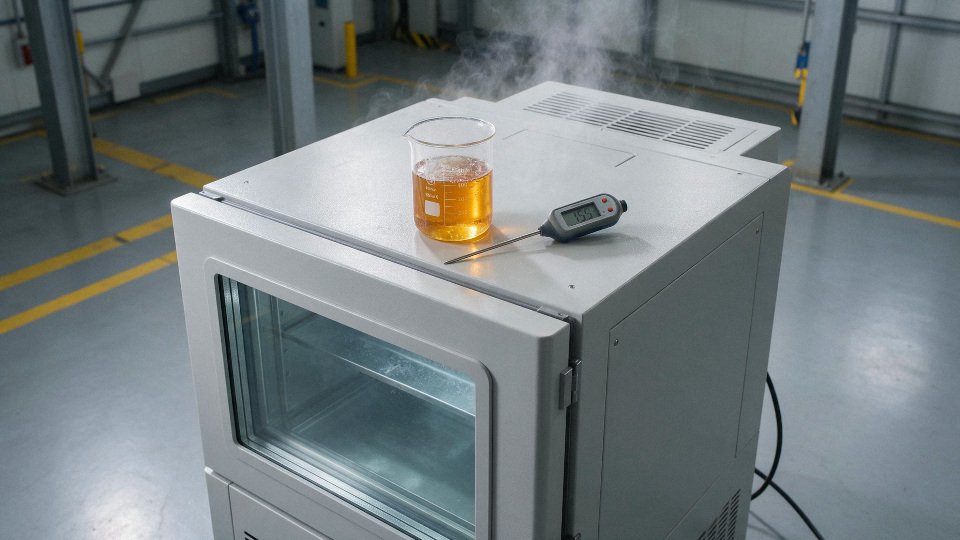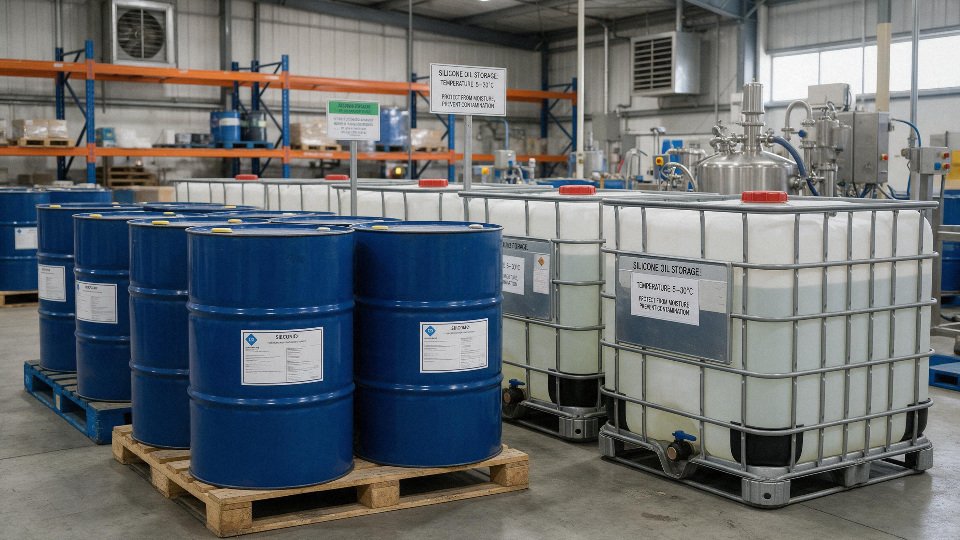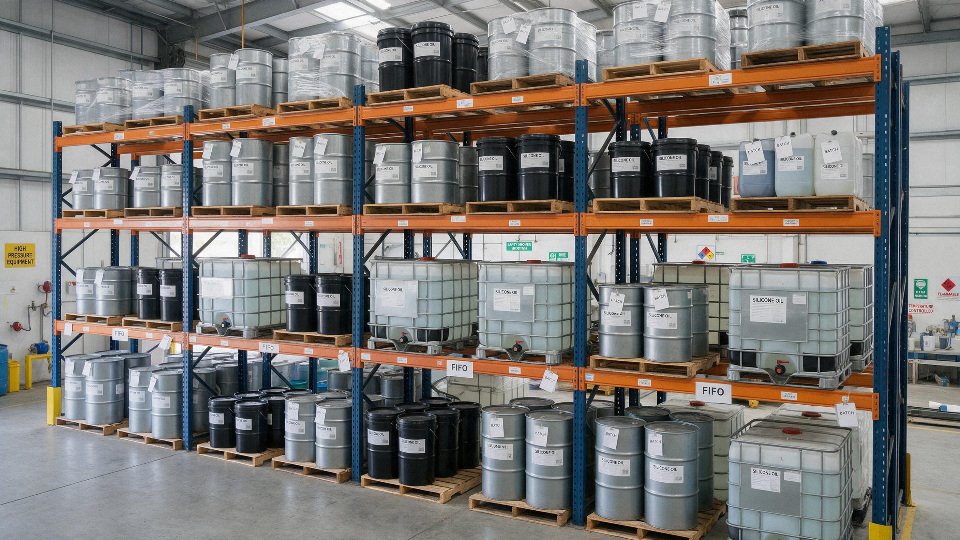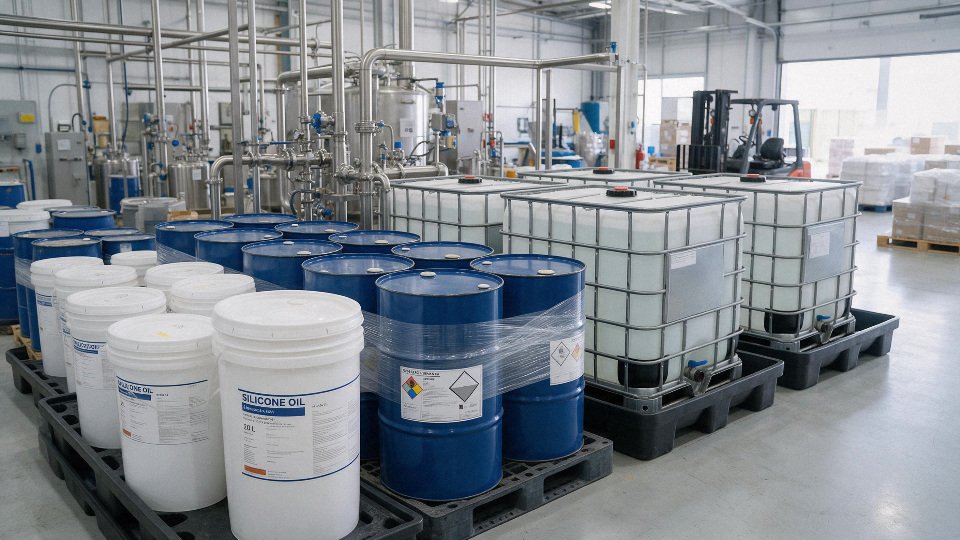
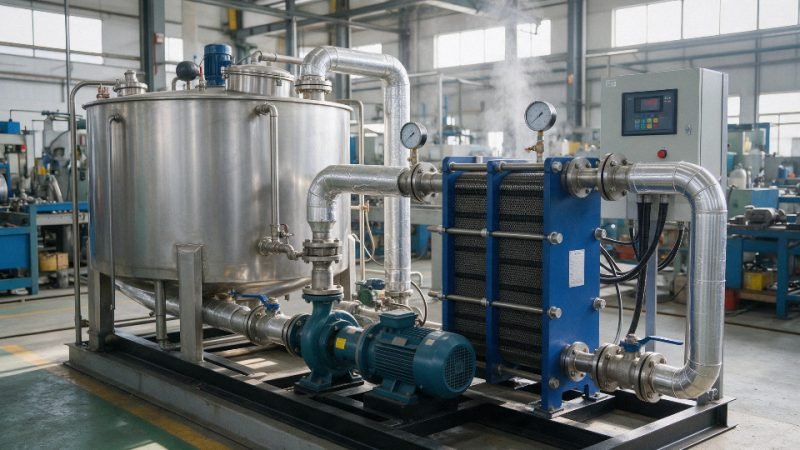
A silicone oil line that runs clean in spring can start smoking off volatiles, thickening in dead legs, or losing heat-transfer stability once bulk temperature creeps past what the fluid grade and system design will actually tolerate. On the plant floor that turns into unstable temperature control, seal complaints, deposits on heaters, and unplanned fluid changeouts; commercially, it means scrap, downtime, and buying a “high-temperature” fluid twice because the first selection was based on a headline number instead of the operating envelope.
Standard polydimethylsiloxane silicone oil is typically used continuously from about -50 C to 200 C, with some grades reaching roughly 230 C in controlled systems. Flash point is often around 250 C to 330 C for medium- to high-viscosity oils, but flash point is not the same as safe continuous operating temperature or acceptable fluid life.
That gap between brochure numbers and usable plant temperature is where most bad decisions happen. Viscosity, oxygen exposure, residence time on hot surfaces, contamination, and whether the system is open, vented, or well sealed all change what the same silicone oil can really withstand, and that is where the useful answer starts.
What determines heat resistance
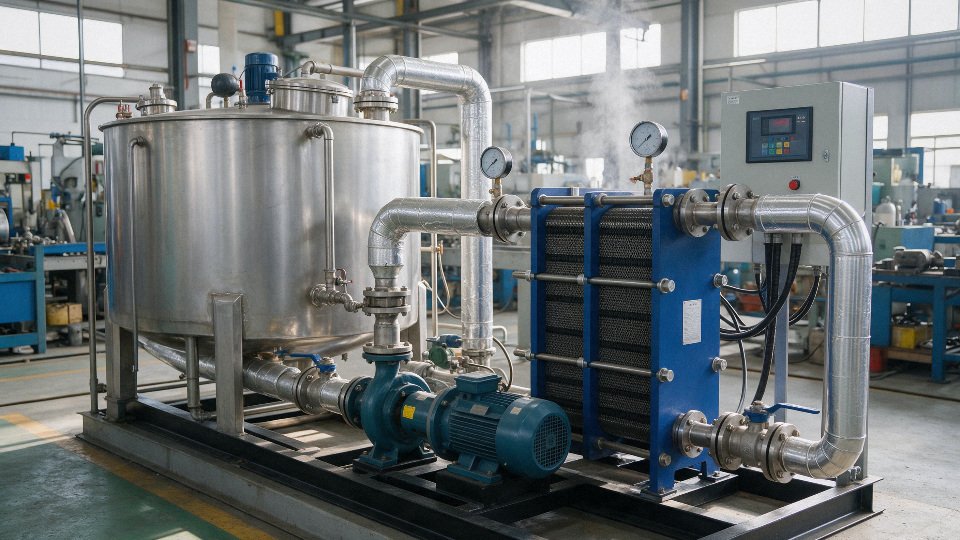
A silicone oil’s heat resistance is set less by the label on the drum than by six interacting factors: backbone chemistry, side-group chemistry, molecular weight, oxygen exposure, contamination, and the actual hottest metal or fluid-film temperature in the system. That is why two fluids both described loosely as “silicone oil” can behave very differently at 180 C, and why one plant gets years of stable service while another sees odor, viscosity drift, or varnish in months.
At a basic chemistry level, silicone oils usually outperform many mineral and synthetic hydrocarbon oils at elevated temperature because the main chain is built on alternating silicon and oxygen atoms rather than only carbon-carbon bonds. The Si-O backbone has high bond strength and a flexible bond angle, which helps the fluid keep mobility over a wide temperature span while resisting some of the chain-scission pathways that age hydrocarbon oils. That does not make silicone oil indestructible; it means the failure route is different, and often slower, when the system is clean and controlled.
The practical effect on the plant floor is familiar:
- A hydrocarbon oil may oxidize and thicken aggressively once oxygen, heat, and catalytic metals line up.
- A silicone oil may stay fluid longer under the same bulk temperature, yet still lose life through volatilization, oxidation at exposed surfaces, or polymer rearrangement if contaminants are present.
- Thermal stability and usable service life are not the same thing. A fluid can survive a short high-temperature excursion and still be a poor choice for long continuous service if evaporation loss, deposit formation, or viscosity drift become unacceptable.
How side groups change the temperature window
The side groups attached to the siloxane backbone matter almost as much as the backbone itself. In common industrial silicone oils, methyl groups dominate, but phenyl-modified grades are also used where higher temperature stability or better low-temperature flow under certain conditions is needed.
Methyl-based fluids, such as standard polydimethylsiloxane types, are popular because they give a balanced property set: wide usable temperature range, good lubricity in many light-duty applications, water repellency, and predictable viscosity grades. They are often the economical default. Their limitation is that under sustained high heat, especially with oxygen present, they can show evaporation loss and oxidative degradation that become visible as smoke, odor, viscosity change, or deposits on hot surfaces.
Phenyl substitution shifts that balance. In broad engineering terms, phenyl groups tend to improve high-temperature oxidative stability and can reduce volatility at a given viscosity level, while also influencing low-temperature behavior favorably in some formulations. The trade-off is cost, and not every phenyl-containing fluid is automatically the best high-temperature choice. The preferred option flips when the process is dominated by either:
- sustained hot-zone exposure and oxidation risk, where phenyl-modified chemistry may justify the premium, or
- moderate temperature duty with cost sensitivity, where a methyl fluid may give lower total cost if the system is reasonably sealed and maintained.
This is one place buyers get into trouble by purchasing on viscosity alone. Two oils with the same nominal viscosity can have different side-group chemistry and very different life in an open heated bath or on a hot textile roll.
Why viscosity grade and molecular weight matter
In practice, the viscosity grade is not just about pumping or film thickness. It is also a rough signal of molecular weight distribution, and that affects volatility, flash point behavior, residue tendency, and how the fluid handles mechanical stress.
Lower-viscosity silicone oils generally contain a greater proportion of shorter chains. Those lighter fractions evaporate more readily, especially from thin films or splashed surfaces. That usually means:
- higher evaporation loss at the same temperature
- lower flash point than a heavier grade of similar chemistry
- faster concentration shift over time as light ends leave first
- possible viscosity increase in the remaining fluid if the volatile portion is lost
Higher-viscosity grades usually hold onto mass better at elevated temperature and often show higher flash points, but they are not automatically safer or longer-lived in every machine. Heavier fluids can create thicker boundary films and lower misting, yet they may also trap contaminants more readily, circulate less effectively through fine passages, and leave heavier deposits if oxidation or local overheating occurs.
Shear response is often misunderstood here. Silicone oils are not all highly shear-sensitive in the same way some viscosity-index-improved hydrocarbon oils are, but severe recirculation through tight clearances, pumps, or bearings can still alter performance by combining shear, heat, and aeration. What the operator sees is not “shear damage” in isolation; it is the compounding effect of mechanical working plus thermal exposure plus oxygen.
A higher viscosity silicone oil always withstands higher temperature better.False
Higher viscosity often reduces evaporation loss and raises flash point, but actual service life also depends on side-group chemistry, oxygen exposure, contamination, and hot-surface conditions. A heavier fluid can still fail early if it oxidizes on overheated surfaces or accumulates sludge.
Oxygen exposure often decides whether the fluid lasts
A sealed or low-oxygen system can let silicone oil run acceptably at temperatures that would age the same fluid quickly in an open arrangement. Oxygen is one of the main variables separating good lab data from disappointing field life.
The worst cases are usually not dramatic. They are ordinary plant details:
- open baths with constant air contact
- shallow pans where a large surface area is heated
- splash lubrication that repeatedly refreshes a thin film in air
- high air exchange from extraction fans, oven doors, or enclosure leaks
- atomization or misting around chains, guides, or heated rolls
A thin film fails faster than a deep quiescent sump because the mechanism changes. More surface area means more oxygen contact. Less thermal mass means the film temperature tracks the hot metal more closely. Volatiles leave faster. Oxidation products are generated right where they can plate out.
That is why a fluid may look stable at 180 C in a closed loop but perform poorly near the same nominal temperature on an exposed conveyor bearing or coating line. The section’s main conclusion stops holding once the system changes from controlled bulk exposure to high-area, oxygen-rich thin-film exposure; then nominal fluid chemistry tells only part of the story.
Contamination can destroy stability faster than temperature alone
A surprising number of “temperature failures” are actually contamination failures that happen at temperature. Silicone oils are generally robust, but they do not tolerate every process residue equally.
Watch for these contamination classes:
- Acids and bases: can catalyze depolymerization or rearrangement reactions, especially at heat.
- Metal salts and catalytic residues: certain metals or salts can accelerate oxidation or unwanted polymer changes.
- Moisture: often harmless in small amounts at low stress, but at elevated temperature and in the presence of reactive residues it can contribute to instability.
- Process carryover: cleaners, fluxes, amines, sulfur-containing residues, reaction by-products, and degraded elastomer fragments can all change the aging pattern.
- Mixed lubricants or top-up errors: a small addition of the wrong oil can alter volatility, compatibility, or deposit formation.
The field symptom set is usually one of four things: unexpected thinning, unexpected thickening, gel particles, or dark sludge. Each points to a different mechanism, so treating all of them as “overheating” leads to the wrong fix. Sometimes the answer is a better fluid. Just as often it is stopping caustic wash carryover, changing a seal material, or eliminating copper-containing debris from a circulation loop.
The hottest surface matters more than the average bulk temperature
If you remember one operational rule, make it this one: silicone oil usually dies first at the hottest local surface, not in the average bulk fluid. Heater skins, cartridge heaters, bearing tracks, hot roll journals, and heat exchanger walls are common failure points.
A system may report a bulk temperature of 170 C and still cook the fluid if:
- the heater watt density is high
- flow is poor near the heated wall
- fouling insulates the surface and drives metal temperature up
- a bearing starves intermittently and runs boundary contact
- a dead leg holds stagnant fluid against a hot surface
The mechanism is straightforward. Local overheating increases evaporation and oxidation rate sharply, then concentrated degradation products form deposits. Those deposits reduce heat transfer or flow even more, which drives the surface hotter again. Once that cycle starts, the fluid looks like the culprit, but the root cause is often equipment design or maintenance.
When a buyer asks whether a silicone oil can “handle” a certain temperature, the useful follow-up is not just the setpoint. Ask for bulk operating temperature, estimated peak metal surface temperature, whether the system is open or sealed, the fluid residence time in the hot zone, and what contaminants can enter during operation. Those five answers usually predict service life better than the product name alone.
Typical temperature ranges
For standard dimethyl silicone oil, the practical continuous-use window most buyers should start with is about -50 C to 200 C, with many systems run more conservatively at 150 C to 200 C if fluid life matters. Some grades are used up to roughly 230 C in controlled, low-oxygen systems, but that is not a safe blanket design number for every tank, gearbox, bath, damper, or heat-transfer loop.
The reason buyers get misled here is simple: catalog temperature values often mix different meanings. One supplier may quote a short-term exposure limit, another may show a flash point, and another may publish a lab thermal-stability result under tightly controlled conditions. None of those, by themselves, tell you what bulk fluid temperature you can hold day after day on a production line without viscosity drift, mass loss, deposits, venting issues, or odor complaints.
Standard dimethyl silicone oil: the numbers most plants actually use
For general industrial service, standard polydimethylsiloxane fluids cover a wide range of duties well, but the acceptable temperature depends heavily on what the oil is doing.
| Service condition | Indicative temperature range | What usually limits it |
|---|---|---|
| Continuous low-stress service in closed or controlled systems | 150 C to 200 C | Oxidation rate, volatility, viscosity drift |
| Carefully controlled continuous service for some grades | Up to about 230 C | Supplier-approved formulation, low air exposure, residence time |
| Short-duration excursions | Often above normal continuous limit | Duration, hot-spot severity, oxygen exposure |
| Cold service | About -50 C and sometimes lower for fluidity-sensitive uses | Viscosity rise, instrument response, seal drag |
In lubrication, damping, and instrument filling, the fluid is usually selected less for “survival” than for stable behavior over time. A damper in a precision device may technically tolerate high temperature for a short spell, but if viscosity shifts 10 to 20 percent after repeated thermal cycling, the device no longer performs as designed. In a gear or chain application, the fluid may still be present, yet oxidation by-products, evaporation loss, or contamination can quietly push the maintenance interval into trouble.
One mechanism matters more than many people expect: as bulk temperature rises, the rate of volatilization and oxidative attack increases faster than linearly, especially in open or vented systems. That means a fluid that behaves acceptably at 180 C may lose mass, thicken, or form deposits much sooner at 210 C, even though both temperatures sound “within the high-temperature capability” of silicone oil.
Intermittent peaks are not the same as continuous operation
A short excursion above the normal bulk operating range is often tolerable; repeated or long-duration excursions are where silicone oil service life starts getting expensive. In practice, a brief spike during startup, heater overshoot, or batch upset is very different from holding the fluid near that temperature for hours every shift.
Duration changes risk through three paths:
- Oxidation exposure time
- High temperature plus air contact drives chain scission and formation of lower molecular weight volatiles.
- The longer the fluid sits hot in the presence of oxygen, the more noticeable the mass loss and property change.
- Surface hot spots
- A heater sheath, poorly wetted jacket, or stagnant corner can run much hotter than the measured bulk fluid.
- Local overheating can trigger decomposition or deposit formation even when the tank RTD looks acceptable.
- Additive and contamination effects
- Trace metal contamination, process residues, or mixed-in oils can lower stability.
- That is why one plant gets away with 220 C for years while another has odor and smoke complaints at less than that.
A practical rule on the plant floor: treat any excursion number as conditional until you know the peak temperature, time at peak, oxygen exposure, and whether the peak is bulk or film temperature. Those four inputs matter more than the headline number.
A flash point above 250 C means silicone oil can be continuously operated above 250 C.False
Flash point is a fire-safety property measured under defined test conditions, not a fluid-life limit. Continuous operating temperature must account for oxidation, volatility, hot spots, residence time, and the actual system design.
Low-temperature performance: where silicone oil often earns its keep
At the cold end, silicone oil is often chosen because it stays pumpable and functionally stable where mineral oils stiffen badly. For many dimethyl silicone oils, useful service can extend down to about -50 C, sometimes lower depending on viscosity grade and the actual duty.
That does not mean every grade behaves the same in the cold. Low-temperature performance depends on:
- Base viscosity grade
- Higher-viscosity fluids can become sluggish enough to upset startup torque, metering accuracy, or damper response.
- Pour behavior versus functional viscosity
- A fluid may still pour, yet be too viscous for a small orifice, capillary, or fine-clearance bearing.
- Wax-free chemistry advantage
- Silicone oils avoid the wax crystallization behavior that causes sharp low-temperature thickening in many hydrocarbon fluids.
- Seal and hardware effects
- At low temperature, the oil may still flow while elastomers harden and breakaway torque rises. The system can fail before the fluid does.
This is why silicone oil shows up in cold-climate instruments, outdoor damping systems, aerospace-adjacent hardware, and precision devices that must respond predictably after sitting overnight in winter conditions. In practice, buyers should ask not only for pour point or low-temperature fluidity data, but also for viscosity at the actual minimum startup temperature. That is usually the number that decides whether the valve moves, the needle settles, or the pump primes.
Standard dimethyl vs phenyl-modified and specialty grades
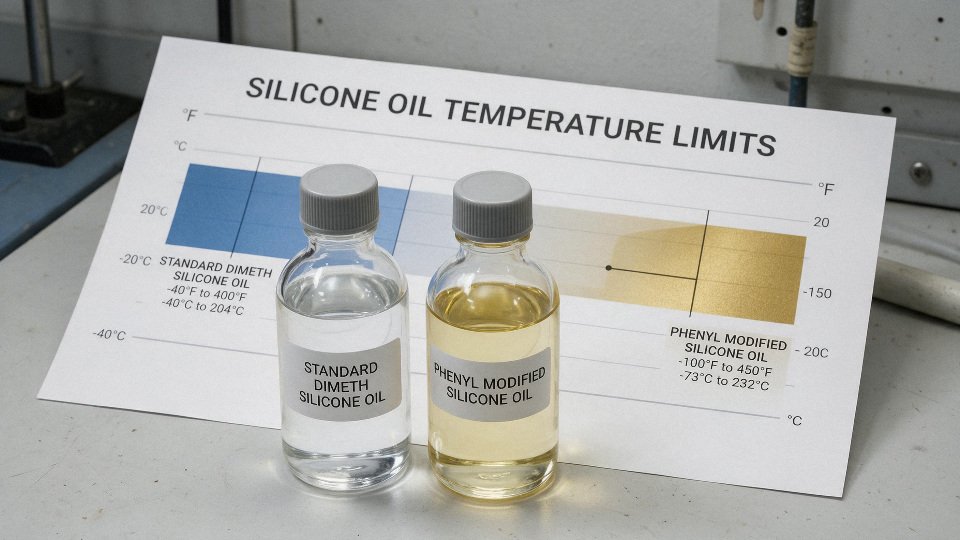
If the job lives near the upper edge of standard dimethyl performance, phenyl-modified or specialty high-temperature silicone fluids may be the better tool. They typically offer a broader operating window, especially where low-temperature fluidity and upper-temperature stability must both be managed.
A useful comparison looks like this:
| Fluid type | Typical strength | Typical limitation | Where it tends to fit |
|---|---|---|---|
| Standard dimethyl silicone oil | Broad general-purpose range, good cold behavior, common availability | Upper continuous range usually capped by volatility and oxidation | Lubrication, damping, release, general industrial service |
| Phenyl-modified silicone oil | Improved low-temperature behavior and often better thermal performance in certain applications | Higher cost, application-specific compatibility and supply requirements | Precision instruments, wider ambient swing, specialty thermal duty |
| Specialty high-temperature grades | Better retention at elevated temperature when correctly matched | Need supplier-specific validation; not interchangeable as a category | Demanding thermal baths, controlled high-temperature systems |
The trade-off is straightforward: higher-performance silicone fluids can extend operating margin, but they cost more and often require tighter application matching. If your process spends most of its life at 160 C and only occasionally touches 190 C, a specialty grade may never pay back. If you are fighting evaporation loss, smoke, refill frequency, or viscosity drift near the edge of standard dimethyl performance, the economics can flip quickly.
That conclusion stops holding if the real constraint is not the fluid chemistry but the hardware: poor vent design, heater hot spots, copper contamination, or an open reservoir can ruin the service life of an upgraded fluid just as efficiently as they ruin a standard one.
Flash point, fire point, autoignition, evaporation, decomposition: do not mix them up
A lot of purchasing mistakes come from treating these thermal properties as if they measured the same thing. They do not.
- Flash point
- The temperature at which vapors can ignite momentarily with an ignition source.
- Typical medium- to high-viscosity silicone oils are often around 250 C to 330 C, depending on molecular weight and formulation.
- Useful for storage, handling, and relative fire-risk assessment.
- Fire point
- Higher than flash point; the temperature at which combustion can be sustained.
- Relevant to hazard review, but still not a continuous operating recommendation.
- Autoignition tendency
- The temperature at which ignition can occur without an external spark or flame under defined conditions.
- Strongly dependent on test method and environment. Verify from current supplier data if safety design depends on it.
- Evaporation loss / volatility
- Often the first practical limit in hot service.
- A fluid may be well below flash point and still lose enough light fractions to change viscosity, create odor, fog enclosures, or increase top-up frequency.
- Decomposition onset
- Refers to chemical breakdown, which can begin locally before dramatic visible failure.
- The measured onset in lab tests does not mean you should design routine field service at that temperature.
For operating decisions, evaporation loss and long-term property retention usually matter before fire-point-type numbers do. That is especially true in open baths, vented sumps, lightly covered kettles, and any system with high surface area or continuous air sweep.
Why lab numbers and field limits do not translate directly
Lab thermal stability tests are valuable, but they answer narrow questions. Open-cup volatility data shows one aspect of mass loss under a specific exposure geometry. Thermogravimetric analysis shows decomposition behavior under controlled heating rates and atmospheres. A fielded production system sees something messier: cycling, contamination, metal surfaces, oxygen ingress, dead zones, and operators who leave the lid cracked open during shifts.
That gap matters commercially. A buyer who lifts a “thermal stability to X C” statement out of a technical data sheet and writes it into a purchase spec as a guaranteed continuous service temperature is setting up a dispute no one enjoys. The safer approach is to ask for the exact basis of the temperature claim:
- Test method and atmosphere
- Exposure duration
- Whether the number refers to bulk or film temperature
- Acceptable property change after exposure
- Whether the data is for that exact grade and viscosity
If your application sits near or above 200 C for long periods, the next sensible step is not to argue over generic category limits. It is to review the actual loop or lubrication point with the supplier, then confirm by sample testing or controlled field trial under your oxygen exposure, residence time, and contamination conditions.
Failure modes at high heat
The first high-heat failure in silicone oil is usually not dramatic ignition or instant breakdown; it is gradual property drift that operators miss until the system starts behaving differently. In air-exposed or marginally controlled service, the common sequence is oxidation, volatility loss, deposit formation, then secondary equipment trouble such as fouled heaters, unstable damping, seal complaints, or blocked small-bore lines.
A useful way to think about it is this: silicone oil rarely “fails” at one clean temperature point; it fails through a chain of changes in viscosity, composition, and surface behavior. By the time the fluid looks obviously bad, it has often been off-spec for quite a while.
Oxidative thickening in air-exposed systems
Where silicone oil has a hot free surface, constant air turnover, or repeated oxygen exposure in a vented reservoir, oxidation is often the dominant aging mode. The fluid tends to get thicker over time, sometimes only modestly at first, then much faster once deposits start building on hot metal.
What you usually see first:
- Rising viscosity at a fixed operating temperature
- Sluggish circulation or delayed response in damping and hydraulic-type applications
- Sticky brown or amber films on tank walls, heater sheaths, sight glasses, and valve internals
- Gum or varnish-like residues in low-flow areas
- Higher differential pressure across strainers or fine passages
The mechanism matters. At elevated temperature, oxygen attacks the fluid most aggressively where heat and air meet: the surface layer, thin films on hot metal, and splashed fluid on internals. That oxidation creates higher-molecular-weight species and polar degradation products. Those by-products do two things at once: they increase bulk viscosity and they plate out on heat transfer surfaces. Once a heater or jacket wall gets coated, local metal temperature rises because the deposit acts as insulation. Then the fluid touching that hotspot degrades even faster. It becomes a self-accelerating problem.
The trade-off is straightforward but easy to underestimate. Open expansion tanks, vented sumps, and easy-breathing reservoirs simplify operation and maintenance, but they usually shorten fluid life at high temperature because oxygen ingress is continuous. Closed or blanketed systems are less forgiving to design and venting mistakes, yet they usually hold viscosity and cleanliness longer if the rest of the circuit is tight.
This conclusion weakens if the process is only intermittently hot, the air-contact area is very small, or the supplier has a formulation specifically designed for that oxidation environment. In most standard industrial service, though, hot fluid plus air exposure is where trouble starts.
Volatilization and mass loss
At high temperature, especially in lower-viscosity grades or open systems, part of the fluid simply evaporates or strips off as lighter fractions. Operators often notice make-up demand before they notice any major change in appearance.
Typical early signs include:
- Falling fluid level without an obvious leak
- Oil misting, condensate, or oily residue around vents and covers
- Odor increase near hot reservoirs or vent points
- Flash point drift downward in aged samples
- More frequent top-ups, with the remaining fluid no longer matching the original grade perfectly
Low-viscosity silicone oils are generally more vulnerable because they contain a greater fraction of molecules with higher volatility. In an open bath, a loosely covered tank, or any process with high surface area and air sweep, the lighter components leave first. That shifts the remaining fluid’s composition. Sometimes the bulk viscosity creeps upward because the lighter ends are gone; in severe overheating or cracking conditions, the opposite can happen. You cannot diagnose the cause from a casual glance.
Commercially, this is where people get misled. A maintenance team may treat top-up as normal consumption, but repeated addition changes the inventory into a moving blend of fresh and aged fluid. Performance becomes less predictable. In heat transfer duty, that can show up as unstable temperature control. In damping or metering duty, response consistency starts wandering from one production week to the next.
Thermal cracking or depolymerization
If the fluid sees severe local overheating, hot spots at heater surfaces, or catalytic contamination from metals, residues, or process carryover, silicone oil can crack or depolymerize instead of simply thickening. In that case, viscosity may drop rather than rise.
Watch for this pattern:
- Lower-than-expected viscosity
- Increased light ends or volatile fraction in lab testing
- Pressure fluctuations from vapor formation in hot zones
- More fumes or vent losses
- Faster changes near electric heaters, cartridge heaters, or poorly controlled hot plates
This mode is easy to miss because many engineers are trained to associate aged oil with thickening only. With silicone fluids, both directions are possible depending on the chemistry and the conditions. A fluid that has cracked can look reasonably clean in a bottle and still be materially worse for service.
A clear, bright silicone oil sample is not proof that the fluid is still fit for high-temperature service.True
Appearance can remain acceptable while volatility, viscosity, dielectric properties, or low-level decomposition products have already shifted enough to affect equipment performance and safety margins.
Gelation and crosslinking
At the harsher end of overheating, or where reactive contaminants are present, the fluid can move past thickening into partial gel formation or crosslinked masses. This is especially troublesome in systems that have catalyst residues, reactive process contamination, incompatible additives, or infrequent cleaning.
Symptoms are usually operational before they are visual:
- Stringy or jelly-like residues in strainers and dead legs
- Soft solids or elastomer-like lumps in reservoirs
- Sudden plugging of narrow tubing, needle valves, or instrument lines
- Pump suction problems despite nominal fluid level
- Localized deposits that do not dissolve easily back into the bulk oil
The practical problem is not just bad fluid life. Once gel particles start circulating, they create intermittent faults that waste maintenance time: a control valve sticks, a pressure tap reads wrong, a small cooler channel partially blocks, then the issue seems to disappear after shutdown. Plants lose days chasing instrumentation before anyone pulls and inspects the fluid properly.
Foaming, air entrainment, and heat transfer loss
As fluid condition drifts, surface behavior changes too. Oxidation products, contamination, and viscosity shift can all make the oil more prone to foaming or to holding entrained air longer than it should.
That leads to several plant-floor symptoms:
- Noisy pump suction or cavitation-like sound
- Erratic level indication
- Reduced heat transfer stability
- Temperature overshoot or lag
- Spongy damping behavior
- Inconsistent metering or actuator response
Mechanistically, bubbles are not just a housekeeping issue. Entrained gas lowers the effective density and thermal contact of the circulating fluid. In a heat transfer circuit, that means poorer film contact at the heat exchange surface and more erratic circulation. In a damping application, compressible entrained air changes the force response. In dielectric service, gas and volatile by-products can reduce electrical reliability well before the fluid looks burnt.
Secondary equipment effects engineers should monitor
Once silicone oil starts degrading, the equipment usually tells you before the lab report arrives. The warning signs are spread across mechanics, heat transfer, controls, and housekeeping.
Mechanical and flow-related effects
- Seal hardening, shrinkage, or swelling, depending on elastomer compatibility and degradation by-products
- Increased leakage at shaft seals, cover gaskets, and instrument fittings
- Plugged breathers, strainers, and small orifices
- Higher pump load or reduced delivered flow
- Sludge accumulation in low-velocity piping and dead legs
Thermal effects
- Heater fouling and rising sheath temperature
- Poor heat-up rate despite normal power input
- Hot spots in jackets, coils, or electric heater zones
- More frequent high-temperature alarms with no obvious control fault
Product-quality or function effects
- Damping inconsistency from viscosity drift
- Reduced dielectric reliability in electrical applications
- Poor release, lubrication, or wetting behavior if the fluid is used as a processing aid
- Variation in cycle time because the fluid no longer behaves like the original fill
A simple appearance check will catch gross contamination, char, or obvious gel. It will not reliably catch:
- Early volatility increase
- Flash point shift
- Moderate viscosity drift
- Dielectric loss changes
- Light-end formation from cracking
- Deposit precursors still dissolved in the bulk fluid
In practice, if the system is critical, monitoring should combine operator observations with periodic testing. At minimum, trend:
- Viscosity at a defined temperature
- Mass loss or volatility tendency, where relevant
- Flash point, if high-temperature safety margin matters
- Acid or other degradation indicators, if the supplier recommends them for that fluid
- Insolubles or deposit tendency
- Dielectric properties for electrical duty
- Fluid top-up rate versus historical baseline
The point is not to over-test every drum. It is to catch the direction of change before fluid degradation turns into heater replacement, seal work, scrap, or a shutdown that gets blamed on the wrong component. If a sample has seen sustained high temperature and the application is sensitive, send it for property testing before relying on color or clarity.
Application-specific limits
The same silicone oil can be stable enough in a sealed heat-transfer loop and still fail quickly in an open coating or release process at the same stated temperature. What matters is not just bulk temperature, but where the hottest film sits, how much oxygen reaches it, how long it stays there, and what surfaces or materials it touches.
A buyer who only compares one catalog temperature number usually misses the actual failure point. In plant service, application limits are set by local hot spots, residence time, contamination, and housekeeping tolerance just as much as by the base chemistry.
Heat transfer systems
For closed heat-transfer duty, silicone oil is often workable where the bulk fluid is kept roughly in the 150 C to 200 C range, with some grades used higher if the supplier data, expansion tank design, and oxygen control support it. The practical limit usually comes from film temperature at the heater wall, not the temperature you see on the loop display.
That distinction matters. If the heater sheath or exchanger wall runs materially above the measured bulk fluid temperature, the thin boundary layer of oil at that surface can oxidize or crack first. Once that starts, you get a chain of operating problems:
- viscosity drift
- volatile formation
- darkening or haze
- deposits on heaters and exchangers
- reduced heat-transfer coefficient
- higher sheath temperature
- faster fluid damage
That feedback loop is why two loops both “running at 190 C” can have completely different fluid life. One has decent velocity, clean surfaces, and an inert or well-isolated expansion space. The other has a fouled heater bundle, low-flow dead legs, and an open tank breathing humid air all shift.
Key checks for heat-transfer use:
- Bulk temperature
- Treat the average loop temperature as only the first screen.
- Long fluid life usually needs a margin below the supplier’s absolute maximum recommendation.
- Film temperature
- Verify heater watt density, circulation rate, and exchanger cleanliness.
- A high-watt-density electric heater can push the local oil film much hotter than expected.
- Oxidation control
- Expansion tanks, vents, and reservoir headspace design matter.
- Even a good fluid loses life quickly if it sits hot in contact with moving air.
- System sealing
- Check pump seals, flange habits, and whether operators leave inspection ports cracked open.
- A “closed loop” on the P&ID is sometimes half-open in practice.
- Startup and shutdown procedure
- Avoid heating stagnant oil in dead zones.
- During shutdown, long hot soaks with no circulation can punish the fluid more than normal production.
A common mistake is to size the fluid from the process setpoint and ignore transient behavior. If startup is slow, heaters are energized before full circulation, or hot equipment sits idle over weekends, the fluid may spend more damaging time at local peak temperature than the average historian trend suggests. If you are trying to stretch service life above about 200 C bulk, that conclusion stops holding unless the supplier confirms the grade for that duty and you can verify actual wall temperatures and oxygen exposure.
Lubrication and damping
In lubrication and damping, temperature suitability depends less on one upper limit and more on viscosity retention where the oil actually works. A silicone oil that looks fine in a beaker at elevated temperature may still give poor damping feel, leakage, or material compatibility trouble inside a real assembly.
For lubricated components, separate these cases:
- Light bearings and instrument mechanisms
- The oil sees thin films, intermittent motion, and often mixed-material contact.
- At elevated temperature, low-viscosity grades may thin enough to reduce damping or migrate away from the loaded zone.
- Damping devices
- Consistency across temperature is often the selling point of silicone oil.
- Still, damping torque depends on the grade, gap geometry, and any air entrainment; shear heating in compact dampers can matter more than people expect.
- Plastic and elastomer contact
- Compatibility cannot be assumed from “silicone-safe” language.
- Swell, softening, extraction, or stress cracking risk depends on the exact polymer, cure system, additives, and contact time.
The trade-off here is straightforward: a higher-viscosity grade may hold damping and leakage control better at temperature, but it can increase drag at low temperature, slow response, and complicate filling or degassing during assembly. In practice, instrument makers often care more about viscosity-temperature behavior and volatility than about headline maximum temperature.
Check these items before release:
- bearing zone temperature, not housing average
- shear rate in the actual gap or contact
- long-term seal and plastic compatibility
- bleed, creep, or migration onto adjacent parts
- torque consistency after thermal aging
Electrical and electronic uses
For dielectric and electronic service, thermal endurance is only part of the acceptance case. Cleanliness, volatility, and residue control often decide whether the fluid is usable near sensitive components.
Important decision points:
- Dielectric stability
- The oil may remain electrically useful at temperatures where cosmetic appearance has already changed.
- Verify against the supplier’s current electrical data, especially after thermal aging if the application is critical.
- Thermal aging in air
- Near coils, terminals, and hot boards, thin exposed films age faster than bulk fluid in a reservoir.
- That can produce deposits that attract dust or interfere with contacts.
- Cleanliness
- Trace contamination matters more in electronics than in general machinery.
- Filling environment, packaging cleanliness, and rework habits can be the weak link, not the fluid itself.
- Volatility near sensitive components
- Low-level evaporation and migration can fog optics, contaminate sensors, or alter contact surfaces.
- This is often the real limit in enclosed electronics.
A silicone oil suitable for heat transfer is automatically suitable for nearby electronic assemblies at the same temperature.False
Electronic and electrical uses are often limited by volatility, dielectric cleanliness, residue formation, and migration onto sensitive parts, not just by the fluid's nominal thermal stability.
Textile, release, and surface treatment processes
Open, air-swept processes are harsher than many buyers expect. Thin films on hot metal, fabric, paper, or release surfaces can degrade faster than the same oil in a covered sump because oxygen access is high and the exposed layer is very thin.
This category includes:
- textile finishing lines
- release-agent application
- paper or film treatment
- mold-release transfer processes
- surface modification steps followed by oven exposure
The mechanism is simple enough: thin films heat up quickly, lose volatiles more easily, and have very high surface area relative to mass. That pushes oxidation, fuming, and deposit formation earlier than the bulk-temperature number suggests. On a stenter or heated roll line, residence time and airflow pattern can matter as much as nominal oven setpoint.
Watch for:
- residue or varnish on rolls, guides, or molds
- transfer inconsistency across the web
- odor generation during heated exposure
- changes in slip, release, or hand feel after oven passage
- substrate-specific effects, especially with porous or reactive surfaces
A line that tolerates brief exposure can still become a maintenance problem if deposits build over many shifts. This is the clearest case where a fluid acceptable in a closed thermal system may be unsuitable in an open process at the same nominal temperature.
Personal care, cosmetic, and specialty formulation processing
In heated formulation work, the temperature question is not only “Will the silicone survive?” but also “Will the product still smell, feel, and look right afterward?” Purity, odor, color stability, and sensory profile can be more restrictive than the fluid’s basic thermal endurance.
Typical checks include:
- batch heating temperature and hold time
- open-kettle versus closed-vessel processing
- interaction with fragrance, active ingredients, waxes, or emulsifiers
- volatility loss during heating and filling
- post-heat odor, haze, or texture drift
A processor may be safely below the thermal limit of the silicone and still reject the batch because of sensory change or trace odor pickup. That boundary matters most in high-purity or appearance-sensitive products, where supplier grade selection and handling cleanliness become part of the thermal decision.
Vacuum and diffusion pump environments
For vacuum duty, the usable temperature is often defined less by decomposition and more by vapor pressure and backstreaming behavior. A fluid can tolerate heat chemically yet still be the wrong choice if it migrates into the vacuum space or fails to maintain the required vacuum performance.
Screen this application with extra care:
- operating vacuum level required
- pump type and stage temperature
- fluid vapor pressure at the actual operating temperature
- backstreaming tolerance of the process
- contamination sensitivity of downstream chambers or coated parts
In diffusion-pump-related environments, small volatility differences become process-critical. Supplier-specific data is essential here; this is not a place to generalize from generic silicone oil ranges.
Selection and specification
A workable silicone oil specification starts with duty, not with the highest temperature line on a brochure. For most industrial buys, the right grade is the one that survives your actual thermal profile, moves through your hardware at the required rate, and stays compatible with seals, metals, and process residues; the wrong habit is buying the “hottest” or thickest fluid and discovering later that it will not pump cold, sheds heat poorly, or leaves harder-to-manage deposits after excursions.
The procurement mistake I see most often is a one-line requirement such as “silicone oil, 200 C resistant.” That tells a supplier almost nothing. A fluid that behaves acceptably in a lightly loaded, closed system at 200 C may age much faster in a vented bath, a thin-film wipe application, or a system with copper alloys, process contamination, and frequent heat-up/cool-down cycles.
Define the operating envelope before you choose the grade
You need the actual temperature exposure map, not a single nominal setpoint. The same silicone oil can give reasonable life in one plant and disappoint in another because peak exposure, oxygen access, and residence time are different.
At minimum, write the following into the internal selection sheet or RFQ:
- Normal bulk operating temperature
- The temperature the fluid sees most of the time, not the controller setpoint on the panel.
- In heat transfer loops, distinguish heater outlet, bulk reservoir, and return line temperature.
- Peak temperature
- Include upset or startup peaks, not just steady operation.
- A brief overshoot matters less than repeated hot soaking in stagnant zones.
- Dwell time at peak
- Minutes per cycle, hours per shift, or continuous exposure.
- This is one of the main life drivers. Ten minutes at a high peak is a different problem from eight hours.
- Thermal cycling frequency
- Daily starts and stops, batch ramps, weekend shutdowns, seasonal idling.
- Repeated cycling can accelerate air ingress, condensation issues, and deposit formation at local hot spots.
- Atmosphere
- Closed nitrogen-blanketed system, loosely vented tank, open surface bath, partial vacuum, dry air, humid air.
- Oxygen availability changes oxidation tendency; open systems usually age fluid faster than well-sealed ones.
- Pressure
- Bulk system pressure, suction conditions, and whether the fluid sees vacuum.
- Lower local pressure can increase volatilization of lighter fractions and aggravate cavitation in low-viscosity grades.
- Contact materials
- Metals: carbon steel, stainless, aluminum, copper alloys.
- Nonmetals: FKM, NBR, EPDM, PTFE, paints, hose liners, sight glass seals, adhesive residues.
- Trace catalysts or reactive surfaces can change stability more than buyers expect.
- Contamination path
- Water ingress, solvent carryover, process chemicals, fines, grease crossover, cleaning agent residues.
- A stable oil can still fail early because the system is dirty or chemically active.
If the operating envelope is incomplete, any temperature claim is provisional. This is the boundary on most generic selection advice: once you have frequent overheating, open-air exposure, reactive contamination, or unusual materials of construction, you need product-specific review and preferably a representative aging test.
Choose viscosity for the machine, not just for the data sheet
Viscosity is doing several jobs at once, and that is where buyers often overcorrect. Higher viscosity can reduce volatility and sometimes improve film retention, but it also raises pumping load, worsens cold-start behavior, and can reduce heat transfer performance because the fluid moves and mixes less effectively.
Use viscosity selection against the actual function:
| Duty | Usually favors lower viscosity | Usually favors higher viscosity | What to verify |
|---|---|---|---|
| Pumped heat transfer | Yes | Rarely, unless leakage control dominates | Pump NPSH, flow, film coefficient, startup temperature |
| Light lubrication / release | Often | Sometimes | Wetting, residue, carryover loss |
| Damping / dashpot service | No | Yes | Torque curve over full temperature range |
| Vacuum diffusion / specialty process | Case-specific | Case-specific | Supplier application data, volatility behavior |
| Open bath at elevated temperature | Sometimes no, due to evaporation | Often, within pumpability limits | Mass loss, misting, turnover rate |
The mechanism is straightforward. As viscosity rises, the fluid usually resists flow more, which increases pressure drop in lines, slows circulation, and can starve small metering points or narrow jackets during cold starts. In a heat transfer system, that can create local wall overheating: the heater surface runs hotter because the fluid film is moving poorly, and that local hot spot drives fluid degradation faster than the bulk temperature suggests.
On the other side, very low viscosity can mean:
– More evaporation or misting in open or semi-open service
– Thinner lubricating films under load
– More leakage past clearances and seals
– Less damping where controlled motion is required
So the preferred viscosity flips with the application. A fluid that is excellent in a circulating thermal loop may be a poor choice in a damping cylinder, and the reverse is just as true.
Select the chemistry family that fits the duty
The family matters as much as the nominal viscosity.
Standard dimethyl silicone fluid
This is the default choice for many general industrial duties where the temperature is moderate and the system is not unusually oxidative or chemically aggressive. It is commonly the most practical starting point on cost, availability, and broad usability.
Use it when:
– Operating temperatures are within the supplier’s normal continuous range for that grade
– The system is reasonably controlled
– You do not need a specialty optical, dielectric, or extreme-temperature feature
Phenyl-containing silicone fluid
Where lower-temperature behavior, oxidation resistance in some services, or broader thermal capability is needed, phenyl-modified fluids may be worth reviewing. They are not a universal upgrade; they cost more and need application-specific validation.
Ask about them when:
– You have repeated high-temperature excursions near the upper edge of standard dimethyl service
– Low-temperature fluidity matters along with high-temperature exposure
– The process justifies the higher material cost
Modified silicone fluid
These are chosen for a functional reason: altered wetting, lubricity, compatibility, surface behavior, or dielectric characteristics. The term is broad, so do not specify “modified silicone oil” without saying what must be modified and why.
Common reasons to consider one:
– Better spreading or controlled wetting
– Different interaction with substrates or coatings
– Application-specific lubrication or release behavior
– Electrical performance requirements
Application-specific blends
Some duties are better served by a formulated product rather than a neat base fluid. That can help balance volatility, handling, processability, and end-use performance, but only if the blend is documented properly. “Equivalent silicone oil” is often where procurement gets into trouble.
A higher advertised maximum temperature does not automatically make a silicone oil the best choice for a pumped heating or lubrication system.True
Higher-temperature or higher-viscosity grades can reduce volatility, but they may also worsen circulation, cold-start pumpability, and local heat-transfer performance. Selection has to match the system duty, not just the headline temperature number.
Specify data that actually predicts service behavior
Viscosity alone is not enough for a purchase specification. Ask for the properties that matter to your use case.
Include, as relevant:
- Viscosity and viscosity-temperature behavior
- State the reference temperature for viscosity.
- If startup conditions matter, ask how the fluid behaves at your minimum ambient or jacket temperature.
- Flash point
- Useful for handling and risk review, but not a service-life guarantee.
- Verify the test method used if you are comparing suppliers.
- Pour point
- Important where winter storage, unheated plants, or outdoor pipework are involved.
- Volatility or evaporation loss
- Especially relevant for open systems, high-temperature exposure, or low-residue requirements.
- Ask for the test condition; a number without time and temperature is not useful.
- Acid value
- A cleanliness and aging indicator in many applications.
- More relevant when monitoring fluid condition over time.
- Refractive index
- Only specify it where optical or process-control relevance exists.
- Dielectric properties
- Necessary for electrical or insulating applications.
- Room-temperature values alone may not represent elevated-temperature behavior.
- Appearance
- Clear, free of haze, gel, or visible particulate if your process needs it.
- This sounds basic, but it catches storage and contamination issues.
Require a compatibility review, even for “inert” silicone oils
Silicone oils are broadly useful, not universally compatible. Get a written review covering:
- Seals and elastomers: FKM, NBR, EPDM, silicone rubber, PTFE-backed seals
- Coatings and paints: tank linings, internal coatings, marked surfaces
- Metals: especially copper-containing alloys and any unusual metallurgy in hot zones
- Catalysts and reactive process chemicals
- Cleaning agents: alkaline washes, solvents, surfactant cleaners, purge fluids
- Product-contact surfaces if carryover matters to downstream coating, bonding, printing, or painting
In practice, contamination from maintenance is a common blind spot. Someone flushes a line with a convenient solvent, leaves a residue, and six weeks later the fluid gets blamed for varnish or swell.
Ask for thermal aging evidence under relevant conditions
Room-temperature certificates tell you the delivered product met basic release criteria. They do not tell you how the fluid will behave after months at temperature in your system.
Request thermal-aging or stability information that matches your service as closely as possible:
- Test temperature range near your normal and peak exposure
- Exposure time
- Whether the test was in air, closed vessel, or inert atmosphere
- What changed: viscosity shift, mass loss, acid value, color, residue, insolubles
- Whether metals or catalysts were present during the test
Supplier data is still only an indication unless the conditions match well. For a consequential application, a small bench aging trial or controlled plant trial is usually money well spent. If you send the actual duty profile and contact-material list, a supplier can usually narrow the field much faster and with fewer bad candidates.
Testing and condition monitoring
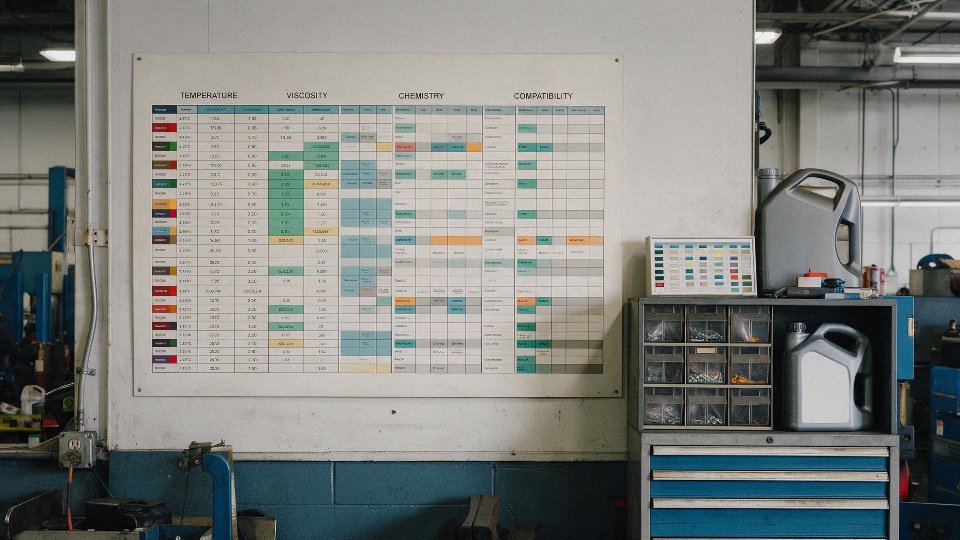
A silicone oil that looks acceptable on a data sheet can still fail early if the plant exposes it to more air, hotter metal surfaces, or incompatible seals than the supplier assumed. The practical way to validate temperature capability is to test the actual fluid in something close to the actual duty, then monitor drift in a few repeatable indicators before operators start seeing smoke, varnish, or unstable process control.
Bench work comes first because it is cheap, fast, and usually good enough to reject the wrong candidates before you tie up production equipment.
Prequalification testing before production use
Use a short test matrix, not a single beaker-on-a-hotplate exercise.
- Bench aging at relevant temperatures
- Run the fluid at one normal bulk temperature and one accelerated temperature.
- Keep exposure time long enough to show trend, not just first-hour stability. Depending on duty, that may be tens to hundreds of hours.
- Test both:
- Closed or covered condition to simulate low-air systems
- Ventilated or open condition to expose oxidation and volatility tendency
- Record:
- Viscosity before and after
- Mass loss
- Color change
- Deposit formation on coupon surfaces
- Any gel, haze, or skin formation
Mechanism matters here: hotter metal surfaces can drive local degradation even when measured bulk temperature still looks safe. A fluid that survives 200 C in a sealed bottle may not survive the same nominal temperature on a thin film over a heater tube with oxygen present.
- Volatility or mass-loss testing
- Weigh the sample before and after thermal exposure under defined conditions.
- Compare candidates at the same film thickness, vessel geometry, and air exchange rate.
- For open baths, this often predicts housekeeping trouble just as much as fluid life: vapor loss, condensate buildup, odor complaints, and make-up fluid consumption.
- Viscosity retention
- Measure initial viscosity and post-aging viscosity at a standard reference temperature.
- Watch for both upward and downward drift:
- Upward shift can indicate oxidation, condensation products, or contamination
- Downward shift can indicate cracking, dilution, or wrong make-up fluid
- In heat transfer and damping applications, viscosity drift often shows up as control instability before anyone notices visible fluid damage.
- Compatibility screening with materials of construction
- Include actual wetted materials where possible:
- Elastomers
- Gaskets
- Hose liners
- Pump seal materials
- Coatings
- Plastics
- Adhesives
- Metals and plated surfaces
- Check for:
- Swelling
- Hardening
- Softening
- Extraction
- Surface staining
- Loss of mechanical integrity
This is where many line trials get derailed. The oil may be thermally fine, but a sight-glass gasket, seal lip, or hose inner layer starts changing after a few days at temperature.
- Include actual wetted materials where possible:
A silicone oil rated for high temperature should always be approved without testing if the bulk operating temperature is below 200 C.False
Bulk temperature alone does not capture hot spots, oxygen exposure, residence time, contamination, or compatibility with seals and construction materials. Site-relevant testing is still needed.
Pilot or line trial design
A useful trial records operating conditions that actually drive degradation. If those are missing, the trial result is mostly anecdotal.
Track at least these variables:
- Bulk fluid temperature
- Estimated or measured hot-spot temperature at heaters, bearings, thin-film zones, or stagnant corners
- Air exposure
- Open bath
- Vented tank
- Nitrogen-blanketed vessel
- Closed loop with expansion tank
- Residence time at peak temperature
- Circulation rate and turnover
- Fluid replacement or top-up rate
- Carryout losses or drag-out
- Start-stop frequency
- Any water ingress, powder ingress, or process contamination
The trade-off is straightforward: aggressive accelerated trials reveal weak fluids quickly, but they can also create failure modes the normal process will never see. If your plant runs at 170 C with occasional spikes, a week at 230 C in an open pan may be useful for ranking candidates, but not for predicting exact service life.
Routine in-service checks
Routine monitoring should be simple enough that maintenance will actually keep doing it.
Common checks include:
- Viscosity trend
- Mass loss or make-up consumption
- Color darkening
- Odor change
- Deposits on heaters, filters, sight glasses, or tank walls
- Foaming tendency
- Dielectric properties where the oil serves electrical insulation duty
- Heat-transfer performance
- Slower warm-up
- Higher heater skin temperature for the same duty
- Reduced temperature uniformity
- Filter loading or sludge accumulation
A single indicator rarely tells the whole story. Darker color with stable viscosity may be acceptable in some services; rising viscosity plus deposit formation usually is not.
Sampling practice and intervals
Sampling method affects whether the lab result means anything.
Closed systems
- Sample from a live circulating point, not the bottom drain if sludge settles there.
- Avoid first-flush dead-leg material unless that is specifically what you want to inspect.
- Typical interval depends on severity; many plants start tighter early in service, then widen once trend stability is proven.
Open baths
- Sample from both the working zone and, if stratification is possible, a second location.
- Check level loss and top-up frequency along with the sample result. In open systems, evaporation history is part of condition monitoring.
Recirculating loops
- Sample downstream of the main process zone and upstream of filtration if contamination diagnosis is the goal.
- Pair fluid testing with differential pressure across filters and heater approach temperature.
Batch processes
- Sample at a consistent cycle point:
- After heat soak
- After cool-down
- Before top-up
- Irregular timing makes trend data noisy enough to be misleading.
Diagnosing the cause of drift
Use symptom clusters, not one-to-one assumptions.
- Oxidation is more likely when you see viscosity increase, darker color, acidic or burnt odor, varnish, and higher deposit load, especially in air-exposed systems.
- Contamination is more likely when you see sudden change, water haze, particles, foaming, or process-specific residues.
- Localized overheating is more likely when you see deposits concentrated near heaters, sharp odor change, declining thermal efficiency, and acceptable bulk analysis that does not match equipment behavior.
- Wrong-grade selection is more likely when you see chronic volatility, persistent low viscosity for the duty, repeated top-up demand, or dielectric/heat-transfer performance that was marginal from the start.
The main conclusion stops holding when sampling is inconsistent or the system has mixed old and new fluids without records. At that point, trend interpretation gets weak, and you may need a controlled drain-and-recharge segment or a supervised trial with tighter data capture.
Retirement criteria and replenishment strategy
Do not retire silicone oil by calendar age alone unless regulation, customer specification, or a validated internal standard requires it. Retire or partially replace based on performance drift that affects the process, maintenance burden, safety margin, or energy use.
A practical decision set usually includes:
- Measured property drift beyond your accepted band
- Commonly viscosity, volatility, dielectric behavior, or contamination level
- Equipment symptoms
- Fouling
- Unstable temperature control
- Rising heater skin temperature
- Excessive foaming
- Abnormal seal or pump issues
- Fluid consumption trend
- Top-up rate rising faster than production output would explain
- Inspection findings
- Persistent deposits, sludge, or varnish after normal maintenance
Top-up can extend service life, but it can also hide a degrading base charge if losses are high. In systems with chronic thermal stress, partial replenishment should be tied to test data and deposit inspection, not just adding fresh fluid whenever the level drops.
Supply and quality assurance
A silicone oil that looks fine on a data sheet can still become an expensive problem if the supplier cannot hold batch consistency, document what was actually shipped, and control packaging through transit. For thermal-duty applications, buyers should qualify the manufacturing and quality system as hard as they qualify the fluid itself, because small upstream differences show up later as volatility, viscosity drift, deposits, and uneven service life.
The first thing I look for is whether the supplier can explain how the product is made, not just what the target viscosity is.
Manufacturing consistency
For silicone oil, manufacturing consistency starts with feedstock control and ends with how well the final product is stripped, filtered, and released.
- Raw material control
- Verify whether the supplier controls or qualifies the key siloxane intermediates feeding the process.
- Ask how incoming lots are checked for purity, moisture, acidity, and low-boiling content where relevant.
- If the supplier is integrated, ask which stages are in-house versus outsourced. That affects continuity and accountability.
- Reactor capability
- Buyers should understand whether the producer has reactor systems suited to controlled polymerization and end-group management, not just blending tanks.
- Poor temperature control, residence-time variation, or catalyst handling shows up later as wider molecular-weight distribution and inconsistent viscosity.
- Distillation or purification quality
- This matters more than many purchasing teams expect. Residual low boilers can raise evaporation loss and shift flash point; residual catalyst, gels, or contamination can accelerate degradation in service.
- Ask what purification step is actually used: vacuum stripping, distillation, filtration, or a combination. Then ask what release tests confirm it worked.
- Batch-to-batch viscosity stability
- A nominal viscosity grade is not enough. Request the supplier’s internal control band, not just the broad catalog tolerance.
- In heat-transfer or lubrication service, viscosity spread changes pumpability, film behavior, and heat-transfer characteristics. A grade that swings from lot to lot may still “pass” the label claim while making the process harder to control.
The practical trade-off is simple: the cheapest supplier may quote the same centistoke number, but tighter molecular and purification control usually costs more and pays back through fewer fluid changes, less housekeeping, and more predictable operation. That conclusion weakens if the application is non-critical and run well below the fluid’s thermal boundary; in that case, broad commercial-grade tolerance may be acceptable.
Documentation buyers should expect
A serious supplier should provide a usable documentation package without being chased for every file.
- Certificate of Analysis (COA) for the shipped lot
- Technical Data Sheet (TDS) with test methods, typical values, and clear limitations
- Safety Data Sheet (SDS) aligned with destination-market requirements
- Regulatory declarations relevant to the buyer’s market and use case
- Application guidance that distinguishes typical use from supplier-confirmed use
Do not treat a generic TDS as proof of suitability at your exact operating temperature. If you plan to run near the upper end of the published range, ask what data supports that claim under your atmosphere, residence time, and contamination load.
A COA alone is sufficient to qualify a silicone oil supplier for thermal applications.False
A COA confirms the shipped lot met listed release items, but it does not by itself prove process capability, traceability depth, packaging control, or suitability for a specific thermal duty.
Quality systems and traceability
When something goes wrong in a plant, the buyer needs answers in days, not a month of email delay.
- Lot numbering
- Each drum, pail, or IBC should trace back to a production batch and fill date.
- Retained samples
- Ask how long retained samples are kept and whether the supplier can re-test them during a complaint investigation.
- Change management
- Buyers should require notice of meaningful changes in raw material source, process route, specification window, packaging, or test method.
- Complaint response
- Ask who owns technical complaints, expected response time, and whether the supplier can support root-cause work with lab analysis.
This is where many vendor qualifications separate. A supplier with a clean audit trail can tell you whether the issue came from the fluid, the drum, the transfer hose, or the customer’s tank. One without traceability usually defaults to “product meets specification,” which is not much help on a shutdown weekend.
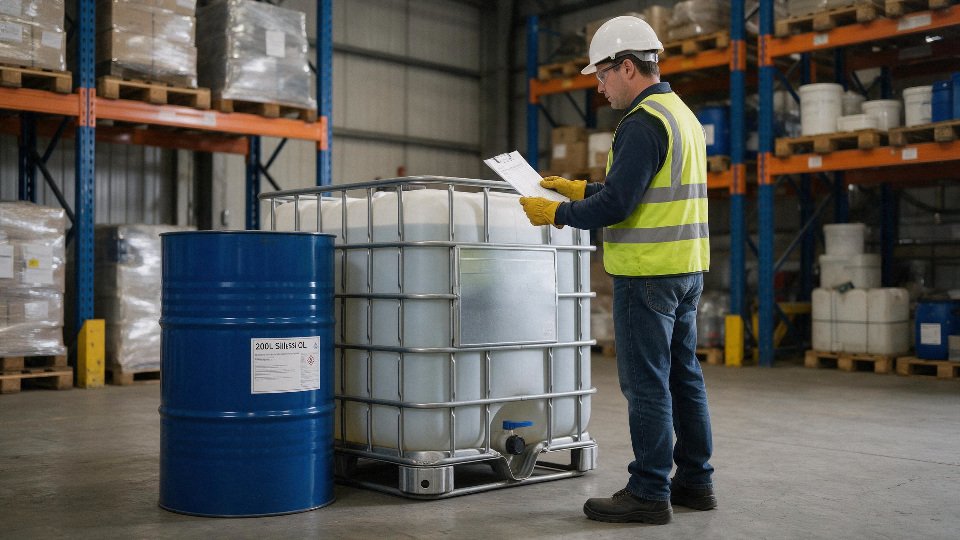
Packaging and logistics for thermal-grade fluids
Packaging sounds boring until a good fluid arrives wet, dirty, or thermally stressed.
- Moisture control
- Confirm whether filling is done in controlled conditions and how containers are sealed.
- Moisture sensitivity depends on the exact product and application, so the buyer should match packaging control to end use rather than assume every grade needs the same level.
- Contamination prevention
- Ask whether dedicated lines, filters, and clean filling practices are used for thermal or specialty grades.
- Cross-contamination from other silicone products, solvents, or particulates can create trouble that a basic incoming inspection will miss.
- Drum or IBC compatibility
- Check internal lining, gasket material, and cleanliness standard, especially for higher-purity or specialty grades.
- For some applications, stainless or carefully specified lined packaging is worth the extra cost.
- Hot-climate shipping
- In summer lanes, containers can sit well above ambient for long periods. Ask about storage recommendations, pallet wrap, venting approach where appropriate, and whether extended port dwell time has been considered.
Supplier technical support and sourcing strategy
The better suppliers do more than quote a price per kilogram.
- Grade selection support for viscosity, volatility, and thermal duty
- Customization capability where justified by volume and application
- Troubleshooting support if the fluid darkens, foams, deposits, or drifts out of spec in service
- Long-term account management so the product shipped in year three is still the product originally approved
For global buyers, sourcing from China’s organosilicon manufacturing clusters can be commercially attractive because the region combines upstream scale, dense supporting infrastructure, and usually better supply continuity than smaller standalone traders can offer. The advantage is real only if vendor qualification is disciplined: confirm who actually manufactures the oil, what is integrated in-house, how quality release works, and how technical support continues after the first shipment.
Frequently asked questions
Can silicone oil really work above 200 C?
Yes, some silicone oils can operate above 200 C, but that does not mean every standard grade will deliver acceptable life there. In practice, sustained service above about 200 C usually requires a controlled system, low contamination, limited air exposure, and supplier data or testing that supports that specific duty.
A few practical points matter:
- Short exposure is not the same as stable service life. A fluid may survive occasional peaks at 220 C to 230 C yet lose viscosity or form volatiles if held there continuously.
- Open systems age faster than closed ones. Oxygen access accelerates oxidation and evaporation losses.
- Hot spots decide fluid life. If the bulk fluid is 190 C but the heater skin or bearing contact zone runs much hotter, degradation often starts there first.
- Ask for evidence at your actual duty. Generic catalog statements are not enough if the process is batch-heated, cyclic, or poorly vented.
What is the difference between continuous and intermittent temperature rating?
Continuous rating is the temperature the fluid can handle for long operating periods with acceptable property retention; intermittent rating is a short-duration excursion limit. Buyers get into trouble when they treat the intermittent number as a design operating point.
Use the distinction this way:
- Continuous temperature: basis for normal process setpoint, fluid life planning, and maintenance interval
- Intermittent temperature: upset condition, startup peak, sterilization cycle, or brief thermal spike
- Decision rule: if your process sits near the peak for hours every shift, that is continuous duty, even if the brochure labels it “short-term capable”
Does higher viscosity always mean better high-temperature performance?
No. Higher viscosity silicone oil often has lower volatility and sometimes a higher flash point, but it does not automatically give better thermal stability in service.
What changes with viscosity:
- Potential gains
- Lower evaporation loss at elevated temperature
- Better film thickness in some lubrication duties
- Possible penalties
- Poorer low-temperature pumpability
- Higher drag and energy use
- Slower heat transfer where circulation matters
- More difficult venting and handling in small lines or fine metering systems
The preferred choice flips when the application is heat transfer rather than damping or sealing. In a circulating loop, excessive viscosity can hurt flow and film coefficients enough to outweigh any gain in volatility resistance.
Is flash point the same as maximum operating temperature?
No. Flash point only indicates the approximate temperature at which vapors above the fluid can ignite under a defined test method; it is not a safe continuous operating limit.
A silicone oil with a 300 C flash point can usually be operated continuously near 300 C.False
Flash point is a fire-related laboratory property, not a durability or recommended-use temperature. Fluid oxidation, viscosity drift, deposit formation, and volatility can become unacceptable far below the flash point.
For operation, check:
- recommended bulk temperature range from the supplier
- venting and atmosphere conditions
- heater surface temperature
- ignition sources and fire protection measures required by your site rules
How does silicone oil compare with mineral oil or synthetic hydrocarbon fluids at high temperature?
Silicone oil usually keeps usable properties over a wider temperature span than mineral oil, especially at low temperature and in applications needing stable viscosity over heat. Against synthetic hydrocarbons, the comparison is less one-sided and depends heavily on oxidation resistance, lubricity needs, elastomer compatibility, and cost.
A practical comparison:
| Fluid type | Typical strength | Typical limitation |
|---|---|---|
| Mineral oil | Lower cost, familiar lubrication behavior | Narrower temperature window, faster oxidation at heat |
| Synthetic hydrocarbon | Good engineered performance in many closed systems | Application-specific compatibility and cost trade-offs |
| Silicone oil | Broad temperature range, good viscosity-temperature behavior, low surface tension | Lower lubricity in some contacts, deposit risk if overheated, often higher unit cost |
If the duty is boundary lubrication under high load, silicone oil is not automatically the best answer. If the duty is thermal stability, dielectric behavior, damping, or broad temperature exposure, it is often a strong candidate.
Can silicone oil burn?
Yes. Silicone oil is not nonflammable just because it handles heat well. Under enough temperature, vapor generation, and ignition energy, it can burn.
Plant-floor caution points:
- leaks onto hot insulation or heater shells are a bigger fire risk than clean fluid in a closed loop
- misted oil is more hazardous than a quiet liquid surface
- old degraded oil can behave differently from fresh oil
- verify the current SDS and site fire classification rather than relying on assumptions about “silicone safety”
What causes silicone oil to thicken or form deposits?
The common causes are overheating, oxidation, contamination, and local hot spots. Once the fluid starts breaking down, the by-products can raise viscosity, generate gels, or leave varnish-like residues on heaters, valves, and narrow passages.
Typical triggers include:
- excessive heater film temperature
- poor circulation or dead legs
- metal fines, process residue, or catalyst contamination
- repeated air ingress in expansion tanks or poorly sealed systems
- mixing with incompatible fluids
Deposits are not just a cleanliness issue. They insulate hot surfaces, push metal temperature even higher, and speed the next round of degradation.
How often should high-temperature silicone oil be tested or replaced?
There is no honest universal interval. Testing frequency should follow thermal severity, contamination risk, criticality, and whether the system is closed and well controlled.
A sensible starting framework:
- new installation or fluid change: establish a baseline sample
- first months of service: sample more often to learn the degradation rate
- stable closed systems: interval can often be extended once trends are understood
- open, cyclic, contaminated, or high-heat systems: test more frequently
Trend the same properties each time, not just one number. Viscosity change, volatile loss, appearance, insolubles, acid formation if relevant, and application-specific lab checks together tell a much better story than a calendar date alone.
Are standard silicone oils suitable for food, cosmetic, or electronic applications?
Not by default. A standard industrial silicone oil may have the right base chemistry but still be unsuitable because of additive package, purity level, residual volatiles, packaging controls, or missing regulatory documentation.
Before using one in sensitive sectors, confirm:
- exact grade identity
- regulatory or compositional status required for the market
- impurity and volatile profile
- batch traceability
- packaging cleanliness and handling controls
- supplier documentation for the intended end use
For electronics, low ionic contamination or controlled volatility may matter more than the headline temperature number. For food or cosmetic use, documentation and compliance status are usually the gating issue.
What data should I ask a supplier for before buying?
Ask for the data that matches your failure risk, not just a basic TDS. If the process is heat-sensitive, the supplier should be able to discuss recommended bulk temperature, expected limits in air versus closed systems, and what properties should be monitored in service.
Minimum useful request list:
- product datasheet and current SDS
- viscosity grade and viscosity-temperature behavior
- recommended continuous operating range
- flash point and, where relevant, pour point
- volatility or mass-loss information if available
- density, refractive index, and basic identification data for incoming QC
- compatibility guidance for seals, metals, and other process fluids
- packaging options, shelf life, and batch traceability
- application-specific purity or compliance documents if needed
- change-control policy for formulation or raw material source
Your next grade check
Start with the duty, not the product name. A silicone oil grade is thermally suitable only if its supplier data still holds under your actual bulk temperature, peak excursions, atmosphere, exposed surface condition, and required fluid life. In many enclosed systems a standard dimethyl silicone oil is adequate; in hotter, air-exposed, longer-life service, that assumption often breaks down.
The minimum facts worth confirming now are straightforward, but plants miss them all the time because the nominal setpoint looks comfortable.
- Normal bulk operating temperature
Use the stabilized fluid temperature in service, not just heater jacket setpoint or line skin temperature. Peak temperature and duration
A fluid that sits at 180 C most of the time may still age too fast if it sees 220 C during startup, dry running, poor circulation, or control overshoot.Atmosphere
Air, inert gas, moisture, and process vapors change oxidation rate and volatility loss. Open baths and vented reservoirs are much harder on silicone oil than sealed loops.Exposure geometry
Thin film on hot metal, splashing on vessel walls, and misting in recirculation zones usually age faster than the same fluid in quiet bulk volume. The mechanism is simple: higher surface area means more oxygen contact and easier loss of lighter fractions.Service life target
“It can survive” is not a purchasing criterion. Decide whether you need weeks, months, or a year-plus between changeouts, because the preferred grade can flip on lifecycle cost even if both fluids technically run at temperature.
Then match those conditions against supplier information that is specific enough to mean something:
- Chemistry type: dimethyl PDMS, phenyl-modified silicone fluid, or other specialty formulation
- Viscosity grade at reference temperature, and ideally viscosity-temperature behavior relevant to startup and operating conditions
- Volatility profile or evaporation loss data under stated test conditions
- Flash point, treated as a safety property, not an operating recommendation
- Thermal aging or heat stability results, with test method and duration clearly stated
- Compatibility information for seals, paints, hoses, plastics, and process-contact materials
- Contamination sensitivity if the system may see metal fines, catalyst residues, water, or process chemicals
A standard dimethyl silicone oil is usually the right first check when the system is enclosed, oxygen exposure is limited, temperatures stay roughly within the common continuous range, and the process can tolerate routine monitoring and periodic replenishment. Move to a phenyl-modified or specialty grade when you are pushing sustained temperature upward, seeing repeated peaks, operating with significant air exposure, or carrying a long fluid-life target that makes evaporation and viscosity drift expensive. The trade-off is familiar: specialty grades can improve high-temperature retention, but they may cost more, have different low-temperature behavior, and need fresh compatibility review.
Use a short validation path before committing plant-wide:
- Laboratory screening
Compare 2-3 candidate grades against your temperature window, atmosphere, and contact materials. Pilot or limited production run
Run the fluid in the actual equipment type long enough to capture startup, steady operation, and shutdown behavior.In-service monitoring plan
Track appearance, viscosity shift, mass loss or top-up rate, deposits, odor change, and any filter or vent fouling.Acceptance criteria
Set numeric or observable limits before the trial starts, such as allowable viscosity change, deposit level, consumption rate, or maintenance interval.
Flash point alone is not enough to qualify a silicone oil for high-temperature service.True
Flash point indicates ignition-related behavior under a test method; it does not by itself predict oxidation resistance, evaporation rate, deposit formation, or useful fluid life at operating temperature.

If you want a grade recommendation that is worth using, send the application details that actually drive the choice: operating and peak temperatures, equipment type, open or closed system, atmosphere, required service life, viscosity preference, and any seal or substrate compatibility concerns. SiliconChemicals can review those conditions, suggest an appropriate silicone oil grade, provide the relevant technical data package, and arrange a sampling plan for screening or pilot validation.