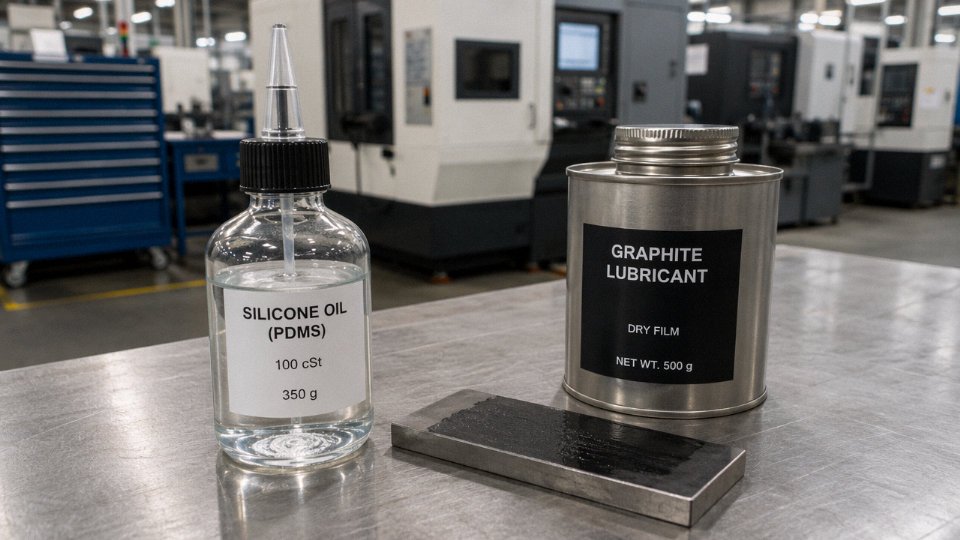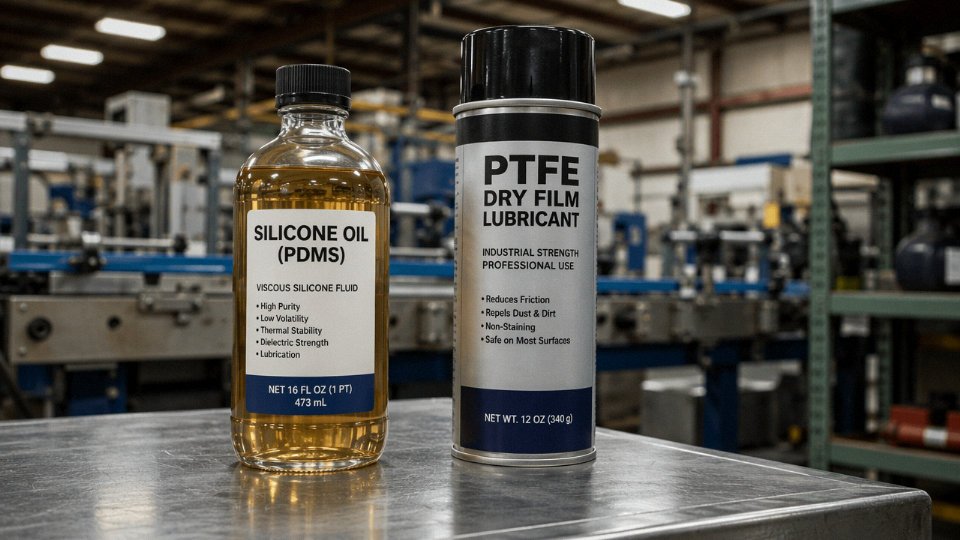
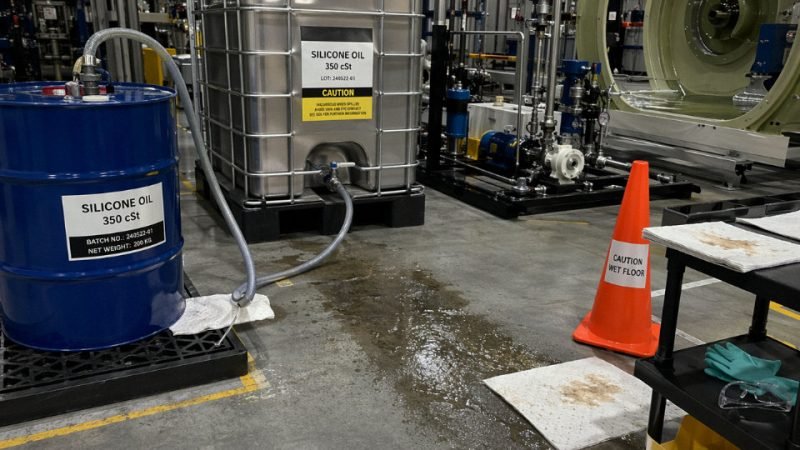
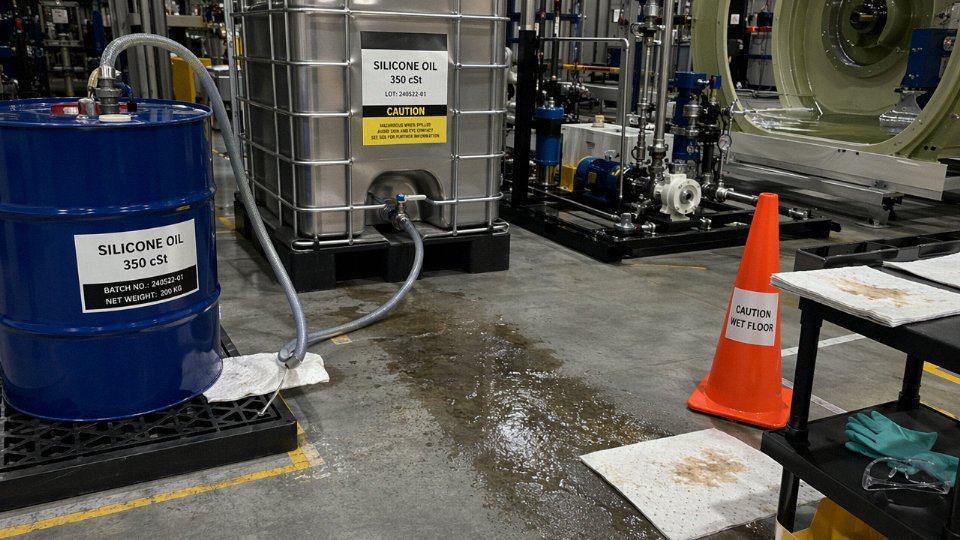
A small silicone oil issue rarely stays small. A leaking tote, a misting transfer line, or overheated bath oil can turn into fisheyes in painted parts, slipping drive belts, rejected assemblies, irritated operators, and a floor that maintenance keeps wiping down but never quite fixes. The bill shows up as scrap, rework, lost line time, extra ventilation, disposal cost, and sometimes a painful supplier argument. The practical answer is not panic; it is knowing which side effects matter for your viscosity, temperature, exposure route, and process discipline.
Silicone oil is usually low-toxicity, but its side effects include skin or eye irritation, slippery floors, coating contamination, mist inhalation risk, seal swelling in some materials, and thermal breakdown if overheated. Risk depends on viscosity, exposure route, temperature, additives, and how the plant transfers, heats, and cleans it.
The awkward part is that “silicone oil” covers a wide spread, from about 10 cSt fluids that can move and mist easily to 100,000 cSt materials that behave almost like a slow gel. A drum used cold in a dosing skid is a different risk than the same chemistry sitting near 180°C in an open heated tank. That is where the real side effects start to separate from generic safety-sheet language.
Identify the silicone oil grade before judging its health risk
A silicone oil drum label tells only part of the story. “Dimethicone,” “PDMS,” or “silicone fluid” can describe products that sit in very different risk categories depending on purification, viscosity, residual chemistry, packaging cleanliness, and the paperwork behind the lot. On a plant floor, I would not treat a 100 cSt industrial mold-release fluid the same way as a pharmaceutical dimethicone or a medical-device silicone oil, even if the base polymer family looks similar on paper.
Grade determines the starting assumptions
Industrial-grade silicone oils are usually specified around functional properties: viscosity, temperature range, surface tension, dielectric behavior, release performance, or lubricity. The documentation may be adequate for factory use, but it often does not include extractables, leachables, bioburden, endotoxin, cytotoxicity, or long-term skin and tissue contact data. That is fine for a conveyor lubricant or antifoam in a closed utility system. It is not fine for a lotion, capsule process aid, food-contact application, or implant-adjacent use.
Cosmetic-grade silicone oils normally come with tighter limits on odor, color, volatile fractions, and certain impurities. Food-contact grades should reference the applicable food-contact regulation or migration limits for the intended market, not just say “food grade” in a brochure. Pharmaceutical grades need stronger lot traceability, impurity controls, and compendial or application-specific data. Medical-device-grade silicone oils sit at the strictest end, especially if there is prolonged contact with tissue, blood, eyes, or implantable components. For those, the question is not “is silicone oil generally inert?” The question is whether that exact grade, from that exact supplier route, passed the right biological and chemical characterization for the use.
A compact way I use with procurement teams:
| Grade type | Usual control focus | Documentation you should expect | Main side-effect concern if misused |
|---|---|---|---|
| Industrial | Performance, viscosity, release, lubrication | SDS, TDS, certificate of analysis, sometimes RoHS or REACH statements | Irritation from additives, mist exposure, contamination, poor traceability |
| Cosmetic | Skin feel, odor, purity, volatile content | Cosmetic compliance statements, impurity limits, COA | Skin or eye irritation if substituted with lower-purity material |
| Food-contact | Migration and permitted-use compliance | Food-contact declaration, COA, traceable lot records | Non-compliant residues or contaminants entering product |
| Pharmaceutical | High purity, controlled impurities, process consistency | Compendial or internal specs, COA, change-control support | Patient exposure to unqualified impurities or residues |
| Medical-device | Biocompatibility, extractables, leachables, sterilization compatibility | ISO 10993-type data where applicable, full traceability, change notification | Tissue reaction, inflammation, regulatory failure, recall exposure |
Viscosity changes behavior, not just handling
Common silicone oils used in products run from about 10 cSt to 100,000 cSt. That range matters. Low-viscosity fluids, say around 10 to a few hundred cSt, are more mobile. They spread fast, creep through threaded joints, wet gloves and bench tops, and may generate more airborne mist during spraying, high-speed mixing, or hot transfer. Depending on molecular weight and temperature, they can also have higher volatility than heavy fluids. If someone is complaining of eye irritation near a heated roll coater, I look at mist, vapor, local exhaust, and application temperature before blaming “silicone” as a single material.
High-viscosity fluids behave differently. They usually have lower volatility and less tendency to penetrate skin, but they are stubborn. A 30,000 cSt or 100,000 cSt fluid on a stainless table, rubber roller, or scale pan can survive a lazy wipe-down and later migrate into paint, adhesive, printing, or bonding operations. That creates scrap that looks mysterious until maintenance admits the same rags were used around a silicone release station. I have seen small silicone smears ruin adhesion checks faster than most people expect.
Right grade, right containment, right cleaning method: manageable. Wrong fluid in the wrong area: fisheyes, poor bonding, rejected batches, and hours of argument between quality and production.
The irritant may not be the base oil
The base polydimethylsiloxane fluid is often relatively low-reactivity, but commercial products are not always just neat PDMS. Additives and residues matter. Emulsifiers in silicone emulsions can irritate skin or eyes. Tin, platinum, or other catalyst residues may be relevant in certain cured or modified systems. Stabilizers, fillers, silica thickeners, antimicrobial packages, fragrances, colorants, and process aids can shift the hazard profile. Even small levels of cyclic siloxanes or low-molecular-weight fractions may matter more in cosmetics, pharmaceuticals, or enclosed heated equipment than they would in a general industrial wipe-on fluid.
Contamination is the ugly part procurement tends to underestimate. Repacked material, shared totes, non-dedicated pumps, dirty drum bungs, and unapproved substitutions can introduce mineral oil, solvents, metal fines, cleaning chemicals, or previous-product residues. The SDS may still look harmless because it describes the intended formulation, not the contaminated reality in your day tank.
A silicone oil with the same viscosity can have different health and regulatory risk depending on grade, impurities, additives, and supplier controls.True
Viscosity describes flow behavior, but it does not prove cosmetic, food-contact, pharmaceutical, or medical-device suitability. Those uses require separate purity, compliance, and traceability evidence.
Paperwork is part of the safety control
For routine industrial use, I expect at minimum a current safety data sheet, technical data sheet, and certificate of analysis tied to the batch. The COA should show the tested properties that matter: viscosity range, appearance, volatile content if relevant, acidity or residuals where specified, and any application-specific limits. For regulated uses, ask for the compliance statement before ordering, not after the first production run. Supplier traceability and change notification are not bureaucratic decoration; they are how you avoid discovering a formulation change through customer complaints.
A practical warning: do not substitute industrial silicone oil into cosmetic, food, pharmaceutical, or medical applications because it “looks the same” or has the same cSt value. Qualify it through the right testing path first. That may include migration testing, skin compatibility, extractables and leachables, biocompatibility, microbial controls, or validation against your own process. The cost feels annoying during sourcing. It feels cheap compared with quarantine, returned product, line cleaning, regulatory questions, or a patient-contact failure.
Skin contact side effects: irritation, pore occlusion, dermatitis, and cleanup challenges
For intact skin, many clean silicone oils are fairly low-irritation compared with mineral oils, cutting fluids, caustic cleaners, or strong solvents. That is the part people remember. The part they forget is that silicone oil can sit on the skin for hours, and while it is sitting there it can hold sweat, dust, metal fines, rubber particles, fragrance ingredients, biocides, mold-release residue, or whatever else was in the process.
That is where the trouble usually starts.
Common silicone oil viscosities run from about 10 cSt to 100,000 cSt. Thin oils spread fast, creep under watch straps and glove cuffs, and are harder to notice at first. Heavy oils tend to stay where they land, but they also resist ordinary rinsing and can keep contaminants against the skin longer. In practice, the side effect is rarely from “silicone oil” alone. It is silicone oil plus time, heat, dirt, additives, and poor cleanup habits.
What workers and users may actually see on skin
Short contact with a clean, low-additive silicone oil often produces no obvious reaction. Some people may feel a slick film, mild tightness after washing, or slight dryness if they scrub hard afterward. Repeated contact is different. Over days or weeks, the skin can become dry, red, itchy, or rough, especially around knuckles, cuticles, wrists, and under rings.
Follicle blockage is another practical complaint. Silicone oils can form an occlusive film; that film may trap sebum, sweat, and dirt in hair follicles. On the face, chest, forearms, or any sweaty area under PPE, that can show up as acne-like bumps or irritated follicles. It is not always true acne. On a plant floor, I would first ask what else is in the oil: graphite, polishing compound, cutting fluid carryover, mold-release additives, rust preventive, or a cleaner left on the part.
Contact dermatitis is the bigger concern when additives are involved. Fragrances in cosmetic products, emulsifiers, preservatives, pigments, process stabilizers, antifoam blends, and contamination from other chemicals can all trigger dermatitis in susceptible people. The rash may not appear immediately. I have seen workers blame yesterday’s lunch or a new laundry detergent when the real pattern was repeated wrist exposure at a filling station, followed by aggressive solvent wiping before break.
Pure silicone oil is always harmless to skin.False
Many clean silicone oils are low-irritation on intact skin, but prolonged contact, occlusion, additives, contamination, or repeated harsh cleanup can still lead to dryness, follicle irritation, or dermatitis.
Cosmetic leave-on use is not the same as industrial exposure
Cosmetic-grade silicone fluids are normally selected for skin feel, low odor, purity, and compatibility with leave-on use. They may still cause problems for some users, particularly if the product traps sweat, is used under heavy makeup, or contains sensitizing ingredients. The expected exposure is controlled: small quantity, known formulation, clean skin, no metal fines.
Industrial exposure is messier. A silicone lubricant used on a conveyor, textile line, mold, pump seal, or assembly fixture may pick up aluminum fines, carbon black, degraded elastomer, solvent residue, alkaline wash water, or heat-aged material. If the oil has been near hot surfaces, the chemistry can change. Polydimethylsiloxane is often stable for long service in air around roughly 150°C to 200°C, depending on grade, oxygen exposure, residence time, film thickness, and catalysts such as metal residues. Above that, degradation risk rises. Skin contact with hot or thermally aged oil adds burn risk and irritation from breakdown products.
The wrong habit makes it worse: washing silicone oil off with brake cleaner, acetone, gasoline, or whatever aerosol can is closest. That strips the skin barrier and drives dermatitis rates up. It also creates a fire and inhalation problem. Use the wash station, not the maintenance cart.
Typical skin outcomes by exposure pattern
| Exposure pattern | Likely skin outcome | What it depends on | Practical control |
|---|---|---|---|
| Brief contact with clean oil | Usually little to no irritation; slick residue, possible mild dryness after washing | Viscosity, skin condition, washing method, whether oil is truly clean | Wash with mild soap and warm water. Avoid abrasive scrubbing unless needed for heavy soil. |
| Repeated hand contact during filling, wiping, or assembly | Dryness, redness, itching, cracked cuticles, follicle irritation near cuffs | Contact time, glove choice, sweat, frequency of washing, trapped residue under rings or sleeves | Use suitable gloves for the full process, rotate tasks if practical, remove jewelry, set a handwashing routine. |
| Contact with contaminated industrial oil | Dermatitis, delayed rash, embedded grime, irritation from metal fines, solvents, cleaners, or degraded residues | Process contamination, temperature history, additive package, particle load | Treat as contaminated chemical exposure, not cosmetic oil. Use closed transfer, splash control, local cleanup tools, and contaminated clothing handling. |
| Cosmetic leave-on use | Possible pore occlusion, acne-like breakouts, sensitivity to formulation ingredients | Skin type, product blend, use under heat or makeup, fragrance or preservative sensitivity | Patch test if prone to reactions. Stop use if irritation persists and review the full ingredient list. |

Controls that work in the real world
Gloves need to match the whole job, not just the silicone oil data sheet. Nitrile is common and often serviceable for incidental contact, but if the task also involves solvents, alkaline cleaners, or hot parts, glove selection changes. Check permeation guidance for the full chemical mix. Cotton liners can help with sweat during long wear, though they become contaminated if workers keep using the same pair all week.
Set a cleanup method people will actually follow. Mild soap, warm water, disposable towels, and a skin-safe industrial hand cleaner near the work point beat a perfect policy posted in the hallway. Barrier creams can help in some light-exposure jobs, but they are not invisible gloves, and they can contaminate paint, bonding, printing, or coating operations. Procurement should ask production before buying them by the case.
Contaminated sleeves and shop rags matter too. Oil-soaked cuffs keep dosing the same strip of skin for a whole shift. Rags used for silicone oils can transfer residue to door handles, keyboards, forklift controls, and lunchroom surfaces. Put disposal or laundering rules in place, especially where the oil has process residues in it.
One operational warning: silicone oil on gloves makes tools, valve handles, ladders, and packaged parts slippery. A small skin issue can become a dropped component, a bad crimp, or a fall. Control the contact early, before it turns into scrap or an injury report.
Eye exposure side effects: temporary blur, irritation, and special risks in retinal surgery
An eye splash from silicone oil is not the same problem as silicone oil placed inside the eye by a retinal surgeon. They share a material family, but the exposure route is completely different. On the plant floor, the usual concern is contamination of the eye surface. In ophthalmology, silicone oil may be intentionally used inside the vitreous cavity as a retinal tamponade. Those two situations should not be judged with the same risk yardstick.
An accidental splash of industrial silicone oil and intentional intraocular silicone oil are the same exposure.False
A workplace splash contacts the outside of the eye and is treated as contamination; intraocular silicone oil is sterile medical material placed inside the eye by a surgeon to support the retina, with different benefits and risks.
Accidental splashes: blurred vision, tearing, and surface irritation
A splash of silicone oil into the eye usually causes immediate blur, tearing, blinking, and discomfort. The blur can be surprisingly persistent for a short period because oil forms a film over the tear layer rather than mixing neatly with water. Anyone who has tried to wash silicone off a sight glass or a nitrile glove knows the behavior. It smears first, then slowly clears.
The severity depends heavily on what was actually splashed. A clean, high-viscosity polydimethylsiloxane fluid used as a lubricant may be mainly a mechanical irritant. A lower-viscosity fluid, roughly in the 10 cSt to a few hundred cSt range, can spread faster across the eye surface and may be harder to blink clear. If the oil contains antifoam additives, solvents, metal fines, polishing compound, mold-release residue, or degradation products from heat, the risk profile changes. In maintenance areas, contamination is often the bigger problem than the base silicone oil.
Particles matter too. Silicone oil from a clean drum is one thing. Silicone oil splashed from a gearbox inspection port, pump seal area, or dirty transfer hose is another. Fine grit or metal debris can scratch the corneal surface. That is where a “minor splash” turns into a lost-time case if the person rubs the eye hard before flushing.
First aid logic on the floor
For workplace exposure, follow the site procedure and the product safety data sheet. In practice, that usually means rinsing the affected eye with clean water or eyewash solution, holding the eyelids open, and letting the flushing do the work. Do not rub. Rubbing can drag oil-borne dirt across the cornea, and that is exactly the wrong direction.
Remove contact lenses if they come out easily during rinsing. Do not spend ten minutes fighting a lens while the eye is still contaminated. I have seen contact lens handling turn a simple rinse into a mess because the person kept touching the eye with oily fingers. Flush first, keep hands clean, and get help.
Medical evaluation is sensible if pain, redness, foreign-body sensation, light sensitivity, or blurred vision persists after flushing. The same applies if the oil was hot, aerosolized, chemically treated, or came from a process stream with unknown contamination. Heated silicone oil can carry vapors or degradation byproducts, especially as operating temperatures move above the roughly 150°C to 200°C long-service comfort zone for common polydimethylsiloxane fluids in air. At higher temperatures, I would not treat the exposure as “just oil” without checking the process conditions.
Intraocular silicone oil: a deliberate surgical tool
Silicone oil used in retinal surgery is a different subject. In complex retinal detachment cases, especially where the retina is difficult to keep attached, an ophthalmologist may inject sterile silicone oil into the eye as a long-term tamponade. The oil helps press the retina against the underlying tissue while healing takes place. Gas bubbles can also be used in some cases, but silicone oil may be chosen when longer support is needed or when the patient cannot tolerate certain positioning or travel restrictions. The decision is clinical, not a purchasing substitution.
Common surgical oils are selected for medical purity, viscosity, optical behavior, and handling during injection and removal. Higher viscosity generally reduces emulsification tendency, but it can be harder to inject and remove. The surgeon balances those trade-offs with the eye condition, expected duration, and patient factors.
Reported side effects from intraocular silicone oil include elevated intraocular pressure, cataract progression, emulsification into small droplets, inflammation, corneal changes, and complications that require removal surgery. Elevated pressure can damage the optic nerve if not controlled. Cataract progression is common enough that surgeons often discuss it up front, especially in older patients. Emulsification is a practical problem: once the oil breaks into fine droplets, it may migrate within the eye and become harder to manage cleanly.
None of that means intraocular silicone oil is “bad” in a simple sense. The wrong comparison is silicone oil versus no side effects. The real comparison is silicone oil risk versus the risk of permanent vision loss from an untreated or unstable retinal detachment. That call belongs with an ophthalmologist who can see the retina, measure pressure, judge the lens and cornea, and decide when the oil should be removed.
Inhalation side effects from mists, sprays, aerosols, and high-temperature breakdown
Bulk silicone oil is easy to underestimate because it usually does not smell much and has low vapor pressure at room temperature. A drum of clean polydimethylsiloxane sitting with the lid on is not the same hazard as the same oil being sprayed through a nozzle, whipped by a high-speed spindle, leaking onto a hot platen, or blown off parts with shop air.
That is where plants get caught.
Common silicone oil viscosities run from about 10 cSt to 100,000 cSt, depending on the product and duty. The low-viscosity fluids spread and atomize more readily. Higher-viscosity oils generally have lower volatility and less tendency to penetrate skin, but they can still form mist if the process has enough energy: spray lubrication, gear splash, rotating rolls, open mixing, ultrasonic cleaning carryover, or compressed-air blowdown. Once droplets are airborne, the question is no longer “Does silicone oil evaporate?” It becomes “What particle size is reaching the breathing zone?”
What workers may feel first
Short-term inhalation complaints are usually irritation-type symptoms: dry throat, cough, chest tightness, mild headache, nose irritation, or a heavy feeling in the air around the machine. Some operators describe it as “oil fog,” especially under poor roof extraction or during winter when doors stay closed and make-up air is reduced.
These symptoms are not proof of serious injury, but they are not noise either. If two operators on the same line start coughing after a spray pattern change, I would look at mist generation before blaming seasonal colds.
Risk depends on:
- Droplet size, especially fine aerosol that stays suspended
- Oil viscosity and additive package
- Spray pressure, nozzle condition, and distance to the part
- Ventilation rate and capture velocity at the source
- Temperature of the oil, tooling, bath, die, or nearby hot surface
- Work habits, including air guns used for “quick cleanup”
A common bad setup is a small enclosure with a mist collector that is undersized, filters overdue, and a side door left open because parts are awkward to load. On paper the machine has ventilation. In practice the operator’s breathing zone becomes the bypass duct.
Heating changes the exposure profile
At ordinary handling temperatures, many silicone oils are fairly stable. For typical polydimethylsiloxane in air, long-service thermal stability is often treated as roughly 150°C to 200°C, give or take with formulation, residence time, oxygen exposure, contamination, and surface area. Above that, the risk changes. Not always instantly, not always visibly, but the margin gets thinner.
Thermal oxidation and decomposition can produce irritating vapors and fumes. Under some conditions, formaldehyde may be formed. Depending on chemistry, temperature, metal catalysts, oxygen, and how long the oil sits hot, you may also see cyclic siloxanes and silica-like residues. The residue matters because deposits on heaters, dies, oven walls, or exhaust ducts can keep cooking after the main process stops. Maintenance sees it as a gummy film, white-gray ash, or hard crust. Industrial hygiene sees a source term that was not in the purchasing data sheet.
Open hot surfaces are the worst offenders: heated baths, hot rolls, platen presses, curing fixtures, thermal oil leaks, and small spills on heater bands. A few milliliters of oil on a 250°C surface can create a sharper odor and more irritation than a much larger cold spill on the floor.
Silicone oil cannot create an inhalation hazard because it has low vapor pressure.False
Low vapor pressure reduces ordinary evaporation, but aerosol generation and high-temperature decomposition can still create inhalable mist, vapor, fumes, and residues.
Controls that work on a real line
The best control is to stop making airborne oil in the first place. Closed transfer beats careful pouring. Flood application beats atomizing spray where the process allows it. A guarded drip point aimed at the contact zone beats a wide misting nozzle that oils the machine frame, the floor, and the operator’s sleeves.
Practical controls usually include:
- Enclosed transfer for drums, totes, and day tanks, with dry-break or camlock fittings kept in decent condition
- Local exhaust ventilation at spray points, heated baths, open reservoirs, and leak-prone hot zones
- Mist collectors sized for the actual airflow, not the brochure airflow after three months of oil loading
- Temperature interlocks on baths, rolls, heaters, and recirculation loops
- No compressed-air blowdown of oily parts unless it is inside a properly exhausted enclosure
- Splash guards and return trays so oil does not reach hot external surfaces
- Preventive maintenance on seals, hose ends, nozzle tips, and filters
That last one sounds boring. It is also where many plants win or lose. A $20 worn nozzle can turn a controlled wetting operation into a respirable mist generator. A missing gasket on a mist collector door can short-circuit the whole system.
For workplace exposure control, the benchmark should be simple: keep mists, aerosols, and heated vapors as low as reasonably achievable using local exhaust ventilation, closed transfer, and splash control. Do not wait for visible fog. Fine aerosol can be present before anyone sees a cloud under the lights.
Industrial hygiene sampling needs to match the process
Air sampling should be built around the exact formulation and how the oil is abused by the process. A cold 1,000 cSt transfer pump does not need the same sampling plan as a low-viscosity spray release agent near a hot mold.
A competent strategy looks at total and respirable aerosol, particle size, task duration, peak exposures during cleaning or changeover, and temperature-driven breakdown products. If formaldehyde is plausible, sample for it directly. If cyclic siloxanes are part of the concern, choose methods that can actually capture and identify them. Generic “oil mist” data may be useful for screening, but it can miss the chemistry that appears when silicone oil hits heat, oxygen, metal, and time.
Wrong call: treat it like a harmless slippery liquid because the SDS looks quiet. Right call: watch the process energy, heat, and ventilation. That difference shows up as fewer complaints, cleaner ducts, less scrap from oily fallout, and fewer ugly surprises during maintenance shutdown.
Ingestion and food-contact side effects: low acute toxicity does not justify casual use
Many dimethicone-type silicone fluids show low acute oral toxicity in the usual safety data. That sentence gets misused on plant floors.
“Low acute toxicity” does not mean “approved for food,” and it does not mean “safe to swallow from any drum in the storeroom.” A medical-grade dimethicone, a food-approved antifoam, a cosmetic fluid, and an industrial mold-release oil may share similar backbone chemistry, but the side materials can be very different: residual catalyst, emulsifiers, preservatives, silica fillers, solvents, colorants, antiwear additives, or processing impurities. Procurement people know this problem well. Two materials can have nearly identical short names on a purchase request and completely different compliance files.
Any clear silicone oil is safe to use as a food-processing antifoam if the base polymer is dimethicone.False
Food approval depends on the finished formulation, purity, additives, use level, migration behavior, and local regulation. The polymer name alone is not enough.
What accidental swallowing usually looks like
Small accidental ingestion, such as a maintenance technician getting residue on a glove and then touching food or a cigarette, is usually not a dramatic poisoning event. The more likely complaints are nausea, greasy mouthfeel, stomach discomfort, and loose stool. The severity depends on the amount swallowed, viscosity, whether the oil was an emulsion, and what else was blended into it.
Viscosity matters. Silicone oils used in products can run from about 10 cSt to 100,000 cSt. Lower-viscosity fluids spread and flow more easily; higher-viscosity fluids tend to move slowly and are less volatile. For ingestion, the big practical concern is not just toxicity in the stomach. It is aspiration if the person vomits. Any oily liquid entering the airway can create a more serious medical situation than the original swallow, especially with children or anyone drowsy, coughing, or impaired.
Do not induce vomiting unless a poison control center or medical professional tells you to. That old shop-floor reflex can make the case worse.
Food-grade antifoam is a controlled use, not a permission slip
Food plants use silicone-based antifoams in boilers, fermentation, frying, washing, bottle filling, starch processing, and wastewater tied to food operations. Some dimethylpolysiloxane materials are permitted in regulated food applications under defined conditions, depending on jurisdiction. In the United States, for example, food-additive and food-contact rules can specify allowed components and use limits. In the European Union, food-contact compliance relies on framework rules, good manufacturing practice, declarations of compliance, and any applicable national or material-specific requirements.
The operating mistake is treating “food grade” as a vibe.
A food-approved antifoam should have a current technical data sheet, safety data sheet, food-contact or food-additive statement, batch traceability, and clear dose guidance. If the supplier cannot tell you whether the material is for direct addition, incidental contact, or only non-contact utility service, do not put it near product. I have seen plants keep a “silicone oil” drum for squeaky conveyor parts and then ask whether it can be used to knock down foam in a kettle. That is exactly how a cheap shortcut becomes a hold, a product withdrawal discussion, or a very uncomfortable customer audit.
Boundary checks for food plants
A simple decision check helps before any silicone oil or antifoam enters a production area.
| Question | Acceptable direction | Bad sign |
|---|---|---|
| Is the exact product approved for the intended food-contact use? | Written supplier statement tied to the product code and jurisdiction | “Same chemistry as food grade” |
| Is the use direct, incidental, or no-contact? | Mapped on the process flow | Maintenance decides at the line |
| Are dose or migration limits defined? | Controlled by recipe, pump setting, or validated procedure | Hand dosing from an unmarked bottle |
| Could it contact allergens? | Segregated tools, labeled pumps, cleaned transfer lines | Shared hoses from mixed production areas |
| Can cleaning remove residues? | Swab, visual, foam, or residue validation where needed | “Silicone is inert, so cleaning does not matter” |
Allergen cross-contact sounds odd for silicone oil itself, but the real plant issue is handling. A tote, scoop, pump, hose, or intermediate container may have been used in an allergen area. Some antifoam emulsions also contain carriers or preservatives that need review. The polymer is only one part of the risk file.
Lubrication points deserve the same discipline. Above-product bearings, chain oilers over open conveyors, slicer assemblies, valve stems, and filling heads should be reviewed for drip potential. Use NSF H1 or other appropriate incidental-contact lubricants where relevant, but do not assume that an H1 lubricant is suitable as a food ingredient or processing aid. Those are different approvals.
For any significant ingestion, ingestion by a child, or symptoms after exposure, contact poison control or medical personnel. Have the product label, SDS, approximate amount, time of exposure, and viscosity or product grade ready. That ten-minute preparation often gets better advice than vague panic over “some silicone oil.”
Process and equipment side effects: contamination, coating defects, sensor fouling, and slip hazards
Silicone oil earns its keep because it spreads, releases, lubricates, and refuses to stick to much. Those same properties make it a nuisance in plants where surfaces must be painted, bonded, printed, sealed, welded, optically clear, electrically reliable, or sterile.
This is the part people underestimate. A few drops in the wrong place can behave less like a spill and more like a traveling defect source.
Silicone oils commonly used in products range from roughly 10 cSt to 100,000 cSt. The lower-viscosity grades tend to creep and transfer more easily; higher-viscosity fluids may stay where they are put, but they can still smear onto gloves, carts, tool handles, fixture pads, and packaging films. That behavior depends on the base oil, additives, surface energy of the part, temperature, and how aggressively operators handle the material.
Where silicone oil causes production trouble
In coating and painting, silicone contamination often shows up as fisheyes: small round craters where the coating pulls away from a low-surface-energy spot. Operators may blame the spray gun, booth humidity, paint age, or bad substrate prep. Sometimes those are real causes. But if the defect appears randomly across parts, especially after a lubricant change or maintenance activity, silicone transfer deserves suspicion.
Bonding and sealing failures can be worse because they may pass a visual check. Adhesives and sealants need wetting. If silicone residue sits on aluminum, plastic, glass, stainless steel, rubber, or coated stock, the adhesive may bead microscopically instead of anchoring. The joint looks fine until peel load, temperature cycling, sterilization, fuel exposure, or vibration finds the weak interface. I have seen production teams chase “bad glue” for days before anyone checked the release spray used on a nearby fixture.
Printing and marking operations have the same weakness. Inkjet codes, pad printing, screen printing, laser-mark contrast coatings, and label adhesives all depend on surface condition. Silicone residue can cause poor ink wetting, missing characters, weak barcodes, label lift, or unreadable traceability marks after handling.
Electronics and precision assembly bring another set of headaches: contaminated contacts, relay issues, connector intermittency, optical haze on lenses or light pipes, and film on sensor windows. In sterile packaging, silicone transfer can interfere with heat seals, peel behavior, or package validation results. Welding prep is not immune either; any oil residue near a weld zone can create smoke, porosity risk, or inspection rework, even if silicone is only one of several possible contaminants.
A silicone oil spill can create quality defects even when it does not create a major health hazard.True
Silicone oils are often low in acute toxicity, but their spreading and release behavior can disrupt coating, bonding, printing, sealing, optical, and electrical processes at very low visible residue levels.
Housekeeping side effects are not minor
Silicone oil on a smooth floor is a slip hazard in the plainest sense. The dangerous cases are not always puddles. A thin smear near a filling station, press, winding line, or maintenance bench can be nearly invisible and still slick enough to put someone down hard.
It also migrates by habit. A mechanic wipes a fitting, grabs a handrail, opens an electrical cabinet, then sets the same rag on a cart. Operators pick up the residue on gloves and carry it to part nests or inspection benches. Forklift tires and cart wheels spread it farther than people expect. Once it is on a textured floor or rubber mat, cleanup becomes slow and annoying; dry wiping often just makes a larger shiny patch.
An operational warning: do not treat silicone oil spills like ordinary mineral oil spills if the area feeds coating, bonding, printing, or packaging. Absorb the liquid, bag the waste, clean beyond the visible edge, and keep contaminated tools away from critical surfaces until they are washed or replaced. “Looks dry” is not the same as clean.
Controls that actually work on the floor
Segregation is the first control. Keep silicone-containing lubricants, mold releases, sprays, damping fluids, personal care products, and treated wipes out of non-silicone zones. That rule matters most upstream of painting, adhesive bonding, plasma treatment, corona treatment, printing, heat sealing, lens assembly, medical packaging, and electronics final assembly.
Dedicated tools help. Use marked funnels, pumps, trays, transfer lines, gloves, benches, and waste bins for silicone service. Controlled dispensing beats open pouring; closed transfer, drip trays, small squeeze bottles, and metered applicators reduce both aerosol and contact spread. If a maintenance task requires silicone grease or oil near a sensitive line, schedule it like contamination work, not routine lubrication.
Verification cleaning should be built into the route before critical bonding or coating steps. Depending on the substrate, that may mean detergent wash, solvent wipe, alkaline cleaning, plasma treatment, surface-energy checks, dyne pens, water-break tests, contact angle measurement, or a controlled trial coupon. Solvent wiping alone can fool you; it may dilute and redistribute the oil instead of removing it.

Quick inspection checklist for high-reliability operations
| Checkpoint | What to look for | Why it matters |
|---|---|---|
| Material storage | Silicone oils, sprays, greases, release agents stored near paint, adhesive, ink, or sterile packaging supplies | Proximity increases accidental transfer and mistaken use |
| Maintenance practices | Shared rags, aerosol sprays, unmarked oilers, open fill containers | These are common routes into fixtures and part-contact surfaces |
| Operator contact points | Gloves, handrails, tool handles, carts, touchscreens, cabinet pulls | Silicone moves through hands and shared hardware |
| Part-contact tooling | Nests, vacuum cups, rollers, belts, pads, clamps, mandrels | Residue can print directly onto the product surface |
| Defect pattern | Random fisheyes, weak adhesive spots, ink skips, seal leaks, haze, intermittent contacts | Scattered failures often point to transfer contamination |
| Cleaning verification | Water-break test, dyne check, contact angle, trial bond, coating coupon | Visual inspection alone is weak for silicone residue |
| Zone control | Posted non-silicone areas, dedicated tools, spill trays, waste control | Prevents one small leak from becoming a plant-wide quality problem |
The right approach is simple but not casual: know where silicone oil is used, keep it physically separated from sensitive processes, and verify surfaces before you trust them. Get that wrong and the cost usually appears as scrap, rework, customer returns, or a maddening defect that seems to move around the plant.
Environmental side effects: persistence, wastewater behavior, soil residues, and aquatic concerns
Silicone oil is not usually the material that kills a wastewater plant overnight. That is the wrong fear, most of the time. The more common problem is duller and harder to fix: it spreads, sticks, survives normal housekeeping, loads up sludge, and leaves a sheen that gets noticed by operators, neighbors, or regulators.
Most polydimethylsiloxane fluids are hydrophobic and persistent. Their behavior depends heavily on viscosity, molecular weight, additives, emulsifiers, temperature, and whether the oil is a straight fluid, an emulsion, a defoamer blend, or part of a release-agent package. A low-viscosity silicone fluid near the 10 cSt end of common product ranges can move through cracks and sumps far more easily than a 50,000 to 100,000 cSt fluid that mostly smears and clings. Neither should be washed down a drain.
What happens after a spill
On a coated floor, silicone oil can spread into a thin, almost invisible film. I have seen maintenance crews chase it around with water and detergent, which often just makes the affected area larger. If the product contains emulsifiers, it may form a cloudy dispersion and travel with wash water. If it is a neat, high-viscosity PDMS fluid, it may stay as a slick residue on concrete, under machine feet, inside trench drains, or on sump walls.
Once it reaches soil, it tends to bind to organic matter and fine particles rather than dissolve cleanly into water. In a stormwater system, it may adhere to sediment. In an industrial wastewater plant, it can report to scum, grease traps, dissolved-air flotation float, or biological sludge, depending on the treatment setup. Plants with oil-water separation, good skimming, and conservative discharge practices handle minor incidents better. Plants relying on dilution and hope do not.
Visible sheen is the practical trigger. Even if aquatic toxicity is not high for many high-molecular-weight PDMS fluids, a sheen on surface water is still a compliance and housekeeping problem. It also tells you the material escaped the process boundary.
Silicone oil is environmentally harmless because many PDMS fluids have low acute toxicity.False
Low acute toxicity does not mean low environmental consequence. Persistence, sheen formation, sediment binding, sludge contamination, and difficult cleanup can still create regulatory, disposal, and operating problems.
PDMS fluids are not the same as cyclic siloxanes
High-molecular-weight PDMS fluids and more volatile cyclic siloxanes should not be lumped together. They may share silicon-oxygen chemistry, but their environmental fate can differ.
Heavy PDMS fluids usually have very low water solubility and low volatility. They tend to stay with solids, surfaces, oils, and sludge. That makes them less likely to flash off, but also harder to remove once they are in drains, pits, porous concrete, or soil.
Cyclic siloxanes, often discussed as D4, D5, and D6, are more volatile and have received more regulatory scrutiny in several markets because persistence, bioaccumulation potential, and air-water partitioning can be different from high-viscosity PDMS fluids. The exact concern depends on the compound, concentration, use pattern, and local rules. A purchasing team should not accept a generic “silicone oil” safety statement when the formulation contains volatile cyclics, solvent carriers, surfactants, or proprietary defoamer ingredients.
Ask for the current safety data sheet, composition disclosure to the level your application requires, and wastewater-relevant data if discharge exposure is credible. Procurement sometimes treats this as paperwork. Operations pays for that shortcut later.
Wastewater behavior is formulation-dependent
In wastewater, silicone oil rarely behaves like a simple dissolved chemical. It behaves more like a mobile contaminant that chooses a phase: floating scum, fine suspended solids, sludge, filter media, grease, or tank walls.
A silicone antifoam emulsion can be especially awkward. The emulsifier that helps it disperse in a process tank may also help it travel farther into drains before it separates. A release oil used near washdown zones can create chronic low-level loading. One tote valve weeping a few milliliters per shift does not sound serious, but over weeks it can mean persistent slicks in sumps, fouled level probes, slippery floors, and a waste sludge stream that no longer matches its usual profile.
Typical removal depends on the system. Oil-water separators may catch free silicone oil if residence time is adequate and the oil has not been emulsified. DAF units may remove some with float solids. Biological systems are not designed to “digest” PDMS quickly. Sludge hauling costs can rise if the waste profile changes or if a hauler flags unusual silicone contamination.
Practical controls that work on a plant floor
The best environmental control is boring: keep it out of drains.
| Situation | Better control | What goes wrong if ignored |
|---|---|---|
| Tote, drum, or day tank storage | Secondary containment sized for credible leaks, with sealed floors | Oil creeps under racks, into cracks, then into trench drains during washdown |
| Pumping or transfer | Drip trays, dry-break fittings where justified, capped hoses, slow initial pressurization | Small leaks become chronic floor films and sump loading |
| Spill response | Dry cleanup first: pads, socks, absorbent granules compatible with silicone oil | Water spreads the film and may push it into wastewater |
| Waste handling | Characterize spent absorbent, sludge, and contaminated soil before disposal | A nonhazardous-looking cleanup becomes a rejected waste load |
| Outdoor areas | Keep silicone oils away from storm drains; use covers or berms during transfer | A light sheen can travel fast and be highly visible |
Absorbent choice matters. Polypropylene pads often work well for oily liquids. Clay absorbents can be useful but may track residue under boots and forklift tires. For high-viscosity fluids, scraping or squeegeeing into a waste container before absorbent use can reduce the amount of contaminated solid waste. Do not pressure-wash first unless the wastewater path is isolated and approved.
A simple operating rule helps: any silicone oil spill is a dry-cleanup event until someone with authority says otherwise.
Planned visual asset: a pathway diagram showing a storage leak creating a floor film, spreading during traffic or washdown, entering a sump, increasing wastewater oil loading, binding to sludge or separator float, then moving to off-site waste handling. Labels should call out “secondary containment,” “dry cleanup point,” “sump entry risk,” “sludge binding,” and “waste characterization.”
Medical and cosmetic side effects: when silicone oil is deliberately placed on or inside the body
Silicone oil looks harmless in many body-contact uses because it is smooth, clear, chemically quiet, and not very reactive. That is exactly why it gets used. The catch is that “on the body” and “inside the body” are not remotely the same risk category. A leave-on skin protectant, a hair serum, an ophthalmic surgical material, and an illegal body-contouring injection should not be talked about as if they are one material with one safety profile.
Topical dimethicone: useful barrier, not magic skin repair
In skin protectants, diaper creams, scar gels, hand creams, and some occupational barrier products, dimethicone can reduce transepidermal water loss by forming a thin hydrophobic film. That film is the useful part. It helps limit water loss, reduces friction, and can protect damaged skin from urine, mild irritants, glove rub, or repeated washing.
In practice, the feel changes a lot with viscosity and formulation. Low-viscosity silicone oils, roughly in the 10 cSt to a few hundred cSt range, spread easily and feel lighter. Heavier dimethicone fluids and silicone gums can feel more occlusive, especially in scar products or long-wear cosmetics. That does not automatically mean “bad,” but it can mean greasy transfer onto gloves, eyewear, phone screens, bedding, or production parts if the person is working around paint, adhesives, electronics, or optical surfaces.
Possible topical side effects are usually local: mild irritation, trapped sweat sensation, acne-like bumps in people prone to clogged follicles, or dermatitis from the full formulation. I have seen people blame “silicone allergy” when the more likely offender was fragrance, a preservative, lanolin, botanical extracts, or a solvent carrier. True allergy to plain polydimethylsiloxane appears uncommon, but irritated skin does not care what the marketing label says.
Hair products bring their own nuisance. Silicone oils can reduce combing force and improve shine, but repeated use may cause heaviness, limp hair, or buildup that resists mild shampoo. On scalps that are already inflamed, oily, or prone to folliculitis, that residue can make itching and bumps worse. If a serum migrates with sweat into the eyes, stinging and temporary blurred vision are possible even when the product is not especially toxic. Anyone who has worked a hot shift under a hard hat knows how easily forehead products move.

Cosmetic use: the side effect may come from the system, not the silicone
A finished cosmetic is a small chemical plant in a bottle. Silicone oil may be only one ingredient among emulsifiers, preservatives, fragrances, pigments, UV filters, alcohols, and thickeners. Side effects depend on the whole system, dose, skin condition, and how often the product is reapplied.
| Use case | Common benefit | Side effects to watch for | Practical response |
|---|---|---|---|
| Skin protectant or barrier cream | Less water loss, less friction | Occlusive feel, trapped sweat, follicle bumps | Use the thinnest effective layer; stop if rash worsens |
| Scar gel or sheet | Flexible film over scar tissue | Itching, edge irritation, residue | Clean skin between uses; check adhesive sensitivity |
| Hair serum or conditioner | Slip, shine, reduced frizz | Buildup, scalp itching, eye migration | Rotate with clarifying wash if tolerated |
| Long-wear makeup | Smooth feel, water resistance | Acne-like reactions, difficult removal | Remove fully; avoid around irritated eyelids |
The right product in the right amount can reduce irritation. The wrong product, layered three times a day on sweaty or damaged skin, can create a warm sealed environment that keeps the problem alive.
Injected silicone oil is a different hazard class
Non-medical injection of silicone oil for body contouring is a hard stop. It is not comparable to using a dimethicone cream or a regulated medical device. Free silicone oil injected into soft tissue can trigger granulomas, chronic inflammation, tissue hardening, ulceration, infection, nerve compression, and migration away from the injection site. In severe cases, embolic events and organ injury have been reported. Removal is often difficult because the oil can disperse through tissue planes rather than staying as one neat pocket a surgeon can simply drain.
That last point matters. People imagine a bad filler can be “taken out.” Sometimes it cannot be fully removed without sacrificing tissue, creating scarring, or leaving residual material behind. The clean-up job is nothing like replacing a gasket or flushing a tank. Human tissue does not give you a drain plug.
Silicone oil that is safe in a topical skin product is also safe to inject for body shaping.False
Topical and injectable exposure are fundamentally different. Injected free silicone oil can migrate, provoke chronic inflammation, cause granulomas or infection, and may be very difficult to remove.
Approved medical use is not the same as illicit injection
There are legitimate medical-device and ophthalmic uses of silicone materials, including silicone oil used inside the eye under specialist supervision. Those uses involve defined grades, sterile handling, clinical indications, follow-up schedules, and risk-benefit decisions. Even then, complications can occur, such as inflammation, pressure changes, emulsification, cataract progression, or the need for later removal in some eye cases.
The control system is the difference: qualified clinician, approved material, sterile procedure, documented lot, known placement, monitoring, and a plan if complications develop. Unqualified injection has none of that. No reliable traceability, no sterile assurance, no validated indication, often no honest disclosure of what was injected.
Anyone with pain, swelling, lumps, redness, vision changes, migration concerns, or a history of silicone-related injection should talk to a qualified physician. Do not massage it aggressively, try to dissolve it, heat it, puncture it, or follow online removal advice. Bad field repairs make bad failures worse; the same is true in the body.
Risk reduction checklist: selecting, storing, using, and disposing of silicone oil safely
Start with selection, not spill cleanup
Most silicone oil problems are bought before they are made. A purchasing line that says “silicone oil, 1 drum” is not enough for a plant, lab, or product-development group. Specify the grade, viscosity, purity, additive package, intended use, and documentation required before anyone issues a purchase order.
Common product viscosities run from roughly 10 cSt to 100,000 cSt. That choice affects pumping, misting, residue behavior, cleanup time, and sometimes skin or vapor exposure. A low-viscosity oil may transfer nicely through a small metering pump, but it can creep farther along threads, seals, gloves, and benchtops. A high-viscosity oil is usually less volatile and less likely to penetrate skin, but it can be miserable to clean from rollers, fixtures, load cells, and optical parts.
For procurement, ask for the SDS, technical data sheet, certificate of analysis, lot number, shelf-life statement, and regulatory declaration if the use needs it. Food-contact, cosmetic, pharmaceutical, medical, electronics, and general industrial grades are not interchangeable just because the base chemistry sounds similar.
| Use case | Selection control that matters most | Bad choice usually causes |
|---|---|---|
| Heat-transfer bath or heated lab use | Thermal data, flash point, volatility, viscosity stability | Smoke, odor, deposits, worker complaints |
| Food-contact antifoam | Approved grade and dosage documentation | Regulatory hold, rejected batch |
| Electronics or coating area | Low-volatile, tightly controlled purity | Craters, adhesion loss, field failures |
| Maintenance lubricant | Compatibility with seals, plastics, and nearby processes | Swollen parts, contamination migration |
| Cosmetic or skin-contact product | Cosmetic-grade purity and toxicology support | Irritation claims, recall risk |
Storage controls that prevent slow, expensive mistakes
Keep containers sealed. Silicone oil does not usually “go bad” quickly in the way some reactive chemicals do, but open drums collect dust, metal fines, solvent vapors, and water from plant air. I have seen a clean oil turn into a defect source because someone left a hand pump in a drum near grinding work. The oil looked fine. The parts did not.
Labels should show product name, viscosity, grade, lot number, receiving date, and any internal approval status. Use secondary containment for drums, totes, and lab carboys, especially where forklifts, pallet jacks, or floor drains are nearby. Storage temperature limits depend on the supplier’s grade and additives, but a cool, dry area away from steam lines and direct sun is the safe default. Review incompatibilities anyway. The base fluid is often stable, but additives, residual catalysts, packaging liners, or nearby oxidizers can change the risk picture.
Dedicated dispensing pumps are worth the money. A shared pump that previously handled mineral oil, solvent, or cutting fluid can ruin traceability and contaminate a product batch. For production-critical use, keep lot traceability from receiving through point of use. FIFO helps, but traceability beats neat shelves.
Handling controls: keep oil where it belongs
Closed transfer is the first practical control. Use sealed drum pumps, quick-connects, metered dispensing, and covered reservoirs where possible. Open pouring from a 20-liter pail may be acceptable in a maintenance corner; it is a poor choice near packaging, coating, bonding, printing, optics, or electronics assembly.
Gloves should be selected against the full formulation, not only the silicone oil. Nitrile is common for short contact, but solvent blends, additives, and cleaning agents may change the answer. Eye protection is cheap compared with a shutdown after an operator splashes oil into one eye and production waits for medical clearance. Use splash goggles or a face shield for pumping, hose disconnects, bath charging, and pressure transfer.
For mist-generating processes, treat silicone oil like an inhalation control problem even if the SDS looks mild. Spraying, high-speed rolling, compressed-air blowoff, atomized mold release, and heated open tanks can put droplets into the breathing zone. The practical benchmark is to keep mists, aerosols, and heated vapors as low as reasonably achievable through local exhaust ventilation, closed transfer, and splash control. Do not rely on “no smell” as proof of no exposure.
Written spill procedures should be short enough for a tired second-shift mechanic to use. Stop the source. Barricade the slip area. Keep it out of drains. Use compatible absorbent. Clean twice if the floor still feels slick.
Thermal controls need real numbers, not guesses
Polydimethylsiloxane fluids often tolerate long service in air somewhere around 150°C to 200°C, depending on viscosity, formulation, oxygen exposure, residence time, and contamination. Above that range, decomposition risk rises. Some baths run hotter, but they should not be run casually.
Check the supplier’s flash point, recommended service temperature, volatility, and decomposition information for the exact grade. Install temperature control that operators trust: calibrated probes, high-temperature cutouts, and alarms where overheating would create vapor, smoke, or residue. Heated applications should have ventilation sized for the process, not just general room air movement. A small lab hood can be fine for a beaker. It is not fine for an open production bath.
A higher-viscosity silicone oil is automatically safe to heat above the supplier’s recommended range.False
Higher viscosity usually reduces volatility, but thermal breakdown still depends on chemistry, additives, oxygen exposure, contamination, and temperature history.
Disposal and residue removal
Do not wash silicone oil to the drain. Even small amounts can spread, foul separators, complicate wastewater treatment, and create slip hazards downstream. Collect bulk oil, used absorbent, contaminated PPE, and oily rags in labeled containers. Characterize the waste based on the full formulation and whatever it contacted in service, such as solvents, metals, process chemicals, or food residues.
Cleanup is where silicone oil earns its reputation. Absorbent removes puddles; it does not always remove the film. In quality-critical areas, verify residue removal instead of trusting a shiny surface. Depending on the process, that may mean a water-break test, contact-angle check, UV tracer if approved, swab analysis, or simply running sacrificial panels before releasing production. The wrong call here shows up later as fisheyes, poor paint adhesion, weak bonding, barcode ink failure, or mystery scrap that takes days to trace.
Frequently asked questions about silicone oil side effects
Is silicone oil toxic?
Usually, many straight polydimethylsiloxane silicone oils show low acute toxicity when used as intended. That does not mean “harmless.” The risk changes with exposure route, grade, purity, additives, viscosity, temperature, and whether the material is being sprayed, heated, implanted, or used near food.
A clean, high-viscosity silicone oil in a closed lubricant reservoir is a very different exposure from a low-viscosity spray mist near an operator’s breathing zone. Common product viscosities run from roughly 10 cSt up to 100,000 cSt; lower-viscosity oils tend to spread, migrate, and aerosolize more easily, while heavier oils usually have lower volatility and less skin penetration. Additives can be the real problem: catalysts, solvents, fragrance packages, antifoam carriers, or processing residues may drive irritation or regulatory concerns.
All silicone oils are non-toxic because silicone is chemically inert.False
Many silicone oils have low acute toxicity, but side effects depend on grade, additives, exposure route, mist formation, heat, purity, and medical or food-contact approval.
Is silicone oil safe on skin?
Brief skin contact with many clean silicone oils is often tolerated, especially at higher viscosities. In a plant, though, “brief contact” has a way of becoming an all-shift film under gloves, cuffs, watch straps, or sleeves. That is where trouble starts.
Repeated contact can trap sweat and soil, block normal skin breathing, and make dermatitis worse in people already prone to irritation. Contaminated oil is worse. I have seen maintenance techs handle silicone oil from a sump or transfer hose and treat it like cosmetic hand cream. Bad habit. Once it picks up metal fines, hydraulic oil, cleaning solvent, or biocide residue, the skin risk is no longer the risk of pure silicone oil.
Wash with mild soap and water. Do not use strong solvent on skin to “cut” the oil unless your safety data sheet and site medical guidance specifically allow it. Solvent cleanup often causes more dermatitis than the silicone oil did.
Is breathing silicone oil mist dangerous?
It can be. The main concern is not usually vapor from room-temperature bulk oil; it is mist, aerosol, spray, smoke, or heated decomposition products. Spraying mold release, running high-speed open gears, air-agitating tanks, or cleaning with compressed air can put fine droplets into the breathing zone.
Keep silicone oil mists, aerosols, and heated vapors as low as reasonably achievable. In practice that means local exhaust ventilation, closed transfer, splash control, slow fill rates, and no casual compressed-air blowdown. If the process runs hot, be more conservative. Typical polydimethylsiloxane service stability in air is roughly 150°C to 200°C for long exposure, depending on grade, oxygen contact, residence time, and contamination. Above that range, decomposition risk rises.
Symptoms such as coughing, chest tightness, throat irritation, shortness of breath, or oily taste after exposure should be treated as a medical evaluation trigger, not as “just nuisance mist.”
Is silicone oil in the eye dangerous?
For an accidental splash, silicone oil can cause blur, tearing, foreign-body sensation, and irritation. Flush with clean water or eyewash promptly and follow the site procedure. Contact lenses complicate cleanup because oil can smear and cling to the lens surface.
That is completely separate from ophthalmic silicone oil used by retinal surgeons. In that setting, the oil is a sterile medical material placed inside the eye for a specific reason, usually to support the retina. It carries known medical risks such as pressure changes, emulsification, inflammation, cataract progression, or later removal surgery. That decision belongs to the treating eye specialist, not the maintenance shop, purchasing desk, or internet label reading.
Is silicone oil bad for the environment?
“Bad” is too simple. Many silicone oils are not highly acutely toxic in the way some solvents are, but they can be persistent and hard to remove once spread. They float, smear, coat surfaces, foul filters, and may pass through parts of wastewater treatment depending on the formulation and droplet size.
A drum leak near a floor drain is not just a housekeeping issue. It can create a slip hazard, contaminate wash water, and leave a residue that keeps showing up during coating, bonding, or painting operations. Different silicone oils, emulsions, antifoams, and modified siloxanes behave differently, so do not assume one environmental answer covers every product.
What should we do after a silicone oil spill?
First, isolate the area. People fall on silicone spills fast, especially on smooth concrete, epoxy floors, stairs, and around packaging lines. Put out cones or barricade tape before anyone starts “just wiping it up.”
Stop the source if it can be done safely. Upright the container, close the valve, plug the hose, or shut down the pump. Keep the material out of drains. Use absorbent pads, loose absorbent, or spill socks compatible with oily material, then collect the waste in labeled containers. Check the safety data sheet for disposal, PPE, and whether the product contains additives that change the waste classification.
Do not wash it across the floor with water. You will spread a thin, nearly invisible film and the next forklift tire or operator boot will find it.
Can food-grade silicone oil be replaced with industrial silicone oil?
No, not without proper qualification. Food-grade, cosmetic-grade, pharmaceutical-grade, and industrial silicone oils may look the same in a drum or tote. Procurement sometimes sees a big price gap and asks whether the cheaper material is “basically identical.” Sometimes the base polymer is similar. That is not enough.
Food-contact use depends on approved composition, purity, manufacturing controls, documentation, migration limits, and the exact application. Industrial oil may contain processing aids, additives, residues, or trace contaminants that are unacceptable for food equipment or packaging contact. Substitution should go through regulatory review, supplier certification, quality approval, and process validation. If that sounds slow, compare it with a recall, customer rejection, or line shutdown after a failed audit.
Bottom line: silicone oil is usually low-reactivity, but side effects rise sharply with the wrong grade, route, or process condition
Silicone oil earns its reputation for being chemically quiet. In many plants it sits in a pump, damper, mold-release station, lab bath, antifoam feed, or cosmetic blend without drama. That does not make it harmless in every setting. The same material that behaves well as a sealed heat-transfer fluid can become a respiratory concern as a mist, a bonding failure as a surface contaminant, a slip hazard on polished concrete, or a serious clinical decision when placed inside an eye or body tissue.
The practical answer is not “silicone oil is safe” or “silicone oil is dangerous.” The right answer is: identify the product, identify the route, then judge the process.
Common silicone oil viscosities run from about 10 cSt to 100,000 cSt, depending on the application. Lower-viscosity fluids are usually easier to spread, atomize, and transfer into places you did not intend. Higher-viscosity fluids tend to have lower volatility and less skin penetration, but they can still smear across tools, gloves, conveyor rails, packaging, and optical surfaces. Viscosity helps you estimate risk. It does not replace material qualification.
A sensible review follows a hierarchy:
- Confirm the exact silicone oil
Get the trade name, grade, viscosity, additives, purity statement, and intended use. A cosmetic-grade dimethicone, a food-contact antifoam, an industrial release fluid, and a medical ophthalmic oil should not be treated as interchangeable inventory. - Read the current safety data sheet and supplier technical data
Look for mist guidance, thermal limits, incompatible materials, cleanup methods, food-contact status, and any restriction on medical, pharmaceutical, or sterile use. If the supplier documentation is vague, ask. If they cannot answer, that is an answer. - Map the exposure route
Skin contact is usually a housekeeping and dermatitis-control issue. Eye splashes can blur vision and irritate. Inhalation becomes the higher concern when the oil is sprayed, wicked into compressed-air devices, applied near rotating parts, or heated into fumes. Ingestion risk depends heavily on whether the product is approved for the specific food or pharmaceutical use. Check temperature and aerosol generation
Polydimethylsiloxane fluids often tolerate long service in air around roughly 150°C to 200°C, depending on grade, oxygen exposure, residence time, contamination, and equipment design. Above that range, decomposition risk climbs. A hot open bath with poor exhaust is a different animal than a sealed circulating system with temperature interlocks.Select controls before the first production run
Use closed transfer where it is realistic. Put local exhaust at mist points, not three meters away because the duct was convenient. Control splash during drum decanting. Keep absorbent pads and a dedicated spill kit nearby. Do not rely on “operators will be careful” as the main safeguard; that sentence has cost many plants a shift of lost production.
Silicone oil is usually low in acute toxicity, but aerosolizing, overheating, injecting, implanting, or using the wrong grade can create health, quality, and environmental side effects.True
The risk changes with grade, viscosity, additives, exposure route, temperature, and application. Low chemical reactivity does not remove process-specific hazards.
Medical decisions sit in a separate lane. Intraocular silicone oil, implanted silicone materials, or any injectable use needs clinician direction and product-specific medical qualification. A procurement manager should never substitute an industrial or cosmetic silicone fluid into a medical pathway because the base polymer name looks familiar. That shortcut is not clever purchasing; it is uncontrolled clinical risk.
Industrial decisions need the same discipline, just with different tools. Engineering controls, incoming material specifications, change control, trial documentation, and contamination limits matter. If silicone oil touches a high-reliability adhesive joint, painted surface, sterile filling path, food-contact zone, optical component, drain, cleanroom glove, or compressed-air exhaust, treat it as a controlled material. Not a casual lubricant.
A typical failure is mundane. Maintenance uses a silicone spray to free a sticking guide near a packaging line. The guide moves better. Two days later, ink adhesion drops on printed cartons, operators wipe harder, scrap rises, and nobody connects the defect to a five-second spray. That is how silicone oil side effects often appear in factories: not as a toxic emergency, but as migration, residue, rework, and finger-pointing.

For procurement, the buying rule is simple enough: do not approve silicone oil only by price and viscosity. Require supplier documentation, intended-use statements, regulatory status where relevant, lot traceability, and notification of formulation changes. For engineering, keep a process-specific risk assessment that covers normal use, cleaning, spills, maintenance shortcuts, heat-up conditions, and waste handling. For operations, train people on where silicone oil is allowed, where it is banned, how to clean it, and who signs off after a spill.
Silicone oil can be a very useful material. Just keep it in its qualified lane. If it can reach lungs, eyes, sterile product surfaces, food-contact zones, drains, or bonding and coating surfaces, manage it deliberately rather than treating it as harmless shop stock.