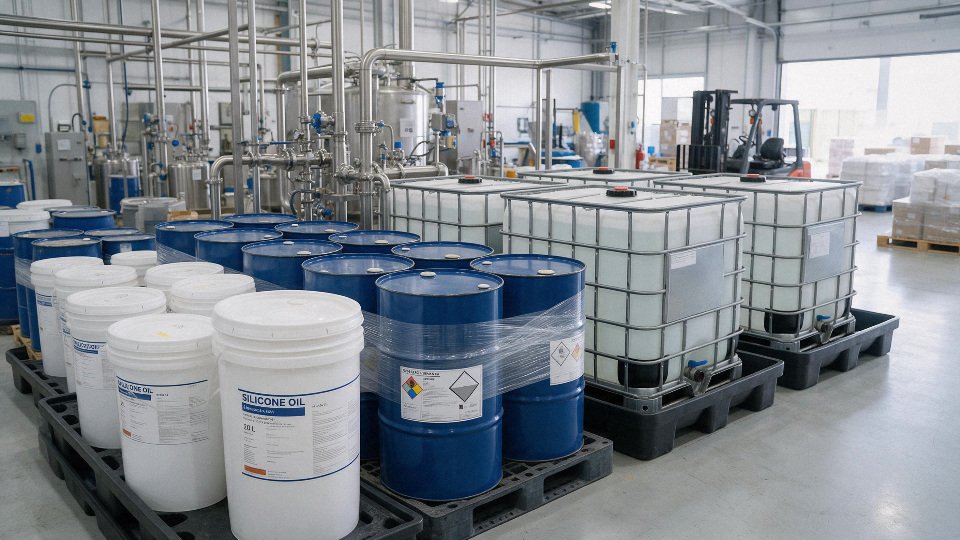
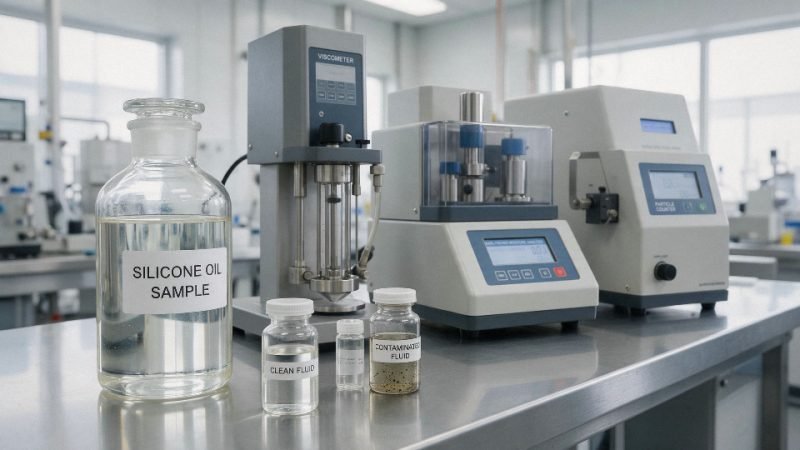
Silicone oil rarely fails on paper; it fails in storage, blending, heat transfer, release coating, defoaming, or downstream curing because something unwanted came along with it. A few hundred ppm of water, trace residual acid, low-boiling siloxanes, catalyst residues, gels, or outside contamination can shift viscosity, raise odor, destabilize an emulsion, poison a catalyst, or leave deposits on hot surfaces. That turns into rejected batches, line stoppages, warranty exposure, extra filtration and drying, and the kind of procurement argument nobody wants after the drum is already in the plant.
The main impurities in silicone oil are usually moisture, residual low-boiling volatiles, trace acids or alkalis, catalyst residues, insoluble gels or particulates, and incidental contamination picked up during production, packaging, or use. Which of these matters most depends on the application: electronics and cosmetics usually tighten limits on moisture, acidity, odor, and volatiles, while process fluids often fail first on particles, gel, or thermal residue.
The useful question is not just what impurities exist, but which ones actually change performance in your service window. Silicone oil can look clear, test close to spec on viscosity, and still cause trouble because the impurity mechanism sits elsewhere: foaming after circulation, haze after storage, poor wetting, odor on heating, or cure inhibition in a downstream process. That is where impurity type starts to matter more than a generic “purity” claim.
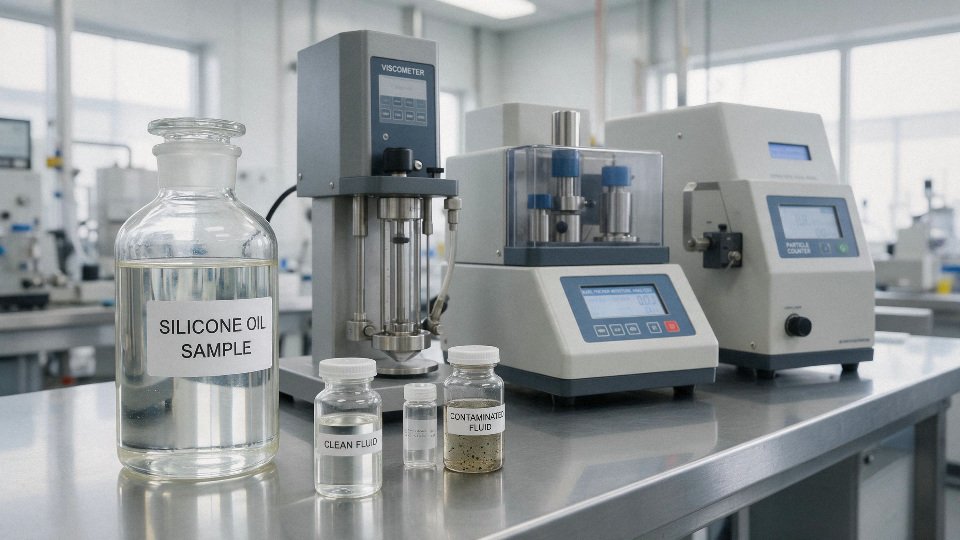
Impurity categories
Silicone oil contamination is not one thing. In plant terms, you are usually dealing with eight materially different impurity classes: volatile siloxanes, catalyst and process residues, water and hydrolyzable carryover, particulates, organic foreign matter, reactive functional leftovers, storage or service degradation products, and special-case biological or packaging-derived contamination. A ninth category sits in a gray zone: molecular-weight-distribution tails that are not always labeled as “impurities” on a COA, but can behave exactly like them in use.
A useful way to read the list is this: some impurities are chemically part of the silicone system but in the wrong amount, some are foreign matter from equipment or handling, and some are products of the oil slowly changing after it leaves the reactor. That distinction matters because the corrective action is different. A wiped-film devolatilizer fixes one problem; better drum liners or tighter transfer hygiene fix another.
Residual cyclic siloxanes and low-boiling linear oligomers
This is one of the first categories buyers notice because it shows up in odor, weight loss, fogging, and sometimes regulatory review. Residual D3, D4, D5, D6 and low-boiling linear oligomers typically come from incomplete stripping, equilibrium chemistry that was not pushed far enough, or intentional viscosity adjustment using lower-viscosity fractions that were not fully controlled.
In a PDMS process, the polymerization or equilibration reaction naturally creates a distribution, not a single clean molecule. If devolatilization is weak, residence time is short, vacuum is unstable, or feed temperature is too conservative, the light ends stay in the finished oil. Shared equipment can make this worse; I have seen a line that ran fine for a 350 cSt fluid but left too much low-boiler carryover when the same system was used for a low-odor personal-care grade without changing stripping conditions.
What these volatiles do depends on the application:
- Odor increase
- Low molecular fractions are more likely to reach the headspace and be noticed first, especially in enclosed packaging or warm storage.
- Evaporation loss
- Heat exposure, vacuum service, or high surface area use will preferentially remove these fractions.
- Fogging and condensable deposits
- Automotive interiors, optical assemblies, and enclosed electrical housings are especially sensitive.
- Viscosity drift
- Losing the light tail can move apparent viscosity upward over time.
- Regulatory or customer scrutiny
- This is particularly relevant where cyclic siloxanes such as D4 or D5 are restricted, disclosed, or closely monitored for the end market.
Premium low-odor or high-purity grades commonly control volatile content below about 0.5–1.0 wt%, but the meaningful limit depends on the actual use and the test method. A fluid that passes for a release-agent blend may still fail badly in electronics, cosmetics, or cabin-air-sensitive applications.
Residual catalysts, neutralization residues, and reaction auxiliaries
Catalyst residue is chemically small but operationally expensive. Even trace acidic, alkaline, metallic, or sulfur-bearing residues can keep reacting in storage, attack downstream additives, or poison a customer’s cure system.
Depending on route, possible residuals include:
- Acidic species
- From acid-catalyzed equilibration, incomplete neutralization, or decomposition products.
- Alkaline species
- Potassium or sodium compounds are common concerns in base-catalyzed routes.
- Metal salts
- Neutralization can create salts that are hard to remove fully if washing, settling, or filtration is marginal.
- Platinum or tin traces
- More relevant in specialty modified fluids or systems exposed to hydrosilylation or condensation chemistry.
- Sulfur-containing residues
- From certain auxiliaries, contamination, or upstream raw materials.
The mechanism is straightforward but often overlooked. Residual catalyst or neutralization salts alter the fluid’s chemical stability; they can drive post-reaction, increase acid value, promote hydrolysis, or create haze through insoluble species. Well-controlled silicone fluids often hold acid value below 0.05 mg KOH/g, with tighter limits in electronic and cosmetic grades, but that number alone does not tell you whether the residue is acidic, basic, ionic, or catalytically active.
The trade-off here is cost versus robustness. Deep purification improves storage stability and compatibility, but every extra wash, adsorption, polishing filtration, or vacuum pass costs yield, cycle time, utilities, and sometimes color stability. The preference flips fast in high-value applications where one catalyst-poisoned batch downstream is far more expensive than the purification step.
Water and hydrolyzable species
Moisture is common, persistent, and underestimated. It enters through wet raw materials, poor tank drying, humid-air breathing in partially filled storage tanks, leaking drum closures, or packaging that is fine for commodity oil but not for moisture-sensitive grades.
Typical finished silicone oil moisture targets are often below 100–500 ppm depending on grade and end use. Some applications can tolerate more; some really cannot. The problem is not just free water. Hydrolyzable species such as alkoxy-bearing residues or chlorosilane-derived traces can react with moisture after packaging and generate secondary instability.
Main effects include:
- Hydrolysis and chain-end change
- This can create silanols and shift fluid behavior over time.
- Viscosity drift
- In some systems you see chain scission first; in others, condensation and slight structuring.
- Corrosion of associated hardware
- Not because silicone oil itself is corrosive in the simple sense, but because hydrolyzable contaminants can generate acidic species that attack pumps, fittings, and storage hardware.
- Instability in downstream formulations
- Moisture-sensitive coatings, electronic encapsulants, defoamers, and release systems are common victims.
In practice, the boundary is simple: if the oil is headed into a moisture-tolerant mechanical application, a small moisture excursion may be manageable. If it is going into a reactive formulation or fine electronics process, the same moisture level can become a root-cause investigation.
Particulate matter
Particles are easy to dismiss until they start plugging a metering valve, scratching a surface, or creating dielectric failures. This category includes silica fines, filter shed, rust, dust, carbonaceous specks, gasket fragments, and insoluble gel particles.
A useful shop-floor breakdown is:
- Hard mineral or metallic particles
- Silica fines, rust, weld scale, valve-seat wear debris.
- Soft polymeric fragments
- Gasket crumbs, hose-lining fragments, filter media shed.
- Carbonaceous or burned residues
- Usually linked to overheated equipment, poor cleaning, or legacy contamination in transfer lines.
- Insoluble silicone gels or microgels
- Often chemically related to the fluid itself, but functionally they behave like dirt.
Consequences depend heavily on the tolerance stack of the customer’s equipment:
| Particle type | Typical source | Main risk in use |
|---|---|---|
| Silica fines | Fillers, upstream handling, dusty packaging area | Haze, abrasion, filter loading |
| Rust/metal | Tanks, drums, pumps, fittings | Wear, valve sticking, dielectric weakness |
| Filter shed/gasket fragments | Consumables, maintenance error | Cosmetic defects, plugging |
| Carbon specks | Overheating, poor cleaning | Appearance rejection, coating defects |
| Gel particles | Side reaction, aging, local overheating | Blocking defects, flow inconsistency |
The mechanism is mechanical first, then quality-related. Fine particles increase haze and can create visible defects in thin films; larger or harder particles create abrasion and wear; conductive or semi-conductive contamination can reduce reliability in electrical systems. In tight-tolerance applications, the right question is rarely “is there visible sediment?” but “what particle size distribution remains after the customer’s final filtration?”
Organic foreign matter
This is the messy category from shared assets and imperfect housekeeping. Hydrocarbons, residual solvents, plasticizers, surfactants, antifoams, and cleaning-agent residues can all show up if tanks, hoses, totes, pumps, or filling heads are shared across product families.
The problem is compatibility, not just purity. A tiny amount of the wrong surfactant can wreck defoaming behavior. A trace hydrocarbon can shift flash behavior, odor, or solvency. Plasticizer contamination from hoses or seals may not be obvious on receipt but can produce bleed, softening, or film defects later.
Common entry routes:
- Shared transfer lines with incomplete line clearance
- Cleaning solvent not fully removed before changeover
- Reused packaging with residual prior contents
- Hose, seal, or liner extractables at elevated temperature
- Operator-added antifoam or maintenance chemicals entering open vessels
Most silicone oil contamination comes from the reactor itself.False
A significant share of contamination risk is introduced after synthesis: transfer systems, packaging, maintenance materials, line changeovers, and storage conditions are frequent causes, especially for otherwise well-controlled base fluids.
Reactive functional impurities in modified silicone oils
Modified silicone oils add another layer of risk because “impurity” may also mean unreacted functionality. Amino, epoxy, vinyl, Si-H, alkoxy, or polyether-bearing species can remain after incomplete reaction, poor stoichiometric control, side reactions, or insufficient finishing.
These species matter because they are active, not inert. They can:
- Continue reacting during storage
- Destabilize emulsions or blends
- Shift cure speed in downstream systems
- Interfere with adhesion, slip, wetting, or release
- Create batch-to-batch inconsistency even when bulk viscosity looks acceptable
The trade-off is familiar to anyone who has bought functional fluids: tighter reaction completion usually improves consistency, but pushing conversion too hard can increase color, gel formation, or cost, and may damage the target functional balance. The preferred point depends on what the customer values more: narrow performance consistency or maximum functional loading.
Degradation byproducts formed during storage or service
Not every impurity was present on the day of filling. Silicone oils can generate silanols, crosslinked microgels, oxidized organics, color bodies, and chain-scission products during storage or service, especially under heat, air exposure, metal contact, light, or residual catalytic contamination.
Watch for these patterns:
- Silanol formation
- Often linked to hydrolysis or chain-end changes.
- Microgel formation
- Shows up as haze, insolubles, or slow filter plugging.
- Oxidized organics and color bodies
- More visible in clear or cosmetic-sensitive grades.
- Chain-scission products
- Can reduce viscosity and increase volatile behavior.
This section’s main conclusion stops holding if the oil is in severe service, because then “impurity” and “aging product” blur together. A fluid that is clean when shipped can still become off-spec in a customer’s hot, aerated, metal-rich recirculating loop.
Biological and environmental contamination in special cases
Neat silicone oil does not usually support microbial growth the way water-rich systems do, but water-contaminated emulsifiable systems can. Airborne fibers, paper dust, cleanroom garment lint, and packaging-derived extractables also belong here, especially in electronics, medical-adjacent, optical, or high-appearance applications.
Do not ignore packaging components. Liners, seals, cap inserts, drum coatings, and intermediate container valves can all contribute low-level extractables or particles. On a broad commodity grade this may never surface. On a low-odor, low-volatile, fine-filtration application, it absolutely can.
Molecular-weight-distribution tails: not always called impurities, but often treated that way
Off-spec low and high molecular tails sit in the gray area between composition and contamination. In a strict chemical sense, they may be part of the intended silicone fluid family. Functionally, though, they often behave like impurities because they change volatility, rheology, surface behavior, and lot-to-lot consistency.
The low tail behaves much like volatile contamination: more odor, more evaporation, more fogging risk. The high tail pushes in the other direction: higher apparent viscosity, poorer flow, slower leveling, and sometimes more residue or gel tendency. That is why two drums with the same nominal viscosity can perform differently if one has a broader distribution.
For technical buyers, this is the practical reading of the taxonomy: if a problem changes odor, evaporation, cure, clarity, dielectric reliability, filtration, or storage stability, do not stop at the word “impurity.” The root cause may be a contaminant, a residue, a degradation product, or simply the wrong tail of the silicone itself.
How impurities enter
Most silicone-oil impurity problems are not created at one dramatic failure point; they accumulate across the chain, starting with feedstock quality and ending with how the user handles an opened drum. If you are trying to prevent complaints or unstable test results, trace entry paths in order: raw materials, reaction, finishing, packaging, storage, transport, then customer use. That sequence usually shows where control was lost.
Raw material origin sets the impurity baseline
If the incoming chlorosilanes, cyclic siloxanes, solvents, or additives are already off-grade, the downstream plant rarely “cleans quality back in” without a deliberate purification step. Silicone oil quality is strongly path-dependent: impurities present before polymerization can survive, transform, or even catalyze new side reactions later.
Key entry points at raw-material stage include:
- Chlorosilane quality
- Residual chlorides, hydrolyzable species, and trace metal contamination can carry into hydrolysis and equilibration routes.
- Variation lot to lot matters. A plant may run fine for months, then acid value or odor drifts because one upstream source changed purification practice.
- In practice, this is where procurement decisions quietly affect plant stability. The cheapest source can be expensive if it widens finishing load or raises off-spec frequency.
- Siloxane intermediate purity
- D4, D5, MDM, or other intermediates with residual low boilers, high boilers, or mixed functionality shift the product profile before the kettle is even heated.
- If the intermediate contains reactive silanols or non-target functional groups, viscosity control and end-group consistency become harder.
- For high-purity or low-odor grades, this feed purity often matters more than small adjustments in finishing.
- Solvent cleanliness
- Where solvent is used, residual water, polar contaminants, or previous-product carryover can enter directly into the system.
- A solvent tank that once held a coating additive and now feeds a silicone fluid line can create trace contamination that is analytically small but commercially serious, especially in cosmetic, electronics, or release-coating use.
- Water quality
- Water used in hydrolysis, washing, or cleaning can bring dissolved ions, particulates, organics, and microbes.
- The mechanism is straightforward: ions and acidity/alkalinity can affect hydrolysis balance, promote corrosion, or leave residues that survive inadequate drying.
- Plant teams sometimes focus on reactor chemistry and ignore utility water quality until seasonal changes show up in product consistency.
- Additive carryover
- Antifoams, stabilizers, cleaning agents, and maintenance lubricants can all become unintended inputs.
- A few grams from the wrong tote, pump, or measuring vessel can be enough to alter foam, wetting, odor, or downstream compatibility.
Synthesis-stage causes are usually a mix of chemistry and equipment condition
Incomplete reaction control leaves behind species that are technically “process residues” but function as impurities in the finished oil. The root cause is often not one bad parameter but a chain: feed variability, uneven temperature, dead zones in the reactor, then rushed finishing.
Common synthesis-stage pathways:
- Incomplete equilibration
- Leaves an abnormal distribution of cyclics, low molecular weight fractions, or unstable end groups.
- This tends to show up as volatility drift, viscosity instability, or unexpected odor after storage.
- Side reactions
- Excess acidity, alkalinity, moisture, or local overheating can generate unintended structures.
- The trade-off is familiar on the plant floor: pushing throughput with hotter, faster batches may improve kettle utilization, but it can also raise side-product load and stripping burden.
- Inadequate catalyst deactivation or neutralization
- Residual acid or base catalyst can keep reacting after the nominal endpoint.
- That affects shelf stability directly. A drum may leave the plant within spec, then drift during transit or customer storage.
- Poor stripping or devolatilization
- Residual low boilers, solvent traces, and cyclics remain if vacuum level, residence time, or surface renewal is inadequate.
- Typical volatile targets for premium grades are often controlled below about 0.5-1.0 wt%, but the achievable number depends on viscosity, equipment design, and thermal history; it should not be generalized across all silicone oils.
- Overexposure to heat
- Long hold time at elevated temperature can darken product, increase odor, and accelerate degradation.
- The boundary here is important: heat is necessary for some reactions and stripping steps, but once the target is reached, extra thermal exposure usually hurts more than it helps.
- Contamination from equipment and transfer systems
- Reactor scale, worn agitator seals, pump lubricants, corroded internals, and gasket fragments are common offenders.
- Metal contact surfaces matter more when the fluid is hot, reactive, or held for long periods.
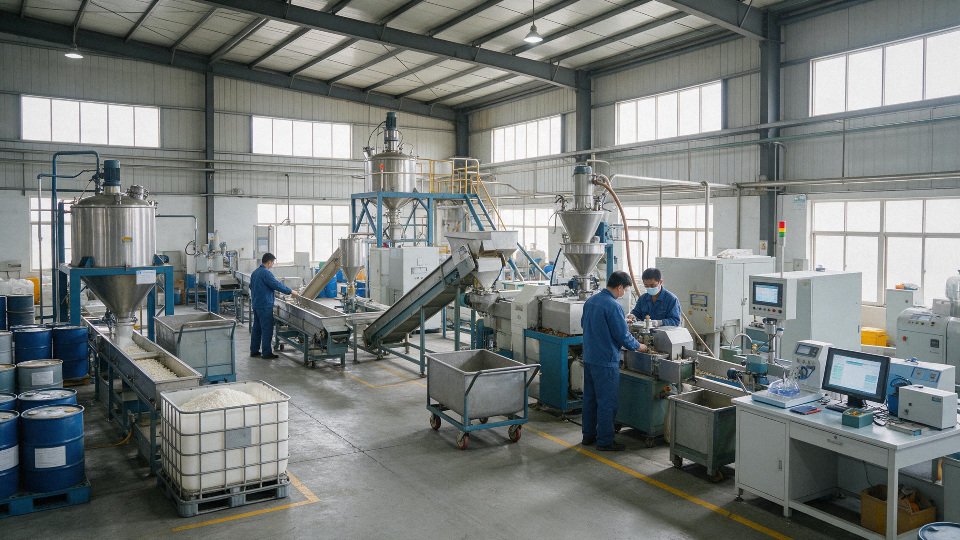
Finishing and packaging often undo good reactor work
A clean synthesis train can still produce a contaminated commercial lot if polishing, filtration, and filling are weak. This is where many plants underestimate housekeeping.
Watch these points:
- Insufficient filtration
- Fine particulates, carbon fines, gasket debris, or dried polymer fragments remain in the product.
- Filter rating alone is not enough; housing cleanliness, seal integrity, and bypass risk matter just as much.
- Tank heel mixing
- Residual material from the previous lot dilutes or contaminates the fresh batch.
- This is especially risky during grade changes: viscosity mismatch, additive carryover, or color drift can all come from a small heel that “looked harmless.”
- Line changeover residues
- Shared manifolds, pumps, and hoses can retain previous products unless drained and verified.
- A plant running multiple silicone grades usually needs stricter segregation than people first assume.
- Packaging moisture ingress
- Open filling, humid ambient air, and wet containers raise moisture pickup.
- Typical finished-moisture targets may be below 100-500 ppm depending on grade and use, so even brief exposure can matter for moisture-sensitive applications.
- Incompatible drum liners or seals
- Extractables from liners, bungs, gaskets, or coatings can leach into the fluid.
- This becomes more likely with long storage, elevated temperature, or aggressive trace residues in the oil.
- Non-clean filling environment
- Dust, fibers, aerosol oils, and shop-floor debris enter surprisingly easily during packaging.
- Cosmetic and electronic customers usually notice this before an industrial buyer does.
Storage, transport, and customer handling create the last big impurity window
A sealed, conforming batch can degrade or become contaminated after dispatch. In my experience, this is where blame gets argued, because the certificate of analysis reflects dispatch condition, not what happened after six weeks in a warm warehouse with three partial transfers.
Main pathways after filling:
- Repeated heating and cooling
- Breathing through vents pulls in moisture and airborne contamination.
- Thermal cycling can also shift dissolved gases and accelerate package-material interaction.
- Open venting, sunlight, and oxygen exposure
- These promote oxidation, odor formation, and gradual property drift.
- Clear handling rules matter more for long-dwell inventory than for fast-turn commodity use.
- Cross-contamination from logistics hardware
- Reused bulk tankers, pumps, hoses, IBCs, and transfer containers are a recurring source of mixed residues.
- Never assume “used for silicone before” means clean enough for your grade.
- End-use contact contamination
- Acids, bases, metal surfaces, process gases, fillers, elastomer fragments, and hot-process residues can all enter during use.
- Heat-transfer, damping, hydraulic, textile, coating, and release applications each add different risks. The same silicone oil can remain stable in one service and degrade quickly in another because the contact environment changes.
- Customer-created contamination after receipt
- Blending in humid workshops
- Using unclean pails or funnels
- Leaving drums open during production
- Returning partial used material into the original drum
This last point is uncomfortable but common: some customers introduce more impurity risk after receipt than the manufacturer did during production. Once partial material is exposed, transferred, and mixed back, root-cause work becomes much harder, and any retained sample from the original lot may no longer represent what is in use.
Performance risks
A silicone oil can look clean, clear, and on-spec for nominal viscosity, yet still create expensive failures once it sees heat, voltage, vacuum, or a downstream cure system. The commercial problem is that many of the most damaging impurity effects are latent: they do not show up in a drum sample by eye, and they may not move the headline viscosity number enough to trigger rejection.
That is why buyers who only check appearance, viscosity, and maybe color often get surprised in service. The failure does not start at receipt; it starts when a residual catalyst keeps reacting at 180–220 °C, when a few hundred ppm of water shifts dielectric behavior, or when a trace of incompatible organics lands on a coating line and turns into fish-eyes across a full shift’s production.
Thermal and oxidative stability loss
Residual catalysts, moisture, and excess low-boiling fractions are the usual first suspects when a silicone fluid loses mass too quickly at temperature, darkens, smokes, or develops odor. In high-temperature service, those impurities do not just “sit there”; they change the decomposition pathway and lower the practical stability margin of the oil.
The mechanism matters. A well-made polydimethylsiloxane fluid is generally stable because the siloxane backbone resists thermal breakdown reasonably well under controlled conditions. But three impurity classes change that:
- Residual acidic or basic catalyst species
- Can promote chain rearrangement or chain scission
- Increase viscosity drift early, then volatile formation later
- Often show up as faster weight loss in oven or hot-plate exposure
- Moisture
- Can accelerate hydrolytic reactions in susceptible systems
- Interacts with catalyst residues and trace ionic species
- Tends to matter more in sealed electrical systems, hot baths, and long dwell thermal processes
- Low-molecular-weight siloxanes or organic volatiles
- Evaporate first under heat or vacuum
- Create odor, condensable fumes, and visible smoke
- Leave the remaining fluid composition shifted from the original target
A buyer usually sees this as one of four plant-floor symptoms:
- Higher than expected top-up consumption in heating baths or damping systems
- Smoke or odor complaints near hot zones
- Deposits on covers, nearby guards, optics, or exhaust ducting
- Product performance changing over a run because the fluid left in service is no longer the same fluid originally filled
Typical moisture targets for finished silicone oils are often below 100–500 ppm depending on grade and use, and volatile content in premium low-odor or high-purity grades is commonly held below about 0.5–1.0 wt%. Those are useful reference points, not universal acceptance limits. The right ceiling depends on temperature, dwell time, ventilation, whether the system is open or closed, and how sensitive the adjacent process is to condensables.
The trade-off is straightforward: tighter stripping, drying, and purification generally improve high-temperature behavior, but they add processing cost and may lengthen lead time. For a mold release intermediate running at modest temperature, the premium may not pay back. For electronics potting, vacuum service, or odor-sensitive indoor applications, it usually does.
Viscosity drift and rheology inconsistency
If the application depends on precise flow, small chemistry errors turn into large operating headaches. Metering pumps, damping units, textile finish add-on, coating bars, and lubricant feed systems all assume the fluid stays inside a narrow rheological window.
The main risk pathways are:
- Chain scission
- Reduces average molecular weight
- Lowers viscosity over time
- Often accelerated by catalyst residue, heat history, or contamination
- Uncontrolled low-molecular fractions
- Make initial viscosity read lower than expected
- Increase evaporative loss, so the fluid may thicken later as light ends leave
- Disturb consistency batch to batch even if nominal viscosity grade is the same
- Reactive residues or ongoing condensation/equilibration
- Can push viscosity upward in storage or service
- Show up as drift after filling, not always in incoming QC
In practice, this is where procurement and operations often talk past each other. Purchasing sees “350 cSt nominal” on the data sheet; production sees pulsating metering, a damping assembly that no longer meets response curve, or a coating line that alternates between orange peel and starvation. The cost is not the drum price difference. It is line instability, scrap, and technician time spent chasing a mechanical problem that is actually a fluid problem.
This conclusion stops holding if the process itself is very forgiving, such as low-precision bulk lubrication with wide viscosity tolerance. In precision dispensing or thin-film coating, even modest drift can move the process outside its control window.
Dielectric and electronic reliability impacts
For electrical insulation, electronics assembly, or semiconductor-adjacent uses, ionic contamination, water, and particulates are often more dangerous than a slight color shift or a mild odor issue. A fluid can still look excellent and be a poor choice for high-reliability dielectric service.
The main failure links are:
- Moisture
- Reduces insulation performance
- Raises leakage risk
- Can contribute to partial discharge problems in sensitive systems
- Ionic contaminants
- Residual salts, catalyst remnants, or process carryover can alter conductivity behavior
- Often matter at very low levels that a standard receiving inspection will miss
- Particulates and gels
- Create local field concentration points
- Interfere with thin-gap filling
- Become defect nuclei in sensitive assemblies
A silicone oil can meet a viscosity specification and still be unsuitable for dielectric or electronics-adjacent use.True
Viscosity confirms flow grade, not ionic cleanliness, moisture level, particle burden, or long-term dielectric behavior. Those risks need application-specific testing and supplier control of purification and packaging.
One practical mistake is to generalize from industrial mechanical grades into electrical uses. The chemistry family may be the same, but the acceptable impurity profile is not. If the fluid will contact connectors, coils, sensors, LED modules, or semiconductor-related hardware, the buyer usually needs tighter control on moisture, acid value, particulates, and extractables, plus packaging that does not reintroduce contamination after manufacture.
Surface and optical defects
In coatings, release systems, personal care intermediates, defoamer bases, and transparent formulations, surface behavior is where impurities become visible. Insolubles, microgels, surfactant contamination, and incompatible organics can trigger defects that operators usually describe in plain language: haze, fish-eyes, craters, poor leveling, streaks, and deposits.
A few distinct mechanisms are worth separating:
| Defect symptom | Common impurity drivers | What usually happens on the line |
|---|---|---|
| Fish-eyes or craters | Incompatible organics, surfactant carryover, localized contamination | Wet film pulls back, exposing substrate |
| Haze or transparency loss | Insolubles, gels, fine particulates, phase-incompatible residues | Clear product turns cloudy or light scattering increases |
| Poor leveling | Broad molecular-weight inconsistency, contamination affecting surface tension | Surface remains uneven after application |
| Deposits or specks | Gels, degraded residues, packaging contamination | Visible rejects, nozzle or filter fouling |
The trade-off here is that a fluid tuned for one surface behavior may be a poor fit elsewhere. A trace component that improves slip or spreading in one formulation can create separation or crater defects in another. That is why compatibility testing with the actual formulation stack matters more than generic “silicone compatible” claims.
Foaming, volatility, and odor issues
Higher volatile content and stray organic contamination tend to show up fast in use, especially in open systems, heated tanks, vacuum chambers, and indoor application areas. The result is not only evaporative loss. It can be foam persistence, fogging on nearby surfaces, smell complaints from operators, and lower retention of active fluid where it is actually needed.
Typical premium low-odor grades often control volatile content below roughly 0.5–1.0 wt%, but that number alone does not predict behavior in every plant. A 0.8 wt% volatile fraction may be acceptable in a closed mechanical system and completely unacceptable in a heated open coating line with worker exposure and nearby optical parts.
Common commercial impacts include:
- Increased consumption because light ends leave first
- More frequent exhaust or enclosure cleaning
- Complaints during customer audits for odor or fogging
- Reduced functional film remaining on the substrate after application
Compatibility and downstream cure problems
A silicone oil impurity problem often shows up one process step later, not in the oil itself. Catalyst poisons, reactive residues, or contaminant carryover can inhibit RTV cure, distort release performance, destabilize emulsions, or interfere with paintability and adhesion.
This is where hidden total cost gets ugly. The incoming silicone oil may have been cheaper, but if it causes slow or incomplete RTV cure, uneven release force, or emulsion breakup in storage, the downstream scrap and rework erase any purchase saving quickly. In my experience, these are some of the hardest disputes to resolve because the fluid passed basic COA checks and the failure appears in the customer’s compounded system.
Acid value is one indirect indicator here. Well-controlled silicone fluids are often below about 0.05 mg KOH/g, with tighter limits in electronic and cosmetic applications. It is still only one indicator. Cure inhibition and compatibility problems can come from species that do not move acid value enough to explain the field result.
Regulatory and customer-audit exposure
Impurity control is no longer just a technical housekeeping issue. It can become a documentation and market-access problem if the impurity profile raises concern around cyclic content, heavy metals, extractables, REACH-related declarations, cosmetic expectations, or food-contact support.
Buyers usually need to separate three questions:
- What is actually controlled in the product?
Moisture, acid value, volatiles, metals, particulates, residual catalyst, cyclic content where relevant - What is declared by the supplier?
COA items, technical data, regulatory statements, restricted-substance declarations What must still be verified for the end use?
Current regulations, customer specifications, migration or extractables testing, and fitness in the final article
The risk here is assuming that a standard industrial silicone oil data sheet covers a regulated or highly audited use. Often it does not. The supplier may be able to support the application, but only if the impurity controls, packaging, and documentation are aligned to that market from the start.
Testing and identification
A practical silicone-oil testing program starts with cheap, fast screens and only escalates to deeper analysis when the application justifies it. No single test proves “purity” in silicone oil; what matters is whether the method can see the impurity mechanism that will actually damage your process, finish, cure, dielectric behavior, odor profile, or storage life.
In plant purchasing, I would not treat every drum like an electronic-grade forensic exercise. For a heat-transfer fluid, release viscosity, moisture, acid value, and volatiles may be enough. For optical coating, personal care, electronics, or any formulation where cure inhibition or trace contamination matters, that first screen is only the gatekeeper.
Routine incoming and release checks
These are the first-pass checks because they are fast, relatively low cost, and good at catching obvious process drift, contamination, or packaging issues.
- Appearance
- Clear vs hazy
- Visible sediment
- Layer separation
- Gel particles or stringiness
A clear fluid can still be contaminated, but haze, floc, or phase separation usually tells you something already went wrong: water ingress, incompatibility, oxidation products, poor filtration, or mixed grades.
- Color
- Usually measured by APHA, Gardner, or a supplier-specific scale
- Useful for batch-to-batch consistency and thermal history
Color is often a secondary indicator, not a root-cause test. A slightly darker fluid may still perform fine in some industrial uses, while a color shift in cosmetic or optical service can be a rejection issue by itself.
- Viscosity
- One of the most useful release checks
- Sensitive to wrong-grade blending, chain scission, polymerization drift, and solvent dilution
If a 100 cSt product arrives at 87 cSt, that is not “close enough” unless the application says so. In a release coating, damping fluid, or metered dosing system, that shift changes film build, flow, and pump calibration. Temperature control during testing matters here; I have seen bad receiving calls made just because one lab measured at a different temperature than the COA basis.
- Refractive index and density
- Helpful identity and consistency checks
- Good for spotting off-spec blending or unexpected composition shifts
These do not tell you what the impurity is, but they can flag that the fluid is not the same as the approved benchmark.
- Odor
- Still worth doing, even though it is subjective
- Strong solvent-like, acidic, rancid, or sharp notes often correlate with residual volatiles, hydrolysis byproducts, or packaging contamination
A trained operator can catch a bad batch faster than the instrument queue in some plants. The mistake is stopping there.
- Acid value
- Common first-line indicator for hydrolysis residue, catalyst carryover, or degradation
- Well-controlled silicone fluids are often below about 0.05 mg KOH/g, with tighter expectations in electronics and cosmetic applications
- Moisture
- Typical finished silicone oil targets are often below roughly 100–500 ppm, depending on grade and end use
- Critical for hydrolysis-sensitive systems, electrical performance, and any downstream chemistry involving reactive groups
- Volatile content
- Premium low-odor or high-purity grades are commonly controlled below about 0.5–1.0 wt%, but the acceptable limit depends heavily on application
- Useful for odor risk, evaporation loss, fogging, and residual low-boiler control
The mechanism here is straightforward: low-molecular species leave first, so they drive odor, closed-space emissions, flash-off, and mass loss at temperature; water and acidic residues then accelerate hydrolysis or destabilize downstream formulations. The trade-off is cost and speed. Routine screens are cheap and fast, but they can only tell you that something is wrong, not always what it is.
Analytical tools for volatile and residual species
When routine checks suggest low-boiling contamination or when the application is odor-sensitive, thermal, enclosed, or highly regulated, gas-phase methods are the next step.
- Gas chromatography (GC)
- Used to separate and quantify cyclic siloxanes, residual solvents, and low oligomers
- Often the best tool for tracking D3, D4, D5, D6-type cyclics or process volatiles where the grade specification requires it
GC is particularly useful when two samples have the same bulk viscosity but behave differently in evaporation, odor, or closed-system emissions. That usually means the issue sits in the volatile tail, not the main polymer body.
- Headspace GC
- Better aligned with odor-causing species and packaging/headspace emissions
- Useful when a customer complaint is “smells wrong” rather than “viscosity is off”
That distinction matters. A fluid can have acceptable total volatile content and still fail odor expectations because a small amount of a particularly noticeable species dominates the sensory result.
- Mass spectrometry support
- GC-MS or related methods help when a peak is unknown or when mixed contamination is suspected
- Especially valuable after process upsets, tank changeovers, or unexplained customer complaints
A low volatile number alone is enough to prove low odor risk.False
Odor depends on which volatile species are present, not just total amount. A small amount of a highly odorous compound can be more problematic than a larger amount of relatively neutral cyclics or low oligomers.
Methods for moisture, ions, and reactive residues
These are the methods buyers tend to underuse until they get a cure problem, corrosion issue, or unexplained instability.
- Karl Fischer titration for water
- Best-fit method for low-level moisture in silicone fluids
- Requires correct sample handling; a wet syringe, humid room, or uncapped beaker can distort low-ppm results fast
- Conductivity or ionic extraction
- Relevant for electronics, dielectric fluids, precision cleaning, and sensitive coating systems
- Silicone oil itself is not well characterized by a simple aqueous-style conductivity number unless the method is clearly defined, so extraction protocol matters
- Acid/base titration or spectroscopic methods
- Used for acid value and, where relevant, residual basic species
- Important after neutralization or catalyst-removal steps
- Functional-group testing
- Silanol
- Si-H (hydrogen functionality)
- Amino
- Epoxy
- Alkoxy
For specialty modified silicones, these are not “impurities” in the same sense as dirt or water, but off-target residual functionality or side products behave like impurities in use. In a release system or addition-cure formulation, a little extra silanol or a trace basic contaminant can shift cure behavior enough to matter. This is where method choice flips: a standard PDMS test slate is not enough for amino-, epoxy-, or alkoxy-functional grades.
Particulate and cleanliness methods
If the silicone oil will contact optics, electronics, precision surfaces, narrow metering hardware, or fine filters, bulk chemistry alone is not sufficient.
- Membrane filtration gravimetry
- Filters a measured sample volume and weighs retained insoluble matter
- Good for total dirt load, but not for telling you what the particles are
- Particle counting
- Useful where particle size distribution matters, not just mass
- Important for small-orifice dispensing, coating defects, and cleanliness-critical pack sizes
- Microscopy
- Distinguishes fibers, metal fines, carbonaceous debris, gels, and external dust
- Often the quickest way to separate process residue from packaging contamination
- Haze measurement and insoluble matter checks
- Helpful for fluids intended to remain optically clear
- Sensitive to fine dispersed contamination that the eye may miss
- Clean-pack protocols
- Double-bagging, clean-room filling, flushed containers, dedicated transfer lines
- Necessary when the contamination risk is mostly introduced after the final reactor, not inside it
The boundary here is important: if the end use is a bulk mold release or general lubricant additive, ultra-clean particulate control may not pay back. In LED encapsulation, optical fluids, or electronics processing, it absolutely does.

Metal and trace element analysis
Where catalyst residues or trace metals can affect dielectric performance, color stability, biocompatibility-adjacent requirements, or downstream cure, elemental analysis becomes worth the spend.
- ICP-OES
- Good for many metal contaminants at moderate trace levels
- Common when catalyst carryover or equipment-related contamination is being tracked
- ICP-MS
- Better for very low-level trace element work
- More relevant for high-purity specialty systems, electronics, and some medical-adjacent supply chains
This is not a routine test for every drum of general-purpose silicone oil. It is usually a qualification, complaint, or high-purity release tool. The commercial trade-off is obvious: ICP work is more expensive and slower than basic QC, so use it where the risk justifies it.
Aging and application simulation
Some of the most expensive failures do not show up on the COA. They appear after heat, storage, electrical stress, contact with substrates, or contact with cure catalysts.
Use application-linked tests such as:
- Thermal stability and oven aging
- Evaporation loss or weight loss at temperature
- Dielectric testing
- Compatibility trials with plastics, elastomers, coatings, and seals
- Cure-inhibition checks
- Storage studies under expected packaging and climate conditions
This is where mechanism beats paperwork. A silicone oil can pass viscosity, acid value, and moisture limits, yet still poison a platinum-cure system because of trace sulfur, amine, tin, or unknown transfer contamination. Another batch can look clean analytically but lose too much mass in a heated chamber because the low-volatiles profile sits in the wrong boiling range for the duty cycle.
How to interpret results without overtesting
The right approach is layered.
- Start with the failure mode you actually care about
- Odor
- Cure inhibition
- Haze
- Dielectric drift
- Thermal loss
- Corrosion
- Metering instability
- Choose the test that sees that mechanism directly
- Not the prettiest COA line
- Not the strictest-looking number
- The one that predicts use performance
- Check method details before comparing suppliers
- Sample preparation
- Calibration range
- Detection limit
- Test temperature
- Reporting basis: as received, dry basis, filtered or unfiltered
- Use tighter limits only where they improve process outcome
- A lower number is not automatically better if the method is noisy, poorly matched, or stripping out information you actually need
- Escalate testing based on application criticality
- General industrial use: routine release and incoming checks may be enough
- Specialty and high-purity use: qualification should include deeper chemical and application simulation work
A buyer who chases the lowest moisture, lowest volatiles, and lowest trace-everything number without linking them to the actual process risk often spends more and still gets surprised. The better discipline is to ask which impurity class can shut down the line, scrap the product, trigger odor complaints, or destabilize cure, then test hard for that class and sensibly for the rest.
Control strategies
Good impurity control in silicone oil is won upstream and held through finishing, packaging, and specification discipline; you do not “test quality into” the batch at the end. Plants that consistently ship stable silicone fluids usually control three things tightly: what enters the reactor, what can form during processing, and what can be picked up again after the product is already made.
A useful way to think about it is this: each control layer is catching a different failure mode. Raw material qualification limits what you start with. Process design limits what you create by accident. Finishing and logistics controls stop clean product from getting dirty again.
Upstream raw material qualification
A broad certificate saying 99% purity is rarely enough for silicone oil production, especially for buyers who care about odor, dielectric behavior, cosmetic feel, or long storage life. The right incoming specification targets the residuals that actually matter in the downstream fluid: water, acid-forming species, low boilers, metals, halides where relevant, and any catalyst carryover from the supplier’s process.
In practice, upstream qualification usually includes:
- Supplier audits
- Review how the supplier controls moisture ingress, catalyst residues, and storage stability.
- Check whether critical raw materials are handled in dedicated equipment or shared lines.
- Verify whether the supplier trends impurities lot to lot or only releases against a minimum purity number.
- Impurity mapping of intermediates
- Build a practical “impurity family” map for each feedstock: residual chlorosilanes, cyclics, water, acidity, salts, metal traces, organic solvent residues, and particulates.
- Match that map to the intended end-use risk. A release fluid can tolerate things that an electronics or personal care grade may not.
- Water control at receipt and transfer
- Dry receiving lines and tanks before unloading.
- Use dry gas blanketing where the feed is moisture-sensitive.
- Watch seasonal effects. In humid months, a tank farm that behaves fine in winter can quietly push moisture up enough to change hydrolysis rate or final stripping load.
- Incoming specifications tied to critical residuals
- Set limits on moisture, acid value, volatile profile, and insolubles where they are decision-relevant.
- Do not rely only on one composite purity number if a few hundred ppm of the wrong residual can drive odor, haze, corrosion, or instability.
The mechanism matters here. Water and reactive acidic species do more than just fail an incoming test; they alter reaction path, accelerate side reactions, and increase the burden on neutralization and stripping later. That usually shows up downstream as wider volatility spread, off-odor, or unstable viscosity, not just a bad moisture result on day one.
Process design controls
The cheapest impurity to remove is the one you never create. Reactor design, catalyst selection, temperature profile, and residence time all affect not only conversion but the impurity distribution that has to be cleaned up later.
Key process controls typically include:
- Reactor material selection
- Use construction materials compatible with the catalyst system and reactive intermediates.
- Avoid corrosion products and metal pickup from marginal metallurgy, worn internals, or dead zones where aggressive chemistry sits too long.
- Catalyst choice and dosage discipline
- A catalyst that gives faster throughput can also leave harder-to-remove residues or create a broader low-boiling profile.
- The preferred choice flips when the end use is purity-sensitive: a plant may accept a slower cycle if it materially reduces post-treatment load and batch variability.
- Temperature control
- Tight temperature discipline limits thermal cracking, color formation, and excess cyclic generation.
- Hot spots around jackets, coils, or poor agitation often create impurity tails that do not show up until final odor or volatile testing.
- Residence time management
- Too short, and you leave unreacted material or unstable intermediates.
- Too long, and you can drive secondary reactions, broaden molecular distribution, or darken the product.
- Stripping efficiency built into the process
- Design for effective removal of low boilers and residual monomers, not just nominal conversion.
- Vacuum capability, vapor path design, condenser performance, and leak tightness all matter. A tired vacuum system is one of those maintenance issues that quietly turns into a quality issue.
- Neutralization practice
- Neutralize enough to stop ongoing acid- or base-driven instability, but avoid over-treatment that leaves salts, haze, or adsorption burden.
- Mixing quality is critical; poor distribution during neutralization gives a batch that looks acceptable at release and drifts later in storage.
- Inert handling where needed
- Use nitrogen or similarly dry inert protection for moisture-sensitive steps, high-purity finishing, or hot transfers where air pickup matters.
- This is not necessary for every industrial grade; the boundary is application sensitivity. For commodity service fluids, full inert discipline may be excessive cost. For electronic, cosmetic, or low-odor grades, it is often justified.
Purification steps
Most silicone oil plants use some combination of thermal separation, adsorption, neutralization polishing, and filtration. The right sequence depends on viscosity, volatility profile, catalyst chemistry, and end-use cleanliness target.
A practical comparison is below:
| Purification step | What it mainly removes | Where it helps most | Limits to watch |
|---|---|---|---|
| Vacuum devolatilization | Residual low boilers, entrained volatiles | General finishing | Limited on tightly bound or high-boiling contaminants |
| Thin-film or wiped-film stripping | Volatiles with short residence time and good heat transfer | Low-odor, tighter volatile specs | Capital cost, fouling sensitivity |
| Adsorption | Color bodies, trace polar residues, some catalyst remnants | High-purity polishing | Media selection and changeout discipline matter |
| Neutralization polishing | Residual acidity/basicity | Stability improvement | Overuse can create solids load |
| Staged filtration | Particles, gels, salts, filterable insolubles | Packaging cleanliness and appearance | Does not fix dissolved contamination |
| Dedicated high-purity finishing | Combined residual reduction under tighter controls | Electronics, cosmetic, specialty grades | Throughput penalty and segregation cost |
Typical finished targets depend on grade and use, but many well-controlled products aim for moisture below roughly 100–500 ppm, acid value below about 0.05 mg KOH/g, and volatile content below around 0.5–1.0 wt% for premium low-odor or high-purity grades. Those are not universal numbers; the acceptable limit depends on the customer’s process and the actual silicone chemistry.
A lower total volatile number always means a better silicone oil.False
Lower volatiles often help odor, flash behavior, and consistency, but the right limit depends on viscosity grade, application temperature, and product design. Driving volatiles unnecessarily low can add cost and reduce yield without improving the customer’s use case.
Cross-contamination prevention
A lot of “mystery impurities” are not made in the batch at all; they are picked up in transfer and packaging. Shared tote stations, unidentified hoses, and rushed line changeovers are classic culprits.
Controls that make a measurable difference:
- Dedicated tanks for sensitive grades, or validated cleaning if shared
- Line segregation by product family
- Keep amino-, epoxy-, phenyl-, and standard dimethyl product families separated where practical.
- Hose identification and controlled storage
- Tag by service, cap both ends, and keep them off the floor.
- Drum and IBC filling discipline
- Purge or verify cleanliness before filling.
- Control open exposure time; a filling area near washdown traffic is asking for moisture and particulate pickup.
- Packaging compatibility checks
- Confirm gasket, liner, and container compatibility with the fluid and storage period.
- Cleanroom-like handling for sensitive grades
- Not always a literal cleanroom, but controlled air, filtered transfers, and tighter gowning/housekeeping for high-purity products.
Quality system controls and supplier communication
Consistency comes from trend visibility, not just pass/fail release. Plants that catch drift early usually keep:
- Retain samples for each lot and key intermediates
- Trend charts for moisture, acid value, volatiles, appearance, and other application-critical markers
- Deviation investigations that go past the immediate symptom and find the transfer, utility, or raw-material cause
- Shelf-life studies under realistic storage conditions
- Change-control management whenever a raw material source, catalyst lot, filter media, tank, packaging component, or process condition changes
The commercial side matters too. If the supplier is not told that a standard industrial fluid is being shifted into a more odor-sensitive, electrical, or personal care application, the control plan may be wrong from the start.
That is why strong suppliers use:
- Application questionnaires
- Impurity-specific specifications
- Lot traceability back through major inputs and packaging
- Escalation rules when the declared use changes
In my experience, this is where avoidable claims start or stop. A batch can meet its original sales spec and still fail the customer if the application sensitivity moved and nobody updated the impurity control window.
Grade-specific impurity priorities
The right impurity spec depends far more on service conditions and downstream risk than on the label “high purity.” For a release oil on a general molding line, ultra-trace ionic control usually buys nothing; for an electronics fluid or skin-contact formulation, the same omission can turn into rejects, validation delays, or field complaints.
Procurement teams get into trouble when they copy one master specification across every silicone oil purchase. That tends to overspec low-risk utility fluids and underspec grades that sit inside regulated, heat-stressed, or electrically sensitive systems. The practical target is not the cleanest silicone oil you can buy; it is the lowest impurity profile that still protects uptime, product quality, and customer obligations in that exact application.
General industrial fluids: lubrication, damping, release
For broad industrial duty, impurity control should center on what changes performance on the machine: viscosity consistency, volatiles, acidity, particulates, and storage stability. Chasing ultra-low trace metals or cosmetic-style odor standards is usually wasted money unless the fluid crosses into a sensitive downstream process.
What matters most here:
- Viscosity consistency
- A damping unit, dashpot, or metering system notices viscosity drift long before it notices trace ionic contamination.
- Batch variation can come from polymer distribution shifts, volatile carryover, or partial degradation in storage.
- Volatile content
- High volatiles can change film thickness, release behavior, and odor around hot tooling.
- In lightly heated release applications, the symptom is often “works on Monday, inconsistent by Thursday” because lighter fractions flash off first.
- Acidity
- Residual acidity can accelerate corrosion on some metal surfaces and can interfere with downstream additives or catalysts.
- Particulates
- Fine particles may not matter in a rough release application, but they absolutely matter in needle valves, small orifices, and precision damping assemblies.
- Storage stability
- Watch for haze, sediment, viscosity drift, and container contamination after drums sit through summer heat or repeated partial use.
The mechanism is simple: once volatiles and low-level degradation products shift the fluid balance, the machine does not see “chemical purity”; it sees changed flow, changed wetting, and changed residue behavior. In practice, that shows up as refill frequency, inconsistent coating weight, sticking parts, or nuisance maintenance.
Heat transfer and high-temperature service fluids
At sustained temperature, low volatility and thermal stability outrank almost everything else. Residual catalysts, moisture, and unstable low-boiling fractions matter because heat amplifies small chemistry problems into oxidation, decomposition, deposits, and pressure changes over time.
Priority checks:
- Low volatility at operating temperature
- A room-temperature volatile number alone is not enough; the decision should be tied to the actual temperature profile and venting design.
- Minimal catalytic residues
- Trace acidic or metallic residues can promote degradation pathways during long heat exposure.
- Low moisture
- Moisture can contribute to hydrolytic instability in certain systems and complicate startup behavior in hot circuits.
- Decomposition resistance
- Look for evidence of stable performance under prolonged heating, not just a fresh COA.
- Deposit tendency
- Thermal breakdown products can foul heat-transfer surfaces and reduce efficiency before anyone realizes the fluid is the culprit.
The trade-off is cost versus fluid life. A cheaper grade with slightly higher volatiles or residual catalyst burden may look fine on receipt, then consume that savings in vent losses, odor complaints, cleaning shutdowns, or earlier changeout. This conclusion weakens if the fluid sees only intermittent low-temperature use; then a premium thermal-stability package may not pay back.
Electrical and electronic uses
For electrical insulation, electronics processing, or dielectric applications, moisture, ionic contamination, particles, outgassing, and trace metals deserve the closest scrutiny. Here, very small impurity levels can affect dielectric behavior, cleanliness, and long-term reliability out of proportion to their concentration.
Key buying priorities:
- Moisture control
- Typical finished-fluid targets can fall below 100-500 ppm depending on grade and end use, but the acceptable level depends on the component design and process sensitivity.
- Ionic contamination
- Ionic residues can matter even when standard industrial tests look acceptable.
- Particle cleanliness
- A fluid can be chemically acceptable and still be too dirty for fine-gap or high-reliability assemblies.
- Outgassing / volatiles
- Premium low-odor or high-purity grades often control volatiles below about 0.5-1.0 wt%, but the real limit should be set by vacuum exposure, sealed-device design, and fogging risk.
- Trace metals
- These may affect stability, conductivity behavior, or compatibility with sensitive electronic materials.
A standard industrial COA is usually enough to qualify silicone oil for electronics use.False
Electrical and electronic applications often require application-specific checks beyond routine viscosity, moisture, and appearance data, especially where dielectric reliability, cleanliness, or outgassing matter.
Cosmetic and personal care applications
Cosmetic use shifts attention toward cyclic siloxane profile, odor, color, sensory purity, packaging interaction, and lot-to-lot consistency. The customer does not experience this grade through a lab report first; they experience it through feel, smell, clarity, and formulation behavior.
Focus on:
- Cyclic siloxane profile
- Odor and low-volatility cleanliness
- Color and visual clarity
- Skin-contact documentation
- Packaging extractables and closure compatibility
- Batch consistency in sensory performance
A fluid can meet broad chemical limits and still fail because a slight odor note, faint haze, or packaging-derived extractable shows up in a leave-on formulation. That is a very different risk profile from industrial lubrication.
Textile, coating, and formulation intermediates
For these uses, reactive residuals and system compatibility usually matter more than ultra-trace purity by itself. Residual Si-H, Si-OH, catalyst traces, solvent carryover, or emulsifier mismatch can disturb cure, foam control, wetting, slip, or coating appearance in the customer’s line.
Check especially:
- Reactive residual groups that can alter cure
- Solvent carryover
- Emulsion compatibility and stability
- Defect risk: craters, fisheyes, haze, poor anchorage, uneven hand feel
This is one of the easier places to buy the wrong “better” grade. A very pure fluid that is chemically mismatched to the formulation may perform worse than a less expensive grade built for emulsion stability or controlled reactivity.
Medical-adjacent, food-contact, and highly regulated uses
In regulated or semi-regulated markets, documentation and traceability become part of the impurity package. Buyers usually need stronger raw-material traceability, impurity declarations, packaging control, and support for extractables or suitability review beyond a standard industrial certificate of analysis.
Expect to ask for:
- Lot traceability and change control
- Impurity and residual declarations where relevant
- Packaging-material information
- Fit-for-purpose compliance support
- Clear statement of what the supplier has actually verified, versus what the customer must validate

The purchasing decision flips when downstream failure cost or validation burden rises. If a fluid sits in a forgiving mechanical service, broad industrial control is usually enough; once it enters high heat, electronics, skin contact, or regulated supply chains, the cost of under-specifying impurities climbs fast, and that is where tighter grade selection starts paying for itself.
Frequently asked questions
Are cyclic siloxanes always considered impurities in silicone oil?
No. In some silicone oils, low levels of cyclic siloxanes are normal residuals from equilibration or stripping limits, not automatically a defect. They become an impurity issue when the application needs tighter volatile control, lower odor, lower fogging, or better regulatory alignment than the supplied grade can support.
What matters is not the mere presence of D4, D5, D6, or related low-boilers, but the fit to use. A standard industrial fluid may tolerate residual cyclics that would be unacceptable in electronics, cosmetics, closed-space lubricants, or release systems sensitive to volatile carryover. If the buyer cares about volatile content, ask for the test method and the actual limit; category labels alone are too loose.
How much water in silicone oil is too much?
For many finished silicone oils, buyers usually target below about 100-500 ppm moisture, with the acceptable ceiling set by end use rather than by a universal rule. Once the fluid is going into moisture-sensitive formulations, electrical service, precision coating, or long storage, the practical tolerance gets much tighter.
Water causes trouble through more than one path. It can haze the fluid, interfere with blending, accelerate hydrolysis where reactive groups are present, and aggravate corrosion or packaging issues if other residues are also in the system. A hydraulic or heat-transfer application may tolerate moisture that would be a problem in RTV compounding or a release-coating line.
Can silicone oil become contaminated after opening the drum?
Yes, and it happens often enough that good product gets blamed for bad handling. Open drums and IBCs pick up moisture, dust, fibers, metal fines, and sometimes the wrong top-up from a transfer hose that was not dedicated.
Typical plant-floor failure points include:
- Leaving the bung open during humid shifts or overnight
- Pulling product with a dirty pump or shared hose
- Using a drum lid funnel that sits exposed between fills
- Returning partial material from production without segregation
- Storing half-used containers near washdown, steam, or grinding areas
In practice, once a drum is opened, cleanliness discipline matters almost as much as the original supplier quality.
What impurities cause odor in silicone fluids?
Odor usually comes from volatile low-molecular-weight species, residual solvents, trace organics from raw materials, or decomposition byproducts formed during overheating. Acidic residues can also contribute a sharp or irritating note, even when they are present at low levels.
If the complaint is “chemical smell” rather than burnt odor, check volatile content first. Premium low-odor grades commonly control volatiles below roughly 0.5-1.0 wt%, but the right limit depends on the application and the test basis.
Do impurities always change viscosity noticeably?
No. Some of the most consequential impurities barely move viscosity at all. Water, trace acidity, catalyst residues, ionic contamination, and fine particulates can create serious downstream issues while the bulk viscosity still looks on-spec.
That is where buyers get caught. A drum can pass a simple viscosity check and still foam, smell, fail electrical cleanliness expectations, poison a cure system, or leave deposits in a coating head.
Which tests should a buyer request from a supplier first?
Start with the shortest list that screens the main commercial risks:
- Viscosity at the specified temperature
- Moisture content
- Volatile content
- Acid value
- Appearance or haze/clarity
- Specific gravity if identity consistency matters
Then add application-driven tests such as particle count, dielectric properties, GC profile for residual cyclics, or metal/catalyst residue. A sensible first request is not “every possible test”; it is the smallest package that can reject the wrong grade before it reaches production.
Can filtration alone remove all contaminants?
No. Filtration is useful for suspended solids and, in the right setup, some gels or soft contamination. It does not remove dissolved water, volatile siloxanes, residual acidity, catalyst residues in dissolved form, or low-level organics causing odor.
Fine filtration can make contaminated silicone oil fully high-purity again.False
Filtration only addresses certain particulate or gel-related contaminants. Moisture, volatiles, dissolved residues, and chemical impurities need other controls such as drying, stripping, adsorption, or full reprocessing where feasible.
Are catalyst residues relevant in non-reactive silicone oils?
Yes, especially when the oil will contact a reactive system later. Residual catalyst or catalyst-derived metals may be harmless in simple lubrication service but become very relevant if the fluid is blended into RTV, release coatings, defoamers, or electronic assemblies.
This is a classic boundary issue: in a closed, noncritical mechanical application, the residue may have no practical effect. Put the same oil into a cure-sensitive downstream process and a trace level can become the root cause of inhibition, instability, or shortened shelf life.
How do impurities affect RTV or release-coating performance?
The main failure modes are cure disturbance, surface defects, and inconsistent release. Water, acidic residues, catalyst traces, volatiles, and particulates each push the system differently.
Watch for these links:
- Moisture shifts cure behavior in moisture-sensitive RTV systems
- Acid or ionic residues interfere with catalyst performance
- Volatiles can cause shrinkage, odor, or transfer issues
- Particles create coating streaks, nibs, or weak spots
- Wrong low-molecular-weight fractions can change wetting and release force
What is the difference between standard industrial grade and high-purity grade silicone oil?
The difference is usually not the base chemistry alone; it is how tightly the impurity profile is controlled and documented. High-purity grades generally hold lower moisture, lower acid value, lower volatiles, cleaner appearance, and tighter batch consistency, with the exact limits tied to the application.
A well-controlled silicone fluid often shows acid value below about 0.05 mg KOH/g, and higher-purity markets may ask for tighter numbers still. If you are comparing suppliers, do not stop at the label. Ask what impurity limits are guaranteed, which tests are routine lot-release items, and whether those limits are aligned to your actual end use rather than to a generic product category.
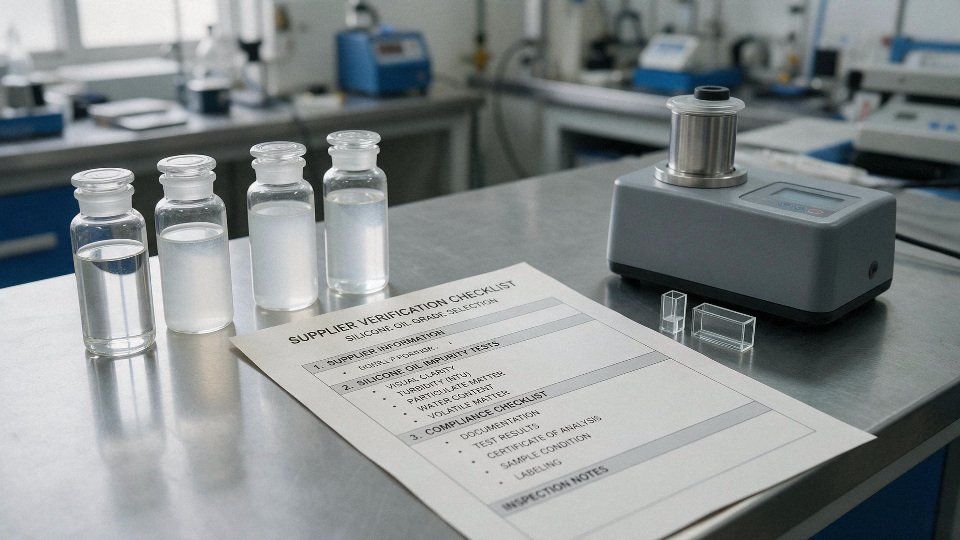
Your supplier verification checklist
A silicone oil supplier is qualified only if they can show control of the impurity profile that matters in your use, not just ship a fluid with the right nominal viscosity. In practice, the right supplier for a release agent, a cosmetic intermediate, and an electronics fluid may be three different answers even when the base polymer family looks similar on paper.
The fastest way to make a bad buying decision is to request quotes with only viscosity, quantity, and destination. That usually gets you a price, not a controlled fit.
1. Define the application before you ask for a quote
Start with the service conditions and failure mode, then work backward to the impurity limits that actually matter.
- Operating temperature
- High-temperature use raises the importance of low boilers, residual cyclics, and acid-generating species.
- If the fluid sees repeated heat soak, ask what volatile control is typical under that grade, not just at release.
- Electrical sensitivity
- For insulating, potting-adjacent, or electronics handling uses, moisture, ionic traces, and conductive contamination matter far more than for general lubrication.
- If dielectric performance is critical, ask for the actual electrical test basis and conditions; those numbers are not safely assumed across all silicone oils.
- Odor tolerance and indoor exposure
- Low-odor applications usually need tighter volatile control and cleaner finishing.
- A plant may tolerate some initial odor in open processing; a consumer product or enclosed assembly usually will not.
- Volatility and fogging limits
- If the fluid is near optics, interiors, sensors, or heated surfaces, request data tied to outgassing or fogging behavior.
- Generic “high purity” wording is not enough here.
- Cleanliness requirement
- Fine particulate that is harmless in a defoamer can be a reject cause in coating, fiber, electronics, or precision mechanical use.
- Ask what filtration stage is used and whether the supplier controls package cleanliness after filtration. That second part gets missed all the time.
- Contact or regulatory needs
- Cosmetic, food-contact-adjacent, medical, and electronics uses may need tighter limits or additional declarations.
- Requirements depend on market and end use, so define the actual regulatory route instead of saying “compliant grade.”
- Downstream formulation interactions
- If the silicone oil will be blended with catalysts, resins, surfactants, elastomers, or release systems, residual acids, moisture, alcohols, or inhibitor-like traces can shift cure, haze, foam, or stability.
- This is where a cheap fluid can become an expensive troubleshooting exercise.
The preferred supplier choice flips once your process becomes interaction-sensitive rather than property-sensitive. If the only requirement is bulk lubrication, a standard industrial grade may be fine. If your oil sits next to a platinum-cure system, optical surface, or dielectric duty, impurity control capability matters more than nominal viscosity tolerance.
2. Ask for impurity-relevant data, not only a standard COA
A generic COA often shows viscosity, appearance, and maybe moisture. That is not enough for many industrial decisions.
Request, as applicable:
- Moisture content
- Acid value
- Volatile content or volatile profile
- Particulate control method
- Filtration level or final filtration practice
- Metal traces where relevant to catalyst sensitivity or electronics use
- Appearance and haze criteria
- Storage and handling recommendations after delivery
- Batch-specific COA plus typical trend range, not just one batch snapshot
The mechanism here is straightforward: the COA tells you whether one lot passed release, while trend data tells you whether the process is actually under control. A supplier that can only provide a single passing result may still have wide lot-to-lot variation behind it.
A batch COA by itself does not prove stable impurity control across production lots.True
Batch release data shows one lot met release criteria. Process capability, trend data, and traceability are needed to judge consistency over time.
3. Verify process capability and batch consistency
Ask direct manufacturing questions. Serious suppliers can answer them without hand-waving.
- What stripping or devolatilization method is used for low boilers?
- How many filtration stages are used, and at what point in the process?
- Is the packaging line controlled to prevent moisture or particulate re-entry?
- Is equipment dedicated for high-purity grades, or shared across product families?
- Can they provide lot traceability from raw materials to packaged batch?
- Do they trend critical quality attributes over time?
You are not looking for trade secrets. You are checking whether impurity control is designed into the process or inspected in at the end. Those are very different operations on the plant floor.
4. Request validation that matches your service environment
Do not stop at standard product data if your use is demanding.
Depending on the application, ask for:
- Aging or thermal stability data
- Outgassing or fogging results
- Cure-compatibility screening
- Dielectric data
- Odor evaluation method
- Custom screening against your actual substrate or formulation
A short bench test with your own resin, elastomer, adhesive, or heater cycle often reveals incompatibility faster than a month of email.
5. Check logistics and packaging fit
A clean batch can arrive as a contaminated batch if logistics are sloppy.
Review:
- Dryness and seal integrity of drums, pails, or IBCs
- Suitability of small-pack versus bulk for your consumption rate
- Cleanliness of transfer systems, hoses, pumps, and valves
- Protection against condensation during ocean or winter shipping
- Shelf-life management and stock rotation
This matters most for moisture-sensitive and clean-service uses. A well-made fluid in a damp, repeatedly opened drum is a different product by the time it reaches your line.
6. Qualify in phases, not by lowest unit price
Use a staged path:
- Request a lab sample against a defined use case.
- Run a pilot or line-side trial.
- Align the commercial specification to the impurity risks you actually found.
- Review the first production batch carefully.
- Approve for volume only after the batch and logistics performance hold up.
If you are selecting a silicone oil for a new or impurity-sensitive application, send SiliconChemicals the substrate material, contaminant or interaction concern, approximate layer thickness if relevant, working area, required finish, target rate, and clear part photos or samples where practical. With that, they can recommend a matched grade, provide the impurity-control data package they can support, and arrange an evaluation sample for qualification.