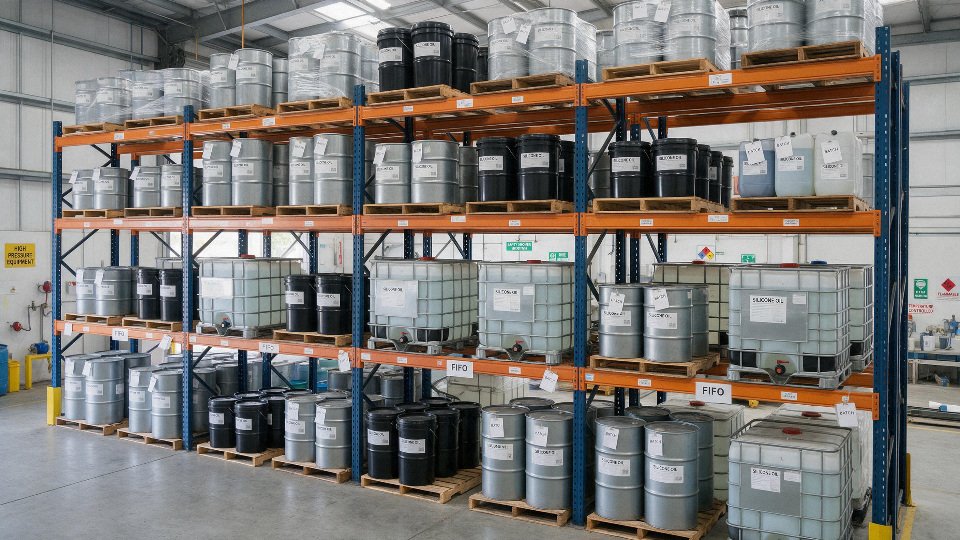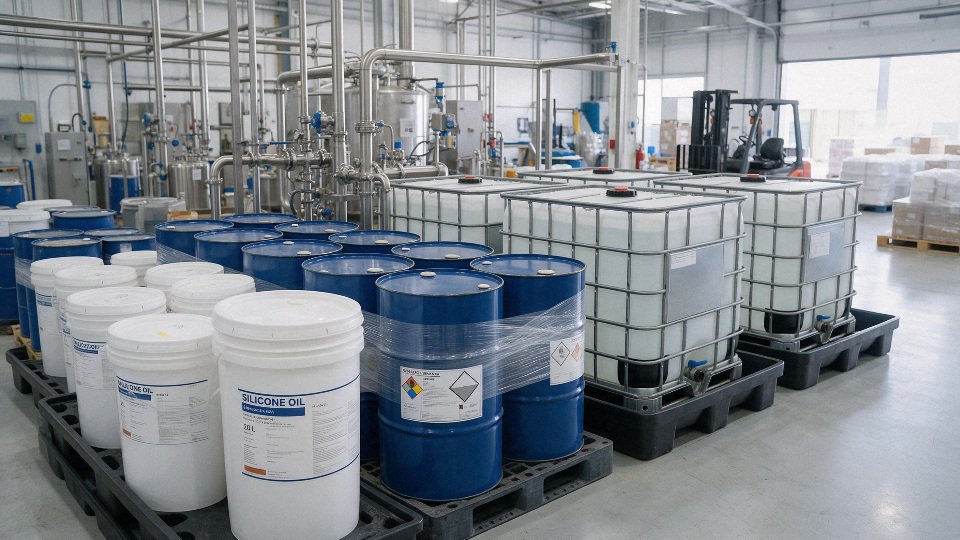

When a lubricated bearing seizes at 180°C because the mineral oil carbonized, or a transformer overheats in January because its dielectric fluid thickened to near-solid in the cold, the common thread is usually a fluid that was never designed for the operating range being asked of it. The downtime isn’t dramatic — it’s a slow bleed of unplanned maintenance windows, scrap batches, and energy waste that most plants undercount until someone finally pulls the maintenance logs. Choosing the right industrial fluid, especially for demanding thermal or electrical applications, is where silicone oil quietly earns its place.
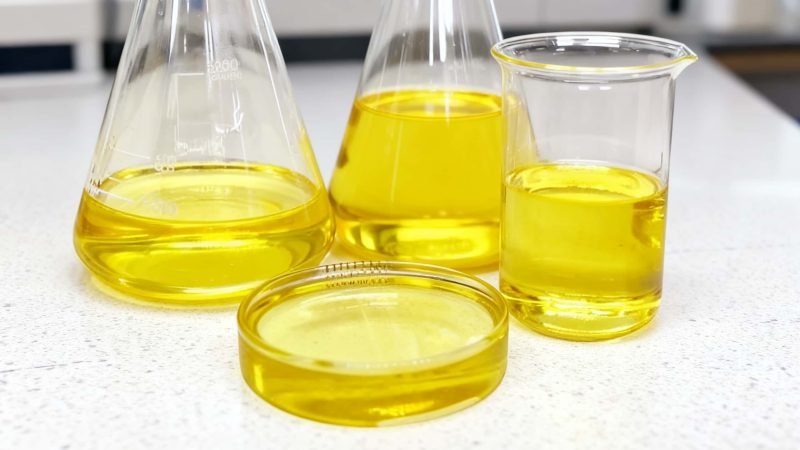
Silicone oil matters in modern industry because it maintains stable viscosity and chemical inertness across an unusually wide temperature range — roughly -60°C to +200°C for standard grades, up to +300°C for high-performance variants — making it reliable in applications where mineral oils degrade, hydrocarbon lubricants carbonize, and most synthetic alternatives either freeze or oxidize. Its core chemistry, primarily polydimethylsiloxane (PDMS), is what makes it so broadly applicable.
What’s less obvious is how that single chemical backbone — the Si–O repeat unit running through nearly every silicone fluid — translates into genuinely different engineering outcomes across industries as unrelated as medical device manufacturing, power distribution, textile finishing, and aerospace. That range is worth understanding in some detail.

How silicone oil functions as a high-performance lubricant and hydraulic fluid across extreme conditions
The viscosity-index number is where the conversation usually starts, and for good reason. Mineral oils — even well-formulated Group III synthetics — typically land in the 90–120 VI range. Silicone oils, depending on grade and molecular weight distribution, run from roughly 150 up to 400. That gap is not incremental; it changes what equipment can do across a shift, a season, or a full production year.
Silicone oils maintain stable viscosity from approximately -60°C to +200°C, with certain specialty grades rated to +300°C, while conventional mineral oils begin degrading above roughly 120°C.True
The Si–O backbone's bond energy (~452 kJ/mol) and low intermolecular forces account for both the wide liquid range and the thermal oxidative resistance, which is well-documented in peer-reviewed tribology literature and supplier technical datasheets from major producers.
Viscosity stability under real operating swings
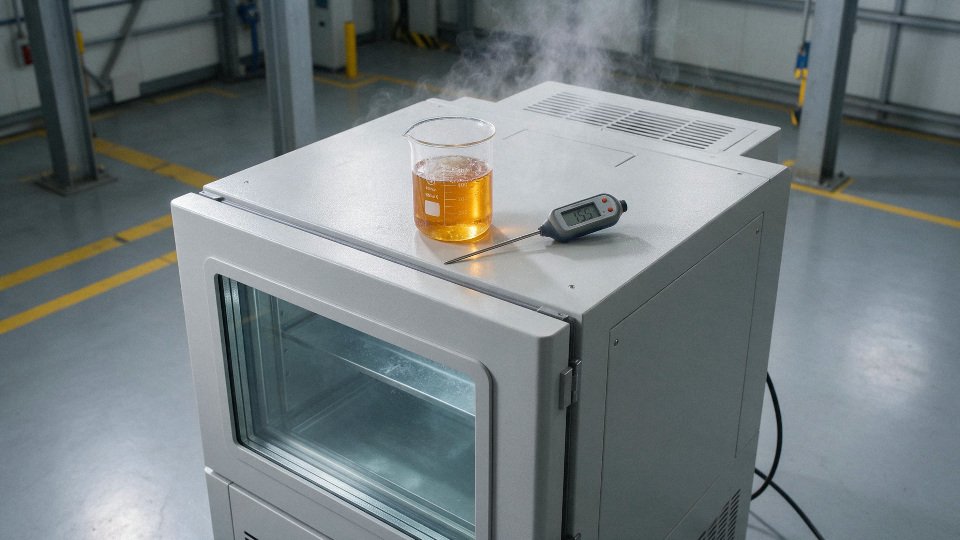
In practice, a piece of textile machinery running in an unheated northern-European plant might see sump temperatures anywhere from 5°C at Monday morning startup to 80°C or above once the machine has been running hard for two hours. A mineral oil will show a steep viscosity drop across that range, and depending on your bearing clearances, that means inadequate film thickness during the hot phase or sluggish startup drag in the cold. A medium-viscosity PDMS grade — say, 100 cSt at 25°C — will hold its film much more consistently across that entire range because its viscosity curve is genuinely flatter. The equipment runs closer to design intent the whole day rather than only during the narrow window where oil temp happens to be “correct.”
Aerospace actuators push this further. Hydraulic components in flight-control and landing-gear systems routinely cycle between ground-level heat soak (sometimes 70–90°C in a desert apron environment) and cruise altitude cold soak near -55°C. Conventional hydraulic fluids will either gel or shear-thin badly at one of those extremes. Qualified silicone hydraulic fluids are used precisely because they stay pumpable and provide consistent actuator response across that full envelope — though it is worth noting the fluid selection also involves seal compatibility reviews, which I’ll come back to below.
Where silicone oils genuinely fall short: the boundary lubrication problem
Here is where honesty matters more than enthusiasm. Silicone oils have poor boundary lubrication characteristics under heavy, sliding metal-on-metal contact. The Si–O backbone does not form the protective tribochemical reaction films that, say, a sulphur-phosphorus EP additive creates on steel surfaces. Under high Hertzian contact stress — think gear tooth flanks or heavily loaded roller bearings — unformulated PDMS will not prevent adhesive wear. This is a real constraint, not a minor caveat.
Several approaches handle it depending on the application:
| Situation | Practical fix | Trade-off |
|---|---|---|
| Light sliding contact, plastic or ceramic surfaces | Neat PDMS, appropriate viscosity grade | None significant; often preferred |
| Moderate load, mixed lubrication regime | PDMS + PTFE particle suspension | Slight settling in storage; needs agitation |
| Heavy steel-on-steel contact | Not recommended; switch to PAO or gear-specific synthetic | Accept lower temperature range |
| Food-processing lines (NSF H1 incidental contact) | H1-certified silicone lubricant spray or oil | Higher unit cost vs. mineral H1 alternatives |
Plastic injection-molding equipment is a reasonable sweet spot. Tie-bar and toggle-mechanism surfaces are often engineering polymers or hard-anodized aluminium, the loads are cyclic rather than sustained-peak, and the temperature around the platens can be high enough to bake out a mineral oil film fairly quickly. A 350–500 cSt PDMS-based lubricant holds up well there.
Food-processing lines introduce a regulatory layer. NSF H1 registration requires that the base fluid and any additives are each reviewed individually — it is not enough that the silicone oil itself is H1-listed if someone has added an unlisted EP additive to the formulation. Procurement managers buying “silicone-based H1 lubricant” from a secondary distributor should verify the full formulation is registered, not just the carrier fluid. Auditors do check this, and the corrective action is unpleasant mid-run.
Hydraulic fluid applications and seal compatibility
As a hydraulic fluid, silicone oils offer low compressibility and excellent fire resistance compared to mineral-based fluids — flash points on high-viscosity PDMS grades can exceed 300°C depending on molecular weight. The caveat is seal materials. Standard nitrile (NBR) seals swell unpredictably in silicone oil, sometimes seizing, sometimes leaking. Fluorosilicone or PTFE seals are the usual answer. Specifying the fluid without simultaneously reviewing the seal material is one of the more common — and expensive — mistakes during system conversions.
Thermal management and heat-transfer roles: from transformer cooling to electronics immersion
Silicone oil’s thermal properties are not spectacular in isolation. Thermal conductivity of roughly 0.15–0.16 W/(m·K) is actually lower than mineral oil, and specific heat around 1.46 kJ/(kg·K) is modest. What makes it useful is the combination: that thermal performance stays consistent from cryogenic temperatures up to 200°C or beyond, the fluid doesn’t oxidize or form sludge, and it is electrically inert. In thermal management, those three things together matter more than any single number.
Bath temperature uniformity and industrial reactor control
In jacketed reactors and temperature-controlled baths, PDMS oils in the 5–50 cSt viscosity range allow bath uniformity within ±0.1°C — achievable in practice when you have a well-designed circulation pump and the bath volume is correctly sized for the heat load. The key is that viscosity doesn’t shift dramatically with temperature the way a glycol-water mix does, so your pump flow rate and thus your heat distribution stays predictable across the whole operating window. Pharmaceutical synthesis and specialty chemical production rely on this. A seasonal caveat worth knowing: in a poorly insulated plant running winter ambient temperatures, startup time to reach setpoint can be 20–30% longer than summer baseline, which matters if you’re batching on a tight schedule.
High-voltage transformer and capacitor cooling
Mineral transformer oils have a flash point typically in the 130–160°C range. In a dense urban substation — the kind surrounded by buildings — that is a real fire liability. Silicone transformer oils carry dielectric strength above 15 kV/mm and volume resistivity above 10¹⁴ Ω·cm, which puts them in the same electrical performance class as premium mineral oils. The safety difference is the flash point: silicone transformer fluids typically flash above 300°C, and some formulations are classified as non-flammable for insurance and building-code purposes.
Silicone oil used in transformers has a significantly higher flash point than conventional mineral transformer oil, reducing fire risk in urban installationsTrue
Silicone transformer fluids typically flash above 300°C versus 130–160°C for mineral oils, a well-documented property cited by fluid manufacturers and verified in IEEE and IEC transformer standards.
Utilities retrofitting existing transformers do need to check seal and gasket compatibility — nitrile rubber, which is common in older equipment, swells in contact with some silicone fluids. This is a procurement detail that occasionally gets missed, with leaks discovered only after commissioning. Capacitor cooling applications follow similar logic: the dielectric stability means the fluid doesn’t contribute to partial discharge or carbonization over the capacitor’s service life.
Single-phase immersion cooling for data centers
This is where the growth is. Hyperscale operators are running into the physical limits of air cooling somewhere around 15–20 kW per rack for standard configurations. Single-phase immersion with silicone oil — submerging entire server boards directly in a tank of circulating fluid — can handle heat removal densities up to roughly 100 kW per rack, depending on server configuration and the secondary cooling loop capacity.
The practical appeal over two-phase fluorocarbon systems is significant. Two-phase systems require custom server hardware with compatible coatings, careful fluid containment to manage vapor losses (fluorocarbon fluids are expensive and environmentally regulated), and specialized maintenance skills. Single-phase silicone oil works with commercial off-the-shelf servers without modification. Boards come out, dry off within minutes, and can be reseated or replaced with standard tooling.
Total cost of ownership comparisons are genuinely complicated because they depend heavily on local electricity pricing, PUE targets, and whether the facility is new-build or retrofit. That said, eliminating computer room air conditioning units, reducing fan energy, and recovering waste heat for building heating or district energy systems can shift the economics meaningfully — rough estimates in the industry suggest 30–50% reduction in cooling-related energy consumption, but that range swings significantly based on climate and rack density.
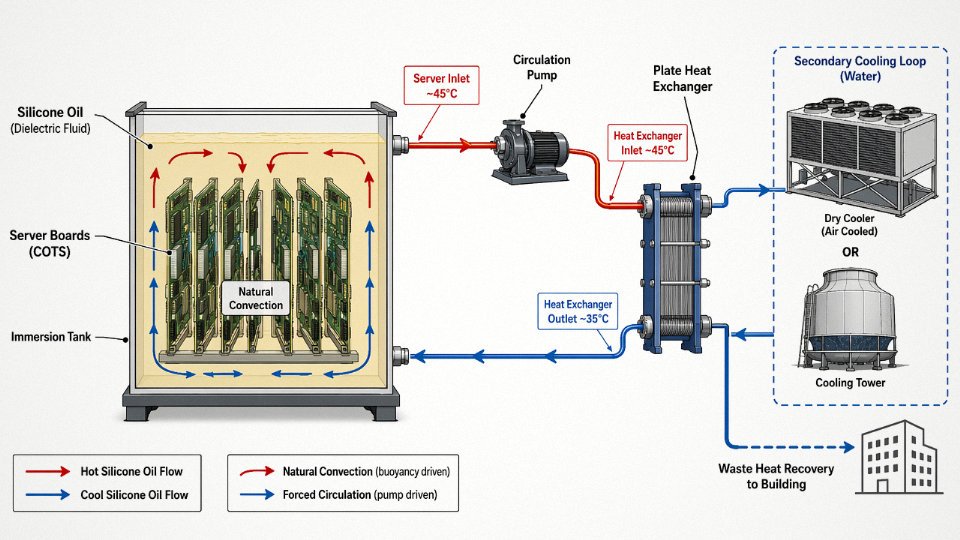
One operational point that doesn’t get enough attention: fluid degradation monitoring. Silicone oil in an immersion cooling tank is in contact with PCB flux residues, solder, and component outgassing continuously. Viscosity and dielectric strength should be checked on a scheduled basis — annually at minimum, quarterly in high-density deployments — rather than assuming the fluid is indefinitely stable.
Defoaming and surface-active applications: controlling foam in chemicals, food, and wastewater treatment
Foam is rarely just an aesthetic nuisance. In a fermentation vessel running at capacity, uncontrolled foam can choke oxygen transfer, foul exhaust filters, and trigger a batch abort — hours of product and substrate down the drain. In a wastewater aeration tank, excess foam reduces effective tank volume, stresses diffusers, and in cold weather can freeze on walkways creating a safety hazard. The reason silicone oil became the dominant industrial defoamer isn’t marketing; it’s physics.
Why silicone oil ruptures foam lamellae — the ESB mechanism
The operative property is surface tension. Silicone oil (PDMS-based defoamer emulsions) sits at roughly 20–22 mN/m. Most aqueous process foams — fermentation broths, pulp slurries, surfactant-laden wastewater — carry surface tensions in the 40–60 mN/m range. That gap is what makes everything work.
The Entering, Spreading, and Bridging (ESB) model describes the three sequential events. First, a silicone oil droplet enters the air–water interface of the foam lamella; this happens when the entering coefficient E = γ_w − γ_o − γ_ow is positive, which it almost always is for PDMS in aqueous systems. Second, the droplet *spreads* across the lamella surface (spreading coefficient S = γ_w − γ_o − γ_ow, evaluated slightly differently, must be ≥ 0), displacing the surfactant film and draining the thin liquid layer that gives foam its mechanical stability. Third — and this is the step that actually kills the bubble — the oil droplet *bridges* the two faces of the lamella and the asymmetric capillary pressure ruptures it outright.
A silicone oil droplet can rupture a foam lamella through the Entering, Spreading, and Bridging mechanism because its surface tension (~20 mN/m) is substantially lower than that of typical aqueous foam lamellae (40–60 mN/m).True
The ESB model is well-established in colloid and surface chemistry. Positive entering and spreading coefficients, driven by the large surface tension differential, are prerequisites for defoamer action. PDMS satisfies both conditions in most aqueous industrial systems.
Organic alternatives — polyether antifoams, fatty-acid esters — also exploit this principle but tend to lose effectiveness above 60–70°C and are sensitive to pH swings. Silicone defoamers remain active from near-freezing up to around 150°C in most formulations, which matters in pasteurization loops, hot pulp washers, and CIP cycles where you’d rather not interrupt the defoamer program during a temperature transition.
Dosing benchmarks by application — and the cost comparison that actually matters
Raw dosing rates vary considerably with process chemistry, agitation intensity, and the surfactant load of the stream. Practical ranges from plant-floor experience:
| Application | Typical silicone defoamer dose | Reapplication frequency | vs. polyether cost-effectiveness |
|---|---|---|---|
| Fermentation (antibiotic, enzyme, yeast) | 10–100 ppm | Every 4–12 hrs, or on foam trigger | Silicone 20–40% more expensive per kg, but effective dose is 3–5× lower |
| Paper pulp processing (screening, washing) | 5–50 ppm | Continuous low-rate dosing common | Roughly comparable total cost; silicone wins on foam knockdown speed |
| Municipal/industrial wastewater aeration | 1–20 ppm | Intermittent, sensor-triggered preferred | Silicone typically cheaper per treated m³ at low dose rates |
A few caveats worth flagging. In fermentation, overdosing silicone defoamer above roughly 150–200 ppm can suppress gas–liquid mass transfer, reducing dissolved oxygen and hitting yield. This is the opposite of what you’re trying to fix. Automatic foam sensors with feedback dosing pumps are genuinely worth the capital cost in high-value batch fermentation — they typically pay back in under a year just on product recovery. In wastewater, the dose sits at the low end because the turbulence is less intense and you’re not fighting a surfactant-rich broth; 5 ppm is often plenty.
Fatty-acid antifoams are cheaper per kilogram in paper mills but require higher doses and can deposit on wire and felt sections, adding to maintenance headaches. In my experience, the total cost-of-ownership comparison usually swings silicone’s way once you factor in dosing volume, reapplication frequency, and downstream cleaning costs — but it depends on the specific mill chemistry and whether you’re running alkaline or acid pulping.
Regulatory compliance: what to verify before switching suppliers
This is where procurement managers sometimes get burned. Silicone oil defoamers used in food processing must comply with FDA 21 CFR 173.340, which permits PDMS-based antifoams in food manufacturing at a maximum of 10 ppm in the finished food. The EU covers the same use under Regulation (EC) No 1333/2008, food additive E900 (polydimethylsiloxane), with maximum use levels that vary by food category — from 10 mg/kg in jam to higher levels in cooking oil processing.
The compliance checklist before switching silicone defoamer suppliers:
- Confirm the supplier provides a current FDA 21 CFR 173.340 Letter of Conformance, not just a claim on a datasheet.
- For EU export products, request the E900 specification and verify the [silica](https://siliconchemicals.com/silica/) content in compound defoamers (hydrophobic silica is the typical active carrier and has its own additive number).
- Check whether the defoamer is formulated with food-grade carrier oil or emulsifiers — some industrial-grade silicone defoamers use mineral oil carriers that are not food-contact compliant even if the PDMS component itself is.
- Get your QA team to verify allergen status if the process handles nuts, soy, or dairy; emulsifier carriers can be a hidden allergen vector.
Wastewater applications have their own regulatory angle — some jurisdictions limit silicone discharge loads in effluent permits, though at the low doses used in aeration this is rarely a practical constraint. Worth checking with your environmental compliance team before scaling up dose rates.
Release Agent and Mold-Coating Applications in Rubber, Plastics, and Construction Materials
Walk through any rubber molding shop and you’ll see technicians spraying molds between every shot, sometimes every other shot if they’re lucky enough to be running a semi-permanent system. That habitual spraying represents a real cost — labor, cycle time, contamination risk — and it’s worth understanding exactly why silicone works so well here, because the chemistry tells you how to use it correctly rather than just reflexively.
Why Mold Surfaces Release: The Adsorption Mechanism
PDMS doesn’t just coat a mold surface; it orients itself on it. The Si–O backbone adsorbs onto metal oxides — steel, aluminum, chrome — through weak polar interactions, and the pendant methyl groups face outward into the mold cavity. That outward-facing methyl layer is what does the work. Surface energy drops to somewhere in the 18–22 mJ/m² range, well below the critical wetting threshold of most elastomers, polyurethanes, and epoxy systems, which typically present surface energies of 30–45 mJ/m². Adhesion requires surface energy overlap. When the mold surface energy sits that far below the part material, you simply don’t get the interfacial bonding that causes sticking.
The monolayer is also thin enough — a few nanometers in a properly applied film — that it doesn’t distort part dimensions or telegraph texture artifacts. That matters a great deal in precision rubber seals or optical-grade epoxy lenses.
Three Delivery Formats, Three Different Problems
Aerosol sprays (typically 1–5 wt% PDMS in a propellant/solvent carrier) are the default for low-volume or prototype work, and for molds that see temperature swings or irregular geometry where a semi-permanent coating would be disrupted anyway. You get reliable release on the first shot, but you’re reapplying every one to five cycles depending on mold temperature and part geometry. The solvent flash-off leaves residue buildup over dozens of cycles if you’re not cleaning regularly — a maintenance habit many shops skip until they start seeing surface defects. On parts that will be painted or bonded post-mold, aerosol silicone is genuinely problematic; even trace contamination on the part surface will cause paint fisheye or adhesive failure. If your downstream process includes bonding, specify a silicone-free release or at minimum isolate those molds entirely.
Solvent-based semi-permanent coatings run at 5–15 wt% and are applied by wiping or spray-and-cure, typically baking at 120–180°C to crosslink a thin film onto the mold face. A properly applied semi-permanent system can yield 20–100+ release cycles before reapplication, depending on part complexity and ejection force. The upfront preparation time is real — surface prep, cure time, an initial few conditioning shots — but on a high-volume production mold running thousands of parts per week, the labor math favors it quickly.
Internal mold-release additives are compounded directly into the rubber or polyurethane mix at 0.1–1.0 phr (parts per hundred resin). The silicone migrates to the part surface during cure and forms its own interfacial layer. Cycle count concerns essentially disappear, and there’s no spray station to manage. The tradeoff is that the same silicone that aids release can bloom to the outer surface and interfere with painting or secondary bonding — so this approach works best for finished parts that ship as-is, like automotive weatherstrips or industrial gaskets, not for parts going into a painted assembly.
Silicone release agents reduce mold stripping force by 40–70% compared to petroleum-wax agents in concrete formwork applicationsTrue
Multiple civil engineering trials and supplier technical data show this range for standard vertical formwork panels; actual reduction depends on concrete mix, formwork material, and panel geometry
Concrete Formwork: Underappreciated but High-Impact
The construction industry runs a different version of the same problem. Concrete formwork — steel or plywood panels, typically — needs to strip cleanly after the concrete sets, without tearing the surface or leaving the panel face contaminated enough to damage the next pour.
Silicone emulsions at roughly 0.5–2% concentration, brushed or sprayed onto the panel face before pouring, reduce stripping force by 40–70% versus the conventional petroleum-wax and oil blends that have been standard for decades. That force reduction matters operationally: it speeds panel stripping, reduces the mechanical shock that cracks young concrete edges, and extends panel service life.
The less obvious benefit is bug-hole reduction. Bug holes — those small surface voids from trapped air migrating along the formwork face — are a persistent quality issue in architectural concrete where surface aesthetics matter. Silicone emulsions lower the surface energy of the form face enough that air bubbles detach and rise rather than anchoring to the form surface. On exposed structural concrete in a commercial building, the difference between a buggy pour and a clean one is the difference between acceptable and a remediation bill.
The concentration range matters here. Below roughly 0.5%, coverage is inconsistent and stripping force reduction is marginal. Above about 2%, excess silicone can transfer into the concrete surface layer, potentially affecting subsequent surface treatments or coating adhesion on the finished slab. Seasonal temperature also plays a role — emulsions applied in cold weather (below roughly 5°C) don’t spread or wet as uniformly, so application method and dilution sometimes need adjustment in winter pours.
Electrical Insulation and Dielectric Protection in Power Equipment and Electronic Assemblies
Silicone oil’s dielectric properties are not a side benefit — they are, for certain applications, the entire reason it gets specified. Understanding where that performance envelope starts and ends matters more than any sales sheet will tell you.
Dielectric Property Profile: What the Numbers Actually Mean on the Shop Floor
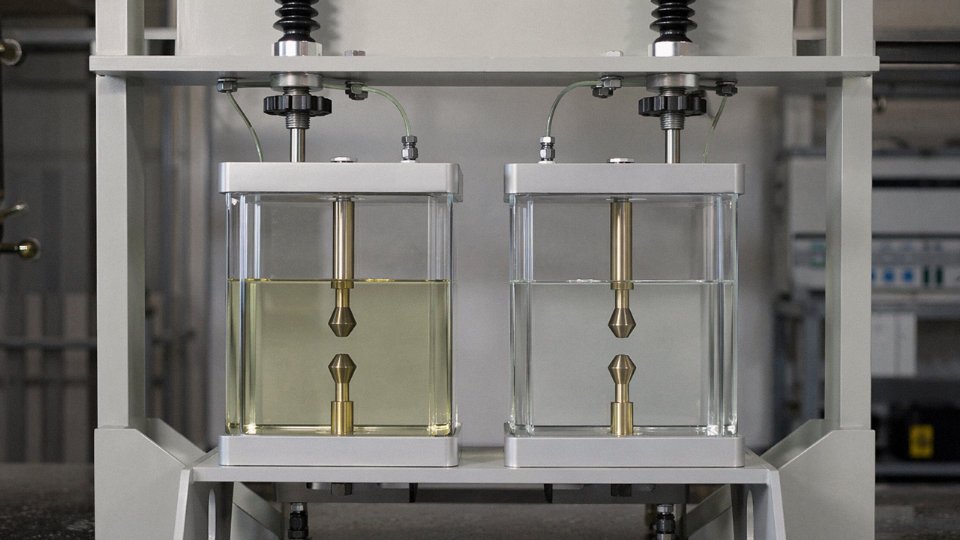
The headline figure most procurement engineers encounter is breakdown voltage, tested per ASTM D877 using a standard gap electrode. Fresh, dry PDMS-based silicone oil typically measures in the range of 14–20 kV/mm, though the actual value depends heavily on moisture content, particulate contamination, and viscosity grade — higher-viscosity oils trap less dissolved gas and tend to test at the upper end of that range. Dissipation factor (tan δ) at 25°C runs below 0.0001 for clean, unaged stock, which is what makes silicone oil competitive with the best synthetic esters in transformer and switchgear applications. Relative permittivity sits around 2.7, low and stable across frequency — mineral oil is similar, but mineral oil’s dielectric properties degrade noticeably as temperature climbs, while silicone remains consistent from roughly -60°C up to +200°C continuous service.
Phenyl-modified grades (methyl-phenyl silicone oils, sometimes called MPMS fluids) are a different animal. Introducing phenyl groups raises the refractive index from the typical 1.40 of PDMS toward 1.46–1.50, which matters when the oil fills an optical-sensor housing or a fiber-optic coupling assembly where index-matching reduces interface reflections. These grades cost considerably more — often 3–6× a comparable PDMS viscosity — so they don’t belong in bulk transformer fill. They get used in precision instruments, medical imaging components, and some defense-grade sensor assemblies.
Conformal and Potting Applications in Sealed Electronic Enclosures
PCB potting and fluid-filled enclosure protection is an area where silicone oil does something solid encapsulants struggle with: it allows selective access. A sealed aluminum enclosure filled with low-viscosity silicone oil (typically 5–50 cSt) can be reopened, the board inspected or repaired, and resealed. Solid epoxy potting is permanent by definition.
Downhole logging tools run at 150–200°C continuous, with shock loads mineral oil can’t tolerate thermally. Aviation avionics bays see rapid thermal cycling between -55°C ground temperature and +85°C operational heat — a range that cracks many solid encapsulants over time. Outdoor string inverters in solar installations are another real-world case: a hermetically sealed, oil-filled inverter housing eliminates the moisture ingress that destroys conformal-coated boards within three to five years in humid coastal climates. The fluid fill doubles as a heat-transfer medium, which is a legitimate design benefit.
The rated service envelope for sealed-enclosure fluid fills runs -55°C to roughly +200°C for standard PDMS grades, extending to about +250°C for higher phenyl-content formulations. Don’t push standard PDMS above 200°C on a continuous basis — you’ll get oxidative crosslinking, viscosity drift, and a measurable rise in tan δ that erodes the insulation margin.
Aging, Contamination, and Maintenance Intervals
Silicone insulating oil is maintenance-free once sealed in serviceFalse
All insulating liquids degrade with time, thermal stress, and contamination. Silicone oil is more stable than mineral oil but still requires periodic dielectric testing and moisture monitoring per IEC 60422 guidelines.
IEC 60422 is the practical framework for insulating liquid monitoring in power equipment. For silicone oil in transformer or switchgear service, the key surveillance parameters are breakdown voltage (resample after any known thermal event or moisture exposure), water content in ppm by Karl Fischer titration, and dissipation factor trend — a rising tan δ is usually the first measurable sign of oxidation or contamination before breakdown voltage drops.
Moisture is the most common contamination path in the field. Silicone oil absorbs water slowly compared to mineral oil, but in humid climates or enclosures with imperfect seals, dissolved water content can climb above 30–40 ppm within a year or two of installation. Above roughly 50 ppm, breakdown voltage can fall by 20–30% depending on viscosity and temperature, which in a high-voltage assembly is not a number to ignore. Particulate ingress — metal wear debris from adjacent moving parts, fibers from seals — accelerates the same degradation faster than moisture alone.
Oxidation at sustained temperatures above 200°C produces volatile siloxane byproducts and low-molecular-weight cyclic fragments that can deposit on contact surfaces. In practice, most well-designed sealed assemblies never approach that threshold, but when a fault occurs and local temperatures spike, the oil near the fault site ages rapidly. Sampling protocol after any fault event — before returning equipment to service — is not optional.
A reasonable maintenance-interval framework for oil-insulated power equipment in moderate service: initial baseline test at commissioning, retest at 12 months, then every 2–3 years if results are stable. Accelerate to annual testing in high-humidity environments, equipment running near the thermal ceiling, or older assemblies with seals past their service life. That schedule aligns with the IEC 60422 recommendations and is what most utility-side maintenance teams I’ve seen use in practice.
Biomedical, pharmaceutical, and personal care uses: where purity and inertness justify premium cost
Life-science applications represent a relatively small slice of total silicone oil volume, but they command some of the highest margins in the entire supply chain — and the technical bar for entry is genuinely steep. You are not just buying a lubricant or a heat-transfer fluid; you are buying a material that will contact drug molecules, human tissue, or skin, and the regulatory infrastructure around that is substantial.
Pharmaceutical syringe lubrication: the value and the problem
Pre-filled syringes have largely replaced draw-up vials for biologics, vaccines, and many injectable drugs. To make the plunger slide reliably without cracking protein molecules against glass, manufacturers apply USP-grade PDMS — typically at 0.5–1.0 mg per barrel, though the exact amount depends on barrel diameter, glass surface roughness, and the viscosity grade chosen, usually somewhere in the 350–1,000 cSt range.
The functional benefit is real. A properly lubricated barrel reduces plunger break-loose force by roughly 30–60%, which matters enormously for autoinjectors where a spring provides fixed actuation force. ISO 11608-1 governs needle-based injection systems and sets the framework under which syringe manufacturers validate these parameters. Get the coating weight wrong — too light and you get stiction, too heavy and you introduce excess particulates — and you are looking at failed functionality tests or, worse, downstream regulatory findings.
That last word brings up the uncomfortable side of this application. FDA has issued guidance and observation letters around silicone oil droplets migrating into protein-drug formulations, particularly monoclonal antibodies. Sub-visible particles in the 1–100 µm range can trigger protein aggregation, which is a safety concern. The industry response has included tighter siliconization process controls, baked-on silicone coatings (which shed far fewer particles than spray-applied films), and in some cases shifting to cyclic olefin copolymer cartridges that need less lubrication. None of this has displaced silicone oil — it remains the standard — but procurement teams buying syringe components should be asking suppliers specifically about particle characterization data, not just viscosity certificates.
USP-grade PDMS used in syringe lubrication has been linked by FDA to sub-visible particle formation in protein-drug formulationsTrue
FDA has issued multiple communications and guidance documents noting that silicone oil droplets from syringe barrels can contribute to particulate matter in injectable biologics and potentially promote protein aggregation, prompting industry-wide process improvements in siliconization techniques.
Retinal tamponade: a genuinely demanding implant application
In vitreoretinal surgery, when a complex retinal detachment cannot be held in place by gas tamponade, surgeons inject silicone oil into the vitreous cavity as a longer-duration substitute. The oil floats against the retina and holds the detachment closed while healing occurs. The viscosity grade matters here: 1,000 cSt oils are easier to inject and remove, while 5,000 cSt oils provide better tamponade but require more force during both procedures. Refractive index is tightly specified around 1.403 — close enough to the natural vitreous that optical distortion is manageable.
The oil is not a permanent implant. Removal protocols target 3–6 months post-surgery, because extended residence can cause complications including emulsification, glaucoma, and band keratopathy. Emulsification — where the oil breaks into fine droplets under eye movement — is actually a quality and purity issue too; oils with lower molecular weight fractions emulsify faster, which is why medical-grade tamponade products are held to much stricter compositional specifications than industrial grades.
Personal care: functional chemistry under regulatory pressure
Dimethicone at around 350 cSt is the workhorse of hair-conditioning formulations. It deposits a thin hydrophobic film on the hair shaft that reduces friction between fibers, cuts combing force measurably, and gives the tactile smoothness consumers interpret as “conditioning.” Cyclopentasiloxane (D5) has been widely used as a volatile carrier — it spreads active ingredients evenly and then evaporates cleanly, which is useful in skin serums and antiperspirants.
The regulatory situation for D4 and D5 changed materially in Europe. Under REACH Regulation (EC) 1907/2006 as amended in 2020, D4 is restricted to below 0.1% in wash-off cosmetics, and D5 faces a concentration limit of 0.1% in the same category — driven by persistence and bioaccumulation concerns in aquatic environments. Formulators in the EU have been substituting with higher-molecular-weight PDMS fluids, certain phenyl silicones, and some non-silicone emollients, though none of them replicate the exact sensory and spreading profile of D5 without formulation work. In leave-on products the restriction does not currently apply, so you still see D5 in deodorant sticks and primers, but formulators developing global SKUs are hedging by reducing D5 anyway to simplify regulatory compliance across markets.
The through-line across all three of these sectors is purity. Industrial silicone oil and cosmetic- or pharma-grade PDMS start from the same chemical family, but the purification steps — removal of low-molecular-weight cyclic siloxanes, control of metal catalysts, endotoxin testing for injectables — create a genuinely different product that justifies a significant price premium. Buying industrial-grade material and hoping it passes a USP or ISO 10993 biological evaluation is not a strategy that ends well.
Sustainability profile, environmental fate, and the industry’s response to regulatory pressure
Silicone oil’s reputation for chemical inertness — the same property that makes it useful in so many applications — is also the source of its most serious environmental criticism. Persistence and low reactivity are two sides of the same coin. Understanding what the environmental science actually says, rather than relying on either supplier reassurances or activist headlines, is essential for any procurement or EHS team making sourcing decisions today.
What happens to PDMS in the environment
PDMS doesn’t behave like a mineral oil spill. Its acute aquatic toxicity is genuinely low — LC50 values for most aquatic organisms come in above 1,000 mg/L, which puts it in the “practically non-toxic” category under standard OECD classification. But acute toxicity isn’t the whole story.
The persistence issue is real. In soil, PDMS half-life is roughly 700 days under typical conditions, though this varies considerably depending on clay content, pH, and microbial activity — sandy, low-organic soils will hold it longer. In the atmosphere, PDMS degrades via OH-radical oxidation, eventually breaking down to silanols and, ultimately, amorphous silica and water. That endpoint sounds clean, and mostly it is. The intermediate silanols are water-soluble and appear to have low toxicity, but the pathway takes time, and the chain of intermediates isn’t trivial to model across all environmental compartments.
PDMS has an LC50 greater than 1000 mg/L for most aquatic organisms in standard OECD toxicity testsTrue
Multiple OECD 203 and 202 studies on PDMS confirm LC50/EC50 values well above 1000 mg/L, placing it in the lowest acute hazard category for aquatic environments. This does not negate persistence concerns but is accurately reported.
Where OECD 301 ready biodegradability tests cause confusion is in interpretation. PDMS typically fails 301B (the CO₂ evolution test) — it doesn’t reach 60% mineralization in 28 days. Suppliers sometimes respond by pointing out that PDMS does degrade, just slowly and via abiotic pathways rather than microbial ones. Both statements are true. The failure to meet ready biodegradability criteria is a legitimate regulatory signal, not a technicality to dismiss.
The regulatory picture right now
The EU moved first and most definitively on the cyclic siloxanes. D4 (octamethylcyclotetrasiloxane) and D5 (decamethylcyclopentasiloxane) are now restricted under REACH in wash-off personal care products at concentrations above 0.1% — driven by their PBT (persistent, bioaccumulative, toxic) classification, particularly the bioaccumulation data. D5 is also under active scrutiny through California’s Safer Consumer Products Program, which has flagged it as a candidate Chemical of Concern in cosmetics. These are cyclic siloxanes, not the linear PDMS that dominates industrial lubrication and thermal management, but the regulatory momentum matters because it shapes how the entire silicone supply chain is perceived and evaluated.
ECHA is now evaluating longer-chain linear siloxanes for potential restriction. No restriction is in force yet for linear grades, but manufacturers supplying into European markets should be tracking the ECHA Registry of Intentions actively, not waiting for a final decision.

What responsible industrial users are actually doing
Closed-loop recovery is the most operationally effective mitigation available. In transformer manufacturing, die-casting, and pharmaceutical filling operations where silicone oil use is controlled and contained, well-designed systems routinely reclaim 90–95% of fluid — the exact figure depends on process temperature, fluid viscosity, and the quality of sealing and collection equipment. The economics usually work in the plant’s favor too, since recovered silicone oil, once filtered, can often be reused directly.
Disposal via high-temperature incineration at above 850°C is the accepted end-of-life route for contaminated or off-spec material. At those temperatures, PDMS converts cleanly to SiO₂, CO₂, and H₂O. No dioxins, no halogenated byproducts — the combustion chemistry is actually straightforward, which is more than you can say for chlorinated alternatives that PDMS displaced in earlier decades.
On the R&D side, several major producers are investing in bio-derived silicone precursors, aiming to reduce the carbon footprint of the chlorosilane synthesis route rather than the polymer’s environmental fate directly. Lower-cSt alternatives to D5 in cosmetics — including certain esters and plant-derived emollients — are gaining traction where performance requirements allow the substitution. In practice, formulators often find the sensory and spreading performance of silicone difficult to replicate exactly, so substitution is partial and application-specific rather than a clean swap.
The honest summary: PDMS is not acutely dangerous, but it is persistent, and the regulatory direction in major markets is toward tighter controls on cyclic grades with increasing scrutiny of linear ones. The industrial users managing risk best are those running closed-loop systems now, not waiting for legislation to force the issue.
Selecting and specifying silicone oil: a practical decision framework for industrial buyers
Getting the specification wrong costs more than the oil itself. A mismatched viscosity grade can mean a damper that doesn’t damp, a transformer that runs hotter than designed, or — worst case — an elastomer seal that swells and fails inside a closed hydraulic system. This section is about avoiding those outcomes before the purchase order goes out.
Viscosity-grade selection: start here, not with the datasheet
Viscosity is the first decision and the one most often made carelessly. For heat-transfer baths and damping fluids, the working range is roughly 5–50 cSt (measured at 25°C per ASTM D445). At the low end you get faster thermal response; at the upper end you pick up slightly better film stability but increase pumping energy. Which tradeoff you need depends on whether you’re running a lab bath at steady state or a dynamic damping application with variable stroke rates.
Release agents and transformer cooling fluids sit mostly in the 100–1,000 cSt band. A thin-film spray release agent for a rubber mold wants to be in the 200–350 cSt range — low enough to atomize cleanly from a spray gun but viscous enough to hang on a vertical mold surface. Transformer cooling is less forgiving; most OEM specs call for 50–100 cSt at operating temperature, and specifying at 25°C without also checking viscosity at your transformer’s peak operating temperature is a mistake I’ll come back to.
Hydraulic dampers — the kind used in automotive test rigs, industrial press tooling, and door-closer mechanisms — typically call for 10,000–60,000 cSt, and that range matters enormously. A damper tuned for 30,000 cSt fluid will behave erratically if filled with 10,000 cSt material; response speed increases but damping force drops, sometimes enough to cause mechanical impact damage at end-of-travel. Sealants, putties, and specialty compounding applications run above 100,000 cSt, sometimes up to 600,000 cSt or more, where the oil functions as a plasticizer or processing aid rather than a fluid.
Supplier qualification: what actually matters
A certificate of analysis should list at minimum: kinematic viscosity (ASTM D445, usually reported at 25°C), refractive index as a purity cross-check, volatile content (typically measured by weight loss after heating, relevant for applications with sustained elevated temperatures), and metal ion impurities. For electronics-grade fluid, metal contamination — particularly iron, sodium, and potassium — should be below 1 ppm; some semiconductor fab specs push below 0.1 ppm. Ask for the actual measured values, not just “conforms to spec.”
ISO 9001 certification and REACH compliance documentation are table stakes. Less often requested but genuinely useful is traceability of the silicon feedstock origin. Silicone oil production concentrates geographically, and supply disruptions do happen; knowing whether your supplier sources methyl chlorosilane intermediates domestically or from a single overseas site tells you something real about supply-chain risk.
Electronics-grade silicone oil requires metal ion impurities below 1 ppmTrue
Metal ion contamination above 1 ppm can compromise dielectric performance and cause long-term degradation of sensitive electronic assemblies; reputable electronics-grade specifications from major producers consistently list this threshold or tighter.
Five specification errors that show up repeatedly
Using food-grade oil in high-temperature electrical applications. Food-grade PDMS is processed to minimize volatile and extractable fractions, but that processing doesn’t necessarily optimize dielectric strength or thermal oxidative stability. The two grades aren’t interchangeable, and assuming they are can result in flash dielectric testing failure or premature fluid degradation.
Specifying viscosity at 25°C only. Silicone oils are notably stable across temperature compared to mineral oil, but viscosity still changes. A 100 cSt grade at 25°C might run at 30–40 cSt at 150°C. If your application depends on a minimum film thickness at operating temperature, you need the viscosity-temperature curve, not a single point.
Ignoring seal compatibility. EPDM swells measurably in PDMS — typically 10–25% volume increase depending on grade and exposure duration. That’s enough to cause seal extrusion or groove binding in a hydraulic circuit. Fluorosilicone or PTFE seals are the usual fix, but that requires knowing the problem exists before you commission the system.
Overlooking cyclic siloxane content in pharmaceutical grades. Low-molecular-weight cyclic siloxanes (D4, D5, D6) are regulatory concerns in some jurisdictions and can affect product compatibility in drug-delivery applications. Standard industrial PDMS isn’t processed to minimize cyclics; pharmaceutical-grade material is, and it costs accordingly.
Assuming all silicone oils are interchangeable across suppliers. Nominally identical viscosity grades from different producers can differ in residual catalyst content, volatile fraction, and molecular weight distribution — differences that rarely show up in a standard CoA but can affect performance in sensitive applications like optical coatings or precision damping instruments. If you change suppliers mid-program, run a parallel validation batch first.
Frequently asked questions about silicone oil in industrial applications
Is silicone oil the same as silicone grease, silicone fluid, and dimethicone?
Roughly, yes — but the distinctions matter in practice. “Silicone fluid” is the technically precise term for neat, low-to-medium viscosity PDMS without fillers. “Silicone oil” is the same thing; it’s just what most plant-floor people and suppliers call it, and the two terms are interchangeable in virtually every industrial context. “Dimethicone” is the INCI and pharmacopoeial name for the same polymer used in personal care and pharmaceutical applications — you’ll see it on syringe lubricant specs and cosmetic formulation sheets, but it’s the same Si–O backbone chemistry.
Silicone grease is different. It starts with PDMS but is thickened with fumed silica, PTFE, or occasionally lithium soap to produce a semi-solid paste. The grease holds in place under vibration and is appropriate for O-ring assembly, valve stems, and slow-moving bearing surfaces. Using neat silicone oil where grease was specified — or vice versa — is a common misapplication that leads either to fluid migration out of the joint or inadequate penetration into a tight tolerance.
Can silicone oil be used with all rubber and plastic materials?
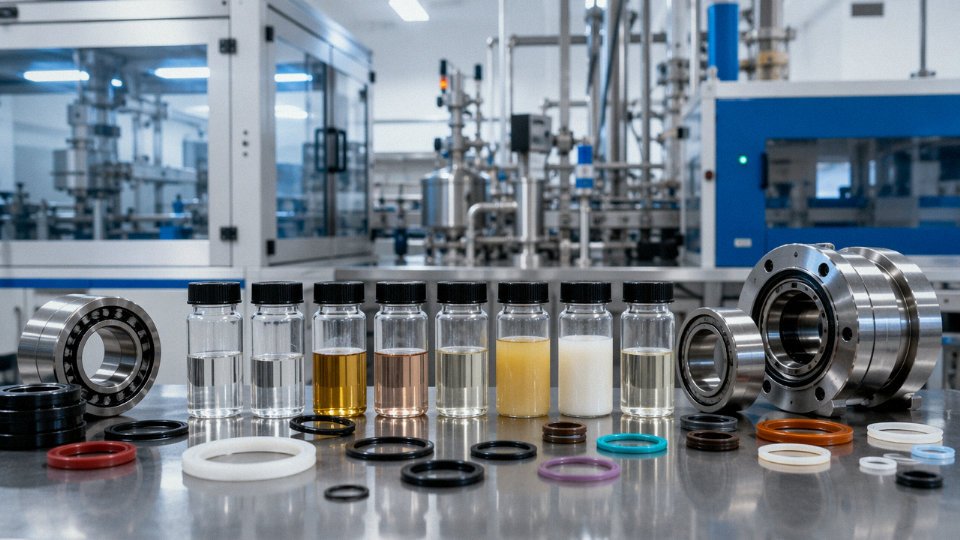
No, and this catches people out more often than it should. A quick compatibility reference:
| Material | Compatibility with PDMS silicone oil | Practical note |
|---|---|---|
| PTFE | Excellent | No swell, no degradation |
| Nylon (PA6, PA66) | Generally compatible | Minor moisture interaction dominates |
| EPDM | Moderate — 5–15% volume swell | Acceptable for static seals; verify for dynamic |
| Polycarbonate | Risk of surface crazing | Avoid contact with stressed PC parts |
| Nitrile / NBR | Poor — up to 30% volume swell | Substitute FKM or PTFE seals |
Swell magnitude depends on temperature, exposure duration, and the specific compound formulation — a 70-durometer NBR and a 90-durometer NBR don’t behave identically. Always run a 72-hour immersion test per ASTM D471 at your actual operating temperature before committing to a seal material change. Supplier compatibility charts are a starting point, not a sign-off.
What are the fire and safety risks?
PDMS-based silicone oils have a significantly higher flash point than mineral hydraulic oils, making them inherently safer in high-temperature or fire-risk environments.True
PDMS flash point is typically above 300°C, compared to roughly 170–200°C for most mineral hydraulic oils. This difference is well-documented in safety data sheets and is one reason silicone oil is preferred in die-casting and aerospace hydraulic systems.
That said, “safer” doesn’t mean “safe under all conditions.” When silicone oil mist or vapor is generated at elevated temperatures — spray lubrication systems, heated baths without adequate enclosure — thermal oxidation can produce fine amorphous silica particulate. Prolonged inhalation exposure is a respiratory hazard; OSHA’s PEL for amorphous silica is 6 mg/m³ (respirable fraction). Local exhaust ventilation is the standard control measure in any operation running heated silicone oil above roughly 150°C.
How is silicone oil disposed of or recycled?
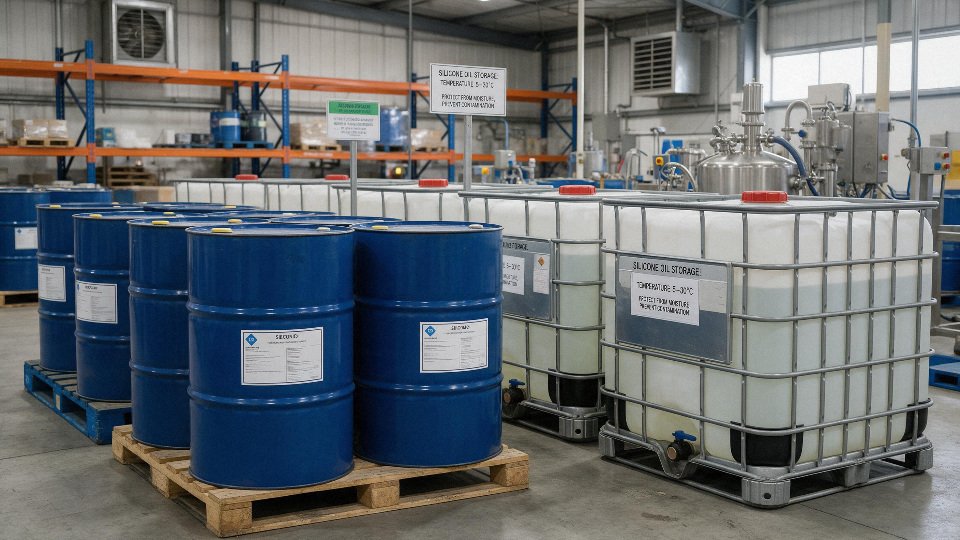
Three accepted pathways exist. For lightly contaminated process fluids — heat-bath oil that’s discolored but chemically intact — solvent distillation can recover usable fluid, though this is only economical at drum-quantity volumes or above. Heavily contaminated or degraded oil goes to licensed high-temperature incineration; PDMS burns to CO₂, H₂O, and silica ash, which is non-hazardous but must be managed as a solid waste. The third route, and often the most cost-effective for large industrial users, is return-to-manufacturer programs run by producers including Dow, Wacker, Momentive, and Shin-Etsu. These programs vary by region and minimum volume — worth a direct conversation with your account rep before you’re staring at 200 liters of spent transformer fluid.
Never dispose of silicone oil via drain or soil discharge. It’s persistent in the environment even though it has low acute toxicity, and regulators in the EU and increasingly in North America are paying closer attention.
What is the realistic service life in a closed industrial system?
It depends heavily on the application and how well the system is sealed against contamination. Transformer cooling fluid is the most durable use case — replacement intervals of 10 to 15 years are normal, governed by IEC 60422 testing protocols that track dissolved gas, moisture, and dielectric breakdown voltage rather than a fixed calendar schedule. Heat-bath fluid should be replaced when viscosity drifts more than roughly ±10% from nominal or when ASTM D1500 color exceeds about 1.5 — color darkening is usually the first visible indicator of oxidative degradation and tells you thermal stress has been accumulating. In hydraulic damper and shock-absorber applications, 5 to 8 years is a typical service interval under normal temperature cycling, though systems exposed to sustained high-frequency cycling or contamination from external moisture will age faster. The general rule: sample and test annually for any critical system rather than waiting for visible signs of failure.