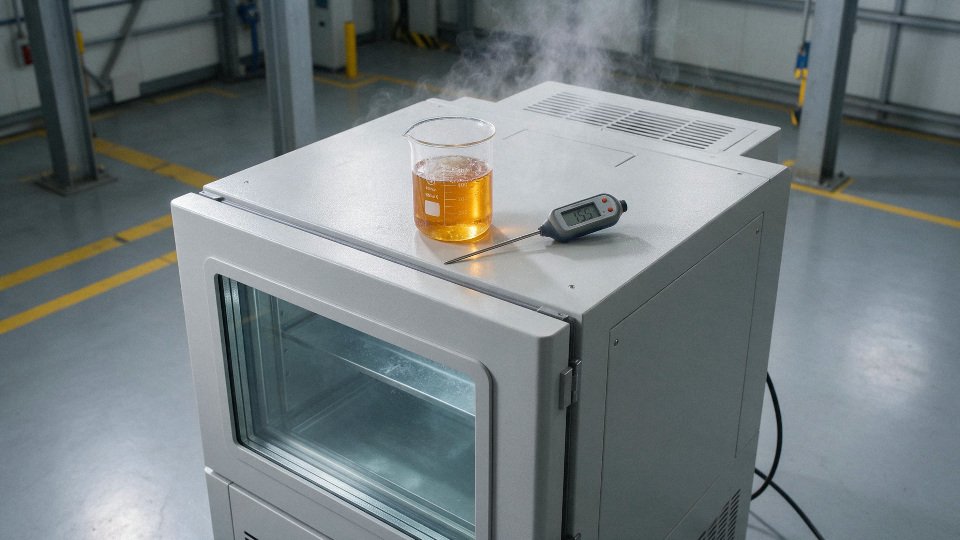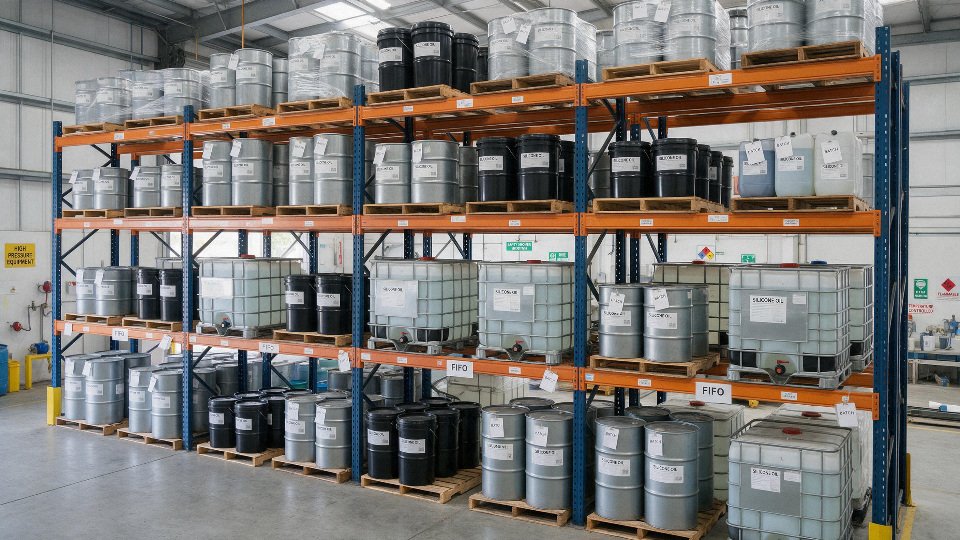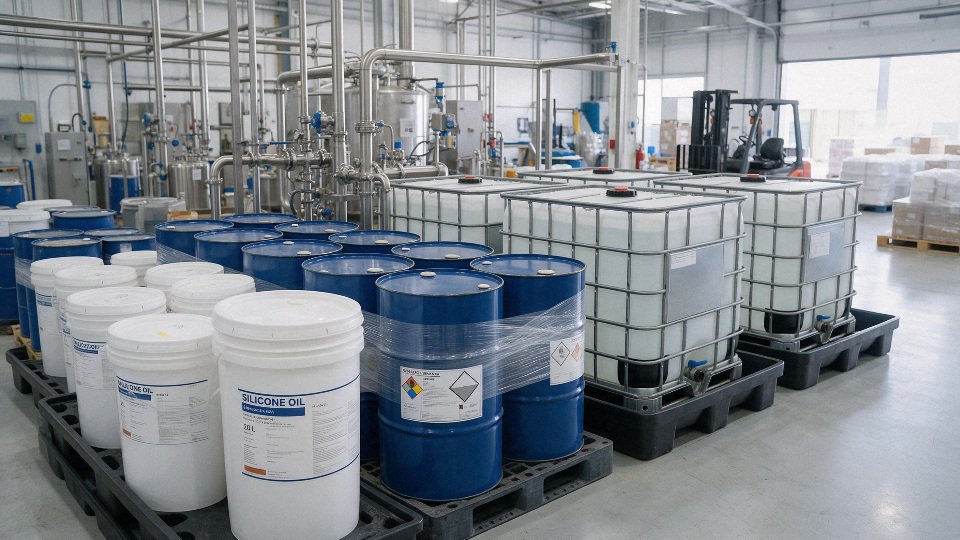
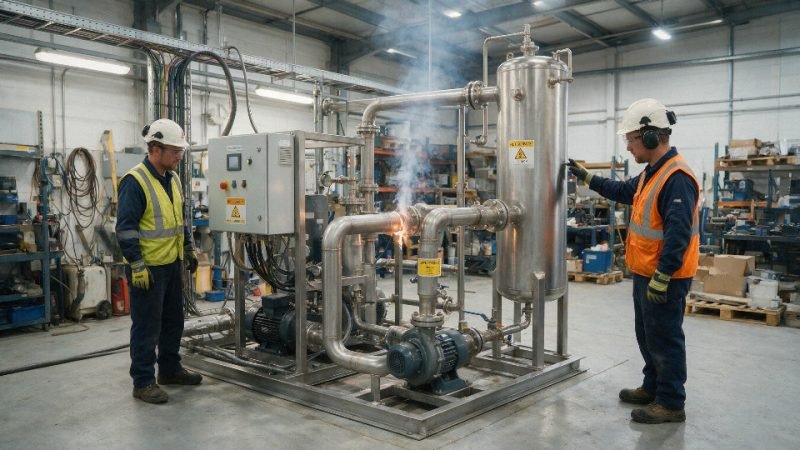
A lot of plants treat silicone oil as “basically non-flammable” until a heater overshoots, a hot manifold starts smoking, or a maintenance job puts mist onto a surface nobody meant to heat. That assumption is where trouble starts: poor storage limits, the wrong pump or seal arrangement, and casual housekeeping around hot equipment can turn a manageable thermal-fluid risk into a fire, line stoppage, contaminated product, and a procurement problem nobody budgeted for this quarter. The practical fix is not fear or blanket approval; it is understanding how silicone oil actually behaves at flash point, at sustained operating temperature, and under mist, leak, and ignition-source conditions.
Silicone oil is not classified as highly flammable in normal industrial use, but it is combustible and can burn when heated enough. Typical flash points are often higher than many mineral oils, yet the safe judgment depends on grade, viscosity, volatility, operating temperature, ventilation, and whether the oil is present as a bulk liquid, thin film, or mist.
That distinction matters because buyers often compare one datasheet number and miss the mechanism that drives incidents on the floor. A bulk reservoir at moderate temperature behaves very differently from a leak on insulation, a fine spray near a motor, or a low-viscosity grade in an overheated circuit; that is where the decision shifts from chemistry to plant practice.
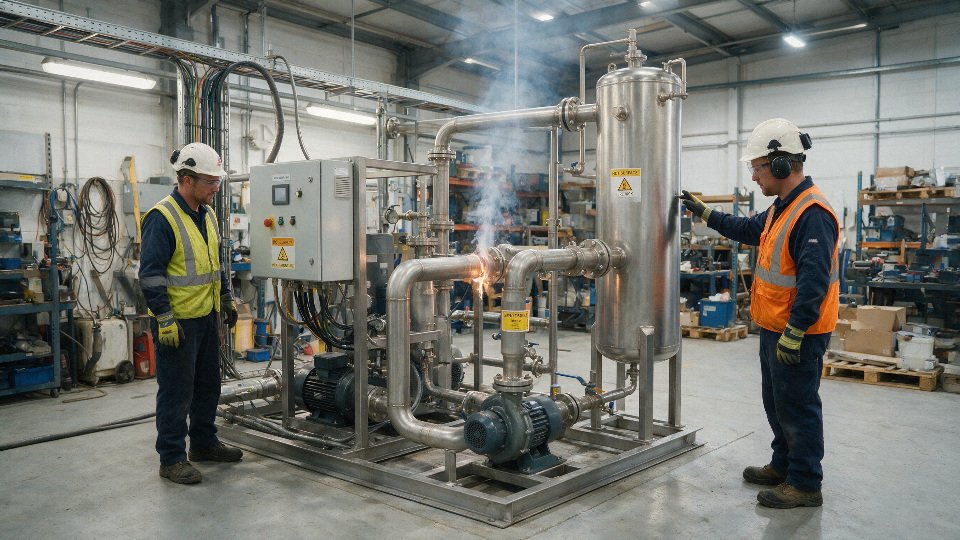
What drives ignition behavior
Silicone oil resists ignition better than many hydrocarbon oils because its chemistry produces less flammable vapor at a given temperature and holds viscosity over a wider heat range. That does not make it non-combustible: once you generate enough vapor, mist, or thermally cracked byproducts and give them an ignition source, it can burn like any other organic process fluid.
The reason matters on the plant floor. Buyers often hear “high flash point” and assume broad fire safety margin; maintenance teams see “silicone” and treat it as if it cannot ignite. Both shortcuts fail when the fluid is the wrong grade, locally overheated, contaminated, or atomized through a leak.
Why the Si-O backbone changes the fire picture
Most common silicone oils used as heat-transfer, release, damping, or dielectric fluids are based on polydimethylsiloxane, usually abbreviated PDMS. Structurally, that means a repeating silicon-oxygen backbone with methyl groups attached to the silicon atoms. That backbone behaves differently from the carbon-carbon and carbon-hydrogen dominant chains in mineral oils.
The practical effect is straightforward:
- The Si-O bond is generally more thermally robust than many bonds that dominate hydrocarbon oils.
- PDMS fluids tend to maintain useful properties over a higher temperature range before bulk breakdown accelerates.
- At the same time, they often generate flammable vapor more slowly than lighter hydrocarbon fluids at moderate temperatures.
That is why silicone oils are often selected where mineral oils would oxidize, darken, or lose viscosity too quickly. In heaters, textile lines, release systems, and some electrical uses, this higher thermal tolerance is not marketing language; it shows up as slower varnish formation, fewer burnt-oil odors at normal operating temperatures, and longer intervals before obvious degradation.
Still, thermal stability and ignition resistance are related but not identical. A fluid can remain chemically serviceable at temperatures where it still produces enough combustible material to flash under the right conditions. That distinction gets lost in procurement discussions all the time.
A thermally stable silicone oil is not automatically nonflammable.True
Thermal stability describes resistance to chemical breakdown over time; flammability depends on whether enough combustible vapor, mist, or decomposition products reach an ignition source under the actual exposure conditions.
Vapor generation: the part most people underestimate
Ignition starts with fuel availability, not with the bulk fluid label. For silicone oil, the key variable is usually how much low-boiling material is present or generated, and how easily it reaches air.
Several formulation details drive that:
- Volatile fractions
- Low-molecular-weight siloxanes, residual cyclics, or lighter linear components can reduce flash point.
- Even a small light-end fraction can dominate early vapor generation, especially in open tanks or poorly vented heated equipment.
- Molecular weight distribution
- A narrow, well-controlled distribution usually behaves more predictably under heat.
- A broad distribution may include enough low-end material to shift ignition behavior, even if nominal viscosity looks acceptable on the data sheet.
- End groups
- Chain ends influence stability and reactivity.
- Depending on grade and manufacturing route, some end groups may be more prone to hydrolysis, condensation, or side reactions under heat and contamination.
- Additives and contamination
- Stabilizers, fillers, anti-foam agents, process carryover, or mixed-in shop contaminants can alter flash behavior.
- In practice, dirty silicone oil from a vented system often behaves less predictably than fresh product from a sealed drum.
This is why one silicone oil grade cannot stand in for the whole category. A buyer asking for “silicone oil, 350 cSt” still does not know enough to assess ignition behavior. You need the actual grade, its volatile content, intended temperature range, and whether the supplier controls low-end fractions tightly or just hits nominal viscosity.
Viscosity matters, but mostly through side effects
Higher viscosity silicone oil is often assumed to be safer from a fire standpoint. Sometimes it is, but not because viscosity itself is a fire property. The mechanism is indirect, and that distinction changes equipment selection.
Here is what viscosity actually influences:
- Volatility
- Higher-viscosity grades generally contain larger molecules with lower tendency to evaporate.
- That often raises flash point, but only if the grade is genuinely low in light ends. A poorly controlled high-viscosity blend can still carry enough volatile material to matter.
- Mist formation
- Lower-viscosity fluids atomize more easily through pump leaks, cracked tubing, bad flare fittings, or worn rotary seals.
- A fine mist can ignite at conditions where a quiet liquid pool would not. This is one of the most common reasons “safe enough on paper” fluids become a plant fire problem.
- Leak behavior
- Thin fluids travel farther, wick into insulation faster, and spread over hot housings, cable trays, and lagging.
- Thick fluids tend to form heavier drips or localized films, which can reduce spread but make hot-surface smoking harder to notice until buildup becomes severe.
- Heat transfer and residence at hot spots
- Lower viscosity generally improves circulation and convective heat removal.
- Higher viscosity can leave stagnant zones, especially during cold starts, low-flow operation, or partial blockage. If a heater skin or cartridge area runs too hot, local decomposition can begin even while the bulk sump temperature still looks normal.
That trade-off matters. A thinner silicone fluid may reduce hot-spot residence time inside a well-designed closed loop, yet create a worse ignition scenario if it escapes as mist from a failed seal. A thicker grade may suppress vapor generation in open exposure but punish a marginal circulation design. The preferred choice flips with system geometry, leak modes, and heater design, not just with target temperature.
What happens when silicone oil is overheated
Once temperatures move beyond the intended operating window, silicone oil can start to decompose rather than simply evaporate. The exact pathway depends on the grade, atmosphere, contaminants, catalytic surfaces, and residence time, so this is an area where supplier data and application testing matter.
Typical high-temperature failure mechanisms include:
- Chain scission
- Polymer chains break into lower-molecular-weight siloxanes.
- Those lighter fragments are more volatile and can materially increase the amount of ignitable vapor above the fluid.
- Rearrangement and cyclic formation
- Under severe heat, some fluids can form smaller cyclic siloxane species.
- These can have much different volatility than the original bulk fluid.
- Oxidative degradation
- In the presence of air, heat can promote oxidation and generate irritating fumes, deposits, and altered combustion behavior.
- Oxidized residues can also foul heaters, which then drives surface temperature even higher. That feedback loop is how a manageable thermal issue turns into a fire exposure.
- Solid or gel residue formation
- Some degraded material deposits on heater surfaces, thermowells, or narrow passages.
- The deposit insulates the metal, raises skin temperature, and accelerates further decomposition right where you least want it.
The mechanism here is worth being clear about: decomposition changes the fluid inventory from one mostly stable liquid into a mixed fuel system that may include vapors, aerosols, and lighter cracked products. Once that happens, the original flash point of the fresh fluid stops being the whole story.
Closed heating versus open hot surfaces
A controlled closed system is usually the safest place to run silicone oil, provided flow, venting, pressure control, and heater loading are right. Bulk liquid stays away from oxygen, vapor release is limited, and temperature distribution is more uniform. In practice, a decent closed loop with proper circulation is far more forgiving than an open pan, a vented reservoir beside a heater, or a line routed across an unshielded hot manifold.
Open or partially open exposure creates a different hazard pattern:
- Local thin films on a hot surface can reach temperatures well above bulk fluid readings.
- Small leaks can smoke and decompose before operators notice any problem on the control panel.
- Drips onto insulation, electric heaters, or exhaust components can create a hidden fuel source.
- Intermittent misting from a bad fitting can ignite even when the reservoir temperature remains below the expected flash point range.
This is one of the easiest mistakes to make during troubleshooting. Operations may report, “The oil never exceeded normal temperature,” based on tank or loop readings. That does not rule out a hot flange face, heater sheath, dead-leg section, or dry-running pump seal seeing much higher local temperature for minutes or hours.
So the main conclusion holds only within its boundary: silicone oil’s chemistry usually gives it better ignition resistance than conventional hydrocarbon oils under comparable service, but that advantage shrinks fast when the system creates vapor, mist, contamination, or hot spots faster than the fluid can stay chemically intact. If the application sits near the upper end of the grade’s thermal window, the next thing to verify is not just flash point on the data sheet; it is where the hottest metal surface is, how leaks fail, and whether the installed fluid still matches the fresh-product specification.
Key fire property metrics
For procurement and EHS screening, the three numbers that matter most are flash point, fire point, and autoignition temperature, read alongside volatility data and the exact test method used. A silicone oil grade that looks “safe” on one data sheet can still be the wrong choice if the value is from a different cup method, if low-boiling fractions are not controlled, or if the process has hot surfaces that sit well below the quoted ignition headline.
Open-cup and closed-cup flash point values for the same fluid are not directly interchangeable.True
The test geometry changes how much vapor accumulates above the sample. Closed-cup methods usually produce lower flash point values because vapor is retained, while open-cup methods allow vapor to disperse. Comparing one product's open-cup value to another product's closed-cup value is a common buyer error.
Flash point: useful, but only if you know how it was measured
Flash point is the lowest temperature at which the vapor above a liquid will ignite momentarily when exposed to an ignition source. It does not mean the bulk fluid will keep burning, and it does not mean the fluid is safe below that temperature under every plant condition.
What matters in practice is the test method.
- Open-cup tests expose the sample surface to ambient air.
- Vapor can disperse.
- The reported flash point is usually higher.
- These results often look better on product literature, especially for high-temperature fluids.
- Closed-cup tests contain the vapor in a partially sealed chamber.
- Vapor concentration builds more readily.
- The reported flash point is usually lower.
- These values are often more conservative for enclosed equipment, sumps, reservoirs, and poorly ventilated spaces.
A buyer comparing two silicone oils without checking the method can make the wrong call. One supplier may publish an open-cup flash point because that is common for heat-transfer or lubricant marketing. Another may list a closed-cup value in the SDS. The fluids may be similar, but the numbers will not line up.
The mechanism is straightforward: ignition depends on vapor concentration above the liquid, not just liquid temperature. A fluid with low volatility produces less ignitable vapor at a given temperature. But if the test traps that vapor, the apparent ignition threshold shifts downward. That is why the same grade can show meaningfully different flash points depending on whether the standard was open cup or closed cup.
For temperature-sensitive service, treat flash point as an early warning metric, not a one-number buying rule. If your operating temperature approaches the reported flash point range, you need more context:
- Is the system open, vented, sealed, or intermittently opened?
- Are there splashing zones, mist generation points, or leaking mechanical seals?
- Is there local overheating at immersion heaters, manifolds, pump heads, or bearing housings?
- Does the supplier control low-boiling fractions tightly, or is the value only “typical”?
Fire point: often the more relevant number for hot-bath and heat-transfer service
Fire point is the temperature at which the fluid, once ignited, continues to burn for a sustained period. For silicone oils used in hot baths, jacketed vessels, or heat-transfer loops, this is often more operationally relevant than flash point because it better reflects whether a brief ignition event becomes a continuing fire.
That distinction matters on the plant floor. A flash event at a vapor pocket is bad enough; a fluid that sustains combustion in a leak tray or around insulation is a different level of incident. In circulating thermal systems, especially where leaks can wet hot steel or collect in dead zones, fire point gives a better sense of escalation risk.
The trade-off is that fire point is not always listed on standard marketing sheets. Some suppliers publish it, some do not, and sometimes only for selected viscosities. If your process routinely runs at elevated temperature, ask for it directly rather than assuming a generous gap above flash point. That gap depends on formulation, viscosity, additive package, and low-end volatility profile; there is no responsible universal offset.
A practical rule from plant work: if the service temperature is high enough that operators already talk about coking, smoke, vent losses, or “hot smell” near the skid, fire point deserves to be in the purchase review, not left to the SDS footer.
Autoignition temperature: the number that matters when there is no spark
Autoignition temperature is the temperature at which the material ignites without an external flame or spark. This is the metric that matters around heater skins, cartridge heaters, traced lines, overheated manifolds, seized bearings, and other abnormal hot surfaces.
Unlike flash point, autoignition speaks to self-ignition potential in the presence of air. If a silicone oil leaks onto a surface that is hot enough, ignition can occur without an electrical arc or open flame. That makes it especially relevant in equipment where local surface temperatures can run well above the bulk fluid temperature.
In practice, the boundary here is obvious but often missed: bulk operating temperature is not the same as maximum surface temperature. A system nominally running at a moderate temperature may still have localized metal temperatures high enough to become the dominant fire risk because of:
- fouled heaters
- low-flow conditions
- dry firing
- scale or carbonized deposits
- bearing distress
- insulation hiding a hot spot
So if the application includes electric heaters, thermal oil skids, mold heating circuits, or compact manifold blocks, ask for both the fluid autoignition value and the maximum credible surface temperature in upset conditions. One without the other is only half the review.
Volatility, evaporation loss, and low-boiling content: where many problems start
A silicone oil can show a respectable flash point and still behave poorly in service if it contains enough low-boiling components. Those lighter fractions increase vapor generation, odor, fogging, vent losses, and the chance that a leak or open surface produces an ignitable atmosphere sooner than expected.
The most useful practical indicators are:
- Volatility or evaporation loss
- Usually measured at a stated temperature and time.
- Helps predict fluid loss in open baths, vented reservoirs, and cyclic heating service.
- Rising evaporation means more vapor available above the fluid and more frequent top-up demand.
- Low-boiling content
- Often not prominent on a public TDS.
- Can strongly affect flash behavior, especially in lower-viscosity grades or incompletely stripped products.
- Worth clarifying for high-temperature service and enclosed equipment.
- Viscosity drift after heat exposure
- Not a direct fire property, but useful as a degradation clue.
- If lighter fractions leave first, the remaining fluid thickens; heat transfer and circulation can then worsen, pushing hot spots higher.
This is one of the main trade-offs in grade selection. Lower-viscosity silicone oils usually pump and wet better, especially at start-up or in cold weather, but they can carry higher volatility and lower flash-related margins. Higher-viscosity grades often reduce vapor loss and improve high-temperature stability, but they may raise pump load, slow deaeration, and create flow issues in small-bore circuits. The preferred choice flips when the system is flow-limited rather than vapor-limited.
Limiting oxygen: technically relevant, rarely the first procurement filter
Limiting oxygen concentration can help explain whether a vapor-air mixture will support combustion, but most industrial buyers do not use it as the primary screening tool for silicone oils. In ordinary plant environments, oxygen is usually not intentionally controlled, so flash point, fire point, and autoignition temperature remain the more actionable properties.
It becomes more relevant if the system is inerted, enclosed, or subject to a formal combustible atmosphere analysis. Even then, use current supplier data and your site hazard review. This is not a property to estimate casually from another silicone fluid family.
How to read the TDS and SDS without fooling yourself
Do not rely on a single headline value. Read the technical data sheet and safety data sheet together, then check what is typical, what is guaranteed, and what method produced the number.
Use this review sequence:
- Identify the exact product grade
- Viscosity alone is not enough.
- Different purity levels or modified formulations can change fire behavior.
- Find the reported flash point
- Note the number, the unit, and whether it is open cup or closed cup.
- If the method is missing, ask.
- Check whether fire point is published
- If the application is hot-bath, thermal transfer, or near sustained hot surfaces, request it if absent.
- Locate autoignition data
- Confirm the source and test basis.
- If the process has heater skins or hot manifolds, compare this with actual equipment temperatures, not just setpoints.
- Review volatility or evaporation data
- Pay attention to test temperature and duration.
- A low loss at one condition does not guarantee low vapor generation at your operating condition.
- Separate typical values from specification limits
- “Typical” is useful for design screening.
- Safety review and supply agreement should confirm what range is actually controlled lot to lot.
- Check the SDS for hazard classification and handling language
- It may contain more conservative fire-related wording than the sales sheet.
- If the SDS and TDS seem inconsistent, do not guess which one is right; ask the supplier to reconcile them in writing.
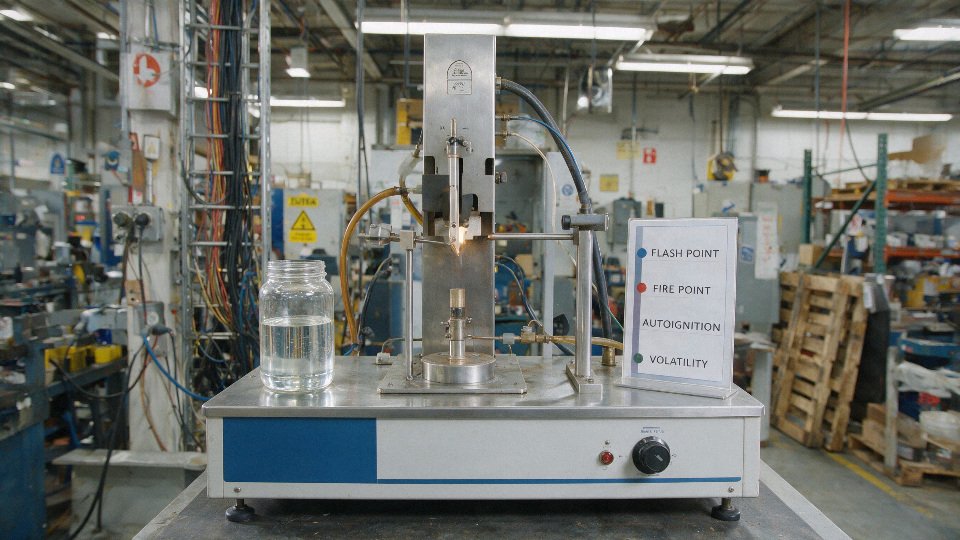
If the application is close to thermal limits, the right next step is usually not another email asking for a “higher flash point product.” It is a tighter technical review of operating temperature, hot-surface temperature, ventilation, reservoir design, and fluid volatility control, because that is where the buying decision stops being a catalog comparison and starts becoming a risk decision.
When silicone oil becomes hazardous
Silicone oil becomes a meaningful fire hazard when the process stops looking like a calm, clean liquid sitting below its thermal limits. In plants, the trouble usually starts with one of five conditions: temperature pushed too high, heat concentrated in one spot, oil turned into mist, contamination with lower-flash materials, or a system that traps vapors and degradation products instead of dissipating them.
That matters because buyers often hear “high flash point” and mentally file silicone oil under “non-flammable enough.” That is a dangerous shortcut. Silicone oil is usually more ignition-resistant than many hydrocarbon oils, but it is not immune to burning once the application creates the right combination of heat, oxygen, surface area, and contamination.
High bulk temperature near service limits
A silicone oil system gets risky fastest when normal operating temperature runs close to the fluid’s recommended continuous-use limit for long periods. That shows up in heat-transfer loops, diffusion pumps, tenter-frame textile lines, heated rollers, and open process baths where operators slowly ratchet temperature upward to recover throughput, often without revisiting fluid condition or heater loading.
The mechanism is straightforward:
- As bulk temperature rises, the margin to flash point and fire point narrows.
- Oxidative and thermal degradation rates increase, often nonlinearly rather than gently.
- Degradation can form lower-molecular-weight fractions, volatile byproducts, and deposits.
- Those byproducts can change vapor behavior above the bath or inside expansion spaces.
- Deposits then worsen heat transfer, which pushes metal surface temperature even higher.
That chain is why a system that ran “fine” for months at one setpoint can become unstable after a small process change. The fluid itself may not have changed dramatically in appearance. A modest viscosity shift does not prove the hazard profile is unchanged.
In practice, the most exposed applications tend to share a few traits:
- Heat-transfer systems
- Long residence time at elevated temperature
- Fired or electric heaters with high sheath temperatures
- Expansion tanks and low-flow branches where vapors can collect
- Diffusion pumps
- Very hot internal surfaces
- Vacuum-side decomposition concerns
- Strong dependence on correct fluid grade and clean operating conditions
- Textile and converting equipment
- Heated rolls, tenter zones, dryers, and release systems
- Lint, finish residue, and poor housekeeping that create secondary fuel sources
- Frequent temperature overshoot during startup and product changeover
- Open baths and heated vessels
- Large exposed surface area
- Local evaporation and contamination from the process
- Operators judging “safe enough” by the bulk thermometer alone
The trade-off is obvious but easy to ignore on the floor: running hotter may improve cycle time, wetting, drying, or heat-transfer duty, but it reduces the thermal cushion that made silicone oil attractive in the first place. The conclusion stops holding once the actual heater skin temperature, not just the recorded bath temperature, approaches a level where degradation accelerates. That point depends on equipment design, circulation rate, residence time, and the specific fluid grade; it cannot be set responsibly from a generic category number alone.
Localized hot spots matter more than the tank reading
A clean, well-circulated silicone oil loop can be uneventful at temperatures that would worry people on paper. A fouled or poorly controlled loop can create ignition conditions even when the displayed bulk temperature still looks conservative.
Hot spots are one of the most common reasons plants underestimate fire risk. The temperature sensor is usually in the vessel, line, or return leg where fluid is moving. The hottest point is often somewhere else entirely:
- Heater sheath or cartridge surface
- Fouled heat-transfer surface
- Dead-leg piping
- Partially blocked coil section
- Pump suction under low-flow conditions
- Mechanical seal area
- Zone with air entrainment or vapor lock
Typical causes include:
- Poor circulation
- Undersized pump
- Closed or throttled valve
- Filter plugging
- Viscosity increase at startup
- Heater fouling or coking
- Deposit layer insulates the fluid from the metal
- Metal gets hotter to deliver the same duty
- Fresh fluid contacting that spot can crack or smoke
- Control failure
- Failed thermocouple
- Bad PID tuning
- SSR or contactor stuck on
- Alarm bypassed during troubleshooting
- Dry running or low level
- Heater partially uncovered
- Seal faces lose lubrication
- Liquid pool no longer protects the hottest surface
- Stagnant zones
- Branch lines with little turnover
- Poor vessel agitation
- Geometry that traps fluid in corners or behind baffles
Once a local surface runs substantially above bulk temperature, the fluid can decompose there first. That creates dark deposits, smoke, odor changes, and eventually combustible byproducts. By the time operators notice discoloration at the sight glass, the root cause has usually been active for a while.
Mist, aerosol, and spray leaks change the game
Silicone oil as a quiet pool is one thing; silicone oil dispersed into fine droplets is another. Mists and aerosols ignite more readily because atomization increases surface area, improves mixing with air, and lets droplets contact ignition sources that a contained liquid surface might never reach.
This is where maintenance condition matters as much as fluid selection. Watch these scenarios closely:
- High-pressure seal leakage creating a fine spray
- Atomizing nozzles or unintended spray from cracked tubing
- Oil thrown off rotating parts
- Compressed gas entraining liquid into a fog
- Vent discharge carrying aerosolized oil
- Pump cavitation or return-line turbulence generating persistent mist above a reservoir
In a warm enclosure, that airborne fraction can find an ignition source surprisingly fast:
- Hot motor casing
- Heater terminal box
- Electrical arc from a failing contactor
- Static discharge in a poorly grounded transfer setup
- Bearing housing running hotter than anyone realized
The commercial trap here is that the fluid may still meet the purchase specification. The hazard is process-created, not necessarily supplier-created. If your application can generate spray or aerosol, the right question is not just “What is the flash point?” but also:
- What is the expected leak mode?
- What pressure is the fluid under?
- Can the leak impinge on a hot surface?
- Is mist detection or shielding in place?
- Does enclosure ventilation remove airborne oil quickly?
Contamination can lower the ignition threshold
Contamination is one of the few ways a normally stable silicone oil service can become unpredictably hazardous in a short time. If lower-flash materials enter the system, the mixture may ignite more easily, produce more flammable vapor, or burn with behavior that no longer resembles clean silicone oil.
The usual contamination routes are not exotic. They are ordinary plant-floor mistakes:
- Solvent left in a vessel after cleaning
- Shared transfer hoses used for fuels or light hydrocarbons
- Hydraulic oil ingression through a heat exchanger leak
- Fuel, cutting oil, or compressor oil contamination during maintenance
- Process organics dragged back into a bath
- Drum topping with “compatible-looking” fluid from the wrong tote
If silicone oil is contaminated with a low-flash solvent, the fire behavior of the mixture can become materially worse than the original silicone oil grade.True
Established fire behavior principle: lower-boiling, lower-flash contaminants can dominate vapor formation and ignition behavior even when present as a minority fraction, depending on concentration and operating temperature. The resulting hazard must be assessed from the contaminated mixture, not the original product data sheet.
Two practical points matter here:
- Small contamination levels can matter if the contaminant is volatile enough and the system is hot enough.
- Bulk viscosity may still look normal, so operators may miss the problem unless they test or notice odor, smoke, or unusual vapor formation.
If contamination is suspected, do not rely on the original SDS or data sheet as if nothing changed. The relevant fire properties are those of the mixed fluid actually in service, and those often require sampling and lab review rather than guesswork.
Oxidizers, catalytic surfaces, and reactive residues
Silicone oil is generally selected for stability, not for compatibility with every aggressive chemistry in a plant. Contact with strong oxidizers, catalytic metals or surfaces, or reactive process residues can accelerate degradation and create abnormal fire conditions that a standard storage-and-handling checklist will not fully capture.
Watch for contact with:
- Strong oxidizing chemicals in shared vessels or lines
- Residual peroxides or oxidizing cleaners
- Catalytically active metal contamination from wear or process carryover
- Decomposition residues from previous product campaigns
- Charred deposits that keep heating and catalyzing breakdown locally
This is one of those areas where broad claims get people in trouble. The exact reaction tendency depends heavily on the silicone chemistry, impurity profile, temperature, contact time, and the contaminant involved. Verification belongs with current supplier guidance, compatibility information, and, where the duty is severe, a controlled test under representative conditions.
Confined spaces and poor ventilation
A leak in open air and the same leak inside an enclosure are different hazards. In open areas, heat dissipates faster and vapors or aerosols are more likely to dilute below troublesome levels. In pits, cabinets, machine housings, ovens, and poorly ventilated skids, the system can retain heat, smoke, decomposition products, and oil mist long enough to reach an ignition source.
Pay attention to:
- Enclosed heater compartments
- Insulated sumps and pits
- Skids inside containerized process modules
- Oven or dryer side chambers
- Pump rooms with weak air turnover
- Ceiling voids above hot process equipment
The boundary here is practical: good ventilation reduces risk, but it does not neutralize a direct spray onto a red-hot surface or a runaway heater. Ventilation helps most with dilution and heat removal; it does not fix bad controls, contamination, or poor mechanical condition.
“Silicone” does not mean universally safe in sensitive industries
In food, medical, electronics, and personal care plants, silicone-containing materials often carry an aura of cleanliness or inertness. That is useful for many reasons, but it can lead to a bad assumption: if the fluid is associated with regulated or sensitive applications, then the fire hazard must be negligible.
That logic fails quickly under process heat.
Common misreads include:
- Assuming incidental-contact or cleanliness expectations equal high-temperature fire safety
- Treating silicone oil as interchangeable across cosmetic, process, and thermal duties
- Ignoring that adjacent materials such as wipes, packaging, lint, solvents, plastics, or residues may ignite first and involve the oil second
- Specifying on reputation alone, without checking actual operating temperature, enclosure design, and contamination pathways
I have seen this most often in mixed-use plants where maintenance teams borrow practices from one area and apply them to another. A food-grade reputation will not protect a heater bank running with poor circulation.
Aged fluid can become riskier even before it looks “bad”
Older silicone oil can become more hazardous not because it suddenly turns into a different product overnight, but because aging slowly changes the system around it. Deposits accumulate, low-level decomposition products form, vents foul, heat transfer worsens, and hot spots become easier to create.
That is the counter-intuitive part: the fluid may still pump, the viscosity may be only modestly shifted, and the line may still meet production. Yet the fire margin has narrowed because the equipment-fluid combination has degraded.
Signs worth treating seriously are:
- Darkening or suspended fines
- Increased smoke or odor at startup
- More frequent high-temperature alarms
- Heater cycling that has become erratic
- Deposit buildup on heaters, lines, or vessel walls
- Seal failures or vent fouling occurring more often than before
At that stage, replacing the fluid without fixing the cause usually buys time, not reliability. If the hazard driver is fouling, poor flow distribution, control drift, or contamination ingress, the next charge will age the same way. The safer move is to inspect the thermal surfaces, sample the fluid, review actual operating temperatures against the grade in use, and find out where the system has stopped behaving like the tidy design case on the P&ID.
Grade and application differences
Silicone oil fire behavior varies a lot more by grade and use case than many purchasing specs admit. A standard dimethyl silicone fluid used as a closed-system damping oil is not a reliable proxy for a sprayed textile softener, a transformer fluid, or a silicone-based release formulation, even if all of them are casually called “silicone oil” on the plant floor.
The practical mistake is treating the silicone portion as the whole hazard review. In many products, ignition behavior is set by what else is in the drum: residual volatiles, carrier solvent, emulsifier package, or the way the fluid is applied. That is where buyers and EHS teams usually get caught.
Chemistry type changes the fire profile
Standard dimethyl silicone oils are the baseline most engineers have in mind. They are typically chosen because they combine thermal stability, low surface tension, and relatively high flash points compared with many hydrocarbon oils in the same service temperature band. That broad statement stops being reliable once the backbone or side groups change.
- Phenyl-modified silicone fluids
- Often selected for better low-temperature performance, optical properties, or improved thermal behavior in specific electrical and heat-transfer uses.
- Fire-related properties can differ from straight dimethyl grades; the shift is formulation-specific, so buyers should not assume the same flash point range as commodity polydimethylsiloxane.
- In practice, these grades deserve a separate SDS and, for critical thermal duty, supplier confirmation of closed-cup flash point and volatility profile.
- Amino-modified silicone fluids
- Common in textile, softening, and surface-treatment systems.
- The silicone itself may not be the main fire issue; these products are often delivered as emulsions or formulated concentrates, and the combustible contribution can come from organics in the package rather than the amino silicone fraction alone.
- They also tend to foul differently under heat, which matters because deposits can create local hot spots on dryers and tenter frames.
- Fluoro-modified silicone fluids
- Used where chemical resistance or specialty wetting behavior is needed.
- Flammability cannot be generalized responsibly across this category. Some specialty fluorinated systems behave very differently under heat decomposition, and the safety review has to include decomposition products, not just ignition.
- Specialty functional silicone fluids
- This includes electrical insulating fluids, diffusion pump fluids, specialty heat-transfer media, and process lubricants.
- These are engineered for distinct duty cycles, and supplier claims about fire resistance are often product-specific rather than category-wide.
All silicone oils have essentially the same fire behavior because they share a siloxane backbone.False
Backbone chemistry matters, but side-group modification, purity, additive package, and especially the delivered formulation can shift flash point, volatility, misting behavior, and decomposition risk enough to change the safety decision.
Viscosity changes how ignition risk shows up
Lower-viscosity silicone fluids usually create fewer pumping problems and better wetting, but they bring more volatility and a much higher chance of finding their way out of the system. A 10 cSt or 20 cSt fluid leaking past a worn seal, a loose Swagelok fitting, or an overfilled sight glass behaves very differently from a 1,000 cSt grade.
- Low-viscosity grades
- Higher evaporation tendency under heat
- Greater leak and creep tendency through small clearances
- Easier to atomize, mist, or aerosolize during spraying, high-speed rotation, or air entrainment
- More likely to create ignitable vapor-air or mist conditions near heaters, ovens, or open electrical components
- High-viscosity grades
- Lower volatility in many applications
- Less prone to fine mist formation under the same mechanical conditions
- More likely to stay where leaked, which can reduce airborne ignition risk but increase slip hazards, residue buildup, and hot-surface smoking if the film sits on metal
The mechanism is straightforward: lower molecular-weight fractions leave the liquid phase more easily, and fine droplets ignite more readily than a quiet bulk liquid because surface area goes up sharply. The trade-off is that moving to a heavier grade can reduce vapor and mist risk, but it may worsen heat transfer, startup torque, metering accuracy, or cold-weather pumpability. That trade flips in systems with narrow lines, small metering pumps, or winter outdoor storage.
End-use grade matters more than the label on the drum
A cosmetic grade, electrical grade, textile softener, lubricant base fluid, defoamer, release agent, and heat-transfer fluid may all contain silicone, but they should never be treated as interchangeable in a fire review.
- Cosmetic and personal care grades
- Often selected for skin feel and volatility profile, not industrial fire margins.
- Some are deliberately more volatile.
- Electrical grades
- Need review for dielectric performance and fire properties together.
- Arc exposure, confined geometry, and decomposition under fault conditions matter as much as flash point.
- Textile and release grades
- Frequently applied as thin films, sprays, or emulsions.
- The application method can dominate the risk more than the base silicone chemistry.
- Lubricant and defoamer grades
- Can contain additives, diluents, or active packages that change both flash behavior and residue formation.
- Heat-transfer grades
- Must be assessed against sustained bulk temperature, film temperature, oxygen exposure, and residence time.
- A fluid that is acceptable in an intermittent bath may not hold up in a continuously oxidizing loop.
Formulated products and emulsions can reverse the hazard picture
This is where many specification sheets become misleading. If the product is an emulsion, compound, aerosol, or diluted process aid, the flammability profile may be controlled mainly by non-silicone components.
- Water-based emulsions may look nonflammable in storage but can leave behind a combustible residue after drying.
- Solvent-borne release agents may owe most of their ignition risk to hydrocarbon, alcohol, or other organic carriers.
- Surfactants, anti-foam packages, fragrances, and process additives can lower the effective fire margin of the delivered product.
- Broad-cut industrial blends may include more low boilers than tightly controlled specialty grades.
High-purity grades generally give a more predictable flash point and less odor under heat because there are fewer residual cyclics and low-molecular-weight fractions. Broad-cut industrial material can still be perfectly serviceable, but if the application runs hot, those lighter fractions are often what operators notice first: smell, smoke trace, or unexpected flash-point test variability.
The same fluid behaves differently in different geometries
Geometry changes exposure to oxygen, evaporation area, and mist generation, so the same silicone fluid can look low-risk in one machine and troublesome in another.
- Sealed damper or instrument fill
- Usually the most forgiving case if temperatures stay within spec and seals are sound.
- Open bath
- Larger exposed surface, more contamination, more chance of localized overheating near heaters.
- Thin film on hot metal
- Higher surface-to-volume ratio, faster volatilization, and more visible smoking if low boilers are present.
- Sprayed or atomized process aid
- Often the highest ignition concern because droplet size and airborne concentration can overwhelm the advantages of the base fluid.
That is the boundary on any broad statement about silicone oil being “hard to ignite”: it generally holds for the right grade in bulk or closed service, and it weakens fast once the product is diluted, sprayed, contaminated, or spread into a hot thin film. For purchasing and process review, the right question is not “Is it silicone?” but “Which silicone system, in what formulation, at what viscosity, and in what geometry?”
Silicone oil versus other fluids
Silicone oil is often the safer choice than mineral oil in hot, oxygen-exposed service because it usually combines higher flash points with lower coke formation and better oxidation resistance. That advantage is not universal: if the duty demands true fire-resistant or self-extinguishing behavior, phosphate esters or some water-containing glycol systems can outperform silicone oil despite other penalties.
Procurement decisions go wrong when buyers compare one datasheet number and stop there. In practice, you need to compare how a fluid behaves across the whole upset sequence: leak, hot surface contact, mist generation, ignition, smoke, residue, shutdown, and restart. A fluid that looks good on flash point alone can still create a dirty, smoky, maintenance-heavy event that keeps the line down for two shifts.
Silicone oil vs mineral oil
Against conventional mineral oil, silicone oil usually carries a wider thermal safety cushion before ignition becomes plausible. Typical mineral oils used in heat transfer, hydraulics, or lubrication often oxidize faster under sustained heat, generate more volatile degradation products, and leave heavier carbonaceous deposits on heaters, valve internals, and vent paths. That changes fire behavior indirectly: deposits insulate hot surfaces, drive local overheating, and increase the chance that the next leak sees a hotter contact point than the operator thinks exists.
A few practical differences matter most on plant floors:
- Flash point and hot-surface tolerance
- Silicone oils commonly sit above many mineral oils in flash point, depending on viscosity and formulation.
- That said, actual ignition risk still depends on surface temperature, residence time, ventilation, and whether the fluid is pooled or atomized.
- Oxidation resistance
- Silicone oils generally resist oxidative thickening better in continuous high-temperature air exposure.
- Mineral oils tend to form acids, varnish, and sludge sooner, especially where the reservoir breathes heavily or maintenance discipline is weak.
- Smoke tendency
- Mineral oil leaks on hot surfaces often produce heavier visible smoke and stronger odor.
- Silicone oil can still smoke when overheated, but in many services it stays cleaner longer before the system starts looking and smelling distressed.
- Deposit formation
- Mineral oil systems commonly show varnish on internals and darker baked residue on heaters.
- Silicone oil is not immune, especially if contaminated or grossly overheated, but deposit loading is often lower at comparable duty.
- General elevated-temperature fire behavior
- Mineral oil typically becomes the weaker option once bulk temperatures and hot-spot risk rise.
- Silicone oil usually gives more operating margin before routine thermal aging turns into an ignition concern.
The mechanism is straightforward. As mineral oil oxidizes and cracks, it produces lower-molecular-weight components that can reduce effective ignition margin, while solids and varnish drive hotter metal temperatures. Silicone oil’s backbone usually tolerates heat and oxygen differently, so the fluid stays more stable for longer. That is why two systems running the same nominal bulk temperature can have very different fire risk after a year of service.
The boundary on that conclusion is important: if the silicone oil is heavily contaminated, sprayed through a leak, or exposed to surface temperatures well above its recommended limit, its advantage over mineral oil narrows fast.
Where PAO, synthetic esters, glycols, and phosphate esters fit
No single fluid family wins every fire-and-performance comparison. The right benchmark depends on whether your priority is ignition delay, self-extinguishing behavior, low-temperature pumping, cleanliness, or component compatibility.
| Fluid family | Fire behavior | Thermal/oxidation profile | Typical trade-offs |
|---|---|---|---|
| Silicone oil | Usually high flash point, good resistance to sustained heat, but still combustible under the right conditions | Strong at elevated temperature in many applications | Higher cost, compatibility must be checked, not truly fireproof |
| Mineral oil | Generally more combustible and more deposit-prone at heat | Moderate; often degrades faster in hot oxidative service | Lower cost, broad familiarity, more maintenance burden |
| PAO | Often cleaner and better at low temperature than mineral oil; fire behavior varies by grade | Good oxidation stability in many lubricating systems | Can still burn readily; less thermal margin than some silicone grades in very hot service |
| Synthetic ester | Some grades offer good lubricity and biodegradability; fire properties vary widely | Can be very capable, but hydrolytic stability depends on chemistry | Moisture sensitivity in some systems, seal effects must be checked |
| Glycol-based fluids | Some formulations offer strong fire resistance, especially water-containing types | Limited by water loss, viscosity change, and corrosion control needs | Poor fit for some pumps, bearings, and high-temperature open systems |
| Phosphate ester | Often among the strongest for fire-resistant hydraulic duty, with self-extinguishing characteristics in many scenarios | Good fire resistance, but system design must suit the chemistry | Aggressive toward some paints, seals, and materials; handling and disposal are more complex |
A common procurement mistake is treating PAO as a direct “premium mineral oil” substitute in every hot application. PAO is often excellent where low-temperature flow, clean lubrication, and oxidation control matter, but that does not automatically make it the best fluid near persistent high radiant heat or hot manifolds. Silicone oil may hold its viscosity and cleanliness better there, though PAO may still win if cold starts and elastomer compatibility dominate.
Synthetic esters sit in the middle of many tenders because they can balance lubricity, temperature performance, and sometimes environmental profile. The catch is that “ester” is a broad bucket. Some grades are robust; some are much less forgiving of water ingress or material incompatibility. You need the exact formulation and the component list before assuming it is either safer or harder to run than silicone oil.
Phosphate esters deserve separate treatment because they often outperform silicone oil in true fire-resistant hydraulic applications. If the hazard is a pressure leak onto a flame front or red-hot surface, phosphate ester may be the stronger answer because self-extinguishing behavior can matter more than flash point. The price is paid elsewhere:
- seal and hose compatibility reviews become mandatory
- paint systems and reservoir coatings may need to change
- maintenance staff need tighter contamination control
- disposal and worker handling procedures are usually less forgiving
The highest flash point is not automatically the safest choice
A fluid with the highest flash point on paper can still be the wrong buy if it decomposes badly, forms persistent deposits, or creates an ignition-prone mist in service. Safety margin comes from system behavior, not one lab number.
Three factors are often underrated in RFQs:
- Mist risk
- A pinhole leak in a pressurized line can ignite far more easily than a quiet pool.
- Spray pattern, pressure, nozzle effect from the leak, and nearby surface temperature can override flash-point ranking.
- Decomposition stability
- If a fluid cracks or oxidizes into lighter fractions, acids, or solids, fire risk and maintenance burden both rise.
- That can turn a nominally safe thermal design into a fouling-driven hot-spot problem.
- Maintenance burden
- Fluids that sludge, varnish, or attack seals create secondary failure paths.
- A seeping shaft seal or hardened O-ring is often the start of the fire event, not the fluid’s nominal ignition property.
The fluid with the highest flash point is always the safest industrial choice.False
Flash point is only one screening metric. Mist formation, hot-surface ignition behavior, decomposition products, deposit formation, leakage frequency, and compatibility with seals and system materials often control actual plant risk more than the highest flash-point value alone.
Trade-offs beyond fire
If you are buying for a production line rather than writing a lab comparison, the non-fire trade-offs usually decide the shortlist.
- Seal compatibility
- Silicone oil can perform well, but elastomer compatibility is not universal.
- Verify against actual seal materials in the pump, valve bank, sight glass gaskets, and hose assemblies.
- Low-temperature performance
- PAO and some esters may outperform silicone oil in certain cold-start conditions, depending on viscosity grade.
- You need the startup temperature, not just the normal operating temperature.
- Dielectric behavior
- Silicone oils are often attractive in electrical and heat-transfer applications where dielectric performance matters.
- That advantage may be irrelevant in purely mechanical hydraulic service.
- Cleanliness
- Silicone oils are often favored where low residue and cleaner thermal operation matter.
- In coating, converting, and electronics plants, housekeeping after a leak can still be difficult because silicone contamination is hard to fully remove from some surfaces.
- Toxicity and handling profile
- Generalizations are risky here. Handling profile depends on the exact chemistry, additives, exposure route, and local regulatory framework.
- Always review the current SDS and application-specific compliance requirements.
- Cost of ownership
- Silicone oil usually costs more upfront than mineral oil.
- That premium can be recovered where longer fluid life, less deposit cleanup, fewer heater shutdowns, or lower smoke incidents matter. In mild service with good maintenance, mineral oil may still be the more economical buy.
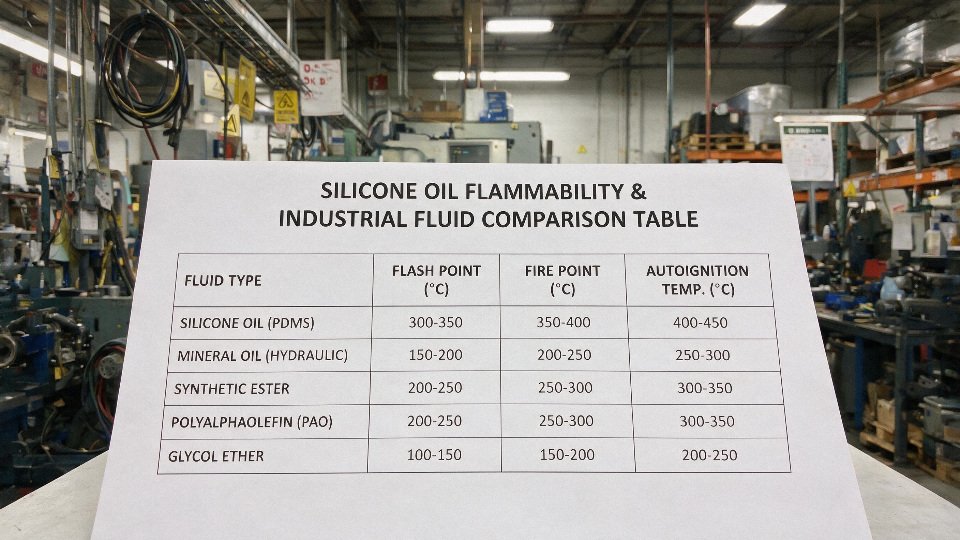
If the application sits in the grey zone between “high-temperature but not fire-resistant” and “genuinely fire-critical,” that is where fluid selection needs a proper review rather than a catalog shortcut. Compare the actual operating envelope, leak geometry, materials of construction, and maintenance reality on your site; that is usually where silicone oil either earns its premium or loses to another fluid family.
Storage and handling controls
Good storage and transfer discipline will usually keep silicone oil ignition risk low, but the control point is not just bulk temperature. Most plant incidents start at the edges of the system: contaminated drums, hot fouled heaters, leaking pump seals, misting return lines, and fluid that has been thermally abused long before anyone checks its flash point again. If you manage those failure points, silicone oil is generally straightforward to store and use; if you do not, its reputation for being “safer than hydrocarbon oil” can turn into a bad assumption.
Storage conditions that actually reduce fire risk
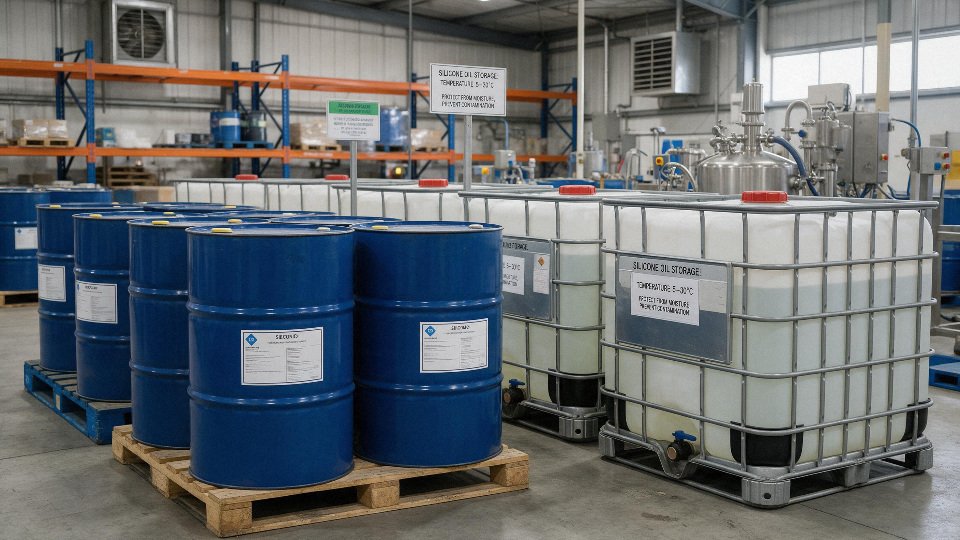
A practical storage program has four jobs: keep the fluid cool enough, keep it clean, keep it sealed, and keep incompatible materials away from it.
- Control storage temperature
- Store below the supplier’s recommended maximum bulk storage temperature, not merely below the flash point.
- Avoid drum or tote placement near steam lines, sun-exposed metal walls, roof hot spots, or furnace rooms.
- In hot climates, check summer afternoon warehouse temperatures at drum height and mezzanine level; top-rack storage often runs much warmer than people think.
- If heat tracing is used for pumpability on high-viscosity grades, verify setpoint, thermostat calibration, and local hot spots on elbows, valves, and dead legs.
- Segregate from incompatible materials
- Keep silicone oil away from strong oxidizers, reactive cleaning chemicals, and volatile solvents.
- Do not co-store with low-flash-point solvents simply because they share a process area; one leaking solvent drum can change the fire scenario around otherwise stable silicone oil.
- Mixed chemical warehouses should segregate by hazard class and by credible incident interaction, not just by SKU.
- Use closed, correctly labeled containers
- Keep drums, IBCs, and day tanks closed when not actively transferring.
- Minimize repeated opening in dusty or humid environments; contamination often enters through routine sampling, improvised funnels, or lids left loose after partial use.
- Verify gasket compatibility and lid condition. A dented drum with a poor bung seal may not leak visibly but can still admit dirt and moisture.
- Maintain housekeeping
- Clean small leaks promptly. Thin films on floors, machine frames, or heater housings become slip hazards first and smoke sources later.
- Remove oil-soaked insulation, rags, and absorbents from hot areas.
- Prevent cross-contamination from maintenance grease, machining oil, carbon dust, and solvent residues.
The mechanism is simple enough: contamination and thermal concentration products lower the margin between normal operation and localized ignition. Clean bulk fluid in a sealed container behaves one way; the same fluid spread as a thin film over a dirty, hot surface behaves very differently.
Transfer practices: where plants create unnecessary risk
Most avoidable trouble shows up during unloading, drum-to-day-tank transfer, recirculation, and maintenance refill.
- Pump selection
- Use pumps suited to the fluid viscosity and temperature range: gear, lobe, or progressive cavity pumps are common depending on duty.
- Avoid oversized pumps throttled hard across control valves; shear, recirculation heating, and seal stress rise quickly.
- Review seal design and flush plan where leakage near bearings or motors would reach hot surfaces.
- Line design
- Keep suction lines short and properly sized to avoid cavitation.
- Eliminate dead legs where fluid can stagnate and overheat.
- Support lines well; vibration loosens threaded fittings and cheap hose assemblies faster than most maintenance plans catch.
- Route vents and drains so they do not discharge onto insulation, lagging, or hot machine frames.
- Static and spill control
- Bond and ground transfer equipment, especially where drums, totes, and flexible hoses are used.
- Fill at controlled velocity. Splash filling and free-fall into partially empty vessels can increase static generation and aerosol formation.
- Prefer submerged fill or bottom entry where practical.
- Filtration
- Install filtration where cleanliness matters, but size it for viscosity and temperature. A clogged fine filter can increase differential pressure, bypass events, or operator improvisation.
- Track filter changeout by pressure drop, not by guesswork.
- Leak management
- Treat weeping seals and flange stains as defects, not cosmetic issues.
- Use drip trays in predictable leak points, but do not let trays become permanent reservoirs.
- Inspect hoses for softening, abrasion, and clamp damage after thermal cycling.
The trade-off here is straightforward: tighter, cleaner transfer systems cost more up front in pump selection, hose quality, grounding, and instrumentation, but they cut spill cleanup, unplanned downtime, and nuisance smoke events. The conclusion starts to weaken in very small batch operations where manual handling dominates; there, training and discipline matter more than system design because the hardware is often simple by necessity.
Ventilation and hot surfaces: the hazard is usually local, not bulk
Silicone oil in bulk storage is one thing. Silicone oil escaping onto a heater shell, oven duct, exhaust manifold, pump casing, or failing bearing is another.
- Inspect and shield hot surfaces near likely leak paths:
- heaters and heat exchangers
- oven entry zones and exhaust plenums
- circulation pumps and motor couplings
- bearings, especially on older fan or conveyor systems
- traced pipe sections and control valve bodies
- Maintain ventilation where vapor, smoke, or fine mist could accumulate:
- enclosed heater skids
- oven service corridors
- pump rooms
- mixing stations with open additions
- maintenance pits or poorly ventilated utility spaces
Mist matters because it can ignite more readily than a quiet liquid pool. A worn spray nozzle, pinhole leak on pressure side, or atomizing return stream can change the exposure completely. That is why leak pattern and pressure class belong in the fire review, not just the fluid name on the SDS.
Inspection routines for thermal overstress
A decent inspection route catches fluid degradation before it turns into smoke, deposits, or a heater-side fire starter.
- Look for visual change
- darkening, haze, suspended solids, gel specks, varnish, or crusted residue
- Check odor
- unusual sharp, burnt, or acrid odor during operation or shutdown
- Watch viscosity behavior
- sluggish startup, unusual pump load, flow instability, or drift from normal heat-up response
- Inspect heated surfaces
- fouling on heater tubes, cartridge heaters, jackets, and recirculation loops
- Review operating history
- over-temperature alarms, repeated low-flow events, control loop hunting, deadheaded pump episodes
- Sample aging fluid when needed
- compare against fresh material for appearance and any tested properties your process relies on
A silicone oil that has been overheated can become more hazardous even if the original fresh product had a relatively high flash point.True
Thermal degradation, contamination, deposit formation, and misting or leakage onto hot surfaces can change actual ignition behavior in service. Fresh-product fire property data should not be treated as a permanent guarantee after prolonged thermal abuse.
Emergency planning and operator training
- Spill response basics
- isolate the source
- stop pumps and heaters if safe to do so
- contain spread with compatible absorbents or diking
- keep fluid out of drains and hot equipment bases
- remove contaminated absorbents from ignition zones promptly
- Fire response basics
- suitable extinguishing media often include foam, dry chemical, or CO2, subject to the surrounding fire class and site procedure
- water may help cool exposed equipment and adjacent containers, but its effectiveness on the burning liquid itself depends on how the fire is developing, whether other materials are involved, and the equipment configuration
- plant teams should verify the current SDS, site fire strategy, and extinguisher compatibility rather than relying on a generic rule
- Worker training topics
- understand what the SDS does and does not guarantee
- recognize abnormal smoke, odor, residue, or repeated seal leakage as escalation signs
- do not assume “silicone” means nonflammable under all conditions
- know isolation points, alarm criteria, and who is authorized to restart equipment after an overheat event
For export packaging and global warehousing, include one more layer of discipline:
- verify drum, IBC, or pail closure integrity before shipment
- protect labels and batch identification from weather and abrasion
- confirm pallet stability and container compatibility for the transport mode
- review destination climate, transit dwell time, and customs delay exposure
- align warehouse segregation rules across sites so mixed inventories do not get reshuffled into poor storage combinations after arrival
That last point gets missed a lot. A well-packed shipment can still end up next to oxidizers, solvent returns, or heat sources once it reaches a third-party warehouse, so the storage instruction has to travel with the product, not stay in the purchasing file.
Data buyers should verify
For procurement, the safest assumption is that “silicone oil” on a quotation tells you almost nothing about fire behavior by itself. Buy against a defined data package, not a product name: fire-related values, test methods, formulation status, impurity control, and supply-discipline details all need confirming before you compare price or approve a grade for plant use.
A lot of bad buying decisions start with one number copied from an old TDS. Flash point may look comfortable on paper, but if the supplier does not state whether that figure is typical, minimum guaranteed, or from a one-time type test, it is weak purchasing data.
Core fire-property data to request
Ask for these values together, not selectively:
- Flash point
- Fire point
- Autoignition temperature
- Volatility data or low-boiling content
- Recommended continuous-use temperature
- Exact test methods used
The method matters. Closed-cup and open-cup flash point methods do not give interchangeable numbers, and autoignition results can vary with apparatus and sample condition. If two suppliers quote different values, the first thing to check is not whose fluid is “better” but whether they used the same standard and whether the sample was the same type of product.
Also confirm these qualifiers:
- Whether the data apply to the neat base fluid or a formulated product
- Whether the sample was fresh material, aged material, or a production average
- Whether the value is specification-controlled, typical only, or third-party verified
That distinction affects commercial risk. A typical flash point may describe the center of production; it does not tell you where the low end of a shipment could land. For applications running near thermal limits, that gap matters more than a few dollars per drum.
A flash point value alone is enough to compare silicone oils for fire safety.False
Flash point is only one screening parameter. Buyers also need fire point, autoignition temperature, volatility or low-boiling content, continuous-use temperature, and the test methods behind each value. Formulation status and impurity profile can change practical ignition risk even when headline flash points look similar.
Formulation and impurity questions that change risk
Low-boiling fractions deserve direct scrutiny because they often drive the first vapor generation that operators notice in hot service. A fluid with residual cyclics, solvent carryover, or intentional diluent can show acceptable-looking top-line data yet behave less predictably in an enclosed heated system, around vents, or at leaking seals.
Ask the supplier to state clearly:
- Residual cyclic content, if controlled
- Presence of any solvents or diluents
- Additive package, if any
- Known impurity controls relevant to thermal stability
- Lot-to-lot consistency approach and release criteria
The mechanism is straightforward: lower-boiling components evaporate first, enriching local vapor space and sometimes lowering the practical ignition margin at hot points, especially in recirculating baths, heated transfer loops, and poorly ventilated enclosures. The trade-off is that some formulated products improve process performance in other ways, so the safer choice on fire behavior is not automatically the better overall process fluid. That conclusion stops holding if the application depends on a modified formulation for lubrication, wetting, dielectric behavior, or release performance that a neat fluid cannot deliver.
Compatibility checks that procurement often misses
A silicone oil can be relatively hard to ignite and still create a fire-prone condition if it leaks onto a hot surface. That is why compatibility review belongs in buying, not just maintenance.
Check compatibility with:
- Seal materials such as common elastomers and mechanical seal components
- Metals in tanks, pumps, heaters, and fittings
- Coatings and linings
- Process media the fluid may contact in service or during cleaning
In practice, a swollen gasket, softened hose liner, or coating breakdown creates the path to the incident. The fluid did not become dramatically more flammable; the system became more leak-prone.
Commercial and supply-chain verification
Before approval, review the non-lab side just as hard:
- SDS classification for the destination market
- Transport status and any shipment restrictions
- Packaging options: pails, drums, IBCs, bulk
- Warehouse handling guidance and storage temperature advice
- Manufacturer capability versus trader-only supply
- Quality systems and batch release discipline
- Technical support depth: who can answer degradation, contamination, and trial questions
- Change-control process for raw material, process, or formulation changes
For imported material, add a few checks that save arguments later:
- Batch traceability
- Sample retention period
- Certificate structure and lot identification
- Support for plant trials
- Failure-analysis support
- Ability to supply customized grades, if your process may need one
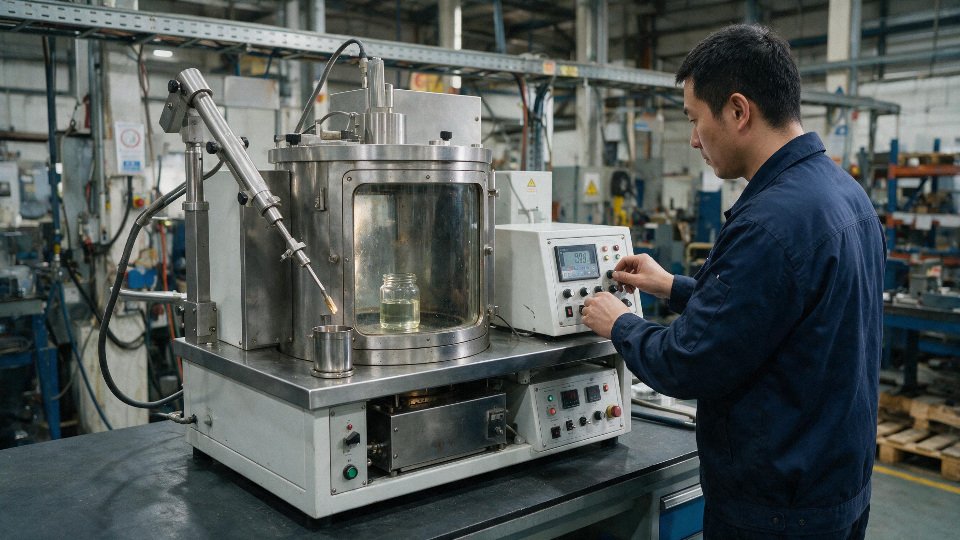
If a supplier can only provide generic TDS values and sales assurances, treat that as a risk signal, not a paperwork delay. Buyers who verify data quality, formulation status, and supply discipline early usually avoid the expensive version of the same conversation after a hot-service upset, a seal leak, or a disputed incoming lot.
Frequently asked questions
Is silicone oil flammable or just combustible?
Usually combustible is the more accurate term. Most industrial silicone oils do not ignite as easily as light hydrocarbons, but they can still burn if they are heated enough, atomized into a mist, or exposed to a strong ignition source under the wrong conditions.
A lot of confusion comes from casual use of the word flammable. On the plant floor, the practical question is not vocabulary but whether the fluid can generate ignitable vapor at your actual operating temperature and whether the equipment can create hot spots, leaks, or spray.
At what temperature does silicone oil catch fire?
There is no single universal temperature. Flash point and autoignition temperature vary by viscosity, formulation, purity, volatile content, and test method, so you need the grade-specific data sheet rather than a generic category value.
In practice, many standard dimethyl silicone oils have flash points well above room temperature and often above many mineral oils, but that still does not tell you safe operating temperature by itself. You also need:
– The supplier’s flash point test method
– The recommended maximum continuous-use temperature
– Whether the system is open, vented, or sealed
– Whether local hot surfaces run above bulk fluid temperature
A heater running clean at 220°C bulk temperature is one thing. A fouled electric element with a much hotter skin temperature is another.
Does higher viscosity mean safer silicone oil?
Not automatically. Higher viscosity often correlates with lower volatility, which can improve flash point, but it can also change heat transfer, pumping behavior, and residue formation in ways that create other operating risks.
A few checks matter more than viscosity alone:
– Compare the actual flash point and fire point on the TDS or SDS
– Review low-boiling fraction or volatile content if available
– Check thermal stability at your true film temperature
– Verify whether the fluid will be sprayed, splashed, or circulated through hot zones
Can silicone oil burn on a hot surface without a spark?
Yes, under some conditions. If a surface is hot enough, leaked oil can smoke, decompose, and eventually ignite without an electrical spark, especially if the leak forms a thin film, wick, or mist.
This is where plants get caught out. Bulk fluid temperature may look acceptable in the logbook, but flanges near heaters, cartridge elements, oxidized plates, and insulated spots hiding leaks can run much hotter than the tank reading suggests.
Is silicone oil safer than mineral oil in heaters?
Often yes from a fire-resistance standpoint, but not by default in every heater design. Many silicone oils offer higher flash points and better thermal stability than common mineral oils, yet system safety still depends on heater watt density, circulation rate, venting, and contamination control.
The preferred choice can flip if:
– The heater has poor temperature control
– The fluid is frequently contaminated
– The process needs a tightly certified heat-transfer fluid with documented long-term aging data
Can contaminated silicone oil become more flammable?
Yes. Contamination with lower-flash solvents, process oils, cleaning residues, fuel traces, or even degraded byproducts can reduce the effective flash point and increase smoke, odor, and deposit formation.
Watch for these warning signs:
– Flash point trending downward versus incoming material
– Unusual odor during heating
– Darkening, haze, or phase separation
– Faster carbon buildup on heaters or in vents
Used silicone oil always keeps the same fire properties as new silicone oil.False
Fire behavior can shift after contamination, oxidation, thermal cracking, or mixing with other fluids. Used-fluid testing is often necessary in critical service.
Is silicone oil suitable for food or medical environments from a fire-safety perspective?
Sometimes, but fire safety alone is not enough to qualify it. A silicone oil may have acceptable ignition properties and still be unsuitable for food, pharma, or medical use unless the exact grade, purity, and compliance documentation match the application.
Before approving it, verify:
– Regulatory or food-contact status if required
– Biocompatibility or medical-use documentation where applicable
– Additive package and impurity profile
– Cleaning and residue behavior on heated surfaces
How should silicone oil fires be extinguished?
Use the extinguishing method specified in the current SDS and your site fire procedure. In many cases, foam, dry chemical, or CO2 may be used for small fires, while water spray can help cool exposed equipment, but a direct water jet may spread burning liquid.
Always verify:
– The product SDS from the actual supplier
– Site fire brigade instructions
– Whether energized equipment is involved
– Whether decomposition fumes require respiratory protection
Do all silicone oils have the same flash point?
No. Different viscosities, chemistries, end-capped structures, additive packages, and purity levels can shift fire properties significantly enough to affect equipment choice and storage rules.
What documents should a supplier provide before purchase?
Ask for the full technical set, not just a sales sheet:
– Current TDS with flash point, viscosity, density, and recommended use range
– SDS compliant with your destination market
– Certificate of analysis or batch conformance
– Statement of test methods used for fire-property data
– Storage-life and storage-condition guidance
– Application-specific compliance documents if food, electronics, or medical use is involved
Verify your operating window
A silicone oil is suitable only if its verified fire properties stay comfortably above your actual process temperatures, including foreseeable upsets and local hot spots, not just the nominal setpoint on the HMI. In practice, the right decision comes from lining up the fluid’s flash point, fire point, recommended continuous service temperature, contamination exposure, and application geometry against how the plant really runs on a bad day, not how the P&ID says it should run.
Start with temperature, because this is where many bad assumptions begin. A reactor jacket loop may be controlled at one bulk temperature while the heater sheath, pump mechanical seal area, or stagnant dead leg runs much hotter. The fluid only needs one local zone above its practical limit to start degrading faster, generating volatiles, or moving closer to ignitable conditions.
Use this check sequence:
- Record the true bulk operating temperature range
- Normal steady-state temperature
- Start-up temperature ramp
- Shutdown or drain-down temperature
- Seasonal variation if the system behaves differently in summer
- Define credible upset temperatures
- Heater overshoot
- Loss of flow
- Fouled heat-transfer surfaces
- Control valve failure
- Low fluid level in a bath or reservoir
- Identify hot-spot locations
- Electric heater surfaces
- Heat exchanger approach zones
- Pump casings with low circulation
- Open tank walls near burners or external heaters
- Spray nozzles, atomizing heads, and recirculation returns
- Compare those temperatures against verified supplier data
- Flash point
- Fire point
- Recommended continuous service temperature
- Any stated limit for intermittent or short-duration exposure
If the supplier only gives a broad brochure statement like “high temperature resistant” or “nonflammable,” that is not enough to release a purchase. You need property data tied to the specific grade and, ideally, the test method used. A higher-viscosity silicone oil often shows a higher flash point, but that does not automatically make it the better process fluid if cold-start pumpability, heat-transfer performance, or residue formation are more important in your service.
The hazard profile changes fast once the fluid is no longer sitting quietly in a closed loop.
Process conditions that can overturn a comfortable lab value
Check whether your application includes any of the following:
- Open baths or exposed surfaces
- Larger vapor release area
- Greater chance of contamination and localized overheating
- Spraying or mist generation
- Fine droplets behave very differently from a quiescent bulk liquid
- Ignition risk usually rises because surface area rises sharply
- Atomization or high-pressure leakage
- A pinhole leak on a hot line is a different fire scenario than a sump
- Oxygen-enriched environments
- Any oxygen enrichment can shift ignition behavior enough that generic handling assumptions stop being reliable
- Solvent or process contamination
- Low-boiling contaminants can pull the practical flash behavior down well before operators notice a quality issue
- Poor ventilation
- Especially around enclosed heaters, dip tanks, curing stations, or maintenance pits
Silicone oil should not be approved as 'nonflammable' without checking the exact grade, use temperature, and contamination pathway.True
Silicone oils are often less easily ignited than many hydrocarbon fluids, but their fire behavior depends on grade, temperature exposure, and service conditions such as misting, open surfaces, and contamination.
Choose the grade for the whole duty, not only fire resistance
Procurement teams sometimes over-weight flash point and under-weight the rest of the job. That usually shows up later as pump issues, seal swelling, varnish, unstable heat transfer, customer audit findings, or shortened fluid life.
At minimum, screen the grade against:
- Thermal stability at your actual temperature profile
- Viscosity across start-up and operating conditions
- Purity and volatility limits
- Material compatibility with seals, hoses, coatings, and process media
- Regulatory, customer, or sector-specific requirements
- Expected maintenance interval and fluid monitoring plan
Here is the trade-off: a grade selected for higher thermal margin may carry a viscosity penalty, slower heat transfer, or higher cost. The preferred choice flips when pumpability, cleanliness, or downstream specification control matters more than squeezing out the highest nominal fire-property number.
Validate with plant evidence before standardizing
Use evidence from your own operation wherever possible:
- Trial data from the actual equipment
- Maintenance records on heater fouling, seal life, and residue
- Used-fluid analysis
- Incident or near-miss history
- Operator observations during start-up, cleaning, and upset recovery
That matters because the section’s main conclusion stops holding once field conditions differ materially from the assumed use case. A silicone oil that is acceptable in a closed, well-controlled thermal loop may be a poor choice in an open, contaminated, intermittently overheated bath.
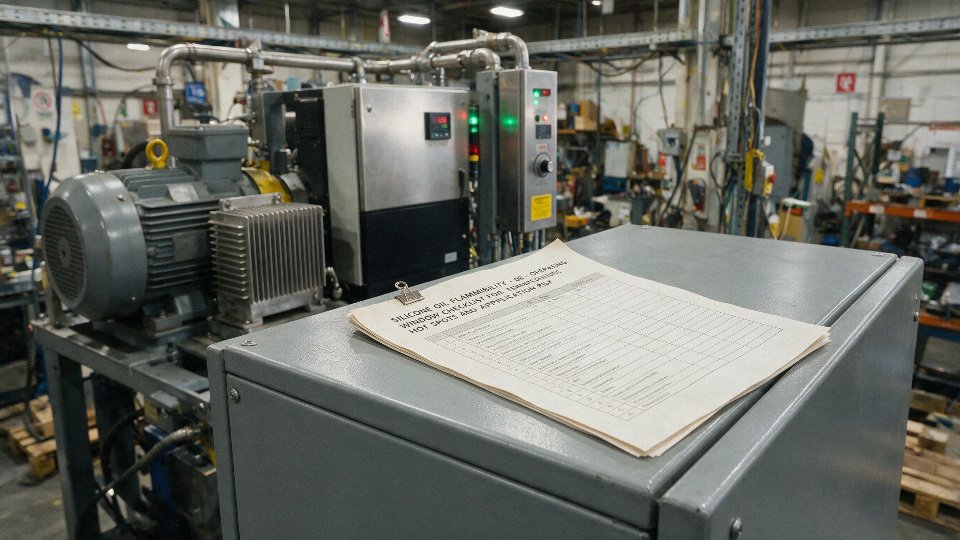
Before issuing an RFQ or approving an alternate source, ask for:
- Technical data sheet for the exact grade
- SDS for the same identified product
- Typical batch COA items or controllable quality parameters
- Sample for evaluation under your operating conditions
- Statement on batch-to-batch consistency and any formulation variability
If you are qualifying a silicone fluid for a live process, send SiliconChemicals your operating temperature range, application type, viscosity target, contamination exposure, material compatibility needs, and any customer or regulatory specification. With that information, the team can recommend a suitable grade and provide the matching technical documents and sample basis for purchasing and EHS review.