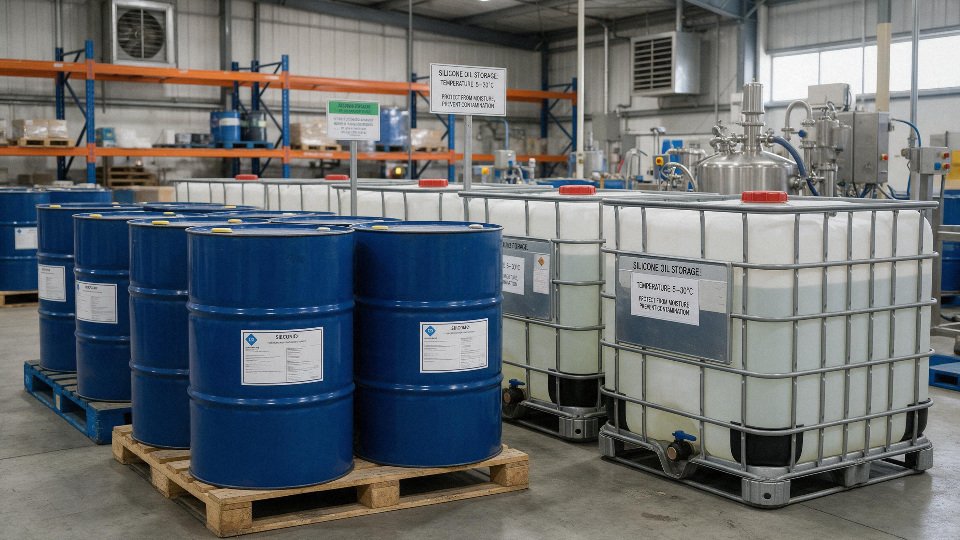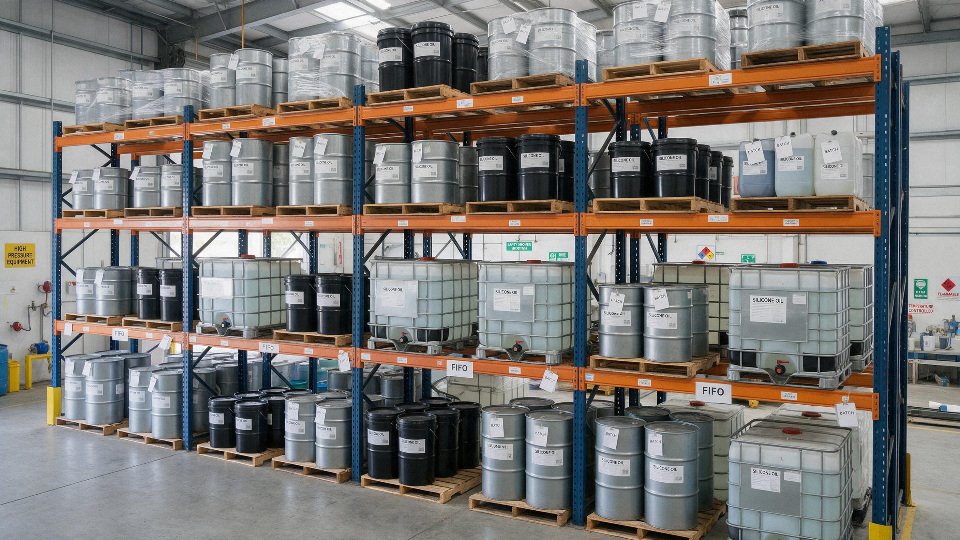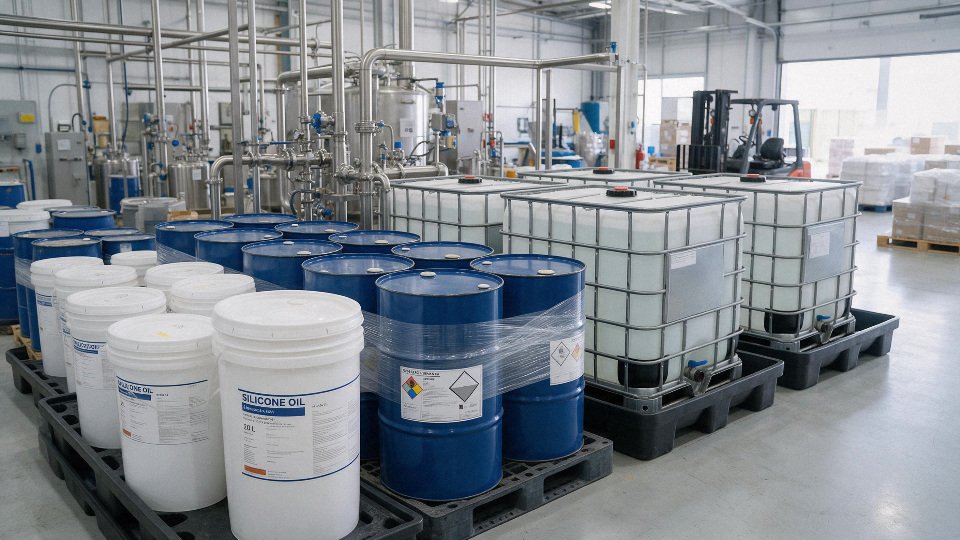
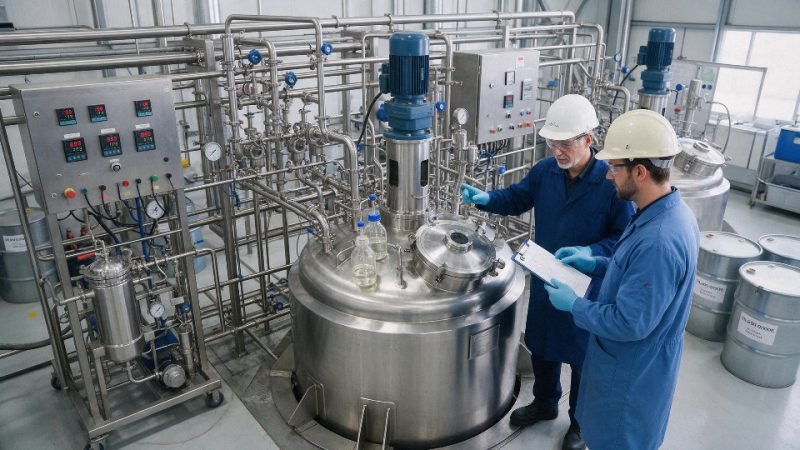
A silicone oil batch can look fine in the kettle and still turn into a commercial problem a few days later: viscosity drifts, color rises, low boilers stay too high, or residual acidity keeps biting downstream. On the plant floor, that usually means rework, slower filtration, extra neutralization, and arguments between production, QC, and purchasing over whether the issue came from feed purity, catalyst choice, or temperature control. The money goes out fast through scrap risk, lost reactor time, off-spec inventory, and customer claims, so catalyst selection is not a chemistry footnote; it is one of the main levers for getting the target viscosity, cyclic balance, color, and residuals at a workable manufacturing cost.
Silicone oil production commonly uses acid catalysts, base catalysts, and, in some specialty condensation routes, metal-based catalysts. In practice, the right choice depends on whether you are equilibrating siloxanes or building structure by condensation, with typical operating windows around 80-180 degrees C and catalyst loadings often starting near 10-500 ppm active level before being tuned for viscosity target, siloxane purity, and neutralization requirements.
That sounds straightforward until you put it into an actual factory setting. The same catalyst family that gives fast equilibration in one formulation can create neutralization headaches, color carryover, or unstable low-boiler results in another, especially when raw-material purity, moisture control, and end-use spec are not forgiving. 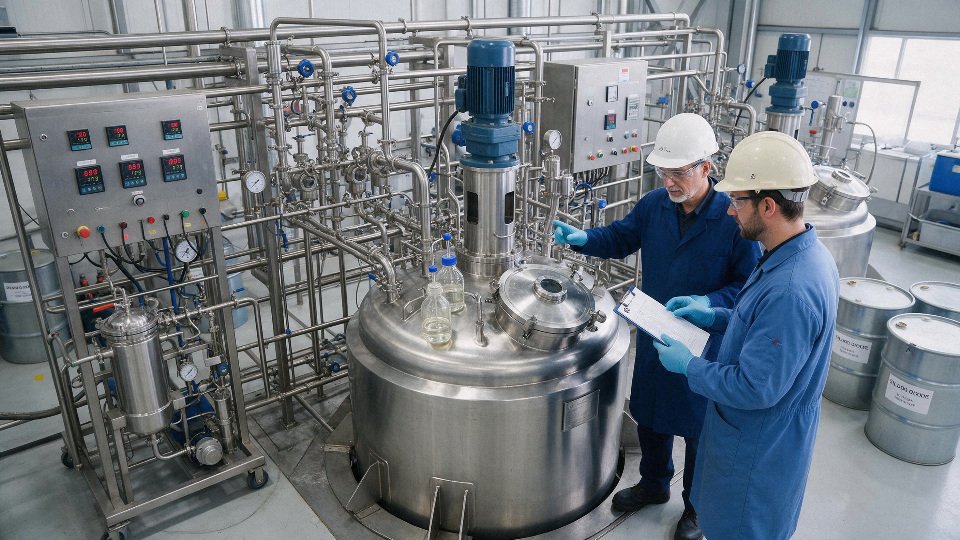
Main catalyst families
Silicone oil plants do not run on one “silicone catalyst.” They typically use different catalyst families at different stages: acid or base for siloxane redistribution, metal catalysts for condensation-type builds, platinum for Si-H functionalization, and then low-residue or removable systems where purity is tight. Procurement decisions go wrong when buyers tie catalyst choice to the finished product name instead of the actual unit operation.
A 350 cSt dimethyl silicone oil, a polyether-modified wetting agent, and an amino-functional textile softener may all pass through different catalytic steps even if they leave the same site. In practice, one plant may open with oligomer formation, shift into equilibration for viscosity control, then move to a separate functionalization kettle with an entirely different catalyst package and different contamination risks.
Acid catalysts for equilibration and condensation
Acid catalysts are still common where fast siloxane bond rearrangement is needed. Sulfuric acid, sulfonic acids, acid-treated clays, and related protonic systems can drive redistribution of siloxane chains efficiently, often within the broad 80-180 degrees C manufacturing window, but the exact sweet spot depends on feed purity, target viscosity, residence time, and how aggressively the plant needs to suppress color and low boilers.
What they do chemically is straightforward: protonation makes the siloxane bond more labile, so chain scission and recombination happen faster. That is useful in equilibration because you can move a mixed feed of cyclics, low oligomers, and endblockers toward the target molecular distribution. It is also useful in some condensation-driven specialty routes where silanol-bearing species need activation.
On the plant floor, the attraction is usually reaction speed and robustness with messy feedstocks. Acid systems often tolerate a wider mix of siloxane intermediates than fussy specialty catalysts. The price you pay shows up later.
Key operational issues with acid catalysts:
- Corrosion risk
- Mineral acids, especially if water is present, are harder on common steels, seals, and instrument wetted parts.
- A line that survives neutral silicone service may not stay clean when acid carryover hits dead legs, pump faces, or sample valves.
- Neutralization burden
- After equilibration, residual acidity has to be quenched or removed.
- Incomplete neutralization can keep redistribution going in storage or downstream finishing, which shifts viscosity and broadens product variability.
- Salt and residue formation
- Neutralization creates salts or solids that have to be filtered out.
- That matters more in cosmetic, electrical, or high-transparency grades than in general industrial fluids.
- Color formation
- If temperature, residence time, or impurity load drift high, acid systems can darken product faster than buyers expect.
- Low-boiler management
- Overactive or poorly stopped acid catalysis can increase cyclics or other low-boiling fractions that then need stripping.
Sulfonic acids often get selected when plants want strong acidity with somewhat more manageable handling than straight mineral acid service, though the practical result depends heavily on the exact acid and process design. Acid clays and related supported acids are attractive where easier separation is worth somewhat lower catalytic intensity or longer hold time.
The trade-off is simple: acid catalysts are often operationally forgiving on conversion speed, but they make purification and materials-of-construction discipline more important. That conclusion weakens once you move into very high-purity silicone oils, where the removal burden can outweigh the reaction advantage.
Base catalysts for equilibration
For many dimethyl silicone oil redistribution processes, base catalysts are the workhorse. Potassium hydroxide, sodium hydroxide, silanolates, quaternary ammonium hydroxides, and related alkali systems are highly effective for equilibrating siloxane chains and dialing in viscosity, especially where the feed system and moisture control are well managed.
The mechanism matters here. Basic species attack siloxane linkages and promote chain redistribution toward an equilibrium molecular-weight distribution set by the cyclic feed, linear feed, and endblocker ratio. That is why catalyst loading alone does not “set viscosity.” Loading mainly changes how fast equilibrium is reached and how hard the process is to stop cleanly; the composition and stripping strategy decide where the batch lands.
Typical active loading may start around 10-500 ppm, then get adjusted based on:
- Target viscosity
- Purity of cyclic or oligomer feed
- Endblocker efficiency
- Neutralization or deactivation method
- Sensitivity of the final grade to ionic residue
Why plants like base systems:
- Fast and effective siloxane redistribution
- Good fit for viscosity targeting in standard dimethyl fluids
- Familiar operating discipline in large-volume production
- Often economical on a per-ton basis
Why they cause trouble:
- Water sensitivity
- Moisture changes activity, side reactions, and batch repeatability.
- Even a wet drum, poorly dried nitrogen line, or humid transfer during monsoon season can move the result enough to show up in final viscosity.
- Impurity sensitivity
- Acidic contaminants, residual chlorosilanes, salts, or poorly washed intermediates can consume catalyst or create inconsistent kinetics.
- Residual ionic contamination
- That is a serious issue for electronics, personal care, and some release or dielectric applications.
- Stopping the reaction
- Deactivation has to be fast and complete. If not, the product can continue drifting during hold, filtration, or drum storage.
Silanolates are often favored where a cleaner, more directed basic catalytic effect is wanted than with simple hydroxide additions. Quaternary ammonium hydroxides can be useful in some specialized redistribution schemes, but thermal stability and decomposition behavior need checking case by case rather than assumed from category alone.
In commercial terms, base catalysts usually win on mainstream silicone oil production when the plant already has good drying, neutralization, and filtration habits. They stop being the obvious first choice when ultra-low ionic residue is the main specification and post-treatment cost starts dominating the economics.
Metal catalysts for condensation and specialty fluid synthesis
Where the chemistry depends on silanol condensation, alkoxy hydrolysis-condensation, or related build reactions, metal catalysts come into play. Tin, titanium, zirconium, and other metal compounds are commonly used in specialty silicone fluids, resins, and reactive intermediates rather than simple equilibration-only dimethyl oils.
These catalysts do not mainly redistribute chains the way acid and base systems do. Instead, they accelerate bond-forming steps such as:
- Silanol to siloxane condensation
- Alkoxy-functional silane or siloxane reaction sequences
- Crosslinkable or partially condensed specialty fluid formation
- Selected alcoholysis or ester-exchange style transformations in modified systems
Tin catalysts are often chosen because they are active and familiar, especially in condensation-heavy systems. Titanium and zirconium compounds are used where different selectivity, lower color, or alternative cure behavior is needed. The preferred choice flips with formulation sensitivity: a catalyst that gives strong throughput in a utility-grade product may not be acceptable in a formulation that punishes haze, storage instability, or metal residue.
Common trade-offs with metal catalysts:
- Activity versus pot life or storage stability
- Throughput versus color and haze control
- Lower reaction temperature versus sensitivity to trace moisture
- Cost of catalyst versus cost of downstream cleanup
Some metal catalysts are notorious for continuing to react after the operator thinks the batch is finished. That can be manageable in a tightly scheduled just-in-time process; it is a headache when the same tote sits for three weeks before blending.
Platinum catalysts for hydrosilylation-modified silicone oils
For modified silicone oils made by adding Si-H across unsaturated groups, platinum is the standard family. Karstedt-type systems and chloroplatinic-acid-derived catalysts are widely used for hydrosilylation routes that graft polyether, alkyl, phenyl, amino, epoxy, or other functional groups onto silicone backbones or side chains.
Platinum catalysts are mainly used for hydrosilylation-based functionalization, not for standard acid/base equilibration of dimethyl silicone oil.True
This reflects established organosilicon process practice: platinum excels in Si-H addition to unsaturated groups, while chain redistribution of siloxanes is usually handled by acid or base catalysts.
Here the catalyst choice directly affects both conversion and selectivity. Too little activity leaves residual Si-H or unsaturated modifier. Too much activity, or poor inhibitor control, can push the batch into runaway exotherm, gel particles, or broad side-product formation. In a plant, this is where heat-transfer limits and feed sequencing matter more than the lab recipe suggests.
What buyers should watch:
- Catalyst form and platinum concentration basis
- Inhibitor package and induction behavior
- Tolerance to sulfur, amines, phosphorus, and other poisons
- Color contribution
- Filtration or residue expectations in final product
Platinum systems are usually the right answer for high-value modified silicone oils, but they are unforgiving of contamination and operator shortcuts. A worn transfer hose, amine-contaminated tote, or unverified raw-material change can kill activity or destabilize selectivity fast.
Amine and organometallic co-catalyst systems in niche modifications
Some specialty routes rely on amines, blocked catalyst packages, or organometallic co-catalysts to tune reaction onset, selectivity, or storage stability. These systems show up in transetherification, dehydrogenative coupling, controlled condensation packages, and specialty modification chemistries where a single catalyst cannot deliver both shelf life and plant-rate conversion.
In practice, these packages are less standardized across the industry than acid, base, or platinum families. You often need application-specific trial data rather than broad category assumptions.
Typical reasons to use them:
- Delay catalyst onset until heating or mixing reaches a set point
- Improve compatibility with sensitive functional groups
- Reduce side reactions during storage
- Fine-tune reaction rate after a primary catalyst is introduced
That flexibility is useful, but procurement should expect tighter supplier qualification and more change-control discipline.
Heterogeneous and low-residue catalyst options
Where low ionic contamination, lower ash, or easier catalyst removal is critical, plants may shift toward supported acids, supported bases, scavenger-assisted systems, or other low-residue catalyst strategies. These are especially relevant in personal care, electronics, and premium release-coating supply chains where residual catalyst, ionic species, and low-boiling siloxanes may need control down to low ppm or sub-0.1 wt% ranges depending on the grade.
The gain is cleaner product finishing and less risk of latent instability. The sacrifice is usually one or more of the following:
- Slower reaction rate
- Higher catalyst cost
- More complex reactor internals or filtration
- Tighter pressure-drop and solids-handling management
- More sensitivity to fouling or channeling in packed systems
This is one area where lab success can mislead buyers. A removable catalyst that looks elegant in a one-liter trial may foul, attrit, or lose activity unevenly in production if the feed contains fines, gel specks, or broad-boiling recycled siloxanes.
Why procurement should map catalysts by unit operation
A single silicone oil product family can involve multiple catalytic stages:
- Oligomer or intermediate formation
- Chain equilibration to target viscosity
- Functionalization or grafting
- Neutralization, stripping, and finishing
That means supplier questionnaires should ask not just “What catalyst is used?” but:
- Which step uses which catalyst family?
- What residue remains after each step?
- How is the catalyst deactivated or removed?
- What are the contamination sensitivities?
- Which specifications are controlled by catalyst choice versus by stripping and filtration?
That mapping matters commercially. A supplier may quote the same product viscosity and still differ sharply in cyclic content, ionic residue, color stability, and batch-to-batch reproducibility because the catalyst package and cleanup sequence are different. For qualified buyers, that is usually where the hidden cost sits.
Reaction routes and catalyst fit
The right catalyst is not chosen from a catalog first; it is chosen by reaction route. Straight PDMS oils, hydroxy-terminated fluids, and organically modified silicone oils are built through different chemistries, so the useful catalyst family, dosage range, quench method, and purification burden change with the route.
A buyer who only asks, “acid or base?” usually gets the discussion one level too high. On the plant side, the practical questions are these: Are you starting from chlorosilanes, alkoxysilanes, D4/D5, or a preformed Si-H intermediate? Do you need silanol ends preserved, capped, or consumed? And how much post-reaction cleanup can the line actually handle without killing yield or color?
Hydrolysis-condensation from chlorosilanes or alkoxysilanes
If the route starts from chlorosilanes, acidity is already built into the process because hydrolysis generates HCl. In that case, you may not need much extra catalyst for early-stage condensation at all; the bigger issue is controlling how long that acidity remains active before it starts driving side reactions, corrosion, color formation, or broader molecular-weight distribution.
Two common starting points behave differently:
- Chlorosilane route
- Hydrolysis is fast and strongly exothermic
- HCl formation lowers pH immediately
- Condensation of silanols to siloxane bonds can proceed under that inherent acidic environment
- Materials of construction, gas scrubbing, and acid removal become central
- Alkoxysilane route
- Hydrolysis is slower and usually needs more deliberate water, alcohol, and catalyst control
- Generated alcohol changes volatility balance and separation load
- Extra acid or base catalyst is more often added to get practical reaction rates
Mechanistically, acidity pushes two linked stages: hydrolysis of Si-X groups to silanols, then condensation of silanols into Si-O-Si bonds. That sounds helpful, and it is, up to a point. Leave strong acid in too long and you can keep rearranging the siloxane network, generate more low boilers, or darken the product, especially once temperature climbs into the upper part of the usual 80-180 degrees C manufacturing window.
In practice:
- Extra catalyst is often unnecessary or minimal in chlorosilane hydrolysis if:
- water ratio is well controlled,
- residence time is adequate,
- and the target is a relatively simple intermediate or low-to-medium molecular-weight fluid.
- Extra catalyst is more often justified when:
- alkoxysilanes are the feed,
- throughput pressure is high,
- or the product needs tighter conversion before devolatilization.
The trade-off is straightforward. Stronger catalytic conditions reduce reactor time, but they usually increase downstream cleanup sensitivity: neutralization salts, haze risk, higher ionic residue, and sometimes worse odor. That conclusion stops holding if the upstream feed is too impure or water dosing is unstable; under those conditions, a “mild” recipe can simply leave unreacted species that cost more to strip later.
Equilibration of cyclic siloxanes and linear oligomers to make PDMS fluids
For standard dimethyl silicone oils across a wide viscosity range, industrial production often centers on equilibration of cyclics such as D4 and D5, sometimes blended with linear oligomers. Acid or base catalysts are used at low levels, often starting somewhere around 10-500 ppm as active catalyst depending on purity, viscosity target, and how the catalyst will be neutralized or removed.
This is where end-blockers matter. Hexamethyldisiloxane is the classic chain stopper for trimethylsiloxy end-capped PDMS fluids, and its ratio to cyclic feed is one of the main levers on final viscosity.
The mechanism is worth spelling out because it explains why small operating changes matter:
- The catalyst activates siloxane bond cleavage and re-formation.
- Cyclics open and redistribute with existing linear chains.
- End-blocker caps chain ends and limits average chain length.
- The system approaches an equilibrium distribution containing:
- desired linear polymer,
- residual cyclics,
- and sometimes short chains or end-group variants.
A stronger catalyst does not simply “make higher viscosity.” It makes redistribution faster. Final viscosity depends on equilibrium position, end-stopper ratio, temperature history, and how well low boilers are stripped afterward. Operators sometimes learn this the expensive way: they push catalyst to shorten batch time, then spend longer under vacuum removing cyclics and neutralization byproducts.
Ring-opening polymerization versus redistribution equilibration
In the lab, people often separate ring-opening polymerization from redistribution. On the plant floor, for silicone oil production from D4 or mixed siloxanes, the language usually shifts to equilibration because both things are happening in the same practical system: cyclics open, linear chains grow, and siloxane bonds keep reshuffling until the composition approaches equilibrium.
That wording matters in procurement and technical review because it changes what you optimize for:
- Not just conversion of D4 or D5
- But equilibrium distribution of all siloxane species
- End-group population
- Residual cyclic content after stripping
- Ease of catalyst kill and filtration
Industrial silicone oil production from D4 is often better described as equilibration than simple ring-opening polymerization.True
In commercial PDMS fluid manufacture, cyclic opening and ongoing siloxane redistribution occur together, so product properties depend on equilibrium composition and end-blocking, not only on initial ring opening.
Hydroxy silicone oil production
Hydroxy-terminated silicone oils are less forgiving than fully end-capped PDMS because the terminal silanol is both functional and reactive. Catalyst choice here affects not only molecular weight growth during manufacture, but also storage stability afterward.
What shifts with catalyst family:
- Acid catalysis
- Can promote condensation efficiently
- May preserve a workable route to silanol-terminated fluids if quenched carefully
- Residual acidity can keep driving condensation during storage, raising viscosity over time
- Base catalysis
- Can also build molecular weight effectively
- Often gives fast equilibration behavior
- Residual base or ionic contamination can continue rearrangement or condensation and destabilize shelf life
The practical target is not “maximum conversion.” It is the right balance between chain growth and terminal silanol retention. Push too far and the silanol ends self-condense, viscosity drifts upward, and the product that passed QC on fill day comes back months later as an out-of-spec drum. This is one reason residual catalyst, ionic contamination, and low boilers are commonly driven down to low ppm or sub-0.1 wt% ranges when the application is sensitive.
Modified silicone oils: amino, epoxy, alkyl, aryl, and polyether types
Once you move into modified silicone oils, platinum-catalyzed hydrosilylation becomes the dominant fit for many routes, especially where Si-H functional siloxanes are being added across unsaturated organic groups. That covers a lot of amino-, epoxy-, alkyl-, aryl-, and polyether-modified products, though the exact precursor package varies by manufacturer and application.
The commercial appeal is clear: hydrosilylation is atom-efficient and gives direct access to tailored functionality. The operating headache is that platinum is selective, not magical. Side reactions still show up, especially if feed purity or inhibitor balance is poor.
Typical risks to control:
- Isomerization
- Can shift unsaturated feed structure and reduce desired adduct formation
- Dehydrogenation
- More relevant with some alcohols or other active-hydrogen environments
- Can generate gas and upset foaming or pressure control
- Yellowing or color drift
- Often linked to trace impurities, overheating, prolonged hold time, or incompatible stabilizers
- Overreaction or gel tendency
- Shows up if multifunctional feeds or hidden moisture are not controlled
For release coatings or textile auxiliaries, a slight yellow cast may be acceptable. For personal care, electronics, or optical-adjacent uses, it often is not. That flips the economics: a catalyst system that looks cheaper per kilogram can become more expensive once color correction, carbon treatment, or downgraded batches are counted.
High-viscosity versus low-viscosity fluids
Low-viscosity fluids and high-viscosity fluids do not just differ by reaction time. They place different stress on the catalyst strategy.
For low-viscosity oils:
- Higher chain-stopper ratio is typical
- Small errors in end-blocker feed show up quickly in final viscosity
- Residual cyclics can be a larger percentage problem
- Overactive catalyst may create a product that meets viscosity but carries too much volatile siloxane burden
For high-viscosity oils:
- Lower chain-stopper ratio and tighter thermal history matter more
- Equilibration may need longer controlled hold
- Stripping becomes mechanically harder as viscosity rises
- Poor catalyst kill can leave a product that keeps drifting in tank or drum
Here is the counter-intuitive point plant managers eventually respect: a milder catalyst plus better devolatilization can produce a cleaner, more economical fluid than a stronger catalyst that shortens reaction time but creates more cyclic byproducts, more color, or more difficult neutralization solids. That is especially true when the line has a decent thin-film evaporator, wiped-film stage, or simply a well-run vacuum strip with enough surface area and residence control.
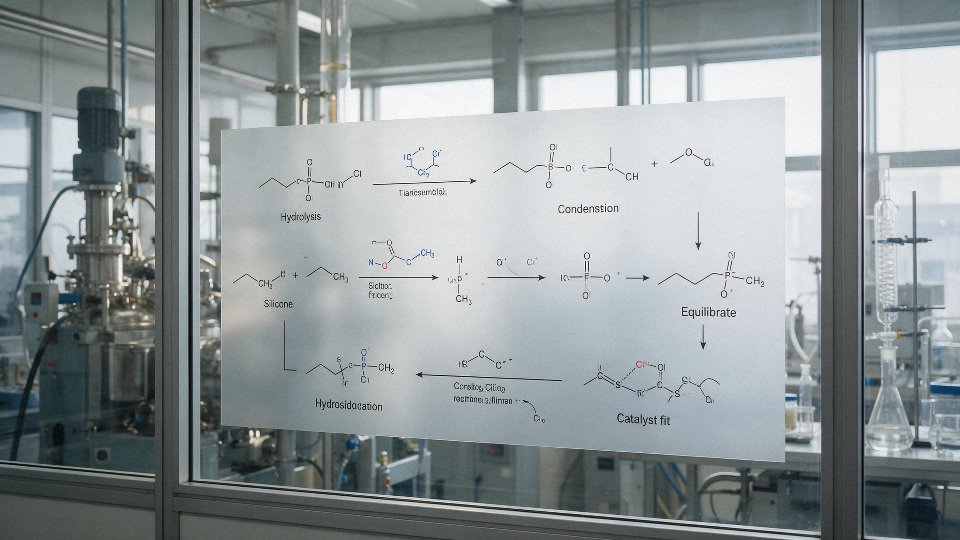
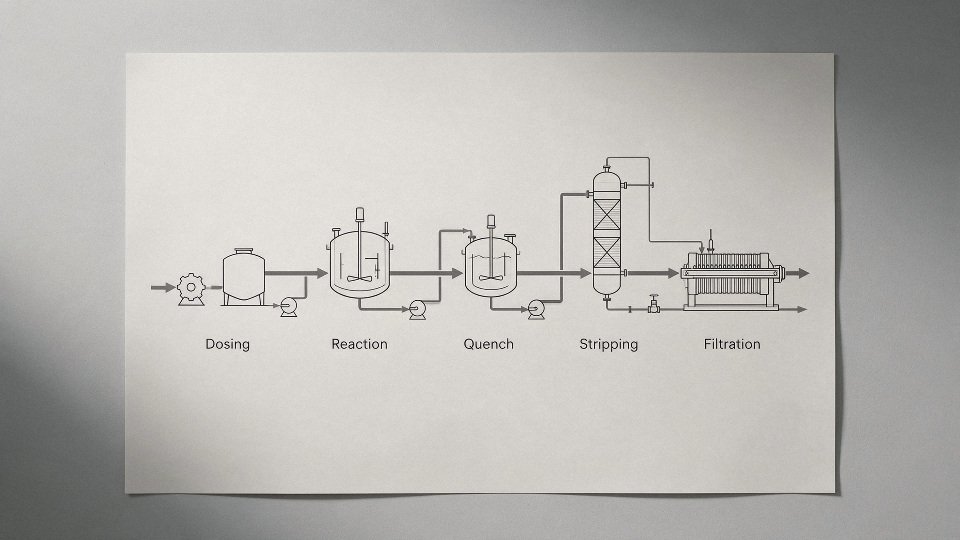
If you are matching catalyst to route, start with the chemistry path, then work outward to quench, stripping, filtration, and storage stability. That sequence is usually more reliable than choosing the fastest catalyst on paper and hoping purification will clean up the rest.
Acid versus base catalysts
Neither acid nor base is universally “better” for silicone oil equilibration. Acid systems are often chosen for broad activity and low apparent catalyst cost, while base systems are often preferred when tighter control of redistribution, lower corrosion risk, or cleaner downstream performance justifies stricter feed purity and deactivation discipline.
The practical choice turns on what you are trying to control most tightly: viscosity target, end-group preservation, cyclic suppression, ionic cleanliness, storage stability, or total workup burden. Plants that treat catalyst cost as the whole decision usually pay for it later in neutralization losses, off-spec drift, color rework, or cleaning downtime.
How the mechanisms differ in practice
Acid- and base-catalyzed equilibration both break and reform siloxane bonds, but they do it through different chemical paths, and that difference shows up on the plant floor.
Acid catalysis works through protonation of the siloxane oxygen, which increases the susceptibility of the Si–O bond to cleavage and exchange. In practical terms, once the acid is active in the siloxane phase, the system can redistribute chain lengths efficiently across a fairly broad feed mix, including linear fluids, cyclics, and many end-blocking species. This is one reason acid routes have historically been common in bulk fluids.
Base catalysis usually proceeds through silanolate formation and nucleophilic attack on silicon, driving siloxane redistribution through an anionic pathway. That tends to make the reaction more dependent on the exact end groups present, the amount of water available to generate or consume active species, and the cleanliness of the feed. When the feed is well controlled, base systems can be very effective and easier to steer. When the feed is dirty, they can become erratic.
That mechanism difference matters because it changes where your process is most sensitive:
- Acid route sensitivity points
- water content and its effect on hydrolysis/condensation balance
- chloride carryover from upstream intermediates or catalyst sources
- reactor metallurgy and corrosion products
- deactivation completeness after the target viscosity is reached
- Base route sensitivity points
- hydroxyl level and end-group profile
- acidic impurities that partially kill catalyst
- alkali or metal contamination from storage, transfer, or raw materials
- trace water, which can either initiate needed chemistry or push side reactions, depending on the route
In a well-run plant, both systems can hit spec. In a plant with inconsistent raw material quality, poor drying, or weak post-treatment, the two routes fail differently, and that is where selection gets serious.
Activity, temperature window, and controllability
For many silicone oil processes, the working window sits roughly in the 80-180°C range, but the useful operating point is not a category constant; it depends on feed composition, target viscosity, residence time, and how quickly you need to stop the reaction once the batch is on target.
Acid systems often show strong activity over a broad temperature range. That can be helpful when you need robust equilibration across mixed siloxane feeds or when the plant needs throughput flexibility. The downside is familiar to anyone who has chased a drifting viscosity tank: if the acid is not fully neutralized or removed, reaction can continue during hold, filtration, or storage. At low-viscosity targets, a small amount of residual activity may not look dramatic at discharge but can still move the final product out of band after a few days or weeks.
Base systems can offer sharper controllability once the catalyst is properly activated and the moisture/end-group balance is understood. In practice, they are often favored where a plant wants a narrower batch-time distribution and more predictable stop behavior after quench or adsorption. But this flips if the feed purity varies a lot. A base-catalyzed batch with variable hydroxyl content or trace acidic contamination can be slower than expected at first, then overshoot once the system finally “comes alive.”
Here is the trade-off as operators usually feel it:
| Factor | Acid-catalyzed equilibration | Base-catalyzed equilibration |
|---|---|---|
| Startup response | Often robust across mixed feeds | More feed-dependent |
| Reaction stop after target | Can be difficult if deactivation is incomplete | Often cleaner if properly neutralized/adsorbed |
| Tolerance to variable feed | Sometimes better in broad redistribution duty | Usually narrower tolerance band |
| Corrosion risk | Higher concern | Lower acid-corrosion concern, but ionic cleanliness still matters |
| Storage drift risk | Significant if acid residue remains | Significant if silanolate/basic residue remains |
| Purity burden | Strong on chloride/corrosion control | Strong on water/acid impurity control |
A common mistake is to compare only the nominal catalyst loading. Typical equilibration loading may start around 10-500 ppm as active acid or base, but that range is too broad to compare one route against another without context. Lower loading does not automatically mean gentler chemistry or better cost. A low-dose catalyst that takes longer, forms more cyclics, or needs heavier polishing can still be the more expensive route.
Effects on molecular weight distribution, end groups, and cyclics
For buyers and process engineers, this is where catalyst choice becomes a product-performance issue rather than a chemistry preference.
The catalyst determines how quickly the system approaches equilibrium and how selectively it gets there. That influences:
- molecular weight distribution
- preservation or loss of intended end groups
- residual cyclic siloxane level
- low-boiling fraction
- final viscosity consistency lot to lot
Acid-catalyzed systems can be very effective at driving redistribution toward equilibrium, especially when working from cyclic-rich feeds or mixed chain-length stocks. That helps when the production goal is a standard fluid grade and the purification train is designed to strip low boilers afterward. The trade-off is that aggressive or poorly stopped acid catalysis can broaden the molecular weight distribution, disturb end-group fidelity, and increase the burden on devolatilization or finishing if cyclic control is tight.
Base systems are often selected when end-group management matters more. In hydroxy-functional or specially terminated fluids, base-catalyzed redistribution may give a cleaner path if the raw materials are dry and well characterized. But the boundary is important: this advantage weakens quickly when feedstock hydroxyl level, water content, or acidic contamination are not tightly controlled, because the active silanolate chemistry starts moving in directions you did not budget for.
On cyclic content, neither route gets a free pass. Equilibration chemistry naturally tends toward an equilibrium mixture. If your grade specification requires low low-boiling siloxanes, the catalyst decision must be integrated with stripping, vacuum design, hold time, and condenser performance. It is not enough to say “base makes fewer cyclics” or “acid reaches equilibrium faster.” Sometimes the plant with the better finishing section wins, regardless of catalyst family.
Residual catalyst and low-boiling siloxanes must be controlled as part of product specification, not just reaction completion.True
Silicone oil buyers in cosmetic, electrical, and release applications often require low ppm ionic residue and low-boiling content in low ppm to sub-0.1 wt% ranges, depending on grade and downstream use. Reaction endpoint alone does not guarantee this.
Feed impurity sensitivity: where batches start to behave differently
Raw material quality changes catalyst behavior more than many purchase teams expect. Two drums of “the same” siloxane feed can run differently if one carries a bit more water, residual HCl, sodium, iron, or hydrolyzable chlorides.
Water
Water is not just a contamination number; it shifts the chemistry.
- In acid systems, water can promote hydrolysis and subsequent condensation pathways, affecting end groups and sometimes color or odor if side products accumulate.
- In base systems, water can participate in silanolate generation or consumption, changing effective catalyst activity and making reaction rate less predictable.
A plant can get away with this on commodity fluid. It usually cannot on tight-viscosity or low-ionic grades.
Chloride and acidic residues
These are especially troublesome because they can:
- accelerate corrosion
- distort catalyst performance
- create residual odor or color issues
- raise ionic contamination in the final oil
Acid systems are generally less forgiving here from an equipment standpoint. If chloride-bearing species are present, you need to think beyond chemistry and into metallurgy, gasket life, vent system durability, and neutralization waste.
Metal ions
Sodium, potassium, calcium, iron, and other metal ions can enter from catalysts, storage tanks, transfer pumps, filter aids, or even maintenance practices. A worn mechanical seal or a badly rinsed tote is enough to complicate a high-spec batch.
Metal ions matter because they can:
- alter catalyst activity
- remain as ionic residue in the fluid
- hurt dielectric performance
- destabilize some emulsification packages
- interfere with downstream compounding, especially where color or storage stability is tight
In release coatings, electrical fluids, and some personal care intermediates, these residues matter commercially, not just analytically.
Neutralization, deactivation, and why viscosity drifts in storage
A lot of off-spec silicone oil is not made in the reactor. It is made afterward, by incomplete catalyst kill.
Common deactivation approaches include:
- Chemical neutralization
- acid quench for base-catalyzed systems
- base neutralization for acid-catalyzed systems
- requires correct stoichiometry and good mixing, not just “a little extra for safety”
- Adsorptive polishing
- bleaching earths, alumina, silica, or other adsorbents depending on system compatibility
- useful for removing residual catalyst fragments, ionic species, color bodies, and trace impurities
- adds solids handling, filtration load, and product hold-up
- Filtration
- removes neutralization salts and adsorbent fines
- helps clarity and downstream cleanliness
- does not solve dissolved catalyst problems by itself
- Vacuum finishing or stripping
- reduces low-boiling siloxanes and volatile byproducts
- can help odor and storage stability
- cannot be relied on as the sole catalyst deactivation method
The mechanism behind storage drift is straightforward. If active acid or base remains, even at low residual levels, siloxane redistribution can continue in the package, tote, or customer tank. Viscosity moves. Low-boiling content can change. End-group balance can shift. The product passes QC on day one and fails at the customer after heat exposure or a few weeks in stock.
That is why serious producers do not treat neutralization as a housekeeping step. It is part of molecular weight control.
Equipment, cleaning, and maintenance implications
Acid systems usually carry a heavier equipment penalty.
You need to review:
- reactor metallurgy
- agitator shaft and seal materials
- gasket and hose compatibility
- vent scrubber duty
- corrosion allowance in transfer lines
- CIP or manual cleaning frequency
If the plant is running glass-lined equipment or corrosion-resistant alloys, acid chemistry may be manageable. In carbon steel service with mixed-age seals and lots of dead legs, it becomes a maintenance story quickly. Corrosion products then feed back into product contamination, which is the kind of circular problem operators hate.
Base systems often look easier on metallurgy, but they are not maintenance-free. Residual basic species and neutralization salts can foul internals, plug fine filters, and create cleaning work in polishing trains. If adsorption is part of the route, solids handling and filter change-out become part of the actual process cost.
Product quality and procurement: paper cost versus landed cost
An acid route may look cheaper if you compare only catalyst purchase price and reaction speed. A base route may look cleaner if you compare only corrosion risk or a single quality metric. Neither view is enough for procurement.
A realistic comparison should include:
- catalyst cost per ton of finished oil
- yield loss in neutralization and filtration
- low-boiler removal burden
- adsorbent and filter media consumption
- waste treatment cost
- cleaning downtime
- corrosion-related maintenance
- energy for hold, stripping, and drying
- risk cost of off-spec storage drift
- customer-specific quality penalties for ionic residue, odor, color, or electrical properties
In some plants, acid remains the sensible choice because the purification train is already built for it and feedstock variability is high. In others, base wins because the site can hold feed purity tight and values cleaner downstream emulsification or compounding behavior enough to justify the narrower operating envelope.
If you are evaluating suppliers, ask less about which family they use and more about how they control the whole route: feed drying, impurity screening, deactivation, low-boiler removal, and final ionic residue. That is where the difference between a cheap batch and a stable commercial product usually shows up.
Catalysts for modified silicone oils
For modified silicone oils, platinum-catalyzed hydrosilylation is usually the workhorse because it lets you attach functional groups to Si-H siloxanes with much tighter control over structure than acid/base equilibration alone. The catch is that catalyst choice here affects not just conversion, but odor, color, storage stability, formulation compatibility, and whether the finished fluid stays usable once it meets surfactants, amines, salts, or water in the customer’s plant.
Most of the higher-value modifications buyers ask for, whether polyether-modified wetting agents or amino-functional textile fluids, are built by reacting a Si-H containing siloxane with an unsaturated modifier. In practice that means vinyl-, allyl-, or similar unsaturation on the organic side, and a platinum catalyst to drive Si-H addition across that double bond.
Where platinum hydrosilylation fits
Platinum is dominant when the target is a controlled addition product rather than a broad condensation mixture. Typical examples include:
- Polyether-modified silicones
- Agricultural adjuvants
- Wetting agents
- Foam-control auxiliaries
- Some personal care emulsifiers or spreading fluids
- Long-alkyl modified silicones
- Release additives
- Slip and leveling additives
- Water-repellent specialty fluids
- Phenyl- or aryl-containing specialty modifications
- Optical or thermal-performance tuned fluids
- Lower-temperature flexibility or refractive-index adjustments in some systems
- Amino-functional silicone intermediates
- Textile softeners
- Paper and leather auxiliaries
- Conditioning additives
The mechanism matters. Hydrosilylation adds the Si-H bond across carbon-carbon unsaturation, so catalyst activity directly influences which molecules react first, how fast heat is released, and how many side reactions appear before the batch is finished. If the catalyst is too active for the feed quality and heat-removal capacity, you do not just get a faster batch; you can get localized overreaction, viscosity drift, color pickup, and in bad cases a gelled kettle.
Common platinum catalyst forms and how they behave
The market talks about “platinum catalyst” as if it were one thing. It is not. Activity profile and handling behavior differ a lot by catalyst form and package.
| Platinum catalyst form | Typical use profile | Strengths | Common limitations |
|---|---|---|---|
| Chloroplatinic acid based systems | Traditional hydrosilylation, often in alcohol or compatible solvent media | High activity, established supply base | Sensitive to poisons, can be hard to tame without inhibitors, residue concerns in sensitive applications |
| Platinum-divinyltetramethyldisiloxane complexes | Widely used for controlled addition in modified silicones | Good balance of activity and controllability, common in addition-curing and fluid modification | Still poison-sensitive; requires disciplined feed purity and storage |
| Supported or formulated platinum packages | Selected when dosing control, handling, or release profile matters | Easier metering in some setups, may improve handling safety | Performance depends heavily on supplier formulation; cannot be generalized |
| Inhibited platinum systems | Used when pot life or staged activation is needed | Better processing window, improved exotherm control | Wrong inhibitor level can leave residual Si-H or stall conversion |
A few plant-floor points matter more than brochures suggest:
- Dark storage is not cosmetic housekeeping. Many platinum packages, especially formulated ones, lose consistency when exposed to light or warm warehouse conditions.
- Small dosing errors matter. At low platinum levels, pump calibration, line hold-up, and operator flushing habits can shift reaction behavior batch to batch.
- Inhibitor package selection is part of process design. It sets induction time, peak reaction rate, and often how forgiving the system is to feed variation.
Catalyst poisons and compatibility limits
A modified silicone route can fail because of contamination carried in from earlier steps, not because the platinum itself is wrong. The main poisons and problem species include:
- Sulfur-containing materials
- Mercaptans
- Sulfides
- Sulfonated residues
- Some surfactants or process aids
- Phosphorus-containing species
- Phosphites
- Phosphates
- Certain stabilizers and extractables from packaging or additives
- Amines
- Free amines can suppress or distort platinum activity
- Amino-functional modifiers are especially tricky because the desired functionality can also interfere with reaction control
- Peroxides and oxidizing impurities
- Can trigger side reactions, color formation, or unstable batch behavior
- Moisture
- Not always a direct poison in every system, but often worsens side reactions and consistency, especially when impurity salts are present
- Residual ionic species from prior acid/base steps
- Neutralization salts
- Traces of acid or alkali
- Metal ions from process water, filters, or poorly cleaned transfer lines
A platinum hydrosilylation batch can miss specification even when conversion is high, if trace contaminants from an earlier equilibration or neutralization step remain in the fluid.True
This is consistent with established process behavior. Trace ionic or catalyst-poison residues can change selectivity, color, storage stability, and end-use compatibility even if the main Si-H addition reaches a high apparent conversion.
The practical boundary here is simple: a catalyst that behaves well in clean lab glassware may become erratic in a production train with reused totes, mixed-use hoses, and recycled heel material. If poisoning risk is suspected, you need impurity mapping by feed stream and sometimes a bench reactivity screen with actual plant samples, not fresh analytical-grade materials.
Tin, titanium, and zirconium in condensation-based specialty fluids
Not all modified silicone oils are built by hydrosilylation. Condensation routes still show up in specialty fluids, especially where silanol-functional intermediates, alkoxy silanes, or resin-fluid hybrids are involved. In those systems, common catalyst families include:
- Tin catalysts
- Often active and commercially familiar
- Can leave metal residue and odor issues
- Increasingly uncomfortable for applications with strict residue expectations
- Titanium catalysts
- Useful in some condensation and transesterification-type modifications
- Moisture sensitive in many forms
- Can contribute to color drift or storage instability if not well matched to formulation
- Zirconium catalysts
- Sometimes chosen as an alternative where tin is undesirable
- Can offer a different balance of activity and residue profile
- Performance is formulation-specific enough that screening is usually required
These catalysts may achieve acceptable synthesis economics, but residue profile becomes the commercial issue. Cosmetic fluids, electrical grades, low-odor release additives, and some high-purity defoamers may not tolerate the residual metals, byproducts, or hydrolytic instability that are acceptable in a textile auxiliary or a construction additive.
Selectivity problems that actually cost money
The main technical job is not “get full conversion.” It is getting the right molecule distribution without creating side products that show up later as haze, odor, unstable viscosity, or poor application performance.
Common failure modes include:
- Addition at the wrong unsaturation site
- A modifier may contain more than one reactive double bond type.
- The catalyst can favor one site under one temperature profile and another under different conditions.
- Multiple addition
- Excess Si-H or multifunctional unsaturation can build branching.
- Useful in some designs, disastrous in low-viscosity specialty fluids.
- Gelation
- Usually linked to functionality imbalance, overactive catalyst, poor feed staging, or hot spots.
- Once microgel forms, filtration may not rescue the batch.
- Hydrogen evolution
- Often points to side reaction with moisture, silanol, or other incompatible species.
- That is both a yield issue and a safety review item.
- Broad compositional drift
- Incomplete control produces a product family, not a product.
- Customers then see batch-to-batch changes in cloud point, spreading, emulsion behavior, or defoaming persistence.
A common mistake in procurement is buying the fastest catalyst package on paper and assuming the process can be slowed down with temperature. Sometimes yes, but not reliably. Reaction rate, mixing quality, inhibitor release, and impurity profile interact. A catalyst that gives beautiful conversion in a simple alkyl modification may be the wrong choice for a polyether system where narrow composition and low residual odor matter more than cycle time.
End-use application changes what “best catalyst” means
Different markets tolerate different residues and side effects:
- Textile softeners
- Usually care about hand feel, emulsion stability, yellowing, and amine compatibility
- Residual catalyst that destabilizes cationic formulations can be a bigger problem than slight conversion loss
- Agricultural adjuvants
- Need controlled spreading and often low residual low-boilers
- Surfactant-rich formulations can expose stability problems that were invisible in the neat fluid
- Cosmetic fluids
- Color, odor, residual metals, and low-boiling content are scrutinized much harder
- Post-treatment and purification discipline often matter as much as reaction chemistry
- Release additives
- Cure interaction and surface transfer matter
- Trace catalyst or byproduct carryover can interfere with downstream coating or mold-release consistency
- Defoamers
- Broadly speaking, they can be tolerant in some industrial systems but very sensitive in food, fermentation, or high-purity process streams
- What remains after synthesis can affect foam knockdown, persistence, and formulation shelf life
The catalyst that gives the highest conversion is not automatically the best production choice if its residue or side-reaction profile weakens end-use stability. That trade-off flips hardest in amine-containing, surfactant-rich, or appearance-sensitive applications, where a slightly slower, cleaner, more selective system often wins on total cost.
Process control and deactivation
A silicone oil process is only as stable as its catalyst control from first charge to final polish. In practice, most batch problems blamed on “bad raw material” are really dosing, quench, or stripping problems: too much active catalyst in one zone, poor neutralization contact, or weak removal of low boilers and ionic residue. If you want repeatable viscosity, low cyclics, and clean storage stability, catalyst management has to be treated as a process sequence, not a single addition step.
How should catalyst be charged?
Local overreaction is the first avoidable mistake. Whether the catalyst is acid, base, or a supported system, the charging method determines how uniformly the reaction starts and how much chain scission, color, or gel risk you create in the first few minutes.
Common charging approaches:
- Neat addition
- Used when the catalyst is liquid, the dose is small, and mixing is strong enough to disperse it quickly.
- Works best in smaller batches or reactors with verified circulation and no dead zones.
- Risk: a neat shot into a poorly mixed kettle can create a hot, highly catalytic pocket. That one pocket may over-equilibrate before the bulk catches up.
- Diluted catalyst solution
- Often the safer plant choice for low-ppm to low-hundreds-ppm catalyst loading.
- Improves dispersion and makes pump metering easier, especially when the active is viscous, corrosive, or very potent.
- The solvent or carrier must be compatible with downstream removal and product purity. On high-purity grades, that detail matters more than people expect.
- Supported catalyst
- Useful where easier separation is needed or where the process is designed around fixed-bed or slurry contact with later filtration.
- Can simplify downstream neutralization, but mass transfer becomes the limiting factor. If agitation is weak or particle wetting is poor, the reaction may look slow in lab screening and then run unevenly in production.
- Staged dosing
- Preferred when the reaction is strongly temperature-sensitive, when end-blocker is being balanced against target viscosity, or when there is a history of color drift.
- A partial initial charge starts the redistribution; later additions trim rate and endpoint.
- This sacrifices some simplicity but usually gives better control over overshoot.
A lot depends on reactor internals. Bottom-entry agitators, baffles, recirculation loops, even where the dip pipe ends, all change effective catalyst dispersion. On paper the same ppm can look identical; in the vessel it is not.
Which variables actually control the outcome?
For many silicone oil equilibration or condensation steps, the operating window is roughly 80-180 degrees C, but that range is broad enough to hide very different chemistry. The correct setpoint depends on catalyst family, siloxane purity, desired molecular weight distribution, and how aggressively you need to strip volatiles later.
The variables that matter most are:
- Temperature profile
- Not just peak temperature, but ramp rate and time at temperature.
- Higher temperature usually accelerates equilibration and stripping, but it also increases the chance of cyclic formation, discoloration, side reactions, or chain scission if the catalyst is still active.
- The preferred temperature drops once you are making tighter-spec cosmetic, electrical, or optical-adjacent grades.
- Water content
- Water can activate, deactivate, or redirect the chemistry depending on the catalyst system.
- In acid or base catalysis, trace water can influence hydrolysis/condensation balance and silanol content.
- Plants often miss seasonal moisture effects in drums, nitrogen quality, or warm transfer lines. Those small changes show up later as endpoint drift.
- Feed sequence
- The order of cyclics, linear siloxanes, end-blocker, and catalyst addition changes local stoichiometry.
- End-blocker ratio is especially sensitive because it governs chain termination and therefore viscosity target.
- If end-blocker is late or poorly blended, the batch may build viscosity too far before the chain-stop function catches up.
- Agitation
- Agitation controls catalyst dispersion, heat uniformity, and contact with neutralizing agents or adsorbents later.
- More speed is not automatically better. Excess shear is usually not the issue in silicone fluids; entrained air and poor vortex management are.
- Residence time
- Time at active catalyst conditions sets how far equilibration proceeds.
- Short residence leaves high cyclics or broad distribution; long residence can move the product past target and make deactivation less forgiving.
- Vacuum stripping
- This removes low-boiling siloxanes, moisture, residual carrier, and sometimes odor bodies.
- Stripping efficiency changes the effective severity of the whole process because residual low boilers shift both measured viscosity and final specification compliance.
- Weak vacuum, cold condensers, or foaming can leave product apparently on spec hot and off spec after cooling and packaging.
What should the production team sample during the run?
In a controlled plant, operators and QC do not wait for the final tank to discover a catalyst problem.
Key in-process checks:
- Viscosity trend
- The simplest indicator of conversion or equilibration progress.
- Trend matters more than a single point; overshoot often becomes obvious one sample earlier than people act on it.
- Acid number or base number
- Used to track residual catalytic species before and after quench.
- Must be interpreted with the actual system in mind; low titration value does not always mean all active species are harmlessly tied up.
- Volatile content
- Usually tracked after stripping or during endpoint verification.
- Required limits vary by grade; some applications tolerate far less than others.
- Silanol level
- Relevant where hydroxy termination, condensation risk, or downstream reactivity matters.
- Elevated silanol can be intentional in one product and a stability problem in another.
- GC cyclic profile
- Gives a better view of residual cyclic distribution than viscosity alone.
- Particularly useful when optimizing equilibration severity or vacuum stripping.
- Color
- A surprisingly useful early warning for overheating, contamination, or overlong catalyst exposure.
A batch can meet target viscosity and still fail because residual catalyst remains active enough to change the product in storage.True
Viscosity confirms molecular size at sampling time, not long-term catalytic stability. If deactivation or residue removal is incomplete, post-reactor equilibration or condensation can continue in the package.
How is catalyst deactivated and removed?
The deactivation method has to match the catalyst family. A quench that works for one system can create salts, haze, filtration load, or side reactions in another.
Typical options:
- Neutralization chemistry
- Common for acid- or base-catalyzed systems.
- The neutralizing agent must be stoichiometrically adequate and well dispersed, with enough contact time before filtration.
- Over-neutralization is not free; it can leave excess salts, ionic residue, or more difficult washing/polishing.
- Adsorbents
- Bleaching earth, silica, alumina, and related media can remove residual catalyst species, color bodies, or polar impurities.
- Effective, but they add solids handling and product hold-up loss.
- Poor precoat or rushed filtration often turns an adsorbent step into a housekeeping problem.
- Scavengers
- Used where specific residues must be tied up chemically, including some metal-containing catalyst systems.
- Selection is application-specific; broad claims are risky without bench testing.
- Thermal kill
- Some catalysts lose activity at elevated temperature and time, but this is not a universal solution.
- It helps only where decomposition is reliable and the byproducts are acceptable.
- You have to verify against the catalyst supplier’s current documentation; guessing here gets expensive.
- Filtration strategy
- Cartridge, bag, pressure leaf, nutsche, or polishing membrane systems are chosen based on solids load and clarity target.
- Fine filtration removes the neutralization or adsorbent solids, but not dissolved ionic residue by itself.
If deactivation is incomplete, the failure modes are familiar and ugly:
- Post-reactor equilibration during holding or packaging
- Viscosity drift up or down
- Gel particles or soft insolubles
- Haze after cooling
- Odor development during storage
- Package swelling if volatile generation or side reactions continue in sealed containers
Those issues are worse on long export routes or hot-container shipments. A batch can look fine on dispatch and fail after six weeks at elevated temperature.
What waste and byproduct issues need planning?
Catalyst handling is also a waste-treatment decision.
Plant teams usually need to manage:
- Salt formation from neutralization
- Especially in acid/base systems
- Drives filtration load and can contaminate product if separation is incomplete
- Spent adsorbents
- May contain silicone residue, catalyst traces, and color bodies
- Disposal route depends on local regulation and contaminant profile
- Acidic or alkaline effluent
- Generated if washing or wet cleanup is used
- Requires pH control and, in some plants, oil-water separation before discharge treatment
- Precious metal recovery
- Relevant for platinum-containing systems in modified silicone oil processing
- Recovery economics depend on concentration, contamination, and whether the metal is in a reclaimable stream or too dispersed to justify handling
Why does scale-up often change catalyst behavior?
Lab success often fails in the plant because the reactor changes the chemistry you actually run. Heat transfer is slower, catalyst dispersion is less ideal, vapor removal is less efficient, and the strip rate under production vacuum is rarely the neat lab number.
Typical scale-up failure points:
- Hotter local zones despite lower average temperature
- Slower catalyst distribution after charge
- Different moisture pickup from bulk raw material handling
- Longer sampling lag, so operators react to old information
- Lower stripping efficiency, leaving more low boilers and active residue
- Bigger filtration beds with channeling or incomplete solids capture
That is why pilot or first-plant batches should not copy only recipe percentages. They need matched charging order, mixing energy, quench timing, and stripping conditions. If a supplier is helping qualify catalyst and process windows, the useful next step is usually a plant-relevant trial plan with your actual siloxane feed purity, target viscosity range, and finish specification, not another small flask test.
Quality risks and troubleshooting
Most commercial silicone oil quality problems that get blamed on “bad catalyst” are really a three-way interaction among catalyst activity, feed purity, and how the reactor and finishing system are actually being run. If viscosity, color, odor, or grade compliance moves unexpectedly, start by asking whether the catalyst is still active where it should not be, active too strongly where it should be mild, or simply being used to compensate for another process weakness.
A useful discipline on the plant floor is to separate three questions before changing chemistry:
- Did the product molecular structure go wrong?
- Did the wrong byproducts or residues remain in the fluid?
- Did the lab result misrepresent what is in the vessel or tote?
That sounds basic, but it keeps teams from chasing catalyst dosage when the problem is really a dead-leg in the reactor loop, a dirty neutralization tank, or a sample pulled before low boilers were fully stripped.
Low viscosity or high volatility
Low viscosity paired with elevated low-boiling content usually points to over-equilibration, too much chain stopper, excessive catalyst activity, or an aggressive strip that removed more than intended. In practice, those four can look similar in the QC report, so the distinction has to come from batch history and composition data, not viscosity alone.
Typical causes include:
- Catalyst overdose
- Equilibration catalyst loading often starts around 10-500 ppm as active acid or base, then is adjusted.
- If activity is too high for the actual feed and residence time, siloxane redistribution runs further than planned, pushing material toward lower average chain length and higher cyclic formation.
- Excessive chain stopper
- A small weighing or transfer error on end blocker can shift viscosity sharply, especially in lower-viscosity fluids.
- This is easy to misread as “catalyst too strong” because the product still reaches target quickly.
- Poor devolatilization balance
- Inadequate stripping leaves cyclics and short oligomers in the product, so volatility is high even if bulk viscosity is near spec.
- Over-stripping can also distort the product if the process removes a meaningful fraction of intended low-viscosity linear species.
- Feed impurity effects
- Water, residual chlorosilanes, or mixed end groups can change apparent catalyst response and create extra redistribution pathways.
The mechanism matters here: higher catalyst activity accelerates siloxane bond exchange, which can reduce average chain length before the operator sees the viscosity trend catch up. If the devolatilizer is weak, those newly created low boilers stay in the oil and show up later as odor, fogging, or mass loss. If the devolatilizer is too hard, especially at higher temperature, you can lose product and still not solve the structural problem.
High viscosity drift during storage
Viscosity drift after packaging usually means the batch was not truly finished. Residual active catalyst, moisture ingress, incomplete neutralization, or unstable end groups are the usual suspects.
Check these first:
- Residual acidity or basicity after quench
- Neutralization completeness and salt removal
- Drum, tote, or line dryness
- Packaging headspace and storage temperature history
- End-group stability for the specific product type
A common plant-floor mistake is to accept an “on-spec at release” viscosity and assume the chemistry is dead. It may not be. Residual catalyst and ionic contamination, even at low levels, can keep driving slow redistribution or condensation during storage, especially in hydroxy-functional systems. Moisture can flip the behavior as well; in some fluids it promotes chain extension, in others it increases instability and haze.
The boundary here is product chemistry. A simple dimethyl silicone fluid and a reactive modified silicone oil do not age the same way under the same residual catalyst level.
Color, haze, insolubles, and odor
Color and clarity defects are often blamed on feedstock quality, but catalyst system and shutdown practice are frequent contributors.
Common links are:
- Metal contamination
- Iron, copper, or other trace metals from worn pumps, poor passivation, or dirty transfer vessels can darken product and promote oxidation.
- Local overheating
- Hot spots near jackets, poor agitation, or fouled heat-transfer surfaces can decompose sensitive species even when bulk temperature is within the normal 80-180 degrees C process window.
- Neutralization salts
- Incomplete separation or poor filtration leaves haze or sediment.
- Catalyst decomposition products
- More relevant in modified silicone oils and metal-catalyzed finishing steps.
- Residual low boilers, acid traces, amine contamination
- These show up as odor, instability, or downstream application problems such as foam defects, cure interference, or skin-feel issues in cosmetic systems.
A clear, in-spec viscosity result does not confirm cosmetic-grade or electrical-grade suitability.True
Residual catalyst, ionic residue, trace metals, and extractables can fail end-use requirements even when viscosity and appearance look acceptable at release. These attributes usually need dedicated analytical checks and tighter finishing control.
Gel formation and broad molecular weight distribution in modified oils
In modified silicone oils, gel and broad distribution usually come from stoichiometry mistakes or unstable catalyst behavior rather than simple equilibration error.
Watch for:
- Multifunctional feed imbalance
- Platinum overactivity in hydrosilylation
- Catalyst poisoning by sulfur, phosphorus, nitrogen species, or inhibitor carryover
- Uneven catalyst distribution followed by delayed restart
- Poor temperature control during the exotherm window
The trade-off is familiar: a more active catalyst package can lift throughput and conversion, but it narrows the operating window. If the catalyst gets partially poisoned and then reactivates unevenly after fresh feed or heat input, you can create pockets of rapid addition and local gel before the batch looks abnormal at the vessel level. I have seen operators call this “random geling,” but it is rarely random.
How to separate catalyst problems from equipment, feed, and test problems
Use a short diagnostic sequence instead of changing multiple variables at once:
- Check the batch record
- Catalyst lot, dose, addition point, timing, quench record, temperature trace, vacuum level, and hold time.
- Compare feedstock certificates with retained samples
- Especially chain stopper, cyclic content, water, acidity, and reactive functional monomer purity.
- Review reactor hydraulics
- Agitator condition, baffle integrity, recirculation flow, dead zones, jacket fouling, and whether the temperature probe represents the bulk.
- Test more than viscosity
- Low boilers, residual catalyst or ionic residue, acid/base number where relevant, metals, haze, odor, and end-group analysis if the product justifies it.
- Check sampling and lab method
- Hot sample vs cooled sample, top vs bottom valve, insufficient mixing before sampling, and GC methods that may under- or over-report certain siloxanes.
- Run a controlled rework or bench confirmation
- Only after the root cause is narrowed. Blindly adding neutralizer or extra strip time often creates the next problem.
When the same defect appears across different catalyst lots, the catalyst is less likely to be the primary cause than a feed impurity spike, a contaminated transfer asset, or a finishing bottleneck. When the defect tracks one reactor, one shift, or one package line, start with equipment condition and handling discipline before rewriting the formulation.
Selection criteria for buyers
For most buyers, the right question is not “Which catalyst is best?” but “Which catalyst route and finishing discipline fit my product, compliance exposure, and downstream process?” A standard PDMS fluid can tolerate a wider supplier base than an amino textile softener, a vinyl intermediate, or a cosmetic-grade fluid, where residual catalyst, neutralization salts, cyclic carryover, and color drift show up quickly in use.
Start by matching the supplier’s chemistry route to the grade you are actually buying.
Match the catalyst route to the product type
- Standard PDMS fluid
- Usually sourced from acid- or base-catalyzed equilibration routes.
- Buying priorities are viscosity accuracy, low volatiles, clear appearance, and stable storage.
- Here, either catalyst family may be workable if the supplier can consistently quench, neutralize, and strip the product.
- Hydroxy silicone oil
- End-group control matters more than it does in general-purpose PDMS fluids.
- Ask how the supplier manages moisture, chain stopper balance, and post-reaction neutralization, because these affect hydroxyl value, viscosity drift, and reactivity in downstream RTV or condensation systems.
- Vinyl- or Si-H-containing intermediates
- These are less forgiving. Side reactions, trace acidity/basicity, and metal contamination can damage functional group retention or shorten storage life.
- The route has to preserve functionality, not just hit viscosity.
- Amino silicone fluid
- Color, odor, and residual low boilers become commercial issues fast, especially in textile and personal care supply chains.
- The catalyst used in the base fluid still matters, but finishing after amination often matters more.
- Polyether-modified silicone
- Catalyst compatibility with the grafting or coupling step is critical.
- Buyers should look closely at haze, phase stability, odor, and storage behavior under temperature cycling.
- Custom specialty grades
- For antifoams, release agents, electrical fluids, agricultural adjuvants, and narrow-spec intermediates, a supplier’s ability to tune the route is usually more valuable than a generic product list.
Which quality attributes does catalyst choice influence most?
Catalyst choice affects quality through the full process path: reaction rate, chain redistribution, quench efficiency, salt formation, corrosion load, and stripping burden. In practice, buyers feel this not as “acid versus base,” but as whether lots arrive inside spec and stay inside spec after storage, blending, heating, or export transit.
Focus your specification and supplier questions on these attributes:
- Viscosity tolerance
- Sensitive to equilibration control, chain stopper accuracy, and residual active species.
- If a supplier quotes a tight viscosity range, ask whether it is held before or after final stripping and filtration.
- Volatility and cyclic content
- Strongly affected by reaction severity and devolatilization conditions.
- Typical targets depend on use; low-boiling siloxanes are often controlled to low levels, but the acceptable limit is application-specific and should be confirmed in the purchase specification.
- Residual ions or catalyst traces
- Important for electronics, coatings, and any application sensitive to conductivity, corrosion, or cure interference.
- If the catalyst is neutralized, ask what salts remain and how they are removed.
- Color and odor
- These are often the first visible signs of overreaction, contamination, metal carryover, or poor stripping.
- A fluid can meet viscosity and still be commercially unusable because of odor in a closed packaging line or yellowing in a textile bath.
- Flash point and storage stability
- Influenced by low boilers, residual functional impurities, and incomplete deactivation.
- If drums sit in a hot warehouse for weeks, this matters more than a tidy COA suggests.
Request process-relevant documentation
Do not stop at a standard COA. For industrial buying or toll manufacturing, ask for:
- Catalyst family disclosure where commercially possible
- Full formulation may be proprietary; catalyst family and broad route usually should not be.
- Residual catalyst, metal, or ionic contamination limits
- Especially for platinum-catalyzed modified grades or electrically sensitive uses.
- Neutralization or deactivation method
- Acid/base quench, adsorbent treatment, washing, filtration, or other finishing sequence.
- Stripping conditions
- At least the process intent: vacuum finishing, low-boiler removal strategy, and lot release basis.
- Lot-to-lot control plan
- Which parameters are checked every batch versus periodically.
For many commercial silicone oils, consistency of catalyst deactivation and finishing predicts usable product quality better than the nominal catalyst identity alone.True
Two suppliers may use the same catalyst family yet produce very different product stability, odor, volatility, and ionic cleanliness depending on quench control, washing or adsorption efficiency, stripping depth, and contamination management.
Assess regulatory and application fit
A supplier suitable for industrial defoamer base stock may be unsuitable for personal care, electronics, or food-contact-adjacent uses.
Check fit by application:
- Personal care
- Ask about odor, color, low-volatiles control, and the supplier’s support for applicable ingredient and regional compliance documentation.
- Food-contact adjacent uses
- Verify exact end-use exposure and the relevant jurisdictional requirements; do not assume a general-purpose silicone oil qualifies.
- Electronics
- Prioritize residual ions, metal traces, dielectric consistency, and packaging cleanliness.
- Textile processing
- Watch color, amine-related odor, bath stability, and compatibility with emulsification.
- Agriculture
- Focus on formulation compatibility and storage stability with the intended adjuvant package.
- Release systems
- Residual reactivity, volatility, and consistency matter because line defects usually cost more than the fluid.
Evaluate manufacturing capability and commercial fit
Supplier capability shows up in the plant long before it shows up in the brochure.
Use this checklist:
- Reactor cleanliness and segregation discipline
- Important when the same site makes amino, hydride, vinyl, and standard fluids.
- Corrosion control
- Acid routes and neutralization steps can punish marginal equipment and create contamination risk.
- Precious metal handling
- Essential if the supplier offers platinum-catalyzed modifications.
- Analytical equipment
- At minimum, the supplier should be able to control viscosity, volatiles, and key purity markers relevant to the grade. The exact test set depends on the application.
- Recovery from catalyst excursions
- Ask what happens when a batch overruns viscosity or misses residual targets. Some plants can rework safely; some just discount the lot.
Commercially, compare more than unit price:
- Yield and lead time
- Raw material flexibility during market swings
- Ability to scale custom viscosities or modifications without requalification drama
- Downstream defect cost if a “cheap” lot causes odor complaints, cure inhibition, filter plugging, or scrap
If you are qualifying a supplier for anything beyond commodity PDMS, ask for retained samples, trend data across several lots, and a discussion of how they deactivate and finish the product. That is usually where the good suppliers separate themselves from the ones who only know their nominal recipe.
Frequently asked questions
Are silicone oils usually made with acid or base catalysts?
Both are used industrially, but standard silicone oils are often made by siloxane equilibration with either a strong acid or a strong base depending on the producer’s route, feed purity, and finishing system. There is no single plant-wide rule; the practical split usually comes down to how tightly the producer needs to control color, residuals, end groups, and post-reaction cleanup.
In practice:
- Acid-catalyzed routes are common where fast equilibration and broad compatibility with certain feed blends matter.
- Base-catalyzed routes are also widely used, especially where operators want a different balance of chain control, neutralization behavior, and downstream purification.
- The better choice can flip if the plant has:
- different neutralization equipment,
- stricter low-volatiles limits,
- more sensitive modified-fluid downstream steps,
- or a customer spec that punishes ionic residue.
Which catalyst is most common for standard PDMS fluids?
For standard polydimethylsiloxane fluids, the most common catalyst class is still acid or base equilibration catalyst used at low ppm levels, not a precious-metal catalyst. The exact chemistry is often treated as process know-how, because it ties directly to cycle time, devolatilization load, and how cleanly the viscosity target is hit.
Typical plant conditions often fall in these ranges:
- Catalyst loading: roughly 10-500 ppm as active acid or base
- Reaction temperature: often about 80-180°C
- Adjustment variables:
- target viscosity,
- cyclic siloxane content in feed,
- end-blocker ratio,
- and quench method
A supplier may not name the catalyst, but they should still be able to show that the process is stable and controlled.
Why is platinum used in some silicone oils but not others?
Platinum is usually used for addition-reaction chemistry, not for ordinary PDMS equilibration. You see it in silicone oils that are being chemically modified, especially where Si-H groups are added across vinyl, allyl, or similar unsaturated groups to build polyether-, alkyl-, or other functional structures.
That is why platinum appears in some product families and not others:
- Standard dimethyl silicone fluid: usually no platinum needed
- Hydrosilylation-modified fluid: platinum often relevant
- Route with no Si-H addition step: platinum usually irrelevant
A common buyer mistake is assuming platinum means “higher quality” in a general sense. It does not. It means the product likely came through a different reaction route.
Can residual catalyst remain in finished silicone oil?
Yes. Residual catalyst, neutralization salts, or ionic traces can remain if quench, washing, filtration, or stripping are not well controlled.
What matters is not just whether residue exists, but whether it is reduced to a level the application can tolerate. Depending on grade, producers often try to control:
- Residual catalyst or ionic contamination: to low ppm levels
- Low-boiling siloxanes: often to sub-0.1 wt% or other application-specific limits
- Color and haze: as indirect signs that cleanup was incomplete
Finished silicone oil is always catalyst-free.False
Commercial products can contain residual catalyst traces, neutralization byproducts, or ionic contamination unless the process includes effective deactivation and purification verified against the product specification.
How do catalysts affect viscosity and volatility?
Catalysts do not just “speed up the reaction.” They influence where the siloxane chain distribution settles, how fast equilibrium is reached, and how much unwanted chain scission or cyclic formation occurs if the batch runs too long or too hot.
The practical effects show up as:
- Viscosity shift
- under-reacted system: viscosity misses low or broadens
- overexposed system: chain redistribution can drift off target
- Volatility change
- poor control can leave excess low boilers
- harsh conditions can increase cyclic content or light ends
- Batch consistency
- the same nominal formula can behave differently if catalyst strength or quench timing drifts
This is one reason experienced plants watch not only final cSt, but also low-boiling profile and residuals after finishing.
Are catalyst residues a problem for cosmetics or electronics?
Often yes, and usually more so than for general industrial grades. Cosmetics and electronics both tend to be less forgiving, though for different reasons.
- Cosmetic-oriented grades
- odor, color, skin feel, and irritation risk can all be affected by poor cleanup
- low volatiles and low residue are commonly expected
- Electrical and electronics uses
- ionic contamination can matter far more
- trace residues may affect insulation behavior, corrosion risk, or long-term reliability depending on the assembly and environment
The exact acceptance limit is application-specific. A serious supplier should tie residue control to the intended end use, not just say “meets factory standard.”
Can the same catalyst be used for hydroxy, amino, and polyether silicone oils?
Sometimes, but not as a general rule. The catalyst that works for making a base fluid is often not the right catalyst for later functionalization, and the wrong choice can damage functional groups, increase color, or create side reactions that show up only when the customer formulates the product.
A rough breakdown:
- Hydroxy silicone oils
- may use equilibration chemistry compatible with hydroxyl end-group control
- Amino silicone oils
- amine functionality can be sensitive to acidic conditions or residue history
- Polyether silicone oils
- often involve hydrosilylation or other modification chemistry, frequently moving into a different catalyst family such as platinum
Once functional groups become part of the value proposition, catalyst selection stops being a generic silicone-oil question and becomes a product-design question.
What process data should a supplier share when catalyst details are confidential?
If the catalyst identity is proprietary, the supplier should still provide enough process-control evidence for you to judge product risk. A buyer does not need the plant recipe, but does need proof that the route is reproducible and suitable for the application.
Ask for:
- Viscosity specification and batch-to-batch range
- Volatile content or low-boiling siloxane result
- Residual catalyst, ash, conductivity, or relevant ionic indicator, if applicable
- Neutralization and purification approach at a process level
- Color, clarity, and odor standard
- End-group or functional-content data where relevant
- Thermal stability or storage stability data, if the application depends on it
- Application-specific compliance or screen results for cosmetic, electrical, release, or formulation use
What should you verify next
Start with the product class, not the catalyst name. If you do not first separate commodity PDMS from hydroxy fluids, reactive intermediates, and modified specialty oils, you can easily ask for the wrong purity profile, the wrong residual-catalyst limit, and a price that does not match the chemistry actually required. In practice, the same nominal viscosity can come from different routes, and those routes do not behave the same way in emulsification, coating, or long-term storage.
A workable verification path looks like this:
- Define the silicone oil type and end use
- Commodity PDMS for lubrication, release, defoaming, or general processing
- Hydroxy-terminated fluid where end-group content matters for downstream cure or reaction
- Reactive intermediate for further modification
- Modified specialty fluid such as amino, epoxy, polyether, phenyl, or other functional silicone
The reason this comes first is simple: end-use sensitivity changes what “clean enough” means. A release-grade fluid may tolerate a different residual profile than a cosmetic, electrical, or reactive system.
- List the properties that actually control success in your application
- Viscosity target and acceptable production window
- Cyclic siloxane limit
- Residual ions or catalyst-derived residues
- Odor
- Color
- Metal residue, where relevant
- Compatibility with your resin, surfactant, solvent, or substrate
- Shelf stability under your storage conditions
Not every buyer needs every line item. If the oil is going into a personal-care blend, odor and low-boiling control move up the list. If it is feeding a reactive formulation, end-group consistency, residual acid or base, and storage stability usually matter more than a pretty appearance.
Ask the supplier to explain the manufacturing route in practical terms
- What catalyst family is used
- Typical catalyst loading approach, often adjusted from roughly 10-500 ppm active acid or base depending on target viscosity and feed purity
- How the catalyst is deactivated or neutralized
- How low boilers, residual salts, ionic contamination, or trace residues are removed
- What batch-to-batch controls are used for viscosity, color, cyclics, and residue carryover
A supplier does not need to disclose proprietary details to answer this credibly. But if they cannot clearly describe catalyst family, quench method, and purification logic, you are buying blind.
Request documents that match the risk
- Representative COA
- GC data for volatile or cyclic profile where relevant
- ICP for metal residue if your application is sensitive
- Acid or base residue data
- Stability data tied to heat, storage, or formulation exposure
A standard COA alone is usually enough to predict downstream performance in all silicone oil applications.False
A COA may confirm shipment conformity, but downstream issues often come from residual catalyst history, ionic contamination, low boilers, or compatibility effects that only appear in the customer's actual formulation or process.
Validate samples under your real process conditions
- Emulsification behavior
- Compounding response
- Coating flow and leveling
- Thermal aging
- Odor development after heat exposure
- Viscosity drift during storage
Typical manufacturing windows for silicone oil steps often sit around 80-180 degrees C, but your acceptance decision should not rest on the producer’s reactor conditions alone. The boundary here is downstream use: once the oil enters a sensitive formulation, small differences in catalyst history or cleanup quality can show up as haze, instability, cure interference, or unexpected odor.
SiliconChemicals can support route selection, customized silicone oil specifications, and export supply backed by integrated organosilicon manufacturing capability in China. If you want a useful review rather than a generic quote, send the substrate or formulation context, contaminant sensitivity, approximate viscosity range, required finish or performance, target consumption rate, and clear product photos or samples where relevant; from there, the team can review the application and confirm a suitable silicone oil specification and supply path.