Choosing the wrong surface modifier doesn’t just mean a slightly weaker bond — it means delamination at elevated temperatures, filler agglomeration that wrecks your dispersion, or adhesion failures that send product back from the field. Each of those outcomes carries real cost: scrapped batches, line stoppages, warranty claims. The modifier category matters as much as the loading level, and silane coupling agents, titanates, zirconates, fatty acids, and polymeric dispersants are not interchangeable.
Silane coupling agents are bifunctional organosilicon molecules that bond covalently to both inorganic substrates and organic polymer matrices, making them distinct from surface modifiers that rely on physical adsorption or single-end reactivity. Titanates and zirconates offer cost-effective dispersion in mineral-filled polyolefins but lose thermal stability above roughly 200°C, while silanes hold performance to 300–350°C. For load-bearing, high-temperature, or moisture-exposed applications, that chemical mechanism difference is the deciding factor.
What makes this comparison genuinely difficult on the plant floor is that performance gaps between modifier classes often stay invisible until conditions get harsh — elevated humidity, thermal cycling, or mechanical fatigue. A formulation that passes lab screening at ambient conditions can fail in service precisely because the modifier chosen was optimized for ease of processing rather than interface durability. The sections below work through the mechanisms, the application boundaries, and the procurement trade-offs so you can make that call before the parts are molded, not after.
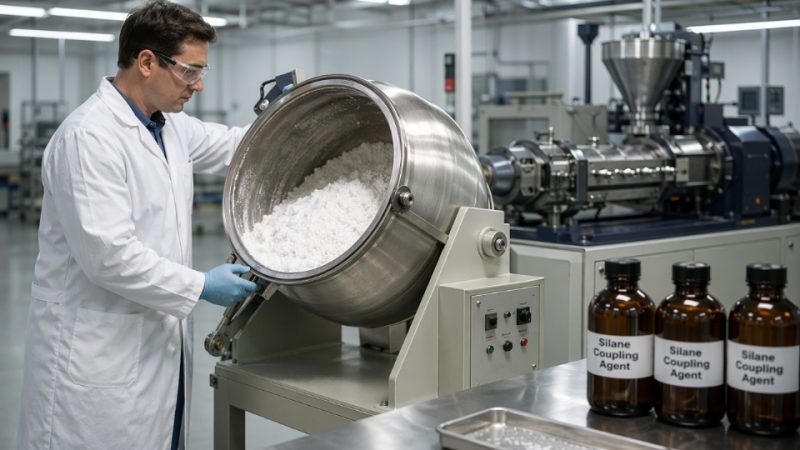
 treatment of glass fiber filler in a compounding facility](https://siliconchemicals.com/wp-content/uploads/2026/06/silane-coupling-agent-vs-surface-modifiers-01-hero.jpg)
How Silane Coupling Agents Work: Dual-Reactivity Chemistry Explained
The reason silane coupling agents occupy a structurally distinct category — rather than just a chemically different one — comes down to a single architectural feature: they carry two independently reactive ends on the same molecule. One end is designed to bond to inorganic surfaces. The other end is engineered to bond to, or interpenetrate with, a specific organic polymer matrix. No titanate, zirconate, or fatty-acid-based modifier replicates this true covalent bifunctionality across both interfaces simultaneously.
The General Structure: R(4-n)-Si-(OR’)n
The molecule’s backbone is a silicon atom. Attached to it are one to three hydrolyzable alkoxy groups — typically methoxy (–OCH₃) or ethoxy (–OC₂H₅) — which represent the inorganic-facing side. The remaining substituents carry the organofunctional group R: an amino, epoxy, methacryloxy, vinyl, mercapto, or sulfido group tailored to the intended polymer chemistry. Trialkoxysilanes (n = 3) dominate industrial use because three hydrolyzable sites per molecule maximize surface coverage and cross-link density within the silane film. Dialkoxysilanes (n = 2) appear in specific applications where a more flexible, less cross-linked interphase layer is preferable — certain sealant formulations, for instance.
The Four-Step Mechanism
Hydrolysis comes first. In the presence of moisture — deliberately added in a sizing bath, or ambient humidity on a mineral surface — the alkoxy groups convert to silanol groups (Si–OH). Methoxy groups hydrolyze faster than ethoxy groups; at equivalent conditions, methoxy-functional silanes can reach full hydrolysis in minutes where ethoxy variants may take an hour or more. This kinetic difference matters operationally: if you are applying an ethoxy silane in a cold, dry environment, you may see inadequate surface coverage regardless of loading level.
The second step is condensation of those silanol intermediates — both with hydroxyl groups present on the substrate surface (Si–OH on glass, silica, or metal oxides) and, to a controlled degree, with each other, forming a polysiloxane oligomeric network anchored to the substrate. The resulting bond is a covalent Si–O–Si or Si–O–metal linkage, which is hydrolytically reversible under extreme aqueous conditions but stable under the service environments most industrial composites face.
The third step — migration and orientation at the surface — is often overlooked on the plant floor. Given sufficient mobility (controlled by solvent, pH, and temperature during application), the organofunctional groups orient away from the substrate surface, toward the polymer side. Deposition conditions that rush this step, such as flash-drying or excessive silane concentration creating thick multilayer deposits, leave unreacted silanol groups buried and organofunctional groups randomly oriented. The result is weaker adhesion, not stronger.
Step four is the reaction or physical entanglement between the organofunctional group and the polymer chain. This is where the engineering specificity shows up. 3-Aminopropyltriethoxysilane (APTES, also widely sold under designations like A-1100) reacts covalently with epoxide groups in epoxy resin matrices and with anhydride or acid groups in some thermoplastics. Its amine group also provides electrostatic affinity toward glass fiber surfaces even before full condensation, which is why it remains the default choice in glass-fiber-reinforced epoxy composites and glass fabric sizing. In contrast, bis[3-(triethoxysilyl)propyl] tetrasulfide — commonly called TESPT or Si-69 — is used in silica-reinforced tire tread compounds. Its tetrasulfide bridge opens under mixing temperatures of 140–160 °C, releasing reactive sulfur species that form covalent bonds with the rubber polymer chain via sulfur cross-links. The silica-to-rubber coupling it enables is the primary reason that silica-reinforced “green tire” tread compounds can achieve rolling-resistance reductions of roughly 20–30% versus carbon-black-only formulations, depending on compound design and cure system.
Silane coupling agents form covalent bonds on both the inorganic substrate side and the organic polymer side of the interfaceTrue
On the inorganic side, hydrolyzed silanol groups condense with surface hydroxyl groups to form Si–O–substrate covalent bonds. On the organic side, functional groups such as amino, epoxy, methacryloxy, and mercapto react covalently with complementary functional groups in the polymer matrix, confirming true bifunctional covalent reactivity.
The Interphase, Not Just the Interface
A well-executed silane treatment does not produce a sharp two-dimensional interface. It produces an interphase — a gradient region, typically 1–50 nm thick depending on application conditions and silane concentration, where mechanical properties transition progressively from substrate stiffness to matrix compliance. This gradient distributes stress rather than concentrating it at a single plane, which is the mechanistic reason silane-treated glass fiber composites achieve interfacial bond strength improvements in the range of 20–60% over untreated surfaces. The actual improvement depends heavily on which silane is matched to which matrix chemistry, surface hydroxyl density on the filler, and whether the silane film is monolayer or multilayer — a multilayer deposit often performs worse than a clean monolayer because the outer silane layers are only weakly self-condensed rather than covalently anchored to the substrate.
Titanate and Zirconate Coupling Agents: Mechanism, Strengths, and Critical Limitations
Titanate and zirconate coupling agents occupy a real and useful niche in surface modification — but that niche is narrower than their early marketing suggested, and understanding where the boundaries lie is what separates a good formulation decision from an expensive rework.
How the Monoalkoxy Titanate Mechanism Actually Works
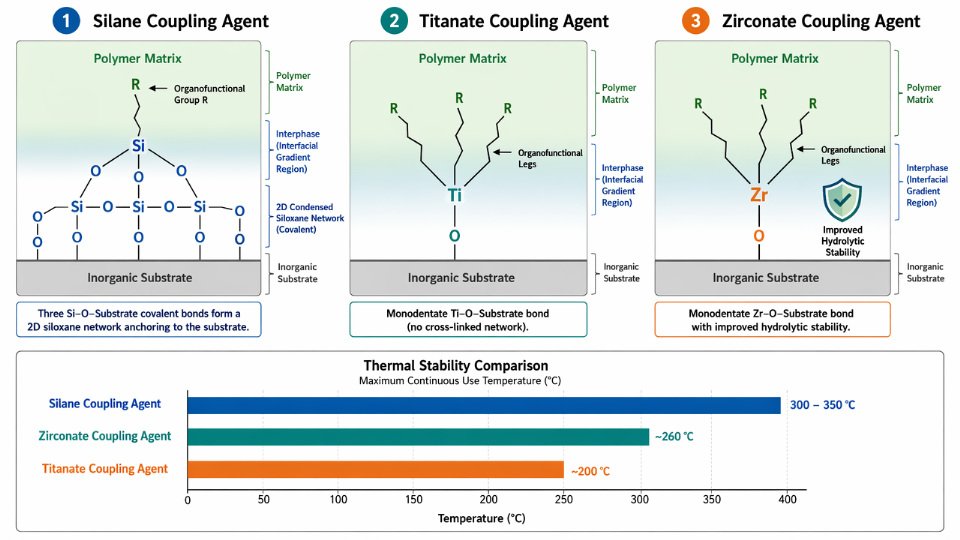
The dominant commercial titanates use a monoalkoxy architecture: one isopropoxy or butoxy group bonds to a surface hydroxyl group via a Ti–O–P linkage, releasing alcohol as a byproduct. That single anchor point is structurally quite different from the silane’s ability to form a two-dimensional condensed siloxane network across the inorganic surface. Titanate’s attachment is essentially monodentate — one bond per molecule to the substrate.
The other three organofunctional legs — typically pyrophosphate, carboxylate, or sulfonate groups — extend into the polymer matrix and interact primarily through physical entanglement and polarity matching rather than covalent bonding. In a calcium carbonate-filled polypropylene compound, this works well: the polarity matching reduces interfacial tension, the titanate simultaneously plasticizes the filler-polymer boundary, and you get measurable improvements in melt flow, impact resistance, and dispersion quality. Chelate-type titanates, which use acetylacetonate or glycolate ligands instead of a simple alkoxy group, offer slightly better hydrolytic stability and are used where some moisture exposure is unavoidable, but they are more expensive and harder to handle.
Where Titanates Genuinely Add Value
In mineral-filled polyolefin compounds — specifically calcium carbonate, barium sulfate, and talc loadings in the 30–60 wt% range — titanates perform well and the economics are real. Typical loading runs 0.5–1.5 wt% on filler weight. At those levels, a titanate-treated CaCO₃ can cut melt viscosity by 15–30% (the actual reduction depends on filler particle size, loading level, and base resin viscosity), which either reduces cycle time or allows higher filler loading at the same processability. Cost per kilogram of titanate coupling agent typically runs 20–40% below equivalent silane grades, and because they also function as processing aids, you may be replacing two additives with one.
The Limitations That Define the Application Ceiling
Thermal stability is where titanates fail in engineering thermoplastic work. Above roughly 180–220°C — a range that varies with specific titanate chemistry and exposure time — the Ti–O bond to the substrate degrades and the coupling function is lost. Processing nylon 66 at 270–290°C or polycarbonate blends at similar temperatures makes most commercial titanates ineffective. Silane coupling agents, by contrast, remain functionally stable up to 300–350°C under typical compounding conditions.
Titanate coupling agents lose interfacial coupling effectiveness above approximately 200°C, making them unsuitable for engineering thermoplastics processed at high barrel temperatures.True
The Ti–O bond to surface hydroxyl groups is susceptible to thermal cleavage at elevated temperatures. Most commercial monoalkoxy titanates are formulated for polyolefin processing windows, not the 260–300°C range typical of engineering resins. This is consistent with published thermal stability data from coupling agent suppliers and observed performance in compounding plants.
Hydrolytic stability is the second hard constraint. In aqueous slurries, waterborne coating systems, or high-humidity storage, titanate-treated fillers can revert — the monodentate bond hydrolyzes and the coating is partially or fully lost before the compound is ever processed. A plant running a wet-process filler line, or storing pre-treated filler in an unconditioned warehouse in a humid climate, will see inconsistent compound properties batch to batch. Discoloration is a practical annoyance but a real one: titanates tend to impart yellowish to brownish tones that disqualify them from white or pastel compounds.
Zirconates: Better Stability, Higher Cost
Organozirconates share the organometallic coupling architecture with titanates but offer meaningfully better thermal stability — up to roughly 260°C — and significantly improved hydrolytic stability. This makes them viable in waterborne coating formulations and UV-cure adhesive systems where titanates would degrade. The tradeoff is cost: zirconates typically run 1.5–3× the price of comparable titanate grades, which limits their use to applications where that stability premium is actually needed.
Direct Comparison: Titanate vs. Zirconate vs. Silane
| Property | Titanate | Zirconate | Silane |
|---|---|---|---|
| Primary substrate compatibility | CaCO₃, BaSO₄, talc, polyolefins | Broad mineral, waterborne systems | Glass fiber, silica, metals, broad |
| Thermal stability (coupling function) | ~180–220°C | ~240–260°C | 300–350°C |
| Hydrolytic stability | Poor to moderate | Moderate to good | Good to excellent |
| Typical loading level (on filler wt) | 0.5–1.5% | 0.5–1.2% | 0.3–1.0% |
| Covalent bond to substrate | Monodentate (single Ti–O bond) | Monodentate (single Zr–O bond) | Network siloxane (multi-point) |
| Relative cost index (silane = 1.0) | 0.6–0.8 | 1.5–2.5 | 1.0 |
| Risk in humid storage | High | Moderate | Low |
| Suitability for engineering thermoplastics | No | Marginal | Yes |
The cost advantage of titanates is real, but it is cost-effective only within their working envelope. Specifying a titanate to save 15% on additive cost in a glass-fiber-reinforced nylon application is a false economy — you will lose interfacial bond strength, potentially see voiding at the fiber-matrix interface, and face warranty claims that dwarf the savings.
Stearic Acid, Fatty Acid Salts, and Stearate Coatings: When Physical Adsorption Is Enough — and When It Is Not
Stearic acid is almost certainly the most widely used surface modifier in the filler industry — not because it performs best, but because it is cheap, process-friendly, and genuinely adequate for a large slice of real applications. Understanding exactly where that adequacy ends is what separates a competent formulator from one who keeps blaming the filler supplier for scrap.
How Stearic Acid Actually Bonds to Calcium Carbonate
The mechanism is simpler than silane chemistry and that simplicity is both its advantage and its ceiling. When stearic acid contacts a calcium carbonate surface — whether ground (GCC) or precipitated (PCC) — the carboxylate group forms an ionic interaction with Ca²⁺ surface sites, partially converting to calcium stearate in situ. The long C18 alkyl tail orients outward, producing a hydrophobic monolayer around each particle. No covalent bond to the mineral lattice is formed. The interaction energy is roughly an order of magnitude lower than the Si–O–Si or Si–O–metal bonds that silane coupling agents create.
That distinction matters enormously under stress, but it does not matter at all for dispersibility — which is the actual goal in many compound types.
Quantified Process Benefits in Polyolefin Compounding
In a standard PP/GCC compound running on a twin-screw extruder, stearic acid treatment at 1–3 wt% on filler typically reduces melt viscosity by 15–30%, with the exact reduction depending on filler loading (commonly 20–50 wt% in pipe and film grades), particle size distribution, and screw geometry. That viscosity drop translates directly to lower specific energy consumption per kilogram of output, longer screw and barrel life, and faster line speeds. Impact strength improves modestly — typically 10–20% relative to untreated filler at equivalent loading — not because the interface is stronger, but because stearate reduces hard agglomerates that act as stress concentrators.
Moisture absorption is also meaningfully suppressed. Untreated GCC in a humid warehouse will pick up surface water that disrupts extrusion and causes splay or voids in finished parts. A proper stearate coating brings surface moisture pickup down to levels that most polyolefin lines can tolerate without pre-drying — a real operational benefit that saves energy and reduces reject rates in high-volume production.
The Hard Ceiling: No Covalent Reinforcement
Here is the precise failure mode you need to understand. Under tensile, flexural, or cyclic fatigue loading, the filler-polymer interface must transmit stress. A stearate monolayer cannot do this. The coating acts as a lubricant and dispersant; it does not create load-bearing bonds between the mineral surface and the polymer chain. At stress concentrations — notch tips, weld lines, areas of filler clustering — the interface debonds at relatively low load levels. You will see this as reduced tensile strength and elongation at break compared to a well-silane-treated equivalent, and as early fatigue crack initiation in structural or dynamic applications.
Stearate-treated calcium carbonate provides equivalent tensile reinforcement to silane-treated filler in structural PP compositesFalse
Stearic acid forms only physical/ionic interactions with filler surfaces and does not create covalent bonds to the polymer matrix. Under load, these interfaces debond at lower stress levels than silane-treated surfaces, resulting in measurably lower tensile strength and fatigue resistance in structural applications.
Precipitated Silica: The Case That Shows the Gap Most Clearly
The contrast between stearate and silane treatment becomes starkest in rubber compounding, particularly for precipitated silica in natural rubber or solution-SBR. A stearate treatment reduces viscosity in the same way it does in thermoplastics — useful for mixing — but delivers no reinforcement benefit beyond what untreated silica achieves after good dispersion. Treating the same precipitated silica with TESPT (bis[3-(triethoxysilyl)propyl] tetrasulfide) at appropriate loading creates covalent bonds between the silica surface and the rubber network during vulcanization. Tensile strength increases of 30–50% relative to stearate-treated silica are achievable depending on silica grade, loading (typically 40–80 phr in high-performance tread compounds), and cure system. Abrasion resistance and wet grip follow the same direction — properties that stearic acid cannot reach regardless of dose.
An engineer running tire tread compounds who switches from silane to stearate to cut costs will see compound Mooney viscosity improve but finished part abrasion resistance drop to levels that fail specification. The cost saving disappears in scrap and warranty exposure before the second production run is complete.
Where Stearates Remain the Correct Engineering Choice
There is no point specifying silane where stearate does the job. Non-structural filler masterbatches, HDPE pipe compounds with GCC at moderate loadings, PVC wire and cable jackets where filler functions as a cost-extender rather than a reinforcing agent, and polyolefin packaging films — all of these are legitimate stearate applications. The mechanical demands are low, the cost pressure is high, and the processing benefits of stearate treatment are real. Forcing silane chemistry into these applications adds cost without adding value that the end-use specification requires.
The decision rule is straightforward: if the application demands load transfer across the filler-polymer interface, or operates in a chemically aggressive or high-temperature environment where the physical monolayer degrades, stearates will underperform and a reactive coupling agent is necessary. If the application needs better dispersion, lower viscosity, and modest agglomeration control in a cost-sensitive compound with moderate mechanical requirements, stearates are the correct and economically rational choice.
Silicone Fluid and [Silicone Resin](https://siliconchemicals.com/silicone-resin/) Surface Treatments: Overlap and Differentiation from Silane Coupling Agents
Procurement teams sourcing surface modifiers for mineral-filled compounds or glass fiber systems frequently encounter silicone fluids and silicone resins alongside silane coupling agents in supplier catalogs. The chemistries share silicon as a backbone element, but their functional roles on a treated surface are fundamentally different. Conflating them leads to formulation failures that are difficult to diagnose because the surface looks treated, the contact angle measurements look acceptable, and the problem only appears under mechanical or thermal load.
Polydimethylsiloxane Fluid: Lubricity Without a Chemical Bridge
Polydimethylsiloxane (PDMS) fluid is the most widely applied silicone-based surface treatment on mineral fillers — calcium carbonate, talc, wollastonite, and similar inorganic powders. The mechanism is physical adsorption. PDMS chains lie against the hydroxyl-rich mineral surface through weak dipole interactions and van der Waals forces, orienting their methyl groups outward to create a low-energy, hydrophobic exterior. The result is measurably reduced inter-particle friction, improved powder flow, and lower viscosity in filled melts — all real and useful benefits in high-speed compounding.
What PDMS does not do is bond to the polymer matrix on the other side. There is no organic-functional group reacting with polyolefin chains, no crosslink to an epoxy network, no covalent anchor into a rubber vulcanizate. When the filled compound is stressed in tension or fatigue, the interface between filler and matrix remains a thermodynamic discontinuity. Typical PDMS treatment levels on mineral fillers run 0.3–1.0 wt% relative to filler weight, depending on specific surface area; higher loadings on fine-particle fillers can actually reduce mechanical properties by acting as an internal lubricant throughout the bulk.
Methyl Hydrogen Silicone Fluid: Modest Covalent Anchoring
Methyl hydrogen silicone fluid carries Si–H groups along the polymer backbone. These groups are reactive: under elevated temperature (typically 150–200°C) or in the presence of a platinum catalyst, Si–H can participate in hydrosilylation reactions or condense with surface silanols to form Si–O–Si bonds to hydroxyl-bearing inorganic surfaces. This makes it meaningfully more interactive than plain PDMS.
Its primary industrial application is the surface treatment of fumed silica used in addition-cure silicone rubber compounds. The Si–H fluid creates a partial covalent network at the silica surface that reduces the notorious “crepe hardening” phenomenon — the slow stiffening that occurs in unfilled or poorly treated silicone rubber stocks during storage. Treatment levels typically fall between 2–6 wt% on fumed silica, and the degree of surface coverage needs to be balanced against residual Si–H content that could interfere with platinum catalyst activity in the compound itself. It is reactive, but it is still not a bifunctional coupling agent; it anchors to the inorganic surface but carries no complementary functionality designed to integrate with a dissimilar organic matrix.
[Silicone Resins](https://siliconchemicals.com/silicone-resin/): High-Temperature Barrier Coatings, Not Coupling Agents
Silicone resins — MQ, T-type, or mixed MT structures — are applied as surface treatments on glass, aluminum pigments, ceramics, and architectural substrates where durable hydrophobization at elevated temperatures is the primary requirement. A T-type silicone resin can maintain effective water-repellency on glass at service temperatures up to 350–400°C, a range where stearic acid treatments have long since volatilized and even some silane monolayers begin to degrade depending on the organofunctional group.
The function here is barrier coating. The resin cures into a continuous or semi-continuous film that sterically blocks moisture and reduces surface energy. It does not reach across the interface to form a covalent bond with an adjacent polymer matrix on the other side. That distinction matters enormously in adhesive and composite applications: a silicone resin-treated glass surface will bond poorly to most structural adhesives precisely because the low-energy resin surface repels the adhesive rather than reacting with it.
Silicone fluids and resins provide hydrophobicity and lubricity but do not form a covalent molecular bridge between an inorganic substrate and an organic polymer matrix.True
Silicone fluids adsorb physically; silicone resins form barrier coatings. Neither carries the dual inorganic-reactive/organic-reactive functionality that defines silane coupling agents, which hydrolyze and condense onto hydroxyl surfaces on one end while reacting covalently with polymer matrices through their organofunctional group on the other.
The Critical Structural Distinction
Silane coupling agents carry two chemically distinct reactive ends on a single small molecule: an alkoxysilane end that hydrolyzes and condenses onto inorganic hydroxyl surfaces, and an organofunctional end — vinyl, amino, epoxy, methacryloxy, mercapto, or others — chosen to react specifically with the polymer matrix or crosslinking system in use. That molecular bridge across the inorganic-organic interface is the mechanism behind the 20–60% bond strength improvement measured in glass fiber reinforced composites versus untreated controls, a gain that depends on fiber surface hydroxyl density, silane type, application uniformity, and cure conditions.
Silicone fluids and resins simply cannot replicate that function. They work at the surface energy level; silanes work at the chemical bond level. The gap between those two in mechanical performance becomes decisive in structural applications, demanding environments, and long fatigue life requirements.
Where They Work Together
The most instructive case for combined use is textile glass fabric and architectural membrane manufacture. A silane coupling agent — typically a vinyl or methacryloxy silane — is applied first as a size or primer on the glass fiber surface. This establishes covalent bonds from fiber to the subsequent polymer coating or matrix. A PDMS finish is then applied over the sized fiber. The PDMS contributes lubricity during weaving, reduces fiber-to-fiber abrasion under flexing, and gives the finished fabric the soft hand feel that processing and end-use handling require. Remove the silane primer and long-term adhesion between coating and glass deteriorates under weathering and cyclical stress. Remove the PDMS finish and fiber breakage during weaving increases and fabric drape suffers. Each treatment does a specific job; neither substitutes for the other.
Head-to-Head Performance Comparison: Silane Coupling Agents Across Six Key Industrial Criteria
Formulation decisions rarely fail because engineers chose the wrong polymer. They fail because the interface between filler and matrix was under-engineered. The comparison below works through six criteria that actually drive production outcomes — not marketing positioning.
Bond Strength and Composite Mechanical Properties
Silane coupling agents form covalent Si–O bonds to inorganic substrates. In glass-fiber/epoxy systems tested to ASTM D2290 and ISO 527, interfacial shear strength typically falls in the 15–40 MPa range — the spread depends on silane functional group match to the resin system, surface hydroxyl density, and cure conditions. Aminosilanes paired with epoxy matrices sit toward the upper end; alkylsilanes in the same system sit toward the lower end because the organic group contributes less covalent reactivity.
Titanate coupling agents work through coordination chemistry rather than covalent bonding. Measured interfacial shear strength in mineral-filled thermoplastic systems runs 8–20 MPa — serviceable for many commodity applications, but structurally insufficient where fatigue loading or impact cycling is part of the design requirement.
Stearic acid creates no load-bearing bond whatsoever. It adsorbs onto calcium carbonate and talc surfaces and reduces agglomeration, which improves dispersion and raises tensile elongation. It does nothing to transfer stress across the interface under load. That distinction matters enormously in structural parts.
Silane coupling agents improve interfacial bond strength by 20–60% in glass-fiber reinforced composites compared to untreated surfaces.True
This range is consistent with published composite literature and internal qualification data; the exact improvement depends on fiber sizing chemistry, matrix resin reactivity, and post-cure protocol.
Thermal Stability Ceiling
Long-chain alkylsilanes (hexadecyltrimethoxysilane, for example) remain stable to around 300°C. Aminosilanes begin to degrade closer to 250°C — relevant if you are compounding at high screw temperatures or processing engineering plastics. Titanates lose functional integrity between 180–220°C; stearates decompose above roughly 180°C, which rules both out of any high-temperature engineering polymer application. Silicone resins push thermal stability the furthest — past 400°C in some crosslinked methyl-phenyl systems — but they are not coupling agents and do not build a load-bearing interface.
Hydrolytic and Weathering Durability
This criterion separates silanes from every alternative in outdoor, marine, and high-humidity applications. Silane-treated glass fiber retains more than 85% of flexural strength after 1,000 hours of water immersion per ISO 62. Untreated glass in the same test loses 40–60% of initial strength as water hydrolyzes the glass–resin interface. Titanate-treated surfaces are pH-sensitive: coordination bonds hydrolyze significantly at pH below 4 or above 9, which is a real problem in applications involving acidic coatings or alkaline concrete environments. Stearate coatings simply wash out under prolonged water exposure.
Substrate Versatility
Silanes bond efficiently to siliceous substrates — glass, fumed silica, quartz, wollastonite — and to metal oxides including Al₂O₃, TiO₂, iron oxide, and zinc oxide, all of which carry sufficient surface hydroxyl density. On low-hydroxyl non-siliceous minerals like calcium carbonate and barium sulfate, silane performance drops unless the surface is pre-activated. This is precisely where titanates and zirconates earn their place: their monoalkoxy mechanism tolerates low hydroxyl density, making them genuinely better on carbonates and sulfates without pre-treatment.
Processing Window and Formulation Compatibility
Silanes tolerate compounding temperatures up to about 280°C in twin-screw extrusion and are compatible with peroxide, sulfur, and UV-cure systems — functional group selection determines which cure chemistry works. Mercaptosilanes go into sulfur-cure rubber; methacrylsilanes go into peroxide or UV systems. Titanates can reduce melt viscosity beneficially, but they occasionally cause yellow discoloration in white compounds and can interfere with peroxide cure efficiency — something to verify during compound qualification rather than discover during production.
Total Cost of Performance
Treat-rate alone is a misleading cost metric.
| Modifier | Typical treat rate on filler | Primary mechanism | Structural reinforcement | Relevant ceiling |
|---|---|---|---|---|
| Silane coupling agent | 0.1–0.5 wt% | Covalent bonding | Yes | 300°C (alkyl), 250°C (amino) |
| Titanate / zirconate | 0.5–1.5 wt% | Coordination bonding | Moderate | 180–220°C |
| Stearic acid / stearate | 1.0–3.0 wt% | Physical adsorption | No | ~180°C |
| Silicone fluid / resin | 0.5–2.0 wt% | Physical/film-forming | No | 300–400°C |
Stearates cost less per kilogram, but at two to three times the loading rate with no stress-transfer function, the cost advantage in a structural application is largely theoretical. When composite reject rate, potential part weight reduction from improved filler utilization, and service life extension are factored into the calculation, silane treatment consistently shows lower total system cost in any load-bearing application. The right question is not “what does the modifier cost per kilogram” but “what does the treated composite cost per unit of delivered mechanical performance.”
Application-Specific Selection Guide: Which Surface Modifier to Choose for Rubber, Coatings, Adhesives, and Filled Plastics
The preceding sections established why silanes outperform alternatives on most mechanistic criteria. What follows translates that into sector-specific decisions — because a procurement manager specifying ATH for a cable compound faces a completely different set of constraints than a compounder filling PA66 with 30% glass fiber.
Silica-Reinforced Rubber: Tire Tread and Industrial Belting
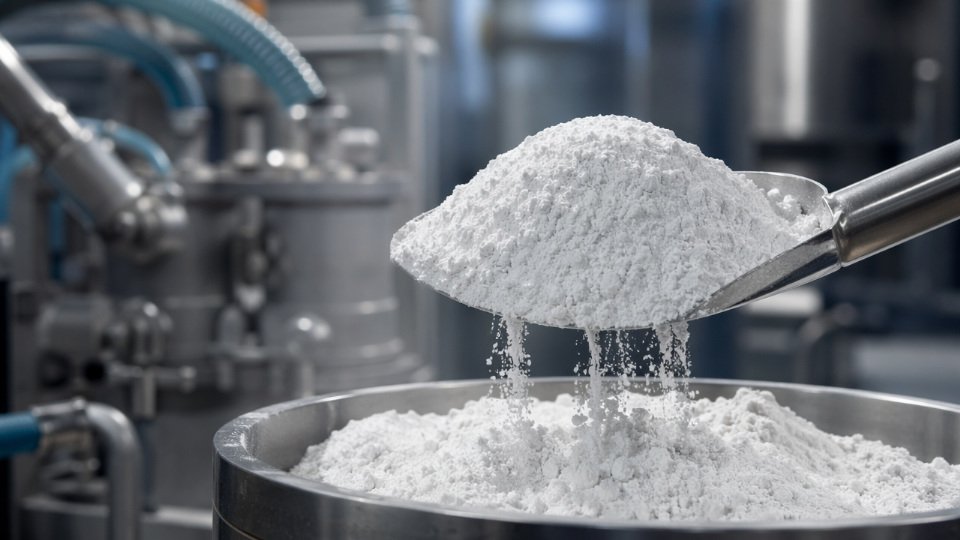
In high-silica rubber compounds, there is no practical substitute for a bifunctional sulfur-silane. TESPT (Si-69) and TESPD (Si-75) dominate passenger car tire tread formulations for a direct reason: the triethoxysilyl end bonds covalently to silica surface silanols during mixing, while the polysulfide tail reacts into the sulfur vulcanization network during cure. Typical loading runs 6–8 phr silane against 75–85 phr precipitated silica, depending on silica surface area (BET 160–200 m²/g silicas need the higher end of that range).
Stearic acid is present in virtually every such formulation — but it functions as a processing aid and viscosity reducer, not a reinforcing coupler. Running silica rubber on stearic acid alone yields Payne effect values 3–5× higher than the silane-treated equivalent, indicating a poorly dispersed, poorly bonded network. Titanates do not achieve covalent integration with the sulfur cure system and have no established role in silica tire compounds.
Glass Fiber Reinforced Engineering Thermoplastics
Aminosilane (A-1100, γ-aminopropyltriethoxysilane) and epoxysilane (A-187, γ-glycidoxypropyltrimethoxysilane) are the workhorses for sizing PA6, PA66, PBT, and PPS compounds. The chemistry matches: amine groups react with PA and PBT matrix end-groups; epoxy groups are reactive toward both amines and hydroxyl-bearing matrices. The thermal requirement is decisive — compounding temperatures for PA66 and PPS run 270–310°C. Titanate coupling agents decompose or volatilize in this range, leaving the fiber–matrix interface essentially bare. Silane sizings survive and remain bonded.
Silane sizing of glass fiber in PA6 composites increases notched Izod impact strength by 30–50% compared to unsized glass at equivalent fiber loading.True
This range is consistent with published composite testing data and is load-fraction-dependent — higher glass content narrows the percentage improvement because fiber-fiber interaction becomes a larger variable.
The improvement magnitude depends on fiber length retention after compounding, PA molecular weight, and sizing uniformity, but the directional effect is reliable.
Waterborne Architectural and Industrial Coatings
Epoxysilane or vinylsilane added at 0.3–1.0 wt% to latex formulations acts as an in-can adhesion promoter. On concrete, aluminum, and galvanized steel, cross-cut adhesion improvement of 40–80% (ISO 2409 scale) is achievable, depending on substrate cleanliness and pH. Zirconates compete effectively in pH-neutral waterborne systems and are worth trialing where silane hydrolysis rate is a stability concern. Stearates are simply incompatible — they destabilize emulsions and cannot provide reactive bonding to metal oxide surfaces.
Structural Adhesives and Sealants
Bis-silane primers such as BTESE (1,2-bis(triethoxysilyl)ethane) or amino/mercaptosilane treatments on metal and glass substrates substantially extend adhesion durability under cataplasm aging and humid thermal cycling. The key metric procurement teams should demand from suppliers is retention of lap-shear strength after 1000 hours at 70°C/95% RH — untreated or stearate-treated bondlines routinely lose 50–70% of initial strength under those conditions; silane-primed bondlines typically retain 70–90%. Titanates appear occasionally in solvent-based structural formulations but lack the hydrolytic durability data to justify use in safety-critical joints.
Mineral-Filled Polyolefins and Flame Retardant Cable Compounds
For commodity PP or HDPE filled with calcium carbonate below roughly 15 MPa tensile target, stearate coating is cost-optimal and technically sufficient. That changes when ATH (aluminum trihydrate) or MDH (magnesium dihydroxide) loading reaches 55–65 wt% for UL 94 V-0 or halogen-free cable insulation. At those fill levels, uncoated or stearate-coated ATH causes elongation at break to collapse below 80–100% — typically the minimum acceptable for cable flex performance. Vinylsilane surface treatment of ATH restores elongation above 150% at equivalent loading, with minimal sacrifice of LOI value. This is not a premium specification; it is a functional requirement.
Penetrating Silane Water Repellents for Concrete and Masonry
Isobutyltrimethoxysilane and oligomeric siloxane penetrants react with surface silanol groups on concrete and brick, creating a hydrophobic zone 5–20 mm deep without forming a surface film. Service life runs 10–25 years depending on substrate porosity, exposure, and active content (typically 20–40% in solvent or water-based carriers). These are reactive coupling chemistries — structurally related to silane coupling agents — not film-forming acrylic sealers that peel and require recoating every 3–5 years. Volume demand for this application segment is substantial, and it represents a significant share of the functional silane market that is often undercounted when analysts focus narrowly on composite reinforcement.
| End-Use Sector | Preferred Modifier | Acceptable Alternative | Reject |
|---|---|---|---|
| Silica tire tread | TESPT / TESPD silane | — | Stearate, titanate |
| GFR engineering thermoplastics | Amino / epoxysilane sizing | — | Titanate (thermal limit) |
| Waterborne coatings | Epoxy / vinylsilane | Zirconate (neutral pH only) | Stearate |
| Structural adhesive / sealant | Bis-silane or amino/mercaptosilane primer | — | Titanate (durability gap) |
| Filled PP/HDPE, non-structural | Stearate | Silane (if needed) | — |
| ATH/MDH flame retardant cable | Vinylsilane on filler | — | Stearate (flex failure risk) |
| Concrete / masonry water repellent | Isobutylsilane / oligomeric siloxane | — | Acrylic sealer (not reactive) |
Frequently Asked Questions: Silane Coupling Agents vs. Other Surface Modifiers
Can I replace a silane coupling agent with a titanate to reduce cost?
Sometimes, but the answer depends heavily on your filler and end-use conditions. In mineral-filled polyolefins — calcium carbonate, barium sulfate, talc — a monoalkoxy titanate at 0.5–1.5 wt% loading can deliver comparable dispersion and short-term mechanical properties at lower raw material cost. If your application runs below 180–200°C and doesn’t face prolonged moisture exposure, the substitution may be commercially justified.
Stop there if you’re working with glass fiber composites or precipitated silica in rubber. Titanates do not form the covalent Si–O–Si bonds with glass surfaces that make silanes effective in those systems. In a silica-filled tire compound, switching from a mercaptosilane or TESPT to a titanate will degrade reinforcement efficiency, increase hysteresis, and raise heat build-up — consequences that show up in both scrap rates and product field performance. Thermal stability is the other hard ceiling: titanates lose effectiveness above roughly 200°C, while silanes remain functional up to 300–350°C depending on the organofunctional group.
What is the difference between a silane coupling agent and a silane water repellent?
Both are organosilicon molecules with hydrolyzable alkoxy groups that anchor to inorganic surfaces through silanol condensation. The functional difference sits entirely on the organic end of the molecule. A coupling agent carries a reactive group — amino, epoxy, mercapto, methacryloxy — designed to bond chemically or coordinate with a polymer matrix. A water repellent carries only a hydrophobic alkyl chain, typically isobutyl (C4), octyl (C8), or hexadecyl (C16), with no capacity to participate in matrix cross-linking.
Silane water repellents and silane coupling agents share the same hydrolysis-condensation anchoring mechanism on inorganic substratesTrue
Both hydrolyze alkoxy groups to silanols that condense with surface hydroxyl groups, forming Si-O-substrate bonds. The distinction is exclusively in the organofunctional group on the opposite end of the molecule.
Use a water repellent when the goal is masonry waterproofing, concrete protection, or reducing moisture absorption in a filler — situations where hydrophobicity itself is the deliverable. Use a coupling agent when mechanical reinforcement, adhesion, or durability in a polymer composite is required. Mixing up the two in a glass-fiber composite formulation is a straightforward route to bond-line failure.
How do I determine the correct loading level of a silane coupling agent on a mineral filler?
Start with the BET surface area of your filler and the approximate molecular footprint of the silane, which runs 300–400 m²/g of silane as a practical working range. For fumed silica with a BET of around 200 m²/g, approximately 2.5–3.5 wt% aminosilane achieves near-monolayer coverage. The exact number shifts with silane molecular weight and surface hydroxyl density.
Excess silane is not neutral. Unreacted silane or polysiloxane oligomers that build up beyond monolayer coverage act as internal plasticizers, softening the interphase and reducing composite modulus — the opposite of what you paid for. Underdosing leaves bare filler surface that absorbs moisture and degrades interfacial adhesion under humid service conditions. Calculate first; don’t adjust by feel.
Are silane coupling agents safe to handle, and what are the main hazards?
Methoxy-functional silanes release methanol during hydrolysis; ethoxy types release ethanol. Both require adequate local exhaust ventilation — methanol exposure limits are tighter and warrant more attention. Aminosilanes are classified as skin and eye irritants under GHS Category 2 and can cause sensitization with repeated contact. Chlorosilane precursors (less common in end-use formulations but present in some supply chains) are corrosive and react violently with moisture.
All silanes should be stored under dry nitrogen, away from water ingress and heat. Consult the SDS for the specific grade you’re using — properties vary significantly between, say, a glycidoxysilane and a vinyl-functional type. This is not an area where generic chemical safety assumptions hold.
Can silane coupling agents be used with calcium carbonate fillers?
Standard silane chemistry works poorly on ground or precipitated calcium carbonate because the surface hydroxyl density is very low compared to silica, glass, or alumina. The hydrolysis-condensation anchoring mechanism has few reactive sites to work with. For most CaCO3-filled polyolefin or PVC applications, stearic acid or a titanate coupling agent delivers better cost-performance.
Where silanes on CaCO3 do make sense: high-performance adhesives or coatings where superior hydrolytic durability justifies the effort, and where phosphonate-functional silanes or a mild surface acid pre-treatment (dilute HCl to generate surface hydroxyl groups) is technically feasible. These are specialized interventions, not routine formulation moves.
What is the shelf life of silane coupling agents, and how should they be stored?
Methoxy-functional silanes in sealed original containers stored below 25°C in dry conditions typically carry a 12–24 month shelf life. Ethoxy silanes are somewhat more hydrolytically stable and tend toward the upper end of that range. Aminosilanes are hygroscopic and absorb atmospheric moisture quickly — reseal containers immediately after each use and consider nitrogen blanketing for large drums in humid climates.
Opened containers should realistically be consumed within 3–6 months regardless of the stated shelf life. Avoid storing silanes alongside water, alcohols, or acids; even trace moisture initiates hydrolysis and oligomerization, reducing coupling efficiency before the material ever reaches your process. If a silane has gelled or shows visible turbidity, treat it as out-of-specification material rather than attempting to use it at reduced loading.
Sourcing Silane Coupling Agents from China: Quality Assurance, Supply Chain Reliability, and What to Evaluate in a Supplier
Why China Dominates Global Silane Supply
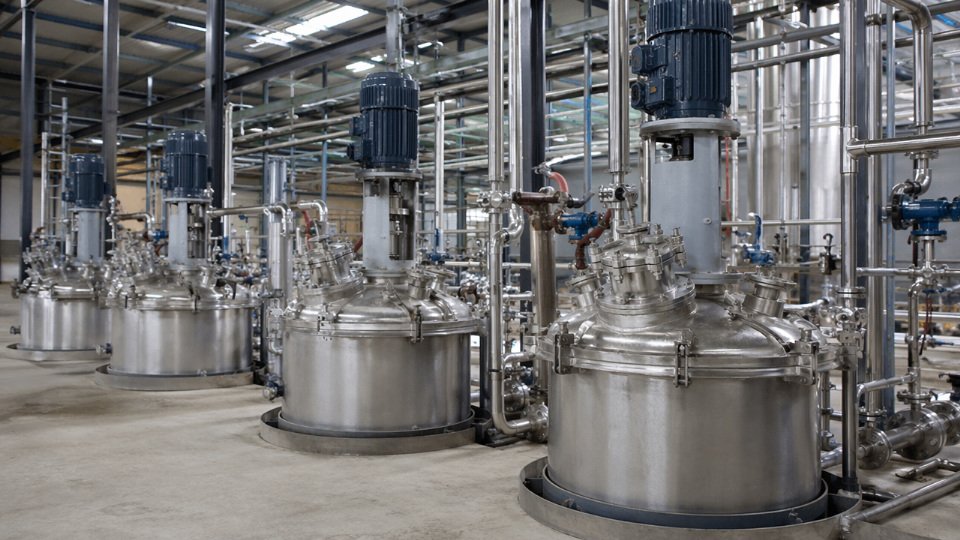
The concentration of organosilicon production in China is not accidental — it reflects decades of deliberate vertical integration. The production chain runs from silicon metal smelting through trichlorosilane synthesis, methylchlorosilane cracking, and ultimately functionalized silane coupling agent manufacture. Hubei, Zhejiang, and Jiangsu provinces together account for an estimated 60–70% of global organosilicon intermediate capacity, a figure that depends on how you count tolling and captive production. That scale creates cost structures typically 20–40% below Western producers for standard grades such as APTES, VTMS, and bis-[triethoxysilylpropyl]-tetrasulfide (TESPT) — the actual gap depending on grade complexity, order volume, and prevailing silicon metal prices.
For a procurement manager sourcing commodity volumes of a standard aminosilane, the cost argument is straightforward. For specialty grades or tight-specification electronic materials, the decision requires more scrutiny of exactly what that price difference represents in process capability and analytical rigor.
Quality Parameters You Must Specify in Every Purchase Order
Leaving quality parameters to a supplier’s default CoA is one of the more common and costly procurement mistakes in specialty chemical buying. For silane coupling agents, the parameters that actually matter operationally are:
| Parameter | Typical Specification | Why It Matters |
|---|---|---|
| Purity (GC) | ≥97% mono-functional; ≥95% bis-silanes | Low purity means reduced active content per kg — directly affects dosage and bond efficiency |
| Color (APHA) | <30 for most grades | Higher APHA indicates degradation or impurities; critical for coatings and clear adhesives |
| Residual chloride | <50 ppm | Above this threshold, corrosion risk in electronic encapsulants and metallic substrates increases sharply |
| Moisture content | <0.05 wt% | Premature hydrolysis in storage degrades shelf life and creates gel formation in solvent-borne systems |
| Flash point | Per GHS classification | Determines transport classification, packaging requirements, and warehouse safety compliance |
Batch-specific GC data — not just a generic product specification sheet — should accompany every shipment. If a supplier cannot provide batch-specific chromatograms on request, that is a meaningful signal about their analytical infrastructure.
Residual chloride above 50 ppm in silane coupling agents can accelerate corrosion in electronic and metallic substrate applicationsTrue
Chloride ions act as initiators in crevice and galvanic corrosion mechanisms; this threshold is widely referenced in electronics potting and encapsulant formulation practice
Supply Chain Risks and How to Manage Them
Geographic concentration is a genuine risk, not a theoretical one. Seasonal production curtailments, raw material price swings in silicon metal and methanol, and periodic environmental compliance shutdowns have all caused real lead-time disruptions over the past several years. The practical mitigation is not complicated, but it requires discipline: maintain dual-approved supplier status for any silane that is critical to a production line, negotiate buffer stock or consignment inventory agreements covering 60–90 days of consumption, and conduct supplier audits that go beyond a paper review of ISO 9001 certificates. A site visit or third-party audit that verifies actual GC and ICP-OES capability tells you more than any self-declared compliance document.
REACH registration documentation is non-negotiable for EU importers. Verify that the supplier holds or co-registers under the relevant REACH dossiers for your specific silane grades — not all Chinese producers have completed registrations for the full product range they market.
What a Qualified Supplier Must Be Able to Deliver
A technically capable silane supplier should routinely provide: a Certificate of Analysis with batch-specific GC purity, APHA, moisture, and chloride data; a GHS Rev. 9 compliant SDS; REACH registration or downstream user documentation; a technical data sheet that includes application guidance, recommended loading ranges, and hydrolysis conditions — not just physical property tables; and sample quantities sufficient for your internal qualification protocol before committing to production volumes.
Response time on technical questions is a practical quality indicator. An application engineer who can discuss hydrolysis pH sensitivity or organofunctional group compatibility with your resin system within a working day is worth more than a PDF library.
SiliconChemicals’ Supply and Technical Model
SiliconChemicals operates a vertically integrated production platform — from chlorosilane intermediates through finished silane coupling agents and specialty modified silicones — which means raw material cost exposure and intermediate quality are controlled in-house rather than absorbed as supplier risk. The in-house analytical laboratory runs GC, GC-MS, ICP-OES, and DSC, providing the batch-specific data documentation that regulated-market customers in Europe, North America, and Japan require. Manufacturing operates under ISO 9001:2015 certification. Export logistics are configured for both IBC and ISO tank shipments, supporting customers across more than 30 countries with the flexibility that smaller specialty orders and large-volume supply contracts each need differently. The technical service team includes application engineers who work directly with customer formulation teams — which matters most when you are qualifying a new silane grade against an existing process specification and need answers that go beyond what a data sheet can provide.