Specifying a silane coupling agent late in a project design cycle — or treating it as a commodity line item — routinely produces one of two bad outcomes: you either over-specify purity and pay two to four times more than the application demands, or you under-specify and watch adhesion failures, premature composite delamination, or coating disbondment eat through your warranty reserve. Either path converts what looks like a minor raw-material decision into a budget variance that procurement managers struggle to explain to operations leadership six months after product launch.
Silane coupling agent costs range from roughly $3.50 to over $60 per kilogram FOB China, depending on functional chemistry, purity grade, and order volume. Standard grades such as APTMS or GPTMS sit at the lower end; specialty sulfur-functional or high-purity methacryloxy types for electronics and pharmaceutical applications command a significant premium. Silicon metal feedstock pricing — historically $1,800–$3,500 per metric ton — directly drives 25–40% of production cost, so upstream commodity swings pass through faster than most annual supply contracts anticipate.
What most project budgets miss is that the per-kilogram price is only the starting point. Freight classification, minimum order quantities, shelf-life constraints that force write-offs, and the hidden cost of reformulation when a cheaper grade fails qualification testing all compound the real landed cost in ways that are entirely predictable — if you understand the full cost structure before you cut the purchase order.
Anatomy of a Silane Coupling Agent’s Cost Structure: Raw Materials, Synthesis, and Overhead
Understanding a supplier quote means understanding what’s inside it. Silane coupling agents are not commodity chemicals in the way that caustic soda or ethanol are — their cost builds through several distinct layers, each with its own volatility profile. Break it down wrong and you’ll misread a quote by 20–35%.
The Raw Material Layer: Where Most of the Cost Originates
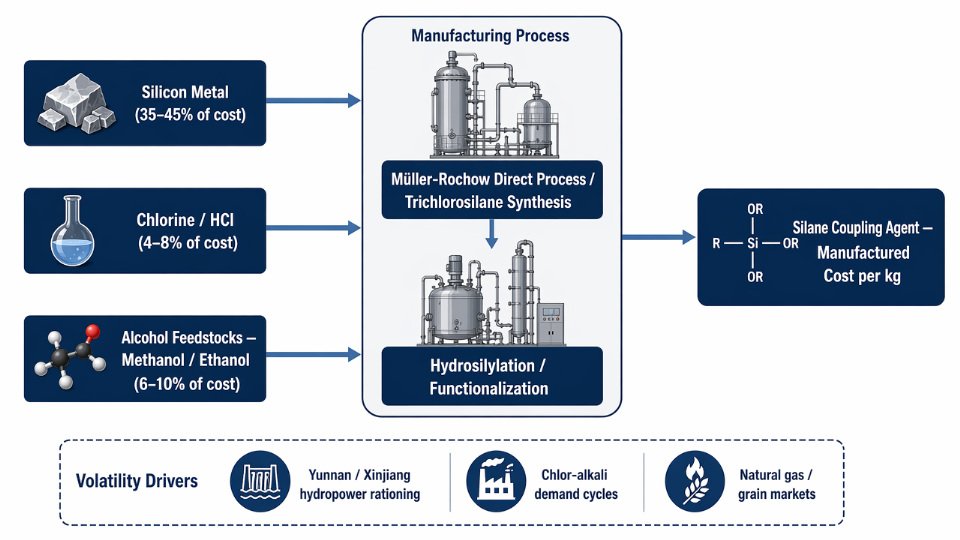
Silicon metal is the foundational feedstock, and it typically represents 35–45% of the manufactured cost of a standard silane coupling agent. That share rises toward the upper end when silicon markets are tight and falls when capacity in China’s Yunnan or Xinjiang smelting regions is running full. Silicon metal has historically traded between $1,800–$3,500 per metric ton on global spot markets — a nearly 2× swing that flows directly into silane production economics. A procurement team pricing a 12-month supply contract during a low-silicon period and then seeing silicon spike 40% at renewal is a scenario that repeats itself with uncomfortable regularity.
Silicon metal price movements account for 25–40% of the variability in silane coupling agent manufactured cost.True
Silicon metal is the primary feedstock for the Müller-Rochow direct process that produces trichlorosilane and methylchlorosilanes. Its spot price directly scales input cost for silane producers with limited ability to substitute the feedstock in short timeframes.
The alkoxy source — typically methanol for methoxy-functional silanes or ethanol for ethoxy types — is a secondary raw material that usually contributes 6–10% of cost. Ethoxy grades cost slightly more to produce for this reason, though the gap has narrowed as methanol markets tightened in certain years.
Chlorine or HCl, consumed in generating chlorosilane intermediates, adds another 4–8%. This is a utility-linked cost: chlor-alkali producers tie HCl availability to their own electrochemical operations, which means HCl supply can become constrained independently of silicon.
The organic functional group precursor is where cost diverges most sharply between standard and specialty silanes. For a basic aminopropyl silane like APTMS, the functional group contribution is modest — roughly 8–12% of total raw material cost. For a glycidoxy or methacryloxy type, allyl glycidyl ether or the corresponding methacrylate monomer can represent 15–25% of manufactured cost, particularly when petroleum-derived intermediates are under margin pressure. Sulfur-functional silanes used in tire compounding carry similar cost exposure through their organosulfide precursors.
Synthesis and Reaction Costs
The base trichlorosilane is produced via the Müller-Rochow direct process — silicon metal reacted with HCl gas over a copper catalyst at elevated temperatures. This is energy-intensive. Hydrosilylation or Grignard-type functionalization steps that attach the organic group follow. Combined, energy costs at current industrial electricity rates in China account for roughly 8–12% of manufactured cost. That range depends on whether the plant operates in a region with preferential industrial tariffs and whether it runs continuous or batch processes. Batch hydrosilylation, common at mid-scale specialty producers, carries higher energy cost per kilogram than continuous operations.
Purification and Distillation
Fractional distillation to reach 97–99%+ purity is capital-heavy and utility-intensive. The column equipment, reflux energy, and yield loss from heads and tails cuts all land in the cost. Moving from a 95% purity commercial grade to a 99%+ electronics or pharmaceutical-adjacent specification typically adds $1.50–$4.00/kg depending on the silane’s boiling characteristics and the tightness of the cut required. For a procurement manager comparing two quotes where one specifies 97% and the other 99%, that difference is not supplier margin variance — it is real process cost.
Quality Control and Analytical Overhead
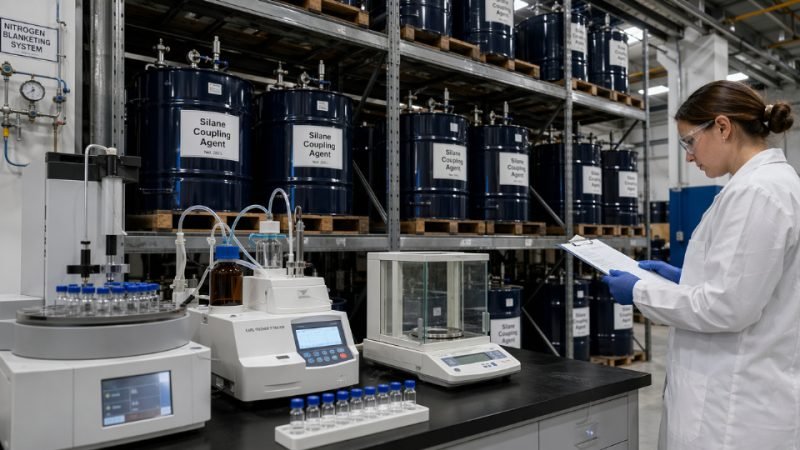
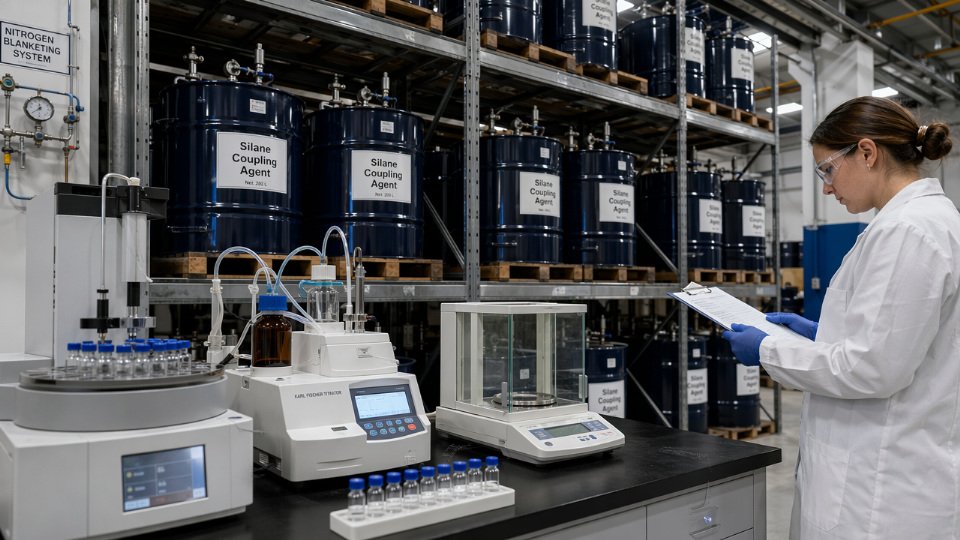
Silanes are moisture-sensitive. Even brief atmospheric exposure triggers hydrolysis and condensation, degrading the product before it reaches the customer’s reactor. This means every production batch requires GC purity testing, hydrolysis stability evaluation, and Karl Fischer moisture analysis. For standard commercial grades, QC overhead might add $0.05–$0.15/kg to unit cost. For high-specification electronics or optical fiber grades where batch traceability documentation is mandatory, that figure climbs to $0.20–$0.50/kg — sometimes more if third-party certification is involved.
Packaging and Handling
Nitrogen blanketing is not optional for methoxy or ethoxy silanes stored in drums or IBC totes. Moisture ingress during storage or transit hydrolyzes the silane, renders it partially or fully inactive, and generates warranty claims that cost far more than the nitrogen did. Specialized moisture-barrier drums with pressure-relief closures, proper IBC liners, and inert headspace contribute $0.10–$0.40/kg in packaging cost alone — the upper end applying to small-volume specialty orders where per-unit packaging amortization is highest. This line item is regularly stripped out in price comparisons, which is exactly when it creates problems at goods receipt.
Upstream Feedstock Volatility: How Silicon Metal and Chlorine Prices Ripple Into Your Silane Budget
Silane coupling agents look like specialty chemicals on a purchase order, but their cost behavior tracks commodity markets more closely than most procurement managers expect. Understanding which raw material markets feed into your silane price — and how those markets move — is the difference between a budget that holds and one that blows out mid-project.
Silicon Metal: The Primary Cost Driver, and Why It’s Structurally Unstable
Silicon metal is the foundational feedstock for virtually all organosilicon chemistry. Production is heavily concentrated in China, with Yunnan and Xinjiang provinces accounting for a substantial share of domestic output. That geographic concentration creates a single critical vulnerability: both regions depend on hydropower for the energy-intensive smelting process, and seasonal hydropower rationing — particularly during dry-season shortfalls in Yunnan — can cut available production capacity sharply within weeks.
Environmental compliance shutdowns compound this. Chinese regulators have periodically curtailed operations at silicon metal smelters to meet emissions targets, and those curtailments don’t follow procurement calendars. Global demand pressure from two unrelated industries — aluminum alloys and solar-grade polysilicon for photovoltaic manufacturing — competes directly with the organosilicon sector for the same feedstock pool. When solar PV installation targets accelerate globally, silicon metal tightens even if silane demand itself is flat.
No claim provided.True
This spike is well-documented and resulted from the convergence of Chinese energy rationing policies, Yunnan hydropower curtailments, and surging global solar PV demand — all compressing silicon metal supply simultaneously while downstream demand remained strong.
That kind of move is not a tail risk. It happened within a single procurement cycle. Buyers who had fixed-price contracts with silane suppliers discovered their suppliers couldn’t honor them; those without contracts faced spot prices that bore no resemblance to their project budgets. The leverage effect matters here: silicon metal typically represents 25–40% of a silane manufacturer’s production cost, depending on the specific product and synthesis route. A doubling of feedstock cost translates directly into a 25–40% floor increase in the manufactured cost of the silane itself, before any margin discussion.
Chlorine and HCl: The Chlor-Alkali Dependency Most Buyers Ignore
Trichlorosilane — the core intermediate in methylchlorosilane synthesis routes — requires chlorine as a primary reagent. Chlorine is co-produced with caustic soda in chlor-alkali plants, which means its availability and effective price are governed by caustic soda demand cycles. When PVC markets slow and chlor-alkali plant utilization drops, chlorine can become relatively cheap and abundant. When PVC construction demand surges, the economics tighten. For buyers of amino- or epoxy-functional silanes, this linkage is indirect but real: a sustained tightening in chlor-alkali capacity affects trichlorosilane economics and feeds into silane production costs within one to two quarters.
Alcohol Feedstocks: Smaller Lever, Still Relevant
Methoxy-functional silanes (such as APTMS, GPTMS, and VTMS variants) consume methanol during the alkoxylation step. Ethoxy-functional grades consume ethanol. These alcohol costs carry a 5–10% leverage effect on final silane price — modest compared to silicon metal, but not negligible on large-volume purchases. Methanol pricing follows natural gas markets; ethanol pricing in China tracks grain and fermentation capacity. Neither is predictable over a 12-month horizon.
What This Means for Your Project Budget
For any project with a silane procurement horizon exceeding 12 months, building a 15–25% contingency buffer into the silane line item is practical risk management, not excessive caution. The appropriate buffer size depends on order volume, contract structure, and how far into a market cycle you’re purchasing. Buying near a cyclical trough in silicon metal warrants a wider buffer; buying after a prolonged price run may justify a tighter one.
Index-linked purchasing contracts offer a more structured hedge. Some larger silane suppliers — particularly integrated organosilicon producers with visibility into their own feedstock costs — will negotiate contracts where the silane unit price floats against a published silicon metal index, capping your exposure to adverse moves while giving the supplier confidence to commit volume. This arrangement requires a supplier with genuine vertical integration; a trading intermediary cannot offer it credibly.
The operational warning here is simple: treating silane coupling agents as a stable-price specialty chemical and locking budgets based on a single spot quote is how projects absorb unplanned cost overruns that no one flagged at approval.
Functional Group Chemistry and Purity Grade Premiums: Why Not All Silanes Are Priced Equally
The $3.50–$60+/kg price spread across silane coupling agents isn’t arbitrary. It reflects real differences in synthesis complexity, intermediate hazard, purification burden, and market volume — factors that are entirely predictable once you understand the product family’s chemistry tiers. Procurement teams that treat all silanes as interchangeable commodity chemicals routinely over-specify, overpay, or get caught short when a specialty grade has a six-week lead time.
Commodity-Tier Silanes: High Volume, Mature Routes
Aminopropyltriethoxysilane (APTES, KH-550), 3-glycidoxypropyltrimethoxysilane (GPTMS, KH-560), and vinyltrimethoxysilane (VTMS, KH-171) sit at the base of the price ladder — typically $4–$10/kg for commercial drum or IBC quantities FOB China, depending on order volume and prevailing methanol and trichlorosilane costs. These products have been manufactured at scale for decades. Synthesis routes are well-optimized, yields are high, and multiple qualified producers exist across China’s organosilicon clusters in Zhejiang and Shandong. That supplier depth keeps margins thin and pricing competitive. If your glass fiber sizing operation or epoxy primer formulation calls for KH-550, you are buying a genuine commodity, and your leverage is in volume commitment and payment terms — not in chasing exotic sources.
Mid-Tier Specialty Silanes: Complexity Starts to Cost
Methacryloxypropyltrimethoxysilane (KH-570), chloropropyltriethoxysilane, and isocyanatopropyltriethoxysilane occupy a middle band, roughly $8–$18/kg. The price step up reflects two distinct cost drivers depending on the product. KH-570 synthesis is not especially hazardous, but methacrylate chemistry requires inhibitor management throughout distillation to prevent premature polymerization — yield losses from a poorly controlled batch can be 8–15%, and that loss gets priced in. Isocyanatopropyltriethoxysilane is more straightforwardly expensive because of its isocyanate intermediate: handling, containment, and waste treatment add real overhead, and the supplier pool is narrower.
High-Value Functional Silanes: Multi-Step Chemistry at Full Cost
Bis[3-(triethoxysilyl)propyl] tetrasulfide (Si-69, KH-845), mercaptopropyltrimethoxysilane, and fluoroalkylsilanes occupy the $15–$45/kg range, and for good reason. Si-69 is the dominant silane coupling agent in silica-reinforced tire compounds — its tetrasulfide bridge requires a controlled sulfurization step that most producers cannot run cleanly at scale. Mercapto-functional silanes are sensitive to oxidation; packaging, storage atmosphere, and shelf-life management all add cost. Fluoroalkylsilanes involve fluorinated intermediates that are expensive to source, difficult to handle, and subject to tightening environmental scrutiny in several jurisdictions, which further constrains the supply base.
For projects consuming Si-69 in tire or industrial rubber compounding, the per-kilogram price is only part of the story. Dosage rates run higher than for amino or epoxy silanes, so a $5/kg difference in silane price can translate to a meaningful per-tire or per-part cost swing. Budget modeling should use loading rates specific to your compound, not just unit price.
The Purity Grade Ladder
| Grade | Typical Purity | Relative Cost Index | Primary Application |
|---|---|---|---|
| Technical | ~95% | 1.0× | General adhesives, construction sealants |
| Industrial standard | 97% | 1.1–1.3× | Composites, rubber compounding, coatings |
| High-purity electronic | 99%+ | 1.6–2.2× | Semiconductor dielectrics, optical fiber sizing |
| Pharmaceutical/analytical | 99.5%+ | 3.0–5.0×+ | Drug delivery substrates, analytical standards |
Each step up narrows the qualified supplier pool — sometimes dramatically. At 99%+ purity, you may be down to two or three producers globally who can supply with consistent certificate-of-analysis data and traceability documentation. That concentration gives suppliers pricing power, and it creates real supply risk.
Many industrial applications specified at 99% purity can perform equivalently with 97% industrial-grade silane, with no measurable change in adhesion, coupling efficiency, or composite mechanical properties.True
Functional performance of silane coupling agents depends primarily on the reactive groups and hydrolysis kinetics, not on trace impurities that are inert under typical processing conditions. The 99% specification is often inherited from early R&D work done with lab-grade material and never re-evaluated for production. A controlled qualification trial comparing grades is a standard cost-engineering step in mature composite and rubber operations.
Small-Lot and Custom Synthesis Premiums
Orders below roughly 500 kg typically carry 30–80% premiums over drum-quantity pricing. The driver is not material cost — it is setup. A reactor cleaned, charged, and run for a 200 kg lot carries almost the same labor and cleaning-validation overhead as a 2,000 kg production run. Yield efficiency at small scale is also lower. If your project is in development or early production, build this premium explicitly into your unit cost assumptions rather than using catalog list pricing as a proxy for production economics.
Specification Rationalization as a Budget Lever
A structured specification review — comparing the grade actually specified against what the application chemistry requires — commonly reveals 10–20% silane budget savings without any process change. The right approach is to run a small qualification batch at the lower grade, measure the performance metrics that matter (adhesion pull-off strength, coupling efficiency by TGA, or whatever your application demands), and document the equivalence. In glass-fiber composite manufacturing, this is routine engineering practice. In smaller operations, it is often skipped, and the unnecessary cost becomes permanent.
Production Scale, Order Volume, and Supply Chain Integration: The Economics of Buying from a Vertically Integrated Manufacturer
How much you pay per kilogram of silane coupling agent is not fixed by chemistry alone — it shifts substantially based on how much you order, who you buy from, and how many hands the material passes through before it reaches your dock. Engineers who treat silane as a commodity line item without understanding these structural variables routinely leave 20–40% cost reduction on the table.
Volume Tiers and the Real Price Differential
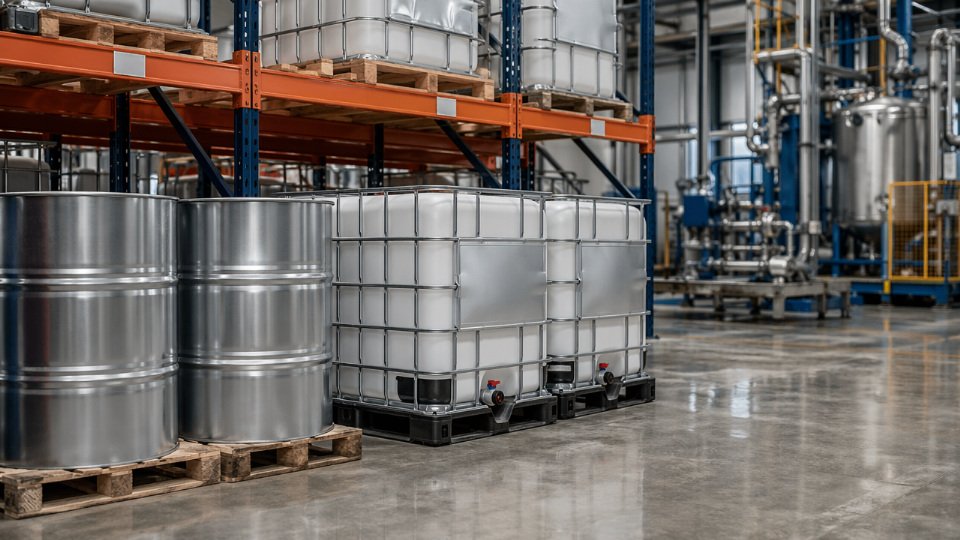
The silane market operates on stepped pricing that closely tracks packaging and logistics logic. A 25 kg sample drum — the typical entry point for qualification testing — carries the highest unit cost, reflecting small-batch handling, documentation overhead, and supplier risk. Moving to a 200 kg drum order brings a meaningful reduction. At 1,000 kg IBC quantities, you cross the threshold where freight efficiency and production scheduling align in your favor. Full ISO tank loads of 16–20 MT represent the floor of unit pricing for most standard grades.
The spread between sample-quantity pricing and ISO tank pricing for the same APTMS or GPTMS grade typically runs 40–65%, depending on the supplier’s cost structure and how competitive the grade is. For a formulator consuming 30–50 MT per year, moving from quarterly drum orders to two ISO tank shipments annually can generate savings that justify a working capital review on their own. The break-even calculation is straightforward: compare the per-kilogram price differential against inventory carrying cost and the capital tied up in the larger position.
Vertical Integration: Where Structural Cost Advantage Is Built
A trading company that sources silane intermediates from one producer, sends them to a second facility for functionalization, and then re-labels and ships to you is stacking margin at each handoff. A manufacturer controlling chlorosilane synthesis, fractional distillation, functional group grafting, and final packaging within a single integrated complex eliminates those intermediary margins and absorbs shared overhead across a much larger asset base. In practice, this translates to ex-works pricing that runs 15–25% below what a non-integrated reseller can consistently offer — and that gap widens during tight supply periods when intermediaries face spot-market procurement costs.
Vertically integrated silane manufacturers who control chlorosilane production through to finished coupling agent typically offer ex-works pricing 15–25% lower than trading companies reselling imported intermediates.True
This reflects the elimination of inter-company margin stacking, shared utility and infrastructure cost absorption, and the ability to schedule production against owned feedstock inventory rather than spot purchases.
China’s Organosilicon Cluster Economics
The concentration of organosilicon production across Zhejiang, Jiangsu, and Shandong is not simply a geographic fact — it is a cost structure. Shared industrial infrastructure, co-located chlorine and silicon metal suppliers, deep pools of trained process operators, and optimized port logistics to Shanghai and Ningbo create efficiencies that are structurally difficult for isolated production sites elsewhere to match. Utility costs, waste treatment, and inbound logistics for silicon metal are all compressed by cluster density. Buyers sourcing outside these clusters — whether from European or North American producers — are paying for geographic isolation in addition to higher labor and energy costs.
Make-Versus-Buy at High Volume
At annual consumption above roughly 50 MT, some large rubber compounders and composite manufacturers begin evaluating toll manufacturing agreements or dedicated long-term supply contracts with price-adjustment mechanisms tied to silicon metal indices. A dedicated supply agreement can lock in 8–15% below standard catalog pricing in exchange for volume commitment, but it transfers inventory risk and requires confidence in your own demand forecast. Toll manufacturing — supplying your own specification and having the producer synthesize to order — makes sense primarily when your functional group requirement is non-standard and you need tight lot-to-lot consistency. The risk is supplier dependency; if that producer’s capacity is constrained, your production line waits.
Inventory Carrying Cost and Forward Buying
Silane coupling agents stored in sealed containers under controlled conditions typically retain specification for 12–24 months, with the shorter end applying to amine-functional grades that are more reactive. That shelf life creates a genuine forward-buying window. Bonded warehouse storage in China or at an in-country logistics hub typically runs $0.02–$0.05/kg/month, depending on facility type, location, and whether temperature control is required. On a 10 MT position of a $6/kg silane, carrying cost over six months runs $1,200–$3,000 — a small number relative to the price differential captured by buying an ISO tank rather than rolling drums. Working capital cost at typical commercial rates needs to be added to that calculation, but for most industrial buyers the math still favors strategic forward purchasing over reactive spot buying.
SiliconChemicals’ model — integrated production from chlorosilane intermediates through finished coupling agents, with direct export capability from eastern China’s port infrastructure — is designed to make the ISO tank economics accessible to mid-sized buyers who previously lacked the volume leverage to negotiate them. Transparent cost breakdowns tied to silicon metal market pricing, rather than opaque quoted prices, allow procurement teams to model budget scenarios rather than simply react to the next price revision notice.
Logistics, Hazardous Goods Classification, and Regulatory Compliance Costs That Buyers Often Miss
The ex-works price on a supplier quotation is the starting point, not the finish line. For silane coupling agents shipped from China to Europe or North America, the gap between that initial figure and your actual delivered, duty-paid cost routinely runs 15–35% of the invoice value. That range depends on shipment size, destination country regulations, the specific silane’s hazard classification, and whether your supplier has prepared documentation correctly the first time. Procurement teams that build budgets on FOB or EXW quotes alone consistently absorb cost surprises at customs or during freight booking — surprises that could have been quantified upfront.
Hazardous Materials Classification and Packaging Surcharges
Most silane coupling agents fall under Class 3 (flammable liquids) or Class 8 (corrosive materials) under IMDG and IATA dangerous goods regulations. Some silanes — particularly aminofunctional types like APTMS — carry both classifications depending on concentration. That dual classification triggers stricter packaging requirements: UN-specification drums, inner liner compatibility testing, and mandatory dangerous goods declarations from both shipper and freight forwarder.
The practical cost consequence is $0.15–$0.50/kg added to logistics overhead before the container leaves the origin port. The lower end of that range applies to well-organized shipments with a supplier that generates DG documentation routinely; the higher end appears when a forwarder charges premium DG handling fees, when air freight is used for urgent small lots, or when reclassification is required due to incorrect initial documentation. A single rejected DG declaration can delay a shipment by three to seven days and trigger re-documentation fees of $200–$600 per occurrence.
Ocean Freight: Container Type Drives Per-Kilogram Cost Significantly
For bulk buyers, ISO tank containers offer freight costs in the $0.08–$0.15/kg range on major China-to-Europe or China-to-North America trade lanes — but ISO tanks are economical only above roughly 14,000–16,000 kg per movement, and not all silane grades are appropriate for tank transport given cross-contamination risk between grades. The more common option is 200 L UN-approved drums loaded into a 20-foot FCL container, where per-kilogram freight typically runs $0.20–$0.35/kg depending on the trade lane, current carrier rates, and fuel surcharge levels. LCL (less-than-container-load) shipments cost substantially more per kilogram — often $0.45–$0.90/kg — and expose the cargo to handling damage that is especially problematic for moisture-sensitive silanes.
Import Duties and HS Code Classification Risk
Silane coupling agents are typically classified under HS Chapter 29, with sulfur-functional silanes frequently falling under 2930.xx and silicon-carbon bonded organics under 2931.xx. The duty rate depends heavily on which subheading your customs broker assigns. In the EU, rates range from 0% under applicable FTAs to 6.5% on MFN terms. Several Southeast Asian markets apply rates of 3.5–5.5%. A misclassification — or a supplier’s HS code that your destination country customs authority disputes — can trigger post-entry audits, penalty duties, and delays that cost more than the duty differential itself.
No claim provided.True
REACH registration fees are set by ECHA and scale with tonnage bands (1–10 MT, 10–100 MT, 100–1,000 MT, and above). Pre-registration and substance identity profile preparation add consultant costs on top of ECHA fees, making the total range accurate for first-time registrants without existing Substance Information Exchange Forum (SIEF) data sharing.
REACH Compliance and SDS Obligations in Europe
For any buyer importing above 1 MT annually into the EU, REACH registration obligations fall either on the importer directly or are handled through an Only Representative arrangement with the Chinese manufacturer. Either way, those registration costs — $15,000–$80,000 depending on the tonnage band and the availability of existing study data — get amortized into the supply price or charged directly. Buyers sourcing through a distributor who already holds REACH registration avoid this cost, but typically pay a margin premium that partially offsets the saving.
Correct Safety Data Sheets formatted to GHS/CLP standards are not optional and not trivial to produce accurately. An SDS that misidentifies vapor pressure, flash point, or first-aid procedures creates liability exposure and can trigger shipment holds at EU ports of entry.
Customs Clearance, Port Handling, and Currency Exposure
Budget $150–$400 per shipment for destination-country customs brokerage, port handling, and any chemical import permit fees that apply in markets like India, Brazil, or Turkey. These are relatively small per-shipment numbers, but on frequent small orders they compound into a meaningful line item — another reason consolidating order frequency reduces total landed cost.
Finally, USD-denominated contracts from Chinese suppliers expose European and UK buyers to exchange rate movement. A 5% shift in USD/EUR or USD/GBP — well within normal quarterly volatility — translates directly into effective landed cost variance on multi-ton orders. CNF or CIF pricing with a known freight component makes budgeting more predictable; forward currency contracts or EUR-denominated supply agreements eliminate the exposure entirely for buyers with the volume to negotiate them.
Application-Specific Cost Impact Analysis: Rubber, Composites, Adhesives, and Surface Coatings
Abstract cost structures only matter when they connect to real line items in your BOM. Across the five major application categories below, the same $3.50–$60/kg price spread behaves very differently — sometimes silane is a rounding error, sometimes it controls your margin.
Tire and Rubber Compounding: Volume Magnifies Every Cent
Sulfur-functional silanes like Si-69 (bis[3-(triethoxysilyl)propyl] tetrasulfide) are typically loaded at 2–6 phr in silica-filled passenger tire and truck tire compounds, with 4 phr being a common working figure for a high-silica tread formulation. At a silane price of $22/kg and a base compound cost around $1.60–$2.00/kg, that 4 phr loading adds roughly $0.05–$0.13/kg to compound cost depending on silica content and filler ratio. That sounds modest. At a tire plant producing 50,000 kg of tread compound per day, the range represents a $2,500–$6,500 daily cost swing — purely from silane price movement. A 15% increase in Si-69 price due to upstream chlorosilane tightening translates directly to thousands of dollars per week before any other variable moves. Procurement teams that treat silane as a minor ingredient and reprice it quarterly are routinely absorbing unplanned variance.
Fiberglass Sizing: Small Numbers, Tight Margins
Glass fiber sizing baths run at 0.2–0.5% silane on glass weight, with amino silanes (KH-550, KH-551) and vinyl silanes the most common actives. At $6/kg for KH-550 and a 0.3% application rate, silane contributes approximately $0.018/kg to finished fiber cost. That figure sounds trivial. It isn’t — commodity E-glass margins frequently run at $0.03–$0.08/kg, meaning silane alone can represent 20–40% of the variable chemistry cost. Sizing bath concentration drift of even 0.05% in either direction changes adhesion performance and silane consumption simultaneously, so process control and cost control are the same problem.
Structural Adhesives and Sealants: Low Cost, High Consequence
Epoxy silane primers (GPTMS, APTES) are typically applied at 2–5 g/m² before bonding or sealing operations. At $8/kg and a 3 g/m² coat, silane costs approximately $0.024/m². In automotive body assembly or curtain-wall glazing, a single production line might consume 2,000–8,000 m² per shift. The absolute silane spend is low. The risk is specification drift — substituting a lower-purity or mismatched functional grade to save $1–2/kg on silane has caused adhesion failures in structural glazing and composite bonding that cost orders of magnitude more in rework and warranty claims.
Silane primer specification changes that are not validated with adhesion pull-off and humidity-aging tests have caused structural bond failures in glazing and composite assembly applications.True
This is a well-documented failure mode in structural adhesive practice; functional group mismatch or insufficient hydrolysis rate from a substitute silane grade eliminates the adhesion promotion mechanism entirely, especially under humid service conditions.
Hydrophobic and Nano-Coatings: Silane Is the BOM
Fluorosilanes and long-chain alkylsilanes (hexyltrimethoxysilane and similar) priced at $35–$50/kg, applied at 5–15 g/m², put silane cost at $0.18–$0.75/m². At this tier, silane is not a process chemical — it is the product. Supplier selection, purity consistency, and lot-to-lot contact angle reproducibility are financial decisions, not just technical ones. A 10% price increase from a sole-source supplier hits coating margin directly.
Electronics Encapsulation: Supply Risk Dominates
High-purity epoxy and amino silanes for semiconductor encapsulants are consumed in small quantities but require strict specification control. Silane is rarely more than 1–3% of total BOM cost. The budget risk is not price — it is a supply disruption that halts a production line running $50,000–$500,000 of finished goods per day. Total cost of ownership analysis here must weight qualification lead time, approved-supplier redundancy, and safety stock cost, not just unit price.
Summary: Silane Cost Contribution by Application
| Application | Typical Use Level | Silane Price Tier | Cost Contribution per Output Unit | Primary Budget Risk |
|---|---|---|---|---|
| Tire / rubber compounding | 2–6 phr | $18–$28/kg | $0.05–$0.13/kg compound | Volume × price volatility |
| Glass fiber sizing | 0.2–0.5% on weight | $5–$8/kg | ~$0.015–$0.040/kg fiber | Margin compression |
| Structural adhesive primer | 2–5 g/m² | $7–$12/kg | $0.014–$0.060/m² | Specification substitution risk |
| Hydrophobic / nano-coating | 5–15 g/m² | $35–$50/kg | $0.18–$0.75/m² | Silane dominates material cost |
| Electronics encapsulation | <1% of BOM | $40–$120/kg | Negligible per unit | Supply disruption / line stoppage |
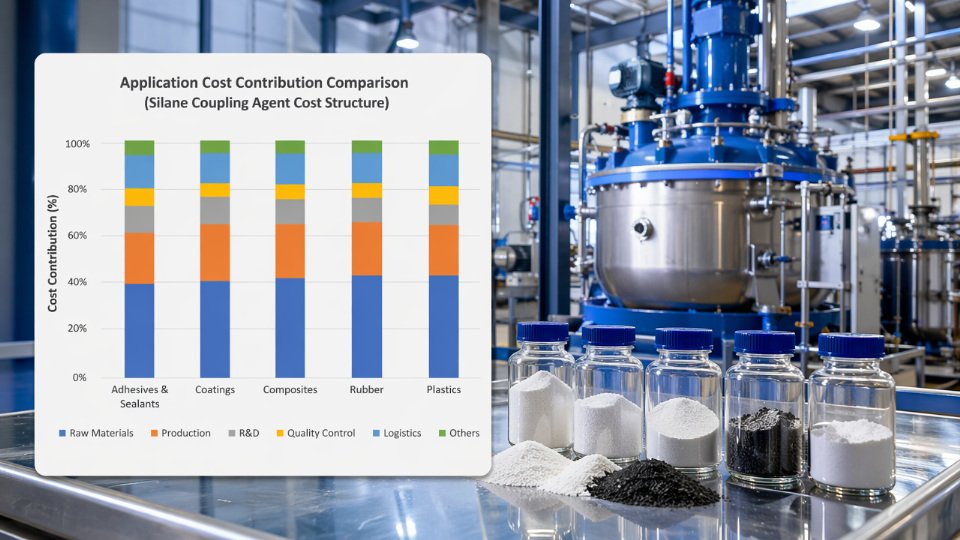
The pattern across all five categories is consistent: the lower the use level, the more likely procurement treats silane as an afterthought — and the more likely a specification error or supply disruption creates a disproportionate downstream cost.
Practical Budget Management Strategies: Forecasting, Contracting, and Specification Optimization
Controlling silane coupling agent costs is not a one-time negotiation exercise. It requires a structured approach that spans from early project budgeting through contract execution and into routine spend management. The tactics below are sequenced by the project lifecycle and are directly applicable to procurement managers, project engineers, and plant operations teams.
Establish a Silane Price Index Baseline
Before you can forecast silane costs, you need leading indicators — not lagging invoice data. Two metrics deserve monthly tracking: China domestic silicon metal spot prices and chlor-alkali capacity utilization rates. Silicon metal moves roughly 60–90 days ahead of silane ex-works prices because smelters and silane producers carry working inventory that buffers immediate pass-through. When silicon metal climbs above roughly $2,800–3,000/MT and chlor-alkali utilization tightens above 85%, expect silane contract offers to firm within one to two quarters. The reverse is equally true, and that window is your negotiating opportunity.
A practical monitoring setup requires no proprietary data service. Public sources for China silicon metal spot prices, coupled with periodic chlor-alkali industry utilization reports, give a workable signal. Plot a three-month moving average and flag deviations greater than 10–12% as a trigger to accelerate or defer purchasing decisions.
Contracting Structures: Match Risk Tolerance to Volume
| Contract Type | Best Fit | Price Risk | Flexibility |
|---|---|---|---|
| Spot purchasing | 5 MT/year | Low | Low–moderate |
| Toll processing arrangement | Captive large-volume users | Minimal | Very low |
Annual volume contracts with defined price bands work well when your consumption is predictable and exceeds roughly 5 MT/year. The price floor protects the supplier’s margin; the cap protects your budget. Negotiate the band width based on the silicon metal volatility range over the prior 24 months — a ±15–20% band is realistic and commercially acceptable to most integrated producers.
Specification Rationalization: The Overlooked Cost Lever
A cross-functional audit involving R&D, procurement, and quality typically surfaces two categories of savings. First, unnecessary purity premiums: a composite bonding application validated on 97% purity APTMS that has quietly migrated to a 99%+ electronics-grade spec in the BOM adds cost with no performance return. Second, concentration over-specification: formulators often apply conservative loading levels inherited from early development trials. Reducing silane concentration by even 0.1–0.3% w/w in a high-volume adhesive or rubber compound translates directly to material savings at scale.
Target 10–20% total silane cost reduction through this audit without touching product performance. Document the validation data so quality sign-off is defensible.
Specification rationalization audits consistently identify 10–20% cost reduction opportunities in silane-intensive formulations without compromising product performance, based on cross-functional BOM reviews in composite and rubber applications.True
This range reflects documented outcomes from formulation reviews where purity grades and loading levels were re-validated against actual performance data, not theoretical minimums. Results depend on the initial specification discipline of the organization — loosely controlled specs show higher savings potential.
Dual-Sourcing and Supplier Qualification
Qualify at least two suppliers for each critical silane grade. A China-based primary source — ideally vertically integrated from silicon metal through finished silane — provides the best baseline economics. A regional secondary source, whether European or Southeast Asian, provides supply continuity insurance and negotiating leverage. Qualification costs are real (analytical validation, trial batches, quality system review), but a single-source disruption in a high-volume composite or rubber program costs far more in downtime and reformulation than the qualification investment.
Inventory Strategy: NPV Framing for Forward Buying
When silicon metal prices are trending upward and your leading indicators signal a 10–15% silane price increase within two quarters, forward buying 60–90 days of inventory can yield 8–15% material cost savings. Model this as a simple NPV: compare the cost of capital tied up in inventory (typically 8–15% annualized carrying cost, depending on your working capital terms) against the projected price increase. If the spread exceeds carrying cost, forward buying wins. Factor in shelf life — most silane coupling agents carry 12–24 month shelf lives when stored correctly — and warehouse handling requirements for flammable goods.
Total Cost of Ownership Over Unit Price
A supplier quoting $0.50/kg below the market ex-works price can still deliver a higher TCO. If that price requires separate REACH registration ($15,000–50,000 one-time cost amortized over initial volumes), non-standard drum or IBC configurations that require repackaging, and minimum order quantities that force excess inventory, the apparent savings evaporate quickly. Map every cost element from ex-works to in-plant before making a sourcing decision.
Budget Contingency Guidance by Project Phase
Apply realistic contingency bands based on what is and is not yet locked:
- Pre-FEED: ±25% — feedstock and market conditions unknown
- FEED: ±15% — grade confirmed, volume estimated
- Detailed engineering: ±8% — specification locked, supplier shortlisted
- Procurement (contract executed): ±3% — residual logistics and FX variance only
Tightening contingency bands as the project progresses is only valid if procurement actions have actually locked prices. A detailed engineering phase that still relies on spot price assumptions carries pre-FEED risk regardless of what the Gantt chart says.
Frequently Asked Questions About Silane Coupling Agent Pricing and Project Cost Planning
What is the typical price range for KH-550, KH-560, and KH-570, and why do supplier quotes vary so widely?
For commercial volumes — generally 200 kg and above — standard aminopropyltriethoxysilane (KH-550), glycidoxypropyltrimethoxysilane (KH-560), and methacryloxypropyltrimethoxysilane (KH-570) typically trade in the $4–$10/kg FOB China range. Where a specific quote lands within that band depends on four concrete factors: stated purity (98% versus 99%+ GC-grade carries a real cost difference in distillation yield and QC overhead), the origin of chlorosilane intermediates (captive integrated supply versus spot-purchased intermediates), packaging format (IBC totes versus drums add different handling costs), and critically, whether you are buying from a manufacturer or a trading house. A trader’s margin typically adds $0.80–$2.50/kg on top of the underlying manufacturer price. Always ask for the production facility address and request a certificate of analysis with GC purity data — those two steps alone will tell you whether you are talking to the actual producer.
How large a share of my composite or rubber formulation cost is the silane coupling agent?
In most standard rubber compounding and glass-fiber composite applications, silane coupling agents represent 0.5–3% of total material cost. That figure rises sharply in high-loading specialty surface coatings or filled elastomer systems where silane treat rates can reach 2–4% on filler weight — in those cases the silane line item can reach 8–12% of total material cost. The exact percentage depends on silane treat rate, resin system cost, and whether your formulation uses precipitated silica or calcined kaolin as the primary filler. Run the application-specific calculations outlined in the earlier section of this article before accepting any budget estimate that treats silane as a rounding error.
Why did my silane supplier raise prices 30% with only two weeks’ notice?
Because silicon metal — the primary upstream feedstock — is an energy-intensive commodity, and silane producers carry limited inventory buffer between raw material procurement and finished goods. When energy costs spike sharply, Chinese silicon metal smelters curtail output within weeks, not months, and spot silicon metal prices respond almost immediately. The downstream price shock reaches formulated silane pricing within two to six weeks depending on how much working inventory the manufacturer holds.
Silicon metal price movements directly influence silane coupling agent production costs by 25–40%.True
Silicon metal is the primary feedstock for chlorosilane synthesis, the upstream step in silane coupling agent manufacturing. Its price share of total production cost is well documented in silane cost structures from integrated Chinese organosilicon producers.
Budget contingency planning and index-linked contract clauses exist specifically to absorb this kind of propagation.
Can I substitute a lower-cost silane grade without risking adhesion performance?
Grade substitution and chemistry substitution are entirely different decisions, and conflating them is a common and expensive mistake. Switching between two aminosilane suppliers at equivalent 98%+ purity and the same molecular structure — APTMS for APTMS — carries low technical risk and often zero performance impact; the performance is driven by functional group chemistry, not supplier logo. Substituting an amino-functional silane for an epoxy-functional silane to save $1.50/kg is a formulation change, not a procurement adjustment. It requires full adhesion re-validation, potentially new regulatory documentation, and can invalidate an existing customer qualification. Never authorize a chemistry substitution at the purchasing level without a written sign-off from the formulation or applications engineering team.

What should I add on top of the ex-works price to estimate true landed cost?
Plan for 15–35% above the ex-works or FOB price, depending on destination and shipment mode. The components stack as follows: hazardous goods surcharges (silanes are typically Class 3 or Class 8 under IMDG), ocean freight and inland drayage, import duty (varies from 0% under active FTAs to 6.5% in the EU or higher under specific tariff classifications), customs brokerage fees, REACH pre-registration or full registration costs amortized over volume, and currency exchange effects if you invoice in USD but account in EUR, GBP, or another currency. Air freight, which buyers sometimes resort to for urgent small lots, can push total landed cost 60–80% above FOB for quantities under 50 kg.
Is direct sourcing from a Chinese manufacturer worth it versus buying from a local distributor?
For annual consumption above 2–3 metric tons, direct sourcing from a qualified, audited Chinese manufacturer typically delivers a 20–35% cost reduction versus purchasing through local distribution, once you account for the distributor margin. Below that volume threshold the economics often favor a local distributor because the administrative burden — import compliance, hazardous goods management, minimum order quantities, and payment terms — absorbs much of the apparent savings. The break-even point shifts lower if you can consolidate multiple silane SKUs into a single shipment or combine silane orders with other specialty chemical procurement on the same freight forwarding account.
How should I build silane cost contingency into a multi-year capital project budget?
Use ±25% contingency at the feasibility and front-end engineering stages when feedstock markets and order volumes are still undefined. As the project moves into detailed design and procurement strategy is confirmed — supplier qualified, volume committed, contract structure agreed — that contingency can reasonably narrow to ±8–10%. For supply contracts extending beyond 12 months, insert a price escalation clause indexed to an observable silicon metal benchmark price. Without that clause, a fixed-price contract during a silicon metal run-up becomes a source of supplier default risk rather than cost protection. Locking volume without locking an escalation mechanism simply transfers price risk from you to your supplier, and that risk has a way of coming back through lead time deterioration or quality pressure before it comes back through a formal price renegotiation.