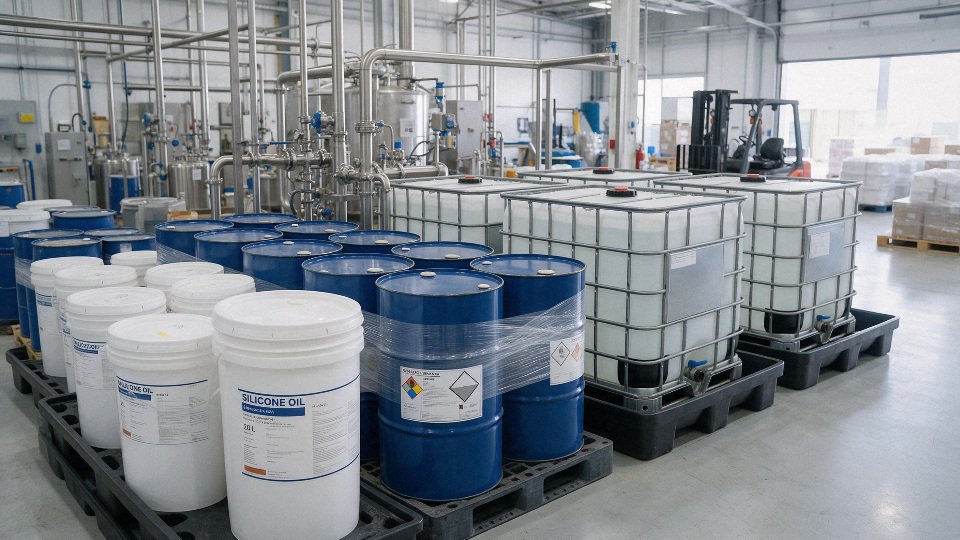
Most procurement teams treat a silicone oil MSDS as a checkbox — print it, file it, forget it. That habit works fine until a maintenance tech spills a 200-liter drum near an open heat-transfer line running at 280°C, or until an industrial hygienist walks into a spray-lubrication bay and asks what exposure monitoring you have on record. Suddenly the document you ignored becomes the center of a near-miss investigation, a workers’ comp claim, or a regulatory audit. The financial exposure isn’t theoretical: unplanned line shutdowns from chemical incidents routinely run into tens of thousands of dollars per shift, and that’s before you factor in remediation or fines.
An MSDS (or SDS under GHS) for silicone oil — typically polydimethylsiloxane — must cover flash point (ranging from roughly 150°C for low-viscosity 50 cSt grades up to 320°C for 1000 cSt grades), vapor pressure (below 0.01 mmHg at 25°C for most industrial grades), reactivity, first-aid procedures, and occupational exposure guidance. ACGIH cites 10 mg/m³ TWA for oil mist; no formal OSHA PEL exists, which creates real ambiguity for compliance programs.
What makes silicone oil genuinely tricky from a safety-documentation standpoint is that its benign reputation — low toxicity, thermal stability, inert chemistry — leads engineers to underestimate where the real hazards actually live. The flash point spread alone, nearly 170 degrees between grades, means a document written for one viscosity can be dangerously misleading when applied to another. The sections that follow break down exactly what each MSDS field means in practice, which numbers change with grade, and where facilities most commonly get the interpretation wrong.
Chemical Identity and Composition Data in Silicone Oil MSDS Section 1–3
The first thing I check when a new drum of silicone oil arrives is whether the MSDS sitting in my files actually matches what’s on the label. Sounds obvious. In practice, suppliers ship reformulated products, distributors relabel repackaged material, and purchasing teams sometimes source a different viscosity grade without flagging it — and suddenly your MSDS is describing a different compound than what’s in your heat-transfer bath or mold-release sprayer.
Getting the CAS Number Right
Polydimethylsiloxane — the workhorse of the silicone oil family — carries two CAS numbers depending on how the product is registered. The polymeric form is listed under 63148-62-9, while dimethicone (cosmetic/pharmaceutical grade PDMS) uses 9006-65-9. These are not interchangeable from a regulatory standpoint even though the chemistry is functionally similar. Phenyl silicone oil, used where high-temperature stability or refractive index matters, is 63148-58-3. Methylhydrogen silicone oil — the reactive crosslinker grade — is 63148-57-2, and this one matters a great deal because its hazard classification is meaningfully different from straight PDMS.
Matching CAS to your actual product isn’t a paperwork formality. If you’re running a methylhydrogen silicone oil for textile waterproofing and you’re referencing a plain PDMS MSDS, you’re missing the hydrogen-release risk on contact with moisture and certain metals. That gap in awareness has caused real processing incidents.
Methylhydrogen silicone oil (CAS 63148-57-2) can release hydrogen gas on contact with moisture or metallic catalysts, a hazard absent from standard PDMS MSDS documents.True
Si-H bonds in methylhydrogen silicone oil are reactive with nucleophiles including water, particularly in the presence of platinum or tin catalysts, generating H2. Standard PDMS contains no Si-H functionality and presents no such risk. Conflating the two MSDSs leads to incomplete hazard controls.
What Section 2 Actually Tells You — and What It Doesn’t
Most standard PDMS grades (roughly 50 cSt to 1000 cSt) come back from GHS classification as non-hazardous — no pictograms, no signal word. That’s accurate as far as it goes, but it creates a false sense of uniformity. Functional silicone oils are a different story. Amino-functional silicone oils typically carry a skin and eye irritant designation. Epoxy-functional grades may require corrosive or sensitizer classifications depending on the epoxy equivalent weight and formulation. Hydrogen-functional grades, as noted, have reactivity concerns.
The practical implication: if Section 2 of your received MSDS is blank or shows “not classified,” verify that the product you ordered is truly a plain PDMS grade and not a functional variant. Distributors don’t always make that distinction obvious on the invoice.
Cyclic Siloxane Impurities in Section 3 — Now Mandatory Reading
Section 3 has become considerably more important since D4 (octamethylcyclotetrasiloxane) and D5 (decamethylcyclopentasiloxane) were listed as Substances of Very High Concern under EU REACH. D6 is under scrutiny as well. These cyclic siloxanes occur as trace residuals in PDMS manufacturing, and a well-prepared SDS will disclose them explicitly — typically at levels below 0.1–1% by weight, though this varies by grade and supplier purification standards.
If your application discharges to water — coolant loops, rinse processes, any aquatic pathway — you need that disclosure in writing. Absent it, ask the supplier directly and get the response documented.
How Viscosity Grade Shifts the Hazard Profile
Viscosity grade changes more than flow behavior. A 5 cSt PDMS has measurably higher vapor pressure than a 1000 cSt grade — still very low at 25°C (well below 0.01 mmHg for higher-viscosity material), but low-viscosity grades can generate fine mist or aerosol under spray or high-shear conditions. That’s where the ACGIH guideline of 10 mg/m³ TWA for silicone oil mist becomes relevant. No formal OSHA PEL exists, so this is the number most industrial hygienists default to. Flash point tracks viscosity too: a 50 cSt PDMS might flash around 150–160°C, while a 1000 cSt grade typically won’t flash below 300°C or higher. Both figures depend on exact formulation and test method (Pensky-Martens vs. Cleveland open cup will give different readings).
Verification Checklist for Sections 1–3
Before trusting any MSDS for operational use, run through these:
- CAS number match: Does the MSDS CAS match your purchase spec and the physical drum label? Check for functional variants specifically.
- Trade name / synonym alignment: PDMS goes by dozens of commercial names. Confirm the MSDS product name maps to what you ordered.
- Hazard classification logic: Non-hazardous designation should only apply to unfunctionalized PDMS. Anything reactive should show GHS pictograms.
- Cyclic siloxane disclosure: Section 3 should explicitly state D4/D5/D6 content or confirm absence below detection threshold. “Not listed” without a detection limit is insufficient.
- Viscosity grade noted: The MSDS should state the viscosity range it covers. A single MSDS covering “all grades” may not accurately represent the vapor pressure or flash point of your specific product.
- Revision date: Silicone oil SDS documents have been updated significantly post-2018 due to REACH changes. An MSDS older than five years may be missing cyclic siloxane disclosures entirely.
A five-minute check against this list has saved me from at least a few situations where the wrong document was in the binder. Don’t assume the supplier got it right.
Physical and Chemical Properties That Drive Safe Storage and Process Design
Section 9 of any silicone oil MSDS is where procurement managers often skim and engineers should slow down. The numbers here — flash point, vapor pressure, density, decomposition temperature — feed directly into storage room classification, ventilation design, spill kit selection, and process temperature limits. Getting them wrong doesn’t always cause an immediate incident; sometimes it just costs you a warehouse reclassification audit or a contaminated batch six months later.
Flash Point and What It Actually Means for Storage Classification
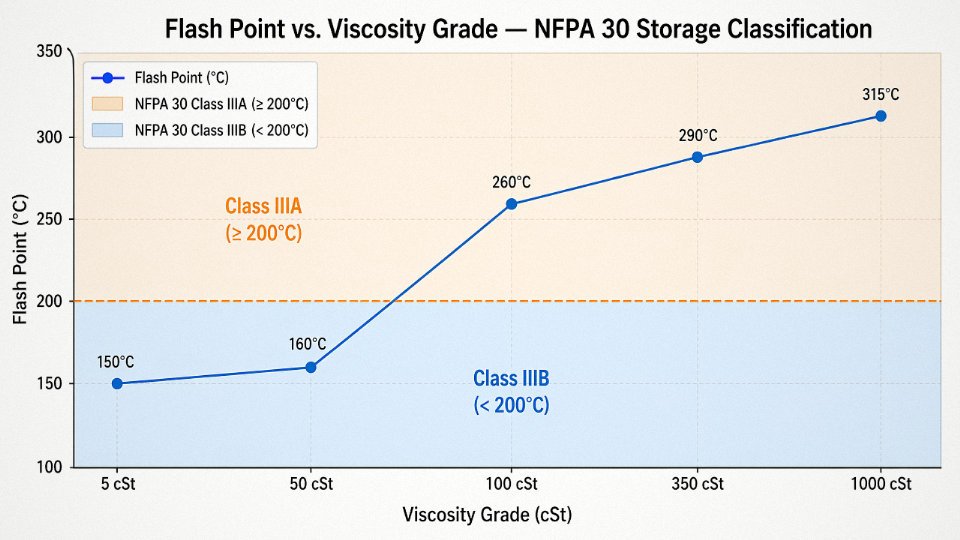
Flash point in polydimethylsiloxane (PDMS) is viscosity-dependent in a way that matters practically. A 5 cSt grade typically tests around 150°C by open cup — low enough that NFPA 30 places it in Class IIIA or IIIB depending on your exact measurement and whether you’re using a closed- or open-cup method, so check which method your supplier used before you file the SDS and call it done. A 100 cSt grade comes in around 260°C, and by the time you reach 1000 cSt, you’re looking at roughly 315°C. At that point, NFPA 30 and most IEC 60079 zone classification schemes treat the material as a combustible liquid with relatively relaxed storage requirements — no ignition-source exclusion zones required for ambient storage, no explosion-proof lighting mandated for the drum room.
Where this catches people out: a plant running a mix of viscosity grades in the same storage area sometimes defaults to the most permissive classification based on the highest-viscosity drum on the shelf. That’s a compliance error. Each grade needs its own MSDS, and the lowest flash point in the room sets the classification for the whole space.
Vapor Pressure, Evaporation, and the Aerosol Problem
For viscosities above roughly 100 cSt, vapor pressure at 25°C is negligible — often below 0.01 mmHg — and evaporation rate is effectively zero under ambient conditions. This is why silicone oil doesn’t smell in the drum room and why inhalation risk from bulk storage is low. ACGIH lists an OEL of 10 mg/m³ TWA for silicone oil mist, and for drum dispensing of high-viscosity grades, you’ll rarely approach that without active aerosolization.
Low-viscosity grades are a different matter. Spray application of 5–10 cSt silicone oil — common in release-agent systems, mold lubrication, and some textile processes — generates fine aerosols that absolutely can reach or exceed that exposure limit in poorly ventilated enclosures. The floor gets slippery fast too; silicone’s low surface energy means even a thin aerosol film on smooth concrete is a serious slip hazard. In practice, any spray application of a low-viscosity grade warrants local exhaust ventilation and slip-resistant matting, regardless of what the bulk flash point number might suggest.
High-viscosity silicone oil (≥100 cSt) poses negligible inhalation risk during normal drum handling at ambient temperature.True
Vapor pressure for high-viscosity PDMS grades at 25°C is typically well below 0.01 mmHg, making significant vapor generation under ambient conditions essentially impossible without mechanical aerosolization.
Density, Spreading Behavior, and Spill Response
PDMS density runs from about 0.96 g/cm³ for low-viscosity grades up to roughly 1.07 g/cm³ for some phenyl-modified or high-molecular-weight variants. Standard PDMS floats on water. That single fact reshapes your spill response protocol: if a drum ruptures near a floor drain, silicone oil will ride a water flush straight to the drainage system and spread across any water surface downstream. Containment berms need to be sized for the oil layer, not just volume. Absorbent pads rated for hydrocarbon oils generally work, but the low surface tension of silicone means it wicks laterally faster than mineral oil before the absorbent grabs it — budget more pad coverage than you think you need.
Thermal Stability and the Decomposition Warning Engineers Miss
The MSDS thermal decomposition entry for silicone oil deserves more attention than it typically gets. PDMS is genuinely heat-stable up to around 150–200°C for standard grades under normal atmospheric conditions, but some functional grades — amino-modified, vinyl-terminated, or those containing catalyst residues — can begin producing formaldehyde and low-molecular-weight cyclic siloxanes (D4, D5) at temperatures that overlap with common process operating ranges. If your heat-transfer bath or curing oven runs above 200°C and you’re using silicone oil as the heat-transfer medium, verify the specific decomposition profile on your grade’s MSDS, not on generic PDMS data you pulled from a reference handbook.
Cyclic siloxanes are worth flagging separately: D4 (octamethylcyclotetrasiloxane) carries reproductive toxicity classification under EU CLP, and some grades will list it as a trace component even before decomposition. That affects waste classification and workplace monitoring obligations.
Solubility: Cleaning Chemistry and Environmental Fate
PDMS is practically insoluble in water — a fact that simplifies some handling decisions and complicates others. Aqueous washes won’t remove silicone oil from equipment surfaces or spill areas; you need aliphatic or aromatic solvents. Hexane, toluene, and chloroform all work well, and most MSDS documents will confirm miscibility with these. In a food-grade or pharmaceutical setting where residual solvent matters, this trades one compliance issue for another, so some facilities use hot isopropyl alcohol as a compromise — not as effective, but easier to validate.
From an environmental fate standpoint, insolubility in water combined with rapid surface spreading means a significant spill to a waterway creates an immediate surface film that can affect oxygen transfer. This is worth including in your emergency response procedure even if your plant’s environmental risk assessment rates silicone as low-hazard overall.
Fire, Explosion, and Reactivity Hazards Declared in MSDS Sections 5, 7, and 10
Standard PDMS silicone oil is about as benign a flammable liquid as you’ll encounter in an industrial setting — but “benign” is relative, and the MSDS data still drives real decisions about extinguisher placement, hot-work permits, and storage segregation. Get those decisions wrong and you’re either over-engineered (wasting budget) or under-prepared (facing a fire your crew can’t suppress correctly).
Extinguishing Media: Why the Right Choice Depends on the Grade
MSDS Section 5 for most silicone oil grades recommends CO₂ or dry chemical powder as the primary extinguishing agents. Both work by interrupting the combustion chain without introducing a secondary hazard. Water spray is listed as acceptable — specifically for cooling surrounding equipment and containing the fire perimeter — but a direct high-pressure water jet is a different matter. It can physically scatter burning oil across a wider surface area, which is the last thing you want when you’re dealing with a high-viscosity fluid that clings to equipment and structural steel.
Foam suitability varies more than most procurement managers realize. For standard PDMS heat-transfer or release-agent grades, alcohol-resistant aqueous film-forming foam (AR-AFFF) can be appropriate. But aminosilicone functional fluids — used heavily in textile and personal care manufacturing — often have different surfactant compatibility. Some foam concentrates break down or lose efficacy on contact with silicone-based surface layers. Check Section 5 for the specific functional grade before specifying foam hardware; a universal assumption here is a mistake.
Flash Point Versus Auto-Ignition Temperature: Two Different Thresholds, Two Different Engineering Uses
The flash point of PDMS ranges roughly 150°C to 320°C depending on viscosity grade — a 50 cSt grade sits at the lower end, while a 1000 cSt grade pushes toward the upper range. That sounds comfortable until you’re designing a hot-oil system running at 250°C with heat-exchanger surfaces that can locally exceed the bulk fluid temperature by 30–50°C under fouling conditions.
Auto-ignition temperature is the more critical figure for equipment rating. PDMS auto-ignition typically falls in the 350–450°C range, again grade-dependent. This is the number that governs whether a hot surface — a poorly insulated pipe flange, a heater element with a failed thermostat — can ignite spilled fluid without any ignition source present. European ATEX and IEC 60079-14 hot-surface classifications use auto-ignition temperature directly. Flash point matters for storage classification and hot-work permits near open containers; auto-ignition temperature governs electrical area classification and heater surface ratings. Conflating the two leads to either an over-classified hazardous area (expensive) or an under-rated heater surface (dangerous).
Methylhydrogen Silicone Oil: The Reactive Grade That Changes Everything
Standard PDMS silicone oil does not evolve flammable gas on contact with water.True
Polydimethylsiloxane is chemically stable and non-reactive with water under normal conditions. The hydrogen evolution hazard applies specifically to methylhydrogen silicone oil (Si-H functional grades), which releases H₂ gas when exposed to water or alkaline solutions.
This distinction is worth emphasizing on the plant floor because the two fluids look nearly identical — same viscosity range, same clear appearance, sometimes stored in adjacent drums. Methylhydrogen silicone oil (Si-H grades, often used as crosslinkers in addition-cure systems) will evolve hydrogen gas on contact with water or alkaline solutions. H₂ is odorless, accumulates at ceiling level, and has a lower explosive limit of roughly 4% by volume in air. A sealed storage room, a drum that picked up condensation, an alkaline cleaner residue on transfer equipment — any of these can create a concealed flammable atmosphere. The MSDS for Si-H grades calls this out explicitly in Section 10; if your MSDS doesn’t, you may have the wrong document or an inadequate product-specific sheet.
Section 10 Incompatibilities: Oxidizers, Acids, and Catalyst Contamination
Section 10 for most silicone oil MSDS documents lists strong oxidizers, concentrated mineral acids, and strong bases as incompatible materials. In practice, the oxidizer risk is the one most likely to be underestimated in facilities that also handle chlorinated process chemicals or peroxide-based bleaching agents in adjacent storage bays. Segregation distances matter.
The less obvious incompatibility involves platinum and organotin catalysts. Both accelerate addition and condensation cure reactions in silicone systems. If either contaminates a bulk silicone oil storage tank — through a dirty transfer pump, a mislabeled drum, cross-contamination from a compounding line — the resulting exothermic curing reaction can generate enough heat to approach the flash point of the fluid inside a closed vessel. This scenario is more common than reported; it often gets diagnosed as a “heat transfer anomaly” rather than a reactivity event. Dedicated transfer equipment and strict drum labeling protocols are the only real controls.
Hot-Work Permit Thresholds Near Silicone Oil Lines
Using MSDS flash point and auto-ignition data to set hot-work permit conditions is straightforward in principle but loose in practice unless you formalize it. A reasonable approach: use the flash point minus a 20–30°C safety margin as the maximum permitted ambient temperature at the work surface without additional ventilation or fluid isolation. For welding or grinding within 3–5 meters of an open silicone oil line or drum, most EHS programs require either full fluid isolation (drain and purge) or continuous forced ventilation confirmed at greater than 10 air changes per hour. The ACGIH oil mist OEL of 10 mg/m³ TWA is the ventilation design target, though no formal OSHA PEL exists for silicone oil mist specifically — which means your own industrial hygiene measurement program carries more legal weight than it would for a regulated substance.
Toxicological and Ecotoxicological Data Engineers Must Verify in Sections 11 and 12
Pure polydimethylsiloxane sits in a genuinely unusual position for an industrial fluid: its acute toxicity profile is about as benign as a substance can get while still requiring an MSDS. Oral LD50 in rats runs above 15,000 mg/kg, which puts neat PDMS in the same practical category as table salt — except table salt is actually more acutely toxic. Dermal LD50 exceeds 2,000 mg/kg. For high-viscosity grades (roughly 350 cSt and above), an inhalation LC50 simply isn’t established, because the vapor pressure is so negligible that generating a lethal aerosol concentration under realistic conditions is nearly impossible. When Section 11 of the MSDS reads “not classified” for inhalation hazard on a 1,000 cSt grade, that’s not a data gap — it’s a technically defensible conclusion backed by the vapor pressure physics. A 50 cSt grade is a different story; mist generation during spray application or high-shear mixing is plausible, and the ACGIH guideline of 10 mg/m³ TWA for oil mist becomes the working ceiling in the absence of any formal OSHA PEL.
Skin and Eye Irritation — Don’t Stop at the Headline Classification
Standard linear PDMS causes minimal skin or eye irritation; GHS Category 3 at most, and often not classified at all. In practice, most dermal exposures on the plant floor cause nothing worse than a greasy film that washes off with soap. The problem comes when the fluid isn’t plain PDMS. Amino-functional silicone oils — common in textile finishing and hair-care manufacturing — carry amine groups that can cause mild to moderate skin sensitization with repeated exposure. The headline GHS pictogram on the label might look identical to a standard PDMS drum sitting next to it. You have to read the Section 11 sub-entries line by line: skin sensitization, respiratory sensitization, specific target organ toxicity (STOT) repeated exposure. A procurement manager who orders “silicone oil” and routes both product types to the same handling station, because the labels look similar, is setting up a workers’ comp incident.
Carcinogenicity and Blend Composition
PDMS itself carries no carcinogenicity classification under NTP or IARC assessments. That holds up. The hazard enters through the blend.
Pure PDMS (polydimethylsiloxane) has no carcinogenicity classification under IARC or NTP assessments.True
Multiple regulatory bodies including IARC and NTP have reviewed PDMS and found no evidence supporting carcinogenicity classification; this is consistent across major industrial MSDS documents from reputable suppliers.
Some industrial-grade silicone fluids are blended with white mineral oil as a diluent or processing aid, particularly in lower-cost compounding or mold-release formulations. Untreated and mildly treated mineral oils carry an IARC Group 1 classification. If your MSDS Section 11 shows an IARC Group 1 notation and your product is marketed as “silicone oil,” dig into Section 3 to find the mineral oil component. This is not a hypothetical edge case — it shows up more often than people expect in commodity-grade release agents sourced from certain regional suppliers.
Section 12 and the Cyclic Siloxane Problem
This is where the ecotoxicology picture gets genuinely complicated. Bulk PDMS polymer has very low aquatic toxicity — EC50 for Daphnia magna typically exceeds 100 mg/L, which clears most regulatory thresholds by a wide margin. The issue is cyclic siloxane impurities, specifically D4 (octamethylcyclotetrasiloxane), D5 (decamethylcyclopentasiloxane), and D6 (dodecamethylcyclohexasiloxane). D4 is classified as a PBT substance under EU REACH and appears on the SVHC candidate list; D5 is under equivalent restriction. Both can be present as residual manufacturing byproducts in commercial silicone fluids, sometimes without clear declaration on older or non-EU-compliant MSDS documents.
If your operation discharges to a waterway or municipal sewer system, the spill reporting threshold under Clean Water Act Section 311 or the EU Water Framework Directive depends on whether your fluid contains reportable concentrations of these cyclics. A MSDS that simply says “silicone oil — not hazardous to aquatic organisms” without addressing cyclic siloxane content is incomplete for compliance purposes. Request the supplier’s cyclic siloxane specification — D4 content below 0.1% w/w is the current REACH Annex XVII threshold that triggers restriction on consumer products, and industrial procurement should be tracking the same figure even where not yet legally mandated.
In practice, verify Section 12 against the current ECHA restriction entries before finalizing a supplier, and do it again at each contract renewal. Regulatory status on D5 in particular has shifted multiple times in the last several years.
Personal Protective Equipment and Exposure Control Requirements from MSDS Section 8
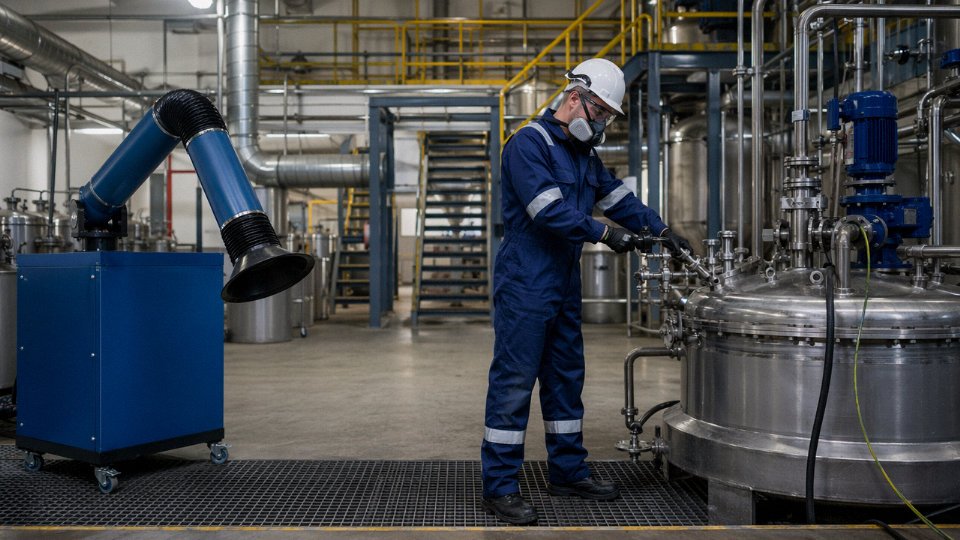
Silicone oil sits in an odd regulatory gap that catches EHS managers off guard: OSHA has never established a formal PEL for silicone oil mist. What Section 8 of most product-specific MSDS documents falls back on is the ACGIH guideline of 10 mg/m³ TWA for inert or nuisance particulates — a ceiling borrowed from generic dust guidance rather than any silicone-specific toxicology. That matters operationally because some manufacturers, particularly suppliers selling into pharmaceutical or food-grade markets, write a tighter proprietary OEL into their own Section 8, sometimes 5 mg/m³ or lower. Your obligation is to use whichever limit is more stringent. If the MSDS in your SDS binder says 5 mg/m³, that’s the number your industrial hygienist designs around, regardless of what ACGIH publishes.
Respiratory Protection — Match the Task, Not a Single Default
For bulk transfer of high-viscosity PDMS — think drum-to-day-tank pumping at ambient temperature, 350 cSt or above — airborne mist generation is minimal. Engineering controls alone are usually sufficient: a modest local exhaust ventilation (LEV) hood over the fill point, 0.3–0.5 m/s face velocity, handles it cleanly. Don’t over-engineer respiratory PPE here. The risk profile doesn’t justify it, and over-specifying PPE erodes compliance on tasks where it genuinely matters.
The calculus changes fast when you introduce heat or atomization. Spray coating with low-viscosity grades (10–50 cSt), heated release-agent application at 60–90°C, or vacuuming silicone residue from sumps — these tasks generate respirable mist or vapor in concentrations that can approach the 10 mg/m³ threshold in confined spaces. A half-face respirator fitted with a P100 particulate cartridge is the standard MSDS recommendation for these tasks. If the operation runs continuously, not just occasionally, consider powered air-purifying respirator (PAPR) equipment to reduce fatigue — operators wearing tight-fitting half-faces for a full shift tend to break seal discipline by mid-afternoon, which defeats the purpose.
A P100 particulate filter is adequate respiratory protection for silicone oil mist during spray application at ambient temperatures.True
Silicone oil mist is a particulate aerosol; at ambient temperatures PDMS does not generate significant vapor requiring organic vapor cartridges. P100 filters capture ≥99.97% of airborne particulates including oil-based aerosols per NIOSH 42 CFR Part 84 classification.
Glove and Eye Protection — Where People Get Complacent
Nitrile gloves (at least 0.15 mm thickness) and neoprene both offer acceptable short-contact protection against PDMS. For most handling tasks — wiping, incidental contact, pouring from small containers — this is adequate. Where it breaks down is prolonged immersion, which happens in dip-coating operations where operators run parts through a silicone bath repeatedly across a shift. In that scenario, breakthrough time for nitrile drops enough that laminated film gloves (4H or Silver Shield style) are worth the ergonomic cost.
Eye protection minimum is safety glasses with side shields. Any operation involving pressurized transfer, elevated-temperature dispensing, or opening fittings on charged lines — standard on any fluid system, but worth saying — requires chemical splash goggles. A face shield over goggles for drum-level decanting is reasonable and costs almost nothing.
Engineering Controls and a Hazard People Underestimate
Section 8 of most MSDS documents for silicone oil calls out closed-loop transfer systems and grounded bonding cables for large-volume transfers of low-viscosity grades. The bonding requirement surprises people. PDMS has low conductivity, and charge can accumulate during fast transfer through narrow lines; bonding cable continuity should be verified before each fill, not assumed.
The floor hazard is genuinely underappreciated. Silicone oil contamination drops the coefficient of friction on smooth concrete or epoxy flooring dramatically — more so than most mineral oils. Even a small spill left inadequately cleaned creates a significant slip risk. Floor drainage design should direct any potential spill to a contained sump, not to an open drain or walkway area.
Air Monitoring and Recordkeeping
Set up your workplace monitoring program using NIOSH Method 0500 for total particulate or Method 0600 for respirable fraction, depending on which OEL you’re working against. Sampling frequency depends on how consistently the process runs: for a stable, automated process with engineering controls already validated, annual confirmation sampling is defensible. For variable operations — seasonal production swings, manual tasks, new hires on spray lines — quarterly sampling during the first year gives you a credible baseline and satisfies OSHA’s implied duty to assess exposures under the General Duty Clause.
Keep sampling records for at least 30 years if there’s any chance the material contains residual D4, D5, or D6 cyclic siloxanes, since those have regulatory trajectories that may expand recordkeeping obligations retroactively. For straightforward PDMS with no cyclic impurity concern, standard OSHA 29 CFR 1910.1020 retention requirements apply.
Spill Response, First Aid, and Disposal Procedures Drawn Directly from MSDS Sections 4, 6, and 13
Silicone oil spills are deceptively low-drama. The fluid is slippery, nearly odorless, and doesn’t catch fire easily — so operators tend to treat a spill casually. That habit causes more injuries from falls and more regulatory headaches from improper disposal than any acute toxicity event ever will. Section 4, 6, and 13 of a well-written MSDS spell out exactly what to do; the following pulls that guidance into a format your shift supervisors and EHS coordinators can actually use.
First Aid Responses That Actually Match the Hazard Profile
Skin contact with standard PDMS is low concern. Remove saturated clothing, wash the area thoroughly with soap and water, and you’re done in most cases. The clothing piece matters more than it sounds — soaked fabric holds the oil against skin for hours if left on, and prolonged occlusion can cause irritation even with a benign substance.
Eye contact is where you need to pay attention to which grade you’re handling. For plain PDMS (dimethyl fluid), flush with clean water for 15 minutes and seek evaluation if irritation persists. For functional grades — amino-modified, epoxy-modified, or anything with a reactive terminal group — the MSDS will typically escalate the language to require medical evaluation regardless of symptom severity. Amino silicone fluids in particular can have a higher pH and cause more meaningful irritation. Don’t skip the eye exam step because it “looks fine.”
Ingestion of PDMS is genuinely low-risk physiologically; the compound is essentially non-absorbable through the GI tract. That said, your MSDS will still direct you to seek medical advice, and you should follow that instruction on paper for liability and recordkeeping reasons even if the call to Poison Control ends with “observe for symptoms.” Never induce vomiting — aspiration risk from any oily substance outweighs the benefit.
Inhalation is rarely the acute concern with bulk liquid at ambient temperature, given vapor pressure below 0.01 mmHg for most viscosity grades above 50 cSt. Hot processes, spray applications, or heated bath scenarios change that calculation — mist generation becomes real and the ACGIH-referenced 10 mg/m³ TWA limit for oil mist becomes your working ceiling.
Spill Containment: What Works and What Creates New Problems
Stop the source first, if it’s safe. That sounds obvious, but on a pressurized lubrication loop it isn’t always the first instinct.
Contain the spill with vermiculite, diatomite, or a commercial oil-dry product. Sawdust is common in some older plants and should not be used — it can create a secondary combustion risk in a facility where hot equipment or ignition sources are present, and it complicates disposal classification. Sweep or scoop absorbed material into sealed, labeled containers. Silicone oil is extremely persistent on surfaces; a thin film will remain slippery long after it looks dry, so secondary wipe-down with a degreaser is worth the extra ten minutes.
Do not flush to floor drains or storm drains. Cyclic siloxanes — D4, D5, D6 — are present as trace impurities in virtually all commercial PDMS fluids and are classified as persistent aquatic environment contaminants. Regulatory pressure around these compounds has increased steadily in both the EU and Canada.
Standard PDMS has no listed reportable quantity under CERCLA in the United States.True
Pure polydimethylsiloxane is not included on the CERCLA hazardous substance list, meaning a spill does not trigger a federal reportable quantity notification. However, blended products containing D4 or D5 above 0.1% w/w may require hazardous waste classification under EU SVHC rules, and state-level regulations in the US can impose additional reporting obligations regardless of federal status.
For blended functional fluids, check your product’s SDS against your state’s hazardous substance inventory before you assume no reporting is required. A few states have their own listed substances that aren’t on the federal CERCLA list.
Waste Disposal and the Documentation Trail
Plain PDMS waste — used fluid, contaminated absorbent, rinsate — is generally classified as non-hazardous and can go to a permitted landfill or incineration facility. If you’re incinerating, the facility needs to operate above roughly 1,000°C to ensure complete thermal oxidation; the combustion products are CO₂, H₂O, and SiO₂, all acceptable. Below that threshold you risk incomplete combustion and possible formaldehyde generation.
Functional silicone oils are a different story. Amino-modified, epoxy-modified, or any blend where the additive package changes the hazard classification may require hazardous waste manifesting under RCRA. Don’t assume the waste code based on the base oil alone — the reactive group drives the classification.
Keep a copy of the MSDS that was current at the time of the spill in your incident file. If your supplier changes their formulation — a new stabilizer package, a shift in D4/D5 content — request an updated SDS immediately and reconcile it against your facility chemical inventory. That inventory update is often skipped after a spill event and then surfaces as a compliance gap during the next audit. Update it the same week the spill is documented, not six months later.
Regulatory Compliance Landscape Referenced Across MSDS Sections 14, 15, and 16
Sections 14 through 16 are where procurement managers and EHS teams often skim — and that’s usually where compliance gaps hide. These sections map your silicone oil supply chain against transport law, chemical inventory requirements, and right-to-know regulations across multiple jurisdictions. Getting them wrong doesn’t produce an immediate incident; it produces a customs hold, an EPA notice of violation, or a failed supplier audit six months later.
Section 14: Transport Classification — Don’t Assume “Not Hazardous”
Standard polydimethylsiloxane oils — the 100 cSt to 1000 cSt grades used in most heat transfer, lubrication, and release agent applications — are generally not regulated as hazardous materials under DOT 49 CFR, IATA DGR, or the IMDG Code. In practice, that means no UN number, no hazard label on the drum, no special documentation for routine freight. Straightforward enough.
The exception that catches people off guard is methylhydrogen silicone oil (also called hydrogen silicone fluid). This reactive grade can release hydrogen gas on contact with water, which puts it squarely in DOT Hazard Class 4.3 — Dangerous When Wet. Shipments must carry the correct UN number (verify whether your specific grade falls under UN 2988 or an equivalent entry; this depends on hydrogen content and formulation), proper Class 4.3 labels, and compatible packaging. Sending that material on a standard bill of lading because someone looked at the wrong MSDS — using the PDMS datasheet instead of the reactive grade sheet — is not a hypothetical scenario. It happens when procurement consolidates product lines without verifying each CAS number individually.
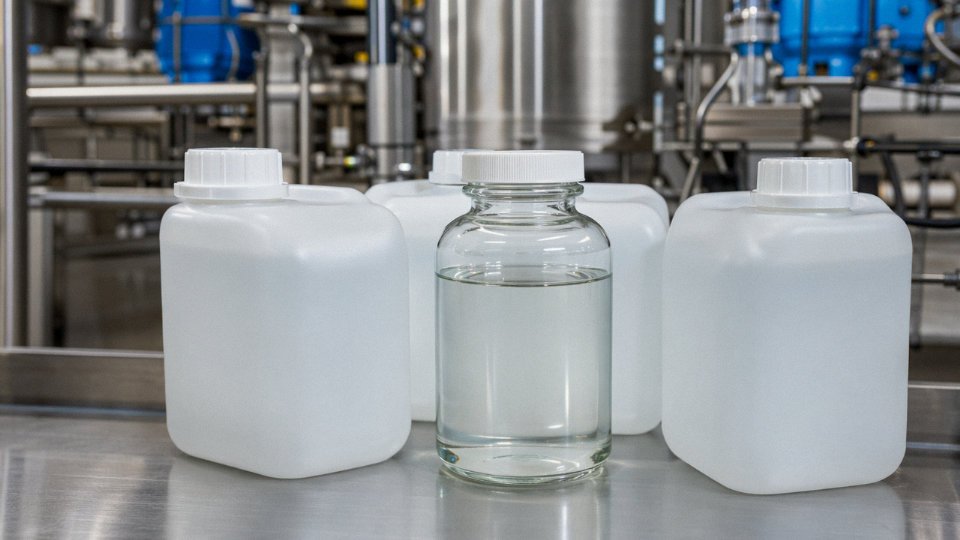
Before any new shipment of a silicone oil grade you haven’t moved before, someone on the logistics team needs to pull Section 14 of that specific product’s SDS. Not the family SDS. The product SDS.
Section 15: Regulatory Status Across TSCA, SARA, REACH, and Prop 65
TSCA inventory status is the first checkpoint for any silicone oil entering the United States. Standard PDMS grades are generally listed on the active TSCA inventory, but “generally” isn’t good enough for import compliance. Confirm the exact CAS number appears on the EPA’s current active inventory before the first import shipment. A specialty silicone blend with a proprietary modification may carry a different CAS number — or may require a Low Volume Exemption or TSCA Section 5 notice if it’s genuinely new to the inventory.
SARA Title III is less of a concern for bulk PDMS. The polymer itself is not a Section 313 listed chemical, and it doesn’t trigger Section 302/304 emergency planning thresholds. That said, if your supplier’s formulation includes additives — antioxidant packages, viscosity modifiers, catalyst residues — those components need to be individually checked. The SDS for a blended product should list each component with its own regulatory status; if it doesn’t, ask for the full composition disclosure under a non-disclosure agreement before signing off on the material.
REACH compliance is where EU-facing supply chains need the most attention right now. The restriction on D4 (octamethylcyclotetrasiloxane) and D5 (decamethylcyclopentasiloxane) under REACH Annex XVII applies to wash-off cosmetic products at a 0.1% w/w threshold, but the regulatory trajectory for D4 and D5 in industrial applications is tightening. Manufacturers supplying into the EU should already be providing SVHC (Substance of Very High Concern) declarations under Article 33 for any blend where cyclic siloxane content is detectable. If your supplier can’t produce that documentation, that’s a procurement risk worth pricing in.
Standard PDMS silicone oil appears on the TSCA active inventory and is not a SARA Title III listed chemical.True
PDMS (CAS 63148-62-9 and related CAS entries) is listed on the EPA TSCA active inventory, and polydimethylsiloxane is not included on the SARA Section 313 toxic chemical list. However, formulation additives must be individually verified.
California Prop 65 is easy to overlook for industrial silicone oils, and for pure PDMS that’s usually reasonable — it’s not on the Prop 65 list. The issue comes with blended products where platinum-based catalysts are used in the manufacturing process. Some platinum compounds carry Prop 65 listings. If you’re procuring silicone oil for a facility in California and the SDS Section 15 notes any catalyst residue, get the supplier’s Prop 65 compliance statement in writing before the material ships.
Section 16: Revision Dates and SDS Currency
Section 16 tells you when the SDS was last revised, who prepared it, and sometimes what changed. A silicone oil SDS that’s four or five years old may predate current GHS classification revisions for cyclic siloxanes, updated REACH restriction entries, or revised ACGIH exposure guidelines. Three years is a reasonable outer limit for SDS currency on any material with active regulatory scrutiny — and silicone oils, particularly those with measurable D4/D5 content, are under active regulatory scrutiny.
Build a supplier audit cycle that includes SDS revision verification. Annually is not excessive for materials used in volume. When a supplier issues a revised SDS, compare it against the previous version systematically — changes in Section 2 (hazard classification), Section 8 (exposure controls), or Section 15 (regulatory status) can have immediate operational implications that don’t announce themselves unless someone is actually looking.
How to Audit and Validate a Silicone Oil MSDS for Accuracy and Completeness
Receiving an MSDS from a supplier is not the same as having a valid one. In practice, silicone oil datasheets circulate in facilities for years after revision, get forwarded as PDF attachments stripped of metadata, and occasionally arrive with generic filler in critical fields — “not determined” sitting in the flash point row, for example, when any reputable lab can run ASTM D92 on a 50 cSt PDMS sample in under an hour. A structured audit before the product enters your facility is not bureaucratic overhead; it is the only reliable way to catch these gaps before they become compliance findings or, worse, incidents.
The 16-Section Completeness Check
Work through each GHS-required section with a binary pass/fail against silicone oil-specific criteria, not generic chemical criteria. Section 9 is where most MSDS documents fail for this product class. Flash point must be listed with a cited test method — ASTM D92 (Cleveland Open Cup) or ISO 2592 are both acceptable, and the stated value should be consistent with the viscosity grade: a 50 cSt PDMS should show something in the 150–200°C range, while a 1000 cSt grade typically runs 300°C or above. “Not applicable” is not acceptable here; silicone oil is combustible, and any MSDS claiming otherwise for the common viscosity range should be rejected outright.
MSDS Section 9 may legitimately state 'not applicable' for flash point on silicone oilFalse
Polydimethylsiloxane (PDMS) across commercial viscosity grades (50–1000 cSt) has a measurable flash point ranging roughly 150–320°C depending on grade. Stating 'not applicable' is factually incorrect and fails GHS Section 9 requirements for combustible liquids.
Section 2 should list a GHS hazard classification, even if the substance classifies as non-hazardous under the relevant regulation — “not classified” is a valid answer, but a blank field is not. Sections 11 and 12 are frequently thin on cyclic siloxane data; flag any document that omits D4, D5, or D6 from the composition or toxicology sections entirely, especially if the product is a lower-viscosity grade where residual cyclics are more likely.
CAS Number Cross-Validation
Every CAS number listed in Section 3 should be independently verified against EPA ChemView and the ECHA C&L Inventory before you log the document. Pull the supplier’s current Certificate of Analysis (COA) and compare composition — mismatches between COA and MSDS are surprisingly common with re-labeled or repackaged product, and they are a leading trigger for facility compliance violations during regulatory audits. A silicone oil MSDS listing only the PDMS polymer CAS (63148-62-9) while the COA references added functional groups or blending agents is an automatic hold until the supplier issues a corrected document.
Cyclic Siloxane Impurity Audit
MSDS Section 3 disclosure alone does not satisfy current EU REACH obligations on D4 (CAS 556-67-2), D5 (CAS 541-02-6), and D6 (CAS 540-97-6). Request a quantitative analytical report — GC-MS or GC-FID are both accepted methods — confirming actual concentrations, not just a checkbox indicating presence or absence. Detection limit requirements under REACH have tightened, and a qualitative “not detected” note on a supplier spec sheet from three years ago may no longer be sufficient. If your supplier cannot provide this on request, that itself tells you something about their quality infrastructure.
Authorship and Contact Information Verification
Section 1 must list a real, reachable emergency contact. CHEMTREC (1-800-424-9300) is the most common US reference and is legitimate; a generic office phone number is not equivalent. Confirm the document carries a revision date and version number. Anonymous or undated MSDS documents should be refused — not filed and flagged, actually refused and returned to the supplier with a formal request for a compliant document. This is a reasonable standard and reputable suppliers expect it.
Integrating Validated Documents into Your Chemical Management System
Once a document passes audit, log it with the revision date, the associated purchase order numbers, and the product lot range it covers. Whether you use Intelex, Cority, or a SharePoint library with some discipline behind it, the critical functions are the same: set an automatic expiry alert at three years (the standard GHS review cycle), link each SDS record to its procurement line so incoming orders automatically trigger a version check, and restrict editing rights so documents cannot be quietly overwritten. In a plant handling multiple silicone oil viscosity grades from the same supplier, it is easy to accidentally apply a 100 cSt MSDS to a shipment of 10 cSt product — the flash points, vapor pressures, and handling controls differ enough that this matters. Systematic linking to the purchase order is the only reliable safeguard against that class of error.
Frequently Asked Questions About Silicone Oil MSDS Requirements
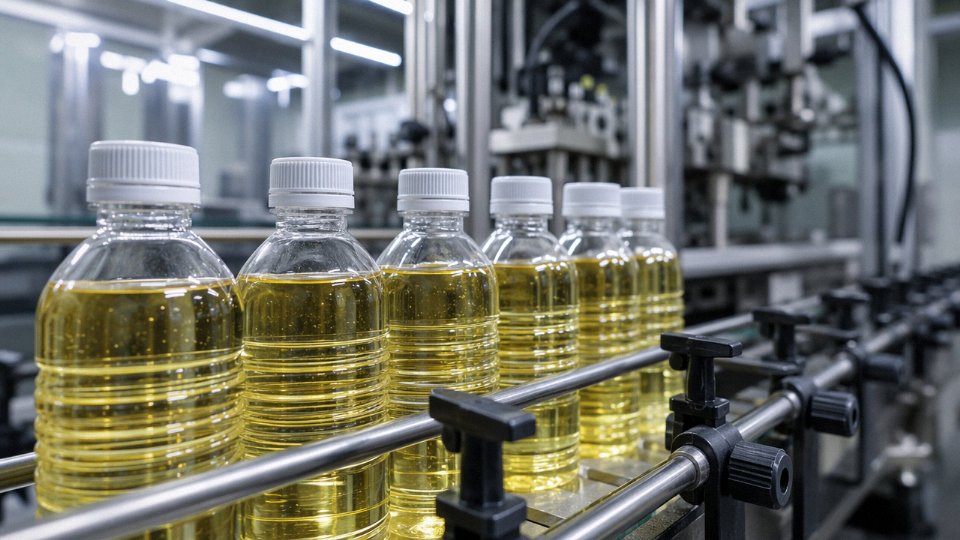
Is silicone oil classified as a hazardous material?
Standard PDMS — the backbone polymer in most industrial silicone oils — is generally not classified as hazardous under GHS for either transport (UN dangerous goods) or workplace purposes. That’s the answer for probably 80% of the products sitting in drums on a typical plant floor. But the category is not monolithic. Low-viscosity reactive silicone fluids, amino-functional grades, and hydrogen-containing silicones can carry irritant, flammable, or dangerous-when-wet designations depending on the functional group attached to the siloxane backbone. Some chlorosilane-derived intermediates that ship under “silicone oil” trade names are genuinely aggressive chemicals.
The operational rule: do not assume shared classification across product lines from the same supplier, let alone across different manufacturers. Pull Section 2 of the specific product SDS every time. This sounds obvious. In practice, maintenance teams routinely substitute a “similar” silicone oil and carry over the old MSDS without checking. That’s where the gap opens.
Does silicone oil have an OSHA permissible exposure limit?
No formal OSHA PEL exists for silicone oil mist. The most widely applied benchmark is the ACGIH TLV of 10 mg/m³ as an 8-hour TWA for inert or nuisance particulate — roughly the same ceiling used for many low-toxicity oil mists. Some supplier SDS documents go further and cite a proprietary OEL that is more stringent, sometimes down to 5 mg/m³. That matters operationally: a proprietary limit stated in an SDS becomes legally enforceable under OSHA’s General Duty Clause, which requires employers to protect workers from recognized hazards even absent a specific PEL.
No OSHA PEL exists specifically for silicone oil (polydimethylsiloxane) mist as of current US regulations.True
OSHA's established PEL tables do not include a silicone oil-specific limit; the ACGIH TLV for inert particulate mist (10 mg/m³ TWA) is the primary industry reference, and enforcement relies on the General Duty Clause where supplier OELs are cited on the SDS.
How often should a silicone oil MSDS be updated?
OSHA HazCom 2012 sets a hard deadline: the SDS must be revised within three months of new hazard information becoming available. That’s the legal floor. In practice, a product can go years without a triggered update even if the underlying impurity profile has quietly shifted — say, a supplier changes their distillation cutoffs and D4 content edges up. Best practice in any ISO 9001 or chemical management system is to request a fresh SDS from the supplier on a three-year cycle and immediately whenever there’s a formulation change, a raw material source change, or a shift in the impurity specification on the certificate of analysis.
Are D4 and D5 siloxane impurities always disclosed on the MSDS?
Not consistently, and this is a genuine compliance trap. EU REACH requires disclosure of SVHC substances above 0.1% w/w in Section 3. US OSHA only requires disclosure above 1% for non-carcinogens and 0.1% for carcinogens. So a product with D5 at 0.5% might appear fully compliant under a US SDS while failing EU requirements entirely. Facilities with supply chains touching the EU — or those operating under internal sustainability frameworks — need to request quantitative impurity data directly from the supplier beyond what Section 3 alone provides. A supplier’s reluctance to share that data is itself informative.
Can I use the same MSDS for food-grade and industrial silicone oil?
No. Full stop. Food-grade silicone oil compliant with FDA 21 CFR 178.3570 has a distinct formulation — tighter purity thresholds, specific viscosity grades, no functional additives — and a separate SDS that references that food-contact regulatory basis. Using an industrial-grade SDS for a food-grade product creates both a documentation gap and a regulatory non-conformance. In a food facility audit, that discrepancy will be flagged. The consequence isn’t just a paperwork problem; if an adulterant in the industrial grade causes a contamination event, the liability exposure is significant.
What should I do if a silicone oil MSDS is missing Section 12 ecotoxicology data?
Under GHS, omitting a required section is a compliance violation, not an acceptable data gap. The correct response is to contact the supplier immediately and request a fully compliant SDS. While you wait, apply the precautionary principle: restrict all drain disposal, treat any spill cleanup material as potentially environmentally harmful, and don’t allow the product into areas with direct stormwater pathway access. A missing Section 12 is occasionally a supplier oversight rather than an attempt to conceal data, but you don’t have a reliable way to distinguish between the two until the compliant document arrives.
Is a Safety Data Sheet the same document as an MSDS?
Functionally yes, structurally no. The old MSDS format — typically 8 sections, variable organization across manufacturers — was superseded by the 16-section GHS-aligned SDS format when OSHA HazCom 2012 took full effect in June 2015. Legacy MSDS documents are still legally usable if they contain information equivalent to what the 16-section format requires, but in practice a 2009-vintage MSDS for a silicone fluid is unlikely to address cyclic siloxane impurity data, REACH obligations, or current transport classifications with any precision. When auditing incoming documentation, treat a pre-2015 MSDS as a flag for supplier follow-up, not as a disqualifier on its own — but get the current SDS before the product goes into production.