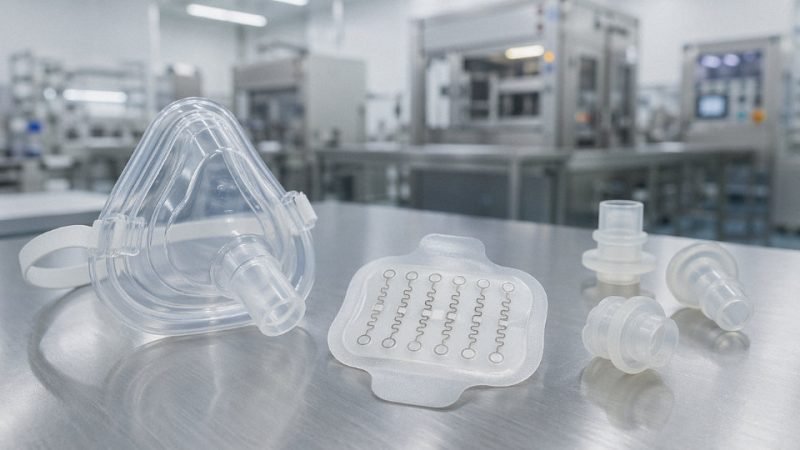
Sourcing a silicone material for a wearable device, a neonatal mask, or a food-contact seal and then finding out mid-validation that it fails biocompatibility testing is an expensive problem — failed ISO 10993 testing can push a product launch back six months or more, and the tooling and material qualification costs you already spent don’t come back. Procurement teams sometimes treat “silicone” as a single category, but the gap between industrial-grade and medical-grade LSR is wide enough to derail a regulatory submission entirely.
LSR (liquid silicone rubber) is body safe when it is formulated, processed, and certified to the correct standard. Medical-grade LSR passes ISO 10993 cytotoxicity, sensitization, and intracutaneous reactivity testing, contains platinum catalyst residuals typically below 5 ppm (well under ICH Q3D limits), and withstands repeated autoclave sterilization at 121–134 °C without degrading. The key qualifier is grade selection — not all LSR is equivalent.
What makes this material genuinely interesting from an engineering standpoint is that its safety profile isn’t just a regulatory checkbox — it’s a direct result of the chemistry itself, and understanding that chemistry tells you exactly where the risks actually live, which turns out to be mostly in processing decisions and supplier selection rather than the base polymer.
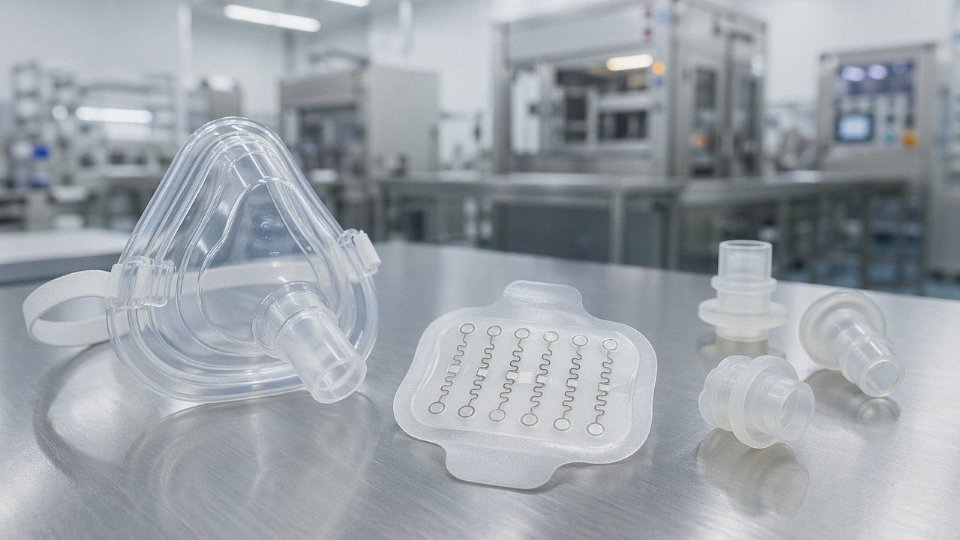
LSR Material Composition and What Actually Contacts the Body
Start with the backbone, because that’s where the safety story begins. LSR is built on polydimethylsiloxane — a repeating Si–O–Si chain with methyl (–CH₃) groups hanging off each silicon atom. The Si–O bond dissociation energy sits around 445 kJ/mol, which is meaningfully higher than the C–C bonds that make up most organic polymers. In practice, that means the backbone resists hydrolysis under physiological conditions, shrugs off dilute acids and alkalis, and doesn’t offer a useful substrate for the biological enzymes that break down proteins or polyesters. Implant-grade PDMS has been sitting in the human body for decades without the backbone itself being the problem. That’s not marketing — it’s why silicone became the default elastomer for long-term medical contact in the first place.
The cure chemistry matters as much as the base polymer. Medical LSR uses platinum-catalyzed addition cure, specifically hydrosilylation: a vinyl-terminated siloxane reacts with a Si–H crosslinker in the presence of a platinum complex catalyst, forming Si–C–C–Si bridges with no small-molecule by-products. Nothing splits off. Compare that to peroxide-cured heat-cure rubber (HCR), where the decomposition of organic peroxides releases ketones, alcohols, or carboxylic acid fragments — which is exactly why HCR parts targeting body contact require a secondary post-cure purge cycle to volatilize those residuals. With LSR addition cure, you don’t have that class of contaminant at all. Residual platinum in fully cured LSR typically runs below 5 ppm, well under the ICH Q3D elemental impurity guideline ceiling of 100 µg/day for oral platinum-group metal exposure. That said, the actual level depends on the catalyst loading chosen by the compounder and the cure temperature profile — don’t assume every supplier’s part hits the same number.
So what does actually contact the body? Four species worth tracking:
Low-molecular-weight cyclic siloxane oligomers — D4, D5, D6, and their linear analogs — are the realistic migration concern. These are synthesis byproducts present in the base polymer before cure, and they’re small enough to diffuse out of the crosslinked network over time. An unpost-cured LSR part can carry 1–3 wt% or more of these cyclics. Secondary cure at roughly 200 °C for 2–4 hours drives that content down to somewhere in the 0.1–0.5 wt% range, depending on part thickness, oven airflow, and the specific grade. This step is not optional in any credible medical-grade processing spec. Skip it and you will fail extractables/leachables testing downstream — usually at significant cost in time and rework.
Residual platinum catalyst sits at trace levels after cure, as discussed above.
Fumed silica filler provides the reinforcement that gives LSR its mechanical properties. Fumed silica used in medical compounding is hydrophilic or surface-treated amorphous silica — not the crystalline quartz that carries occupational lung hazard. Particle size and surface chemistry are set at the compounder level, and reputable medical-grade suppliers specify these tightly.
Pigments and additive packages are where the grade distinction gets sharp. A compounder supplying food-grade or consumer-grade LSR has very different latitude on colorants, processing aids, and stabilizers than one supplying to a medical OEM. Iron-oxide pigments at low loading are generally acceptable; some organic dyes are not. The burden is on the compounder and the device manufacturer to evaluate the full additive package, not just the base silicone.
All LSR grades are equally safe for body contact because the PDMS backbone is inert.False
The backbone inertness is real, but safety for body contact depends on the full compounded formulation — cyclic siloxane content, catalyst residuals, filler grade, and additives — plus mandatory post-cure and ISO 10993 testing. Consumer-grade and medical-grade LSR are not interchangeable for implant or prolonged skin-contact applications.
The grade distinction is where procurement teams most often create risk. Buying on “silicone” as a commodity specification, without locking in the ISO 10993 test data and pharmacopeia compliance for the exact compound and lot, is how body-contact products end up with safety gaps that don’t surface until biocompatibility testing or regulatory review.
Regulatory and Certification Frameworks That Define Body-Safe LSR
Getting the chemistry right is only half the work. The other half is navigating the regulatory layer — and on this front, the landscape is genuinely complex, with overlapping standards from different jurisdictions that don’t always agree on methodology or acceptance criteria. For a procurement engineer qualifying an LSR supplier, or a product designer filing a 510(k), understanding which documents apply to which use category is not optional.
ISO 10993: The Primary Risk Framework
The ISO 10993 series runs to 21 parts, but not all of them apply to every LSR application. The governing document is Part 1, which establishes the biological evaluation framework — essentially a risk-tiered matrix based on contact type (surface, external communicating, or implant) and duration (limited under 24 hours, prolonged up to 30 days, permanent beyond that). Everything else flows from the risk classification you assign in Part 1.
For most LSR body-contact applications, the minimum testing package pulls from Part 5 (cytotoxicity, usually the first test run because it’s fast and cheap to screen out bad batches), Part 10 (sensitization — critical for skin-contact wearables and anything worn repeatedly), and Part 11 (systemic toxicity, both acute and sub-acute). Blood-contacting devices — catheter seals, pump diaphragms, anything that touches the bloodstream — add Part 4 hemolysis testing, which evaluates whether leachables lyse red blood cells. Part 3 covers genotoxicity and mutagenicity, typically required for implantables and longer-contact devices. Part 12 governs sample preparation, and this part matters more than most engineers realize: extraction vehicle, temperature, and duration all affect what leachables you find, so a test run with the wrong Part 12 protocol can either miss real hazards or generate false flags. Part 13 addresses identification of degradation products — relevant primarily for implant-grade LSR where long-term oxidative or hydrolytic breakdown pathways need characterization.
ISO 10993-5 cytotoxicity testing alone is sufficient to certify LSR for prolonged skin contact.False
Part 5 is a minimum screening test. Prolonged skin-contact applications require at minimum Parts 5, 10, and 11 per the ISO 10993-1 risk matrix, and blood-contact use adds Part 4. Relying solely on Part 5 data would not satisfy a notified body review under EU MDR or FDA 510(k) biological evaluation requirements.
USP and : Still Alive in OEM Specs
Technically, the medical device industry has largely shifted toward ISO 10993 as the primary biological safety standard. In practice, a significant share of device OEMs — particularly US-based ones with older design histories — still require USP (in vitro cytotoxicity) and USP Class VI (in vivo systemic, intracutaneous, and implantation tests) in their supplier qualification packages. Class VI is the most stringent USP plastics category, and passing it on all three animal model tests is what most device customers mean when they say “we need Class VI certified material.”
The distinction worth understanding: USP Class VI is a material-level certification run at elevated extraction temperatures (50°C, 70°C, 121°C depending on intended processing), while ISO 10993 is a device-level risk assessment that accounts for the specific clinical exposure. You can have a Class VI-certified LSR compound that still needs additional ISO 10993 testing for a specific device because the contact geometry, duration, or sterilization method changes the leachable profile. Both documents can be — and often are — required simultaneously.
FDA Pathways: Food Contact and Device QSR
For food-contact applications — infant feeding nipples, kitchen utensils, bakeware seals — the relevant US citation is 21 CFR 177.2600, which covers repeated-use rubber articles in contact with food. Compliance requires that the cured elastomer meet extractable limits under specified aqueous, acidic, and fatty food simulants. The regulation lists permitted ingredients; an LSR formulation using additives outside that list is not compliant regardless of its ISO 10993 status, because 177.2600 is a compositional standard, not a bioassay standard.
Medical device manufacturers operate under 21 CFR Part 820 (Quality System Regulation), now largely aligned with ISO 13485. For LSR components, this means the material supplier needs documented design controls, lot traceability, and change-notification procedures — not just test certificates. A supplier who can hand you a Class VI certificate but cannot provide a material change notification protocol is a supply chain risk waiting to happen.
EU MDR and REACH Compliance
Under EU MDR 2017/745, Annex I General Safety and Performance Requirements mandate that implantable and prolonged-contact materials be evaluated for chemical, physical, and biological safety in a documented biological evaluation plan. For LSR, this ties back into ISO 10993-1 risk assessment, but the MDR adds an explicit requirement to minimize risk from substances that are carcinogenic, mutagenic, or toxic to reproduction (CMR) and endocrine-disrupting chemicals — meaning your technical file needs to address siloxane cyclic species residuals specifically.
REACH is where D4 (octamethylcyclotetrasiloxane) and D5 (decamethylcyclopentasiloxane) become a documentation issue. Both are classified as substances of very high concern above 0.1 wt% in articles. Post-cured medical-grade LSR typically contains residual D4/D5 well below that threshold — post-curing at 200°C for 2–4 hours drives volatile cyclics down to levels that routinely test under 0.05 wt% — but you need the supplier’s analytical data confirming this, not just their assurance. Ask for GC-MS residual volatiles data from the specific lot, particularly if the parts skip secondary post-cure for cost reasons.
Certification Checklist for LSR Supplier Qualification
| Standard | Applicable use category | Key test endpoints | Typical pass criteria |
|---|---|---|---|
| ISO 10993-5 | All body-contact | Cytotoxicity (elution/direct contact) | No grade ≥2 reactivity |
| ISO 10993-10 | Skin contact, implant | Sensitization (Buehler or GPMT) | No sensitization response |
| ISO 10993-11 | Prolonged/permanent contact | Acute systemic toxicity | No systemic reaction at 0.2 g/kg dose |
| ISO 10993-4 | Blood-contacting devices | Hemolysis, thrombogenicity | Hemolysis index typically <5% |
| ISO 10993-3 | Implantables | Genotoxicity (Ames, MNT) | Negative mutagenic response |
| USP Class VI | OEM device supply (US market) | Systemic, intracutaneous, implantation | Passes all three in vivo models |
| USP | Screening / OEM supply | In vitro cytotoxicity | No grade ≥2 |
| 21 CFR 177.2600 | Food contact (US) | Extractables in food simulants | Within listed ingredient and extractable limits |
| EU MDR Annex I | EU market devices | Full biological evaluation plan | Documented risk acceptability per ISO 10993-1 |
| REACH SVHC | EU articles >0.1 wt% threshold | Residual D4/D5 cyclics (GC-MS) | Below 0.1 wt% in finished article |
One practical note: not every standard on this list applies to every product, and over-testing wastes budget. The ISO 10993-1 risk matrix is the correct starting point — let the contact category and duration drive which parts you actually need. What you should never do is let a supplier’s marketing sheet substitute for actual test reports with lot numbers, extraction conditions, and a statement of conformance signed by a qualified toxicologist.
Cytotoxicity, Sensitization, and Implant Biocompatibility Test Data
Understanding that a supplier’s LSR is “ISO 10993 tested” is a starting point, not a finish line. The standard is actually a series of over a dozen test methods, and a supplier handing you a single cytotoxicity certificate for a compound that will contact blood is handing you an incomplete picture. Here’s how to read what you actually get.
Cytotoxicity Testing (ISO 10993-5)
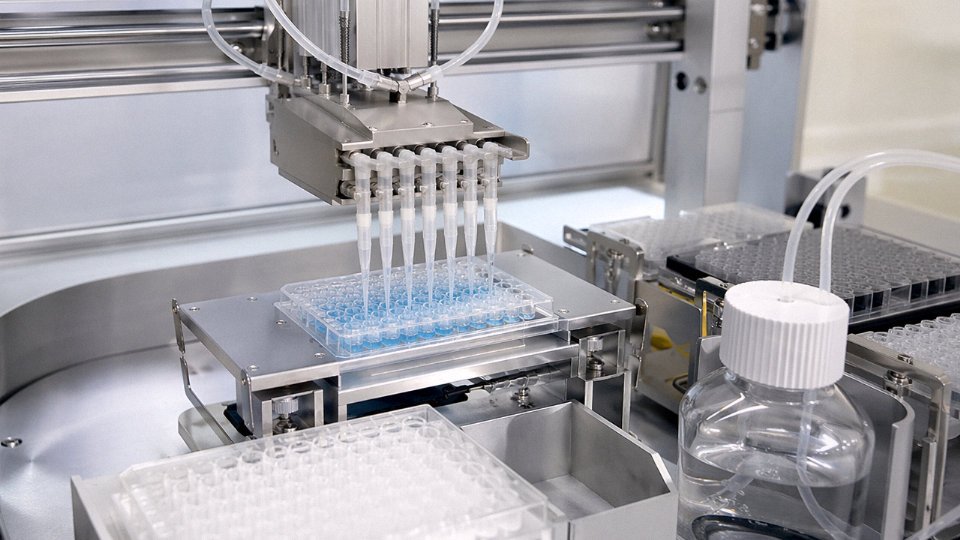
Two methods dominate: elution and direct contact. In the elution method, an extract of the cured LSR is prepared in culture medium, then applied to a mammalian cell monolayer. Direct contact places the material physically against the cells. For LSR, the elution method is generally the more conservative choice — it captures any mobile species that can partition into a physiological-analog fluid, which is exactly the mechanism relevant to subcutaneous or blood-contacting applications.
The scoring scale runs from Grade 0 (no cytotoxic effect) through Grade 4 (complete cell destruction). A Grade 0 or 1 result is required for body-contact approval; Grade 2 and above is a failure and typically triggers either formulation review or rejection of that specific compound lot. Well-processed, post-cured medical-grade LSR almost always comes in at Grade 0. The “almost” matters: if secondary post-cure at roughly 200 °C for 2–4 hours was skipped or shortened, residual cyclic siloxanes (D4, D5, D6) remain elevated, and you will occasionally see a Grade 1 creeping toward 2. Operators who shorten post-cure cycles to hit throughput targets create exactly this problem.
Sensitization (ISO 10993-10)
The guinea pig maximization test (GPMT) and the murine local lymph node assay (LLNA) are both accepted under this standard. The LLNA has largely displaced the GPMT in new study designs because it uses fewer animals and gives a quantitative stimulation index rather than a pass/fail count. LSR’s polydimethylsiloxane backbone is consistently non-sensitizing across both models — that result is reliable and well-replicated.
The risk doesn’t come from the base polymer. It comes from colorants, coupling agents, adhesion promoters, or processing aids in the compound that were never independently evaluated under ISO 10993. A supplier offering a blue or black LSR with a pigment system sourced from a non-medical supply chain is a real-world scenario where sensitization data for the full compound — not just the base gum — is essential. Always ask for the test certificate to list the exact compound grade tested, with its lot or batch number. A certificate covering “neat silicone gum” does not cover your colored, filled production compound.
Intracutaneous Reactivity and the Rabbit Model
ISO 10993-10 and USP Class VI both use a rabbit model for intracutaneous reactivity. Extracts are injected intradermally; sites are scored at 24, 48, and 72 hours on a 0–3 scale for erythema and edema. Cured, post-processed LSR scores 0–1 routinely. A score of 2 or 3 in this test suggests extractable irritants are present — again, usually traceable to the additive package or to inadequate post-cure, not to the silicone polymer itself.
Post-cured, platinum-catalyzed LSR with no added colorants or non-evaluated processing aids consistently passes intracutaneous reactivity at Score 0–1 under USP Class VI testing.True
This result is well-documented across published biocompatibility studies and supplier data packages from major LSR manufacturers; it reflects the inert nature of the cured PDMS network and the low platinum residuals below 5 ppm after cure.
Implant Testing and the Breast Implant Conflation Problem
ISO 10993-6 covers implantation studies — typically subcutaneous or intramuscular implants in rabbits or rats, evaluated at 1, 4, and 12 weeks for fibrous capsule formation, necrosis, and inflammatory infiltrate. Some degree of fibrous encapsulation around any foreign body implant is a normal tissue response, not a material failure.
One distinction that gets blurred in public-facing discussions: the silicone gel used in breast implant shells is a cohesive gel elastomer, not LSR. The implant safety controversies of the 1990s involved that material and shell integrity issues, not injection-molded or liquid-cast LSR components used in subcutaneous device housings, transcutaneous connectors, or cochlear implant seals. Conflating them is a category error. When evaluating LSR for an implantable device component, the relevant implant studies are those conducted on the specific cured elastomer form factor at issue — not general silicone literature.
Hemolysis for Blood-Contacting Components
For any LSR part that contacts blood — heart valve seals, blood pump membranes, extracorporeal circuit components — ISO 10993-4 hemolysis testing becomes mandatory. The hemolysis index threshold is below 5% for a non-hemolytic classification; in practice, well-formulated platinum-cured LSR with a clean extractables profile achieves roughly 1–2%, give or take depending on the specific compound and extract ratio used in the test.
Extractables and Leachables: The Actual Safety Threshold Work
E&L studies per ICH Q3B and Q3C represent the most rigorous layer of chemical safety characterization. For medical-grade LSR, the extractables profile after post-cure is dominated by low-molecular-weight cyclic siloxanes (primarily D4 through D6) at concentrations that, in properly post-cured material, typically fall well below established safety thresholds. Platinum residuals in cured LSR sit below 5 ppm as a rule — far under the ICH Q3D guideline ceiling of 100 µg/day for oral platinum-group metal exposure. The practical warning here: an E&L study performed on pre-post-cure material, or material that was post-cured at too low a temperature, will show elevated siloxane levels and may trigger a threshold-of-toxicological-concern (TTC) review that delays regulatory submission. Get the process parameters locked before commissioning the E&L study.
Skin-Contact and Wearable Device Safety: Chronic Exposure Considerations
Wearable health devices represent the fastest-growing LSR end market right now, and they create a safety problem that standard biocompatibility panels weren’t really designed for. A pacemaker component sits in a stable internal environment. A continuous glucose monitor patch sits against sweaty skin for 10–14 days, gets wet in the shower, flexes with movement, and traps microclimate humidity underneath it. Those are fundamentally different exposure conditions, and engineers designing for wearable applications need to think beyond the ISO 10993 minimum test battery.
Sensitization Under Repeat Exposure
ISO 10993-10 covers sensitization testing, but the standard guinea pig maximization test and the Buehler test are single-episode protocols — they tell you whether a material can trigger an initial sensitization event, not whether it will cause a reaction after weeks of daily contact. Wearable OEMs who have done this rigorously use the Repeat Insult Patch Test (RIPT) or, more conservatively, the Human Repeat Insult Patch Test (HRIPT), which subjects a human panel to 9–10 induction exposures followed by a challenge phase. HRIPT runs 6–8 weeks and costs considerably more than animal-based screening, but for a device worn continuously on skin it’s the protocol that actually mirrors real use. Several wearable patch developers require HRIPT data in their supplier qualification packages as a condition of approval — if a supplier only offers a murine sensitization report, that’s a gap worth pushing back on.
Standard ISO 10993-10 single-episode sensitization testing is sufficient for chronic skin-contact wearable devices.False
ISO 10993-10 covers initial sensitization episodes. Chronic wear applications require repeat insult protocols (RIPT/HRIPT) that simulate prolonged, repeated skin contact — a meaningfully different exposure scenario not captured by single-episode animal tests.
Moisture Trapping and Maceration Risk
LSR’s water vapor transmission rate typically falls in the 10–30 g/m²/day range for a 0.5 mm sheet at 38 °C and 90% relative humidity — the exact value depends on durometer, filler loading, and surface finish. That sounds acceptable until you realize the skin itself generates far more moisture under occlusion, particularly during exercise or in humid climates. The result is maceration: skin softens, barrier function drops, and the risk of irritant or microbial dermatitis rises sharply. In hot summer conditions or on high-perspiration users, maceration can develop within 48–72 hours under an impermeable patch.
The engineering responses are reasonably well established: laser-perforated or molded-porous LSR structures can increase effective WVTR by a factor of 3–5x depending on perforation geometry and open-area ratio; breathable adhesive interfaces (polyurethane foam or nonwoven backing layers) routed around rather than under the LSR body also help significantly. Some prosthetic liner manufacturers have moved to open-cell silicone foam constructions for exactly this reason. It adds tooling complexity but the clinical difference in skin health for amputees wearing a liner 16+ hours daily is real and measurable.
Platinum Residuals and Colorants
Platinum-group metal allergy is rare — roughly 0.01–0.1% of the general population, with higher incidence in individuals previously sensitized through occupational or dental exposure. Residual platinum in properly post-cured LSR runs below 5 ppm, which sits well under the elicitation threshold for sensitized individuals based on available dose-response data. In practice, this is a low-priority risk for most wearable applications, but it’s worth disclosing in any device risk file for completeness, particularly if the device targets immunocompromised users.
Colorants are a more practical concern. Skin-contact LSR should only use pigments with an FDA 21 CFR Part 73 listing or equivalent EU colorant regulation approval — iron oxides are the standard, reliable choice. Organic azo dyes, which occasionally appear in cheaper compounded silicones, carry documented skin sensitization potential and have no place in body-worn applications. Ask suppliers specifically which pigment system is in use, and get it in writing on the Certificate of Compliance. Some suppliers will list “FDA-compliant silicone” on a datasheet while using colorant packages that haven’t been individually qualified — that’s a gap you don’t want to discover during a post-market adverse event review.
Incoming Inspection and Supplier Documentation Minimum
For wearable device manufacturers, minimum acceptable supplier documentation should include: a batch-traceable Certificate of Compliance referencing the specific ISO 10993 tests conducted and the HRIPT report number, platinum residual content confirmed by ICP-MS to batch level, and explicit colorant identification by CAS number. Post-cure protocol matters operationally — secondary oven cure at 200 °C for 4 hours (give or take, depending on part thickness and formulation) drives out residual volatile methylsiloxanes that would otherwise be present at concentrations relevant for repeated dermal contact. Parts arriving without a documented post-cure step should trigger incoming hold until the supplier can confirm the thermal history.
Food and Infant Product Safety: Leachables at Elevated Temperature
Parental concern about silicone baby products is real, and it deserves a straight technical answer rather than marketing reassurance. The short version: properly compounded, post-cured, platinum-catalyzed LSR used in certified infant and food-contact applications is among the safest elastomers available for the purpose. The longer version involves understanding exactly which grade, which certification, and which processing steps make that true — because not all the silicone kitchenware on the market meets the same bar.
Regulatory Compliance Is Grade-Specific, Not Material-Wide
FDA 21 CFR 177.2600 covers rubber articles intended for repeated use in food contact, and LSR can comply — but the operative word is “can.” Compliance depends on the specific compound: the base polymer, any fillers, colorants, plasticizers, or processing aids included in that particular grade from that particular supplier. A manufacturer who lists “silicone” on a product without specifying the compound and without a supplier-issued CFR compliance letter is giving you essentially nothing useful. EU Regulation 10/2011, which governs plastic materials in food contact (LSR is often assessed under this framework by EU member-state authorities for consistency), sets an overall migration limit of 10 mg/dm² and assigns specific migration limits to individual substances of concern. Again, compliance attaches to the compound, not to “silicone” as a category.
This distinction matters operationally. A procurement manager sourcing baby bottle nipples should be demanding a written compliance declaration tied to a specific grade designation — something like a Wacker Elastosil MED or Dow SILASTIC medical/food-contact grade, with the corresponding test data package — not a generic statement that the product is “food-grade silicone.”
Migration Testing and What the Numbers Actually Mean
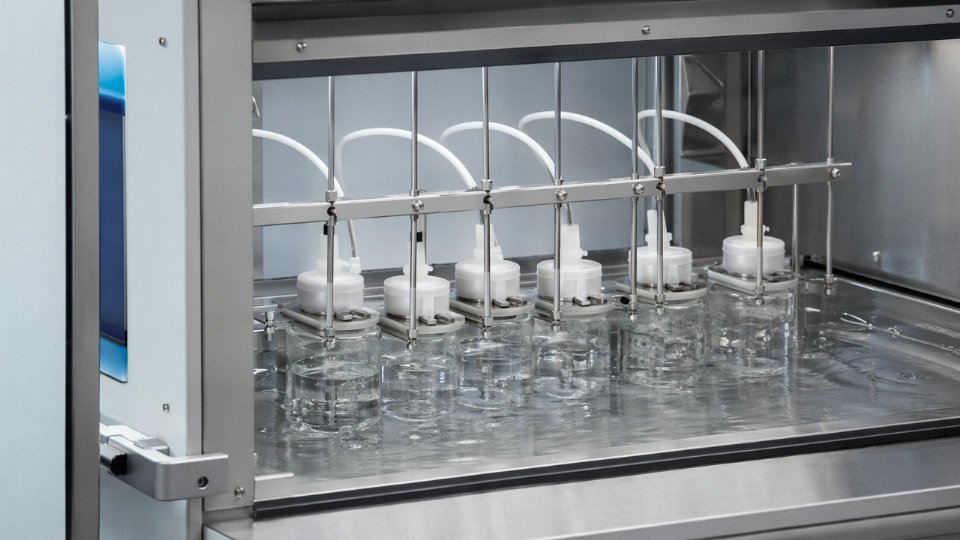
Standard migration testing runs LSR samples against four food simulants under time-temperature conditions that deliberately stress the material: deionized water, 3% acetic acid (simulating acidic foods), 10% ethanol (fatty and alcoholic foods), and vegetable oil or a standardized substitute. These map to EN 1186 and the conditions specified in EU Regulation 10/2011. The test cell exposes a known surface area — typically expressed in dm² — to the simulant at elevated temperature for a defined contact period, and then the simulant is analyzed.
For low-molecular-weight (LMW) cyclic siloxanes, particularly D4 and D5, migration rates climb with temperature. At dishwasher-equivalent conditions around 70 °C, properly post-cured LSR releases D4 at roughly below 0.01 mg/dm² per exposure cycle in well-characterized compounds. That figure sits comfortably below current toxicological concern thresholds, though it is worth noting that D4 is classified as a persistent, bioaccumulative substance under EU REACH, so some manufacturers are proactively reformulating to reduce cyclic siloxane content regardless of whether migration limits are technically exceeded.
Post-curing is the critical processing step here. Insufficiently post-cured LSR — say, a part that came off the press and went straight into packaging — retains meaningfully higher LMW siloxane content. The thermal post-cure (typically 2–4 hours at 200 °C in a circulating air oven, though exact conditions vary by wall thickness and grade) drives off volatile species and dramatically lowers the extractable pool available for migration. Skipping or shortening this step to save cycle time is a false economy with real liability consequences.
All silicone baby products sold commercially meet FDA or EU food-contact migration limitsFalse
Compliance depends on the specific compound grade, compounding ingredients, and whether the finished product has been tested or carries a valid supplier compliance declaration. Many consumer silicone kitchen and infant products lack documented migration testing against certified simulants.
Infant Feeding Products and the Nitrosamine Distinction
Pacifiers and bottle nipples face an additional requirement that often surprises engineers coming from industrial silicone backgrounds: EN 1400 (pacifiers for infants) and ASTM F963 (toy safety, which covers many infant products sold in the US) both include testing for nitrosamines and nitrosatable substances. This is where the curing chemistry becomes directly relevant to safety.
Peroxide-cured silicones and, more critically, sulfur- or amine-accelerated rubbers can generate nitrosamines during vulcanization or under conditions of use. Platinum-catalyzed LSR avoids this pathway entirely — the cure mechanism doesn’t involve nitrogen-containing accelerators, so there’s no precursor chemistry to drive nitrosamine formation. For infant product applications, this is one of the clearest reasons to specify platinum-cure LSR over other elastomers rather than treating it as interchangeable with general-purpose rubber compounds.
Fat Contact, Oil Swell, and a Frequent Misunderstanding
LSR in contact with fatty foods — infant formula, butter, cooking oils — will absorb some fraction of that oil. Volume swell in vegetable oil at 100 °C typically runs somewhere in the 0.5–3% range depending on the silicone’s cross-link density and filler loading; lower-hardness grades (Shore A 20–30) tend toward the higher end. This is a mechanical and dimensional concern for seal design and for fitting tolerances on bottle collars or steamer valve components.
What it is not is evidence of harmful leaching in the reverse direction. Oil absorption into LSR does not mean LSR is leaching harmful substances into the oil in proportional quantities. The two phenomena are physically distinct. In product liability contexts — and in conversations with anxious parents — this distinction is worth stating plainly and backing with your migration test data rather than leaving it to inference.
Implantable LSR Applications: Where the Safety Bar Is Highest
Implantable devices sit at the extreme end of the biocompatibility spectrum. A wearable patch that causes mild irritation gets returned; an implant that provokes a chronic inflammatory response may require surgical revision years later. That asymmetry explains why implantable-grade LSR is effectively a different product category from standard medical-grade, even when the base polymer chemistry looks identical on a data sheet.
What Separates Implantable-Grade LSR from Medical-Grade
The distinction is not marketing language — it shows up in documented, auditable ways. Suppliers like Dow’s SILASTIC implant-grade silicones, NuSil’s MED-4000 series, and Momentive’s implant-specific grades maintain tighter lot-to-lot consistency than standard medical grades: controlled platinum catalyst loading, narrower viscosity bands (typically ±5–8% of target versus ±15% or more in general industrial grades), and traceable batch documentation that follows the material into a finished device’s design history file.
The regulatory anchor is an FDA Drug Master File (DMF). An implant-grade LSR supplier with an active DMF has already submitted detailed formulation, manufacturing process, and safety data directly to FDA. A device manufacturer referencing that DMF in a 510(k) or PMA submission doesn’t have to re-establish the raw material’s safety from scratch — which is a significant practical advantage and, frankly, one of the first questions a regulatory affairs team should ask a prospective supplier. No DMF reference letter available? That’s a red flag worth slowing down for.
Full ISO 10993 chronic implant testing is the other differentiator. Standard medical-grade LSR typically covers cytotoxicity, sensitization, and intracutaneous reactivity — sufficient for short-term or surface contact. Implantable grade goes further: ISO 10993-6 implantation studies at 2-week, 12-week, and 26-week endpoints, with histological evaluation of the tissue surrounding implanted samples. Pathologists score fibrous capsule thickness, inflammatory cell density, and neovascularization against graded reference criteria. Passing all three timepoints is the minimum; a credible supplier report will show actual scores, not just a “pass” checkbox.
Correcting the Breast Implant Confusion
Breast implant safety controversies involve LSRFalse
Breast implant shells are made from high-consistency rubber (HCR) silicone elastomer — a solid gum-stock material processed by compression or transfer molding — and filled with cohesive silicone gel. Neither component is liquid silicone rubber. LSR is a two-part, platinum-catalyzed, injection-moldable material that cures at elevated temperature. The FDA moratorium from 1992 to 2006 on silicone gel breast implants concerned gel bleed through solid rubber shells, a phenomenon entirely unrelated to LSR processing or application.
This conflation causes genuine procurement confusion. Engineers sometimes encounter pushback from medical device clients who have absorbed the cultural noise around breast implants and apply it, incorrectly, to LSR components in pacemakers or cochlear implant housings. The materials are different, the processing is different, and the failure mode being debated in the 1990s had nothing to do with LSR.
Active Implantable Devices and Long-Term Electrical Stability
Pacemaker feedthroughs, cochlear implant leads, and neurostimulator housings place a specific demand on LSR beyond biocompatibility: electrical resistivity must stay high — typically above 10¹⁴ Ω·cm — for an implant life measured in decades, not years. LSR’s crosslinked siloxane network is inherently non-polar, which supports that resistivity, but the formulation matters. Fillers, pigments, or processing aids that introduce ionic contamination will degrade electrical performance in vivo.
In Vivo Degradation: What the Long-Term Data Shows
Two degradation pathways are worth understanding. Macrophages activated by a foreign body response generate hydrogen peroxide, which can attack susceptible polymer chains through oxidative mechanisms. Hydrolytic chain scission is the second route, driven by moisture and temperature over time. Properly formulated implantable-grade LSR — with appropriate crosslink density and without residual low-molecular-weight species — shows no measurable molecular weight change after two-year in vivo implantation under ISO 10993-13 extraction and analysis protocols. That stability is not guaranteed by grade name alone; it depends on post-cure extraction steps that remove residual cyclics and on the supplier’s formulation controls being actually followed, batch to batch.
In practice, the safest procurement posture is to require implantable-grade material with an active DMF, full ISO 10993-6 chronic implant data, and lot-specific certificates of conformance — then audit whether the converter’s injection molding process is qualified to handle that material without contamination. The material specification and the processing discipline have to match.
Sterilization Compatibility and Its Effect on LSR Safety Profile
The sterilization method a device manufacturer selects is not a downstream afterthought — it directly reshapes the extractable profile of the finished LSR component, sometimes enough to invalidate the original biocompatibility certification. This is one of the more commonly underestimated failure modes in medical device development: a material passes ISO 10993 testing in its cured state, then picks up a sterilization residual that introduces a new toxic species the original test never evaluated.
Steam Autoclave: The Benchmark Method for LSR
Autoclaving is simply the right answer for LSR when the product design allows it. At 121 °C, 15 psi, 15–20 minutes, or the more aggressive 134 °C, 3-minute flash cycle, cured PDMS-based LSR is chemically inert. Nothing happens to it — not to tensile strength, not to elongation at break, not to the extractable profile. Published cycling data consistently shows no measurable degradation after 1,000 autoclave cycles under ISO 11134 conditions, which is why reusable surgical instruments with LSR seals, valve membranes, and handpiece components routinely carry multi-year service expectations.
Steam does not penetrate the PDMS backbone. It does not leach platinum catalyst, does not hydrolyze the siloxane chain, and does not generate new low-molecular-weight siloxane species. From a safety standpoint, the post-autoclave component is essentially identical to the freshly demolded part. For procurement engineers specifying reusable device assemblies, this is the method to protect in the design.
Ethylene Oxide: Effective but Process-Intensive
EtO sterilization works, but LSR complicates it relative to most thermoplastics. The reason is straightforward: silicone’s relatively open molecular structure absorbs EtO at a higher rate, which means the desorption phase — aeration — takes longer. ISO 10993-7 sets the residual EtO limit at ≤4 µg per device as an average daily dose, and the ethylene chlorohydrin (ECH) byproduct has its own limit of ≤9 µg/day. Hitting those numbers with LSR components typically demands a minimum 12 hours of forced-air aeration at 50 °C, and depending on part geometry and wall thickness, 24–48 hours is not unusual in practice.
That aeration time kills throughput. A device manufacturer running single-use catheters or seals with a just-in-time inventory model will feel this acutely. Validation per ISO 11135 must include aeration time studies specifically for the LSR part, not just the overall device — a detail that sometimes gets missed when the EtO validation was originally done on a prior design with fewer or thinner silicone components.
Standard EtO aeration protocols validated for rigid plastics are sufficient for LSR components in the same device.False
LSR absorbs EtO more readily than most thermoplastics due to its more permeable matrix. Aeration validation must specifically account for LSR part geometry and wall section; a protocol validated only on rigid housing components will routinely underestimate residual EtO in thicker or more complex silicone parts.
Gamma and E-Beam: Know the Trade-Offs
Ionizing radiation sterilizes effectively, but it does cause measurable changes in cured LSR. At a standard 25 kGy dose, gamma and e-beam irradiation produces competing reactions — main-chain scission alongside additional crosslinking — and the net result is a modest hardening effect, typically a Shore A increase in the range of 5–15 points depending on the base formulation and filler loading. Tensile strength and elongation shift slightly but usually remain within the specification window for most applications.
The reassuring finding, confirmed under ISO 10993-13 extractables testing, is that no confirmed toxic radiolytic byproducts form in cured PDMS at clinical-use radiation doses. The siloxane backbone does not generate reactive fragments that migrate meaningfully. Still, any device using irradiation sterilization should include post-irradiation extractable testing in the design validation package — not because failure is likely, but because formulation-specific variables (pigments, adhesion promoters, secondary crosslinkers) can behave differently than the base polymer.
Validation standard: ISO 11137 series governs both gamma and e-beam processes.
Hydrogen Peroxide Vapor and Plasma
VHP and low-temperature plasma sterilization are increasingly common for combination products — think an LSR gasket overmolded onto a PCB assembly, or an LSR membrane bonded to a sensor housing that cannot tolerate 121 °C. Both methods are compatible with cured LSR. H₂O₂ residuals on the silicone surface drop to below 1 ppm within roughly an hour of aeration under normal room conditions, well below any tissue-toxicity threshold. ISO 14937 provides the framework for validating these “other” sterilization methods.
The practical limitation is penetration: VHP does not reach into blind lumens or tightly bonded interfaces as reliably as steam or EtO. For geometrically complex LSR assemblies, this is a device-design constraint, not a materials problem.
Sterilization Method Selection: Working Reference
| Method | LSR Compatibility | Primary Residual Risk | Validation Standard |
|---|---|---|---|
| Steam autoclave (121–134 °C) | Excellent | None identified | ISO 17665 |
| Ethylene oxide | Good, with extended aeration | EtO, ECH residuals | ISO 11135 |
| Gamma irradiation (25 kGy) | Good | Slight hardening; check extractables | ISO 11137-1/2 |
| E-beam (25 kGy) | Good | Same as gamma; dose uniformity critical | ISO 11137-1/3 |
| VHP / plasma | Good | H₂O₂ surface residual (clears rapidly) | ISO 14937 |
The guiding principle: whichever method is chosen, post-sterilization extractable testing should be treated as part of the biocompatibility package, not a one-time historical footnote. Formulation changes, supplier changes, or part geometry changes can each alter the residual profile enough to warrant re-evaluation. In practice, many device manufacturers skip this revalidation when they switch LSR suppliers — and that is usually where the compliance gap opens.
Failure Modes and Risk Factors That Can Compromise LSR Body Safety
Safe LSR is not a property of silicone in general — it’s the outcome of specific material selection, processing discipline, and supply chain control. Each of those can go wrong independently. Understanding where the failure modes actually live matters more than any blanket reassurance about silicone’s inertness.
Inadequate or Missing Post-Cure
Raw-cured LSR retains low-molecular-weight cyclic siloxanes — primarily D4 and D5 — at levels that can exceed 1 wt% before post-cure. Post-curing at 200°C for 2–4 hours (duration depends on part thickness and oven loading) drives these volatiles below the thresholds required for medical and food applications. D5 is classified as a substance of very high concern under EU REACH due to endocrine-disrupting effects in aquatic organisms. Direct human reproductive toxicity evidence remains limited, but regulatory agencies haven’t waited for definitive data. For any medical or food-contact part, post-cure isn’t optional — it’s a process validation requirement, and a supplier who can’t provide post-cure cycle documentation should not be approved.
Post-curing LSR eliminates the need to test for cyclic siloxane extractables in the finished part.False
Post-cure substantially reduces D4/D5 levels but does not eliminate the obligation to verify final extractables by GC-MS or equivalent analytical method, particularly for implantable or infant-contact applications where regulatory submissions require quantitative data on the finished component.
Wrong Grade, Wrong Compound
Medical-grade and food-grade designations live at the compound level, not the base polymer. An industrial LSR formulation may contain tin-based crosslinking stabilizers, colorants with no biocompatibility evaluation, or internal release agents that are never disclosed on a typical TDS. Assuming that “platinum-catalyzed silicone” equals body-safe is exactly the kind of shortcut that creates compliance failures downstream. Always verify grade designation against the supplier’s specific lot documentation, and require ISO 10993 test reports tied to that compound designation — not to a generic silicone family.
Platinum Inhibition in Multi-Material Assemblies
This one catches engineers repeatedly. When LSR is overmolded onto or bonded to substrates containing nitrogen, sulfur, or tin compounds — certain nylons, polycarbonate-based adhesives, some two-component epoxies — the platinum catalyst can be poisoned at the interface. The result is a soft, tacky, under-cured surface layer on the LSR. That layer has unknown extractables, poor mechanical integrity, and no valid biocompatibility certification. Inhibition testing on representative substrate coupons before tooling sign-off is cheap; discovering it after you’ve molded 50,000 wearable-device seals is not.
Mold Release Agent Residue
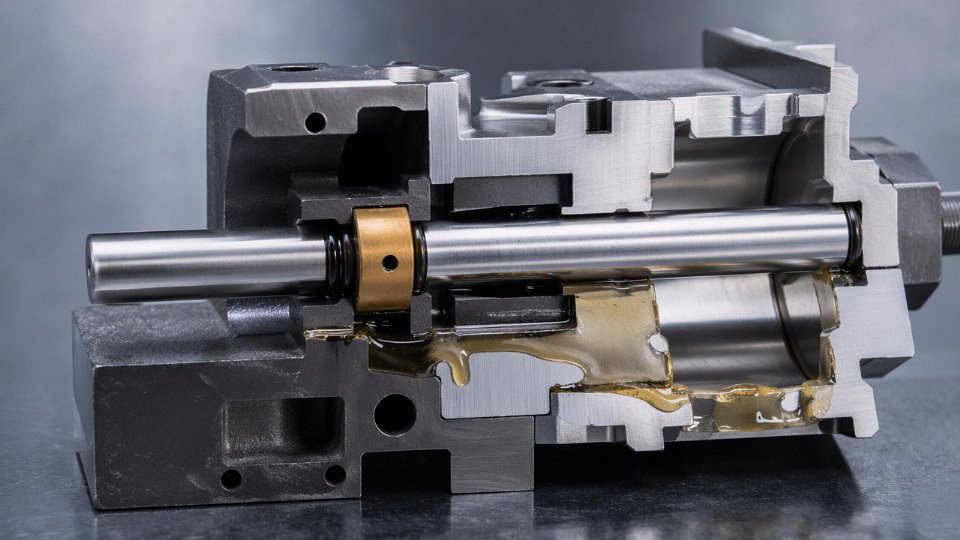
Spray-applied silicone or PTFE-based mold releases are common in general manufacturing because they work. For body-contact components they introduce surface residues that don’t appear in material certifications and can’t be easily quantified without cleaning validation. The practical fix is switching to water-based releases, permanent PVD mold surface coatings, or — in high-volume medical tooling — self-lubricating mold steel that eliminates the need for release agents altogether. Cleaning validation on every production run isn’t overcautious; it’s the minimum defensible position.
Mechanical Fatigue and Particulate Generation
LSR tear resistance typically ranges from about 20 to 50 N/mm depending on durometer and compound formulation — lower than many thermoplastic elastomers. In dynamic applications like flex-seal diaphragms, peristaltic pump tubing, or articulating joint liners, repeated fatigue at stress concentrations can initiate tear propagation and generate silicone particulates. Chemically inert particulates still trigger foreign-body granuloma reactions in tissue. Design geometry — generous radii at flex points, wall thickness transitions, edge breaks — matters as much as material selection.
Supply Chain Adulteration
Gray-market LSR compounds exist. Incoming material verification using FTIR (to confirm siloxane backbone identity and detect adulterants), TGA (to assess thermal stability and filler loading), and ICP-MS for platinum content gives you a defensible incoming inspection protocol. Platinum content below roughly 5 ppm in cured material is consistent with genuine medical-grade compound; anomalous readings in either direction warrant quarantine and supplier audit before any production run.
Frequently Asked Questions About LSR Body Safety
Is all silicone the same — if one silicone product is safe, does that mean all are safe?
No, and this misconception causes real procurement errors. “Silicone” covers a broad family: LSR (liquid silicone rubber, platinum-cured), peroxide-cured HCR solid rubber, RTV sealants, silicone gels, and silicone fluids all share the Si–O backbone but differ fundamentally in cure chemistry, residual content, additive packages, and cross-link density. A platinum-cured medical-grade LSR that has cleared ISO 10993 testing shares almost nothing safety-relevant with a hardware-store RTV sealant that uses acetic-acid or oxime cure systems and carries no biocompatibility data whatsoever. Grade, cure system, and post-processing — specifically secondary oven cure to drive off low-molecular-weight siloxanes — determine whether a silicone compound is body-safe. Treating them as interchangeable has sent more than a few product launches into costly redesign.
Can LSR cause cancer?
Cured, implant-grade LSR is carcinogenic.False
PDMS is not classified as a carcinogen under IARC, EU CLP, or NTP criteria. No peer-reviewed evidence or regulatory dossier establishes carcinogenicity for properly cured, implant-grade LSR at exposure levels relevant to body-contact devices.
The D4 cyclic siloxane question deserves a straight answer: D4 has produced uterine tumors in rodents, but only at extremely high inhalation concentrations that bear no relationship to the trace leachable levels in a well-post-cured LSR component. Residual D4 in properly processed implant-grade LSR typically runs well below regulatory thresholds, and inhalation toxicology data from rodent chamber studies doesn’t translate directly to body-contact exposure. The regulatory concern around D4 is real — the EU restricts it as an SVHC — but the risk mechanism is not relevant to a cured, post-processed implant sitting subcutaneously.
Is LSR safe for babies — pacifiers, nipples, teethers?
Food- and infant-grade LSR that complies with EN 1400 (pacifiers), EU Regulation 10/2011 (food contact materials), and has passed nitrosamine and nitrosatable substance testing is considered safe for infant oral contact by both EU and US regulatory authorities. The specific certification matters. Ask the supplier for CE marking documentation and FDA 21 CFR 177.2600 compliance — not a marketing claim, an actual compliance letter tied to the compound lot number. Cheap unbranded silicone teethers sourced without that documentation are a different proposition entirely.
Does LSR contain BPA or phthalates?
No. LSR is built on an inorganic Si–O–Si backbone; it has no structural relationship to bisphenol-A epoxy chemistry or to phthalate-plasticized PVC. There are no phthalate plasticizers because LSR doesn’t need plasticizers — flexibility is inherent to the polymer network. This is a verified compositional fact you can confirm through your supplier’s REACH SVHC declaration and a basic extraction/GC-MS panel. It’s not a marketing differentiator; it’s just chemistry.
Can someone be allergic to LSR?
True immunological allergy to the cured PDMS polymer itself is extremely rare — sensitization rates below roughly 0.1% show up in patch-test clinical studies using properly post-cured, additive-free LSR. Reactions labeled “silicone allergy” in clinical practice are usually responses to residual platinum catalyst, unreacted low-molecular-weight siloxanes, colorant packages, or adhesive primers — all controllable variables. If a wearable device is generating dermal reactions in a user population, the first investigation should be the E&L profile and the adhesive system, not a blanket indictment of the base polymer.
How do I verify that an LSR supplier’s material is truly body-safe?
Request all six of the following, and don’t accept a generic datasheet as a substitute for any of them:
| Document | What to Check |
|---|---|
| ISO 10993-5 cytotoxicity report | Lot-specific, not compound-generic |
| ISO 10993-10 sensitization report | Guinea pig maximization or human repeat insult patch test |
| USP Class VI certificate | System toxicity, implantation, intracutaneous |
| 21 CFR 177.2600 or implant-grade CoC | Tied to compound lot number |
| E&L study with PDMS oligomer data | Post-cure conditions must match your process |
| REACH SVHC declaration | D4/D5 confirmed below 0.1 wt% |
A supplier who can’t produce all six on request for a medical or infant application is not a supplier you want in your supply chain.
Is LSR biodegradable — what happens to it inside the body long-term?
Biostability is the design intent, not a liability. In properly formulated implant-grade compounds, PDMS undergoes negligible hydrolytic or oxidative degradation over decade-long implant timescales — which is exactly why it’s used in pacemaker lead insulation and cochlear implant components. For end-of-life disposal, LSR is non-hazardous industrial silicone waste; incineration above roughly 800 °C converts it cleanly to amorphous silica, CO₂, and water, leaving no persistent organic residue. It’s not compostable and shouldn’t be represented as environmentally “green” in that sense, but it’s also not a persistent toxic hazard in the way halogenated plastics are.
Selecting and Specifying Body-Safe LSR: A Practical Engineering Decision Framework
Every upstream technical decision covered in this article — biocompatibility testing methodology, extractable profiles, sterilization compatibility, implant-grade chemistry — collapses into one moment: writing the specification and approving the supplier. Get that wrong and the testing data becomes irrelevant. This section is a working framework, not a checklist of aspirations.
Application-Tiered Grade Selection
The single most common procurement mistake is treating “medical-grade LSR” as a universal category. It isn’t. Grade selection should be driven by contact classification first, duration second, and anatomy third.
Tier 1 — Incidental or short-term skin contact under 24 hours (ergonomic tool grips, single-use seals, appliance gaskets): food-grade or general-purpose LSR is usually sufficient. Minimum documentation: ISO 10993-5 cytotoxicity and ISO 10993-10 sensitization. Cleanroom molding is not required, but a clean, controlled production environment still matters — surface contamination from mold release agents has triggered sensitization failures in parts that passed bench testing.
Tier 2 — Prolonged skin contact exceeding 24 hours, or repeated intermittent contact (wearable sensor housings, hearing aid domes, continuous monitor patches): medical-grade LSR, full ISO 10993 panel appropriate to contact type, plus a Human Repeat Insult Patch Test if the device population includes known sensitive groups. A 200 °C / 4-hour post-cure minimum is warranted here — the bump up from 2 hours matters more for thin-wall geometries where LMW siloxane diffusion paths are short.
Tier 3 — Mucosal contact or implantation, any duration (catheter tips, implantable lead insulation, soft tissue expanders): implantable-grade LSR only. Supplier must hold FDA Drug Master File reference for the specific compound lot. ISO 10993 chronic implant studies (90-day minimum, 2-year for permanent devices) are non-negotiable. Do not assume an ISO 10993-5 pass at Tier 1 translates upward — the test matrix is fundamentally different.
Post-Cure Specification: Put It on the Drawing
Verbal agreements about post-cure get lost. The engineering drawing and the supplier quality agreement need explicit post-cure parameters: minimum 200 °C, minimum 2 hours for standard wall sections (scale up for sections thicker than roughly 6 mm), oven atmosphere specified (air is standard; nitrogen is sometimes required for optically critical parts where surface oxidation matters), and a maximum allowed LMW siloxane residual — typically expressed as D3–D6 cyclic siloxanes by headspace GC-MS with a 0.1 wt% total action limit. If the supplier cannot provide headspace GC-MS data on production lots, that alone is disqualifying for Tier 2 or 3 applications.
Supplier Qualification Audit Checkpoints
ISO 13485 certification is the floor, not the ceiling. During audit, probe specifically for: cleanroom molding capability at ISO Class 7 minimum for implantable components (Class 8 is marginal and worth pushing back on), a documented change control procedure that requires customer notification before any compound reformulation or process change — not after — and evidence that the procedure has actually been triggered and followed in the past 18 to 24 months. A supplier who has never invoked their change notification process either hasn’t changed anything (unlikely) or isn’t tracking changes properly.
Design-for-Safety Guidelines
Avoid sharp internal corners in dynamically loaded parts; stress concentration at tight radii accelerates fatigue crack initiation in LSR, and a crack face becomes a surface — with its own extractables behavior. Minimum wall thickness of 0.4 mm ensures complete cure throughout the section under typical injection LSR processing conditions; thinner walls are possible but require process validation to confirm equivalent cure state. For implantable components, specify surface finish Ra below 0.8 µm. Rougher surfaces harbor biofilm and are harder to sterilize reliably.
Incoming Material Release Testing Protocol
Before any Tier 2 or Tier 3 lot enters production, run: FTIR identity confirmation against an approved master spectrum on file (not the supplier’s spectrum — your spectrum, taken from an approved reference lot), Shore A hardness within ±3 durometer points of specification, specific gravity within ±0.02 g/cm³, and the headspace GC-MS extractables screen noted above. This adds a few days to incoming inspection but catches compound substitutions and lot anomalies that certificate-of-conformance review alone will miss.
A supplier's Certificate of Conformance is sufficient incoming release testing for implantable-grade LSR.False
CoC review confirms paperwork, not material state. Lot-to-lot variation in post-cure completeness, compound batch changes, and storage conditions all affect extractable profiles in ways that require physical testing to detect. ISO 10993-1:2018 and FDA 2016 Biocompatibility Guidance both support a risk-based incoming control program beyond documentation review for implantable applications.
Regulatory Submission Documentation Package
Structure the biocompatibility dossier per FDA’s 2016 Use-Related Biocompatibility Guidance and ISO 10993-1:2018. The package should contain: ISO 10993 test reports (with raw data, not summary tables only), sterilization validation data matched to the actual sterilization method and cycle parameters your manufacturer will use, an extractables/leachables study using clinically relevant simulants and conditions, a material composition declaration from the LSR compounder, and the supplier’s FDA DMF reference number. Reviewers flag dossiers that reference a DMF number without confirming the DMF covers the specific compound grade and lot range. Confirm in writing.
The framework above is not theoretical. It reflects the kinds of specification gaps — missing post-cure temps on drawings, suppliers without change notification procedures, CoC-only incoming inspection — that have caused real product holds and requalification cycles. The underlying LSR chemistry is sound. The failure point, almost always, is the process wrapped around it.