Pick the wrong release agent, thermal fluid, or dielectric coolant for your process and the consequences show up fast — seized tooling, transformer failures, batch contamination, unplanned downtime that costs more per hour than the fluid budget for an entire quarter. A lot of those failures trace back to engineers specifying a generic mineral oil where the temperature range, chemical inertness, or viscosity stability of the application actually demands something better. Silicone oil sits in an awkward middle ground: it’s genuinely performance-critical in dozens of industries, yet procurement teams often treat it as a commodity line item until something goes wrong.
The industries that consume the most silicone oil are automotive manufacturing, electronics and semiconductor fabrication, personal care and cosmetics production, pharmaceuticals, and industrial textiles — with automotive and electronics alone accounting for roughly 35–40% of total industrial volume. These sectors depend on polydimethylsiloxane (PDMS) fluids across viscosity grades spanning 0.65 cSt to well over a million cSt, selected by application: heat transfer, dielectric cooling, lubrication, mold release, or surface treatment.
What makes this fluid interesting — and occasionally frustrating to specify — is how wildly different the end uses are. The same base chemistry that protects a high-voltage transformer winding also conditions a cosmetic serum and lubricates an automotive weather seal, but the grade, purity level, and supplier qualification requirements are almost nothing alike. The global market sits somewhere in the USD 2.1–2.4 billion range as of 2023 and is growing at roughly 5–6% annually, which tells you demand is broadening, not concentrating. Understanding where and why each industry actually needs silicone oil is the fastest way to make better sourcing and formulation decisions.
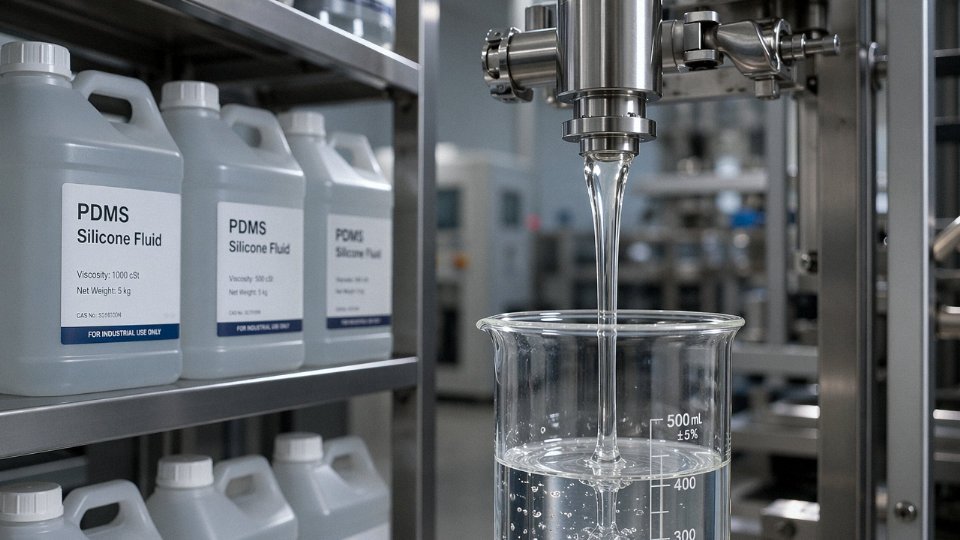
Automotive Manufacturing: Damping, Sealing, and Brake-Fluid Formulation
Automotive applications sit comfortably in the 18–22% band of total industrial silicone oil consumption — the exact share depends on how you slice powertrain versus chassis versus trim categories, and it shifts noticeably in years when EV production ramps hard. Either way, it’s a substantial slice, and the reasons aren’t superficial. Silicone fluids earn their place in vehicles because they stay put: they don’t oxidize badly, they don’t absorb water, and they maintain workable viscosity across temperature swings that would turn a mineral oil into either varnish or water.
Viscous Torsional Dampers and Fan Clutches
The crankshaft torsional damper is probably the least glamorous component on an engine, but it does serious work. A viscous damper uses silicone fluid — typically in the 50,000–300,000 cSt range, sometimes up to 500,000 cSt on heavy diesel applications — to absorb and dissipate the torsional pulses firing events punch into the crank. The fluid is sheared between a housing and an inertia ring, and that shear converts vibration energy to heat. Getting the viscosity wrong matters: too low and the damper goes soft at operating temperature, too high and it barely moves at cold start, leaving the crank unprotected during the first few seconds. Reputable damper suppliers will spec a fluid that holds viscosity within roughly ±15–20% across −30 °C to +120 °C sump temperatures, which a well-formulated PDMS actually achieves in practice. Fan clutches work on a similar principle — the silicone fluid meters how much torque the fan draws from the pulley depending on a thermal valve, and because the fluid doesn’t degrade or shear-thin the way gear oil would, the clutch stays calibrated across a vehicle’s full service life.
Brake Fluid: Where the Non-Hygroscopic Advantage Has a Real Trade-Off
DOT 5 silicone-based brake fluid under SAE J1705 is worth discussing honestly rather than just listing its benefits. The non-hygroscopic behavior is real and valuable — DOT 5 won’t absorb atmospheric moisture through the reservoir cap and brake lines the way glycol-based DOT 3 or DOT 4 does, which means no gradual wet-boiling-point degradation over a three-year flush interval. For vehicle storage applications, military fleet maintenance, or show cars that sit for long periods, this matters.
DOT 5 silicone brake fluid is fully interchangeable with DOT 3 or DOT 4 and can be mixed freely during a brake service.False
DOT 5 is silicone-based and must never be mixed with glycol-based DOT 3 or DOT 4. Mixing causes fluid incompatibility, potential seal damage, and inconsistent compressibility — a real safety hazard. Separate, dedicated system flush is required before conversion.
The trade-off: silicone fluids can entrain tiny air bubbles more readily than glycol fluids, which occasionally produces a slightly spongy pedal feel, particularly if the system was poorly bled. Rubber seal compatibility is also application-specific — some older EPDM and natural rubber formulations swell or soften in prolonged contact with PDMS.
Door Seals, Trunk Gaskets, and Airbag Fabric
For door and trunk seal lubrication, 350 cSt PDMS sprays are effectively an industry standard. The viscosity is low enough to penetrate into the rubber profile without pooling, and it prevents the compression set and stick-slip noise that annoys customers in cold climates. Operating range of −40 °C to roughly +200 °C covers anything the seal sees in service.
Airbag fabric coating is a thinner application — essentially a controlled-thickness silicone oil film applied during weaving or finishing to reduce inter-yarn friction. During a deployment event, the bag inflates in under 30 milliseconds. At sub-zero temperatures, any lubricant that gels or stiffens could compromise that timing or cause localized fabric tearing. PDMS stays fluid and consistent at −40 °C where most organic coatings would fail.
EV Battery Immersion Cooling: An Emerging but Fast-Growing Use
Direct immersion cooling of battery packs uses dielectric silicone fluids — typically low-viscosity grades in the 2–10 cSt range — to pull heat off individual cells without creating short-circuit risk. This is genuinely different from the sealed coolant-channel approach most first-generation EVs used, and the thermal performance can be considerably better for high-discharge-rate applications. The fluid needs to be chemically inert to cell casing materials and stable across repeated thermal cycles. PDMS fits reasonably well, though fluorinated alternatives compete here on thermal conductivity. This segment is still modest as a share of total automotive silicone fluid demand, but given the pace of EV production growth, most procurement managers sourcing dielectric fluids are already watching lead times carefully.
Electronics and Semiconductor Fabrication: Dielectric Fluids and Thermal Interface Applications
The electronics sector’s relationship with silicone oil isn’t about convenience — it’s about electrical and thermal properties that nothing else reliably replicates at the same service temperature range. Mineral oil and synthetic esters work in many transformer applications, but once you’re dealing with sealed high-voltage capacitors, diffusion furnaces, or a server rack submerged in a dielectric bath, the tolerance for carbonization, ionic contamination, or dielectric breakdown drops to near zero.
Transformer Insulation and High-Voltage Capacitor Dielectrics
Silicone oil’s dielectric constant sits around 2.7 — lower than mineral oil’s typical 2.2–2.4 range, but that’s not the whole story. Volume resistivity consistently exceeds 10¹⁴ Ω·cm in a properly handled, water-free fluid, and breakdown voltage in a standard IEC 60156 test typically comes in between 30 and 50 kV depending on the grade and test gap. What actually earns silicone oil the specification slot in sealed electronics transformers is the flash point (above 300 °C for most grades) combined with that resistivity stability across wide temperature swings. A mineral oil transformer running in a -40 °C outdoor substation can gel; the same silicone unit won’t. For indoor sealed capacitors where you cannot tolerate a service-call to drain and replace fluid, that long-term oxidative and thermal stability matters more than first-cost.
Silicone oil maintains volume resistivity above 10¹⁴ Ω·cm across a service temperature range from roughly -50 °C to 200 °C, which mineral oils cannot match at both extremes simultaneously.True
PDMS-based dielectric fluids are well-documented in IEEE and IEC technical literature as retaining high resistivity over this range; mineral oils suffer viscosity gelation at the low end and oxidative degradation at the high end, both of which degrade resistivity.
Semiconductor Diffusion Furnaces and Vacuum Pump Fluids
In diffusion pump service inside semiconductor furnaces — typically operating at 100 to 300 °C process temperatures with the pump boiler reaching higher — phenyl-methyl silicone oils in the 100 to 500 cSt range are the standard working fluid. Hydrocarbon pump fluids carbonize and back-stream hydrocarbons onto wafers. That’s not a theoretical concern; it’s a yield-killer. Phenyl substitution raises the fluid’s thermal stability and lowers its vapor pressure compared to straight PDMS, which is why you’ll see specific grades like DC-704 or equivalent fluids specified in furnace OEM manuals rather than a generic viscosity grade. The phenyl content also gives better radiation stability, relevant in some ion implant support equipment.
Immersion Cooling for Data Centers
This is where the growth story actually lives. Single-phase immersion cooling submerges servers directly into a tank of dielectric silicone fluid — no phase change, fluid circulates through an external heat exchanger. Two-phase systems use a low-boiling-point fluorosilicone or engineered fluid that vaporizes on contact with hot components and condenses on a cooled coil above the bath. Both approaches dramatically cut the energy overhead of conventional air cooling. A well-designed single-phase silicone immersion system can push PUE (Power Usage Effectiveness) from the 1.3–1.4 range typical of air-cooled hyperscale halls down to 1.05 or below — the exact figure depends on climate, heat exchanger design, and workload density, but the direction is consistent across published operator data.
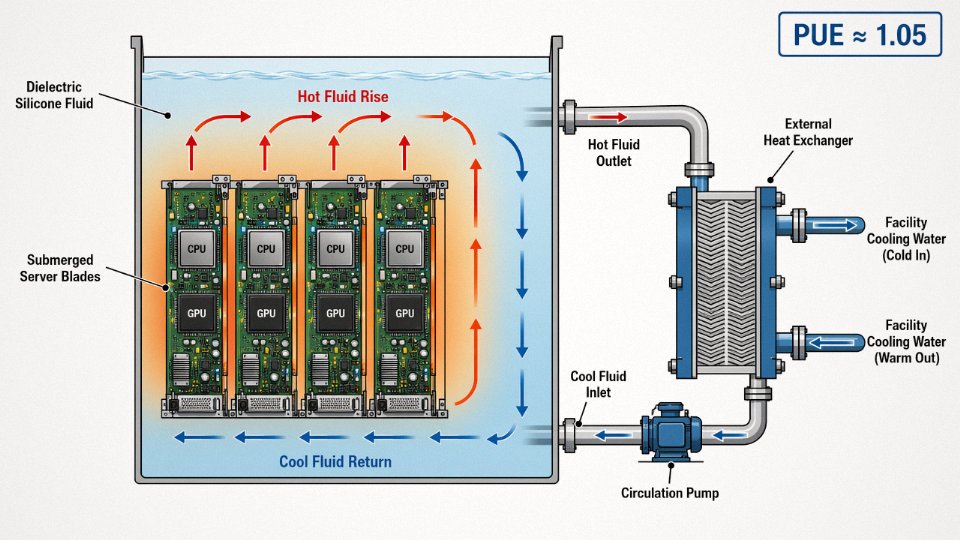
The catch is fluid cost and server reconfiguration. Standard servers aren’t designed for immersion; connectors, thermal interface materials, and some capacitor types need qualification. Budget roughly 18–36 months for a full hardware qualification cycle before you commit a production workload.
IC Encapsulation: Mold Release and Conformal Coating
During epoxy molding compound encapsulation of IC packages, low-viscosity silicone oils — often below 50 cSt — serve as mold-release agents applied to the transfer mold tooling. Too much and you contaminate bond pads on subsequent wire-bonding steps. Too little and you get sticking, flash, and mold fouling that requires a tool teardown. It’s a tighter process window than most people expect. Silicone also appears as the carrier phase in some conformal coatings for PCB protection, where it needs to wet and penetrate component gaps without bridging connector contacts.
Optical Fiber Draw Towers
On the draw tower, silicone oil is applied as a cladding lubricant and sizing agent as the fiber exits the primary coating die. The coating needs to adhere uniformly without trapping microbubbles, which cause scattering losses measurable in dB/km — a defect that only shows up during OTDR testing, well after the fiber is already wound. Viscosity selection here is tight, typically in the 10 to 50 cSt range, and the oil must be free of particulate contamination that could score the bare glass before the coating sets.
The electronics and semiconductor segment accounts for an estimated 12–15% of global silicone oil consumption by volume, and data-center cooling demand alone is growing at roughly 9% annually — fast enough that several silicone fluid producers have disclosed capacity expansions specifically targeting that end use. Given that the broader market sits at USD 2.1–2.4 billion and is projected to grow at 5–6% CAGR through 2030, the electronics sub-segment is clearly pulling above its weight on growth rate.
Personal Care and Cosmetics: Formulating Skin Feel, Gloss, and Hair Protection
Personal care is, by volume, the single largest end-use segment for silicone oil — accounting for roughly 25–30% of global demand depending on how you carve up the data and which molecular weights you include. That share has been under pressure for a few years now, but silicone oil hasn’t been displaced so much as repositioned. The chemistry is genuinely hard to replicate cheaply.
Cyclomethicone Versus Dimethicone: Two Very Different Jobs
The distinction that trips up a lot of procurement people is volatile versus non-volatile silicone. Cyclic siloxanes — most commonly D4 (octamethylcyclotetrasiloxane) and D5 (decamethylcyclopentasiloxane) — were for decades the workhorses of leave-on skin products because they spread instantly, carry actives into the skin surface, and then evaporate cleanly, leaving no residue. That dry, powdery afterfeel in a premium moisturizer or antiperspirant? Usually D5. The volatility is the point.
Non-volatile PDMS at around 350 cSt does something different: it stays. It forms a hydrophobic film on the stratum corneum that reduces transepidermal water loss without the greasy occlusion of petrolatum. Formulators reach for it when they want long-lasting slip and barrier function in a hand cream or a dermatologist-recommended moisturizer. The 350 cSt grade is something of an industry default for skin emolliency, though formulators will adjust — lighter, 50–100 cSt material for serums that need to absorb quickly; heavier, 1,000 cSt grades in thicker creams where cushion and film integrity matter more than aesthetics.
Hair Care: The Friction Reduction Argument
In rinse-off conditioners and leave-in serums, silicone oil’s value is measurable. Wet-combing friction on chemically treated or bleached hair drops by somewhere in the 30–50% range when an appropriate silicone is present — the spread depends on hair porosity, the silicone grade, and how much heat damage the cuticle has sustained. The mechanism is fairly straightforward: silicone adsorbs onto the negatively charged hair surface, filling micro-cracks in the cuticle and forming a hydrophobic shell that physically repels moisture uptake. That’s why it controls frizz in humid climates in a way that most plant-derived alternatives simply don’t replicate at the same cost.
Amino-functional silicones, which aren’t pure PDMS but a modified variant, deliver stronger substantivity — they bond more tenaciously to damaged hair, which is why you see them in salon-grade treatments. Standard dimethicone in a conditioner is usually 200–350 cSt, high enough to deposit effectively but fluid enough to disperse evenly during manufacturing without needing excessive heat.
Color Cosmetics: Slip, Gloss, and Film Formation
Foundation formulations typically use low-viscosity silicone — often 5–20 cSt — as a primary spreading agent. It gives the characteristic silky application feel and helps pigment disperse without settling. In lipstick, higher-viscosity grades (sometimes up to 100 cSt) contribute gloss and help the wax matrix stay flexible across a wider temperature range, which matters for products shipped to markets with unreliable cold-chain handling. Mascara film formers are a slightly different story; silicone here is often in emulsion form or combined with waxes, but the base silicone fluid still contributes to the flexible, non-flaking film that formulators are chasing.
The Regulatory Squeeze on D4 and D5
The EU banned D4 and D5 in rinse-off cosmetics under REACH regulation, effective January 2020True
EU REACH restrictions introduced a concentration limit of 0.1% w/w for D4 and D5 in rinse-off cosmetic products, enforceable from January 2020, based on ECHA assessment of aquatic persistence and bioaccumulation.
That restriction forced a meaningful reformulation wave across European-sold shampoos, shower gels, and conditioners. The response wasn’t to abandon silicone — it was largely to shift toward higher-molecular-weight linear PDMS, which doesn’t carry the same aquatic toxicity profile. D6 remains under ECHA review, so formulators who moved aggressively to D6 substitutes may face a second round of work.
The “clean beauty” pressure is real but often oversold. Plant-derived alternatives — squalane, caprylic/capric triglyceride, various plant esters — can replicate some sensory properties in mild formulations. Where they fall short is in durability, humidity resistance, and consistency across raw material harvests. Silicone doesn’t vary batch to batch based on crop yield or regional weather. For a contract manufacturer running 50,000-unit production batches, that consistency has real economic value.
Medical Devices and Pharmaceuticals: Lubrication, Drug Delivery, and Implant Manufacturing
The medical segment is where silicone oil’s chemistry gets genuinely unforgiving. A 0.5 mg coating error on a syringe barrel, the wrong viscosity in a vitreous tamponade, or a batch of oil that scraped through with 8 ppm residual platinum catalyst — any of these can translate into regulatory holds, product recalls, or patient harm. Volumes are smaller than automotive or personal care, but the margin for error is essentially zero.
Syringe Barrel and Plunger Lubrication
Prefilled syringes are the clearest example of how silicone oil functions right at the drug-device boundary. Medical-grade PDMS, almost universally at 1,000 cSt, is applied to the barrel interior and the bromobutyl or chlorobutyl plunger stopper at coating weights typically between 0.3 and 1.5 mg per syringe — the exact target depends on barrel diameter, plunger material, stopper geometry, and the injectability requirements of the drug product. Too little oil and glide force spikes, which creates dosing variability and breaks patient-usable auto-injectors. Too much, and silicone oil droplets migrate into the drug solution, potentially causing protein aggregation in biologic formulations like monoclonal antibodies.
That last point is not theoretical. Silicone oil-induced protein aggregation has been documented in the literature as a root cause of immunogenicity concerns, which is why several biotech manufacturers have moved toward baked-on siliconization or spray-and-bake processes that reduce mobile silicone oil while still achieving target glide performance. The prefilled syringe market itself is expanding at roughly 7% CAGR — driven by self-administration devices, biologics requiring cold-chain integrity, and pandemic-era investment in injectable infrastructure — and that directly pulls demand for pharma-grade silicone oil upward.
Ophthalmic Tamponade
Retinal detachment surgery has relied on silicone oil as a vitreous substitute for decades. The injected oil acts as a mechanical tamponade — holding the retina flat against the choroid while the surrounding tissue heals. Viscosity here is clinically significant: 1,000 cSt oils are easier to inject and remove but emulsify faster inside the eye, which causes secondary complications including glaucoma and cataract formation. Higher-viscosity grades, typically 5,000 cSt, emulsify more slowly and are generally preferred for complex or inferior detachments, though they’re harder to remove surgically. Outcomes depend on surgeon preference, detachment geometry, and how long the oil needs to remain in situ — often three to six months, sometimes longer.
Higher-viscosity silicone oil (5,000 cSt) reduces emulsification rate in vitreous tamponade compared to 1,000 cSt grades.True
Emulsification is driven by interfacial shear and eye movement; higher molecular weight PDMS resists droplet formation under the same mechanical conditions, which is documented in ophthalmic surgical literature.
Implant Manufacturing and Catheter Extrusion
In breast implant shell molding, silicone oil serves as an internal mold release agent and processing lubricant during the dip-coating process. The oil must not compromise shell integrity or bleed through the elastomer at implant service temperatures. Cardiac catheter extrusion is similar — silicone oil lubricates the die and the extruded tubing surface to maintain dimensional tolerance in thin-walled profiles where a 20–30 µm wall variation can affect burst pressure ratings.
Drug Delivery Carriers
Depot injection systems — long-acting injectables for psychiatric medications, contraceptives, hormones — sometimes use silicone oil as the continuous hydrophobic phase, controlling drug diffusion rate through the oil’s viscosity and the API’s partitioning coefficient. Transdermal patch adhesive systems use it differently, as a plasticizer and release-rate modifier for the drug-loaded adhesive matrix.
Purity and Regulatory Reality
Pharma-grade silicone oil must meet USP Class VI and pass ISO 10993 biocompatibility testing. Heavy metal content is typically specified at ≤1 ppm, versus technical-grade material that might carry 5–15 ppm or higher. Residual catalyst (usually platinum from hydrosilylation synthesis routes) and volatile cyclic siloxanes (D4, D5) are tightly controlled because both appear on regulatory radar in the EU and increasingly in FDA submissions. Procurement managers should verify certificate of analysis parameters for every lot — not just viscosity and refractive index, which are the easy ones — because the gap between a compliant and a non-compliant batch often hides in the trace-level data.
Textile and Fiber Processing: Softening, Wetting, and Yarn Lubrication at Scale
Textile manufacturing consumes silicone oil at volumes that most procurement managers outside the sector don’t appreciate until they start comparing regional import data. The applications run from ultra-low-viscosity spin finishes applied at fiber speeds measured in kilometers per minute, all the way to crosslinked coatings on airbag fabrics that have to perform in a Siberian January. It’s not a glamorous end-use, but it’s a high-throughput one.
Spin Finish Formulations and Yarn Lubrication
High-speed synthetic fiber spinning — nylon, polyester, polypropylene — generates friction between the filament bundle and the metal guides, rollers, and godet wheels that control its path. At line speeds anywhere from 3,000 to 6,000 m/min (the upper end is typical for POY polyester in modern plants), that friction isn’t just a wear issue; it causes filament breakage, static buildup, and downstream defects in the woven or knitted fabric. Spin finish formulations use low-viscosity PDMS, usually in the 5–50 cSt range depending on fiber denier and machine geometry, blended with emulsifiers and antistatic agents. The PDMS component provides the lubricity; the surfactant system controls how uniformly the finish spreads across the fiber bundle.
PDMS-based spin finishes reduce fiber-to-metal friction enough to materially cut filament breakage rates at speeds above 4,000 m/minTrue
Low-viscosity PDMS forms a thin, shear-stable boundary layer on synthetic filaments. Published fiber processing studies and supplier technical data consistently show friction coefficient reductions of 30–50% versus unfinished fiber under comparable test conditions, which translates directly to fewer breakages on commercial spinning frames.
Getting the viscosity grade wrong is a real operational problem. Too light and the finish wicks away from the contact points before it does any work; too heavy and you get finish buildup on guides, which creates localized drag, uneven tension, and eventually a rash of breaks on the same guide position. Most spinning plants monitor guide wear and finish pickup percentage together — if guide wear is accelerating, viscosity specification is usually the first thing the process engineer checks.
Fabric Softening: Amino-Functional Emulsions
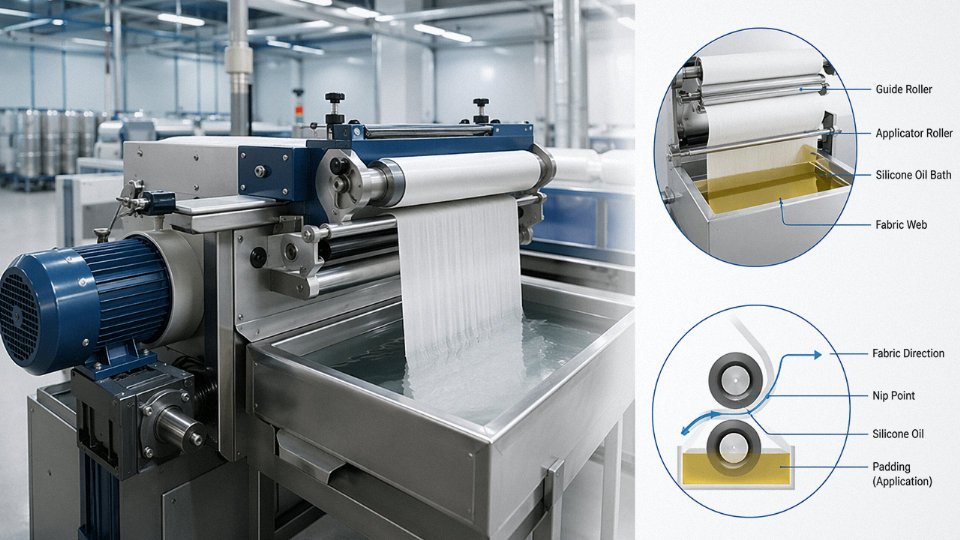
Softening is where textile mills spend serious money on silicone. Amino-functional silicone emulsions — not straight PDMS, but modified polymers where amine groups anchor the molecule to fiber surfaces — are applied either by exhaust bath or by the pad-dry-cure route. The amino groups form a semi-durable bond with hydroxyl groups on cotton or with the amide linkages in nylon, which is why the softness effect survives multiple washes when the chemistry is right. Standard handle panel testing typically shows 40–60% softness improvement over untreated fabric, though the exact figure depends on fabric weight, fiber blend, and how aggressively the mill runs the cure oven. Under-curing is common when production pressure is high and dwell time gets cut; you get initial softness that washes out in two or three cycles, which leads to customer complaints that are surprisingly difficult to trace back to the cure step.
Airbag Fabric: A Crossover Application with Tight Tolerances
One-piece woven airbag fabric has to be gas-tight, heat-resistant, and flexible enough to deploy correctly at −35 °C. Silicone coatings — applied as a heat-cure system with silicone oil as a key formulation base — are the industry standard for meeting those requirements. The coating has to pass OPW burst tests in cold-chamber conditions, and formulation viscosity at application temperature directly affects coating weight uniformity. A mill running airbag fabric typically maintains tighter silicone chemistry controls than almost anything else in its finishing department. One bad batch of coating fluid that shifts viscosity mid-run can mean an entire fabric roll failing certification.
Nonwoven Finishing: Diapers, Wipes, and Controlled Strike-Through
In spunbond and spunlace nonwovens used for diaper top sheets, the goal is counterintuitive: apply a material that is both soft against skin and still allows liquid to pass through quickly. Strike-through time — how fast a defined liquid volume penetrates the top sheet under standardized pressure — is a core performance metric for diaper manufacturers. Silicone oil finishing controls the hydrophilicity of the fiber surface, and getting the balance right between liquid management and rewet (the amount of liquid that comes back toward the skin surface) is genuinely tricky. Hydrophilic silicone finishes that are too aggressive will accelerate strike-through to the point where the absorbent core can’t distribute the load fast enough.
Carpet Backing and Cross-Linking
Reactive silicone oils serve as crosslinking agents in latex-backed tufted carpet constructions, improving the dimensional stability of the backing and the abrasion resistance of the tuft lock. The chemistry here is closer to a thermoset elastomer application than a traditional lubricant use, but the raw material is still silicone oil at the formulation stage. Mills that skip or underdose the reactive silicone component sometimes see delamination at carpet edges under heavy foot traffic — a failure mode that usually takes 12–18 months to show up in the field.
Regional Concentration
Asia-Pacific textile mills account for roughly 45–50% of global textile-grade silicone oil consumption, driven by the sheer scale of polyester and nylon fiber production in China, India, and Vietnam, plus the concentration of downstream weaving and finishing capacity in the same geography. That regional dominance has procurement implications: spot pricing for textile-grade silicone emulsions in Asia tends to lead global price moves by four to eight weeks, so European and North American mills watching input costs should be monitoring Asian spot markets, not just their local distributor quotes.
Food Processing and Agricultural Machinery: Defoaming, Release, and Equipment Lubrication
Silicone oil’s role in food processing is invisible by design — you’re never supposed to taste it, see it, or detect it in the finished product. That invisibility is exactly what makes regulatory compliance so demanding, and why procurement teams need to distinguish food-grade silicone fluids from general industrial grades before a single drum ships to the plant floor.
Antifoam Applications in Fermentation, Sugar Refining, and Vegetable Oil Processing
Foam is not just a nuisance. In a continuous fermentation vessel, persistent foam reduces working volume, starves the culture of oxygen transfer, triggers overflow sensors, and forces operators to throttle feed rates — all of which hit yield directly. Silicone emulsion antifoams are typically dosed at 100–1,000 ppm depending on substrate viscosity, agitation intensity, and the specific organism involved. Yeast fermentations at lower agitation usually need the lower end of that range; high-protein broths and heavily aerated processes can push toward the top. In sugar mills, foam generated during juice clarification and evaporation can collapse heat-exchanger efficiency by 15–25% if left uncontrolled, according to typical plant engineering benchmarks — the actual figure depends on evaporator design and juice purity.
Vegetable oil refining is a slightly different case. Deodorization columns operate at 180–250 °C under vacuum, and silicone emulsion antifoam added at the degumming or bleaching stages helps, but at frying temperatures — 180–190 °C in commercial fryers — the mechanism is about more than foam. Air entrainment at those temperatures accelerates oxidative degradation, polymerization, and free fatty acid buildup. A small silicone oil addition (typically in the 1–10 ppm range in the finished frying medium, well within food-contact limits) breaks surface bubbles fast enough to meaningfully extend oil life. A plant that fries potato crisps continuously can see frying oil life extend by roughly 10–20%, which at commercial volumes is a significant input cost reduction.
Mold Release in Baking and Confectionery
Food-grade silicone oil spray-applied to bread pans, chocolate molds, and pasta extrusion dies is governed in the US by FDA 21 CFR 178.3570, which caps migration at 10 ppm in the final food product. This is a hard ceiling, not a target. In practice, application rates need to be validated for each mold geometry and oven cycle — a high-throughput tunnel oven baking 5,000 loaves per shift demands a different spray interval than a batch confectionery mold with longer residence times. Operators who over-apply to compensate for worn pan surfaces end up with residue buildup that actually increases sticking over time and can push migration values toward the regulatory limit during an audit. Get the pan refurbished instead.
FDA 21 CFR 178.3570 sets a 10 ppm maximum migration limit for silicone oil in food contact applications in the United States.True
This limit is specified in 21 CFR 178.3570, which covers adjuvants and production aids including polydimethylsiloxane used as a release agent and antifoam, with a 10 ppm limit in the finished food.
Agricultural Machinery: Corrosion Resistance Under Harsh Conditions
Combine harvesters, sprayer booms, and transplanting equipment spend entire seasons exposed to pesticide solutions, fertilizer residues, and sustained moisture — conditions that destroy standard mineral-oil greases within weeks. Silicone-based greases and fluids resist hydrolysis and don’t emulsify in the presence of water-miscible agrochemicals the way lithium-complex or calcium greases sometimes do. Pivot points on sprayer booms, chain drives on harvesters, and bearing housings on irrigation pump assemblies are typical application points. The practical maintenance advantage is fewer relubrication intervals during peak season — which matters when a 10-day harvest window makes downtime genuinely costly.
Greenhouse Polycarbonate Anti-Drip Treatment
This is one application many engineers haven’t encountered unless they’ve worked with protected horticulture. Condensation forming as discrete droplets on the inner surface of a polycarbonate greenhouse panel can reduce photosynthetically active radiation transmission by 8–12%, depending on panel age, angle, and ambient humidity cycles. A surface treatment with approximately 350 cSt silicone oil converts droplet formation to a continuous sheet that runs off cleanly. The effect degrades over one to two seasons and needs reapplication; it’s typically done during panel cleaning rather than as a standalone operation.
Regulatory Comparison: Permitted Limits Across Major Markets
Compliance requirements differ enough between markets to cause real procurement headaches when a food manufacturer is exporting to multiple regions.
| Regulatory Body | Standard / Regulation | Permitted Food Categories | Maximum Limit |
|---|---|---|---|
| FDA (USA) | 21 CFR 178.3570 | Baked goods, frying oils, fermentation, sugar refining | 10 ppm in finished food |
| EFSA (EU) | Regulation (EC) 1333/2008, E900 | Pineapple juice, soups, jam, chewing gum, others (category-specific) | Generally 10 mg/kg (ppm), varies by category |
| GB (China) | GB 2760 | Limited categories including beverages and confectionery | 50 mg/kg in some categories; category restrictions apply |
The EU categorization under E900 is notably more restrictive in which food types are permitted than the US framework, even when the numerical limit looks similar. A formulation approved in the US as a processing aid may require a separate authorization in the EU depending on how the food category is classified. Anyone sourcing antifoam for a product sold in both markets needs to confirm the fluid’s regulatory dossier covers both, not just assume equivalence based on the ppm number alone.
Energy Sector: Transformer Insulation, Wind Turbine Pitch Control, and Solar Panel Manufacturing
The energy sector doesn’t get enough credit as a silicone oil consumer. It’s fragmented across utility companies, turbine OEMs, panel manufacturers, and grid operators — so the volume rarely appears in one tidy procurement line. But stack it all together and you’re looking at a substantial and fast-growing demand base, driven hard by renewable buildout and aging grid infrastructure replacement happening simultaneously.
High-Voltage Transformer Insulation: Where Flash Point Is Non-Negotiable
Mineral oil has insulated power transformers for over a century, and in most rural substations it still does fine. The problem shows up in fire-sensitive installations — tunnels, underground switching stations, high-rise building transformers, offshore platforms, data center substations. There, mineral oil’s flash point of roughly 145–160 °C becomes a liability that neither insurers nor building codes will accept quietly.
Silicone transformer fluid carries a flash point above 300 °C — typically 310–330 °C depending on viscosity grade — and remains functionally non-flammable under most arc-fault scenarios. That’s not a marginal improvement; it’s a fundamentally different fire risk category. Several European and North American jurisdictions now mandate it or an equivalent less-flammable fluid for indoor installations above certain MVA ratings. In practice, a 20 MVA unit going into a basement switchroom of a high-rise has essentially no viable alternative.
Silicone transformer fluid has a flash point exceeding 300 °C, roughly double that of conventional mineral transformer oil.True
Polydimethylsiloxane-based transformer fluids typically exhibit flash points of 310–330 °C, while mineral transformer oils generally flash at 145–165 °C depending on refining grade. This is documented in IEC 60836 and fluid supplier technical data sheets.
The dielectric constant and dissipation factor of silicone fluid are excellent across a wide temperature range, though it does absorb moisture slightly more readily than mineral oil — a fact that sometimes gets glossed over in procurement conversations. Proper sealing and periodic moisture monitoring still matter.
Wind Turbine Pitch and Yaw Hydraulics at the Edge of the Map
Offshore Scotland, the Norwegian coast, high-altitude wind farms in northern China and the Andes — turbines are being placed in environments where hydraulic fluid behavior at −40 to −60 °C is a genuine design constraint, not an edge case. Standard mineral hydraulic oils congeal or become viscous enough at those temperatures to slow valve response dangerously. Pitch control hydraulics that can’t respond within specification will either cause blade damage in a gust event or trigger a shutdown that takes days to service when the site is remote.
Low-pour-point silicone fluids — formulated PDMS grades with pour points in the −60 °C range — maintain pumpable viscosity where mineral or even many synthetic esters give up. The tradeoff is cost: silicone hydraulic fluid runs roughly 4–8× the price of a premium mineral hydraulic oil per liter, and seal compatibility needs to be confirmed upfront because silicone fluids swell certain elastomers differently than petroleum-based fluids do. Not every turbine OEM specifies them as standard fill, but in Arctic-class machines they’re increasingly the only thing that works without a heated reservoir system adding complexity.

Concentrated Solar Power: Pushing Thermal Stability to 400 °C
Parabolic trough and power tower CSP systems need a heat transfer fluid that stays liquid, thermally stable, and pumpable across a wide operating range — from cold desert nights to peak collector temperatures. High-phenyl silicone oils (phenylmethyl silicones rather than straight PDMS) extend the upper thermal stability ceiling to around 380–400 °C, which covers most trough system operating temperatures and some tower designs.
The phenyl content is the key variable. Higher phenyl loading raises thermal stability but also increases viscosity and cost. In practice, most CSP operators using silicone-based HTF work with blended grades optimized for a specific collector field design, and they accept a fluid life of roughly 8–15 years depending on operating temperature and oxygen ingress control — which is better than some organic synthetic alternatives at comparable temperatures.
Solar Panel Lamination and Glass Tempering
Less glamorous but high-volume: silicone oil shows up in photovoltaic manufacturing as a release agent during EVA encapsulant lamination. Without proper release chemistry, the EVA film bonds to laminator belts and platens, causing costly downtime and scrap panels. Silicone-based release agents — often diluted silicone oil or emulsion — are the standard solution because they don’t interfere with EVA cure chemistry or leave residues that compromise cell adhesion.
Glass tempering furnace conveyor rollers also see silicone oil lubrication, including in the furnaces used to produce tempered cover glass for panels. The requirement is simple: a lubricant that doesn’t carbonize or create deposits at furnace temperatures around 650–700 °C. Most organic oils fail here. Silicone oil, applied sparingly, stays functional long enough to be practical.
Underground Cable Joints and Partial Discharge Suppression
Medium-viscosity silicone oils — typically in the 100–1,000 cSt range — fill the void space in underground high-voltage cable terminations and splice boxes. The purpose is eliminating air pockets where partial discharge would otherwise initiate and gradually destroy insulation. Silicone oil’s combination of high dielectric strength, low conductivity, and resistance to tracking makes it well-suited. It also doesn’t polymerize or form acids under electrical stress the way some mineral oils can over long service periods.
Why the Numbers Keep Rising
The global transformer fleet is aging — a large fraction of utility transformers in North America and Western Europe are past their design life, and replacements increasingly go into environments (urban, underground, offshore) where fire-resistant fluid is specified. Offshore wind capacity additions alone are projected to drive incremental silicone transformer fluid demand of roughly 4,000–5,000 metric tons per year through 2030, depending on installation pace and average transformer ratings. Add CSP expansion in the Middle East and North Africa, PV manufacturing scale-up in Southeast Asia, and grid hardening programs in dense urban areas, and the energy sector’s share of total silicone oil demand will likely grow faster than the market average of 5–6% CAGR over the same period.
Plastics, Rubber, and Coatings Manufacturing: Processing Aids, Mold Release, and Surface Modification
If you trace silicone oil through the industrial supply chain, it eventually shows up inside the factories that make the raw materials and components every other sector depends on. That closed loop — silicone oil enabling the production of plastics, rubber, and coatings that themselves go into automotive parts, medical devices, and electronics — is easy to overlook but surprisingly high-volume.
Mold Release in Injection and Compression Molding
The workhorse here is straight PDMS in the 350–1,000 cSt range, applied as a dilute spray — typically 1–5% active in a carrier solvent or water emulsion — onto mold cavities before each shot or on a scheduled interval. Demold force reductions of 50–70% are realistic, though the actual figure depends heavily on part geometry, mold steel surface finish, and the polymer being run. Deep-draw polycarbonate housings or tight-tolerance rubber seals will see more benefit than a simple flat polypropylene lid. Beyond ease of release, there’s a less obvious payoff: reduced shear stress on the mold surface extends tool life meaningfully, and in a high-cavitation tool running three shifts, that matters more than most people budget for at procurement time.
Cycle time savings of 5–10% sound modest on paper. Run the numbers across a 200-ton press running 20-second cycles over a full year and they are not modest at all.
Rubber Compounding: Internal Lubricant, Not Just Surface Treatment
In EPDM and heat-cured silicone rubber compounds, silicone oil is added directly into the batch — typically 0.5–2 phr on a dry rubber basis — to reduce mill sticking and improve surface finish coming off the extruder die. The effect on extrusion is visible: rough, sharkskin surfaces smooth out, and dimensional consistency tightens. What trips up compounders occasionally is overdosing. Above roughly 2–3 phr in most EPDM formulations, you start seeing bloom on the finished part surface and can compromise adhesion in downstream bonding operations. It is one of those additives where more is definitely not better.
Silicone oil added above recommended loadings in rubber compounds can cause surface bloom and adhesion failure in bonded assemblies.True
Excess PDMS migrates to the part surface over time, reducing surface energy and interfering with adhesive bonding, a well-documented failure mode in rubber-to-metal bonded components.
Polyolefin Film: Slip and Packaging Line Runnability
Polypropylene and polyethylene film converters use silicone masterbatch — usually 10–15% PDMS dispersed in a polyolefin carrier — to bring film-to-film coefficient of friction down from roughly 0.4–0.5 to around 0.08–0.12. That shift is what allows a packaging line running at 400+ meters per minute to track cleanly without jamming or telescoping on the winder. The grade of PDMS matters: molecular weight too low and it bleeds to the surface too fast, causing blocking in roll storage; too high and dispersion in the melt is uneven. In practice, most film producers land on PDMS in the 12,500–60,000 cSt range for masterbatch applications, but this varies by processing temperature and the specific polyolefin matrix.
Flow and Leveling in Architectural and Industrial Coatings
At loadings of 0.01–0.1% by weight — genuinely small numbers — silicone oil acts as a flow and leveling additive in solvent-borne and waterborne coatings. It reduces surface tension gradients that cause cratering and fish-eye defects, particularly over poorly prepared or contaminated substrates. The operative risk here is overuse: above about 0.1%, silicone oil can cause recoat adhesion problems because the film surface becomes too low-energy for subsequent coats to wet properly. Formulators working on industrial maintenance coatings or OEM topcoats usually dial this in carefully with drawdown testing before releasing a batch formula.
Reactive vs. Non-Reactive Grades: A Critical Distinction for Compounders
This distinction trips up purchasers who treat silicone oil as a single commodity. Trimethylsilyl-terminated PDMS is non-reactive — it stays as a plasticizer or lubricant and does not crosslink. Vinyl-terminated PDMS, by contrast, participates in the peroxide or platinum-catalyzed cure network, becoming part of the rubber matrix rather than a mobile species. In heat-cure silicone rubber for automotive or medical molded parts, the vinyl-terminated version is used as a reactive plasticizer to control durometer and elongation-at-break without compromising long-term extractables — a specification that matters enormously if the finished part contacts fuel, body fluids, or food.
Ordering the wrong grade is not a minor mistake. A non-reactive oil loaded into a platinum-cure compound at the same level as a reactive grade will plasticize the part permanently, shift durometer out of spec, and potentially poison the platinum catalyst at higher concentrations. The two grades often look identical on a commodity data sheet, which is why knowing your supplier’s technical documentation — and having a compounding chemist review it — is non-negotiable before switching sources.
Frequently Asked Questions About Industrial Silicone Oil Use
Are “Silicone Oil” and “Silicone Fluid” Actually Different Products?
They are not. “Silicone fluid” is the technically preferred designation used in ASTM and ISO documentation — you’ll see it in ASTM D4691 and ISO 3016 test methods, for instance. “Silicone oil” is the commercial and shop-floor term that stuck because the material looks and pours like a light mineral oil. Both names refer to the same PDMS-based family of materials. In practice, a supplier’s technical data sheet might say “polydimethylsiloxane fluid, 1000 cSt” while the same drum gets called “silicone oil” by every operator on the line. Neither usage is wrong; just be aware that searching one term in a procurement database may not surface results indexed under the other.
'Silicone oil' and 'silicone fluid' refer to the same PDMS-based materials; the difference is purely terminological, not chemical or functional.True
ASTM and ISO standards use 'silicone fluid' as the formal term, while 'silicone oil' is the widely accepted commercial synonym. No compositional or performance difference exists between products sold under either name.
Which Viscosity Grade Sees the Highest Commercial Volume?
350 cSt PDMS. It’s not a close race. That grade threads the needle between spreadability, film persistence, and the practical reality that most drum-pump and transfer systems handle it without drama. You’ll find it as the baseline in release agent emulsions, textile softener baths, personal care bases, and general-purpose mold lubricants. Formulators often start at 350 cSt and move up or down once they’ve characterized their specific substrate and shear conditions. For reference, the full PDMS viscosity range runs from around 0.65 cSt (essentially water-thin, used in vapor deposition work) up past 2,500,000 cSt for gum-like high-damping applications — so 350 cSt sits comfortably in the middle of a very wide spectrum.
Is Silicone Oil Biodegradable?
Not in any meaningful timeframe under standard protocols. Under OECD 301 ready biodegradability testing, PDMS fails to meet the 60% mineralization threshold. It does degrade abiotically in soil and sediment — ultimately breaking down to silica, CO₂, and water — but the process is slow, measured in years to decades depending on particle size, UV exposure, and soil conditions. Disposal routes approved in most jurisdictions are licensed waste-oil collection for blending or incineration, and in some regions, certified high-temperature incineration directly. Pouring it to drain is not acceptable; the material adsorbs to sewage sludge and concentrates in biosolids. If your facility uses silicone oil in volume, you need a waste-stream contract, not a bin.
Can It Be Used as a Food-Safe Lubricant?
Yes — but the grade and certification matter enormously. H1-rated silicone lubricants, formulated to NSF/ANSI 61 and compliant with FDA 21 CFR §178.3570, are approved for incidental food contact. H2-rated products are for equipment surfaces and parts with no possibility of food contact. 3H designations cover direct food-contact release agents. Using an H2 product in an H1 location is a compliance failure, regardless of whether the silicone itself is chemically identical. Most auditors check this specifically.
Why Does Silicone Oil Cause Paint Adhesion Problems?
Low surface energy contamination. Airborne silicone — even from a spray operation 30 meters away — can deposit as an invisible film on substrates, dropping surface energy below the wet-out threshold for most solvent and waterborne coatings. The paint dewets or craters. The mechanism is subtle enough that contamination gets blamed on a dozen other causes before silicone is identified. Best practice is strict physical separation: dedicated spray booths for silicone-containing products, silicone-free zones in coating shops, and air-handling systems that don’t share return ducts. Once silicone contamination is established on tooling or fixtures, solvent wipe-down is rarely sufficient — abrasive preparation is usually necessary.
What Is the Shelf Life of Industrial-Grade Silicone Oil?
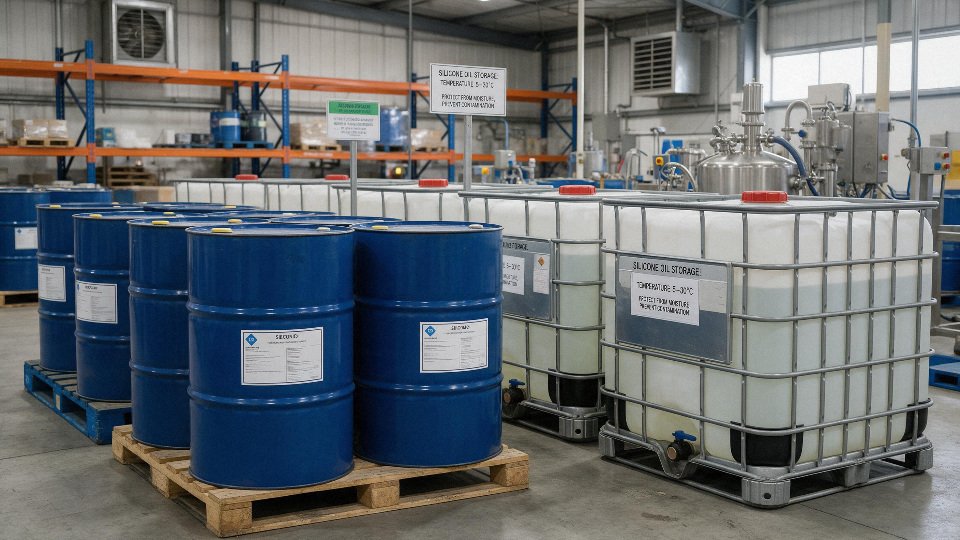
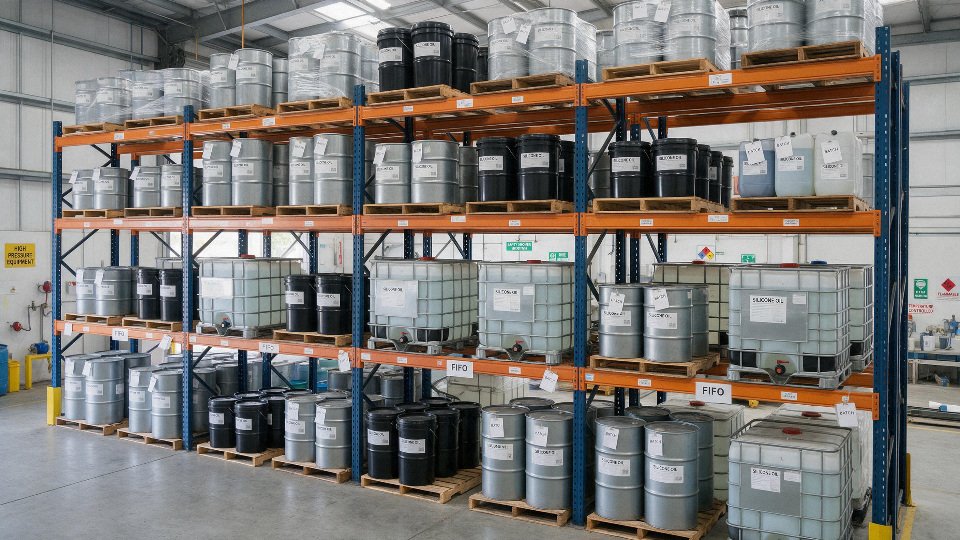
Unopened, sealed drums stored away from UV exposure and temperature extremes (roughly 5–30 °C is the common guidance) will hold viscosity and purity for somewhere between 5 and 10 years, depending on grade and supplier. Standard PDMS is oxidatively stable and not hygroscopic in normal conditions, so viscosity drift in storage is minimal. The main risk is with reactive-functional grades — amino-functional or vinyl-functional silicone fluids — which can undergo slow condensation or crosslinking if moisture ingress occurs. For those, nitrogen blanketing on partially used drums is worth the small cost. Always check the supplier’s specific CoA date and retest if material has been in storage more than three years before using it in a validated formulation or regulated application.