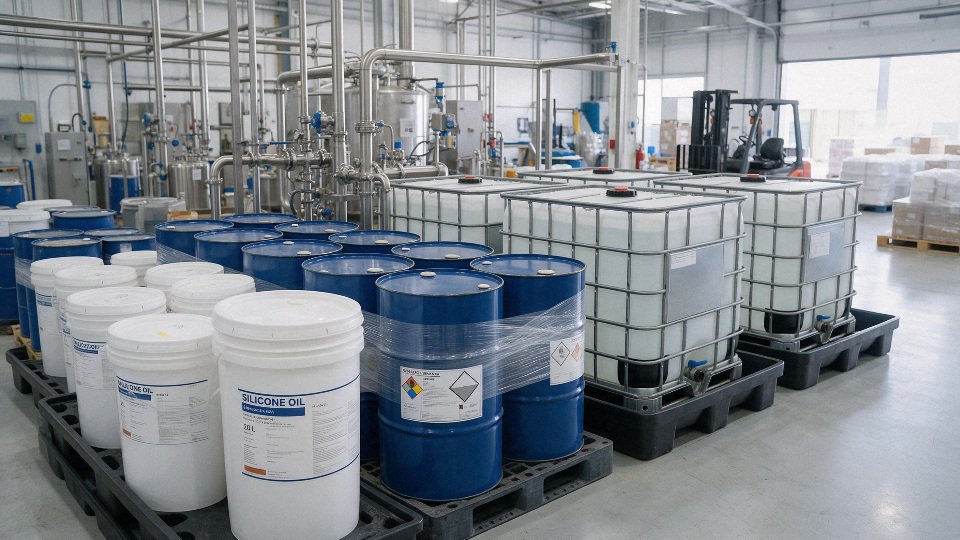

Pick the wrong process fluid and you find out fast — a batch of cosmetic emulsion that separates on the shelf, a transformer that thermal-runways during a summer peak load, a medical device lubricated with mineral oil that fails a biocompatibility test and triggers a recall. These are not edge cases; they happen regularly on production lines where engineers defaulted to whatever fluid was already on the approved-vendor list. The cost isn’t just scrap or rework. It’s downtime, regulatory exposure, and in some cases, a product liability trail that starts on the plant floor.
Silicone oil — principally polydimethylsiloxane (PDMS) and its modified variants — is used across healthcare, electronics, personal care, automotive, food processing, textiles, aerospace, and energy industries. Its adoption comes down to three properties that most hydrocarbon-based fluids simply cannot match simultaneously: a functional temperature range of roughly -60 °C to +300 °C, chemical inertness toward most substrates, and viscosity grades spanning from 0.65 cSt to well over 2,500,000 cSt.
What makes that range of applications genuinely interesting, from an engineering standpoint, is that the same base chemistry serves a $4 shampoo and a satellite thermal control system. The fluid in a dermatologist’s silicone gel dressing and the dielectric coolant in a high-voltage switchgear cabinet share a molecular backbone. That breadth isn’t marketing — it’s the reason a market sitting around USD 2.1 billion in 2023 is still growing at roughly 5–6% annually, driven by industries that keep finding new problems silicone oil solves better than anything else available.

Automotive and Aerospace Manufacturing: Damping, Sealing, and Thermal Management
Silicone oil shows up in more places on a vehicle or aircraft than most engineers realize until something fails. It’s not a bulk fluid — you’re rarely dealing with liters of it — but its absence, or the wrong grade, cascades into vibration fatigue, seal degradation, or avionics thermal events that are expensive and sometimes safety-critical.
Viscous Torsional Dampers in Internal Combustion Engines
The crankshaft torsional damper is probably the highest-stakes application. In a viscous damper, a dense inertia ring floats inside a sealed housing filled with silicone oil, typically somewhere in the 50,000 to 1,000,000 cSt range — the exact grade depends on engine displacement, firing order, and the resonant frequency the damper is tuned to suppress. The viscous shear between ring and housing dissipates torsional pulses before they propagate into the timing chain, accessory drives, or — worst case — the crankshaft itself.
Use a grade that’s too low and the ring couples too loosely; damping is inadequate and you get crankshaft fatigue cracks, which on a medium-duty diesel can mean a catastrophic in-service failure. Too high a viscosity and the ring is effectively locked, turning your damper into a dead mass that does nothing useful. Rebuilders who swap in generic silicone fluid without checking the OEM viscosity spec are gambling. Most OEM-sourced viscous dampers reference internal specifications tied to SAE viscosity grades and often carry additional requirements aligned with MIL-PRF-27617 or equivalent, particularly in heavy-truck and industrial engine applications.
Aerospace Avionics Cooling and Hydraulic Loops
Altitude introduces a problem mineral oil simply can’t solve: at cruise altitude on a commercial aircraft, temperatures outside the airframe drop below -50°C, and avionics bays can swing from cold-soak ground conditions to significant heat loads within minutes of electronics power-up. Silicone oil — particularly low-viscosity PDMS grades in the 1 to 10 cSt range, sometimes blended with phenyl-substituted variants for enhanced low-temperature fluidity — stays pumpable and thermally conductive across that entire swing. Mineral or polyalphaolefin fluids either freeze, oxidize at the hot end, or both over repeated thermal cycling.
Silicone oil-based heat-transfer fluids do not oxidize significantly at 200°C in closed avionics cooling loopsTrue
The Si-O backbone is inherently more thermally and oxidatively stable than C-C backbone hydrocarbon fluids; PDMS shows negligible oxidative degradation at 200°C in sealed systems, which is why MIL-PRF-27617 specifies PDMS for aerospace thermal management applications.
Qualification for aerospace use is not informal. Fluids going into avionics cooling loops typically need MIL-PRF-27617 compliance at minimum, and most airframe OEMs layer additional qualification testing on top — thermal cycling, materials compatibility with aluminum alloys and elastomeric seals, and dielectric property verification.
Door Checks, Soft-Close Mechanisms, and Dashpot Actuators
This is where the low viscosity-temperature coefficient of silicone oil earns its keep in ways that are easy to undervalue until you’re dealing with warranty returns. A silicone-filled door-check dashpot that works perfectly at 20°C needs to provide roughly the same resistance at -30°C in a Norwegian winter and at +80°C inside a sun-baked car in Arizona. Hydrocarbon-based fluids thicken dramatically in cold and thin out in heat — a door check calibrated on the bench becomes either a slamming hazard or a limp mechanism in service. Silicone oil’s viscosity index is genuinely flat by comparison, and this stability is the primary reason it dominates soft-close hinge and dashpot designs across European and Japanese OEMs especially.
Release Coatings in Rubber and Plastic Molding
On automotive production lines running rubber seals, gaskets, or interior trim components, silicone oil is applied as a mold release in dilute emulsion form — typically a few percent active PDMS in water. It prevents sticking, extends mold life, and doesn’t contaminate downstream painting or bonding surfaces the way wax-based releases can if over-applied. The catch is application discipline: too heavy a coat migrates onto part surfaces and causes adhesion failures in assembly. In practice, this is a process control issue more than a chemistry issue, but it bites plants that let operators free-hand the spray rather than use metered application systems.
Electronics and Semiconductor Fabrication: Dielectric Cooling and Process Fluids
The electronics industry’s relationship with silicone oil has shifted from niche curiosity to load-bearing infrastructure material, and that shift accelerated faster than most procurement teams anticipated. AI compute clusters changed the heat density math entirely — a modern GPU tray can push 50–80 kW per rack, which is simply not manageable with air cooling or even conventional liquid cold plates at scale.
Single-Phase Immersion Cooling for High-Density Server Farms
Single-phase immersion cooling works by submerging server boards directly in a dielectric fluid bath that carries heat away by convection to an external heat exchanger. Silicone oil’s dielectric strength typically falls in the 15–20 kV/mm range — adequate for board-level voltages, though the exact value shifts with viscosity grade, temperature, and moisture content, so incoming quality checks matter. The fluid never changes phase, which keeps pressure management simple compared to two-phase fluorocarbon systems.
The cost comparison with fluorocarbon alternatives (think 3M Novec-class fluids, though those product lines are being discontinued) is stark. Silicone oil runs roughly 4–8× cheaper per liter, depending on grade and volume contract. The fluorocarbon fluids had superior heat capacity per unit volume and lower viscosity, but their global-warming potential in the hundreds to thousands range and the broader PFAS regulatory pressure have pushed data center operators to look elsewhere. Silicone oil isn’t a perfect drop-in — its viscosity at 5 cSt is higher than most fluorocarbons, which slightly limits natural convection flow — but the thermal performance gap is manageable with well-designed tank geometry and pump sizing.

Demand from this segment is projected to grow at 18–22% annually through 2030, driven primarily by AI infrastructure buildout. That range depends heavily on how aggressively hyperscalers adopt immersion versus direct liquid cooling.
Silicone oil has a dielectric strength of 15–20 kV/mm, making it suitable for direct server board immersion cooling.True
Published dielectric strength values for PDMS-based dielectric fluids from suppliers including Dow, Shin-Etsu, and Elkem confirm this range, with the precise value depending on grade, contamination level, and test method per IEC 60156.
Power Transformer Insulation Fluid
Indoor and underground substations live or die on fire safety. Mineral oil has served transformer insulation for over a century and it’s cheap, but its fire point typically sits around 160–180°C — a real liability in a basement substation under a hospital or an airport terminal. Natural esters improved on that, reaching fire points around 300°C. Silicone oil’s fire point exceeds 300°C and in practice often runs closer to 350°C depending on grade, which earns it “less flammable” classification under IEC 61039 and simplifies permitting for confined installations.
The tradeoff is price. Silicone-filled transformers carry a significant cost premium, so utilities generally reserve them for high-consequence locations rather than rural distribution lines.
Wafer Processing and Diffusion Bath Temperature Control
In semiconductor fabs, temperature uniformity during photolithography bake steps and diffusion furnace pre-treatment can be held to ±0.5°C or tighter using silicone oil thermal baths. The wide liquid range — staying fluid from around -60°C to above 200°C without phase change — means a single fluid handles both the sub-ambient pre-chill steps and elevated process temperatures. Mineral oils can’t touch that range, and water-glycol mixtures introduce ionic contamination risk that fab engineers find unacceptable near bare silicon.
Anti-Static Coatings in PCB Manufacturing
Ultra-low viscosity grades — 1 to 5 cSt — get applied as thin wipe-on or spray films on PCB substrates and conveyor components to dissipate static charge before component placement. The film is thin enough (fractions of a micron in practice) that it doesn’t interfere with solder adhesion if applied correctly and allowed to equilibrate. This is one of those applications that rarely appears in product datasheets but is common knowledge on the assembly floor.
Disposal and Environmental Profile
PFAS-based dielectric fluids are facing disposal restrictions that are becoming more expensive and geographically uneven — in some jurisdictions, disposal costs alone now rival the original fluid purchase price. Silicone oil presents a more tractable end-of-life story: PDMS has low bioaccumulation potential, degrades slowly to silica, CO₂, and water in soil environments, and doesn’t carry the persistent organic pollutant classification that is driving PFAS out of procurement specs. That regulatory tailwind is real, and procurement managers negotiating long-term cooling infrastructure contracts are right to factor it in.
Personal Care, Cosmetics, and Pharmaceuticals: Safety-Grade Formulation Uses
Silicone oil’s entry into consumer and clinical products is less obvious than its industrial roles, but in some ways the purity demands are more unforgiving. A damper fluid running at 150°C can tolerate trace contaminants that would instantly disqualify a syringe lubricant. That distinction — grade discipline — is what separates suppliers who serve this space from those who merely claim to.
Skincare and Hair Care: Why Formulators Keep Reaching for Low-Viscosity PDMS
In personal care, the working range is usually 5–100 cSt, though a conditioner targeting frizz control in humid climates might push toward 350 cSt for heavier film deposition. The appeal is texture without heaviness. Low-viscosity PDMS spreads across skin with a kinetic friction that heavier emollients — cetyl alcohol, petrolatum — simply can’t replicate at the same loading level. Formulators typically run silicone at 1–8% w/w in leave-on products, adjusting upward for hair serums where the target is cuticle smoothing and optical shine rather than skin feel.
The “non-occlusive” claim matters commercially. Unlike mineral oil at similar viscosity, PDMS doesn’t form a continuous film thick enough to block transepidermal water loss measurably, which lets brands market breathability alongside conditioning. Whether consumers notice is debatable, but the rheological data supports the claim.
Pharmaceutical Antifoam: Fermentation and Oral Dosing
Simethicone — a silicone oil emulsion stabilized with silicon dioxide — is one of the more mundane yet volume-critical applications. In industrial fermentation bioreactors, foam is an operational hazard; it can block vent filters, trigger sensor faults, and waste batch volume. Antifoam is typically dosed at 0.01–0.1% v/v per batch, though the actual amount depends heavily on broth composition and agitation rate. Operators usually start conservative and titrate up; overdosing creates its own problem, since excess silicone can interfere with downstream centrifugation steps.
For oral use, simethicone dosages in OTC antiflatulents run roughly 40–250 mg per dose depending on the formulation and regulatory jurisdiction. The mechanism is purely physical — silicone oil destabilizes gas bubble films in the GI tract — so it isn’t absorbed, which simplifies the toxicology significantly.
Medical Device Lubrication: The Syringe Standard
At 1,000 cSt, pharmaceutical-grade PDMS has become the global default for syringe barrel and needle lubrication. The figure isn’t arbitrary. Lower viscosities migrate too readily during autoclave sterilization; higher viscosities compromise glide force on automated fill lines. Compliance is governed by FDA 21 CFR 178.3570 for indirect food and drug contact, and lubricated syringes headed for sterile device markets must also satisfy ISO 11040 and relevant pharmacopeial monographs. Any supplier change — even same-grade PDMS from a different source — triggers revalidation. That’s not bureaucratic overhead; silicone oil purity variation has caused particulate failures in prefilled syringes before.
Silicone oil at 1,000 cSt is the globally accepted standard viscosity for syringe barrel lubrication in pharmaceutical manufacturingTrue
This viscosity grade is specified in multiple pharmacopeial standards and is consistently referenced in FDA guidance and ISO 11040 due to its balance of lubricity, migration resistance, and compatibility with sterilization processes.
Ophthalmic Surgery: High-Viscosity Tamponade
Retinal detachment repair is one of the more demanding clinical uses. Surgeons inject silicone oil at 1,000–5,000 cSt into the vitreous cavity to mechanically press detached retina against the choroid while the tissue heals, a process that typically takes 6–12 weeks. Higher viscosity reduces the risk of oil emulsification — small droplets dispersing into surrounding tissue — which is the primary complication. Removal requires a second surgical procedure; it isn’t optional, because long-term tamponade raises intraocular pressure and can cause cataract formation. The oil used here must meet pharmacopeial-grade specifications (USP, EP) with rigorous limits on low-molecular-weight fraction content, since those fractions are the ones most prone to emulsifying.
Regulatory Grade Ladder and the D4/D5 Problem
There are effectively three purity tiers relevant to this space. Cosmetic-grade PDMS must meet whatever the local pharmacopeia or INCI standard requires — typically controlled heavy metal and residual catalyst limits. Pharmaceutical-grade (USP/EP) adds tighter viscosity tolerance, molecular weight distribution limits, and absence-of-volatile-cyclosiloxane testing. NSF H1 food-contact grade sits in a slightly different regulatory lane but overlaps significantly with pharmaceutical-grade purity requirements.
The D4 (octamethylcyclotetrasiloxane) and D5 (decamethylcyclopentasiloxane) restrictions in the EU — implemented under REACH — have forced real reformulation work. Both are classified as persistent, bioaccumulative, and toxic to aquatic organisms, and rinse-off cosmetic products now face strict concentration limits. Formulators have responded by switching to higher-molecular-weight linear PDMS, which avoids the cyclic fraction entirely, though at some cost to the light, volatile skin feel that D5 delivered. It’s a legitimate trade-off with no perfect answer yet — some premium brands have managed the transition better than others by adjusting total silicone loading and blending in sensory modifiers.
Food Processing and Packaging: Antifoam Agents and Food-Safe Lubricants
Silicone oil’s entry into food production isn’t glamorous, but it’s pervasive. Walk through a commercial brewery, a vegetable oil refinery, or a high-speed bottling hall and you’ll find it doing quiet, unglamorous work that keeps lines running and product quality consistent. The regulatory framework is tight — appropriately so — but within those boundaries, PDMS has become genuinely hard to replace.
Antifoam in Fermentation and Cooking Processes
Foam is a process killer. In beer and wine fermentation, rapid yeast activity generates protein-stabilized foam that can overflow vessels, contaminate equipment, and choke gas-recovery systems. In bioethanol plants the problem is worse — fermenters run hotter and faster, and foam collapse events can shut down a column entirely. Silicone oil disrupts foam at the lamella level: the oil droplets, being incompatible with the aqueous surfactant film, spread across bubble walls, reduce local surface tension, and cause rupture before the foam structure can stabilize. Treatment concentrations are typically in the 1–10 ppm range by weight of the batch, though in high-protein fermentations — think heavy wheat beers or certain enzymatic hydrolysis steps — you’ll drift toward the top of that window. Vegetable oil refining uses silicone antifoam during deodorization, where steam stripping at 230–270°C creates persistent foam; at those temperatures, the thermal stability of PDMS across its functional range up to roughly 300°C is genuinely relevant, not just a spec-sheet number.
Jam and sauce manufacturing presents a different challenge: high-sugar, high-viscosity products boil violently and foam during concentration. A silicone emulsion antifoam dosed at 2–5 ppm is usually sufficient, but dosing consistency matters — underdose and you get foam overflow; overdose and you risk visible oil droplets in the finished product, which is a quality rejection.
Baking Release Agents and Conveyor Belt Coatings
Silicone oil applied as a release agent on bread tins and baking molds is approved under FDA 21 CFR 173.340, with permitted use levels up to 1,000 ppm of the food contacted. EU Regulation 10/2011 covers silicone release coatings on food-contact materials. In practice, most commercial bakeries apply a thin silicone emulsion by spray or wipe systems — the film is thin enough that actual transfer to bread is far below regulatory limits, but procurement teams should still verify that the supplier holds the relevant food-contact compliance documentation, because not every industrial silicone product does.
Conveyor belt lubrication in high-speed packaging lines is where silicone genuinely outperforms mineral oil. In wet washdown environments — standard in food plants — mineral oil emulsifies, washes away, and leaves microbial harborage points in the residue. NSF H1-registered silicone lubricants resist water washout, maintain film integrity across the temperature swings common in tunnel ovens or refrigerated packaging areas (roughly -20°C to 150°C depending on the zone), and don’t support microbial growth the way hydrocarbon films can. Filling valves, chain drives on conveyors, and cam mechanisms on packaging machines all fall under incidental food-contact lubrication requirements.
NSF H1 registration means a lubricant is approved for direct food contact in unlimited quantitiesFalse
NSF H1 registration permits only incidental contact — the lubricant must be applied so that contact with food is unavoidable but minimal. It does not authorize intentional addition to food.
Dairy Processing and Permitted Residue Levels
Milk pasteurization and cheese whey processing both generate persistent foam in heat exchangers and separators. Silicone antifoam is permitted in dairy applications, though maximum residue levels in the finished product vary by jurisdiction — typically in the low single-digit ppm range. Whey processing is particularly demanding because whey proteins are aggressive foaming agents, and the repeated thermal cycling in evaporators can exhaust some antifoam formulations. High-viscosity PDMS grades (generally above 350 cSt) tend to show better persistence under these conditions than low-viscosity versions, which volatilize or migrate out of the foam film too quickly to sustain effect.
Packaging Film Extrusion
Food-grade silicone oil functions as a slip additive in polyethylene and polypropylene film extrusion — it bleeds to the film surface, reducing the coefficient of friction and preventing sticking during roll winding and downstream packaging operations. Typical loading is 500–2,000 ppm in the polymer melt, depending on film thickness and target slip performance. The silicone must be compounded-grade but still food-contact compliant, since the film will contact food directly.
Procurement and Supply Chain Verification
This is where food processors sometimes cut corners they shouldn’t. Food-grade silicone oil must be produced on dedicated manufacturing lines — not simply a “food-grade batch” run through general industrial equipment that also handles non-food silicones. Cross-contamination with amine-based silicone additives or non-approved catalysts is a real risk. During supplier qualification, ask specifically for the dedicated-line declaration, the FDA/EU compliance letter tied to the specific product lot, and the NSF H1 certificate with its scope clearly stated. Audit the certificate expiry — NSF H1 registrations are annual, and an expired certificate on a lubricant used in a food facility is an immediate audit finding.
Textiles, Leather, and Paper Manufacturing: Surface Treatment and Process Lubrication
These three industries collectively consume a substantial slice of global silicone oil volume — estimates run somewhere between 12–18% of total industrial demand, depending on the year and how you classify textile-chemical intermediates. Yet they rarely appear in the headlines the way electronics cooling or aerospace does. That’s partly because the applications are embedded deep in finishing chemistry rather than in a visible component you can photograph.
Textile Softening: Amino-Functional Emulsions on the Fiber
The workhorse here is amino-functional PDMS — a silicone oil modified with amine side groups that anchor the molecule to fiber surfaces, particularly polyester and cotton. Applied in a pad-bath or exhaust process at roughly 0.5–3% on-weight-of-fiber (o.w.f.), the emulsion deposits a thin, oriented film that reduces inter-fiber friction and gives woven and knit fabrics that characteristic soft “hand.” Concentration depends on the substrate: nylon sportswear might sit at the lower end to avoid a greasy feel, while a heavyweight upholstery fabric could push toward 2.5–3% to get adequate drape and bounce-back.
The mechanism matters for troubleshooting. Amino groups bond electrostatically to anionic fiber sites, so bath pH and temperature have to be controlled — typically 5.5–6.5 pH and 30–40°C during application, followed by a cure at 130–160°C. Run the cure too cold and the silicone film stays mobile, meaning it migrates during subsequent dyeing or washing and causes unlevel appearance. Run it too hot and you can yellow light-colored fabrics, which is a complaint that comes up more than most finishing managers want to admit.

Water Repellency: DWR Performance and Test Standards
Silicone oil is one component — often blended with fluoropolymer-free chemistry now, given the ongoing PFAS regulatory pressure — in durable water repellent (DWR) finishes for sportswear, workwear, and military fabrics. Performance is evaluated against ISO 4920 (the spray test), where a treated fabric should typically score 80–100 after initial finishing and hold at least 70 after five home-wash cycles to meet most brand specifications. Achieving that retention depends heavily on the curing step and on fiber surface energy, not just silicone loading.
Silicone oil-based DWR finishes can pass ISO 4920 spray test ratings of 80 or above after repeated laundering without fluoropolymer additivesTrue
Amino and epoxy-functional silicone emulsions bond durably to fiber surfaces and, with proper cure conditions, demonstrate wash-durable water repellency meeting ISO 4920 grade 80 thresholds, as reported in textile chemistry literature and confirmed by mill trials replacing C6/C8 fluorocarbon systems.
Sewing Thread Lubrication
At 8,000–10,000 stitches per minute on a high-speed lockstitch machine, needle temperature can spike above 300°C at the eye if the thread isn’t adequately lubricated. Silicone oil — usually a low-viscosity grade around 10–100 cSt, applied by wax-bath or micro-applicator — forms a heat-dissipating, low-friction coating that reduces both needle heat and thread-on-thread abrasion. The result is fewer thread breaks and skip stitches, which in a production sewing line translates directly to output rate. A single thread break requiring re-threading wastes roughly 20–40 seconds. At volume, that adds up fast.
Paper and Paperboard: Release Liners and Felt Conditioning
Silicone oil — or more precisely, cured silicone coating systems in which PDMS is the base fluid — is the standard release chemistry for label stock, baking parchment, and adhesive tape liners. On the paper machine itself, a different application: silicone oil emulsions are sprayed onto press felts to prevent fiber blinding and maintain drainage uniformity. Felt life and sheet quality are both affected. Mills typically apply at intervals tuned to the specific grade being run; heavier furnishes blind felts faster and need more frequent conditioning.
Leather Finishing
Automotive interior leather and furniture upholstery leather both use silicone oil in top-coat formulations — usually as a slip agent and scratch-resistance additive at 1–5% loading in water-based polyurethane dispersions. The silicone migrates to the film surface during drying, reducing the coefficient of friction and improving water-bead behavior. It’s a relatively small addition by weight but a meaningful one for the tactile and visual quality that OEM leather programs specify.
Environmental Compliance
The shift toward water-based silicone emulsions in all three industries has been driven primarily by REACH restrictions in Europe and EPA Clean Air Act solvent emission rules in the United States. Solvent-borne silicone finishing systems — once common in leather and technical textile applications — carried VOC loads that are increasingly difficult to permit. Water-based emulsions are not a perfect substitute in every case; they require more careful storage (freeze sensitivity, shorter shelf life) and can introduce foam issues in finishing baths that have to be managed with antifoam dosing. But in practice, most mid-to-large mills have made the transition, and the formulation chemistry has improved enough that performance trade-offs are minor for most end-use categories.
Construction, Building Materials, and Coatings: Weatherproofing and Surface Performance
Silicone oil doesn’t always get credit in construction circles — it lacks the visibility of structural steel or high-performance concrete admixtures — but the volumes consumed quietly by formwork plants, facade contractors, foam producers, and coatings manufacturers are substantial. The chemistry suits construction work well: thermal stability, hydrophobicity, chemical inertness, and the ability to stay functional whether it’s a freezing January site pour or a roof coating baking at 80°C in summer.
Concrete Formwork Release Agents
The basic job is simple: prevent the cast concrete from bonding to steel or timber forms. In practice, getting it right is less straightforward. Silicone oil — typically diluted to 0.5–5% in a carrier solvent or formulated as a water-based emulsion — creates a thin, non-reactive boundary film at the form face. Because PDMS has essentially zero affinity for the calcium silicate hydrate matrix forming in the fresh concrete, release is clean rather than adhesive-failure-clean, which matters. Bug holes (those small surface voids from trapped air) are noticeably reduced when the release film is applied evenly and at the right weight; over-application is actually a common site mistake that traps more air, not less.
Form life extends meaningfully when silicone-based releases are used consistently. Steel forms in high-cycle precast plants can see several hundred additional cycles before refurbishment compared to petroleum-wax alternatives — the exact gain depends on concrete mix aggressiveness, stripping method, and how disciplined the application crew is.
Masonry and Concrete Hydrophobization
Penetrating silicone oil treatments are one of the more technically elegant construction applications. Applied to brick, limestone, concrete block, or rendered facades, low-viscosity PDMS or silane/siloxane blends migrate into the capillary network of the substrate and polymerize or orient their methyl groups outward. The result is a surface that repels liquid water while still allowing water vapor to diffuse outward — a critical distinction for any wall assembly subject to freeze-thaw cycling or interior moisture drive.
Silicone oil penetrating sealers can reduce water absorption in masonry by up to 95% while maintaining vapor permeabilityTrue
Performance at this level is achievable and documented under EN 1062-3 testing protocols for hydrophobic impregnation products; actual field results vary with substrate porosity, application rate, and age of treatment, typically ranging 80–95% absorption reduction.
The EN 1062-3 water absorption test is the benchmark worth referencing in procurement specs — not just a manufacturer’s contact-angle photo. Treatments that pass Class W3 (very low water absorption) under that standard with a passing vapor diffusion value give you an actual defensible spec.
Paint and Industrial Coatings Additive
Ultra-low-viscosity silicone oil in the 0.65–10 cSt range is a workhorse additive in architectural and industrial coatings, usually loaded at somewhere between 0.05 and 0.5% by weight. At those trace levels it does several things: it migrates to the air-coating interface during cure, reduces surface tension gradients that cause crawling and cratering, and improves leveling in both solvent-borne and waterborne systems. It also improves mar resistance in the dried film — important for architectural trim paints and furniture coatings where scuff marks appear quickly.
The loading rate matters more than most formulators initially expect. Too little and you see no measurable leveling benefit. Too much and you get inter-coat adhesion problems in multi-layer systems, or foam stabilization in roller-applied latex, which is a real pain to troubleshoot mid-production.
Polyurethane Foam Manufacturing
This is one of the largest single consumption channels for silicone oil derivatives globally — likely underappreciated outside the foam industry itself. Silicone surfactants (block copolymers built on a PDMS backbone) act as cell-opening and cell-stabilizing agents during the polyol-isocyanate reaction in flexible slabstock and rigid pour foam. The surfactant controls bubble nucleation, prevents gross coalescence during the exothermic rise, and governs whether the final cell structure is open (flexible furniture foam, acoustic foam) or closed (rigid insulation board, spray polyurethane roofing).
Getting the surfactant type and loading wrong in a foam line is not a minor issue. A collapsed bun or a closed-cell flexible foam running at full production speed represents significant scrap and potential line downtime while the formulation is corrected. Most foam plant technical teams treat their silicone surfactant supplier relationships as genuinely strategic rather than commodity procurement.
Sealant Formulation and Cold-Temperature Flexibility
In silicone sealants used for glazing, expansion joints, and curtain wall construction, blended PDMS acts as a reactive or non-reactive plasticizer depending on the cure chemistry. The practical effect is improved elongation at break and retained flexibility at low temperatures — relevant for northern climate installations where joints experience significant movement and temperatures can drop well below -20°C. A sealant that becomes brittle and cracks at -30°C is a facade leak waiting to happen; silicone oil plasticization is one of the more reliable ways to push cold-flexibility performance.
Lifecycle and Green Building Considerations
There’s increasing attention from building owners and sustainability consultants to whole-building lifecycle carbon. Facade treatments and sealants that double or triple the service interval between reapplication reduce embodied carbon from maintenance operations — labor, equipment, replacement material — more than most initial calculations account for. Silicone-treated masonry typically holds its hydrophobic performance for 10–20 years depending on UV exposure, substrate movement, and original application quality. That’s not a marketing claim; it’s roughly what you see on well-maintained commercial facades in moderate climates, with significant variance at either end.
Agriculture, Crop Protection, and Veterinary Applications: Spreading Agents and Animal Care
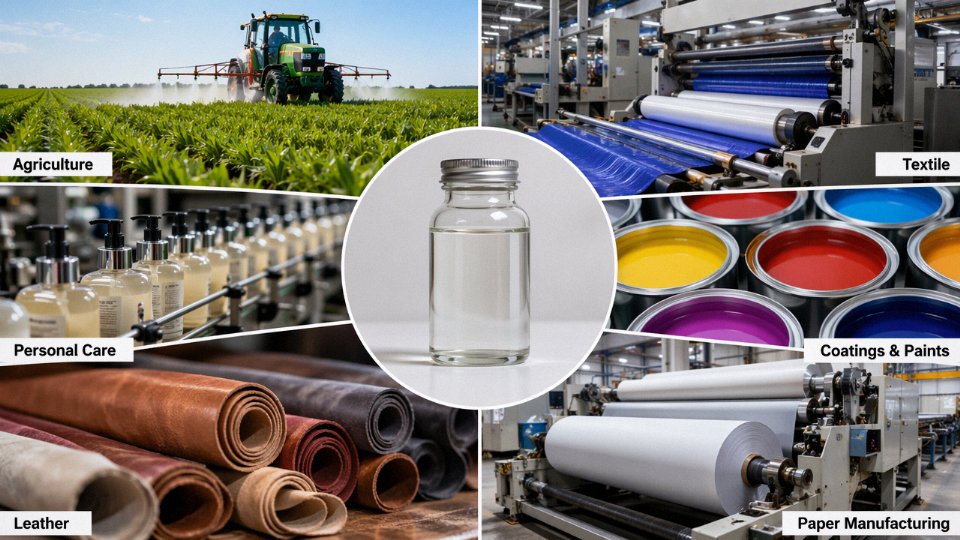
Silicone oil’s role in farming rarely makes the trade press the way immersion cooling or cosmetic emollients do, but the volumes are real and the performance gains are hard to replicate with anything cheaper. The agricultural sector leans on silicone chemistry in at least four distinct ways — spray adjuvants, irrigation system management, post-harvest handling, and animal care — and each one reflects a different set of operating pressures.
Trisiloxane Adjuvants and the Spreading Problem
The physics of pesticide application are straightforward and unforgiving: if a droplet beads up on a waxy leaf surface, the active ingredient sits on top of the cuticle instead of penetrating it. Conventional mineral oil adjuvants reduce contact angle modestly, typically from around 100–120° down to 40–60°. Trisiloxane-modified silicone oils — think of the “superspreader” class — push that contact angle below 10°, sometimes close to 3–4° on heavily waxy surfaces like brassica leaves or certain turf grasses. That’s the difference between a droplet that looks like a ball bearing and one that flows across the leaf like water on a hot griddle.
Typical loading rates run 0.05–0.25% v/v in the spray tank, and the right number depends on the crop canopy, the active ingredient’s own surfactancy, and ambient temperature. Cooler mornings slow spreading kinetics noticeably. Most agrochemists I’ve spoken with start at 0.1% and adjust based on field observations of droplet coverage — going higher risks phytotoxicity on stressed crops, especially in hot, dry conditions.
Trisiloxane silicone adjuvants can reduce pesticide contact angle on leaf surfaces to below 10°, improving foliar uptake compared to untreated spray droplets.True
This is well-documented in agrochemical literature; superspreader trisiloxane surfactants dramatically lower the dynamic contact angle on hydrophobic plant cuticles, enhancing active ingredient deposition and absorption.
Greenhouse Fertigation and Pump Protection
Recirculating nutrient solution systems in greenhouse operations — especially high-density lettuce and tomato operations running Dutch bucket or NFT setups — develop foam in the storage tanks faster than most growers expect. The culprit is usually a combination of organic matter, fertilizer salts, and aeration. Foam in the nutrient reservoir causes dosing pumps to cavitate, which throws off EC and pH readings and, in worst cases, runs the pump dry. A few milliliters of food-safe silicone antifoam per 1,000 liters of solution is typically enough to suppress foam without affecting plant uptake or root health, though the correct dose varies with water hardness and the specific fertilizer blend. It’s a small intervention that prevents a genuinely annoying and intermittent problem.
Post-Harvest Coatings and Regulatory Standing
Fresh produce waxing is one of those applications that surprises people. Apples and citrus going through commercial packing lines are routinely coated with wax formulations that include silicone oil components to extend shelf life, reduce moisture loss, and give the fruit the visual sheen that retailers demand. The regulatory position is reasonably clear: under FDA 21 CFR and the Codex Alimentarius framework, silicone oil for direct food contact and produce coating is permitted within defined limits. Codex Stan 212 covers waxing of fresh produce specifically. The residue levels that end up on retail fruit are well below any established concern threshold.
Soil Wetting and Hydrophobic Soil Management
Localized dry spot in turfgrass — particularly on golf courses and sports fields in late summer — is a soil hydrophobicity problem. Waxy organic coatings on sand particles repel water, causing irrigation to run off or channel rather than infiltrate evenly. Silicone-based soil surfactants applied through fertigation or spray break that hydrophobicity without the salinity load that some synthetic surfactants carry. The response is usually visible within a few irrigation cycles. Timing matters: applying in early morning before heat stress peaks gives the product time to work before soil temperatures rise.
Veterinary Applications
On the animal care side, silicone oil shows up in ear mite treatments as a suffocation-based active ingredient rather than a pesticide — the viscous PDMS physically blocks the mite’s spiracles. Hoof care products for cattle and horses often incorporate silicone oil to maintain suppleness and provide a moisture barrier without the greasy residue of petroleum-based alternatives. Surgical instrument lubrication in veterinary clinics uses medical-grade PDMS for autoclave-compatible lubrication of hinged instruments, where the thermal stability across repeated steam sterilization cycles at 134°C matters more than cost.
Environmental Fate: A Genuine Concern, Mostly Resolved
PDMS applied to soil doesn’t persist indefinitely. Degradation proceeds through hydrolysis to lower-molecular-weight siloxanols, then further mineralization to silica, CO₂, and water. The rate depends heavily on soil pH, microbial activity, and moisture — sandy, dry soils degrade PDMS more slowly than loamy, biologically active ones. OECD assessment frameworks classify PDMS as low environmental risk, and that classification is generally considered robust. That said, repeated high-volume application in confined drainage areas is worth monitoring, and responsible agrochemical formulators do include environmental fate data in their product dossiers.
Energy Sector: Transformer Fluids, Wind Turbine Lubrication, and Solar Panel Manufacturing
The energy industry doesn’t always show up in silicone oil conversations, but in terms of volume and criticality, it’s one of the most demanding application sectors there is. Failures here don’t mean a rejected cosmetic batch or a slow production line — they mean grid outages, turbine shutdowns, or multi-million-dollar transformer fires.
Electrical Transformer Insulation: The Fire Safety Case
Mineral oil has been the default transformer dielectric fluid for over a century, and it’s cheap — typically USD 0.80–1.50/liter versus USD 6–12/liter for silicone transformer fluid, depending on grade and order volume. That cost gap is the main reason utilities still reach for mineral oil in rural substations where fire risk is low and replacement is straightforward.
But the calculus shifts fast in urban substations, underground vaults, hospitals, and data center feeders. Silicone dielectric fluid has a flash point above 300°C versus roughly 145–165°C for standard mineral oil. In a fault event, that difference is the margin between a contained failure and a building fire. Several European grid operators now mandate fire-resistant fluid in any transformer installed within 25 meters of an occupied structure — silicone oil and synthetic esters compete directly for that specification.
Cold-start behavior is worth calling out separately. At -40°C, mineral oil viscosity can spike to a range where natural convective cooling becomes seriously impaired. Silicone oil, because of that Si-O backbone’s low intermolecular friction, stays pumpable and thermally functional down to -60°C without pour-point depressants. For substations in northern Canada, Scandinavia, or high-altitude sites, that’s not a theoretical specification — it’s the difference between a transformer that survives a cold snap and one that overheats its windings on restart.
Forty-year life-cycle cost modeling generally favors silicone oil in high-consequence locations once you factor in reduced fire suppression infrastructure, longer fluid service intervals (silicone degrades more slowly under oxidative and thermal stress), and lower insurance premiums. The break-even point depends heavily on transformer rating, location risk class, and local insurance rates — there’s no universal answer, but for a 10 MVA urban unit, the fluid cost premium is often recovered within 8–15 years.
Silicone transformer fluid has a flash point above 300°C, significantly higher than standard mineral oil.True
Polydimethylsiloxane-based dielectric fluids are widely documented to have flash points exceeding 300°C. Mineral oil transformer fluids typically flash at 145–165°C depending on refining grade. This property is the basis for fire-resistant fluid specifications in IEC 61039 and IEEE C57.111.
Wind Turbines: Viscosity Stability Under Wide Thermal Swings
Pitch and yaw hydraulic actuators on utility-scale turbines cycle continuously through whatever ambient temperature the site delivers — and that range can run from -40°C in a northern European winter to +70 or +80°C inside a nacelle on a hot summer day. Conventional hydraulic fluids struggle to maintain a stable viscosity index across that span. Silicone-based hydraulic fluids, particularly mid-viscosity PDMS grades in the 100–500 cSt range, hold viscosity variation to a much tighter band, which matters for actuator response time and seal life.
Gearbox breather systems are a less-discussed application. Most large turbine gearboxes use a silicone oil-wetted labyrinth or coalescing breather to allow pressure equalization while blocking moisture ingress. Sounds minor. In practice, a failed or hardened breather seal is a common root cause of water contamination in gearbox oil, which accelerates bearing pitting and can take a turbine offline for 3–6 weeks pending a crane mobilization.
Solar PV Manufacturing: Heat Transfer in the Czochralski Furnace
Growing a monocrystalline silicon ingot in a Czochralski puller requires sustained temperatures near 1,420°C at the melt, but the thermal management of the furnace jacket, cooling rings, and ancillary systems operates in a range where silicone oil works well as a secondary heat-transfer fluid — typically 200–280°C in those loops. The stability of PDMS at these temperatures, particularly phenyl-modified grades with higher thermal resistance, avoids the coking and deposit buildup that shortens maintenance intervals with conventional thermal oils.
In EVA encapsulant films — the material laminated directly over PV cells — silicone oil functions as a processing aid and contributes to moisture barrier performance. The encapsulant chemistry is proprietary to each film manufacturer, but silicone components appear consistently in formulations targeting higher-temperature module operating environments.
Anti-Soiling Coatings in Arid Regions
This is a fast-growing niche that deserves attention from procurement teams buying into utility-scale solar projects in the Middle East, North Africa, or the drier parts of India and the American Southwest. Ultra-thin silicone oil-based coatings — applied either during module manufacturing or as a field treatment — reduce the surface energy of the glass cover, causing dust particles to adhere less firmly and wash off more easily with dew or light rainfall.
The energy yield improvement varies with dust load, particle type, and cleaning regime, but independent field studies in high-soiling environments report roughly 2–5% improvement in annual energy output compared to uncoated modules on the same cleaning schedule. That’s not dramatic, but on a 200 MW plant, 2–3% more yield compounds over a 25-year project life into numbers that repay the coating cost many times over.
CSP Plants and Geothermal Secondary Loops
Concentrated solar power plants and geothermal installations both run high-temperature fluid loops that are expensive to maintain. Synthetic thermal oils — diphenyl oxide/biphenyl eutectic blends, most commonly — have been the standard in CSP secondary loops, but they degrade meaningfully above 390°C and produce acidic decomposition products that attack pump seals and expansion tank linings.
For secondary loops capped around 280–300°C, silicone oils (particularly methyl-phenyl silicone fluids) offer better oxidative stability, lower vapor pressure, and simpler waste disposal compared to aromatic thermal oils. The trade-off is higher fluid cost and lower volumetric heat capacity, which means larger fluid inventories and bigger heat exchangers for the same duty. It’s a legitimate engineering trade-off, not a clear winner either way — plant operators in arid regions sometimes favor silicone fluids specifically because the degradation products are less corrosive and the fluid can go longer between replacement intervals, which matters when your nearest chemical distributor is four hours away.
Grid Modernization: HVDC Stations and Capacitor Banks
High-voltage direct current converter stations require dielectric fluids that combine low electrical conductivity, thermal stability, and resistance to corona discharge over service lives measured in decades. Silicone oil checks all three requirements and has been specified in capacitor banks and converter valve cooling circuits in several large HVDC projects. As grids modernize and more long-distance transmission corridors come online — connecting offshore wind farms or cross-border interconnects — this application will grow steadily even if it never becomes a headline use case.
The volumes per installation are modest, but the fluid specifications are tight, the replacement intervals are long, and the consequences of fluid failure in an HVDC valve hall are severe enough that procurement teams generally pay the silicone premium without much debate.
Frequently Asked Questions About Industrial Silicone Oil Use
What is the difference between silicone oil and mineral oil, and when should I choose one over the other?
The short answer: temperature range and fire safety favor silicone oil; cost and biodegradability favor mineral oil. Mineral oil starts to degrade noticeably above roughly 120–150°C and carries a flash point in the 150–200°C range depending on grade. Silicone oil — PDMS specifically — stays functionally stable from around -60°C to +300°C and typically won’t flash below 300°C. That spread matters enormously in, say, an oven-conveyor chain application where ambient temperatures swing with production schedules and mineral oil would coke onto the chain links within weeks.
Cost is a real factor. Mineral oil runs roughly 3–8× cheaper per kilogram, so for high-volume, low-temperature applications with no regulatory constraint, it often wins on pure economics. Where you cross into food contact, high-voltage electrical insulation, or medical device assembly, the cost differential stops being the deciding variable.
Biodegradability is more nuanced than most data sheets suggest. Straight-chain PDMS degrades slowly in soil (measured in months to years), which is why some jurisdictions restrict discharge. Mineral oil biodegrades faster under aerobic conditions but is more acutely toxic to aquatic organisms. Neither is a clean answer.
Is silicone oil safe for food contact and pharmaceutical applications?
Yes — within specific grade boundaries, and the documentation trail matters as much as the chemistry. For food contact, the relevant US standard is FDA 21 CFR 173.340, which permits PDMS as a defoaming agent at up to 10 ppm in food. NSF H1 registration covers incidental food-contact lubrication on processing machinery. Your supplier should provide an NSF H1 letter of certification and a current Safety Data Sheet; a spec sheet alone is not sufficient for most food safety audits.
For pharmaceutical and medical applications, USP-grade silicone oil (meeting United States Pharmacopeia monograph standards) and EP-grade (European Pharmacopoeia) are the benchmarks. These set limits on metal impurities, viscosity tolerance, and volatile content. Demand a Certificate of Analysis — not a Certificate of Conformance — with actual batch-specific test results for viscosity, refractive index, and any heavy metals screen. Any supplier unwilling to provide lot-specific CoA data is a supplier worth avoiding.
NSF H1 registration means a lubricant has been tested for toxicity and is approved for direct food contact in unlimited quantities.False
NSF H1 registration covers lubricants where incidental food contact is possible, but it does not imply unlimited or intentional food contact approval. The designation confirms the formulation uses acceptable ingredients; actual application limits are set by the relevant food safety regulation (e.g., FDA 21 CFR for US operations).
Can silicone oil be recycled or safely disposed of?
Spent silicone transformer fluid can be reconditioned — particulate filtration, vacuum dehydration, and sometimes light distillation to strip low-molecular-weight volatiles — and the reconditioning cost is usually justified when the fluid volume is above roughly 500–1,000 liters. Below that threshold, most plants find disposal more economical. Incineration is the accepted disposal route for contaminated PDMS; high-temperature combustion (above ~900°C) breaks it down to silica, CO₂, and water. Landfill disposal of bulk silicone oil is increasingly restricted in EU member states and several US states. Never pour it down a drain — it will coat wastewater treatment biology and cause compliance headaches that cost far more than proper disposal ever would.
Why does viscosity grade matter so much in silicone oil selection?
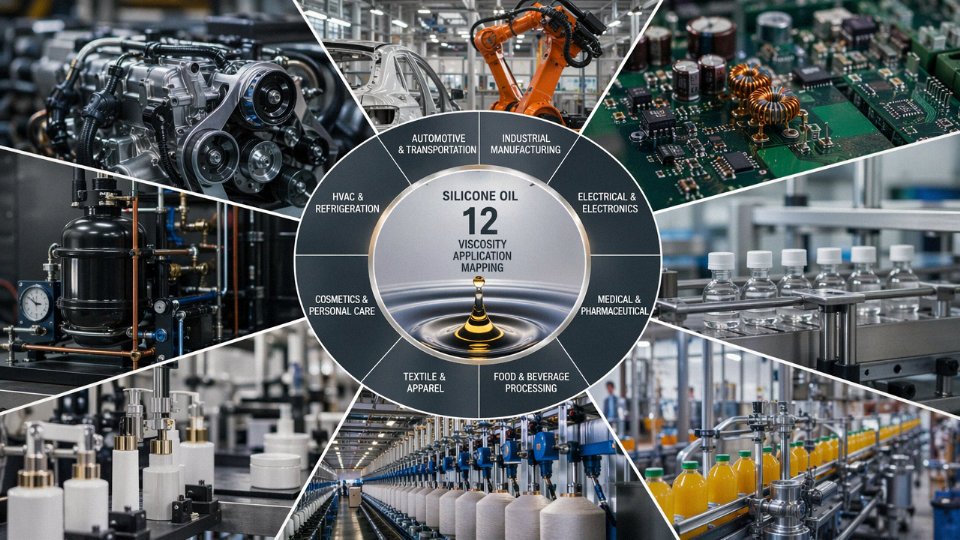
Because the wrong grade can fail silently for weeks before the damage shows up. A 5 cSt fluid applied as a damping fluid in a rotary dashpot will provide essentially no resistance; a 60,000 cSt fluid in a heat transfer loop will choke flow rates and starve the heat exchanger. The table below covers the most common application-to-viscosity pairings.
| Viscosity Grade | Typical Application | Key Dependency |
|---|---|---|
| 1–5 cSt | Cosmetic carrier, mold release spray | Spreadability, fast evaporation acceptable |
| 10–50 cSt | Hydraulic fluid additive, foam control | Flow rate requirements, pump type |
| 100–350 cSt | Heat transfer fluid, transformer coolant | Thermal conductivity, pumping temperature |
| 1,000–5,000 cSt | Textile softening, paper release coating | Dilution method, application roller speed |
| 10,000–100,000 cSt | Vibration damping, viscous couplings | Operating temperature range, shear stability |
| 300,000 cSt+ | Sealant base, extreme-pressure grease carrier | Mechanical shear, dispensing equipment limits |
In practice, heat transfer applications are surprisingly sensitive — moving from 100 cSt to 350 cSt in a closed-loop system can drop your effective heat transfer coefficient by 15–25% depending on flow regime, which shows up as higher outlet temperatures before anyone checks the fluid specification.
What are the main alternatives to silicone oil, and what are the trade-offs?
Polyalphaolefin (PAO) synthetic oils are the most common substitute in lubrication applications — better biodegradability profile than PDMS, lower cost, excellent oxidative stability, but useful only to roughly 200°C and not suitable for food-contact or electrical insulation duty without specific formulation work. Fluorocarbon fluids (Fluorinert-type, PFAS-based) outperform PDMS in chemical inertness and dielectric strength but carry significant regulatory and environmental risk given ongoing PFAS restrictions in both the EU and US — buying a large inventory of fluorocarbon fluid right now is a procurement decision worth discussing with your EHS team before committing. Natural esters (rapeseed-based transformer fluids, for example) have gained ground in distribution transformers where fire safety and biodegradability are priorities, but their upper temperature limit and hydrolytic stability are weaker than PDMS. Vegetable oils work in niche food-contact lubrication scenarios but gum up badly if they oxidize in a warm environment — a real problem in bakeries running continuous shifts.
Are there environmental or regulatory restrictions on silicone oil I need to know about?
The EU’s restriction on cyclosiloxanes D4, D5, and D6 under REACH is the most operationally significant current constraint. D4 and D5 are classified as substances of very high concern (SVHC) due to bioaccumulation and environmental persistence; since 2020, wash-off cosmetic products in the EU cannot contain D4 or D5 above 0.1% by weight. Industrial users are not yet under the same hard limits, but SVHC status affects supply chain documentation requirements and some procurement policies already prohibit SVHC materials outright. If you’re buying silicone oil for a product that may be exported to the EU, confirm cyclosiloxane content with your supplier in writing. The EPA has not finalized equivalent restrictions as of this writing, but the regulatory direction is fairly clear.
How do I verify the quality and purity of silicone oil from a new supplier?
Run your own incoming QC on the first few batches — don’t rely entirely on supplier data until you’ve correlated their CoA values against your own results. The core test battery: viscosity per ASTM D445 at 25°C (and 40°C for heat transfer grades), refractive index (quick, cheap, sensitive to contamination or adulteration), flash point by ASTM D92 or D93, water content by Karl Fischer titration (critical for transformer and electronic cooling applications — even 200–300 ppm water can meaningfully affect dielectric performance), and color/clarity visual check. For food and pharmaceutical grades, also request heavy metals analysis and volatile content (heated headspace GC is typical). A supplier who runs all of these routinely will have the data ready; one who stalls or offers only a generic spec sheet is worth treating with caution until they demonstrate otherwise.