A lot of buyers treat silicone oil as a simple commodity until the line starts showing the difference: viscosity drift in heat-transfer service, foam carryover in textiles, dielectric instability in electrical applications, or a release finish that looks fine on day one and fails in storage. Once that happens, the cost is not just a rejected drum or two. It spreads into downtime, rework, customer complaints, and the familiar procurement problem of comparing suppliers on price while not knowing which step in synthesis is actually controlling the property that matters in your process. The practical way out is to understand how industrial silicone oil is made, because the synthesis route sets molecular structure, volatile content, viscosity consistency, and purification burden before the product ever reaches your plant.
Industrial silicone oil is typically made by hydrolyzing chlorosilanes to form siloxane intermediates, then condensing and equilibrating them into polymers with the target molecular weight and end groups. Commercial performance depends less on the headline chemistry than on process control over water addition, acidity, stripping, and finishing, which is why silicone oils can range from roughly 0.65 cSt to well above 1,000,000 cSt at 25 C.
That broad viscosity window is the easy part to quote. The harder question, and the one that separates a workable source from a risky one, is how manufacturers steer the same siloxane chemistry toward a thin damping fluid, a stable antifoam base, or a high-purity grade with residual volatiles pushed down to low ppm or low wt% territory depending on end use. That comes down to a handful of manufacturing decisions that look minor on paper and expensive on the plant floor.
Core raw materials
The raw-material list for silicone oil looks short on paper, but plant performance usually depends on the details inside each input specification. Silicon metal, methyl chloride, catalyst package, hydrolysis media, end-blockers, and utilities together determine not just whether you can make silicone oil, but which chlorosilane mix you get, how hard it is to purify, and how repeatable the final viscosity and volatile profile will be lot to lot.
A buyer who only asks for “industrial-grade silicone oil feedstocks” will miss the failure points. In practice, cost, quality drift, and downtime often trace back to feed variability, moisture pickup, catalyst aging, or weak control of low-value auxiliaries such as wash water and neutralizing chemicals.
Silicon metal: not just purity, but behavior in the direct process
For the mainstream dimethyl silicone route, silicon metal is the critical inorganic feedstock entering the direct process with methyl chloride. Purity matters, but not in the simplistic sense of “the higher the better.” What matters operationally is how the silicon behaves in the fluidized or stirred reaction system and what chlorosilane distribution it supports.
Key silicon-metal factors include:
- Overall Si content
- Higher silicon content generally reduces inert burden and unwanted byproducts.
- That said, ultra-clean silicon is not automatically ideal if the trace-element balance that supports catalyst performance is lost.
- Trace metals and mineral impurities
- Iron, calcium, aluminum, and other residuals can shift reaction behavior.
- Some impurities act mainly as ballast or ash-formers; others influence copper activation and selectivity.
- Excessive or poorly controlled trace metals can increase formation of undesired mono-, tri-, or higher chlorosilane fractions, which then load downstream distillation.
- Particle size distribution
- Too coarse, and reaction surface area drops.
- Too fine, and handling gets messy: dusting, feeding inconsistency, entrainment, and unstable bed behavior become more likely.
- In practice, suppliers and plants usually work to a controlled size window rather than chasing the finest grind.
- Particle shape and friability
- Brittle material can generate fines during conveying and charging.
- That affects reactor hydrodynamics and dust collection load.
The mechanism is straightforward: silicon surface condition and impurity profile affect how copper-based active sites form and how methyl chloride reacts at those sites. When that chemistry shifts, the proportion of dimethyldichlorosilane versus other methylchlorosilanes shifts with it. Since dimethyldichlorosilane is the main precursor to standard dimethyl silicone fluids, upstream silicon variability quickly shows up as downstream yield loss and harder fractionation.
Methyl chloride: the main organic feed, with moisture control doing more work than people expect
Methyl chloride is the principal organic feedstock for dimethyl silicone production. Commercially, its cost, delivery mode, and purity have a direct effect on manufacturing economics because it is consumed at high throughput and any water ingress is immediately harmful.
Critical handling points are usually these:
- Dryness
- Water contamination promotes corrosion and side reactions.
- It also complicates chlorosilane storage and can upset reaction stability.
- Drying systems, vessel blanketing, and tight transfer practices matter more than the storage bullet paint condition everyone argues about.
- Storage and transfer
- Typically handled as a pressurized liquefied gas.
- Requires suitable pressure-rated tanks, leak detection, vent management, and emergency isolation.
- Hose selection, valve packing, and flange maintenance are not small issues here; plants learn that after a few nuisance leaks.
- Purity profile
- Residual organics or reactive contaminants can affect catalyst performance and product slate.
- The exact acceptable impurity level is plant-specific and should be tied to reactor performance data, not guessed from commodity gas specs.
Moisture control in methyl chloride service is a major quality and maintenance issue, not a minor housekeeping item.True
Water can promote chlorosilane hydrolysis, corrosion, off-spec formation, and unstable reactor or storage conditions. Exact limits depend on process design and supplier specification.
Copper-based catalysts and promoters: where selectivity is won or lost
Copper is the classic catalytic component in the direct process, often supported by promoter systems tailored to the plant’s reactor design and target product mix. The commercial objective is usually strong selectivity toward dimethyldichlorosilane rather than simply maximum overall conversion.
Catalyst formulation affects:
- Activation rate
- Reactor stability over campaign length
- Dimethyldichlorosilane selectivity
- Byproduct distribution
- Residue formation and fouling tendency
The trade-off is familiar on the plant floor: a more aggressive catalyst-promoter package may improve initial conversion or selectivity, but it can also narrow the operating window, shorten campaign life, or increase sensitivity to silicon variability. The preferred balance flips when feedstock quality is inconsistent or when a plant values stable long runs over peak selectivity.
Hydrolysis, condensation, and purification auxiliaries
Once chlorosilanes are produced and separated, hydrolysis-condensation turns them into siloxane intermediates and then silicone fluids. The supporting chemicals here are less glamorous than the monomers, but they are often where consistency is won.
Typical auxiliary materials include:
- Water
- Used in controlled hydrolysis of chlorosilanes.
- Quality matters: dissolved salts, hardness, and contamination can affect emulsification, phase split, corrosion, and residue levels.
- Alcohols
- Used in some process variants for alcoholysis, washing, or intermediate handling.
- Selection depends on product route and downstream separation design.
- Neutralizing agents
- Used to remove or consume residual acidity after hydrolysis/condensation.
- Over-neutralization can create salts or residues that burden filtration and polishing.
- Washing media
- Water or solvent washes help remove acid, salts, and low-boiling impurities.
- Wash efficiency affects color, odor, corrosion tendency, and final volatile content.
- Adsorbents or polishing aids
- Depending on purity target, some grades may need final cleanup before packaging.
The main boundary here is end-use sensitivity. A utility-grade fluid may tolerate process residuals that would be unacceptable for electronic, personal-care, or precision industrial applications, where residual volatile targets can run from low ppm to low wt% depending on specification and verification method.
Chain stoppers, end-cappers, functional monomers, and critical utilities
Viscosity control in silicone oil is largely a chain-length problem, so end-blocking chemistry matters. Common materials include:
- Chain stoppers / end-capping agents to limit molecular growth and set target viscosity
- Functional monomers to define terminal groups and downstream reactivity
- Specialty comonomers for modified fluids:
- phenyl for thermal behavior and refractive-index effects
- hydrogen for reactive Si-H functionality
- amino for textile, softening, or surface-modification uses
- epoxy and vinyl for reactive systems
- polyether for wetting, defoaming, or compatibility tuning
A small error in end-blocker ratio can move viscosity substantially, especially in lower-to-mid viscosity fluids. At very high viscosities, the process becomes less forgiving because devolatilization, heat transfer, and mixing all get harder at the same time.
Utilities are not reagents, but they are operationally decisive:
- Inert gas for moisture and oxygen exclusion
- Vacuum systems for stripping volatiles and finishing high-purity grades
- Heat-transfer media for tight reaction temperature control
- Chilled water for condensation and phase management
- Solvent recovery infrastructure where solvent-assisted purification is used
Plants that underrate these utility systems often blame chemistry for problems that are actually mechanical or thermal. If the vacuum is weak, the condenser is undersized, or the nitrogen is wet, even a sound formulation will struggle to produce consistent silicone oil.
Chlorosilane manufacture
Silicone oil economics are largely set one step upstream, in chlorosilane manufacture. The dominant industrial route is the direct process: reacting silicon metal with methyl chloride over a copper-based catalyst to make a crude methylchlorosilane mixture, with dimethyldichlorosilane typically being the main commercial target because it is the principal precursor to linear polydimethylsiloxane fluids.
That sounds straightforward on a flowsheet. On the plant floor, it is the section where feedstock quality, catalyst behavior, heat removal, and fractionation discipline start deciding whether the downstream oil unit gets a clean, stable monomer stream or spends its life correcting for variability.
The direct process: where the key monomers are made
The core reaction couples finely divided silicon with methyl chloride in the presence of copper or copper-promoted catalyst systems. The desired product is dimethyldichlorosilane, often abbreviated DMDCS or M2 in industry shorthand. Alongside it, the reactor also forms trimethylchlorosilane, methyltrichlorosilane, and a range of heavier or less useful organochlorosilanes.
What matters commercially is not just conversion, but the product slate. A crude stream richer in dimethyldichlorosilane gives a cleaner path to standard silicone fluids. Trimethylchlorosilane has value as an end-blocking reagent, since it can cap chain ends and help control polymer length. Methyltrichlorosilane introduces trifunctionality; in small controlled use it can support specialty structures, but in a linear fluid campaign too much of it increases branching or crosslinking risk downstream. Heavier fractions often have limited direct value and can become an energy and handling penalty.
A practical way to think about it:
- Dimethyldichlorosilane
- Main precursor for hydrolysis to difunctional siloxane units
- Drives linear chain growth for most silicone oil grades
- Trimethylchlorosilane
- Valuable for end blocking
- Helps control molecular weight and terminal structure
- Methyltrichlorosilane
- Trifunctional species
- Useful only in tightly controlled specialty formulations; usually undesirable in excess for standard fluids
- Heavier byproducts and mixed chlorosilanes
- Raise purification load
- Can destabilize downstream hydrolysis if not separated tightly
A supplier's chlorosilane integration can materially affect the cost and consistency of finished silicone oil.True
Upstream integration changes raw material cost exposure, monomer availability, impurity profile, and the supplier's ability to hold tight fraction cuts and delivery schedules. Buyers often see this later as viscosity consistency, volatile control, and lead time reliability.
Reactor concepts: fluidized versus reactive fixed-bed operation
Most industrial systems are designed around a reactive bed of silicon and catalyst, with methyl chloride fed under controlled temperature and residence conditions. Depending on plant design, this may resemble a fluidized or highly agitated reactive bed, or a more fixed packed reaction zone with continuous solids management. The exact configuration is manufacturer-specific, and readers should not assume one layout dominates all producers.
The operating challenge is heat and selectivity management. The direct process is strongly condition-sensitive: if the bed runs too cold, reaction rate drops and conversion suffers; if hot spots develop, selectivity can shift, heavy byproduct formation can increase, and bed fouling or sintering becomes more likely. In practice, operators spend a lot of time watching differential temperatures, gas composition drift, pressure behavior, and the less glamorous signs of trouble such as sticky fines carryover or unusual cyclone loading.
Key operating controls usually include:
- Bed temperature
- Held in a fairly narrow plant-specific window
- Affects both reaction rate and product distribution
- Hot spots tend to hurt selectivity before they show up as a full upset
- Methyl chloride feed rate
- Too high can upset heat balance or increase unreacted gas load
- Too low starves the bed and wastes reactor capacity
- Silicon particle characteristics
- Particle size distribution affects reactive surface area, fluidization behavior, and fines loss
- Metal purity and trace contaminants can change catalyst response
- Catalyst activation and maintenance
- Copper must be present in an active form at the silicon surface
- Promoters, activation practice, and startup discipline can change initial selectivity noticeably
- Feed ratio management
- Gas-to-solids balance influences conversion, residence time, and crude composition
- Plants often tune this around a moving optimum rather than one fixed number
The mechanism behind these sensitivities is simple enough: catalyst condition and local temperature determine which surface reactions dominate, and those reactions determine how much of the silicon ends up as the desired difunctional monomer versus mono-, tri-, or heavier species. Once selectivity moves the wrong way, downstream separation can recover purity, but it cannot recover yield. That lost selectivity becomes extra distillation duty, lower throughput, and often lower margin.
Why distillation discipline matters more than many buyers realize
Crude methylchlorosilanes leaving the reactor are not ready for hydrolysis. They must be fractionated into narrow cuts, because downstream hydrolysis-condensation behavior depends heavily on exactly which chlorosilanes are present and in what ratio.
A broad or drifting cut can create several problems at once:
- Hydrolysis rate shifts because different chlorosilanes react at different speeds
- HCl evolution profile changes, affecting mixing and corrosion load
- Phase separation becomes less predictable
- The downstream polymer can pick up unwanted branching, broader molecular-weight distribution, or unstable volatile content
This is why narrow boiling-range control matters. Distillation here is not just a purification step; it is a process-stability step. If the dimethyldichlorosilane cut contains too much methyltrichlorosilane, the hydrolysis section may still run, but the fluid plant will start chasing gel risk, viscosity drift, or off-spec end-group balance. Operators usually notice it first as a process that suddenly becomes “touchy” for no obvious reason.
Yield, selectivity, and the trade-off operators actually manage
A common purchasing assumption is that the best supplier is simply the one with the highest dimethyldichlorosilane yield. That is too simple. Plants do try to maximize target monomer output, but not at any cost.
The trade-off usually looks like this:
| Decision area | Gain | What gets sacrificed if pushed too far |
|---|---|---|
| Higher reactor severity | More throughput, sometimes better short-term conversion | Hot spots, heavier byproducts, catalyst deactivation, fouling |
| Tighter selectivity tuning | Better downstream monomer quality | More sensitive operation, possible throughput loss |
| Longer catalyst campaigns | Lower catalyst change cost, less interruption | Selectivity drift, unstable crude composition |
| Deeper fractionation | Cleaner monomer cuts | Higher energy use, lower effective capacity |
In practice, the preferred operating point flips when maintenance burden starts wiping out chemistry gains. A plant can chase a slightly better monomer split and then lose it back through exchanger cleaning, pressure-drop problems, unstable bed behavior, or extra rework in distillation. The best operations are rarely the most aggressive; they are the ones that can hold a narrow quality band for months without drama.
That conclusion stops holding if the business case is driven by a specialty monomer slate rather than standard silicone fluid production. In those campaigns, a producer may intentionally accept lower dimethyldichlorosilane share to favor a different downstream portfolio.
Why chlorosilane integration matters even to finished-oil buyers
If you buy finished silicone oil rather than monomer, this upstream section still matters. Suppliers integrated into chlorosilane production usually have more control over three things buyers care about but do not always trace back correctly:
- Cost stability
- Less exposure to third-party monomer market swings
- Better ability to plan campaigns around internal availability
- Impurity profile
- Tighter control of chlorosilane cuts can support more stable hydrolysis and lower downstream volatile variability
- Not a guarantee of premium purity on its own, but it changes the starting point
- Lead time resilience
- Integrated producers are generally less vulnerable to monomer shortages, split-allocation issues, or logistics delays between independent plants
You still need to verify grade-specific performance in the finished fluid, especially where low residual volatiles, electronic cleanliness, or cosmetic purity targets matter. But if two silicone oil suppliers quote similar viscosity and appearance, the one with disciplined chlorosilane integration usually has a stronger base for consistency, scale response, and problem-solving when your demand suddenly moves.
Hydrolysis and siloxane formation
The hydrolysis step converts chlorosilanes into silanol-bearing species that condense almost immediately into Si–O–Si bonds, and that is where silicone oil chemistry truly starts to look like a plant process instead of a textbook reaction. In practice, the job is not simply “add water and react”: the plant has to control acid generation, heat release, phase split, and droplet-scale mixing well enough to produce a crude siloxane stream that can be cleaned and steered into the next stage without carrying corrosion, instability, or an unmanageable cyclic profile.
Dimethyldichlorosilane, usually written as Me2SiCl2, is the main precursor for dimethylsiloxane fluids. Its first reaction with water forms silanols and hydrochloric acid:
- Me2SiCl2 + 2H2O → Me2Si(OH)2 + 2HCl
Those silanols are not stable for long under process conditions. They condense rapidly:
- 2 Me2Si(OH)2 → HO–Me2Si–O–SiMe2–OH + H2O
- Continued condensation builds linear oligomers and also closes rings to form cyclic siloxanes
That second step is why operators often say the hydrolysis is “instant” even when the chemistry is actually two linked reactions. The silanol generation is fast, and the acid-rich environment tends to push redistribution and condensation at the same time. If the reactor, quench loop, or static mixer is not giving uniform contact, you do not get a neat intermediate pool waiting to be processed. You get local over-hydrolysis, local acid spikes, and broad oligomer distributions that show up later as unstable viscosity control in equilibration.
What forms: linear oligomers and cyclics
The crude hydrolysate is normally a mixture, not a single product. Depending on conditions, it contains:
- Short linear siloxanols
- Linear oligomeric siloxanes
- Cyclic siloxanes, mainly D3, D4, and D5
- Dissolved or entrained HCl and water
- Trace residual chlorosilanes if conversion or separation is poor
For this article’s purpose, D3, D4, and D5 refer to cyclic dimethylsiloxanes with three, four, and five siloxane units in the ring. They matter because they are not just by-products to be minimized at all costs. In many commercial silicone fluid trains, cyclics are useful and even preferred feedstocks for later equilibration into target viscosity grades.
A common buying mistake is to assume that the “best” hydrolysis always means the lowest cyclic fraction. That is not generally true. If the downstream plant is designed around ring-opening equilibration, a controlled cyclic-rich intermediate can be easier to standardize than a poorly defined oligomer-heavy stream with variable acid and water carryover.
The product mix depends mainly on four levers:
- Water ratio
- Too little water leaves residual Si–Cl functionality and drives instability, corrosion, and difficult neutralization.
- Too much water can increase hydrolysis completeness but also complicates phase handling, washing load, and emulsion risk.
- The practical optimum depends on chlorosilane composition, mixing geometry, and whether the plant wants a more cyclic-rich or more oligomer-rich crude stream.
- Mixing intensity
- Hydrolysis occurs at the liquid-liquid interface, so droplet size and dispersion quality matter.
- Poor mixing creates microzones with very high HCl concentration and local heat release.
- Excessively violent mixing can make phase disengagement worse and extend emulsion residence time, which hurts throughput.
- Acidity
- HCl is not just a by-product to be removed later; it changes reaction pathways during formation.
- Acid-rich conditions tend to accelerate condensation and redistribution, influencing ring closure and molecular weight spread.
- Residual acidity carried into storage can keep the crude moving chemically when you want it to stop.
- Temperature
- Higher temperature usually speeds both hydrolysis and condensation, but it also increases volatility losses and can worsen side handling.
- Low to moderate temperature is typical for chlorosilane hydrolysis because heat removal and controllability matter more than headline reaction rate.
The mechanism behind that dependence is straightforward enough: hydrolysis creates reactive silanols; acidity, temperature, and local concentration then determine whether those silanols meet each other in ways that extend chains, close rings, or continue redistributing. The plant does not control molecules one by one. It controls the contact pattern and residence environment that makes one molecular population statistically more likely than another.
Why hydrochloric acid dominates plant design
Hydrochloric acid is the central process issue in this step because it affects safety, corrosion, separations, wastewater load, and product stability at the same time. You are generating it where the reaction happens, often in a mixed organic-aqueous system with entrained gas, heat release, and changing viscosity.
That creates several operating hazards:
- Localized exotherm
- Fast water addition into chlorosilane-rich zones can flash heat and HCl.
- The issue is often mixing-limited before it is chemistry-limited.
- HCl vapor and off-gas handling
- Vent systems need proper scrubbing and materials compatibility.
- A weak scrubber design shows up quickly as visible fuming, corrosion around duct joints, and maintenance headaches.
- Corrosion
- Carbon steel is generally not where you want to be in wet acidic hydrolysis service.
- Materials selection depends on exact acid concentration, chloride content, temperature, and velocity. In practice, glass-lined equipment, suitable stainless grades, and non-metallic linings or fluoropolymer-lined piping are common candidates, but the final choice must be verified against current corrosion data and supplier recommendations.
- Emulsification
- Acid, fine dispersion, and oligomer formation can create stubborn emulsions between aqueous HCl-rich and organosiloxane-rich phases.
- Once a unit gets into an emulsion-prone operating window, you lose settling capacity, wash efficiency, and often sample reliability.
Tighter hydrolysis control always reduces cyclic siloxane formation.False
Tighter control improves reproducibility, but the cyclic fraction depends on how water ratio, acidity, mixing pattern, and temperature collectively bias condensation and redistribution. A well-controlled system can intentionally produce a useful cyclic-rich intermediate for later equilibration.
Phase behavior, separation, and corrosion reality
Most plants rely on controlled phase separation after the primary hydrolysis zone. One phase is aqueous and acid-rich; the other is crude siloxane-rich. Simple on paper, messy on the floor.
Typical trouble signs include:
- Slow settler interface movement
- Milky organic phase
- Rising chloride in the crude siloxane phase
- Unstable pH after neutralization
- Unexpected rust staining or metal pickup downstream
- Drift in cyclic-to-linear ratio from one lot to the next
The phase behavior is sensitive to small process shifts. A change in feed temperature, a worn agitator blade, seasonal cooling-water temperature, or a different chlorosilane impurity profile can move the system from a clean split to a ragged emulsion. I have seen plants chase “chemistry problems” that were really hydraulic ones: wrong recycle ratio, plugged distributor holes, or a transfer pump shearing the interface harder than the reactor itself.
Neutralization, washing, drying, and crude cleanup
Before the material is suitable for equilibration or finishing, the crude hydrolysate normally needs a cleanup train. The exact arrangement varies, but the functional steps are usually:
- Primary acid phase removal
- Separate the bulk aqueous HCl-rich phase as early and as cleanly as possible.
- Neutralization
- Remove residual acidity with a suitable neutralizing agent under controlled conditions.
- Over-neutralization can create salts or fine solids that are just as troublesome as residual acid.
- Water washing
- Reduce dissolved acid, chloride, and water-soluble impurities.
- Wash intensity has to balance impurity removal against emulsion risk and wastewater generation.
- Drying
- Strip or adsorb residual moisture before downstream equilibration.
- Water carryover disturbs catalyst behavior later and can widen viscosity variability.
- Crude separation
- Depending on the process, this may include settling, filtration, and early distillation or flash removal of volatiles.
- The target is not final product purity yet; it is a stable, low-acid, low-water intermediate with a known composition window.
Residual volatile targets vary widely by end use. Industrial grades may tolerate a broader range, while cosmetic or electronic applications may require low ppm to low wt% residual volatiles after later finishing, not necessarily at this crude stage. That distinction matters in procurement, because plants often over-specify early intermediates and drive cost into the wrong section of the process.
Batch or continuous hydrolysis?
Batch hydrolysis gives flexibility. Continuous hydrolysis gives consistency, if the system is designed and instrumented well.
Batch hydrolysis
Usually chosen when:
- Product slate changes frequently
- Feed composition is variable
- Campaign sizes are moderate
- The plant values operating flexibility over maximum throughput
Advantages:
- Easier recipe adjustment
- Useful for development, specialty grades, or mixed feed campaigns
- Operators can respond to off-normal behavior within a batch
Limitations:
- Lot-to-lot variation is usually higher
- Heat removal can become limiting at larger batch sizes
- Cycle-time losses from charging, settling, cleaning, and turnover are significant
Continuous hydrolysis
Usually chosen when:
- Throughput is high
- Product family is relatively stable
- Feed quality is controlled
- Reproducibility matters more than recipe flexibility
Advantages:
- Better steady-state control of mixing, temperature, and residence time
- Higher throughput per unit volume
- Usually more reproducible crude composition
Limitations:
- Less forgiving of feed upsets
- Startup and transition periods can generate off-spec material quickly
- Fouling, plugging, or distributor maldistribution can affect the whole line before operators catch it
The trade-off is practical rather than philosophical. Batch systems are easier to live with when the business keeps changing. Continuous systems are easier to cost out and standardize once the chemistry and feed envelope are stable. The main conclusion stops holding when feed variability is extreme; in that case, a nominally efficient continuous design can spend too much time correcting instability, and the simpler batch route may outperform it on saleable output.
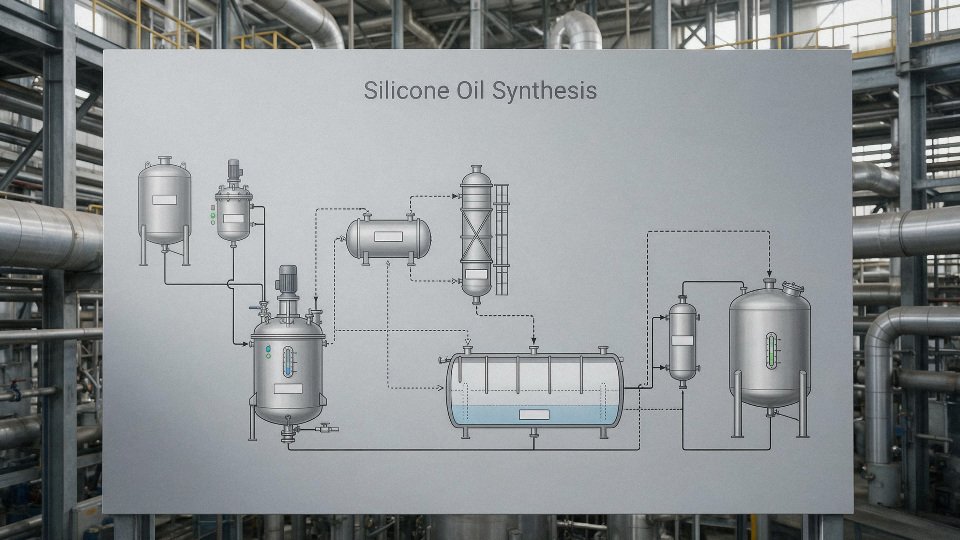
If a buyer is evaluating upstream capability, this is one of the places worth probing hard. Ask how acidity is controlled, how the plant handles phase disengagement, what materials are used in wet HCl service, and how crude siloxane dryness is verified before equilibration. Those answers usually tell you more about future fluid consistency than a polished product brochure does.
Polymerization and viscosity control
For most commercial silicone oils, the industrial workhorse is equilibration polymerization: cyclic siloxanes and short linear siloxanes are redistributed under acid or base catalysis until the fluid reaches the target chain length, then the catalyst is neutralized and residual volatiles are stripped. It dominates because it gives broad feed flexibility, good control of viscosity across a very wide range, and a practical way to tune end groups with chain stoppers rather than trying to build every chain molecule-by-molecule.
Direct condensation still has a place, but usually for selected systems where silanol termination, reactive functionality, or a particular network tendency matters more than maximum throughput. In practice, if the buyer needs a stable dimethyl fluid at a standard industrial viscosity, equilibration is usually the lower-risk and lower-cost route; if the buyer needs a controlled reactive end group for release coatings, textile finishing, or further crosslinking, the preferred route can flip.
Why equilibration polymerization is the default industrial route
The chemistry is simple in principle and fussy in operation. Cyclic siloxanes such as D4, D5, and related ring species open and redistribute in the presence of an acid or base catalyst. Linear siloxanes also participate, so the reactor does not just “grow chains”; it continuously scrambles Si–O–Si bonds until the system approaches an equilibrium distribution determined by temperature, catalyst type, residence time, and the amount of end-blocking species present.
That matters commercially because the plant can start from mixed cyclic streams rather than a single perfect monomer cut. Upstream siloxane intermediates are rarely ideal in a production setting. A process that tolerates normal variation in D3/D4/D5 ratio, while still landing the right finished viscosity after stripping and finishing, is a process procurement managers like because it protects cost and supply continuity.
A typical industrial sequence looks like this:
- Charge cyclic and/or linear siloxane feed
- Feed purity matters, especially residual acidity, water, and chloride.
- Small contamination can shift catalyst behavior and color stability.
- Add chain stopper
- Usually a trimethylsilyl source or equivalent end-blocking material.
- This sets the average degree of polymerization rather than relying on time alone.
- Introduce catalyst
- Acid or base, selected based on product family, reactor materials, downstream purification, and side-reaction tolerance.
- Run equilibration under controlled temperature
- High enough for practical reaction rate.
- Low enough to limit discoloration, side reactions, and volatile losses.
- Neutralize or deactivate catalyst
- Critical. Residual active catalyst can keep redistributing the fluid in storage or inside the customer’s formulation kettle.
- Strip residual cyclics and low boilers
- Usually under vacuum, often with staged temperature control.
- This is where many “good enough” fluids become premium or become trouble.
- Polish filtration and final QC
- Appearance, viscosity, volatile content, acid/base trace, end-group condition, and often odor or color for sensitive applications.
The mechanism worth understanding is the link between chain stopper ratio and final viscosity. Every trimethylsilyl end group effectively caps a chain end that can no longer keep extending in the same way. More stopper means more molecules with shorter average chain length, which pushes viscosity down. Less stopper allows longer average chains and higher viscosity. Residence time still matters, but once equilibrium is approached, end-group stoichiometry becomes the main handle. Plants that try to control viscosity by “just cooking longer” usually end up with poor batch reproducibility.
Acid versus base catalysis: the practical choice
Acid and base catalysts can both drive siloxane equilibration, but they behave differently enough that this is not a minor process detail.
Acid catalysis is often chosen when:
– The formulation is sensitive to certain base-catalyzed side reactions
– Lower-temperature operation is desirable
– A particular end-group profile is easier to preserve under acidic conditions
Base catalysis is often chosen when:
– Faster equilibration is needed
– High-throughput commodity dimethyl fluids are being made
– The plant has established neutralization and cleanup practice for that catalyst system
The trade-off is straightforward. Base-catalyzed systems are often productive, but they can be unforgiving if water, silanol content, or neutralization control drifts. Acid routes can be gentler for some structures, yet catalyst removal and corrosion control can become the headache instead. The preferred route stops being obvious when the product is not a plain dimethyl fluid but a modified oil with functional groups that dislike one catalyst family more than the other.
In practice, the “best” catalyst is often the one the site knows how to kill completely. I have seen more customer complaints caused by poorly neutralized catalyst residue than by a theoretical disadvantage in reaction kinetics.
Direct condensation routes and where they still make sense
If the target fluid needs silanol ends, reactive intermediacy, or specific specialty architecture, direct condensation of silanol-containing siloxanes can be the better route. This route removes water or another condensate as chains grow, instead of relying mainly on redistribution equilibrium among preformed siloxane units.
Direct condensation is commonly considered when the product needs:
- Reactive silanol termination
- Useful for room-temperature curing systems, release coatings, or further chain extension.
- Specialty copolymer structure
- Where redistribution would scramble the sequence too much.
- Lower cyclic carryover by design
- Though this still depends heavily on stripping capability and operating discipline.
The mechanism here is different enough to matter to the buyer. As condensation proceeds, chain growth depends on removing the condensate efficiently. If water or alcohol byproduct is not removed, the reaction stalls and molecular weight plateaus early. Reactor vent design, vacuum stability, and condenser performance become production variables, not just utilities detail. On humid days or with a tired vacuum train, you can see it in batch time and final volatility.
How molecular structure shows up in measurable properties
Viscosity gets most of the attention because it is easy to test and easy to put on a certificate. It is not enough.
Property control depends on three linked structural variables:
| Structural variable | What the plant controls | Main effect on fluid behavior |
|---|---|---|
| Average molecular weight | Chain stopper level, equilibration extent, stripping loss | Viscosity, volatility, flash point, compressibility |
| Molecular weight distribution | Catalyst regime, residence-time spread, devolatilization efficiency | Shear response, volatility tail, consistency lot-to-lot |
| End-group chemistry | End-blocker selection, residual silanol, functional modification route | Reactivity, storage stability, compatibility, downstream cure behavior |
A few practical relationships are worth calling out:
- Higher molecular weight usually increases viscosity and reduces volatility, but only if low-boiling cyclics are actually removed. A fluid can hit target viscosity and still have too much volatile fraction if the distribution is broad.
- Residual cyclics depress flash point and raise evaporative loss. They can also cause odor issues or formulation drift in coatings and personal-care-adjacent uses.
- Reactive silanol ends improve further reactivity but can reduce storage stability if moisture, acidity, or catalytic traces are present.
- Broader molecular weight distribution can distort pour behavior and compressibility response. The customer may not notice in incoming inspection, then see trouble in damping equipment, antifoam performance, or heat-transfer stability.
This is the common plant mistake: targeting viscosity alone while ignoring residual cyclics and reactive trace species. A batch can pass incoming viscosity and appearance checks, then foam unexpectedly, lose weight under heat, poison a downstream catalyst, or shift cure speed in the customer’s line.
A silicone oil that meets target viscosity is not automatically suitable for the intended application.True
Viscosity reflects average chain length, but application performance also depends on residual cyclics, end-group chemistry, trace catalyst, moisture, and other low-level impurities. These can materially affect volatility, flash point, compatibility, cure behavior, and long-term stability.
Making low-viscosity and ultra-high-viscosity grades
Low-viscosity fluids and ultra-high-viscosity fluids are not just the same process stopped at different times.
Low-viscosity grades
These are usually easier to make on reaction, harder to purify well.
- Require tighter control of chain stopper relative to cyclic feed
- Need careful volatile management because low-MW fluids sit closer to the cyclic range
- Often need stronger devolatilization discipline to meet purity targets for sensitive uses
A 5 cSt or 10 cSt fluid that still carries too much D4/D5-type material may look fine in a basic QC panel. It becomes a complaint when the end user sees higher evaporation, lower flash point, or seal-swelling behavior they did not budget for.
High- and ultra-high-viscosity grades
These demand patience, torque margin, and good finishing equipment.
- Longer effective residence time is usually needed
- Mixing gets harder as viscosity climbs
- Heat transfer worsens, so local overheating risk rises
- Vacuum stripping becomes slower because diffusion and surface renewal are poorer
Past a certain viscosity, reactor design matters as much as chemistry. Agitator type, baffle arrangement, wall scraping if used, and headspace/vacuum geometry all show up in cycle time and lot consistency. The usual conclusion that “higher viscosity means lower volatility” also starts to hit a boundary here: if devolatilization is weak, even a very heavy fluid can retain enough cyclic residue to create downstream issues.
Functional modification for specialty silicone oils
Specialty fluids are where siloxane synthesis stops being a commodity exercise.
Phenyl-modified silicone oils
Phenyl incorporation is used when the buyer needs improved thermal stability, altered refractive behavior, or better low-temperature fluidity in certain ranges. The phenyl group changes intermolecular interactions and chain mobility, so the fluid does not behave like a plain dimethyl silicone at the same nominal viscosity.
Trade-off:
– Better thermal and sometimes low-temperature performance
– Higher raw material cost and more complex composition control
Amino-functional silicone oils
These are common in textile finishing, softeners, and surface-treatment systems because amino groups improve affinity to certain substrates. The upside is deposition and feel; the downside is greater sensitivity to yellowing, formulation pH, and storage conditions.
Watch for:
– Residual catalyst interaction
– Color stability
– Compatibility with emulsification systems
Epoxy-functional silicone oils
These are selected for coating, adhesion, and reactive formulation uses where the epoxy group can participate in further chemistry. Sequence control and trace impurity control are more important here because unwanted reactive traces can alter cure profile.
Polyether-modified silicones
These are made to improve compatibility with water, organic media, or both, depending on architecture. They are widely used where spreading, wetting, antifoam balance, or emulsification behavior matters.
The plant-floor issue is that grafting or copolymer assembly often introduces a narrow operating window. Too mild and conversion stalls. Too hard and the product darkens, splits in storage, or drifts in surface performance. Bench data alone will not predict all of that; pilot or customer-application testing usually earns its keep here.
For buyers comparing suppliers, ask not only how the target viscosity is achieved, but how the supplier controls end groups, residual cyclics, catalyst traces, and functional-group consistency lot-to-lot. If you can share substrate material, contaminant or use environment, approximate layer thickness or add-on level, required finish, target processing rate, and clear photos or retained samples where relevant, SiliconChemicals can review the application and advise on a suitable silicone fluid or modified silicone type within its silanes, siloxanes, silicone polymers, and specialty modified silicone materials portfolio.
Purification and finishing
Crude silicone polymer is not a saleable fluid until the reactive leftovers, light ends, trace solids, and color bodies are brought under control. In practice, this finishing train determines whether the product holds viscosity in storage, stays clear in the customer’s tank, and meets end-use limits for odor, fogging, or volatile content. A plant can make the right polymer backbone and still miss the commercial grade if finishing is weak.
The sequence usually runs like this: stop the chemistry, strip what should not stay, polish what should not be seen, stabilize what could keep reacting, then blend and pack without recontaminating the product. The exact order shifts with viscosity, catalyst system, and end-use grade, but the logic does not.
Catalyst neutralization and residue control
If the polymerization catalyst is left active, the fluid can keep changing after it leaves the reactor. That shows up as viscosity drift, rising gel tendency, more cyclic reversion in some systems, or unstable customer processing. Procurement teams often focus on the nominal viscosity at release; operations people know the harder question is whether the drum is still on-grade after a few months in a warm warehouse.
Typical finishing actions include:
- Neutralization of acid or base catalysts
- Acid-catalyzed systems need a controlled quench with an appropriate neutralizing agent.
- Base-catalyzed systems may require acidification, catalyst poisons, or a deactivation route built into the process chemistry.
- The amount cannot be guessed from recipe alone; it depends on residual catalyst concentration, fluid viscosity, mixing quality, and how complete the upstream reaction was.
- Removal of neutralization byproducts
- Salts, fine particulates, and polar residues created during quench can stay suspended longer than expected, especially in mid-viscosity fluids.
- If they are not removed, they contribute to haze, filter loading, and ionic contamination.
- Verification of deactivation
- Useful release checks often include residual acidity or alkalinity, conductivity where applicable, ionic residue tests for tighter grades, and short thermal storage checks to confirm viscosity stability.
- There is no single universal limit that fits all silicone oils; acceptable residue depends on the customer’s process sensitivity and storage conditions.
The trade-off is straightforward: a stronger neutralization step improves storage stability, but over-treatment can create more solids, more color, or more cleanup load downstream. This conclusion stops holding if the product is intentionally reactive, such as silanol-rich intermediates sold for further formulation; in that case, complete end-capping or aggressive residue removal may conflict with the product’s function.
Vacuum stripping and devolatilization
For many grades, vacuum stripping is the decisive purification step. It reduces low boilers, residual cyclic siloxanes, odor contributors, and species that drive fogging in heated applications. The target is not one fixed number across the industry; typical residual volatile targets range from low ppm to low wt%, depending on whether the oil is headed into cosmetics, electronics, release coatings, defoamers, or general industrial lubrication.
Mechanistically, lower pressure and sufficient temperature shift the vapor-liquid balance so the lighter siloxanes leave the bulk fluid. What matters on the plant floor is not temperature alone but the combination of:
- Absolute vacuum level
- Film thickness or exposed surface area
- Residence time
- Agitation quality
- Viscosity of the fluid being stripped
- Condenser efficiency and cold-trap performance
A 10 cSt fluid strips easily compared with a 100,000 cSt fluid. As viscosity rises, mass transfer slows down and trapped volatiles are harder to remove. That is why wiped-film, thin-film, or staged stripping equipment is often favored for higher-viscosity grades; a simple kettle under vacuum can become painfully slow and uneven.
Poor devolatilization usually shows up as:
- Higher odor than expected
- Elevated fogging tendency in heated service
- Weight loss under customer heat testing
- Flash-off during filling or downstream blending
- Out-of-spec cyclic content where that is controlled
Push stripping too hard, though, and you can darken the product, lose yield, or alter the viscosity if residual catalyst is still present. A nice vacuum number on the log sheet is not enough if the condenser is warm, the demister is overloaded, or the product is foaming into the line. Plants in humid seasons know this problem well.
Filtration, adsorption, and polishing
Once chemistry and volatiles are under control, the fluid still needs cosmetic and cleanliness finishing. Different end uses care about different defects:
| Finishing issue | Typical source | Common control method |
|---|---|---|
| Particulates | Neutralization salts, corrosion fines, packaging debris | Depth filtration, cartridge filtration |
| Gels or soft specks | Local overreaction, aged residues, reactor wall build-up | Staged filtration, tank hygiene, recirculation polishing |
| Trace color bodies | Thermal history, metal contamination, side reactions | Adsorbent treatment, controlled bleaching where suitable |
| Ionic contamination | Catalyst residues, wash carryover, utility contamination | Adsorption, careful phase separation, dedicated equipment |
Filtration needs to be matched to fluid viscosity and defect type. Fine cartridge ratings look good on paper, but if the fluid is heavy and the filter housing is undersized, differential pressure climbs, bypass risk goes up, and operators start changing cartridges too often. In practice, a staged train works better: coarse removal first, then tighter polishing.
Adsorbents can help with trace color bodies and polar impurities, but they are not free quality. They can also strip useful components, shed fines if handled badly, and create batch-to-batch shifts if contact time is not controlled. For higher-purity grades, dedicated clean lines and dry equipment matter as much as the adsorbent choice.
End-capping, stabilization, blending, and packaging readiness
Residual silanol groups are a recurring issue in crude or partially finished silicone oils. End-capping converts those reactive chain ends into more stable end groups, which improves hydrolytic stability and reduces the chance of viscosity drift, condensation during storage, or moisture sensitivity in the customer’s process. The gain is better long-term stability; the sacrifice is less reactivity, so this is not always desirable for fluids sold as intermediates.
Blending is then used to hit the commercial viscosity window. A single reactor batch rarely lands every shipment target tightly enough, especially across broad production campaigns. Good blending practice includes:
- Using a small number of traceable source lots
- Confirming each source lot for viscosity and key purity markers before blend approval
- Blending with enough circulation time to eliminate stratification
- Retaining blend maps so any complaint can be traced back to contributing lots
- Rechecking viscosity after temperature equilibration, not straight off a warm blend tank
This is where commercial discipline meets process control. Narrow viscosity windows are achievable, but only if the plant resists the temptation to “tune” batches with too many partial leftovers. That habit fixes one shipment and creates traceability headaches later.
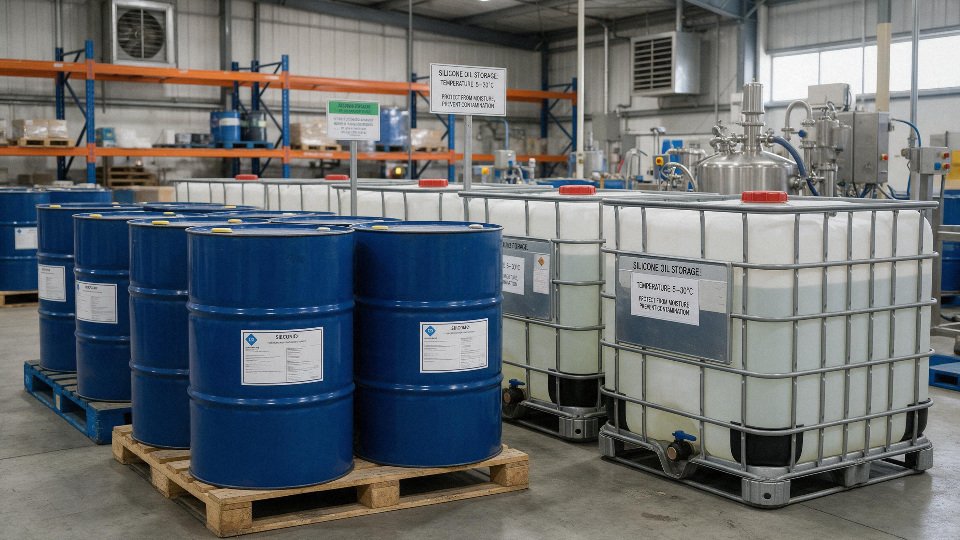
Packaging is the final contamination control point. Dry, clean containers are essential because silicone oils, especially low-viscosity or silanol-containing grades, can pick up moisture, particles, and odor from poor packaging practice. Typical considerations are:
- Bulk tank shipments: best for stable, high-volume grades; tank cleanliness, dedicated hoses, and previous-cargo compatibility must be verified.
- Drums: common and flexible; lining compatibility and bung seal condition matter more than many buyers realize.
- Intermediate bulk containers: useful for mid-scale handling, but valve cleanliness and moisture ingress are frequent weak points.
- Small packs: favored for specialty grades; filling environment and headspace control become more critical.
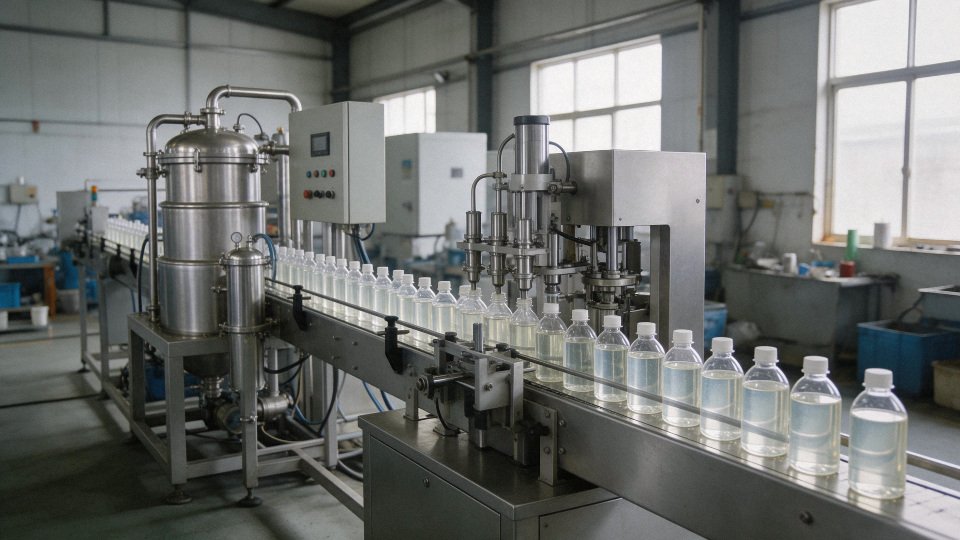
Shelf life depends on formulation, residual reactive content, packaging seal integrity, storage temperature, and exposure to moisture or contamination. No responsible supplier should promise one universal shelf-life figure for all silicone oils without those details. The practical check is whether the packaged fluid still meets viscosity, appearance, volatile, and stability requirements at the end of the declared storage period.
Quality metrics and test methods
A silicone oil lot is commercially acceptable only when its analytical profile matches the job, not just the product name. Viscosity gets the material into the right family; the rest of the test slate determines whether it will actually run cleanly, stay stable, and behave the same way from lot to lot in your process.
For commodity heat-transfer, textile, or general-release use, buyers often start with a short release specification. For electronics, personal care intermediates, release coatings, defoamers, and medical-adjacent industrial use, that short list is rarely enough.
Core release specifications buyers actually check
These are the routine gatekeeping items on most certificates of analysis and incoming inspections:
- Kinematic viscosity at 25 C
- Usually the primary grade identifier for silicone oil.
- Commercial products span roughly 0.65 cSt to above 1,000,000 cSt at 25 C, but the acceptable tolerance depends on grade and use.
- In practice, viscosity reflects average chain length and, indirectly, how well polymerization and stripping were controlled.
- Appearance
- Clear, bright, and free of haze or visible suspended matter for many standard fluids.
- Haze often points to water, insoluble contamination, salt carryover, or poor filtration.
- Color
- Often reported by APHA/Hazen, Gardner, or a supplier-specific visual standard.
- Color matters most where the oil is used in transparent formulations, cosmetics intermediates, or light-colored systems.
- Density
- Useful as a quick identity and consistency check.
- It is not a substitute for composition testing, but a density shift can flag abnormal volatile content, unusual end-group distribution, or contamination.
- Refractive index
- Common in silicone fluid QC because it is fast and repeatable.
- Helps confirm product identity and catches some composition drift that viscosity alone can miss.
- Flash point
- Important for storage, transport classification, and process safety review.
- Strongly influenced by low-boiling volatiles. A lot with excess cyclics or short-chain species may still hit viscosity but fail practical safety expectations.
- Volatile content
- Critical for coating, electronics, vacuum, and personal care supply chains.
- Typical targets for higher-purity grades can range from low ppm to low wt%, depending on end use and the specific volatile definition in the test method.
The mechanism matters here. Stripping and devolatilization remove low-molecular-weight species; if that step is weak, viscosity may look acceptable because the bulk polymer is in range, but flash point drops, odor rises, migration risk goes up, and weight loss in service increases. That is a common plant-floor argument between production and QA: “The viscosity is fine.” Sometimes it is, and the lot is still wrong for the customer.
Chemical quality indicators that drive downstream performance
Routine physical properties do not tell you whether the fluid is chemically clean. These indicators usually decide whether the oil is stable in storage and compatible with the next process step.
- Residual acid or alkali
- Relevant when acid or base catalysts were used in equilibration or end-blocking steps.
- Residual catalyst can keep the fluid reacting in the drum, shift viscosity over time, attack sensitive additives, or corrode downstream equipment.
- Chloride
- A key cleanliness marker, especially where chlorosilane-derived intermediates are involved.
- Elevated chloride may indicate incomplete washing, poor phase separation, or contamination during transfer and storage.
- Water
- Even low levels can matter in dielectric fluids, moisture-sensitive formulations, and release systems.
- Water can promote hydrolysis, haze, microfoam, and packaging instability.
- Silanol content
- Important because silanol end groups are reactive.
- Higher silanol can improve compatibility in some formulated systems, but it can also increase condensation tendency, viscosity drift, and interaction with fillers or catalysts.
- Cyclic siloxane fraction
- Usually measured because cyclics affect volatility, migration, odor, extraction behavior, and some regulatory or brand-owner acceptance criteria.
- The preferred limit depends heavily on application; there is no single responsible universal threshold.
- Residual functional monomers or reactive species
- Relevant for amino-, epoxy-, vinyl-, hydride-, phenyl-, or polyether-modified silicone oils.
- These species affect cure response, compatibility, odor, and storage stability.
A trade-off shows up with silanol and cyclic reduction. Pushing purification harder generally improves volatility and contamination metrics, but it can also raise cost, cut yield, and, in some systems, alter the end-group balance enough to change downstream performance. The “best” purity profile flips depending on whether the oil is headed into a commodity lubricant, a premium personal care intermediate, or a tightly specified release formulation.
Structural and compositional tools used beyond routine QC
When a buyer is qualifying a supplier, troubleshooting lot drift, or approving a fluid for critical use, routine release tests are not enough. The usual analytical tools are:
| Method | What it verifies | Typical use in buying or troubleshooting |
|---|---|---|
| Gas chromatography (GC) | Cyclic siloxanes, low boilers, residual monomers, some solvents | Volatiles, migration risk, stripping efficiency |
| Gel permeation methods (GPC/SEC) | Molecular weight distribution, not just average viscosity | Lot-to-lot consistency, broad-distribution problems |
| Infrared spectroscopy (FTIR) | Si-O-Si backbone, methyl/phenyl/functional groups, silanol signatures | Identity check, end-group and functionality confirmation |
| Nuclear magnetic resonance (NMR) | End groups, functional substitution, structural ratio details | Qualification, dispute resolution, development-grade verification |
These tools answer different questions. GC is good at the light end; GPC shows whether two lots with the same viscosity got there by the same molecular-weight distribution; FTIR is fast for confirming chemistry; NMR is often the cleanest way to verify end-group structure when a customer is buying a functional fluid and cannot afford guesswork.
A certificate of analysis showing the correct viscosity is sufficient to qualify silicone oil for production use.False
Viscosity confirms grade family but does not reliably predict residual volatiles, cyclic content, catalyst carryover, water, chloride, end-group structure, or application-specific behavior such as dielectric loss, migration, foam, or cure compatibility.
Application-linked tests that decide whether the fluid works
A lot can pass commodity QC and still fail in service. That is why better buyers tie test methods to the actual duty:
- Dielectric properties
- Volume resistivity, dielectric constant, dissipation factor.
- Needed for electrical insulation uses and sensitive electronic processing.
- Thermal and oxidation stability
- Weight loss, viscosity change after heat aging, acid formation, color shift, deposit tendency.
- Particularly relevant for heat-transfer, high-temperature lubrication, and long-service fluids.
- Foam behavior and air release
- Important in hydraulic-adjacent systems, textile finishing, mixers, and recirculating baths.
- Spreadability and surface behavior
- Useful in personal care intermediates, release applications, and coating aids.
- Surface tension and wetting often matter more than bulk viscosity here.
- Lubrication performance
- Friction, wear, film persistence, and load behavior.
- Silicone oil is not automatically a strong boundary lubricant in every metal-to-metal contact; test it in the actual contact regime.
- Compatibility
- Check against elastomers, plastics, coatings, adhesives, inks, and formulation ingredients.
- A bench soak test is cheap compared with a line stoppage caused by swollen seals or fish-eyes in coating.
- Migration and transfer
- Essential in release liners, labels, electronics, and adjacent assembled parts.
- A fluid that migrates into the wrong interface can wreck adhesion, printability, or electrical reliability.
Contamination control for sensitive sectors
For higher-sensitivity applications, buyers often ask for controls beyond standard commodity specs:
- Trace metals or ionic residues for electronics-related use
- Bioburden or tighter handling controls for some personal care and medical-adjacent industrial supply chains
- Particulate cleanliness and filtration level
- Low odor and low extractables
- Packaging cleanliness, liner compatibility, and drum or tote history
- Tighter controls on specific cyclic fractions or volatile siloxanes
- Evidence of dedicated or well-cleaned production and transfer equipment
This is where supplier discipline matters. A polished stainless line is helpful, but a neglected hose, reused IBC, or bad drum-lid gasket can undo expensive purification work in one filling shift. The section’s main conclusion stops holding if the buyer assumes all contamination risk is chemical; in many plants, the last contamination event happened during transfer, packaging, or sampling.
Lot approval should match process risk. If your operation is sensitive to cure inhibition, dielectric loss, migration, foaming, or extractables, build those tests into supplier qualification and periodic verification rather than treating them as one-time development work.
Safety and environmental controls
Silicone oil production is manageable at industrial scale, but only when the plant is designed around moisture-sensitive chlorosilanes, acid generation, flammable vapors, and tight containment from the first reactor to final finishing. The main safety reality is simple: most serious incidents come from loss of segregation between reactive materials and the wrong utility, atmosphere, or drain path, not from the nominal chemistry itself.
The risk profile also changes across the chain. Upstream chlorosilane units are dominated by fire, reaction, and corrosion hazards; hydrolysis and equilibration bring acid handling, off-gas control, and heat removal into focus; finishing pushes more attention onto hot fluids, vacuum integrity, and operator exposure during transfer, sampling, and packaging.
Where the major hazards actually sit
Chlorosilane manufacture and handling
Chlorosilanes bring a familiar but unforgiving combination:
- Moisture reactivity
- Contact with water or humid air can generate hydrochloric acid and heat.
- Even small leaks around pump seals, sample points, or temporary hoses can create corrosive fumes very quickly.
- Flammability
- Depending on the specific chlorosilane and impurity profile, vapors can present ignition risk.
- Dry, inert handling is usually non-negotiable for storage tanks, reactors, and transfer headers.
- Exothermic behavior
- Hydrolysis is intentionally controlled later in the process; accidental hydrolysis in the wrong vessel, vent line, or knockout pot can run away locally.
- Water addition rate, mixing quality, and phase dispersion determine whether heat release stays controllable or creates hot spots and violent gas evolution.
- Hydrochloric acid generation
- This is both a personnel hazard and an equipment-life issue.
- Acid mist and HCl-rich vapors attack carbon steel, instrument tubing, cable trays, and anything that was “good enough” during startup but not truly suitable.
In practice, one weak point is often the interface between process equipment and utilities: a leaking cooling coil, a bad mechanical seal flush, condensate backflow, or rain ingress at a poorly protected vent. That is where nice PFD assumptions get tested.
Polymerization, finishing, and storage
Later stages look calmer on paper, but they have their own incident modes:
- Hot oil systems
- Thermal burns, seal degradation, and fire risk rise sharply when heat transfer systems are poorly maintained.
- Oxidized heat transfer fluid can foul exchangers, force higher film temperatures, and quietly reduce safety margin.
- Vacuum operations
- Implosion risk, air inleakage, condenser overload, and pump exhaust emissions matter.
- Under vacuum stripping, a small air leak can change both product quality and flammability conditions in receivers or exhaust treatment.
- Volatile organosilicon intermediates
- Low-viscosity fractions and stripped volatiles can accumulate in vents, condensers, and drum-filling areas.
- Exposure control is not just a comfort issue; it affects odor complaints, housekeeping, and permitting.
Worker protection on the plant floor
A safe silicone oil plant is usually boring to walk through: enclosed transfers, dry couplings, local exhaust where operators actually stand, and clear segregation of acid, solvent, and polymer areas.
Core occupational controls usually include:
- Closed handling for chlorosilanes and acidic intermediates
- Hard-piped transfer where possible.
- Dry-break or equivalent low-release connections for loading and unloading.
- PPE matched to task, not a generic site rule
- Chemical-resistant suit, face protection, and gloves for break-in tasks on acid/chlorosilane service.
- Heat-resistant PPE for hot oil and devolatilization equipment.
- Ventilation by release point
- Hooding at sampling stations, vacuum pump exhausts, packaging points, and neutralization tanks.
- Exposure discipline during maintenance
- Gas testing, line draining, blinding, and decontamination before opening equipment.
- This matters most after shutdowns, when residual acid or trapped volatile siloxanes are easy to underestimate.
- Training on incompatible materials
- Operators need to know which hoses, gaskets, and absorbents are acceptable. Plants still lose containment because somebody grabbed the nearest drum pump or swapped in the wrong elastomer.
Process safety layers that actually make the difference
The base layer is sound equipment selection: corrosion-appropriate metallurgy, gasket compatibility, and instruments that survive acidic or solvent-bearing service. Above that, the usual protection stack should be deliberate, not checkbox-driven.
- Inerting
- Nitrogen blanketing on chlorosilane storage, receivers, and selected reaction systems.
- Oxygen limits and purge procedures must match the actual vessel geometry and operating sequence.
- Emergency scrubbing
- Vent and relief discharge from chlorosilane and hydrolysis sections typically need scrubbing capacity sized for credible upset cases, not just routine breathing losses.
- Relief design
- Two-phase flow, rapid gas generation, and corrosive discharge have to be considered where hydrolysis or contamination is possible.
- This is not a place to generalize from a standard solvent reactor.
- Corrosion monitoring
- Thickness checks, corrosion coupons, and inspection around dead legs, low points, and vent condensate zones.
- Acidic water pockets often sit where the P&ID looks harmless.
- Shutdown logic
- High temperature, high pressure, low agitation, loss of inert gas, cooling failure, and abnormal feed ratio should trigger defined responses.
- The best logic is the one operators trust enough not to bypass.
Waste streams and treatment strategy
The waste picture is broader than many buyers assume. Typical streams include:
| Waste stream | Main concern | Common treatment direction |
|---|---|---|
| Acidic aqueous phase from hydrolysis/neutralization | Low pH, chloride load, dissolved organics | Neutralization, phase separation, wastewater treatment subject to site permit |
| Off-gases containing HCl or volatile siloxanes | Corrosive emissions, VOC release | Scrubbing, condensation, sometimes secondary adsorption or thermal treatment depending on permit and composition |
| Spent catalysts | Reactivity, metal content, disposal classification | Controlled collection, regeneration or licensed disposal depending on catalyst type |
| Solvent residues | VOCs, fire risk, waste cost | Distillation recovery where justified, otherwise managed as hazardous or controlled industrial waste per local rules |
| Off-spec polymer or still bottoms | High viscosity, disposal difficulty, residual volatiles | Rework if chemistry allows; otherwise controlled disposal or energy recovery where legally permitted |
The mechanism here is straightforward: poor separation upstream drives cost and environmental load downstream. If hydrolysis leaves more entrained acid or low boilers in the organic phase, finishing consumes more energy, vacuum systems see a heavier load, off-gas treatment gets larger, and off-spec risk climbs. That is one of those process links that accounting notices only after utility bills and waste invoices move.
Compliance pressure and emissions reduction
Environmental scrutiny is not uniform across markets. Cyclic siloxanes, especially in certain downstream formulations, receive closer regulatory attention in some regions than in others, so a manufacturer shipping globally needs product-by-product and country-by-country review rather than one blanket compliance statement.
A silicone oil grade that is acceptable for one industrial market can require different compositional disclosure, cyclic siloxane control, or downstream-use review in another region.True
Regulatory treatment depends on jurisdiction, application, impurity profile, and current chemical management rules. The exact obligations must be checked against the destination market and intended use.
Emission and energy improvements usually come from a few practical areas:
- Heat integration between exothermic and heating-demand steps
- Solvent and volatile recovery instead of single-pass disposal
- Vacuum system optimization to reduce steam, cooling water, or power draw
- Better condenser performance to cut vent losses
- Integrated upstream-downstream production to reduce storage, transfers, and repeated reheating
The trade-off is capital versus resilience. A tightly integrated site usually cuts energy, emissions, and intermediate handling losses, but it can also propagate an upstream upset across multiple units faster. That advantage starts to weaken if the plant has unstable utility supply, poor maintenance discipline, or a product slate that changes often enough to keep systems off their design point.
Grade design by application
Application decides the grade family first; synthesis details only make sense after that. The same siloxane backbone can be built into a cheap general-purpose process fluid, a tightly controlled defoamer carrier, a textile-reactive intermediate, or a high-purity dielectric fluid, but the preferred route, finishing depth, and acceptance criteria change sharply with end use.
A buyer who only specifies “silicone oil” usually gets into trouble on one of four fronts: wrong viscosity behavior, wrong volatile profile, wrong functionality, or wrong batch consistency. On the plant side, those failures trace back to molecular-weight distribution, end-blocking choice, residual cyclics, and whether the manufacturer is set up for commodity throughput or tighter custom control.
Dimethyl silicone oils: the broadest commercial family
Straight dimethyl silicone oils, typically polydimethylsiloxane-based fluids, cover the largest volume of industrial demand because they are chemically stable, water-repellent, and available across a very wide viscosity span. They fit best where the job is lubrication, slip, release, damping, dielectric insulation, surface gloss, or foam control without needing strong chemical reactivity.
Common downstream uses include:
- Lubricants and process aids
- light-duty lubrication for plastics, rubber, and some metal-contact systems
- mold-release carriers
- conveyor and packaging line process aids
- Release agents and polishes
- furniture and automotive appearance products
- rubber and thermoplastic mold release
- paper, textile, and web-handling slip control
- Defoamers
- active fluid or compound component in aqueous and non-aqueous systems
- pulp and paper, wastewater, coatings, fermentation, and chemical processing
- Dielectric and heat-transfer-adjacent uses
- selected electrical insulation fluids
- specialty thermal management applications where oxidation resistance and purity are important
The mechanism matters here. Lower-viscosity dimethyl fluids spread quickly and suppress friction or improve wetting, but they also migrate more easily, can volatilize more readily, and may not stay where the formulator wants them. Higher-viscosity dimethyl fluids stay on the surface longer and damp motion better, but they are harder to emulsify, slower to level, and can raise pumping and dosing problems in cold weather.
The preferred grade flips once the process becomes shear-sensitive or residue-sensitive. A release line running fast film or coated paper often wants predictable low-residue behavior; a slow mechanical damping application wants persistence and body instead.
Low-viscosity fluids for spreadability, carriers, and specialty systems
Low-viscosity silicone fluids are usually chosen for hand feel, rapid spreading, carrier behavior, or temporary process effects. They show up in personal care intermediates, specialty cleaning blends, surface-treatment systems, and as formulation diluents where the silicone phase must distribute quickly and evenly.
What matters most in this family:
- Volatile profile
- not every low-viscosity fluid is acceptable where odor, emissions, residue, or regulatory scrutiny is tight
- residual cyclics and other low boilers need closer control for sensitive applications
- Purity and appearance
- haze, color, trace acidity, or catalyst residues can disqualify an otherwise functional fluid
- Compatibility
- some systems need pure dimethyl character
- others need modified structures to disperse into polar formulations
This is one of the clearer trade-offs in the product line: lower viscosity improves spreadability and ease of incorporation, but often increases the burden on devolatilization and analytical release testing. If the buyer needs a fluid for regulated personal care supply chains or residue-sensitive cleaning formulations, the conclusion that “any 1–10 cSt silicone will do” stops holding. You need actual volatile limits, not just nominal viscosity.
High-viscosity and ultra-high-viscosity grades
For damping, cushioning, greases, and thickened process systems, high-viscosity and ultra-high-viscosity silicone oils are the practical choice because they deliver body, film persistence, and resistance to squeeze-out. These grades are also used as base fluids in specialty greases and as rheology-building components in compounds.
Typical fit-for-use areas:
- Damping and motion control
- dashpots
- instrument damping
- controlled-movement mechanisms
- Cushioning and sealing support
- shock absorption functions
- gap-filling and persistent lubrication films
- Grease manufacture
- silicone grease base preparation with silica or other thickeners
- Heavy-bodied processing systems
- where low migration and long residence are valued
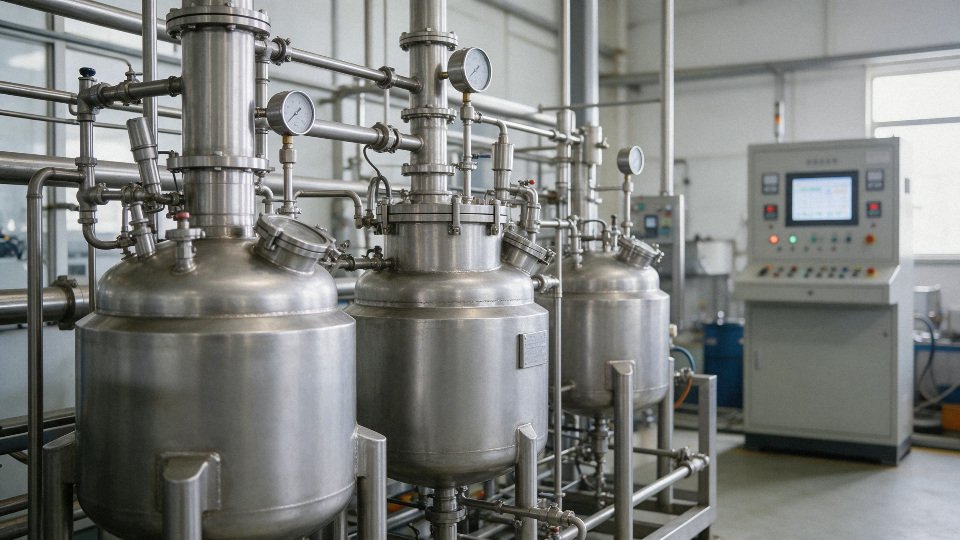
From a synthesis standpoint, these grades need tighter control of polymer growth and stripping efficiency. A broad molecular-weight distribution can make two drums with the same nominal viscosity behave differently in filling, mixing, or low-temperature startup. In practice, maintenance teams notice this before the lab does: one lot pumps cleanly through a 1-inch line, the next lot cavitates the transfer pump and leaves more heel in the tote.
Phenyl-containing fluids
Phenyl-modified silicone fluids are selected when standard dimethyl chemistry does not cover the operating window. They are commonly used for broader temperature capability, improved radiation resistance, and certain optical or thermal applications where refractive behavior or low-temperature fluidity matters.
Compared with dimethyl grades, they generally cost more and require more deliberate raw-material and compositional control. That added cost is usually justified only when the application actually sees cold-start limits, thermal stress, radiation exposure, or optical-property constraints.
Reactive and modified oils
Reactive or modified silicone oils are bought for formulation behavior, not just bulk fluid properties. The main industrial families include:
- Amino-modified
- textile softeners
- fiber lubrication
- selected surface-conditioning systems
- Epoxy-modified
- coatings, adhesion-promoting systems, and reactive formulations
- Hydrogen silicone fluids
- crosslinking and water-repellent treatment systems
- Vinyl-functional fluids
- addition-cure systems and specialty elastomer/formulation work
- Polyether-modified
- emulsifiability, wetting, defoaming balance, and compatibility with more polar systems
These are less forgiving to make and buy. Functionality level, side-reaction control, and purification all affect how they behave in the customer’s formulation. A cheap amino fluid with unstable amine content or a hydrogen fluid with poorly controlled active hydrogen can create uneven textile handle, cure drift, foam instability, or shelf-life complaints. For modified grades, batch-to-batch consistency is often worth more than a small raw-price advantage.
Commodity-cost grade selection and formulation-performance grade selection should not use the same purchasing criteria.True
That is standard industrial practice. Commodity dimethyl fluids are often purchased primarily by viscosity, appearance, and basic purity, while reactive, regulated, or performance-sensitive grades require tighter control of functionality, residuals, documentation, and lot consistency.
How buying priorities should change the manufacturing brief
If the buyer values mainly commodity cost, the practical target is a standard dimethyl grade with broad commercial acceptability, routine packaging, and no unnecessary purification. If the buyer values formulation performance, the brief should include compatibility, volatility, functional-group control, and likely interaction with surfactants, fillers, or cure systems.
If the project is driven by regulatory documentation, ask early about residual volatile targets, traceability, change-control practice, and supporting documents the supplier can actually provide. If the priority is long-term batch consistency, focus on process control capability, not just the certificate on one lot: viscosity window, molecular distribution behavior, volatile control, color stability, and whether the supplier runs that grade routinely or only opportunistically. The right specification is the one that reflects how the fluid fails in your process, not just how it looks on a datasheet.
Frequently asked questions
Is silicone oil made from petroleum, quartz-derived silicon, or both?
Both, in most commercial routes. The silicon backbone starts from quartz-derived metallurgical silicon, while the organic methyl or other functional groups usually come through petrochemical or chloromethane-based inputs; in purchasing terms, silicone oil is neither a simple mineral oil nor a purely “stone-derived” material.
What matters on the supply side is that buyers are exposed to two upstream risk sets at once:
- Silicon-side variables
- Metallurgical silicon availability and power cost
- Regional concentration of organosilicon production clusters
- Chlorosilane capacity and environmental permitting
- Petrochemical-side variables
- Methyl chloride and related feedstock pricing
- Solvent and auxiliary chemical availability
- Energy and freight volatility
That is why silicone oil pricing does not track base oil markets cleanly. A buyer who assumes “oil price down, silicone fluid should follow” usually gets surprised. In practice, chlorosilane balance, utility costs, and local environmental operating constraints can move pricing faster than crude.
Why are cyclic siloxanes present in some silicone oils, and when are they a problem?
Cyclic siloxanes are a normal byproduct and equilibrium component in many silicone fluid manufacturing routes. They become a problem when the end use is sensitive to volatility, odor, extractables, fogging, regulatory scrutiny, or electrical residue; for a lot of industrial uses, some residual cyclic content is expected and commercially acceptable.
They show up for a few reasons:
- Equilibrium chemistry
- Siloxane polymerization and redistribution do not produce only one chain length
- Some cyclic species remain unless stripped out aggressively
- Process economics
- Deeper devolatilization costs time, energy, and yield
- Removing the last fraction of volatiles is usually the expensive part
- End-use tolerance
- Hydraulic damping, release, or general lubricating applications may tolerate residual cyclics
- Personal care, electronics, and some closed-environment uses often need much tighter control
Typical residual volatile targets can range from low ppm to low wt% depending on grade and use, and that range is too broad to generalize responsibly without the application. If the fluid is going into a sealed device, skin-contact product, or a process with heated thin films, ask specifically for volatile content, test method, and lot-level consistency rather than just viscosity.
What is the difference between batch and continuous production for quality and cost?
Batch production is usually more flexible; continuous production is usually stronger on consistency and unit cost once volume is high enough. Neither route is automatically better, and a good plant can make poor material in either mode if hydrolysis, equilibration, stripping, or contamination control are weak.
A practical comparison:
| Topic | Batch | Continuous |
|---|---|---|
| Grade flexibility | Strong | Moderate to strong, depends on line design |
| Changeover handling | Easier for specials | Better for stable high-volume grades |
| Lot traceability | Clear by reactor lot | Clear by campaign and time window |
| Quality uniformity | Operator- and procedure-sensitive | Usually tighter once stable |
| Cost at scale | Higher labor and cycle cost | Better throughput economics |
In my experience, the choice flips when a supplier is making a narrow product slate at meaningful volume. For niche viscosities, modified fluids, or customer-specific finishing, batch often makes more commercial sense.
Can the same synthesis route produce cosmetic, electronic, and industrial grades?
The backbone route can be similar, but the finishing requirements are not interchangeable. What separates these grades is often less the initial polymer formation than the final purification, contamination control, packaging discipline, and release testing.
Key differences usually include:
- Cosmetic-oriented grades
- Lower odor
- Tight volatile profile
- Better color and sensory acceptance
- Electronic-oriented grades
- Lower ionic contamination
- Better control of trace residues and particulates
- More demanding lot documentation
- Industrial grades
- Broader acceptance window if the application is mechanically tolerant
- More emphasis on cost, supply continuity, and functional viscosity
A supplier may use related upstream chemistry for all three, but do not assume cross-qualification. The same nominal 100 cSt fluid can behave very differently in a cosmetic serum, a vacuum diffusion pump system, and a mold-release blend.
How is viscosity selected, and can suppliers make a non-standard target?
Viscosity is selected from the application’s film thickness, mobility, shear behavior, volatility tolerance, and dosing method, not from a generic chart alone. Commercial silicone oils span roughly 0.65 cSt to above 1,000,000 cSt at 25 C, but the useful selection window depends on how the fluid is actually handled.
Buyers usually narrow the target through these inputs:
- Required spreading or retention
- Operating temperature range
- Pumpability and dispensing method
- Surface feel or lubricity target
- Volatility loss tolerance
- Compatibility with resins, additives, or elastomers
Suppliers can often reach a non-standard target by:
- Direct polymerization to target viscosity
- Blending adjacent viscosity cuts
- Further stripping or finishing adjustment
Blending is faster, but it may not match the volatile profile or narrow molecular distribution of a purpose-polymerized grade. If your process is sensitive to evaporation, dielectric behavior, or sensory properties, that trade-off matters.
What impurities most often cause odor, yellowing, instability, or poor compatibility?
The repeat offenders are usually not mysterious:
- Residual low boilers or cyclics contributing to odor or fogging
- Acidic or chloride residues from incomplete neutralization or washing history
- Catalyst remnants affecting stability
- Oxidation products causing color drift
- Trace metals or particulates
- Incompatible end-blocking or unintended functionality
- Residual solvents from finishing or cleaning
A yellow drum is not always oxidized product; sometimes it is packaging, headspace history, or heat exposure in storage. Still, if color matters, ask how the supplier controls both process color and post-packaging stability.
How should buyers compare suppliers quoting the same viscosity at different prices?
Do not buy on viscosity alone. Two fluids at the same nominal cSt can differ materially in volatile content, molecular weight distribution, odor, color, flash behavior, cleanliness, and lot consistency.
Compare at least these items:
- Viscosity test method and tolerance window
- Volatile content and test basis
- Appearance, color, and odor standard
- Acid value or ionic residue where relevant
- Water content, if the application is sensitive
- Packaging type and cleanliness standard
- Lot traceability and retention sample practice
- Change-control notification policy
Same viscosity means same performance.False
Viscosity is only one screening property. For many applications, volatile profile, contamination level, and consistency between lots drive the actual process result and complaint rate.
What documents should be expected for export supply?
Expect the documentation set to match both the product and the destination market. At minimum, most professional suppliers should be able to provide:
- Technical data sheet
- Safety data sheet
- Certificate of analysis for each lot
- Typical property profile
- Packaging specification
- Batch or lot traceability reference
- Country-of-origin information
- Transport classification status, where applicable
- Relevant compliance statements requested by the buyer or market
For regulated or qualification-heavy uses, buyers often also ask for:
- Allergen or restricted-substance declarations where relevant
- Statement on residual volatiles or specific cyclic content if application-sensitive
- Shelf-life and storage guidance
- Sample retention and complaint-handling procedure
Your supplier verification checklist
A capable silicone oil supplier is usually easy to spot once you separate manufacturers from traders, then match their process control to your application risk. If your product is sensitive to volatiles, ionic residue, end-group chemistry, or long-term batch repeatability, supplier structure matters almost as much as the nominal viscosity on the data sheet.
1. Verify what the supplier actually makes
Start here. Plenty of companies can quote silicone oil; far fewer control the upstream chemistry.
- Integrated manufacturer
- Produces or directly controls chlorosilanes and siloxane intermediates
- Usually has better traceability from monomer to finished fluid
- Can often adjust polymerization, stripping, and finishing conditions for a specific end use
- Has more levers to manage cost swings in silicon metal or chlorosilane supply
- Polymerizer without chlorosilane integration
- May still be technically strong
- Depends on outside monomer or cyclic supply, so consistency depends partly on supplier qualification and incoming control
- Customization is possible, but the boundary is usually tighter
- Trader or blender
- Can be perfectly suitable for standard industrial grades
- Usually limited on deep customization, root-cause analysis, and process transparency
- More exposed to batch-to-batch variation if they source from multiple origins
Integration affects more than price. The mechanism is straightforward: upstream control influences monomer purity, cyclic profile, and impurity carryover, which then affects polymerization behavior, stripping load, and finished-fluid stability. That matters less for a basic release or heat-transfer application than for personal care, electronics, or specialty formulations where odor, ionic residues, or reactive end groups can make or break the line.
An integrated supplier always guarantees better silicone oil quality.False
Integration usually improves traceability, cost control, and customization depth, but finished-fluid quality still depends on process control, purification, analytical discipline, and change management. A non-integrated producer can outperform a weak integrated one.
2. Match your application to the control level you actually need
Do not buy on viscosity alone. Ask the supplier to confirm the control window for the parameters that matter in your use case.
- Viscosity tolerance
- Critical for damping, defoaming, textile finishing, and metered dispensing
- Ask for target, typical batch range, and test temperature
- Residual volatiles or cyclic content
- Important for cosmetics, electronics, vacuum exposure, and odor-sensitive uses
- Typical acceptable levels depend heavily on the end use; there is no single universal limit
- Ionic impurities
- Usually a higher-risk issue for electronic or dielectric applications
- If this matters, ask how they measure it and on which grades
- Color and odor
- Often dismissed until a customer complaint shows up
- Matter in personal care, household products, and any visible clear formulation
- Reactive end groups
- Essential if the oil is a process intermediate, not just a finished fluid
- Hydroxy, vinyl, amino, epoxy, hydrogen, or other functionality must be specified and verified
The trade-off is familiar on the plant floor: tighter control and deeper purification generally raise cost, extend cycle time, and may narrow the practical packaging or lead-time options. The preferred choice flips if the application is forgiving; in a rubber compound or a general lubricant blend, paying for ultra-low ionic residue may buy nothing.
3. Ask for evidence of process capability
A serious supplier should be able to provide, at minimum:
- A clear description of the typical production route
- Key analytical methods used for release
- Representative batch consistency data
- Their change-control practice for raw materials, process conditions, and packaging
You are not looking for proprietary secrets. You are checking whether the operation is disciplined. In practice, if a supplier cannot explain how they control viscosity build, volatile removal, and final release testing in plain technical language, procurement risk is already rising.
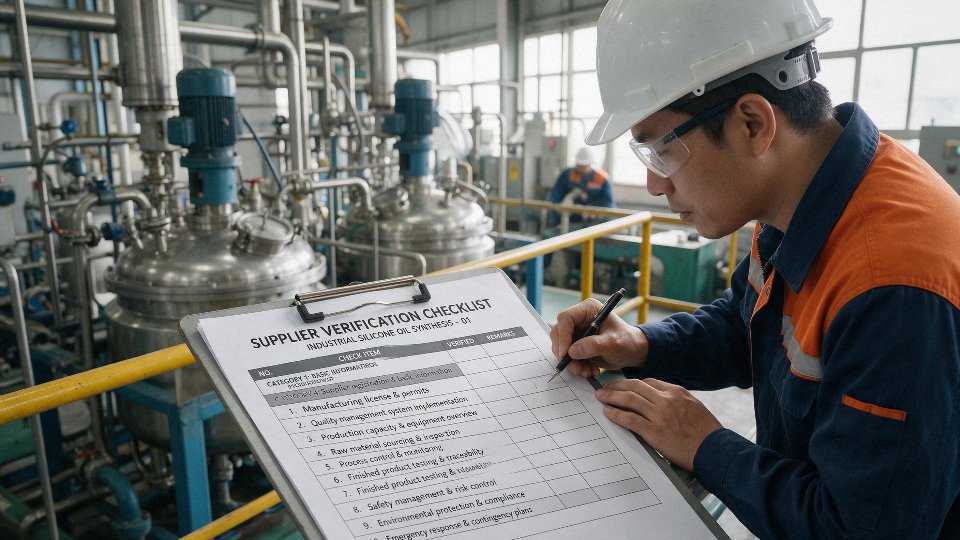
4. Check manufacturing reliability, not just laboratory quality
A good lab result from one batch is not the same as a dependable supply program.
- Plant scale appropriate to your annual demand
- Utility reliability and reasonable redundancy for power, vacuum, cooling, and inerting where relevant
- Packaging options that fit your handling system: pails, drums, IBCs, bulk
- Export experience, including labeling, documents, and shipment coordination
- Lead-time stability across normal and peak-demand periods
This section stops being decisive if you only need small spot buys of a commodity grade. For contracted annual volumes, though, weak plant reliability usually shows up later as split shipments, forced pack changes, variable lead times, or rushed substitute batches.
5. Confirm the commercial fit before qualification drags on
Use a short buyer checklist:
- Minimum order quantity by grade
- Willingness to support custom viscosity or functionality
- Sample policy and realistic sample-to-production alignment
- Documentation package: COA, SDS, TDS, regulatory declarations as needed
- Technical response speed when a batch, process, or compliance question comes up
Send the supplier your target viscosity, end-use application, compliance requirements, and annual volume. With that, they can usually tell you whether a standard grade is enough or whether you need a different synthesis route, tighter finishing, or a custom grade configuration.