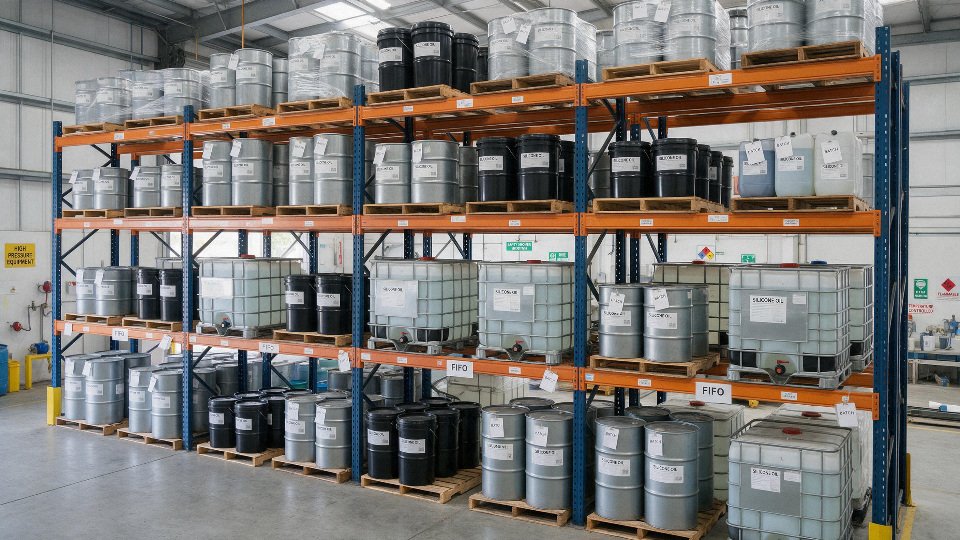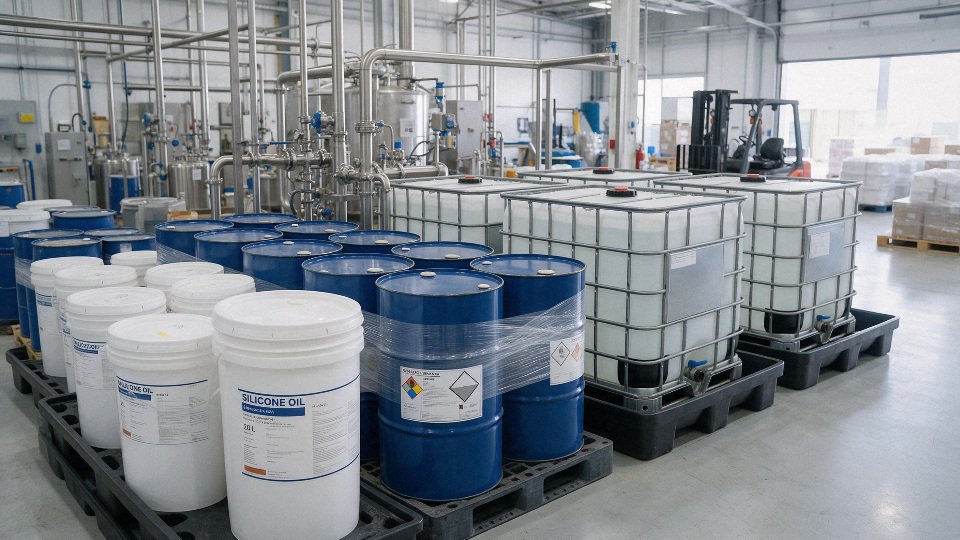
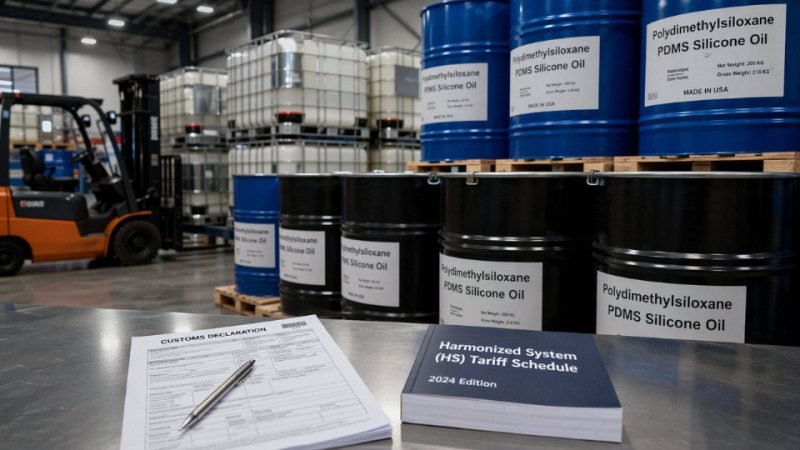
A customs hold on a silicone oil shipment rarely announces itself in advance. One wrong digit in the HS code — say, classifying a 1,000 cSt polydimethylsiloxane under a personal-care or lubricant heading instead of 3910.00 — can trigger reclassification at the border, retroactive duty assessments going back three to five years in some jurisdictions, and worst case, a production line sitting idle while the paperwork gets sorted. The financial exposure is not trivial: on a USD 200,000 annual silicone oil spend, even a 3–4% duty delta compounds fast, and that ignores broker fees, demurrage, and the time your procurement team spends untangling the mess.
The correct HS code for silicone oil is 3910.00 at the internationally harmonized 6-digit level, covering polydimethylsiloxane (PDMS) and related silicone polymers in fluid form. Most countries extend this to 8 or 10 digits based on viscosity grade, purity, or declared end-use. MFN import duties range from 0% under qualifying FTAs to roughly 6.5% in markets like India, before any anti-dumping surcharges apply.
What makes silicone oil classification genuinely tricky — and where experienced importers get caught just as often as first-timers — is that the same product can sit at the edge of two or three headings depending on how it’s formulated, blended, or labeled. A cosmetic-grade PDMS fluid and an industrial heat-transfer fluid can share an identical CAS number yet attract different customs treatment in the same country, depending on which agency is reviewing the entry and what documentation accompanies the shipment. The sections that follow break down exactly how those distinctions work, where the real duty exposure sits, and how to document your classification so it holds up under audit.
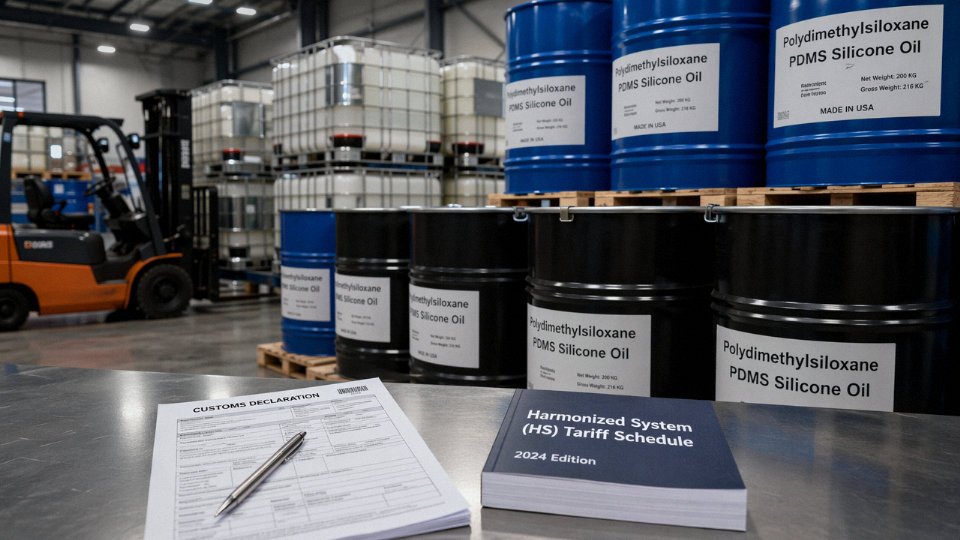
The International HS System and Where Silicone Oil Sits at the 6-Digit Level
The Harmonized Commodity Description and Coding System — the HS — is the WCO’s universal product classification framework, currently used by over 160 contracting parties covering somewhere north of 98% of world merchandise trade. The architecture is hierarchical: 21 Sections group broad economic categories, 97 Chapters break those into tighter product families, 4-digit headings define specific product types, and 6-digit subheadings carry the international legal weight. Every country that has ratified the convention is bound to the 6-digit classification — they can add digits beyond that (the US uses 10-digit HTS, the EU 8-digit CN, China 10-digit), but they cannot contradict what the 6-digit code means. That binding uniformity is why getting to the right 6-digit subheading is not a paperwork formality. It determines which duty rate applies before any national extension even comes into play.
For silicone oil, that 6-digit address is 3910.00.
How the Classification Logic Actually Works Under GRI
GRI — General Rules for Interpretation — are applied in sequence, and for most silicone oil shipments you don’t get past Rule 1. Rule 1 says: classify according to the terms of the heading and any relevant section or chapter notes. Chapter 39 covers plastics and articles thereof, and its note explicitly includes silicones in primary forms. The WCO Explanatory Notes to heading 3910 define silicones as “polysiloxanes” — polymers whose backbone is alternating silicon and oxygen atoms with organic side groups — and call out polysiloxane oils directly as falling here. Polydimethylsiloxane (PDMS) fluids, phenylmethyl silicone fluids, amino-functional silicone fluids: they all fit the structural definition.
Rule 3, which resolves competition between multiple plausible headings, rarely needs to be invoked for silicone oil because the Chapter 39 notes resolve the question at Rule 1. But it’s worth tracing the competing headings anyway, because customs authorities in some markets do challenge these shipments.
Why Competing Headings Fail
Chapter 27 (mineral oils and petroleum products) is the most common mistaken destination, usually because someone on the logistics side sees “oil” and defaults to petroleum. Silicone oil contains no petroleum fraction. It is a synthetic polymer. Chapter 27’s scope is defined by origin from coal, petroleum, or natural gas — silicone oil has none of that lineage, and the chapter notes exclude synthetic polymers explicitly.
Heading 3403 (lubricating preparations) catches some silicone oil shipments when the declared end-use is lubrication. This is a GRI Rule 1 problem: Chapter 34 Note 2 excludes products of Chapter 39 when they are put up as preparations. If your silicone oil is a pure polydimethylsiloxane fluid in a drum — no additives, no compounding for a specific application — it is a primary form polymer and belongs at 3910.00. It only migrates toward 3403 if it has been formulated into a lubricant preparation with other ingredients, and even then, the dominant material analysis under GRI Rule 3(b) can pull it back. In practice, a straight PDMS fluid sold in bulk should not be declared at 3403, and misclassifying it there can expose an importer to retroactive duty liability plus penalties.
Heading 3403 is the correct HS classification for silicone oil used as a lubricant.False
End-use does not determine HS classification at the 6-digit level. Silicone oil in primary form is classified at 3910.00 under Chapter 39 by virtue of its chemical composition and the WCO Explanatory Notes, regardless of its intended application as a lubricant.
Chapter 28 (inorganic chemicals) occasionally gets suggested for silicone fluids because silicon is an element and silicon chemistry is sometimes treated as inorganic. The classification note in Section VI clarifies that organosilicon compounds — where the silicon atoms carry organic substituents, as they do in all commercial silicone oils — are not inorganic chemicals for HS purposes. PDMS with its methyl groups is firmly organic-inorganic hybrid, and Chapter 39 wins.
Chapter 34 surface-active preparations are sometimes confused with silicone emulsions, which do circulate in cosmetic and textile finishing supply chains. An emulsified silicone product may well classify differently from the neat fluid — that’s a real complication covered separately — but neat silicone oil does not belong there.
HS 2022 and the Pending HS 2027 Revision
The HS undergoes a major revision cycle roughly every five to six years. The 2022 edition, currently in force for most administrations, made no changes to heading 3910 at the 6-digit level. The entire heading remains a single subheading — 3910.00 — covering all silicones in primary forms without differentiation by viscosity grade, functional group, or application sector. Preliminary documentation on HS 2027, the next revision cycle, does not indicate any planned split of 3910 at the 6-digit level either. That matters practically: unlike some chemical categories where a viscosity band or purity threshold shifts you to a different subheading, silicone oil classification at the international level is refreshingly stable. The complexity — and the duty rate variation — lives in the national digits that each country appends above the 6-digit floor.
US HTS Classification for Silicone Oil: 8-Digit and 10-Digit Breakdown
The United States uses the Harmonized Tariff Schedule of the United States (HTSUS), which extends the international 6-digit heading 3910.00 down to 10 digits for statistical and duty purposes. For silicone oil importers, two 10-digit suffixes do most of the practical work.
The Two Operative 10-Digit Suffixes
3910.00.10 covers silicone fluids — meaning products that behave as free-flowing liquids at room temperature, typically polydimethylsiloxane (PDMS) oils from around 0.65 cSt up through the very high-viscosity grades that still pour. 3910.00.50 picks up everything else in primary forms: silicone gums, masterbatches, and certain high-molecular-weight resins that don’t flow freely without heating or solvent.
CBP’s operative distinction is physical state at the time of importation, not viscosity grade on a spec sheet. In practice this matters more than it sounds. A 60,000 cSt PDMS fluid usually still classifies under 3910.00.10 because it will eventually flow under gravity, but a 300,000 cSt silicone gum that ships as a solid block or crumb will land under 3910.00.50. Borderline cases — say, a 100,000 cSt material that barely moves at ambient warehouse temperature in January — are where importers have gotten themselves into trouble by guessing rather than ruling.
Current MFN Duty Rates and Column 2
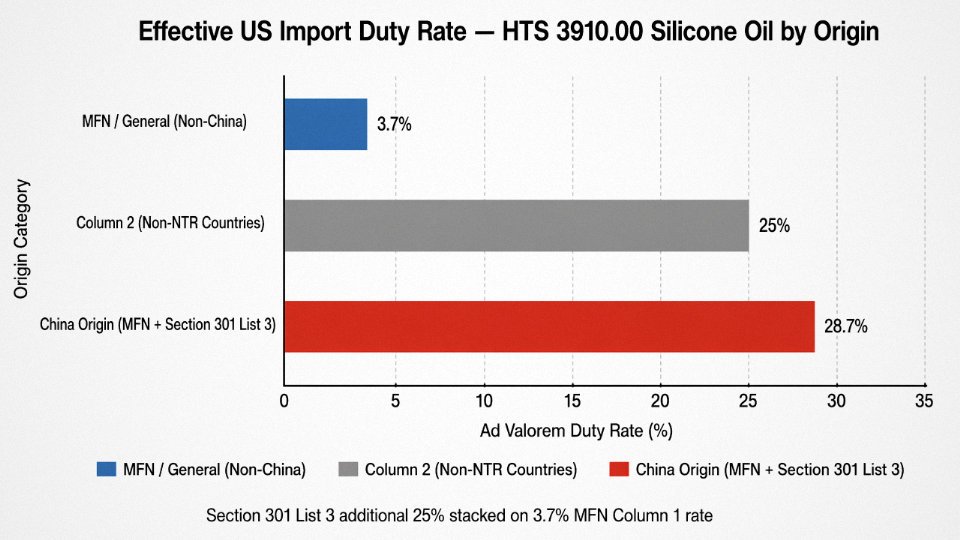
The Column 1 (MFN/general) rate for both 3910.00.10 and 3910.00.50 is 3.7% ad valorem. That applies to imports from any country with Normal Trade Relations status with the United States, which covers essentially all significant silicone oil exporters — Germany, Japan, South Korea, and China included.
Column 2, the rate that applies to non-NTR countries (a very short list, currently including Cuba and North Korea for practical purposes), sits at 25%. You’re unlikely to encounter it for silicone oil in normal commercial trade, but it does exist in the tariff schedule.
Section 301 China-Origin Exposure
This is the number that actually drives sourcing decisions right now. List 3 of the Section 301 tariffs imposes an additional 25% duty on HTS 3910.00 imports from China, stacked on top of the 3.7% MFN rate. Total effective duty on Chinese-origin silicone oil entering the US: roughly 28.7%, not counting any MPF or harbor maintenance fees.
Section 301 List 3 currently imposes a 25% additional tariff on Chinese-origin silicone oil imports under HTS 3910.00, resulting in an effective combined duty rate of approximately 28.7%.True
USTR List 3, effective September 2018 and maintained through subsequent reviews, covers HTS 3910.00 at the 25% additional duty rate. Combined with the 3.7% MFN Column 1 rate, the effective total is 28.7% ad valorem for China-origin entries.
For a procurement team buying, say, 20 FCL of PDMS fluid per year from a Zhejiang producer, that delta versus a German or US domestic supplier can easily wipe out the landed-cost advantage that made the Chinese source attractive in the first place. Some buyers have shifted to silicone oil produced in South Korea or India; others have qualified domestic supply. Neither option is painless, but the math usually forces the conversation.
CBP Binding Rulings for Ambiguous Products
Silicone emulsions, amino-silicone fluids, and reactive silicone copolymers don’t always classify cleanly. CBP’s binding ruling program — NY rulings from the National Commodity Specialist Division, HQ rulings for more complex matters — lets importers get a written classification determination before the goods arrive. It’s not fast (allow 30–90 days, depending on complexity and current CBP workload), but it’s legally binding on CBP for the ruling holder. For high-volume, recurring imports of anything that sits in a gray zone between 3910 and, say, 3402 (surfactants) or 2931 (organosilicon compounds), getting a ruling is worth the paperwork. Trying to defend a classification judgment call during a CF-28 or CF-29 audit is a worse use of time and money.
Schedule B Export Codes and AES Filing
On the export side, the Schedule B code mirrors the import heading: 3910.00.0000 covers silicone oils and other silicones in primary forms for AES (Automated Export System) filing. There’s no split at the 10-digit level for exports the way there is on the import side.
AES filing is required when a single Schedule B line item exceeds USD 2,500 to most destinations, or for any value to countries requiring export licenses. For silicone oils, most standard commercial grades are EAR99 and require no BIS license. High-purity electronic-grade PDMS — the kind going into semiconductor fabrication or certain optical applications, typically with purity specs above 99.9% and very low trace-metal content — can attract additional scrutiny depending on the end-user and destination. It’s worth checking ECCN classification with your trade compliance team before assuming EAR99 applies, especially for shipments to destinations on the Country Group D list.
EU Combined Nomenclature Code for Silicone Oil and TARIC Implications
The EU classification is, in one sense, simpler than the US system — and in another sense, considerably more layered once you get past the surface number.
The CN 8-Digit Code: 3910 00 00
Under the EU Combined Nomenclature, silicone oils — including polydimethylsiloxane fluids in all viscosity grades, phenyl-modified silicones, and methyl hydrogen silicone fluids — all fall under CN 3910 00 00. That eight-digit code covers silicones in primary forms. Unlike the US HTS, the EU does not break heading 3910 into further subdivisions at the CN level. There is no separate line for low-viscosity versus high-viscosity grades, no split for cosmetic versus industrial purity. One code handles the lot.
That simplicity cuts both ways. It makes classification itself fairly unambiguous for most standard silicone oil products. It also means any special trade measures — duty suspensions, surveillance, anti-dumping — apply at the TARIC level, which is where the real operational complexity lives.
The TARIC 10-Digit Layer and What It Actually Controls
TARIC extends CN 3910 00 00 to a 10-digit code, typically rendered as 3910 00 00 10 for standard silicone oil consignments, though the trailing digits can shift depending on the specific measure in force. The TARIC database — accessible at ec.europa.eu — is the authoritative source, and checking it at time of import declaration is non-negotiable. Measures encoded at TARIC level include surveillance requirements (which trigger automatic quantity and value monitoring without blocking the shipment), end-use relief codes, and, historically, anti-dumping duties.
As of 2024, there are no active anti-dumping duties on silicone oil imported into the EU from China under CN 3910 00 00.True
The European Commission's TARIC database and trade defence registers show no active ADD measures on silicone oils under heading 3910 as of 2024, though the product has been subject to informal monitoring given China's dominant export volume. Importers should verify at declaration time since measures can be imposed with relatively short notice periods.
That said, this is a product category that has attracted periodic European Commission scrutiny. Any procurement team sourcing Chinese-origin PDMS fluids in volume — say, multi-tonne annual contracts for release agent or transformer cooling applications — would be wise to monitor DG TRADE complaint filings. An ADD investigation, once opened, can result in provisional duties within roughly 7–9 months, and retroactive collection on registered imports is a real exposure.
Autonomous Tariff Suspensions: Getting to 0%
The standard MFN duty rate for CN 3910 00 00 is 6.5%, which matters significantly when you are importing industrial-grade PDMS in bulk. EU autonomous tariff suspensions (ATS), operating under Regulation (EU) 2020/2313 and its annual successor regulations, can reduce that to 0% for specific grades of silicone oil where adequate domestic EU production does not exist or cannot meet demand. The qualification criteria are technical: the product must be used for a defined industrial end-use, and the applicant — typically an EU-based manufacturer or processor — must demonstrate the suspension benefits their production process rather than simply arbitraging import cost.
Applications are submitted annually through member state customs authorities and consolidated by the Commission. The process takes roughly 12–18 months from application to entry into force, so the planning horizon is long. In practice, suspensions on certain high-purity or specialty-viscosity PDMS grades do appear in the current ATS annexes; checking the Official Journal and the EBTI database before your first large import is worth the hour it takes.
REACH Classification and Why the Tariff Work Overlaps
Here is where silicone oil creates an unusual intersection between trade compliance and chemical regulation. Under REACH, polydimethylsiloxane polymers with a degree of polymerization above a threshold are generally exempt from full substance registration under Article 2(9), which covers polymers — provided the monomers used in their synthesis are themselves registered. The structural characterization you need to justify that polymer exemption (molecular weight distribution, repeat unit identity, end-group chemistry) is essentially the same documentation that distinguishes your product from a silicone mixture or a formulated fluid, which could pull you out of 3910 and into Chapter 38 or even Chapter 34.
Getting the chemical characterization right for REACH, in other words, also tends to produce the documentation your customs broker needs to defend the 3910 classification against a tariff heading dispute. The two exercises are not redundant — they serve different legal frameworks — but they draw on the same technical data. A good practice is to have your supplier’s technical data sheet, SDS, and polymer identification letter reviewed by both your REACH consultant and your trade compliance team before the first shipment.
Intrastat Reporting and the Cost of Errors
Intra-EU movement of silicone oil does not require a CN code on the commercial invoice. However, once your arrivals or dispatches exceed the Intrastat reporting threshold — which varies by member state, ranging from roughly €200,000 to €500,000 annually depending on the country — you must report CN 3910 00 00 on your Intrastat declarations. Germany, France, and the Netherlands all impose fines for systematic mis-declaration; in Germany these can run into the low five-figure euro range per infringement, and the tax authorities there treat statistical declaration errors with considerably less patience than some importers expect. A distribution centre shifting product between, say, a Rotterdam warehouse and a manufacturing site in the Ruhr needs accurate CN codes in its ERP from day one, not retrofitted after the first audit.
China, India, Japan, and Other Key Market HS Codes for Silicone Oil
Getting the six-digit heading right is half the job. The other half is knowing what each importing country layers on top — duty rates, VAT treatment, statistical splits, and the occasional licensing wrinkle that nobody mentions until your shipment is sitting at the port.
China
Under the 2024 China Customs Tariff Schedule, silicone oil classifies under 3910.0000 — China uses a single eight-digit code for the entire heading, with no further subdivision by viscosity or grade. MFN import duty is 6.5%, and import-stage VAT is 13%, assessed on the CIF value plus the duty amount. For buyers sourcing from China, the more relevant figure is the export VAT refund rate, currently 13%, which essentially neutralizes the VAT burden on exported goods and is a real structural cost advantage. In practice, this is one reason why Chinese PDMS pricing on international tenders often undercuts European equivalents by a meaningful margin, especially for mid-viscosity grades (100–1,000 cSt) used in industrial release agents and personal care intermediates.
One thing to watch: if you’re importing into China for blending and re-export, the VAT refund only applies at export, and the timing gap — typically 30 to 90 days depending on the exporter’s filing cycle — ties up working capital.
India
India splits the heading more finely. ITC-HS 39100010 covers dimethyl polysiloxane specifically; 39100090 catches everything else — phenyl silicone fluids, methylhydrogen siloxanes, and mixed-grade blends. The duty stack is genuinely steep: Basic Customs Duty 7.5%, plus a Social Welfare Surcharge of 10% calculated on the BCD (so effectively 0.75% of CIF), plus IGST at 18% applied to the cumulative landed value. Total tax incidence lands somewhere in the 28–30% range on CIF, depending on freight and insurance assumptions.
India currently imposes no anti-dumping duty on silicone oil imports from any country of origin.True
As of mid-2025, no active anti-dumping investigation or measure on silicone oil (HS 3910) has been notified by India's Directorate General of Trade Remedies, though the situation should be verified before each shipment given how quickly DGTR proceedings can move.
No anti-dumping duties are in force as of this writing, but that’s worth confirming before each shipment — India’s DGTR has initiated proceedings on petrochemical and polymer products with relatively short notice periods in recent years.
Japan
Japan’s NACCS tariff code is 3910.000, and the MFN duty rate is 0% — part of a broader policy of zero tariffs on industrial chemical inputs that Japan doesn’t produce at domestic scale. Japanese Consumption Tax (JCT) at 10% still applies at import. Japan Customs additionally requires importers to report a statistical commodity code distinguishing PDMS from other polysiloxane types, which affects trade statistics filings even though it doesn’t change the duty. In practice, your Japanese customs broker will handle this split, but it is worth flagging to your documentation team so the commercial invoice specifies the silicone fluid type clearly.
Consolidated Comparison: Key Markets
| Country / Region | National HS Code | MFN Import Duty | VAT / GST at Import | Active ADD | FTA Preference Available |
|---|---|---|---|---|---|
| China | 3910.0000 | 6.5% | 13% (import VAT) | None | RCEP reductions apply for eligible origins |
| India | 39100010 / 39100090 | 7.5% + SWS | 18% IGST | None current | Limited; check India-ASEAN FTA for qualifying origins |
| Japan | 3910.000 | 0% | 10% JCT | None | CPTPP partners: already 0%, no further reduction |
| South Korea | 3910.0000 | 6.5% base | 10% VAT | None | KORUS FTA: 0% for US origin; Korea-ASEAN FTA applies |
| ASEAN (intra-bloc) | 3910.00 + national extensions | 0% under ATIGA | 7–12% varies by country | Varies by member | ATIGA 0% for qualifying intra-ASEAN shipments |
| Brazil | 3910.00.00 | 14% TEC | 12–17% ICMS (state-level) + PIS/COFINS | None current | Mercosur internal rate lower; no major bilateral FTA |
| Turkey | 3910.00.00 | 6.5% (EU-aligned CET) | 20% VAT | None current | EU Customs Union goods: 0% for EU-origin |
Brazil’s 14% TEC rate is the high-water mark among major importers — and that’s before ICMS and federal PIS/COFINS contributions push the effective landed cost substantially higher. Importers pricing Brazilian tenders on a simple MFN rate have been surprised by 30%-plus landed cost differentials versus their home-market estimates.
South Korea’s base MFN rate matches China’s at 6.5%, but US exporters benefit from a zero rate under KORUS, provided the certificate of origin is in order. Given that PDMS is often re-processed across multiple countries before final shipment, confirming substantial transformation rules for origin purposes is not a formality — it is a real compliance step that affects duty and, in some cases, whether Section 301 tariffs bleed over on goods transiting through Chinese facilities.
The ASEAN ATIGA zero rate is clean for intra-regional trade between, say, a Singapore-based trader and a Thai end-user, but only if both countries are ATIGA parties and the goods meet the 40% ASEAN content or change-in-tariff-heading rule. Most silicone oil traded within the region originates in China or Germany, so the ATIGA preference may not actually apply unless value is genuinely added within the bloc.
How to Classify Silicone Oil Blends, Emulsions, and Functional Fluids Correctly
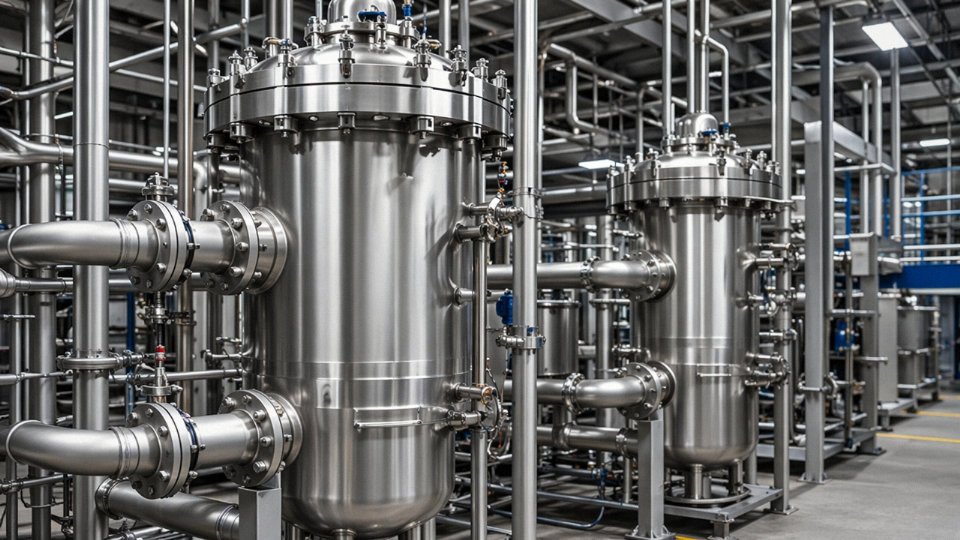
Most classification disputes don’t happen with neat, single-component PDMS. They happen with the messy real-world products: the 35% silicone emulsion your formulator calls “silicone oil,” the amino-functional fluid your textile customer orders as a softener base, the dielectric fluid that’s 60% PDMS and 40% naphthenic mineral oil. These are the shipments that get held at port, hit unexpected duty rates, or draw a customs audit six months after clearance.
Silicone Oil Emulsions: Where Chapter 39 Ends and Chapters 34 or 38 Begin
The controlling rule is GRI 3(b): for mixtures and combinations, classify by the component that gives the product its essential character. In practice, customs authorities — CBP, HMRC, EU member-state agencies — will look at the silicone polymer’s weight fraction and functional dominance.
Emulsions containing roughly 50% or more PDMS by weight almost always stay in 3910. The water or emulsifier is a processing vehicle, not the active ingredient. Below about 30% silicone content, the analysis shifts. At that concentration, the product starts to look more like a preparation of Chapter 34 (surface-active products, washing preparations) or Chapter 38 (miscellaneous chemical products), especially if the emulsifier package is substantial. The gray zone sits between 30–50% — and that’s exactly where importers get inconsistent rulings from different ports of entry.
High-water-content silicone emulsions below 30% silicone polymer content may be classified outside HS 3910 under GRI 3(b) essential character analysis.True
GRI 3(b) directs classification based on the component imparting essential character. Customs authorities in the US, EU, and elsewhere have reclassified low-silicone emulsions to Chapter 34 or 38 when the silicone fraction is subordinate in weight and function to carriers or surfactant systems.
Document the silicone weight fraction on your SDS and COA. Customs won’t take your word for it during an audit.
Amino-Functional and Reactive Silicone Fluids
Amino-silicone fluids — the kind used as textile softener intermediates — stay in 3910 when sold as polymer fluids in their primary form, even with the amine functionality grafted on. CBP binding rulings and EU customs court decisions have been consistent on this: modification of the polymer backbone doesn’t automatically push you out of Chapter 39.
The reclassification trigger is compounding. Once you blend that amino-silicone with a surfactant, dilution carrier, or fabric-conditioning agent to produce a ready-to-use formulation, heading 3402 (surface-active preparations) or 3824 (chemical preparations not elsewhere specified) becomes defensible — and some authorities will insist on it. The product is no longer a polymer in primary form; it’s a preparation.
Dielectric and Transformer Fluids: The Mineral Oil Blend Problem
Electrical-grade PDMS sold as a pure dielectric fluid is straightforwardly 3910. The problem arises when procurement blends PDMS with naphthenic or paraffinic mineral oil to hit a specific viscosity-temperature profile at lower cost. At that point, GRI 3(c) may apply: if essential character can’t be determined, classify under the heading that occurs last in numerical order. Between 2710 (petroleum oils) and 3910 (silicones), 3910 comes last — but some customs authorities have ruled the petroleum fraction dominant and pushed the product into 2710, with meaningfully different duty treatment depending on the import market.
In practice, blends above roughly 50% mineral oil by weight carry real reclassification risk. Get a binding ruling before you ship volume.
Release Agents and Mold Release Sprays
Pure silicone oil sold in bulk drums as a release agent: 3910. That same silicone oil in an aerosol can with hydrocarbon propellant and solvent: almost certainly Chapter 38. The aerosol format, solvent addition, or formulation for a specific industrial end-use collectively signal a “preparation” to customs authorities, and Chapter 38 routinely picks those up. Duty rates between 3910 and 3816/3824/3820 vary by market — in India the gap can be 2–3 percentage points of basic customs duty — so the packaging decision has a real landed-cost consequence.
A Working Decision Logic
| Question | Yes → | No → |
|---|---|---|
| Is the product a single silicone polymer in primary form, uncompounded? | 3910 | Continue |
| Is the silicone fraction ≥ ~50% by weight in a mixture or emulsion? | Likely 3910 (GRI 3b) | Assess Ch. 34 / 38 |
| Is it blended with petroleum oil as a dielectric/lubricant mixture? | GRI 3(c) analysis needed | Continue |
| Is it formulated with surfactants, solvents, or carriers for a specific end-use? | Ch. 3402 / 3824 / 3820 | 3910 probable |
| Is it in aerosol or spray format with propellant? | Ch. 3824 or 3808 area | Continue |
Run this before you file, not after customs questions the entry. When in doubt — particularly on blends above USD 50,000 per shipment — a binding ruling request costs time, not money, and protects you from retroactive reclassification penalties that can run 20–40% of dutiable value depending on the jurisdiction.
Required Import and Export Documentation When Shipping Silicone Oil Internationally
Getting the HS code right is only half the battle. Customs authorities in most major markets will examine the supporting document set closely, and a single mismatch — say, a viscosity grade on the SDS that doesn’t match what’s on the commercial invoice — is enough to trigger a hold. For silicone oil, which moves across borders in everything from 200 kg drums to ISO tank containers, the documentation requirements are more nuanced than for a straightforward commodity chemical.
Commercial Invoice: The Foundation Document
The commercial invoice needs to do more work than most shippers expect. At minimum it should state the CAS number — CAS 63148-62-9 for standard polydimethylsiloxane (PDMS), or the relevant CAS if you’re shipping methyl phenyl silicone fluid or a functional variant. The declared HS code belongs on the invoice too, and it should match exactly what’s been filed with customs; discrepancies between invoice and entry declaration are one of the most consistent triggers for examination, in my experience.
Viscosity grade in centistokes (cSt) matters here because some national tariff schedules use viscosity as a subheading criterion, and even where they don’t, a customs officer comparing a 10 cSt product to a 60,000 cSt product will expect the paperwork to explain what they’re looking at. Polymer identity — dimethyl versus methyl hydrogen versus amino-functional — should be called out explicitly rather than buried in a trade name. Country of origin needs to be stated with supporting evidence available, not just asserted.
Certificate of Origin and Rules of Origin
Preferential certificate formats vary by trade corridor. EUR.1 movement certificates for EU preferential access, GSP Form A for generalized preference schemes, RCEP Certificates of Origin for intra-Asia flows, and REX self-certification for larger EU exporters are the most commonly encountered formats for silicone oil shipments. The practical challenge is that silicone oil rules of origin typically require sufficient transformation from upstream intermediates — silicon metal, methyl chloride, or chlorosilane intermediates — to qualify. A blending or re-drumming operation alone usually won’t meet the threshold. This catches distributors who repackage in a third country and assume they’ve acquired local origin.
SDS, GHS Classification, and Transport Category
PDMS above roughly 5 cSt is classified as non-hazardous under GHS for most purposes — low acute toxicity, non-flammable in bulk, no significant environmental classification. That changes for low-viscosity grades below 5 cSt, which may carry aspiration hazard H304. That single classification change has downstream consequences: it brings in UN 1993 or a related UN number depending on flash point, affects packing group assignment, and changes what’s permissible under IATA Dangerous Goods Regulations for air freight versus IMDG for sea. Shippers who don’t catch the viscosity cutoff and ship a 3 cSt fluid under non-hazardous documentation are creating real liability, not just a paperwork issue.
Regulatory Registration Documents
For EU imports, REACH pre-registration status and any SVHC (Substance of Very High Concern) declarations should be on file, even if PDMS itself is not currently on the SVHC candidate list. Functional silicone oils — amino-modified, epoxy-modified, polyether-modified — may require more scrutiny given their distinct chemical identity from plain PDMS.
US importers should be able to confirm TSCA Section 5 status. Standard PDMS is on the TSCA Inventory and requires no new notification, but novel functional silicone fluids manufactured or imported for the first time may trigger a Premanufacture Notice (PMN) requirement. Missing this is an enforcement risk, not a theoretical one.
Standard PDMS (CAS 63148-62-9) is listed on the TSCA Chemical Substance Inventory and does not require a new Section 5 PMN for routine import.True
PDMS has been on the TSCA Inventory since its initial compilation and is not subject to new chemical notification requirements under TSCA Section 5 for standard grades, though significant new use rules (SNURs) or novel functional variants may still require review.
China’s Ministry of Ecology and Environment (MEE) new substance registration requirements apply to functionalized silicone oils not already listed in China’s Inventory of Existing Chemical Substances (IECSC). Plain PDMS is listed; many amino- or hydrogen-functional variants are not, and importers have been caught off guard.
Remaining Document Requirements
A fumigation certificate is required if wooden pallets are used — almost universal under ISPM 15, and Australian and Chinese ports in particular enforce this consistently. The packing list needs accurate net and gross weights per drum or container, drum count, and batch or lot references that tie back to the COO and SDS. The bill of lading or airway bill commodity description should match the HS code and product description on the commercial invoice exactly. “Silicone fluid” when the invoice says “polydimethylsiloxane 1000 cSt” is the kind of inconsistency that invites a customs query. Keep the document set internally consistent, and keep copies of everything for at least five years — audit windows in the EU and US both reach back that far.
Duty Optimization Strategies: FTAs, Tariff Engineering, and Binding Rulings
Getting the HS code right is the entry point. What you do with it afterward — legally — is where real cost comes out.
Free Trade Agreements That Move the Needle on 3910
RCEP is probably the most consequential development for silicone oil trade in the last decade. For shipments between China, Japan, South Korea, ASEAN members, Australia, and New Zealand, most parties are running staged tariff elimination schedules that land at 0% on heading 3910 somewhere between 2026 and 2030, depending on the specific bilateral track. Japan-ASEAN rates are already at or near zero for compliant origin goods. China-to-ASEAN flows benefit from earlier staging. The catch, always, is rules of origin: you need a valid Certificate of Origin (Form RCEP or back-to-back CO) and your supplier’s production must meet the regional value content or change-in-tariff-heading test. Don’t assume the rate applies just because both countries signed RCEP.
CPTPP is cleaner in some ways — 0% on silicone oils between members including Japan, Canada, Mexico, and Vietnam, largely on entry into force for most goods in Chapter 39. If you’re a North American compounder sourcing PDMS from Japan or a Vietnamese processor importing from a Japanese silicone major, this is worth pulling the specific tariff schedule rather than relying on a broker’s verbal assurance.
The EU-Japan EPA eliminated duties on 3910 immediately upon entry into force in 2019. For European importers of Japanese specialty silicone fluids, that’s a real saving against the MFN rate. The documentation burden is a self-declaration of origin on the invoice above EUR 6,000 or a REX (Registered Exporter) statement — simpler than a formal CO, but still needs to be done correctly.
Section 301 and US Sourcing Strategy
US importers under List 3 and List 4A Section 301 tariffs have been paying an additional 25% on silicone oil imports from China since 2018 on top of the 3.7% MFN rate. In practice, the total landed duty cost made Chinese-origin PDMS significantly less competitive for US buyers — and it accelerated sourcing shifts to South Korean producers, German exporters, and increasingly Indian suppliers whose capacity has grown. South Korea is duty-free under KORUS for 3910. Germany ships MFN at 3.7% with no 301 exposure. India at 0% under no FTA with the US, so MFN applies, but no Section 301, which already represents roughly a 25-percentage-point advantage over Chinese origin.
First sale valuation is underused. Where a silicone oil transaction involves a middleman — say, a Hong Kong trading company between a mainland Chinese manufacturer and a US importer — US Customs allows valuation based on the manufacturer’s invoice to the trader rather than the trader’s invoice to the importer, provided the first sale was destined for US export and you can document the chain. This can reduce the dutiable value by 8–15% depending on the trading margin, which compounds when you’re also paying Section 301.
Foreign Trade Zones work well for toll manufacturers or distributors who import, blend, and re-export a portion of their silicone fluid inventory. Goods admitted to an FTZ are not formally imported until they leave for US commerce, so re-exported product avoids duty entirely. Weekly entry procedures also reduce administrative burden on high-volume, mixed-origin operations. Bonded warehouses serve a similar deferral function for importers managing cash flow against uncertain demand timing.
Tariff Engineering: Where the Line Is
This is where some procurement managers get themselves into serious trouble. Diluting a silicone oil with a petroleum-based solvent or carrier specifically to shift classification from 3910 to 3824 (miscellaneous chemical preparations) and capture a lower duty rate — when the end use, concentration, and function remain identical — is textbook anti-circumvention exposure. US CBP, EU customs authorities, and most major market agencies have seen this play before.
Altering product composition solely to achieve a lower tariff classification, without any genuine commercial or functional reason for the change, constitutes customs fraud in most jurisdictions.True
WCO instruments, US 19 U.S.C. § 1592, and EU Customs Code Article 42 all penalize deliberate misdeclaration of goods. Courts and customs tribunals distinguish between legitimate product development (where classification follows genuine specification changes) and artificial reformulation designed purely to avoid duty. The latter carries civil penalties, potential criminal liability, and retroactive duty recovery.
Legitimate product design is different. If your R&D team reformulates a silicone-based release agent into a true ready-to-use emulsion with specific functional additives because the market needs it, and classification changes as a result, that’s a genuine product change. Document the commercial rationale thoroughly and keep it separate from the customs decision.
Binding Rulings: The Cheapest Insurance You’re Not Using
CBP ruling letters — both NY rulings from the port level and HQ rulings from Washington — are binding on US customs officers once issued. They cost nothing to apply for and protect you against retroactive reclassification on identical goods imported under the same conditions. For silicone oil with unusual viscosity ranges or functional additives where 3910 vs. 3824 vs. 3402 is genuinely arguable, a ruling letter removes the uncertainty. The EU BTI system works similarly through national customs authorities (HMRC in the UK post-Brexit runs a parallel system). Japan’s advance classification ruling process is somewhat more involved but provides equivalent legal certainty.
One operational warning: a BTI or ruling is only valid for the exact product described. If your supplier changes the formulation, viscosity range, or additive package, the ruling may no longer apply and you need to apply for a new one. Build that trigger into your supplier change notification process.
Transfer Pricing and Customs Valuation
Intercompany silicone oil transfers between related parties — a common structure when a parent company in Germany or Japan sells to a wholly-owned US or Southeast Asian subsidiary — sit at the intersection of customs valuation rules and OECD transfer pricing. Customs wants to confirm the declared value isn’t artificially depressed (Transaction Value method under WTO CVA Article 1 allows related-party prices if the relationship didn’t influence the price). Tax authorities want arm’s-length pricing under your transfer pricing documentation. These can pull in opposite directions: TP adjustments made for tax purposes can retroactively trigger customs underpayment claims if not handled carefully. The practical fix is to align your TP study with your customs valuation methodology upfront, document both together, and make sure your customs broker and tax team are talking to each other. In my experience, they usually aren’t.
Frequently Asked Questions About HS Codes for Silicone Oil
Is the HS code for silicone oil the same worldwide?
The 6-digit heading 3910.00 is the universal base under the WCO Harmonized System, so yes — in that narrow sense, every WCO member country starts from the same point. But countries extend that to 8 or 10 digits on their own, and those extensions vary significantly. Brazil might split by viscosity bracket; South Korea adds a statistical suffix for functional fluids; India’s national schedule carries its own 8-digit breakdown that doesn’t map cleanly onto the US HTS. Before you file anything, pull the actual national tariff schedule of the importing country from that country’s official customs portal. Don’t rely on your freight forwarder’s system auto-populating it — those databases lag by months and occasionally carry stale codes.
Does viscosity affect the HS code?
At the international 6-digit level, no. Heading 3910.00 doesn’t distinguish a 5 cSt fluid from a 100,000 cSt gum. That said, the US HTS subheadings do separate fluid forms from non-fluid silicones, and viscosity is effectively how you determine which side of that line you’re on. If a product is borderline — say, a very high-viscosity PDMS paste that could be described as either fluid or semi-solid — the correct statistical suffix matters for quota tracking and trade data, even if the duty rate ends up identical. Get the technical data sheet in front of your classification analyst, not just the product name.
Can silicone oil be classified under Chapter 34 as a lubricant?
Only if it has been formulated into a lubricating preparation — heading 3403 territory. Pure PDMS fluid in primary form classifies under 3910, full stop, regardless of what you intend to do with it in your plant. I’ve seen importers try to push neat silicone oil into 3403 to catch a lower duty rate in a particular market, and customs authorities in the EU and India have consistently rejected that approach. The chemical identity and physical form govern the heading; end use is irrelevant at that stage of classification.
Pure silicone oil in primary form always classifies under HS heading 3910, not 3403, regardless of its lubricating end use.True
WCO classification rules require primary-form polymers to be classified in Chapter 39. Chapter 34 (heading 3403) applies only to formulated lubricating preparations, meaning silicone oil that has been compounded with other ingredients specifically as a lubricant product.
What is the HS code for electronic-grade or semiconductor silicone oil?
Still 3910.00 at 6 digits. Purity level — even ultra-high-purity grades used in semiconductor fabrication — doesn’t shift the heading. Some national schedules include a separate statistical annotation for high-purity grades, but the tariff treatment is usually unchanged. One thing worth flagging: certain very-high-purity silicone fluids may fall under US Export Administration Regulations (EAR) controls depending on their specification and the destination country. That’s a separate compliance track from HS classification, but it catches people off guard. Check ECCN applicability if you’re exporting to restricted destinations.
How do I get a binding HS code ruling for silicone oil?
In the US, submit a ruling request to CBP through their online rulings portal, attaching the full technical data sheet, SDS, and a detailed product description. In the EU, apply for a Binding Tariff Information (BTI) decision through your member state’s customs authority — the application process is now harmonized across member states, but processing times still vary. Realistically, expect 30 to 120 days depending on the authority and their current backlog; some EU member states have been running longer. A binding ruling is legally binding on customs in that jurisdiction for a defined period, typically three years, which gives you real cost certainty on landed-duty calculations.
Does silicone oil face anti-dumping duties anywhere?
As of mid-2024, there are no active anti-dumping duty measures globally that specifically target silicone oil under HS 3910. Broader silicone product investigations — covering silicone sealants, silicone rubber, and related downstream goods — have occurred in various markets, but neat silicone oil hasn’t been the subject of a successful ADD petition to date. That can change. Importers should bookmark the USITC, the EU Official Journal trade remedy section, and their national trade remedy authority and check periodically, especially as silicone supply chains continue to attract policy attention.
Is the HS code different for cosmetic-grade silicone oil versus industrial grades?
No. The HS code reflects chemical identity and physical form, not the intended application. Cosmetic-grade cyclomethicone (cyclic PDMS) and bulk industrial PDMS fluid both land under 3910 at the 6-digit level. Where this gets practically interesting is end-use relief programs: some markets offer conditional duty exemptions or reduced rates when silicone oil is imported specifically for pharmaceutical or cosmetic manufacturing, but those programs require documented end-use declarations and post-import verification. The code on the entry doesn’t change — the relief mechanism sits on top of it, and losing that documentation in an audit means paying back the duty difference with interest.
Practical Compliance Checklist Before Your Next Silicone Oil Shipment
Getting the classification right in a spreadsheet is one thing. Making sure that classification flows consistently through every document your shipment carries — and that you can prove it two years later if customs comes back — is a different discipline entirely. This checklist is meant to sit on a trade compliance manager’s desk, not in a policy binder nobody opens.
Step 1: Confirm Exactly What Product You Are Shipping
Pull the current technical data sheet before anything else. You need the polymer backbone type (polydimethylsiloxane, methyl phenyl siloxane, amino-functional, or something else), viscosity in cSt at 25°C, the CAS number, and a clear statement of whether the product is in primary form or a compounded preparation. That last point matters more than most people realize — a straight PDMS fluid at 350 cSt sits comfortably under 3910.00, but a silicone emulsion with surfactant already blended in may route to a different heading depending on the dominant character. If your supplier has reformulated recently, get a new TDS. Outdated sheets have caused real classification errors.
Step 2: Verify the National Tariff Code for the Destination Country
HS 3910.00 is your six-digit anchor internationally, but stop there and you will miss the country-specific extensions that determine actual duty liability. Cross-check against the live national tariff schedule — WCO Tariff Finder, USITC for US HTS, the EU TARIC database, or the national customs portal for India, Japan, South Korea, and others. Duty rates on 3910.00 and its subheadings range from 0% inside FTA zones to roughly 6.5% MFN in India, and those figures shift periodically. Check them per shipment, not once a year.
Step 3: Assess FTA Eligibility Before the Cargo Moves
Origin qualification is the step that gets skipped under time pressure and regretted later. Identify the applicable rules-of-origin criteria under any relevant FTA — whether that requires a change-of-tariff-heading, a regional value content threshold, or a specific process requirement. Collect the supporting evidence now: production records, supplier declarations confirming raw-material origin, and a short process description if the chemical synthesis crosses an origin threshold. Customs authorities will not accept documentation assembled after a query arrives. In practice, origin claims assembled retroactively are the ones that fall apart under audit.
Step 4: Review Non-Tariff Measures
Import licensing, REACH registration, TSCA inventory status, GHS transport classification, and any product-specific prior-authorization requirements in the destination market all need to be checked independently of the tariff code. A correct HS number with a missing REACH registration can still ground a shipment at Rotterdam for weeks. Some markets apply surveillance measures or automatic licensing to specific silicone fluid grades — usually tied to end-use sectors like cosmetics or food contact — so the destination and stated end-use both matter.
Step 5: Align Every Shipping Document
Document inconsistency is the leading cause of customs holds on chemical shipments, not incorrect HS codes alone.True
Customs authorities routinely flag shipments where the HS code, product description, CAS number, or declared origin differs between the commercial invoice, packing list, SDS, and bill of lading — even when the underlying classification is correct. Inconsistency triggers manual examination and can escalate to penalty proceedings under most customs codes.
Make sure the commercial invoice, packing list, SDS, certificate of origin, and bill of lading all carry the same HS code, the same product description, the same CAS number, and the same declared origin. Sounds obvious. It is the most common failure mode in silicone oil shipments, usually because the invoice gets generated from one system and the SDS comes from a supplier template that nobody updated. Check them side by side before the truck leaves.
Step 6: Archive Your Classification Evidence
US CBP requires importers to retain classification records for a minimum of five years from the date of entry. EU customs rules push that to seven years. Archive the TDS you relied on, any binding tariff information or CBP ruling letter, your origin supporting documents, and a short written summary of your duty calculation — including which FTA rate you applied and why. If a post-clearance audit arrives and you cannot produce that evidence chain, you are effectively starting from zero. The archive burden is modest; the cost of not doing it is not.