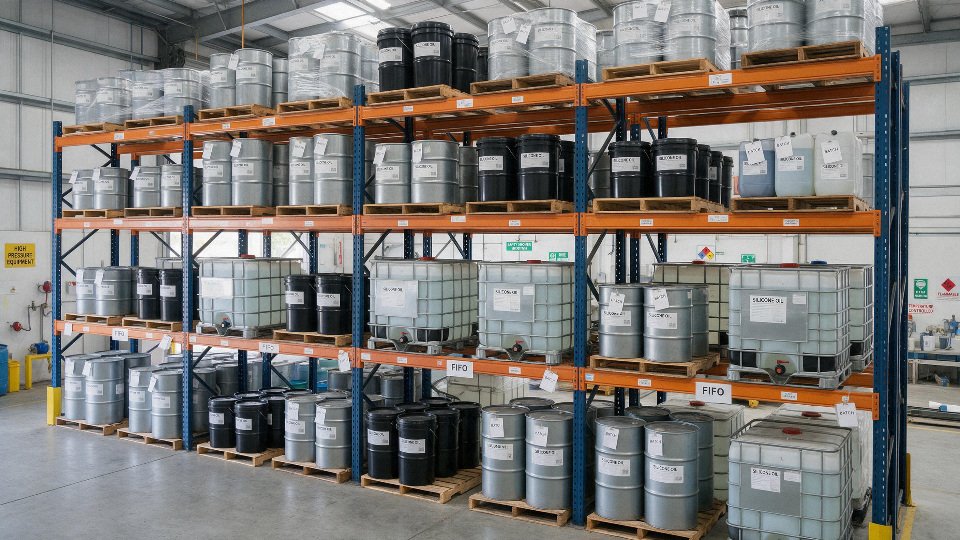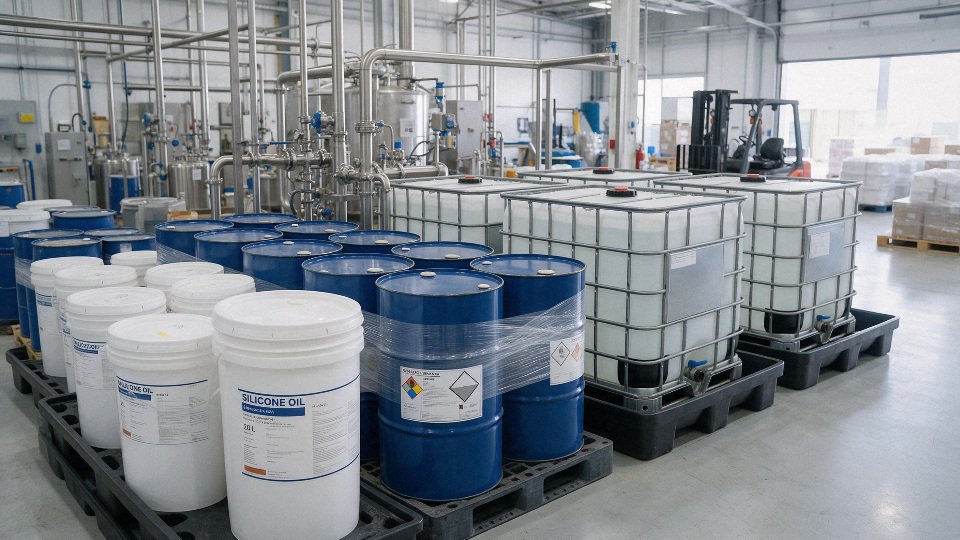
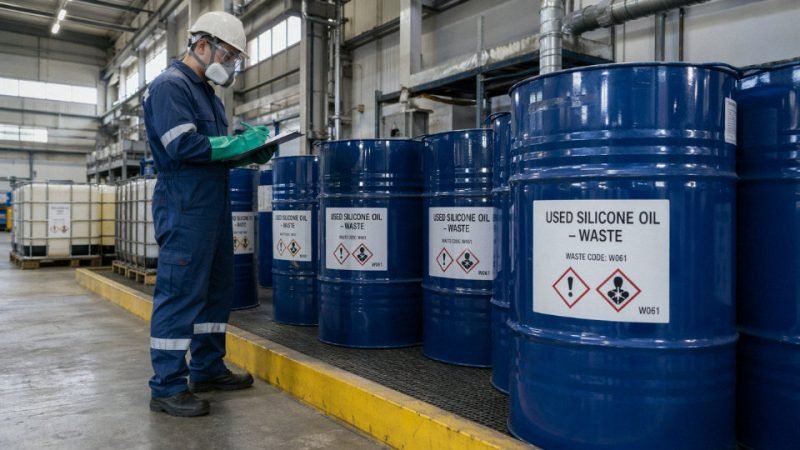
Used silicone oil accumulates faster than most plants expect. A transformer cooling system flush, a batch of degraded release agent from a molding press, a heat transfer fluid that’s picked up metal particulate after two seasons of service — suddenly you’re sitting on 200 liters of material that can’t go down the drain, probably can’t go in the skip, and your usual waste contractor is quoting a lead time you don’t have. Getting this wrong isn’t just an environmental compliance problem. Misclassified disposal can trigger EPA or local agency inspection, and in EU facilities, landfilling untreated silicone oil exposes the site to fines that have reached €100,000 in several member states. The answer isn’t one-size disposal — it’s matching the oil’s viscosity grade, contamination level, and local regulatory classification to the right route before you generate the waste manifest.
To dispose of silicone oil correctly: identify the viscosity grade and contamination type, then choose between licensed high-temperature incineration (above 1,000°C to fully break down PDMS chains), reclamation and re-refining (practical when recovery reaches 60–85% of original grade), or manifested transport to a licensed industrial waste facility — never drain to sewer or landfill without verified regulatory clearance.
What makes this more complicated than disposing of a mineral oil is that silicone oil doesn’t behave like a conventional hydrocarbon waste. Its flash point sits between roughly 300°C and 360°C depending on grade, so it isn’t acutely flammable, which gives plant managers a false sense that it’s benign. It isn’t. The low-viscosity grades below about 50 cSt carry real aquatic toxicity risk and face noticeably tighter restrictions in several jurisdictions — and most facilities are running more than one grade without always tracking them separately.
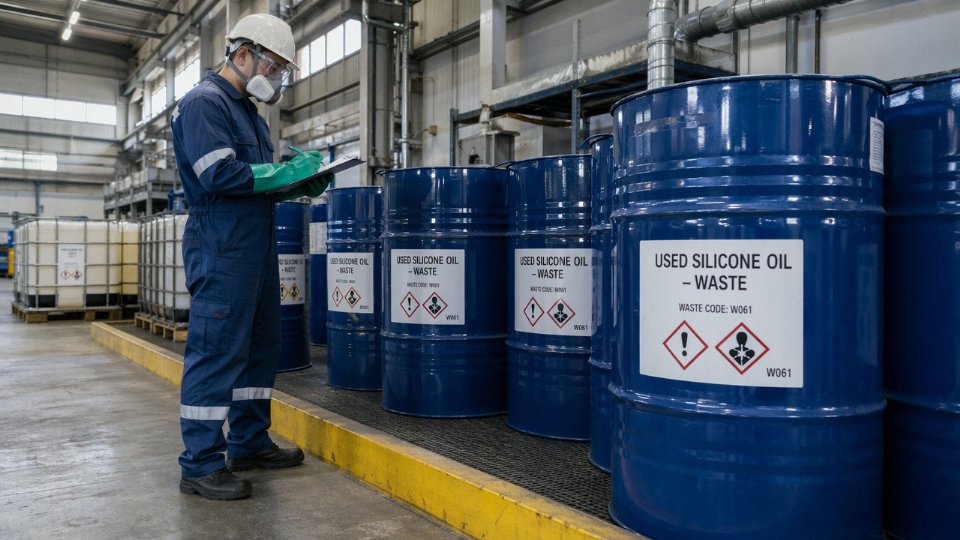
Characterizing Your Silicone Oil Waste Before Choosing a Disposal Route
Before you call a waste hauler or drop a drum into the used-oil stream, you need to know exactly what you’re sending. Misclassification is the single most common compliance error in silicone oil disposal — and it’s expensive to fix after the fact. A manifest written for non-hazardous waste that later tests hazardous can trigger re-transport costs, facility rejection fees, and regulatory fines that dwarf whatever you saved by guessing.
Viscosity Grade Changes Everything
A 5 cSt heat-transfer fluid and a 60,000 cSt mold-release compound are both “silicone oil,” but they behave completely differently at disposal. The low-viscosity material has meaningful vapor pressure at ambient temperature — not dramatic, but enough that poorly ventilated storage or incineration feed systems can accumulate inhalable mist. Below roughly 50 cSt, aquatic toxicity thresholds become a real regulatory concern; many state environmental agencies and the EU Water Framework Directive treat these grades with more scrutiny than high-viscosity variants. The thick stuff, by contrast, is essentially inert at room temperature, but it creates problems in incinerators if it isn’t preheated — viscous PDMS chains don’t atomize well and incomplete combustion below 1,000°C leaves silicon dioxide ash in the combustion chamber rather than clean flue gas.
Pull the original product datasheet and confirm the nominal viscosity grade before anything else. If you’ve blended two grades — say, topped off a 350 cSt bath with 100 cSt fluid to hit a target viscosity — you now have a mixed-grade waste stream, and it needs to be characterized as such.
Contamination Testing: Don’t Skip the Basics
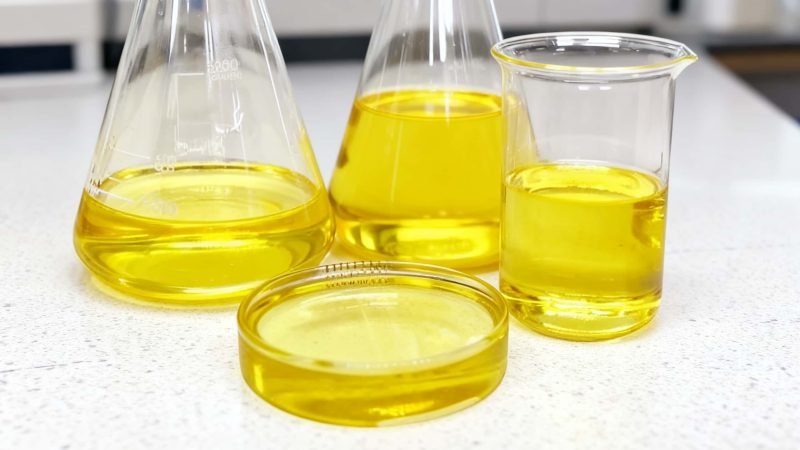
Visual inspection comes first and it’s faster than people give it credit for. Clear silicone oil that has turned amber, gray, or milky is telling you something. Amber usually means thermal degradation or dissolved metal oxides; milky or hazy appearance typically indicates water contamination or emulsification, which can happen in hydraulic or cooling applications. A pH strip test on an aqueous extract takes about two minutes and catches acid or base contamination from process chemistry — not uncommon in electronics cleaning applications where flux residues or etching agents end up in the cleaning solvent alongside the silicone carrier fluid.
For metalworking applications, ICP-OES screening for heavy metals (chromium, lead, cadmium, nickel) is worth the $40–80 lab fee. If the fluid has been anywhere near cutting operations or stamping presses, assume metal contamination until the test says otherwise. Solvent residue — toluene, xylene, chlorinated solvents — is the other sleeper issue, particularly in coatings or electronics manufacturing where silicone oil is used alongside hydrocarbon or halogenated cleaning agents.
Hazardous Waste Determination Under U.S. RCRA
Pure PDMS rarely triggers a characteristic waste code. The flash point for most viscosity grades runs between 300°C and 360°C depending on grade, so ignitability (D001, threshold 60°C) is almost never the issue. Corrosivity (D002) and reactivity (D003) don’t apply to uncontaminated silicone oil. Where people get caught is toxicity (D004–D043) — if your used silicone oil contains listed solvents from a prior cleaning application, you may have picked up an F-code listed waste, and the mixture rule applies: the entire volume becomes hazardous. Check the F, K, P, and U lists against every chemical that has been in contact with that fluid, not just the silicone itself.
Pure PDMS silicone oil is classified as non-hazardous under U.S. RCRA in most formulations.True
The U.S. EPA does not list polydimethylsiloxane on the F, K, P, or U hazardous waste lists, and uncontaminated PDMS typically does not exhibit the ignitability, corrosivity, reactivity, or toxicity characteristics defined under 40 CFR Part 261. However, contamination or blending with listed materials can change this classification.
EU and UK Classification: The Asterisk Matters
Under the European Waste Catalogue, used lubricating and process oils generally fall under chapter 13 02. Code **13 02 08*** covers “other engine, gear and lubricating oils” — the asterisk designates it as presumptively hazardous. Whether your silicone oil waste carries the asterisk or the non-asterisk equivalent (13 02 08 without asterisk, where applicable under national transposition) depends on lab analysis, not assumption. The default in most EU member states is to treat used silicone oil as 13 02 08* unless analytical data demonstrates it falls below hazardous thresholds. Getting that determination wrong — assuming non-hazardous and disposing accordingly — exposes the generator to fines up to roughly €100,000 in Germany, France, and the Netherlands, and similar ranges in other major member states. UK classification post-Brexit follows analogous logic under the UK Hazardous Waste Regulations 2005.
A Practical Pre-Disposal Checklist
Before any waste leaves your site, document the following and keep a copy in your environmental records:
- Product name and CAS number (or formulation identifier for blends)
- Nominal viscosity grade in cSt and measured viscosity if degraded
- Date the fluid was last changed or charged into service
- Known or suspected contaminants with process context
- Total volume in liters and container type (drum, IBC, bulk tank)
- Intended use history (heat transfer, mold release, lubrication, cleaning carrier, other)
- Visual inspection result and any pH or metals screening data
- Regulatory determination: non-hazardous, characteristic hazardous, or listed hazardous
Retain a representative sample — at least 500 mL in a sealed, labeled container — for 12 months after disposal. If an auditor questions your manifest two years from now, that sample is your best defense.
One thing that catches plants off guard: mixing different viscosity grades of silicone oil, or mixing any silicone oil with petroleum-based used oil, creates a new waste stream that requires its own characterization from scratch. The petroleum blend in particular is a common mistake at facilities running both synthetic and mineral lubricants. Once mixed, you’ve potentially dragged the entire volume into a more restrictive disposal category, and you’ve also made reclamation — which can recover 60–85% of usable material from clean silicone waste — essentially impossible.
Regulatory Landscape: Federal, State, and International Rules Governing Silicone Oil Disposal
The first thing to understand is that silicone oil sits in an awkward regulatory gap. It is not petroleum. That distinction matters more than most disposal guides acknowledge.
U.S. Federal Framework
Under RCRA Subtitle C, silicone oils are generally non-hazardous in their virgin or lightly contaminated state — the EPA does not list polydimethylsiloxane as a characteristic or listed hazardous waste under 40 CFR Parts 261–268. That sounds like good news, but it creates a false sense of permissiveness.
The more consequential classification trap involves 40 CFR Part 279, the Used Oil Management Standards. These standards only apply to used oil as defined in 40 CFR 279.1 — petroleum-derived or synthetic lubricants used for lubrication, fuel, or related purposes. Pure silicone oil does not qualify as “used oil” under that definition unless it has been mixed with a petroleum-based oil. In practice, this means a facility that has been routing used silicone oil through its used-oil recycling contractor may be doing so without any regulatory coverage — the material is not subject to Part 279 standards, but neither is it exempt from state waste regulations. That gap is where compliance violations accumulate quietly.
Silicone oil is automatically covered under 40 CFR Part 279 Used Oil Management StandardsFalse
40 CFR 279.1 defines used oil as petroleum-derived or synthetic oils used for lubrication or similar purposes. Pure silicone oil (PDMS-based) does not meet this definition unless blended with petroleum oil, meaning it falls outside Part 279 coverage and must be evaluated under separate state and local waste frameworks.
Clean Water Act Section 311 prohibits discharge of harmful quantities of oil — broadly defined — to navigable waters or adjoining shorelines. Even though silicone oil’s aquatic toxicity profile is lower than most mineral oils, a reportable spill can trigger notification obligations and remediation requirements. Low-viscosity grades below roughly 50 cSt deserve particular attention here; their greater mobility and bioavailability make aquatic exposure more plausible than with a heavy silicone fluid.
U.S. State-Level Variation
Federal minimums are frequently irrelevant once California, New York, or New Jersey enter the picture. California’s DTSC and CalRecycle treat used silicone oil as a regulated industrial waste regardless of contamination level, and CalRecycle’s generator requirements include manifested transport even for quantities that would qualify as VSQG at the federal level. NYSDEC and NJDEP take similar positions — both states have historically required hazardous waste manifests for used silicone oil shipments that the federal framework would otherwise handle with minimal paperwork.
Generator thresholds matter for storage time limits and emergency planning. The federal tiers are straightforward:
| Generator Category | Monthly Generation | Max On-Site Storage | Key Requirement |
|---|---|---|---|
| VSQG | 1,000 kg | 90 days | Full contingency plan, annual reporting |
Whether your silicone oil actually triggers these thresholds depends on whether your state has determined it to be hazardous — which is why the state determination has to come before you apply federal generator math.
EU and UK Rules
The EU Waste Framework Directive (2008/98/EC) imposes a five-step hierarchy: prevention, reuse, recycling, recovery, and disposal as a last resort. Landfilling untreated silicone oil is effectively prohibited across member states without treatment to inert waste thresholds. Fines in Germany, France, and the Netherlands for non-compliant disposal range roughly €20,000 to €100,000 depending on quantity and recidivism.
REACH (Regulation (EC) No 1907/2006) adds obligations specifically for cyclic siloxanes D4, D5, and D6 — compounds present in some lower-molecular-weight silicone fluids. These are restricted under the POPs Regulation due to persistence and bioaccumulation concerns. Waste handlers processing silicone oils that contain detectable D4/D5/D6 concentrations must verify compliance with the restriction thresholds before any recycling or energy recovery step.
Post-Brexit, UK facilities operate under the Hazardous Waste Regulations 2005 (England and Wales) and the Environment Agency’s Waste Duty of Care Code of Practice. The EU consignment note system was replaced by a UK-specific consignment note framework — functionally similar but not identical, and carriers operating across both jurisdictions need separate documentation chains. In practice, a manufacturing site near the Welsh-English border shipping to a licensed disposal facility in England and a recycler in Germany in the same quarter will be managing two distinct paperwork systems simultaneously.
Industry-Specific Overlays
Food processing facilities using silicone oil as a release agent or heat transfer fluid face FDA 21 CFR compliance when disposing of that material — records must demonstrate the disposal route did not create cross-contamination risk for food-contact surfaces or drain systems. Facilities with outdoor silicone oil storage areas may need EPA NPDES stormwater permit coverage if runoff could contact the storage zone. And if you are running a heated silicone oil bath system at large scale — not unusual in wire and cable manufacturing or composite curing operations — check whether your total inventory triggers OSHA PSM thresholds under 29 CFR 1910.119. Most silicone oils do not appear on the PSM highly hazardous chemical list, but a custom blend or a system operating under pressure at elevated temperature warrants a formal process hazard analysis regardless.
The honest takeaway: no single regulatory framework fully governs silicone oil disposal. Where you operate, how much you generate per month, what industry sector you are in, and whether your silicone oil contains cyclic siloxanes all shift which rules apply. Get the classification right before you pick a disposal contractor, not after.
Approved Industrial Disposal Methods: Incineration, Cement Kiln Co-Processing, and Controlled Landfill
Once you’ve characterized your waste stream and confirmed its regulatory classification, the next decision is which destruction or containment route actually works for your material — and fits your budget. There are three realistic end-of-life paths for bulk industrial silicone oil. Each has hard technical requirements, not just paperwork.
High-Temperature Incineration
PDMS doesn’t combust the same way mineral oil does. Complete oxidation requires sustained temperatures above 1,000°C in the secondary combustion chamber, with gas residence times of at least two seconds. Drop below that threshold and you get incomplete oxidation — partially burned silicone fragments, CO, and a mess of organic silicon compounds that will fail stack emission testing.
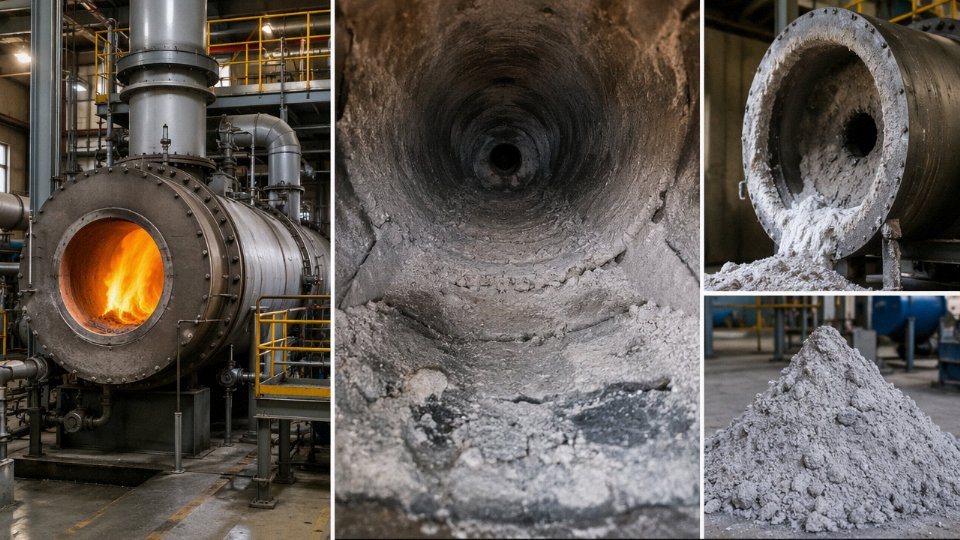
The combustion products from a properly run burn are SiO₂ (white, fine-particulate ash), CO₂, and water. The SiO₂ is where the operational headache lives. It deposits on incinerator refractory, builds up on burner nozzles, and in high-volume runs it accelerates wear on the combustion chamber lining faster than most petroleum waste streams. Some licensed facilities charge a SiO₂ surcharge — typically an extra $50–$150 per ton on top of their base gate rate — specifically for silicone-containing loads. Ask about this before you sign a disposal contract; I’ve seen facilities quote low on the base rate and bury the surcharge in the fine print.
For regulatory fit, RCRA-permitted hazardous waste incinerators under 40 CFR Part 63 Subpart EEE are the clean-compliance choice. If your silicone oil is being considered as a fuel supplement for an industrial boiler instead, the facility must comply with Boiler MACT standards, and your material needs to hit minimum BTU thresholds. PDMS heating value runs roughly 6,500–7,500 kcal/kg depending on viscosity grade and contamination — that’s actually respectable calorific content, which is why some energy-recovery facilities will accept clean, uncontaminated silicone oil at reduced or even zero cost. Heavily contaminated or mixed-solvent waste won’t qualify.
Cement Kiln Co-Processing
This route has gained real traction in Europe and across parts of Asia over the last decade, and for good reason. The kiln operates at 1,400–1,500°C, which easily clears the PDMS oxidation threshold. Better yet, the SiO₂ produced during combustion integrates directly into the clinker matrix as a beneficial silica source — so the “waste” byproduct actually improves the product rather than fouling equipment.
Kiln operators set their own acceptance criteria, but common thresholds include: chlorine content below roughly 0.1–0.5% by weight (kiln-dependent), heavy metals within defined limits (lead, cadmium, chromium), and a minimum calorific value — often 3,500–4,500 kcal/kg, though this varies. Low-viscosity silicone oils contaminated with halogenated solvents usually get rejected outright.
Co-processing costs are meaningfully lower than incineration, and in some markets where cement plants compete for alternative fuels, gate fees run below what you’d pay for landfill.
Controlled Landfill Disposal
Direct landfilling of liquid silicone oil is banned across the EU under the Waste Framework Directive and increasingly restricted at the state level in the U.S. To landfill at all, the material must be solidified and stabilized — typically using pozzolanic binders (fly ash, Portland cement, or lime-based systems) — until it passes TCLP leaching tests and meets inert waste thresholds.
One issue that doesn’t get discussed enough: silicone oil at elevated concentrations can cause swelling in certain HDPE geomembrane liners. Liner compatibility testing is the landfill operator’s problem legally, but if your waste profile includes high-concentration silicone, expect scrutiny and possible rejection.
Direct landfill disposal of untreated liquid silicone oil is permitted in the EU provided volumes are below reporting thresholdsFalse
The EU Waste Framework Directive (2008/98/EC) prohibits landfilling of untreated liquid waste regardless of volume. Untreated silicone oil does not meet inert waste thresholds and cannot be directly landfilled in EU member states.
Cost and Documentation Comparison
| Disposal Method | Rough Cost Range (per metric ton) | Key Variable |
|---|---|---|
| RCRA-permitted incineration | $400–$900 | Contamination level, SiO₂ surcharge |
| Cement kiln co-processing | $150–$400 | Calorific value, chlorine content |
| Stabilized landfill (post-treatment) | $200–$500 + $80–$200 treatment | Binder ratio, TCLP compliance |
| Energy recovery (clean, high-BTU oil) | $0 to negative cost | Viscosity grade, contamination |
Every shipment, regardless of method, requires a completed waste manifest, a Land Disposal Restriction (LDR) notification under 40 CFR Part 268 if the material is regulated, a certificate of disposal from the receiving facility, and full chain-of-custody documentation. Missing the LDR notification is one of the most common enforcement citations EPA regional offices issue — it’s not optional even when the material tests non-hazardous at the federal level, because LDRs can still apply based on listed waste status.
Keep copies for at least three years. Some state programs require five.
Recycling and Reclamation: When Used Silicone Oil Can Be Recovered and Reused
Disposal should genuinely be the last resort. For a significant portion of used silicone oil streams — particularly from heat transfer systems, transformer dielectrics, and precision lubrication applications — reclamation back to a usable viscosity grade is technically and economically more defensible than incineration or landfill. The question is whether your specific waste stream actually qualifies.
Viability Thresholds: What Makes a Silicone Oil Stream Reclamable
Three criteria determine reclamation feasibility, and all three need to pass simultaneously.
Contamination loading below roughly 2% by weight is the first gate. Above that level, the economics of processing deteriorate sharply and some contaminants — metallic wear particles from gearboxes, for example — can foul the activated-clay beds used downstream. Get a sample tested by an independent oil analysis lab before committing; a basic ICP metals screen plus FTIR typically runs $40–90 per sample and tells you most of what you need to know.
Viscosity deviation from the original specification should be under about 20%. Polydimethylsiloxane chains do degrade under sustained thermal stress — they either crack into lower-viscosity fractions or cross-link into higher-viscosity sludge. Beyond 20% drift, the energy and processing cost required to distill and re-blend back to grade usually exceeds the value of the recovered material. This threshold shifts a bit depending on the starting viscosity; a 350 cSt bath oil that drifts to 400 cSt is borderline but often recoverable, whereas a 5 cSt diffusion pump fluid that’s oxidized to 12 cSt is essentially a different material.
No reactive contaminants. Strong acids, active oxidizers, and halogenated solvents — chlorinated degreasers being the most common culprit in electronics plants — chemically alter the PDMS backbone in ways that filtration and distillation cannot reverse. Halogen contamination in particular renders the stream problematic for standard clay treatment and can generate acid gases during subsequent thermal processing.
The Industrial Reclamation Process
Commercial silicone oil reclamation follows a fairly consistent sequence across licensed processors. Vacuum filtration first removes suspended particulates above roughly 10 microns — this protects the more expensive downstream equipment. Centrifugal separation follows to strip out entrained water and dense inorganic contaminants; water is more common than people expect in hydraulic and heat-transfer silicone oils that have seen seasonal temperature swings or condenser leaks. Activated-clay bleaching then strips polar degradation products and restores color — this is the step that fails when halogenated contamination is present, because chlorine species poison the clay irreversibly. Thin-film vacuum distillation handles light-end breakdown products, separating cracked low-viscosity fractions from the bulk material. Finally, viscosity blending returns the recovered base to original specification, verified against the grade certificate.
The whole chain recovers 60–85% of the original material volume, with the spread depending primarily on how degraded the feed stock is and how contaminated with water and particulates.
On-Site Kidney Loop Filtration for Large Consumers
If your facility runs more than roughly 500 liters per month of a single silicone oil grade, a portable multi-pass kidney loop filtration skid starts making sense economically. These units — typically a circulation pump, a 5–10 micron depth filter, and a coalescing water separator — run continuously on a side stream from your main reservoir. In practice, they extend oil service life by somewhere between 3 and 5 intervals before the oil actually needs off-site reclamation. The capital cost for a decent skid runs $3,000–12,000 depending on flow rate and filtration stages; payback against virgin oil purchases is usually under 18 months at current silicone oil prices, though that math shifts if you’re running a low-viscosity specialty grade versus a commodity 100 cSt bath oil.
Solvent Recovery from Mixed Streams in Electronics Manufacturing
A specific case worth calling out: wave soldering and conformal coating operations often end up with silicone oil contaminated with volatile organic solvents — isopropyl alcohol, acetone, or proprietary flux carriers. Vacuum stripping at 80–120°C pulls the VOC fraction overhead as a recoverable condensate, leaving a silicone oil concentrate that typically passes the contamination and viscosity thresholds for reclamation. The recovered solvent isn’t always reusable in a precision process, but it can usually be re-routed as fuel blendstock, which at least avoids separate hazardous waste disposal costs.
Finding Certified Recyclers and Documenting the Chain
In the U.S., the EPA’s RCRAInfo database and the National Oil Recyclers Association (NORA) member directory are the practical starting points. NORA members operate under documented quality systems, which matters when an auditor asks how you verified your recycler’s credentials. In the EU, look specifically for facilities holding a waste oil recovery permit under Article 13 of the Waste Framework Directive — not just a general waste handling license. Always request a Certificate of Recycling that specifies the recovery process used and the output product grade. A recycler who can’t provide that document is a liability, not a solution.
Reclaimed silicone oil typically sells for 30–60% of virgin oil price, making recycling economically preferable to disposal for qualifying streams.True
No explanation available.
One hard boundary: food-grade silicone oil — meaning FDA-compliant material used in food processing equipment, mold release, or pharmaceutical manufacturing — cannot be reclaimed back to food-grade status once it’s been contaminated in service. The regulatory and liability exposure of attempting that route isn’t worth it. Those streams go to non-food industrial reclamation or, if contamination precludes that, to licensed disposal. Document this segregation at the point of generation, because commingling food-grade and industrial streams at your collection point eliminates both reclamation options.
Small-Volume and Laboratory-Scale Disposal: Safe Handling for Research and Maintenance Settings
Labs, small workshops, and R&D benches generate silicone oil waste in quantities that rarely trigger the formal disposal workflows designed for drum-scale industrial streams. A few milliliters left over from a lubrication test, a 250 mL bottle of 100 cSt fluid used for a thermal bath — these feel trivial. That’s precisely why they tend to get poured down the sink or tossed in the trash, and that’s where the problems start.
Why the Drain Is Not an Option
Silicone oil is not water-miscible and is not biodegradable within any timeframe relevant to municipal wastewater treatment. In a clarifier, it floats. It doesn’t emulsify and settle with the sludge; it forms a thin film that can coat the surfaces of UV disinfection sensors, reducing transmittance and degrading disinfection performance — a real operational headache for municipal plant operators who often can’t trace the source. There’s also reasonable evidence that polydimethylsiloxane residues inhibit the biofilm communities that activated sludge systems depend on, though the effect threshold varies with concentration and influent loading.
Most municipal pretreatment ordinances prohibit discharge of any non-biodegradable oil, regardless of volume. “Just a little” doesn’t provide a legal exemption. If your facility has a sewer use permit, the drain option is almost certainly off the table already, full stop.
Silicone oil is effectively removed by standard municipal wastewater treatmentFalse
PDMS is not biodegradable under typical aerobic treatment conditions and tends to float on clarifier surfaces rather than partition into sludge. It can pass through treatment plants partially intact and has been detected in treated effluents and biosolids.
RCRA Satellite Accumulation for U.S. Labs
Under RCRA, U.S. laboratories operating as conditionally exempt small-quantity generators or larger have a useful option: satellite accumulation areas (SAAs) allow waste to be held at or near the point of generation without a time limit, up to 55 gallons of non-hazardous waste or 1 quart of acutely hazardous waste. Pure silicone oil generally qualifies as non-hazardous under RCRA — but once it’s contaminated with a listed hazardous waste (toluene rinse residue, methylene chloride, anything on the F, K, P, or U lists), the entire container takes on hazardous waste character. That’s a common mistake in lab settings where people use a single waste jug for “general oily waste.”
Once an SAA container reaches its limit, it has to move to a 90-day accumulation area. Don’t let containers sit unlabeled in the back of a fume hood for months.
Container Selection and Labeling
Use HDPE or stainless-steel containers. PET bottles — including many common lab storage containers — can allow low-viscosity silicone oils (below roughly 50 cSt) to permeate over time, creating a slow leak you won’t notice until the shelf is stained. Label every container clearly: “Used Silicone Oil Waste,” your name or lab/department, the date accumulation started, and approximate volume. Simple, but it’s the thing inspectors check first.
Do not co-mingle silicone oil with chlorinated solvents, acids, or petroleum oils. Mixed-stream containers complicate disposal enormously and can eliminate the recycling option entirely.
Approved Small-Volume Disposal Methods
For genuinely non-hazardous silicone oil waste in small quantities, you have a few practical paths:
Absorbent solidification — mix the oil with vermiculite, kitty litter, or a commercial oil-dry compound at roughly a 2:1 absorbent-to-oil ratio by volume, confirm the mixture passes a paint filter test (no free liquid), and dispose as solid waste. Verify non-hazardous classification with your local environmental authority before doing this; some jurisdictions require additional confirmation.
Sealed container accumulation — collect waste in a labeled HDPE container and arrange pickup through a licensed small-quantity waste contractor. Many universities and industrial parks run consolidated pickup programs that make this cost-effective even for sub-liter volumes. Per-liter costs from small-quantity contractors typically run higher than industrial-scale reclamation, roughly $3–8 per liter depending on region and contract volume, but the compliance certainty is worth it.
University or industrial park consolidated programs — if you’re in a shared facility, these programs often absorb small-volume silicone oil at no additional per-container charge. Worth checking before hiring a separate contractor.

Contaminated Wipes and Sharps
Silicone oil-saturated wipes from non-hazardous applications can generally go to an industrial laundry service or, if the oil is confirmed non-hazardous and free liquid is absent, to solid waste. Silicone oil-coated sharps — needles, lancets, anything used in medical device or cosmetic formulation labs — follow medical waste protocols regardless of what the oil’s hazard classification is. The sharp drives the disposal requirement.
When to Call a Contractor
Any silicone oil mixed with a listed hazardous waste requires licensed contractor pickup, even if the total volume is 50 mL. No volume exemption saves you there. Pure, uncontaminated silicone oil under roughly a liter in a non-hazardous application can often be solidified and discarded as solid waste — but confirm with your local environmental authority first. Regulations vary more at the county and municipal level than most lab managers realize, and a quick call to your EHS office or local solid waste authority takes ten minutes and could save a compliance headache.
Emergency Spill Response and Containment: Preventing Disposal Problems at the Source
A spill that reaches a floor drain or a site drainage ditch instantly transforms a manageable waste-handling task into a regulatory incident, a remediation project, and potentially a Clean Water Act notification obligation. Getting the first three minutes right matters more than anything that happens afterward.
Stop the Source First, Then Contain
The instinct to chase spreading oil before shutting off the supply is exactly backward. Close the valve, right the drum, or crimp the hose before anything else. Once flow stops, turn your full attention to isolation. Silicone oil is less acutely dangerous than many industrial fluids, but its behavior near drains is deceptively problematic — it floats on water, has very low surface tension (roughly 18–21 mN/m for a 100 cSt grade, lower for thin grades), and will travel far downstream if it reaches a surface water body. Under the Clean Water Act, a discharge that reaches a navigable waterway can trigger reportable quantity obligations even if the oil itself carries no CERCLA reportable quantity threshold. That’s the scenario you’re trying to prevent.
Deploy drain plugs or absorbent socks around floor drains immediately — before you reach for absorbent pads. A spill kit near storage areas should have plugs staged and ready. Notifying your facility EHS officer early is not bureaucratic caution; it’s how you get a second set of hands and start the clock on any required internal reporting timelines.
Absorbent Selection: Polypropylene, Not Cellulose
This is where a lot of facilities make a quiet, expensive mistake. Standard cellulose-based absorbent pads — the yellow rolls sold in bulk — absorb silicone oil poorly. The low surface tension means the oil spreads fast and doesn’t wick into cellulose fibers the way a petroleum oil would. Polypropylene melt-blown pads, or granular mineral absorbents like diatomaceous earth or perlite, do the job properly. Diatomaceous earth in particular handles the spreading issue well; spread it generously ahead of the leading edge to arrest migration, then work back toward the source.
Activated carbon is overkill here and an unnecessary cost for a non-hazardous oil — save it for solvent spills.
High-Viscosity Grades Present a Different Challenge
Silicone oils above roughly 10,000 cSt don’t run — they creep. The spread problem is less severe, but cleanup is its own ordeal. High-viscosity silicone oil grips textured concrete and metal grating surfaces tenaciously, and scraping alone won’t get it clean. The practical approach: use a floor squeegee to bulk-collect as much as possible into a collection pan, then follow with a warm-water wash using an approved industrial surfactant at the concentration your surfactant supplier recommends. Collect all wash water. That oily wastewater now needs to be managed — it’s not clean effluent you can send to a floor drain, and in most facilities it will require collection and off-site treatment or disposal through a licensed facility.
Post-Spill Soil Remediation
If silicone oil reaches soil — through a loading dock, an outdoor berm, a cracked pad — the remediation timeline is not short. PDMS chains biodegrade slowly under most soil conditions, and “it’ll break down eventually” is not a compliant response. Excavate visibly contaminated soil plus an additional 15 cm below clean visual depth; that buffer catches oil that has migrated without obvious surface staining. If there’s any chance the spilled oil contained co-contaminants (metallic additives, process residues, heavy-metal-bearing compounds), run TCLP testing on the excavated material before choosing a disposal route. Clean silicone-only contamination typically goes to a licensed soil treatment or industrial landfill facility. Check your state’s spill notification threshold — many states require reporting within 24 hours for soil releases above a specified volume, regardless of the oil’s hazard classification.
Spill Kit Configuration for Silicone Oil Storage Areas
A generic spill kit is not adequate if your facility handles silicone oil regularly. At minimum, post near each storage area: 20 liters of polypropylene granular absorbent, ten polypropylene melt-blown pads (not cellulose), five drain plugs sized for your floor drains, two HDPE 20-liter collection containers with lids, nitrile gloves (chemical-resistant, not latex), and a laminated one-page spill response card with valve locations marked. That card should show the nearest floor drain locations and the name and phone number of the EHS officer on duty.
Pure silicone oil (PDMS) has no assigned CERCLA reportable quantity under U.S. federal law, meaning a spill of silicone oil alone does not trigger a mandatory National Response Center notification.True
EPA's CERCLA hazardous substance list does not include polydimethylsiloxane. However, if spilled material is a mixture containing any listed hazardous substance — such as a tin-catalyzed silicone fluid or a formulation with metal-based additives — the most conservative reportable quantity of any component in the mixture applies, and NRC notification may be required.
One practical note: even when federal reporting isn’t triggered, your state environmental agency may require notification under its own spill response rules. Check your state’s spill reporting threshold before you assume silence is compliant.
Selecting a Licensed Disposal Vendor: Due Diligence Checklist and Red Flags
Paying a vendor to haul your silicone oil waste away does not end your liability. Under RCRA’s cradle-to-grave doctrine, the generator remains responsible for that waste until it reaches a compliant end-of-life destination — full stop. Plenty of plant EHS managers learn this the hard way when a downstream facility gets cited, the waste trail leads back upstream, and suddenly a disposal invoice from two years ago becomes a Superfund-adjacent headache. Do the vendor verification work upfront. It takes a few hours. Remediation takes years.
Verifying EPA Identification Numbers and State Permits
Every U.S. hazardous-waste transporter must hold an active EPA ID number. TSDFs — treatment, storage, and disposal facilities — must carry a current RCRA Part B permit on top of that. Both are publicly searchable. Go to echo.epa.gov, navigate to the RCRA facilities search, and look up the vendor by name, state, or EPA ID. You’re looking for active permit status, not an expired or interim permit. Some vendors operate under “interim status,” which is a legacy holdover from the original RCRA rollout; in practice that status is increasingly restricted and should prompt you to ask hard questions before signing anything.
State permits matter independently. A facility may have a valid federal EPA ID but be operating under a state-issued permit that has lapsed or been modified. If you’re in California, Texas, or New Jersey — all of which run delegated hazardous-waste programs with requirements that exceed federal minimums — call the state agency and verify current permit standing directly. Don’t just take the vendor’s word for it.
Insurance and Financial Assurance
Under 40 CFR Parts 264 and 265, licensed TSDFs are required to demonstrate financial assurance for closure and post-closure care. Ask for documentation — specifically a closure cost estimate and the mechanism used (trust fund, letter of credit, surety bond, or corporate financial test). This matters because if the facility closes or goes insolvent mid-contract, you want assurance that cleanup doesn’t default to the generator network.
Request a current certificate of liability insurance. For hazardous-waste operations, $1 million per occurrence is a reasonable floor; for high-volume generators shipping large quantities, push for $5–10 million and confirm the policy explicitly covers third-party environmental cleanup liability. Some policies exclude gradual pollution releases — exactly the scenario you’re trying to cover. Read the exclusions page, not just the coverage summary.
Inspection History and Compliance Status
EPA and state inspectors post findings on RCRAInfo. Pull the facility’s inspection history and look specifically for Significant Non-Complier (SNC) status. A facility can hold a technically current permit while simultaneously sitting on unresolved SNC violations — meaning inspectors have found problems serious enough to flag but enforcement action hasn’t completed yet. That’s a liability risk you’re inheriting.
Contractual Protections You Should Require
The manifest system creates a paper trail, but it doesn’t protect you contractually. Your disposal agreement should include an indemnification clause that shifts liability to the vendor for any violations occurring after the waste leaves your site. Require a Certificate of Disposal delivered within 30 days of processing — not just pickup. And include a right-to-audit clause that permits unannounced facility visits. Vendors who balk at audit rights are telling you something.
Red Flags in the Vendor Selection Process
A few patterns reliably indicate trouble. Pricing below roughly $100 per ton for hazardous-waste incineration is almost always a sign that someone somewhere in the chain isn’t doing what they’re supposed to — legitimate high-temperature incineration has real operating costs. Reluctance to provide an EPA ID number upfront is disqualifying. Any vendor offering to pick up waste without issuing a Uniform Hazardous Waste Manifest is operating illegally; that manifest is your legal chain-of-custody document and you need it. If a vendor can’t explain in plain technical terms where and how the material will be finally processed, walk away.
A vendor holding a current EPA ID number is automatically compliant and safe to use without further verification.False
An active EPA ID confirms registration, not ongoing compliance. Facilities can hold a valid ID while under active enforcement actions, operating with a lapsed state permit, or carrying unresolved SNC violations. RCRAInfo inspection records and state permit verification are both required checks.
EU-Specific Due Diligence
For operations in EU member states, verify that your vendor holds a current waste carrier license issued under national implementing legislation for the Waste Framework Directive. Cross-border shipments — say, moving spent silicone oil from a German plant to an incineration facility in the Netherlands — require a transfrontier shipment notification approved under EU Regulation (EC) No 1013/2006. Don’t assume the vendor has filed it. Check the E-PRTR (European Pollutant Release and Transfer Register) for the destination facility’s historical emissions data; a facility with a pattern of SiO₂ and particulate exceedances at incineration units is worth questioning before you add your waste stream to their load.
Recordkeeping, Reporting, and Internal Auditing for Ongoing Compliance
Getting disposal right operationally is only half the job. Regulators don’t just want to know you disposed of the waste correctly — they want paper proof, and they want it organized, retained, and retrievable on short notice. Facilities that handle this well sail through inspections. Facilities that don’t often discover their documentation gaps when an EPA inspector is already standing in the waste accumulation area.
What RCRA Requires of Large Quantity Generators
If your facility generates 1,000 kg or more of regulated hazardous waste in a calendar month — the LQG threshold — the federal recordkeeping requirements are specific and non-negotiable. Every signed copy of a Uniform Hazardous Waste Manifest must be retained for a minimum of three years from the date of shipment. That’s a floor, not a target. Biennial reports go to the EPA by March 1 of even-numbered years, covering the previous calendar year’s generation and disposal activity. Miss that deadline and you’re looking at potential penalties that can escalate quickly, particularly in states with delegated RCRA authority that run their own enforcement programs on top of federal requirements.
The exception report requirement catches a lot of facilities off guard. If your designated TSDF doesn’t return a signed manifest copy within 35 days of the shipment date, you’re supposed to contact the transporter and TSDF in writing. If 60 days pass from the original shipment date with no signed return copy, you must file an exception report with your EPA Regional Office. In practice, manifest discrepancies happen more often than people expect — a transporter changes subcontractors mid-route, a TSDF has a data entry backlog — so build a 30-day tickler into whatever system you use to track open manifests.
Training records for anyone who handles silicone oil waste must be kept for three years after that employee leaves the facility. Not three years from when they were trained — three years after departure. That’s a detail that gets missed in offboarding checklists constantly.
Building a Waste Tracking Log That Actually Works
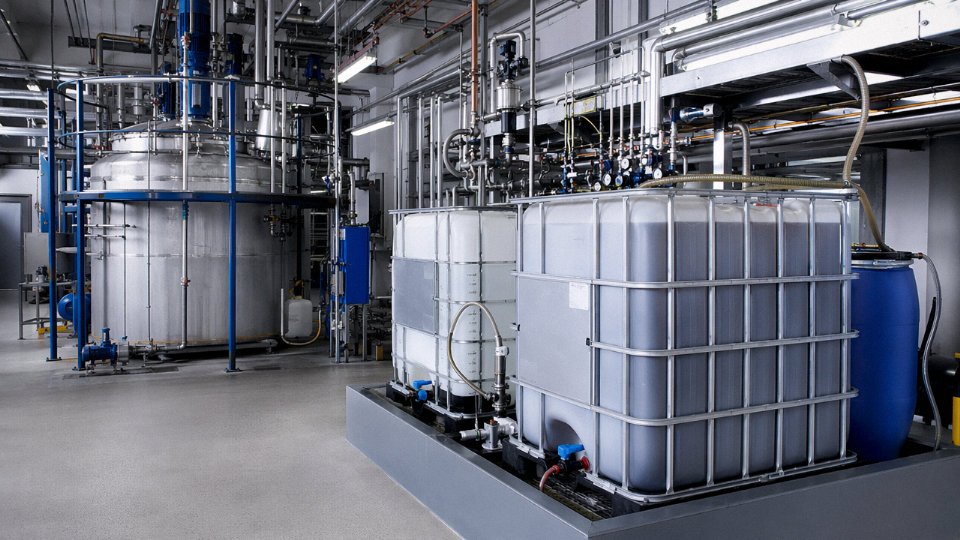
A manifest filing cabinet is not a waste tracking system. Build a log — spreadsheet or EHS platform, doesn’t matter much as long as it’s searchable — that captures: date of generation, volume (liters) and mass (kg), waste characterization result, container ID, storage location, shipment date, transporter EPA ID, TSDF EPA ID, and the date the Certificate of Disposal was received back from the vendor. Software platforms like Cority, Intelex, and Enablon all have waste module functionality that can automate parts of this, but even a well-structured Excel workbook with locked formula columns works fine for a single-site operation generating modest volumes.
Land Disposal Restriction recordkeeping is a separate obligation that often gets conflated with manifest recordkeeping. For any silicone oil waste that tests as characteristically hazardous — ignitable, toxic, whatever the characteristic — the generator must retain the LDR notification and certification documenting that the waste meets treatment standards before land disposal. That package includes the waste code, the applicable treatment standard, a certification that the waste meets those standards (or will before disposal), and the one-time notification to the TSDF. These records must be kept for the life of the facility plus three years. Not shipment-by-shipment retention — permanent, essentially.
LDR notification records must be retained for the life of the facility plus three years under 40 CFR 268.7.True
40 CFR 268.7(a)(5) requires generators to retain LDR notifications and certifications for the life of the facility, distinct from the three-year manifest retention requirement under 40 CFR 264.74.
Internal Audit Cadence and Scope
A quarterly self-inspection of waste accumulation areas is the minimum that makes operational sense. Walk the area against EPA’s standard checklist: container condition (no bulging, no visible leaks, lids secured), labeling (waste code, accumulation start date, contents), aisle space maintained for emergency access, spill kits stocked and in date, emergency equipment functional. Document it, sign it, file it. Takes maybe 45 minutes and it demonstrates good faith if something goes wrong later.
Annually, bring in a third-party compliance auditor — ideally someone with RCRA credentials who isn’t affiliated with your disposal vendor. Every three years, do a comprehensive review of all vendor credentials and contracts: confirm EPA ID numbers are still active, re-verify insurance certificates, check that permitted waste codes still cover what you’re actually shipping.
Metrics Worth Tracking
Total silicone oil waste generated per quarter (in kg) tells you whether your processes are drifting toward more waste. Percentage diverted to recycling versus outright disposal tracks your waste hierarchy performance. Cost per kilogram disposed gives procurement a real handle on whether the current vendor arrangement is competitive. Manifest discrepancy count is a quality signal for your transporter relationships. Time from waste generation to shipment is a leading indicator for storage-limit compliance — if that number starts creeping up, you’re building toward a violation before one has technically occurred.
Document Retention and Access Controls
Store scanned manifests, Certificates of Disposal, LDR packages, and audit reports in cloud backup with a seven-year minimum retention policy. RCRA’s three-year minimum is legally sufficient but leaves you exposed during environmental enforcement actions, where statutes of limitations often run five to seven years. The extra retention cost is negligible; the exposure it closes is not.
Access controls matter more than most facilities bother to implement. Records that can be edited without an audit trail are effectively worthless in an enforcement context. Set permissions so that waste records can be viewed by EHS staff and relevant operations personnel but modified only by authorized users, with all changes timestamped and attributed. That’s not bureaucratic overcaution — it’s the difference between records that hold up and records that don’t.
Environmentally Preferred Alternatives: Reducing Silicone Oil Waste Generation at the Source
Before disposal becomes a question, the better question is how much waste you actually need to generate. The waste hierarchy — reduce first, then reuse, then recycle, then dispose — applies as directly to silicone oil as to any industrial stream, yet in practice most facilities jump straight to disposal planning. That’s backwards, and it’s expensive.
Closed-Loop Recirculation Systems
In applications where silicone oil is used as a process fluid — temperature baths, hydraulic damping circuits, transformer cooling — centralized recirculation with integrated kidney-loop filtration is almost always worth the capital investment. A properly sized kidney loop running a 3-micron absolute-rated filter will pull out particulate contamination and oxidation byproducts continuously, keeping the fluid inside its service specification far longer than batch-change intervals ever could. Typical service life for unfiltered silicone oil in a heating bath might be three to six months before viscosity drift or discoloration forces a change-out. The same fluid on a kidney loop often runs 18 to 36 months before off-site reclamation is warranted — and at that point the reclamation recovery rate is higher because the fluid is cleaner going in.
The capital cost for a retrofit kidney-loop circuit on a medium-sized process bath is usually in the range of $800 to $3,500 depending on flow rate, filter housing selection, and whether you need explosion-proof electrics. That pays back quickly against reclamation and disposal costs, especially if you’re running a high-viscosity food-grade or electronics-grade fluid where purchase cost is already elevated.
Right-Sizing Application Volumes
Over-application is, in my experience, the single largest source of preventable silicone oil waste in mold-release and textile lubrication operations. Operators spray more than the process needs — usually because the spray equipment is imprecise, the cycle time is variable, or nobody ever measured how much was actually required.
Precision volumetric dosing nozzles with programmable shot controllers can cut silicone oil consumption by 30 to 50% in mold-release applications without any measurable change in release performance or part quality. That’s not a theoretical figure; it’s the range you see when facilities actually instrument the change. Waste volume drops proportionally. The nozzles themselves cost roughly $150 to $600 per station, and the payback on fluid savings alone is typically under a year in high-cycle injection molding environments.
Formulation Substitution Assessment
For non-critical applications — release agents in ambient-temperature processes, general-purpose conveyor lubrication, some textile guides — biodegradable ester-based or vegetable-oil-derived fluids may meet the performance specification with a disposal pathway that’s considerably simpler and cheaper. The key word is may. A substitution feasibility study should run through at least four gates: (1) confirm the performance criteria the current silicone fluid actually meets, measured rather than assumed; (2) verify the candidate alternative’s regulatory classification at your facility’s jurisdiction; (3) qualify at least two suppliers to avoid single-source dependency; (4) run a controlled production trial of no less than four to eight weeks before committing to full changeover. Skipping the trial is how facilities end up with a mold-release failure on a $40,000 tool.
Water-Emulsion Silicone Systems
Textile finishing and paper release operations sometimes have flexibility to shift from neat silicone oil to dilute emulsions — typically 0.5 to 5% PDMS in water. Below certain silicone concentration thresholds (which vary by local discharge permit, so check yours), the effluent from these operations may be treatable in an on-site biological wastewater treatment plant following pH adjustment and flow equalization. If that’s achievable, you’ve essentially converted a regulated off-site disposal stream into a permitted on-site treatment stream. The volume reduction in off-site disposal costs can be dramatic — sometimes 80 to 90% by volume, though the silicone mass eliminated depends on emulsion concentration and process throughput.
Dilute silicone emulsions below 1% PDMS concentration are readily biodegradable in conventional activated-sludge wastewater treatment systemsFalse
PDMS is not readily biodegradable in biological treatment systems regardless of concentration. Treatability at low concentrations depends on adsorption to biosolids and physical removal, not biological degradation. Discharge to municipal or on-site biological treatment requires local permit verification and should not be assumed permissible without testing.
Supplier Take-Back Programs
Several major silicone fluid suppliers — particularly those serving electronics and personal care sectors — operate take-back or product exchange programs for off-spec or unused material. These programs apply specifically to unused, uncontaminated product: drums that failed incoming QC, product ordered in excess, or material approaching shelf-date limits. They do not apply to used or contaminated oil; conflating the two is a compliance error. For procurement managers, building a supplier take-back clause into the purchase agreement for high-value silicone fluids is straightforward and eliminates disposal costs entirely for that category of waste.
ISO 14001 Integration
If your facility operates under an ISO 14001 Environmental Management System, silicone oil waste reduction belongs as a documented environmental objective with a measurable target. Waste generation rate per unit of production — kilograms of silicone oil waste per 1,000 parts produced, for example, or liters per shift — is a KPI that can be tracked in your EMS data, reviewed at management review, and tied to corrective action if it drifts upward. In practice, facilities that set this metric and review it quarterly reduce waste faster than those that treat silicone oil disposal as a one-time compliance problem. It forces the question of why waste is increasing, which usually points directly back to application equipment drift, operator behavior, or a process change nobody flagged to EHS.
Frequently Asked Questions About Silicone Oil Disposal
Can I mix used silicone oil with used petroleum motor oil for disposal?
No — and this is one of the more expensive mistakes a facility can make. Under RCRA’s mixture rule (40 CFR 261.3(a)(2)(iv)), if you combine a non-listed waste like silicone oil with a listed hazardous waste, the entire mixture assumes the listed status. Even if your petroleum oil seems routine, if it picked up a listed solvent or heavy-metal additive at any point, contamination transfers to the whole drum. Beyond the regulatory exposure, licensed used-oil recyclers will typically reject the combined load outright. PDMS poisons the hydrocracking and hydrotreating catalysts used in used-oil re-refining, which means a silicone-contaminated petroleum oil batch can ruin a catalyst bed worth tens of thousands of dollars. Recyclers know this and test incoming loads. Keep silicone oil waste in dedicated, clearly labeled containers — physically segregated from petroleum waste streams from day one.
Mixing silicone oil with listed hazardous petroleum waste causes the entire mixture to inherit the listed hazardous waste classification under RCRA.True
This follows directly from 40 CFR 261.3(a)(2)(iv), the RCRA mixture rule, which assigns the listed status of any component to the combined waste mixture.
Is silicone oil safe to pour down the sink in small quantities?
No, even a few milliliters is a problem. Silicone oils coat surfaces, resist biodegradation, and interfere with the biological processes in activated-sludge wastewater treatment systems. Municipal systems are not designed for PDMS. Beyond the treatment disruption, most industrial and commercial sewer use permits explicitly prohibit non-biodegradable oils, so a single incident can trigger a notice of violation. In practice, the right move for small volumes is to absorb the material onto an appropriate solid absorbent — clay-based or polypropylene pads work fine — seal it in a labeled waste container, and either accumulate it for licensed contractor pickup or dispose of the solidified waste per your local solid waste authority’s requirements. It is genuinely not worth the risk to treat this as a drain-disposal scenario.
Does silicone oil biodegrade in soil?
Slowly and incompletely, depending heavily on molecular weight. High-molecular-weight PDMS (above roughly 10,000 g/mol) undergoes very slow abiotic hydrolysis in soils — we are talking years to decades for any meaningful breakdown. Low-molecular-weight cyclic siloxanes, specifically D4, D5, and D6, are more mobile in soil and groundwater, but they also resist biodegradation and are classified as Substances of Very High Concern under REACH. Neither category should be land-applied intentionally, and neither disappears quickly enough to treat an accidental spill as self-resolving. Excavate and contain contaminated soil, and characterize it before disposal.
What PPE is required when handling silicone oil waste?
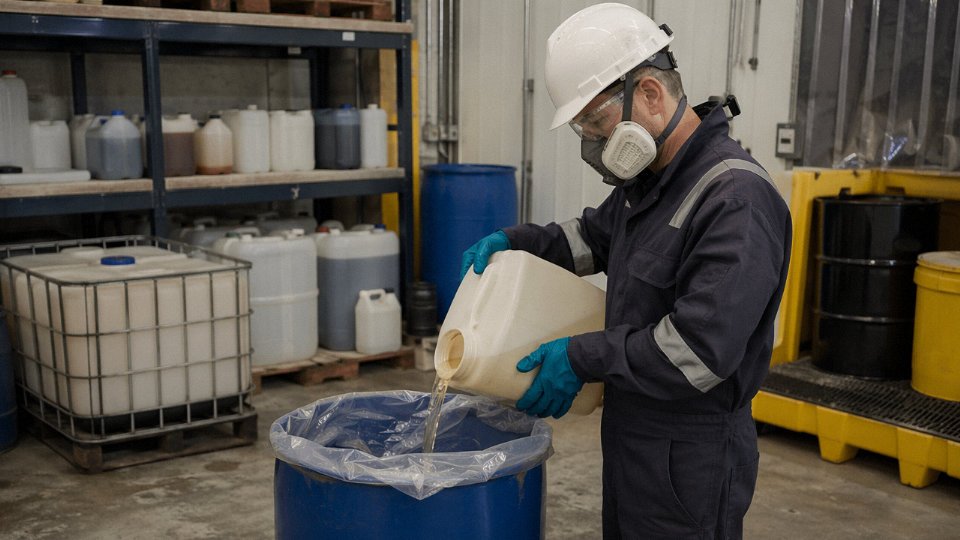
For uncontaminated, pure silicone oil, nitrile gloves and safety glasses are the minimum. Once the oil is classified as waste — especially if its contamination history is unknown — upgrade to chemical splash goggles, a face shield, chemical-resistant coveralls (Tyvek at minimum), and heavier-gauge nitrile or neoprene gloves. If the oil is being heated above roughly 200°C, or if any misting or spraying is involved, add a half-mask respirator with an organic vapor cartridge. Low-viscosity grades below 50 cSt deserve more caution because of their higher inhalation risk. In my experience, technicians tend to underestimate silicone oil because it looks clean and inert — contaminated waste is a different story.
How long can I store silicone oil waste on-site?
Under U.S. RCRA, it depends entirely on your generator category. Very Small Quantity Generators face no time limit but must ship to an approved facility. Small Quantity Generators have 270 days. Large Quantity Generators have 90 days from when the container is first filled — that clock starts on day one, not when you decide the drum is “full enough.” EU facilities under the Waste Framework Directive (2008/98/EC) are generally limited to 12 months for recovery-destined waste and 3 years for disposal-destined waste, though several member states enforce tighter limits. Label every container with the accumulation start date at the time of first fill, not retroactively.
Can silicone oil waste be used as a fuel supplement?
Technically yes, in the right context. PDMS carries a heating value somewhere in the range of 6,500–7,500 kcal/kg depending on grade, which is meaningful in a permitted industrial boiler or cement kiln co-processing setup. But the receiving facility must hold a valid permit for burning non-standard fuels, and your waste must be characterized and meet that facility’s specific acceptance criteria. This is emphatically not a DIY option. Burning silicone oil in an unpermitted furnace, open drum, or fireplace generates silicon dioxide particulate and potentially other combustion byproducts; enforcement consequences aside, the SiO₂ residue alone creates a housekeeping and respiratory hazard. Route this through a licensed co-processing vendor.
What happens if I accidentally contaminate a silicone oil drum with water?
Below roughly 0.5% water by weight, centrifugation or vacuum dehydration can often remove the water, after which a viscosity check confirms whether the oil is still within spec and returnable to service. Above that threshold, the oil is usually unsuitable for its original application but may still qualify for reclamation — which is worth pursuing before defaulting to disposal. Whatever the contamination level, the affected drum needs to be stored separately, labeled as mixed waste with the date and known contaminants noted, and re-characterized before you select a disposal or reclamation route. Do not assume it fits neatly into your existing waste stream without verification.
Are any silicone oil grades classified as acutely hazardous waste?
Pure PDMS-based silicone oils are not on the RCRA P-list. But “silicone oil” covers a wide range of formulations, and some specialty fluids contain reactive silane functional groups, chlorinated side chains, or added biocides that change the picture entirely. Before assuming any product is straightforwardly non-hazardous, pull the SDS and read Section 13 (Disposal Considerations) and Section 2 (Hazard Identification) carefully. If Section 13 is vague — and with some offshore-manufactured products, it genuinely is — contact your state environmental agency before generating waste from that material. The P-list classification carries strict storage, labeling, and quantity thresholds that make non-compliance costly, and ignorance is not a defense that holds up in an inspection.