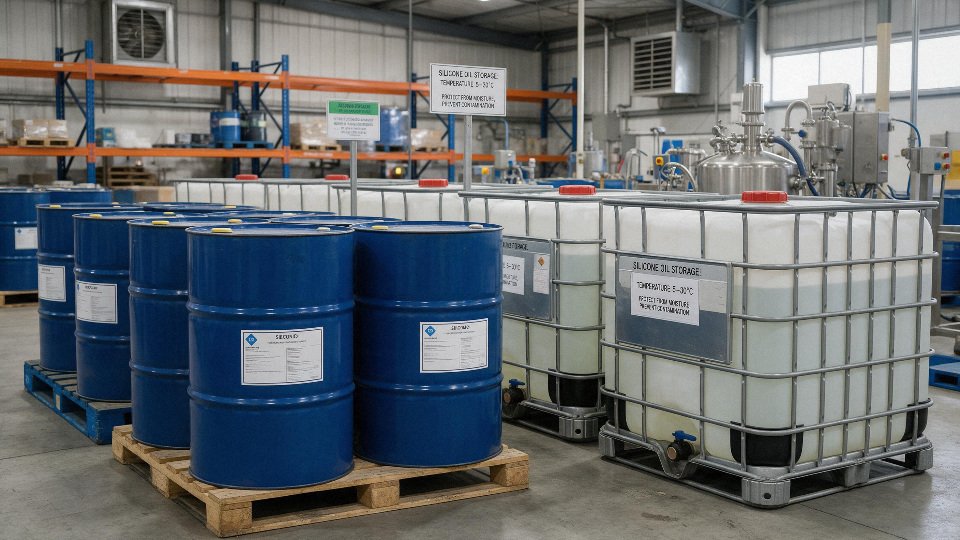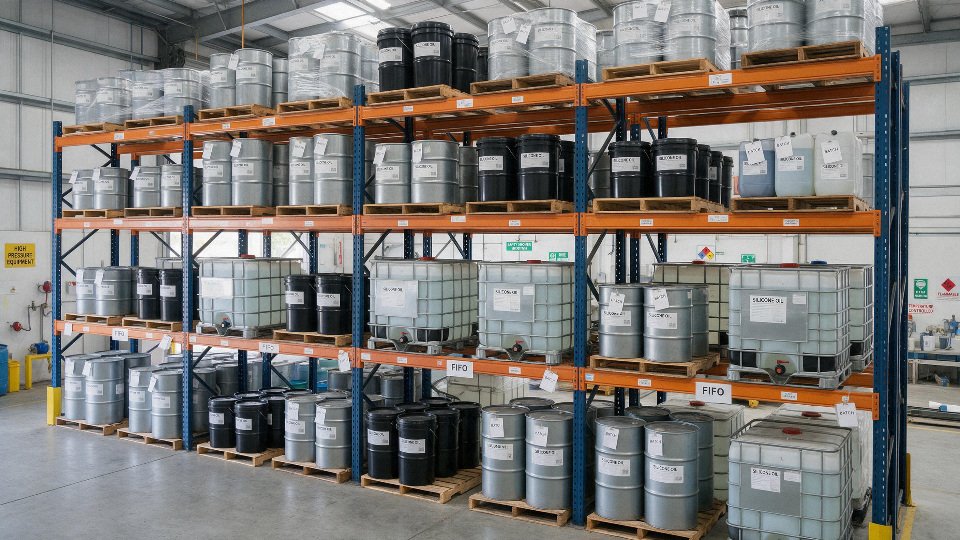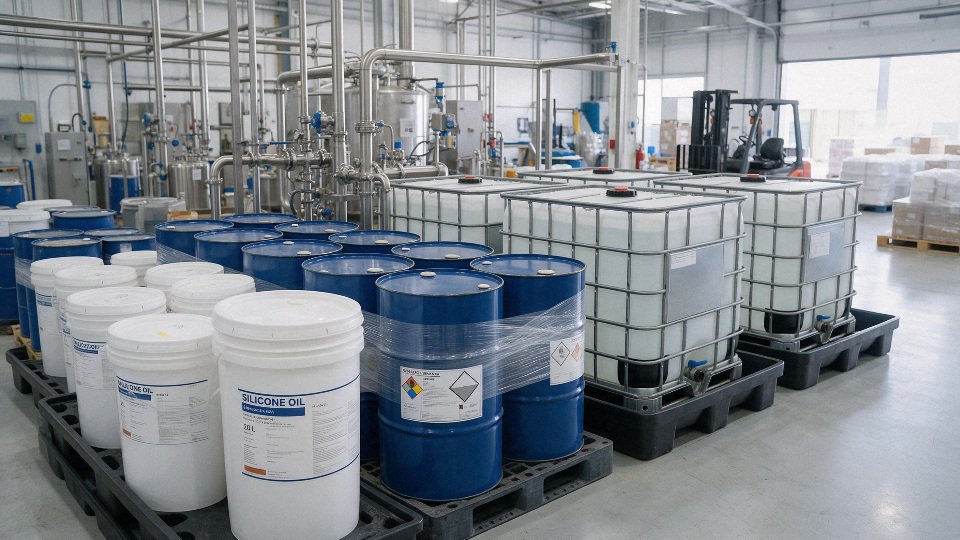
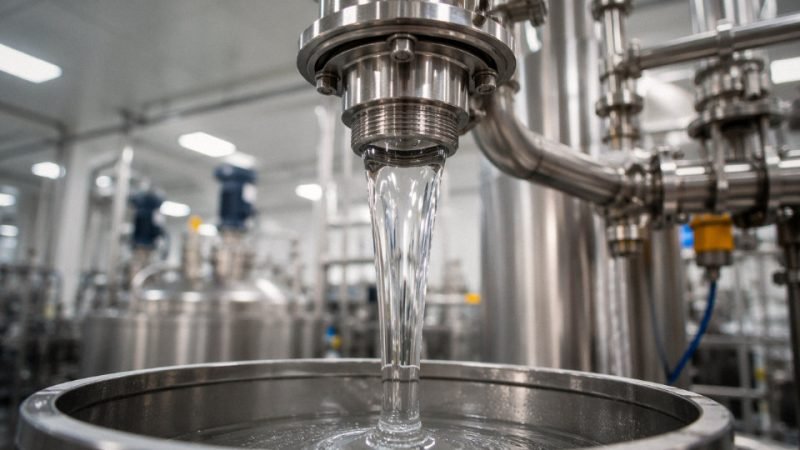
Silicone oil has been a background workhorse in manufacturing for decades — damping fluid in automotive suspension systems, release agent in food processing, heat transfer medium in pharmaceutical reactors — and most plant engineers treat it as a solved problem. That complacency has a cost. As operating temperatures push higher, as sustainability audits scrutinize every synthetic fluid, and as regulatory pressure on legacy additives tightens, facilities running decade-old silicone oil specifications are already seeing the consequences: premature viscosity drift, unexpected oxidative breakdown in continuous-duty cycles, and sourcing disruptions that expose just how thin the supply margins on specialty grades actually are.
The future of silicone oil technology centers on three converging shifts: bio-derived and lower-D4/D5 formulations to meet tightening environmental regulations, functional modifications — phenyl, amino, and fluorine substituents — that extend usable operating ranges beyond what standard PDMS achieves, and tighter integration with smart monitoring systems that treat fluid condition as a real-time process variable rather than a scheduled maintenance item. These developments will reshape procurement specifications and maintenance intervals across sectors from electronics cooling to medical devices over the next decade.
What makes this genuinely interesting, from an engineering standpoint, is that silicone oil is one of the few fluid categories where a single molecular backbone — the Si–O chain — can be tuned across an almost absurd range of physical behavior, from a 0.65 cSt antifoam agent barely thicker than water to a 2,500,000 cSt damping gel that barely flows at room temperature, and now chemists are extending that range further while simultaneously being asked to make the whole platform cleaner and more traceable. The market reflects the pressure: sitting at roughly USD 2.1 billion in 2023 and expected to reach somewhere around USD 3.4 billion by 2031, this is not a stagnant specialty chemical quietly holding its niche.
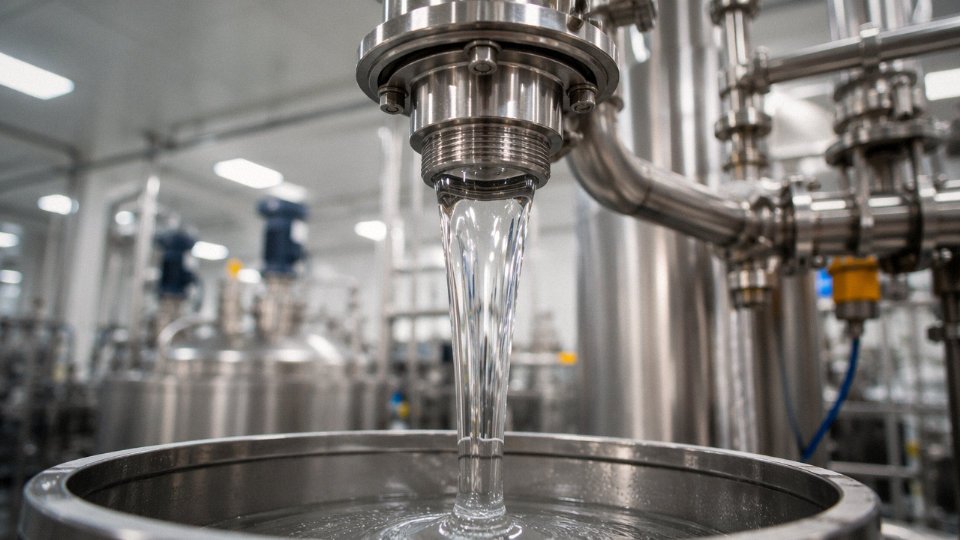
Molecular Engineering Advances Pushing Silicone Oil Performance Boundaries
The gap between standard PDMS and what the chemistry can actually deliver has never been wider. Over the past decade, silicone oil has quietly evolved from a commodity fluid defined mostly by viscosity grade into a tailored polymer architecture — and the engineering implications for plant lubrication, semiconductor manufacturing, and aerospace systems are significant enough to warrant a closer look at what’s actually changing at the molecular level.
From PDMS to Functional Copolymers
Vanilla polydimethylsiloxane — the methyl-on-silicon backbone that accounts for most of the 0.65 cSt to 2,500,000 cSt commercial range — remains the workhorse. But substituting phenyl groups along that backbone changes the physics in ways that matter operationally. Phenyl-modified silicone oils push the refractive index up to around 1.46 (versus roughly 1.40 for standard PDMS), which matters in optical coupling applications, and they hold usable lubrication performance across roughly -65°C to +260°C. That thermal window beats most mineral oils by a wide margin and outperforms many PAO synthetics at the cold end.
Fluorosilicones — specifically trifluoropropyl-modified grades — take the chemistry in a different direction. The fluorine substitution dramatically improves resistance to aromatic and aliphatic hydrocarbon solvents, which is why aerospace fuel system designers reach for them when a standard silicone oil would swell or absorb hydrocarbons from jet fuel contact. This isn’t incremental performance improvement; it’s a different class of fluid with a specific threat environment in mind.
Amino-functional silicones occupy yet another space — they interact covalently with surfaces in ways that passive PDMS cannot, which matters in textile finishing, personal care manufacture, and increasingly in biomedical device coatings where surface anchoring rather than bulk lubricity is the design target.
Reactive End-Groups and What They Make Possible
End-group engineering is, in practical terms, where some of the most commercially consequential development is happening right now. Hydroxyl-, vinyl-, hydrogen-, and epoxy-terminated PDMS chains give formulators the ability to crosslink in-situ, graft onto metal oxide surfaces like alumina or titanium dioxide, and covalently bond into polymer matrices. The result is that silicone stops being a fluid you apply and starts being a functional layer you build into a substrate.
Self-healing lubricant coatings and smart release layers for roll-to-roll processing are both moving out of lab demos into limited production use. The operational logic here is straightforward: a coating that can partially recover its lubrication layer after abrasion reduces maintenance intervals and extends die life in forming operations — not by a fixed percentage (that depends heavily on the substrate, the contact pressure, and the thermal cycling regime), but meaningfully enough that several tooling suppliers are actively validating these systems.
Hyperbranched Architectures and Controlled Polymerization
Hyperbranched and dendritic silicone structures behave differently from linear PDMS at equivalent molecular weights — lower melt viscosity, tighter molecular weight distribution (PDI can approach 1.05–1.10 in well-controlled synthesis), and rheology that’s tunable in ways that linear chains simply aren’t. For precision optical coatings and MEMS lubrication, where film thickness uniformity at the micron or sub-micron scale is non-negotiable, that tight PDI isn’t academic. A wide distribution means unpredictable film formation. Full stop.
Controlled polymerization — cationic ring-opening of D4 (octamethylcyclotetrasiloxane) and anionic living polymerization — now routinely achieves batch-to-batch viscosity reproducibility within roughly ±1% for semiconductor-grade fluids. That sounds modest until you’ve sat through a re-qualification cycle for a fab process. Each failed batch qualification can cost weeks and real money; tighter synthesis control reduces that exposure substantially.
Anionic living polymerization of D4 can achieve batch viscosity reproducibility within ±1% for semiconductor-grade silicone fluids.True
Living polymerization techniques suppress chain-transfer and termination side reactions, enabling tight control over chain length distribution. ±1% viscosity reproducibility is achievable under rigorously controlled temperature, initiator purity, and moisture-exclusion conditions — standard for semiconductor-grade production but not typical of commodity PDMS manufacture.
Nanoparticle Hybridization
Dispersing boron nitride nanosheets or graphene oxide into a PDMS carrier fluid is, depending on who you talk to, either the most promising near-term lubrication advance or a colloidal stability problem dressed up in impressive tribology numbers. Both assessments have merit. Pin-on-disk testing at 100°C does show friction coefficient dropping from around 0.12 for neat PDMS down below 0.04 with well-dispersed BN nanosheet loading — real data, not promotional. The outstanding question is stability over actual service life. Ongoing research targets 2,000-hour colloidal stability windows, but getting there without surfactants that contaminate sensitive processes, or without agglomeration under shear in real pump circuits, remains genuinely unsolved at scale.
In practice, the molecular engineering advances described above don’t arrive as a unified platform. They show up piecemeal — a new fluorosilicone grade from one supplier, a reactive-terminated PDMS qualifying into a specific adhesive system somewhere else. The rate-limiting step isn’t usually the chemistry. It’s application engineering and end-user qualification.
Electric Vehicle Thermal Management: Silicone Oil as a Dielectric Immersion Coolant
Fast-charging at 300 kW and above creates a heat removal problem that air cooling and even indirect liquid cooling simply cannot solve at the cell level. Indirect systems — glycol loops running through aluminum cold plates — are fine for 150 kW architectures, but as cell current density climbs, the thermal resistance between the cell surface and the cooling medium becomes the bottleneck. The temperature gradient across a module gets ragged. Hot-spot cells age faster, trip protection cutoffs earlier, and in worst cases initiate thermal runaway propagation.
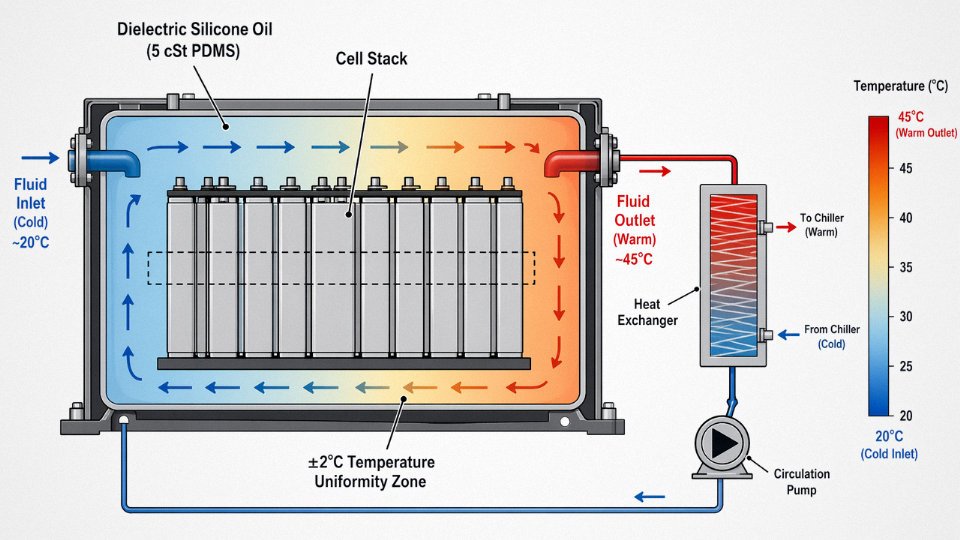
Direct immersion cooling sidesteps that resistance almost entirely. With cells submerged in dielectric fluid, heat transfers from every surface — top, bottom, sides — simultaneously. In practice, well-designed immersion systems achieve temperature uniformity within roughly ±2°C across a 100-cell module during sustained high-rate charging. That kind of uniformity matters enormously for cell longevity, since lithium plating and SEI growth are both temperature-dependent and accelerate nonlinearly once any cell exceeds about 45°C.
Why Silicone Oil Gets Considered — and Where It Falls Short
The 5 cSt PDMS grade is the most commonly evaluated silicone fluid for this application. It flows reasonably at low temperatures, it’s chemically inert toward most metals, and its dielectric strength — typically 15 to 20 kV/mm depending on purity and water content — is genuinely suited for 800V battery architectures where leakage currents through coolant would otherwise be a serious risk. Flash point above 300°C gives it a significant fire safety margin compared to mineral oil (around 160°C) and even some synthetic esters.
The thermal properties are honest rather than spectacular. Thermal conductivity sits around 0.15 W/(m·K), which is roughly a quarter of water’s 0.60 W/(m·K). You compensate with higher flow rates and clever manifold design, but it does mean pumping power goes up. Specific heat capacity around 1.46 J/(g·K) is workable. The pour point below -50°C is genuinely useful — cold-climate startup without electric pre-heating is a real operational advantage that gets underestimated in lab comparisons.
Silicone oil (5 cSt PDMS) has a flash point above 300°C, making it significantly less flammable than mineral-oil-based dielectric coolants used in immersion applications.True
High-molecular-weight polydimethylsiloxane fluids are well-established as having flash points exceeding 300°C, while mineral oils used as transformer or immersion coolants typically flash between 140°C and 170°C depending on base stock and refining.
Material Compatibility — the Problem Nobody Wants to Talk About
Here’s where immersion cooling programs run into real trouble during qualification. Silicone oils are not universally benign to battery internals. Testing has shown up to roughly 3% volume swelling in polypropylene separator films after 72-hour immersion — modest on paper, but inside a jelly roll where dimensional tolerance is measured in microns, even 1–2% separator expansion can alter internal pressure distribution and create localized electrochemical heterogeneity.
Pouch cell films and the adhesive layers on anode copper foil current collectors are also at risk if any low-molecular-weight siloxane fraction remains in the fluid. Commercial silicone oils vary considerably in their cyclic oligomer content — D4, D5, D6 — and some suppliers haven’t fully tightened specs for immersion-coolant grades. This is a procurement-level detail worth pushing on hard before any pilot build.
Fluid permeation through micro-seal gaps into the cell jelly roll itself is a slower, harder-to-detect failure mode. Closed-loop filtration maintaining ISO 4406 cleanliness at class 14/12/9 or better is essentially mandatory — not just for protecting fluid quality, but for catching particulates shed from degrading seals early enough to do something about it.
Competitive Landscape and the Path to Commercial Deployment
Hydrofluoroethers and the 3M Novec family dominated early immersion cooling discussions in electronics data centers, but the 2025 phase-out commitments for many HFE compounds have reshuffled the deck. Synthetic ester blends are the most aggressive competitor to PDMS right now — better thermal conductivity in some formulations, biodegradable, and increasingly available from Tier-1 fluid suppliers with cell-compatibility test data attached. The ester camp’s weakness is oxidative stability at sustained high temperatures and slightly lower flash points compared to silicone.
Several EV startups and at least two major OEMs are running pilot immersion-cooled battery modules with silicone oil as of late 2024. Commercial deployment in performance EVs looks realistic by 2026–2027, but it hinges on two unglamorous things: standardized fluid-change service procedures (nobody has a good answer for field servicing an immersed pack yet) and long-term seal material qualification across the full temperature cycling range. Get those right and silicone oil has a durable position in high-voltage, high-discharge-rate applications. Don’t, and synthetic esters will take the volume.
Sustainable Feedstocks and Circular Economy Pathways for Silicone Oil Production
The carbon baggage that comes with silicone oil is genuinely underappreciated, even inside the industry. Most people focus on the product’s exceptional thermal stability or its inertness in service — and rightly so — but the supply chain upstream of those properties is energy-punishing in ways that regulators are now paying close attention to.
The Carbon Reality of the Current Production Chain
Silicon metal production runs on carbothermic reduction of quartz in electric arc furnaces at roughly 1,900°C. Energy consumption lands somewhere between 11 and 13 MWh per metric ton of silicon metal, and the exact figure depends heavily on furnace age, electrode quality, and the carbon reductant mix — older furnaces with poorly managed electrode paste typically run toward the high end. Then you add the Rochow-Müller direct process to synthesize methylchlorosilanes, which brings its own energy load plus substantial HCl handling infrastructure, waste acid streams, and the chronic operational headache of managing selectivity toward dimethyldichlorosilane over the less-useful mono and trimethyl byproducts.
Stack it all together and cradle-to-gate CO₂ intensity for PDMS sits in the range of roughly 6–10 kg CO₂-eq per kilogram of product. That spread is almost entirely explained by regional electricity grid carbon intensity — a plant drawing power from a coal-heavy grid in parts of Asia will sit near the top of that range, while a Norwegian producer using largely hydroelectric power can approach the lower bound. It’s not a small difference when you’re talking about tens of thousands of metric tons annually.
Rice Husk Ash as a Bio-Derived Feedstock: Promising, But Not Clean Yet
Rice husk ash is the most credible near-term alternative silicon source. RHA typically contains 85–97% amorphous silica — the exact figure varies with combustion temperature and rice variety — and that amorphous structure actually makes it more reactive than mined quartz, which is one genuine technical advantage. Pilot-scale work has demonstrated chlorosilane synthesis from RHA-derived silica, and lifecycle analyses suggest carbon footprint reductions of up to roughly 40% versus conventional quartz-based routes, largely because you’re valorizing an agricultural waste stream rather than mining and processing virgin mineral.
The barriers are real, though. Ash purity is erratic. Heavy metal content — arsenic, cadmium, and lead are the usual concerns — varies by soil conditions and agrochemical use in the source region, and a procurement manager buying RHA silica cannot assume consistency across suppliers the way they can with specification-grade mined quartz. There’s also no commercial-scale downstream integration yet. The gap between “pilot demonstrated” and “qualifies as a chlorosilane feedstock for a Momentive or Wacker plant” is substantial, involving years of process validation and supply chain hardening.
Rice husk ash silica has been demonstrated at pilot scale as a chlorosilane feedstock with up to 40% lower lifecycle CO₂ versus quartz-based routes.True
Multiple published lifecycle assessments and pilot programs support this range, though the reduction magnitude depends on combustion method, regional grid mix, and whether agricultural waste transport emissions are included in the system boundary.
Closed-Loop Recycling: The Viscosity Fidelity Problem
Chemical depolymerization of PDMS waste back to cyclic siloxanes — D4 and D5 predominantly — via acid or base catalysis is technically well-understood. The recovered cyclics can be redistilled and repolymerized. Elkem, Momentive, and Dow have all disclosed programs along these lines, at varying stages from pilot to limited commercial scale.
The engineering problem that doesn’t get enough attention is viscosity-grade fidelity. Each depolymerization–repolymerization cycle introduces some risk of methyl group oxidation and chain-end contamination, which shifts the molecular weight distribution and makes hitting tight viscosity specs — say, a 100 cSt grade where the customer tolerance is ±5% — genuinely difficult. In practice, recycled siloxane streams may be downgraded to lower-specification applications like release agents or foam control rather than being cycled back into precision grades. That’s not circular economy in the purest sense; it’s more of a cascade use model. Useful, but not equivalent.
Regulatory Pressure: D4/D5 Restrictions and What They Mean for Industrial Formulators
ECHA’s restriction on D4 and D5 in wash-off cosmetic products has been enforced since 2020, and D6 remains under ongoing assessment. The immediate target was rinse-off personal care — shampoos, conditioners — where environmental persistence and bioaccumulation in aquatic organisms drove the restriction. Industrial-grade silicone oil formulations are not currently subject to the same restrictions, and it’s worth being precise about that. A hydraulic damping fluid or a transformer coolant based on polydimethylsiloxane is not caught by the cosmetics restriction.
That said, formulators and procurement teams would be unwise to treat “not currently restricted” as a permanent condition. ECHA’s risk assessment methodology for cyclic siloxanes is cumulative. If D6 picks up a restriction, pressure on other ring sizes in industrial applications — particularly in closed-loop systems that eventually require waste disposal — becomes politically plausible. The sensible hedge, already adopted by several European specialty chemical producers, is to reformulate away from high-D4/D5-content intermediate streams where substitutes exist, and to document containment and waste disposal protocols rigorously for applications where substitution isn’t practical.
Emerging Green Chemistry Approaches
Supercritical CO₂-assisted polymerization has been explored as a way to eliminate organic solvent use in certain silicone processing steps. The chemistry works at bench scale; the barrier is equipment capital cost and the operational complexity of running supercritical processes in a plant environment, which most silicone producers haven’t prioritized while margins on conventional production remain acceptable.
Enzymatic ring-opening of cyclic siloxanes — essentially borrowing from lipase-catalyzed transesterification analogues — is still largely academic. Reaction rates are slow, enzyme stability at useful temperatures is limited, and nobody has demonstrated a commercially interesting throughput. It’s worth watching, but probably a decade from relevance at industrial scale.
Waterborne silicone emulsions are, in contrast, already commercially deployed and genuinely reduce the need for volatile organic solvent carriers in coating and textile applications. The formulation challenge is emulsion stability over shelf life and maintaining performance parity with solvent-borne systems — coating uniformity and release force can both drift if the emulsion isn’t well-engineered. But for a factory owner facing VOC compliance costs or a procurement manager sourcing for an EU-market product, waterborne silicone is a credible option now, not a future prospect.
Biomedical and Pharmaceutical-Grade Silicone Oils: Purity Demands and Functional Innovation
The biomedical segment is, by volume, a small slice of total silicone oil demand — but by revenue and technical complexity, it occupies a category of its own. Pricing for USP/pharmaceutical-grade PDMS runs roughly 10–30× the cost of equivalent-viscosity industrial product, depending on lot size, the testing package the buyer requires, and which market the material is destined for (ophthalmic use demands the most stringent specification of all).
Ophthalmic Silicone Oil: A Narrow Specification with No Margin for Error
The 1,000 cSt and 5,000 cSt PDMS grades used as vitreous tamponade agents in retinal detachment repair are arguably the most tightly specified silicone oils manufactured at commercial scale. Global ophthalmic demand sits at several hundred metric tons per year — a modest figure industrially, but each batch carries a test burden that a lubricant or release-agent supplier would find astonishing. Viscosity tolerance is ±2% of nominal, which sounds achievable until you’re controlling it batch-to-batch across a polydisperse polymer and trying to stay within that band through sterilization. Residual cyclic siloxanes (D4 and D5 primarily) must come in below 1 ppm; industrial-grade material from the same plant can carry hundreds of ppm without anyone raising an objection. Heavy metals total below 1 ppm, sub-visible particulate counts to USP limits, endotoxin below 0.5 EU/mL. Miss any one of these, and the batch is quarantined.
The consequence logic here is direct: a vitreous substitute that emulsifies inside the eye triggers secondary glaucoma, inflammatory response, and in some cases, forced reoperation. Emulsification — the fragmentation of the silicone oil tamponade into small droplets under the shear forces of eye movement — is the principal long-term failure mode of current materials, and it’s what’s driving the most interesting R&D in this space.
Semifluorinated Hybrids and Emulsification Resistance
Several groups are in clinical or late pre-clinical investigation of semifluorinated alkane–silicone hybrid oils, blending the high specific gravity of fluorinated compounds with the optical clarity and biocompatibility of PDMS. The target density range is roughly 1.02–1.06 g/cm³ — heavier than conventional PDMS (which sits around 0.97 g/cm³) — specifically to provide tamponade against inferior retinal tears without requiring the patient to maintain face-down positioning for weeks post-surgery. Anyone who has managed post-op compliance in elderly patients knows how clinically significant that is.
Beyond the density problem, these hybrid formulations appear to emulsify less readily under shear, though the mechanism isn’t fully settled. Some work points to interfacial tension differences at the oil–aqueous humor boundary; others attribute it to changes in the viscoelastic behavior of the droplet interface. The honest answer is that it’s probably both, and the in-vivo environment is messy enough that bench data doesn’t always predict clinical outcomes cleanly.
There’s also real interest in loading these modified oils with sustained-release therapeutic agents — anti-VEGF compounds dispersed within the silicone matrix for controlled release into the vitreous cavity over weeks. The silicone oil then functions simultaneously as a mechanical tamponade and a drug depot. That’s a significant functional expansion from what the material was designed to do, and it creates a regulatory headache: the combination product now falls under both device and drug frameworks.
Drug Delivery, Microfluidics, and Adjuvant Systems
Outside the eye, pharmaceutical-grade silicone oil turns up in places that don’t always get recognized as silicone applications. In droplet microfluidics, PDMS oil is the standard continuous phase for high-throughput pharmaceutical screening — droplet generation rates typically run 1,000–10,000 drops per second at volumes in the 1–10 nL range, depending on chip geometry and flow rate. The oil’s low viscosity at operating temperature, chemical inertness, and optical transparency make it almost uniquely suited to this. Functionalized PDMS surfaces — modified to resist non-specific protein adsorption — are what make lab-on-chip diagnostic devices actually work in complex biological matrices like serum or whole blood, where surface fouling would otherwise wreck assay reliability within minutes.
Silicone oil-in-water emulsion systems are under investigation as adjuvant platforms in vaccine research, exploiting the immune-stimulating properties of the oil–water interface. This is earlier-stage and somewhat contested, but it’s a direction multiple groups are pursuing.
Pharmaceutical-grade silicone oil must contain less than 1 ppm residual D4/D5 cyclic siloxanes, compared to levels potentially hundreds of times higher in standard industrial-grade product.True
Regulatory and compendial specifications for ophthalmic and injectable-grade PDMS impose strict cyclic siloxane limits due to endocrine disruption concerns and local tissue reaction risk; industrial grades face no equivalent requirement and are not purified to this standard.
Regulatory Complexity as a Real Manufacturing Constraint
Getting a silicone oil into a regulated medical product is not just a chemistry problem — it’s a manufacturing infrastructure problem. FDA 510(k) clearance for a device containing silicone oil requires documented extractables and leachables data, ISO 10993 biocompatibility testing (cytotoxicity, sensitization, intracutaneous reactivity, implantation studies at minimum), and a quality system that can demonstrate process consistency over time. European MDR 2017/745 has raised the evidence bar further, now requiring clinical data in the technical file for most implantable devices — a requirement that catches ophthalmic tamponade products squarely.
In practice, this means manufacturers maintaining dedicated ultra-clean production lines, segregated from any industrial-grade silicone processing, with continuous extractables monitoring and retained samples at every step. The capital cost of that infrastructure is part of why the market has relatively few qualified suppliers and why entry barriers are high. It also means that supply disruptions — a cleanroom qualification failure, a raw material purity deviation — have outsized impact on device manufacturers who often have a single approved supplier and cannot qualify an alternate in less than 12–18 months. That’s a procurement exposure worth mapping explicitly if your product depends on pharmaceutical-grade PDMS.
Digital Twins, AI-Guided Formulation, and Smart Monitoring of Silicone Oil Systems
The way silicone oils get designed and managed in the field is changing faster than most procurement teams realize. Molecular simulation, machine learning, and embedded sensor networks are compressing development timelines and shifting fluid management from scheduled replacement toward genuine condition-based maintenance. None of this is theoretical anymore — it’s showing up in supplier R&D pipelines and in the control rooms of data center operators running immersion-cooled racks.
Molecular Simulation Cutting the Lab-to-Spec Gap
Molecular dynamics (MD) simulation and density functional theory (DFT) have been used in polymer research for decades, but their application to silicone oil co-polymer architecture is more recent and considerably more practical. The basic workflow: propose a novel siloxane backbone modification — say, a phenyl/methyl co-polymer with a specific repeat unit ratio — run MD at multiple temperatures, extract viscosity and density predictions, and decide whether the architecture is worth synthesizing. Reported prediction accuracy for PDMS oligomers sits within roughly 8–12% of experimental viscosity values, which is tight enough to eliminate the obvious dead ends before any glassware gets dirty.
DFT adds a complementary layer. You can screen additive–siloxane interaction energies computationally to identify which anti-wear or antioxidant candidates are likely to stay dispersed, avoid siloxane chain cleavage, or resist volatilization at elevated temperatures — without running a single compatibility soak test upfront. Groups working on high-temperature grades for aerospace and semiconductor processing report cutting their experimental screening cycles by 30–50%, though the actual savings depend heavily on how large the candidate additive library is and whether the in-house simulation team has been trained on silicone-specific force fields rather than repurposed hydrocarbon models. That last point matters; generic OPLS or AMBER parameters give noticeably worse results on Si-O backbones.

Machine Learning for Formulation Prediction Across Wide Viscosity Ranges
Training predictive models on historical formulation databases is now a live practice at major producers. Gradient-boosted regression and neural network architectures, fed on thousands of grade-and-additive combinations covering viscosity, thermal conductivity, surface tension, and fluid compatibility data, have produced published models with R² above 0.95 for viscosity prediction across ranges from roughly 10 cSt to 100,000 cSt. Dow, Shin-Etsu, and several academic groups have released papers on this. The honest caveat is that model performance degrades at the extremes — ultra-high-viscosity grades above a few hundred thousand cSt, or novel co-polymer architectures that sit well outside the training distribution. You’re interpolating well but extrapolating badly, same as any regression model.
Published ML models for silicone oil viscosity prediction have achieved R² greater than 0.95 across a 10 cSt to 100,000 cSt rangeTrue
Multiple peer-reviewed publications from Dow, Shin-Etsu-affiliated researchers, and academic groups have reported gradient-boosted and neural network models with this performance level on internal and published silicone oil formulation datasets, though performance typically degrades outside the training distribution at viscosity extremes.
Digital Twins for Immersion-Cooled Power Systems
Deploying a digital twin for a silicone oil-cooled transformer or power electronics cabinet means coupling a real-time CFD thermal model with an IoT sensor array — temperature probes at multiple fluid depths, dissolved gas analyzers, inline particle counters, and dielectric strength sensors. The value isn’t the individual readings; it’s the model’s ability to flag divergence between predicted and observed thermal behavior before that divergence becomes a trip event. In data center immersion-cooling installations, operators have reported predictive maintenance alerts arriving 100–500 hours ahead of measurable fluid degradation, depending on thermal load variability and sensor density. That lead time is enough to schedule a fluid top-up or partial replacement during a planned maintenance window rather than an emergency drain.
For large transformer banks where bulk fluid replacement runs upward of USD 50,000 per event — factoring in fluid cost, labor, downtime, and disposal — this matters enormously. The economics shift further when you consider that unplanned outages in critical infrastructure carry costs that dwarf the fluid itself.
On-Stream Fluid Condition Monitoring
Near-infrared spectroscopy analyzers installed in-line can now detect Si-OH formation — the principal hydrolysis marker in silicone oils exposed to moisture and heat — along with viscosity drift and oxidation product accumulation, without pulling a sample. In practice, most plants still rely on periodic off-line testing because the capital cost of NIR analyzers is harder to justify on smaller fluid volumes, but the crossover point is falling. For systems with fluid inventories above roughly 500 liters in continuous high-temperature service, the payback period on in-line monitoring is often under two years once avoided replacement events are counted.
Fluid-Lifecycle Services and Data Infrastructure
The infrastructure question rarely gets enough attention. Predictive fluid management at fleet scale requires standardized property ontologies — consistent data schemas so viscosity, acid number, dielectric strength, and contamination metrics from different plant sites, different instrument vendors, and different fluid grades can be aggregated meaningfully. ASTM and ISO digital data initiatives provide partial frameworks, but silicone-specific attributes like silanol content and cyclic siloxane volatiles still lack universally adopted digital definitions. Until those gaps close, cross-site fleet dashboards remain more custom integration projects than plug-and-play solutions.
What’s shifting more fundamentally is the supplier relationship. Producers who can offer secure cloud-based fluid-health dashboards, analyze degradation trends across a customer’s entire installed fleet, and recommend proactive interventions are selling a service contract, not just drums of fluid. In my experience, the customers who benefit most from this model are operators with large, geographically distributed transformer or cooling assets — utilities, hyperscale data center operators — where the cost of a domain expert visiting each site repeatedly is itself a significant line item. The ones who don’t benefit yet are smaller batch-process plants where fluid volumes are modest and the IT integration overhead outweighs the fluid-management value. That balance will shift as the tooling matures and integration costs fall.
Emerging High-Value Application Frontiers: Hydrogen Energy, Space, and Advanced Electronics
The applications driving silicone oil’s next growth chapter aren’t extensions of existing markets — they’re genuinely new territory, and each one exploits a property that competing fluids simply can’t match at the operating extreme in question.
Hydrogen Energy Infrastructure
High-pressure hydrogen dispensing equipment — the kind operating at 350–700 bar in fueling stations and electrolyzer skids — creates a brutally selective environment for lubricants and dielectric fluids. Hydrocarbon-based oils absorb hydrogen under pressure, swell elastomeric components, and in the worst cases contribute trace contamination to the fuel cell membrane electrode assembly, which degrades proton exchange membranes at concentrations that would seem trivially small anywhere else. Silicone oils sidestep the hydrocarbon contamination problem entirely, and their resistance to hydrogen embrittlement mechanisms gives them a credible claim in seal lubrication for high-cycle valve seats and piston rod interfaces.
The complication is hydrogen permeability through PDMS itself. Diffusion coefficients in the range of roughly 10⁻⁹ m²/s mean that unmodified PDMS is a relatively open membrane for dissolved hydrogen — a real issue when you’re trying to maintain pressure integrity in confined cavities or when the fluid is in contact with elastomeric bladders. Modified phenyl- or fluoroalkyl-substituted formulations reduce permeability somewhat, and barrier-coating strategies on wetted metal surfaces are being evaluated alongside the fluid chemistry. Neither solution is fully production-ready as of this writing; qualification testing is still running at several European electrolyzer OEMs.
Standard PDMS silicone oils have hydrogen diffusion coefficients approximately in the 10⁻⁹ m²/s range, which is higher than most fluorinated alternatives.True
PDMS is gas-permeable by nature of its flexible backbone and large free volume; this is well-documented in membrane science literature and is a genuine engineering limitation for hydrogen containment applications.
Space and Satellite Systems
Silicone oils have been flying on spacecraft longer than most engineers now working in the industry have been alive — attitude control mechanisms on early satellites, antenna deployment dampers, and similar mechanisms going back to the Apollo era. That heritage matters because space qualification is slow and conservative. When a fluid has a decades-long flight record, it starts the qualification conversation from a position of trust.
Modern LEO constellation programs are demanding something slightly different: thermal control loops running continuous duty cycles, mechanisms spinning at thousands of RPM in 10⁻⁶ Pa vacuum and cycling between roughly -180°C and +150°C, and all of it constrained by ASTM E595 total mass loss limits below 1.0%. High-vapor-pressure components that would be acceptable in a ground-based system simply outgas and contaminate optical surfaces or solar arrays. Phenyl-modified grades with narrow molecular weight distributions — not the broad-distribution commercial grades you’d buy for a transformer application — are what actually survive this environment without creating housekeeping problems for other subsystems.
Space telescope mirror cleaning is a niche but technically interesting case: ultra-pure silicone fluids used in controlled wicking or capillary delivery systems, where particulate content and metallic impurities matter as much as viscosity.
Advanced Semiconductor Manufacturing
The thermal control requirements in leading-edge fab nodes are tightening faster than most fluid suppliers anticipated. At 3 nm and 2 nm nodes, wafer-temperature uniformity targets across a 300 mm chuck are running at ±0.1°C — a specification that would have seemed absurd in a 28 nm facility. Achieving that uniformity requires the heat transfer fluid circulating through the chuck to be chemically inert, extraordinarily pure (metals below 10 ppb total, particle counts below roughly 100 particles/mL at greater than 0.5 µm), and viscosity-stable across the operating setpoint.
Ultra-high-purity silicone oils, processed through multiple distillation and filtration stages well beyond standard commercial grades, are one of the candidate fluids in this space. They also appear in EUV pre-alignment optics cleaning circuits, where any ionic or metallic contamination introduced by the fluid would directly translate to yield loss. The purity demands here make pharmaceutical-grade look relaxed by comparison, and the supply chains capable of producing and certifying fluid to this specification are genuinely short.
Wide-Bandgap Power Electronics
SiC and GaN power modules running at junction temperatures of 175–200°C — increasingly common in traction inverters, industrial motor drives, and grid infrastructure — need immersion or jet-impingement cooling fluids that won’t degrade at the surface of a device operating near its thermal ceiling. Synthetic esters perform adequately up to a point, but long-term oxidation stability above roughly 220–230°C is where they start generating acidic degradation products that attack encapsulants and bond wires. Silicone oil’s oxidative stability past 250°C isn’t a marketing claim; it’s a function of the Si-O backbone energy that hydrocarbon chains can’t match. Qualification programs at power module manufacturers in Germany, Japan, and the US are actively comparing silicone against several ester and engineered-fluid alternatives, with decisions expected to influence platform architectures for the mid-2030s product generations.
Soft Robotics and Precision Haptics
This one tends to get overlooked in market forecasts focused on energy and semiconductors, but it’s worth paying attention to. In silicone oil-filled fluidic actuators for surgical robots and variable-stiffness prosthetic joints, the viscosity stability of PDMS across body-temperature ranges — roughly 35°C to 42°C — is a functional advantage, not a marketing talking point. A 100 cSt PDMS grade shows less than about 3% viscosity change across that range. A comparable mineral oil might swing 15–20%. For a tele-surgery system where the haptic feedback controller is tuned to a specific actuator compliance, that variability is not a minor nuisance; it introduces force-feedback error that the surgeon perceives as lag or imprecision. Getting the viscosity-temperature behavior right from the fluid side simplifies the control algorithm considerably, which matters when the alternative is adding computational overhead to a latency-sensitive system.
Competitive Landscape and Supply Chain Strategies Through 2030
The silicone oil market heading into 2030 looks nothing like the relatively stable oligopoly that procurement teams were managing a decade ago. Capacity is expanding on multiple continents, Chinese producers have fundamentally altered the monomer pricing floor, and the strategic pivot toward specialty grades is reshaping which relationships actually matter for a procurement manager trying to secure supply of, say, a phenyl-modified fluid for a medical device application versus commodity 350 cSt PDMS for textile softening.
Who Controls Global Capacity — and What That Actually Means
The six dominant Western and Japanese producers — Dow, Shin-Etsu Chemical, Momentive Performance Materials, Wacker Chemie, Elkem Silicones, and KCC Silicone — collectively hold somewhere between 70 and 75% of global silicone fluid manufacturing capacity, depending on how you count tolling arrangements and joint-venture output. That figure sounds reassuring until you realize that essentially all of them source silicon metal from a supply base that is heavily concentrated in China’s Yunnan, Sichuan, and Xinjiang provinces, which together account for roughly 60–65% of global silicon metal output.
The 2021 Yunnan power rationing episode is the clearest recent demonstration of that vulnerability. Silicon metal spot prices spiked 30–40% within roughly six weeks as smelters curtailed output in response to provincial electricity restrictions — not a geopolitical event, just a regional energy management decision that rippled through the entire silicone supply chain globally. Buyers who had not hedged were caught exposed. That single episode accelerated serious investment discussions in Norwegian hydropower-based silicon smelting and in Brazilian ferrosilicon capacity, both of which are now moving from feasibility studies toward actual capital commitment, though meaningful volumes from those sources are still several years out.

Chinese producers, particularly Hoshine Silicon Industry and Dongyue Group, now account for roughly 20–25% of global silicone monomer output and have grown aggressively through vertically integrated models that connect silicon metal smelting directly to monomer and polymer production. This integration gives them a structural cost advantage on commodity grades that Western producers genuinely cannot close through process efficiency alone.
Announced Capacity Moves Worth Tracking
Shin-Etsu’s additional silicone monomer capacity at its Gunma facility is targeting operational status in 2025, oriented toward specialty grades rather than commodity PDMS expansion. Wacker’s Nünchritz site in Germany has announced expansion specifically targeting functional and specialty fluid grades — the kind of differentiated products where European regulatory compliance documentation has genuine value to buyers. Elkem has been investing in digitalization of its production processes to improve per-ton yield and reduce energy intensity, which matters both for cost and increasingly for customers running Scope 3 carbon accounting. Dow, meanwhile, has been publicly and consistently shifting R&D and capital toward higher-margin functional silicone fluids, deliberately stepping back from competing hard on commodity PDMS where margins have eroded.
Gross margins on commodity 350 cSt PDMS are estimated at 15–20% EBITDA while medical-grade and electronic-grade silicone fluids carry 40–60% margins for the same producers.True
This spread is consistent with publicly disclosed segment profitability commentary from major producers and is typical of specialty chemical businesses where regulatory qualification cost creates a durable barrier to switching.
That margin differential — roughly 15–20% EBITDA on commodity grades versus 40–60% on medical and electronic grades, depending on volume and customer qualification status — explains why every major producer’s investor presentations now emphasize specialty mix-shift. It is not purely aspirational; the qualification barriers in medical and semiconductor applications genuinely protect those margins once established.
Procurement Best Practices for the 2025–2030 Window
Dual-sourcing qualification for any viscosity grade that is critical to your production is the single most valuable insurance policy available right now, and it is consistently underinvested. The switching cost is real — requalification testing for a medical-grade fluid can run six to eighteen months and significant analytical expense — but that cost is far lower than the cost of a supply disruption when you are single-sourced into a facility that just had a monomer unit go down for an unplanned outage.
Long-term take-or-pay contracts indexed to silicon metal benchmarks rather than flat-priced are worth the negotiation effort, particularly for buyers consuming more than, say, 50 tonnes per year of any given grade. Suppliers are generally willing to discuss these structures when demand visibility benefits both sides. Engage supplier technical service teams early in new product development cycles — not after you have already locked a formulation. The co-engineering approach usually results in a fluid specification that is achievable at commercial scale without exotic raw material inputs, which quietly reduces your supply risk at the same time it improves performance.
The producers investing in diversified silicon metal sourcing and specialty grade capability are building durable positions. The ones still competing primarily on PDMS commodity pricing face structural pressure from Chinese integration advantages they cannot match. For procurement teams building a supplier panel for the next five years, that distinction matters more than current spot pricing.
Regulatory, Safety, and Environmental Compliance Roadmap to 2035
The regulatory picture for silicone oils is neither simple nor static, and procurement teams that treat it as a low-priority compliance checkbox are already behind. The ground has been shifting since 2020, and the next five years will likely bring more concrete enforcement than the previous ten.
Where VMS Restrictions Stand Right Now
ECHA’s restriction on D4 and D5 in wash-off cosmetics took effect in January 2020, with a concentration threshold of 0.1% w/w. D6 is under active dossier review. That’s the EU lane. In Canada, Environment and Climate Change Canada assessed D4 and D5 under CEPA and formally identified both as toxic due to environmental persistence and bioaccumulation in aquatic organisms — findings that carry real regulatory weight, not just advisory language. In the US, EPA completed its TSCA risk evaluation for D4 in 2023; risk management rulemaking is expected somewhere in the 2025–2026 window, though timelines for TSCA rulemakings have a habit of slipping.
ECHA's restriction on D4 and D5 in wash-off cosmetics has been in force since January 2020 at a concentration threshold of 0.1% w/w.True
This restriction entered into force under EU REACH Regulation (EC) No 1907/2006, Amendment (EU) 2018/35, effective 31 January 2020, targeting rinse-off consumer products.
The critical nuance for industrial users: virtually all of these regulatory actions are targeted at consumer wash-off products and environmental discharge pathways, not enclosed industrial systems. A silicone oil operating inside a closed-loop transformer cooling circuit or a heat transfer system with a proper containment berm is in a fundamentally different regulatory position than the same fluid formulated into a shampoo. That said, “lower risk” is not the same as “no risk.” Industrial sites need documented containment plans, spill response procedures, and — increasingly — wastewater discharge monitoring for siloxane content, because municipal treatment systems are not designed to remove cyclic siloxanes and regulators know it.
The PFAS Spillover Effect
PDMS is not classified as PFAS. Full stop. But that distinction is getting lost in the noise of aggressive regulatory posture toward persistent synthetic polymers in the EU, and some procurement teams are responding with precautionary demands that were unimaginable three years ago. Customers are now requesting Environmental Product Declarations and Product Carbon Footprints for silicone oils; the major producers are beginning to publish these, though coverage and methodology consistency vary considerably. If your supplier can’t produce an EPD on request by 2026, that’s a procurement risk signal worth taking seriously.
Occupational Safety on the Plant Floor
No substance-specific OSHA PEL or ACGIH TLV exists for silicone oil mist — the nuisance dust standard (typically 10 mg/m³ total, 3 mg/m³ respirable, give or take depending on the standard applied) fills that gap. In practice, the more immediate hazard in high-temperature machining or die-casting release agent applications isn’t the base PDMS fluid — it’s the thermal degradation products and residual cyclic siloxane fractions. D4 carries a flash point around 54°C, which means ignition source control is non-negotiable in any heated application area. Mist suppression systems, local exhaust ventilation, and routine air sampling at process temperatures are the baseline; good industrial hygiene here isn’t heroic, it’s standard.
Skin exposure to silicone oils is generally low concern, but eye exposure from misting operations warrants proper splash goggles, not just safety glasses. Document your SDS compliance and make sure workers handling heated formulations understand the cyclic byproduct issue — it’s the detail that gets glossed over in generic safety training.
A Practical Compliance Readiness Framework
| Action | Frequency | Owner | Why It Matters |
|---|---|---|---|
| CAS-level regulatory status review (REACH, TSCA, CEPA, DSL) | Quarterly | EHS / Procurement | Catch restriction changes before they become supply disruptions |
| Supply chain sustainability audit (PSCI or TfS framework) | Annual | Procurement | Customer EPR inquiries and ESG reporting require upstream data |
| Siloxane content monitoring in process wastewater | Per discharge permit | EHS | Regulatory exposure increasing as monitoring methodologies improve |
| EPD / PCF request from key silicone suppliers | Bi-annual | Procurement | Becoming a standard customer expectation, especially in EU supply chains |
| Trade association engagement (Silicones Europe, SiVAS) | Ongoing | Regulatory Affairs | Pre-regulatory advocacy is cheaper than post-regulatory reformulation |
The firms that will avoid supply disruption through 2035 are building internal capability now — not scrambling when a restriction hits. That means a live chemical inventory system tracking regulatory status at the CAS number level, updated quarterly, not once a year when someone remembers. It means engaging Silicones Europe or SiVAS before a dossier becomes a restriction, not after. And it means being honest with yourselves about whether your containment infrastructure and discharge monitoring would hold up to a regulator’s inspection, not just an internal audit.
The regulatory trajectory for silicone oils is manageable — nothing like what PFAS users are facing — but it requires deliberate attention. Complacency in 2024 becomes a reformulation crisis in 2027.
Frequently Asked Questions About the Future of Silicone Oil Technology
Will silicone oil be replaced by alternative dielectric fluids in EV battery cooling?
Unlikely in the near term, especially for 800V+ architectures. The engineering case for silicone oil rests on a combination of properties that competing fluids can’t simultaneously match: flash points typically above 300°C, a liquid range stretching from roughly -50°C to well above 200°C depending on grade, and chemical inertness toward the polymers and metals inside a battery module. Synthetic esters come close on some thermal metrics but carry moisture sensitivity and biodegradability tradeoffs that complicate sealed-system qualification. Hydrofluoroethers (HFEs) have favorable dielectric properties but run into cost walls and, depending on the specific compound, emerging regulatory scrutiny under PFAS frameworks.
The real barrier to mass-market EV adoption isn’t technical — it’s cost. High-purity dielectric-grade silicone oil currently sits in the USD 6–12/kg range for qualified electronic-grade product, depending heavily on volume, supplier, and purity specification. Getting below USD 4–6/kg at scale is genuinely necessary before Tier 1 battery integrators will design it into mainstream platforms. That compression requires either feedstock cost reductions or process innovations that don’t yet exist at commercial scale.
Silicone oil flash points exceed 300°C, making it non-flammable under typical EV thermal runaway scenarios.True
PDMS-based dielectric oils typically show flash points of 300°C or higher in standard open-cup testing, which is substantially above the flash point of mineral oil or synthetic ester competitors, supporting their use in battery safety-critical applications.
How does increasing EV adoption affect global silicone oil demand?
The arithmetic is straightforward and the numbers are meaningful. A single 100 kWh immersion-cooled battery pack requires roughly 15–30 liters of dielectric fluid — the actual volume depends on module geometry and whether the design uses full immersion or selective component immersion. If 5% of the roughly 40 million EVs projected annually by 2030 use immersion cooling, that’s somewhere between 30 and 60 million liters of new demand per year. To put that in context, total global silicone oil production is currently in the neighborhood of a few hundred million kilograms annually. This is a real increment, not a rounding error.
The catch is the word “if.” Immersion cooling adoption in passenger vehicles depends on cell chemistry evolution, thermal management architecture choices, and cost trajectories that are still genuinely uncertain. Commercial vehicle and high-performance segments will lead; the high-volume compact-EV segment will lag by several years at minimum.
Are bio-derived silicone oils commercially available today?
No, not in any meaningful commercial volume. Rice husk ash as a silicon feedstock is technically interesting — and a handful of research groups plus one or two industrial pilot programs are active — but the pathway from pilot-scale silica extraction to certified PDMS production involves multiple process steps, each with its own scale-up challenges. Realistically, commercially available bio-derived PDMS with traceable feedstock documentation is a 2028–2032 proposition, and even then it depends on whether downstream chlorosilane producers invest in feedstock-flexible capacity. Don’t let supplier marketing materials convince you otherwise on this one.
What viscosity grade is most versatile for new thermal management applications?
The 5 cSt PDMS grade comes up repeatedly in immersion cooling development work, and there are good reasons for that. Flowability is adequate for convective heat transfer in a pumped loop, dielectric strength typically runs 15–18 kV/mm, and material compatibility with common PCB substrates and wire insulation is well-documented. That said, “versatile” depends on geometry. For vertical surfaces or inclined components where fluid retention matters — think power electronics on a sloped module wall — engineers routinely move up to 100–500 cSt grades to keep the fluid where they want it. The viscosity-flowability tradeoff isn’t solvable with one universal grade; it needs to be matched to the specific thermal circuit.
How do silicone oil suppliers differentiate given similar base chemistry?
Five levers, in rough order of how procurement teams actually experience them: viscosity-grade breadth and lot-to-lot reproducibility; functional modification capability (phenyl groups for thermal stability, fluorosilicone for chemical resistance, amino groups for adhesion); additive packages tailored to application — antioxidants, EP additives, corrosion inhibitors; purity tier, which ranges from industrial through cosmetic, pharmaceutical, and electronic grades with very different testing burdens; and technical service depth, meaning application engineers who will actually come to your facility, fluid-health monitoring tools, and willingness to enter co-development agreements. In practice, a supplier’s reproducibility and technical service responsiveness often matter more than headline product specs once you’re in production.
What are the biggest unresolved technical challenges?
Three are worth naming honestly. Thermal conductivity sits at roughly 0.15 W/(m·K) for neat PDMS — improving that above 0.25 W/(m·K) without either sacrificing dielectric properties or creating a nanoparticle dispersion stability problem that haunts you 18 months into production is unsolved at commercial scale. Closed-loop recycling that actually preserves grade fidelity is economically marginal today; most reclaimed silicone oil gets downcycled, not reclaimed to original specification. And the carbon intensity of the silicon metal and chlorosilane chain upstream is a real exposure — major OEM customers are signaling net-zero procurement requirements in the 2030–2035 window, and current production chemistry doesn’t get there without significant process investment. These aren’t incremental problems. They’re the ones that will define which producers lead the market in a decade.