Pick the wrong silicone oil and the first symptom may look harmless: a sluggish damper, foaming in a small reservoir, a release coating that starts dragging, or heat-transfer fluid that darkens faster than maintenance expected. Then the line gives you scrap, sticky cleanup, higher motor load, nuisance alarms, or a weekend changeout nobody budgeted for. The fix starts with naming the type correctly, then matching viscosity, temperature range, volatility, electrical behavior, and contamination limits to the job.
Common examples of silicone oil include polydimethylsiloxane fluids, phenyl silicone oils, amino silicone oils, hydroxyl-terminated silicone oils, vinyl silicone oils, and specialty blends used as lubricants, release agents, damping fluids, dielectric fluids, defoamers, and heat-transfer media. Industrial viscosities commonly run from about 0.65 cSt to 1,000,000 cSt at 25 degrees Celsius.
In practice, “silicone oil” is too broad for a purchase order unless the application is forgiving. A 100 cSt PDMS fluid for a gauge damper is not the same animal as a phenyl silicone oil chosen for low-temperature service, and neither should be bought only on price per kilogram. The useful examples sit where chemistry meets plant reality: viscosity drift, flash point, moisture, dielectric strength, cyclic siloxane limits, and whether the operator can actually clean the stuff off a stainless table at 2 a.m.
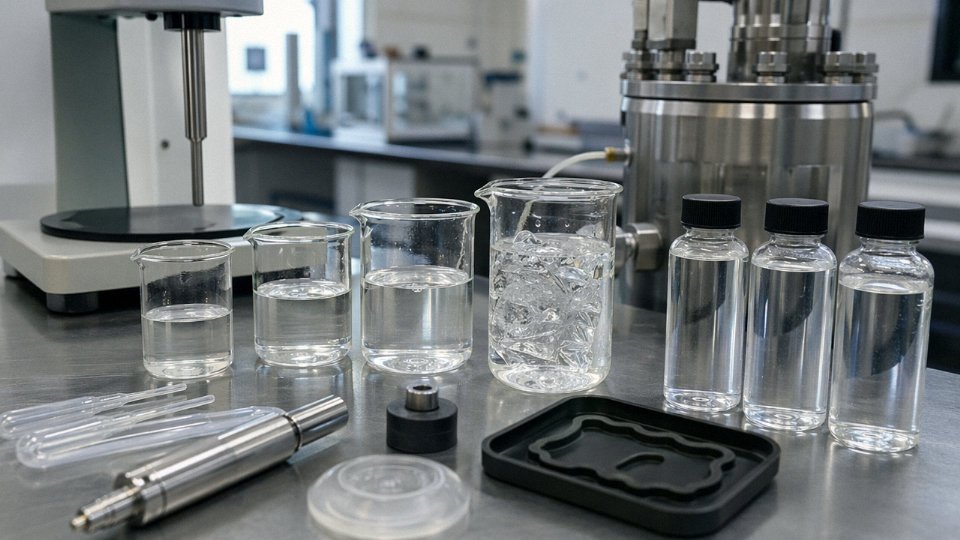
Polydimethylsiloxane oil: the standard example used for lubricity, release, damping, and antifoam
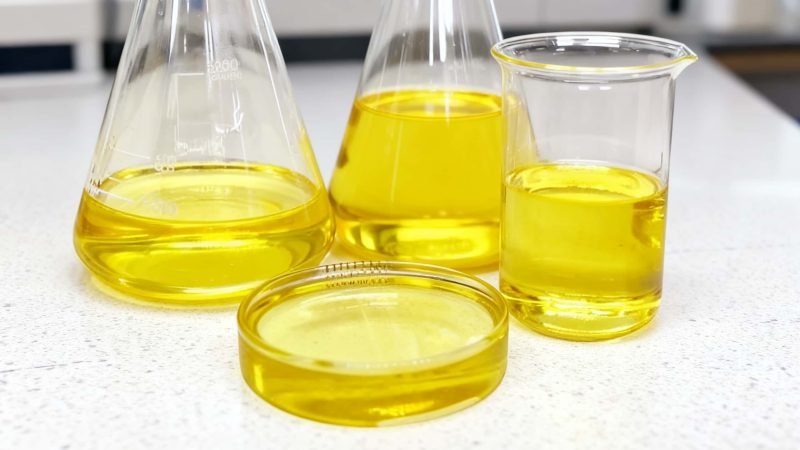
Polydimethylsiloxane oil, usually shortened to PDMS oil, is the silicone fluid most engineers mean when they say “silicone oil” without adding a qualifier. Chemically, it is a mostly linear dimethyl silicone fluid. Practically, it is the clear, slippery, low-odor liquid found behind a surprising number of release agents, polish fluids, textile finishes, damping fluids, and antifoam concentrates.
The reason PDMS dominates is not mystery chemistry. It is predictable handling. You can buy it from very thin spreading fluids around 0.65 to 5 cSt, through common plant grades such as 50 cSt, 100 cSt, 350 cSt, and 1,000 cSt, all the way up into heavy control fluids from about 10,000 cSt to 100,000 cSt and, in some cases, near 1,000,000 cSt at 25 degrees Celsius. The right grade depends on how much flow, film life, damping, and carryover the process can tolerate.
What the viscosity grade changes on the shop floor
Low-viscosity PDMS oils, say 5 cSt or nearby, spread fast. They wet a surface with very little material, creep into small clearances, and leave a thin hydrophobic film. That is useful in polishes, aerosol maintenance products, and some defoamer systems where rapid surface coverage matters. The downside is obvious once you have cleaned a contaminated line: thin silicone migrates. It can travel through gloves, rags, air mist, and poorly managed spray zones.
A 50 cSt PDMS fluid is often used as a lubricant carrier or light functional fluid. It still flows easily through pumps and small tubing, but it hangs around longer than the very thin grades. Around 100 cSt is common for mold release fluids, especially where a light, even release film is needed on rubber or plastic tooling. A 350 cSt grade shows up in cosmetic and personal-care formulations, but also in industrial polish and surface treatment blends where slip and gloss need to persist.
At 1,000 cSt, the fluid starts behaving less like a light oil and more like a controlled-motion ingredient. You see it in damping blends, shock and vibration applications, and specialty maintenance lubricants where the buyer wants a thicker film without going to a grease. From roughly 10,000 cSt to 100,000 cSt, PDMS is selected for damping, slow bleed, film persistence, and motion control. These grades pour slowly, can trap air during mixing, and often need warmer handling or stronger pump selection. A gear pump that was fine on 100 cSt may complain badly at 30,000 cSt in winter.
Why PDMS works in so many unrelated applications
PDMS oil has low surface tension, which is why a small dose can spread over rubber, plastic, metal, fabric, or foam surfaces. It is strongly water-repellent, chemically inert in many systems, and resists oxidation better than mineral oil under comparable mild-to-moderate service. Standard PDMS fluids typically operate somewhere around minus 50 degrees Celsius to 200 degrees Celsius, depending on grade, exposure time, volatility limits, and air circulation. Specialty silicone fluids may stretch performance, but plain PDMS is already good enough for many factory jobs.
Its viscosity also changes less sharply with temperature than many petroleum oils. That matters in instruments, dashpots, shock absorber blends, and small mechanical assemblies that see cold starts and warm running conditions. A damper filled with the wrong hydrocarbon oil may feel acceptable during bench testing and then turn sluggish in a cold warehouse. PDMS is not magic, but it gives a wider comfort zone.
PDMS oil is the most common general-purpose example of silicone oil used for release, slip, damping, and antifoam functions.True
PDMS fluids are produced across a very wide viscosity range, have low surface tension and good thermal-oxidative stability, and are widely specified in industrial, consumer, and maintenance formulations.
Typical industrial uses
In rubber and plastic molding, PDMS release fluids reduce sticking and help parts leave the tool without tearing, drag marks, or excessive ejector force. In textile finishing, they improve softness and hand feel. In polishes, they provide gloss, slip, and water beading. In defoamers, PDMS helps break foam films, often carried on silica or dispersed into an emulsion depending on the system.
Maintenance teams use silicone oil in light lubricants for hinges, guides, seals, and sliding contact points where staining, odor, or water wash-off are concerns. Instrument builders use selected viscosities for damping needles, knobs, and small motion assemblies. Some pump and vacuum-related applications use silicone fluids where vapor pressure, thermal stability, or cleanliness is the deciding factor, though the exact fluid has to match the equipment supplier’s requirements.
A typical case: a molding shop changes from a wax-heavy release to a 100 cSt PDMS-based spray and sees cleaner part ejection. Good. Then overspray drifts toward a secondary painting area and fisheye defects start showing up. Same fluid, different consequence.
Where PDMS oil needs a hard review
Do not casually introduce PDMS into paint shops, coating lines, bonding cells, or any area where adhesion is critical. Silicone contamination can cause fisheyes, craters, poor wet-out, and weak adhesive bonds at very low surface levels. Once it gets into shared rags, compressed-air hoses, or maintenance spray bottles, finding the source becomes miserable.
Oxygen service is another red-flag area. Never assume silicone oil is acceptable in oxygen valves, regulators, or medical gas equipment unless the fluid and assembly process are specifically approved for that duty. Some elastomers also swell or lose properties in silicone oil exposure, depending on compound, temperature, and time. Always check compatibility with silicone rubber, fluorosilicone, EPDM, nitrile, natural rubber, and specialty seals rather than guessing from the polymer family name.
Buying and specification checks
For procurement, the baseline certificate should cover viscosity at 25 degrees Celsius, volatile content, flash point, pour point, color, and odor. For tighter work, ask for cyclic siloxane content, moisture, acid value, and contamination limits. Food-contact, medical, or pharmaceutical use needs proper documentation for the exact grade, not a verbal “it is silicone, so it is safe.” That shortcut causes expensive holds during audits.
Phenyl silicone oil: examples for low-temperature flexibility, heat transfer, and optical clarity
Phenyl silicone oil is still a silicone fluid, but it is not just standard dimethyl silicone oil with a nicer label. Part of the methyl substitution on the siloxane backbone is replaced with phenyl groups. That one chemistry change shifts several practical properties: refractive index, pour point behavior, radiation resistance, oxidation behavior, and compatibility with certain elastomers and plastics.
In plant terms, phenyl silicone oil is usually specified when ordinary polydimethylsiloxane oil gets close to the edge of the job. The fluid may need to stay mobile in a cold-soaked instrument, run cleaner in a hot bath, match the refractive index of an optical component, or hold dielectric properties in an electronic assembly where clarity matters.
Common examples include methyl phenyl silicone oil, diphenyl dimethyl silicone oil, and higher-phenyl silicone fluids used in specialty heat transfer loops, optical coupling, damping, and instrument service. The exact naming varies by supplier, so procurement should not buy only by the broad family name. Ask for the phenyl content or grade type, then check the actual data sheet.
Why phenyl groups change the way the oil behaves
Phenyl groups are bulky aromatic rings. They interfere with close packing and crystallization of the polymer chains, which can help some phenyl silicone oils remain fluid at very low temperatures. This is one reason they show up in aerospace instruments, outdoor sensing equipment, precision damping systems, and specialty lubricants that may see temperatures below minus 50 degrees Celsius.
Do not treat that as a universal promise. Standard polydimethylsiloxane fluids often work from roughly minus 50 degrees Celsius to 200 degrees Celsius, depending on viscosity, volatility limits, and exposure time. Certain phenyl-modified fluids can extend low-temperature usefulness or improve high-temperature behavior, but the result depends on phenyl content, molecular weight, viscosity grade, and whether the fluid is linear, branched, or blended.
A typical failure mode is simple: the wrong damping oil thickens during a cold start, the needle, actuator, or optical stage responds slowly, and the operator blames the sensor. The oil was the problem all along.
Examples where phenyl silicone oil earns its keep
In aerospace and precision instruments, phenyl silicone oils are used as damping fluids where stable viscosity over a wide temperature band matters more than the lowest purchase price. A compass, gyroscope, accelerometer, or small actuator does not tolerate fluid that goes waxy after sitting overnight at altitude or in a winter test yard.
In high-temperature baths and heat transfer systems, methyl phenyl and diphenyl dimethyl silicone oils may be selected for thermal stability and oxidation resistance. Service temperature can run into the high hundreds of degrees Celsius for some specialty fluids, but the safe range depends heavily on air exposure, fluid turnover, reservoir design, surface temperature at heaters, and whether the bath is open or inerted. A bath set at 180 degrees Celsius is not the same as a heater sheath running far hotter with dead spots around it.
Optical coupling is another niche where phenyl content helps. Phenyl silicone oils usually have a higher refractive index than standard PDMS oils, which can reduce optical mismatch in lenses, sensors, light guides, imaging equipment, and certain electronic displays. They are also used where transparency, dielectric strength, and low ionic contamination need to live together. That is a narrow lane, but it is a valuable one.
Specialty lubricants use phenyl silicone fluids where low-temperature torque, clean appearance, and oxidation behavior justify the cost. You may see them in instrument bearings, small gears, sliding contacts, and sealed mechanisms. They are not a default choice for heavy loaded metal-on-metal service; silicone oils have poor boundary lubrication unless the formulation includes the right additives or the load is modest.
Phenyl silicone oil versus PDMS oil in procurement terms
| Selection point | Standard PDMS oil | Phenyl silicone oil |
|---|---|---|
| Refractive index | Lower, often suitable for general release and damping | Higher, useful for optical matching |
| Low-temperature mobility | Good in many grades, but can be limiting in severe cold | Often better in selected formulations |
| Cost | Usually lower and widely stocked | Usually higher, sometimes made to order |
| Seal behavior | Familiar to most maintenance teams | Must be rechecked; phenyl content can change swelling |
| Radiation or oxidation behavior | Adequate for many plants | Can be better, depending on chemistry and additives |
| Availability | Broad viscosity range, common grades like 50 cSt, 100 cSt, 350 cSt, and 1,000 cSt | Narrower supplier base; lead time can bite |
The cost difference is not just purchase price. A phenyl silicone oil may need separate storage, dedicated transfer equipment, incoming inspection, and tighter lot traceability if it goes into optical or electronic assemblies. In a maintenance shop, that tends to be manageable. In production, it needs discipline.
What to check before specifying it
The useful data sheet items are not exotic: pour point, kinematic viscosity across the actual operating range, viscosity-temperature coefficient, flash point, refractive index, thermal stability, dielectric strength, moisture content, volatility under vacuum or elevated temperature, acid value, and trace cyclic siloxane content. For vacuum equipment or electronics, volatility and low-molecular-weight siloxanes deserve extra attention. Fogging, film transfer, and contact contamination are miserable problems to chase after release.
Phenyl silicone oil can be a better choice than standard PDMS oil for very low-temperature instruments or optical coupling, but only if pour point, viscosity-temperature behavior, refractive index, volatility, and material compatibility match the application.True
Phenyl substitution changes several silicone fluid properties, but performance depends on formulation details and the operating environment rather than the name alone.
Run compatibility testing before plant-wide adoption. Test the actual seals, plastics, coatings, potting compounds, labels, and adhesives that will touch the oil. Nitrile, silicone rubber, fluorocarbon elastomers, polycarbonate, acrylic, and painted surfaces can all behave differently with phenyl-modified fluids than they do with ordinary PDMS. A small swelling shift may look harmless on a bench coupon; in a pump, sight glass, or optical module it can become leakage, stress cracking, haze, or a rejected batch.
Methyl hydrogen silicone oil: reactive examples used for water repellency and surface treatment
Methyl hydrogen silicone oil is a different animal from the “slippery clear fluid” most people picture when they hear silicone oil. It contains silicon-hydrogen groups, usually written as Si-H, along the siloxane chain. Those groups can react under the right catalyst, heat, moisture, or surface chemistry, so the oil is not just sitting there as a lubricating film. It can help build a bonded, crosslinked, water-repellent treatment on mineral, fiber, powder, or coated surfaces.
That is why buyers need to be careful with the wording on a datasheet. A drum labeled as methyl hydrogen silicone fluid may look like a low-to-medium-viscosity oil, but its value is in the reactive hydrogen content, stability, and cure behavior, not only its viscosity.
Methyl hydrogen silicone oil is selected when the plant needs durable hydrophobic treatment rather than a temporary oily surface film.True
The Si-H functionality can react or crosslink under suitable conditions, giving better wash resistance, water repellency, or bonding to treated substrates than a non-reactive silicone coating alone.
Typical examples on real substrates
In masonry water repellents, methyl hydrogen silicone oil is used to reduce capillary water uptake in concrete, brick, stone, and cementitious renders. The target is not to seal the wall like paint. A good treatment lets vapor escape while limiting rainwater ingress. Penetration depth matters here. Dense concrete may only take a shallow treatment unless the carrier, dilution, and application rate are matched properly; porous block can drink it too fast and leave an uneven front.
Gypsum board treatment is another common example. The fluid can be added to improve moisture resistance in the core or surface treatment package. If the dosing is wrong, the board may show poor wet strength improvement, surface staining, or bonding trouble with paper liners. In practice, line speed, slurry pH, foam package, and drying profile all affect the result.
Powder hydrophobization is a more specialized but useful case. Mineral fillers, pigments, fire-retardant powders, and some fine inorganic materials can be treated so they disperse better in hydrophobic polymers or resist moisture pickup in storage. Fine powders are unforgiving. A small difference in spray pattern, mixer shear, or residence time can leave wet clumps in one batch and dusty untreated fines in the next.
Textile finishing and paper treatment use methyl hydrogen silicone oil when the processor wants water repellency with better durability than a simple softener finish. The hand feel, whiteness, printability, and downstream coating adhesion must be checked, because a water-repellent surface can also become a surface that rejects inks, glues, or laminating adhesives. That is not a lab curiosity; it becomes scrap rolls.
Release coating systems also use Si-H functional silicone components, often as part of a crosslinked silicone network. The balance between release force, cure speed, anchorage, and residual reactivity is the whole game. Under-cure can cause migration and blocking. Over-aggressive cure can make the release too tight or embrittle the coating.

Supply form: neat fluid, solvent dilution, or emulsion
The same chemistry can be supplied in several practical forms. Neat methyl hydrogen silicone oil is compact and avoids carrying water or solvent, but it needs proper metering and mixing. It is common where the plant already has controlled dosing equipment and trained operators.
Solvent dilutions are still used where penetration is needed, especially on mineral substrates. The carrier choice affects evaporation rate, depth of carry-in, flammability controls, odor, and regulatory limits on volatile organic compounds. Procurement should not approve a solvent-based change by price per kilogram alone. A cheaper dilution can cost more if it slows drying, triggers permitting problems, or forces extra ventilation work.
Emulsions are popular for paper, textiles, board treatment, and some construction products because they are easier to dose into water-based systems. They also bring their own headaches: emulsion stability, pH window, freeze-thaw exposure in winter freight, microbial control, and compatibility with other additives. I have seen “bad silicone” blamed when the real issue was a tote left near a dock door overnight and then dumped into a high-shear tank half-frozen.
Process controls that decide whether it works
The first specification to watch is active hydrogen content. That number drives reactivity. Too low, and the treatment behaves closer to a weak surface oil. Too high, and the process may become touchy, with gas evolution, instability, or unwanted side reactions depending on the formulation. Typical products vary widely; the right range depends on whether it is a pure polymethylhydrosiloxane fluid, a copolymer, or a formulated treatment.
Viscosity still matters, but it is not the whole story. Lower-viscosity grades penetrate porous substrates more easily and meter well through small lines. Higher-viscosity grades can give stronger surface residence but may be harder to emulsify or disperse. Common industrial checks include kinematic viscosity, active hydrogen, volatility, moisture, acid value, and sometimes trace cyclic siloxane content, especially where emissions or sensitive downstream uses are involved.
Catalyst choice is another lever. Tin, platinum, acidic, alkaline, or proprietary catalysts may be used depending on the reaction route and substrate, but compatibility must be tested rather than assumed. pH sensitivity is real. Strong acids and strong bases can destabilize Si-H chemistry and may promote hydrogen gas release. Moisture exposure during storage can also be a problem, particularly in opened drums or poorly sealed day tanks.
Operational warning: do not treat methyl hydrogen silicone oil like ordinary PDMS oil in the tank farm. Keep containers closed, dry, and vented according to the supplier’s safety guidance. Avoid contamination with acids, bases, amines, metal salts, or wet residues from previous batches. Under certain reactive conditions, hydrogen gas can evolve. In a closed vessel that can mean pressure buildup; near ignition sources it becomes a fire and explosion concern. Ventilation, bonding and grounding where flammable carriers are present, and disciplined container management are not paperwork details.
How it differs from non-reactive PDMS oil
PDMS oil mainly coats, lubricates, damps, or releases by forming a low-surface-energy film. It can be very useful, but it is mostly passive unless chemically modified.
Methyl hydrogen silicone oil is chosen when the silicone needs to contribute chemically to a more durable hydrophobic surface. Right product, right catalyst, right cure: lower water uptake and better weathering. Wrong product or sloppy process: greasy feel, patchy repellency, poor adhesion, gas issues, or a treated substrate that fails after the first rain cycle or wash test.
Practical quality tests
Good plants do not judge these treatments by “it looks dry.” They test.
Common checks include contact angle, water droplet absorption time, water uptake reduction after immersion or spray exposure, treated-substrate appearance, penetration depth by dye or fracture inspection, and weathering resistance after heat, ultraviolet exposure, freeze-thaw, or wash cycles. For release coatings, release force, rub-off, migration, and cure completeness are usually more useful than a simple surface gloss reading.
The best test plan depends on the field failure you are trying to prevent. For exterior masonry, water uptake and freeze-thaw durability matter. For gypsum board, core moisture resistance and line compatibility matter. For powder treatment, flow, moisture pickup, and dispersion behavior may tell the truth faster than any elegant surface chemistry report.
Amino silicone oil: examples that give textiles, leather, and hair a soft conditioned feel
Amino silicone oil is not just “slippery silicone with an additive.” It is a silicone fluid where amino-functional groups are built into, or attached along, the siloxane backbone. Those amine groups change the way the fluid behaves on real surfaces. Cotton, wool, leather, damaged hair, nylon, and many dyed fabrics carry polar sites or negative charge under normal processing conditions. Plain PDMS oil can sit on them and lubricate. Amino silicone tends to anchor better.
That is why finishers reach for it when the target is not simple lubrication, but softness that survives handling, laundering, drying, abrasion, and the abuse of a sewing line.
Common examples include aminoethyl aminopropyl silicone oils, amodimethicone-type fluids, amino silicone microemulsions for textile padding or exhaust finishing, and conditioning ingredients used in rinse-off hair products. The chemistry overlaps, but the grade does not. A drum of textile softener concentrate is not the same thing as a personal-care ingredient, even if the molecule family looks familiar on paper.
Why amino functionality changes the feel
A non-functional PDMS oil can give a slick hand and some release effect, especially in the 50 cSt to 1,000 cSt range, depending on how it is emulsified and applied. Amino silicone usually gives a fuller, warmer, more elastic softness. On fabric, operators describe it as better drape or “less papery.” On hair, formulators talk about wet combing, dry combing, smoothness, and reduced flyaway. Same basic idea: the treated surface has lower friction and better surface conditioning.
Amino silicone oils usually give more durable softness on cotton, hair, and other polar substrates than non-functional PDMS oils.True
Amino groups improve surface affinity through ionic and polar interactions, so the silicone is less easily removed by rinsing, laundering, or mechanical handling. The effect depends on pH, substrate charge, emulsion type, and dosage.
The amine level matters. Too little, and the product behaves closer to a conventional silicone softener. Too much, and the finish can feel greasy, yellow the fabric, shift shade, or interfere with rewetting. In practice, textile mills often adjust dosage by hand-feel panels first, then verify whiteness, absorbency, and shade with instruments. The hand table still matters. Anyone who has watched three merchandisers argue over “soft but not oily” knows why.
Textile and leather examples from the plant floor
In cotton finishing, amino silicone softeners are used on towels, knits, shirting, bed linen, and garments where a soft, smooth hand is worth paying for. The dose depends on active content, fabric weight, pickup, and whether the finish is applied by pad, exhaust, spray, or garment wash. A typical plant trial might compare two or three products at low, medium, and high add-on, then run through tumble drying and one or two home-laundry simulations before anyone signs off.
On polyester, amino silicone can improve surface smoothness, reduce harshness from heat setting, and help fabric feed more consistently through sewing. For denim, it is used after washing to improve handle without making the garment feel waxy. Nonwovens may use amino silicone to reduce drag, improve touch, or tune surface interaction for wipes, hygiene products, or industrial media. Leather finishers use related materials for soft feel and surface slip, though leather systems bring their own headaches with topcoats, pigments, and rub fastness.
Sewing performance is an underrated use case. A small change in surface friction can reduce needle heat, yarn breakage, and edge curling. Done wrong, though, silicone spots show up under inspection lights, coating adhesion drops, or printed logos start failing tape tests.
Personal-care overlap, but not interchangeable grades
Amodimethicone-type ingredients in hair conditioners use the same broad principle: amino-functional silicone deposits preferentially on damaged, negatively charged hair areas. That helps combability and smoothness without needing to load the whole formulation with heavy oil.
Industrial textile grades may have different emulsifiers, preservatives, residual cyclic siloxane profiles, odor limits, microbial controls, and documentation. Personal-care grades need cosmetic regulatory support, INCI naming, impurity control, toxicology backing, and claims discipline. A procurement manager should not approve substitution based only on “amino silicone, 35% active.” That shortcut can become a regulatory problem, a stability problem, or both.
Buying specifications and trial checks
For amino silicone oil or emulsion purchasing, the useful specifications are not just viscosity. Buyers should ask for amine value, viscosity of the base polymer, active content, particle size for emulsions, ionic character, pH, moisture or solvent content where relevant, and storage stability. For textile emulsions, particle size can range from transparent microemulsions to larger milky emulsions; the right choice depends on penetration, softness target, cost, and compatibility with the finishing bath.
Watch compatibility closely. Amino silicones can be sensitive to pH, salts, anionic auxiliaries, optical brighteners, crease-resist resins, fluorine-free repellents, binders, and pigment-print systems. High amino content may cause yellowing, especially on white cotton exposed to heat. Dyed goods can show shade change. Some mills only discover the problem after the first bulk lot comes out of the stenter.
Pilot trials should check hand feel, whiteness retention, tear strength, absorbency, rewetting behavior, shade, crocking, odor after drying, and compatibility with downstream coating, lamination, embroidery, or printing. Store a retained sample from the trial and from the first bulk batch. It sounds basic, but it has saved plenty of arguments after a container shipment arrives and the customer says, “This fabric feels different.”
Vinyl and hydroxy silicone oils: examples used as reactive intermediates in sealants, gels, elastomers, and release coatings
Not every silicone oil is bought to stay an oil. A big share of higher-value silicone fluid goes into cure chemistry, where the “oil” is really a controlled polymer feedstock. Vinyl silicone oil and hydroxy silicone oil sit in that category. Procurement can treat them like simple liquids at its peril; production cannot.
Vinyl silicone oil in addition-cure systems
Vinyl silicone oil usually means vinyl-terminated PDMS, or a vinyl-functional silicone fluid with reactive vinyl groups placed at the chain ends, along the chain, or both. In addition-cure silicone systems, those vinyl groups react with silicon-hydride crosslinkers in the presence of a platinum catalyst. No byproduct is supposed to be generated, which is one reason this chemistry is favored for low-shrinkage gels, clean electronics encapsulants, medical gels, liquid silicone rubber, and release liner coatings.
Typical examples include vinyl-terminated PDMS used as the base polymer in liquid silicone rubber, low-modulus silicone gels for cushioning or medical device interfaces, optically clear encapsulants for sensors and LED assemblies, soft electronics potting compounds, and fast-cure release coatings applied to paper or film. The same family of fluids may be specified at a few hundred cSt for flowable coatings or many thousands to well above 100,000 cSt for rubbery compounds, depending on filler loading, pump style, desired cured hardness, and line speed.
That viscosity number is not just a purchasing detail. Lower molecular weight vinyl fluids flow nicely, wet surfaces, and degas faster, but they can give softer networks, higher extractables, and lower tear strength if the formulation is not balanced. Higher molecular weight fluids improve elongation and toughness, yet they can create mixing headaches, poor filler wet-out, trapped air, and short usable pot life on a warm production floor. I have seen a “minor” viscosity substitution turn a release coating from clean peel to patchy transfer because the coat weight and cure profile were never revalidated.
Vinyl silicone oil is normally selected by both viscosity and vinyl content, not viscosity alone.True
Vinyl content controls crosslink density and cure response, while viscosity reflects molecular weight and affects flow, mixing, coating behavior, and final mechanical properties.
Hydroxy silicone oil in condensation-cure materials
Hydroxy silicone oil is commonly a silanol-terminated silicone fluid. It reacts through condensation chemistry with silanes, silicates, catalysts, fillers, and other silicone intermediates. You see it in room-temperature-vulcanizing sealants, silicone rubber compounding, antifoam actives, defoamer concentrates, moldable silicone bases, and surface treatment intermediates.
In a one-part RTV sealant plant, hydroxy-terminated polymer is often the backbone that determines extrusion force, slump, skin-over behavior, and final elasticity. In two-part condensation systems, it helps set cure speed and modulus. In defoamers, hydroxy silicone oils can improve anchoring with treated silica or other hydrophobic particles, giving a more durable antifoam active than a plain inert PDMS fluid in some waterborne systems. Depends heavily on the surfactant package and the process liquor; pulp mills, fermentation tanks, and wastewater plants do not foam in the same way.
Hydroxyl value matters. Too low, and the material may cure slowly or build weak networks. Too high, and the compound can become overly reactive, unstable in storage, or prone to viscosity drift. Water is the quiet troublemaker here. A drum that has been opened repeatedly in humid summer weather can behave differently from a sealed tote from the same batch, especially in condensation-cure formulations that already have moisture-sensitive crosslinkers.
What viscosity and functionality change in the cured product
For both vinyl and hydroxy silicone oils, molecular weight and functional group level steer the cured article. Hardness, elongation, tear strength, tack, compression set, flow, and processing window all move together, but not politely. Raise crosslink density and hardness may improve while elongation drops. Use a very high-viscosity base polymer and tear strength may look better, but the mixer amperage, filtration pressure, and deaeration time can become the bottleneck.
Commonly specified industrial silicone fluids run from about 0.65 cSt to 1,000,000 cSt at 25 degrees Celsius, with 50 cSt, 100 cSt, 350 cSt, and 1,000 cSt showing up often in general industrial buying. Reactive intermediates for elastomers and gels often sit higher, but the right range depends on filler level, cure route, dosing equipment, coating head design, and final modulus target. Do not buy them by brochure grade name alone.

Plant controls that prevent expensive cure failures
Vinyl and hydroxy oils need tighter storage discipline than inert PDMS fluids because their end groups are the product. The drum label may say silicone oil, but the process sees vinyl content, hydroxyl content, inhibitor level, moisture, volatiles, and contaminants.
For platinum-cure vinyl systems, contamination by sulfur, tin, amines, phosphorus compounds, some plasticizers, and even certain rubber hoses can inhibit cure. A maintenance crew swapping in an unsuitable transfer hose can cause half-cured gel, oily surfaces, or release coating that never reaches rub resistance. Tin-catalyzed condensation materials bring their own compatibility rules; stray moisture, wrong alcohol byproducts, and contaminated fillers can shift cure speed badly.
Incoming inspection should usually include viscosity, vinyl content or hydroxyl value, volatile matter, water content, visual check for gel particles, and cure response in a standard test formulation. For critical electronics, medical, or release liner use, I would also expect lot-to-lot checks on residual volatiles, catalyst compatibility, inhibitor level where applicable, and filtration behavior. Some plants add refractive index or infrared identity as a quick guardrail against wrong unloading. Cheap insurance, really.
A compact buying rule works well here: if the silicone oil becomes part of a cured network, qualify it like a reactive raw material, not like a lubricant. The wrong grade may still look clear, pour correctly, and pass a casual viscosity check. Then it costs you scrap rolls, uncured sealant, failed potting, customer returns, and a very uncomfortable meeting with production.
Fluorosilicone oil and specialty silicone oils: examples for fuel resistance, vacuum service, and extreme environments
Fluorosilicone oil is a silicone fluid where part of the methyl structure has been replaced or modified with fluoroalkyl groups. That small-looking chemistry change matters on the plant floor. Standard PDMS oil is excellent around water, air, many plastics, and general heat, but it swells badly in a lot of hydrocarbon environments. Put ordinary dimethyl silicone fluid near jet fuel, gasoline, hydraulic oil, mineral oil mist, or certain cleaning solvents and the neat lab datasheet story can fall apart quickly.
Fluorosilicone fluids are specified when the oil has to keep some silicone-like behavior while resisting fuels and oils better than PDMS. Think aerospace fuel-contact lubricants, specialty greases, seal treatments, O-ring assembly lubricants, damping fluids in fuel-exposed instruments, and low-volume maintenance compounds used around pumps, valves, actuators, and sensor housings.
Not cheap. Not always easy to source. But sometimes they prevent the ugly failure: a swollen seal, a sticky actuator, or a damping fluid that thins out after sitting in fuel vapor for six months.
Where fluorosilicone oil earns its place
A typical case is a fuel-handling assembly where a technician needs a lubricant for installation and early-life movement, but the same lubricant may sit in contact with fuel, fuel vapor, or oil mist. Standard silicone grease may make assembly easy on day one, then contribute to seal swell or contamination later. A fluorosilicone-based product is more likely to survive that exposure, assuming the elastomer, fuel blend, temperature, and additive package have all been checked.
That last phrase is not legal padding. Fuel is not one material. Diesel, aviation turbine fuel, gasoline with oxygenates, test fuels, synthetic hydraulic fluids, and plant wash solvents behave differently. Aromatic content, alcohol content, additive chemistry, and temperature all shift the result.
Fluorosilicone oil is always chemically superior to standard PDMS silicone oil.False
Fluorosilicone oil usually gives better resistance to hydrocarbons, fuels, and some solvents, but PDMS may still be better for cost, availability, electrical behavior, low toxicity review, release performance, or compatibility with certain plastics and rubbers.
Other specialty silicone oils engineers actually specify
Not every specialty silicone oil is fluorinated. The molecule is adjusted to solve a narrow operating problem.
| Specialty silicone oil example | Why it is used | Watch the trade-off |
|---|---|---|
| Alkyl-modified silicone oil | Better compatibility with organic oils, waxes, resins, and some coating systems | May lose some classic PDMS release or temperature behavior |
| Polyether-modified silicone oil | Surfactancy, foam control, wetting, emulsification, coating flow | Water sensitivity and foam behavior can change sharply with formulation |
| Epoxy-functional silicone oil | Reactive use in coatings, adhesives, surface modification | Needs cure chemistry review; shelf life can matter |
| Methacrylate-functional silicone oil | UV-curable coatings, release layers, modified resins | Oxygen inhibition, cure speed, and resin compatibility need testing |
| Low-volatility specialty silicone oil | Vacuum service, optical assemblies, electronics, instruments | Higher viscosity or cost; supplier choices may narrow |
Polyether-modified silicone oils show up in defoamers, leveling agents, agrochemical wetting packages, coatings, inks, and cleaning formulations. They can make a coating wet a difficult substrate instead of crawling away from it. They can also destabilize foam in one system and create persistent microfoam in another. I have seen both happen in the same plant after a resin supplier changed a minor component.
Alkyl-modified silicone oils are often chosen when plain PDMS refuses to blend into an organic phase. In coatings and resin systems, that can mean fewer fish-eyes, better flow, or a more even film. In lubricants, it may mean the silicone component does not separate in the drum after a cold weekend in the warehouse.
Epoxy- and methacrylate-functional fluids are less like finished oils and more like reactive ingredients. They are used when the silicone portion must become part of a cured coating, adhesive, release layer, or modified resin. If procurement treats them as interchangeable “silicone oil,” the shop may pay for it in poor cure, tacky film, adhesion loss, or release force drift.
Vacuum, radiation, and severe service are specification jobs, not catalog shopping
High-vacuum equipment is a good example. The question is not only viscosity. Silicone oils are sold from very low viscosities around 0.65 cSt up to paste-like grades near 1,000,000 cSt at 25 degrees Celsius, with 50 cSt, 100 cSt, 350 cSt, and 1,000 cSt common in industrial purchasing. For vacuum service, the buyer should care about vapor pressure, volatility, trace cyclic siloxane content, cleanliness, and outgassing under the real temperature profile.
A fluid that looks fine in an open bearing may fog optics, contaminate a chamber, or migrate into an electrical connector under vacuum. Radiation exposure is another trap. Some silicone fluids tolerate heat well, with many PDMS fluids used roughly from minus 50 degrees Celsius to 200 degrees Celsius, depending on grade and atmosphere, but radiation can cause viscosity rise, gelling, gas formation, or property drift. Specialty phenyl or fluorinated structures may help in selected cases, but they are not magic armor.
Questions before specifying a specialty silicone oil
Before writing the purchase description, I would ask these, preferably with maintenance, production, quality, and the supplier in the same conversation:
- What fluids will touch the oil: fuel, hydraulic oil, coolant, solvent vapor, cleaning chemical, resin, ink, or process gas?
- What vapor pressure or outgassing limit applies, and at what actual operating temperature?
- Which seal materials are present: fluorocarbon, nitrile, EPDM, silicone rubber, fluorosilicone, PTFE, polyurethane?
- What temperature cycling occurs during startup, cleaning, storage, transport, and shutdown?
- Is the main failure risk swelling, evaporation, contamination, foam, loss of damping, poor wetting, electrical leakage, or cure inhibition?
- What tests will purchasing accept as proof: kinematic viscosity, volatility, flash point, refractive index, moisture content, dielectric strength, acid value, or trace cyclic siloxane content?
Specialty does not mean better. It means narrower.
The downside is real: higher price, fewer approved suppliers, longer lead times, changed toxicology, tougher regulatory review, and limited interchangeability between products that sound similar on a quote sheet. A fluorosilicone damping fluid from one supplier may not match another in viscosity-temperature curve, volatility, additive residue, or seal response.
Chemical-resistance charts are useful for screening. They are not qualification. The safer route is exposure testing with the actual fuel, solvent, elastomer, temperature cycle, dwell time, and cleanliness requirement. If the wrong fluid fails, the cost is rarely just the drum price. It is scrap, teardown labor, contaminated assemblies, missed shipments, and a production manager asking why a “better” oil made the line worse.
Silicone oil emulsions, antifoams, and compound fluids: examples supplied as ready-to-use industrial products
A lot of silicone oil sold into factories is not shipped as clear neat oil in a drum. It arrives as a milky emulsion, a paste-like antifoam compound, a water-dilutable polish base, or a process additive with silica, wax, solvent, preservative, and surfactant already built in. That matters for purchasing and for the engineer standing next to a foaming tank wondering why the “same silicone” behaved differently after a supplier change.
Silicone oil emulsions: oil made usable in water-based plants
A silicone oil emulsion is silicone oil dispersed into water as small droplets, held there by surfactants, protective colloids, or both. The base oil may be a standard polydimethylsiloxane fluid, an amino silicone, a reactive silicone, or a modified blend. The emulsion format makes it easier to dilute, pump, spray, pad, wipe, or meter into an aqueous process.
Typical active silicone content may sit anywhere from roughly 5% to 60%, depending on whether the product is a light polish emulsion, a textile finishing softener, a concentrated release aid, or a construction water-repellent. Particle size can range from submicron to several microns; the right range depends on fabric hand, gloss, surface wetting, deposit control, and emulsion stability. Smaller is not automatically better. In a textile mill, a very fine amino silicone emulsion may give a smooth hand and fewer spots. In a mold release job, a slightly coarser emulsion may give better release film build.
Common examples include:
- Textile softener emulsions used in padding, exhaust finishing, and garment washing.
- Mold release emulsions for rubber, polyurethane, composites, concrete forms, and die casting support operations.
- Water-based polishes for automotive, furniture, floor care, and maintenance products.
- Paper release aids and coating modifiers where low surface energy is useful but oil spots are not acceptable.
- Construction water-repellent emulsions for masonry, cementitious panels, and mineral substrates.
The practical reason is simple: neat silicone oil does not naturally mix into water. If an operator dumps 350 cSt silicone oil into a water-based tank and expects magic, the usual result is fisheyes, floating slicks, plugged spray tips, or soft crater defects in the finished coating.
Silicone antifoam compounds: not just silicone oil
Silicone antifoam compounds are formulated products designed to rupture foam or prevent it from forming. A common package contains silicone oil, hydrophobic silica, emulsifiers, and a carrier such as water, mineral oil, polyether, or another compatible fluid. The silica gives the droplet a foam-breaking edge, if I can put it that way. Plain silicone oil can defoam some systems, but the compound is usually far more effective at low dose.
You see these products in wastewater treatment, fermentation, pulp and paper, paints and coatings, metalworking fluids, sugar processing, and chemical manufacturing. The dose may be only a few parts per million in a clean aqueous system, or several hundred parts per million in a dirty, high-solids, high-surfactant process. It depends on foam chemistry, temperature, agitation, suspended solids, residence time, and how sensitive the downstream product is to silicone carryover.
A silicone antifoam that works well in one plant process will automatically work in another.False
Foam behavior changes with surfactant package, proteins, salts, suspended solids, temperature, agitation, pH, and downstream sensitivity to silicone contamination. A good antifoam in wastewater can be a poor choice in fermentation, coating, or filtration service.
I have seen a wastewater antifoam knock down a lift station beautifully, then blind a membrane system downstream because nobody checked carryover. Wrong product, wrong location, wrong cost center. The foam disappeared. The maintenance problem moved.
Why buyers specify formulated products instead of neat silicone oil
Ready-to-use silicone products solve handling problems as much as chemistry problems. They dose through small metering pumps, disperse into water without high shear, reduce slip hazards from oil spills, and lower the chance of random silicone contamination on parts headed to paint, plating, bonding, or printing. Controlled droplet size also gives more repeatable performance from shift to shift.
A purchasing spec should not stop at “silicone emulsion” or “antifoam.” Ask for the active content, ionic type, pH range, viscosity, freeze-thaw stability, dilution guidance, preservative system, and shelf life. Many emulsions are stable for roughly 3 to 12 months, depending on formulation, storage temperature, biocide package, and whether the tote is repeatedly opened in a humid plant. Freeze-thaw stability is a real issue in winter shipping. So is hard dilution water; calcium and magnesium can break some emulsions or change deposition. High shear from a centrifugal pump can also split a marginal emulsion, while a slow diaphragm pump may treat it gently.
A compact way to screen options:
| Process need | Usually better starting point | Watch closely |
|---|---|---|
| Textile softness | Amino silicone emulsion | Yellowing, fabric rewetting, bath stability |
| Mold release | PDMS or modified silicone emulsion | Paintability, buildup, operator over-application |
| Wastewater foam control | Silicone antifoam emulsion or compound | Membranes, biological impact, sludge behavior |
| Paint or coating foam | Low-defect antifoam dispersion | Craters, gloss change, adhesion loss |
| Fermentation | Food or pharma-suitable antifoam grade where required | Oxygen transfer, cell growth, sterilization stability |
Trial it like a production chemical, not a catalog item
Plant trials should measure foam knockdown time, foam persistence, dose rate, product defects, filter blinding, coating adhesion, biological impact, and total cost per treated unit. Total cost matters more than drum price. A cheap antifoam used at three times the dose, causing one filter change per shift, is not cheap.
Run the trial at normal temperature, normal agitation, and with real process liquor, not clean tap water in a beaker. Then repeat after a weekend shutdown or a raw material change if the process is known to drift. Foam is sensitive. Silicone products are useful, but they are not forgiving when applied blindly.
How to select the right silicone oil example by viscosity, chemistry, compliance, and failure mode
Start with the duty, not the catalog page. A silicone oil that works beautifully as a mold release may be a disaster near a paint booth. A fluid that gives good damping in a gauge may pump like cold honey in winter. In procurement meetings I’ve seen too many requests written as “silicone oil, 100 cSt” with no mention of the actual job. That is asking for variation, substitutions, and eventually a line stop.
Start with the operating duty
Define the function in plain plant terms first: lubrication, release, damping, heat transfer, dielectric insulation, surface softening, water repellency, antifoaming, reactive curing, or formulation modification.
A few practical examples:
| Duty | Usually considered first | Watch the failure mode |
|---|---|---|
| Light lubrication or slip | Low to medium viscosity PDMS | Migration onto paint, labels, or bonding surfaces |
| Mold release | PDMS, emulsions, compounded fluids | Transfer causing coating or adhesive defects |
| Damping | Medium to very high viscosity PDMS | Slow response at low temperature, leakage past seals |
| Heat transfer | PDMS or phenyl silicone oil | Volatility, oxidation, pump sizing |
| Dielectric insulation | Electrical-grade silicone oil | Moisture, particles, dielectric breakdown |
| Textile or leather softness | Amino silicone oil emulsions | Yellowing, over-soft handle, poor reworkability |
| Water repellency | Methyl hydrogen silicone oil systems | Hydrogen release, catalyst control, uneven treatment |
| Reactive curing | Vinyl or hydroxy silicone oils | Cure inhibition, wrong crosslinker, shelf-life drift |
| Fuel exposure | Fluorosilicone oil | Cost, seal compatibility, limited supplier options |
That first screening saves time. It also keeps purchasing from comparing two products that share a viscosity number but do not behave the same on the floor.
Use viscosity as the first hard filter
Silicone oil viscosity commonly runs from about 0.65 cSt to 1,000,000 cSt at 25 degrees Celsius. In everyday industrial buying, 50 cSt, 100 cSt, 350 cSt, and 1,000 cSt are among the grades that show up often. The right number depends on temperature, shear, pumping method, clearance, spray equipment, film target, and how much migration the process can tolerate.
Low-viscosity fluids spread fast, wet fine gaps, and dose easily through small nozzles. They also travel. A few drops on a glove can move to a part tray, then to a bonding station. Medium grades are common for general slip, release, and formulation work because they give a more controlled film. High-viscosity oils build thicker films and stronger damping, but they can be awkward to pump, especially through long small-bore tubing or cheap diaphragm pumps that maintenance keeps rebuilding with whatever kit is in the drawer.
Temperature changes the whole discussion. A PDMS fluid may be usable from roughly minus 50 degrees Celsius to 200 degrees Celsius, depending on grade, volatility limit, air exposure, and residence time. Phenyl silicone oils are often chosen when low-temperature flexibility, heat behavior, or optical clarity pushes standard PDMS out of its comfort zone.
A silicone oil should not be selected by viscosity alone, even if the viscosity is specified correctly at 25 degrees Celsius.True
Viscosity controls flow, film thickness, damping, and dosing, but chemistry, contamination risk, regulatory status, and compatibility often decide whether the product survives in the actual process.
Match the chemistry to the problem
PDMS is the default when you need broad inertness, lubricity, release, defoaming contribution, or a stable carrier fluid. Phenyl silicone oil earns its place where temperature profile, refractive behavior, or low-temperature performance matters. Amino silicone oil is a surface-affinity tool, not just a slippery oil; it attaches better to fibers, leather, and hair-like substrates. Hydride silicone oils are reactive water-repellent treatments and need more control than a passive fluid. Vinyl and hydroxy silicone oils belong in curing systems, gels, release coatings, and elastomer formulations. Fluorosilicone oil is for fuel and solvent resistance when ordinary silicone swells, extracts, or loses function.
Do not skip compatibility checks. Test against elastomers, plastics, paints, adhesives, filters, catalysts, cleaning fluids, and the customer’s downstream process. Nitrile, EPDM, silicone rubber, fluorocarbon seals, polycarbonate, acrylic, and painted steel will not all respond the same way. A small soak test and a wiped-panel paint test can be worth more than a week of email debate.
Treat compliance and contamination as selection criteria
Regulatory status is not decoration on the certificate. Food-contact suitability, cosmetic ingredient acceptance, medical or pharmaceutical grade, electrical standard compliance, workplace exposure limits, and environmental reporting obligations can change the approved product list. The same base chemistry may be sold in an industrial grade, a cosmetic grade, and a tightly controlled medical or electronics grade. They are not automatically interchangeable.
Common specification checks include kinematic viscosity, volatility, flash point, refractive index, moisture content, dielectric strength, acid value, and trace cyclic siloxane content. Which ones matter depends on the duty. For dielectric service, moisture and dielectric strength move to the top. For high-temperature use, volatility and flash point deserve attention. For sensitive formulation or personal-care work, cyclic content and impurity profile may decide approval.
Silicone contamination deserves its own warning. Silicone oils transfer easily by hands, rags, compressed-air mist, shared pumps, tote fittings, and maintenance tools. In painting, printing, bonding, coating, soldering, and optical assembly, that transfer can show up as fisheyes, craters, weak adhesion, or haze. Once silicone gets into a cleaning system or recirculating wash, finding the source is tedious and expensive.
Buy against the failure mode
Before issuing a purchase order, write down the failure you are trying to prevent: leakage, foaming, poor release, fisheyes, seal swelling, loss of softness, volatility, cure inhibition, dielectric breakdown, or biological treatment upset in wastewater. That sentence guides the specification better than a copied product name.
For controlled plants, document the grade, supplier, batch number, certificate of analysis, safety data sheet, change-control requirements, and approved substitution rules. If procurement needs a second source, qualify it before the primary supplier misses a shipment, not during a shutdown weekend.
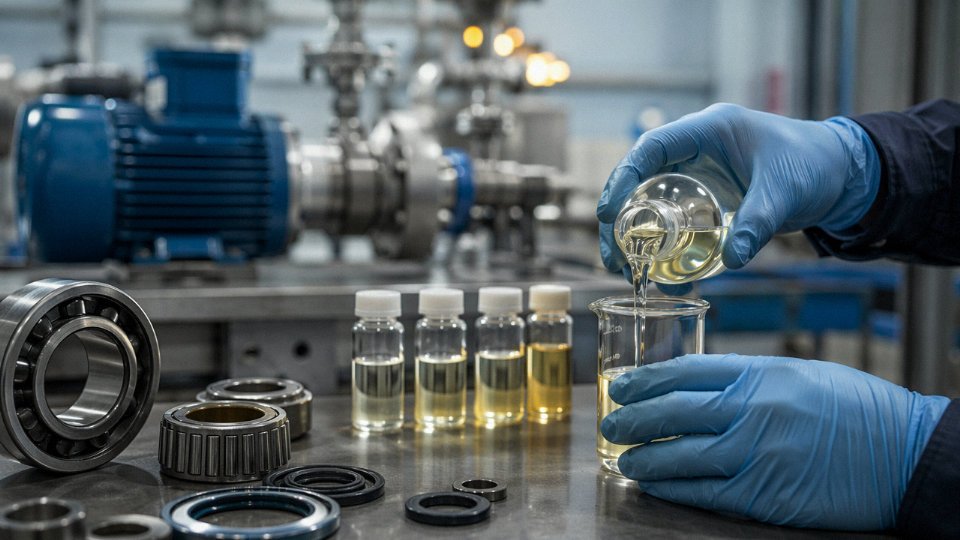
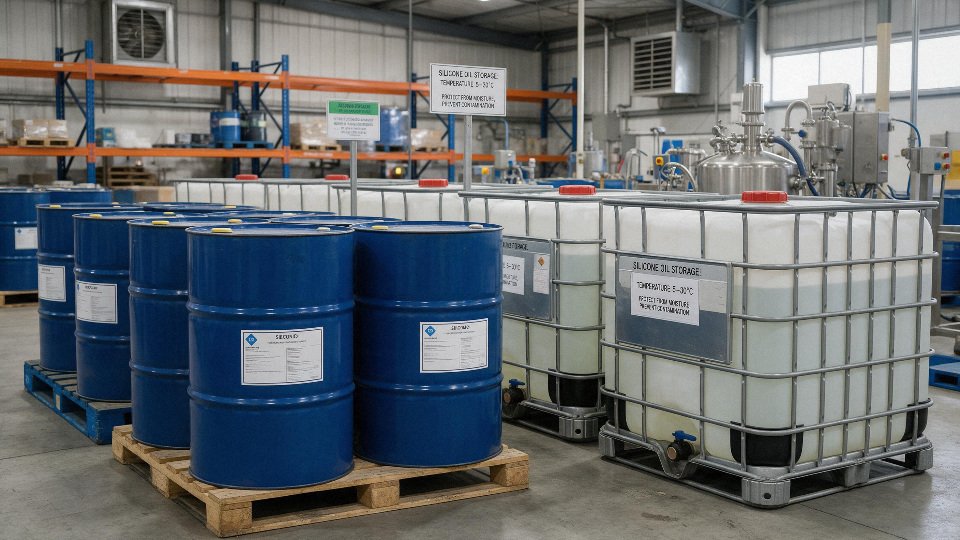
Procurement, storage, handling, and quality checks for silicone oils on the plant floor
Buy the actual material, not a vague “silicone oil”
On a purchase order, “silicone oil” is not a specification. It is a risk.
A usable PO should call out the chemical type, viscosity grade at 25 degrees Celsius, functional content where that matters, purity or regulatory grade, packaging, and the required certificate of analysis. For example: “polydimethylsiloxane fluid, 350 cSt at 25 degrees Celsius, industrial grade, clear, non-reactive, supplied in sealed drums, certificate required for viscosity, volatility, moisture, flash point, and lot number.” That is a different purchase than “amino silicone oil, target amine value agreed, textile finishing grade,” or “vinyl-terminated silicone oil, vinyl content certified, low moisture, for addition-cure silicone.”
Common viscosity grades run from about 0.65 cSt to 1,000,000 cSt at 25 degrees Celsius, though 50 cSt, 100 cSt, 350 cSt, and 1,000 cSt are the ones I see most often in maintenance stores and production formulations. The right tolerance depends on the job. A release fluid may tolerate a wider band. A dosing-controlled antifoam concentrate or reactive silicone intermediate usually cannot.
For critical applications, ask for change notification in writing. A small shift in emulsifier package, cyclic siloxane content, catalyst residue, end-blocking, or functional group level can change foam knockdown, release behavior, cure speed, adhesion, odor, or regulatory status. Procurement sometimes treats silicone oils like commodities. Production finds out they are not.
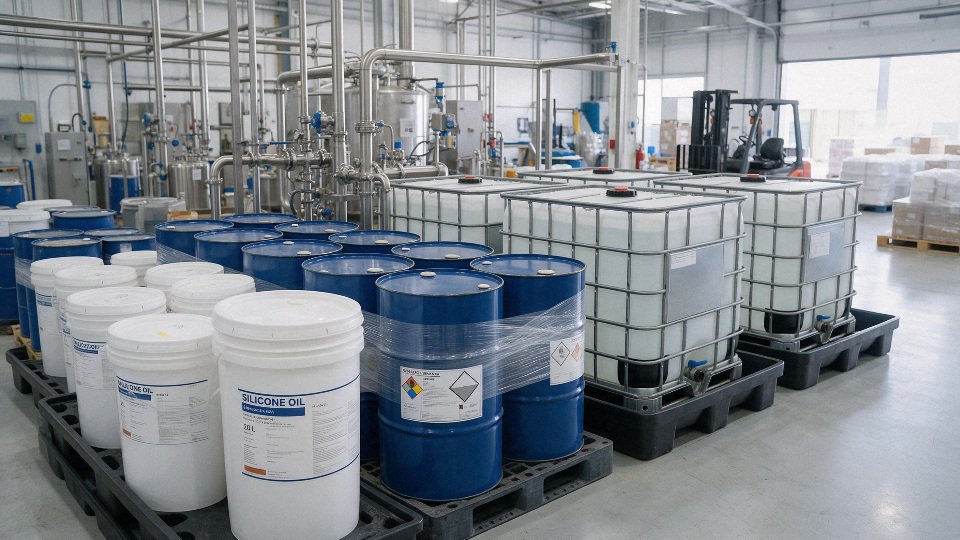
Match packaging to how the plant really uses it
Packaging is not just a logistics detail. It controls contamination, dosing accuracy, waste, and the number of times someone opens the container.
| Use case | Typical packaging | Plant-floor concern |
|---|---|---|
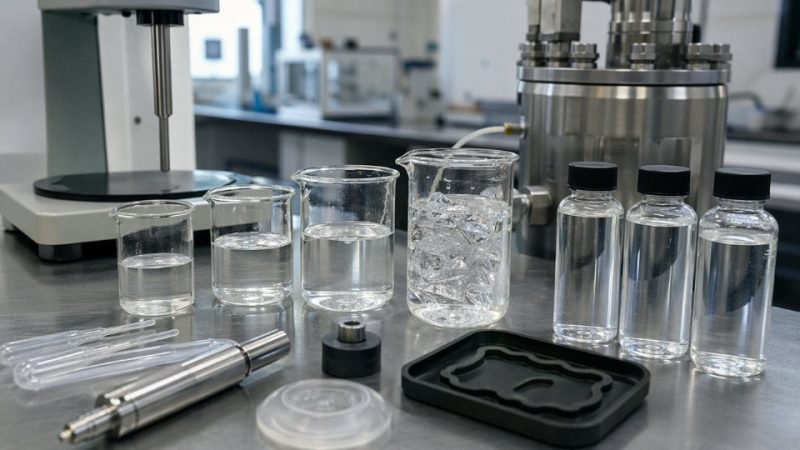
| Lab qualification, QC standard, small trials | Small bottles, roughly 100 mL to 5 L | Avoid repeated opening and moisture pickup |
| Maintenance lubrication or release wiping | Pails, often 15 kg to 25 kg | High spill risk if ladled or poured by hand |
| Batch production | Drums, roughly 180 kg to 220 kg depending on density and supplier | Needs drum pump, bung control, lot tracking |
| High-volume formulation | Totes, commonly around 900 kg to 1,000 kg | Dedicated transfer lines and filtration help |
| Continuous operations | Bulk tank or tanker supply | Requires tank cleanliness, nitrogen blanketing where specified, and supplier change control |
I have seen good material ruined by a dirty hand pump that had previously been used for mineral oil. I have also seen a perfect drum become a housekeeping problem because operators were pouring high-viscosity silicone through a cut funnel into an open day tank. It strings, it creeps, then it ends up on shoes, pallet jack wheels, and packaging film.
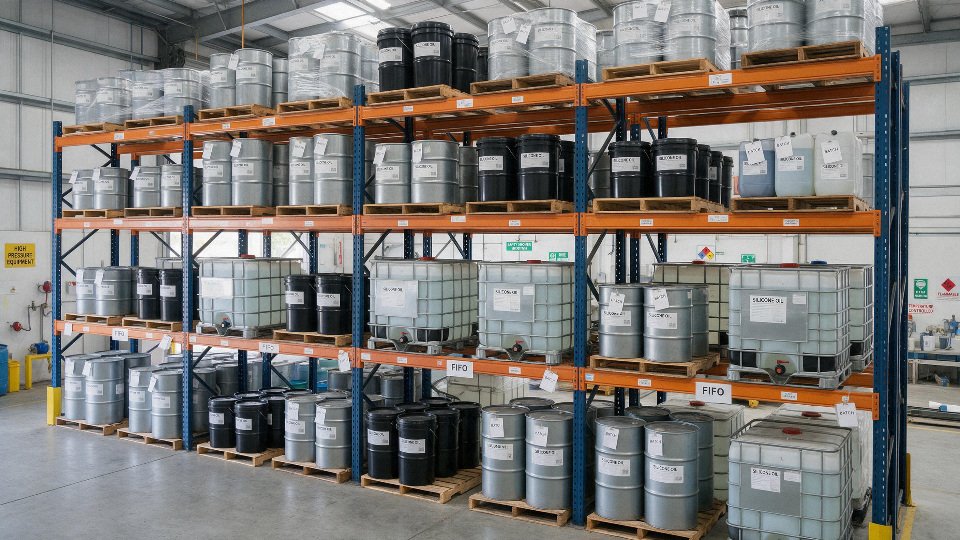
Store it closed, clean, and away from trouble
Keep silicone oils in their original sealed containers until use. Store them away from excessive heat, dust, strong oxidizers, acids or bases where relevant, and moisture-sensitive catalysts used in silicone curing systems. For reactive grades such as methyl hydrogen silicone oil, vinyl silicone oil, hydroxy silicone oil, or amino silicone oil, storage conditions matter more than they do for plain PDMS.
Temperature limits depend on the chemistry and supplier grade. Standard PDMS fluids commonly handle roughly minus 50 degrees Celsius to 200 degrees Celsius in service, but storage is usually much less dramatic: stable, shaded, dry warehouse conditions are preferred. Do not park drums beside an oven, steam line, or open roll-up door where summer heat and winter condensation take turns abusing the inventory.
One warning: silicone oil contamination travels farther than people expect. It is slippery, persistent, and good at migrating across metal, plastic, painted floors, gloves, benches, and fixtures. A small spill near a bonding, painting, printing, coating, or electronics assembly area can become a week of adhesion defects and rework. Keep uncontrolled dispensing points out of those zones.
Inspect incoming lots before they reach the line
Incoming QC does not have to be elaborate for every grade, but it has to match the consequence of failure. At minimum, check container condition, label, lot number, certificate of analysis, visual clarity, color, and odor. A clear PDMS oil should not arrive hazy unless the grade is supposed to be an emulsion or compound. A sharp amine odor may be normal for some amino fluids, but it should still match the approved reference.
Routine specification checks often include kinematic viscosity, volatility, flash point, refractive index, moisture content, dielectric strength, acid value, and trace cyclic siloxane content. Targeted checks depend on chemistry: water content for moisture-sensitive systems, volatile matter for high-temperature or low-fogging use, amine value for amino silicone oils, hydrogen content for methyl hydrogen silicone oils, and vinyl content for addition-cure materials.
Two silicone oils with the same viscosity can perform differently if their functional content, volatility, cyclic siloxane level, or additive package differs.True
Viscosity describes flow resistance, not the full chemistry. Release behavior, cure response, foam control, electrical performance, odor, and regulatory suitability can change with composition even when viscosity appears identical.
Control dispensing like you control ingredients
Use dedicated pumps, labeled transfer hoses, closed bungs, drip trays, and clean fittings. For low-viscosity fluids, ordinary drum pumps may work if seals are compatible. For thicker grades, air-operated piston pumps or heated transfer arrangements may be needed, though heat should be approved by the supplier and process owner. Camlock fittings, quick-connects, and hose ends should be capped when idle. Do not leave a hose lying open on a dusty mezzanine and then wonder why gels or specks show up in coating.
Filtered dosing is sensible for production use, especially where silicone oil enters coatings, personal care batches, release systems, or electronics materials. Filter size depends on the product and pumpability; high-viscosity fluids may need coarse protection rather than fine filtration. Keep silicone oil transfer hardware segregated from paint, adhesive, bonding primer, coating, and electronics assembly supplies. In practice, color-coded hoses and a locked pump cart prevent more mistakes than another paragraph in the work instruction.
Plan cleaning and disposal before the first spill
Silicone oils are not always hazardous in the dramatic sense, but they are stubborn residues. Dry absorbent can remove the bulk of a spill, yet the remaining film may still be slick enough to put someone on the floor. Site-approved detergents, alkaline cleaners, citrus-based cleaners, or solvent-based cleaning may be needed depending on the surface, oil chemistry, and environmental rules. Test cleaning methods before using them on painted floors, seals, or plastic machine guards.
Waste handling depends on local regulations, contamination, and whether the material contains solvents, reactive groups, biocides, emulsifiers, or process residues. Do not assume a used silicone oil emulsion, antifoam blend, and neat PDMS fluid can all go into the same waste stream.
For high-consequence uses, audit the supplier or at least qualify the manufacturing site, QC plan, traceability system, and change notification process. The cost of that paperwork is small compared with a line that will not cure, a coating that fisheyes, or a release agent that suddenly transfers onto the part instead of staying on the tool.
Frequently asked questions about examples of silicone oil
What is the most common example of silicone oil?
Polydimethylsiloxane oil, usually shortened to PDMS oil, is the example most engineers and buyers mean when they say “silicone oil” without any other qualifier. It shows up in mold release agents, light-duty lubricants, cosmetic fluids, antifoams, damping fluids, instrument fluids, and textile auxiliaries.
The grade matters. A 50 cSt PDMS fluid behaves nothing like a 100,000 cSt fluid, even though both may be called silicone oil on a purchase order. Common industrial grades run from very thin fluids around 0.65 cSt up to paste-like materials near 1,000,000 cSt at 25 degrees Celsius. In daily plant use, 50 cSt, 100 cSt, 350 cSt, and 1,000 cSt are among the grades I see specified most often because they are easy to pump, meter, blend, or wipe onto a surface.
Is dimethicone the same as silicone oil?
Dimethicone is commonly used as the cosmetic, personal-care, and medical-context name for PDMS-type silicone oils. In plain engineering language, yes, it is usually a silicone oil. But that does not mean any drum of PDMS fluid can be used as dimethicone in a skin product, device lubricant, or pharmaceutical aid.
The difference is documentation and control. Cosmetic or medical grades may require tighter limits on volatility, odor, trace cyclic siloxanes, bioburden, heavy metals, extractables, or other items depending on the application. An industrial release-agent fluid might meet viscosity perfectly and still be completely wrong for a regulated product.
Any silicone oil can be used as food grade or medical grade if the chemistry is PDMS.False
Regulatory suitability depends on manufacturing controls, purity, testing, documentation, and the exact intended use, not only the silicone backbone.
Are all silicone oils food safe or medical grade?
No. This is a common purchasing trap.
Only select a silicone oil that is manufactured, tested, labeled, and documented for the intended food-contact, pharmaceutical, cosmetic, or medical application. Ask for the current technical data sheet, safety data sheet, regulatory statements, allergen or animal-origin declarations if relevant, and batch certificate of analysis. For food plants, make sure the use case is clear: incidental lubricant contact, defoaming aid, release agent, gasket treatment, or direct formulation ingredient are not the same thing.
A cheap industrial drum can become very expensive if it forces a product hold, customer notification, or line teardown.
What viscosity silicone oil should I choose?
A practical starting rule is simple:
| Viscosity range | Typical behavior | Common use pattern |
|---|---|---|
| Low viscosity, roughly 0.65 to 20 cSt | Spreads fast, penetrates small gaps, evaporates or migrates more easily depending on grade | Light release, spreading fluid, carrier fluid, cosmetic slip |
| Medium viscosity, roughly 50 to 1,000 cSt | Easier to handle, good balance of film strength and flow | Lubrication, release agents, antifoams, damping in small assemblies |
| High viscosity, roughly 10,000 cSt and above | Stays put longer, resists flow, cushions movement | Damping, shock absorption, tacky films, specialty compounds |
These ranges depend on temperature, surface energy, shear rate, pump design, and whether the oil is neat or emulsified. In winter, a 1,000 cSt drum stored near a dock door can feed very differently than the same fluid in a warm mixing room. Positive displacement pumps tolerate that better than small air-operated diaphragm setups, in my experience.
Can silicone oil damage paint or adhesive bonding?
Yes, and it does not take much.
Silicone contamination can cause fisheyes in paint, poor wetting, craters in coatings, weak adhesive bonds, print defects, and sealant adhesion failures. The painful part is that silicone oil often transfers by hands, rags, gloves, overspray, shared funnels, or a maintenance mechanic using the wrong lubricant on a nearby fixture.
If your plant paints, bonds, prints, coats, or laminates, segregate silicone oils from those areas unless the process is designed around them. Use dedicated dispensing tools. Validate cleaning, not just “wipe it down.” A surface can look spotless and still reject coating.
What silicone oil is best for high temperature?
Standard PDMS silicone oils are useful across a broad temperature window, often around minus 50 degrees Celsius to 200 degrees Celsius, depending on grade, exposure time, air flow, contamination, and whether the fluid is static or continuously replenished. At the upper end, oxidation, volatility, viscosity drift, and residue formation start to matter.
For tougher thermal duties, phenyl silicone oils or other specialty silicone fluids may be a better fit. Phenyl-modified fluids can improve low-temperature flexibility, thermal behavior, or compatibility in selected systems. Do not choose by temperature rating alone. Check volatility, flash point, viscosity change after heat aging, and whether the fluid will contact metals, plastics, seals, or process chemistry.
What is the difference between silicone oil and silicone grease?
Silicone oil is the base fluid. Silicone grease is a thickened or compounded product made from silicone oil plus fillers, thickeners, silica, PTFE, metal oxides, or other additives. Grease is designed to stay where an oil would drain, creep, or be squeezed away.
Use oil when you need flow, spreading, heat transfer, damping, or blending into a formulation. Use grease when the joint, O-ring, valve stem, electrical connector, or sliding surface needs a persistent material that will not run off during shutdown. Watch compatibility with plastics and elastomers; some assemblies swell, stress-crack, or lose friction control if the wrong compound is used.
Can silicone oil conduct electricity?
Most clean silicone oils are electrically insulating, which is why they are used in dielectric fluids, damping fluids for electrical instruments, and certain cable or transformer-related applications. That performance is not automatic. Moisture, metal fines, cleaning solvent carryover, carbon dust, process acids, and degraded fluid can reduce dielectric strength.
For electrical use, specify the actual tests: dielectric strength, moisture content, volume resistivity if needed, dissipation factor where applicable, and contamination limits. Common quality checks may also include kinematic viscosity, volatility, flash point, refractive index, acid value, and trace cyclic siloxane content. A warehouse sample that passed viscosity can still be a poor dielectric fluid if it picked up water through bad drum handling.
Final selection checklist: matching a silicone oil example to a real specification
A silicone oil specification should not start with “silicone oil, clear liquid, 100 cSt.” That is how plants end up with the right-looking drum and the wrong fluid in the line. Start with the duty, then back into chemistry, viscosity, purity, and approval controls.
The common examples are easy to name, but they are not interchangeable. PDMS oil is the general-purpose workhorse for lubrication, release, damping, dielectric service, and antifoam carrier use. Phenyl silicone oil is chosen when low-temperature behavior, thermal stability, or optical properties justify the cost. Methyl hydrogen silicone oil is reactive and mainly belongs in water-repellent treatment and surface modification work. Amino silicone oil is a surface-affinity fluid for textile, leather, polish, and personal-care conditioning. Vinyl silicone oil and hydroxy silicone oil are usually intermediates for cured systems such as gels, sealants, elastomers, and release coatings. Fluorosilicone oil earns its place around fuels, solvents, or harsh exposure where standard PDMS swells, extracts, or contaminates too easily. Silicone oil emulsions and silicone antifoam compounds are formulated products, not just neat oils poured into water.

1. Define the primary function before choosing the chemistry
Write the job in plain plant language first. “Reduce foam in a starch tank without fisheyes on the coated sheet” is a better specification than “silicone antifoam.” “Damp a gauge movement at minus 30 degrees Celsius” points you toward a different material than “lubricate a plastic sliding guide near an oven.”
A quick sorting table helps during purchasing and engineering review:
| Required duty | Usually considered first | Watch point |
|---|---|---|
| General lubricity, release, damping | PDMS oil | Migration onto paint, print, or bonding surfaces |
| Low-temperature flexibility or optical clarity | Phenyl silicone oil | Cost and supplier availability |
| Water repellency treatment | Methyl hydrogen silicone oil | Reactivity, hydrogen release risk, catalyst sensitivity |
| Soft hand or conditioning | Amino silicone oil | Yellowing, pH sensitivity, redeposition |
| Silicone curing system intermediate | Vinyl or hydroxy silicone oil | Catalyst poisoning and moisture control |
| Fuel or solvent exposure | Fluorosilicone oil | Seal compatibility and price |
| Foam control in process tanks | Silicone antifoam compound or emulsion | Dispersibility, filter blinding, downstream defects |
2. Choose viscosity by behavior, not habit
Viscosity grades commonly run from about 0.65 cSt to 1,000,000 cSt at 25 degrees Celsius. In practice, 50 cSt, 100 cSt, 350 cSt, and 1,000 cSt are among the grades buyers see most often because they are easy to pump, dose, and source. That does not make them automatically correct.
Low-viscosity fluids spread fast, penetrate gaps, and dose through small metering pumps, but they can migrate and volatilize more easily. Mid-range fluids are often a sensible compromise for release, lubrication, and damping. High-viscosity fluids stay put better and give stronger damping, yet they are slow to transfer in winter and may leave stringing at nozzles or poor mixing in a cold tote.
For a small plant, the difference between 100 cSt and 350 cSt may look minor on a certificate. On the floor it can mean a pump that primes every time versus an operator cracking a union and making a slippery mess.
3. Check compatibility with everything the oil touches
Do not stop at the main substrate. Check seals, pump tubing, coatings, plastics, adhesives, labels, filter media, catalysts, pigments, and the final customer-facing surface. Silicone contamination is unforgiving in painting, printing, bonding, powder coating, and some electronics assembly. A few tracked droplets from a maintenance lube can create craters for days if housekeeping is loose.
For reactive fluids, compatibility means chemistry as well as swelling. Methyl hydrogen silicone oil can react under the wrong conditions. Amino silicone oils may interact with acidic systems or change surface charge. Vinyl and hydroxy silicone oils can be ruined by catalyst poisons, stray amines, sulfur compounds, tin residues, or moisture, depending on the cure package.
4. Confirm the hard requirements on the certificate
A defensible silicone oil specification should call out the checks that matter for the duty. Common industrial checks include kinematic viscosity, volatility, flash point, refractive index, moisture content, dielectric strength, acid value, and trace cyclic siloxane content. Use only the tests that protect the process; do not build a laboratory wish list nobody enforces.
Temperature range is a typical trap. Standard PDMS fluids often work around minus 50 degrees Celsius to 200 degrees Celsius, depending on viscosity, exposure time, oxygen, surface area, and acceptable mass loss. Specialty phenyl silicone oils can stretch low-temperature or high-temperature performance, but the actual limit still depends on the installation. A sealed instrument, an open heated bath, and a misting application are three different worlds.
A silicone oil with the same viscosity can behave very differently if the chemistry, volatility, moisture level, or additive package changes.True
Viscosity is only one specification point. Reactive groups, phenyl or fluoro modification, emulsifiers, silica, residual cyclics, and moisture can change compatibility, migration, cure behavior, dielectric performance, and downstream contamination risk.
5. Run the pilot under ugly, real production conditions
Data sheets are starting documents, not approvals. Trial the chosen silicone oil on the actual line, at real temperature, with normal operators, normal cleaning habits, real water quality, and the actual dosing equipment. If the plant has seasonal swings, test near the edge if possible. Cold drums, humid compressed air, recycled wash water, worn pump diaphragms, and plugged filters expose problems a bench jar never sees.
Track the failure modes: foam knockdown versus refoam, release life, coating defects, torque change, surface residue, dielectric leakage, odor, filter pressure, scrap rate, and cleanup time. A trial that only says “looked good” is not a trial; it is a memory.
6. Lock down purchasing and change control
Once approved, freeze the commercial grade, viscosity range, chemistry type, packaging, and certificate requirements. Require lot traceability. Define incoming inspection, even if it is only appearance, viscosity check, certificate review, and retained sample for critical uses. For high-risk duties, add moisture, volatility, dielectric strength, acid value, or trace cyclic siloxane limits as needed.
Supplier change notification matters. A different emulsifier, antifoam silica level, residual cyclic profile, or plant of manufacture can change performance while the product name stays familiar. Procurement should not substitute a “similar silicone oil” because lead time is tight unless engineering signs off.
The best example of silicone oil is not the famous one or the cheapest drum on the quote sheet. It is the one whose chemistry, viscosity, purity, handling behavior, and documentation match the exact duty and the cost of failure.