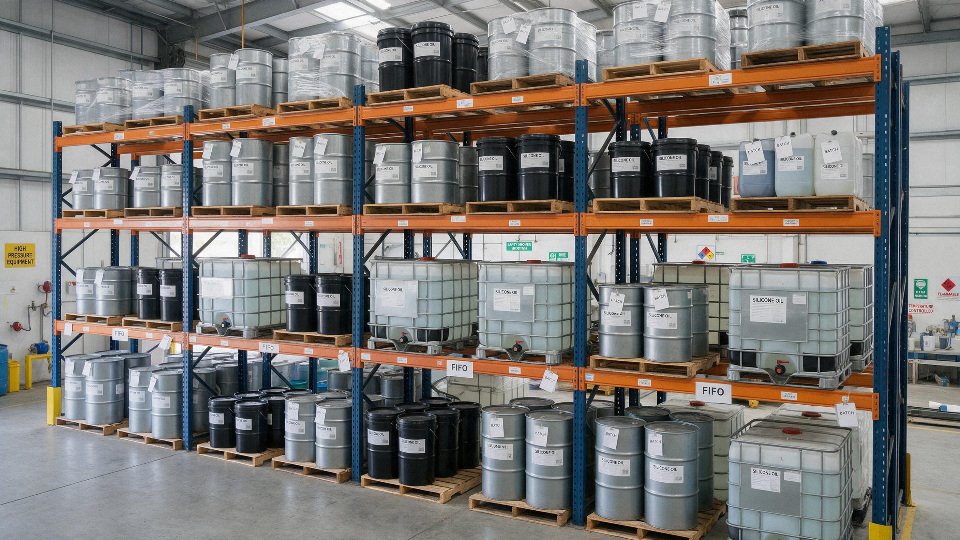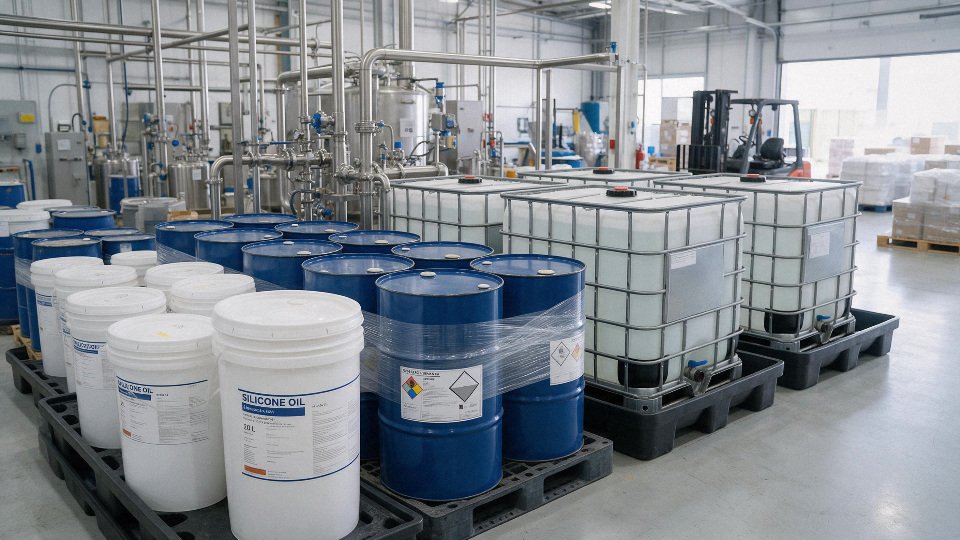
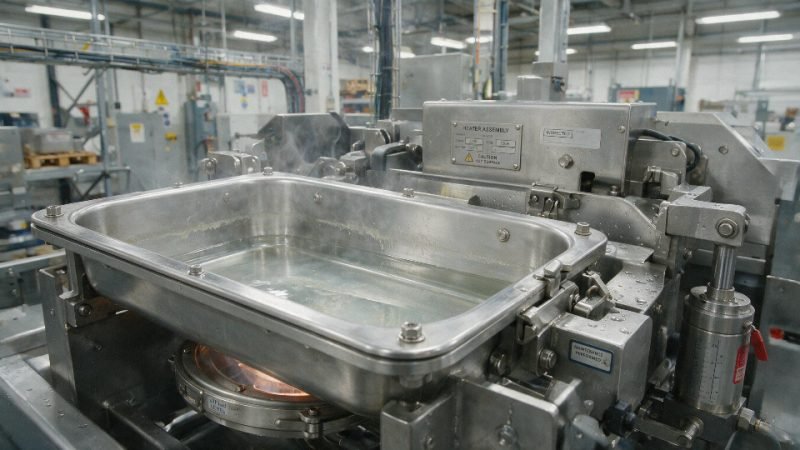
A silicone oil that slowly disappears from a heater, release system, damping unit, or fiber line is not just a housekeeping problem. It can shift viscosity, leave deposits, fog nearby surfaces, throw off lubrication consistency, and quietly push a stable process into rework or unplanned maintenance. Once operators start topping up by habit, the cost stops being the fluid alone and starts showing up in scrap, line stoppages, cleaning labor, and premature component wear.
Yes, silicone oil can evaporate, but not all grades do so to the same extent. Evaporation depends mainly on molecular weight, viscosity grade, temperature, exposure time, airflow, and how tightly the product’s volatile fraction is controlled; higher-viscosity, well-refined grades usually show much lower loss under the same conditions.
That simple answer is where most buying mistakes begin. People hear “silicone oil has low volatility” and treat the whole category as one material, even though a 0.65 cSt fluid and a very high-viscosity silicone behave like different animals on a hot production line. The useful question is not whether evaporation is possible, but under which operating conditions it becomes large enough to matter.
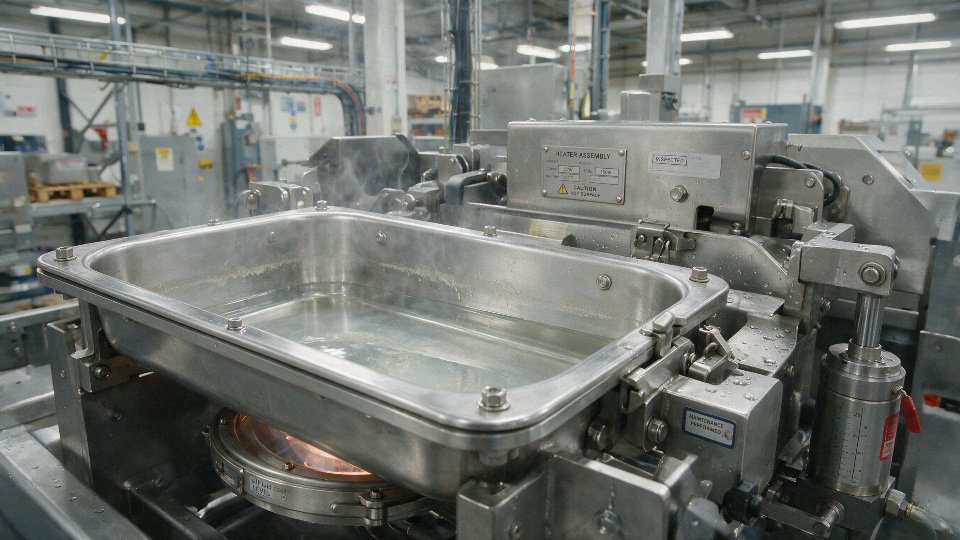
Why volatility varies
A silicone oil’s volatility is controlled first by its molecular architecture and composition, not by the label on the drum that says “100 cSt” or “heat resistant.” Higher molecular weight usually lowers evaporation, but the actual weight-loss behavior depends just as much on how much low-boiling material is hiding in the distribution and what functional groups are attached to the chain.
That catches buyers out all the time. Two fluids can sit in the same viscosity band, run through the same pump, and still lose mass very differently in a hot open sump, a vented coating line, or a vacuum chamber. The reason sits at the molecular level.
The siloxane backbone makes silicone fluids behave differently
Silicone oils are based on a Si-O-Si backbone, and that backbone is unusually flexible compared with many carbon-chain fluids. The bond geometry lets the chain move easily, which lowers the tendency of neighboring molecules to pack tightly. At the same time, many common silicone fluids, especially dimethyl types, have relatively weak intermolecular attraction.
That combination matters because vapor pressure is not just about molecule size. It is also about how strongly molecules “want” to stay in the liquid phase. A fluid with weak intermolecular attraction can show measurable volatility even when its thermal stability is good.
In practice, three molecular factors push volatility up or down:
- Average molecular size
- Larger molecules generally have lower vapor pressure.
- Longer siloxane chains usually evaporate more slowly than short chains or cyclic oligomers.
- Intermolecular attraction
- Dimethyl silicone fluids tend to have relatively low polarity and weak attraction between molecules.
- Functional groups such as phenyl, amino, epoxy, or polyether segments can change that behavior, sometimes lowering volatility, sometimes raising side effects elsewhere.
- Molecular shape and mobility
- Small cyclic siloxanes and short linear chains can escape the liquid surface more easily.
- Broad molecular distributions often contain enough light fraction to drive noticeable early mass loss.
This is why a silicone fluid can look thermally robust in one sense and still lose weight in another. Oxidation resistance and evaporation resistance are related, but they are not the same property.
Why viscosity helps, but only up to a point
Viscosity is a useful first screen, not a reliable volatility guarantee. In many silicone product lines, higher viscosity means higher average molecular weight, and that usually means lower vapor pressure and lower evaporation loss. If you compare a very low viscosity fluid with a very high viscosity fluid of the same chemistry and similar refinement, the higher viscosity grade will often be less volatile.
The trouble starts when people over-read that pattern.
Two silicone oils with similar nominal viscosity can differ in volatility for several reasons:
- Different molecular weight distribution
- One fluid may be narrowly cut, with most molecules clustered around the target range.
- Another may hit the same viscosity by blending in some heavier material while still carrying more low-mass fractions.
- Different end groups
- Trimethylsiloxy end-capped fluids, hydroxyl-terminated fluids, and various reactive end groups do not behave identically.
- End groups can influence volatility directly and can also affect storage stability, moisture sensitivity, or later crosslinking behavior.
- Different modification chemistry
- A 100 cSt dimethyl fluid and a 100 cSt modified silicone fluid are not interchangeable from a volatility standpoint.
- The same number on a data sheet does not mean the same vapor-pressure profile.
- Different manufacturing cleanup
- Residual cyclics and short-chain linear siloxanes from incomplete devolatilization often show up first in weight-loss testing.
- Lower-cost material may meet viscosity spec and still perform poorly in hot open exposure.
Higher viscosity silicone oil always means lower evaporation.False
It is often directionally true within the same chemistry and refinement level, because higher viscosity usually tracks with higher average molecular weight. It fails when molecular distribution, residual low boilers, end groups, or modification chemistry differ.
The light ends often drive the first losses
If a plant operator says, “The fluid flashed off early, then stabilized,” I start looking for low-boiling fractions. In silicone oils, the first stage of measurable mass loss is often dominated by small cyclic siloxanes and short linear oligomers rather than the bulk of the fluid.
That early loss matters in several applications:
- Release coatings run in high-airflow ovens
- Open heat-transfer or damping systems
- Textile finishing lines
- Vacuum lubrication or diffusion environments
- Potting, defoaming, or processing systems where odor or condensable carryover is a problem
A product can seem acceptable on viscosity and appearance, then disappoint because a small percentage of volatiles escapes quickly at temperature. That can cause:
- weight loss and top-up frequency
- condensate on cooler surfaces
- fogging or deposit formation
- drift in rheology or lubrication behavior
- outgassing-related quality issues in enclosed processes
This is one reason tightly controlled industrial grades often specify very low volatile content, sometimes below about 0.5 wt%, depending on the product and test method. The exact number only means something if the method, temperature, and hold time are stated. Without that, buyers are comparing marketing language, not engineering data.
Fluid chemistry changes the volatility pattern
Not all silicone fluids behave like standard dimethyl silicone oil. The base chemistry shifts volatility tendency, oxidation behavior, and suitability for heat.
| Fluid type | Volatility tendency | Oxidation / thermal behavior | Typical trade-off |
|---|---|---|---|
| Dimethyl silicone fluid | Moderate, strongly dependent on viscosity and light ends | Good thermal stability over a broad temperature range | Economical and versatile, but low-mass fractions can matter a lot |
| Methyl phenyl silicone fluid | Often lower volatility at elevated temperature than comparable dimethyl grades; depends on formulation | Usually better high-temperature oxidative stability | Higher cost; may be chosen for thermal service rather than price-sensitive bulk use |
| Amino-modified silicone fluid | Volatility can differ widely with structure and carrier composition | Not selected primarily for extreme heat resistance | Better substrate interaction and lubricity in finishes; may bring color, reactivity, or compatibility limits |
| Epoxy-modified silicone fluid | Depends on backbone length and modification level | Functional, not usually the first pick for highest heat exposure | Chosen for reactivity, adhesion, or additive performance rather than lowest possible volatility |
| Other specialty modified fluids | Highly application-specific | Highly application-specific | Performance may improve in one area while sacrificing thermal cleanliness, compatibility, or cost |
The trade-off is straightforward: phenyl-containing fluids are often preferred when higher-temperature stability is the main problem, but they cost more and are not automatically the best answer for every process. Amino- and epoxy-modified fluids are usually selected for wetting, hand feel, release, adhesion, or compatibility reasons. If volatility is critical, you have to judge them by actual test data, not by assuming “modified” means “better.”
The boundary here is important: this comparison holds for broad families, not every supplier’s grade. Formulation details, residual carriers, and purification level can change the result enough that a family-level rule becomes unsafe for procurement.
Manufacturing cleanup matters more than many buyers expect
Low-volatility performance is heavily influenced by how the fluid was finished after polymerization. Narrow molecular weight distribution and effective devolatilization remove the fractions most likely to evaporate first.
On the plant side, this shows up in three commercial realities:
- A cheaper fluid may cost more in use
- Frequent replenishment
- Deposit cleanup
- Odor or fogging complaints
- Product variation if the remaining fluid shifts in viscosity during service
- The same nominal chemistry can behave very differently supplier to supplier
- Distillation quality
- Stripping efficiency
- Process control over cyclic residuals
- Batch consistency
- Heat resistance claims can hide volatility problems
- A fluid may resist oxidation and viscosity breakdown well enough at temperature.
- It can still lose measurable mass in an open, swept, or vacuum environment if volatile fractions remain.
That last point is where a lot of specification mistakes happen. Silicone oils often outperform hydrocarbons in oxidation resistance and broad service temperature window, but under vacuum or high air exchange, evaporation can still be significant. Low surface tension helps spreading and wetting, which is useful in many processes, yet it also means volatile components can readily present at the surface and escape if the vapor removal rate is high.
Why boiling point is usually the wrong buying metric
Published boiling points are often of limited value for silicone oils because many commercial fluids are not single compounds. They are mixtures or distributions of oligomers and polymers, so a single boiling point can be misleading or not well-defined at all.
For engineering decisions, these are usually more useful:
- Vapor pressure at relevant temperatures
- Best when the process has a known operating temperature and venting condition.
- Especially useful for vacuum systems and sealed equipment design.
- Noack-style volatility or controlled evaporative loss tests
- Good for comparative screening.
- The method must be checked carefully; test temperature, airflow, time, and sample mass all change the result.
- Thermogravimetric analysis (TGA)
- Useful for seeing onset and rate of weight loss across a temperature ramp or hold.
- Good for comparing grades, though lab ramps do not perfectly replicate plant airflow or residence time.
- Application-specific weight-loss testing
- Usually the most decision-relevant.
- Run the fluid in a representative cup, tray, or coated-part setup at actual temperature, exposure time, and air velocity.
If the process is sensitive, ask for the test method before you trust the number. A volatility value without temperature, dwell time, pan geometry, airflow, and sample history is barely better than no value at all. In my experience, one simple controlled weight-loss trial under your actual operating conditions will settle more arguments than three pages of generic thermal-stability claims.
Operating conditions that matter
At the same silicone oil viscosity, operating conditions often matter more than the product label. A fluid that looks essentially non-evaporative in a sealed drum at 25 C can show measurable mass loss as a hot thin film under airflow, and it can lose material very quickly under vacuum if the volatile fraction is not tightly controlled.
The practical mistake is treating “evaporation resistance” as a fixed property instead of a system behavior. Temperature, exposed area, gas movement, pressure, residence time, and contamination all change the rate-limiting step. Sometimes the oil is genuinely volatilizing; sometimes it is degrading into lighter species; sometimes it is just migrating into a substrate and getting counted as loss.
Temperature: the first variable to check
A moderate temperature increase can produce a disproportionate increase in evaporation rate. That is true in storage, in ambient-use applications, and even more in heated service, because vapor pressure rises nonlinearly with temperature and the lighter molecular fraction leaves first.
In practice, I would separate temperature exposure into five distinct situations:
- Storage and warehouse conditions
- In unopened or well-sealed containers at ordinary plant temperatures, evaporation loss is usually negligible.
- Problems start when:
- containers are left partially open,
- headspace is repeatedly exchanged,
- drums sit near steam lines, roofs, or sunny loading bays,
- small day tanks breathe with daily temperature cycling.
- A 10 C to 20 C seasonal swing will not usually create dramatic loss in a closed package, but it can increase odor, light-end depletion, and drum pressure variation in loosely managed storage.
- Room-temperature use
- At ambient conditions, medium- and high-viscosity silicone oils are often quite stable from an evaporation standpoint.
- This is where buyers can get complacent. If the same fluid is used as:
- a very thin wipe film,
- a spread release layer,
- or a continuously renewed open-surface lubricant,
loss can still become noticeable because area and airflow start dominating.
- Elevated continuous service
- Once the oil is held hot for hours or days, the distinction between viscosity grades becomes much more visible.
- Lower-viscosity grades generally show higher mass loss under the same temperature exposure because they contain shorter chains with higher volatility.
- Typical service windows around -50 to 200 C are grade dependent, not a blanket promise. Near the upper end of that range, you need supplier data for the specific fluid, not category-level assumptions.
- Short thermal spikes
- Intermittent spikes during heat sealing, mold contact, hot roller nip points, or stop-start machine upsets may not raise average sump temperature much, but they can drive local flash-off from the surface.
- This is one reason a system can consume oil faster than a bulk temperature reading suggests. The sensor may be in the reservoir while the actual loss happens on a roller face or near a heater block.
- Overheating events
- Once you get into sustained overheating, the issue may stop being simple evaporation.
- Silicone fluids can degrade thermally, especially in the presence of catalytic contaminants, generating lower-molecular-weight species that then volatilize more readily.
- That changes both fluid loss and residue behavior.
If a silicone oil is surviving at 25 C but disappearing at 150 C, the first question is not “is silicone oil volatile?” but “what fraction is being exposed at that temperature, for how long, and in what film thickness?”
Surface area: bulk volume misleads people
A liter in a closed gearbox and a liter spread as a microns-thick film are not remotely the same volatility problem. Evaporation occurs at the interface, so exposed area relative to fluid volume is one of the strongest predictors of loss.
Applications where surface-area effects become dominant include:
- Thin films on rollers or belts
- A coated roller continuously renews the exposed surface.
- Even a low-volatility oil can show steady consumption because fresh fluid is always being presented to air or heat.
- Open baths and pans
- Wide, shallow reservoirs lose more than narrow deep tanks at the same temperature.
- Plants often focus on bath volume and miss the pan geometry.
- Release coatings and wipe-on layers
- Here the oil may be applied in extremely low coat weights.
- Losses that seem like “complete evaporation” may partly be transfer, absorption into substrate texture, and genuine volatilization occurring together.
- Diffusion pump and specialty vacuum service
- These systems are specifically designed around vapor generation and controlled condensation behavior.
- You cannot generalize from ambient lubricant behavior to this application class.
- Wide exposed reservoirs in textile, paper, film, or converting lines
- Large footprints plus moving air can pull off more material than operators expect, especially during long idle-hot periods.
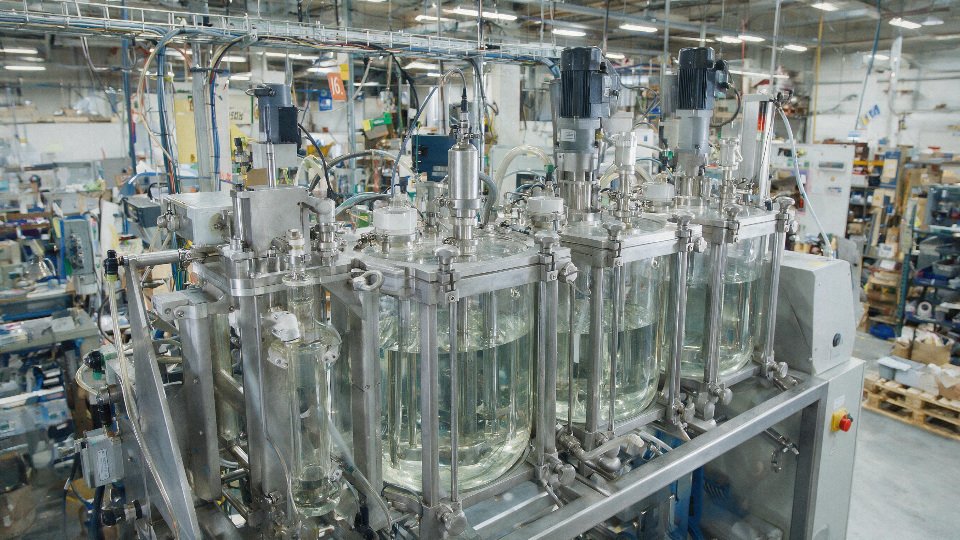
Air movement and ventilation: often underestimated on open lines
A still-air lab beaker and a production line under exhaust hoods are different worlds. Airflow strips away the vapor-rich boundary layer sitting above the liquid surface, which increases the concentration gradient and lets more molecules escape.
This shows up in several common plant conditions:
- Forced convection ovens or fan-cooled stations
- Fan speed can materially change apparent evaporation rate.
- Cooling the equipment body while increasing surface air exchange can create mixed results: lower fluid temperature in one zone, higher mass transfer at the exposed film.
- Purge gas systems
- Nitrogen or dry air purges can suppress oxidation or moisture pickup, yet still increase volatile removal if they continuously sweep the headspace.
- That trade-off matters in electronics, optics, and specialty coating equipment.
- Open production lines
- Cross-drafts from HVAC, line-side fans, or dust-control extraction can turn a manageable silicone application into a high-consumption one.
- In summer, I have seen plants chase “bad oil” when the actual change was a new fan bank over the line.
The preferred choice flips here depending on the failure mode. If oxidation or moisture sensitivity is the limiting problem, purge flow may help overall performance even if it modestly raises evaporative loss. If fluid retention is the main concern, reducing sweep velocity over the exposed surface usually matters more than tweaking bulk volume.
Vacuum: where “stable at ambient” stops meaning much
Under vacuum, silicone oils that seem almost non-volatile in air can lose mass much faster. Lower ambient pressure lowers the resistance to vapor-phase transfer, and any low-molecular-weight fraction, residual cyclics, or contamination-derived light ends becomes much more significant.
This is the operating boundary where many casual statements about silicone oils break down. In:
- degassing systems,
- vacuum drying,
- vacuum coating,
- leak-test chambers,
- space-simulation environments,
- low-pressure aerospace or electronics processes,
you need actual low-volatility data for the grade under consideration, not just viscosity and a general statement like “high temperature resistant.”
A silicone oil that shows little visible loss in ambient storage may still produce unacceptable mass loss or outgassing under vacuum.True
Ambient stability does not guarantee low vapor pressure under reduced pressure. Under vacuum, residual low-molecular-weight fractions and contamination effects become much more consequential, so application-specific vacuum and outgassing verification is often required.
For demanding vacuum service, buyers should ask about:
– volatile content,
– any low-boiling fraction control,
– test method used,
– conditioning history,
– and whether the reported data came from the exact grade being quoted.
A figure such as volatile content below 0.5 wt% can be meaningful for tightly controlled industrial grades, but it is not enough by itself to predict performance in every vacuum cycle. Pump-down rate, soak temperature, chamber pressure, surface area, and prior contamination all matter.
Residence time, replenishment, and whether the fluid sits or turns over
A static fill usually loses volatiles differently from a recirculating loop. In a static reservoir, the light fraction near the surface may deplete over time, and the apparent evaporation rate can taper. In a recirculating system, fresh fluid is continually brought back to the hot exposed zone, so the rate can remain more persistent.
Check which of these patterns applies:
- Recirculating systems
- Pumps, return lines, splash exposure, and aeration can keep renewing the interface.
- Sampling only the reservoir may miss what is happening in the discharge zone.
- Static fills
- Loss may be slower after initial conditioning because the most volatile portion has already left.
- That can make early test data look worse than long-run operation, or the reverse if degradation starts later.
- Intermittent-use equipment
- Stop-start service is messy.
- During idle-hot periods, the fluid may sit exposed and lose more than it does during productive cycles.
Maintenance habits matter here. A line topped off every shift may hide chronic evaporation until someone looks at purchase history instead of sight glass level.
Contamination: sometimes the oil did not “evaporate” on its own
Contamination can increase true volatility, promote chemical breakdown, or create apparent loss by changing wetting and transport behavior. This is one of the most common misreads on the plant floor.
Watch for these categories:
- Solvents or cleaning agents
- Residual solvent can thin the oil, increase spread area, and evaporate first, making the whole system look unstable.
- In some cases it also drags silicone deeper into porous media.
- Process oils and hydrocarbons
- Mixing can alter viscosity, vapor behavior, and compatibility with seals or substrates.
- A small amount of low-boiling contamination can dominate odor and measured weight loss.
- Catalysts, acids, and alkalis
- These can accelerate degradation of silicone fluids under heat.
- Once chain scission starts, lighter fragments may form and leave the system.
- Moisture
- Usually not a direct cause of silicone oil evaporation, but it can matter in hydrolytically sensitive formulations or in systems where water changes substrate interaction and carry-off.
- Particles
- Fines increase effective area in some slurrylike situations, hold oil in filter media, or create hot spots on heated surfaces.
If the fluid darkens, viscosity drifts, residue changes, or odor increases, do not treat mass loss as pure evaporation until contamination and degradation are ruled out.
Pressure, altitude, and geometry-driven “loss” that is not simple evaporation
Reduced pressure at altitude is a smaller effect than hard vacuum, but in aerospace, high-reliability electronics, and specialty instrument housings, small outgassing differences can still matter. The tighter the contamination budget on nearby optics, contacts, or sensors, the less acceptable even modest volatile release becomes. Verification has to be done against the current equipment requirement or qualification standard, not by category reputation.
Geometry and material contact can also fool the diagnosis:
- Porous substrates and absorbent media
- Felt, paper, sintered materials, and rough coatings can wick fluid away from the visible surface.
- Operators report “evaporation,” but inventory loss is really absorption plus larger effective area.
- Wicks and capillary-fed systems
- Capillary structures continuously renew thin films, which can amplify volatilization compared with a quiet pool.
- Elastomer contact
- Some elastomers swell, extract low-molecular components, or alter the oil balance at the interface.
- The fluid did not vanish into air; part of it migrated into seals, hoses, or soft goods.
- Complex reservoir geometry
- Baffles, splashing zones, return cascades, and misting points increase exposed area dramatically versus the nameplate tank volume.
For a useful prediction, reduce the application to its actual exposure state: hot or cool, still or swept, atmospheric or reduced pressure, bulk pool or thin renewed film, clean or contaminated, static or recirculating. Once those conditions are clear, you can judge whether you need a higher-viscosity fluid, a lower-volatiles grade, better enclosure, less airflow over the surface, or simply a more honest mass-balance test.
Evaporation versus degradation
A silicone oil can lose weight under heat and still be chemically intact. If the fluid is simply evaporating, you are dealing with phase loss of molecules that were already present; if it is degrading, the fluid itself is changing into new species, often with very different viscosity, residue behavior, odor, and maintenance consequences. That distinction matters because the fix is completely different: one points toward grade selection and containment, the other toward temperature control, contamination, incompatible materials, or a fluid that is outside its chemical limit.
Pure evaporation is the easier case. Existing silicone molecules leave the liquid phase and enter the vapor phase without changing their structure. If those vapors are condensed and collected, they are still the same chemical family, just no longer in the sump, bath, or coating line. In practice, this is often driven by the lighter end of the molecular distribution: low-viscosity fractions, residual cyclics, or short oligomers that were always more volatile than the bulk fluid.
Thermal degradation is different. The fluid is no longer just leaving; it is being chemically altered by heat, oxygen, catalytic surfaces, or contamination. Depending on the system, the main pathways can include:
- Chain scission
- Polymer chains break into shorter fragments.
- This can reduce viscosity at first, sometimes sharply.
- Shorter fragments may then volatilize more easily, so degradation and evaporation can occur together.
- Depolymerization
- Larger silicone molecules revert toward smaller cyclic or linear species.
- This is one reason a degraded fluid can show both mass loss and a new volatile fraction that was not prominent at the start.
- Oxidation
- Oxygen attack, especially at elevated temperature and in thin films, can form oxidized byproducts and silica-like residues.
- Oxidation usually shows up faster on hot metal surfaces than in a closed, oxygen-poor reservoir.
- Catalyst-driven rearrangement
- Acids, bases, metal salts, and certain process contaminants can accelerate molecular rearrangement.
- In plants, this is the messy one: a fluid that behaved well in drum storage may fail quickly after contact with a contaminated tank, an incompatible elastomer, or a line cleaned with the wrong chemistry.
The shop-floor difficulty is that operators often see only one symptom first: “the level dropped” or “the sample got thicker.” That is not enough to call degradation.
Practical symptoms: what points to evaporation, what points to breakdown
Use the symptom pattern, not a single observation.
| Symptom | More consistent with evaporation | More consistent with degradation |
|---|---|---|
| Weight loss under heat | Yes, especially in lower-viscosity grades or fluids with residual volatiles | Also possible, but not diagnostic by itself |
| Viscosity increase | Common after lighter fractions leave first | Can occur later with oxidation, crosslinking, or gel formation |
| Viscosity decrease | Uncommon as a pure evaporation result | Often points to chain scission or rearrangement |
| Odor change | Usually mild unless volatile fraction is significant | Stronger or “burnt” odor is a warning sign |
| Haze or cloudiness | Less typical for simple evaporation alone | Common with contamination, oxidation products, or instability |
| Color darkening | Not typical | Common with overheating or oxidative attack |
| Residue or varnish | Usually low if fluid is only volatilizing | Strong indicator of degradation or contamination |
| Gel particles or skinning | No | Yes, especially with crosslinking or severe oxidation |
| Smoke at hot surfaces | Possible if volatiles flash off | More concerning when paired with dark deposits and odor |
| Corrosive byproducts in severe cases | Not expected in simple evaporation | Possible in contaminated or severely overheated systems; must verify against actual chemistry |
One common trap is the apparent viscosity rise after heating. Buyers sometimes read that as proof of decomposition. Often it is not. If a silicone fluid contains a small low-boiling fraction, those lighter molecules leave first. The remaining liquid has a higher average molecular weight, so the measured viscosity goes up even though the main polymer backbone is still largely intact. I have seen this misread in heated baths and release-coating systems where the fluid was stable enough, but the volatility spec was too loose for the residence time.
That leads to a second misunderstanding: weight loss in an oven or hot plate test is not automatically decomposition. In many cases, especially with lower-viscosity fluids or broad molecular-weight distributions, much of the early loss is volatilization of residual cyclics or short oligomers.
A heat-induced mass loss result, by itself, proves silicone oil decomposition.False
Mass loss can come largely from volatilization of pre-existing low-boiling fractions. To establish degradation, you need supporting evidence such as viscosity change direction, residue formation, color shift, odor, analytical data, or byproduct identification.
Why misdiagnosis gets expensive
Calling evaporation “degradation” usually leads to the wrong corrective action:
- Replacing a basically stable fluid too early
- Moving to an unnecessarily high-viscosity grade that creates pumping, wetting, or heat-transfer penalties
- Rejecting a supplier based on weight-loss data without checking volatile content specification or distillation profile
- Overlooking the fact that the process simply runs with too much exposed surface area or too much air exchange
The reverse mistake is worse. Calling degradation “normal evaporation” can hide:
- Localized hot spots
- A bulk tank may read acceptable temperature while a heater sheath, bearing zone, or thin-film edge is much hotter.
- Contamination
- Residual caustic cleaner, metal fines, process acids, amines, or catalyst carryover can change silicone behavior fast.
- Seal and hose incompatibility
- Swollen elastomers, extractables, or catalytic filler packages can promote fluid change and create leak paths at the same time.
- An unrealistic supplier fit
- A fluid with acceptable viscosity and broad temperature claims may still have volatile content or compositional spread that does not suit long dwell time at your actual operating temperature.
How to decide which problem you actually have
- Check the direction of viscosity change
- Higher viscosity with otherwise clean appearance often suggests preferential loss of lighter fractions first.
- Lower viscosity points more toward chain scission or rearrangement.
- Inspect for non-volatile evidence
- Darkening, haze, gel, varnish, crust, or ash-like residue push the diagnosis toward degradation.
- Look at where the problem occurs
- Uniform loss across an open heated system suggests evaporation.
- Damage concentrated at heater surfaces, dead legs, or high-shear zones suggests local overheating or catalytic effects.
- Review contamination routes
- Cleaning chemicals, process carryover, metal catalysts, moisture, and seal materials should all be checked before blaming the base fluid.
- Match the fluid spec to the duty
- For evaporation-driven loss, pay attention to volatile content, viscosity grade, and molecular-weight distribution.
- For degradation-driven failure, verify actual film temperature, oxygen exposure, residence time, and material compatibility.
Treat mass loss mainly as a fluid-selection issue when the fluid stays clear, residue is low, viscosity shifts upward modestly, and the operating condition is simply too open or too hot for that grade’s volatile fraction. Treat it as a process or compatibility investigation when you see darkening, deposits, gel, strong odor, falling viscosity, or damage concentrated at hot metal interfaces. The boundary is important: once contamination or localized overheating enters the picture, a “better” silicone grade may only delay failure rather than solve it.
Application-specific risk profiles
The same silicone oil can look stable in one plant and expensive in another because evaporation risk is set by the application, not the product name alone. If you are evaluating losses, contamination risk, or refill frequency, compare your use case against the actual exposure pattern: open surface area, temperature history, air exchange, cleanliness sensitivity, and whether the oil is expected to stay in bulk or live as a very thin film.
A 100 cSt fluid in a sealed damping assembly may run for years with negligible practical loss. The same chemistry spread as a hot release film on a moving web can disappear fast enough to affect transfer consistency, residue, and cost per square meter. That is where buyers get misled by generic statements like “low volatility” without tying them to the process.
Heat transfer fluids
For heat transfer duty, the first split is simple: closed loops tolerate silicone oil volatility far better than open or vented systems. In a well-sealed loop with a correctly designed expansion tank, normal losses are often driven more by seal condition, venting practice, and thermal history than by evaporation into the work area.
What changes the risk profile:
- Closed, inerted, or low-air-exchange systems
- Lower evaporative loss from the hot bulk fluid
- Better retention of viscosity and flash-related properties over time
- Lower top-up frequency, assuming pumps and seals are in good shape
- Open tanks, loosely vented reservoirs, or hot expansion tanks exposed to air
- More mass loss from the hottest low-viscosity fraction
- Greater oxidation exposure at the fluid surface
- Higher chance of deposits if thermal stress and oxygen are both present
- Intermittent overheating
- Usually more damaging than steady operation at the right bulk temperature
- Can strip light ends first, then push the fluid toward thickening or decomposition if temperature excursions continue
The mechanism matters here. Expansion tanks often run cooler than the main heater, but they present a large free surface and repeated breathing cycles. That means the oil does not need to be “boiling” to create measurable long-term loss; warm fluid, exposed area, and daily thermal cycling can be enough. In practice, a system that looks closed on a P&ID may still behave like a semi-open system if the venting arrangement is loose and the tank is constantly pulling humid plant air.
The trade-off is straightforward: lower-viscosity silicone fluids generally pump and start up better in cold conditions, but they are usually less forgiving on long-term volatilization than heavier grades. That conclusion stops holding if the heavier grade creates poor circulation, hot spots, or cavitation at startup. Then the “safer” low-volatility choice can become the more failure-prone one.
Lubrication and damping
In lubrication and damping, evaporation usually shows up as viscosity drift, not just fluid loss. That distinction matters because many of these applications use only a few grams or even milligrams of fluid, so a small mass change can produce a large functional change.
Common patterns:
- Bearings and light mechanical lubrication
- Silicone oils are chosen where plastic compatibility, water resistance, or wide temperature range matter
- Open bearing environments see more loss than shielded or enclosed assemblies
- Loss of lighter fractions can raise apparent viscosity and change drag torque
- Dashpots and instrument damping
- Evaporation affects response time, not only fill level
- In precision instruments, even modest viscosity change can alter calibration, pointer settling, or actuator motion
- Seal permeability often becomes as important as the fluid itself
- Plastic-compatible lubrication
- Often selected for elastomers and engineering plastics that do not tolerate mineral oils well
- Volatility has to be balanced against migration, swelling behavior, and residue acceptability on nearby parts
A common procurement mistake is buying solely by nominal viscosity grade. Two fluids sold at the same cSt can behave differently in a small damped assembly if one has tighter volatile control and the other has a broader molecular distribution. If the application is a consumer product, automotive interior component, or instrument that sits in summer heat, ask for volatility or weight-loss data under a defined test condition rather than assuming the viscosity number tells the whole story.
Electrical and electronic uses
Electrical applications are less tolerant of evaporative byproducts because the concern is often where the vapor goes next. In dielectric and electronics work, the main risk is usually not bulk fluid shortage but contamination of contacts, optics, sensors, or heat-dissipation surfaces.
Relevant cases include:
- Dielectric or specialty insulating fluids
- Need stable electrical properties and low contamination tendency
- Headspace design, sealing, and temperature profile all affect whether volatiles accumulate or escape
- Relay and contact protection
- Thin migrated films can interfere with contact reliability in some low-energy switching environments
- Verify compatibility with the exact device design and supplier guidance
- Thermal interface processing
- Silicone fluids may appear in wetting, gap-filling, or process-aid roles
- Outgassing can create voiding, surface contamination, or downstream adhesion problems if the line includes curing, lamination, or optical inspection
- Low-outgassing electronics
- Requires much tighter control than general industrial lubrication
- Typical industrial data sheets are often not enough; buyers usually need application-specific outgassing data or a validated material history
A silicone oil that is acceptable in a general industrial damper is automatically suitable for contamination-sensitive electronics.False
Electronics and precision electrical assemblies may require low-outgassing behavior, condensable vapor control, and compatibility verification that go well beyond general viscosity and temperature specifications.
Cosmetics and personal care processing
In cosmetics and personal care, volatility is not automatically a defect. Sometimes it is the function. Formulators deliberately choose between volatile and non-volatile silicone ingredients depending on spread, dry feel, residue, gloss, and transfer resistance.
For process-side evaluation:
- Carrier-fluid roles
- More volatile silicone components can improve spread and then leave quickly
- Non-volatile grades remain as emollient, gloss, or conditioning residue
- Sensory profile
- Evaporation affects dry-down time and afterfeel
- What is desirable in a skin-feel target may be undesirable in a mixing, filling, or bulk-holding operation if composition shifts during hold time
- Residue management
- Volatile fractions can reduce residual film on equipment or substrate
- But repeated open-vessel heating or long agitation periods can change batch balance if the formulation is not covered
- Regulatory and labeling expectations
- These are ingredient- and market-specific
- Readers should verify current regional cosmetic regulations and raw-material documentation rather than generalize from industrial silicone oils
The boundary here is obvious but often ignored: industrial silicone-oil volatility logic does not transfer cleanly into cosmetic compliance decisions. The chemistry may overlap, but the documentation, purity expectations, and approved ingredient frameworks are different.
Textile, paper, and release applications
These uses often put silicone oil into the harshest evaporation geometry: a very thin film on a hot moving surface with constant air renewal. Even a fluid that is stable in a drum or sump can show meaningful transfer loss when metered onto paper, fabric, film, rollers, or molds.
What drives the loss:
- Film thickness
- Thinner films lose volatiles faster because nearly all material is near the air interface
- Line temperature
- Web temperature, roller temperature, and local hot spots matter more than room temperature
- A line running 20–30 C hotter than expected can change both transfer and residue noticeably
- Transfer efficiency
- Some “loss” is true evaporation
- Some is carry-off to substrate, doctor-roll waste, misting, or edge trim contamination
- Substrate interaction
- Porous paper, absorbent textiles, and treated films all retain silicone differently
- Apparent evaporation can be partly absorption or migration into the substrate stack
This is one of the clearest trade-offs in plant use. Lower-viscosity fluids can wet and release better, meter more evenly, and reduce drag, but they also tend to disappear faster from hot exposed films. The preferred choice flips when transfer quality or release force is the governing KPI rather than refill interval alone.
Optical, laboratory, vacuum, aerospace, and regulated industrial equipment
These applications do not belong in one procurement bucket, but they share a common issue: small amounts of vapor can do outsized harm.
- Optical and laboratory systems
- Need refractive consistency, cleanliness, and low fogging tendency
- In temperature-control baths or optical couplants, evaporation can shift fluid level, optical path behavior, or window cleanliness
- Precision users should verify temperature-dependent property stability, not only room-temperature viscosity
- Vacuum and aerospace
- Outgassing control is central
- Condensable vapors can plate out on sensors, optics, thermal-control surfaces, or sealed cavities
- Selection should be based on the relevant current test method and supplier data, not category-level assumptions
- Construction chemicals and mold release
- Repeated heating in open air is common
- Cost-of-use depends on refill rate, transfer efficiency, overspray, and residue cleanup, not drum price alone
- Medical and food-adjacent industrial equipment
- Purity, extractables, and documentation can outweigh pure volatility performance
- Buyers usually need traceable product identification, supporting declarations, and application-specific suitability review against the current regulatory framework and equipment design
If your process is contamination-sensitive, regulated, or hard to clean after deposition, treat volatility as a system-level risk rather than a fluid property on its own. The right next comparison is not “which silicone oil evaporates least,” but “which grade stays inside the operating window without creating unacceptable deposits, drift, refill cost, or documentation gaps under this exact exposure pattern.”
How to measure loss
If you need usable volatility data, ask for a defined test method with full conditions, not a headline number. Silicone oil loss can look low or high depending on temperature, air movement, pressure, sample geometry, and test length, so supplier comparisons are only valid when those variables are aligned.
A lot of bad buying decisions start with one lab report run at 200 C for a few hours and another run at 150 C for 24 hours, then someone treats them as equivalent. They are not. In practice, the test method has to match the failure mode you care about: open-surface evaporation, vacuum outgassing, storage loss, fogging, or gradual depletion of light ends.
Which test method answers which question?
No single method covers the whole picture. The right approach is usually one primary test plus one confirmation check that catches what the first method misses.
| Method | Best for | What it tells you well | Where it can mislead |
|---|---|---|---|
| Isothermal weight-loss test | Open-system evaporation screening | Mass loss at a fixed temperature over time | Sensitive to pan shape, fill depth, air flow, and exposed area |
| Thermogravimetric analysis (TGA) | Comparative thermal behavior, onset of loss | Temperature ranges where volatility or degradation starts to matter | Small sample size and instrument purge conditions often exaggerate or compress differences versus plant use |
| Vapor pressure measurement | Fundamental volatility comparison | Equilibrium tendency to enter vapor phase | Not a direct predictor of long-term operational loss in open or mixed-flow systems |
| Vacuum outgassing test | Electronics, optics, vacuum equipment | Mass loss and condensable volatiles under low pressure | May over-penalize grades that perform adequately in atmospheric service |
| Gravimetric storage study | Shelf/storage stability, packaging loss | Slow mass loss during storage under realistic conditions | Too slow for development work; can miss high-temperature service risks |
Isothermal weight-loss testing
For most industrial buyers, this is the most useful starting point. You place a known mass of silicone oil in an open or defined container, hold it at a set temperature for a defined time, then measure percent mass loss.
What it captures is straightforward: under those exact conditions, how much material leaves the sample. That makes it practical for comparing heat-transfer fluids, release coatings, damping fluids, textile finishes, and general-purpose lubricating grades.
The mechanism matters here. Loss is not driven by temperature alone. As lighter molecular fractions leave first, the remaining fluid often becomes more viscous, and the evaporation rate can slow over time. A 2-hour test may therefore rank two products one way, while a 72-hour test at the same temperature ranks them differently because one grade had a bigger light-end tail to lose upfront.
Specify these conditions every time:
- Sample mass
- Container or pan material
- Pan diameter and depth
- Initial fill depth
- Exposed surface area
- Temperature setpoint and tolerance
- Soak time
- Air flow rate or whether the oven is static
- Atmosphere: air, nitrogen, or other
- Whether the sample is covered, partially covered, or fully open
- Number of replicates
- Preconditioning, if any
A common mistake is to compare percent loss from a shallow wide pan against loss from a narrow vial. The wide pan usually shows higher loss because mass transfer is easier: more exposed area, thinner liquid layer, shorter diffusion path. Same oil, different geometry, different answer.
Thermogravimetric analysis
TGA is useful, but it gets abused in sales discussions. The instrument heats a very small sample while tracking weight continuously, either at a temperature ramp or under isothermal hold. You get a curve showing where mass starts to drop and how fast.
That is valuable for screening and for seeing whether the sample has a small volatile fraction, a broader low-molecular-weight distribution, or signs of decomposition at higher temperature. It is especially helpful when two oils have similar nominal viscosity but very different low-end composition.
The trade-off is representativeness. TGA usually uses milligram-scale samples, controlled purge gas, and highly uniform heating. Those conditions are excellent for comparative lab work, but they do not automatically represent a 40-liter heated reservoir, a doctor-roll applicator, or a vented gearbox. Use TGA to understand behavior, not as a stand-alone predictor of service loss.
If someone quotes “5% weight loss temperature” or “onset temperature,” ask for:
- Heating rate, such as 5, 10, or 20 C/min
- Atmosphere and purge flow
- Sample mass
- Pan type, open or sealed/perforated
- Isothermal versus ramp protocol
- Definition used for onset or threshold loss
Without those details, the number is not portable.
Vapor pressure and why it helps less than people think
Vapor pressure is a legitimate property. It indicates the equilibrium pressure of vapor above the liquid at a given temperature. Lower vapor pressure generally means lower evaporation tendency.
But in plant service, you rarely operate at equilibrium in a perfectly closed static system. You have sweep air, headspace exchange, intermittent heating, splashing, wet film exposure, pressure cycling, and contamination. So vapor pressure is directionally useful, but usually not enough for buying decisions by itself.
Flash point can be used as a substitute for evaporation loss in silicone oils.False
Flash point reflects ignitability under defined conditions, not the long-term rate of mass loss in service. A fluid can show low operational evaporation yet have a flash point that does not meaningfully rank it against another grade for volatile-loss control.
Boiling point is even less useful as a single buying metric for silicone oils because many commercial grades are not narrow, pure compounds. They are distributions. The low-molecular fractions that drive early evaporation may be present in small amounts and still matter operationally, even if the bulk fluid has a very high apparent boiling range.
Vacuum outgassing tests
If the application is in vacuum systems, optical assemblies, electronics, sensors, or enclosed heated spaces where condensables matter, vacuum outgassing testing becomes critical. Here, total mass loss alone is not enough. You also care whether the evaporated material condenses on cooler surfaces and forms films.
Typical outputs include:
- Total mass loss
- Collected volatile condensable material, or equivalent condensable fraction
- Nonvolatile residue remaining after exposure
This is where some procurement teams get caught. A silicone oil can have acceptable open-air weight loss but still fail a vacuum application because a small low-molecular fraction migrates and deposits on lenses, contacts, or optical windows. The preferred choice flips here: a grade optimized for general thermal stability is not automatically the right grade for low-outgassing service.
Gravimetric storage studies
For packaged product, warehouse storage, and low-temperature shelf-life concerns, a simple gravimetric storage study can answer practical questions better than a hot short-duration test. Weigh a sealed or semi-sealed package over time at defined conditions and watch for net loss.
This is slow work, but it catches a different risk: whether the product remains within specification during actual storage and handling, not just under accelerated thermal exposure. In humid plants or facilities with summer warehouse temperatures that drift, this can matter more than people expect.
What acceptance criteria should buyers use?
The metric should follow the application, not habit.
For open heated systems:
- Maximum weight loss at service-relevant temperature and duration
- Post-test viscosity retention
- Visual residue or deposit tendency on nearby surfaces
For vacuum or enclosed sensitive systems:
- Maximum total outgassing
- Maximum condensable fraction
- Residue behavior after exposure
- Optional fogging or deposition assessment, if relevant to the product
For process fluids where composition drift matters:
- Weight loss plus before/after viscosity
- Optional GC check for low-molecular-weight depletion
- Color or acidity check if degradation is also a concern
For stored inventory:
- Storage mass change
- Packaging compatibility
- Certificate consistency over time
Post-test viscosity is especially informative. If mass loss is modest but viscosity rises sharply, the fluid likely lost a disproportionate share of light fractions. That may still be unacceptable in metering, damping, coating, or thermal-control applications where flow behavior has to stay tight.
Incoming quality-control checks worth requesting
For critical applications, ask suppliers for more than a single certificate line. Batch-to-batch consistency on volatiles is where some products look fine on first qualification and drift later.
Useful supplier QC items include:
- Batch volatile content result, with method stated
- Typical or control-limit range for volatile content
- GC profile or low-molecular-fraction screening, where relevant
- Viscosity certificate with tolerance
- Lot traceability
- Statement of test conditions for any thermal-loss result
If the application is sensitive, ask for retained-sample policy and change-notification practice. A procurement team usually does not need every chromatogram for every lot, but it does need to know whether the supplier is controlling the light-end distribution or only checking nominal viscosity.
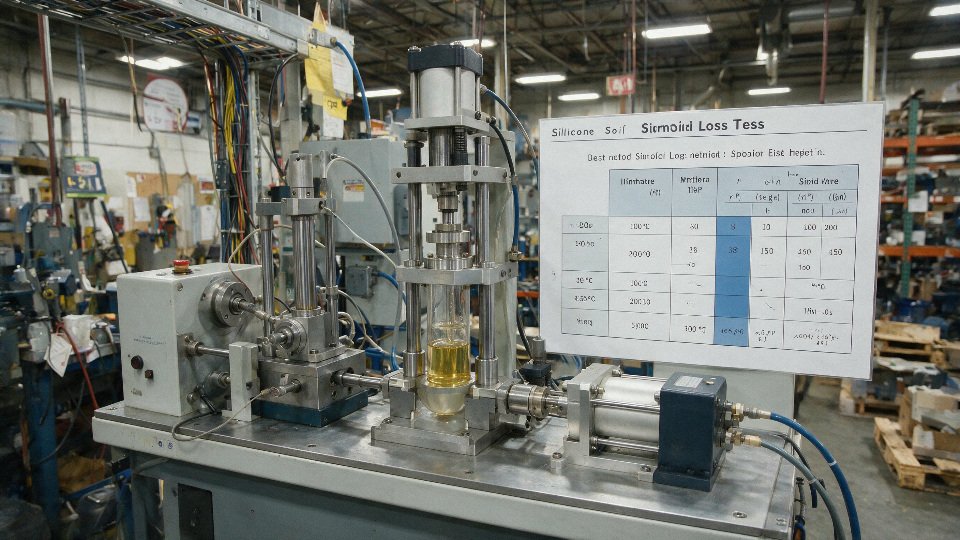
How to verify loss in the field
Lab data is where qualification starts. Plant data is where arguments end.
Use a simple monitoring structure:
- Track reservoir or vessel mass at a fixed temperature condition.
- Record top-up volume and date, not just annual consumption.
- Correlate consumption with actual operating temperature, not controller setpoint only.
- Inspect nearby cooler surfaces for condensate or oily film.
- Check fluid viscosity on used samples at defined intervals.
- Note process changes that alter exposed area, dwell time, or ventilation.
Temperature-correlated trending is usually the most revealing. If consumption jumps only in summer, or only when a line runs hotter after a throughput increase, you are looking at volatility behavior. If loss rises without a matching temperature shift and the fluid darkens or thickens irregularly, degradation, leakage, or contamination may be involved instead.
One practical warning: top-up records are often noisy because maintenance crews pull from partial drums, estimate by sight glass, or skip entries on night shift. If the fluid is expensive or the application is sensitive, install a repeatable weigh-and-record routine. It is boring, but it beats arguing over whether the supplier changed something when the plant never had baseline numbers.
Selecting the right grade
A silicone oil grade should be selected from the operating envelope backward, not from viscosity alone. In practice, the right choice is the fluid that survives your actual temperature peaks, residence time, pressure level, air turnover, and cleanliness requirement with acceptable handling and total operating cost; the wrong one often looks fine on a datasheet until the line runs hot, sees vacuum, or sits open to moving air for months.
Start by defining the duty in terms a supplier can actually work with. If those basics are vague, grade selection becomes guesswork and volatility claims get misused.
Define the operating envelope before you compare products
Procurement teams often ask for “low volatility silicone oil” as if that were a complete specification. It is not. A fluid that behaves well in a sealed room-temperature damper may lose mass too fast in a vented hot bath, and a grade that is stable in intermittent service may not hold up in a system that stays at temperature continuously.
At minimum, lock down these conditions:
- Continuous operating temperature
- The normal stabilized fluid temperature during production
- Not just heater setpoint; measure the fluid or wetted surface temperature if possible
- Peak temperature and duration
- Short excursions matter, especially if the fluid sits on hot metal
- A ten-minute overshoot each shift can change the selection
- Pressure condition
- Atmospheric, slight positive pressure, partial vacuum, or full vacuum exposure
- Lower pressure usually raises evaporation risk sharply, especially for lighter fractions
- Air exchange or gas sweep
- Open tank, loosely covered reservoir, forced ventilation, nitrogen blanket, or sealed loop
- Moving air strips volatiles away from the surface and prevents local saturation
- Expected service life
- Hours, weeks, annual fill, or multiyear installed life
- The longer the duty, the more small mass losses become expensive or contamination-critical
- Fluid surface area and film thickness
- A deep closed sump behaves differently from a thin film on a heated web or mold
- Allowed loss and contamination consequence
- Is loss just refill cost, or will condensate foul optics, sensors, contacts, or coated parts?
This is where the main conclusion of the section can fail: if your process sees strong vacuum, very high peak surface temperatures, or strict outgassing limits, a normal industrial screening spec is not enough; you need application-specific testing on the intended hardware or a representative fixture.
Match viscosity grade to function and volatility risk
Higher viscosity silicone oils usually give lower evaporation loss, but that does not make them automatically better. The same molecular weight increase that suppresses volatility also changes pumpability, wetting speed, heat transfer behavior, metering accuracy, start-up torque, and low-temperature handling.
A practical way to think about viscosity grades:
| Viscosity band | Typical advantage | Typical penalty | Where selection often goes wrong |
|---|---|---|---|
| Very low, roughly below 5 cSt | Easy spreading, fast wetting, low drag, easy dosing | Highest volatility risk, easier misting, more migration | Chosen for handling convenience in hot or open systems |
| Low to medium, roughly 10-100 cSt | Balanced flow, manageable pumping, moderate volatility | May still lose lighter fractions in hot vented service | Used without checking long residence time at temperature |
| Medium to high, roughly 100-1,000 cSt | Lower evaporation, better retention on surfaces | Harder metering, slower degassing, higher cold-start resistance | Overselected where fast coating uniformity matters |
| Very high, above 1,000 cSt and up into gum-like grades | Very low mobility, strong film retention | Poor pumpability, slow leveling, handling and cleaning burden | Specified to stop loss when the actual issue is seal or material compatibility |
The mechanism is straightforward: lower-viscosity grades contain shorter chains and, depending on product design, can include a larger proportion of low-molecular-weight species. Those lighter fractions escape first under heat or reduced pressure. Once they leave, the remaining fluid can shift in viscosity and performance, which is why some operators think they are seeing “aging” when it is mostly selective mass loss.
The trade-off flips in cold climates, precision dosing systems, and fast-wetting applications. A 350 cSt fluid may solve volatility complaints in a hot room, but if the line starts at 5 C in winter and the metering pump cavitates or the film no longer levels, you have moved the problem, not solved it. In my experience, this shows up on smaller lines using gear pumps and narrow stainless tubing long before the purchasing side notices it on paper.
Choose chemistry by the failure mode you are trying to avoid
Standard PDMS is the default for good reason. It covers a wide viscosity range, handles many industrial duties well, and usually gives the best cost-to-performance ratio when the environment is not unusually harsh.
Other chemistry options matter when the operating boundary moves:
Phenyl-modified silicone fluids
Use these when low-temperature flexibility, certain optical properties, or specific thermal behavior matter more than lowest cost. In some applications they also help where standard PDMS is being pushed near its practical thermal limit, but the actual benefit depends on formulation and duty cycle, so supplier-specific data matters here.
Specialty modified silicones
These are chosen for a reason, not as a generic upgrade. Depending on modification, they may target:
– improved oxidative resistance
– altered dielectric performance
– changed surface tension or substrate wetting
– controlled compatibility with process chemistries
– optical or release-performance requirements
Do not assume a modified silicone will always reduce evaporation. Some modifications solve one problem and create another, such as poorer compatibility with seals, different deposit behavior, or higher cost without a meaningful volatility benefit in your window.
A more thermally specialized silicone fluid is always the safest procurement choice for hot service.False
If the service is only modestly hot but contamination-sensitive, molecular distribution and devolatilization quality may matter more than choosing a more expensive specialty chemistry. The best grade depends on the dominant failure mode: evaporation loss, oxidation, compatibility, dielectric drift, optical fogging, or low-temperature flow.
Specify volatile content and molecular distribution for contamination-sensitive service
For some buyers, “silicone oil” is enough. For others, especially in electronics, optics, enclosed devices, coating lines, and vacuum-adjacent processes, it is nowhere near enough.
Ask for these product controls where contamination matters:
- Volatile content limit
- Industrial tightly controlled grades are often specified below about 0.5 wt%, but the meaningful limit depends on the test method and your application sensitivity
- Devolatilization level
- Whether the product has been stripped to reduce low-boiling fractions
- This is often the practical difference between a fluid that runs clean and one that fogs nearby surfaces
- Molecular weight distribution consistency
- A broad distribution can hide a light-end fraction that causes early mass loss even when nominal viscosity looks acceptable
- Batch-to-batch consistency
- Especially important if the fluid is in a metered or validated process
A common buying mistake is to compare viscosity only. Two fluids labeled at the same nominal viscosity can behave differently if one has better removal of low-molecular-weight components.
Check compatibility before blaming evaporation
A surprising amount of “evaporation loss” in plants is actually absorption, leakage, wicking, or material attack. Before you move to a higher-viscosity or more expensive fluid, check the system around it.
Review compatibility with:
- Elastomers
- Swell, softening, shrinkage after extractables loss, seal lip changes
- Verify against the current seal compound, not just “rubber” as a category
- Plastics
- Stress cracking, softening, dimensional change, or additive extraction
- Coatings and adhesives
- Surface defects, fisheyes, cratering, poor paint adhesion, release problems
- Metals and surface finishes
- Usually good compatibility, but deposits on hot metal can be mistaken for decomposition or evaporation residue
- Process chemicals
- Cleaners, fluxes, solvents, amines, oxidizers, and catalytic residues can change behavior fast
If you have unexplained loss, inspect fittings, vent points, pump seals, absorbent insulation, and overflow habits before rewriting the fluid specification. I have seen open drums with damaged bungs cause more trouble than the fluid grade itself.
Include compliance and documentation in the buying spec
For many industrial uses, compliance is a paperwork issue until it suddenly is not. If the fluid enters a regulated product, export program, food-related process, or electronics assembly environment, documentation should be part of supplier qualification from the start.
Common requirements include:
- RoHS declarations
- REACH-related declarations or SVHC communication as applicable
- Food-contact relevance where the application genuinely requires it
- Application-specific purity, fogging, outgassing, or ionic contamination requirements
- Certificate of analysis items tied to your risk
- Change notification expectations for raw materials or process changes
Do not assume one declaration covers every region or end use. The buyer should match the paperwork to the sold product, not to a generic chemical family.
Evaluate supply quality, not just product price
A cheaper silicone oil with higher evaporation or weaker batch control can cost more once the line is running. The cost path is not subtle:
- more frequent top-up or replacement
- deposits or condensate on nearby parts
- maintenance labor for cleaning vents, covers, optics, heaters, or molds
- process drift as viscosity changes over time
- scrap or rework from contamination-sensitive surfaces
- unplanned supplier qualification work when one batch behaves differently
When I qualify a supplier, I care about these points as much as the nominal grade:
- Integrated upstream capability
- Better control of intermediates can improve consistency and impurity management
- Impurity control discipline
- Particularly for low-volatility and contamination-sensitive service
- Packaging integrity
- Clean drums, proper seals, moisture and dirt control, no damaged closures
- Technical response time
- If a line issue starts, waiting two weeks for a usable answer is not acceptable
- Ability to support application review
- A competent supplier should help map grade choice to temperature, ventilation, and life requirement rather than sending a generic datasheet
If you are narrowing grades for a hot, contamination-sensitive, or long-life application, send the supplier your substrate material, contaminant concern, approximate layer thickness or fluid volume, working area, required finish, target service temperature profile, and clear photos of the part or equipment zone. A manufacturer with broad silicone fluid capability can usually screen suitable viscosity and chemistry options, then recommend the next lab or application review step against your actual operating envelope.
Reducing evaporation in service
Most silicone oil loss can be cut without changing chemistry if you first attack heat, exposed area, and unnecessary airflow. In plant terms, the cheapest gains usually come from setpoint discipline, hot-spot cleanup, and better control of open heated surfaces; grade changes help, but they are rarely the first lever to pull.
Cut thermal exposure before you change product
A small temperature reduction can produce a disproportionate drop in volatilization because the lighter fraction leaves faster as vapor pressure rises. That is why a system running “just 10 or 15 degrees hotter for safety” often consumes much more oil than operations expects, especially in open baths, coating pans, and heated transfer zones.
Focus on the places where actual metal temperature exceeds the indicated process temperature:
- Review operating setpoints against the minimum temperature needed for wetting, release, heat transfer, or lubrication.
- Check for hot spots at:
- electric immersion heaters
- cartridge heaters
- poorly tuned steam tracing
- dead zones near vessel walls
- recirculation lines with low flow
- Use insulation selectively:
- insulate tanks, lines, and lids to reduce heat loss
- do not trap heat around seals, sight glasses, or instruments that already run warm
- Tighten start-up and shutdown control:
- avoid long idle heating with no production
- reduce soak time before line speed stabilizes
- cool down in a controlled way rather than leaving a half-full tank hot overnight
The trade-off is simple: lower temperature reduces loss, but it can also raise viscosity in use, slow spreading, and hurt release or pumpability. That is where the conclusion stops holding; if your process already runs near the lower performance limit, temperature cuts alone may create quality drift before they create meaningful savings.
Reduce exposed surface area and residence time
Open surface is where evaporation gets paid for. If the oil sits hot and spread thin, losses rise even when the bulk fluid is a stable grade.
Practical changes include:
- Fit covers or floating lids on open reservoirs where access is not constant.
- Convert open return paths to closed-loop piping.
- Redesign wide shallow sumps into narrower, deeper reservoirs where agitation still works.
- Shorten dwell time in heated troughs and pans.
- In coating or release applications, reduce unnecessary film width and overspray.
- Change application method if possible:
- from open roller flood to metered wipe
- from broad spray to targeted dispense
- from static open bath to enclosed recirculating applicator
A thinner film often helps product usage but can increase evaporation per unit mass because surface-to-volume ratio goes the wrong way. In practice, the best setup is usually a metered application that also minimizes how long the oil stays hot and exposed.
Control airflow and purge conditions
Air movement strips vapor away from the surface and keeps the evaporation driving force high. That matters around ovens, heated baths, doctor-blade coating stations, and any setup with extraction hoods pulled harder than needed.
Check these points:
- Reduce unnecessary cross-drafts from fans or open doors near heated open systems.
- Balance local exhaust so it captures emissions without pulling directly across the liquid surface.
- Review purge gas rate and entry point; a high-flow dry purge can increase loss if it sweeps the headspace too aggressively.
- Where product and safety requirements allow, keep the vapor space compact rather than continuously flushed.
A hood that solves one housekeeping issue can quietly double fluid consumption. I have seen this after a maintenance team upgrades extraction and no one reconnects the process-loss trend.
Use the right grade, but validate the side effects
Higher-viscosity or lower-volatile grades usually reduce evaporative loss, and tightly controlled industrial grades may carry volatile content specifications below about 0.5 wt%, depending on supplier and test method. The mechanism is straightforward: fewer low-molecular-weight components and a heavier fluid distribution mean less material is ready to leave at a given temperature.
Before changing grade, validate:
- dispensing and pump suction behavior
- low-temperature start-up
- wetting or release performance
- foam tendency under agitation
- compatibility with seals and elastomers
- residue or transfer on the part
If blending is considered, do it under controlled validation rather than tote-to-tank improvisation. Blends can separate procurement intent from actual plant performance if refill practice is inconsistent across shifts.
Remove contaminants that change the loss pattern
Not every disappearing kilogram was true evaporation. Contaminants can push the oil into degradation, create light ends, or make the fluid look “more volatile” because color, odor, and viscosity shift at the same time.
Pay attention to:
- metal fines and wear debris
- residual process catalysts
- strong acids or alkalis
- oxidized carryover from adjacent fluids
- cleaning chemical residues
- water ingress where hydrolysis-sensitive additives are present
Good housekeeping matters here. A dirty tank with old residues often behaves differently from a clean tank filled with the same fresh silicone oil.
Separate evaporation from leaks, vents, and handling loss
Before blaming volatility, check the boring failure modes:
- seal weep at pump shafts and agitators
- threaded fittings and instrument tees
- vent condensate losses
- overfill spills during top-up
- drum, pail, or tote transfer losses
- absorbent wipe and cleaning losses
Closed containers, dry-transfer couplings, and disciplined vent management often recover product that was never evaporating in the first place.
Put monitoring on a practical schedule
Use a light-touch routine that operations will actually keep:
- Weekly or per batch: top-up volume trend, visible haze or smoke, leak check
- Monthly: mass balance against production hours or throughput
- Quarterly or at planned shutdown: viscosity check, visual cleanliness inspection, contamination screen if loss rate changed
- After any upset: sample for contamination and compare with retained fresh material
Escalate when you see one of these patterns:
- loss rate rising faster than temperature or throughput would explain
- viscosity drift beyond your internal control band
- new odor, discoloration, or deposits
- repeated top-up with no clear leak found
- process quality issues appearing alongside fluid loss
At that point, the next move is not always a different oil. Sometimes it is a vent redesign, a heater control fix, or sample review with the supplier using your actual operating data and used-fluid sample.
Frequently asked questions
Does silicone oil evaporate at room temperature?
Yes, some silicone oils lose mass at room temperature, but the rate is usually low enough that many plants never notice it unless the fluid is very light, the exposed area is large, or the service runs for long periods. A sealed drum in stores behaves very differently from a thin film on a heated platen, a wipe-down cloth, or an open dosing tray.
Is low-viscosity silicone oil always more volatile?
Usually yes, but not automatically. Lower-viscosity silicone fluids often contain shorter siloxane chains, and those molecules tend to have higher vapor pressure, yet formulation purity and volatile fraction matter too; a tightly controlled low-viscosity grade can outperform a poorly controlled product of the same nominal viscosity.
You can predict evaporation accurately from viscosity alone.False
Viscosity is a useful screening indicator, not a complete predictor. Volatile content, molecular weight distribution, temperature, air exchange, film thickness, and exposure time all affect actual loss.
**Can silicone oil dry out completely?****
It can, if the applied amount is small and the product contains a significant volatile fraction, or if the service temperature and exposure time are high enough. In practice, what people call “dried out” may be one of three things:
– most of the fluid has evaporated
– the lighter fraction has gone, leaving a much thicker residue
– the oil has degraded or migrated away rather than truly evaporated
That distinction matters. A near-invisible film disappearing from a release application is not the same failure mode as a gearbox sump dropping level.
Does silicone oil leave residue after evaporation?
Often it does. If the fluid is not fully volatile, the lighter components leave first and the higher-molecular-weight portion remains as a thin oily film, smear, or tacky residue depending on grade and contamination. On metal, glass, and coated parts, that residual film is sometimes the actual quality problem because it affects paint, bonding, printing, or subsequent cleaning.
What is the difference between volatile and non-volatile silicone fluids?
“Volatile” means a meaningful fraction can evaporate under the intended conditions; “non-volatile” means evaporation is low enough that the fluid is expected to remain functionally present. It is not a strict universal line. Suppliers may describe products this way based on internal specs, test methods, or intended use, so buyers need the actual volatility test condition, not just the label.
Is silicone oil safe for high-temperature applications?
Often yes within the grade’s temperature window, but “safe” has to be checked against the exact fluid, oxygen exposure, dwell time, and equipment design. Silicone oils are used across a wide service range, often roughly from -50 to 200 C depending on grade, but that does not mean every product can sit indefinitely at the top end without loss, residue, or degradation. Verify the supplier’s current temperature recommendation and, for critical service, test under your real heat soak and ventilation conditions.
How can I tell whether I am seeing evaporation or leakage?
– Check location: leakage tracks to seals, fittings, shaft exits, sight glasses, drains
– Check pattern: evaporation shows broad area thinning; leakage shows directional wetting, drips, or pooling
– Check housekeeping evidence: dust sticking around a flange usually points to leakage
– Weigh a controlled sample in an open dish near the process; if mass drops there too, volatility is involved
– Use UV dye or absorbent pads only if compatible with the fluid and process
In practice, small systems get misdiagnosed all the time. A breather cap, loose compression fitting, or overfilled reservoir can mimic “high volatility.”
Which data sheet values should I check before buying?
– viscosity grade and its test temperature
– volatile content, if reported
– recommended service temperature range
– flash point or other relevant safety data
– density, if your dosing is volumetric
– compatibility notes with elastomers, plastics, coatings, and process materials
– lot-to-lot control or purity information for sensitive applications
If the application is residue-sensitive, ask what test method was used for volatile content and what the typical value is, not only the specification limit.
Does vacuum service require a special silicone fluid?
Usually yes. Under vacuum, components that are acceptable in ambient service may outgas enough to contaminate chambers, optics, sensors, or downstream surfaces. The preferred fluid depends on pressure level, temperature, exposed area, and contamination tolerance; there is no responsible one-number answer without those inputs.
Can evaporation change viscosity and performance over time?
Yes. As lighter fractions leave, the remaining fluid can shift upward in effective viscosity, which changes flow, wetting, damping, heat transfer, release behavior, and pumpability. That is one reason a system can still “have oil present” but stop performing the way it did when fresh.
What to verify before ordering
A silicone oil is ready to buy only when you have bounded the loss mechanism, matched the grade to the duty, and confirmed the supplier can hold that quality lot after lot. If you order on viscosity alone, you can easily get a fluid that runs fine on day one but drifts out of spec on mass loss, cleanliness, or refill interval once the plant gets hot, cycles hard, or sees vacuum.
Start with a short pre-purchase checklist from your own process, not the supplier brochure:
- Temperature range
- Normal operating temperature
- Peak temperature and duration
- Heat-up and cool-down cycling frequency
A fluid that behaves well at 120 C continuous may not hold the same loss profile at 180 C intermittent. Peaks matter.
- Pressure or vacuum condition
- Atmospheric, positive pressure, partial vacuum, or high vacuum
- Whether the oil is in a sealed sump, vented tank, thin film, or exposed surface
Under vacuum, lower-molecular-weight fractions show up fast. That is where volatile content control stops being a paperwork detail and starts affecting production.
- Exposure geometry
- Bulk reservoir, recirculating bath, wiped film, coated surface, open pan, misted application
- Approximate exposed area relative to oil volume
Thin films and high surface-area exposure usually lose mass much faster than the same oil sitting deep in a closed housing.
- Target service life
- Expected run time between refills or maintenance shutdowns
- Whether topping up is acceptable or not
- Whether slight viscosity drift is tolerable
- Allowable mass loss
- Maximum acceptable percentage loss over your service interval
- Any limit tied to contamination, optical haze, electrical reliability, vacuum cleanliness, or deposit formation
Then define the supplier data package you actually need:
- Nominal viscosity grade and allowable batch tolerance
- Volatile content, with test method or internal method description
- Recommended service temperature window, noting that this is grade-dependent and application-dependent
- Batch consistency controls, especially for long-term approvals
- Purity profile, where relevant to your use: low volatiles, residue risk, odor, ionic or trace contamination if sensitive equipment is involved
- Compliance documents required by your market or customer specification
A low volatile content spec alone is enough to approve a silicone oil for any heated application.False
Low volatile content is useful, but approval still depends on temperature, exposure geometry, pressure condition, service life, and compatibility with substrates and equipment.
Ask for validation that matches your application rather than relying on generic data:
- Heated weight-loss testing at your actual temperature range and dwell time
- Outgassing evaluation if the oil will see vacuum, sealed electronics, optics, or sensitive surfaces
- Compatibility trials with your substrate, seals, elastomers, coatings, metals, or plastics
- Equipment-condition trials if shear, recirculation, or venting pattern could affect performance
Unit price is only part of the buy. In practice, the cheaper oil gets expensive when it needs frequent top-up, contaminates nearby parts, shortens maintenance intervals, or creates reject cost from haze, residue, or unstable lubrication. The preferred choice flips when refill labor, downtime exposure, and product scrap cost exceed the premium for a tighter-controlled grade.
For global or multi-year programs, also verify manufacturing and supply reliability:
- Stable production capability across the required viscosity range
- Quality consistency over repeated batches
- Scalable delivery for forecast growth
- Export documentation and routine technical support
- Sample-to-production continuity, so the approved sample is representative of future supply
If you want a recommendation that is technically usable, send the operating conditions: substrate material, contaminant or contact media if any, approximate layer thickness or fill condition, working area or exposed geometry, required finish or cleanliness level, target rate or service life, and clear part photos or samples where relevant. SiliconChemicals can review the application, recommend a suitable silicone oil grade, provide technical data, and arrange samples or customized evaluation support based on the duty you actually need to run.