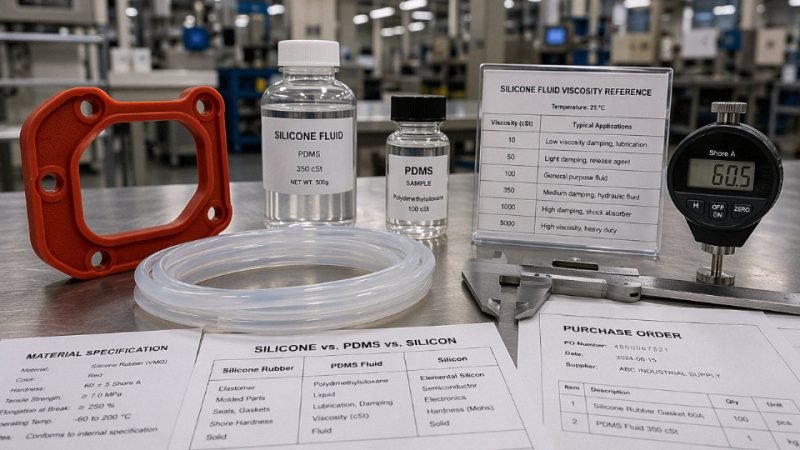
Call it the wrong material on a drawing or purchase order and the trouble usually shows up on the floor: a gasket arrives as “silicon” instead of silicone rubber, a fluid is quoted without viscosity, or a molded seal is supplied at the wrong Shore A hardness. Then maintenance is trimming parts, production is waiting, and procurement is arguing over returns while a line that should be running is burning labor and delivery margin. The fix starts with using the right alternate names for the exact silicone family you mean.
Another name for silicone is polysiloxane, especially in chemistry and material specifications. In industry, people may also say silicone rubber, silicone elastomer, silicone oil, silicone fluid, or PDMS, depending on the form. “Silicon” is not the same material; it is the elemental raw material used to make many silicone compounds.
That naming gap is where a lot of real purchasing mistakes begin. A plant engineer may care about a molded part surviving roughly -50 C to 200 C, while a buyer sees only the word “silicone” on a quote and misses whether it is a 20 Shore A soft seal, an 80 Shore A keypad, or a PDMS fluid anywhere from about 0.65 cSt to well above 1,000,000 cSt. Same word on paper. Very different behavior in service.
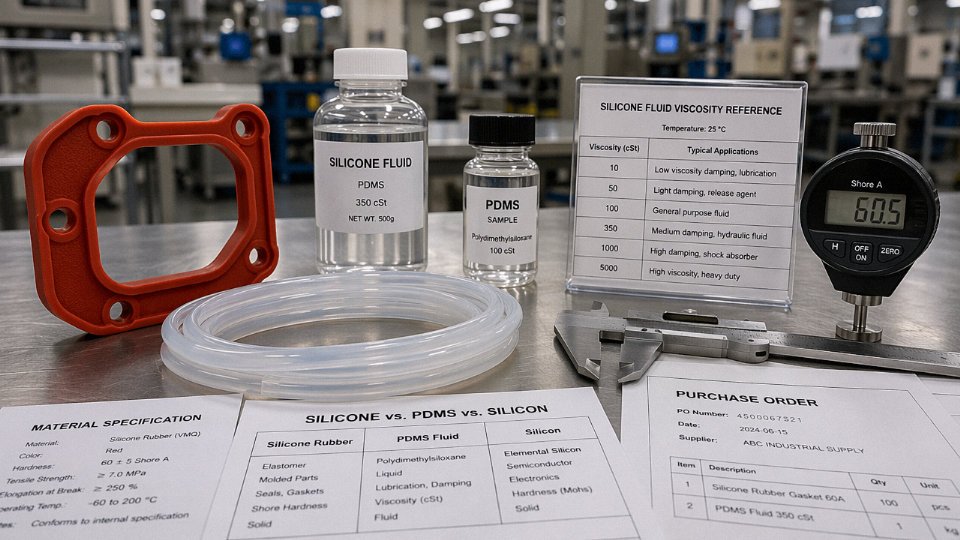
Use polysiloxane when you mean the chemical family
If you want the most technically correct alternate name for silicone, use polysiloxane. That is the chemistry name behind most materials people casually call silicone: silicone rubber, silicone oil, silicone sealant, silicone grease, silicone potting compound, and plenty of release coatings.
A polysiloxane is a polymer made from repeating siloxane units. In plain terms, the main chain alternates silicon and oxygen atoms, usually written in simplified form as Si-O-Si-O-Si. Organic groups are attached to the silicon atoms. In many industrial grades those side groups are methyl groups, which is why PDMS, or polydimethylsiloxane, shows up so often in fluid, elastomer, and coating data sheets.
Polysiloxane is the most technically accurate alternate name for silicone when the discussion is about polymer chemistry or material family.True
Most commercial silicone materials are based on polymers containing repeating siloxane units, although finished silicone products may also include fillers, curing agents, pigments, process aids, adhesion promoters, and other additives.
The siloxane backbone is why silicone behaves differently
The useful trick is the backbone. Carbon-based rubbers such as EPDM, nitrile, and natural rubber rely mainly on carbon-carbon chains. Polysiloxanes rely on a silicon-oxygen backbone. That Si-O bond is one big reason silicone materials tolerate heat, oxygen, ozone, sunlight, and outdoor exposure better than many organic polymers.
On the plant floor, that difference shows up in boring but expensive places: oven door seals that stay flexible, connector boots that do not crack after UV exposure, gaskets near hot-air ducts, and potting compounds that survive thermal cycling without turning brittle. General silicone elastomer grades are often used around roughly -50 C to 200 C, give or take, depending on formulation, load, compression set requirements, exposure time, post-cure, and whether hot oil, steam, or chemicals are present. Specialty grades can stretch that window, but the purchase order needs to say which property must survive, not just quote a temperature.
The Si-O chain also rotates easily compared with many carbon backbones. That is a simple way to explain silicone’s flexibility. Even at low temperature, many polysiloxane materials remain rubbery instead of glassy. That is not magic. It is molecular mobility.
Weatherability comes from the same basic structure. Oxygen, ozone, and UV tend to punish unsaturated carbon chains. A polysiloxane backbone is less vulnerable. Wrong material choice here is not theoretical; a cheap organic rubber boot on an outdoor actuator may look fine at commissioning, then split after a summer of sun and ozone. The replacement cost is rarely the boot. It is the access, the shutdown window, and the angry maintenance planner.
Planned diagram labels: silicon atom, oxygen atom, methyl group, repeating unit, flexible backbone.
Where the word belongs
Use polysiloxane in technical literature, polymer chemistry discussions, patents, supplier data sheets, regulatory files, and high-level material classification. It is the right word when you are describing the polymer family rather than the finished part.
In procurement, I would not write only “polysiloxane gasket” on a requisition and expect the warehouse to receive the correct item. That is too broad. But in a material justification, failure analysis, or specification note, “polysiloxane-based elastomer” tells the materials engineer what family you mean.
A molded silicone rubber part might be 10 Shore A to 80 Shore A in typical industrial use, depending on filler loading, cure system, geometry, and supplier compound. A silicone fluid might be a low-viscosity PDMS fluid around 0.65 cSt or a gum-like material above 1,000,000 cSt, depending on molecular weight. Both are polysiloxanes. They will not behave alike in a pump, seal, damper, or coating head.
Do not confuse polysiloxane with nearby terms
| Term | Best use | Practical caution |
|---|---|---|
| Siloxane | The Si-O-Si chemical unit or small molecules containing that linkage | Not necessarily a polymer; some low-molecular siloxanes are volatile fluids |
| Polysiloxane | The polymer family built from repeating siloxane units | Technically accurate, but still not a complete part specification |
| Silicone | Common commercial term for rubbers, fluids, sealants, greases, and resins | Too broad unless grade, cure, hardness, and exposure are defined |
| Organosilicon compound | Any compound containing silicon-carbon bonds | Much broader than silicone; includes materials that are not silicone rubber or silicone oil |
This distinction matters in supplier conversations. If a data sheet says “polysiloxane,” it is usually describing the base polymer. If it says “silicone rubber,” you are dealing with a compound: polymer plus reinforcing silica, cure chemistry, additives, maybe pigment, sometimes processing aids. Those extras decide tear strength, compression set, extractables, and whether the part behaves cleanly in your process.
Side groups tune the material
The organic side groups attached to silicon are not decoration. They steer performance.
Methyl groups are the common workhorse. Polydimethylsiloxane gives the familiar balance of flexibility, temperature resistance, release behavior, and low surface energy. It is the basis of many silicone fluids and general-purpose elastomers.
Phenyl groups can improve low-temperature flexibility and alter thermal and radiation behavior, depending on the formulation. They are not a universal upgrade; they cost more and may change processing.
Vinyl groups are often used as cure sites, especially in platinum-cured or peroxide-cured systems. More vinyl can affect crosslink density, tear strength, elongation, compression set, and cure speed. In molding, that can mean the difference between a stable cycle and parts that look good at demold but fail compression set testing later.
Fuel and oil resistance is where buyers get caught. Ordinary methyl silicone is not automatically good in gasoline, diesel, or hot hydrocarbon oil. For that, suppliers may use modified side groups, including fluorinated groups in fluorosilicone materials. The word polysiloxane tells you the family; it does not guarantee compatibility with every fluid in the plant. Always match the side chemistry and compound to the exposure.
Choose silicone rubber or silicone elastomer for flexible molded parts
For flexible parts, another practical name for silicone is usually silicone rubber or silicone elastomer. That means a cured silicone material that can be compressed, stretched, bent, or squeezed, then returns toward its original shape after the load is removed. Not perfectly. No rubber does that forever. But close enough for gaskets, seals, tubing, keypads, diaphragms, boots, bellows, and molded pads where recovery matters more than stiffness.
In plant language, people say silicone rubber. In engineering specifications, I usually prefer silicone elastomer because it describes both the material class and the mechanical behavior. “Rubber” can mean a lot of things on a purchase order. EPDM, NBR, natural rubber, fluorosilicone, and silicone can all get casually called rubber by someone in receiving or maintenance. “Silicone elastomer, molded, 50 Shore A, platinum-cured, FDA 21 CFR compliant,” leaves much less room for interpretation.
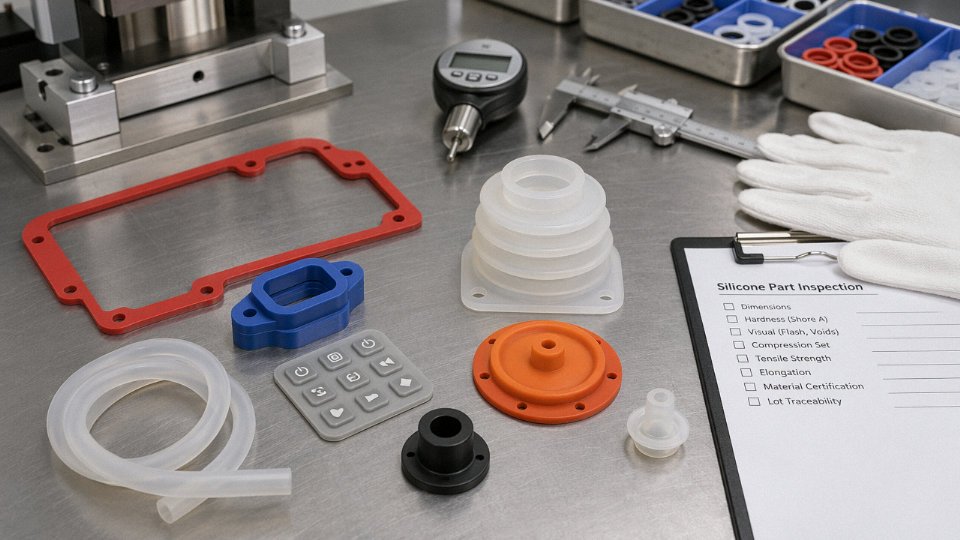
What silicone rubber means on the shop floor
Silicone rubber is not the same thing as uncured silicone fluid, silicone grease, or a silicone release coating. It is a crosslinked elastomer. The curing step, sometimes called vulcanization, ties the polymer chains into a network. That network is why a molded seal rebounds after compression instead of flowing like a paste.
Typical molded silicone rubber parts fall around 10 Shore A to 80 Shore A, depending on filler loading, polymer type, cure chemistry, and part geometry. A soft 20 Shore A gasket may seal a lightly clamped enclosure. A 70 Shore A grommet may survive better where technicians shove wiring through it all day. General grades often handle about -50 C to 200 C, with specialty compounds going lower or higher. Heat aging, steam, oils, cleaning chemicals, and cyclic compression can narrow that useful range fast.
Typical tensile strength might land around 5 MPa to 11 MPa for many commercial molded grades, though reinforced or high-tear grades can differ. Elongation commonly sits somewhere around 150% to 700%. Compression set may range from roughly 10% to 35% under favorable test conditions, but I have seen parts perform worse in real equipment because the groove was badly designed, the clamp load was uneven, or the part sat hot and compressed for months.
The test sheet is not the part.
Silicone elastomer versus silicone rubber in specifications
Use silicone elastomer when writing drawings, validation documents, or controlled specifications. It fits better with ASTM, ISO, medical, aerospace, and automotive language. Use silicone rubber when speaking with molders, maintenance teams, distributors, and many procurement teams. Both can be correct. The risk is assuming they mean enough by themselves.
A typical scenario: a buyer sources a “silicone rubber gasket” from a lower-cost supplier, matches the color and thickness, and skips the cure system and compliance details. The first shipment seals fine in a dry air cabinet. Then sanitation runs a hot alkaline washdown, the gasket swells, takes a set, and starts leaking at the corners. The part was silicone rubber, yes. It was the wrong silicone rubber.
Major industrial forms you will see
| Naming term or form | Correct use case | Typical part examples | Specification caution |
|---|---|---|---|
| High consistency rubber, often called HCR | Compression, transfer, or extrusion processing where gum-like material is practical | Extruded tubing, profiles, oven door seals, molded gaskets | State hardness, cure type, post-cure needs, color, and allowed surface defects |
| Liquid silicone rubber, often called LSR | Injection molding of tight-tolerance, high-volume parts | Keypads, medical components, small seals, connector seals | Confirm platinum cure, flash limits, parting line location, and clean handling requirements |
| Room temperature vulcanizing silicone, often called RTV | Field sealing, potting, bonding, repair, or low-volume casting | Formed-in-place gaskets, electronics potting, maintenance seal beads | Do not treat RTV as equal to molded rubber; adhesion, cure depth, byproducts, and contamination matter |
| Heat-cured silicone rubber | General term for silicone elastomer cured with heat | Molded diaphragms, gaskets, plugs, rollers, sleeves | Too broad unless peroxide versus platinum cure and post-cure requirements are defined |
| Silicone elastomer | Best engineering term for flexible cured silicone material | Any flexible silicone component | Still needs grade, hardness, compliance, temperature exposure, and environment |
| Silicone rubber | Common commercial and manufacturing term | Tubing, seals, mats, boots, molded pads | Too vague for regulated, high-temperature, flame-rated, or chemically exposed service |
Where “silicone rubber” is too vague
Procurement likes short descriptions. Production pays for them later.
If the part touches food, specify the actual food-contact requirement, not just “food-grade silicone.” If it goes into a medical device, define biocompatibility expectations, cure chemistry, extractables, sterilization exposure, and traceability. For electrical cabinets or rail equipment, flame rating can decide whether the compound is acceptable. For optics, semiconductor tools, vacuum equipment, or aerospace hardware, low outgassing and volatile content become serious. For fuel, oil mist, hydraulic fluid, or aggressive lubricants, standard silicone rubber may be a poor choice; fluorosilicone or another elastomer may be needed.
Color is another trap. Red silicone is not automatically high temperature. Translucent silicone is not automatically medical grade. A blue gasket is not automatically detectable or food compliant unless the compound was built and documented that way.
A workable line item reads more like this: “Molded silicone elastomer gasket, 50 to 60 Shore A, platinum-cured, suitable for continuous service at 150 C, low compression set grade, compliant to specified food-contact regulation, supplier certificate required per lot.” Not poetic, but it keeps the wrong material out of stores.
Use PDMS when you mean polydimethylsiloxane fluid or base polymer
PDMS means polydimethylsiloxane. In plant and purchasing language, it is one of the most useful precise names for a large slice of silicone materials, especially silicone fluids and base polymers. Chemically, PDMS has a siloxane backbone, silicon and oxygen repeating along the chain, with methyl groups attached to the silicon atoms. That “dimethyl” part matters. It tells a chemist, compounder, or supplier that you are not asking for a phenyl-modified silicone, a fluorosilicone, a silicone resin, or some specialty hybrid.
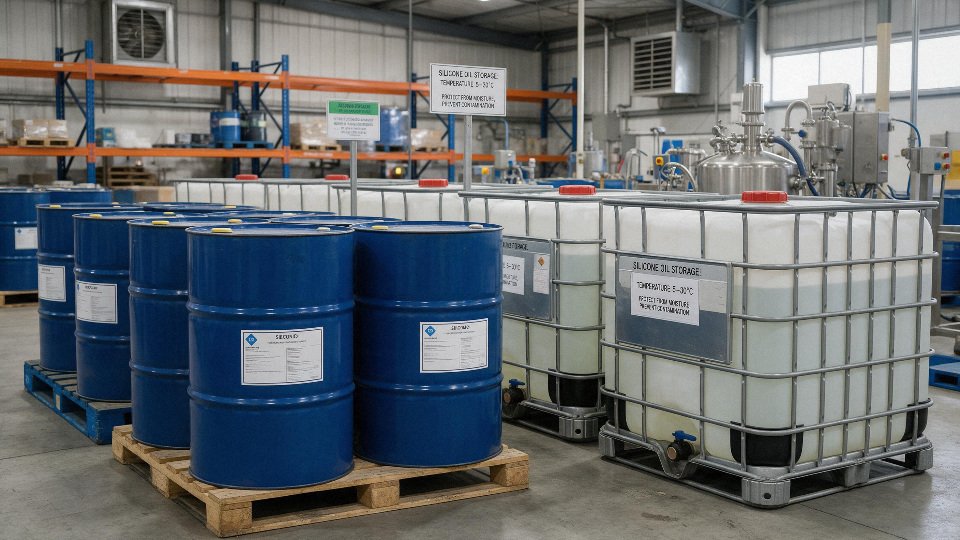
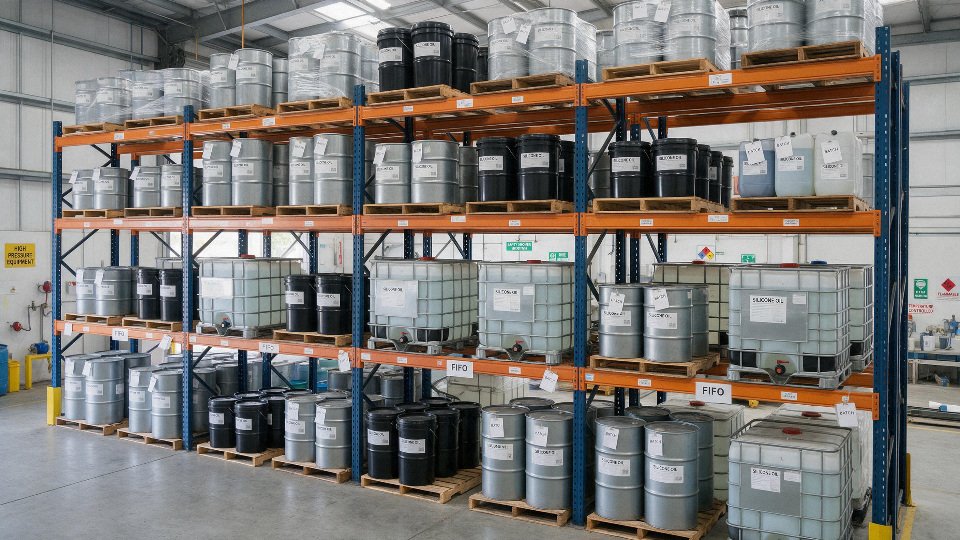
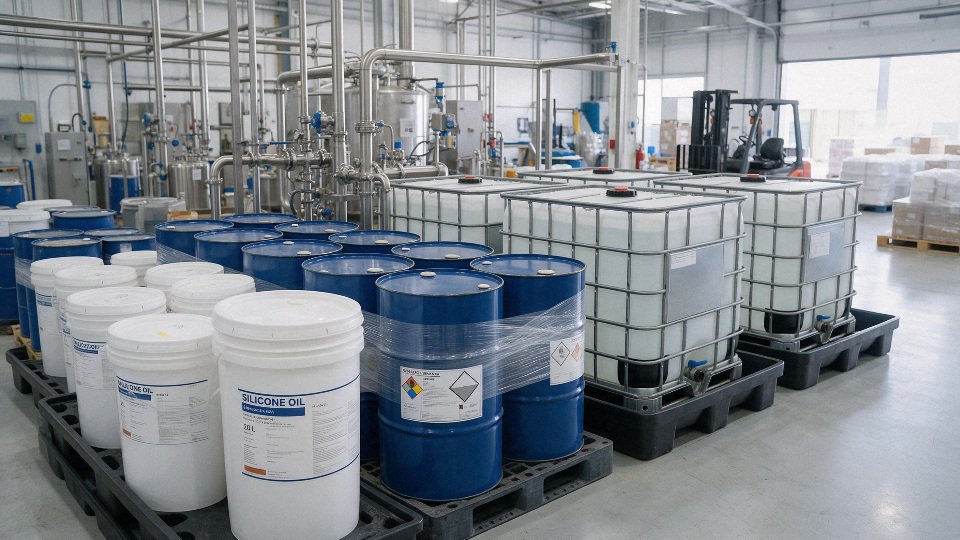
On a shop floor, PDMS usually shows up less as a molecule on paper and more as a drum, pail, IBC, cartridge, or compounded ingredient with a viscosity, lot number, and handling note. It may be a water-clear low-viscosity fluid, a heavy oil that strings from a dip tube, a gum base for elastomer compounding, a gel base, an antifoam ingredient, a release agent, a damping medium, or part of a grease formulation. Same family name, very different behavior.
PDMS is not a safe blanket synonym for every silicone
This is where specifications get sloppy. Someone writes “PDMS” on a drawing or purchase request because they mean “silicone.” The supplier quotes a common silicone fluid. Production expected a cured elastomer, a resin coating, or a fluorosilicone seal material. Now receiving has a certificate that looks technically clean, but the part or process is wrong.
PDMS is a dominant silicone chemistry, not the whole silicone universe. Phenyl silicones are used where low-temperature flexibility, radiation resistance, or refractive behavior may matter. Fluorosilicones are selected when fuel and solvent resistance are the main concern. Vinyl-functional silicones are common in addition-cure systems. Silicone resins behave nothing like soft PDMS oils; they are used for coatings, binders, electrical insulation, and heat-resistant finishes. Specialty copolymers can be tuned for adhesion, paintability, compatibility, or unusual surface behavior.
PDMS is a precise name for many silicone fluids and base polymers, but it is not a correct synonym for all silicone materials.True
PDMS refers specifically to polydimethylsiloxane chemistry. Other silicones may use phenyl, fluoro, vinyl, resinous, or copolymer structures that change processing and service behavior.
Viscosity is often the first practical identifier
For silicone fluids, the viscosity tells you nearly as much as the name. Industrial PDMS fluids commonly run from about 0.65 cSt to more than 1,000,000 cSt, depending on chain length, molecular weight distribution, and whether the material is a straight fluid, high-polymer gum, or modified formulation. The low end feels almost like a light solvent. The high end may barely flow without heat or pressure.
A 5 cSt fluid and a 100,000 cSt fluid can both be PDMS, but nobody in maintenance would mistake one for the other. One may wick into small gaps and spread across stainless like a film. The other may sit in place, damp motion, or act as a base for grease. If you are ordering PDMS for a metering pump, textile finish, release coating, or antifoam blend, viscosity tolerance, temperature at test, and method should be stated. “Silicone oil” alone is too loose.
Planned viscosity reference chart
| PDMS form | Approximate viscosity range | Typical industrial use | Selection caution |
|---|---|---|---|
| Low-viscosity fluid | about 0.65 to 20 cSt | Carrier fluid, spreading agent, light release aid, lab or calibration use | Higher volatility and easier migration; can contaminate paint or bonding areas |
| Medium-viscosity fluid | about 50 to 1,000 cSt | Lubrication, mold release, antifoam component, surface treatment | Check compatibility with rubber, plastics, inks, and downstream coatings |
| High-viscosity fluid | about 5,000 to 100,000 cSt | Damping, heavy release films, grease base, process additive | Pumping and mixing become slower, especially in cold storage |
| Very high-viscosity oil or gum-like polymer | about 100,000 to more than 1,000,000 cSt | Elastomer base, gel base, damping compound, specialty compounding | May need heated handling, strong mixers, or supplier-prepared masterbatch |
| Gum stock | often specified by plasticity or molecular weight rather than simple cSt | Silicone rubber compounding, extrusion, molding | Do not treat it like a pourable fluid; packaging, milling, and cure system matter |
Selection factors that bite later
PDMS is often chosen because it is thermally stable, hydrophobic, electrically useful, and has very low surface tension. General silicone elastomer grades may serve around -50 C to 200 C, with specialty grades beyond that, but fluid choice depends on volatility, oxidation conditions, exposure time, and contamination limits. A light PDMS oil near a hot zone can slowly disappear, smoke, or plate out on cooler surfaces. A heavy grade may survive better but create cleaning problems if it migrates.
Electrical behavior is another reason PDMS gets specified. It can work well as a dielectric fluid or insulating compound, but moisture, fillers, ionic contamination, and cure byproducts change the real result. Procurement should not substitute a cheaper “equivalent silicone fluid” into an electrical assembly without dielectric data from the actual grade. I have seen that shortcut turn a tidy savings line into rework and argument.
Compatibility is the ugly one. PDMS can swell some materials, interfere with adhesives, poison paint lines, and cause fisheyes in coatings at painfully low contamination levels. One open pail near a finishing area is sometimes enough to start a week of finger-pointing. If the plant has painting, printing, bonding, or plasma treatment nearby, treat free PDMS fluids with discipline: closed containers, dedicated transfer tools, labeled rags, and no casual use as a “nice slippery lube” on everything.
Right name, right viscosity, right functional group. That is the practical rule. Use PDMS when the material truly is polydimethylsiloxane fluid, gum, gel base, or base polymer. Use broader silicone language when the chemistry is not yet known.
Separate sealant names from polymer names in maintenance and construction work
On a work order, “use silicone” usually means “use a tube of silicone sealant.” That is shop-floor language, not a material specification.
A silicone sealant is a formulated product. The silicone polymer is only the backbone of the material. The cartridge, sausage pack, pail, or two-part kit usually also contains curing agents, fillers, adhesion promoters, plasticizers or process oils, pigments, rheology modifiers, fungicides in sanitary grades, and other additives the operator never sees. Two sealants can both be called silicone and behave very differently on aluminum curtain wall, stainless washdown equipment, FR-4 circuit boards, painted panels, or food-contact guarding.
RTV silicone is a product cure description, not a precise name for every silicone material.True
RTV means room temperature vulcanizing; it may describe one-part sealants, two-part sealants, adhesives, potting compounds, and gasket makers using different silicone polymers and cure systems.
RTV silicone is a curing method, not the whole family name
RTV stands for room temperature vulcanizing. In practice, that means the material crosslinks at ambient plant or site conditions rather than needing a hot press or oven cure. One-part RTV sealants normally cure by moisture moving in from the exposed surface. That is why a thick bead skins over but can stay soft inside for days, especially in a cold maintenance shop in winter. Two-part RTV systems cure through the mixed mass and are used where deep-section cure matters: potting boxes, bonding assemblies, making field gaskets, or sealing larger cavities.
A common mistake is to ask purchasing for “RTV silicone” as if that narrows the choice. It does not narrow it enough. A vinegar-smelling acetic cure tube from the storeroom and a platinum addition-cure potting compound can both fall under the broad RTV label, yet one may attack copper and the other may fail to cure if somebody wiped the part with the wrong amine-containing cleaner.
Cure chemistry decides compatibility
Acetic cure silicone releases acetic acid during cure. The odor is obvious: vinegar. It is cheap, common, and often bonds well to glass and ceramic. Around copper, brass, some galvanized parts, bare steel, and sensitive electronics, it can create corrosion trouble. I have seen terminal strips turn green because someone treated an electrical enclosure like a bathroom sink.
Neutral cure is the broad bucket maintenance people use for non-acid systems. It is usually safer around metals and many construction substrates, though “neutral” does not mean universally compatible.
Oxime cure silicones release oxime byproducts. They have been widely used for construction and industrial sealing because they are less corrosive than acetic systems and handle many metals reasonably well. Check current regulatory and customer requirements; some oxime chemistries have come under more scrutiny, and large buyers may restrict them.
Alkoxy cure silicones release alcohols, often with lower odor and good compatibility on many metals, plastics, and painted assemblies. They still need clean surfaces and moisture. A bead trapped between two nonporous parts may cure slowly unless the joint was designed for it.
Addition cure silicones, often platinum-catalyzed two-part systems, cure without the same condensation byproducts. They are common in electronics potting, medical-type molding, and higher-control applications. Their weakness is cure inhibition. Sulfur, amines, some tin-cure residues, latex gloves, certain tapes, and contaminated mixing equipment can leave sticky patches that look like bad material but are really a process problem.
Why the shorthand becomes risky
Maintenance teams say “silicone” because the immediate job is usually stopping leaks, sealing gaps, bonding a cover, or replacing a formed gasket with a bead. The shorthand works until the application is less forgiving.
In electronics, cure byproducts and ionic contamination can lead to corrosion or leakage paths. On metals, the wrong cure system can stain or corrode. On plastics, adhesion can be poor, or plasticizer migration can leave a greasy bond line. In cleanrooms and paint shops, low molecular weight siloxanes can create fisheyes, contact defects, or contamination complaints that are painful to trace. Around food-processing equipment, the question is not just “is it silicone?” but whether the grade meets the plant’s food-zone rules, cleaning chemical exposure, and temperature swings.
General silicone elastomers can often tolerate roughly -50 C to 200 C, depending on grade, filler package, compression state, and exposure time. A sealant joint is not automatically rated the same way. Thin beads, high movement, steam cleaning, caustic foam, oils, UV, and poor surface prep all reduce real life.
What to put on the specification or purchase request
A usable sealant description should carry enough detail that procurement cannot substitute the wrong tube just because the color matches.
| Specification item | What to state |
|---|---|
| Cure type | Acetic, neutral, oxime, alkoxy, addition cure, one-part, or two-part |
| Movement capability | Common building sealants may be around plus or minus 25% to 50%, depending on test standard and joint design |
| Modulus | Low modulus for moving joints; higher modulus where stiffness and bond strength matter |
| Substrates | Aluminum, stainless, glass, painted steel, PVC, polycarbonate, concrete, FR-4, gasket flanges |
| Service temperature | Use a realistic operating range, not only peak temperature |
| Exposure | UV, washdown chemicals, oils, fuels, steam, outdoor weather, immersion, food-zone cleaning |
| Certifications | FDA, NSF, UL, ASTM, ISO, fire rating, cleanroom, electrical, or customer-specific requirements |
Troubleshooting box: common sealant naming failures
Vinegar odor after application
Likely acetic cure. Check nearby copper, brass, electronics, galvanized metal, and enclosed spaces where acid vapor cannot clear.Corrosion or green staining
Wrong cure system, trapped cure byproducts, or contaminated metal. Neutral or alkoxy cure may be needed, but surface prep still matters.Poor adhesion
Oil film, mold release, coolant residue, dusty concrete, wet substrate, incompatible paint, or no primer. Wiping with a dirty rag and solvent from an unmarked squeeze bottle is not surface preparation.Surface contamination in painting or bonding areas
Silicone overspray, uncured smear, or transferred residue from gloves can cause fisheyes and bond failures. Keep sealant work physically separated from paint and adhesive operations where possible.Sticky uncured patches
Possible cure inhibition, expired material, wrong mix ratio, cold conditions, too much bead depth for one-part cure, or contamination from sulfur, amines, or tin-cure silicone residues.Acrylic or polyurethane substituted by mistake
Acrylic caulk may shrink or soften where silicone was expected. Polyurethane may bond strongly but has different UV, chemical, movement, and temperature behavior. The wrong substitution can turn a small leak repair into downtime, scraping, rework, and a very annoyed second shift.
Avoid costly confusion between silicone, silicon, [silica](https://siliconchemicals.com/silica/), silicate, and silane
I have seen purchase orders, SDS files, and maintenance work orders use these five words as if they were spelling variants. They are not. In a plant, that mix-up can turn into wrong material on the dock, a failed incoming inspection, a delayed shutdown job, or a safety review that misses the real hazard.
The terms share a silicon-based chemistry background, but they point to very different materials.
Keep the core meanings straight
Silicon is the chemical element, symbol Si. It is a hard, brittle metalloid used in semiconductors, photovoltaic cells, aluminum alloys, steelmaking additions, and as a feedstock for many silicon-based chemical processes. If a buyer orders “silicon,” the supplier may quite reasonably quote silicon metal lumps, powder, wafers, or alloy-grade material. None of that is silicone rubber.
Silicone is a polymer family based on siloxane chemistry, with a backbone made from silicon and oxygen atoms and organic side groups attached. It is not melted silicon. It is not a pure element. In factories, silicone might arrive as rubber compound, molded gaskets, sponge sheet, tubing, grease, fluid, release coating, sealant, potting gel, or an RTV adhesive. That wide product spread is useful, but it makes sloppy wording risky.
Silica is silicon dioxide, SiO2. Think sand, quartz, glass raw material, fumed silica, precipitated silica, desiccant gel, mineral filler, and reinforcing filler in rubber compounds. Silica can be an ingredient inside a silicone rubber formulation, especially where reinforcement or rheology control is needed, but silica itself is not silicone. The handling risks can also be different; fine respirable silica dust deserves serious control, not casual sweeping with an air hose.
Silicate refers to a broad class of silicon-and-oxygen compounds, often with metals such as sodium, potassium, calcium, magnesium, or aluminum in the structure. Silicates show up in glass, ceramics, minerals, water treatment chemistry, refractory materials, detergents, and inorganic binders. Sodium silicate, for example, may be sold as “water glass” and behaves nothing like silicone sealant, even though both names sound close to a non-specialist.
Silane is a silicon-containing compound used as a coupling agent, adhesion promoter, surface treatment, crosslinking chemical, or intermediate. In practical terms, silanes often help bond organic polymers to inorganic surfaces such as glass, metal oxides, mineral fillers, or fiberglass. Some silanes are moisture-sensitive, flammable, corrosive, or reactive enough to require tighter storage and handling rules than a maintenance buyer may expect from the word “silicone.”
Silicone is not the same material as silicon, silica, silicate, or silane, even though all five terms are connected to silicon chemistry.True
Silicon is the element Si; silicone is a siloxane-based polymer family; silica is SiO2; silicates are silicon-oxygen compounds; and silanes are silicon-containing chemical compounds often used for surface treatment or as intermediates.
Quick comparison for purchasing and engineering control
| Term | Basic meaning | Typical form | Common industrial use | Mistake to avoid |
|---|---|---|---|---|
| Silicon | Chemical element, Si | Metal lumps, powder, wafers, alloy additions | Semiconductors, solar cells, aluminum alloys, chemical feedstock | Do not specify “silicon” when you need silicone rubber, oil, sealant, or tubing |
| Silicone | Siloxane-based polymer family | Rubber, elastomer, fluid, grease, gel, sealant, coating | Gaskets, seals, tubing, lubricants, release agents, encapsulation, caulks | Do not assume one silicone grade fits all temperatures, fuels, food contact, or cure systems |
| Silica | [Silicon dioxide](https://siliconchemicals.com/silica/), SiO2 | Sand, quartz, fumed powder, precipitated powder, gel | Glassmaking, fillers, rubber reinforcement, desiccants, mineral raw material | Do not treat fine silica powder like harmless “silicone dust”; dust exposure controls may be required |
| Silicate | Silicon-oxygen compound class | Liquids, powders, minerals, glassy solids | Ceramics, glass, water treatment, binders, refractory systems | Do not substitute silicate binder for silicone adhesive unless the process was designed for it |
| Silane | Silicon-containing reactive compound | Liquids, vapors, specialty chemicals | Coupling agents, adhesion promoters, surface treatment, intermediates | Do not store or handle silanes as if they were ordinary silicone fluids without checking SDS details |
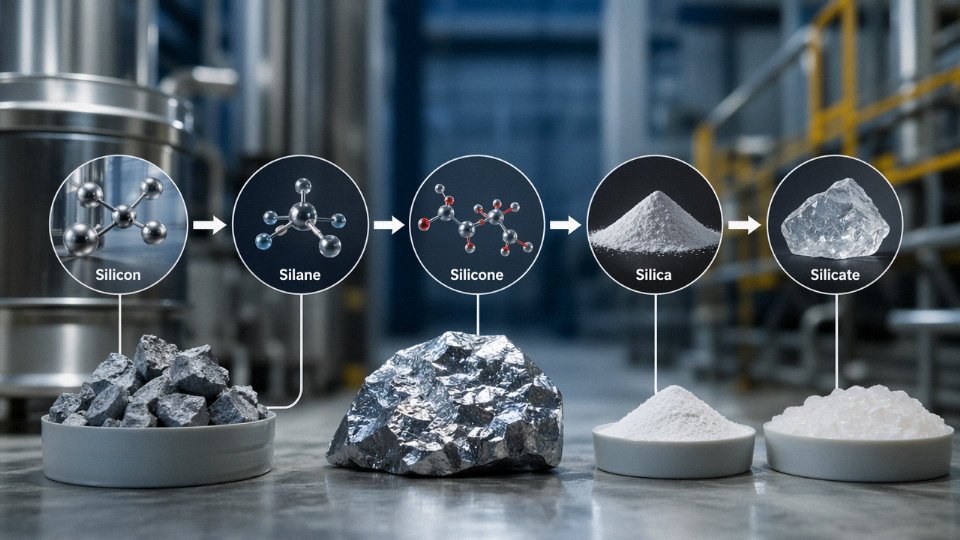
A typical procurement error looks boring until the truck arrives
Say maintenance needs silicone rubber sheet, roughly 3 mm thick, for a temporary oven door gasket. The work order says “silicon sheet” because someone typed fast. Procurement sends that phrase out to a general industrial supplier. One quote comes back for silicon steel sheet. Another supplier asks whether semiconductor-grade silicon wafer material is required. A third ignores the ambiguity and quotes a silicone sponge sheet, but with no temperature rating, no hardness, and no cure chemistry listed.
Now the shutdown window is two days away. Receiving has material that does not match the gasket drawing, quality cannot release it, and maintenance starts asking whether they can “make it work.” That is where scrap and downtime are born.
A similar mess happens with silica. If a compounder asks for fumed silica as a reinforcing filler and the PO says “silicone powder,” the buyer may receive silicone resin powder, ground silicone rubber, or no-bid responses from suppliers who know the wording is wrong. If the plant actually needed silica gel desiccant for packaging, “silicone gel” could send the order toward soft encapsulation gel instead. Same warehouse dock. Completely different material behavior.
My usual rule is simple: write the functional noun and the chemistry together. Use phrases such as “platinum-cured silicone rubber tubing,” “PDMS silicone fluid, 350 cSt,” “fumed silica filler,” “sodium silicate solution,” or “aminosilane coupling agent.” Then add the grade, specification, supplier part number, SDS reference, and acceptance criteria. Short names are fine in conversation at the bench. They are not fine as the only description on a purchase order.
Match the alternate name to the specification, data sheet, and purchase order
The safest alternate name for silicone is not chosen in a vocabulary exercise. It is chosen by the document you are writing and the risk sitting behind that document. A design drawing needs enough material definition for engineering control. A purchase order needs enough commercial clarity to prevent substitution. An inspection plan needs measurable acceptance points. A maintenance instruction needs words a mechanic can act on at 2 a.m. without guessing.
That sounds basic, but this is where plants lose time. I have seen “silicone gasket” on a bill of materials turn into three different parts over a few years: one peroxide-cured red rubber, one platinum-cured translucent LSR, and one low-cost sponge strip. All were “silicone” to somebody. Only one actually survived the washdown chemical and compression set requirement.
Use a naming hierarchy, not a single label
For controlled industrial work, build the name from broad to narrow:
- Material family: silicone, polysiloxane, silicone elastomer, silicone rubber, PDMS-based fluid, RTV silicone sealant.
- Exact polymer or compound type: liquid silicone rubber, high-consistency rubber, fluorosilicone, silicone sponge, platinum-cured LSR, peroxide-cured silicone rubber.
- Grade, standard, or specification: supplier grade, ASTM method references, automotive or aerospace material spec, medical or food-contact grade where applicable.
- Curing system: platinum addition cure, peroxide cure, moisture-cure RTV, condensation cure.
- Physical property targets: hardness, tensile strength, elongation, tear resistance, compression set, viscosity, density, service temperature.
- Compliance requirements: FDA food-contact status, USP Class VI, ISO 10993, UL 94, RoHS, REACH, or customer-specific restricted substance rules.
- Supplier part number and revision: the boring line that often prevents the most expensive mistakes.
For molded silicone rubber parts, hardness is usually one of the first properties to lock down. Typical molded silicone parts run roughly 10 Shore A to 80 Shore A, depending on whether the part is a soft seal, keypad, diaphragm, bumper, or structural gasket. General elastomer grades often sit around -50 C to 200 C service temperature, but that depends heavily on grade, exposure time, compression, media contact, and whether the part sees hot air, steam, oil, fuel, or cleaning chemicals. Silicone fluids can be even broader; common industrial PDMS fluids may range from about 0.65 cSt to more than 1,000,000 cSt, depending on whether the buyer needs a thin heat-transfer fluid, release agent, lubricant base, or thick damping fluid.
A purchase order that says only 'silicone gasket' is not specific enough for a controlled industrial or regulated application.True
The term does not define polymer type, cure chemistry, hardness, compliance status, color, tolerances, traceability, or approved supplier grade, so substitution risk remains high.
Weak wording versus workable wording
A weak description is short, but it pushes the risk downstream.
| Document line | Problem | Better wording |
|---|---|---|
| Silicone gasket | No cure system, hardness, compliance, color, or drawing control | Platinum-cured liquid silicone rubber gasket, 50 Shore A target, food-contact compliant, blue, per drawing tolerance, supplier grade and lot traceability required |
| Silicone tube | Could mean medical tubing, peroxide-cured industrial tube, or cheap general-purpose hose | Platinum-cured silicone tubing, inner diameter and wall tolerance stated, USP Class VI if required, clear, packaged capped and bagged |
| Silicone oil | No viscosity, fluid type, additive package, or certificate requirement | PDMS fluid, 100 cSt nominal at 25 C, clear, non-reactive grade, certificate of analysis with viscosity range |
| RTV silicone | Product form only, not enough for performance | Neutral-cure RTV silicone sealant, specified temperature range, adhesion surfaces listed, skin time and full-cure conditions from approved technical data sheet |
I do not love over-specified purchase orders for commodity maintenance items. They slow buying and irritate suppliers. But for regulated, high-temperature, food-contact, medical, electrical, automotive, or aerospace work, loose naming is false economy.
Let standards and certifications drive the name
If the part touches food, the description should not stop at “food-grade silicone.” Say what evidence is required. FDA food-contact compliance may be relevant for processing equipment, seals, tubing, and transfer components. USP Class VI and ISO 10993 belong in medical or biocompatibility conversations, but they are not interchangeable with FDA food-contact rules. UL 94 matters when flame behavior is part of the electrical or enclosure requirement. ASTM methods are useful for defining how hardness, tensile strength, tear, compression set, and aging results are measured.
Automotive and aerospace specifications can be stricter again. They may control volatile content, outgassing, fuel resistance, low-temperature flexibility, traceability, shelf life, and change notification. In those environments, using the supplier’s casual product nickname on the drawing is asking for trouble.
Ask for the right supplier documents
Request a technical data sheet before approval so engineering can review properties and test methods. Request a safety data sheet for chemicals, sealants, uncured compounds, fluids, adhesives, and anything maintenance will store or dispense. Ask for a certificate of analysis when each lot needs measured values, such as viscosity, hardness, density, or cure-related checks. Use a certificate of conformance when the supplier must state the shipment meets a drawing, standard, or purchase specification.
For critical parts, require lot traceability and change-control notification. That means the supplier cannot quietly change compound, pigment, cure package, production site, post-cure cycle, or approved raw material without telling you. Pigment changes sound harmless until an optical sensor, food-contact file, or laser marking process starts misbehaving.
Engineer and buyer checklist before releasing the order
Check these items before the drawing, bill of materials, or purchase order goes live:
- Application temperature range, including startup, cleaning, sterilization, and nearby heat sources.
- Media exposure: water, steam, oil, fuel, acids, alkalis, solvents, product ingredients, ozone, UV, or CIP chemicals.
- Mechanical load: compression, stretch, vibration, abrasion, flex cycling, pressure, vacuum, and installation abuse.
- Regulatory requirement: FDA food-contact, USP Class VI, ISO 10993, UL 94, automotive, aerospace, or customer-specific rules.
- Cure chemistry: platinum, peroxide, moisture-cure RTV, condensation cure, or another defined system.
- Color and visual requirement, especially for inspection, sorting, contamination control, or food plant color coding.
- Hardness, geometry, drawing tolerances, flash limits, surface finish, and critical dimensions.
- Shelf life, storage temperature, packaging, cleanliness, bagging, labeling, and lot identification.
- Approved supplier part number, revision level, certificate requirement, and change-control expectation.
Right name, right document, right evidence. That is how “silicone” becomes a controlled industrial material instead of a vague purchasing shortcut.
Select the right silicone term by industry application
A plant mechanic, an electronics process engineer, and a medical device buyer may all say “silicone” and mean three different things. That is not just vocabulary. The wrong term can put the wrong material on a purchase order, and then the problem shows up as swollen seals, inhibited cure, failed audits, scrap batches, or a line stopped while everyone argues over a data sheet.
Automotive and heavy equipment
In automotive work, “silicone rubber” usually means a heat-resistant elastomer used for turbocharger hoses, connector seals, spark plug boots, formed-in-place gaskets, vibration isolators, and protective sleeves near exhaust or charge-air systems. General silicone elastomer grades often sit around -50 C to 200 C, give or take, depending on polymer, filler package, reinforcement, and exposure time. Short peaks may be acceptable. Continuous oil mist or fuel contact is another matter.
For charge-air hoses, the practical term is often reinforced silicone hose, not just silicone. The reinforcement, ply count, liner, and clamp design matter as much as the polymer. For fuel vapor, diesel splash, or hot oil exposure, fluorosilicone rubber is the better term to put in the conversation early. Standard silicone can swell badly in hydrocarbons. I have seen maintenance teams blame the clamp when the real issue was the wrong elastomer.
For engine assembly, RTV gasket maker is a product form. It may be silicone-based, but the buyer should still specify cure type, oil resistance, sensor safety, service temperature, and OEM approval where relevant.
Electronics and electrical assemblies
Electronics teams use a different vocabulary: silicone gel, silicone encapsulant, thermal interface pad, conformal coating, dielectric grease, and silicone rubber keypad. The technical term may be PDMS-based silicone, addition-cure silicone, condensation-cure silicone, or filled thermally conductive silicone.
Here, contamination control can matter more than headline temperature rating. Low outgassing, ionic cleanliness, dielectric strength, flame rating, modulus, and cure chemistry are the usual gatekeepers. A soft potting gel that protects wire bonds is not the same thing as a thermal pad under a power module. Both may be called silicone on the shop floor.
Operational warning: platinum-cure silicones can be inhibited by sulfur, amines, tin residues, some latex gloves, certain masking tapes, and even dirty mixing cups. The result is a gummy surface that never fully cures. Wrong material handling → uncured parts → rework, customer returns, or a batch of assemblies quarantined until quality signs off.
In electronics, the word silicone alone is not enough to define compatibility because cure chemistry, volatility, dielectric behavior, and contamination limits can control whether the material works.True
Two silicone products with similar appearance can have different cure systems, filler packages, outgassing profiles, and electrical properties, so application-specific documentation is needed.
Medical and life science
Medical and life science users tend to say medical-grade silicone, implantable-grade silicone, silicone tubing, silicone membrane, or molded silicone component. Those phrases must be backed by documentation, not assumed from the word silicone. Depending on the application, the file may need biocompatibility testing, extractables and leachables data, cure system details, lot traceability, sterilization compatibility, and change-control commitments.
A short-term peristaltic pump tube, a seal in a diagnostic cartridge, and a long-term implant are not in the same risk category. The material name may look similar; the evidence package is not. In practice, procurement should avoid substituting “equivalent silicone” in regulated work unless engineering and quality approve the exact grade and supplier documentation.
Food, beverage, and pharmaceutical processing
In processing plants, common names include food-grade silicone gasket, platinum-cured silicone hose, sanitary silicone seal, baking mat, and pump tubing. The better specification usually calls out compliance, cure type, hardness, color, surface finish, extractables, and cleanability.
Typical molded silicone rubber parts may run roughly 10 Shore A to 80 Shore A, depending on seal load, compression set targets, and whether the part must flex repeatedly. A very soft tube may pump well but tear early. A harder gasket may survive handling but fail to seal on a slightly warped ferrule.
Temperature cycling is a quiet killer. Steam-in-place, caustic wash, cold rinse, then hot product can age seals faster than a lab oven test suggests. Ask for the actual compliance statement and batch traceability, not just “FDA silicone” written in an email.
Construction and infrastructure
Construction language is different again. Silicone sealant is common for weatherproofing, glazing, façade joints, expansion joints, roof penetrations, and movement seals. The key properties are adhesion, movement capability, UV resistance, cure behavior, substrate compatibility, and expected service exposure.
Do not confuse that with polysiloxane coating. In coatings work, polysiloxane may refer to a protective coating system used for corrosion resistance, weathering performance, or industrial infrastructure. It is not automatically the same item as a cartridge of silicone sealant. Same broad chemistry neighborhood, different product logic.
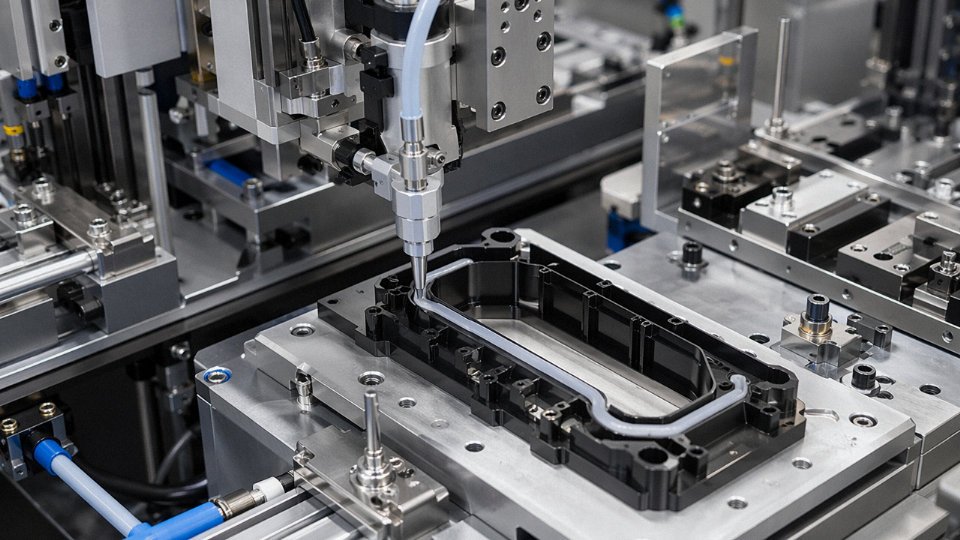
Application matrix for choosing the right term
| Industry | Common silicone name | Preferred technical term | Key property to check | Critical documentation |
|---|---|---|---|---|
| Automotive | Silicone hose, spark plug boot | Silicone rubber, reinforced silicone hose, fluorosilicone where fuels or oils are present | Heat aging, oil or fuel resistance, compression set, tear strength | Material data sheet, OEM specification, fluid compatibility data |
| Engine assembly | RTV silicone | RTV silicone gasket maker or formed-in-place silicone gasket | Cure type, oil resistance, sensor compatibility | Product approval, cure instructions, service temperature range |
| Electronics | Silicone gel, thermal pad, coating | Silicone encapsulant, silicone gel, thermally conductive silicone, conformal coating | Dielectric strength, outgassing, cure inhibition risk, thermal conductivity | Technical data sheet, safety data sheet, process guide, cleanliness data |
| Medical and life science | Medical-grade silicone | Medical-grade or implantable-grade silicone elastomer, tubing, membrane, or molded part | Biocompatibility, extractables, sterilization resistance | ISO 10993 data where applicable, lot traceability, change-control statement |
| Food and pharma processing | Food-grade silicone gasket | Platinum-cured silicone gasket, sanitary silicone hose, pump tubing | Compliance, extractables, cleanability, compression set | FDA or other applicable compliance statement, batch certificate, cleaning compatibility |
| Construction | Silicone caulk, glazing silicone | Silicone sealant, structural glazing sealant, weatherproofing sealant | Adhesion, movement capability, UV and weather resistance | Sealant data sheet, substrate primer guide, installation procedure |
| Infrastructure coatings | Silicone coating | Polysiloxane coating or silicone-modified coating | Corrosion resistance, UV durability, film build, substrate prep | Coating specification, surface preparation standard, cure schedule |
Frequently asked questions about other names for silicone
What is the most scientific name for silicone?
The most scientific broad name is usually polysiloxane. That points to the polymer backbone: repeating silicon-oxygen units with organic side groups attached. If you are writing a lab report, a material standard, or a serious supplier qualification document, polysiloxane is a safer technical family name than just “silicone.”
For a real material, though, the better name may be narrower. Polydimethylsiloxane, or PDMS, is common for many silicone fluids and base polymers. Phenyl silicone is used where low-temperature flexibility, radiation behavior, or refractive properties matter. Fluorosilicone comes up around fuels, oils, and aggressive fluids. Silicone resin is the term you will see for harder, more heat-resistant coating and electrical materials.
That distinction matters. A buyer asking for “polysiloxane” has not yet specified whether the plant needs a pumpable fluid, a molded gasket, a potting gel, or a high-temperature coating.
Is silicone the same as rubber?
No. Silicone can be made into rubber, but silicone is not always rubber.
On the floor, people often say “silicone” when they mean a flexible gasket, hose, O-ring, keypad, or diaphragm. In that case, silicone rubber or silicone elastomer is the practical term. Molded silicone rubber parts often fall somewhere around 10 Shore A to 80 Shore A, depending on whether the part must seal lightly, carry compression load, resist tearing, or survive handling during assembly.
But the same silicone chemistry also appears as fluids, greases, gels, resins, coatings, adhesives, encapsulants, and sealants. A 100 cSt silicone oil and a 70 Shore A molded silicone seal are not interchangeable just because both are “silicone.” One goes through a pump. The other goes into a groove and gets compressed. Confuse those on a purchase order and the warehouse may receive something perfectly correct by name and completely useless for the job.
Silicone is always a rubber material.False
Silicone is a broad material family. Rubber is only one cured elastomeric form of silicone; other forms include fluids, gels, resins, coatings, adhesives, and sealants.
Is PDMS another name for silicone?
PDMS is another name for a major type of silicone, not for the entire silicone family. The full name is polydimethylsiloxane. It is one of the workhorse silicone chemistries used in fluids, defoamers, release agents, personal care ingredients, laboratory materials, and base polymers for some elastomers.
Industrial PDMS fluids can range from roughly 0.65 cSt to more than 1,000,000 cSt, depending on molecular weight and formulation. That range is wide enough to cover materials that behave almost like a volatile liquid through to heavy, slow-moving gum-like products. So even “PDMS” is not enough by itself. You still need viscosity, volatility limits, purity requirements, packaging, and any food-contact, medical, electrical, or automotive compliance targets.
A maintenance planner ordering “PDMS” for a conveyor release application is not giving the supplier the same instruction as an R&D engineer ordering PDMS base polymer for compounding. Same acronym. Different risk.
Is silicone made from sand?
In a simplified sense, silicone chemistry traces back to silicon-containing raw materials such as silica, which is abundant in sand and quartz. That does not mean silicone is just melted sand or a natural mineral.
Industrial silicone is a synthetic polymer made through several chemical processing steps. Silicon-containing raw materials are converted into reactive intermediates, then built into siloxane polymers, then formulated with fillers, catalysts, crosslinkers, pigments, adhesion promoters, or other additives. The final product might be a clear fluid, a red high-temperature rubber sheet, a conformal coating, or a room-temperature vulcanizing sealant.
This is where loose language causes trouble in safety meetings. Silica dust exposure, elemental silicon handling, silane chemistry, and cured silicone rubber are different hazards. Treating them as the same material because the words sound related is bad industrial hygiene.
What should I write on a drawing or purchase order?
Do not write only “silicone” unless the item is noncritical and already controlled by a supplier part number. For engineered parts, write the material form and the key properties that affect fit, cure, and service life.
A practical purchase order or drawing callout might include:
| Item to specify | Why it matters in practice |
|---|---|
| Material type, such as silicone rubber, fluorosilicone, PDMS fluid, or silicone resin | Prevents the supplier from quoting the wrong silicone family |
| Grade or compound reference | Locks the order to a known formulation rather than a generic substitute |
| Hardness for rubber parts, often about 10 Shore A to 80 Shore A | Affects sealing force, assembly feel, compression set, and tear risk |
| Viscosity for fluids, from low cSt grades to very high-viscosity polymers | Controls pumping, coating weight, mixing, and dispensing behavior |
| Cure system, such as peroxide-cured, platinum-cured, condensation RTV, or addition-cure | Changes byproducts, temperature limits, contamination sensitivity, and compliance |
| Service temperature, commonly about -50 C to 200 C for general elastomer grades | Depends on grade, exposure time, load, fluid contact, and whether cycling is severe |
| Compliance requirements | Food contact, medical, electrical, flame, automotive, and aerospace rules are not implied by the word silicone |
| Supplier name and product reference | Gives purchasing and quality a controlled target |
The wrong wording usually shows up later as line stoppage, not as a neat engineering debate. A gasket too soft extrudes. A sealant with the wrong cure chemistry contaminates a sensor. A fluid with the wrong viscosity starves a metering pump in winter.
Are silicone and siloxane the same thing?
They are related, but not identical. Siloxane refers to the silicon-oxygen chemical linkage or repeating unit in the polymer backbone. Silicone is the common material-family name for products based on siloxane polymers.
A simple way to say it: siloxane describes the chemistry inside the chain; silicone describes the material you buy, mold, dispense, coat, or install.
Use this final naming rule to avoid silicone material mistakes
The safest short answer is this: polysiloxane is the broad technical synonym for the silicone material family. Silicone rubber or silicone elastomer is the right name for flexible cured parts. PDMS is right for many dimethyl silicone fluids and base polymers, especially where viscosity matters. Silicone sealant describes a formulated product, not the whole chemistry.
That sounds tidy on paper. On a plant floor, the mistake usually starts with one word on a drawing, a quote, or a maintenance store label: “silicone.” Then someone buys a tube of sealant when the job needed molded VMQ gasket stock, or orders a fluid with the wrong viscosity because the buyer only had “silicone oil” in the ERP description. I have seen that kind of naming gap turn into a leaking sight glass, a failed enclosure seal, or a Friday-night line stop that nobody budgets for.
The word silicone is not specific enough for critical industrial purchasing unless the physical form, chemistry, cure system, and performance requirements are also defined.True
Silicone can refer to a polymer family, an elastomer, a fluid, a sealant, an adhesive, a coating, or a compound with fillers and additives. Critical applications need narrower terminology tied to specification and test requirements.
A three-step naming rule that works in real purchasing
Use this sequence before you release a drawing, RFQ, maintenance work order, or stock item.
| Step | Question to ask | Safer wording |
|---|---|---|
| 1 | What physical form is it? | Fluid, grease, molded rubber part, extruded tube, sheet, coating, adhesive, RTV sealant |
| 2 | What chemistry or cure system matters? | Polysiloxane, PDMS, VMQ, FVMQ, platinum-cured silicone elastomer, peroxide-cured silicone rubber, one-part RTV silicone |
| 3 | What must it survive or comply with? | Temperature range, Shore A hardness, viscosity, food contact, medical grade, UL rating, fuel resistance, low outgassing, weathering, dielectric strength |
Start with the object in your hand. A gasket is not a fluid. A caulk cartridge is not the same thing as a molded elastomer. A release fluid is not automatically suitable for oxygen service, food contact, or electronics assembly.
Then tighten the chemistry. If the material is a dimethyl silicone fluid, PDMS may be the right term, with viscosity called out. Industrial PDMS fluids can run from about 0.65 cSt to over 1,000,000 cSt, depending on chain length and formulation. Those two ends of the range behave like different animals. One will run through a fitting like solvent. The other moves like cold honey, and your dosing pump may complain.
For flexible cured parts, use silicone rubber or silicone elastomer, then specify hardness, cure type, color if relevant, and any approval requirement. Molded silicone rubber parts commonly land somewhere around 10 Shore A to 80 Shore A, depending on filler package, geometry, and service load. A soft 20 Shore A diaphragm and a 70 Shore A enclosure gasket should not share the same vague material line.

Do not use a generic label where failure has a real cost
Generic “silicone” is risky in applications involving high temperature, medical contact, food contact, electrical insulation, fuel exposure, outdoor weathering, cleanroom compatibility, or long service life. Those jobs need a specification, not a nickname.
General silicone elastomers often handle roughly -50 °C to 200 °C, with specialty grades extending higher or lower depending on formulation, exposure time, load, and atmosphere. That range is useful for screening, not for final approval. Continuous dry heat, steam, hot oil mist, UV, compression set, and cleaning chemicals all change the answer. A gasket that survives a bench test may take a permanent set after six months under flange load next to a curing oven.
Fuel exposure is a common trap. Standard silicone rubber swells badly in many hydrocarbons. If the application sees gasoline, diesel, aviation fuel, or aggressive oils, the conversation may need to shift toward fluorosilicone elastomer, not plain silicone rubber. Wrong term, wrong quote, wrong compound. The consequence is usually leakage first, then rework, then finger-pointing.
Cleanroom and electronics work have their own traps. Some silicone products can release low molecular weight species or leave transfer films. That may be harmless on a pump skid and unacceptable near optical assemblies, coating lines, or semiconductor handling. In those environments, ask for low-volatility data, outgassing limits, extractables, or the relevant test method. Do not let “industrial grade silicone” pass as a specification.
Keep the same name through the whole document trail
The term on the engineering drawing should match the supplier quote, certificate of conformity, incoming inspection plan, maintenance procedure, and inventory description. If the drawing says “silicone rubber gasket,” the quote says “RTV silicone,” and stores enters it as “sealant,” you have already built confusion into the system.
A practical material line might read: “Platinum-cured silicone elastomer, 50–60 Shore A, translucent, food-contact compliant per stated regulation, operating exposure -40 °C to 180 °C, supplier certificate required.” That is not poetry. It is how you keep procurement from buying a look-alike part that passes color and fails service.
Use silicone in general conversation. It is fine for early design meetings and quick shop talk. Once performance, compliance, or warranty risk enters the picture, move to the more exact name: polysiloxane, PDMS, silicone rubber, silicone elastomer, RTV silicone, or silicone sealant. The better word is the one that tells the buyer, the supplier, and the technician what the material actually is and what it must do.