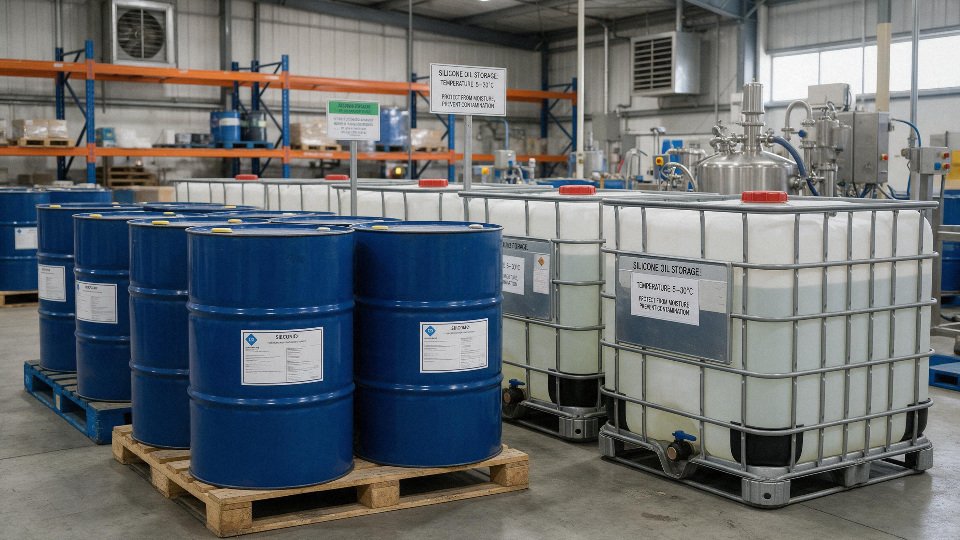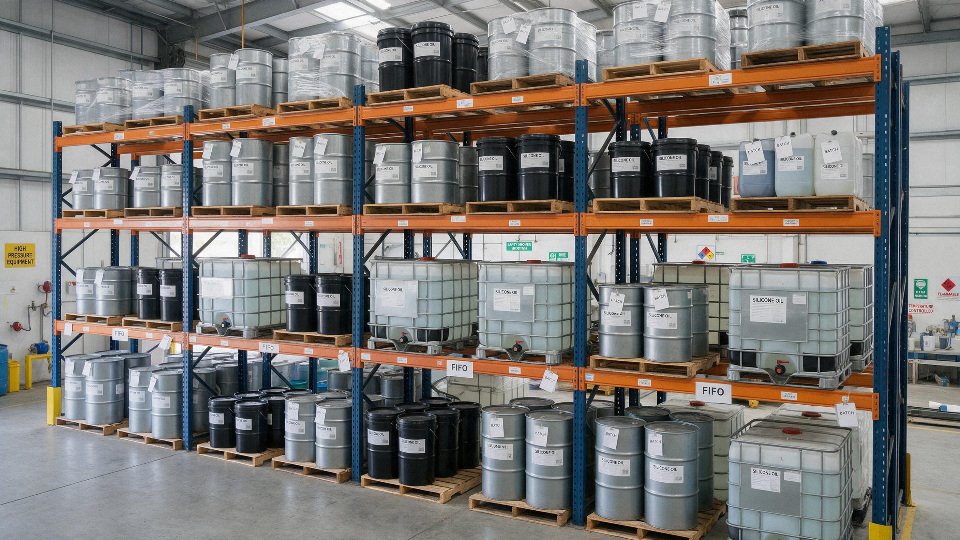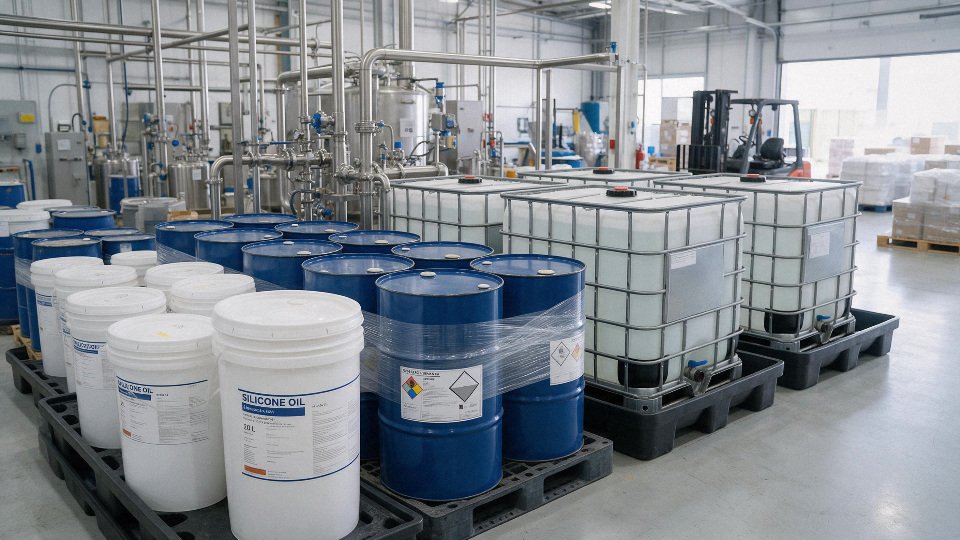
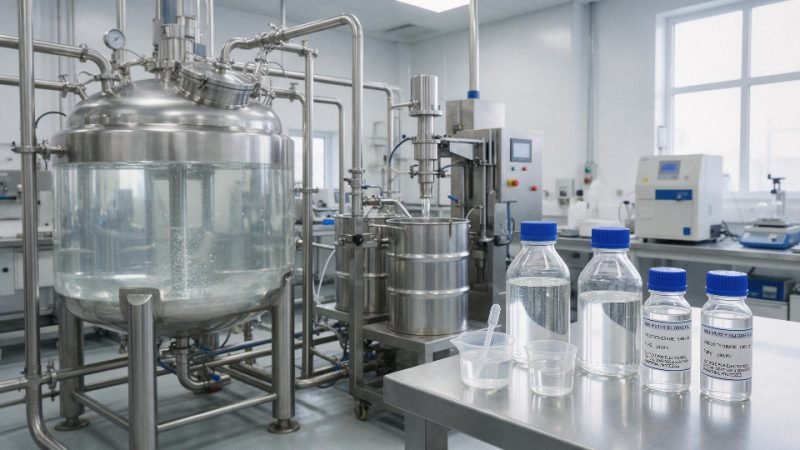
Low-grade silicone oil causes trouble in ways plants usually notice too late: haze on optical parts, volatile bleed in sealed assemblies, unstable lubrication at temperature, or a coating line that starts fish-eyeing after a drum change. Those quality misses quickly turn into scrap, cleaning labor, customer complaints, and procurement arguments about whether the issue was the fluid, the batch, or the process window. High purity silicone oil is the practical fix when the application cannot tolerate excess volatiles, contaminants, or viscosity drift and needs the fluid to behave the same way from drum one to drum twenty.
High purity silicone oil is a highly refined silicone fluid, usually based on polydimethylsiloxane, with tightly controlled volatile content, low impurities, and consistent viscosity for applications where residue, outgassing, electrical instability, or process variation cannot be tolerated. Typical grades span roughly 5 cSt to 100000 cSt, with volatile targets often below about 0.5% to 1.0%, depending on end use.
That sounds straightforward until you have to buy it or specify it. “High purity” is not one universal grade, and the right choice shifts with the failure mode you are trying to prevent, whether that is evaporation loss, dielectric instability, surface defects, or contamination in a cosmetic, electronic, or precision industrial process.

Core chemistry and structure
High-purity silicone oil gets its useful behavior from a siloxane backbone, not just from being “clean.” The Si-O-Si chain is what gives silicone fluids their unusual mix of low-temperature mobility, high-temperature stability, low surface tension, and electrical insulation; purity determines whether those built-in advantages show up reliably in the process or get undermined by trace byproducts.
The basic structure in most silicone oils is a repeating siloxane chain:
- Si-O-Si-O-Si backbone
- Organic side groups attached to the silicon atoms
- End groups that terminate the polymer chain
That sounds academic until you compare it with mineral oil, PAO, or other hydrocarbon-based fluids. Hydrocarbon oils rely on C-C and C-H dominated structures. Those chains are less flexible at low temperature and tend to change viscosity more sharply as temperature shifts. The siloxane bond angle and bond length give silicone chains more rotational freedom, so the fluid stays mobile where many hydrocarbon oils start to drag or gel.
That same backbone also helps with oxidation resistance. In practice, silicone fluids usually tolerate heat and oxygen exposure better than many organic oils because the backbone itself is less prone to the same oxidation pathways that attack hydrocarbon chains. That does not mean they are indestructible. At high enough temperature, in the presence of catalytic contamination, poor venting, or reactive metal surfaces, they still degrade. But the degradation route, and the operating window before it becomes a problem, is different.
What the side groups actually do
Standard silicone oil is usually polydimethylsiloxane, or PDMS. In that structure, the side groups are mostly methyl groups. Methyl substitution is the workhorse choice because it gives a good balance of:
- thermal stability
- water repellency
- low surface tension
- dielectric performance
- broad viscosity range
- relatively predictable cost and availability
If you stay with dimethyl fluids, you get the most familiar industrial behavior. The fluid spreads easily, wets many surfaces, resists water, and keeps a fairly stable viscosity profile across a wide temperature range.
Once you change the side groups, behavior shifts fast.
Common modifications and why buyers should care
Phenyl modification
Phenyl groups are used when the fluid needs better performance at temperature extremes, especially lower volatility at elevated temperature and improved low-temperature fluidity in some formulations.
Typical reasons to specify phenyl-containing silicone fluids:
- heat transfer or thermal stability needs beyond standard PDMS capability
- optical or refractive property adjustments
- lower-temperature flexibility in specialty systems
The trade-off is cost and, sometimes, a narrower supplier base. If the application does not truly need those properties, standard dimethyl grades are usually easier to source and qualify.
Amino modification
Amino-functional silicone oils are not just “lubricants with a tweak.” The amino groups introduce polarity and reactivity, which can improve affinity for certain substrates.
They are commonly considered where you need:
- soft feel or surface conditioning
- adhesion promotion to selected surfaces
- compatibility shifts in coatings or textile finishing
The limitation is that reactive functionality can create side effects: yellowing, bath instability, interaction with acidic components, or storage sensitivity.
Epoxy and vinyl modification
Epoxy- and vinyl-functional silicones matter when the fluid is expected to participate in curing, grafting, or crosslinking.
These are relevant in:
- release coatings
- reactive additives
- specialty sealants and coatings
- electronic encapsulation systems
Here, purity questions get tighter. Residual catalyst poisons, water, metals, or unintended reactive species can interfere with cure speed, cure completeness, or shelf life.
Hydroxyl and polyether modification
Hydroxyl-functional fluids are often intermediate or reactive grades. Polyether-modified silicones are used where standard silicone incompatibility with water or polar systems is a problem.
Polyether modification can improve:
- emulsifiability
- wetting on difficult substrates
- compatibility with aqueous or polar formulations
You gain formulation flexibility, but often sacrifice some water repellency, foam behavior, or thermal stability versus straight PDMS. This is one of the common selection flips in practice: if the line needs strong substrate wetting in a waterborne system, the “best silicone” is often not the most hydrophobic one.
Molecular weight, viscosity, and distribution
For standard silicone oils, viscosity is strongly related to polymer chain length, which is a practical proxy for molecular weight. Shorter chains give low-viscosity fluids; longer chains give higher-viscosity fluids. Commercial PDMS grades commonly span roughly 5 cSt to 100000 cSt, but that number alone does not tell the whole story.
Two fluids can have similar nominal viscosity and still behave differently in use if their molecular weight distribution differs.
A narrower molecular weight distribution usually helps when the process is sensitive to consistency, because it reduces the proportion of:
- very low molecular weight fractions that raise volatility, odor, migration, or extractables
- very high molecular weight tails that can increase stringiness, residue, filter loading, or dispensing variability
That mechanism matters on the plant floor. In a coating or dosing line, low molecular weight tails can flash off or migrate to interfaces, while high molecular weight tails can change pump response, leveling, or film uniformity. You may still meet a bulk viscosity spec and yet see unstable coat weight, fisheyes, or variable release. Buyers sometimes blame the line first; the fluid distribution is worth checking before tearing apart the process.
End groups are not a minor detail
Trimethylsiloxy-terminated fluids are generally the standard for non-reactive silicone oils. They are effectively capped, so the chain ends are less likely to participate in unwanted reactions. For many lubricating, dielectric, damping, and inert process-fluid uses, this is exactly what you want.
Hydroxyl-terminated fluids are different. Those end groups can:
- hydrogen bond
- react further in condensation or crosslinking systems
- pick up or hold more moisture than fully capped analogs
- interact more strongly with fillers, pigments, or substrate surfaces
That can be beneficial in reactive systems, but it can also create trouble. In release coatings, coatings in general, and electronics processing, residual reactive end groups may change cure behavior, surface energy, adhesion, or outgassing. If the process assumes an inert silicone fluid, even a modest level of silanol functionality can push the material from “carrier” into “active participant.”
How structure shows up as physical performance
The structure-property link is what technical buyers need to keep straight during selection:
| Structural feature | Typical effect on performance | Where it matters most |
|---|---|---|
| Si-O-Si backbone | broad temperature operability, oxidation resistance, chain flexibility | heat transfer, damping, insulation, general process fluids |
| Methyl substitution | low surface tension, hydrophobicity, good dielectric behavior | release, antifoam, lubrication, electrical uses |
| Higher molecular weight | higher viscosity, lower mobility, often lower volatility | damping, sealing, controlled lubrication |
| Narrower distribution | more consistent volatility and flow behavior | precision coating, electronics, metered dispensing |
| Reactive end groups | increased interaction or cure participation | coatings, sealants, release systems |
| Phenyl / polyether / amino / epoxy groups | targeted shifts in compatibility, reactivity, wetting, temperature behavior | specialty formulations |
A few property notes matter in procurement reviews:
- Viscosity-temperature behavior: silicone oils often change viscosity less sharply with temperature than many hydrocarbon oils, which is why they are favored where ambient swings are large.
- Low surface tension: useful for spreading and release, but it also means contamination risk. A tiny carryover can create paint defects or adhesion loss elsewhere in the plant.
- Compressibility: silicone fluids are generally more compressible than mineral oils, which can matter in hydraulic or precision damping systems.
- Volatility profile: not just one number. It depends on low-end fractions, operating temperature, residence time, and system ventilation.
- Dielectric characteristics: usually strong, but moisture, ionic contamination, and degradation products can shift actual electrical performance.
- Lubricity: good in many boundary and light-duty applications, but not universal. Silicone oil is not a drop-in substitute for every extreme-pressure lubrication job.
Why “chemically pure” can still be functionally unfit
A fluid can look clean on a bulk certificate and still fail in a demanding application. Trace cyclic siloxanes, metal ions, catalyst residues, gels, or microgels can have an outsized effect because the use level is often low and the interface sensitivity is high.
Typical failure paths include:
- trace cyclics increasing volatility, fogging, extractables, or outgassing
- metal ions affecting dielectric reliability or catalyzing degradation
- residual acids or alkalis shifting cure behavior
- microgels plugging fine filters, nozzles, or coating heads
- tiny insoluble particles creating optical defects or electronic contamination
A bulk purity result alone is enough to qualify silicone oil for high-end coating or electronics use.False
Bulk chemistry is necessary but not sufficient. For sensitive applications, the buyer usually also needs application-relevant checks such as volatile profile, ionic contamination, filtration cleanliness, gel content, and sometimes a line or lab simulation.
That is the boundary on most structure-based selection logic: it works well for first-pass screening, but it stops being enough when the application is interface-sensitive, electrically sensitive, or cure-sensitive. At that point, you are no longer buying a generic viscosity grade. You are buying a combination of backbone design, end-group control, distribution control, and impurity control that has to survive the actual process conditions.
Purity indicators that matter
A high-purity silicone oil should be judged on the impurity classes that can actually disrupt your process, not on a broad “99% purity” claim. For most industrial buyers, the useful question is narrower: which residuals can change viscosity, outgassing, electrical behavior, wetting, appearance, odor, shelf stability, or downstream compliance in the specific application you run.
The catch is that “pure” means different things in a transformer lab, a cosmetics intermediate line, a fiber-finishing kitchen, and a vacuum pump skid. A fluid can look water-clear, match nominal viscosity, and still fail in service because the wrong trace contaminant is present at a level the standard certificate never checked.
Major impurity classes and why they matter
Residual cyclic siloxanes and other low molecular weight species
Residual cyclic siloxanes and short-chain linear species are usually the first place I look when a silicone fluid shows odor, weight loss, fogging, unstable viscosity at temperature, or odd wetting behavior. In practical terms, these light fractions are the part most likely to leave the bulk fluid during heating, vacuum exposure, or open-surface processing.
Typical high-purity grades often target volatile content below about 0.5% to 1.0%, but the right limit depends on grade, test method, and end use. That number should never be lifted blindly from one application to another.
Why it matters by use case:
- Dielectric fluids
- Low molecular weight species can increase evaporation loss and shift dielectric behavior over time.
- In sealed electrical systems, outgassing can create pressure, bubbles, or gas pockets where you do not want them.
- Vacuum systems
- This is often the most sensitive service. Light fractions can backstream, raise chamber contamination risk, or make base pressure harder to hold.
- A simple volatile percentage does not fully predict vacuum performance; outgassing profile versus temperature and pressure matters.
- Cosmetics intermediates
- Residual cyclics may affect odor, sensory feel, evaporative profile, and market-specific regulatory acceptability.
- Here, purity and compliance documentation are separate issues; one does not guarantee the other.
- Mold release and surface treatment
- Some low molecular weight content may improve spread and release behavior, depending on the formulation design.
- Lower volatile content is not automatically better if the process depends on controlled wetting, leveling, or a defined flash-off behavior.
- Fiber treatment
- Excess lights can shift pickup consistency and hand feel, especially in heated finishing stages.
This is a classic trade-off. Strip out every volatile fraction you can, and you usually improve thermal weight loss and vacuum cleanliness. You may also lose some of the spreading or surface mobility that made the fluid easy to apply in the first place. The preferred choice flips when the process values controlled deposition or feel over ultra-low outgassing.
Catalyst residues, metal ions, and chloride
These are often less visible than volatiles and more dangerous because they can quietly drive long-term instability. Residual catalyst species, trace metals, and chloride contamination can come from synthesis, neutralization, washing, storage, transfer equipment, or poor packaging discipline.
Mechanism matters here. Ionic or catalytic residues can:
- Promote chain scission or condensation reactions
- Shift pH-sensitive downstream formulations
- Increase corrosion risk in certain systems
- Disturb dielectric performance
- Create unexpected color drift during storage or heat exposure
Application impact:
- Dielectric fluids
- Ionic contamination and trace metals matter more than a generic purity statement suggests.
- They can affect insulation reliability, especially where long residence time and thermal cycling are involved.
- Cosmetics intermediates
- Metal and chloride residues can become both quality and documentation issues.
- Even if the fluid performs, trace residues may conflict with internal specifications or customer audits.
- Vacuum and precision process fluids
- Catalytic residues can contribute to decomposition under heat, which shows up later as deposits or changing volatility.
- Fiber treatment
- Residual ions can interfere with emulsion stability or downstream finishing chemistry.
- Mold release
- This market is often more tolerant, but residues can still show up as staining, plate-out, or inconsistent release at high mold temperatures.
A standard COA may list appearance, viscosity, and maybe moisture, but not trace metals, ionic contamination, or chloride by a method meaningful for your use. If that data matters, ask for the test method, detection limit, and whether the value is routine batch release or occasional type testing.
Moisture, acids or bases, insolubles, particles, gels, and organic carryover
These are the contaminants that tend to create day-to-day plant pain: haze in drums, blocked nozzles, fish-eyes on coated parts, emulsion instability, filter loading, or residues after heat exposure.
Key classes to check:
- Moisture
- Can affect hydrolytic stability, packaging shelf life, dielectric behavior, and some blending operations.
- Particularly relevant if the fluid will be compounded with moisture-sensitive silanes or reactive additives.
- Acids or bases
- Even low levels can push slow degradation or destabilize related formulations.
- Acid value is a useful screen, but it does not identify the source.
- Insoluble particles
- These matter in thin-film applications, precision coating, and any recirculating system with small clearances.
- Gels
- Usually indicate partial crosslinking, instability, contamination, or poor storage history.
- In application, they show up as streaks, defects, or filter plugging.
- Organic carryover from processing
- Solvent traces, cleaning residues, side products, or foreign organics can alter odor, compatibility, evaporation pattern, and residue on evaporation.
A shop-floor example: if a silicone oil is used as a fiber finish component and the tote sits through a humid summer with marginal sealing, moisture uptake may not change bulk viscosity enough to trigger a complaint right away. What changes first is often emulsion behavior or finish consistency on the line. Operators will call it “a bad batch” before anyone checks Karl Fischer moisture or acidity.
Test indicators worth asking for
Do not rely on one purity number. Use a small set of indicators that fits the failure mode you actually care about.
| Indicator | What it helps reveal | Typical buying use |
|---|---|---|
| Viscosity stability | Molecular consistency, degradation tendency, batch uniformity | Core check for nearly all users |
| Refractive index consistency | Composition drift, low molecular weight variation, dilution or carryover | Useful secondary identity check |
| Moisture content | Water contamination, packaging control, storage exposure | Critical for electrical, reactive, and emulsion systems |
| Volatile content | Residual light fractions, evaporation loss risk | Important for vacuum, heated service, low-fogging uses |
| Acid value | Residual acidic species, degradation byproducts | Stability and compatibility screen |
| Particle count | Cleanliness level in suspension | Precision application, filtration-sensitive systems |
| Color and haze | Oxidation, contamination, insolubles, aging | Fast incoming inspection, not enough alone |
| Residue on evaporation | Non-volatile contamination, deposits after heat-off | Coating, release, vacuum, optical-adjacent uses |
A few cautions from experience:
- Viscosity alone is not a purity test. A fluid can hit nominal cSt and still carry unacceptable volatiles, ions, or particles.
- Colorless does not mean clean.
- Low haze does not prove low ionic contamination.
- Residue on evaporation can be more decision-relevant than headline purity for release agents or vacuum-adjacent service.
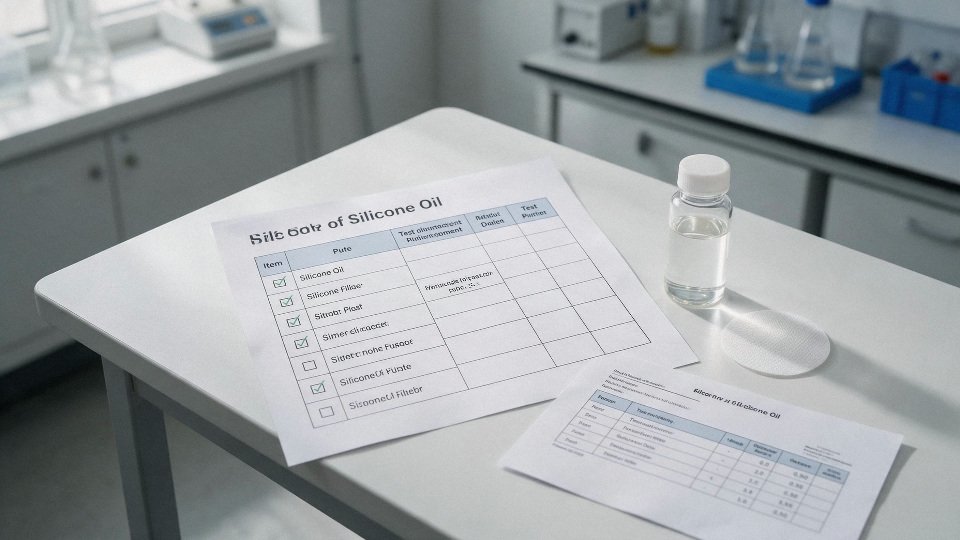
Why a standard COA often falls short
Most routine certificates are built for broad commercial release, not for critical-use qualification. They commonly include appearance, viscosity, maybe density or refractive index, and sometimes moisture or volatile content. That is useful, but it leaves several blind spots.
Items often missing from a standard COA:
- Ionic contamination profile
- Trace metal content
- Chloride at low detection limits
- Detailed outgassing behavior
- Subvisible particulate data
- Residue characterization after thermal exposure
- Storage stability under the buyer’s actual conditions
A clear, on-spec viscosity certificate is enough to qualify high-purity silicone oil for vacuum or sensitive electrical use.False
Those applications often need extra data such as volatile profile, ionic contamination, trace metals, particle cleanliness, or use-specific outgassing behavior. Routine COA data may be too shallow to predict service performance.
If the application is sensitive, ask whether the reported values are:
- Batch release tests on every lot
- Periodic surveillance tests
- Type-test data from a representative grade
- Supplier estimates based on process history
That distinction saves arguments later.
Purity, cleanliness, and compliance are not the same thing
A fluid may be chemically pure enough for the process and still be commercially unusable in the target market. That usually happens when buyers collapse three separate requirements into one word.
- Purity: unwanted chemical species are controlled to the needed level.
- Cleanliness: particles, gels, haze, and package-condition risks are controlled for the handling environment.
- Compliance: documentation, regulatory positioning, and market-specific declarations are available and current.
For a mold release line, chemical purity may dominate the decision. For a cosmetics intermediate, documentation can be just as important as the fluid itself. For dielectric or vacuum service, hidden contamination and outgassing often matter more than appearance. Once the failure mode is clear, the right purity indicators usually become obvious; until then, generic supplier claims are mostly noise.
Manufacturing and purification routes
High-purity silicone oil is not created by one “clean” step; it is built through a chain of controlled operations where each stage either protects purity or quietly damages it. For buyers, the practical point is simple: the final fluid quality depends as much on catalyst handling, devolatilization, transfer hygiene, and packaging discipline as on the base polymer chemistry itself.
Most industrial grades start from upstream siloxane intermediates, then move through polymer build and purification in a fairly standard sequence. The sequence itself is familiar across the industry; what separates a high-purity product is how tightly each handoff is controlled.
- Upstream siloxane feed preparation
- Common feeds include cyclic siloxanes and chain-stoppers/end-cappers, depending on the target viscosity and end-group design.
- Feed purity matters early. Trace acids, alkalis, water, low boilers, or metal contamination can shift polymerization behavior and leave residues that are expensive to remove later.
- If the supplier is integrated upstream, they usually have tighter visibility on cyclic purity, inhibitor carryover, and batch-to-batch variation.
- Polymerization or equilibration
- Silicone oil production often relies on equilibration of cyclic siloxanes with chain-stopping agents to target a viscosity range.
- The reaction is driven with an acid or base catalyst, under controlled temperature and residence time.
- Viscosity is not set by wishful thinking; it comes from the ratio of cyclics to end-capper, catalyst activity, temperature profile, and how long the system is allowed to equilibrate.
- End-capping and molecular stabilization
- End-capping helps define chain length distribution and terminal functionality.
- Poor end-group control can leave reactive ends that later affect storage stability, odor, compatibility, or downstream cure systems.
- Devolatilization and stripping
- Residual cyclics and other low-boiling fractions are reduced by vacuum stripping, sometimes in stages.
- This is one of the main steps that separates standard fluid from high-purity fluid, especially where volatile targets are tight.
- Polishing and finishing
- Depending on grade, the fluid may go through adsorption treatment, fine filtration, and final holding before packaging.
- The last 5% of the process often decides whether the product remains “high purity” when it reaches the customer.
Where catalyst choice shows up in the finished oil
Catalyst selection is not a laboratory footnote. It affects reaction speed, molecular weight distribution, color, residue profile, corrosion risk, and how difficult the fluid will be to clean up later.
Acid and base catalysts each have known advantages and headaches. A very active catalyst can shorten cycle time and improve throughput, but it may also make the process less forgiving if residence time drifts or if feed purity moves around. That is one of the classic plant trade-offs: higher productivity versus a narrower operating window.
What buyers should care about is not just “which catalyst,” but how the producer removes or neutralizes it afterward.
- Incomplete neutralization can leave trace acidic or alkaline residues.
- Poor catalyst removal can contribute to haze, ionic contamination, corrosion issues in sensitive systems, or instability during long storage.
- Over-neutralization or sloppy wash/cleanup practice can introduce salts, moisture, or particulates that are just as troublesome.
The mechanism matters here. Residual catalyst or neutralization byproducts do not always show up dramatically in bulk appearance. Instead, they can create delayed problems through several paths:
- Promote further chain rearrangement during storage
- Increase conductivity or ionic contamination in sensitive applications
- Interfere with coatings, release systems, or electronic processes
- Raise residue after heating, especially if stripping is also incomplete
If a supplier cannot explain how catalyst residues are controlled and how the system is verified after reaction, that is a procurement warning sign.
Purification methods that actually move the purity level
No single purification method removes every impurity class well. High-purity finishing is usually a combination approach.
| Purification step | What it mainly removes | Where it helps most | Typical limitation |
|---|---|---|---|
| Vacuum stripping | Residual cyclics, low boilers, entrained volatiles | Lower volatile content, improve thermal cleanliness | Less effective on non-volatile ionic or particulate contamination |
| Thin-film evaporation | Low-boiling fractions with tighter thermal exposure control | Heat-sensitive grades, tighter volatile reduction | Equipment cost and operating control are higher |
| Adsorption treatment | Polar trace impurities, some color bodies, catalyst remnants depending on system | Sensitive electronic or coating applications | Media selection and changeout discipline matter |
| Polishing filtration | Fine particulates, gel specks, rust, seal debris | Optical cleanliness, packaging cleanliness | Will not remove dissolved contaminants |
| Controlled storage/transfer | Prevents recontamination rather than removing it | Final quality preservation | Only works if the whole chain is clean |
Thin-film evaporation deserves specific mention because it reduces low-boiling species while limiting residence time at temperature. That can be useful where the fluid must be very clean but the producer wants to avoid unnecessary thermal history. The trade-off is cost and operating complexity; not every application justifies it.
Lot consistency is a process-control problem, not a brochure claim
Consistent purity usually comes from boring operational discipline. Plants that run clean, repeatable lots tend to control the same things every day:
- Raw material quality
- Incoming cyclics, end-cappers, and auxiliaries need defined acceptance limits.
- If upstream feed quality swings, final viscosity and volatile content will swing with it.
- Reactor cleanliness
- Carryover from prior campaigns can create cross-contamination, haze, off-odor, or unexpected trace species.
- Multi-product plants need a believable cleaning validation routine, not just operator confidence.
- Residence time control
- Too short, and equilibration or stripping is incomplete.
- Too long, and the fluid may pick up unnecessary thermal exposure or broader distribution than intended.
- Moisture exclusion
- Moisture can disturb catalyst behavior, affect end-group control, and complicate downstream purification.
- In practice, this is where neglected gaskets, damp nitrogen lines, or open manways start to matter.
- Contamination prevention during filling
- Dirty totes, reused drums, flexible hoses with unknown history, brass valves shedding wear particles, and poorly maintained transfer pumps can all undo careful refining work.
- I have seen more than one “high purity” fluid compromised in packaging, not in the reactor.
That last point gets missed in purchasing reviews. A supplier may run a competent polymerization line, then fill through shared hoses in a repacking room with weak segregation. For many industrial uses that may be tolerable. For coating, electronics-adjacent, or precision process applications, it often is not.
Integrated manufacturing versus redistribution or blending
If purity, consistency, and traceability matter, integrated manufacturing usually has the edge over simple redistribution or blending. That does not mean every distributor product is poor; it means upstream control is stronger when one organization manages feedstock quality, reaction conditions, purification, storage, and packaging under one quality system.
The commercial advantages of integration are practical:
- Better traceability back to siloxane intermediates
- Fewer handoffs and fewer contamination opportunities
- More predictable lot-to-lot behavior
- Better root-cause capability if a batch drifts
- Often better supply resilience when upstream material gets tight
Redistributors can still be useful when they add local stock, smaller pack sizes, or application support. The boundary is this: once your process is sensitive to trace volatiles, ionic residue, particle load, or packaging cleanliness, “same nominal viscosity” is no longer enough as a buying basis.
The cleanest silicone oil can be compromised after purification by drums, hoses, valves, or repacking conditions rather than by the polymerization step itself.True
This is consistent with standard industrial contamination control practice. Final transfer and packaging are common sources of particulate, moisture, and cross-product contamination, especially when dedicated clean systems are not used.
For procurement, the useful question is not just who makes silicone oil, but who controls the fluid all the way to sealed package. If the application is sensitive, ask how the product is transferred, what the packaging line is dedicated to, whether containers are new or reconditioned, and how they prevent cross-contamination during filling. Those details often tell you more than a polished datasheet.
Performance-critical application sectors
High purity silicone oil does not have one fixed specification that suits every plant. The right grade depends on which failure you are trying to avoid: dielectric drift in electronics, odor or haze in cosmetics, extractables questions in medical processing, dyeing defects in textiles, or residue buildup in heat-transfer and vacuum service. Purity is application-specific; buying “the cleanest available” without matching the contamination risk to the process usually adds cost without reducing the actual plant-floor problem.
A drum that performs well in a softener line can be completely wrong for a sensor assembly cell. The base chemistry may still be PDMS, but the priority shifts among ionic cleanliness, volatile profile, color and odor, particulate count, molecular weight distribution, and paperwork support. That is where technical buying gets practical.
Electronics and electrical uses
In electronics, high purity usually means low ionic contamination, low volatile carryover, and stable electrical behavior over time rather than just a clear-looking fluid. For dielectric filling, damping, thermal interface processing, or clean assembly lubrication, small traces of mobile ions, residual catalysts, or light fractions can show up later as leakage current instability, condensate on nearby surfaces, or poor long-term insulation performance.
Typical uses include:
- Dielectric fluids in specialty components and assemblies
- Damping fluids for gauges, sensors, switches, and instrument movement
- Process aids in thermal interface material manufacturing
- Clean assembly lubrication for connectors, seals, and precision mechanisms
- Potting or encapsulation-adjacent processes where fluid compatibility matters
The mechanism matters here. Ionic residues and polar contaminants can increase conductivity and shift dielectric loss behavior, especially under humidity and heat. Light volatiles are a different issue: they can migrate, condense on optics or contacts, and create a thin film that was never obvious in incoming inspection. A fluid can pass a simple viscosity and appearance check and still become a warranty issue six months later in service.
What to prioritize:
- Low ionic contamination, especially where the fluid is near contacts or sensitive substrates
- Tight control of volatile content for enclosed assemblies
- Stable viscosity across the expected temperature band
- Low particulate content for narrow gaps, capillaries, and precision dispensing
- Compatibility with plastics, elastomers, adhesives, and conformal coatings used nearby
The trade-off is straightforward. Lower-volatility, tighter-cut material usually improves long-term cleanliness and reduces fogging risk, but it can raise cost and sometimes change flow or wetting enough to affect dispensing and filling speed. The preference flips in some high-throughput assembly lines where a slightly lighter fluid helps processing, provided outgassing and migration have been checked in the actual enclosure. Bench compatibility and aging tests matter more than a generic “electronics grade” label.
Personal care and cosmetics intermediates
For personal care intermediates, acceptance often turns on sensory profile and presentation before anyone talks about molecular structure. Color, odor, clarity, spreadability, residue feel, and volatile balance all affect whether the formulator keeps the material, even when the nominal viscosity grade is correct.
Common uses include:
- Carrier or sensory-modifying fluid in skin and hair formulations
- Intermediate for blends with silicone elastomers or resins
- Shine, slip, and anti-tack adjustment in hair care
- Process aid in cosmetic base manufacture
Purity priorities usually center on:
- Low odor and low color
- Controlled volatile profile
- Consistent viscosity from lot to lot
- Low haze and good visual clarity
- Supporting regulatory and compositional documentation appropriate to the target market
A practical issue in this sector is that trace low-boilers and residual process odor can survive formulation and become much more noticeable after packaging, especially in leave-on systems. The same goes for tiny color shifts; they may look irrelevant in bulk but become a rejection point in water-white or pastel products. Procurement teams sometimes over-focus on price per kilogram and miss the hidden cost of reformulation work, panel testing delays, and batch holds.
A cosmetically acceptable silicone oil grade cannot be selected from viscosity alone.True
Sensory feel, odor, color, volatile distribution, and documentation support often determine formulation acceptance even when the nominal PDMS viscosity matches the lab target.
Medical and pharmaceutical-related processing uses
In medical and pharmaceutical-related applications, the controlling issue is not just purity in the chemical sense but evidence. Documentation discipline, biocompatibility support, traceability, change control, and extractables risk often carry more decision weight than a supplier’s general industrial quality claims.
These uses can include:
- Processing aids in medical-device manufacture
- Lubrication in device assembly
- Specialized compounding or blending steps
- Barrier or handling fluids in controlled manufacturing environments
Priority checks typically include:
- Defined composition and lot traceability
- Extractables and leachables risk assessment support where relevant
- Biocompatibility-related documentation appropriate to the intended use
- Tight impurity control, including residual catalysts or low molecular weight species
- Formal change notification expectations
The boundary here is important: no silicone oil should be treated as “medical grade” based on marketing language alone. The suitability depends on the specific device, contact mode, sterilization path, duration of exposure, and jurisdiction. In practice, a technically clean fluid may still be unusable if the supplier cannot support documentation review, retained sample practice, or change-control commitments. That tends to surface late in qualification, which is exactly when it is most expensive.
Textile, fiber, and softener systems
In textile finishing, high purity matters because contamination shows up indirectly. You may not see the impurity in the tote, but you will see it later as emulsion instability, spotting, inconsistent handfeel, needle fouling, or trouble in downstream dyeing and finishing.
Main uses include:
- Silicone softener concentrates
- Fiber and yarn lubricity modification
- Fabric handfeel and smoothness treatment
- Sewing-thread and specialty textile finishing
What buyers should focus on:
- Emulsion stability in the intended surfactant system and water quality
- Low residue and low gel tendency
- Controlled volatile content to reduce deposits during drying or curing
- Minimal contamination that interferes with dye uptake or finish uniformity
- Consistent viscosity to keep emulsification behavior stable lot to lot
The mechanism is familiar on the floor: broad or poorly controlled molecular distribution can change emulsification response, while trace impurities can destabilize the emulsion under shear, hard water, or pH drift. Then operators compensate with more mixing, more emulsifier, or more antifoam, and the line becomes less stable, not more. A cleaner fluid usually gives a wider processing window, but not always; if the emulsion package was tuned around a certain silicone behavior, changing to a higher-purity grade can require reformulation.
Industrial lubrication, damping, vacuum diffusion, and heat transfer
For industrial service, purity priorities shift toward oxidation behavior, volatility, deposit tendency, and maintenance consequence. High purity helps because fewer residual low-boilers, catalyst traces, or unstable species generally means less evaporation, less varnish-like residue, and more predictable viscosity retention during temperature cycling.
Typical applications:
- Precision damping and instrument filling
- Specialty lubrication where wide temperature range is needed
- Vacuum diffusion or related low-pressure service
- Heat transfer in controlled systems
A useful comparison is below.
| Service type | Main purity concern | Why it matters in operation |
|---|---|---|
| Damping fluid | Viscosity consistency, low particulates | Needle movement, response repeatability, small-orifice reliability |
| Precision lubrication | Low residue, stable volatility | Less deposit on sliding surfaces, fewer re-lube intervals |
| Vacuum service | Low volatiles, low outgassing | Better vacuum stability, less backstreaming risk |
| Heat transfer | Oxidative stability, residue control | Cleaner circuits, lower fouling, steadier heat transfer |
The trade-off is cost versus service interval. In a lightly loaded, open industrial mechanism, a standard silicone fluid may be adequate. In sealed systems, hot zones, or vacuum equipment, the cleaner grade often pays for itself by preventing deposits in places maintenance hates to reach. Still, operating temperature, oxygen exposure, residence time, and contact metals all change the result; you cannot responsibly estimate life from viscosity grade alone.
Release coatings, mold release, defoaming, and surface treatment
In these applications, tiny impurities can alter surface behavior out of proportion to their concentration. Wetting, cure interaction, transfer, crater formation, and foam persistence are all sensitive to the chemistry sitting at the interface, not just what is in the bulk drum.
Key use areas:
- Mold release for rubber, plastics, and composites
- Surface slip and release modification
- Defoaming and foam knockdown systems
- Surface-treatment blends and process aids
Critical specification concerns:
- Consistent surface activity
- Low contamination that poisons cure or causes fisheyes
- Controlled volatility to avoid transfer or ghosting
- Low particulates and haze where appearance matters
A common plant-floor problem is over-application. When a release fluid contains more volatile or reactive trace material than expected, transfer to the part or mold can build gradually and then show up as paint adhesion failure, print defects, or cure inhibition. The wrong response is often “use a little more release.” That usually makes the defect easier to see.
Optical, laboratory, and precision manufacturing uses
This is where apparently acceptable bulk specs stop being enough. Optical benches, analytical equipment, precision dispensing, and clean manufacturing environments can fail on particulates, fluorescence background, haze, or outgassing long before viscosity or basic purity assays suggest a problem.
Applications often include:
- Optical assembly and instrument damping
- Laboratory equipment service fluids
- Precision manufacturing aids near sensors or imaging systems
- Cleanroom process support where film transfer is unacceptable
What matters most:
- Very low particulate burden
- Low haze and low fluorescence where optical background matters
- Tight outgassing control for enclosed instruments
- Consistent lot behavior in micro-dispensing or capillary-fed systems

The limitation here is blunt: standard certificate values rarely predict optical or ultra-clean performance by themselves. If the fluid will sit near lenses, detectors, polished wafers, analytical chambers, or sub-millimeter flow paths, qualification should include a use-condition test, not just incoming COA review. That is usually where the right specification gets written.
Specification and test framework
A usable specification for high purity silicone oil is not a long list of “tight” numbers; it is a controlled description of the few variables that actually drive performance in your process, equipment, and regulatory environment. If the spec does not tie purity limits to the failure mode you are trying to prevent, you usually end up paying for analysis that does not improve product behavior on the line.
Start with the baseline identity of the material. This is where many purchase specs are still too loose. “Silicone oil, high purity” is not a buying description. At minimum, the requirement should state:
- Chemical family
- Usually polydimethylsiloxane (PDMS), but do not assume
- If the fluid is phenyl-modified, amino-modified, epoxy-modified, fluoro-modified, or otherwise copolymerized, say so explicitly
- Modification status
- Unmodified linear silicone fluid
- Reactive functional silicone fluid
- Specialty modified silicone fluid for a defined downstream use
- Nominal viscosity grade
- Common PDMS grades span roughly 5 cSt to 100,000 cSt
- The useful tolerance depends on the application, not just the number on the label
- End-group chemistry
- Trimethylsiloxy-terminated
- Hydroxy-terminated
- Vinyl-terminated
- Other specified end groups where reactivity matters
- Intended application environment
- Heat transfer, dielectric use, lubricant, release aid, cosmetics ingredient, medical intermediate, electronics process fluid, defoamer base, or another defined use
- Exposure conditions: temperature window, contact with metals, moisture sensitivity, vacuum exposure, shear, cleanroom use, or direct contact with sensitive substrates
That last point matters more than it sounds. A fluid that works fine in a batch reactor jacket may fail badly in vacuum coating prep because the volatile fraction, though “small,” can fog optics or contaminate downstream surfaces. The same chemistry, different environment, different spec.
Essential physical property limits
Physical property limits are your first screening layer. They help catch wrong grade, batch drift, contamination, and handling damage before you get into expensive analytical work.
A practical spec often includes the following:
| Property | Why it matters | Typical note for specification writing |
|---|---|---|
| Viscosity at stated temperature | Controls flow, film thickness, pumpability, damping, heat transfer behavior | State test temperature, usually 25 C unless your application requires another point |
| Density | Fast identity check; useful for blend verification | Give temperature basis |
| Refractive index | Sensitive to composition drift and some contamination | Particularly useful for specialty modified fluids |
| Appearance | Catches haze, gel, phase separation, visible contamination | “Clear and free of visible suspended matter” is common |
| Color | Indicates thermal history, contamination, oxidation, or metal carryover | Use a stated method, not vague wording |
| Flash point | Safety, shipping, and process hazard relevance | Verify by the applicable method for the fluid class |
| Pour point | Cold-start and low-temperature handling relevance | Do not overuse if the plant never sees low temperature service |
| Volatility profile | Directly tied to evaporative loss, fogging, outgassing, and residue risk | More useful than flash point alone for high-purity applications |
Viscosity tolerance deserves care. For commodity process uses, a broader tolerance may be perfectly acceptable. For metered dispensing, damping, or coating weight control, the preferred range can be much tighter. The mechanism is straightforward: viscosity shifts pump slip, line pressure, nozzle formation, and film build. In a plant with gear pumps and needle valves, a small viscosity drift can become a large throughput correction problem over a shift. In a bulk lubricant tank, the same drift may be operationally irrelevant.
Volatility is often under-specified. A single flash point does not tell you enough about low-molecular-weight fractions. For high purity service, buyers often need either:
– a defined volatile content target, commonly below 0.5% to 1.0% depending on grade and end use, or
– a specific low-boiling fraction test tied to the intended use
If your process sees elevated temperature or vacuum, this becomes a frontline requirement, not a nice-to-have.
Purity and cleanliness controls
For sensitive applications, physical properties are only half the story. Purity and cleanliness limits are what separate a fluid that “meets the data sheet” from one that behaves cleanly in service.
Common controls include:
- Moisture
- Important for hydrolysis-sensitive systems, reactive formulations, and electronics processing
- Usually measured by Karl Fischer
- The acceptable level depends strongly on packaging and how the product will be opened, transferred, and stored
- Acid value
- Tracks residual acidic species or decomposition byproducts
- Relevant where corrosion, catalyst poisoning, or long-term stability matter
- Ionic contamination
- Sodium, potassium, calcium, ammonium, and similar species can matter in electronics, coatings, and other sensitive uses
- Especially relevant when surface leakage, corrosion, or residue sensitivity is involved
- Trace metals
- Iron, aluminum, calcium, sodium, potassium, and catalyst-related metals can affect color stability, dielectric behavior, cure inhibition, or ash formation
- Usually justified for electronics, optical, and high-end formulation uses
- Chloride or hydrolyzable chloride
- A common concern when upstream chemistry involves chlorosilanes
- Worth controlling when corrosion, electrical reliability, or downstream reactions are sensitive
- Particle count
- Critical in clean manufacturing, precision coating, and optical uses
- “Clear liquid” is not enough; particle size distribution matters
- Haze and insolubles
- A fast signal for microcontamination, poor filtration, incompatibility, or early gel formation
- Nonvolatile residue or ash-related indicators
- Useful where evaporation cleanliness matters, or where the fluid is expected to leave essentially no problematic residue after thermal exposure
The trade-off here is easy to miss. Tight limits on every impurity look good on paper, but they can force suppliers into extra polishing, more lot segregation, slower release, and higher scrap rates. That cost is justified if the impurity is tied to an actual field failure mode. It is wasted if the line never sees that failure mechanism.
When advanced testing is justified
Use advanced testing when the application is sensitive enough that general QC cannot predict field performance.
A practical guide:
- Gas chromatography for cyclics or low boilers
- Justified for vacuum exposure, electronics processing, optical systems, and low-outgassing requirements
- Helps quantify D3, D4, D5 or other volatile siloxanes when that matters to your process
- Do not assume one supplier’s “low cyclic” claim means the same thing as another’s; ask for method and reporting basis
- ICP analysis for trace metals
- Justified when catalyst carryover, electrical behavior, ash, or color stability is critical
- Particularly useful in high-purity formulation bases and technical fluids for sensitive assemblies
- Karl Fischer moisture
- Necessary when moisture pickup changes downstream behavior
- In practice, the sampling method matters almost as much as the instrument; a wet transfer hose can ruin the number
- Particle counting
- Needed for filtered delivery systems, precision dispensing, and cleanroom use
- State the size channels and sample handling method
- Outgassing or residue testing
- Best for vacuum, optics, electronics, and thermal exposure applications
- There is no single universal test that fits all users; define the temperature, time, atmosphere, and pass criterion relevant to your process
A single universal impurity limit set can be used for all high purity silicone oil applications.False
Different failure modes drive different controls. Moisture, cyclics, metals, particles, and chloride do not carry equal weight across heat-transfer, lubricant, electronics, personal care, and vacuum-service applications.
The boundary here is straightforward: if the fluid is being used in a robust bulk industrial system with no tight residue, corrosion, or outgassing constraints, advanced testing can be overkill. A simpler release package may be enough.
Packaging, storage, and handling requirements
Packaging is part of the specification because a clean batch can be damaged after it passes QC.
State the following where relevant:
- Container type
- Lined steel drum, stainless vessel, fluorinated container, or approved HDPE depending on compatibility and cleanliness target
- Headspace control
- Dry nitrogen blanketing where moisture uptake or oxidation matters
- Filling environment
- Standard industrial filling for general use
- Cleanroom-compatible or controlled-area filling for particle-sensitive applications
- Tamper control
- Sealed closures, tamper-evident devices, and lot identification on each package
- Transfer expectations
- Clean dedicated hoses, filtered transfer, closed dispensing, moisture control after opening
- Shelf-life assignment
- Based on retained stability data, not a copied default period
- Shelf life should distinguish unopened storage from post-opening use window where relevant
In many plants, the failure is not the product; it is the half-open drum sitting beside a warm reactor over a humid weekend.
Documentation and release package
A strong supply spec should require documentation that lets engineering, QA, and procurement work from the same facts.
Include:
- Certificate of Analysis fields
- Product name and grade
- Batch or lot number
- Manufacturing or filling date as applicable
- Tested values with methods where needed
- Release decision and authorized signoff
- Batch traceability
- Link from shipped lot to production records and raw material lots where contractually required
- SDS
- Current revision, aligned with destination-country requirements
- Regulatory declarations
- Only those actually needed for the market and application
- Ask for current declarations, not old boilerplate files
- Change notification policy
- Prior notice period for raw material changes, process changes, test method changes, site transfers, and specification changes
- Retained sample practice
- Defined retention period and storage condition, especially helpful in complaint investigation or long qualification cycles
If you are writing the requirement from scratch, resist the urge to specify every test the lab can run. Write the product identity clearly, tie each limit to a use condition, and reserve advanced analysis for the few variables that can actually hurt yield, reliability, or compliance. That gives procurement room to qualify capable suppliers without buying unnecessary analytical overhead.
Common failure and contamination risks
High purity silicone oil usually loses performance through handling and process exposure long before the base chemistry is the problem. In practice, the biggest risks are not dramatic tank failures; they are small contamination routes, mild overheating, shared equipment residues, and incompatibilities that only show up later as haze, viscosity drift, deposits, cure problems, or unstable electrical behavior.
A lot of plants receive a drum that looks clean, pumps well, and passes a quick visual check, then spend the next week chasing coating streaks or odd foam behavior. Purity-related failures are often delayed failures. The fluid may look water-clear at receipt and still be carrying enough moisture, trace solvent, metal fines, catalyst residue, or foreign silicone to upset the application.
Storage and packaging contamination
Storage damage starts at the closure, not the bulk fluid. Moisture ingress, packaging extractables, and transfer hygiene are common causes because high purity grades are often used in systems sensitive to very small contaminant loads.
Typical entry points include:
- Moisture ingress through venting or poor resealing
- Partly used drums and IBCs are the usual problem.
- A humid plant, outdoor staging, or repeated breathing cycles can introduce enough water to affect dielectric properties, appearance, or downstream reactivity.
- This matters more where the oil is blended with moisture-sensitive additives or used near condensation-prone filling lines.
- Drum linings, gaskets, and seals
- Not every liner or bung seal is compatible with every silicone fluid grade, especially at elevated storage temperature.
- Extractables from liners, adhesives, or elastomer seals can create slight haze, color pickup, or odor.
- If the receiving team has ever had one lot with a faint yellow cast and the next lot crystal clear, packaging contact is worth checking, not just the bulk process.
- Reused containers and repacked product
- Reused drums, tote bottles, and local repacking are common contamination routes.
- Residual mineral oil, surfactant, glycol, solvent, or another silicone grade may be present at levels too low to see but high enough to shift foam, spread, or cure response.
- Appearance alone will miss this in many cases.
- Poor transfer hygiene
- Shared funnels, open pails, dusty transfer areas, wipedown rags, and unflushed hoses are routine sources of particles and cross-product carryover.
- In clean applications, one dirty camlock, one shop-air blowoff, or one hose stored uncapped on the floor is enough to create a month of nuisance defects.
The mechanism is simple: contamination changes either the fluid phase itself or the interfaces it touches. Moisture and trace polar contaminants can alter dielectric response and surface behavior; package extractables and residual fluids can shift wetting, odor, volatility, or cure. The trade-off is that tighter packaging and closed transfer cost more in materials and discipline, but they usually cost far less than off-spec batches, customer complaints, or line cleaning after contamination.
Process incompatibility inside the plant
If a high purity silicone oil is chemically clean but process-incompatible, it can still fail in service. The usual symptom is that the oil changes after blending, heating, circulating, or contacting another material, even though the incoming certificate looked fine.
Watch these incompatibility classes:
- Catalysts and reactive polymers
- Acidic, basic, peroxide, tin, platinum, or amine-bearing systems can interact with silicone fluids or trace silanol species.
- Depending on chemistry, the result may be gel formation, viscosity rise, viscosity loss, haze, or cure inhibition in adjacent silicone systems.
- This is especially relevant in plants making coatings, release systems, RTV materials, or specialty additives on shared equipment.
- Elastomers, hoses, and seals
- Some elastomers swell, soften, or leach into silicone oil.
- The practical sign is often not immediate leakage; it is a gradual increase in extractables, particles, or softness in the pump train, followed by haze or filter loading.
- Hose material verification matters more than many buyers expect.
- Metals and process hardware
- Contact with reactive metals, corroded vessels, or worn pump internals can introduce fines or catalytic sites that accelerate degradation.
- Iron, copper, and mixed-metal contamination can be especially troublesome in heated circulation loops, though the actual sensitivity depends on the full formulation and residence time.
- Solvents and additives
- A solvent that is technically miscible may still alter volatility, flash behavior, drying profile, or final surface feel.
- Additives meant to improve wetting or defoaming can destabilize clarity or create long-term separation if the compatibility work was only done at room temperature.
This is where the preferred choice flips: a very high purity base fluid is not automatically the right fluid if the surrounding process materials are poorly screened. In a stable, closed, single-product line, purity dominates. In a shared or reactive line, compatibility testing can matter just as much as the incoming purity specification.
Thermal and oxidative degradation
Roughly within the commonly cited silicone oil operating window of about -50 C to 200 C, many grades perform well, but sustained high temperature, local hot spots, air exposure, and catalytic contamination can still degrade the fluid. The published temperature capability is not a blanket guarantee for every residence time, atmosphere, and hardware condition.
Common thermal and oxidative symptoms include:
- Chain scission
- Viscosity drops over time.
- Volatile fractions increase.
- Odor may become sharper or unusual.
- Low-viscosity fragments can change evaporation behavior and surface response.
- Condensation or secondary reactions
- Under some conditions, viscosity can rise instead of fall.
- Microgel or residue may appear, especially after repeated heat cycles.
- Color development and residue formation
- Yellowing, amber tint, or baked-on deposits are typical warning signs.
- Heat exchangers, vent lines, and vessel walls often show the first evidence before the bulk fluid looks severely degraded.
- Increased volatility
- Weight loss, fogging, or more noticeable odor during heating may indicate formation or concentration of low-boiling components.
- For high purity grades, volatile content targets are often below about 0.5% to 1.0%, depending on grade and end use, so even moderate drift can matter.
A clear, colorless silicone oil cannot be assumed to be thermally healthy.True
Early thermal or oxidative change may first show up as volatile increase, dielectric drift, odor change, or subtle viscosity shift before strong color develops. Visual appearance is a weak standalone screen.
Particulates, microgels, and cross-contamination
Some of the most expensive failures come from contaminants you cannot see in a drum sample held to the light.
Particulate and microgel effects
- Optical defects in clear coatings or molded parts
- Filter plugging and shortened filter life
- Coating streaks, fisheyes, or poor leveling
- Electrical tracking or unstable insulating performance
- Surface scratches, print defects, or poor gloss in finishing applications
Microgels are particularly annoying because they may pass through casual receiving checks yet show up under shear, filtration, or thin-film application. A fluid can look acceptable in bulk and still produce streaks on a precision coating head.
Cross-contamination from shared assets
- Shared hoses and transfer pumps
- Multi-product storage tanks
- IBCs used across silicone and non-silicone products
- Contract repacking lines
- Filling nozzles not fully drained or flushed between products
This is a classic multi-product plant problem. One previous product may leave behind a few hundred grams in a hose low point or pump casing, and that is enough to move an otherwise high purity batch out of its functional window. Basic appearance checks rarely catch it. You usually find it only after a complaint, a failed filter test, or a process response that “feels different” to the operators.
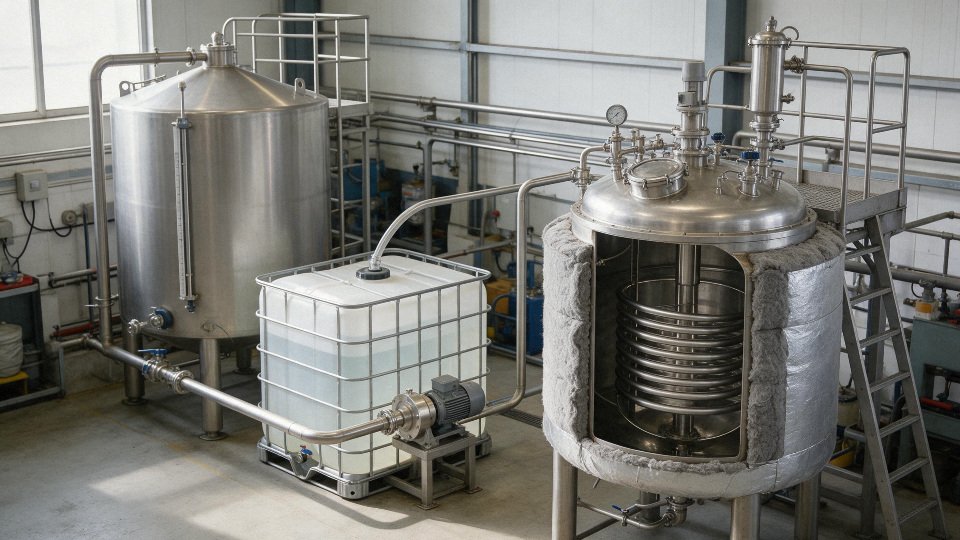
Troubleshooting symptoms and what to check first
Use the symptom to narrow the contamination path before you start blaming the supplier.
| Symptom | Likely causes to check first |
|---|---|
| Unstable dielectric readings | Moisture ingress, polar contamination, metal fines, aged fluid |
| Foaming shift | Cross-contamination with surfactant, solvent residue, wrong silicone grade, degradation products |
| Cure inhibition nearby | Amines, sulfur species, catalyst residues, shared equipment contamination |
| Poor leveling or streaks | Particles, microgels, incompatible additive carryover, viscosity drift |
| Deposit formation on heaters or lines | Thermal degradation, oxidation, metal contamination, long residence time |
| Haze or clarity loss | Moisture, incompatible blend component, packaging extractables, microgel formation |
| Inconsistent sensory feel or slip | Wrong viscosity grade, cross-contamination, volatile loss or gain |
Start with a short, disciplined check sequence:
- Verify lot identity, age, and storage history.
- Inspect package condition, seals, and headspace exposure.
- Review whether the transfer path was dedicated or shared.
- Check recent changes in hose, gasket, pump, filter, or repacking practice.
- Compare current viscosity, appearance, odor, and any available volatile or moisture data against the original receiving record.
- Isolate whether the issue appears on receipt, after blending, or only after heat exposure.
Prevention measures that actually work
The most effective controls are boring, procedural, and worth enforcing:
- Receiving inspection
- Confirm lot traceability, packaging condition, and basic incoming checks against the agreed specification.
- For critical uses, retain a reference sample from each lot.
- Closed transfer
- Use capped connections, dedicated or validated-clean hoses, and sealed pumps where possible.
- Avoid open pouring except for small controlled lab use.
- Compatibility checks
- Screen contact materials, additives, solvents, catalysts, and seals under actual temperature and residence-time conditions.
- Bench compatibility at room temperature is not enough for a heated recirculating system.
- FIFO storage
- First-in-first-out is basic discipline, but it prevents a lot of mystery failures tied to long partial-container storage.
- Periodic requalification for long-stored inventory
- If material has sat for an extended period, especially after opening, recheck the properties that matter to the application rather than assuming shelf stability from appearance alone.
That last point is the practical boundary on most storage advice: sealed, well-packed material in proper indoor storage is usually low risk; once containers are opened, moved, repacked, or repeatedly heated in a shared plant, the contamination risk rises sharply and basic visual acceptance stops being enough.
Supplier qualification and sourcing
A reliable high purity silicone oil supplier is usually an integrated manufacturer or a tightly controlled producer with direct process ownership, documented purification capability, and a proven export track record. Price still matters, but for this product family the expensive failures usually come from weak traceability, lot drift, packaging contamination, or poor change control rather than from the nominal drum price.
The first procurement split to make is not country, brand, or even quoted purity. It is supplier type. That single distinction affects how fast problems are traced, how stable the specification stays over 12-24 months, and whether the person answering your complaint actually controls the plant.
Supplier type: who is actually making the fluid?
| Supplier type | Typical strengths | Typical risks | Best fit |
|---|---|---|---|
| Integrated manufacturer | Better raw material traceability, tighter lot control, lower structural cost at volume, stronger technical response | May have higher MOQ, less flexibility on non-core packaging or custom paperwork | OEMs, regulated users, high repeat demand |
| Toll producer | Can make to a defined process window, sometimes flexible on niche grades | Quality depends on customer-supplied process discipline and raw material control; ownership of process changes can be blurry | Private label, custom projects with strong technical oversight |
| Trader | Fast sourcing across multiple plants, low friction for small orders, can bridge shortages | Weak process visibility, mixed-source risk, limited root-cause capability | Spot buys, market testing, emergency gap fill |
| Repacker | Small pack convenience, local stock, relabeling, sometimes faster domestic delivery | Highest contamination risk if handling discipline is poor; traceability often stops at incoming bulk | Lab packs, maintenance use, low-criticality applications |
An integrated producer generally gives the cleanest line of sight from siloxane feedstock to final drum. That matters because high purity silicone oil is not just a viscosity number; it is a distribution, a volatile profile, a particulate condition, and a packaging cleanliness result. If the supplier does not own or tightly control those steps, every investigation takes longer.
That said, the preferred model flips when demand is irregular or the qualification burden is light. A trader or repacker can be commercially efficient for pilot work, low annual volume, or non-critical applications, provided you lock down origin disclosure, batch traceability, and repackaging controls in writing.
What manufacturing capability actually tells you
A supplier brochure will mention reactors and quality. What you want is evidence that they can repeatedly remove what should not be there and keep it out afterward.
Look for these capability indicators:
- Upstream siloxane access
- Direct access to core siloxane intermediates or established long-term sourcing from major upstream plants reduces substitution risk.
- In tight markets, suppliers without upstream position often stretch lead times first.
- Purification equipment matched to the grade
- High purity work usually depends on effective devolatilization, controlled distillation, filtration, and clean transfer systems.
- The mechanism is straightforward: volatile residues, low-boiling siloxanes, and entrained contaminants are reduced step by step; if any stage is undersized or poorly controlled, the final volatile content, odor, or stability drifts lot to lot.
- Analytical lab depth
- Ask what is tested in-house versus outsourced.
- A capable lab for this product should at least support routine viscosity, volatile content or loss on heating, appearance, moisture where relevant, and contamination screening appropriate to the application. For tighter uses, method details matter more than a broad test list.
- Lot consistency history
- Do not settle for one nice COA. Ask for a trend across multiple lots.
- Three to six consecutive production lots often tell you more about process control than a plant tour does.
- Controlled packaging lines
- This is where good product gets ruined. Open filling, shared hoses, dusty staging areas, reused liners, and casual drum handling can undo a lot of purification work.
- In practice, I pay close attention to filling environment, line clearance, dedicated or validated-clean transfer lines, and how containers are sealed and labeled.
A supplier that can explain where contamination is most likely to enter the process usually understands the process. A supplier that only repeats the final spec often does not.
Quality systems: the paperwork should reflect plant discipline
ISO certification helps, but by itself it is not a qualification decision. Plenty of plants can frame a certificate and still handle deviations loosely. What matters is whether the quality system reaches the floor.
Check for these controls:
- Batch records with raw material IDs, process parameters, hold points, and release approvals
- Retained samples kept long enough to support complaint investigation
- Formal change control for raw material source, process conditions, test methods, and packaging changes
- Deviation handling that records cause, disposition, and corrective action
- Complaint response speed, including who owns the 8D or equivalent investigation and how fast containment is issued
- COA discipline, meaning the reported values match the released lot and are not generic template data
The trade-off here is simple. Suppliers with disciplined systems can feel slower during onboarding because they ask questions, control documents, and push back on vague specs. Usually that is a good sign. The low-friction supplier is often low-friction because the system behind the quote is thin.
A low price from a supplier with weak retained-sample practice can become the highest total cost option if a field complaint cannot be tied back to a specific lot and process record.True
For high purity silicone oil, complaint resolution often depends on retained samples, batch traceability, and documented release data. Without them, root-cause work stalls, replacement decisions take longer, and the buyer absorbs more downtime and qualification repeat work.
Commercial reliability and export execution
For global buyers, the technical file and the shipping file need to be equally solid. Plenty of acceptable products become painful purchases because lead times slide, export documents are wrong, or packaging is not matched to receiving conditions.
Review these points before approval:
- MOQ flexibility for pilot, validation, and regular production orders
- Normal lead time and how it changes during peak demand
- Export document accuracy: COA, SDS, packing list, invoice, origin documents if required
- Incoterms support and whether the supplier regularly handles FOB, CIF, DAP, or customer-nominated forwarders
- Packaging options: pails, drums, IBCs, bulk, tamper-evident sealing, liner type
- Continuity planning during raw material swings, port disruption, or seasonal shutdowns
- Response time for order acknowledgment and shipment updates
The section’s main conclusion stops holding if your application is so low risk that a one-off spot purchase is acceptable and lot-to-lot uniformity has little consequence. In that case, a trader may be perfectly adequate. For qualified production supply, though, continuity and traceability deserve the same weight as the quoted purity level.
Sourcing from China: where the advantage is real, and where buyers should stay strict
China offers a real structural advantage in organosilicon sourcing when the supplier sits inside a strong manufacturing cluster with upstream integration and export experience. The benefit is not just labor cost. It is feedstock access, production scale, shorter internal supply chains, broader grade coverage, and enough installed capacity to support both commodity PDMS and tighter specialty purification.
That does not mean every Chinese supplier is equally dependable. Some are genuine manufacturers with strong process control; some are commercial fronts; some buy in bulk and relabel. Country assumptions cut both ways and are not a qualification method. What matters is data transparency, plant discipline, and repeatable export execution.
Practical audit checklist
Use this during remote qualification or on-site audit:
- Plant and hygiene
- Clean transfer areas
- Segregated raw material and finished goods zones
- Controlled dust and housekeeping around filling lines
- Raw material control
- Approved supplier list
- Incoming identification and release status
- Controls against unintended substitution
- Purification process
- Defined critical steps
- Operating windows and recorded parameters
- Hold/rework criteria
- Contamination prevention
- Dedicated or validated-clean hoses, tanks, and filters
- Container cleanliness checks
- Line clearance between products
- Laboratory practice
- Written test methods
- Calibration status
- OOS handling
- Retained sample storage
- Sample-to-bulk consistency
- Compare lab sample, pilot lot, and commercial lot data
- Confirm packaging type is the same as qualification material where possible
- Ask whether any process or source change occurred after sample approval
If a supplier passes the document review but becomes evasive on batch history, retained samples, or fill-line controls, slow the process down. In my experience, that is where many “good on paper” approvals later go sideways.
Frequently asked questions
Is high purity silicone oil the same as medical grade silicone oil?
No. High purity describes chemical cleanliness and control of contaminants; medical grade usually adds biocompatibility, regulatory documentation, change control, and application-specific testing that go well beyond a general industrial purity claim.
In practice, a silicone oil can be very clean on volatile content, acidity, particles, and color, yet still not be suitable for medical use. If the product will contact tissue, drug formulations, or regulated devices, you need the supplier to confirm the exact grade status, supporting test package, and intended-use documentation. Do not treat “high purity” as a substitute for medical qualification.
How is high purity different from cosmetic grade or electronic grade?
They overlap, but they are not interchangeable. High purity is a broad quality description; cosmetic grade and electronic grade are use-defined categories with different risk priorities.
- Cosmetic-focused grades usually emphasize:
- low odor
- skin-feel consistency
- low volatile residue concerns
- appearance and formulation compatibility
- Electronic-focused grades usually emphasize:
- tighter ionic and metallic contamination control
- low residue after thermal exposure
- lower outgassing risk
- particle control and batch consistency
A buyer mistake I see often is assuming one “premium” grade covers both. It might, but only if the supplier can show the relevant data for your process and cleanliness threshold.
What viscosity should be selected for lubrication, damping, or processing use?
There is no single correct viscosity; selection starts with the function, shear conditions, temperature, and how the oil is applied. For PDMS fluids, common commercial grades run from about 5 cSt to 100000 cSt, and the useful choice can shift fast once temperature or cycle speed changes.
- Lubrication
- Lower to mid viscosities are often used where easy spreading, low drag, or fine metering matters.
- Higher viscosities can improve film persistence, but they also raise fluid drag and may slow dispensing.
- Verify compatibility with seals, plastics, and any oxygen-rich or highly loaded contact condition against actual equipment data.
- Damping
- Mid to high viscosities are commonly chosen because resistance to motion is the point.
- The right grade depends on stroke speed, gap geometry, and temperature swing. A damper that feels perfect at room temperature may respond differently in winter startup.
- Processing
- Lower viscosities are often easier for blending, release coating, wetting, or carrier use.
- Higher viscosities can help with residence, surface holdout, or migration control.
If the application is sensitive, ask for two or three adjacent viscosity grades and test them in the actual hardware rather than selecting from a datasheet alone.
Can high purity silicone oil be diluted or emulsified without losing performance?
Yes, but only if the diluent, emulsifier system, and mixing method are compatible with the end use. The oil itself may stay chemically sound while the finished system loses the very purity advantages you paid for.
Watch these points:
- Use only compatible solvents or emulsification packages validated for your process.
- Recheck haze, phase stability, volatile content, and residue after dilution.
- For electronics, optics, or low-residue applications, the added components often become the contamination source.
- High shear mixing, dirty transfer tanks, and reused IBCs are common plant-floor causes of avoidable quality loss.
How should it be stored after opening to preserve purity?
Use clean, tightly sealed containers and minimize headspace exposure time. Most opened-lot problems come from handling, not from the base silicone oil suddenly degrading on the shelf.
- Keep containers closed when not in use.
- Use dry, clean transfer tools and dedicated hoses or pumps.
- Protect from dust, moisture, and shop vapors.
- Avoid topping off a partly used drum with another lot unless traceability is controlled.
- If the material is going into a sensitive process, nitrogen blanketing may be worth considering, but it is not universally necessary.
A half-open drum sitting near a wash line or humid loading door will age a lot faster, at least from a cleanliness standpoint, than the same drum in a controlled materials room.
Which tests should be requested for sensitive applications?
Ask for the tests that match the failure mode you are trying to prevent, not a generic COA bundle.
Typical requests include:
- viscosity
- volatile content
- moisture or water content
- acid value, where relevant
- color and appearance
- particulate level or cleanliness
- refractive index or density for identity control
- residue or weight loss after heating, if outgassing matters
- selected metal or ionic contamination, especially for electronics-related uses
If the process is especially sensitive, retain sample material from each lot and run a simple incoming confirmation test rather than relying only on supplier paperwork.
Does water-clear appearance guarantee high purity?
No. Water-clear only tells you the fluid is visually clean and low in obvious color bodies or suspended matter. It does not confirm low volatiles, low ionic contamination, tight molecular distribution, or low trace residues.
A water-clear silicone oil can still fail a sensitive purity requirement.True
Appearance is only one screening attribute. Many contaminants that matter in electronics, optics, medical-adjacent, or low-residue processing are not visible to the eye.
What is the typical shelf life, and when should a lot be retested?
Shelf life depends on packaging, storage conditions, and the sensitivity of the application. For unopened material in proper containers, suppliers often assign a commercial shelf life, but you should follow the supplier’s current documentation rather than assuming a category-wide number.
Retest a lot when:
- it is past the stated shelf-life date
- the container has been opened for an extended period
- storage conditions were poor or unknown
- appearance, viscosity, or odor changed
- the material is going into a high-risk application where contamination cost is high
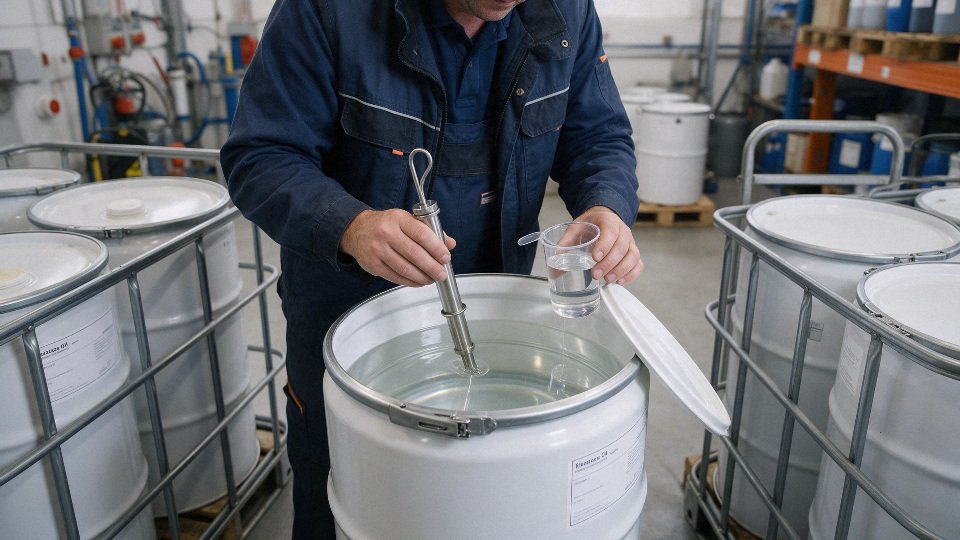
Your qualification checklist
A workable qualification path is usually shorter than buyers expect: define the application risk first, freeze the product identity second, test only what can actually cause field trouble, then verify that the supplier can deliver the same material at production scale. Most bad silicone-oil purchases do not fail because the lab certificate looked wrong; they fail because the approved sample was never tied tightly enough to the bulk product, packaging practice, or change-control discipline.
- Confirm the actual use case, not just the product name
- Identify where the oil sits in the process: formulation ingredient, lubricant, release aid, dielectric fluid, thermal medium, cosmetic base, or intermediate.
- Classify which purity risks matter for that duty:
- volatile carryover affecting odor, fogging, weight loss, or bubble formation
- ionic or particulate contamination affecting electronics, optical clarity, or wear
- moisture sensitivity in downstream reactions or moisture-critical assemblies
- off-spec viscosity distribution affecting dispensing, coating weight, or heat-transfer behavior
- reactive impurity or wrong end-group effects in crosslinking or modification systems
- Separate true risks from inherited spec habits. In practice, many teams ask for every purity test they have seen before, then discover half of them never correlated with scrap, field returns, or compliance exposure.
- Lock the essential product definition
- Confirm:
- chemistry type, typically PDMS or a defined modified silicone fluid
- whether the product is unmodified or functionally modified
- viscosity grade, noting that common PDMS grades span roughly 5 cSt to 100000 cSt
- end-group type if it affects reactivity, compatibility, or volatility
- target operating temperature range; many silicone oils are used around -50 C to 200 C, but the acceptable margin depends on residence time, aeration, and contact materials
- State the use conditions plainly: shear, open-vessel exposure, contact with elastomers or plastics, and whether the fluid will be filtered, heated, mixed, or vacuum-degassed. That last part matters because a grade that behaves well in a sealed drum can become a foam or volatility problem in a warm, low-pressure tank.
- Confirm:
- Build a fit-for-purpose specification
- Keep only tests that protect performance, compliance, or process stability:
- appearance and clarity
- viscosity at defined temperature
- volatile content, often targeted below about 0.5% to 1.0% depending on grade and end use
- moisture if the process is sensitive
- acid value or ionic contamination where relevant
- particulate cleanliness for critical applications
- density, refractive index, or assay only if they are useful control points for your process
- Avoid decorative specifications that add cost without reducing risk. The preferred set flips once the application enters regulated, optical, or electronics-sensitive service; then narrower controls are often justified.
- Keep only tests that protect performance, compliance, or process stability:
- Test representative samples under plant-like conditions
- Request samples from qualified manufacturers, not trading-only sources where origin may shift.
- Run testing in sequence:
- bench screening for viscosity, appearance, handling, and quick compatibility
- pilot or line trial at realistic temperature, dwell time, and agitation
- compatibility checks with seals, hoses, coatings, substrates, and any catalyst or additive package
- Use production-like containers and transfer steps where possible. I have seen a fluid pass a beaker test, then pick up particles from a temporary pump cart and get blamed unfairly.
- Verify supply capability before source approval
- Review:
- certificate format and test methods
- batch traceability
- standard packaging options and cleanliness controls
- retention-sample practice
- deviation handling and change notification process
- Inspect packaging condition, seals, labels, and pallet protection on incoming trial lots.
- If the material is critical, conduct a plant audit or a live video audit focused on purification, filling, lot segregation, and complaint response.
- Review:
- Approve only after sample-to-bulk consistency is covered
- Agree acceptance criteria for first lot, re-order lots, and any raw-material or process change.
- Define commercial next steps:
- quotation against the approved specification
- pack size and lead time
- Incoterms, documentation, and shelf-life expectations
- forecast volume and safety-stock logic for long-term supply
Sample approval alone is enough to qualify a high purity silicone oil source.False
A sample can prove application fit, but it does not prove routine batch consistency, packaging cleanliness, traceability, or change-control discipline. Those have to be checked before commercial release.
If you are ready to move from discussion to qualification, send SiliconChemicals the application facts that actually drive selection: substrate material, contaminant or process sensitivity, approximate layer thickness if relevant, working area or batch size, required finish, target production rate, and clear part photos or retained samples where useful. With that, SiliconChemicals can review the application, recommend a fit-for-purpose silicone oil grade, and arrange samples for bench or pilot evaluation.