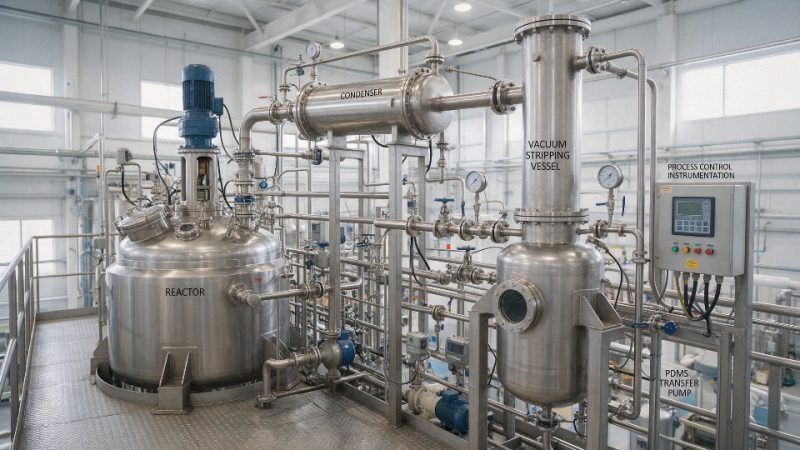
If silicone oil polymerization is treated as just “heating siloxanes until the viscosity looks right,” plants usually pay for it later in off-spec viscosity, poor volatility control, and unstable end groups that show up in blending, release, defoaming, or downstream curing. On the floor, that means extra stripping time, harder batch correction, and drums that test differently from lot to lot. The financial hit is rarely the reactor time alone; it shows up in rework, scrap, delayed shipments, and buyers losing confidence in a grade that should have been routine.
Silicone oil is polymerized mainly by equilibrating cyclic siloxanes or condensing reactive silanol-containing siloxanes under controlled catalyst, temperature, and end-blocker conditions until the target chain length is reached. In practice, viscosity, residual volatiles, and terminal group control are the three process outcomes that matter most, with many industrial grades produced in roughly the 80°C to 180°C range and then stripped to low residual volatile levels, often below 0.5 wt%.
What makes this deceptively simple is that the same viscosity can come from very different molecular structures, and those structures do not behave the same in storage or in the customer’s process. A buyer asking for 350 cSt silicone oil may think in terms of a catalog number; production and procurement have to think in terms of monomer balance, catalyst choice, end-blocking efficiency, stripping load, and how tightly that batch has to hold from one campaign to the next.
Core reaction pathways
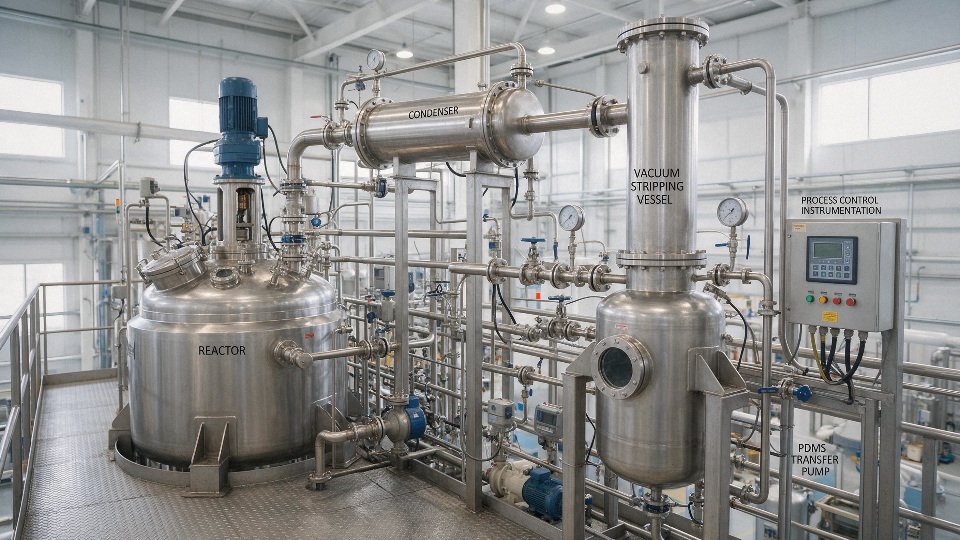
Two industrial routes matter most: chlorosilane hydrolysis-condensation creates the siloxane backbone from basic silicon feedstocks, while cyclic siloxane equilibration is usually the cleaner, more controllable route for setting commercial silicone oil viscosity and end groups. In practice, plants that make standard dimethyl silicone fluids often touch both chemistries somewhere in the value chain, but they do not use them for the same job.
The distinction matters because buyers sometimes hear “polymerization” and assume one straight chain-growth reaction. Silicone oil production is usually less tidy than that. One part of the process builds crude siloxane structures from reactive chlorosilanes; another part redistributes siloxane bonds under equilibrium control until the target average chain length and terminal groups are reached.
Hydrolysis-condensation: the upstream backbone-forming route
Direct hydrolysis starts from chlorosilanes, most commonly dimethyldichlorosilane for dimethylsiloxane fluids. Water attacks the Si-Cl bonds, producing silanols and hydrochloric acid, and those silanols then condense to Si-O-Si linkages, giving low-molecular-weight siloxanes, cyclics, and oligomeric mixtures rather than one neat linear product.
That route is foundational because it converts chlorosilane intermediates into the first usable siloxane structures. It is also messy chemistry from a plant perspective: highly exothermic, corrosive, acid-generating, and sensitive to phase contact, mixing, and quench discipline. You do not run this like a polite batch esterification.
A simplified sequence looks like this:
- Hydrolysis of chlorosilanes
- Example feed: dimethyldichlorosilane, often mixed with other functional chlorosilanes if a modified backbone is intended
- Main reaction: formation of silanol species plus HCl
- Immediate issue: local water excess, poor mixing, or temperature spikes can shift the oligomer distribution and create difficult emulsions
- Condensation of silanols
- Silanol groups condense to form siloxane bonds
- Water is released
- Product is typically a distribution of low oligomers and cyclic siloxanes, not a tightly defined fluid grade
- Phase separation and acid handling
- Aqueous HCl and organosilicon phase must separate cleanly
- Materials of construction, vent scrubbing, and corrosion control are central cost items here
- Initial purification
- Removal of acid, salts, water, and low-boiling fractions
- This stage affects downstream catalyst life if the material is later sent to equilibration
Mechanistically, hydrolysis-condensation is closer to irreversible step-condensation than to the equilibrium redistribution used later. Once Si-Cl becomes Si-OH and then Si-O-Si, you are not mainly shuffling chain lengths around to a thermodynamic balance; you are consuming reactive functional groups in sequence and generating a broad product slate. That is why crude material from this stage often needs further restructuring before it becomes a saleable silicone oil grade with a reliable viscosity window.
A practical limitation: this route is excellent for making the siloxane pool, but it is usually not the final viscosity-setting step for mainstream commercial fluids. The crude product distribution is too broad, the end groups are not controlled tightly enough, and residual acidity or hydrolyzable species can create storage and color problems if you try to stop here.
Hydrolysis-condensation alone is often insufficient to define a commercial silicone oil viscosity grade tightly enough for industrial sale.True
Established organosilicon practice uses hydrolysis to generate siloxane intermediates, but commercial fluid finishing commonly relies on equilibration, end-blocking, stripping, and purification to narrow viscosity and volatile content.
Cyclic equilibration: the main route for viscosity-controlled silicone oils
For most standard silicone oils, cyclic equilibration is where process control becomes commercially useful. Cyclic siloxanes such as D4, D5, and sometimes D3 are opened and redistributed under acid or base catalysis in the presence of an end-blocker, producing linear chains whose average length tracks the feed ratio more predictably than crude hydrolysis products do.
Here the chemistry is less about one-way growth and more about bond reshuffling. Under the catalyst, siloxane bonds break and reform repeatedly. The system moves toward an equilibrium distribution of cyclics and linear chains, and the producer shifts that balance by choosing the cyclic feed blend, catalyst type, residence time, temperature, and especially the amount of chain stopper.
Typical industrial operating windows often fall somewhere around 80°C to 180°C, but that is not a universal setpoint. It depends on whether the catalyst is acidic or basic, how quickly the plant wants to reach equilibrium, how sensitive the end groups are, and what stripping system is available afterward. If someone quotes one “standard polymerization temperature” without naming the catalyst package, I would treat that as sales shorthand, not process reality.
How the equilibration mechanism actually controls viscosity
The most common dimethyl system uses cyclics plus a chain stopper such as hexamethyldisiloxane (MM). In simple terms, more chain stopper means more chain ends per unit mass, which means shorter average linear chains and lower viscosity. Less chain stopper means longer average chains and higher viscosity.
That relationship is commercially useful because viscosity targets for silicone oils span roughly 5 cSt to 1,000,000 cSt at 25°C, and no plant wants to hit those grades by guesswork. The feed ratio does most of the heavy lifting.
A practical way to think about the mechanism:
| Variable | What it changes in the reactor | Practical effect on product |
|---|---|---|
| D4/D5/D3 feed composition | Ring size distribution and redistribution behavior | Affects reaction rate, cyclic residuals, and sometimes low-temperature properties |
| Chain stopper level (for example MM) | Number of terminal groups relative to siloxane units | Primary lever for average chain length and viscosity |
| Catalyst type and loading | Rate of bond cleavage/reformation | Changes time to equilibrium, side reactions, color risk, and neutralization burden |
| Temperature | Equilibration rate and volatility profile | Higher temperature can shorten cycle time but complicate stripping and thermal stability |
| Residence time | How close the system gets to equilibrium | Too short gives off-spec viscosity spread; too long can waste throughput or increase side reactions |
Silicone oil equilibration is not a pure “grow until done” polymerization. It is a redistribution system that keeps exchanging siloxane bonds until the formulation and process conditions pin the average chain length where you want it.
That is the key difference from many organic polymer systems. In a typical irreversible condensation polymerization, conversion largely drives molecular weight upward. In silicone equilibration, the product composition can keep rearranging in both directions until you stop the catalyst and strip the volatile fraction. If the catalyst remains active too long, the fluid does not politely freeze at target viscosity just because the batch report says the hold time is complete.
Chain stoppers and end-blockers: small inputs, big commercial consequences
Chain stoppers are easy to underestimate because the dosage is small compared with cyclic feed. They are one of the cheapest ways to ruin or rescue a viscosity target.
Common options include:
- Hexamethyldisiloxane (MM)
- Standard end-blocker for dimethyl silicone fluids
- Good for trimethylsilyl-capped chains
- Widely used where neutral dimethyl fluids are needed
- Silanol end-blockers
- Used where hydroxyl-terminated fluids are desired
- Relevant for downstream reactive systems such as RTV, release, or graftable intermediates
- Moisture sensitivity and storage stability need tighter handling
- Functional disiloxanes or capped oligomers
- Used in specialty fluids where vinyl, hydride, phenyl, amino, epoxy, polyether, or fluoro functionality must survive and remain statistically distributed
The trade-off is straightforward but important. Higher end-blocker dosage gives tighter control of low-to-medium viscosity fluids and typically simpler finishing. Lower dosage is how you push toward higher viscosity, but it also leaves the batch less forgiving: residual cyclics become harder to strip, catalyst quench has more impact on final stability, and filtration gets slower because the fluid is simply harder to move.
Why higher viscosity is often harder to make, even if the chemistry looks simpler
There is a counter-intuitive plant fact here. Chemically, a higher-viscosity silicone oil may just mean “use less chain stopper and let the average chain length rise.” Operationally, that can be the tougher product to finish consistently.
The problems show up after the reactor:
- Devolatilization gets harder
- Residual D4, D5, and other low boilers diffuse out of a high-viscosity matrix more slowly
- Vacuum stripping needs stronger mass transfer support: temperature, thin-film area, agitation, or longer residence
- Many industrial grades target residual volatiles below 0.5 wt% after stripping, but whether that is achievable efficiently depends on equipment, not just chemistry
- Catalyst neutralization becomes more critical
- Incomplete neutralization can allow post-reaction viscosity drift in storage
- Over-neutralization or poor washing can leave haze, salts, or filterable fines
- Base-catalyzed systems are particularly unforgiving if the cleanup sequence is sloppy
- Filtration and transfer slow down
- A fluid at a few hundred cSt behaves very differently from one in the tens of thousands or higher
- Pump selection, line heat tracing, filter area, and fill speed start affecting cost and delivery reliability
- I have seen perfectly acceptable lab batches become nuisance products in production because the plant tried to push them through cartridge filters sized for lower-viscosity oils
The section’s main conclusion stops holding when you get into very specialized reactive fluids or gum-like materials where the target is not a conventional free-flowing oil. At that point, the finishing train, stability requirements, and even the preferred catalyst package can change enough that “standard fluid equilibration logic” is no longer a safe shortcut.
Co-equilibration for specialty-modified silicone oils
When the market needs more than plain dimethyl fluid, producers often use co-equilibration. Functional cyclics, functional disiloxanes, or preformed silicone intermediates are introduced so that the final chain contains statistically distributed or terminally placed specialty groups.
Common modified systems include:
- Phenyl-modified oils
- Used for improved low-temperature flexibility, refractive index changes, or better thermal behavior in some applications
- Feed strategy must control phenyl level without driving color or broadening volatility excessively
- Amino-functional oils
- Common in textile, softener, and surface-treatment systems
- Amino functionality can interact with catalysts and cleanup steps; process sequence matters
- Epoxy-functional oils
- Used where adhesion promotion or reactivity toward organic systems is needed
- Functional group stability under acid/base conditions must be verified, not assumed
- Polyether-modified silicones
- Often targeted for surfactancy, wetting, or compatibility changes
- These are less forgiving thermally; stripping conditions that work for dimethyl fluids may be too harsh
- Hydrogen (Si-H) fluids
- Used in crosslinking and hydrophobing systems
- Moisture, catalyst residues, and metal contamination can create side reactions or gas evolution risks
- Fluoro-modified silicones
- Chosen for solvent resistance, low surface energy, or specialty lubrication
- Raw material cost is higher and purification losses hurt more
- Vinyl-functional oils
- Used in addition-cure systems and reactive intermediates
- Vinyl retention under process conditions needs confirmation by analysis, especially if the catalyst and residence time are aggressive
The mechanism here is still redistribution, but the trade-off changes. Co-equilibration can give a cleaner, more integrated specialty fluid than post-blending, yet every functional group added narrows the process window. Some groups tolerate basic catalysis better; others survive acidic systems more cleanly. You usually do not choose the catalyst first and hope the modified monomer cooperates. You choose a chemistry package that preserves the function you are being paid to deliver.
Raw materials and feedstocks
Silicone oil quality is set upstream, not just in the reactor. If the feedstock slate is clean, well-characterized, and internally consistent, polymerization is easier to control, stripping is shorter, color is lower, and the finished fluid is more reproducible batch to batch. If the feeds drift, the plant usually feels it first in viscosity scatter, odor, residual volatiles, and rework.
For procurement teams, the practical point is simple: silicone oil is not bought as “one raw material plus a catalyst.” It is a feedstock system. The main monomers or cyclics matter, but so do water quality, neutralization chemistry, end-blocker choice, adsorbents, and filtration media because they directly affect conversion path, cleanup load, and shelf stability.
Main organosilicon starting materials
Different production routes pull from different upstream pools. These are the material families that matter commercially and technically.
Chlorosilanes
Chlorosilanes sit at the root of most standard silicone chains, especially in integrated plants. The most important for dimethyl silicone fluids is dimethyldichlorosilane, typically used either directly in hydrolysis-condensation routes or indirectly as the precursor to cyclic siloxanes such as D4 and D5.
What buyers should watch:
- Purity of the main chlorosilane cut
- Small shifts in mono-, tri-, or other chlorosilane content change chain architecture after hydrolysis.
- That can increase branching, alter end-group population, or create more low boilers and gel-prone species.
- Residual chloride-forming species
- These raise neutralization demand and can leave residual acidity if cleanup is incomplete.
- Color bodies and heavy residues
- Usually not obvious on paper specs unless the supplier tracks them closely.
- They often show up later as darker stripped oil or higher adsorbent loading.
In practice, plants with weak chlorosilane fractionation discipline spend more time correcting downstream than making product.
Alkoxysilanes
Alkoxysilanes are used in selected routes where chloride avoidance, handling preference, or specialty functionality matters. They are not the default lowest-cost route for commodity dimethyl silicone oil, but they are relevant in specialty systems and in some lower-corrosion processing schemes.
Typical uses include:
- Hydrolysis-condensation with lower direct chloride generation
- Functional fluid production where methoxy, ethoxy, or mixed alkoxy intermediates fit the target chemistry
- Specialty copolymer feeds for reactive silicone oils
The trade-off is straightforward: alkoxy routes can simplify some corrosion and salt-handling issues, but they often bring alcohol management, different hydrolysis kinetics, and feedstock cost penalties. The preferred choice flips when downstream purity, functional compatibility, or plant materials-of-construction constraints matter more than raw material cost.
Cyclic siloxanes
For many commercial silicone oils, cyclic siloxanes are the workhorse feedstocks. D4 is the classic base intermediate, with D3, D5, and mixed cyclic distributions also relevant depending on the process and product.
Why the cyclic distribution matters:
- Polymerization rate and equilibrium behavior
- Different ring sizes open and re-equilibrate differently under acid or base catalysis.
- Residual volatile profile after finishing
- A broad or unstable cyclic mix makes stripping more difficult.
- Viscosity reproducibility
- Feed variation shifts the equilibrium position and the low-boiler burden.
- Odor and color
- Poorly purified cyclics often carry trace acidic, metallic, or high-boiling contaminants that survive longer than people expect.
A supplier quoting the same nominal cyclic grade month after month may still deliver meaningfully different downstream behavior if cyclic ratio control is loose.
Low oligomer fluids
Low molecular weight linear siloxane fluids are often used as intermediate feeds, blending tools, or chain-length control components. They are especially useful where a producer wants tighter control of viscosity build or a narrower finishing window.
Common roles include:
- Seeding an equilibration batch
- Trimming viscosity
- Serving as part of an end-blocked starting system
- Reducing variability when cyclic feed composition is less stable
These materials can improve process control, but they can also hide upstream inconsistency if used as a corrective crutch rather than a designed feed strategy.
Specialty functional siloxane intermediates
Specialty silicone oils use specialty feeds. Once the target shifts from standard dimethyl fluid to modified performance, the feedstock map changes quickly.
Key categories include:
- Phenyl-containing siloxanes
- Used for higher refractive index, better low-temperature flexibility in some systems, and stronger thermal/radiation performance in certain applications
- Methylhydrogen siloxane intermediates
- Used where Si-H reactivity is required for later addition reaction or crosslinking
- Polyether-modified siloxane intermediates
- Used for lower surface tension, wetter spreading, emulsifiability, or compatibility shifts
- Fluoro-modified siloxanes
- Used where very low surface energy or special chemical resistance is needed
- Amino-, epoxy-, vinyl-, or other reactive functional siloxanes
- Used where the fluid must bond, cure, or anchor into a downstream formulation
These feeds are usually more expensive, more supply-sensitive, and less forgiving of contamination. A chloride trace that might be tolerable in a commodity dimethyl oil can create storage instability or side reactions in a reactive specialty intermediate.
Process-enabling inputs are not minor auxiliaries
A lot of purchasing mistakes happen here. Water, alcohols, neutralizers, catalysts, adsorbents, and filtration media are often treated as consumables with little strategic value. In silicone oil production, that is a bad assumption.
Water and alcohols
Their role depends on route:
- In hydrolysis systems, water quality directly affects reaction cleanliness
- Dissolved salts and metal ions can stay with the hydrolyzate and interfere later.
- In alkoxy systems, alcohol content and removal rate influence hydrolysis-condensation balance.
- Moisture also matters in storage and transfer because uncontrolled water ingress can change end-group balance before the planned reaction step.
Neutralizers
Used to quench acidic or basic residues after polymerization or hydrolysis. Their selection affects:
- Salt formation and ease of removal
- Color generation during neutralization
- Residual ionic contamination
- Filterability of the finished batch
A neutralizer that works on paper can still create a slow filtration bottleneck if the salt cake is gummy or too fine.
End-blockers
End-blockers determine chain termination and strongly influence final viscosity range, volatility, and stability. Hexamethyldisiloxane is a common example in dimethyl systems, but the correct choice depends on target end groups and process route.
End-blocker ratio is one of the fastest levers for shifting finished viscosity, but it also changes volatile load and stripping duty. Push too much low-molecular end-blocker into the system and the reactor may hit target viscosity easily while the finisher struggles to reach an industrial residual volatile target such as below 0.5 wt%, depending on grade.
Catalysts, adsorbents, and filtration media
These are process controls, not housekeeping items.
- Catalysts
- Acid and base systems have different selectivity, cleanup needs, corrosion implications, and sensitivity to trace contaminants.
- Adsorbents
- Commonly used for color reduction, trace catalyst removal, or odor improvement.
- Their performance depends on pore structure, moisture level, and contaminant type; one grade of bleaching earth or activated material is not interchangeable with another.
- Filtration media
- Needed to remove salts, fines, adsorbents, and nonvolatile residues.
- Media choice affects throughput, clarity, and how much valuable oil is held up in the cake.
Contaminants that change polymerization behavior and long-term stability
Some contaminants mainly hurt yield. Others create delayed failures that show up at the customer months later.
| Contaminant or residue | Typical source | What it does in process | What it can do in finished oil |
|---|---|---|---|
| Metal ions | Water, corroded equipment, poor cleanup, catalyst carryover | Disturbs catalyst behavior, can accelerate or inhibit side reactions | Haze, instability, viscosity drift, poor aging |
| Chloride traces | Incomplete hydrolysis cleanup, chlorosilane carryover | Raises corrosion risk, complicates neutralization | Odor, residual acidity, compatibility issues |
| Moisture | Tank breathing, wet lines, raw material handling | Alters end-group balance, affects condensation or equilibration | Storage instability in reactive grades |
| Nonvolatile heavy residues | Poor fractionation, degraded feed, side products | Darker batches, slower stripping, filtration load | Color, odor, deposit formation at heat |
The mechanism is not abstract. Trace chloride and residual acidity can keep catalyzing unwanted rearrangement after the nominal reaction is finished. Metal ions can act as unintended catalytic centers or destabilize additives. Heavy nonvolatiles do not evaporate out; they ride through the process and show up as color, odor, or thermal residue later.
The main conclusion stops holding if the finished product is a deliberately broad-spec technical fluid for noncritical use. In that case, a producer may accept feed variability that would be unacceptable for cosmetic, electronic, or reactive-formulation grades.
Why integrated supply chains usually control cost and quality better
Producers with in-house chlorosilane and cyclic siloxane capacity usually have an advantage in both economics and consistency. They can align chlorosilane fractionation, cyclic purification, polymerization scheduling, and recycle management inside one operating system instead of buying each risk separately from the market.
That usually shows up in:
- Better control of cyclic distribution and volatile recycle loops
- Faster response to off-spec upstream material
- Lower freight and drum-to-tank contamination risk
- More stable lead times during tight raw material periods
- Better total cost on standard grades, especially mid-to-high volume dimethyl fluids
Integrated silicone producers usually control standard dimethyl silicone oil consistency better than non-integrated blenders or toll buyers.True
This is generally true because upstream chlorosilane and cyclic purity, distribution control, and recycle handling strongly affect downstream polymerization and finishing. The advantage is conditional on actual plant discipline; integration alone does not guarantee quality.
That does not mean non-integrated suppliers are automatically weaker. Some buy high-purity intermediates and run excellent finishing operations. But if a buyer needs steady viscosity, low odor, repeatable color, and dependable lead times across multiple orders, it is worth asking one level upstream: who actually makes the chlorosilane and cyclic feed, and who is correcting whose variability?
Catalysts and process controls
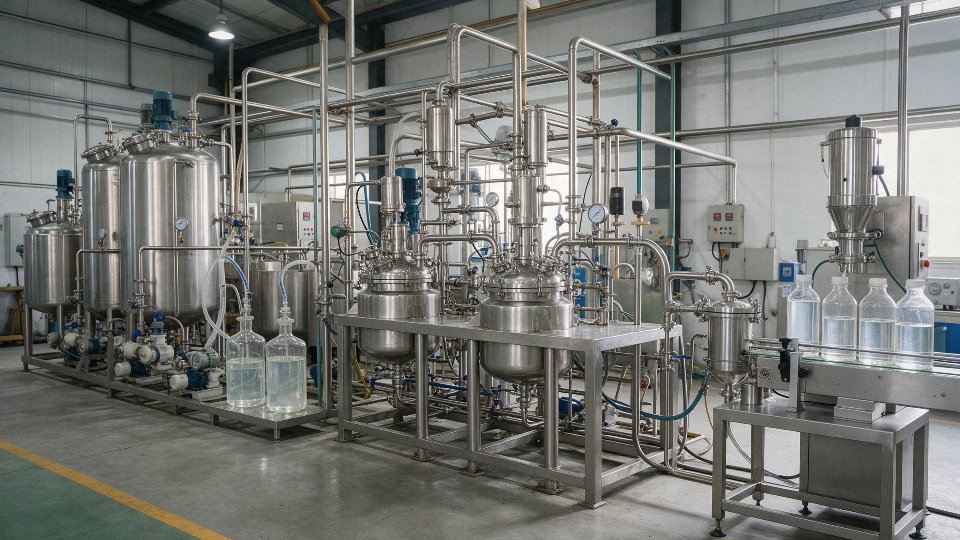
Catalyst choice is not a lab detail; it is one of the main reasons two suppliers can offer the same nominal viscosity grade and still deliver very different color, volatile content, residue profile, and storage stability. In silicone oil production, the catalyst and the way the batch is driven determine how fast siloxane bonds rearrange, how cleanly the reaction stops, and whether the product stays on-spec after it leaves the reactor.
For most standard dimethyl silicone oils made by cyclic equilibration, plants usually work with either acidic systems or alkaline systems. Both can make saleable material. The better choice depends on the target grade, the reactor train, downstream cleanup capability, and how tightly the customer cares about color, cyclic residue, and viscosity hold.
Acidic vs alkaline catalyst systems
Acid catalysts commonly used in siloxane processing include sulfuric acid, organic sulfonic acids, acid clays, and acidic ion-exchange media. Alkaline systems usually include KOH or silanolate catalysts, often in very small dosages but with strong effect on rearrangement rate.
Acidic catalysts: where they fit and where they hurt
Acidic systems can drive equilibration effectively, and some plants favor them because they can be familiar, available, and relatively straightforward to meter. They are also used in some hydrolysis-condensation stages, so a site already set up around acid handling may prefer to stay inside that operating philosophy.
In practice, the differences among acid catalysts matter:
- Sulfuric acid
- Fast and cheap
- Can promote side reactions if overdosed or held hot too long
- Raises corrosion concern, especially in carbon steel systems, dead legs, and instrument ports
- Neutralization generates salts that must be removed well
- Sulfonic acids
- Often more controllable than mineral acid
- Can give good activity at moderate temperatures
- Still require careful neutralization and residue control
- Some grades are easier to handle from a metering standpoint than concentrated sulfuric acid
- Acid clays
- Heterogeneous and sometimes attractive for easier separation
- Activity can be less uniform batch to batch if the clay quality varies
- Fine solids increase filtration load
- Color pickup can become an issue if the solids are not well managed
- Acidic ion-exchange systems
- Useful where the plant wants lower free-acid carryover
- Can simplify downstream neutralization in some setups
- Mass transfer and contact efficiency become more important than with dissolved catalysts
- Resin life, fouling, and regeneration economics have to be watched closely
The main operational downside of acid catalysis is that a fast reaction is not the same as a clean reaction. If the batch sits hot in the presence of acid, you can see color formation, trace degradation products, and a residue profile that keeps causing trouble during stripping or storage. On the plant floor, this often shows up as a batch that hit viscosity during the run but drifts after transfer, or a product that suddenly needs more bleaching earth or carbon than usual.
Alkaline catalysts: often preferred for standard silicone oils
KOH and silanolate systems are widely used in equilibration because they are highly effective for siloxane redistribution and can produce consistent viscosity grades when the rest of the process is disciplined.
Their strengths are usually:
- High activity at practical industrial temperatures
- Good control of equilibration toward target chain length
- Lower tendency toward some acid-promoted color issues
- Familiar industrial handling for plants already equipped for caustic service
But alkaline systems come with their own constraints:
- Even trace residual alkali can continue rearrangement after the intended endpoint
- Functional groups that are alkali-sensitive may not tolerate the same conditions
- Quench quality becomes critical; poor quench leads to post-reaction viscosity drift
- Glass-lined, stainless, and gasket compatibility still need review, especially at elevated temperature and under vacuum
Silanolate catalysts are often favored when tighter control is required because they can be more selective and easier to integrate into a cleaner process package than simple KOH addition, though the exact performance depends on formulation and supplier-specific practice. I would not generalize one plant’s silanolate recipe to another without trial data.
Residual catalyst left in silicone oil can continue to change viscosity after production.True
This is established process behavior in siloxane equilibration. If acid or alkali residues are not fully quenched or removed, ongoing bond redistribution can shift molecular weight distribution during storage or heating.
The process variables that actually move the result
Catalyst type sets the chemistry, but operating conditions decide whether that chemistry stays under control.
Temperature
Typical industrial polymerization and equilibration work for silicone oils often falls in the 80°C to 180°C range, depending on catalyst system and end-blocking strategy. Lower temperatures usually mean slower equilibration and longer batch time. Higher temperatures can shorten the cycle, but they also increase the risk of side reactions, color formation, volatilization losses, and wider molecular weight distribution if the batch is overheld.
The preferred temperature flips when the product is sensitive. A simple dimethyl fluid may tolerate a fairly assertive temperature profile. A functional silicone fluid, or any grade where color and residue are tightly controlled, often needs a narrower operating window.
Residence time
Longer is not automatically better. Once the system approaches equilibrium, extra time may not improve the useful conversion in a commercial sense. It can instead:
- Broaden the molecular weight distribution
- Increase low-boiler and cyclic redistribution burden
- Raise stripping load
- Reduce batch-to-batch repeatability
That last point matters in purchasing. A supplier who “cooks it a bit longer to be safe” may actually create wider lot variation.
Agitation
Siloxane systems are usually not difficult to mix once fluid, but early-stage feed blending, catalyst dispersion, and localized hot spots still matter. Poor agitation can cause:
- Non-uniform catalyst concentration
- Slow approach to equilibrium
- Local overreaction near feed points
- Delayed response in viscosity checks
In larger vessels, impeller type and baffle effectiveness make a real difference. A small plant using a general-purpose top-entry agitator can make good product, but scale-up often exposes dead zones around heating coils, wall films, or the bottom outlet pocket.
Pressure and vacuum
Vacuum is used mainly for stripping volatiles and helping reach residual volatile targets, commonly below 0.5 wt% for many industrial grades. It also helps remove water where applicable. But hard vacuum too early can pull off useful light species before the equilibrium is where you want it, changing the composition in a way the batch sheet did not intend.
A practical sequence is often better than brute force:
- Complete the main equilibration under controlled temperature
- Quench or neutralize as required
- Step into vacuum stripping under stable agitation
- Monitor volatiles and viscosity together, not separately
Water control
Water is one of the quiet troublemakers in silicone processing. In hydrolysis-condensation it is part of the chemistry; in equilibration and finishing, excess water often works against control. Water can alter catalyst behavior, slow or complicate endpoint approach, and increase cleanup burden. Wet feed drums, leaky condensers, or steam-traced lines that sweat into vents cause more trouble than people like to admit.
Feed sequence
Feed order affects local chemistry before the vessel contents become uniform. Common decision points include:
- Whether catalyst is charged before or after full monomer/cyclic blending
- When end-blocker is introduced
- Whether the batch is heated before catalyst addition or vice versa
- Whether functional additives are held back until after the main equilibration
A poor feed sequence can create transient conditions where side reactions happen faster than bulk equilibration. Those side reactions do not care that the final average composition looks right on paper.
End-blocker dosage and viscosity targeting
Commercial silicone oil grades are often sold by viscosity, but the reactor does not “make 350 cSt” directly. It makes a molecular weight distribution shaped by equilibrium chemistry, and the end-blocker dosage is one of the main levers that sets the average chain length.
In plain terms:
- More end-blocker caps more chain ends, lowers average degree of polymerization, and usually gives lower viscosity
- Less end-blocker allows longer average chains and pushes viscosity upward
That relationship is conceptually simple but not perfectly linear across all grades. The final viscosity depends on several interacting factors:
- Cyclic feed composition
- Catalyst strength and dosage
- Temperature history
- Stripping severity
- Residual low boilers
- Presence of branched or functional units, if any
For standard dimethyl silicone oils, the commercial span is broad, roughly 5 cSt to 1,000,000 cSt at 25°C, but no responsible producer should promise precise dosage-to-viscosity transfer without plant-specific calibration curves. The same theoretical chain length can land differently if the stripping cut is deeper or the residual catalyst is cleaner.
Quenching, neutralization, and polishing: the part that prevents expensive surprises
A batch is not finished when target viscosity first appears. It is finished when the catalyst is deactivated or removed enough that the product will not keep changing.
Typical control steps include:
- Quenching
- Stops active catalyst chemistry
- Must be matched to the catalyst type
- Inadequate quench is a common cause of storage drift
- Neutralization
- Often needed for free acid or alkali systems
- Generates salts or other residues that have to be separated
- Over-neutralization can create its own contamination issue
- Adsorption
- Bleaching earth, activated carbon, or other adsorbents may be used where color bodies or trace catalyst residues remain
- Helpful, but not a substitute for a controlled reaction
- Polishing filtration
- Removes neutralization solids, adsorbent fines, and suspended contamination
- Usually the last chance to protect downstream drum clarity and customer filtration load
This is one of those areas where plant discipline shows. If neutralization is done in a hurry, if the filter aid bed is thin, or if operators push a cartridge past differential-pressure limits, the batch can pass shipment testing and still give the customer haze, residue, or drift after heating.
Process analytical controls that matter
The most useful analytics are the ones tied to release risk, not just habit.
- Viscosity at 25°C
- Primary commercial specification for many grades
- Must be interpreted with volatile content and residue status, not alone
- Volatile content
- Confirms stripping performance
- Strongly affects flash loss, odor, and apparent viscosity consistency
- Acid or alkali residue
- Critical for storage stability and downstream reactivity
- Methods vary by plant; limits should be linked to product sensitivity
- Cyclic content by gas chromatography
- Best way to track residual low-boiling cyclics in many systems
- Important for both customer processing and regulatory review where applicable
- Infrared confirmation of functional groups
- Useful to verify end groups or functional modifications
- Good for confirming that the right chemistry was made, not just the right viscosity
The section’s main conclusion stops holding when you move away from standard dimethyl silicone oil into heavily functional, branched, or specialty systems. In those cases, catalyst compatibility and endpoint control can change enough that a process package proven for commodity fluid is no longer a safe guide.
Molecular weight and viscosity control
A silicone oil grade is not defined by viscosity alone; it is defined by how that viscosity was built. Manufacturers hit a target like 50 cSt, 350 cSt, or 100,000 cSt by controlling average siloxane chain length, molecular-weight distribution, and end-group chemistry, then confirming that volatiles, residual catalyst, and end-blocking are where they should be. Two drums can carry the same nominal viscosity and still behave differently in storage, coating, defoaming, or thermal exposure if their chain architecture and cleanup are not comparable.
The first-order relationship is straightforward: longer average polydimethylsiloxane chains generally give higher viscosity. What trips buyers up is that the relationship is not linear across the full commercial range. Going from a very short chain fluid to a moderate chain length might move viscosity by a few cSt or a few tens of cSt, while further chain extension can push the product into hundreds, thousands, or much higher at 25°C because chain entanglement and segmental motion start to dominate flow behavior. That is why a plant can move from roughly 5 cSt to 50 cSt with one kind of control problem, but from 50,000 cSt to 500,000 cSt with a very different one.
In practice, viscosity control gets harder as the target goes up because small shifts in chain length distribution become amplified. A slight drift in end-blocker ratio, catalyst activity, residence time, or stripping severity may barely matter in a 10 cSt fluid and still keep it saleable. The same drift can push a high-viscosity grade out of spec, create poor pumpability in winter, or leave too much residual cyclic content hiding behind the nominal viscosity number.
How chain stoppers set molecular weight in equilibrium systems
In cyclic equilibration routes, chain stoppers are the main lever used to set the statistical average molecular weight. The common logic is simple: if you add more monofunctional end-blocker relative to cyclic siloxane feed, you create more chain ends, and more chain ends mean shorter average polymer chains and lower viscosity. If you reduce chain stopper relative to feed, chains grow longer on average and viscosity rises.
Typical end-blockers in dimethyl silicone oil manufacture are disiloxanes or other monofunctional siloxanes that cap the chain with nonreactive end groups. The equilibrium chemistry matters here. You are not “building” each chain to an exact length in a deterministic way; you are setting up a statistical distribution around an average. That means several operating details affect whether the final product actually lands where the recipe says it should:
- End-blocker metering accuracy
- Small feed errors shift the whole molecular-weight average.
- This matters most in medium- and high-viscosity grades.
- Catalyst activity and uniform mixing
- Poor dispersion can leave local overreaction or underreaction zones.
- In larger reactors, agitator performance and feed point location are not minor details.
- Equilibrium hold time
- Too short, and the distribution may not fully stabilize.
- Too long, and side reactions or unnecessary thermal history can hurt color or volatility profile.
- Strip-out of low boilers after equilibration
- If residual cyclics remain high, measured viscosity may still pass while evaporation loss and odor do not.
A lot of younger buyers assume the chain stopper “locks in” the final chain length by itself. It does not. It sets the average under the reaction and purification conditions actually achieved in the plant.
Why molecular-weight distribution matters even when viscosity matches
A nominal viscosity grade can be made with a narrower or broader molecular-weight distribution, and the difference shows up in use. Broader distribution usually means more short chains and more very long chains coexisting in the same product. Narrower distribution tends to give more uniform handling and performance, though it can cost more to make consistently.
Here is where the trade-off sits:
| Distribution tendency | What you usually gain | What you usually give up | Where it matters most |
|---|---|---|---|
| Narrower distribution | More consistent application behavior, more predictable volatility, tighter batch-to-batch feel | Often tighter process control cost, sometimes lower manufacturing flexibility | Personal care intermediates, release coatings, precision additives |
| Broader distribution | Easier process tolerance in some systems, sometimes lower production cost | More variation in flow, pour behavior, evaporation loss, and performance consistency | Commodity fluids, less demanding process aid uses |
A broader distribution can influence several properties at once:
- Shear behavior: very high molecular-weight tails can make the fluid feel heavier under low shear even when the reported kinematic viscosity is on target.
- Pour characteristics: extra long-chain fraction can worsen low-temperature flow, while short-chain fraction can mask that issue at room temperature.
- Volatility: low molecular-weight fraction contributes disproportionately to evaporation loss and odor.
- Application consistency: in antifoam, lubricant, textile, or release applications, the short-chain fraction may migrate or evaporate faster, while the long-chain fraction may remain and change surface behavior over time.
The conclusion that “narrower is always better” stops holding when the application is cost-driven and not sensitive to minor volatility or feel differences. For some process aid uses, a broader and cheaper grade is acceptable. For coating, cosmetic, electronics, or tightly qualified industrial formulations, it usually is not.
End groups change both the process route and the use case
End groups are not cosmetic chemistry. They determine reactivity, storage behavior, and where the oil fits in downstream processing.
Trimethylsiloxy-terminated oils
These are the standard nonreactive silicone fluids used as lubricants, heat-transfer media in selected ranges, process aids, defoamer carriers, and general-purpose release fluids. They are typically produced by equilibration with trimethylsiloxy chain stoppers. Their value is stability and low reactivity, not cure participation.
Hydroxy-terminated oils
These carry silanol end groups and are much more reactive. They are often used as intermediates for room-temperature vulcanizing systems, condensation-curing formulations, and further polymer modification. Moisture sensitivity and acid/base residue control matter more here because the end groups are chemically active.
Hydrogen-terminated oils
These contain Si-H functionality and are used where hydrosilylation or other reactive modification is needed. They are not interchangeable with inert dimethyl fluids. Storage, compatibility, and impurity control become more critical because trace catalyst residues or contaminants can trigger unwanted reactions.
Vinyl-terminated oils
These are common intermediates in addition-cure silicone systems. They are selected for controlled crosslinking with Si-H containing polymers or resins. Viscosity alone tells you very little about suitability; vinyl content, end-group integrity, and inhibitor compatibility can matter just as much.
Functionalized oils
This category includes amino-, epoxy-, polyether-, phenyl-, fluorinated-, and other modified siloxanes. The process route may involve base fluid production first, then post-functional modification or copolymer design. Buyers should treat these less like commodity oils and more like application-specific polymers because compatibility, substrate interaction, and side-product profile shift significantly.
Residual cyclics are not a minor cleanup issue
For many industrial grades, residual volatile content is targeted below 0.5 wt% after stripping, but what is acceptable depends on grade, use, and customer requirement. Residual cyclic siloxanes matter most in low-viscosity fluids because they can materially influence evaporation loss, odor, flash point, and performance drift during storage or heating.
If devolatilization is weak, several plant-floor symptoms show up:
- More noticeable odor on opening drums or heating the product
- Lower-than-expected flash point for the nominal viscosity
- Higher evaporation loss in service
- Greater viscosity drift after use in open systems
- In some markets, tighter scrutiny around low molecular weight siloxane content
Low-viscosity silicone oil with poor devolatilization can still pass a nominal viscosity check while failing in evaporation-sensitive applications.True
Viscosity reflects average flow behavior, not complete volatile profile. Residual cyclics and short linear fractions can leave the product under heat or airflow without shifting the measured room-temperature viscosity enough to trigger rejection.
That matters commercially. A buyer who sources only on cSt may get a lower apparent price and then lose it in packaging venting issues, odor complaints, lower flash point margin, or faster consumption in open or hot processes.
Why viscosity must be paired with other specifications
A workable purchasing specification for silicone oil usually needs more than viscosity at 25°C. At minimum, engineers should check a supporting set of properties that reveal whether the chain architecture and cleanup are consistent with the intended duty:
- Flash point
- Screens for excessive low-boiling fraction and affects safe handling margin.
- Volatile content
- Critical for coating, personal care, release, and thermal exposure uses.
- Acid value or residual catalyst indicators
- Helps identify poor neutralization or cleanup, especially where downstream cure or stability matters.
- Moisture
- Important for reactive grades and for storage stability in some formulations.
- Refractive index
- Useful as a quick identity and consistency check, especially across established formulations.
- Appearance, color, and odor
- Not cosmetic in many applications; they often signal process cleanliness.
- End-group functionality or content
- Essential for hydroxy-, vinyl-, hydrogen-, and other reactive oils.
In my experience, plants get burned most often when they buy “same viscosity, lower price” fluid for a qualified formulation and skip volatile content, flash point, and residual catalyst cleanup checks. The product may blend fine in the tank and still create cure inconsistency, foaming drift, haze, odor, or a short shelf-life surprise a month later. If you are matching an incumbent material, ask not only for nominal viscosity but also for end-group type, volatile limit, and any cleanup-related specifications tied to the application.
Purification and finishing
A reacted siloxane mass is not yet a commercial silicone oil. To make it stable, clear, low-odor, and shippable, the plant still has to stop the chemistry, remove catalyst-derived residues and light ends, and tighten appearance and volatility to the grade target. Most complaints about haze, odor, viscosity drift, or poor storage stability trace back to finishing, not the polymerization step itself.
After polymerization or equilibration, the first job is usually catalyst deactivation or neutralization. The exact method depends on what started the reaction.
- Acid-catalyzed systems often require careful neutralization with a basic agent, followed by separation of the resulting salts or insolubles.
- Base-catalyzed systems may be quenched with an acidic neutralizer or otherwise deactivated so the siloxane redistribution stops before packaging.
- Catalyst poisons or deactivators are sometimes preferred over full neutralization when salt generation would create a filtration burden or when ultra-clean grades are needed.
That step sounds routine on paper, but it is where a lot of downstream trouble begins. If neutralization is incomplete, residual catalyst can keep scrambling chain lengths during hot storage, especially in drums sitting in a container yard in summer. If it is overdone or poorly mixed, you can create fine salts, localized gels, or haze that are harder to remove than the catalyst itself. In practice, agitation quality matters more than many buyers realize. A reactor with dead zones, worn baffles, or a poor addition point will show it here.
Once the chemistry is stopped, the product usually goes through clarification and solids removal. The toolset is familiar, but the sequence matters.
Removing residues, haze, and color bodies
Typical finishing trains use some combination of:
- Settling or hold time
- Lets coarse insolubles or neutralization salts drop out before fine filtration.
- More useful on larger batches and higher-viscosity products where solids are sparse but persistent.
- Bag or cartridge filtration
- Removes visible particulates, gel specks, and neutralization byproducts.
- Often staged from coarser to finer elements to avoid blinding expensive final filters too early.
- Pressure leaf, plate-and-frame, or polish filtration
- Used when clarity standards are tighter or when adsorbents have to be removed cleanly.
- Filter aid may be used, but it adds another contamination-control step.
- Adsorption treatment
- Bleaching earth, activated carbon, silica, or specialty adsorbents can reduce trace color, odor precursors, catalyst residues, and polar impurities.
- Particularly relevant for cosmetic, personal care, electronics-adjacent, and some textile auxiliary grades.
- Hot clarification
- Lowering viscosity during filtration improves throughput and can help release entrained fines.
- The limit is obvious: too much heat, too long, and you risk oxidation, odor pickup, or more volatile loss than intended.
The mechanism is straightforward: residual salts, catalyst fragments, and polar byproducts scatter light, seed haze, and can destabilize the product in storage. Adsorbents improve appearance and odor by binding those species, but they also introduce a trade-off. You gain cleaner product; you sacrifice some yield, add handling dust, and create more spent solid waste. For low-value industrial grades, aggressive adsorption is often not economical. For release coating or sensory-sensitive grades, it usually is.
Stripping out volatiles and moisture
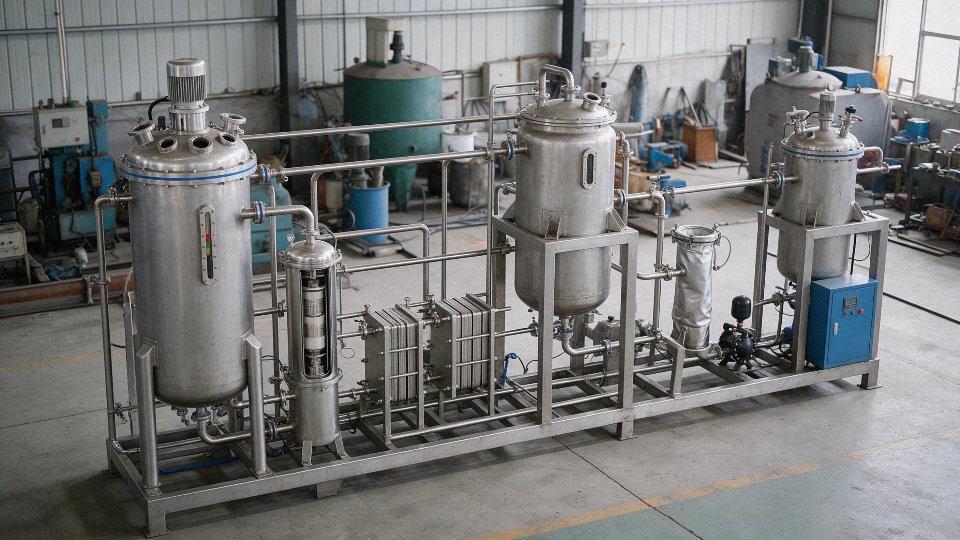
Residual cyclics and low oligomers are the next major target. Most commercial operations use vacuum stripping, flash devolatilization, or thin-film evaporation to pull out D4, D5, short-chain siloxanes, moisture, and entrained light ends from the reaction mass.
A typical plant window for polymerization may be 80°C to 180°C, but finishing temperatures and vacuum levels are set by product viscosity, target volatile level, and how much thermal history the grade can tolerate. Many industrial grades aim for residual volatiles below roughly 0.5 wt% after stripping, though the exact release limit depends on application and customer specification.
The trade-off is not academic. Low- and medium-viscosity oils are closer in volatility to the species you are trying to remove, so hard stripping can pull saleable product into the vacuum system along with the unwanted light ends. That shows up as yield loss, viscosity shift, and sometimes an off-spec flash profile. On very high-viscosity grades, the problem flips: mass transfer gets slower, and you may need more residence time, thinner film, or deeper vacuum to get the same residual volatile result.
Aggressive devolatilization improves odor, storage stability, and export robustness, but beyond a point it starts consuming margin. The preferred setting changes with viscosity band, end-use sensitivity, and recovery efficiency on the condenser side. If a supplier quotes one universal volatile target across all grades without discussing viscosity and process route, I would ask questions.
Appearance and odor control for sensitive grades
For cosmetic, textile, electronics, and release-coating grades, acceptable chemistry is not enough; the product must also look and smell clean.
Plants typically watch:
- Color
- Clarity or haze
- Visible particles or gel
- Odor intensity
- Water content
- Foam tendency after packaging or transfer
Odor control usually depends on three paths working together:
- good removal of low-boiling siloxanes and trace organics,
- low contamination from seals, hoses, cleaning fluids, or previous campaigns,
- clean packaging conditions.
This is where campaign planning matters. A multipurpose line that runs darker modified silicones before a water-clear dimethyl fluid can meet viscosity spec and still fail visually. Old transfer hoses, dirty tote fill heads, or oxidized gasket materials are common culprits. The chemistry gets blamed, but the issue is often in the finishing and fill area.
Finishing, packaging stability, and quality release
A properly finished silicone oil should remain stable through filling, warehouse storage, ocean transit, and customer tank transfer without meaningful viscosity drift or haze development under normal conditions. Residual catalyst, moisture, or incompletely removed light ends increase the risk of pressure rise in closed packs, odor evolution, or slow spec movement during transport.
Final release usually includes a certificate of analysis with parameters such as:
- viscosity at the stated temperature, often 25°C,
- appearance or clarity,
- color if specified,
- volatile content,
- moisture or water content where relevant,
- acid value, alkalinity, or residue indicators if the grade requires them.
Good manufacturing practice on the commercial side also includes:
- Retained samples from each lot for complaint investigation and stability follow-up
- Lot traceability back to raw material batches, reactor campaign, and finishing records
- Packaging traceability for drums, IBCs, or bulk loads tied to fill date and inspection status
Final silicone oil quality depends as much on finishing discipline as on polymerization chemistry.True
Residual catalyst, salts, low boilers, moisture, haze-causing fines, and packaging contamination are introduced or removed in downstream steps, and these directly affect stability, appearance, odor, and shipment performance.
For buyers, this section matters most when the application is sensitive to odor, clarity, volatility, or long transit times. In those cases, asking only about nominal viscosity is not enough; you need to know how the supplier deactivates catalyst, how volatiles are removed, and what final lot-release controls are actually routine rather than just written into a brochure.
Quality risks and failure modes
A silicone oil batch can look acceptable on a basic COA and still become a plant-floor problem if hidden residues, low boilers, or contamination are sitting behind the viscosity number. The main risk is not just “off-spec product”; it is a fluid that runs through incoming inspection, then shows up later as smoke, haze, cure inhibition, dielectric drift, filter plugging, or unstable process behavior.
The failure modes below are the ones that matter most in buying, release, and troubleshooting.
Production-side failure modes that create bad silicone oil
Off-spec viscosity
Viscosity misses are the most obvious failure mode, but they are not all caused by the same chemistry.
- Too low viscosity
- Incomplete equilibration or condensation
- Excess end-blocker
- Too much chain scission from overactive catalyst or excess water
- Over-stripping that removes a meaningful fraction of lower oligomers in very low-viscosity grades
- Too high viscosity
- Overreaction
- Insufficient end-blocker
- Poor catalyst quench
- Local overheating that pushes further condensation or branching
- Water imbalance in hydrolysis-condensation routes
In practice, the root cause often sits upstream of the reactor setpoint. A metering skid drifting 1-2% on end-blocker feed, or a delayed catalyst kill during shift change, is enough to move a mid-range oil out of target. The commercial consequence depends on grade: a few cSt drift may be tolerable in a release agent, while the same relative miss can ruin a dielectric fluid or a formulation feedstock.
Broad molecular weight distribution
A batch can hit the target viscosity and still have a broad distribution. That usually shows up as:
- Unstable volatility
- Higher-than-expected foam tendency
- Variable flash behavior
- Inconsistent lubrication film
- Different response from one downstream customer process to another
Mechanistically, broad distribution comes from uneven equilibration, poor mixing, catalyst hot spots, uncontrolled residence time, or partial back-mixing between old and new material in tanks and transfer lines. The trade-off is straightforward: aggressive reaction conditions can help throughput, but they often widen the distribution if the quench and finishing steps are not equally disciplined.
High volatile content
This is one of the most expensive hidden defects because the fluid may fill, label, and ship normally.
Typical causes include:
- Incomplete stripping
- Vacuum system underperformance
- Condenser inefficiency
- Leaks admitting air and reducing effective vacuum
- Too much cyclic carryover from the reaction stage
- Broad molecular weight distribution with excess low-boiling fraction
For many industrial grades, residual volatiles are often targeted below about 0.5 wt% after stripping, but the acceptable value depends heavily on end use. A heat transfer fluid, personal-care intermediate, and transformer-related application are not judged the same way, and buyers should not treat one supplier’s target as a universal industry limit.
Residual acidity or alkalinity
Residual acid or base is a classic source of delayed failure.
- Acid residue may come from incomplete neutralization, poor washing, or acidic corrosion products.
- Alkaline residue usually points to insufficient catalyst removal, poor adsorption cleanup, or contamination from cleaning chemicals.
These residues do not always change appearance. What they do change is long-term stability: they can keep catalyzing chain rearrangement during storage, shift viscosity over time, worsen color, attack packaging components, and interfere with downstream cure systems.
Haze, gel particles, color instability, and odor
These are often grouped as “appearance issues,” but they reflect different root causes.
- Haze
- Moisture
- Fine salts
- Insoluble catalyst residues
- Contamination from incompatible additives
- Trace phase separation
- Gel particles
- Localized crosslinking
- Reactor wall buildup breaking loose
- Dead-leg contamination in lines
- Carryover from functional silicone campaigns
- Color instability
- Oxidation
- Metal contamination
- Overheating
- Residual catalyst
- Organic contamination from dirty packaging or hoses
- Odor
- Excess low boilers
- Residual solvents
- Incomplete removal of cyclics
- Decomposition products from thermal abuse
- Contamination from previous batch materials
A light amber tint is not automatically a failure in every industrial grade, but unexplained color movement batch to batch usually means the process margin is shrinking somewhere.
Contamination pathways plants often underestimate
Most bad batches are not caused by “mystery chemistry.” They come from ordinary plant discipline failures.
- Water ingress
- Wet nitrogen lines
- Leaking manway gaskets
- Condensation during shutdown
- Poorly dried raw material tanks
- Steam-traced systems with pinhole leaks
- Metal corrosion
- Rust or iron pickup from carbon steel equipment where stainless or lined surfaces were needed
- Corrosion under deposits in aging reactors
- Acidic residues attacking transfer piping
- Incompatible seals and hoses
- Swelling elastomers shedding extractables
- Hose liners not suited to hot siloxanes
- Pump mechanical seal materials contributing particles or organics
- Poor cleaning validation
- Detergent residue
- Solvent residue
- Water trapped in low points
- No swab or rinse verification after campaign change
- Cross-batch carryover of functional fluids
- Amino, epoxy, vinyl, phenyl, or fluorinated silicone residues left in shared tanks or tote-filling lines
- Trace carryover that is harmless in one commodity oil but unacceptable in coating, electronic, or release-sensitive applications
This is where buyer audits should focus. A plant can have excellent reactor chemistry and still ship inconsistent product if campaign segregation is weak.
How defects appear in application use
Field symptoms are often more useful than lab theory because they point back to a narrow set of root causes.
| Application symptom | Likely root causes |
|---|---|
| Smoking at elevated temperature | Excess low boilers, under-stripping, thermal instability from catalyst residue |
| Poor dielectric performance | Moisture, ionic residue, ash, polar contamination, metal traces |
| Foam instability or erratic defoaming | Broad distribution, wrong viscosity window, contamination, excess cyclics |
| Coating defects such as craters or fish-eyes | Gel particles, incompatible carryover, uncontrolled functional-group content, contamination |
| Migration or bleeding | Excess low molecular weight fraction, poor end-blocking control, broad distribution |
| Cure inhibition downstream | Residual catalyst, amine or sulfur contamination, functional carryover, ionic residue |
A common trap is assuming all smoking problems are “normal silicone behavior.” They are not. Some volatilization is expected at sufficient temperature, but visible smoke appearing early in service often points to under-stripping or excess cyclics. Likewise, a fluid can meet nominal viscosity and still fail electrically because ionic residue and moisture matter more than chain length in that application.
A silicone oil can pass viscosity inspection and still fail high-end use because trace ionic residue or volatiles drive reliability.True
This is consistent with established process and application behavior. Viscosity mainly reflects bulk molecular size, while dielectric stability, thermal smoke tendency, cure compatibility, and long-term cleanliness are often controlled by trace residues, moisture, cyclics, ash, and contamination below the level visible in a simple viscosity check.
Tests and release checks that actually reduce risk
A useful release package does not need to be fancy, but it does need to match the application risk.
- Viscosity at 25°C
- Confirms grade target
- Does not confirm purity or stability by itself
- Volatile or cyclic content
- Critical for high-temperature, low-odor, and low-migration uses
- Test method and cutoff should be agreed in advance
- Acid value or alkalinity
- Screens for residual catalyst and neutralization problems
- Ash
- Indicates inorganic residue, catalyst carryover, or contamination
- Moisture
- Especially important for dielectric and moisture-sensitive downstream systems
- Appearance
- Clear, haze-free, particle-free fluid is still a meaningful release check
- It catches a surprising number of line and packaging issues
- Odor and color
- Secondary for some industrial uses, decisive for others
Where applications are demanding, ask how the supplier verifies low ionic residue, not just low ash. Ash can miss soluble or trace ionic contaminants that still cause trouble. The main conclusion here stops holding if the product is headed into a very forgiving use such as a noncritical processing aid; in those cases, broad screening may be enough. For electronics-adjacent, coating, dielectric, or high-temperature service, basic QC alone is thin protection.
Industrial grades and applications
The same “silicone oil” label covers products that behave very differently in service. For buyers, the practical match is not made by viscosity alone; it sits at the intersection of polymerization route, end group, modification chemistry, volatile content, and batch-to-batch consistency. A 50 cSt dimethyl fluid for a release formulation is not interchangeable with a 50 cSt electronics-grade fluid, even if the certificate looks similar at first glance.
Standard dimethyl silicone oils remain the volume workhorse because they are chemically simple, broadly compatible, and available across a very wide viscosity band, typically from a few cSt up into heavy, gum-like ranges. In plant use, these grades show up where the buyer wants inertness, low surface tension, and predictable rheology without paying for functionality they do not need.
Typical dimethyl applications include:
- Lubrication and light mechanical protection
- Instrument lubrication
- Plastic-to-plastic or plastic-to-metal contact points
- Slow-speed bearings and slides where mineral oil incompatibility or oxidation is an issue
- Thermal bath and heat-transfer service
- Laboratory baths
- Controlled process heating where the operating window fits the selected fluid’s volatility and oxidation boundary
- Indirect heating systems that value clean operation over maximum heat-transfer coefficient
- Defoaming intermediates
- Base fluid for compounded antifoams
- Carrier phase for hydrophobic silica or other antifoam actives
- Intermediate for textile, fermentation, wastewater, and coating defoamer packages
- Mold release and surface treatment
- Rubber and plastic molding
- Light release on packaging or converting equipment
- Release concentrates later diluted into solvent or emulsion systems
- Personal care intermediates
- Base fluid for further blending or emulsification
- Slip and gloss adjustment in non-final, intermediate formulations
- Processing aid where tactile performance is tuned later
- Dielectric and insulating fluids
- Electrical assemblies and specialty equipment
- Damping-and-insulation dual-function uses
- Systems where stable dielectric behavior matters more than lowest cost
The viscosity split matters because it changes how the fluid reaches the surface, stays there, and leaves residues behind. Low-viscosity grades, roughly in the single-digit to low-hundreds cSt range depending on the application, are usually chosen for spreading, wetting, carrier roles, and easy metering. They flow into narrow clearances, level quickly, and are easier to emulsify or blend. The trade-off is obvious on the shop floor: they migrate more easily, can volatilize or bleed off faster, and often give shorter service life in open systems or hot zones.
High-viscosity grades flip that logic. They are used where the film must stay put, absorb motion, or provide persistent body:
- Damping fluids in instruments, door closers, dashpots, and controls
- Shock absorption and motion smoothing in mechanical assemblies
- Antifoam compound bases where high molecular weight fluid helps anchor hydrophobic particles and extend persistence
- Heavy release or protective films where runoff must be minimized
That same gain in persistence costs you processability. Pump selection changes, line flushing gets slower, and cold-weather handling can become a nuisance. In my experience, once you get into very high viscosities, the transfer system starts to matter almost as much as the chemistry; hose heating, drum unloaders, and shear history all begin to influence what the operator thinks of as “product quality.”
Phenyl-modified silicone oils sit in a different decision space. They are usually chosen when dimethyl fluids run out of temperature margin, lose optical or dielectric stability under harsher conditions, or need better low-temperature behavior in certain formulations. Phenyl substitution can improve high-temperature stability and often helps with radiation resistance and low-temperature flexibility, but not for free. Cost goes up, formulation compatibility changes, and some systems become less forgiving in blending or regulatory review. The preferred choice stops holding if the service temperature is moderate and the application does not need those extra properties; in that case, standard dimethyl grades are often the more commercial answer.
Functional modifications matter even more because they are selected for what they do later, not just what they are today.
| Modified silicone oil | Main processing implication | Common downstream uses |
|---|---|---|
| Hydrogen-modified | Reactive Si-H groups require controlled handling and compatibility review | Water repellents, crosslinking systems, release treatment intermediates |
| Vinyl-modified | Designed for addition-cure systems; purity around catalyst poisons matters | RTV/LSR intermediates, elastomer compounding, specialty release |
| Amino-modified | Strong substrate interaction, especially on fibers; can yellow or change feel if overapplied | Textile softeners, hair-care intermediates, surface conditioning |
| Epoxy-modified | Reactive toward certain resins and surfaces; stability in storage must be checked | Coatings additives, adhesion promotion, specialty finishes |
| Polyether-modified | Improved water dispersibility and wetting; foam behavior can change sharply with EO/PO balance | Agricultural adjuvants, coatings flow/wetting, polyurethane additives |
| Fluoro-modified | Higher cost, narrower use case, often selected for extreme surface effects or chemical resistance | Specialty release, repellency, aggressive-service additives |
The mechanism behind those use patterns is straightforward. Functional groups change how the siloxane chain interacts with the substrate or with the next reaction step. Amino groups raise affinity to textile fibers and hair, so deposition improves, but softness can turn tacky if molecular design or add-on level is wrong. Polyether groups make the fluid more surface-active and easier to disperse in water, which helps agricultural spreading and coating wetting, but the same surface activity can destabilize foam control in some systems. One parameter shifts the whole operating balance.
Sector-specific quality expectations are where a lot of purchasing mistakes happen:
- Textiles
- Consistent hand feel
- Emulsion stability
- Low yellowing tendency
- Reproducible amino content or activity window
- Agriculture
- Controlled spreading behavior
- Formulation compatibility with actives and solvents
- Storage stability
- Clear documentation on recommended use conditions
- Electronics
- Tight volatile control
- Cleanliness and low ionic contamination where relevant
- Stable dielectric behavior
- Lot traceability and reliable COA structure
- Automotive
- Temperature performance over service range
- Material compatibility with plastics, rubbers, and coatings
- Controlled fogging or volatility where interior use is involved
- Long-term supply consistency
- Coatings
- Surface slip and leveling without crater side effects
- Recoat behavior
- Compatibility with resin package
- Stable active content
- Personal care
- Odor, appearance, and sensory consistency
- Impurity profile suited to the formulation route
- Repeatable viscosity and refractive behavior where relevant
- Documentation aligned with the destination market
- Industrial maintenance
- Predictable lubrication or release behavior
- Low residue where cleanliness matters
- Packaging that matches site handling practice
- Reasonable shelf stability in mixed warehouse conditions
Application fit depends as much on purity profile and consistency as on silicone oil type.True
End-use failures often come from residual volatiles, reactive trace species, catalyst carryover, or variable functional content rather than from the nominal chemistry class alone. That is why the same viscosity and modification label can perform differently across suppliers.
For procurement teams, that means the spec package should cover more than viscosity and appearance. Batch consistency, residual volatile level, functional group control, documentation quality, and application-specific screening data often decide whether the fluid runs cleanly in production or creates a slow stream of complaints that nobody traces back to the silicone oil until months later.
Frequently asked questions
Is silicone oil made from D4 or from chlorosilanes?
Both, depending on where you draw the process boundary. Most commercial dimethyl silicone oil is polymerized from cyclic siloxanes such as D4, but those cyclics are themselves produced upstream from chlorosilane hydrolysis and condensation, so chlorosilanes still sit at the front end of the value chain.
For a buyer, this matters because some suppliers are only blenders or downstream equilibrators, while others control the full chain from chlorosilanes to finished oil. Full-chain producers usually have better visibility on impurity carryover, feedstock continuity, and lot-to-lot consistency. A trader buying merchant D4 can still supply acceptable material, but the risk profile is different if your application is sensitive to volatiles, odor, dielectric behavior, or trace acidity.
What is the difference between polymerization and equilibration in silicone manufacturing?
In silicone oil plants, people often say “polymerization” loosely, but for standard dimethyl silicone fluids the dominant industrial route is usually equilibration of cyclic siloxanes with an end-blocker. That is not the same thing as simple one-way chain growth; equilibration continuously breaks and reforms siloxane bonds until the system settles around the target molecular weight distribution set by catalyst, feed ratio, and stripping practice.
That distinction is not academic. In practice, equilibration is efficient for making broad commercial viscosity grades from roughly 5 cSt up to very high viscosities, while hydrolysis-condensation routes are more relevant upstream or for some specialty architectures. If a supplier cannot explain which route they use, they may not fully understand why one batch strips cleanly and another holds onto cyclics.
How is silicone oil viscosity selected for an application?
Start with the job the fluid has to do, not with an arbitrary cSt number. Viscosity selection is really a balance among film thickness, mobility, volatility, shear behavior, heat transfer, migration tendency, and how the oil will be applied or metered on the line.
Typical selection logic looks like this:
- Define the function
- Lubrication or release
- Damping
- Heat-transfer or dielectric service
- Surface slip, feel, or gloss modification
- Defoaming carrier or processing aid
- Check the operating temperature
- A fluid that works at room temperature may become too thin at elevated temperature.
- Cold-start performance can eliminate higher-viscosity grades even if they look fine on paper.
- Match the application method
- Spray, dip, roll coat, meter-mix, and gravimetric dosing each tolerate different viscosity windows.
- Fine nozzles and long transfer lines usually punish overly high viscosity first.
- Look at retention versus migration
- Lower-viscosity oils spread faster and wet better, but they also migrate, volatilize, or bleed more easily in some assemblies.
- Higher-viscosity oils stay put better, but they can trap bubbles, resist leveling, or create drag in automated dispensing.
- Confirm with a plant trial
- Bench feel is not enough. Pumpability, residue pattern, cycle time, and cleanability often decide the final grade.
A 50 cSt fluid and a 1,000 cSt fluid can both be “silicone oil,” but they behave like different process materials on the floor. The right choice usually emerges after a short screened trial, not from catalog browsing alone.
Why do some silicone oils contain residual cyclic siloxanes?
Because complete removal is a stripping and economics problem, not just a chemistry problem. Residual D4, D5, or other low boilers remain when devolatilization is incomplete, when the target viscosity makes stripping harder, or when the producer is trying to avoid thermal history that would shift the molecular weight distribution.
Common reasons include:
- Insufficient vacuum or residence time during finishing
- High viscosity product that slows mass transfer of volatiles out of the bulk
- Foaming limits in the stripper, which force gentler conditions
- Catalyst/end-blocker balance that leaves more cyclic equilibrium content
- Commercial grade positioning, where a supplier offers a standard grade rather than a low-volatile grade
For many industrial grades, a residual volatile target below 0.5 wt% after stripping is common, but that is not universal. Always tie the acceptable level to the application, current regulations, and the supplier’s test method.
Can silicone oil continue changing after production if catalyst residue remains?
Yes. Residual catalyst can keep redistributing siloxane chain lengths during storage, especially if the product sees heat, moisture, or contamination from drums, transfer hoses, or poorly cleaned IBCs. The result may show up as viscosity drift, increased volatiles, haze, gel specks, or a shift in end-group balance.
The practical risk is highest in under-neutralized or poorly filtered material. Strong acid or base residues do not need much time to cause trouble at warehouse temperatures if the packaging sits through a hot summer. That is one reason experienced buyers ask not only for initial COA values, but also for stabilization method, filtration rating, and recommended storage conditions.
What specifications matter most beyond viscosity?
Viscosity gets the RFQ moving, but it rarely protects the application by itself. For industrial buying, these are usually the next specifications worth checking:
- Volatile content or residual cyclic content
- Moisture
- Acid value or residual catalyst indicators
- Appearance: clarity, haze, suspended matter
- Refractive index, density, or specific gravity where formulation control depends on them
- Flash point for storage and handling review
- Pour point or low-temperature behavior if the plant runs cold
- Color and odor for consumer-adjacent or optical uses
- Dielectric properties for electrical service
- Compatibility data with elastomers, plastics, coatings, or formulation components
If the oil is feeding a regulated, cosmetic, medical, food-contact, or electronics application, the specification package usually needs to go further than a standard industrial COA.
How do functional silicone oils differ from standard dimethyl grades?
Standard dimethyl silicone oils are mostly linear polydimethylsiloxane fluids with relatively predictable inertness, lubrication, and thermal behavior. Functional silicone oils carry reactive or polar groups such as amino, epoxy, hydroxyl, phenyl, vinyl, polyether, or alkyl modifications, and those groups change both performance and processing sensitivity.
That gives you useful properties, but not for free:
- Amino-modified oils improve softness and substantivity in textile and personal care systems, yet can yellow or interact strongly with anionic systems.
- Polyether-modified oils improve wettability and emulsifiability, but water sensitivity and foam behavior often change.
- Phenyl-containing oils can improve low-temperature or optical performance in some uses, though cost usually rises.
- Hydroxyl- or alkoxy-functional grades may participate in further reaction or curing, which means storage stability and moisture control become more critical.
Functional silicone oils cannot be sourced by viscosity alone.True
End-group chemistry and side-group functionality often control compatibility, reactivity, and field performance more strongly than viscosity grade.
What production information should a supplier be able to disclose to industrial buyers?
Ask for process-relevant information, not just a polished datasheet. A capable supplier should usually be able to discuss:
- Primary manufacturing route
- Cyclic equilibration, hydrolysis-condensation, or downstream blending/modification
- Main feedstock basis
- Whether they produce key intermediates internally or source them externally
- Targeted control points
- Viscosity control method
- End-blocking strategy
- Volatile removal approach
- Catalyst neutralization or deactivation method
- Routine QC package
- Test items, methods, and lot release criteria
- Packaging and storage controls
- Container type, cleanliness controls, shelf-life guidance, and storage limits
- Change-management capability
- How they handle raw material changes, plant transfers, or process deviations
- Application-fit support
- Whether they can review your use case against volatility, compatibility, and processing constraints
You do not need every proprietary detail. You do need enough transparency to judge whether the supplier is genuinely making the product, controlling the process, and understanding the failure modes that matter in your plant.
What should you verify next
Before you issue an RFQ or approve a sample, lock down five things: the correct silicone oil family, the full specification set, evidence of process control, application-fit proof, and the supplier’s ability to support the product for years, not just one shipment. Most bad silicone oil purchases are not caused by the wrong nominal viscosity; they come from the wrong chemistry, incomplete specs, or weak manufacturing control behind a viscosity number that looked acceptable on paper.
1. Confirm the exact silicone oil family
Start with chemistry, not price and not cSt alone. A 350 cSt dimethyl fluid and a 350 cSt amino-modified fluid are not interchangeable in any serious process.
Verify which family your application actually needs:
- Dimethyl silicone oil
- General lubrication, release, dielectric, heat transfer, antifoam base fluids
- Usually the default if no special reactivity or polarity is required
- Phenyl-modified silicone oil
- Better low-temperature behavior, refractive index, and some thermal-oxidative performance windows
- Often considered for specialty optics, heat-transfer, or demanding temperature service
- Hydrogen silicone oil
- Reactive Si-H functionality for crosslinking, water repellency systems, and further synthesis
- Residual reactivity and handling discipline matter more than with inert fluids
- Vinyl silicone oil
- Used where cure reactivity is required, especially addition-cure systems
- End-group control is usually critical
- Amino, epoxy, or polyether modified silicone oils
- Chosen for softness, slip, wetting, compatibility, emulsification behavior, or substrate interaction
- These are application-specific; small structural differences can shift performance sharply
- Other modified grades
- Fluoro, alkyl, aryl, or custom copolymer systems for niche chemical resistance, surface behavior, or compatibility targets
If the product must bond, react, wet a difficult surface, or survive a narrow temperature window, the preferred family can flip quickly. That is where a generic “silicone oil” inquiry goes off track.
2. Define the complete specification set
A usable purchasing specification normally includes more than viscosity at 25°C. For many industrial grades, residual volatiles after stripping are expected to be controlled tightly, often below about 0.5 wt%, but the acceptable limit still depends on the end use, odor tolerance, fogging limits, and downstream heating conditions.
Include, at minimum:
- Nominal viscosity and acceptable tolerance
- Chemical type and functional group requirement
- Volatile content
- Appearance and color
- Moisture
- Acid value, alkali residue, or catalyst residue as relevant
- Flash point
- Density or refractive index if useful for receiving checks
- Any sector-specific restrictions:
- cosmetic or personal care impurity requirements
- coating or electronics ionic residue concerns
- food-contact or indirect regulatory needs
- customer-specific restricted substance lists
The mechanism matters here: poor devolatilization does not just affect odor. It can change flash point, increase weight loss in service, shift foaming behavior, and create batch-to-batch process drift on your line. A fluid can pass viscosity and still fail the plant trial for exactly that reason.
3. Request evidence of manufacturing control
Ask for proof that the supplier can repeatedly make the grade you need, not just a polished COA template.
Check for:
- Catalyst system capability appropriate to the chemistry
- Polymerization temperature control, typically somewhere in the 80°C to 180°C window depending on route
- End-blocking strategy and how it is verified
- Devolatilization or stripping method
- Lot-to-lot consistency records
- Batch traceability from key feedstocks to finished drums or IBCs
- Retained sample practice and complaint investigation method
A supplier can responsibly guarantee performance based on viscosity alone.False
Viscosity is necessary but not sufficient. End groups, residual volatiles, moisture, catalyst residue, and modifier distribution often determine whether the oil actually works in the customer’s process.
4. Verify application fit with samples and line-relevant testing
Do not stop at bench appearance. The right check depends on whether the oil is acting as a lubricant, release aid, reactive intermediate, additive, textile softener, coating modifier, or foam-control component.
Use a staged validation:
- Lab screen
- Confirm spec compliance
- Check compatibility with your resin, solvent, elastomer, substrate, or additive package
- Representative sample evaluation
- Run at actual concentration and actual mixing order
- Watch for haze, separation, gel, fish-eyes, poor wetting, or cure interference
- Pilot or line trial if risk is meaningful
- Use normal plant temperatures, residence time, and shear
- Test under seasonal conditions if your process is humidity- or temperature-sensitive
A sample that behaves well in a beaker can still fail in a recirculating line, a heated tank, or a high-shear mix head. In practice, seals, hoses, antifoam interactions, and even how operators top up the day tank can expose compatibility issues early.
5. Assess supplier strength beyond the product itself
Commercially, the better supplier is often the one whose process, documentation, and logistics reduce your total operating risk.
Verify:
- Upstream integration or stable raw-material sourcing
- Export experience and documentation accuracy
- Regulatory and technical document support
- Packaging options suited to your use rate:
- drums
- IBCs
- isotanks
- smaller packs for specialty grades
- Lead-time reliability
- Change-control discipline
- Long-term cost stability, not just spot price competitiveness
If you are narrowing suppliers now, send your target viscosity, end use, required performance, functional group or modified type, compliance needs, and any known limits on volatiles, moisture, or residue. Clear application notes make product recommendation and sample matching much faster, and they usually prevent one full round of back-and-forth before qualification can begin.