A silicone oil that looks fine on paper can still fail early in service if the actual thermal load, oxygen exposure, and contamination level are misread. On the plant floor, that usually shows up as viscosity drift, smoke, deposits, seal trouble, fouled heat-transfer surfaces, or product-quality variation that operators first blame on the machine. The money leak is not the fluid drum; it is unplanned stoppage, cleanup labor, scrap, and the very familiar procurement cycle of buying the wrong replacement twice.
For many standard PDMS silicone oils, a practical continuous-use range in air is about 150-200 C, while short-term exposure can be higher if the grade, residence time, and ventilation are favorable. In inert atmospheres, service temperature can increase materially because oxidation is reduced, but thermal stability still depends on viscosity, volatility, contamination, catalysts, and equipment design.
That headline range is useful, but it is also where buyers get trapped. Two fluids sold as “silicone oil” can behave very differently once you add copper traces, a hot spot at the heater sheath, a long hold time in a thin film, or a vented tank pulling in air all shift long before the bulk temperature says they should.
Why silicone oil resists heat
For many industrial duties, silicone oil holds up to heat better than mineral oils and many organic synthetics because the main chain is built on siloxane bonds rather than a purely carbon-based backbone. That advantage is real, but it is not absolute: field life is usually set by the weakest part of the fluid-system combination, not by backbone strength alone.
The starting point is the siloxane backbone, the repeating Si-O-Si structure found in common silicone fluids such as PDMS. Compared with many hydrocarbon fluids, this bond architecture is unusually tolerant of thermal motion before the chain starts to break down in a useful-service sense. In practice, that means the fluid can spend long periods at temperatures where a conventional organic oil would thicken, oxidize hard, or leave varnish much faster.
That does not mean the whole molecule is indestructible. Silicone oils still fail by oxidation, volatilization, chain scission, rearrangement, or deposit formation depending on the grade and the environment. The reason engineers like them for heat is that the backbone gives you a wider starting window before those failure routes become dominant.
The siloxane backbone changes the failure pattern
A useful way to think about silicone oil is that it does not behave like “a better hydrocarbon oil.” It behaves like a different molecular family with different strengths and different end-of-life modes.
The Si-O backbone matters in three practical ways:
- It tolerates heat-driven molecular motion well
- As temperature rises, all fluids see more molecular vibration and more stress on chemical bonds.
- In silicone oils, the siloxane structure remains serviceable across a broad temperature band before thermal degradation becomes commercially unacceptable.
- That is why they are widely chosen for heat transfer, damping, dielectric service, release systems, and textile or processing duties where a broad temperature envelope matters.
- It does not carbonize the same way many organic fluids do
- Hydrocarbon-based fluids often fail by oxidation followed by sludge, varnish, gum, or hard carbonaceous residue.
- Silicone fluids can still leave deposits, especially under hot air exposure, but the pathway and residue character are often different. In a plant, that changes cleaning frequency, valve sticking behavior, heater skin fouling, and visual inspection results.
- Its weak point may shift from chemistry to physical loss
- In some systems, the limiting factor is not immediate backbone breakdown but evaporation of lighter fractions, gradual viscosity drift, or air-driven oxidation at hot surfaces.
- That is why two silicone oils with similar chemistry can give very different service life in an open kettle, a vented reservoir, and a sealed system.
A stronger silicone backbone automatically guarantees long service life at high temperature.False
Backbone stability helps, but actual life can be limited sooner by volatile low-molecular-weight fractions, oxygen exposure, catalytic contamination, residence time at hot spots, and equipment design.
Chain flexibility is a big reason viscosity stays usable across wide temperatures
Silicone oils are not just thermally tolerant; they are also unusually flexible at the molecular level. The siloxane chain has high rotational freedom, which is one reason these fluids keep workable flow behavior over a wider temperature span than many alternatives.
That flexibility shows up on the plant floor in a few ways:
- Low-temperature mobility stays relatively good
- Silicone oils typically retain flow at temperatures where many mineral or organic fluids become sharply more viscous.
- This matters in outdoor equipment, winter startup, chilled storage areas, or batch plants that cycle from cold idle conditions to hot operation.
- Viscosity changes are often less dramatic over temperature
- A fluid that does not spike as hard in viscosity during cooldown is easier on pumps, seals, and startup torque.
- On the hot side, a fluid that does not collapse too quickly in viscosity may maintain a more stable film or damping response for longer.
- Broad operating windows become easier to manage
- One fluid can sometimes cover startup, normal running, and upset temperature conditions without the same level of compromise you would accept with a conventional oil.
The trade-off is that broad viscosity usability does not equal permanent high-temperature stability. A silicone oil may still look attractive on a viscosity-temperature chart and yet lose life quickly if the system has strong aeration, metal contamination, or a hot electric heater surface that drives local oxidation. I have seen buyers focus on nominal viscosity and miss that the reservoir was vented right above a hot zone; the fluid chemistry was fine, the system design was not.
Side groups change the thermal behavior more than many buyers expect
Not all silicone oils are just “silicone oil.” The side groups attached to the siloxane chain strongly affect how the fluid behaves under heat, cold, and oxygen exposure.
Methyl-substituted fluids
Standard PDMS fluids are largely methyl-substituted, and for many applications they are the baseline choice because they balance cost, availability, low-temperature flow, and general-purpose heat resistance.
Typical strengths:
– Good broad-range fluidity
– Strong general thermal tolerance
– Widely available viscosity grades
– Useful dielectric and lubricity characteristics in many non-extreme duties
Typical limitations:
– In hot air, oxidation still progresses over time
– Lower-viscosity methyl fluids can show noticeable evaporation loss
– Open systems may see level drop or property drift before obvious chemical failure
Phenyl-modified fluids
Phenyl substitution is often selected when the service pushes harder on thermal endurance or low-temperature requirements, though the exact benefit depends on formulation and duty. In many cases, phenyl-containing silicone fluids show better resistance to certain high-temperature and oxidative conditions than straight methyl systems.
What usually improves:
– Better tolerance of demanding thermal exposure
– Often improved low-temperature behavior in specific formulations
– Lower volatility at comparable viscosity in some product families
What you give up:
– Higher cost
– More limited product selection depending on market
– Benefits are grade-specific, so assumptions from one supplier’s data sheet should not be generalized across all phenyl-modified fluids
Other substituents and specialty modifications can be used to tune compatibility, lubricity, reactivity, or surface behavior, but once you move into specialty chemistry, the thermal discussion stops being generic. At that point, supplier-specific data and application testing matter.
Viscosity grade and molecular weight affect “heat resistance” in a very practical way
A common buying mistake is to ask which silicone oil has the highest heat resistance without separating chemical stability from volatility. In service, higher-viscosity grades often appear to “take more heat” simply because they evaporate less and hold mass better at elevated temperature.
Here is the mechanism:
- Lower molecular weight fractions boil off or evaporate sooner
- That changes fluid level, flash behavior, vapor generation, and sometimes odor
- As light ends leave, the remaining fluid may shift in viscosity
- The operator interprets this as thermal failure, even if backbone degradation is still limited
So yes, viscosity grade matters. But the preferred choice flips depending on the duty:
| Factor | Lower-viscosity silicone oil | Higher-viscosity silicone oil |
|---|---|---|
| Pumpability and fine metering | Better | Worse |
| Low-temperature startup | Usually better | Usually worse |
| Evaporation loss at heat | Higher risk | Lower risk |
| Apparent high-temperature endurance in open systems | Often lower | Often better |
| Damping or film persistence | Lower | Higher |
This is where equipment design sets the boundary. In a sealed or inerted system, a lower-viscosity silicone fluid may perform well because evaporation and oxidation are constrained. In an open bath or vented process line, that same grade can lose too much mass to be economical even if the chemistry itself is still sound.
The practical lesson is simple: silicone oil resists heat because of its siloxane structure, flexible chain behavior, and tunable substituent chemistry. But the service life you buy is only partly a molecular property; the rest comes from controlling oxygen, hot spots, contamination, and light-end loss in the actual machine.
Real operating temperature ranges
For many standard PDMS silicone oils, a practical continuous-use range in air is usually about 150-200 C, not because the fluid suddenly fails above that band, but because oxidation, volatility, and deposit formation start becoming commercially relevant at different speeds. The right limit depends on how the oil is exposed: a sealed expansion loop running clean and full behaves very differently from an open bath, a lightly wetted chain, or a thin film on a hot metal roll.
That range is where most buyers need to start, then narrow it by duty rather than by brochure headline. A low-stress application may sit near the top end for acceptable intervals; a contaminated, oxygen-rich, splashy service may need to be derated well below it if viscosity drift, fumes, or residue matter.
What continuous temperature actually means in plant terms
“Continuous use” should be read as the temperature the fluid sees for long residence times while still meeting the job: heat transfer, lubrication, damping, release, dielectric behavior, or whatever the process requires. It is not just a survival number. In practice, the question is whether the oil still has acceptable viscosity, volatility, cleanliness, and oxidation stability after weeks or months in your equipment.
A few operating patterns matter more than buyers often expect:
- Constant bulk temperature in a closed loop
Usually the most forgiving case, assuming low oxygen ingress and decent housekeeping. - Repeated thermal cycling
Expansion and contraction can pull air and moisture into headspace, seals, and vents. That often shortens life faster than a steady temperature would. Localized hot spots
A heater sheath, undersized circulation zone, or stagnant elbow can run much hotter than the measured sump. The fluid ages at the hot spot first, and that is often where deposits begin.Open-surface heating
Oxidation and evaporation both accelerate because fresh air keeps reaching the fluid surface.Thin-film or wetted-surface service
The oil is no longer protected by bulk volume. A few seconds on a hot surface can be harsher than minutes in a tank.
This is the mechanism that trips people up: temperature does not act alone. As oil warms, oxidation rate rises, volatility rises, and the lighter fractions are lost faster. That shifts viscosity and can leave heavier residues behind. Once deposits start, heat transfer gets worse, local metal temperature rises, and degradation feeds on itself.
Typical continuous-use ranges in air for common PDMS oils
For standard dimethyl silicone oils in air, the following is a useful procurement-level guide. It is not a substitute for a supplier’s grade-specific data or a site trial, but it is a much better starting point than one-number marketing claims.
| Operating condition in air | Practical interpretation |
|---|---|
| Up to about 150 C | Usually comfortable for many standard PDMS fluids if contamination is controlled and evaporation loss is acceptable |
| About 150-180 C | Common working band for many industrial uses; grade selection and equipment design start to matter more |
| About 180-200 C | Feasible for many fluids, but only if the system is reasonably clean, oxidation is managed, and the process can tolerate some property drift over time |
| Above about 200 C | Still possible in some cases, but now the duty must be examined closely; many standard fluids see shortened life, higher losses, or residue issues |
What shifts the usable limit?
- Viscosity grade
Lower-viscosity fluids usually have higher volatility. They may pump beautifully at startup but lose mass faster at elevated temperature. Higher-viscosity grades often evaporate less, though they bring their own handling penalties at low temperature. Required cleanliness
A process that can tolerate some color change may still run. A clean heat-transfer system, optical line, or sensitive coating operation may not.Exposure geometry
Bulk fluid in a reservoir lasts longer than the same chemistry spread as a thin film on moving parts.Maintenance interval
If the line is already shut down monthly, a higher operating temperature may be acceptable. If the plant expects annual or multi-year service, the preferred selection may flip to a more conservative fluid or lower setpoint.
A published maximum temperature for silicone oil is usually not the same as a dependable long-term operating temperature in your plant.True
Supplier upper limits are often based on short exposure, ideal laboratory conditions, or property retention criteria that may not match your service life, cleanliness, or deposit tolerance requirements.
Peak temperature is not the same as continuous temperature
A fluid that tolerates brief peaks at a given temperature may still age too quickly if held there continuously. Equal peak temperatures can produce very different service life because residence time at temperature is part of the damage mechanism, especially when oxygen is present.
Take two examples:
- Case A: short thermal spikes
Oil circulates through a hot zone, reaches a high peak briefly, then spends most of the cycle cooler in the bulk reservoir. Case B: full-bath hold
The entire oil charge sits near that same peak for hours.
Those are not equivalent. In Case A, only part of the fluid inventory sees the high temperature for short intervals. In Case B, the whole charge is exposed continuously, oxidation has more time to proceed, and volatilization losses accumulate much faster.
That is why a supplier statement like “stable to 220 C” needs unpacking. Ask:
- Was that short-term exposure or long-term operation?
- In air or inert gas?
- In a sealed system, open beaker, or thin-film test?
- Was the pass/fail criterion mass loss, viscosity change, acid formation, deposit formation, or just no visible breakdown?
If the supplier cannot define those conditions, the number is not very useful for purchasing.
Why inert atmosphere raises the usable temperature
In nitrogen or another inert atmosphere, well-selected silicone fluids can remain serviceable at substantially higher temperatures than they do in air because oxidative degradation is reduced. That does not make the fluid immortal; it changes which failure mode dominates.
Without oxygen, these limits become more important:
- Thermal rearrangement or chain scission at elevated temperature
- Volatilization of lower molecular weight fractions
- Catalytic degradation from metal salts, process residues, or acidic/basic contaminants
- Seal, pump, or gasket compatibility before the oil itself becomes the first problem
The trade-off is straightforward. Inerting can buy temperature headroom and fluid life, but it adds system complexity: gas supply, sealing discipline, purge control, and sometimes oxygen monitoring. In plants that already run nitrogen blanketing, this is often a practical step. In open or manually tended systems, the benefit is harder to hold because the atmosphere is only as inert as the weakest hatch cover, vent, or maintenance habit.
Closed systems, open baths, thin films, and why geometry matters
Surface-area-to-volume ratio is one of the most underrated variables in silicone oil life. The same fluid at the same temperature can behave acceptably in a closed vessel and poorly in an open, agitated, high-surface-area application.
Here is why:
- More exposed surface means more oxygen contact
Oxidation begins at the air-fluid interface and on hot wetted surfaces. More exposed surface means faster evaporation
This is especially relevant for lower-viscosity grades and systems with constant air sweep.Thin films heat and cool fast, but they also age fast
A few hundred microns on a hot plate has almost no thermal buffering. If the metal is hotter than the measured air or sump temperature, the film sees the true surface temperature immediately.Bulk volume dilutes local damage
In a large reservoir, degraded fractions and volatiles are dispersed into the total charge, which can delay visible symptoms.
A closed, well-designed system usually extends useful temperature range because it limits fresh oxygen entry and often reduces evaporative loss. An open bath does the opposite. If the process depends on an open bath, expect more frequent top-up, stronger odor or mist risk at temperature, and a lower practical upper limit than a sealed loop would allow.
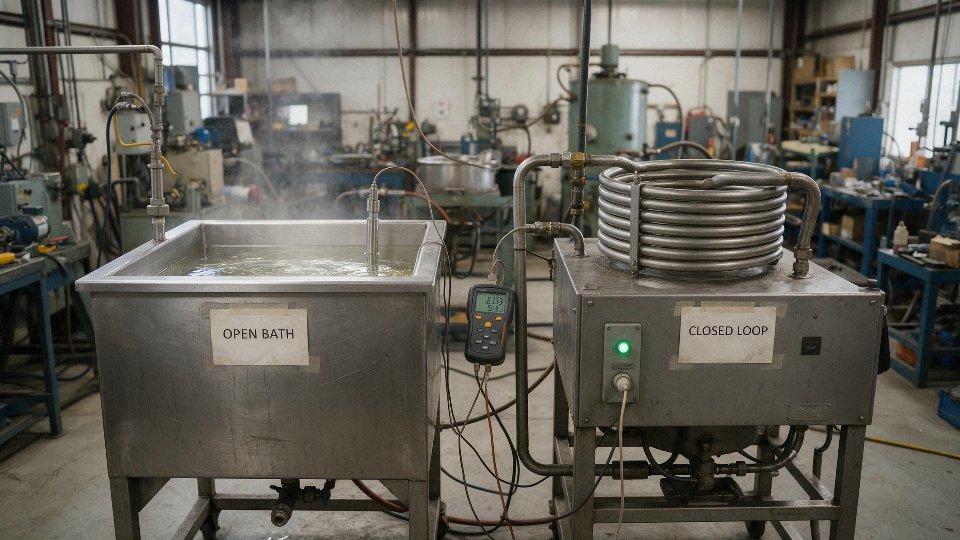
The main conclusion of this section stops holding when the application is a very high-shear, catalytic, heavily contaminated, or thin-film process. In those cases, generic PDMS temperature guidance can mislead badly, and the fluid should be screened under the actual exposure geometry.
Do not ignore low-temperature behavior
Thermal stability in production is not only about the hot end. For heat-transfer skids, outdoor instruments, hydraulic damping, and seasonal startup conditions, low-temperature flow can be just as important as high-temperature endurance.
What matters in practice:
- Pour behavior and pumpability
A fluid may remain technically liquid but still become too viscous for startup through a small suction line or plate heat exchanger. Cold-start torque and cavitation risk
Pumps that are fine in July can struggle in January if viscosity climbs sharply.Control response
In damping or metering applications, viscosity shift at low temperature changes response time and repeatability.Outdoor idle service
Tanks, level sight glasses, vent lines, and valve cavities can behave differently from the heated main circuit.
This creates a real selection trade-off. A lower-viscosity silicone oil may help winter startup and heat transfer coefficient, but the same grade can give up more by evaporation at the hot end. A heavier grade may hold up better at temperature, yet cost you pump sizing, startup time, and energy. The preferred choice flips based on whether the process is constrained by summer operating loss or winter operability.
How to read supplier temperature claims without getting burned
Use published temperature numbers as a screening tool, not a purchase decision on their own.
Check these points before approving a fluid:
- Define the atmosphere
Air, nitrogen blanket, full inerting, or intermittent air exposure. Define the exposure mode
Bulk reservoir, recirculating loop, splash lubrication, open bath, or thin film.Ask what property must remain in spec
Viscosity, weight loss, appearance, residue, dielectric strength, or lubrication performance.Match the temperature to service duration
Hours, shifts, months, or annual shutdown intervals.Review contamination sources
Metal fines, catalyst carryover, cleaners, acids, alkalis, and moisture all matter.Look for system weak points
Heater film temperature, dead legs, vented tanks, poor condensers, and undersized expansion space.Request application review if the duty is near the upper limit
At that point, geometry and housekeeping often decide success more than the base fluid family does.
A plant can often run above the conservative end of the range for a while. The expensive mistake is assuming that “still works” and “holds properties cleanly for the planned maintenance interval” are the same thing. They are not, and procurement usually gets that phone call after the line starts smoking, varnishing, or needing top-up every week.
Degradation mechanisms at high temperature
Heat does not damage silicone oil in one single way. In practice, you usually see one of two dominant patterns: the fluid gets thinner because the polymer chains break down into lower-molecular-weight species, or it gets thicker and dirtier because oxidation and side reactions build higher-molecular-weight material, insolubles, and deposits. Which path dominates depends less on the name “silicone oil” than on oxygen exposure, surface chemistry, contaminants, local hot spots, and how long the fluid actually sits at temperature.
That distinction matters on the plant floor because the symptoms can look contradictory. One loop starts consuming fluid, venting more fumes, and losing film strength; another starts forming varnish, plugging strainers, and sticking control hardware. Both may be suffering thermal stress, but the corrective action is not the same.
Thermal depolymerization and chain scission
For many PDMS-based silicone oils, one common high-temperature failure path is chain scission: the polymer backbone or chain ends rearrange and split into smaller siloxane fragments. The practical result is lower viscosity, higher volatility, more evaporative loss, and a stronger tendency to form cyclic siloxanes that show up as vapor emissions or condensed residue downstream.
The mechanism is straightforward enough to use diagnostically:
- Elevated temperature increases molecular motion and reaction rate.
- Weak points at chain ends, residual catalyst sites, or contaminated interfaces promote rearrangement.
- Long chains shorten into lower-molecular-weight fragments.
- The fluid’s average viscosity drops.
- Volatile species leave the hot zone, so the remaining fluid inventory shrinks and vapor loading rises.
In a heat transfer loop, this often shows up first as a mass-balance problem rather than a dramatic visual failure. Operators top up more often. Vent lines haze. Condensate appears around breathers or cold pipe runs. If the system has open expansion capacity or poor vapor handling, housekeeping gets worse before the lab report arrives.
Typical field symptoms when chain scission is leading the failure:
- Noticeable viscosity loss compared with fresh fluid
- Increased evaporation or fluid consumption
- More odor or vapor at vents, seals, or expansion tanks
- Lower flash point relative to unused material
- Condensed oily film near cooler sections of the system
- Reduced damping or lubrication performance where viscosity is load-bearing
The trade-off is worth stating clearly: a lower-viscosity silicone oil often pumps more easily and transfers heat with less circulation resistance, but if that lower viscosity is degradation-driven rather than selected by design, you are paying for it with fluid loss, emissions, and shorter service life. In systems where the fluid also seals, damps, or maintains a film on hot surfaces, that apparent “easy flow” turns into leakage, unstable control, or accelerated wear.
This conclusion stops holding if the measured viscosity loss is mainly from accidental dilution, off-spec replenishment, or sampling error. A fresh top-up with a lighter grade can mimic degradation, so used-fluid interpretation needs chain-of-custody discipline.
Oxidative degradation in air
Once oxygen is available, the failure mode shifts. Silicone oil that might remain serviceable much longer in inert service can oxidize in air to form acidic species, odorous byproducts, discoloration, insolubles, and eventually hard deposits on hot metal surfaces. Air exposure is often the line between “aging gradually” and “fouling hardware.”
Oxidation rarely attacks the entire system uniformly. It starts where all the bad actors meet:
- High surface temperature
- Oxygen access
- Thin fluid films
- Metal surfaces with catalytic activity
- Stagnant zones or long residence time
That is why hot electric heaters, upper tube walls, expansion tanks, and vented reservoirs foul first. Bulk fluid temperature may still look acceptable on the DCS while a heater skin or baffle edge is running much hotter. In my experience, the first clue is often not a failed viscosity test but a sticky brown ring in an expansion space or a brittle deposit on a temperature well.
Common oxidative symptoms include:
- Darkening from water-clear to yellow, amber, or brown
- Sharp or burnt odor not present in new fluid
- Rising acid number, where the formulation and test method make that metric meaningful
- Insolubles or haze in a sample jar
- Varnish-like films on heaters, housings, and valve internals
- Silica-like or ash-like deposits after severe exposure
- Heat transfer deterioration as deposits insulate hot surfaces
The mechanism here is doubly damaging. Oxidation not only changes the fluid chemically; the deposits it creates raise local metal temperature by reducing heat transfer. That hotter surface then accelerates further oxidation and deposit growth. It is a classic positive feedback loop, and once it takes hold in a heater bundle or small-clearance valve, the cleanup cost overtakes the fluid cost very quickly.
Crosslinking and gel formation
At more severe conditions, or in the presence of reactive contaminants, silicone oil can move the other direction and build molecular weight instead of losing it. Crosslinking creates thicker fluid, stringy residue, soft gel, or eventually hard insoluble material. This is one reason operators get confused: they expect hot silicone oil to “thin out,” but badly stressed fluid can come back from the lab thicker than new.
Crosslinking is favored when oxidation products, reactive chain ends, or catalyst residues create bridges between chains. The plant-floor consequences are usually ugly:
- Viscosity rises gradually or erratically.
- Strainers load faster.
- Small orifices, dampers, and instrument passages become sluggish.
- Pump suction conditions worsen.
- Deposits harden on hot spots and seal faces.
This is especially troublesome in systems with tight tolerances or motion-control duties. A damping fluid that gains viscosity does not just shorten its own life; it shifts equipment response. A thermal fluid that begins to gel can also trap degradation products, making the loop look clean in one location and badly fouled in another.
Catalytic acceleration from metals and residues
Nominal temperature limits assume a reasonably clean system. In service, fluid often fails earlier because metal surfaces, salts, acids, bases, process residues, and even poor cleaning carryover catalyze breakdown. Stainless versus carbon steel, passivated versus scaled surfaces, fresh fabrication versus old fouled internals: these details matter more than many buyers expect.
Catalytic accelerants commonly seen in industrial systems include:
- Metal oxides and active metal surfaces in new or damaged equipment
- Residual processing catalysts from upstream chemistry
- Chlorides or other salts from washing, leaks, or poor water quality
- Acidic cleaners not fully neutralized or flushed out
- Caustic contamination from maintenance or adjacent process carryover
- Decomposition products from elastomers, sealants, paints, or gasket materials
If the bulk fluid temperature is inside the supplier's published range, the silicone oil is safe from thermal breakdown.False
Published ranges are usually conditional. Local hot spots, oxygen exposure, catalytic contamination, and long residence time can accelerate degradation well below a nominal bulk-temperature limit.
The mechanism is simple but expensive: catalysts lower the energy barrier for chain rearrangement, oxidation, or crosslinking, so reactions that would be slow in a clean, inert system become commercially relevant in an ordinary air-exposed loop. That is why two plants can run the same nominal fluid at the same reported temperature and get very different life.
Moisture and hydrolytic side reactions
Moisture is not always the main driver for standard silicone oil failure, but in certain formulations or contaminated systems it can contribute to hydrolytic side reactions, especially where reactive end groups, catalyst residues, or acidic/basic contaminants are present. Water ingress from breathers, washdowns, steam leaks, or poorly dried equipment can therefore make an already marginal system less stable.
Watch for these situations:
- Equipment that cycles hot and cold and breathes humid ambient air
- Reservoirs with poor sealing in coastal or monsoon climates
- Recent water washing or hydrotest without complete dry-out
- Steam tracing leaks into jackets or adjacent spaces
- Formulations blended with additives that are more moisture-sensitive than the base PDMS fluid
Moisture rarely acts alone. More often it teams up with heat and contamination to change chain ends, promote corrosion products, or destabilize additives, which then feed the larger degradation pathways.
Shear, hot spots, and residence time in recirculating equipment
Temperature on a spec sheet is only part of the story. In pumps, heat transfer loops, and damping systems, the fluid sees a distribution of temperatures, shear rates, and residence times. The bulk tank may sit at a moderate number while a thin film at a pump bushing, heater wall, or throttling restriction spends repeated short intervals far above it.
The equipment patterns that most often accelerate breakdown are:
- Localized hot spots
- Fouled heater surfaces
- Undersized circulation causing poor heat removal
- Dead legs near high-temperature internals
- Electric elements with excessive watt density
- Long residence time at peak temperature
- Oversized hold-up volume in the hottest section
- Low flow operation during startup or turndown
- Stagnant zones behind baffles or in instrument branches
- High shear coupled with heat
- Tight-clearance pumps
- Control valves or orifices with persistent throttling
- Small recirculation passages in dampers or actuators
Shear by itself is not always the primary degradation mechanism for silicone oil, but combined with heat it can worsen local stress and expose fresh surfaces or thinner films to oxygen. The practical lesson is that fluid life is set by the worst part of the circuit, not the average.
Why thermal stress can cause either viscosity loss or viscosity rise
Both outcomes are credible, and they come from different dominant chemistry. Chain scission and depolymerization reduce average molecular weight, so viscosity falls and volatility rises. Oxidative coupling, crosslinking, and insoluble formation increase effective molecular size or create suspended degradation products, so viscosity rises and deposits appear.
A quick diagnostic comparison helps:
| Observed change | More likely dominant path | Typical accompanying signs |
|---|---|---|
| Viscosity decreases | Chain scission, depolymerization, cyclic formation | Higher vapor emissions, mass loss, lower flash point, condensed volatiles |
| Viscosity increases | Oxidation, crosslinking, gel formation | Darkening, odor, insolubles, varnish, strainer loading, sticky deposits |
| Viscosity stays near nominal but system fouls | Early oxidation or localized overheating | Deposits on hot surfaces, poor heat transfer, localized odor, uneven sample results |
That table is useful, but it is not a substitute for sample history and equipment inspection. Mixed mechanisms are common. A loop can lose light fractions at the heater and simultaneously build oxidized heavy material in the reservoir. When that happens, one grab sample from the drain point tells only half the story.
If your used fluid is showing either unexplained viscosity drift or deposits, the next useful inputs are the actual bulk and skin temperatures, oxygen exposure, metal metallurgy, contamination history, top-up records, and a retained sample of unused material for comparison. That is usually enough to separate fluid selection trouble from equipment or housekeeping trouble before anyone orders a replacement blindly.
Performance limits by application
A silicone oil that survives one hot process can fail quickly in another, because application geometry and contamination often matter more than the nameplate temperature. The practical limit is not just “how hot,” but whether the fluid sits in bulk, spreads into a thin film, sees air, picks up metal salts, or has to keep a tight viscosity or dielectric window while doing the job.
Heat transfer fluids
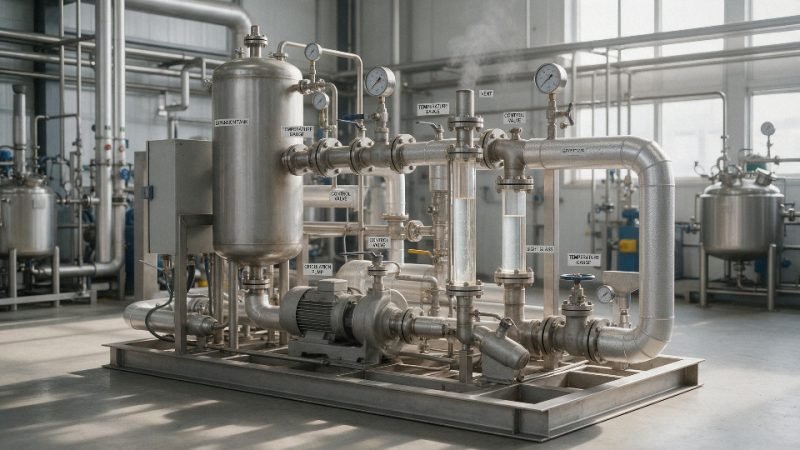
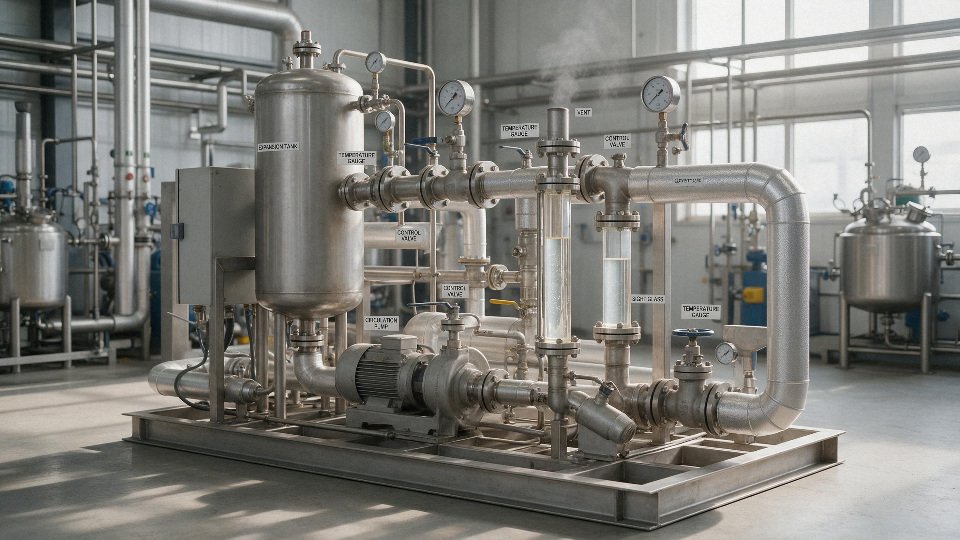
For closed-loop heat transfer duty, many PDMS-based silicone oils are workable in a broad middle range, but service life depends heavily on bulk temperature versus film temperature at the heater wall. A system running an acceptable bulk temperature can still cook the fluid locally if the element watt density is high, flow is poor, or a fouled heater creates stagnant spots.
What usually decides success in plant service:
- Bulk temperature
- This is the fluid temperature in the circulating loop, tank, or return line.
- Bulk temperature often looks harmless on the recorder while local hot surfaces are well above it.
- Supplier continuous-use guidance in air may be roughly 150–200 C for many general PDMS fluids, but that does not automatically clear the fluid for a heat transfer system without knowing the heater design and atmosphere.
- Film temperature
- The fluid layer touching heater surfaces can run much hotter than the measured bulk.
- As film temperature rises, oxidation, volatilization, and chain scission accelerate first at that interface.
- A practical mistake is selecting fluid on bulk temperature alone and ignoring heater watt density, circulation rate, and coil geometry.
- Pumpability and cold-start behavior
- Viscosity grade matters at startup as much as it does at operating temperature.
- A fluid that is nicely stable hot can still overload a centrifugal pump or starve a mechanical seal during winter starts if the viscosity is too high at ambient.
- In practice, plants often compensate with tracing, recirculation, or startup bypasses rather than changing fluid, but that should be intentional, not a scramble after installation.
- Venting and low-boiler management
- As silicone fluid ages, low-molecular-weight fractions and decomposition volatiles can accumulate.
- Poor venting pushes pressure swings, cavitation risk, and expansion tank breathing losses.
- Open or poorly sealed systems usually age much faster than tight systems with controlled headspace.
- Oxidation control
- Oxygen access is one of the main life-limiters in hot circulating systems.
- Nitrogen blanketing, reduced headspace turnover, and keeping the expansion tank cooler than the main loop can materially extend fluid life.
- This is one of those cases where a modest hardware change beats buying a “higher temperature” fluid grade and hoping for the best.
- Replacement triggers
- Rising acid number, viscosity drift, increased volatiles, darkening, sludge, filter loading, or a noticeable drop in heat-transfer responsiveness are typical warning signs.
- There is no honest universal replacement hour count; sampling frequency should depend on temperature, oxygen exposure, and how badly an unplanned shutdown would hurt production.
A hotter process always destroys silicone heat transfer fluid faster than a cooler one.False
Not necessarily. A hotter but well-sealed, inerted bulk system can outlast a lower-temperature loop with constant air ingress, high heater film temperature, and catalytic contamination from metals or process carryover.
The mechanism is straightforward: local overheating and oxygen attack create low boilers and degradation products first at the hottest, thinnest, most oxygen-exposed zones. The trade-off is equally familiar on the plant floor: tighter sealing, lower watt density, and better expansion-tank design raise installed cost a bit, but they usually reduce fluid turnover, vent losses, and cleanup labor enough to justify it.
Lubrication and damping
In lubrication, dashpot, damping, and instrument-fluid service, the thermal limit is often set by property retention rather than outright decomposition. If the fluid loses too much viscosity, evaporates from the contact zone, or swells an elastomer, the application is already failing even though the oil has not “burned.”
Pay attention to these points:
- Viscosity retention under heat
- Bearings, slides, dampers, and shock-control devices depend on staying inside a usable viscosity band.
- A small viscosity shift may be acceptable in a hinge or release mechanism, but not in a torque damper or calibrated instrument.
- Thin grades usually give better low-temperature response and easier wetting, but they are generally more vulnerable to evaporation loss.
- Evaporation and bleed
- In open or lightly sealed lubrication points, volatility can matter more than chemical breakdown.
- Weight loss shows up as shorter relube intervals, inconsistent torque, fogging of nearby surfaces, or dry running at edges.
- Seal and material compatibility
- Silicone oils are broadly compatible with many materials, but not universally.
- Elastomer response depends on the specific rubber, temperature, dwell time, and any additives present in the formulation.
- Verify against the actual seal material and current supplier data; “works with rubber” is not an engineering answer.
- Torque consistency
- Damping applications care about repeatability over thermal cycling.
- If the equipment sees daily heat-up and cool-down, even moderate volatility or contamination can shift feel, response time, or calibration.
- Cleanliness
- Fine particulates, wear metals, and shop contamination can change friction behavior and accelerate degradation.
- On some lines, a dirty fill practice ruins damping consistency faster than temperature does.
The boundary here is simple: if the fluid must hold a narrow rheology window, judge it by viscosity stability and evaporation loss in the actual assembly, not by the generic maximum temperature on a data sheet.
Release, antifoam, textile, and paper process uses
These are often moderate-temperature applications on paper, yet they can be punishing because the silicone is spread very thin, repeatedly exposed to fresh air, or diluted into a carrier system that changes the failure mode. A release coating seeing brief hot flashes on every cycle may degrade faster than a bulk bath at a higher nominal temperature.
Common decision points:
| Use | Main thermal stress | What usually limits service first |
|---|---|---|
| Release treatment | Thin-film heating, repeated cycles | Residue change, transfer inconsistency, surface defects |
| Antifoam | Local hot spots, dilution, shear | Loss of activity, deposits, incompatibility with process liquor |
| Textile finishing | Oven exposure, substrate interaction | Hand-feel shift, spotting, yellowing, uneven pickup |
| Paper treatment | Drying section heat, web contact | Surface defects, buildup on rolls, downstream print/coating issues |
A few practical distinctions matter:
- Thermal exposure pattern
- Continuous bulk exposure is easier to manage than intermittent thin-film flashing in air.
- Dilution effects
- Solvent or emulsion systems can introduce volatility, hydrolysis sensitivity, or deposition behavior that the neat fluid did not show.
- Residue tolerance
- Some converting lines tolerate slight residue changes; others cannot accept transfer, haze, fish-eyes, or print defects.
- Substrate interactions
- Paper, textile fibers, fillers, coatings, and process chemicals can all change apparent stability.
Electrical and electronic applications
For dielectric and thermal-management uses in electrical assemblies, the fluid has to stay clean, electrically reliable, and materially compatible through thermal cycling. A fluid can remain chemically recognizable while still becoming unacceptable because of volatility, ionic contamination, outgassing, or interaction with plastics, coatings, and seals.
Watch the following:
- Dielectric stability
- Verify with current supplier data for the exact grade, not a generic silicone-oil category statement.
- Volatility and outgassing
- In enclosed electronics, low-volatility behavior may matter as much as thermal endurance.
- Cleanliness
- Trace contamination can matter disproportionately in high-voltage or sensor-adjacent assemblies.
- Compatibility under cycling
- Repeated heat/cool cycles can expose problems with seal swell, stress cracking, or condensable volatiles on cooler surfaces.
Personal care, medical, and specialty process uses
In these applications, thermal stability is only one gate. Purity, odor, volatile content, and the grade’s regulatory or formulation profile can eliminate an otherwise heat-stable fluid from consideration before temperature is even discussed.
Screen these first:
- Purity and residual profile
- Residual cyclics, trace catalysts, and process impurities may matter more than headline heat resistance.
- Odor and sensory stability
- Mild thermal exposure can still create unacceptable odor in sensitive formulations.
- Volatile content
- Weight loss and emissions may affect filling, packaging, or end-use acceptance.
- Regulatory fit
- This must be checked against the current market, application, and grade documentation; it cannot be assumed from chemistry family alone.
If the application sits near the boundary between technical and regulated use, the right next step is usually to review the exact grade against purity specifications and run a short thermal-aging screen in the finished formulation, not just on the neat fluid.
Factors that shorten service life
Most silicone-oil failures blamed on “temperature” are really caused by plant conditions that accelerate oxidation, volatilization, or catalytic breakdown. If the same fluid lasts well in one loop and dies early in another, the difference is usually oxygen access, local overheating, contamination, incompatible materials, or poor fluid control rather than the nominal bulk operating temperature alone.
Oxygen exposure, headspace, and air entrainment
A silicone fluid running quietly in a sealed, well-designed loop will usually outlast the same grade in a splashing, poorly vented, air-rich system. Oxygen does not have to be present in huge amounts to matter; repeated exposure at elevated temperature steadily drives oxidative degradation, and the damage often shows up first as viscosity drift, odor, haze, or varnish on hotter metal surfaces.
What shortens life fastest here is not just “open to air” versus “closed system,” but how the fluid sees air during circulation:
- Large hot headspace in expansion tanks
- Agitated return flow dropping above the liquid line
- Pump suction leaks pulling in air
- Cavitation from poor NPSH conditions
- High-velocity recirculation that whips bubbles into the fluid
- Repeated thermal cycling that breathes moist air into the system
Air entrainment is especially expensive because it does two things at once:
1. It increases oxygen contact area inside the fluid.
2. It worsens local heat transfer, which can create micro-hot spots at heaters and pump internals.
In practice, a calm flooded return, minimal hot headspace, tight suction piping, and proper deaeration help more than people expect. Plants sometimes spend heavily on a higher-grade fluid while leaving a waterfall return line crashing into the tank; that is backwards.
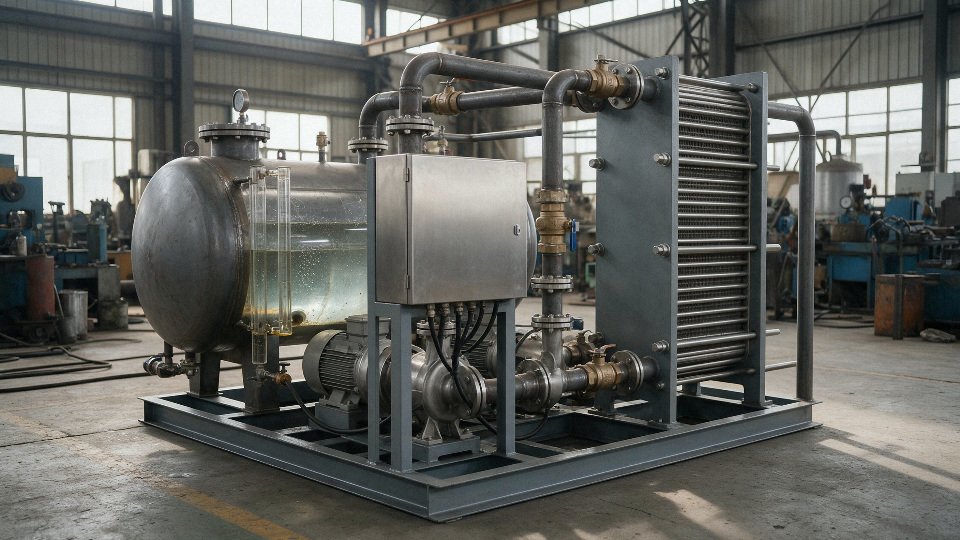
Hot spots, poor heat transfer, and stagnant zones
Bulk temperature can look acceptable while localized metal temperature is high enough to crack or oxidize the fluid. That is a common plant-floor trap. A heater sheath, plate surface, or dead-leg section may be running far hotter than the control sensor suggests, especially when flow is uneven or fouling has started.
Typical causes include:
- Heater watt density too high for the fluid and circulation pattern
- Fouled heat-transfer surfaces
- Carbonaceous or process-derived deposits acting as insulation
- Poorly placed temperature sensors reading mixed bulk fluid instead of metal-adjacent conditions
- Dead legs, bypass pockets, or oversized vessels with weak circulation
- Start-up heating before full flow is established
The mechanism is straightforward: once a surface gets hotter, the fluid film touching it degrades faster; the first degradation products can form deposits; those deposits reduce heat transfer further; surface temperature rises again. That feedback loop is why a system can go from “fine for months” to smoke generation and residue in a relatively short period.
The trade-off is that compact high-output heater designs save footprint and ramp time, but they often tighten the margin against localized overheating. If the process has solids carryover or irregular flow, a slightly less aggressive heater design usually pays back in fluid life and cleaning intervals. This conclusion weakens if the system has very well-controlled flow, low fouling tendency, and verified surface-temperature margins from the OEM.
Contamination from process and maintenance sources
Small contamination events can have outsized effects because silicone oils are often stable until something catalytic or reactive gets into the loop. Acids and alkalis are the obvious concerns, but they are not the only ones.
The contaminants worth checking for are:
- Acid residues from process carryover or cleaning chemistry
- Alkali from wash steps, detergent traces, or caustic exposure
- Metal fines from pumps, valves, seals, or worn mixers
- Rust and scale from carbon-steel sections or neglected storage tanks
- Water from condensation, washdown ingress, or poorly dried systems
- Solvent or reactant carryover from the process side
- Residual cleaning agents left after maintenance
Water deserves special mention. By itself, a small amount may not instantly ruin the fluid, but at elevated temperature, with the wrong contaminants present, it can support hydrolytic or catalytic pathways and aggravate foaming, pump noise, and unstable operation. A cloudy sample after shutdown, spitting at vents, or erratic level behavior often points in that direction.
Any contamination is harmless if the bulk temperature stays below the stated service range.False
Temperature range alone does not protect the fluid from catalytic degradation, hydrolysis, oxidation acceleration, corrosion products, or volatility changes caused by contamination. The same bulk temperature can produce very different fluid life depending on what enters the system.
Low-boiling fractions and broad molecular weight distribution
Not all silicone oils of the same nominal viscosity behave the same at heat. Fluids with more low molecular weight fractions tend to lose mass faster through evaporation, generate more smoke or odor at hot surfaces, and shift viscosity over time as lighter components leave first.
That matters most in:
- Open or semi-open baths
- Systems with large expansion headspace
- Intermittent high-temperature operation
- Thin-film exposure on hot moving parts
- Applications where fumes, condensate, or flash-off create quality issues nearby
A broader molecular weight distribution can also make behavior less predictable from batch to batch if the formulation is not tightly controlled. Procurement teams sometimes focus on viscosity at 25 C and miss volatility-related differences that dominate service life in actual operation.
Equipment materials, seals, and internal surfaces
Fluid life is also shortened by the wrong metallurgy or soft goods. Copper and iron-containing surfaces can be problematic in some high-temperature service because metal ions and corrosion products may promote degradation pathways or deposit formation. Rusty carbon-steel internals are rarely neutral; they are an ongoing contamination source.
Check these material interfaces:
- Copper or brass heat-exchanger components
- Unpassivated or corroding ferrous surfaces
- Incompatible elastomers swelling, hardening, or shedding
- Gasket binders that leach at temperature
- Internal coatings that soften, flake, or react with the fluid
Elastomer issues are easy to underestimate. A seal that sheds fines or softens under heat becomes both a leak risk and a contamination source. In a recirculating loop, that debris ends up somewhere hot.
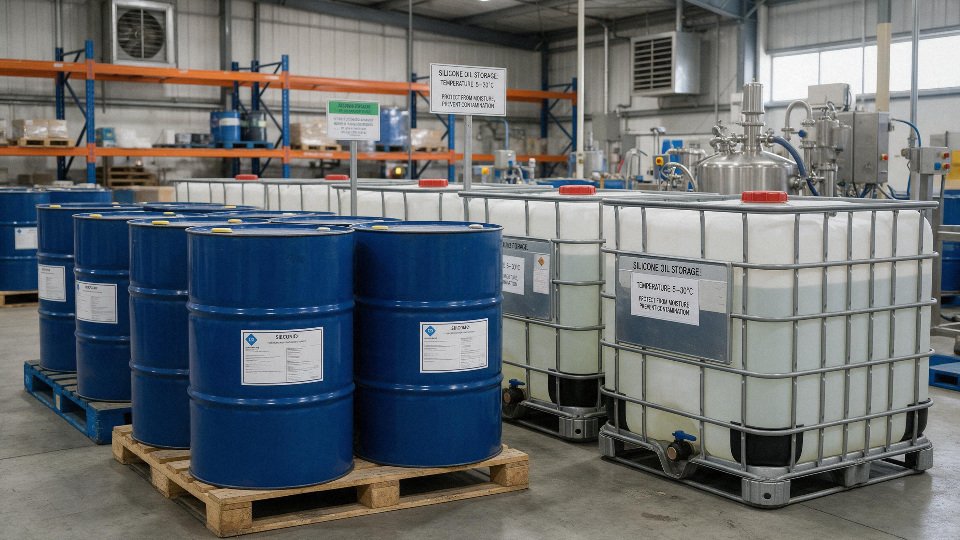
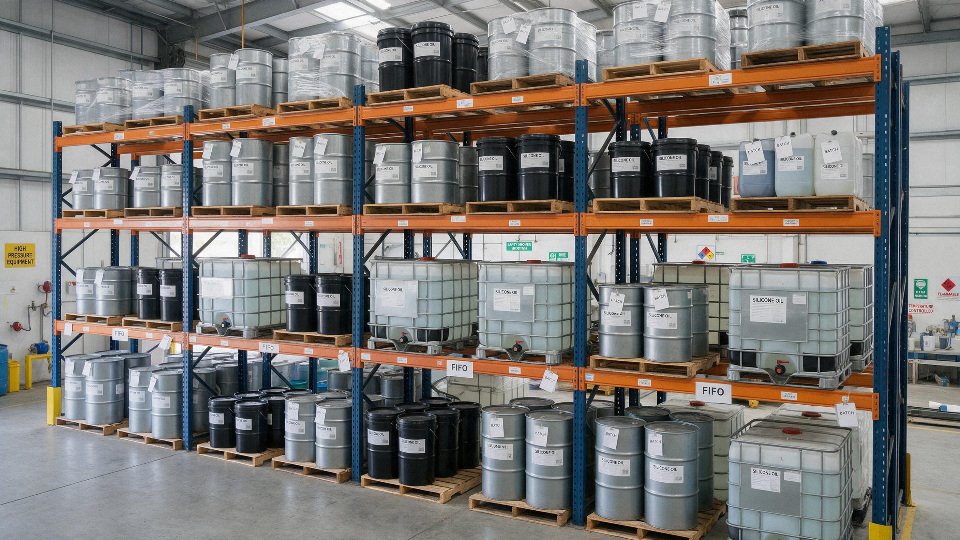
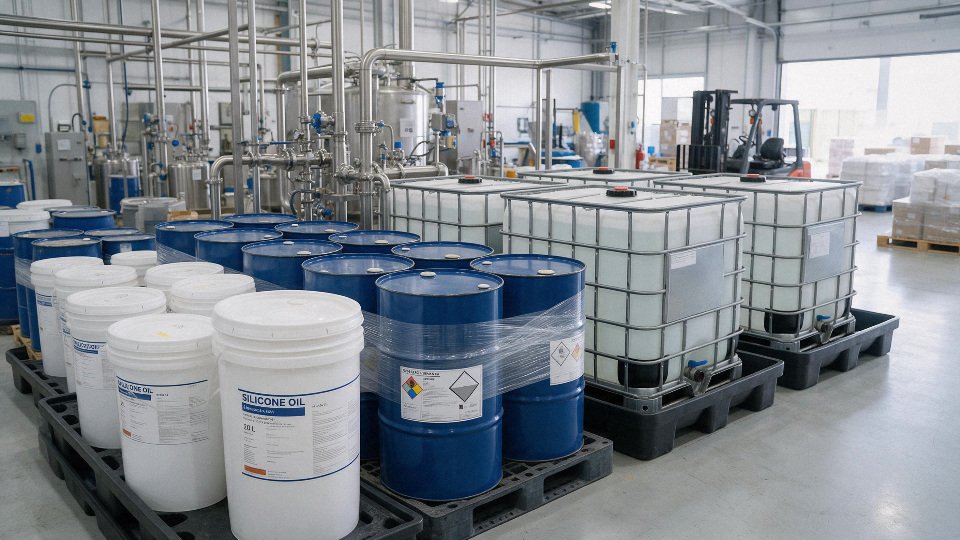
Storage, top-up practices, and traceability
Service life drops quickly when fluid control is sloppy. Mixing top-up fluid from a different supplier, different viscosity grade, or loosely “equivalent” product can change volatility, additive profile, cleanliness, and high-temperature behavior in ways that are hard to diagnose later.
The basic controls are not glamorous, but they matter:
- Store drums sealed, dry, and out of direct heat
- Use clean transfer equipment dedicated to silicone service where possible
- Label tanks and top-up containers clearly by product and batch
- Record supplier, batch, fill date, and top-up history
- Do not blend unknown residual inventory into critical systems
- Sample the operating fluid before and after major maintenance or unexplained consumption changes
A lot of fluid-life disputes come down to traceability gaps. Once several batches, suppliers, and maintenance interventions are mixed together, it becomes difficult to separate product quality from system abuse. If you are seeing smoke, consumption, residue, or unusual viscosity shift, start with the fluid history before assuming the chemistry itself is at fault.
Testing and stability metrics
No single test tells you whether a silicone oil is “thermally stable” for your process. You need a small set of tests that separate volatility, oxidation, viscosity drift, deposit formation, and decomposition chemistry, because each failure mode shows up differently in service and in cost.
A fluid can look excellent in one metric and still be a bad fit. I have seen oils with respectable TGA curves foul heater surfaces because the issue was not bulk mass loss but oxidation in a thin film on hot metal with air moving across it. That is why procurement should not compare one headline number against another and call it done.
Thermogravimetric analysis: useful for screening, limited for qualification
TGA is a good comparative tool for onset of mass loss and for seeing how one fluid behaves against another as temperature rises under a defined atmosphere. In practice, it is most useful for ranking volatility and broad thermal robustness, not for predicting exact service life in a plant loop, bath, or heat-transfer skid.
What TGA does well:
- Identifies the temperature range where measurable mass loss begins
- Compares low-volatility versus higher-volatility grades
- Shows the difference between air and inert-gas behavior
- Highlights whether a sample leaves residue or loses mass in a smooth, mostly volatile pattern
What TGA does not tell you on its own:
- How viscosity will change after weeks or months at a fixed operating temperature
- Whether deposits will form on hot surfaces
- Whether catalytic metals, process contamination, or pump shear will accelerate failure
- How a thick bulk fluid behaves versus a thin exposed film
The mechanism matters here. A small TGA sample in a pan has a short diffusion path, a defined purge gas, and a high surface-area-to-mass ratio. Change the pan type, sample mass, ramp rate, or purge flow, and the apparent onset temperature moves. So if one supplier quotes “onset above X °C” and another quotes a different figure, that comparison is meaningless unless the test conditions match closely.
A higher TGA onset temperature always means longer high-temperature service life.False
TGA mainly reflects mass-loss behavior under specific lab conditions. Service life also depends on oxidation, residence time, oxygen access, metal catalysis, contamination, and whether the oil operates as a bulk fluid or a thin hot film.
Viscosity retention after heat aging: one of the most practical serviceability checks
For most industrial users, viscosity retention before and after controlled heat aging is closer to the question they actually care about: can the oil still circulate, lubricate, damp, release, or transfer heat the way the equipment needs?
A practical heat-aging program usually includes:
- Initial viscosity measurement at the specified reference temperature
- Aging at one or more fixed temperatures for a defined duration
- Controlled exposure in air, inert gas, or both
- Post-aging viscosity measurement
- Inspection for odor change, haze, gel, or residue
If viscosity rises, the usual concern is oxidation, condensation, crosslinking, or formation of higher-molecular-weight species. If viscosity falls, chain scission or selective loss of heavier fractions may be involved, depending on the chemistry and the test setup. Either direction can make a fluid unserviceable.
The trade-off is straightforward. A fluid that holds viscosity well in a sealed inert bench test may still fail in an open-air application where the liquid is spread over a hot roll, tray, or heater jacket. On the other hand, if your process is closed and nitrogen-blanketed, air-aging data can be too pessimistic and lead you to overbuy.
The conclusion that viscosity retention is the best practical metric stops holding when the dominant failure is not rheology but deposit formation or volatile by-product generation. In those cases, the oil may still measure “in grade” on viscosity and still create maintenance trouble.
Flash point, fire point, and evaporation loss: important, but not lifetime proof
Flash point and fire point belong in the safety and handling discussion, not as stand-alone proof of thermal endurance. Evaporation loss is operationally useful because it affects fluid consumption, vent loading, odor, and condenser or seal contamination.
Use these metrics for what they are:
- Flash point: ignition risk under specified test conditions
- Fire point: ability to sustain combustion once ignited
- Evaporation loss: tendency to lose lighter fractions during heat exposure
They matter commercially. High evaporation loss means top-up frequency rises, viscosity can drift as the cut changes, and nearby surfaces collect condensable material. Anyone who has had to clean a sight glass or replace sticky vent filters knows this turns into labor and nuisance quickly.
But these tests do not prove long-duration stability by themselves. A fluid may have a respectable flash point and still oxidize badly on hot metal in air. Equally, a low evaporation-loss result from a static cup test may not mirror a high-turbulence system with large exposed surface area.
Oven-aging residue and chemical condition: where hidden failure shows up
Controlled oven aging is where a lot of marginal fluids get exposed. After aging, look beyond simple weight loss.
Check at least these condition indicators:
- Acid number
- Color shift
- Insolubles
- Gel content
- Deposit tendency on the container wall or on metal coupons if used
These are often the first signs that the fluid is moving from “usable” to “maintenance problem.” Acid number can indicate oxidative by-products, though interpretation depends on the formulation and contamination history. Color is not enough on its own, but a darkening sample with rising insolubles is rarely heading in the right direction. Gel or sticky deposits are especially relevant for heat-transfer systems, coating lines, and precision metering equipment because they foul narrow passages and alter heat transfer.
A simple but useful variation is to age the fluid with representative metal coupons from the actual system if compatible with your test program. Copper alloys, steel, aluminum, and plated surfaces can shift results a lot. Some plants discover the oil is not the whole issue; the metallurgy and the local hot spot are.
Headspace and evolved-gas analysis: the best clue when the field sample smells wrong
If a used silicone oil sample shows unusual odor, foaming, pressure buildup, or condensate formation, headspace GC or evolved-gas analysis can be more revealing than another viscosity check. These methods help detect volatile cyclics and decomposition products that develop during high-temperature service.
This is especially useful in:
- Closed systems with vent or condenser issues
- Electronics or vacuum-adjacent processes where outgassing matters
- Applications where trace volatiles contaminate product surfaces
- Failure analysis on oils that look visually acceptable but perform poorly
You do not always need a full research program. Sometimes a fresh-vs-used comparison is enough to show that volatile decomposition products are increasing under service conditions.
Air vs inert bench testing, and how to read datasheets without fooling yourself
If the application ever sees oxygen, test in air. If the actual process is closed or blanketed, test under inert conditions too. Many silicone fluids remain serviceable at much higher temperatures in inert atmospheres than in air, but that advantage only matters if your equipment really excludes oxygen at the hot zones.
When comparing supplier data or internal reports, check these items before trusting the number:
- Test duration
- Temperature profile: ramp or fixed soak
- Sample mass and geometry
- Open cup, closed vessel, or thin-film exposure
- Airflow or purge-gas rate
- Presence of metal contact
- Acceptance criteria: weight loss, viscosity change, deposits, gas formation, or visual failure
Two reports can both say “passed at 200 °C” and mean very different things. One may allow moderate evaporation but no gel; another may reject any visible residue. For procurement and qualification, the acceptance limit has to match the consequence of failure in your plant, whether that consequence is scrap, smoke, blocked filters, poor heat transfer, or simply too many maintenance callouts.
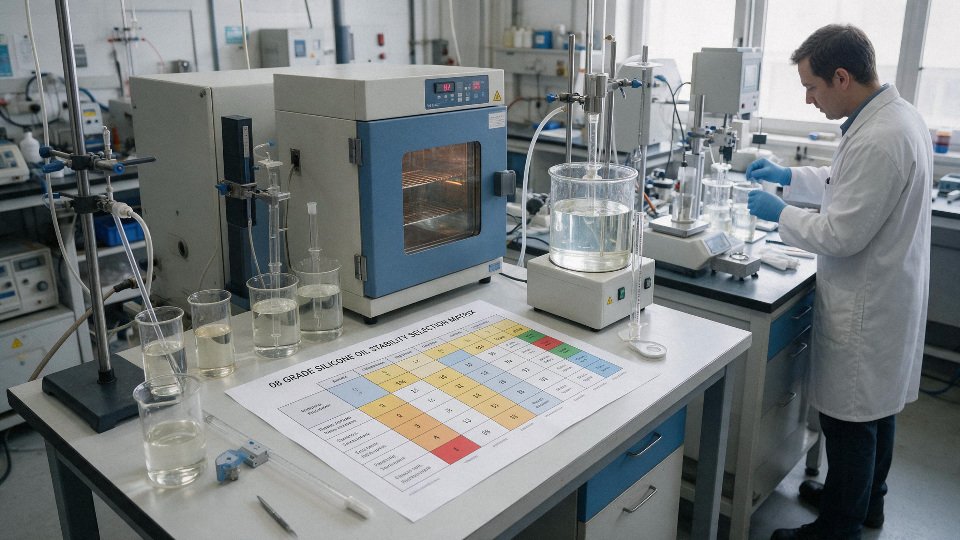
Selecting the right grade
A silicone oil grade is “right” only if its chemistry, viscosity, purity profile, and supply reliability fit the actual thermal duty, not the brochure headline. For most plants, standard PDMS handles routine service well, but once oxidation, volatility loss, seal compatibility, or deposit sensitivity start driving failures, the cheaper drum often stops being the cheaper option.
Start with the chemistry, because that sets the temperature ceiling more than anything else. Standard dimethyl silicone oils are the default choice for broad industrial use: heat transfer loops at moderate temperatures, release and lubrication duties, damping, textile and paper auxiliaries, and general-purpose thermal applications where continuous exposure is often in the familiar 150-200 C band in air, depending on grade and system design. They are widely available, usually cost-effective, and easier to source consistently across global markets.
That choice flips when the plant needs wider temperature capability, lower low-temperature brittleness, or better resistance under harsher thermal cycling. Phenyl-modified silicone fluids are commonly considered when the operating window is stretched, especially where both cold-start behavior and elevated-temperature stability matter. The mechanism is straightforward: changing the side groups on the siloxane chain alters how the fluid handles thermal stress, volatility, and oxidation behavior. You gain broader usable range, but you usually pay for it in raw material cost, qualification work, and sometimes more limited supplier options. If the application is living near the upper edge of standard PDMS capability for long residence times, a higher-performance modified grade is often cheaper than repeated fluid changeouts and fouled equipment.
Do not pick viscosity from a catalog table alone. Match it to what the fluid must do in the machine.
Match viscosity to the duty, not just the temperature
A low-viscosity silicone oil usually gives better pumpability and heat transfer, but it is also more prone to evaporative loss and misting at elevated temperature. A high-viscosity grade reduces volatility and can improve film retention in some lubrication and damping duties, yet it may increase startup torque, slow heat transfer, and create trouble in small lines, fine metering systems, or cold starts.
Use the duty as the filter:
- Heat transfer systems
- Favor viscosity low enough for stable circulation, acceptable Reynolds number, and reasonable pump power.
- Check the whole loop, not just the heater outlet: line size, static head, expansion tank arrangement, pump seal design, and cold-start ambient all matter.
- Very high viscosity can worsen local overheating if flow falls off in hot zones.
- Damping and instrument fluids
- Select primarily by viscosity-temperature behavior and consistency between batches.
- If damping changes noticeably with season or startup condition, the grade may be technically “acceptable” on paper but wrong for the process.
- Lubrication or release applications
- Higher viscosity may improve persistence on the surface.
- That same persistence can become a contamination issue downstream, especially before coating, printing, bonding, or painting.
- Metered or sprayed application
- Lower viscosity helps dosing and atomization.
- At elevated temperature, low-viscosity grades can disappear faster than expected through volatilization, not just leakage.
The trade-off is familiar on the plant floor: lower viscosity helps movement and heat transfer; higher viscosity helps fluid retention and volatility control. The preferred choice changes if the system is open, poorly vent-managed, or frequently cycled to peak temperature. In a sealed, well-designed system, you can often run a lighter grade successfully. In an open bath or vented process, the same fluid may lose light ends quickly and shift out of spec.
Purity and molecular profile matter more at high temperature than many buyers expect
At modest temperatures, a mid-market grade may perform close to a premium one. At elevated temperature over long residence times, differences in volatile content, catalyst residues, acidity/alkalinity, trace metals, and molecular weight distribution start showing up as smoke, viscosity drift, deposits, or shortened service life.
What to ask for and review:
- Volatile content
- Higher low-boiling fractions can increase mass loss, vapor carryover, and odor/fume load.
- This matters in open systems, thin-film exposure, and any process with downstream cleanliness requirements.
- Narrowness of molecular distribution
- A tighter distribution usually gives more predictable viscosity behavior and less light-end loss.
- Broad distributions can be workable, but they tend to create more variability in high-temperature service.
- Residual catalysts or ionic impurities
- Even low levels can accelerate degradation pathways, especially if the process already introduces metals, moisture, or reactive contaminants.
- Batch-to-batch consistency
- If one lot runs clean and the next starts forming deposits, your issue may be quality variation rather than the nominal grade selection.
Any silicone oil with the same nominal viscosity will deliver similar thermal life.False
Nominal viscosity alone does not capture volatile content, molecular distribution, residual catalyst levels, purity, or formulation differences that often determine oxidation behavior, deposit tendency, and service life at elevated temperature.
Ask for analytical documentation that means something operationally: viscosity, volatile fraction or mass loss test basis, moisture if relevant, appearance, and any available stability or purity indicators the supplier routinely controls. If the application is expensive to shut down, request retained-sample traceability and lot-specific COA discipline, not just a generic product data sheet.
Check compatibility before you have a leakage or contamination problem
A thermally stable fluid can still be the wrong grade if it attacks elastomers, swells plastics, interferes with coatings, or causes downstream surface defects. In practice, the first complaint may come from maintenance or quality, not engineering.
Review these interfaces:
- Seals and hoses
- Verify against the actual elastomer grade in service, not the maintenance shorthand on the BOM. “Viton” or “NBR” on a line card is often too vague to rely on.
- Coatings, paints, adhesives, inks
- Silicone carryover can cause fisheyes, adhesion loss, and rework headaches well outside the original process area.
- Plastics and composites
- Stress cracking, swelling, or extractables issues need application-specific checks.
- Process media
- Cross-contamination risk matters in textile, personal care, electronics, and specialty chemical operations.
- Cleanliness requirements
- If the process includes bonding, plating, printing, or optical surfaces, even trace silicone residues can be unacceptable.
The boundary here is simple: a grade that works perfectly in a closed thermal loop may be unusable in a plant where downstream surface cleanliness is the critical quality metric.
Qualify the supplier, not just the fluid
Two suppliers can offer a “200 cSt silicone oil” and deliver very different field outcomes. For procurement, the right question is not only price per kilogram; it is whether the supplier can support stable supply and technical problem-solving over the life of the application.
Look at:
- Manufacturing control and raw material consistency
- Routine analytical capability and lot release discipline
- Willingness to discuss contaminants, volatiles, and use limits honestly
- Ability to support application review or sample evaluation
- Change-control practices for formulation or process updates
- Export experience, packaging quality, and supply continuity over time
This is where many sourcing exercises go sideways. A fluid that is 8-12% cheaper but arrives with wider batch variation, weaker paperwork, or long replacement lead times can cost far more once a hot system is down waiting for approved material.
Use total cost, not drum price
The cheapest purchase price wins only when fluid life is short by design or the process is insensitive. In high-temperature service, total cost usually turns on six things:
- Fluid replacement frequency
- Labor for draining, refilling, and line cleanup
- Deposit removal from heaters, tanks, vents, or filters
- Unplanned downtime from viscosity shift, smoke, fouling, or seal issues
- Scrap or quality loss from contamination or unstable process control
- Inventory risk if the approved grade has poor supply continuity
A representative case: a plant runs a standard dimethyl grade near its practical limit in a vented system. It looks economical until light-end loss changes viscosity, deposits start in the hot section, and maintenance has to clean the loop every shutdown. A better-selected grade with tighter purity control or modified chemistry may cost noticeably more per drum yet still reduce annual spend once labor and lost production are counted.
If you are qualifying for a temperature-sensitive duty, compare at least two grades on the same basis: operating temperature profile, residence time, oxygen exposure, make-up rate, maintenance interval, and cleanliness requirement. Without that context, “better thermal stability” is just a sales phrase.
Frequently asked questions
What temperature can silicone oil withstand continuously in air?
For many standard PDMS silicone oils, a practical continuous-use range in air is roughly 150-200 C, not because the fluid suddenly fails at one number, but because oxidation, volatilization, and residence time start to matter a lot above that band. The usable limit shifts with grade, viscosity, surface exposure, contamination, and whether the oil sits quietly in a sealed loop or in a hot, open vessel with plenty of oxygen.
If a supplier quotes a single maximum temperature, check what that actually means:
- Continuous service in air: usually the most conservative and most useful number for plant design
- Short-term excursion temperature: often higher, but only for limited exposure
- Inert or low-oxygen operation: can allow materially higher temperatures
- Closed system vs open bath: same fluid, different life expectancy
A drum label does not know your sump geometry, headspace, or whether an operator leaves the tank lid cracked open all shift.
Can silicone oil be used above 200 C?
Yes, but only with conditions attached. Above 200 C, silicone oil may still be workable, especially in well-selected grades, controlled systems, or inert atmospheres, but the safety margin narrows and service life becomes much more sensitive to oxygen access, hot spots, and contamination.
In practice, these questions decide whether operation above 200 C is realistic:
- Is the system blanketed with nitrogen or otherwise oxygen-limited?
- Is the oil in a closed heat-transfer circuit or an open, stirred bath?
- Are there localized heater skin temperatures well above the bulk oil temperature?
- Is the residence time at peak temperature continuous, intermittent, or only during startup?
- Does the supplier have grade-specific data for your exposure conditions?
If those answers are unclear, you do not really know whether the fluid is suitable above 200 C. You know only that silicone oils as a category can sometimes survive there.
Does higher viscosity always mean better thermal stability?
No. Higher-viscosity silicone oils often show lower volatility and lower evaporative loss, which can help at elevated temperature, but that does not automatically mean better overall thermal stability in service.
What usually changes with viscosity:
- Lower volatility: helps reduce smoke, loss, and viscosity drift from light-end evaporation
- Thicker fluid film: may improve retention in some applications
- Poorer heat transfer and pumpability: can raise local temperatures or startup load
- Different residence behavior in tight passages: matters in jacketed vessels and small-bore loops
So the preferred choice flips when flow, heat-transfer coefficient, or low-temperature handling matters more than evaporation resistance. A very viscous fluid that runs hotter at the heater wall can age faster than a somewhat lighter grade running under better thermal control.
Is silicone oil stable in an open heating bath?
It can be used in open baths, but service life is usually shorter than in closed systems because the fluid has constant oxygen access and more opportunity for volatile fractions to escape. Open-bath stability depends less on the nominal bulk temperature alone and more on surface area, air turnover, contamination, and heater design.
Watch these practical issues:
- Large exposed surface relative to bath volume
- Poor lid discipline or strong draft across the tank
- Heater elements creating hot spots near the sheath
- Carry-in of metal fines, salts, process residues, or cleaning chemicals
- Foam or mist generation, which increases oxidation and loss
For open baths, ask suppliers for guidance tied to bath depth, cover practice, and heater watt density, not just a catalog temperature number.
What happens when silicone oil overheats?
Overheated silicone oil usually does not fail in one dramatic mode first; it starts drifting. You may see viscosity change, increased odor or smoke, darkening, gum or gel formation, deposits on heaters, and eventually loss of heat-transfer consistency or product quality problems.
Common field symptoms:
- More fumes or visible smoke
- Faster top-up frequency
- Sticky or resinous deposits
- Pump noise or reduced circulation
- Temperature control instability
- Filter loading that rises for no obvious reason
If overheating continues, deposits can insulate the heater surface, which raises metal temperature further and accelerates breakdown. That feedback loop is where a manageable fluid-aging problem turns into downtime.
How can operators extend service life?
- Keep bulk temperature as low as the process will allow
- Minimize heater surface hot spots; verify watt density and circulation
- Reduce oxygen exposure with covers or inert blanketing where justified
- Prevent contamination from catalysts, salts, metal fines, and cleaning residues
- Trend viscosity, appearance, odor, acid value if relevant, and top-up rate
- Remove sludge and deposits before they seed further degradation
- Avoid mixing unknown top-up fluids into an aged system
Most life-extension gains come from temperature uniformity and cleanliness, not from heroic additive packages after the fact.
How is silicone oil different from mineral oil or synthetic hydrocarbon fluids at high temperature?
Silicone oil generally keeps useful properties at higher temperatures than many mineral oils and many hydrocarbon-based fluids, especially where oxidation resistance and viscosity-temperature behavior matter. The trade-off is that silicone oils are not automatically the right choice for every high-temperature duty because cost, compatibility, volatility profile, and application-specific performance still matter.
A practical comparison:
- Versus mineral oil: usually better high-temperature resistance and cleaner viscosity behavior, but typically higher cost
- Versus synthetic hydrocarbons: often stronger thermal endurance in demanding heat environments, but the exact crossover depends on formulation and oxygen exposure
- Versus all alternatives: supplier data must be compared on the same test basis; category claims alone are too loose for procurement
A silicone oil with higher viscosity is always more heat-stable.False
Higher viscosity often reduces evaporation loss, but overall thermal stability also depends on oxidation conditions, purity, contamination, residence time, and equipment design.
When should aged silicone oil be replaced instead of filtered?
Filter the fluid if the problem is mainly removable particulate or suspended sludge and the base fluid still tests serviceable. Replace it when the base chemistry has already shifted enough that filtration cannot restore performance.
Replace rather than filter when you see one or more of these:
- Large viscosity drift from the in-service target
- Persistent odor, smoke, or volatility increase after cleanup
- Heavy darkening with sticky varnish or gel tendency
- Recurring deposits shortly after filter change
- Lab results showing significant oxidation or compositional change
- Heat-transfer performance no longer returns after maintenance
Filtration can remove solids. It cannot reverse chain scission, oxidation, or loss of lighter fractions. When the fluid itself has moved out of spec, keeping it in service usually costs more in fouling, unstable control, and unplanned shutdowns than a controlled changeout.
Verify your service window
A silicone oil is suitable only if its tested behavior matches your actual duty profile, not a catalog temperature line. For most buyers, that means defining how hot the fluid really gets, how long it stays there, how much oxygen and contamination it sees, and how much property change the process can tolerate before quality, maintenance, or safety starts slipping.
Start with the duty profile. If this step is vague, the rest of the qualification usually turns into argument over supplier claims.
- Continuous temperature
- Normal stabilized bulk-fluid temperature during production
- Seasonal variation, startup ramp, and low-flow hot spots near heaters or seals
- Peak temperature
- Maximum short-duration excursion
- Frequency and duration of those peaks
- Whether the peak is bulk temperature or a local metal-surface temperature
- Atmosphere and oxygen access
- Air, nitrogen blanket, partial enclosure, or fully open system
- Degree of agitation or splashing, which can increase oxygen contact
- Residence time
- Once-through, recirculating loop, thin film, or stagnant sump
- Long residence at elevated temperature usually does more damage than brief exposure to a higher peak
- System openness and volatility risk
- Vented tank, open bath, closed jacket, or sealed instrument
- Losses in an open bath can be driven as much by evaporation as by chemical breakdown
- Contamination risks
- Metal fines, catalyst carryover, process acids or alkalis, water ingress, cleaning-agent residues
- In practice, a small contamination issue can cut life faster than a 10-15 C temperature increase
- Allowable property drift
- How much viscosity change is acceptable before heat transfer, damping, lubrication, release, or dielectric performance is affected
- Whether odor, smoke, residue, or color change is acceptable on your floor
Convert that duty profile into a supplier data request. Ask for information tied to your use case, not generic “high-temperature resistant” language.
| What to request | Why it matters in service |
|---|---|
| Viscosity grade and viscosity-temperature behavior | Determines film, pumpability, heat transfer behavior, and drift tolerance |
| Volatile content or low-boiling fraction | Strong indicator of smoke, odor, and evaporative loss in open or semi-open systems |
| Heat-aging data with test conditions stated | Useful only if atmosphere, time, and temperature are disclosed |
| Evaporation loss data | Critical for open baths, vented systems, and mass-loss-sensitive processes |
| Compatibility guidance | Needed for seals, coatings, plastics, elastomers, and any residual process chemistry |
| Recommended continuous and short-term limits | Helps separate usable operating range from marketing language |
A higher nominal viscosity grade is not automatically the more thermally stable choice.True
Higher viscosity can reduce volatility, but service life still depends on purity, oxygen exposure, contamination, and the application's residence-time profile. In some systems, poor flow or higher local overheating can offset the benefit.
Then validate with your process, preferably in stages:
- Bench or lab exposure
- Heat the candidate fluid under representative atmosphere and contamination conditions
- Check viscosity shift, mass loss, residue, odor, smoke, and appearance
- Pilot or side-stream trial
- Run in a controlled subset of the plant if the system allows
- Compare against the incumbent fluid under the same duty
- Side-by-side production comparison
- Best for applications where cleanliness, maintenance interval, or product finish matters more than one lab number
Set acceptance criteria before the first sample drum arrives. At minimum, define limits for viscosity retention, deposit formation, visible smoke or objectionable odor, cleanliness of the wetted area, maintenance interval, and cost per operating hour. The trade-off is straightforward: a premium grade may cost more per kilogram but still win if it cuts top-up rate, shutdown cleaning, seal replacement, or scrap. That conclusion stops holding if your process is lightly loaded and fluid losses are already negligible; in that case, over-specifying the grade just ties up purchasing budget.
Use the qualification result to lock the grade, packing size, supply consistency requirements, and any retest interval after startup. If you want SiliconChemicals to review the fit, send the substrate or equipment context, contaminant type, approximate exposure thickness or bath volume, working area, required finish or cleanliness level, target operating rate, and clear photos or retained fluid samples; the next step can be an application review with tailored organosilicon material recommendations and sample evaluation planning.