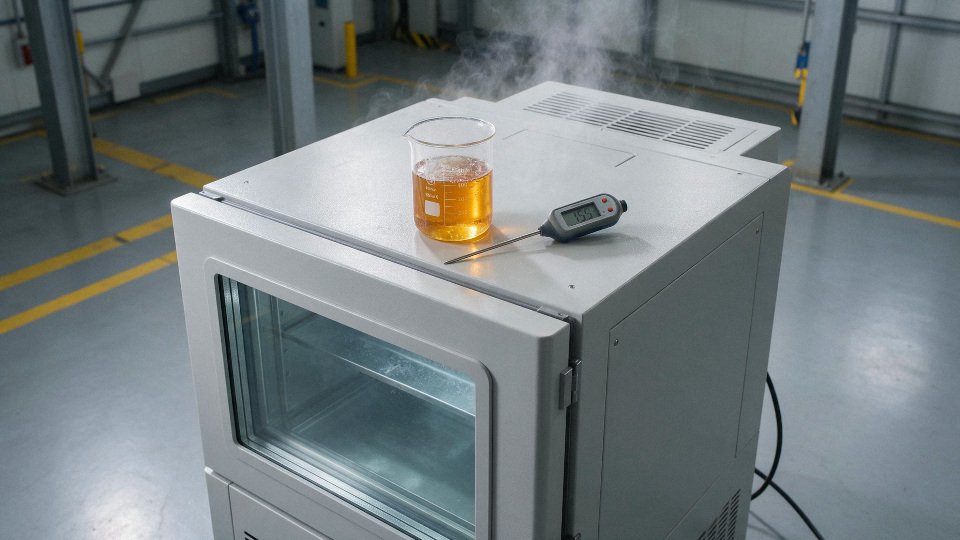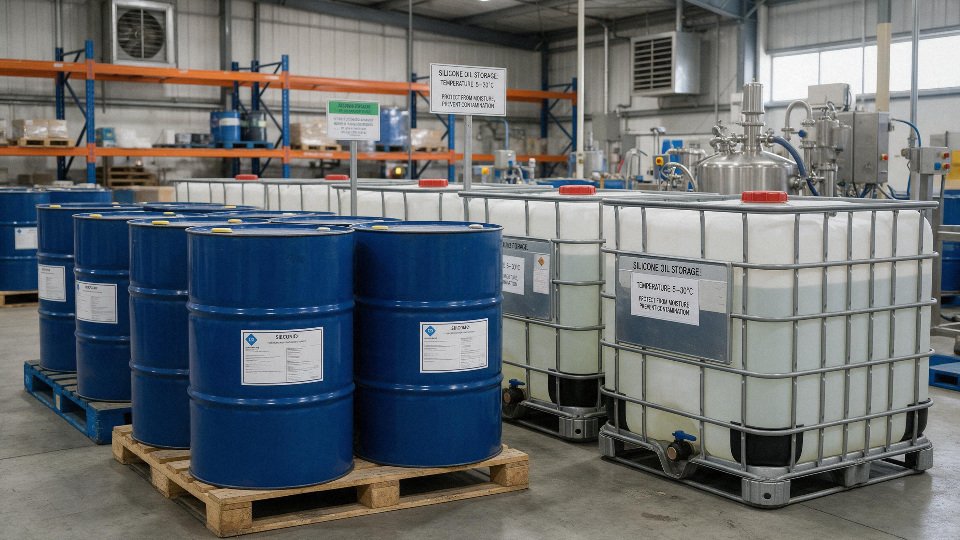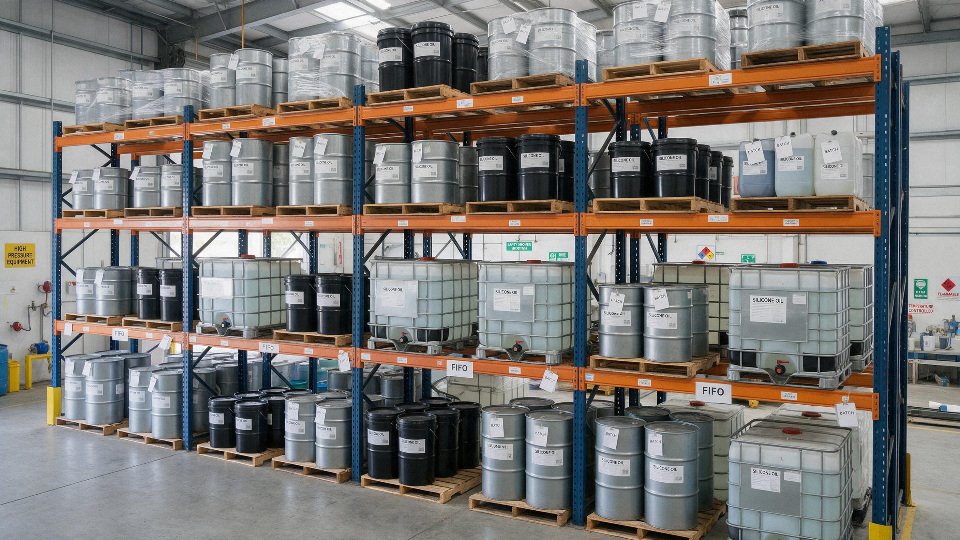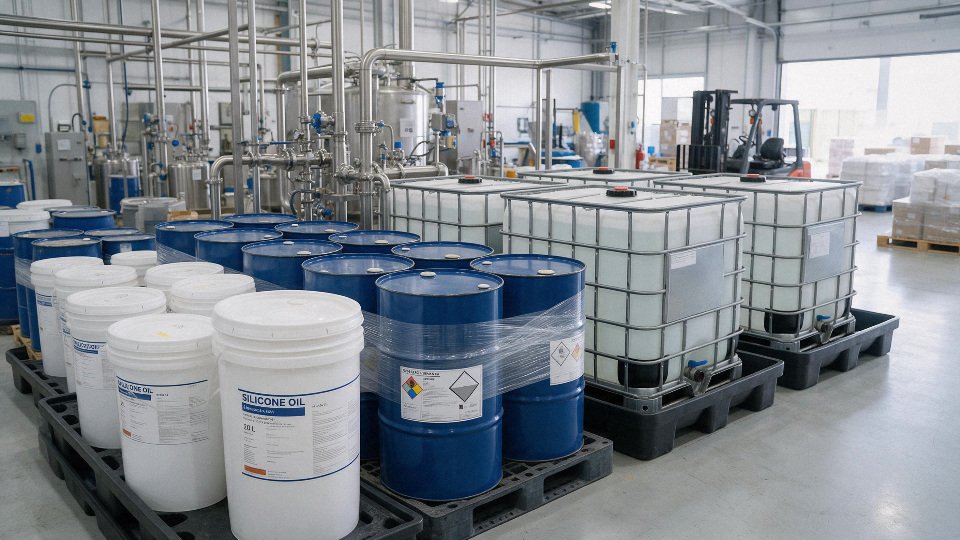
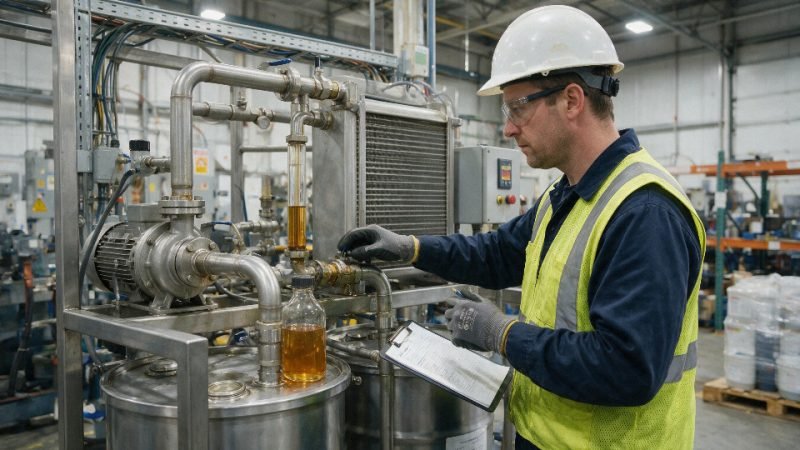
Silicone oil usually does degrade over time, but the failure is often missed until the process starts drifting: heat transfer slows, lubrication thins out, foaming shows up, seals swell, or a once-stable release or damping step turns erratic. On the plant floor that means more than a chemistry problem; it turns into scrap, cleaning labor, unplanned fluid changes, and the kind of small but steady downtime that quietly wrecks monthly cost targets. The practical fix is not to ask whether silicone oil lasts forever, because it does not, but to identify which degradation path is acting in your service conditions and whether the oil, the package, or the operating window is the real weak point.
Yes, silicone oil can degrade over time. Standard PDMS fluids are generally stable across roughly -50 C to 200 C, depending on viscosity grade and exposure conditions, but heat, air, contamination, moisture, metal catalysts, and shear can still change viscosity, volatility, appearance, and performance. The useful life depends less on calendar age than on how the fluid is stored, processed, and exposed in service.
That is where buyers and process engineers usually get tripped up. A drum can test fine after long storage, while the same chemistry fails quickly in a vented tank, a hot recirculation loop, or a line that sees water ingress every shutdown. The useful question is not just whether silicone oil degrades, but how it degrades, what symptoms show up first, and which changes actually justify replacement or a different grade.

Why silicone oil changes
Silicone oil changes because the fluid is stable, not invulnerable. In most industrial service, the main drivers are heat, oxygen, contamination, and loss of lighter fractions; which one dominates depends less on the product label and more on how the fluid is exposed, circulated, sealed, and contaminated in the actual machine.
Most of the silicone oils people mean in plant work are based on polydimethylsiloxane, or PDMS. Chemically, that is a repeating Si-O backbone with methyl groups attached to the silicon atoms. That backbone matters. The Si-O bond gives PDMS much better thermal stability than many hydrocarbon oils, especially across a broad temperature range; that is why these fluids are common in heat transfer, damping, release, dielectric, antifoam, and specialty lubrication duties.
That same strength gets overstated all the time in purchasing discussions. Good thermal stability does not mean no aging, and chemical inertness does not mean compatibility with every process upset. A PDMS fluid can still:
- lose viscosity through chain scission
- gain viscosity through crosslinking or contamination
- drift out of spec because lighter fractions evaporate
- pick up moisture or process chemicals
- form deposits on hot surfaces
- change enough in foam control, lubricity, damping, or dielectric behavior to cause trouble before anyone sees “burnt oil”
Silicone oil usually degrades only when it turns dark or forms sludge.False
Visible breakdown is only one failure mode. In service, silicone oil can drift in viscosity, volatility, moisture content, dielectric behavior, or contamination load well before obvious color change or sludge appears, and that property drift can already be enough to affect process stability or equipment performance.
Thermal aging: why heat can make silicone oil thinner
At elevated temperature, the usual first intrinsic aging path is chain scission. The polymer chains break into shorter segments, and once that happens the kinematic viscosity drops because shorter molecules flow more easily and evaporate more readily. In practical terms, the fluid that used to hold a damping curve or lubricating film may start behaving like a lighter grade.
The mechanism is straightforward enough:
- Heat increases molecular motion and reaction rate.
- Weak points in the fluid, especially at chain ends or defect sites, become more reactive.
- The polymer backbone or side groups can split or rearrange.
- Shorter chains and cyclic low-molecular-weight species form.
- Volatility rises and the fluid loses mass and viscosity.
This is why “temperature capability” needs context. Standard PDMS fluids are often cited for service roughly from -50 C to 200 C, but that is not a blanket approval for every residence time, oxygen level, or surface condition. A sealed, clean system at 180 C is one situation. A shallow open pan, hot steel contact, intermittent overheating, and air entrainment at the same nominal bulk temperature is another entirely.
Hot metal surfaces accelerate change in practice more than many operators expect. A bulk fluid may read acceptable on the tank thermocouple while local surface temperatures at a heater sheath, bearing land, or throttled valve seat run much higher. That local overheating can crack the fluid, generate volatile fragments, and start deposit formation even when the average sump temperature looks reasonable.
The trade-off is familiar: raising temperature improves heat transfer rate, lowers viscosity, and sometimes speeds the process, but it also shortens fluid life by increasing scission and evaporation. That trade-off flips hard when local hot spots develop, because you stop getting useful process benefit and start buying downtime, refill cost, and cleanup work.
Oxidative degradation: why air exposure changes the chemistry
If oxygen is present, heat-driven aging rarely stays purely thermal. Oxygen can react with the fluid or with intermediate breakdown products, producing silanol species and oxidized byproducts that may show up as acidity changes, odor, haze, or deposits. Not every system shows all of these symptoms, but the pattern is common enough in open or poorly sealed service.
The usual acceleration factors are:
- Air contact area: open baths, splash zones, and high-foam circulation expose more fluid to oxygen.
- Temperature: oxidation rates climb rapidly as temperature rises.
- Catalytic surfaces: copper alloys, iron fines, rust, and certain metal oxides can push reactions forward.
- Residence time: a fluid held hot for long periods with low turnover usually ages faster than one exposed to short, controlled thermal cycles.
Operators often notice oxidation indirectly first. The fluid may darken slightly, develop an acrid or atypical odor, or leave varnish-like residue on level glasses, vent lines, heater surfaces, or small orifices. In antifoam service, oxidative change can show up as weaker foam knockdown even before viscosity shifts much. In damping or instrument fill service, small viscosity drift may be enough to change response time.
One limitation here: color and odor are useful warning signs, but they are not universal diagnostics. Some degraded fluids remain visually acceptable while key properties have already moved out of the application window.
Crosslinking and gelation: why some silicone oils get thicker
Not all aged silicone oil gets thinner. Some gets thicker, stringy, or even partially gelled, especially when reactive contamination is involved. That is usually a crosslinking problem rather than simple thermal scission.
Common triggers include:
- catalyst residues from silicone curing systems
- amines, tin compounds, peroxides, or strong acids/bases
- incompatible additives blended in upstream or by maintenance staff
- carryover from sealants, coatings, or resin processes
- metal salts or contamination from badly corroded equipment
What happens is that reactive sites on different polymer chains begin linking together. Instead of shorter chains reducing viscosity, you create a larger effective network, so the fluid thickens. In pumps and dosing systems, this often shows up first as erratic flow, higher motor load, poor filter life, or residue collecting in dead legs and low-shear pockets.
This is one of the easier failure modes to misread on the floor. A technician sees viscosity increase and assumes “the oil oxidized from age.” Sometimes that is true. Just as often, especially in mixed-use process areas, the root cause is contamination from cleaning chemistry, uncured material, or an elastomer that should never have been in contact with the fluid in the first place.
Volatilization and fraction loss: why performance can drift without obvious damage
Even when the base polymer remains largely intact, silicone oil can change because the lighter fractions leave first. Lower molecular weight components have higher vapor pressure, so under heat and ventilation they evaporate preferentially. The fluid left behind becomes compositionally heavier.
That shift affects performance through a few direct paths:
- Viscosity drift: the remaining fluid may test thicker even without crosslinking.
- Damping change: instrument and dashpot response can slow or become inconsistent.
- Lubrication behavior: film behavior and low-temperature flow can move away from the original design point.
- Antifoam performance: some antifoam systems rely on a narrow balance of spreading and dispersion; losing light fractions can upset that balance.
- Mass loss: low fluid level in sealed-for-life components is often a volatility problem before it is a leak problem.
In plant terms, this is why two samples with the same nominal viscosity grade on the purchase order may not behave the same after service. Fraction loss changes the fluid distribution, not just one headline property.
Hydrolysis and moisture: usually secondary, sometimes decisive
For many neutral PDMS fluids, hydrolysis is limited under ordinary industrial conditions. Silicone oil is not generally as moisture-sensitive as people assume, especially compared with many ester-based fluids. Still, “limited” does not mean irrelevant.
Moisture becomes more important when you have:
- functional or modified silicone fluids rather than simple PDMS
- acidic or alkaline contamination
- high-temperature water ingress
- repeated washdown exposure with poor sealing
- storage in partially opened drums or totes
- applications with a moisture target, often below about 200 ppm for sensitive service
Water by itself may not destroy the fluid quickly, but in the presence of reactive species it can contribute to silanol formation, destabilize additives, and push corrosion or deposit problems elsewhere in the system. In dielectric and precision process applications, even modest moisture pickup can be enough to matter before the base fluid chemistry is seriously damaged.
Contamination-driven change often dominates intrinsic aging
In troubleshooting, contamination is often the real culprit. I have seen systems blamed on “old silicone oil” when the actual cause was mixed-fluid carryover, solvent cleaning residue trapped in a low spot, zinc-rich hardware upstream, or an elastomer that swelled and started bleeding extractables into the loop.
The most common contamination sources are:
- Metal fines and wear debris: catalytic surfaces, abrasive solids, filter loading, deposit nucleation
- Process chemicals: acids, alkalis, monomers, surfactants, curing agents
- Cleaning residues: chlorinated solvents, alkaline wash chemistry, detergent carryover
- Elastomer and plastic extractables: softening agents, oligomers, fillers, color bodies
- Mixed-fluid carryover: hydrocarbon oil, glycol, release agent, antifoam concentrate, seal flush fluid
- Environmental ingress: dust, moisture, combustion byproducts, oxidized condensate
The mechanism matters because the remedy changes with it. Intrinsic thermal aging points toward lower film temperature, better vent control, shorter residence time, or a different fluid grade. Contamination points toward flushing, compatibility review, seal and hose material correction, hardware changes, filtration, or tighter handling discipline. If you treat contamination as unavoidable aging, the replacement interval gets shorter but the failure keeps coming back.
Silicone oil can be “bad” before it looks bad
A lot of equipment trouble starts with subtle property drift. The oil still looks clear enough in a sight glass, there is no dramatic sludge, and maintenance leaves it alone. Meanwhile the process starts missing its marks: slower actuator response, weaker release, unstable foam control, higher evaporation loss, nuisance deposits on hot parts, or inconsistent torque in a filled coupling.
That is the practical point: silicone oil does not need to visibly break down to be functionally out of spec. Once the application depends on a narrow viscosity band, low volatility, low moisture, or contamination control, small changes can be enough to create quality loss or maintenance work. The chemistry tells you why the fluid changes; the plant symptoms tell you which mechanism is actually costing you money.
Conditions that accelerate degradation
Silicone oil usually fails early because of operating conditions, not because the base fluid “suddenly goes bad.” The biggest life-shortening factors are sustained heat, oxygen exposure, catalytic contamination, moisture, and cross-contamination from the surrounding process; once two or three of those stack up, service life can collapse even if the fluid grade looked conservative on paper.
A point buyers often miss: the published temperature window for a PDMS fluid is not the same as a guaranteed long-term life at that temperature. Standard grades may be used across roughly -50 C to 200 C depending on grade and exposure conditions, but short excursions near the top of that range are a different question from thousands of operating hours at a stable bulk temperature with clean metallurgy and limited air contact.
Heat: continuous exposure matters more than occasional spikes
High temperature is the most common accelerator, but the damage path depends on how the heat is applied.
- Continuous bulk temperature
- Long residence time at elevated temperature drives gradual chemical change.
- Viscosity may drift up or down depending on the dominant degradation mechanism and contamination present.
- Volatile fractions can increase, which shows up as weight loss, odor, deposits, or pressure changes in closed equipment.
- Thermal cycling
- Repeated heating and cooling pulls in air and moisture through vents, seals, and imperfect drum closures.
- It also stresses gaskets and reservoir coatings, which can release contaminants back into the fluid.
- Plants with day-night warehouse swings or batch lines that idle hot then cool repeatedly often see this before they recognize it.
- Localized hot spots
- A heater sheath, steam tracing contact point, bearing zone, or stagnant corner can run far hotter than the measured bulk fluid.
- That matters because degradation usually starts at the hottest metal-fluid interface, then the byproducts circulate system-wide.
The trade-off is straightforward: raising operating temperature often improves process rate or heat-transfer response, but it shortens fluid life disproportionately once hot spots and oxygen are present. The “safe” conclusion stops holding if your temperature measurement is only from the tank wall or return line; that tells you bulk condition, not what the fluid sees at the hottest point.
Oxygen: open systems age faster than sealed ones
If the same silicone oil is kept hot in an open tray and in a well-sealed vessel, the open system will usually age faster. Thin films, splashing return lines, and foamed surfaces expose far more oil-air interface per unit volume than quiet bulk fluid in a closed loop.
That is the mechanism. Oxygen attack is not just about whether air is present; it is about how much fresh air reaches the fluid and how much surface area is exposed.
- Open reservoirs and vented tanks
- Continuous replenishment of oxygen
- Dust and ambient moisture ingress
- Greater evaporation of light components
- Thin-film exposure
- Coated rollers, shallow pans, wiped films, and misting zones degrade faster because the fluid layer is thin and fully exposed.
- A few liters spread over machinery can age faster than a larger inventory in a covered sump.
- Sealed or inerted systems
- Usually much slower oxidation if leaks are controlled
- Still vulnerable if there is trapped catalyst residue, hot metal surfaces, or repeated breathing through poor seals
Bulk silicone oil in a closed vessel generally lasts longer than the same oil used as a hot thin film in air.True
This follows established oxidation and volatilization behavior: lower air exposure and lower surface-area-to-volume ratio usually reduce degradation rate, though exact life still depends on temperature, contamination, and system design.
Catalytic metals and residues can shorten life abruptly
A clean stainless system and a dirty carbon-steel loop do not treat silicone fluid the same way. Iron fines, copper-containing components, strong acids, strong bases, and leftover processing catalysts can all accelerate decomposition or side reactions.
Watch for these sources:
- Wear metals
- Pump wear, corroded piping, rust scale, machining debris
- Copper or brass contact
- Sometimes present in fittings, coolers, or legacy instrumentation lines
- Chemical residues
- Caustic wash chemicals
- Acid cleaners not fully rinsed out
- Residual catalyst from upstream silicone processing or formulation work
- Dirty changeovers
- “Flush and refill” that leaves old chemistry in dead legs, hose sets, or filter housings
In practice, a line can look mechanically fine and still poison the fluid because one cleaning step was rushed.
Mechanical stress, aeration, and foam
Mechanical energy by itself is not always the main culprit, but in recirculating equipment it often works as a multiplier.
- High shear zones
- Tight clearances in pumps, control valves, and recirculation loops increase localized stress and heating.
- Cavitation
- Vapor bubble formation and collapse create intense local conditions and entrain gas.
- Foaming and splashing
- Increase oxygen contact dramatically
- Make level control and heat transfer less stable
- Poor suction design
- Undersized suction lines, bad NPSH margin, air leaks on the suction side, and high return-line turbulence all push the problem in the same direction
The mechanism is indirect but important: aeration increases oxygen contact, unstable flow creates hot spots, and foam traps contamination at the surface. If your fluid analysis looks acceptable in the lab but the system runs milky, noisy, or visibly foamy on the floor, the machine is aging the fluid faster than the sample report suggests.
Moisture, steam, and washdown exposure
For sealed industrial silicone fluids, moisture-sensitive applications often target below about 200 ppm water, but the acceptable number depends on the formulation and use. Plain PDMS is generally more tolerant than many reactive silicone systems, yet water still creates trouble through contamination, haze, corrosion support, additive instability, and, in some modified fluids, hydrolysis of functional groups.
Risk goes up in:
- Steam-jacketed or steam-cleaned equipment
- Frequent washdown areas
- Humid plants with vented reservoirs
- Outdoor storage with condensation cycles
- Processes where the fluid is deliberately emulsified or repeatedly contacts water
If a system sees washdown every shift, the issue is rarely “water in theory”; it is breathing through caps, sample ports, and worn seals.
UV exposure and incompatible materials
Sunlight is a slower accelerator than heat, but it matters in transparent reservoirs, sight tubes, tubing, and sample bottles left on a windowsill or dock. UV can promote fluid change directly and can also degrade plastics and elastomers, creating secondary contamination.
Common material-related accelerators include:
- Rubbers and seals that swell or harden
- Some elastomers extract or leach compounds into the fluid.
- Plastic tubing and reservoir materials
- Plasticizer migration is a recurring problem in low-viscosity systems.
- Coatings, sealants, and adhesives
- Especially if they were not selected for silicone-fluid contact
- Improvised sampling containers
- Clear consumer-grade bottles are a bad habit; they contaminate samples and mislead troubleshooting
Cross-contamination and storage mistakes
A premium high-viscosity grade does not protect against contamination. A well-managed lower-cost fluid in a clean, sealed, temperature-controlled system will usually outlast an expensive grade run hot, dirty, and half-exposed to air.
The contamination list is longer than many purchasing specs allow for:
- Mineral oils
- Synthetic esters
- Glycols
- Hydraulic fluids
- Heat-transfer fluids
- Process solvents
- Cleaning agents
- Residues from previous batch campaigns
Storage is where a lot of preventable damage starts:
- Partially filled drums left for long periods
- Repeated opening without dry, clean transfer practice
- Funnels, hoses, or pumps shared across chemistries
- Poor drum labeling after decanting
- Warehouse temperatures swinging from cold mornings to hot afternoons
- Dust, rain, or washdown exposure around drum bungs and tote lids
Once these factors are in play, fluid life becomes a plant-specific estimate, not a catalog property. To predict it responsibly, you need the actual bulk and hotspot temperatures, whether the system is open or sealed, the metallurgy, contamination risks from adjacent fluids, and how the material is stored and handled between fills.
Degradation signs in service
Most failed silicone oil announces itself before it causes a shutdown, but the signs are not all visual. The practical trigger for investigation is any measurable shift in viscosity, appearance, foaming behavior, residue formation, or end-use performance that cannot be explained by normal operating variation; once two or three of those move together, treat it as a fluid condition problem until proven otherwise.
A useful discipline on the plant floor is to separate what changed in the fluid from what changed in the system. Silicone oil can age slowly in a predictable way, but contamination, a hot spot at one heater sheath, or one wrong drum used for top-up can produce a sudden step change that looks very different from normal end-of-life drift.
Viscosity shift: what the direction usually tells you
Viscosity is often the first hard data point buyers and maintenance teams have, and direction matters.
- Viscosity increase often points toward:
- Oxidative thickening
- Thermal stress leading to higher-molecular-weight species
- Localized overheating on hot surfaces
- Crosslinking or gel formation
- Volatile loss from an open or poorly vented system
- Viscosity decrease often suggests:
- Chain scission from severe thermal breakdown
- Dilution by lower-viscosity contamination
- Wrong top-up grade
- Solvent ingress
- Process carryover from wash fluids or cleaning agents
The mechanism is fairly straightforward. If the fluid is exposed to oxygen and heat over time, some portions can build larger structures or partially crosslink, and bulk viscosity drifts upward. If the siloxane chains are actually breaking down, especially under severe thermal excursion, the average molecular size drops and viscosity can move down instead. In practice, a downward shift after a temperature upset is more worrying than a slow upward creep, because it often means the fluid saw conditions outside its normal service window.
That said, viscosity alone does not identify root cause. A sample that has thickened 20% in a clean, sealed heat-transfer loop means something very different from the same increase in an open mixing process where volatiles can evaporate and powder fines are always present.
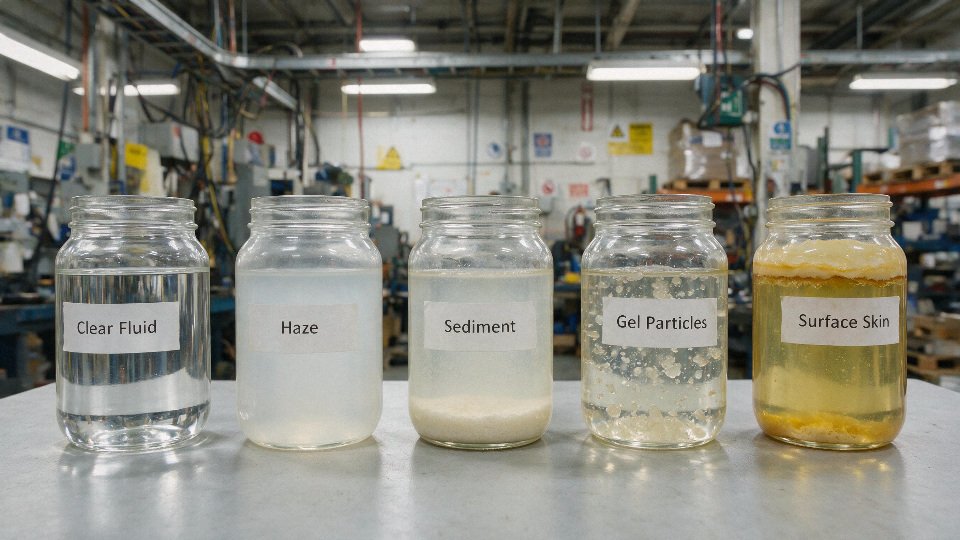
Appearance changes: what to look for at the sample point
A clean silicone fluid is often clear and uniform, but visual inspection still needs some discipline. Pull the sample into a clean glass jar, let entrained bubbles clear, and compare it with retained new fluid if possible.
Watch for:
- Haze or cloudiness
- May indicate moisture, fine insolubles, early incompatibility, or oxidation products
- Suspended particles
- Can come from process contamination, carbonized deposits, filter bypass, or degraded elastomers
- Sediment
- Usually means heavier contamination or long-term insoluble degradation products
- Surface skin formation
- Often seen where fluid sits hot and exposed to air; points to oxidation or partial crosslinking at the interface
- Gel particles or soft clumps
- Strong warning sign for advanced degradation, incompatibility, or crosslinked contamination
- Phase separation
- Common after wrong-fluid addition or contamination by incompatible oils, surfactants, or process chemicals
One caution from experience: some failed fluids still look almost normal in a drum sample. If performance is off and deposits are appearing on equipment, do not let a clear-looking sample close the case too early.
Color and odor: useful clues, not pass-fail criteria
Darkening usually means heat history, oxidation, contamination, or pickup of process fines. Amber to brown shift is common in stressed service, while gray or black often points more toward carbonaceous contamination, wear debris, or burnt residues than simple fluid aging.
Odor also helps:
- Sharp burnt smell: likely overheating
- Solvent-like note: contamination or wrong addition
- Acidic or unusual process odor: possible external contamination
But this is where many teams overread weak evidence. Some silicone oils can degrade enough to lose heat-transfer, release, or dielectric performance without dramatic color change or strong odor. Treat color and odor as screening indicators, not final diagnosis.
Foaming, air release, and surface behavior problems
In antifoam service, process additives, contamination, or molecular change can alter how the silicone spreads and destabilizes foam. In hydraulic damping, filling, or circulation systems, the issue shows up as slow air release, persistent bubbles, erratic level readings, noisy pumps, or soft response.
Common signs include:
- Foam lasting longer than normal after agitation
- Fine bubbles that do not break quickly
- Loss of antifoam efficiency at the same dose
- Changed wetting or spreading on surfaces
- More carryover into vents or separators
The trade-off here is diagnostic: foaming can indicate fluid degradation, but it can also come from suction leaks, bad return-line design, detergent contamination, or overagitation. If the fluid sample foams in a bench shake test and the system recently changed cleaners, gasket materials, or upstream chemistry, contamination is often the better first suspect.
Deposits and end-use performance loss
Residue on heater tubes, temperature probes, control valves, sight glasses, or vessel walls is one of the most expensive degradation signals because it turns a fluid issue into a maintenance issue. Deposits insulate heat-transfer surfaces, foul sensors, stick small valves, and create local hot spots that accelerate further breakdown.
Performance loss depends on the application:
- Heat transfer: slower heat-up, unstable control, larger temperature spread
- Lubrication: more drag, wear, noise, or inconsistent motion
- Damping: drift in response, weaker damping force, seasonal variability worse than usual
- Dielectric service: reduced insulation reliability or contamination-related leakage risk
- Release or spreading: uneven film, poor release, skips, fisheyes, or patchy coverage
A final distinction matters. Gradual end-of-life usually shows up as trending change over weeks or months; contamination events, overheating, or wrong-top-up incidents usually produce abrupt shifts within one batch or one maintenance interval. If seals start swelling, hoses soften, leakage increases, or maintenance calls jump suddenly, do not assume the silicone oil simply “got old.” Incompatibility with elastomers, ingress of solvent or process chemicals, or use of the wrong viscosity grade is often the more accurate explanation.
A clear-looking silicone oil sample means the fluid is still fit for service.False
Visual clarity alone is not a reliable fitness criterion. Silicone oil can lose viscosity control, antifoam behavior, dielectric performance, or thermal stability before obvious haze, color, or sediment appears.
Testing and life assessment
A usable life assessment starts with three things: a clean baseline, a representative sample, and more than one property on the report. If you compare a suspect silicone oil only to a generic product brochure, you can easily mistake contamination for degradation, or normal batch variation for failure. In practice, the right question is not “Has it changed?” but “Has it changed enough to affect this equipment, this process window, and this maintenance interval?”
Start with the baseline data before you test anything
Before sending a sample out, gather the original reference point. Labs can measure numbers all day, but without starting values and application context, those numbers are half-useful at best.
At minimum, pull together:
- Original certificate of analysis or incoming inspection record
- Fluid chemistry and type
- Standard PDMS fluid
- Modified silicone fluid
- Filled or compounded formulation, if applicable
- Nominal viscosity grade at 25 C
- Typical industrial grades range from 5 cSt to 1,000,000 cSt
- Batch or lot traceability
- Time in service and storage history
- Intended operating window
- Temperature range
- Exposure to air, moisture, metals, solvents, or process chemicals
- Electrical, damping, heat-transfer, release, or lubrication duty
- Known make-up additions or top-offs from other containers or suppliers
That last point matters more than people like to admit. On the plant floor, partial top-offs from an unlabelled drum or a transfer pot that previously held solvent will do more damage to interpretation than the actual aging sometimes does.
The baseline should also include what “acceptable” means in the application. A 10% viscosity shift may be irrelevant in a dust-control bath and unacceptable in a calibrated damping device. The same fluid can be healthy in one service and out of bounds in another.
Core laboratory tests: what they tell you and what they do not
Use a core panel first. It catches most practical problems without jumping straight into expensive analytical work.
| Test | What it indicates | What it can miss without other tests |
|---|---|---|
| Kinematic viscosity | Chain scission, crosslinking, dilution, evaporation loss | Cannot by itself distinguish degradation from contamination |
| Moisture | Water ingress, storage failure, wet process exposure | Does not identify whether water caused damage yet |
| Acid number where relevant | Oxidative byproducts, acidic contamination, hydrolysis-related changes in some systems | Plain PDMS fluids may show little change even when other issues are present |
| Volatile content | Light-end contamination or thermal loss of low-molecular species | Needs interpretation against grade and service temperature |
| Flash point | Solvent contamination or volatile buildup/loss | Not a standalone health metric |
| Density | Composition shift, contamination, mixing error | Often changes only slightly |
| Refractive index | Composition consistency, contamination screening | Better as a comparative tool than a go/no-go criterion |
| Dielectric properties | Suitability for electrical insulation duty | Poor predictor for purely mechanical applications |
| Particle contamination | Wear debris, dirt ingress, filter failure, gel fragments | Does not show dissolved chemical degradation |
Kinematic viscosity is usually the first screen because it is fast and inexpensive. The mechanism is straightforward: chain scission tends to lower viscosity, while oxidation, condensation, or gel-forming side reactions can raise it. The trade-off is that viscosity is also affected by dilution with solvent, mixing with the wrong grade, or loss of volatiles, so it is a poor single-point decision tool.
Moisture deserves special attention in any moisture-sensitive service. For sealed industrial silicone fluids, targets below roughly 200 ppm are common where water pickup matters, but the actual alarm level depends on the application. In dielectric or precision damping use, even modest moisture increases can matter; in some open noncritical systems, higher values may be tolerated for a while.
Flash point and volatile content are useful together. If both move in the wrong direction, suspect contamination or thermal history rather than simple age. A lower-than-expected flash point often points to light-end contamination from cleaning solvent, process carryover, or poor drum discipline.
Application-specific tests are where fitness-for-use gets decided
A fluid can pass a basic certificate-style panel and still fail the job. That is why application-specific testing matters.
Use targeted tests such as:
- Thermal stability testing
- For fluids exposed near the upper end of their service range, often up to about 200 C for standard PDMS under favorable conditions
- Dielectric breakdown voltage and dielectric loss
- Anti-foam performance
- Spreading or wetting behavior on the relevant substrate
- Compression damping response or force-displacement behavior
- Heat-transfer efficiency or thermal performance under actual circulation conditions
The preferred test flips with the duty. In electrical equipment, dielectric retention may matter more than small viscosity drift. In a damping unit, the reverse is often true. For release, coating, or wetting applications, spreading behavior can expose contamination that bulk viscosity never shows.
Root cause work: use analytical methods when the basic panel does not explain the change
If the core tests show a problem but not the reason, move to analytical methods that separate degradation from contamination.
Common tools:
- FTIR
- Good for identifying oxidation-related functional groups, contamination signatures, and broad chemical changes
- GC-MS for volatiles
- Useful when solvent ingress, low-boiler contamination, or thermal decomposition products are suspected
- ICP
- Screens for wear metals, catalyst residues, or inorganic contamination from process contact
- Karl Fischer water analysis
- The right method when moisture matters; more reliable than rough indirect indicators
- Microscopy
- Helps distinguish hard particles, fibers, gels, carbonaceous debris, or corrosion products
A practical example: if viscosity has increased, FTIR shows oxidation features, and microscopy shows gel specks, that points toward actual chemical aging. If viscosity has dropped, flash point is lower, and GC-MS finds light hydrocarbons, the problem is probably contamination or mixing error, not silicone backbone degradation.
A viscosity change alone is enough to confirm silicone oil degradation.False
Viscosity is a useful screening parameter, but it cannot reliably distinguish chemical degradation from dilution, cross-contamination, wrong-grade top-up, or volatile loss. Compare it with moisture, volatiles, flash point, particle load, and where needed analytical data such as FTIR or GC-MS.
Sampling discipline decides whether the lab result means anything
Bad sampling is one of the most common reasons good plants make bad fluid decisions. The sample has to represent the working fluid, not the dead leg, drain sludge, or a dirty bottle.
Follow a basic discipline:
- Sample from a point that reflects circulating or active fluid, not just the tank bottom unless sediment is the problem under investigation.
- Flush valves, lines, or sample ports before collecting the retained sample.
- Use clean, compatible containers with secure caps. Do not reuse solvent bottles unless they were cleaned and validated for this purpose.
- Label the sample with equipment ID, temperature, time in service, and sampling location.
- Avoid taking very hot samples if the method is sensitive to volatiles or moisture exchange.
- Let the lab know if the sample was taken hot, from an energized electrical unit, or after a shutdown event.
Hot samples can mislead in two ways. They can lose light volatiles before the bottle is sealed, and they can pull in moisture by condensation if handled carelessly during cooling. Neither effect tells you much about the fluid’s actual condition in service.
Interpret trends, not isolated numbers
A single test report is a snapshot. Useful, but incomplete. Life assessment gets much more reliable when you trend results against time, duty cycle, and operating conditions.
Track, at minimum:
- Viscosity change from baseline
- Moisture trend
- Particle count or debris character
- Flash point or volatile shift where contamination risk exists
- Application-specific performance result
Acceptable drift bands should be set by equipment sensitivity and process tolerance, not by a universal “good” number. A broad-tolerance bath process may run acceptably with changes that would cause scrap or miscalibration in a metering, damping, or dielectric application.
The main boundary here is simple: trend-based interpretation only works if the sampling method and test method stay consistent. Change the lab method, sample point, or container practice and your trend line may become noise.
Do not replace the fluid without finding the driver
Repeated fluid replacement without root cause work is expensive and usually self-defeating. If overheating, water ingress, copper catalysis, poor sealing, dirty transfer hardware, or incompatible top-off practice caused the first failure, the next fill will age the same way and often faster because people stop trusting the supplier instead of fixing the system.
Check the driver before blaming the drum:
- Temperature excursions
- Air exposure or headspace control
- Seal and breather condition
- Metal contact surfaces
- Cleaning chemical carryover
- Cross-mixing during maintenance
- Filter and housekeeping discipline
That is where the commercial decision sits. A replacement order may restore operation for a week or a quarter, but the durable fix usually comes from matching test results to the actual failure path in the equipment.
Shelf life versus service life
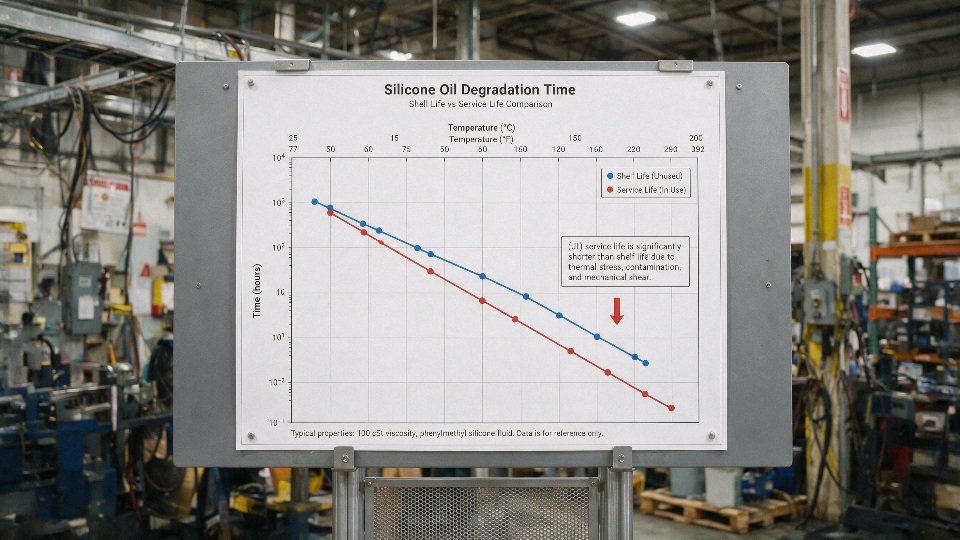
A silicone oil that sits for years in a sealed drum may still be fit for use, while the same fluid can drift out of spec in weeks or months once it is circulating hot, exposed to air, or repeatedly topped up from a dirty day tank. Shelf life and service life are not interchangeable terms; one is mainly a storage-control question, the other is an operating-conditions question.
Shelf life means storage stability: the product remains within agreed properties while it is in unopened or properly resealed packaging, stored under controlled temperature, protected from moisture ingress, and not cross-contaminated during handling. For standard PDMS fluids, that usually means a much calmer environment than actual plant service. If the package is tight, the container lining is compatible, and moisture is kept low where the application demands it, many industrial silicone oils stay stable far longer in inventory than they would in process.
Service life is the useful operating life inside the equipment or process, where the fluid is seeing heat, oxygen, metal surfaces, shear, contamination, and sometimes a lot of operator attention of the wrong kind. A heat-transfer bath left open to atmosphere, a release-oil system with repeated dust ingress, or a vacuum pump fluid exposed to process vapors will age on a completely different clock from the same material in warehouse storage.
The mechanism matters here. In storage, the main risks are usually external: moisture pickup, package breathing, contamination from transfer tools, and in a few cases interaction with seals, gaskets, or poor-quality liners. In service, the fluid is exposed to the factors that actually drive property change. Higher temperature accelerates oxidation and volatilization. Air contact increases the oxidizing load. Agitation and recirculation keep bringing fresh fluid to hot surfaces. Contaminants such as metal fines, process residues, acids, alkalis, or solvent carryover can push the oil out of its normal stability range much faster. That is why a buyer should not read “good storage stability” as “long operating life under any conditions.”
Packaging and headspace make a difference
Not all containers protect stored silicone oil equally:
- Small pails and tight-head drums
- Usually the safest standard option for shelf storage if they stay sealed
- Lower exposed headspace after filling than partly used bulk containers
- Easier to manage under FIFO
- IBCs
- Practical for volume users, but partly used IBCs are a common source of trouble
- Large headspace after withdrawals means more breathing with temperature swings
- Outlet hygiene matters; one dirty camlock can undo otherwise good storage practice
- Bulk tanks
- Economical, but only if the tank is designed for clean specialty fluids
- Require good vent control, clean transfer lines, compatible seals, and disciplined tank housekeeping
- For moisture-sensitive or high-value applications, nitrogen blanketing and headspace control are often justified
- Lined containers
- Worth checking, not assuming
- The wrong liner or degraded internal coating can become the contamination source rather than the protection
Silicone oil in unopened packaging always has the same practical life as silicone oil in service.False
Storage stability and operating life are governed by different exposures. Sealed inventory mainly faces packaging and environmental control risks; in-service fluid sees heat, oxygen, contamination, and mechanical stress that shorten useful life.
Inventory policy should reflect application risk
A workable plant policy usually includes:
- First-in-first-out by batch, not just by receipt date
- Batch traceability from supplier lot to production order
- Retained samples for older or critical receipts
- Periodic requalification of aging stock before release, based on risk
- Top-up control, especially where fresh oil is mixed into an aged operating charge without documenting the ratio
Top-up management is one of those details plants neglect until troubleshooting starts. If operators keep adding fresh silicone oil to compensate for losses, the sump may look “maintained” while oxidation products, dirt, moisture, or process carryover continue accumulating. You do not have a fresh charge; you have a blended, partly degraded system with an unknown history.
When should stored product be re-tested before use?
Retesting older stock makes the most sense when failure cost is high or the application window is narrow:
- Electronics and moisture-sensitive processing
- Verify moisture, cleanliness, and key physical properties
- A typical moisture target for sealed industrial silicone fluids in sensitive applications is below about 200 ppm, but the actual acceptance limit depends on the process
- Medical-adjacent or tightly controlled manufacturing
- Confirm identity, appearance, viscosity, and any application-specific release criteria
- Internal quality systems often require this even when the material looks fine
- High-temperature service
- Recheck viscosity, volatile content where relevant, and visual clarity before charging the system
- Old but clean stock may still be acceptable; old stock with uncertain storage history usually is not
If the package has been opened, resealed several times, exposed to seasonal warehouse cycling, or transferred between containers, calendar age stops being the main question. At that point, release to production should depend on requalification data and storage history, not the label date alone.
Storage and handling controls
Good storage and handling usually buy you more silicone oil life than upgrading one viscosity grade or paying for a premium package you do not actually need. For standard PDMS fluids, the practical controls are simple: keep the fluid sealed, dry, clean, segregated from other shop liquids, and out of avoidable heat and light; then make the transfer and operating system stop creating contamination, hot spots, and stagnant pockets that age the oil faster than the chemistry would on its own.
Storage conditions that actually matter
Silicone oil is not especially fragile in a drum or pail, but it does not like unnecessary exposure cycles. Every time a container is opened, warmed, cooled, and reclosed, you risk pulling in moist air, dust, and whatever is floating around the filling area.
A workable storage routine looks like this:
- Keep containers tightly sealed until use.
- Do not leave bungs cracked open between shifts.
- Avoid “temporary” foil, rag, or loose plastic cap closures. They always become permanent in a busy plant.
- Store indoors, clean, and out of direct sunlight.
- Sunlight matters less for one afternoon than for repeated heating of partially filled containers.
- Repeated day-night temperature swings drive breathing and condensation.
- Avoid temperature extremes.
- Standard PDMS fluids commonly serve across roughly -50 C to 200 C depending on grade and exposure, but storage is different from service.
- For warehousing, the issue is not just absolute temperature; it is cycling. Warm days and cool nights can draw moisture into headspace, then condense it on the internal wall.
- Use first-in, first-out with actual receipt and open dates.
- Batch traceability matters when you are troubleshooting haze, viscosity drift, or a contamination event.
- For moisture-sensitive applications, control water pickup early.
- A common target for sealed industrial silicone fluids is below 200 ppm moisture where the downstream process is sensitive.
- You cannot assume that level survives poor handling after the container is opened.
Prevent cross-contamination during transfer
Cross-contamination is one of the most common reasons a “stable” silicone fluid suddenly stops behaving like one. In practice, the culprit is often not another silicone oil grade, but residues from hydraulic oil, glycols, mineral oils, ester fluids, solvent flushes, surfactants, or line-cleaning chemicals left in shared transfer gear.
Use controls that remove ambiguity:
- Dedicate pumps, hoses, funnels, and transfer containers to silicone oil service where possible.
- A cheap drum pump shared across five fluids is false economy if one bad batch fouls a dosing system or causes reject surface finish.
- Segregate by fluid family and, if the process is sensitive, by grade.
- High-viscosity and low-viscosity silicone oils can coexist in a plant, but shared equipment makes mix-ups easy.
- Color coding helps, but hard labeling on the line and container is what survives shift turnover.
- Do not use reclaimed or unknown intermediate containers.
- A tote that “looks clean” is not a specification.
- Trace residues from cleaners or prior contents can catalyze change or create foam, haze, or deposit issues.
- Flush only with verified compatible media and remove the flush completely.
- This is where plants get caught: the flush chemical was compatible with the pump, but not with the silicone fluid or the end use.
The mechanism is straightforward. A few hundred ppm of the wrong contaminant can alter interfacial behavior, accelerate decomposition at hot surfaces, poison downstream processes, or distort lab results enough that you chase the wrong problem.
Control moisture, dust, and contact materials at the opening point
The highest contamination risk is usually not warehouse storage. It is the ten minutes during opening, sampling, and filling.
Set up the handling point with some discipline:
- Open containers only in a reasonably clean area.
- Not beside grinding, powder charging, sandblasting, or a maintenance bench full of rust and solvent rags.
- Use dry, compatible fittings and sample tools.
- Wet stainless beakers, compressed-air blowoff, or shop towels introduce exactly the contamination you later call “mysterious.”
- Prefer closed or semi-closed transfer where the application justifies it.
- Even a simple dip-tube and sealed pump arrangement cuts airborne pickup versus open pouring.
- If you must sample, take small, representative samples and close the container immediately.
- Long-open drums in humid weather pick up more than most teams expect.
- Purge with dry inert gas only when justified.
- Useful for partial containers in moisture-sensitive duty or long storage after opening.
- Not every plant needs nitrogen blankets on every pail; sometimes better bung discipline solves the problem cheaper.
Keep reactive residues and incompatible hardware away from the fluid
Silicone oil tolerates a lot, but there are clear boundaries. Avoid contact with:
- Strong acids
- Strong bases
- Reactive processing residues
- Catalytic metal fines
- Unknown reclaimed materials
- Dirty sump residues or old carbonized deposits
Metal compatibility is usually good in ordinary clean systems, but fine metallic wear debris and catalytic residues are a different case. They increase local reaction activity and often collect in the hottest parts of the loop, which is exactly where degradation starts to become visible.
Hardware compatibility deserves the same attention:
- Seals and gaskets: verify elastomer compatibility at the actual process temperature, not room temperature
- Hoses: check for swelling, extractables, and permeability
- Pump selection: gear, diaphragm, or other designs should suit the viscosity grade and cleanliness target
- Internal coatings and tank linings: confirm they do not soften, shed, or react in long contact with the selected fluid
The trade-off here is practical. Softer hose compounds or general-purpose gasket materials may be cheaper and easier to source, but if they shed extractables into a clean silicone system, you pay later in quality drift, filter loading, and complaint handling. That conclusion weakens only if the duty is very low temperature, short contact, and non-critical use; then a broader set of materials may be acceptable, but it still needs verification against supplier data or a plant trial.
Manage partial containers and monitor by duty severity
For opened containers, good housekeeping is not clerical work; it is contamination control.
Use a standard partial-container routine:
- Reseal promptly after each use.
- Mark the open date and operator or line.
- Minimize headspace if practical by transferring to a smaller clean, dry container.
- Inspect before reuse for haze, sediment, unusual odor, or container wall residue.
- Keep opened stock segregated from unopened stock.
Changing to a more expensive silicone oil grade is usually the best way to extend fluid life.False
In many plants, fluid life is limited more by contamination, moisture pickup, hot spots, and stagnant zones than by the base grade itself. Upgrading fluid can help, but poor handling and weak system design often erase the benefit.
Set monitoring intervals by service severity, not by a calendar alone. Systems with high temperature, cycling, air entrainment, fine-particle generation, or long residence time in hot dead legs need tighter checks than lightly loaded batch applications. If one part of the system runs materially hotter than the bulk fluid, fix that first. Reducing hot spots and dead zones often extends usable life more effectively than changing fluid grade, because it removes the place where oxidation, deposit formation, and localized breakdown start.
Choosing the right grade
The right silicone oil grade often extends practical service life more than any after-the-fact maintenance step. A standard PDMS fluid is perfectly adequate in a lot of plants, but once temperature extremes, electrical duty, aggressive contaminants, surface reactivity, or customer compliance requirements enter the picture, the wrong grade can age early even if the base chemistry is “silicone.”
Grade selection is not just a viscosity decision. Buyers usually start there because cSt is easy to compare on a datasheet, but aging resistance in service also depends on molecular structure, residual low boilers, ionic cleanliness, catalyst residues, additive package, and how the fluid actually sees air, heat, shear, moisture, and metal surfaces in the equipment.
Match the chemistry before you match the viscosity
Standard PDMS fluids cover most general industrial uses because they offer broad thermal stability, good lubricity, water repellency, and a wide viscosity range, typically from 5 cSt up to very high molecular weights. For many closed systems operating inside roughly moderate temperature limits and without unusual electrical or chemical exposure, PDMS is the cost-effective default.
That choice stops being the best one under a few specific conditions:
- Phenyl-modified silicone fluids
- Usually chosen where lower-temperature behavior, oxidative stability in certain thermal applications, or optical/refractive properties matter.
- In heat-transfer or high-temperature bath service, phenyl-containing fluids may hold performance better than standard PDMS, but only if the rest of the system is designed for it. Poor venting, hot spots, and contamination will still shorten life.
- They are typically more expensive and may not deliver a longer interval if the dominant failure mode is dirt ingress or localized overheating from a fouled heater.
- Amino-modified silicone fluids
- Used more for surface interaction than bulk fluid durability, especially in textile treatment, softening, and some specialty finishes.
- Their reactivity is useful, but that same functionality can make storage and process stability more conditional. Moisture, pH drift, and contamination matter more than with plain PDMS.
- Not a drop-in “longer-life” substitute for inert service fluids.
- Epoxy-modified silicone fluids
- Selected where adhesion promotion, reactivity, or crosslinking behavior is wanted.
- These are process chemicals, not just passive fluids. Aging behavior must be read in the context of pot life, hydrolytic sensitivity, and downstream cure requirements.
- Procurement teams sometimes over-buy stability here by demanding very tight specs while ignoring packaging exposure after opening, which is where a lot of the trouble starts.
- Fluoro-modified silicone fluids
- Worth considering where fuel, solvent, or aggressive chemical resistance is the real requirement.
- They can outperform standard silicone fluids in chemically harsh service, but supply options are narrower, lead times can be longer, and cost moves sharply upward.
- If the plant issue is actually entrained water, abrasive fines, or pump cavitation, this upgrade will not fix it.
- Other specialty silicone fluids
- This bucket includes polyether-modified, alkyl-modified, and other tailored structures used in defoaming, wetting, release, or process aid roles.
- Their aging behavior is application-specific because performance often depends on controlled incompatibility, emulsion behavior, or surface migration rather than bulk thermal life alone.
A specialty silicone fluid is not automatically longer-lasting than standard PDMS in every application.True
Service life depends on the actual degradation path. If the fluid fails mainly from contamination, moisture ingress, hot spots, or poor equipment design, upgrading chemistry may add cost without extending life in a meaningful way.
Viscosity affects aging, but not in the simple way buyers often assume
Higher viscosity does not automatically mean better durability. A thicker fluid often has lower volatility and may resist evaporative loss better at elevated temperature, but it also pumps harder, sheds heat differently, traps bubbles longer, and can create startup issues in cold conditions.
Selection should be based on four operating questions:
- What is the fluid doing?
- Damping, diffusion control, or seal lubrication may need higher viscosity.
- Heat transfer, wetting, or fast-flow circulation usually pushes you lower.
- What temperature profile does it actually see?
- A fluid that is pumpable at 25 C may be sluggish at winter startup or in an unheated warehouse line.
- At the hot end, lower-viscosity grades tend to lose mass faster if the system is vented or exposed.
- How much volatility can the process tolerate?
- In open baths, coating lines, or heated release applications, low-viscosity fluids can drift off-spec through evaporation long before the bulk chemistry “degrades.”
- In a sealed system, that may matter much less.
- What can the equipment handle?
- Small gear pumps, fine metering valves, and narrow tubing runs do not forgive over-thick fluid selection.
- I have seen buyers choose a heavier grade for “extra stability,” then end up with poor circulation, higher motor load, and a hotter system that ages the fluid faster.
The trade-off is straightforward: lower viscosity improves handling and often process response; higher viscosity can reduce volatility and improve persistence. The preferred choice flips when startup pumpability, metering accuracy, or heat transfer efficiency is more important than simple retention on the part or in the chamber.
Purity and cleanliness matter most in sensitive applications
For many failures blamed on “old silicone oil,” the chemistry is still serviceable; the contamination profile is not. In dielectric, electronics-adjacent, optical, personal care intermediate, or moisture-sensitive processing, the purchase specification should address more than viscosity.
Key items to define with the supplier:
- Residual catalyst control
- Especially relevant for modified fluids or materials that have seen reactive finishing steps.
- Trace catalyst residues can accelerate side reactions over time or interfere with downstream cure systems.
- Low-volatiles content
- Important where fogging, condensable residues, VOC expectations, or weight loss at heat matter.
- This is often more critical than choosing a heavier nominal viscosity grade.
- Moisture level
- For moisture-sensitive uses, buyers commonly target sealed industrial fluid moisture below about 200 ppm, but the acceptable limit depends on the process, packaging, and exposure after opening.
- Filtration and particulate cleanliness
- Fine filtration matters in metering systems, electronics processes, narrow nozzles, and any application where particles become defects.
- “Clean” on a sales sheet is not enough; define the filtration level or particle requirement if the process depends on it.
- Ionic or trace-metal cleanliness
- Not every application needs this, but electronics and some dielectric uses do.
- If customer specs call for it, get the actual test method and lot documentation aligned before the PO is released.
Selection priorities by application
Different uses punish different weaknesses. A good buying spec reflects the duty, not just the chemistry family.
| Application | Primary selection priority | Aging risk that matters most |
|---|---|---|
| Heat transfer | Thermal stability, low volatility, oxidation resistance, system compatibility | Hot spots, air exposure, fouling, volatile loss |
| Dielectric insulation | Dielectric properties, low moisture, low ionic contamination, cleanliness | Moisture pickup, contamination, electrical breakdown risk |
| Damping | Stable viscosity over temperature, low shear change, bubble release | Temperature-driven viscosity drift, air entrainment |
| Textile treatment | Functional modification, emulsion/process compatibility, hand feel consistency | Hydrolysis, contamination, bath instability |
| Release | Surface performance, transfer behavior, volatility profile | Evaporative loss, residue build-up, contamination from substrate |
| Personal care intermediate | Purity, odor profile, volatiles control, documentation | Contamination, spec drift, packaging exposure |
| Defoaming | Spreading efficiency, incompatibility balance, carrier compatibility | Over-dilution, contamination, formulation instability |
| Process aid | Compatibility with line chemistry and downstream operations | Side reactions, residues, inconsistent dosing |
Regulatory and customer requirements can eliminate otherwise good technical choices
A fluid can be technically suitable and still be commercially unusable. Food-contact status, electronics cleanliness expectations, VOC limits, restricted-substance declarations, allergen or cosmetic documentation, and customer-specific negative lists often narrow the field before engineering optimization even starts.
Procurement should verify:
- Applicable compliance declarations and revision dates
- Country or customer restrictions on volatile content
- Restricted substances and disclosure thresholds
- Lot-level COA availability
- Change-control commitments for formulation or manufacturing site
- Packaging type, seal integrity, and traceability
This is where integrated supplier discipline matters. If the application sits in a regulated or audited chain, a slightly cheaper fluid without stable documentation can become the expensive option very quickly.
Buy on total operating cost, not drum price
A lower purchase price makes sense only if the fluid survives the planned interval without driving maintenance, scrap, line cleaning, or unplanned stops. In practice, the cheapest fluid is often the one that keeps viscosity, cleanliness, and process behavior stable long enough that operators stop touching the machine.
Cost comparison should include:
- Replacement frequency
- Labor for draining, refill, and cleanup
- Production loss during changeout
- Scrap or defect risk from spec drift
- Additional filtration or conditioning hardware
- Supplier lead time and inventory carrying cost
One caution from the plant floor: over-specifying a specialty fluid can create single-source dependence, long replenishment cycles, and unnecessary qualification work. If the root cause is a breathing tank, wet compressed air, a hot running seal, or poor housekeeping around open containers, fix that first. The best grade choice is the one that matches the true failure mode, not the one with the most exotic datasheet.
Supplier and quality checks
A silicone oil supplier is worth shortlisting only if they can prove three things: they control what goes into the fluid, they can keep lot-to-lot variation inside an agreed window, and they can support you when the product misbehaves in service. If they can only send a price sheet and a generic COA, treat them as a trading channel, not a long-term process partner.
Procurement teams usually find out too late that “silicone oil” is not a sufficient buying description. Two fluids can share nominal viscosity and still behave differently in foaming, volatility, moisture pickup, cleanliness, seal compatibility, or heat-aging performance because of upstream raw materials, polymerization control, stripping, filtration, and packaging discipline. For applications where downtime, scrap, or field failures cost more than the fluid itself, supplier capability matters as much as the nominal grade.
What to verify about the manufacturing base
Start by determining whether you are dealing with an integrated organosilicon manufacturer or a blender/trader.
- Manufacturing integration
- Do they produce core organosilicon intermediates, silicone fluids, or both?
- Can they explain the fluid’s process route at a useful level, not just read back the TDS?
- If a batch drifts on volatiles, odor, or moisture, do they have plant-level access to investigate the cause?
- Raw-material control
- Ask how critical feedstocks are qualified and whether alternate sources are preapproved.
- Check whether incoming raw materials are tested per lot or accepted only on supplier certificates.
- For modified silicone fluids, ask which components are externally sourced and which are made in-house.
- Batch consistency
- Request not only specification limits but also typical values and historical variation for key properties.
- At minimum, ask about viscosity at 25 C, appearance, moisture where relevant, volatile content where relevant, and any application-critical functional parameter.
- A supplier who knows their process will usually discuss normal process capability, not just pass/fail limits.
The mechanism here is straightforward: upstream variation passes downstream unless the producer has enough process control, stripping capacity, and blending discipline to correct it. A trader can often consolidate supply; they usually cannot explain why one lot shears differently in a pump loop or why another lot leaves more residue after heating.
Documents and controls that separate a serious supplier from a casual one
Ask for the operating paperwork, not just marketing literature.
- Specification package
- Product specification with acceptance ranges
- Technical data sheet with typical values
- Certificate of analysis format showing actual results, not only “conforms”
- Quality retention and change control
- Retained sample policy by batch and retention period
- Lot coding logic and backward traceability to production date
- Formal notification procedure for raw-material, process, test-method, or packaging changes
- Support documentation
- SDS
- TDS
- COA
- Customer questionnaires for regulatory, quality, and supply-chain review
- REACH or regional compliance support, where applicable
A COA alone is enough to judge long-term silicone oil quality.False
A COA confirms tested properties for one lot against a defined method and limit set. It does not show process capability, retained-sample practice, change control discipline, or whether untested attributes such as cleanliness, compatibility, and long-term aging behavior are stable across time.
Technical support: test it before you need it
A supplier’s technical team matters most when something has already gone wrong, which is exactly when weak suppliers disappear behind sales staff.
Check whether they can support:
- Grade selection against temperature, viscosity, volatility, and exposure conditions
- Compatibility review with elastomers, plastics, coatings, and process contaminants
- Failure analysis when fluid darkens, thickens, gels, foams, or leaves deposits
- Application-specific testing, especially if your process is moisture-sensitive, heat-exposed, or cleanliness-critical
Ask practical shop-floor questions and see whether the answers are specific:
- What moisture target is realistic for the supplied packaging format? For sealed industrial silicone fluids, below 200 ppm may be required in moisture-sensitive use, but you need the supplier’s actual control method, not a brochure number.
- How are volatiles controlled and verified?
- What filtration level is standard before filling?
- What storage conditions do they recommend after opening?
- How are custom blends or modified silicone fluids segregated to avoid cross-contamination?
Supply continuity, packaging, and export execution
This is where many otherwise acceptable suppliers start to wobble.
- Packaging and cleanliness
- Available pack sizes: pails, drums, IBCs, bulk
- Liner type, seal integrity, headspace control, clean filling environment
- Whether the same filling line handles unrelated chemistries
- Global supply reliability
- Normal lead times by package size and region
- Export documentation experience
- Backup production line, alternate plant, or safety-stock plan
- Response plan for port delay, container shortage, or raw-material disruption
An integrated manufacturer usually has an edge here, not because every integrated producer is automatically better, but because root-cause access is faster and supply planning is less exposed to middle-layer markups and substitutions. That advantage starts to matter once the fluid is tied to a qualified production process, field warranty exposure, or multi-year supply program. If the supplier cannot show how quality, traceability, and continuity are managed across those conditions, you are still buying a spot product even if the label looks polished.
Frequently asked questions
Does silicone oil expire if unopened?
Usually not in the way a reactive resin or catalyst package does. Unopened silicone oil in a sealed, clean container can remain usable for years if it has been stored dry, out of direct heat, and protected from contamination; the practical limit is often packaging integrity and cleanliness control, not the PDMS fluid itself.
What changes first in warehouse storage is often outside the fluid:
– Drum breathing through damaged bungs or poor seals
– Moisture pickup after partial opening and resealing
– Dust, rust, fiber, or transfer-hose contamination
– Label traceability loss, which creates procurement risk even if the fluid is still fine
If the oil is intended for moisture-sensitive use, many plants treat low moisture as a receipt-and-release criterion rather than assuming shelf condition from age alone.
How long can silicone oil last in service?
Service life can range from months to many years. It depends less on calendar time than on operating temperature, air exposure, metal contact surfaces, contamination load, shear, and whether the system is open, vented, or effectively sealed.
A closed heat-transfer or damping application running well inside the fluid’s practical temperature window will usually outlast an open bath exposed to hot air and debris. Once you add cyclic overheating, copper-bearing components, process carryover, or frequent top-ups from unsealed containers, life drops fast. If someone asks for a universal number, they are skipping the conditions that actually decide it.
Can old silicone oil be tested and still used?
Yes, often it can. The right question is whether the oil still meets the functional limits of the application, not whether it is “old.”
Typical checks are:
1. Kinematic viscosity against the original grade
2. Moisture, if the application is water-sensitive
3. Volatile content or mass loss tendency where evaporation matters
4. Acid value or oxidation indicators if the system runs hot in air
5. Appearance, color, haze, sediment, or gel particles
6. Compatibility check if the oil has contacted another process fluid
If test results are close to the original release values and the application is not high-risk, continued use may be reasonable. If the process is critical, confirm with a small-scale trial before charging a full system.
Does silicone oil oxidize like mineral oil?
Not in the same way, and usually not at the same rate. Standard PDMS fluids are generally more oxidation-resistant than many mineral oils, but they are not immune to oxidative or thermal change under enough heat and air exposure.
Mineral oils often form sludge, varnish, and acidity through hydrocarbon oxidation pathways. Silicone oils more often show viscosity shift, volatile formation, gel tendency, or deposits after prolonged thermal-oxidative stress. Different chemistry, different failure pattern.
Silicone oil does not oxidize at all.False
Silicone fluids are oxidation-resistant compared with many hydrocarbon oils, but prolonged heat, oxygen exposure, catalytic metals, and contamination can still cause measurable degradation.
What temperature causes silicone oil breakdown?
There is no single breakdown temperature that applies to every silicone oil and every plant. For standard PDMS fluids, a broad indicative service window is about -50 C to 200 C, but the real limit depends on residence time at temperature, contact with air, hot-spot severity, fluid grade, and contamination.
Short excursions may be tolerated where continuous operation would not be. A poorly controlled heater skin temperature can damage oil even when the bulk sump temperature looks acceptable. In practice, local hot spots break fluids down before average temperature does.
Can silicone oil absorb water?
Yes, though usually not like hygroscopic solvents. Silicone oil can pick up some moisture during storage, transfer, or service, and in moisture-sensitive processes that small amount is enough to matter.
Watch for:
– Open drums left on humid floors
– Repeated warm-cool breathing in partially filled containers
– Wet compressed air on transfer systems
– Condensation in outdoor storage
For sealed industrial fluids used in moisture-sensitive applications, a moisture target below about 200 ppm is common, but the acceptable number still depends on the end use.
Why did my silicone oil become thicker?
The usual causes are thermal aging, oxidation, crosslinking tendencies, contamination, or mixing with a higher-viscosity fluid. In an open hot system, gradual thickening often points to polymer structure changes or loss of lighter fractions.
Also check for:
– Fine solids loading from the process
– Carbonaceous residue from overheating
– Wrong top-up oil from maintenance stores
– Reaction with process chemicals
Why did my silicone oil become thinner?
Thinning often means the opposite path: dilution, contamination with solvent or lower-viscosity oil, or loss of molecular weight from severe degradation. It can also happen after accidental mixing during maintenance.
A pump seal leak or washdown ingress is a very ordinary cause. Before blaming the supplier, pull a retained sample from the original batch if one exists.
Is discoloration always a sign of failure?
No. Slight color shift by itself does not prove the oil is unfit for use. Some systems darken the fluid because of trace metal pickup, process staining, or mild thermal history while viscosity and performance remain acceptable.
Discoloration becomes meaningful when it appears with one or more of these:
– Viscosity drift
– Haze or suspended matter
– Burnt odor
– Foaming change
– Deposits on heaters, valves, or sight glasses
Can different silicone oils be mixed?
Sometimes, but do not assume compatibility from the word “silicone.” Similar PDMS fluids of known grade may be physically mixable, yet the blend can still shift viscosity, volatility, air release, dielectric behavior, or downstream process performance.
Do not mix without checking:
1. Base chemistry and whether it is straight PDMS or modified silicone
2. Viscosity grade
3. Additives or functional modifications
4. End-use requirements
5. Small-jar compatibility and performance trial
How should used silicone oil be disposed of or reclaimed?
Follow local waste rules and the site’s environmental procedure. Used silicone oil may be reclaimable by filtration, drying, or reconditioning in some non-critical applications, but only after testing confirms the recovered fluid is fit for purpose.
Do not send it for reclamation blindly if it contains:
– Hazardous process contaminants
– Mixed chemistries
– Reactive residues
– Unknown cleaning solvents
The disposal route depends on contamination profile as much as on the silicone oil itself, so verify with your licensed waste contractor and current regulations.
What information should I send a supplier when asking for a replacement grade?
Send the operating facts, not just the old product name. A useful replacement recommendation usually needs:
- Current viscosity grade at 25 C, if known
- Application type: heat transfer, lubrication, release, damping, dielectric, antifoam, other
- Normal operating temperature and any peak excursions
- Open or closed system
- Contact materials: metals, elastomers, plastics
- Exposure to air, moisture, solvents, acids, alkalis, or process vapors
- Required finish or functional target
- Known failure mode: thickening, thinning, odor, foam, deposits, color change
- Approximate annual consumption and package size
- SDS, TDS, and if possible a retained sample or clear photos of the used fluid and equipment condition
What should you verify next
If the fluid is still inside its required viscosity band, contamination is controlled, and the equipment is not seeing abnormal heat or air exposure, continued use is often reasonable. If the data is incomplete, symptoms are drifting, or the application has moved outside the original design window, re-testing comes before replacement; if you have clear signs of overheating, gel formation, heavy volatile loss, or process-quality impact, a change-out is usually the safer call.
Work through it in this order. Plants that skip straight to buying replacement oil often miss the actual failure driver, then burn through the next fill just as fast.
- Confirm what the application actually demands
- Required fluid function: heat transfer, lubrication, damping, release, dielectric service, diffusion pump service, foam control, or another duty
- Acceptable viscosity range at operating temperature, not just at 25 C
- Required finish or product-quality outcome if the oil contacts parts, surfaces, or formulations
- Compatibility limits with seals, plastics, coatings, elastomers, metals, and process media
- Practical service window for the specific duty cycle; standard PDMS fluids are often used broadly from about -50 C to 200 C, but that does not mean every open or oxygen-rich system can run safely across that whole range
- Document actual operating conditions, not nameplate assumptions
- Normal and peak temperature, including upset conditions
- Residence time at heat
- Open tank, vented reservoir, or sealed system
- Air, moisture, solvent, catalyst, metal fines, carbon, or cleaning-agent exposure
- Shear conditions: pumps, mixers, recirculation loops, narrow clearances
- Maintenance habits that matter more than people admit: open drum transfers, half-fitted drum bungs, wet transfer hoses, reused filters, dusty top-ups during shutdowns
- Compare current fluid data against a known baseline
- New-product certificate, incoming QC record, or retained sample
- Current viscosity, appearance, odor, moisture, volatiles, acid value if relevant, insolubles, and any application-specific test
- Trend, not just one number; a 10 cSt move means something very different in a low-viscosity grade than in a 100,000 cSt grade
- Process evidence: slower heat-up, residue, foaming, leakage, electrical drift, surface defects, filter loading
- Identify contamination or overheating sources before replacing
- Hot spots from poor circulation, fouled exchangers, dry-running zones
- Air entrainment from suction leaks or bad return-line design
- Cross-contamination from gear oils, cleaners, process chemicals, or previous fill residues
- Moisture ingress during storage and top-up; for moisture-sensitive applications, sealed industrial silicone fluids are often targeted below roughly 200 ppm, but the acceptable level depends on the process and how the fluid is being used
Immediate change-out is the safer choice when you have:
– Rapid viscosity shift or heavy volatility loss
– Gel particles, haze that does not clear, or carbonized residue
– Product-quality defects tied to the fluid
– Repeated overheating events
– Unknown contamination with likely compatibility risk
Re-testing is the better step when:
– Symptoms are mild or intermittent
– One test is out of range but the root cause is unclear
– The process has changed and the old specification may no longer fit
– You are deciding between filtration, partial refresh, full replacement, or a different grade
For a supplier review, send the minimum technical package:
– Fluid type and chemistry, if known
– Viscosity grade
– Operating and peak temperature range
– Equipment description and duty
– Observed symptoms and when they started
– Available test reports
– Contamination or overheating history
– Annual consumption and replenishment pattern
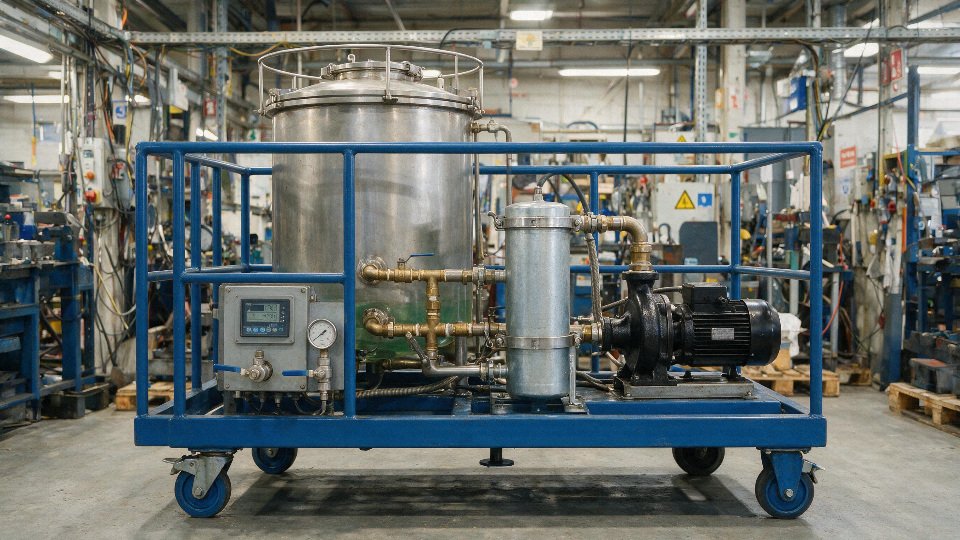
If you are seeing repeated failure, uncertain material compatibility, a need for a modified grade, or pressure to reduce total lifecycle cost rather than just drum price, bring the case to supplier level early. That is where a manufacturing partner with organosilicon production depth is useful: SiliconChemicals can support standard and specialty organosilicon fluid selection, quality verification against your operating data, and longer-term supply planning when one-off spot buying is creating risk.
Send your application details for a technical review, sample evaluation, or quotation: substrate or equipment type, contaminant or failure mode, approximate layer or residue thickness if relevant, working area or system volume, required finish or performance target, throughput or target rate, and clear photos or retained samples where available. The cleaner your operating data, the faster the discussion moves from general advice to a fluid recommendation you can actually run.