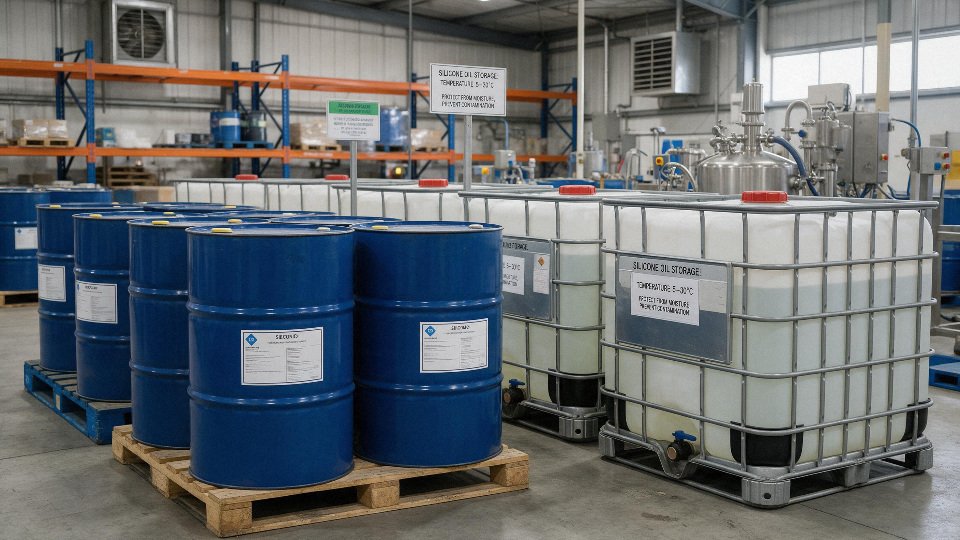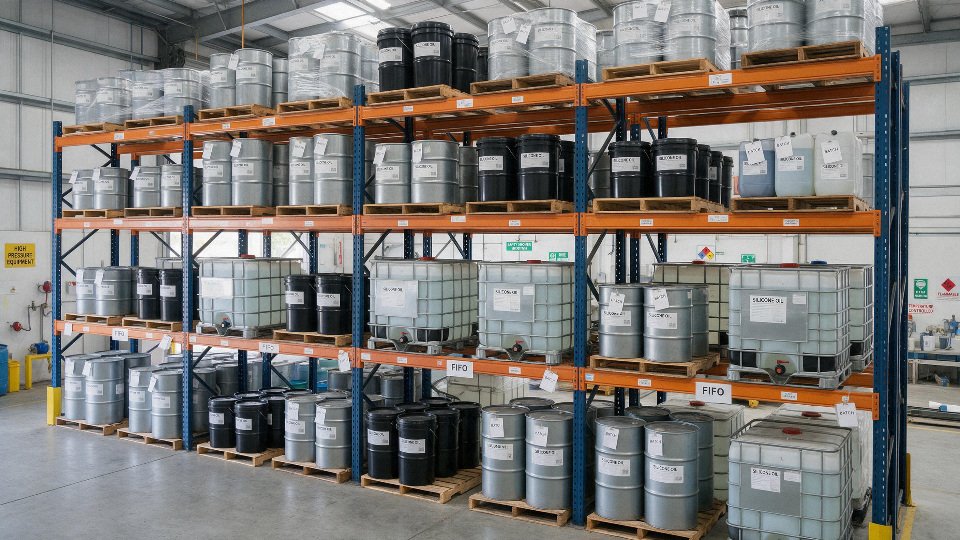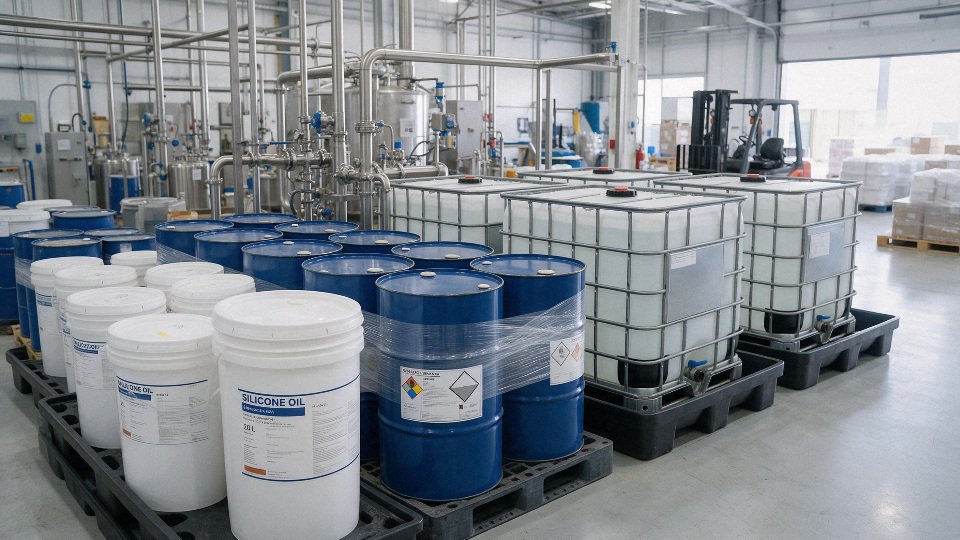
A drum marked “silicone oil” looks harmless enough until EHS, purchasing, and production all ask different questions about the same material: Is it toxic to workers, risky in incidental contact, or safe enough for the process it touches? If that gets answered loosely, plants either overreact and block a workable fluid, or under-specify controls and end up with handling incidents, rejected audits, relabeling, and expensive substitution after the line is already built around it. The right answer is not a blanket yes or no; it starts with the exact silicone chemistry, exposure route, additives, and use conditions.
Silicone oil is not generally classified as highly toxic in the way many solvents or reactive process fluids are, and many polydimethylsiloxane oils show low acute toxicity, with reported oral LD50 values often above 5,000 mg/kg. That said, “silicone oil” is a broad product category, so actual risk depends on the specific grade, impurities, additives, exposure route, temperature, and the safety data sheet for the product you are buying or using.
That distinction matters more than most buyers expect. A low-viscosity dimethyl silicone used in a release system, a high-viscosity fluid in damping equipment, and a modified silicone in a formulation can behave very differently in handling, mist generation, skin contact, thermal decomposition, and downstream compliance. The useful question for a factory is not just whether silicone oil is toxic, but under what conditions it becomes a worker-safety, quality, or procurement problem.
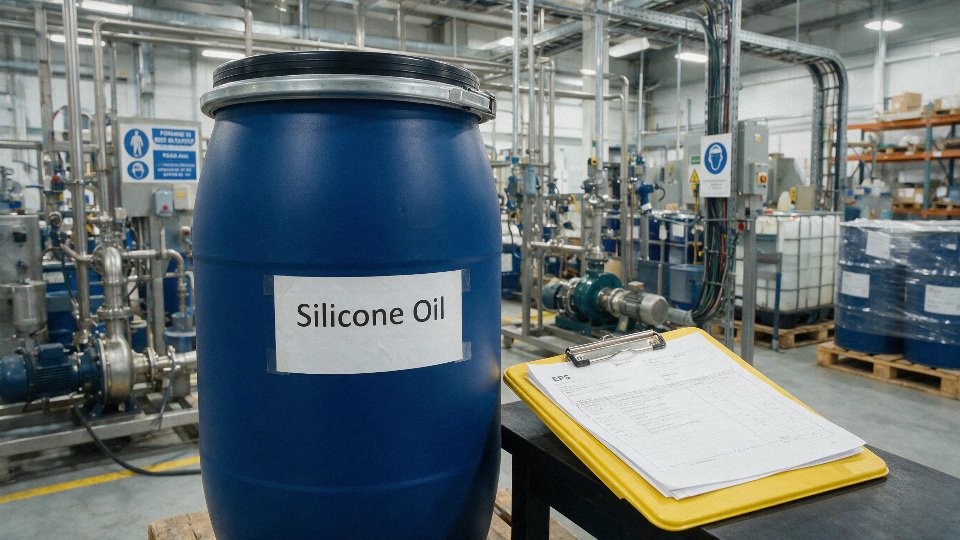
What silicone oil actually is
Silicone oil is not one single chemical. In industrial use, it usually means a family of organosilicon fluids, most often linear polydimethylsiloxane (PDMS), whose backbone is built from repeating siloxane bonds, Si-O-Si, rather than the carbon-hydrogen chains you get in mineral oils or most synthetic hydrocarbons. That difference in backbone chemistry is the reason silicone oils behave differently in heat, surface wetting, compressibility, volatility, and often in toxicity testing.
A lot of confusion starts because buyers hear “oil” and assume petroleum origin, or hear “silicone” and assume every silicone material is basically the same. Neither is true. From a plant-floor point of view, that mistake shows up when a maintenance team swaps in a “silicone” product without checking whether it is a fluid, grease, emulsion, or reactive intermediate, then wonders why the line starts foaming, the seals swell, or EHS asks for a different handling protocol.
At the molecular level, the most common silicone oil, PDMS, has methyl groups attached to silicon atoms along the chain. That structure gives it a flexible backbone, low surface tension, and a service temperature window that is often broader than hydrocarbon oils, roughly around -50 C to 200 C for many grades, though the actual upper limit depends heavily on grade, oxygen exposure, dwell time, and contamination. In a closed system with little air, one fluid may hold up acceptably; the same fluid in a hot, aerated open bath can oxidize faster and generate different decomposition concerns.
What counts as silicone oil, and what does not
These categories get mixed together constantly in RFQs and even in some safety discussions, but they are not interchangeable:
- Silicone oil
- Usually a non-crosslinked fluid
- Most commonly linear PDMS
- Used for lubrication, heat transfer, damping, release, dielectric service, defoaming, and as a process aid
- Silicone resin
- Higher crosslink density, more rigid structure
- Typically used in coatings, varnishes, heat-resistant finishes
- Handling, curing behavior, and solvent content can differ sharply from fluid silicone oils
- Silicone elastomer
- Crosslinked rubber-like material
- Used in seals, gaskets, tubing, moldings
- Exposure profile is about a finished solid, not a mobile fluid
- Silicone emulsion
- Silicone fluid dispersed in water with surfactants
- Common in textile, mold-release, polish, and personal care systems
- The emulsion’s hazard profile is influenced not just by the silicone phase, but by emulsifiers, preservatives, pH adjusters, and biocides
- Silicone grease
- Typically silicone oil thickened with silica or another thickener
- Used on valves, O-rings, electrical assemblies
- Skin feel, wipe-off behavior, and accidental ingestion risk are not the same as for a neat fluid
- Volatile siloxanes
- Lower molecular weight materials, often cyclic or short linear siloxanes
- Used in specialty applications where fast spreading or evaporation is wanted
- These can behave very differently in air exposure, inhalation potential, and regulatory review
That last category matters. A lot of public discussion about “siloxanes” is actually about volatile low-molecular-weight cyclic materials, not about the higher-viscosity silicone oils used in many industrial systems. If someone applies concerns from one category to all silicone fluids, the conclusion is usually wrong.
The composition variables that change both performance and safety interpretation
Two drums both labeled “silicone oil” can be quite different in use. The differences that matter most are:
- Molecular weight
- Higher molecular weight generally means lower mobility and lower volatility
- It also pushes viscosity upward, which affects pumping, atomization, leak behavior, and contact exposure
- Viscosity
- Commercial silicone oils span roughly 0.65 cSt to well over 1,000,000 cSt at 25 C
- Low-viscosity fluids spread and mist more easily; high-viscosity grades cling, drain slowly, and are less likely to become airborne under the same conditions
- End groups
- Trimethylsiloxy-terminated PDMS behaves differently from hydroxyl-terminated or other reactive-ended fluids
- End groups can affect moisture interaction, compatibility, reactivity, and sometimes impurity profile
- Volatility
- Closely tied to molecular size distribution, not just nominal viscosity
- This drives evaporation loss, inhalation opportunity, closed-cup contamination, and odor complaints around hot equipment
- Residual monomers or low molecular weight fractions
- Small residual fractions can matter out of proportion to their percentage because they are the part most likely to volatilize or migrate
- Catalyst residues and process impurities
- Depending on how the fluid was made, trace metals, acids, bases, or residual processing aids may be present at low levels
- In practice, these can be more relevant for corrosion, cure inhibition, or specific exposure review than the PDMS backbone itself
- Functional modification
- Amino-, epoxy-, phenyl-, fluoro-, polyether-, or other modified silicones are often sold under the broad umbrella of silicone fluids
- Once you modify the chain for wetting, reactivity, compatibility, or release, you may also change toxicology, regulatory status, and handling requirements
This is where procurement shortcuts cause trouble. A buyer may source on viscosity alone, but toxicity review often hinges on the full composition, especially residual volatiles and additives. A 350 cSt dimethyl fluid and a 350 cSt modified silicone can behave like cousins in the process and strangers in the SDS.
Why many higher molecular weight PDMS fluids are often considered low in acute toxicity
For many standard PDMS fluids, acute oral toxicity data are often reported with LD50 values greater than 5,000 mg/kg in animal testing, depending on grade and test method. That does not mean “harmless,” and it does not cover every silicone fluid on the market, but it helps explain why many industrial users regard conventional high-molecular-weight PDMS as relatively low-hazard in normal handling.
The mechanism is straightforward. As molecular weight rises and volatility drops, the fluid is generally less able to evaporate, less likely to be inhaled as vapor, and less prone to pass through skin in meaningful amounts. If the same product is also chemically inert and has low solubility in biological media, acute systemic uptake tends to be limited. That is one reason these fluids are often used where incidental skin contact can occur, though good hygiene still applies because process contamination and additive package unknowns are the part that tends to bite people.
The trade-off is practical: higher molecular weight improves low-volatility handling, but it also makes cleanup harder, pumping slower, and contamination more persistent on floors, rollers, and packaging lines. Once a very high-viscosity silicone gets onto a walkway, toxicity may not be your first problem; slip risk usually is.
This general conclusion stops holding if the product contains significant low-boiling fractions, reactive modification, or nontrivial additives. It also stops being enough when the process creates aerosols, fine mists, or thermal decomposition products. A quiet drum transfer at room temperature is one exposure picture; an overheated bath, spray application, or vacuum stripping operation is another.
Why people confuse silicone oil with silicon, silica, and silanes
The names are close enough to mislead non-specialists and, frankly, some purchasing teams under time pressure.
- Silicon
- The chemical element Si
- Used in electronics, alloys, and as a building block in many compounds
- Not the same thing as silicone fluid
- Silica
- Silicon dioxide, SiO2
- Found in sand, glass, fillers, and some thickeners
- Toxicology concerns for respirable crystalline silica are entirely different from those for silicone oils
- Silane
- A broad class of silicon-containing compounds, often reactive coupling agents or intermediates
- Many are far more reactive, moisture-sensitive, or hazardous than PDMS fluids
- Silicone
- A family of organosilicon polymers and formulated materials
- Includes oils, elastomers, resins, emulsions, sealants, and more
All silicone-related materials can be assessed using the same toxicity assumption.False
Silicone oils, reactive silanes, silica dusts, cured elastomers, and volatile siloxanes differ in molecular structure, exposure route, and hazard profile. Safety review has to be grade- and application-specific, not name-based.
If you are trying to judge toxicity, start by asking what the material actually is at the product level: linear PDMS fluid, volatile siloxane blend, modified silicone, emulsion, grease, or something else. That one clarification usually removes half the confusion before you even open the SDS.
Health effects by exposure route
For most standard silicone oils used in industry, the health picture is driven less by the base fluid alone and more by how the material gets into the body, whether it has been heated or atomized, and what else is in the formulation. Room-temperature contact with a high-purity, non-volatile PDMS fluid is usually a different risk category from breathing spray mist off a release-coating line, handling a contaminated used oil, or working around overheated silicone on a hot process.
That distinction matters on the plant floor because people tend to hear “low toxicity” and mentally downgrade everything around the product. In practice, the route of exposure changes the mechanism, and the mechanism changes the response: low vapor pressure helps at ambient temperature, but a leaking spray nozzle or a smoking hot platen can move the issue from nuisance exposure to something that needs tighter controls and medical follow-up.
Inhalation
Under normal room-temperature handling, many medium- to high-viscosity silicone oils do not present much inhalation hazard from simple evaporation because their vapor pressure is low. Concern rises when the fluid becomes a mist, aerosol, thermal fog, or decomposition smoke; at that point, you are no longer dealing with “it just sits there in a drum” conditions.
The practical inhalation scenarios are usually these:
- Spray application or atomization
- mold release
- textile finishing
- defoamer dosing through poorly set nozzles
- maintenance spraying from hand bottles or pressure pots
- Heated processes
- hot baths
- heat-transfer systems
- coating and curing lines
- release-oil use near ovens, platens, or heated rolls
- Mechanical mist generation
- high-speed mixing
- air entrainment in recirculating systems
- leaks on pressurized lines
- compressed-air blowoff misuse
- Decomposition conditions
- overheating beyond grade limits
- contact with very hot surfaces
- fire or near-fire events
The mechanism is straightforward. At ambient temperature, the larger silicone molecules in many oils do not readily enter the air in large amounts. Once you shear the liquid into fine droplets or overheat it, airborne exposure jumps because the lungs can now see suspended particles, condensate, or thermal byproducts rather than just a negligible vapor load. That is why a quiet filling station and a spray booth cannot be judged by the same rule.
Typical effects from inhalation exposure are often non-specific:
- throat or nose irritation
- coughing
- transient breathing discomfort
- headache or irritation complaints in poorly ventilated areas
Those symptoms do not automatically mean the silicone base fluid is highly toxic. They often point to mist loading, overheating, or contaminants. Used oil is a separate issue; once silicone oil has circulated through a system, it may carry metal fines, degraded additives, cleaning chemical residues, or process contamination that changes the exposure profile entirely.
A trade-off shows up here in product selection. Higher viscosity usually reduces room-temperature volatility and splash migration, but if the same fluid is sprayed aggressively, droplet control and cleanup can get worse. Low-viscosity fluids may spread and wet more easily, which some operators like, but they can also create broader contamination footprints and, depending on the chemistry, different inhalation considerations. The “safer” choice flips if the process involves atomization rather than static lubrication or damping.
Where the broad reassurance stops holding: if the operation heats the oil hard enough to smoke, or routinely creates fine mist, you need process-specific ventilation and supplier SDS review rather than relying on general statements about silicone oil being low in toxicity.
Skin contact
For many standard PDMS-based silicone oils, skin contact is not strongly irritating in the way a caustic cleaner or reactive resin would be. Still, repeated contact is not nothing. Operators who handle the fluid daily can develop dry skin, irritation from poor washing habits, or dermatitis that is actually caused by contamination rather than the silicone itself.
Common shop-floor problems include:
- Prolonged occlusive contact
- soaked gloves
- oil trapped under wrist cuffs
- sleeves contaminated all shift
- Secondary dermatitis
- dirty recirculated oil
- tramp oil mixed into the silicone
- catalyst residues
- solvents or surfactants in formulated products
- Defatting and hygiene issues
- repeated washing with aggressive soap after contact
- wiping hands with solvent instead of proper cleaners
- skin left under oily grime for long periods
- Slip transfer
- silicone spread from hands to ladders, handrails, tools, or machine guards
That last point sounds mundane until someone goes down on a loading platform. Silicone oils are notorious for creating a very persistent slip film, especially on smooth painted floors and stainless surfaces. From a risk standpoint, the injury potential from slip and fall can exceed the toxicological concern of the fluid itself.
The mechanism behind skin complaints is often indirect. Silicone oil may not attack tissue aggressively, but it can hold dirt against the skin, interfere with normal skin feel, and encourage bad cleanup habits. In maintenance crews, I have seen more irritation from operators scrubbing with harsh hand cleaner than from the silicone they were trying to remove.
Concern rises materially when:
- the product is a specialty modified silicone, not a simple PDMS fluid
- the formulation contains additives, emulsifiers, catalysts, or solvents
- the oil is used, degraded, or process-contaminated
- workers have pre-existing dermatitis, damaged skin, or glove compatibility issues
Eye contact
The usual immediate eye effect is mechanical irritation and blurred vision, not severe chemical burning. That does not make it trivial. Silicone oil spreads across the ocular surface easily, and even a small splash can create persistent blur that compromises safe movement around equipment.
Prompt rinsing is still the right response:
- Start flushing the eye immediately with clean water or eyewash solution.
- Continue long enough to remove the oil film; a short splash rinse often is not enough.
- Remove contact lenses if present and easy to do.
- Get medical evaluation if irritation, redness, pain, or blurred vision persists.
In practice, eye exposure often happens during:
- drum decanting
- line break opening
- pump seal leakage
- overhead dosing systems
- compressed-air clearing of blocked fittings, which should not be done in the first place
A lot of operators underestimate eye risk because the fluid does not “feel aggressive” on skin. The eye is different. Even when severe corrosive injury is unlikely, temporary visual impairment next to moving equipment is a serious enough reason to treat every splash as an urgent first-aid event.

Ingestion
Acute systemic toxicity is generally low for many inert PDMS silicone fluids; representative animal data for many grades often show oral LD50 values greater than 5,000 mg/kg, though that depends on the exact material and test method. For incidental small ingestion, the more common concerns are gastrointestinal upset, aspiration risk, and the fact that industrial formulations may contain other ingredients that change the picture.
Most standard PDMS silicone oils are more concerning by route and formulation than by acute oral toxicity alone.True
Many silicone oils have relatively low acute oral toxicity in available data, but practical risk can rise through aspiration, additives, contamination, or misuse outside intended applications.
The exposure situations that matter most are:
- Accidental hand-to-mouth transfer
- poor hygiene during maintenance
- eating in work areas
- contaminated gloves
- Misfilled or mislabeled containers
- transfer into drink bottles
- unmarked sample jars
- bad housekeeping in pilot areas
- Product misuse
- assuming “chemically inert” means food-safe
- using industrial grade material where food, pharma, or personal-contact standards apply
Two distinctions matter here. First, low acute toxicity does not mean edible or suitable for incidental consumer exposure. Second, if a person vomits after swallowing an oily fluid, aspiration into the lungs can become the more serious hazard, regardless of the original oral toxicity number. That is a medical management issue, not just a chemistry label issue.
Injection and high-pressure exposure
A small puncture from pressurized fluid injection is a medical emergency even when the fluid itself is not highly toxic. The danger is tissue penetration, pressure-driven spreading, compromised blood supply, and delayed recognition; the entry wound can look minor while the internal damage is not.
This comes up around:
- hydraulic lines
- grease-gun style equipment
- pressurized dispensing systems
- pinhole leaks checked by hand, which should never happen
- high-pressure cleaning or transfer setups
The wrong assumption is “it’s only silicone oil, so it’s not that bad.” That thinking has cost people fingers and hand function across many fluid types. The chemistry still matters, but the urgent problem is mechanical injection into tissue and the downstream surgical risk.
Chronic exposure and sensitive populations
Broad reassurance has limits. Repeated low-level contact with standard silicone oil in a controlled process is one thing; chronic exposure to mists, heated emissions, specialty modified silicones, or impurity-bearing products is another.
Longer-term concern rises when any of these apply:
- repeated aerosol or mist exposure
- routine heating near the upper service range
- specialty functional modifications rather than simple PDMS
- residual monomers, catalysts, or process impurities
- end uses involving medically vulnerable, pediatric, or highly exposed populations
- poorly characterized imported or reformulated products with incomplete documentation
The mechanism here is mostly cumulative exposure uncertainty rather than a single dramatic toxic endpoint. Fine mist reaches deeper into the respiratory tract than bulk liquid contact. Thermal stress can generate breakdown products that are not represented by the neat-fluid assumption. Specialty modifications can alter compatibility and hazard behavior enough that “silicone oil” becomes too broad a category to be useful.
If your process involves atomizing, heating, or applying the material where end-user contact standards matter, do not stop at a generic product name. Get the exact grade, current SDS, compositional disclosure to the extent available, and any application-specific compliance documentation that actually matches the intended use.
When silicone oil becomes hazardous
A silicone oil that is low in acute toxicity at room temperature can still become a serious plant problem once you add heat, shear, air, additives, or the wrong application method. The hazard shift usually does not come from the PDMS backbone alone; it comes from decomposition products, aerosol exposure, formulation extras, and where the fluid ends up in the process.
That distinction matters on the floor. Buyers often hear “inert” and translate it to “safe under all conditions,” but that is not how these fluids behave in ovens, on tenter frames, in paper lines, around hot bearings, or inside spray systems. The same drum can be uneventful in a closed transfer loop and troublesome in a poorly ventilated high-speed coater.
Thermal decomposition at elevated temperature
Heat is the clearest point where silicone oil can stop being a simple low-hazard liquid and start generating a meaningful exposure concern. Many commercial silicone oils are used across a broad service window, often roughly from about -50 C up to 200 C for many grades, but that is not a blanket guarantee of unchanged chemistry. Once the fluid spends enough time at elevated temperature, especially in the presence of air and catalytic contaminants, oxidation and chain scission can create irritating and sometimes hazardous byproducts.
One byproduct that gets attention for good reason is formaldehyde. Under some oxidative conditions, certain silicone fluids can generate formaldehyde during thermal degradation. The practical trigger is not just peak metal temperature on a datasheet. It is a combination of:
- Bulk fluid temperature
- Local hot spots at heaters, bearings, and thin films on metal surfaces
- Residence time at temperature
- Airflow and oxygen availability
- Metal contamination or catalyst residues
- Surface area exposed as a film, mist, or charred deposit
A recirculating bath at a stable setpoint behaves differently from a thin wiped film on a hot roll. In practice, the thin film is often the troublemaker because oxygen can reach more of the fluid and local temperatures can overshoot what the bath sensor shows. If you have ever opened an oven hood and caught that sharp, irritating odor that was not there at startup, that is the kind of operating clue worth taking seriously.
The mechanism is straightforward enough. As temperature and oxygen exposure rise, parts of the siloxane chain and any organic side groups become more vulnerable to oxidation. That degradation pathway can produce low-molecular-weight fragments, aldehydes in some cases, and visible smoke or condensable fume if the process is pushed hard enough. Contaminants such as iron salts, strong acids, alkalis, or residual catalysts can accelerate breakdown, so a fluid that looked stable in a clean pilot unit may age badly in a plant system with dirty pipework and mixed-metal contact.
What changes the buying and operating decision?
- For enclosed heat transfer or damping service, the concern is usually long-term fluid stability and maintenance frequency.
- For open heated surfaces, release coating lines, textile curing, and defoaming in hot wet systems, operator inhalation and deposit formation move up the list.
- For food, pharma, medical, or clean-surface applications, even low-level breakdown products and deposits can become a quality rejection issue before they become a health-limit issue.
The conclusion that “silicone oil is fine at heat” stops holding once the fluid sees persistent hot spots, oxidative airflow, or contamination that the original grade was not selected to tolerate. At that point, you need the actual grade’s thermal stability data, decomposition guidance, ventilation design, and if exposure is plausible, air monitoring rather than assumptions.
Silicone oil can produce formaldehyde if overheated in air.True
This can occur for some silicone fluids under thermal oxidative decomposition conditions. Whether it happens materially depends on grade, temperature, residence time, oxygen exposure, and contamination. Site-specific verification and the current supplier safety documentation are necessary.
Mist generation in high-speed equipment
A low-vapor-pressure liquid can become an inhalation issue the moment the process atomizes it. That is the trap in textile lubrication, paper converting, metalworking, release coating, wire and cable treatment, and any spray or roll application running fast enough to throw off fine droplets.
The fluid itself may not evaporate much, but droplets can still be carried deep into the breathing zone. The exposure route changes from incidental skin contact or splash to aerosol inhalation. That difference is operationally important because control measures also change. You stop thinking mainly about sealed drums and start thinking about:
- Nozzle type and spray pressure
- Line speed
- Roll nip geometry
- Air knives and exhaust direction
- Enclosure quality
- Housekeeping around overspray and settled oil
- Whether the fluid is neat or diluted with a solvent or carrier
The mechanism is not complicated, but it gets missed in purchasing reviews. Higher shear and higher velocity break the liquid into smaller droplets. Smaller droplets stay airborne longer, travel farther, and are harder to control with simple room ventilation. Once mist forms, you can get nuisance inhalation, eye irritation, slippery floors, contamination of sensors, and oil deposition on guards, cable trays, and even nearby electrical panels.
A few common plant patterns:
- Textile finishing lines: atomized silicone softeners or lubricants can migrate beyond the application zone, especially when seasonal HVAC changes alter airflow.
- Paper and film lines: release or anti-block silicone can fog around rollers, then condense on photoeyes and web guides.
- Metalworking or forming: if silicone-containing fluids are sprayed near hot surfaces, you may get both mist and thermal degradation products in the same area.
- Manual spray application: the variability is the problem. One operator uses a fan pattern correctly; the next narrows the pattern and doubles local aerosol concentration.
The trade-off here is obvious on the floor. Fine atomization often improves coverage and reduces direct liquid consumption, but it raises inhalation exposure and housekeeping burden. Coarser application or contact methods may use more fluid or give less uniform coating, yet they usually reduce airborne mist and simplify collection. The preferred choice flips when health controls and contamination risk cost more than the fluid savings.
Contamination and additives often drive the actual risk
In many purchased products, the silicone portion is not the component that deserves most of the hazard review. Formulated silicone oils and emulsions may include materials that change the toxicological, environmental, and regulatory picture far more than the base siloxane does.
Watch for these categories in the SDS and technical data:
- Solvents and carriers: hydrocarbon, alcohol, ester, or other carriers can introduce flammability, VOC exposure, and stronger defatting or inhalation concerns.
- Surfactants and emulsifiers: common in water-dilutable systems; these can increase eye and skin irritation and change wastewater behavior.
- Preservatives and biocides: relevant in aqueous emulsions and long-storage products; some can carry sensitization concerns.
- Pigments and fillers: usually a quality or wear issue, but some solids change dust handling, residue, or disposal considerations.
- Metal catalysts: tin, platinum, titanium, or other catalyst systems may be present in specialty products or contamination from upstream chemistry.
- Residual cyclic siloxanes or low boilers: the regulatory profile may differ from that of the higher-molecular-weight silicone fluid.
- Antifoam carriers: some antifoams sold as “silicone-based” are mostly carrier fluid with a small active silicone fraction.
This is where procurement mistakes happen. A buyer standardizes on “silicone oil” as one category and misses that one grade is a neat high-viscosity PDMS fluid while another is a low-viscosity emulsion with surfactant, preservative, and a solvent package. On paper they sound similar. In waste treatment, air permitting, and operator exposure, they are not.
Reactive and specialty modified fluids are a different class of decision
Once you move beyond standard dimethyl silicone fluids, the phrase “silicone oil” gets too broad to be useful. Amino-, epoxy-, mercapto-, alkoxy-, fluorinated-, and other modified siloxanes can carry very different irritancy, reactivity, odor, compatibility, and compliance implications.
A practical breakdown:
- Amino-modified siloxanes
- Often used for softness, lubrication, and substantivity
- Can be more irritating than plain PDMS
- May interact differently with substrates and downstream coatings
- Epoxy-modified siloxanes
- Useful where reactivity or adhesion promotion is wanted
- Can present a different skin and eye hazard profile than non-reactive fluids
- Need careful review if operators have repeated manual contact
- Mercapto-functional siloxanes
- Odor alone can become an operational issue
- Reactivity and sensitization concerns may be more relevant depending on formulation
- Alkoxy-functional siloxanes
- Hydrolysis behavior matters
- Depending on chemistry, curing or decomposition may release alcohols or other byproducts that affect ventilation and flammability review
- Fluorinated siloxanes
- Chosen for specific wetting or repellency performance
- Usually bring higher cost and a different environmental/regulatory screening burden
The trade-off is performance versus handling simplicity. Modified siloxanes can solve a stubborn wetting, slip, release, or hand-feel problem that plain PDMS cannot touch. What you give up is the comfort of treating the product like a broadly inert utility fluid. The more functional the chemistry, the less safe it is to generalize from ordinary silicone oil experience.
Confined-space and fire scenarios
Silicone oil is not an oxygen-displacement hazard in the way an inert gas is, so that is usually the wrong concern in confined spaces. Fume, smoke, and decomposition products are the issue. If a leak reaches a hot surface, or if residues burn in an enclosed area, responders may face dense irritating smoke and combustion byproducts rather than a simple “non-toxic oil” situation.
In fire or severe overheating conditions, verify the current SDS and firefighting guidance for the exact product, but plan around these realities:
- Combustion can generate irritating smoke and mixed decomposition products
- Visibility can drop fast in enclosed equipment rooms
- Hot oily residues can keep producing fumes after the visible flame is out
- Runoff and contaminated absorbents may require controlled disposal
- Re-entry decisions should be based on ventilation and atmospheric verification, not smell alone
The emergency response implication is simple: treat overheated or burning silicone oil as a fume event, not as proof that the liquid was “harmless.” Operators need evacuation triggers, responders need the exact product identity, and maintenance needs to inspect nearby insulation, wiring, and duct deposits before restart.
“Chemically inert” does not mean operationally harmless
The most expensive silicone-oil incidents I have seen discussed in plants were not poisoning cases. They were slip injuries, coating rejects, paint-adhesion failures, blocked filters, smoke complaints, and mysterious contamination transfer from one line to another.
A few hazards that are easy to underestimate:
- Slip risk: even a small leak on smooth concrete becomes dangerous fast, and ordinary dry wiping often makes the floor worse before it gets better.
- Transfer contamination: trace silicone can cause fisheyes, print defects, poor adhesive bonding, and coating non-wet-out in adjacent processes.
- Fouling: degraded oil can varnish heaters, plug vents, blind filters, and interfere with level sensors.
- Incompatibility with final use: a lubricant that is acceptable in one assembly area may be disqualifying in painting, bonding, food-contact, medical, or electronics processes.
That is the practical boundary for the whole hazard discussion: silicone oil is often low in baseline toxicity, but the plant does not handle baseline conditions. It handles heat, speed, contamination, carryover, and people trying to keep a line running on a bad Tuesday shift. If the review stops at “PDMS is generally low toxicity,” it stops too early.
Application-specific safety differences
The short answer is that silicone oil’s practical safety profile changes more by application, grade control, and exposure pattern than by the base chemistry name on the drum. A fluid that is acceptable in a sealed damper or as a controlled-process antifoam may be completely unsuitable for skin-contact products, food-adjacent service, or medical use if purity, traceability, and approval status do not match the job.
A lot of purchasing mistakes start with a half-true statement like “silicone oil is non-toxic.” That is too blunt to be useful on a plant floor. The better question is: what grade, what contact route, what temperature, what downstream consequence, and what proof package comes with it?
Personal care and cosmetic formulations
For many skin-contact and hair-care uses, silicone oils are selected because they are usually well tolerated on intact skin, spread predictably, and are chemically less reactive than many organic oils. That does not make every industrial silicone fluid suitable for cosmetics. Cosmetic acceptability depends as much on impurity profile, residual volatiles, odor, and documentation as on the polymer itself.
What buyers usually need to separate:
- Base fluid tolerability
- Many dimethyl silicone fluids used in personal care are chosen for low irritation potential and a smooth sensory profile.
- Higher viscosity grades tend to stay on the surface more and migrate less, but feel heavier.
- Lower viscosity grades spread more easily, yet can carry more concern if volatile fractions are present in the formulation system.
- Purity expectations
- Cosmetic customers often scrutinize:
- residual cyclic siloxanes
- low-molecular-weight linear siloxanes
- catalyst residues
- residual solvents
- odor-causing trace species
- These are not always critical in industrial lubrication service, but they become critical when the product sits on skin, hair, or scalp.
- Why industrial grade does not transfer automatically
- An industrial silicone oil may perform the same rheological function in a lab beaker, but still fail on:
- impurity limits
- lot-to-lot consistency
- documentation package
- applicable cosmetic market restrictions
- In practice, this is where procurement gets burned: same nominal viscosity, same broad chemical family, wrong compliance position.
Residual cyclic scrutiny deserves a plain explanation. Low-molecular-weight cyclics and other volatiles can influence odor, evaporation behavior, regulatory status, and brand risk. Even where a formulation is technically safe to handle, a consumer-goods company may reject it because the regulatory burden or retailer policy is unacceptable. That is a commercial failure, not just a chemistry issue.
If a silicone oil is safe for industrial handling, it is usually fine for cosmetics.False
Industrial handling safety and cosmetic suitability are different questions. Cosmetic use requires grade-specific impurity control, traceability, and market-specific compliance review that do not automatically apply to industrial grades.
Food processing and incidental food contact
In food plants, low general toxicity is not the deciding factor. Status for the intended contact scenario, composition disclosure, and traceability matter more than the broad statement that silicone oil is relatively inert.
The main use cases are materially different:
| Use case | Typical contact pattern | Main safety decision point |
|---|---|---|
| Process lubricant | Indirect or incidental contact risk from equipment | Food-grade status, leak control, maintenance discipline |
| Release agent | Deliberate surface application to tooling or product-contact surfaces | Permitted use conditions, application rate, residue control |
| Antifoam | Added into process stream at low dose | Approval for that food process, dose limit, formulation additives |
| Barrier or seal service fluid | Normally closed system, accidental contact possible | Compatibility, migration risk, service temperature, documentation |
A few plant-floor realities matter here:
- Direct vs indirect contact assumptions
- A release agent on a mold or belt may become direct-contact in practice, even if purchasing classified it as maintenance chemistry.
- A gearbox lubricant above a conveyor is “indirect” only until a seal fails.
- Antifoams are not just silicone oil
- Food-process antifoams often contain carriers, emulsifiers, or silica components.
- The safety and approval status applies to the full formulation, not only to the silicone fraction.
- Traceability is operational, not bureaucratic
- Food customers increasingly ask for:
- batch identification
- change-control notice
- allergen-related statements where relevant
- composition or compliance declarations
- If the supplier cannot support those, the fluid is hard to defend in an audit, even if it performs well technically.
The mechanism here is simple: the lower the expected toxicity, the easier it is for teams to get casual. That is exactly how unapproved release agents end up near product zones. The conclusion that “silicone oil is probably fine” stops holding the moment the process involves intentional food contact, ingredient carryover, or customer audit exposure.
Medical and pharmaceutical contexts
In medical and pharmaceutical service, the generic term “silicone oil” is almost useless. Suitability is application-specific and evidence-driven: biocompatibility, extractables, sterilization behavior, particulate cleanliness, and formal approval status must be verified for the exact grade and intended use.
The common failure mode is assuming that because some silicone oils are used in medical devices or pharmaceutical processing, any high-purity silicone fluid can follow. It cannot.
What has to be checked:
- Biocompatibility data
- Grade-specific, use-specific, and often device-specific
- Prior test data on one silicone family member does not automatically cover another viscosity or formulation
- Sterilization behavior
- Steam, gamma, EtO, or other sterilization routes can change:
- viscosity
- volatile content
- extractables profile
- container interaction
- Some fluids tolerate one route well and another poorly
- Extractables and leachables
- A silicone oil used as a processing aid, syringe lubricant, or device fill fluid may interact with elastomers, plastics, adhesives, or drug product
- The risk is not only toxicity; it is also haze, particulate, interaction with actives, or stability drift
- Endotoxin and cleanliness control
- This is not inherent to silicone chemistry
- It is a manufacturing and packaging control issue
- Formal approvals and documentation
- Pharmacopeial alignment, medical-device documentation, and customer-specific qualification packages are separate gates
A drum that is perfectly acceptable for textile finishing has no business being waved through a pharma qualification meeting because the COA looks tidy.
Electrical and heat-transfer uses
For electrical insulation, damping, diffusion pump service, and heat-transfer duty, silicone oil is often chosen because many grades remain usable across roughly -50 C to 200 C, depending on atmosphere, residence time, and formulation. The safety issue here shifts from baseline toxicity to what heat, oxygen, and system design do to the fluid over time.
Key differences by service:
- Transformers and electrical equipment
- Focus on dielectric properties, moisture control, oxidation stability, and fire behavior
- Worker exposure is usually low in closed systems, but spill cleanup and hot-surface leaks matter
- Damping and sealed instruments
- Exposure is minimal unless there is seal failure or maintenance handling
- Viscosity selection affects not only performance but leak persistence and cleanup burden
- Diffusion pumps and vacuum systems
- Elevated temperatures and vacuum conditions can drive vapor behavior and decomposition concerns
- Backstreaming, residue formation, and maintenance exposure need attention
- Ventilation and service procedure discipline are not optional here
- Thermal fluids and heat-transfer loops
- Oxidation rate rises with temperature and air exposure
- Local hot spots can degrade fluid faster than bulk temperature suggests
The mechanism is straightforward: oxygen ingress plus heat drives oxidation and breakdown, which can increase odor, volatile byproducts, deposits, and maintenance frequency. In a poorly vented area, what started as a low-volatility fluid can turn into an air-quality complaint once the system runs hot for long periods. This is one of those cases where the fluid itself is not the whole story; headspace design, expansion tank arrangement, and maintenance intervals decide whether service stays benign.
Textile, paper, coatings, and defoaming uses
In these sectors, the safety conversation is often half occupational hygiene and half downstream quality risk. Silicone oils and silicone-based defoamers can be easy on equipment and effective at low dose, but carryover causes expensive surprises.
Main plant concerns:
- Aerosol generation
- Sprays, kiss-roll application, fast mixers, and air-assisted dosing can create inhalable mist
- The fluid may be low in acute toxicity, yet repeated mist exposure still drives operator complaints and housekeeping problems
- Operator contact
- Frequent hand contact usually causes nuisance contamination more than serious toxicity
- Slippery floors and contaminated glove surfaces are the bigger near-term hazard
- Downstream contamination
- Small silicone carryover can reduce:
- printability
- coating wetting
- adhesive bond strength
- repaintability
- This is where production teams often misread the issue as “customer safety concern” when it is actually a surface-energy problem that triggers customer alarm
- Customer perception
- In packaging, paper, or coated parts, unexplained fisheyes or label adhesion failure get treated as contamination events first and chemistry questions second
The trade-off is familiar: silicone gives excellent defoaming and slip at low use rates, but the same surface activity that helps the process can sabotage a later converting step. The preferred choice flips when downstream bonding, printing, or overcoating is critical and the plant cannot tightly contain carryover.
Maintenance and machinery lubrication
Against conventional hydrocarbon oils, silicone oils often offer cleaner temperature behavior, low reactivity with many substrates, and lower odor in normal service. They can reduce some worker-exposure issues, but they are not a universal replacement for machine lubrication.
What usually changes in practice:
- Worker exposure
- Less odor and less skin defatting than some mineral-oil systems
- Still not something crews should treat as harmless hand cleaner
- Housekeeping
- Spills are extremely persistent on smooth floors
- A few drops on painted concrete can create a skating rink, especially near washdown zones
- Spill control
- Sorbent choice and cleaning method matter; wiping alone often just spreads the film
- Plants that handle silicone fluids regularly usually keep a separate cleanup routine for this reason
- Material compatibility
- Compatibility depends on the exact silicone fluid and the exact seal, hose, paint, or plastic
- Swell, softening, or leakage can show up at elastomers that were fine with hydrocarbons
- Lubrication fit
- Silicone oils are excellent in some low-load, wide-temperature, plastics-compatible, or damping applications
- They are often a poor choice for heavily loaded metal-to-metal contacts without the right additive system
The practical comparison is not “safer than hydrocarbon” in the abstract. It is whether the lower odor, temperature stability, and different skin-contact profile outweigh the weaker load-carrying fit, cleanup difficulty, compatibility questions, and contamination sensitivity in that machine set. On an open, dusty line with frequent manual relubrication, those trade-offs can point one way; in sealed instruments or specialty conveyors, they can point the other way.
Regulatory and testing landscape
A silicone oil is only as “safe” as the documentation, test scope, and use boundary behind the claim. For buyers, the practical rule is simple: treat toxicity language as unverified marketing until it is tied to a named product, a current document set, a test method, and your actual end use.
On the plant side, this matters because procurement often sees broad phrases like “non-toxic” or “food grade,” while EHS, QA, and production are dealing with heated tanks, aerosols, residue limits, export paperwork, and customer audits. Those are different problems. A fluid can be legally sold, broadly low in acute toxicity, and still be the wrong material for your line because it fogs, migrates, picks up dust, fails a downstream coating step, or creates a decomposition risk at temperature.
What each document does, and what it does not do
Most confusion starts with three document types being used as if they were interchangeable. They are not.
| Document | What it is for | What it can support | What it cannot prove by itself |
|---|---|---|---|
| Safety Data Sheet (SDS) | Hazard communication for transport, storage, handling, exposure response | GHS classification, first-aid guidance, major hazard statements, basic composition disclosure where required | End-use approval, food-contact suitability, medical suitability, performance under your process conditions |
| Technical Data Sheet (TDS) | Product performance and typical physical properties | Viscosity, density, appearance, volatility trends, service temperature guidance, application notes | Batch-level conformity, toxicology completeness, regulatory status in every market |
| Product specification / sales specification | Agreed quality limits for release or purchase | Acceptance criteria such as viscosity range, acidity, moisture, flash point, cyclic content if specified | Full toxicological profile, all impurities unless listed, downstream compliance beyond the stated spec |
| Certificate of Analysis (COA) | Batch-specific release record | Confirms tested parameters for a specific lot | Anything not actually tested on that lot |
A few working rules help:
- Use the SDS to understand hazard classification and handling controls.
- If the SDS shows no GHS health hazard classification, that usually indicates low hazard under the criteria evaluated.
- It does not mean zero risk under all exposure conditions. Mist generation, heated use, pyrolysis, and contamination can change the picture.
- Use the TDS to understand how the fluid behaves in equipment.
- Viscosity drives pumpability, carryover, aerosol formation, drain-down time, and residue behavior.
- Volatility matters for fogging, worker nuisance exposure, and cleanliness. A low-viscosity silicone oil can behave very differently from a 1,000 cSt or 10,000 cSt fluid in the same room, even if both belong to the same chemistry family.
- Use the specification and COA for procurement control.
- If your process is sensitive to residual cyclics, VOCs, or trace metals, those limits need to be in the purchase specification or quality agreement.
- If they are not listed, do not assume they are controlled just because the product “usually” performs acceptably.
In practice, many disputes come from a buyer relying on an SDS to answer a question that only a product specification or application statement can answer. That is where avoidable line problems start.
Which regulatory frameworks buyers actually see
The same silicone oil can sit inside several compliance conversations at once. None of them should be read as a blanket safety guarantee.
REACH
For the EU, buyers usually ask whether the substance is registered under REACH, whether it contains substances of very high concern above reporting thresholds, and whether any restriction applies. For silicone fluids, another live issue can be whether low-molecular-weight cyclic siloxane residues are present at levels that matter for the intended market and use.
REACH status tells you whether the substance can be marketed under that framework and what restrictions may attach. It does not tell you whether your heated mixing room, cleanroom, coating line, or skin-contact application is acceptable without further review.
TSCA
For the US, TSCA inventory status is a routine checkpoint. Buyers want confirmation that the substance is listed, exempt, or otherwise compliant for import and commercial distribution. That is a market-access question first.
It is not a toxicology shortcut. A TSCA-listed material may still require customer-specific impurity review, worker exposure controls, or sector screening.
GHS classification
GHS classification is useful, but it is often overread. If a silicone oil is not classified for acute toxicity, skin irritation, or eye irritation, that generally supports a low-hazard profile under the tested criteria. Many polydimethylsiloxane fluids are commonly described in that direction, with acute oral toxicity benchmarks often reported above 5,000 mg/kg in animal data depending on grade and method.
Still, GHS is threshold-based. It does not capture every operational concern:
– nuisance mist exposure
– slip hazards from leaks
– decomposition products at high temperature
– contamination of painted, bonded, or printed surfaces
– migration into a sensitive downstream product
Food-contact, cosmetics, and sector lists
These are the areas where commercial language gets abused most often.
- Food-contact usually means the material may be suitable under a specific legal framework, with restrictions on composition, extraction, migration, use conditions, or article type. It does not mean unrestricted direct food use.
- Cosmetic inventory listing generally means an ingredient can appear in cosmetic formulations under the relevant naming or inventory system. It does not prove dermal tolerance for every formula, concentration, or leave-on use.
- Medical-related status is even narrower. Device, pharmaceutical, and implant uses are heavily application-specific and usually tied to biocompatibility testing, manufacturing controls, and change management.
'Food grade' silicone oil is always safe for skin contact and inhalation.False
Food-contact suitability and occupational inhalation or dermal safety are different assessments. A claim like 'food grade' must be tied to the exact legal framework, permitted use conditions, and the exposure route actually relevant to the application.
Terms that need to be pinned down before you buy
Some phrases sound reassuring but carry almost no purchasing value unless they are defined.
- “Non-toxic”
- Ask: according to which test, at what dose, by which exposure route, and for which grade?
- A low acute oral toxicity result does not answer sensitization, thermal decomposition, residue, or inhalation concerns.
- “Physiologically inert”
- This is a descriptive phrase, not a universal legal classification.
- It may reflect historical use patterns or limited biological response in certain contexts, but it is not a substitute for current toxicology and application review.
- “Food grade”
- Ask for the exact framework, such as the applicable food-contact regulation or standard, plus any compositional or migration limitation.
- Also ask whether the claim applies to the neat fluid, a processing aid use, incidental contact, or a finished article.
- “Medical grade”
- This should trigger more questions, not fewer.
- Ask for the specific medical application class, biocompatibility package, manufacturing controls, lot traceability, and change-notification commitments. If the supplier cannot define the grade boundary, treat the claim as marketing.
What tests are actually useful
If toxicity or regulatory assurance matters to your program, ask for the tests that answer your actual risk. A broad but practical screening package may include:
- Acute toxicity
- Oral
- Dermal
- In some cases inhalation, especially if the process can generate mist or heated vapor
- Irritation and sensitization
- Skin irritation
- Eye irritation
- Skin sensitization where repeated contact is plausible
- Volatility and emissions
- Volatile fraction
- VOC content where relevant
- Fogging tendency or evaporative residue for enclosed equipment, optics, electronics, or interior applications
- Composition-sensitive tests
- Residual cyclic content
- Heavy metals
- Restricted substances declared by sector
- Specific impurity limits if your customer cares about odor, extractables, ash, or catalyst residues
- Thermal behavior
- Thermal stability screening
- Decomposition screening at expected operating temperatures and upset temperatures
- Atmosphere matters here: many silicone oils are serviceable over a broad range, often roughly -50 C to 200 C for many industrial grades, but oxidation behavior and decomposition risk depend on grade, residence time, contamination, and air exposure. Do not turn a generic service-temperature statement into a safety guarantee.
The mechanism matters. Lower-viscosity fluids can have higher mobility and, depending on formulation, greater tendency to spread, migrate, or contribute to airborne mist under agitation. Higher-viscosity fluids may reduce splashing and fogging, but they can be harder to clean, harder to meter in winter, and more likely to leave persistent residues that interfere with bonding or painting. The preferred choice flips when cleanliness and downstream adhesion matter more than simple leak resistance or anti-foam persistence.
What global procurement should ask for up front
For industrial buying across regions, a serious document package usually includes:
- Current SDS for destination market
- TDS
- Product specification
- Batch COA
- REACH and TSCA status statements where relevant
- Restricted-substance declaration
- Heavy metal statement if customer-required
- Allergen statement where the downstream sector asks for it
- Residual cyclic or VOC statement if sensitive
- Lot traceability details
- Change-control or change-notification commitment
- Country of origin and manufacturing site information if needed for customs or customer approval
If a supplier says a property is “controlled,” ask whether it is:
– part of the formal specification
– tested every batch
– tested periodically
– inferred from process control only
That distinction affects auditability and claim strength.
Compliance does not equal operational suitability
A legally marketable silicone oil can still fail your process for reasons that have nothing to do with its headline regulatory status. I have seen compliant fluids rejected because they:
– contaminated paint or adhesive surfaces
– migrated into optical or electronic assemblies
– generated unacceptable fogging in enclosed equipment
– failed a customer cleanliness limit
– upset foam-control balance when dosage drifted
– created smoke or odor complaints when heaters ran hotter than the display said
That is the boundary of most compliance claims: they tell you whether the product can enter the market and how it is broadly classified, not whether it will behave acceptably in your exact equipment, temperature profile, exposure pattern, and customer qualification path.
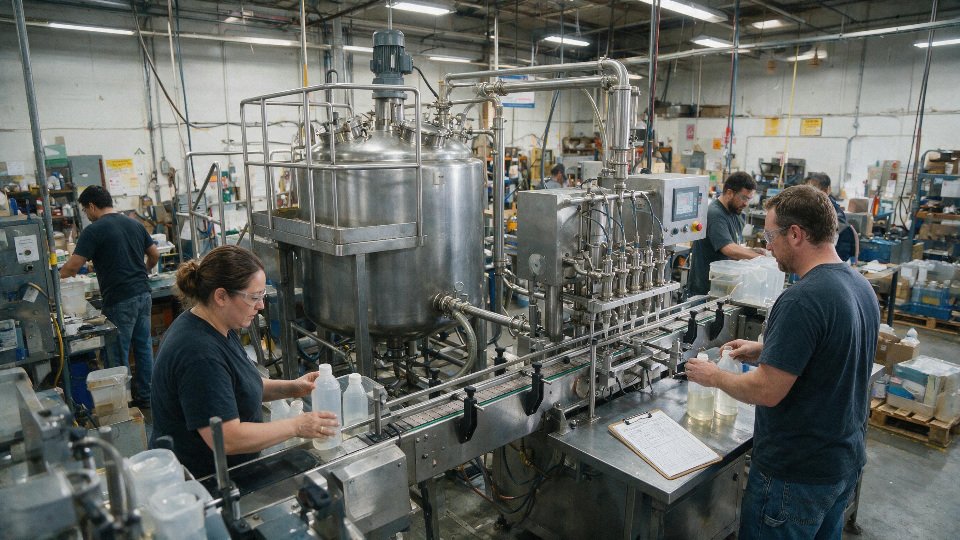
If the application is sensitive, the right next step is usually a document review tied to a use-case checklist, then a small qualification test on the actual substrate, temperature window, and exposure mode. That costs less than discovering after startup that the fluid is compliant on paper and wrong for the line.
Safe handling and storage
For most plants, safe handling of silicone oil comes down to controlling exposure at the points where the fluid stops behaving like a quiet bulk liquid: transfer, heating, spraying, contamination, and cleanup. The fluid itself is often low in acute toxicity, but the incident rate on the floor is usually driven by slips, mislabeling, overheated residues, incompatible contamination, and breathing mist or decomposition products from the wrong process setup.
A drum of high-viscosity PDMS sitting closed in a warehouse is one thing. The same chemistry pumped through a heated recirculation loop, atomized through a nozzle, or mixed with reactive additives is a different risk picture. That is where procedures need to be written around the actual duty, not around the phrase “non-toxic” from a sales sheet.
Receiving and storage
Receiving errors create more trouble than most buyers expect, especially where several silicone grades look similar in clear containers.
- Keep containers sealed until use. Silicone fluids pick up dirt easily, and some modified grades can also be affected by ambient moisture.
- Label by exact grade, viscosity, and intended service. “Silicone oil” is not enough if one drum is 50 cSt heat-transfer fluid and the next is a specialty modified fluid for release coating.
- Segregate food-contact, pharma, cosmetic, and general industrial grades if your site handles more than one class. Cross-use mistakes are procurement and QA failures before they become EHS failures.
- Use dedicated transfer equipment where practical: pumps, hoses, camlocks, and fill lances. In practice, a shared hose that last saw hydraulic oil, solvent, or amine cleaner is a contamination event waiting to happen.
- Protect moisture-sensitive modified materials. Standard PDMS fluids are not generally handled as highly moisture-reactive, but silane-modified, functionalized, or partially reactive silicone systems may need tighter humidity control and faster resealing after sampling.
- Control storage temperature for handling reasons. Commercial silicone oils span roughly 0.65 cSt to over 1,000,000 cSt at 25 C. That matters because viscosity drives pumpability, metering accuracy, drum emptying time, and whether operators start improvising with heat guns or open-top warming.
The mechanism is straightforward: as viscosity rises, transfer becomes slower, line pressure rises, suction performance worsens, and operators are more likely to loosen fittings, overheat drums, or bypass closed transfer. Those workarounds create exposure and housekeeping problems. The trade-off is that warming a fluid improves handling, but every degree of heat also pushes you toward more vapor, more mist at turbulent points, and less margin against grade-specific thermal limits. The “just warm it a bit” habit is usually safe only if the supplier’s temperature guidance and your equipment controls are both clear.
Engineering controls
If the process is closed, cool, and splash-free, general room ventilation is often enough. Once the fluid is heated, agitated hard, or atomized, you need source control.
- Install local exhaust ventilation at heated baths, open kettles, and tank vents where operators work close to the surface.
- Enclose mist-generating equipment such as spray stations, high-speed coating heads, air-assisted nozzles, and some centrifuge or roll-coating setups.
- Provide ventilation near possible decomposition points: overheated heaters, hot manifolds, fouled heat-transfer surfaces, and ovens running above the recommended fluid limit.
- Use closed transfer systems for bulk unloading and day-tank filling where volume justifies it.
- Monitor hot spots, not just bulk temperature. A tank may read acceptable temperature while a cartridge heater sheath, tracing line, or dead-leg residue is much hotter.
This is one place where broad claims get people in trouble. Many silicone oils are used from roughly -50 C to 200 C, but that is not a universal operating guarantee; actual limits depend on grade, residence time, oxygen exposure, contamination, and equipment design. Verify against the supplier’s current data and your own thermal profile.
General room ventilation is always adequate for silicone oil handling.False
It may be adequate for sealed, unheated liquid handling, but heated baths, spray application, mist generation, and any potential decomposition source usually require local exhaust or enclosure based on the specific process conditions.
Personal protective equipment
PPE selection should follow the task, not the assumption that silicone oil is harmless.
- Gloves: choose chemical-resistant gloves compatible with the specific fluid and any cleaners or additives in the same task. For many routine liquid-contact jobs, nitrile is commonly used, but breakthrough performance depends on formulation, temperature, and contact duration.
- Eye protection: safety glasses with side shields for closed transfer; chemical goggles where splash risk is credible; face shield over goggles for drum decanting, line breaking, or heated systems.
- Clothing: sleeves or aprons where operators lean over baths, wipe rollers, or work under pumps and unions.
- Respiratory protection: not typically needed for ambient closed handling, but it may be required for mist, spray, poor ventilation, cleanup with volatile co-contaminants, or any suspected decomposition fumes. Respirator type has to match the airborne hazard and local respiratory program requirements.
The boundary here is simple: low acute toxicity does not remove PPE needs where the process creates eye splash, skin saturation, inhalation of mist, or thermal burn risk.
Spill and housekeeping controls
The most immediate physical hazard from silicone fluid on the floor is often not poisoning. It is someone going down hard at the edge of a machine.
- Treat every spill as a high-priority slip hazard, even when the volume is small.
- Stop the source first: upright the drum, isolate the pump, close the valve, or depressurize the line.
- Contain before spreading cleanup traffic through it. Barricade the area early.
- Use compatible absorbents such as pads, inert granules, or wipes suited to oils; choose based on spill size and whether product recovery matters.
- Do not wash directly into floor drains unless the site’s environmental controls and local rules explicitly allow it.
- Clean the residual film after bulk pickup. Silicone leaves a persistent slick layer; detergent-based floor cleaning or an approved degreasing method is usually needed after absorbent removal.
- Inspect shoe soles, ladder rungs, and forklift pedals after a spill. Those secondary transfer points cause the next incident.
Fire, overheating, and emergency actions
Silicone fluids are not usually treated like highly flammable solvents, but fire risk still depends on grade, contamination, aerosol formation, and nearby ignition sources.
- Keep ignition sources controlled around spray areas, maintenance work, and any process using solvent blends or contaminated silicone residues.
- Watch for overheating indicators: unusual odor, haze, smoke, darkening fluid, varnish on heaters, or rising pressure across a recirculation loop.
- Shut down heat and isolate the system if decomposition is suspected.
- Move exposed workers to fresh air if fumes or smoke are inhaled.
- Flush eyes or skin promptly after splash exposure, especially with heated material.
- Escalate for medical evaluation if there is persistent coughing, breathing difficulty, eye pain, extensive skin exposure to hot fluid, or symptoms that continue after first aid.
Waste management
Waste handling should follow what is in the waste, not just the fact that the base fluid is silicone.
- Segregate off-spec unused fluid from used process fluid. Unused material may still be reclaimable in some operations; used fluid usually is not.
- Separate contaminated wipes, absorbents, filters, and sludge from bulk liquid waste.
- Identify co-contaminants: metal fines, carbonized residues, solvents, surfactants, catalysts, paint solids, food residues, or cleaning chemicals can change the disposal route entirely.
- Keep spent bath materials in closed, labeled containers with accumulation dates where required.
- Verify local disposal classification and transport requirements rather than assuming non-hazardous status from the virgin product data sheet.
On paper, silicone oil handling can look simple. In a plant, the safer operation is usually the one that keeps the product identified, the process closed, the hot points ventilated, and the floor clean enough that no one remembers the spill after the shift change.
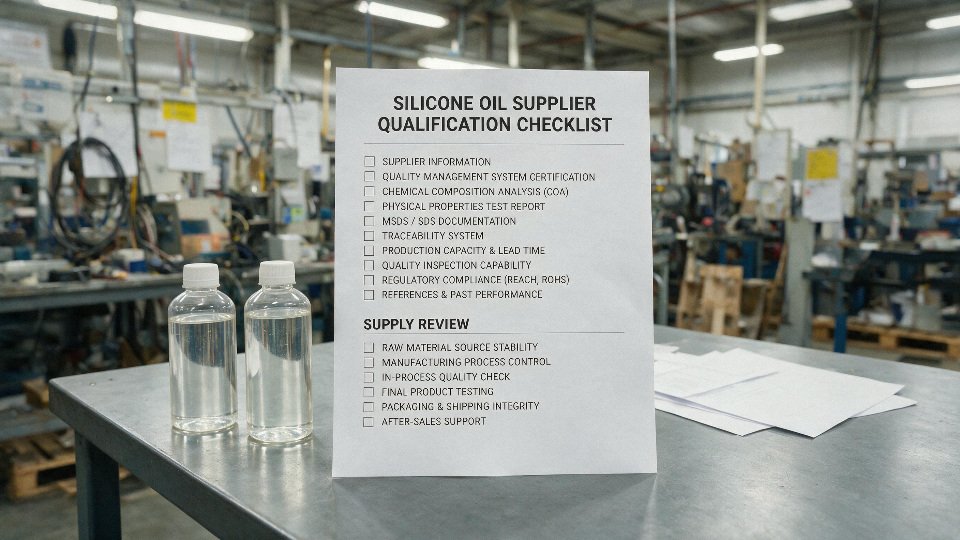
Supplier qualification checklist
A silicone oil supplier is qualified only if they can prove three things at the same time: the fluid is exactly the chemistry they say it is, they can make it consistently, and they can support your regulatory and application risk after the first shipment. Price matters, but in plant terms it comes after identity control, impurity management, documentation quality, and the supplier’s ability to keep your line running when a batch, audit, or customer complaint lands on your desk.
Use the checklist below the way a good buyer and a good process engineer usually do it together: not as a paperwork exercise, but as a screen for where the hidden risk sits.
1. Verify exact chemistry and grade identity
A label that says “silicone oil” is nowhere near specific enough for industrial buying. Commercial silicone oils span roughly 0.65 cSt to well above 1,000,000 cSt at 25 C, and two products with similar nominal viscosity can behave very differently if the polymer type, end groups, residual low boilers, or additive package differ.
Request these details in writing:
- Base polymer chemistry
- Is it standard polydimethylsiloxane, phenyl-modified, amino-functional, polyether-modified, or another specialty siloxane?
- If it is a blend, ask what is blended and why.
- Nominal viscosity and control range
- Ask for the target viscosity at 25 C and the batch release tolerance.
- Confirm the test method. A viscosity number without method and temperature is not procurement-grade data.
- End groups
- Hydroxy-terminated, trimethylsiloxy-terminated, alkoxy-functional, and reactive end groups change compatibility, volatility, cure interaction, and storage behavior.
- In coatings, elastomers, and release applications, this is often where “same viscosity” products stop being interchangeable.
- Residual cyclics or other low-molecular-weight fractions
- Ask whether residual cyclic siloxanes are controlled and how they are measured.
- This matters for odor, fogging, emissions, cosmetic or personal-care restrictions, and some export markets.
- Additive package
- Clarify whether the oil contains antioxidant, antifoam synergist, emulsifier, metal deactivator, preservative, or any processing aid.
- “Pure silicone oil” gets said loosely in sales calls. Get the formulation boundary documented.
- Intended application limits
- Ask where the supplier does and does not recommend the grade: food processing, cosmetics, pharma-adjacent, electrical insulation, thermal transfer, mold release, textile finish, defoaming, or lubrication.
- A supplier who gives broad claims with no use boundary is usually transferring risk to the buyer.
The mechanism here is straightforward: small compositional differences show up later through volatility, extractables, dielectric behavior, surface effects, or interaction with your substrate. On a plant floor that means fish-eyes in coating, foam instability, seal swelling, odor complaints, failed incoming QC, or customer requalification. The section’s main conclusion stops holding if you are buying a non-critical utility grade for a rough process where downstream sensitivity is low; in that case, broad grade matching may be enough. For anything customer-facing or regulated, it is not.
2. Assess manufacturing quality systems
Low-toxicity claims are only credible if the supplier controls what should not be in the fluid. In practice, that means not just ISO paperwork, but evidence that the process can remove catalyst residues, limit gels and particulates, control moisture pickup, and keep packaging clean.
Check these points:
- Impurity control
- Ask what the critical impurities are for that grade: residual catalyst, acid or alkali traces, volatiles, insolubles, metals, moisture, or particulate.
- Request typical values and release limits where available.
- Catalyst removal or neutralization
- If the product is made through polymerization or equilibration, ask how catalyst carryover is controlled.
- Residual catalyst can drive odor, instability, corrosion risk, or side reactions in your formulation.
- Filtration and cleanliness
- Ask the final filtration level and whether packaging lines are dedicated or shared.
- Shared filling systems are a quiet source of cross-contamination, especially for specialty modified silicones.
- Moisture control
- Important for reactive grades and for any use where hydrolytic stability or electrical performance matters.
- Verify whether product is packed under dry conditions and whether headspace control is used.
- Batch-to-batch consistency
- Ask for certificates of analysis from several recent lots, not just one “golden batch.”
- Look for drift in viscosity, color, volatile content, acidity, or appearance.
- Packaging cleanliness and traceability
- Steel drum, lined drum, pail, IBC, or bulk tanker all have different contamination and handling risks.
- Confirm lot traceability from manufacturing batch to shipping unit.
A lot of buyers underweight packaging. Then the first complaint comes from rust fines, dirty drum bung threads, or a reused tote with the wrong gasket material. That is not chemistry in the abstract; that is plant-floor contamination cost.
The lowest quoted silicone oil often creates the highest total cost in production.True
A lower purchase price can be wiped out by batch variability, contamination, off-spec viscosity, poor paperwork, delayed root-cause support, customer complaints, or forced requalification. Total cost depends on process sensitivity and the supplier’s control discipline, not invoice price alone.
3. Request toxicology and compliance support
If a supplier says “non-toxic,” ask what that statement is based on. For many PDMS fluids, acute oral toxicity is often reported with LD50 values above 5,000 mg/kg in animal data, but that does not automatically cover every grade, additive package, impurity profile, or end use.
Request:
- A competent SDS
- Clear composition disclosure where legally required
- Plausible hazard classification
- Consistent first-aid, fire, spill, and disposal sections
- No obvious copy-paste contradictions
- Toxicology support
- Test summaries or literature basis for the specific product family
- Distinction between neat polymer data and formulated product data
- Statement of what has not been tested
- Regulatory declarations
- REACH status, TSCA status, and other market-specific inventory declarations as relevant
- Restricted-substance declarations where your customers require them
- Change notification procedure
- How much notice is given for raw material, process, specification, site, or packaging changes?
- This is one of the most practical supplier-quality questions you can ask.
Poor documentation is not just an admin problem. It slows customs clearance, triggers customer questionnaires, and turns a simple material approval into a months-long loop between EHS, quality, and purchasing.
4. Confirm application-specific evidence
Do not buy support you do not need, but do not skip support your end market will eventually demand. The right evidence depends heavily on use case.
Typical examples:
- Food-contact related use
- Relevant declarations and supporting statements for the target market
- Migration or compositional support where required by the application
- Cosmetic or personal-care use
- Listing status, impurity profile, and market-specific acceptability
- Medical or biocompatibility-sensitive use
- Actual test data for the intended grade, not generic silicone chemistry claims
- Electrical use
- Dielectric properties, moisture sensitivity, oxidation behavior, and aging data
- Heat-transfer or high-temperature service
- Thermal stability and oxidation behavior under your actual atmosphere and temperature profile
- Many silicone oils are used roughly from -50 C to 200 C, but grade-specific limits and air exposure matter, and those limits should be verified from supplier data and equipment conditions
- Antifoam service
- Efficiency in the actual foaming medium, dosage sensitivity, carryover effect, and filterability impact
This is where the trade-off usually flips. A broad-purpose silicone fluid may be perfectly adequate for simple lubrication or release, yet completely unsuitable for food-contact documentation, low-odor indoor use, or an antifoam system that must not foul membranes. The more sensitive the application, the less useful generic “silicone oil” claims become.
5. Evaluate supply-chain resilience and technical response
A qualified supplier needs to ship reliably and troubleshoot fast. That sounds commercial, but it becomes technical the first time your line rejects a lot on viscosity, haze, foam performance, or odor.
Check:
- Production scale and continuity
- Single-site or multi-site manufacturing
- Typical lead times and any seasonal or raw-material constraints
- Export experience
- Familiarity with documentation, labeling, and customs support for your destination market
- Packaging options
- Drum, pail, IBC, ISO tank, or bulk
- Availability of sample quantities and retention samples
- Warehousing and stock position
- Regional inventory or make-to-order only
- Shelf-life management and FIFO controls
- Technical response capability
- Can they review a failed application with data, retained samples, and a defined corrective-action path?
- Ask who answers: sales only, or actual technical staff
Frequently asked questions
Is silicone oil safe on skin?
Usually yes for brief incidental contact with many industrial PDMS-based silicone oils, but “safe on skin” does not mean suitable for repeated bare-hand use. The usual plant-floor issue is mild transient irritation from contamination, additives, or poor hygiene, not strong intrinsic skin toxicity from the base fluid itself.
A few practical limits matter:
- Repeated contact can dry or irritate skin indirectly
- Not because silicone oil is a strong defatting solvent like some hydrocarbons
- More often because operators wipe with rags, cleaners, or alkaline wash solutions after contact
- Formulated products are not the same as neat silicone oil
- Antifoams, release agents, lubricants, and textile auxiliaries may contain emulsifiers, solvents, preservatives, or reactive silanes
- Those package ingredients often drive the skin response
- Contamination changes the answer
- Used heat-transfer or process-contact oil can pick up metal fines, carbonized residues, cleaning chemicals, or process byproducts
If operators are handling drums, filling day tanks, or changing filters, nitrile gloves are still the sensible default. Not because the fluid is highly toxic, but because routine contact control is cheaper than chasing dermatitis complaints.
Can silicone oil be absorbed through skin?
For many high-molecular-weight silicone oils, skin absorption is generally considered low. In practice, the bigger concern is surface contamination left on the skin, then transferred to food, cigarettes, control panels, lenses, or finished product.
What changes the picture:
- Lower-viscosity fluids spread more easily
- They wet the skin faster and are harder to notice
- Blends with solvents or volatile siloxanes can behave differently
- The carrier, not the PDMS fraction, may increase penetration or irritation
- Damaged skin is not normal skin
- Cuts, dermatitis, and prolonged occlusion under gloves all increase unwanted exposure
So the short answer is low dermal absorption for many standard silicone oils, but not a reason to ignore PPE or hygiene.
Is silicone oil safe to breathe?
Liquid silicone oil is usually a low inhalation concern at room temperature because many grades have very low volatility. The answer changes once you generate mist, aerosol, smoke, or thermal decomposition products.
Typical exposure situations:
- Low concern
- Closed hydraulic systems
- Room-temperature transfer of medium- to high-viscosity fluids
- Higher concern
- Spray application
- Atomized release systems
- Leaking compressed-air lines entraining oil
- Hot baths, heated rolls, or overheated process vessels
Breathing oil mist can irritate the respiratory tract even when the base fluid has low acute toxicity. If the process is heated, verify ventilation design against actual temperature, residence time, and whether visible haze is present around the equipment.
What happens if silicone oil is heated too much?
Overheating can turn a normally manageable fluid into a decomposition, smoke, odor, and maintenance problem very quickly. The first sign in many plants is not a lab result; it is brown residue on heaters, a sharp odor near vents, or a viscosity shift that operators notice during startup.
What typically happens as temperature rises beyond the intended operating window:
- Oxidation and chain scission begin to matter
- Especially with air exposure, hot spots, and long residence time
- Volatiles increase
- More vapor, more odor, more condensate on nearby surfaces
- Residue forms
- Fouling on heaters, coils, and vents
- Potentially hazardous decomposition products appear
- Exact species depend on grade, additives, contamination, oxygen level, and temperature history
Many silicone oils are used roughly from -50 C to 200 C, but that is not a blanket safe limit for every grade or every atmosphere. Thin film on a hot platen, stagnant oil in a dead leg, and bulk fluid in a nitrogen-blanketed tank do not age the same way. If overheating has occurred, stop relying on appearance alone; check supplier guidance and, if the application is critical, test the used fluid.
Is silicone oil food safe?
Only some grades are suitable for food-related use, and only within the specific regulatory framework and use conditions they were designed for. Industrial silicone oil is not automatically food-safe because it is clear, odorless, or low in acute toxicity.
Ask for these specifics:
- Food-contact declaration for the target market
- Composition statement or grade description
- Applicable regulatory basis and use limitation
- Migration or extractables data if relevant to the application
- Confirmation of manufacturing controls that prevent cross-contamination
Any silicone oil can be used in food processing if it has low toxicity.False
Food suitability depends on grade, composition control, regulatory status, and the exact use pattern. Low acute toxicity alone is not enough.
Is silicone oil safe for medical use?
Medical use is a separate category, not an upgrade of ordinary industrial quality. A silicone oil intended for medical devices, pharmaceutical processing, or direct clinical use needs application-specific biocompatibility, cleanliness, and regulatory support that standard industrial grades often do not have.
At minimum, buyers usually need:
- Defined grade identity and intended medical use
- Biocompatibility or toxicology package relevant to that use
- Extractables/leachables data where applicable
- Sterilization compatibility, if relevant
- Change-control commitment from the supplier
Do not substitute a general industrial COA for a medical qualification file.
Is silicone oil environmentally harmful?
It is not usually treated the same way as a highly acutely toxic chemical, but releases still need control. The practical environmental issues are persistence, surface spreading, wastewater interference, and contamination of soil, drains, or recycling streams.
Common plant consequences:
- Spills create slip hazards immediately
- Wastewater systems may suffer foam or separation issues
- Recovered oil is harder to recycle if mixed with silicone
- Cleanup costs often exceed the product value
Environmental profile depends on chemistry, viscosity, volatility, additives, and local regulation. Site disposal and reporting rules need verification; there is no single universal environmental answer for all silicone oils.
How is silicone oil different from mineral oil in toxicity?
Silicone oil and mineral oil can both be low in acute toxicity in some grades, but they behave differently in exposure and service. Silicone oils are generally more thermally stable over a broad range, more chemically inert in many applications, and less likely to behave like conventional hydrocarbon solvents on skin.
The trade-off is practical, not academic:
- Silicone oil often performs better at temperature extremes
- Mineral oil is often cheaper and easier to source in commodity channels
- Contamination behavior differs
- Silicone traces can cause major paint, coating, bonding, or surface-defect problems
- Fire and decomposition behavior are not identical
- These need product-specific review, not category assumptions
So toxicity comparison alone rarely decides the purchase. Process compatibility and downstream contamination risk usually decide it first.
Does viscosity affect silicone oil safety?
Yes, but indirectly more than toxicologically. Lower-viscosity fluids tend to spread faster, splash more easily, and are more likely to form mists or reach places you did not intend; higher-viscosity fluids are easier to contain but harder to clean and can hide residue buildup.
In practice:
- Low viscosity
- Higher chance of aerosol formation
- More creep through seals and threaded fittings
- Greater risk of unnoticed surface contamination
- High viscosity
- Lower mist tendency
- More manual handling strain during transfer
- Harder line purging and cleanup
- More residue left on parts and inside hoses
That does not mean high viscosity is “safer” across the board. If your process uses spray, fast metering, or heated atomization, the preferred viscosity can flip based on exposure control and product-finish requirements.
What documents should I ask a supplier for?
Ask for documents that match your actual risk, not just a generic product flyer. For most industrial buyers, the useful package is:
- Safety Data Sheet (SDS)
- Current revision, target-country compliant
- Technical Data Sheet (TDS)
- Viscosity, appearance, density, typical volatility or flash-related data if provided, service guidance
- Certificate of Analysis (COA)
- Lot-specific values for agreed release parameters
- Regulatory declarations
- REACH, RoHS, food-contact, or other market-specific statements as applicable
- Composition or statement on restricted substances
- Especially if your process is sensitive to cyclics, solvents, heavy metals, or intentionally added allergens
- Toxicology or biocompatibility support
- Only where the application justifies it
- Change-control policy
- Critical for medical, food, electronics, coatings, and long-validation products
- Shelf-life and storage guidance
- Packaging specification
- Drum, pail, tote liner, cleanliness level, sealing method
- Technical support path
- Who reviews overheating incidents, contamination questions, or application fit
If the supplier makes a low-toxicity claim, ask what supports it: published test data, grade-specific toxicology, regulatory review, or simply category-level marketing language. Those are not the same thing.
Your grade verification next step
The practical buying decision is not whether “silicone oil” is toxic as a category; it is whether the exact grade, additive package, residual profile, and operating conditions are acceptable for your exposure scenario and end market. A fluid that is workable in a closed textile line or a release-coating process may be the wrong choice for a heated open bath, an aerosol-generating application, or any use with stricter purity or downstream compliance requirements.
A lot of procurement mistakes start with a broad product name and a viscosity target, then stop there. On the plant floor, that is not enough. Two fluids with similar centistoke values can behave very differently once you heat them, atomize them, expose them to oxygen, or put them in contact with a product that has cosmetic, food-contact, medical, or electronics cleanliness expectations.
Use this decision path before approving a grade
- Define the application clearly
- What is the fluid doing: lubrication, defoaming, heat transfer, release, dielectric service, personal care intermediate, textile finishing, or process aid?
- Is it a closed system, wiped film, dip tank, spray line, mixing vessel, or manual application?
- Identify realistic exposure routes
- Skin contact during drum change or maintenance
- Mist or aerosol generation from spraying, high-speed coating, or agitation
- Heating and vapor exposure near hot surfaces
- Incidental contact with product, packaging, or downstream process streams
- Set purity and compliance requirements
- Decide whether you need a general industrial grade or tighter control on volatiles, residuals, odor, color, or specific restricted substances.
- Match the documentation to the end market. A broad SDS is not the same thing as market-specific compliance support.
- Review thermal and aerosol conditions
- Many silicone oils serve well over a wide temperature band, but the hazard picture changes once you push temperature, residence time, air exposure, or mist formation.
- If the process runs hot, ask for grade-specific guidance rather than relying on a generic service-temperature statement. Oxidation behavior, residue formation, and emission tendency depend on the actual fluid and the system design.
- Confirm supplier documentation and trial data
- Review the technical data sheet, SDS, certificate of analysis format, and any available application-specific declarations.
- Then run a controlled shop trial or lab trial under your own conditions. That is where incompatibility, odor, residue, foam response, or carryover usually shows up.
Viscosity alone is not a reliable proxy for safety, purity, or end-use suitability.True
Commercial silicone oils span a very wide viscosity range, but procurement acceptance still depends on composition details, residual content, additives, exposure mode, and process conditions.
What to prepare before contacting a supplier
Send these items up front. It cuts a week out of the back-and-forth.
- Target viscosity or acceptable viscosity range at 25 C
- Normal and peak use temperature
- Contact medium: air, water, solvent, elastomer, metal, plastic, powder, food-contact-adjacent surface, skin-contact-adjacent process, and so on
- End-use market or customer segment
- Required compliance documents or restricted-substance expectations
- Process type: closed circulation, open bath, spray, wipe, blend, or impregnation
- Packaging preference: pail, drum, IBC, bulk
- Estimated annual volume and order pattern
- Current pain points: odor, smoke, residue, foam instability, poor release, seal compatibility, filter plugging, batch inconsistency, or cost pressure
Which type of grade to request
- Standard grade
- Fits most general industrial uses where exposure is controlled and there is no unusual purity or downstream contamination sensitivity.
- Usually the right starting point for enclosed mechanical or process applications.
- Low-residual grade
- Makes sense when volatility, odor, deposit formation, or trace carryover matters.
- Common trigger points are heated systems, sensitive surfaces, electronics-related processing, and cleaner-label customer audits.
- Modified silicone fluid
- Worth asking about when plain PDMS does not wet, spread, emulsify, or release the way the process needs.
- The trade-off is that performance gains can come with different compatibility, stability, or compliance questions, so the documentation review has to be tighter.
- Custom formulation
- Appropriate when the line has mixed constraints: a narrow viscosity window, difficult substrate, elevated temperature, contamination sensitivity, and a specific packaging or cost target.
- This route only pays back if the volume is meaningful or the current failure cost is high enough to justify development work.
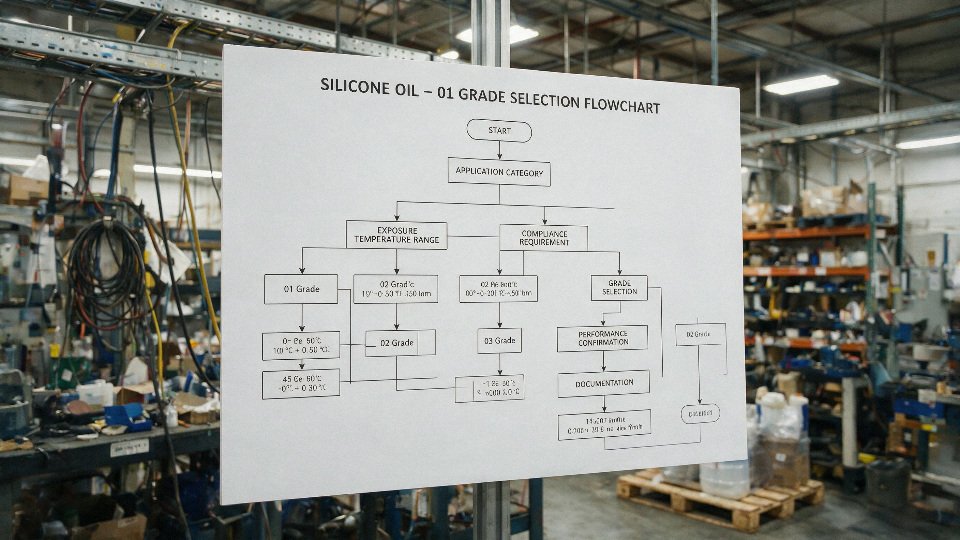
If you want SiliconChemicals to screen a grade properly, send the application details that actually drive acceptability: substrate or contact material, contaminant or process chemistry if relevant, approximate layer thickness or add-on level, working area or line setup, required finish or performance result, target rate, and clear part photos or representative samples where useful. From there, SiliconChemicals can review the application, check documentation fit, recommend sample grades, and provide a supply quotation based on the confirmed use case.