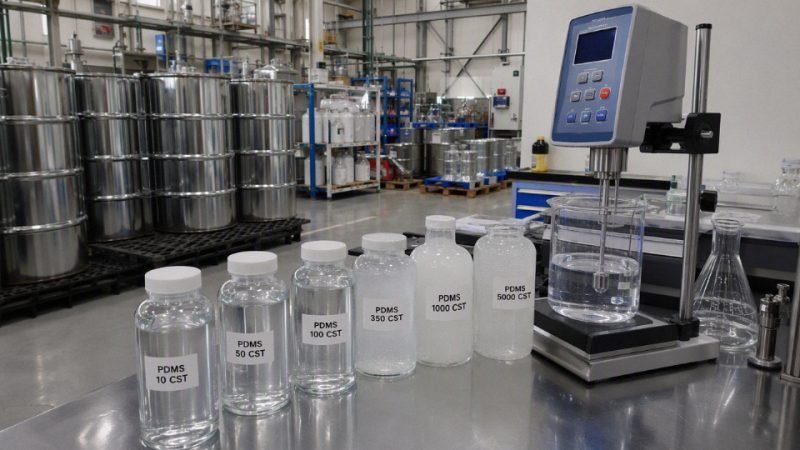
A surprising number of product and process problems trace back to one fluid being specified too loosely: release inconsistency on converting lines, seal swell assumptions that turn out wrong, foam-control drift, poor wetting, unstable lubrication, or optical haze that should not be there. On the plant floor, that usually shows up as nuisance stops, scrap, rework, or a machine that runs fine in winter and starts misbehaving once temperatures climb. The purchasing mistake is rarely the headline price; it is buying “silicone oil” as if all grades behave the same, then paying later in downtime, overuse, contamination risk, or qualification delays. The practical fix is to understand what PDMS silicone oil actually is, how viscosity and formulation change performance, and where its useful limits sit before you write a spec or approve a substitute.
PDMS silicone oil is polydimethylsiloxane, a silicone fluid built on a Si-O backbone with methyl side groups. In industry it is used because it stays fluid across a wide viscosity range, typically about 0.65 cSt to 1,000,000 cSt, and it usually offers low surface tension, water repellency, thermal stability, and chemical inertness compared with many hydrocarbon oils.
That simple definition hides the part buyers and process engineers actually care about: two drums both labeled PDMS can behave very differently in dosing, spreading, volatility, carryover, lubrication film strength, and cleanability. If you are selecting it for a formulation, a textile finish, a mold-release system, a personal care base, or a maintenance use, the useful questions start after the definition.
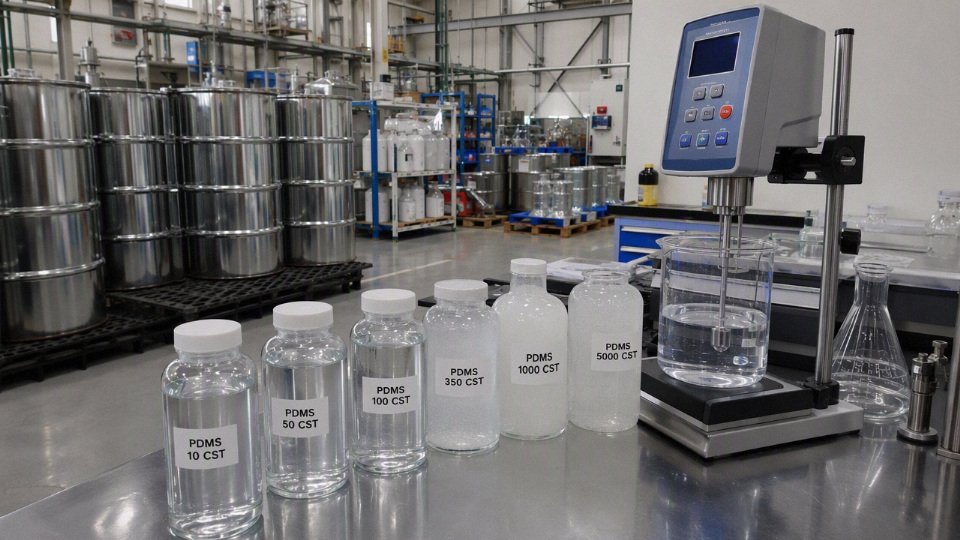
Molecular structure and chemistry
PDMS behaves the way it does because its backbone is not a carbon chain in the usual organic-fluid sense; it is a siloxane chain, alternating silicon and oxygen atoms with methyl groups hanging off the silicon. That one structural difference explains most of the buying logic around PDMS: why it stays fluid at low temperature, why it spreads easily, why it survives heat better than many hydrocarbons, and why the same “silicone oil” label can still cover materials with very different processing and compliance consequences.
At the molecular level, standard PDMS is built from repeating -Si(CH3)2-O- units. The Si-O bond is longer and more polarized than a typical C-C bond, and the siloxane bond angle is relatively open and flexible. In practice, that gives the chain unusual rotational freedom. The methyl groups are small and nonpolar enough that neighboring chains do not lock together tightly, so the fluid keeps moving even when temperature drops well below where a comparable hydrocarbon oil would start to stiffen badly.
That mobility is the direct path to the low glass-transition behavior associated with PDMS. The chain does not need much thermal energy to keep segmental motion going, so many grades remain usable in cold service. The broad industrial rule of thumb that PDMS can work somewhere around -50°C to 200°C, depending on grade and formulation, starts here in the molecule, not in marketing literature. The upper end of that range is never just “the polymer can take it”; residence time, air exposure, catalysts, and contamination all decide whether the fluid is actually stable in service.
Why the siloxane backbone makes PDMS feel different from mineral or synthetic hydrocarbon oils
A drum of PDMS often surprises people who are used to hydrocarbon process oils. It feels slick, mobile, and deceptively light for its viscosity because the intermolecular attractions are low. The methyl groups shield the backbone, and chain-to-chain interaction is weak compared with many polar or aromatic fluids.
That low intermolecular attraction drives several practical properties:
- Low surface tension
- PDMS wets and spreads across many surfaces more readily than water and many organic fluids.
- In defoaming, release, and leveling applications, this is often the first property buyers notice.
- The boundary is obvious on contaminated or high-energy-reactive surfaces: if the substrate chemistry changes, spread behavior changes with it.
- Low viscosity at a given molecular architecture
- Shorter PDMS chains can be extremely mobile, with commercial viscosity grades spanning roughly 0.65 cSt to 1,000,000 cSt.
- That huge range is mostly a chain-length story, though molecular weight distribution matters too.
- High gas permeability
- The same loose packing that keeps chains mobile also leaves free volume in the fluid or elastomer network.
- That is useful in some transfer or venting contexts, but it can be a liability where gas barrier performance is required.
- Noticeable compressibility compared with many conventional liquids
- In hydraulic or damping discussions, this catches people out.
- PDMS is not the first choice where very low compressibility is critical for precision force transmission.
- Good shear stability for many fluid-handling duties
- Linear PDMS generally does not lose viscosity under mechanical shear the way some polymer-thickened organic oils can.
- What usually damages it is not simple pumping shear but heat, air, catalytic contaminants, or a reactive end group chemistry that the buyer did not account for.
Chain length, molecular weight distribution, and why two “same-viscosity” fluids do not always behave the same
Longer chains mean higher viscosity. That part is straightforward. What matters in plant use is that commercial PDMS is not one exact molecular length; it is a distribution. A narrow distribution usually gives more predictable volatility, flow, and batch-to-batch handling. A broader distribution may still meet a nominal viscosity target while behaving differently in evaporation loss, misting tendency, or low-temperature flow.
For procurement and formulation work, three structural details matter:
- Average molecular weight / viscosity grade
- Low-viscosity grades are easier to dose, pump, and blend.
- High-viscosity grades give longer residence on surfaces, better cushioning or damping in some designs, and lower volatility.
- The trade-off flips when dispensing or mixing becomes the bottleneck; a very high-viscosity PDMS that is perfect on paper can be a nuisance on a metering skid without heat tracing or positive-displacement pumps.
- Molecular weight distribution
- A higher fraction of low-molecular components raises volatility and can increase odor or extractables.
- A higher heavy-tail fraction can create stringiness, slower deaeration, or blending lag.
- End groups
- Trimethylsiloxy-terminated PDMS is the standard nonreactive fluid. It is usually the stable choice when you want lubrication, heat transfer, damping, release, or process aid behavior without intentional downstream reaction.
- Hydroxyl-terminated PDMS is more chemically active. It is useful as an intermediate for condensation curing, further polymer build, or surface reaction systems.
- The downside of hydroxyl termination is practical, not theoretical: it is more sensitive to moisture history, container headspace conditions, and catalyst residues. In storage, especially in partially used drums with humid air ingress, you can see viscosity drift or pre-reaction issues if the package and handling discipline are poor.
If a buyer says “PDMS oil” without specifying termination, the quote is incomplete for any reactive or compliance-sensitive application.
Linear PDMS, cyclic siloxanes, and modified silicones are not interchangeable
Standard industrial PDMS usually means a linear dimethylsiloxane fluid. That should be separated from two other material families that get mixed into the same conversation.
Cyclic siloxanes
These are ring structures rather than long linear chains. They often appear as intermediates, residual components, or low-viscosity constituents in silicone fluids. Their practical importance is outsized because even a modest residual level can affect:
- volatility
- odor
- flash-off during heating
- extractables
- fogging behavior
- regulatory and compliance review, depending on the market and application
Residual cyclics matter far more in personal care, medical-adjacent, electronics, textile-contact, or enclosed-space applications than in a rough industrial release-coat operation. Same chemistry family, different commercial consequence.
Modified silicones
Once you replace some methyl groups or add functional side chains, the fluid stops behaving like standard PDMS in a strict sense.
- Phenyl-modified silicones
- Better low-temperature flexibility in some formulations and altered refractive or thermal behavior.
- Often chosen where dimethyl-only PDMS is not enough.
- Amino-modified silicones
- Increase affinity for certain substrates, especially in textile and surface-conditioning applications.
- Useful, but they can create compatibility and yellowing concerns depending on the system.
- Epoxy-modified silicones
- Added reactivity and stronger anchoring to some resin or coating systems.
- Better where you want durable surface effect, not just temporary slip.
- Polyether-modified silicones
- Improved compatibility with water or polar systems.
- Common in wetting and defoaming packages, though performance depends heavily on formulation balance.
- Alkyl-modified silicones
- Shift compatibility and lubricity toward hydrocarbon-like systems.
- Sometimes selected to reduce the “too much silicone” effect in coatings or process blends.
The useful line for technical buyers is simple: once PDMS is modified for compatibility or reactivity, some of the classic PDMS strengths are traded away to gain a different kind of performance. You often gain anchorage, solubility, or substrate affinity, and give up part of the inertness, broad compatibility, or thermal simplicity of linear trimethyl-terminated PDMS.
High thermal stability is real, but it has limits that matter on the plant floor
PDMS is thermally robust compared with many organic fluids, but it is not indestructible. The common mistake is to read a service-temperature window as a guarantee under all conditions.
PDMS silicone oil is chemically inert and thermally stable under all industrial conditions.False
PDMS is generally more thermally stable and less reactive than many hydrocarbon fluids, but acids, bases, metal salts, catalyst residues, moisture history, air exposure, and hot-spot residence time can still drive depolymerization, oxidation, crosslinking, or viscosity change. Actual limits must be verified against the formulation and process conditions.
Three failure paths show up repeatedly:
- Catalytic degradation
- Strong acids, strong bases, organometallic residues, and some contaminated metal surfaces can catalyze siloxane rearrangement or depolymerization.
- In practice, a “clean” lab sample and a used process bath can behave like different products.
- Oxidative change at elevated temperature
- Air exposure, especially with large hot surface area or long dwell time, can alter color, odor, or volatile profile.
- The fluid may still look acceptable while performance has already shifted.
- Contamination-driven instability
- Water, amines, cleaning residues, process fines, or carryover from previous batches can push side reactions.
- I have seen systems blamed on the silicone when the actual culprit was a badly rinsed tote or a line still wet with alkaline cleaner.
Why purity and residual cyclic control matter more than buyers sometimes expect
For bulk industrial use, buyers often focus first on viscosity. That is necessary, but not sufficient. The quality of raw intermediates, stripping efficiency, and control of residual low boilers show up later in the places plants hate most: odor complaints, evaporation loss, extractables testing, and customer audits.
Purity affects downstream performance through a few clear paths:
- Odor and volatility
- Residual cyclics and other low-molecular fractions flash off first.
- That is often the source of “this batch smells different” complaints.
- Extractables and migration
- Lower molecular weight components are more likely to move out of the bulk fluid into adjacent materials.
- This matters in electronics, medical-adjacent, food-contact-adjacent, and sensitive packaging applications, where the compliance review goes beyond the main polymer identity.
- Process consistency
- Variable residuals change deaeration, wetting, and heat-loss behavior.
- Operators may only notice it as “the line needed different settings this week.”
- Storage behavior
- Cleaner, well-controlled fluid usually gives better lot consistency over time.
- With reactive terminations, impurity control becomes even more important because trace contaminants can trigger slow change in the package.
So if the application is compliance-sensitive, enclosed, heated, or customer-audited, ask past the viscosity number. You want to know how residual cyclics are controlled, what impurity profile is monitored, and whether the supplier can match the documentation burden to the market you are selling into.
Core properties and performance
PDMS silicone oil is useful because it combines broad viscosity availability, good thermal stability, low surface tension, electrical insulation, and chemical inertness in one fluid family. That said, those advantages only hold inside some clear boundaries: load-carrying is modest, solvent compatibility is not universal, and the “best” viscosity grade depends as much on evaporation, application method, and residue tolerance as on thickness.
PDMS is one of those materials buyers often oversimplify. On paper it looks forgiving, and in many plants it is. But once the fluid has to survive hot zones, meter through a dosing pump, spread on a difficult substrate, or sit near catalysts and metal fines, the grade choice stops being a catalog exercise and starts becoming a process decision.
Viscosity behavior: wide grade range, but not one-size-fits-all
Commercial PDMS silicone oils span a very wide viscosity range, from about 0.65 cSt up to roughly 1,000,000 cSt. That range is one reason the same chemistry shows up in defoamers, mold release, personal care intermediates, damping fluids, dielectric fills, and polish formulations.
What matters in practice is not just the nominal viscosity at 25°C. It is how the fluid behaves across the actual plant temperature window, how it pumps, and how it stays where you put it.
Compared with many mineral oils and synthetic hydrocarbons, PDMS usually shows more stable flow behavior over temperature. In simple terms, the viscosity still drops as temperature rises and climbs as temperature falls, but the change is often less abrupt than with hydrocarbon oils of comparable room-temperature viscosity. That is a real operating advantage when:
- A metering system starts cold in winter and runs warm by midday
- A coating weight must stay reasonably consistent across shift temperature drift
- A damping or leveling effect must not swing too much between storage and use
- A line has mixed ambient conditions between tank, pump skid, and point of application
The mechanism is straightforward: the siloxane backbone stays unusually flexible, so the fluid retains mobility over a broad temperature range. That flexibility is why low-temperature flow is often better than buyers expect from a fluid that can also tolerate fairly high service temperatures.
Still, viscosity selection has a trade-off:
- Lower viscosity grades
- Pump and atomize more easily
- Wet and spread faster
- Tend to give thinner, more uniform films
- Usually show higher volatility and greater migration risk
- Can be easier to lose from open systems or porous substrates
- Higher viscosity grades
- Stay in place better in some static applications
- Can provide thicker residual films
- May reduce misting and drift
- Are harder to meter, mix, and clean out
- Can leave visible residue or interfere with downstream painting, printing, bonding, or plating
A common buying mistake is assuming the highest viscosity grade will always give the longest-lasting effect. It often does not. Persistence depends on the full system: open or closed application, substrate porosity, film thickness, temperature exposure, shear during use, and whether a visible or silicone-active residue is acceptable.
A low-viscosity fluid in a closed electrical assembly may last perfectly well. The same fluid on a hot, open textile line may disappear too fast. A very high-viscosity fluid may persist physically, yet fail commercially because it contaminates a downstream adhesive bond.
Thermal behavior: broad operating window, but volatility still matters
Typical PDMS service temperature is often cited around -50°C to 200°C, depending on grade and formulation. That is directionally useful, but it is not a universal design limit. Actual upper and lower limits depend on residence time, air exposure, contaminants, and whether the fluid is static, recirculating, thin-film, or mechanically stressed.
At low temperatures, PDMS generally remains fluid where many mineral oils stiffen sharply. That makes it attractive for:
- Outdoor equipment exposed to winter start-up
- Instruments and dampers that must respond predictably in the cold
- Light-duty lubrication where sluggish start torque is a problem
- Metering systems that cannot tolerate a big cold-start viscosity spike
At elevated temperatures, PDMS resists oxidation better than many conventional organic oils, and flash points tend to rise with molecular weight. In procurement terms, heavier grades usually look safer from a flash-point and evaporation standpoint, but again there is no shortcut. You need the supplier’s current product data for the exact grade.
Evaporation loss is one of the most under-checked properties in actual buying decisions. Molecular weight strongly influences volatility:
- Lower-viscosity, lower-molecular-weight grades generally evaporate faster
- Higher-viscosity grades usually show lower volatility
- Thin exposed films lose mass much faster than bulk fluid in a closed vessel
- Hot airflow, vacuum, or repeated heating cycles can make a “stable” fluid disappear surprisingly fast
That last point catches people in release and surface-treatment applications. A fluid may survive bulk storage at elevated temperature with little issue, then suffer unacceptable loss when wiped into a very thin film on a hot surface.
Higher viscosity PDMS always gives better persistence.False
Higher viscosity often reduces volatility and migration, but persistence also depends on application method, substrate absorption, film thickness, operating temperature, air exposure, and whether residue can remain without causing downstream defects.
The section’s main conclusion stops holding once the fluid is used in very high-temperature oxidative service, prolonged thin-film exposure, or systems sensitive to even small evaporative residues. In those cases, lab data alone is not enough; you need an application-specific bake, weight-loss, or residue test.
Surface behavior: where PDMS earns its keep
PDMS has characteristically low surface tension, and that drives several of its best-known functions. It spreads easily on many surfaces, gives slip, helps release, suppresses foam, and contributes to water repellency.
Those are related but not identical effects.
Wetting and spreadability
On many substrates, especially where hydrocarbon oils bead or crawl, PDMS spreads quickly and forms a thin film. That is useful in:
- Wipe-on release treatments
- Surface conditioning
- Fiber and thread lubrication
- Polish and care formulations
- Wet-out of fine geometries where coverage matters more than film build
The trade-off is control. Fast spread can become over-spread, especially on low-energy surfaces or where only local treatment is wanted. In practice, operators end up fighting transfer to rollers, guides, gloves, and packaging.
Anti-foam behavior
PDMS is widely used in defoaming because it destabilizes foam films. In simple terms, the silicone phase disrupts the liquid lamella around air bubbles, helping them collapse. That can be highly effective in aqueous systems, fermentation support processes, cleaners, coatings, and process tanks.
But anti-foam performance is formulation-dependent. A neat PDMS fluid is not automatically the right defoamer for every system. Foam control depends on:
- Continuous phase chemistry
- Presence of surfactants
- Viscosity of the process liquid
- Shear level
- Temperature
- Whether the silicone is used neat, compounded, emulsified, or carried on [silica](https://siliconchemicals.com/silica/) or another support
Too much silicone can also create surface defects such as craters or fisheyes in coatings. Anyone who has spent time around paint lines knows how expensive that lesson gets.
Release and water repellency
PDMS forms a low-energy surface layer, so parts and contaminants tend not to stick as strongly. That makes it useful for mold release, anti-stick treatment, and some maintenance lubricants. It also helps repel water, which is why it is common in protective polishes and water-repellent treatments.
The limitation is that release performance against one material does not guarantee release against another. Rubber compound, resin chemistry, cure conditions, and mold finish all matter. A trial on the actual substrate is worth more than any generic compatibility statement.

Lubricity and tribological behavior: good for light duty, limited for load
PDMS gives smooth feel, slip, and low drag in light-duty contacts. It works well where the job is to reduce tack, prevent chatter, ease assembly, or provide a thin lubricating film under modest load.
Typical fit-for-purpose uses include:
- Plastic-on-plastic or plastic-on-metal assembly aid
- Elastomer conditioning
- Light instrument mechanisms
- Thread, fiber, and web handling
- Release-lubrication combinations where cleanliness matters
Where PDMS struggles is classic boundary lubrication under high load, shock load, or severe sliding contact. The fluid film can be too weak to prevent metal-to-metal asperity contact once loads rise and speeds drop. That is the flip point where a hydrocarbon, ester, PFPE, grease system, or additive package may outperform standard PDMS.
Watch for these warning conditions:
- High unit load on bearings or gears
- Oscillating contact with little replenishment
- Metal surfaces with rough finish or poor alignment
- Elevated temperature plus pressure
- Wear-critical systems where scuffing cannot be tolerated
In those cases, asking only for “silicone oil” is not enough. You need tribology data, additive information if any, and usually a test against the actual material pair.
Electrical, optical, and chemical resistance profile
PDMS silicone oils are valued as dielectric fluids because they generally offer good electrical insulation, high volume resistivity, and useful dielectric strength when clean and dry. Those properties support use in selected electronic and electrical systems, but contamination control matters. Water pickup, ionic contamination, particulates, and metal fines can degrade insulating performance fast.
Optically, PDMS is typically clear, transparent, and has a refractive index near 1.40, with density around 0.96 to 0.98 g/cm3 at 25°C. Those traits make it suitable for some optical coupling, filling, and light-management contexts, provided the grade is controlled for purity, haze, and stability. For any optical or electronic assembly, buyers should verify the exact supplier grade rather than assume all PDMS fluids behave the same.
Chemical resistance is generally good against:
- Water
- Many salt solutions
- Many moderate oxidizing environments
- A wide range of ordinary atmospheric exposure conditions
Its limits are just as important:
- Strong acids can attack or degrade the siloxane structure under some conditions
- Strong bases are often more problematic and can catalyze chain scission
- Certain organic solvents can swell, dilute, extract, or carry away the fluid
- Catalytic metal contamination can accelerate degradation in hot service
Copper salts, metal soaps, processing residues, and poorly cleaned reactors can all change fluid life. That is not just lab chemistry; it shows up on the floor as rising volatility, odor change, residue formation, viscosity drift, or shortened service intervals. If the process involves reactive chemicals, mixed-metal contact, or unknown cleaning residues, compatibility should be verified with a soak test or pilot run before committing a full purchase.
Manufacturing routes and quality
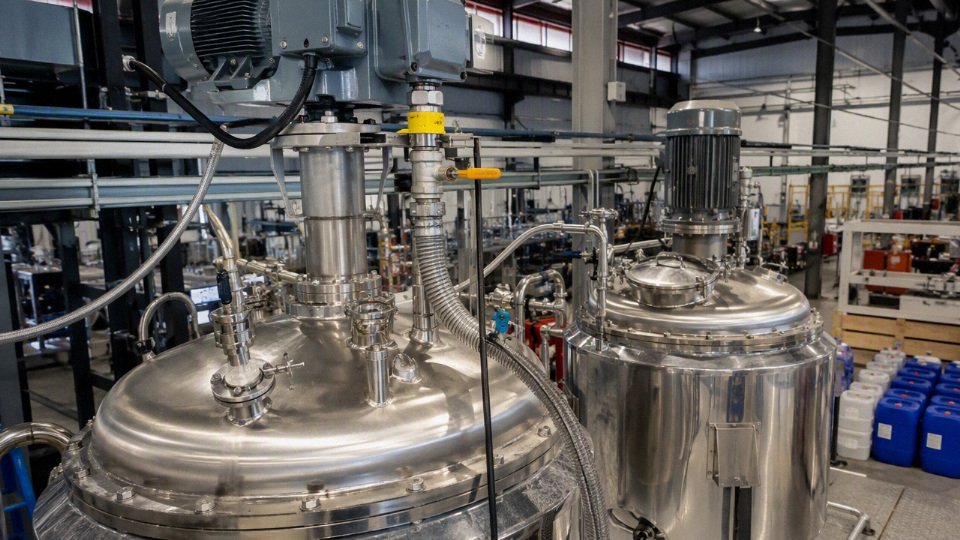
Most commercial PDMS silicone oil comes from a fairly standard industrial path: silane monomers are hydrolyzed to siloxane intermediates, then equilibrated into linear fluids and trimmed to the target viscosity with chain stoppers and process control. What separates a dependable supplier from a risky one is not the headline chemistry; it is how tightly they control molecular distribution, residual cyclics, catalyst cleanup, moisture, and lot traceability.
At plant level, the route is simple on paper and easy to get wrong in production. Small shifts in water balance, catalyst carryover, stripping efficiency, or storage handling show up later as odor, viscosity drift, haze, foaming, or formulation instability.
Main industrial route to linear PDMS fluids
The mainstream supply chain usually starts from chlorosilanes, especially dimethyldichlorosilane, because that route is deeply established in large organosilicon production. Some producers also work from alkoxysilanes in certain product lines or where process integration is different, but the commercial logic is the same: generate siloxane building blocks, then redistribute them into the required fluid range.
A typical manufacturing sequence looks like this:
- Monomer preparation
- Chlorosilane route: dimethyl-substituted chlorosilanes are produced upstream and fed into hydrolysis.
- Alkoxysilane route: methoxy- or ethoxy-functional silanes are hydrolyzed under controlled conditions.
- Hydrolysis and condensation
- The silane reacts with water to form silanols, which rapidly condense into siloxane bonds.
- This step generates a mixture rather than a finished straight-chain fluid. Depending on conditions, it contains cyclics, short linear oligomers, and byproducts that need downstream adjustment.
- In chlorosilane processing, acid generation is unavoidable, so corrosion control, phase separation, washing, and neutralization matter a lot.
- Equilibration or redistribution
- The crude siloxane mixture is equilibrated, usually with an acid or base catalyst, to redistribute chain lengths toward the desired molecular range.
- This is the heart of PDMS fluid production. The supplier is not “growing” one perfect chain length; they are steering an equilibrium system and then stopping it at a commercially useful point.
- Chain stopping
- End-blockers such as trimethylsiloxy units are introduced to cap the chains and limit further growth.
- The dosage of chain stopper, relative to the siloxane backbone units, is one of the main levers for targeting viscosity.
- Finishing and purification
- Catalyst is neutralized or otherwise deactivated.
- Volatiles are removed.
- The fluid is filtered, dried, polished, and packed under controlled conditions.
If you are buying standard linear PDMS, that route is not exotic. What varies by supplier is the discipline around each stage.
How viscosity and molecular distribution are actually controlled
A supplier can offer grades from very low viscosity, around 0.65 cSt, up to very high viscosity material approaching 1,000,000 cSt, but those products are not controlled in the same way or with the same process difficulty. Low-viscosity fluids are especially sensitive to residual cyclic content and stripping efficiency; very high-viscosity grades are more sensitive to equilibration endpoint, heat history, and handling losses.
The main control levers are:
- Monomer and intermediate purity
- Upstream impurities can shift catalyst response and generate odor or color later.
- Catalyst type and dosage
- Acid and base systems can reach the target differently and leave different cleanup burdens.
- Reaction temperature and residence time
- These affect redistribution speed and how close the system gets to the intended equilibrium.
- Chain stopper ratio
- More end-blocker generally pushes toward lower average molecular weight and lower viscosity.
- Stripping intensity
- Removes low-boiling cyclics and light ends that can depress flash behavior, increase odor, or change foam tendencies.
- Final blending
- Some viscosity grades are trimmed by blending adjacent lots or cuts, which is acceptable if the impurity profile is also controlled.
Here is the trade-off buyers often miss: a tighter molecular weight distribution usually gives more predictable processing and formulation behavior, but it may cost more to produce because it demands better equilibration control and more effective finishing. A broad distribution can still hit the same nominal viscosity while behaving differently in spreading, foam break, volatility, or migration.
That last point matters. Two PDMS fluids labeled, say, 100 cSt can both pass a viscosity test and still perform differently because viscosity is only one averaged indicator, not a full description of composition. If one lot carries more residual cyclics or catalyst residues, the downstream user may see stronger odor, more weight loss under heat, different defoaming response, or changes in emulsion stability.
Nominal viscosity alone is not enough to qualify a PDMS supplier for sensitive applications.True
Viscosity does not fully describe molecular weight distribution, residual cyclic siloxanes, catalyst residues, moisture, or particulate cleanliness, all of which can affect processing and end-use performance.
Purification steps that separate commodity output from consistent industrial supply
After equilibration, finishing is where a lot of supplier risk becomes visible.
Devolatilization
Residual low boilers, especially cyclic siloxanes and light oligomers, are usually reduced by vacuum stripping, thin-film evaporation, or equivalent devolatilization methods. Better volatile removal typically improves odor, reduces evaporative loss, and helps downstream consistency in coatings, personal care intermediates, release systems, and lubricating uses.
The boundary here is practical, not absolute. If a buyer wants extremely low volatiles, the supplier may need a more aggressive stripping regime, and that can reduce yield or raise cost. On a plant floor, there is no free lunch.
Neutralization and catalyst residue control
Catalyst carryover is a common root cause of later trouble. Residual acidity or alkalinity can:
- shift viscosity during storage
- affect color and odor
- interfere with emulsification
- destabilize formulations containing reactive additives
- contribute to corrosion issues in poorly selected packaging systems
Good producers do not just “neutralize” in a generic sense. They control the neutralization endpoint, remove salts or residues where needed, and verify that the finished fluid is chemically quiet in storage.
Filtration and particulate cleanliness
Filtration is easy to underestimate until a customer runs the fluid through a fine metering pump, spray nozzle, or coating head. Gel particles, salt fines, rust, gasket debris, or carbon specks from hot processing show up quickly in those systems.
For sensitive uses, buyers should ask about:
- final filtration rating
- filter change discipline
- tank cleanliness standards
- line material compatibility
- whether product is transferred through dedicated or shared equipment
A low-cost fluid can become an expensive fluid if it plugs a dispensing system on a weekend shift.
Moisture management
PDMS itself is generally stable, but moisture still matters in storage and downstream use, especially where the fluid will be blended with moisture-sensitive components or used near reactive silanes. Water ingress can come from poor drying after washing, humid storage tanks, or careless repacking. In practice, drum headspace control and tote handling are not trivial details.
Critical quality parameters buyers should check
A serious PDMS specification usually includes more than viscosity. The useful control set includes:
| Parameter | Why it matters | What differences can indicate |
|---|---|---|
| Viscosity | Primary grade definition | Chain length target, lot consistency |
| Volatile content | Heat loss, odor, migration, foam behavior | Stripping efficiency, residual cyclics |
| Acid or alkali residue | Storage stability, formulation compatibility | Incomplete neutralization, catalyst carryover |
| Moisture | Reactivity control, storage, blending reliability | Drying and packaging discipline |
| Refractive index | Identity check, compositional consistency | Impurity shift or off-spec blending |
| Color | Thermal history, contamination, oxidation | Overheating, raw material issues |
| Odor | User acceptance, volatile cleanliness | Residual low boilers or impurities |
| Density at 25°C | Basic identity and consistency check | Composition drift or contamination |
| Particulate cleanliness | Pumps, nozzles, coatings, optical uses | Filtration quality, housekeeping |
Typical PDMS fluids often show refractive index near 1.40 and density around 0.96 to 0.98 g/cm3 at 25°C, but those are screening values, not enough to release a lot on their own. For critical applications, the supplier and buyer usually need a fuller certificate plus at least some retained-sample discipline.
Why integrated supply matters in organosilicon sourcing
Integrated supply matters more in silicones than many buyers expect because upstream variability travels downstream. A producer with secure monomer access, internal intermediate control, and a stable manufacturing train is usually in a better position to manage cost swings, maintain lot traceability, and hold product behavior steady over time.
That shows up in four practical ways:
- Upstream monomer security
- Better resilience during feedstock disruption or regional tightness.
- Cost stability
- Not immunity from market movement, but often less volatility than a trader-dependent chain.
- Quality traceability
- Easier root-cause work when a lot behaves differently.
- Lot-to-lot consistency
- Less hidden variation in impurity profile, which matters more than many incoming labs capture.
In procurement terms, this is where the cheapest quoted cSt often stops being the cheapest usable fluid. If the application is forgiving, a broad commodity source base may be fine. If the fluid goes into a sensitive formulation, heated process, optical system, release coating, or tightly controlled export product, you want to qualify the supplier on process control and finishing discipline, not viscosity alone.
Industrial uses by sector
PDMS silicone oil shows up across a surprisingly wide set of industries, but the useful dividing line is simple: standard dimethyl silicone fluids handle slip, spread, lubrication, damping, gloss, and basic release; once the job depends on durable bonding, strong water repellency, compatibility with a difficult formulation, or tightly regulated end use, plain PDMS often stops being enough. In practice, many buying mistakes happen when a plant assumes “silicone oil is silicone oil” and selects by viscosity alone.
The same base chemistry can serve very different roles depending on molecular weight, volatility profile, purity, additives, and whether the fluid is left as neat PDMS or built into an emulsion, compound, or modified silicone package. That matters commercially as much as technically, because the lowest-cost industrial fluid may be fine for mold release on a noncritical rubber part, yet completely wrong for a cosmetic serum, an electronics damping unit, or anything with food-contact or medical exposure.
Personal care and cosmetics
In personal care, PDMS is valued because it spreads quickly, reduces drag, leaves gloss without a heavy greasy feel, and cuts tack in formulations that would otherwise feel sticky on skin or hair. Lower-viscosity grades usually improve spreadability and light sensory feel, while higher-viscosity dimethicone builds cushion, shine, film persistence, and wash-off resistance.
Typical functional roles include:
- Emolliency in skin creams, lotions, and serums
- Slip and combability improvement in hair care
- Shine and frizz control in hair products
- Anti-tack and glide modification in color cosmetics and antiperspirants
- Barrier-like sensory effect in protective creams
The mechanism is straightforward: PDMS has low surface tension, so it wets and levels across skin or fiber surfaces quickly. As viscosity rises, the film tends to feel richer and more persistent, but the trade-off is slower spreading and sometimes more residue. In a hair serum, that can be desirable. In a facial product meant to disappear fast, it may not be.
What buyers need to separate clearly is cosmetic-grade dimethicone from general industrial PDMS fluid. The base polymer family may be similar, but the commercial requirements are not. Cosmetic supply usually carries tighter expectations around odor, appearance, volatile profile, impurity control, packaging hygiene, traceability, and documentation suited to personal care regulatory review. Standard industrial fluid should not be dropped into a cosmetic formulation on the assumption that “PDMS is inert anyway.” That shortcut tends to create trouble at audit time, and sometimes earlier if odor or haze shows up in the batch.
Chemical processing
PDMS is common in chemical plants as a defoamer component, process aid, release medium, and specialty additive. Foam control is one of the most practical uses because a very small amount of silicone can destabilize foam films in systems where mechanical defoaming is not enough.
Common process roles include:
- Defoamer and antifoam component in aqueous and nonaqueous systems
- Fermentation and wastewater foam control, where permitted by the process
- Release aid on processing surfaces
- Flow and leveling additive in coatings and inks
- Slip and mar resistance additive in specialty formulations
- Limited heat transfer or thermal bath service in selected temperature ranges
PDMS breaks foam because it spreads across the gas-liquid interface differently from the surrounding medium and promotes film rupture. That sounds simple on paper; on the floor it is not. Too little silicone and the foam keeps climbing. Too much, or the wrong form, and you can create crater defects, fisheyes, or downstream contamination in coatings and printing lines. Anyone who has had to clean silicone contamination out of a paint area tends not to forget it.
Heat-transfer use deserves a caution. PDMS does have useful thermal stability over a broad temperature window, but it is not a universal replacement for purpose-designed heat-transfer fluids. Suitability depends on temperature, residence time, oxidation exposure, system design, compatibility with seals, and fire/safety requirements. If the application is a jacketed kettle or specialty lab bath, it may fit. If it is a production thermal loop with long service intervals and strict heat-transfer performance targets, the fluid selection needs a proper engineering review.
Textiles and leather
In textiles, plain PDMS is mostly a hand-feel and processing aid material. It gives softness, lubricity, sewability improvement, and some surface gloss. In leather finishing, it can improve touch, slip, and appearance, often as part of a broader finishing system rather than as a standalone ingredient.
Typical uses:
- Fabric softening
- Sewing thread and fabric lubrication
- Surface slip to reduce drag in cutting or sewing
- Gloss and hand adjustment in textile finishing
- Leather topcoat feel modification
- Water-repellency packages, usually in combination systems
This is one area where modified silicones often outperform plain PDMS. Amino silicones usually deliver a softer, more substantive hand because they interact more strongly with the substrate. Reactive silicones can anchor better and survive laundering or abrasion more effectively. Plain PDMS gives easy slip and processability, but the finish is often less durable. So the preferred choice flips when durability matters more than immediate hand feel or low raw-material cost.
A mill running low-cost woven goods may be perfectly satisfied with a standard silicone softener system. A garment exporter dealing with repeat wash performance usually needs amino-modified or reactive chemistry, and often some trial work on yellowing, shade impact, and pad-bath stability before locking the formula.
Plastics, rubber, and molding
For molding operations, PDMS is widely used as an external release agent, an internal lubrication aid in some compounds, and a surface conditioner. It reduces sticking between part and mold, lowers demolding force, and can help protect delicate surfaces from scuffing.
Common uses include:
- Mold release for rubber, thermosets, and some plastics
- Internal lubrication support in compounding
- Anti-blocking and surface slip
- Rubber processing aid
- Surface conditioning and gloss enhancement on finished parts
The trade-off is contamination risk. External silicone release is effective, but overspray can migrate onto molds, fixtures, floors, and nearby paint or bonding operations. If the molded part will later be painted, printed, adhesive-bonded, or plasma treated, uncontrolled PDMS use can cause expensive rejects. In those cases, a “better release” is not always the better process. Sometimes a less persistent release system, tighter spray control, or an internal mold-release package gives lower total cost because downstream quality stays intact.
Electronics and electrical systems
PDMS fluids are used in electrical and electronic assemblies where dielectric behavior, damping, environmental stability, or controlled flow matters. Typical examples include instrument damping, dielectric fluids in selected components, and silicone-based precursor systems that lead into gels, greases, or thermal management materials.
Typical roles:
- Dielectric fluid in selected electrical assemblies
- Damping medium in gauges, sensors, and controls
- Potting or gel precursor component in broader silicone systems
- Carrier or processing component in some thermal interface materials
Cleanliness requirements are much tighter here than in general mechanical service. Ionic contamination, particulates, volatile residues, and lot consistency matter because small defects can affect optical surfaces, switch contacts, sensor response, or long-term reliability. A fluid that is perfectly acceptable for mold release may be unsuitable for a damping unit or sensitive assembly simply because filtration, moisture control, or extractables are not controlled to that level.
Automotive and mechanical systems
In automotive and general machinery, PDMS finds niche use where low volatility, consistent damping, plastic compatibility, or surface conditioning are useful. It is common in dashpots, polish formulations, rubber care products, anti-squeak treatments, and light-duty lubrication points.
Applications commonly seen:
- Dashpot and instrument damping fluids
- Polishing and protectant formulations
- Seal, gasket, and weatherstrip conditioning
- Anti-squeak treatment for trim and assembly interfaces
- Light-duty lubrication where loads are modest and chemical stability matters
This is not the same thing as saying PDMS is a general-purpose machine lubricant. It usually is not. Under high load, severe boundary friction, or where additive chemistry is needed for wear control, conventional lubricants are often the correct choice. PDMS works best in narrow niches where smooth motion, damping, rubber/plastic friendliness, or clean appearance matter more than extreme-pressure performance.
Medical, food-contact, and pharma-adjacent uses
Highly controlled PDMS grades may be used in certain medical device, pharmaceutical processing, or food-contact-adjacent applications, but those decisions are always grade-specific and documentation-specific. Standard industrial PDMS should never be assumed suitable for medical, pharmaceutical, or food-contact service without current supplier documentation and application-specific review.
What must be checked case by case:
- Regulatory status of the exact grade
- Manufacturing controls and contamination risk
- Extractables, volatiles, and purity requirements
- Packaging and traceability
- Intended contact mode and duration
- Regional compliance requirements
Any PDMS silicone oil can be used in food, medical, or pharma-related applications because PDMS is chemically inert.False
Chemical inertness alone does not establish regulatory or hygienic suitability. Acceptance depends on the exact grade, manufacturing controls, documentation, and the specific end use.
Agriculture and household products
PDMS also crosses into agricultural and consumer formulations as an adjuvant, spreader, maintenance ingredient, or gloss/slip additive. In household products, it can appear in cleaners, polishes, protectants, and specialty maintenance sprays. In agriculture, silicone-containing adjuvant systems are used to improve wetting and spreading, though many of the strongest performers are modified silicones rather than plain PDMS.
That distinction matters. Plain PDMS can contribute slip, gloss, and water beading in consumer formulations, but if the requirement is aggressive spreading on low-energy plant surfaces or strong compatibility with a water-based package, modified silicone chemistry often performs better. The section line is simple enough: if the job is mostly feel, shine, slip, release, or damping, standard PDMS is often the first place to look; if the job depends on durable substrate interaction, regulatory approval, or difficult formulation balance, the buyer should start with the modified or application-specific grade rather than trying to force a commodity fluid to behave like a specialty material.
Grade selection criteria
A usable PDMS grade is not chosen by viscosity alone. In practice, you are balancing flow behavior, volatility, end-group chemistry, compatibility, cleanliness, and supply format against the cost of getting the wrong fluid into production. The right grade is the one that stays stable in your actual process window and delivers the target effect at the lowest total operating risk, not the lowest price per kilogram.
The selection usually becomes straightforward once you define three things clearly: how the fluid is applied, what temperatures and exposure conditions it sees, and whether it must stay inert or participate in downstream chemistry. If any one of those is vague, buyers tend to over-specify on purity and under-specify on application fit, which is a common reason for reformulation delays and field complaints.
Start with application mechanics, not the data sheet headline
The first practical filter is how the PDMS moves through the process. A fluid that behaves well in a drum sample can still be a nuisance in a spray header, a piston pump, or a high-shear compounder.
Spraying, misting, and atomization
For sprayable systems, lower viscosity grades are usually easier to atomize and less likely to string or leave heavy local deposits. That said, if the grade is too light for the application, you can get fast loss from open surfaces, weaker persistence, and inconsistent coverage across the part.
Watch these points:
- Nozzle behavior
- Lower viscosity helps with fine atomization.
- Very low viscosity can produce excessive misting, overspray, and airborne contamination in open booths.
- Higher viscosity may require larger nozzles, more pressure, or heating, which changes droplet size and transfer efficiency.
- Film uniformity
- Thin fluids wet and level quickly on smooth surfaces.
- On textured or vertical surfaces, they may run off before a stable film forms.
- If you need a visible, persistent lubricating or release layer, mid-to-higher viscosity often holds better.
- Housekeeping and carryover
- Fine silicone mist travels. In plants with paint lines, optical assembly, or adhesive bonding nearby, this matters a lot.
- Even a technically suitable spray grade can become the wrong grade if airborne contamination creates reject risk elsewhere.
Dipping, roll coating, and wipe-on application
Dipping and wipe systems usually tolerate a broader viscosity range, but drainage and pickup need to be controlled. Higher viscosity increases retained film thickness; lower viscosity drains faster and often gives a thinner, cleaner finish.
The mechanism is simple enough: viscosity resists flow-off, so more fluid stays on the part after withdrawal. That helps if you want lubricity or gloss, but it hurts if excess residue attracts dust, interferes with printing, or transfers downstream.
Metering and dosing systems
In metered addition, consistent pumpability matters more than lab viscosity as a single number. Gear pumps, diaphragm pumps, and small piston dosing units all have their own comfort range.
A few plant-floor checks save trouble:
- Confirm whether the dosing system was sized around water-like fluids or heavier oils.
- Check suction line length, valve type, and seal material.
- If winter warehouse temperatures drop, verify startup viscosity at the lowest expected fluid temperature, not just at 25°C.
A grade that is nominally correct may still pulse, cavitate, or trap bubbles if the feed system is marginal. I have seen this show up as “batch inconsistency” when the actual cause was cold fluid and undersized suction piping.
Compounding, internal addition, and masterbatch use
For compounding into plastics, elastomers, or specialty blends, the fluid has to distribute evenly without over-plasticizing, bleeding, or upsetting cure. Lower viscosity grades disperse more easily, but they can migrate faster or volatilize under heat. Higher viscosity grades may stay in the matrix better, though incorporation can take more shear or more time.
This is where the preferred choice flips: if easy mixing is your only concern, lighter fluid looks attractive; if long-term retention and low migration matter, a heavier grade often performs better even though processing is less convenient.
Damping, cushioning, and controlled motion
For damping applications, viscosity is the primary starting point because it directly affects resistance to motion. Still, the final grade cannot be chosen from viscosity alone; shear rate, temperature swing, seal compatibility, and service life all influence whether the damping curve stays where the product designer expects it.
Do not generalize one damping fluid number into all devices. The right range depends on:
- Gap geometry
- Operating speed
- Temperature range
- Target torque or resistance profile
- Seal and housing materials
High-persistence film formation
Where PDMS is expected to remain as a lasting lubricating, release, or protective film, higher molecular weight and lower volatility generally help. The trade-off is that residues become harder to remove, can attract contamination, and may interfere with downstream bonding, coating, or labeling.
That boundary matters. If the part later enters painting, printing, adhesive bonding, or plasma treatment, a persistent silicone film can become a defect source rather than a benefit.
Match volatility and molecular weight to temperature and exposure
Open-system performance is often where grade selection goes wrong. Two fluids can look similar at room temperature and behave very differently once the process runs hot, stays open to air, or sits on a large exposed surface.
As a working rule:
- Lower viscosity / lower molecular weight PDMS
- easier spreading
- easier pumping
- higher tendency to evaporate or diminish in open hot service
- more odor risk in sensitive applications, depending on formulation and trace volatile content
- Higher viscosity / higher molecular weight PDMS
- longer residue life
- lower evaporation loss
- stronger persistence on the substrate
- more difficult handling, slower leveling, and sometimes more residue concerns
The temperature window often cited for PDMS service is broad, roughly around -50°C to 200°C depending on grade and formulation, but buyers should not treat that as a blanket guarantee for every process. Open heating, thin-film exposure, dwell time, airflow, and contact with catalytic contaminants all affect actual fluid loss and stability.
A PDMS grade that is acceptable in a closed reservoir may fail quickly in a hot open wipe-on or spray application.True
Volatility, exposed surface area, airflow, and residence time strongly influence fluid loss. Selection has to match the actual exposure mode, not just the nominal service temperature.
If you need residue life over repeated heat cycles, ask for data or testing tied to your use condition, not a generic thermal stability claim.
Choose end groups based on whether the fluid must stay inert or react
Trimethyl-terminated PDMS is the standard choice when you want an essentially inert fluid behavior: lubrication, slip, release, damping, water repellency, or processing aid without intentional chemical reaction.
Hydroxyl-terminated PDMS belongs in a different decision path. It is used where the fluid is meant to react or be built into a system, such as condensation-curing or further polymer modification. It is not a drop-in substitute for an inert fluid just because the viscosity looks right.
Use this split:
| Requirement | Typical end-group direction | What it means in practice |
|---|---|---|
| Lubrication, release, inert carrier, damping | Trimethyl-terminated | Better choice where low reactivity and storage stability are needed |
| Reactive blending, crosslinking, resin modification | Hydroxyl-terminated | Selected when downstream curing or bonding chemistry needs active sites |
| Stronger affinity, emulsifiability, substrate interaction, or special formulation behavior | Specialty functional modification | Consider amino, epoxy, polyether, phenyl, or other modified systems only when the application clearly requires them |
Specialty functional PDMS should be used for a defined reason, not as a vague “upgraded” option. Once you move into modified fluids, compatibility, stability, and regulatory status can change sharply.
Check substrate and formulation compatibility before scale-up
Compatibility trouble rarely shows up in the purchasing spec. It shows up in haze, bleed, swollen seals, separated emulsions, floating pigment, or a customer saying the part feels greasy after storage.
Review compatibility against these groups:
- Solvents
- PDMS has selective compatibility; it is not universally soluble.
- Solvent choice affects dilution stability, coating uniformity, and flash behavior.
- If the formulation is solvent-based, verify clarity and storage stability over time, not just initial mixability.
- Surfactants and emulsifiers
- For emulsions, the surfactant package often determines success as much as the PDMS itself.
- Wrong surfactant balance can cause unstable defoaming, crater formation, or phase separation.
- Elastomers and seals
- Check gasket, hose, pump seal, and valve seat materials.
- Some elastomers tolerate PDMS well; others can swell, soften, or lose dimensional stability depending on formulation and exposure time.
- Plastics
- Stress cracking and surface appearance issues need checking on clear plastics and engineered resins.
- If the product contacts polycarbonate, acrylic, or sensitive housings, run a compatibility panel.
- Pigments and fillers
- In coatings and compounds, silicone can affect dispersion, wetting, and intercoat behavior.
- A fluid that helps slip can also create surface defects if overused.
- Active ingredients
- In personal care, agricultural, or specialty chemical systems, active compatibility must be confirmed case by case.
- Do not assume inertness means formulation neutrality.
Set cleanliness and compliance requirements early
A buyer spec that says only “PDMS 100 cSt” is incomplete for many industries. The same nominal fluid family can be sold into industrial lubrication, cosmetics, electronics, or food-related applications with very different documentation and impurity control expectations.
Define requirements in writing:
- Cosmetic or personal care purity expectations
- Electronic cleanliness or low-residue expectations
- Food-contact declaration needs, where relevant
- REACH and RoHS status
- Customer-specific restricted substance lists
- Packaging cleanliness, tamper evidence, and batch traceability
- Need for COA items beyond viscosity, such as moisture, volatiles, or appearance
If you are supplying into a controlled customer chain, ask for the restricted substance list before RFQ closure. It is much cheaper to screen suppliers on paperwork capability than to discover after qualification that one raw material cannot be declared.
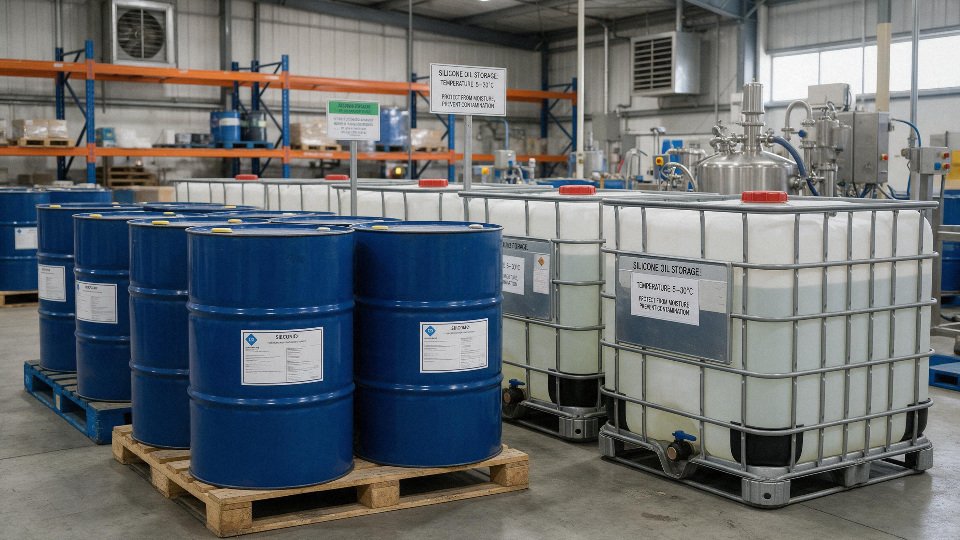
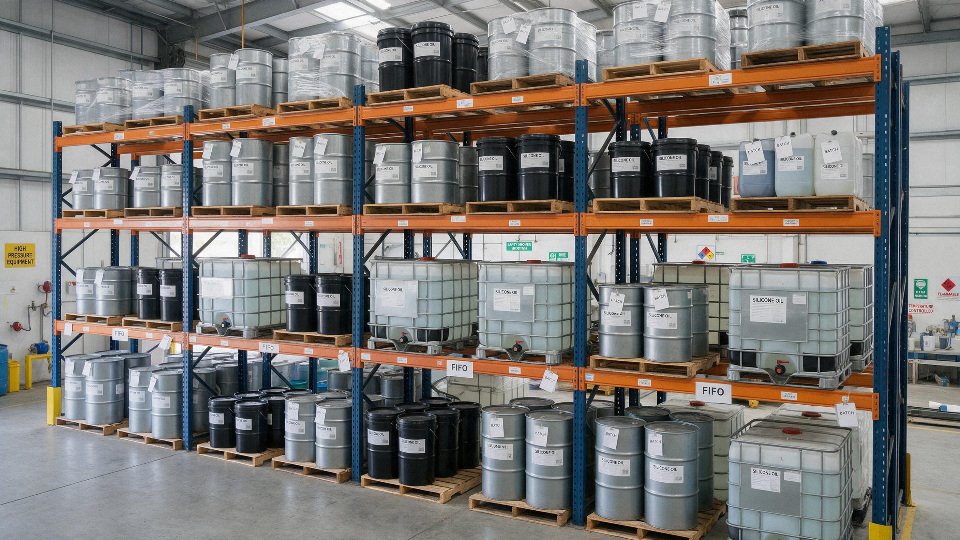
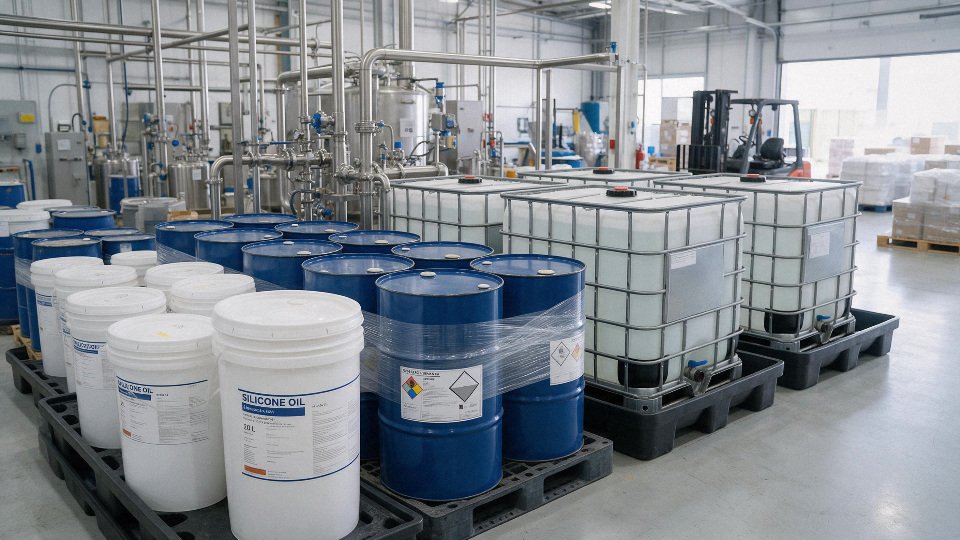
Packaging, storage, and logistics are part of grade selection
Packaging affects usability, contamination risk, and landed cost. It is not an afterthought.
Match supply format to consumption and handling:
- Drums
- Practical for moderate use and multiple grades
- Easier to isolate by batch
- More handling labor and more partial-container contamination risk
- IBCs
- Good for higher-volume use with controlled indoor transfer
- Better logistics efficiency than drums
- Need proper pump and valve housekeeping
- Isotanks or bulk
- Make sense for stable high-volume demand
- Lowest packaging cost per unit
- Require disciplined tank management, line identification, and receiving controls
Storage considerations:
- Keep moisture-sensitive reactive grades protected.
- Check whether cold-weather transport will push viscosity high enough to slow unloading.
- Verify container compatibility and sealing practice if the material sits partly used for weeks.
- For long international transit, ask about shelf-life, recommended storage temperature, and whether agitation is needed before use for the supplied form.
Do not let low price per kilogram drive the wrong choice
The most frequently overlooked buying mistake is treating two viscosity-equivalent offers as interchangeable. They are not, especially if one reaches the same nominal viscosity with a different volatile profile, broader quality spread, or weaker packaging control.
The commercial trap usually appears through one of these paths:
- higher use level to achieve the same effect
- faster evaporation in open application
- unstable defoaming or inconsistent surface behavior
- more customer complaints from residue, odor, or appearance variation
- extra maintenance from leaks, seal issues, or line contamination
A cheaper drum can become the expensive option once the plant starts compensating with higher dosage, rework, or cleaning labor. If the application is at all sensitive, qualify grade selection on line performance, not just COA conformity and purchase price.
Limitations and troubleshooting
Most PDMS field complaints are preventable. The usual failure pattern is not “silicone oil is bad,” but “the wrong grade, wrong dose, wrong delivery method, or wrong place in the plant let a useful fluid become a process contaminant.” That matters for both engineers and buyers, because the corrective action is often tighter application control or a different fluid family, not just changing suppliers.
Surface contamination in painting, printing, and bonding
A few ppm in the wrong place can be enough to create defects. PDMS has very low surface tension, so even trace carryover can spread across a substrate and interfere with wetting by inks, coatings, sealants, and adhesives. The visible result is often fisheyes, craters, pinholes, dewetting islands, or bond-line weakness that shows up later as peel failure.
The mechanism is straightforward. A coating or adhesive needs to wet the surface uniformly. If PDMS reaches that surface first, it forms a low-energy film; the next liquid retracts instead of laying down. In practice, this contamination often comes from places people forget:
- Release agents used upstream on molds or tooling
- Conveyor lubricants or maintenance sprays
- Silicone defoamers carried by rinse water or recirculated process liquor
- Shared wipes, gloves, transfer trays, or compressed-air lines
- Nearby aerosol products used by maintenance or operators
The trade-off is obvious once you see it on the floor: PDMS is excellent for slip, release, and foam knockdown, but those same traits are exactly why paint and adhesive lines hate uncontrolled silicone exposure. The preferred choice flips when downstream finishing or bonding is critical; then silicone use has to be isolated, tightly metered, or eliminated from adjacent operations.
If a buyer is sourcing PDMS for a plant that also paints or bonds, ask these before approving the fluid:
- Will this product ever contact parts that later receive coating, ink, tape, sealant, or adhesive?
- Is the application open, aerosolized, wiped on manually, or otherwise easy to spread unintentionally?
- Are dedicated pumps, drums, hoses, and cleaning tools available?
- Has the coating or adhesive supplier confirmed silicone tolerance, or at least run a contamination panel?
A lot of “coating defects from bad raw material” cases turn out to be plant hygiene failures.
Foam-control misunderstandings
PDMS can be an excellent antifoam, but only when the formulation matches the system. Put plainly: a silicone fluid that collapses foam in one process can create surface defects, persistent floaters, or unstable dispersion in another if the dosage, emulsification state, or carrier is wrong.
Three variables usually decide whether PDMS helps or hurts:
- Dosage: Too little gives no control; too much can leave insoluble droplets or surface slicks that interfere with coating quality or filtration.
- Delivery form: Neat fluid, compound, and emulsion behave differently. A waterborne process usually needs a properly designed emulsion or compound, not just straight PDMS dumped into the tank.
- Carrier compatibility: Hydrocarbon carriers, emulsifiers, or silica-containing antifoam packages can interact with the main formulation, especially in high-solids or sensitive coatings.
The mechanism is not just “silicone reduces surface tension.” In many systems, antifoam performance depends on discrete droplets entering the foam lamella and destabilizing it. If the droplet size is wrong, the fluid is over-dispersed, or the carrier does not release the active phase correctly, the antifoam can become inactive. On the other side, if droplets stay too coarse, they may leave craters or visible residue.
Boundary condition: this section’s advice stops being enough when you move from commodity defoaming into tightly balanced formulations such as waterborne coatings, fermentation, electronics cleaning, or food/pharma processes. There, supplier-specific testing and regulatory review matter more than general PDMS behavior.
Lubrication limits under load and friction
PDMS lubricates well in light-duty, low-load, or mixed-material contact, but it is not a cure-all for severe boundary lubrication. Under high contact pressure, high sliding speed with heat buildup, or metal-on-metal boundary conditions, plain PDMS can be pushed out of the contact zone or fail to maintain a protective film.
Typical trouble spots include:
- Metal-on-metal sliding guides
- Heavily loaded bearings not designed for silicone fluids
- Reciprocating seals with poor material match
- Hot contact points where the fluid thins or migrates away
What you gain with PDMS is wide temperature capability, oxidation resistance, and material friendliness in many assemblies. What you sacrifice, compared with purpose-built EP oils or greases, is load-carrying capacity in demanding boundary conditions. If the application sees shock load, scuffing risk, or sustained metal contact, look at silicone greases, compounded lubricants, or a different chemistry altogether.
Volatility, migration, and bleed
Low-viscosity grades are useful because they spread easily and give light feel or fast coverage. They also migrate more readily, can evaporate faster at elevated temperature, and may bleed from compounded systems. That is where users get complaints about oily residue, fogging, loss of effect over time, or contamination of nearby surfaces.
A few practical patterns:
- Lower-viscosity PDMS is more likely to migrate through porous media, wick along interfaces, or redistribute onto optics and housings.
- Elevated temperature accelerates mass loss and movement; the exact rate depends on molecular weight distribution, airflow, dwell time, and formulation.
- In elastomer or compound systems, “bleed” may reflect both poor compatibility and an intentionally mobile fluid fraction that was never locked into the matrix.
The published service window for PDMS is often around -50°C to 200°C depending on grade and formulation, but that does not mean every viscosity grade is equally stable in every open system across that whole range. For heated open surfaces, vented housings, or long dwell times, you need supplier data for the specific grade and usually a mass-loss or aging trial under your actual conditions.
Compatibility failures
PDMS is broadly useful, not universally compatible. Problems show up with certain plastics, elastomers, solvents, catalyst systems, and highly filled formulations.
Watch these categories:
- Plastics and elastomers: Swell, softening, extractables shift, or stress cracking can occur depending on polymer type, additive package, and temperature. Always verify against the actual compound, not just the base polymer family.
- Solvents and carriers: Some blends stay clear in the drum and separate after a cold night in the warehouse or after dilution in process water.
- Catalyzed systems: Platinum-cured silicone systems, some coating catalysts, and specialty reactive formulations can be sensitive to contamination from adjacent chemicals. The problem may not be PDMS alone; trace sulfur, amines, tin residues, or other inhibitors often confuse the diagnosis.
- Highly filled systems: PDMS may not wet the filler package the way the formulator expects, which can affect dispersion, gloss, haze, or settling behavior.
Haze, separation, or cure problems automatically mean the PDMS fluid is off-spec.False
Those symptoms are often caused by incompatibility with the full formulation, poor addition sequence, contamination, or temperature history. You need retained samples, blend records, and a controlled compatibility check before blaming the incoming fluid.
Inspection and root-cause checklist
Start with the evidence that survives opinion. Pull retained samples if available, compare unopened drum material with in-process material, and document where the issue first appears.
- Viscosity drift
- Check whether the fluid was exposed to shear, heat, solvent dilution, or contamination.
- Verify test method and temperature; small measurement differences can look like a quality failure.
- Compare fresh drum sample, day tank sample, and point-of-use sample.
- Haze or phase separation
- Inspect storage temperature history and recent dilution steps.
- Check water pickup, incompatible additives, or wrong emulsification procedure.
- In filled systems, separate settling from true phase split.
- Odor change
- Review overheating, oxidation, solvent contamination, dirty transfer containers, or mixed returns.
- New odor after plant transfer often points to handling contamination, not manufacturing.
- Residue or deposits
- Identify whether the residue is oxidized fluid, filler, process soil, or mixed contamination.
- Look at hot surfaces, low-flow zones, and dead legs in piping.
- Surface defects or bond failure
- Swab adjacent equipment and fixtures for silicone carryover.
- Audit gloves, wipes, aerosols, and maintenance products used nearby.
- Run a controlled panel test with and without the suspected contamination source.
- Process upset or poor antifoam performance
- Confirm actual dosage, point of addition, mixing energy, and carrier/emulsion type.
- Check whether operators changed pump settings or substituted another tote without updating records.

In practice, if the complaint appears suddenly after months of stable operation, I first suspect a handling change, a new adjacent chemical, or a substitution at the point of use. If the problem was there from startup, grade selection or formulation mismatch is usually the better place to look.
Supply chain and specifications
A usable PDMS supply arrangement is built on document discipline, specification clarity, and the supplier’s behavior when something drifts, not just on a low unit price. For procurement, the safest comparison is: what the supplier can certify lot by lot, what they only state as typical, and how quickly they can isolate, explain, and replace an off-spec batch.
The first place buyers get misled is by treating every supplier document as if it carries the same weight. It does not.
What each document actually tells you
| Document | What it is good for | What it does not prove |
|---|---|---|
| Technical Data Sheet (TDS) | Typical product profile, nominal viscosity grade, broad physical properties, suggested uses | Lot-specific compliance, guaranteed tolerances unless explicitly written as specification limits |
| Certificate of Analysis (COA) | Batch-level test results for agreed release items | Long-term consistency across future lots, suitability for your exact process |
| Safety Data Sheet (SDS) | Hazard communication, handling, storage, transport-related safety information | Performance, purity beyond safety relevance, process compatibility |
| Regulatory statement / compliance declaration | Supplier position on items such as REACH status, food-contact-related statements where applicable, inventory listing, restricted substances | End-use legal compliance in your country unless verified against current regulations and your finished-product use |
| Application guidance / technical note | Process suggestions, dilution advice, compatibility cautions, starting points for trials | Guaranteed results in your equipment, under your shear, temperature, dwell time, or contamination load |
A common buying mistake is relying on a polished TDS and never locking the commercial specification to measurable release limits. In practice, if your line is sensitive to foam, optical haze, evaporation loss, or trace contamination, the COA and the purchase specification matter far more than the marketing sheet.
What should be on the purchase specification
At minimum, buyers should request a controlled specification sheet or quality agreement covering the items below. Not every application needs every limit, but if you do not ask, you usually get only a broad commodity-grade promise.
- Viscosity and tolerance
- State the test method, temperature, and allowable range.
- This is the primary grade identifier for PDMS, but the procurement point is the tolerance window, not just the nominal cSt number.
- Tight viscosity control matters in metering, coating leveling, damping, release performance, and blending.
- Volatile content
- Relevant where odor, evaporation loss, fogging, or downstream cure interference matter.
- Low-viscosity grades often need closer scrutiny here because small shifts in light fractions can change handling and emissions behavior.
- Moisture
- Important for moisture-sensitive formulations, certain emulsification steps, and any process where water pickup can affect appearance or downstream stability.
- Appearance and clarity
- Clear, free of haze, gel, sediment, or visible particulates.
- This sounds basic, but receiving teams catch plenty of issues here before lab testing does.
- Color
- Usually stated on a defined scale if the application is cosmetic, optical, or otherwise appearance-sensitive.
- Density
- Useful for incoming identity checks, mass-volume conversion, and consistency monitoring.
- Refractive index
- Often near 1.40 for standard PDMS fluids, but should still be checked where optical matching or identity confirmation matters.
- Flash point
- More relevant to storage, transport, and EHS review than product ranking, but it belongs in the dossier.
- Impurity limits, where relevant
- Acidity/alkalinity, ionic contamination, metal traces, insolubles, or residual cyclics may matter depending on the end use.
- Do not assume universal impurity limits across all PDMS categories; these need to be tied to your application risk.
The mechanism here is simple: a broad commodity specification gives the supplier manufacturing flexibility, which often lowers cost. The trade-off is wider batch-to-batch variation at the exact property your process may be least tolerant of. That trade usually flips in favor of tighter specs once downtime, scrap, customer complaints, or requalification costs exceed the premium for better control.
How to judge supplier strength beyond the brochure
A strong PDMS supplier is not just a trader with access to drums. You want evidence of process control and supply resilience.
Look at these points:
- Integration into upstream organosilicon production
- Suppliers closer to monomer and siloxane intermediates generally have better control over continuity, cost swings, and technical troubleshooting.
- Plant capacity and equipment fit
- Ask whether the supplier runs dedicated or shared lines, and whether they can support your volume without stretching campaign schedules.
- QA systems
- Batch release procedures, retained samples, calibrated viscosity testing, deviation handling, and document control matter more than a generic quality slogan.
- Export experience
- This shows up in labeling accuracy, customs document quality, packaging execution, and fewer surprises on restricted or inventory-listed substances.
- Packaging options
- Drums, pails, IBCs, ISO tanks, or custom fills should match your unloading setup and contamination risk.
- A plant that hand-pumps from opened drums into day tanks has very different needs from a closed IBC transfer system with desiccant breathers.
- Change-control discipline
- Ask how they notify customers about raw-material shifts, process changes, spec revisions, or test-method updates.
A COA alone is enough to qualify a PDMS supplier.False
A COA can confirm that one batch met listed tests. It does not prove method robustness, future consistency, deviation response, packaging control, or whether untested attributes that matter to your process are being managed.
Commercial terms that actually affect risk
Price matters, but landed reliability is usually decided by a handful of commercial details:
- MOQ
- Small MOQs help development and dual-sourcing, but may come with weaker price positions or limited packaging choices.
- Lead time
- Separate standard production lead time from available stock lead time. They are not the same.
- Incoterms
- Useful for comparing true delivered cost and where logistics risk sits.
- Supply continuity
- Ask about safety stock, outage planning, holiday shutdowns, and contingency sourcing.
- Sample policy
- Clarify whether samples come from production lots, pilot lots, or specially prepared lab material.
- Lot traceability
- You want batch number linkage from shipment to retained sample to test record.
- Price drivers
- PDMS pricing often moves with silicon metal, chlorosilane and monomer conditions, energy cost, and freight. If a quote is far below the market without a clear reason, check what has been relaxed.
Why cluster sourcing often improves the buying position
Established organosilicon manufacturing clusters usually offer better upstream support, more experienced operators, deeper tolling and packaging ecosystems, and sharper cost positions from shared infrastructure. That does not make every supplier in a cluster good, but it often improves access to raw materials, maintenance contractors, analytical labs, and logistics lanes that keep supply steadier when the market gets tight.
Supplier verification beyond price comparison
Do not stop at quote sheets. Ask for the supplier’s response pattern under pressure.
- Audit readiness
- Can they host a quality or remote document audit and answer basic process-control questions without evasion?
- Response speed to deviations
- If you report off-viscosity, haze, or unusual volatiles, how fast do they issue containment, root-cause logic, and replacement terms?
- Technical support depth
- Can they discuss test methods, compatibility risks, packaging cleanliness, and application boundaries with an engineer, not only a salesperson?
- Customization capability
- Some buyers need a narrower viscosity band, lower volatiles, or a cleaner impurity profile than the standard grade. If the supplier cannot state how they control that window, treat the promise cautiously.
This section’s main conclusion stops holding when your purchase is a one-off, noncritical utility fluid with wide operating tolerance; in that case, broad commercial-grade sourcing may be acceptable. For anything tied to customer-facing quality, automated dosing, optical appearance, or regulated export markets, the supplier’s control system and document quality usually matter more than a small nominal price gap.
Frequently asked questions
Is PDMS the same as silicone oil?
Not exactly. PDMS is the most common base chemistry behind many products sold as silicone oil, but “silicone oil” is a broader trade term that can also include modified silicones such as phenyl-modified, amino-modified, polyether-modified, or reactive siloxane fluids.
In purchasing language, many suppliers use the terms almost interchangeably for straight dimethyl fluids. That is usually acceptable only if the application truly tolerates standard PDMS. If you need specific solvency, spreadability, compatibility, or thermal behavior, the broader “silicone oil” label is too loose and you need the actual chemistry confirmed.
What is the difference between PDMS and dimethicone?
Dimethicone is typically the cosmetic, personal care, or pharmacopeia-facing naming convention for polydimethylsiloxane fluids. PDMS is the more general chemical and industrial term.
The practical difference is not the backbone itself but the specification context around it. A drum sold into release coating or mechanical lubrication may be standard industrial PDMS, while a drum sold as dimethicone may be tied to tighter limits, documentation, purity expectations, or regulatory support for personal care use. Do not assume interchangeability from the name alone.
How do I choose the right viscosity grade?
Start with the job, not the number on the label. Low viscosities, roughly from sub-1 cSt into the tens of cSt, suit spreading, wetting, dilution, defoaming carriers, and fast surface coverage; mid-range grades often fit general lubrication, release, and fluid-bath uses; very high viscosities are chosen when you need film persistence, damping, or a heavier feel.
Use this short screen before you ask for samples:
- Define the function: lubrication, release, defoaming, slip, gloss, damping, dielectric fluid, or processing aid.
- Check application method: spray, wipe, dip, metering pump, gravure, compounding, or batch addition.
- Note temperature range in service and at application. Cold-room dosing and a hot reactor ask for very different flow behavior.
- Identify substrate and contamination sensitivity. A grade that works on rubber may create fisheyes in a paint line nearby.
- Decide whether volatility, migration, or residue is acceptable.
- Confirm whether standard PDMS is enough or a modified silicone is actually needed.
If the process is rate-sensitive, the supplier needs more than target cSt. They need line speed, coat weight or add-on level, and how the fluid is being delivered.
Is PDMS silicone oil water soluble?
Standard PDMS is not water soluble. It is strongly hydrophobic and usually requires emulsification, surfactants, or chemical modification if you need stable use in water-based systems.
That point matters on the plant floor. Buyers sometimes ask why a neat PDMS “separates” in a water tank after a few hours. It is doing what standard PDMS does. If the end use is aqueous, ask for an emulsion or a polyether-modified silicone instead of trying to force straight PDMS into water.
Can PDMS silicone oil be used as a lubricant?
Yes, within limits. PDMS is widely used where low surface tension, clean lubrication, plastic or elastomer compatibility, dielectric behavior, and broad temperature capability matter more than extreme load-carrying capacity.
It is usually a poor choice for heavily loaded metal-on-metal contacts unless the system is specifically designed around it. In practice, PDMS works better for light-duty mechanisms, seals, assembly aid, release-lubrication overlap, and damping than for gearboxes or severe EP service.
**What temperature can PDMS silicone oil withstand?****
A typical service window is around -50°C to 200°C, depending on viscosity grade, purity, formulation, oxygen exposure, and how long the fluid sits at the top end. Short excursions may be possible in some systems, but that is not something to generalize across all grades.
Heat tolerance on paper and heat tolerance in equipment are not the same thing. Open hot baths, thin films, catalytic contamination, and aeration can all shift stability. Check the current supplier data and, for critical duty, run a thermal aging test under your actual residence time.
Is PDMS safe for cosmetics, food, or medical use?
Only if the specific grade is supplied and documented for that use. Industrial PDMS should not be assumed suitable for cosmetic, food-contact, pharmaceutical, or medical applications without explicit regulatory and specification support.
Ask for the exact compliance basis, not a casual verbal yes. Depending on the market, that may mean cosmetic documentation, food-contact status, biocompatibility-related data, or pharmacopeia alignment. If the supplier cannot state the intended regulatory position clearly, treat it as industrial grade.
How is PDMS silicone oil packaged and stored?
Common packaging includes pails, drums, IBCs, and bulk tanker supply, depending on grade and order volume. Storage is usually straightforward: keep containers sealed, clean, and out of excessive heat, moisture, and direct contamination.
A few practical points help avoid avoidable trouble:
- Use clean transfer pumps and hoses dedicated to silicone service where possible. Cross-contamination from mineral oil, amines, or process residues creates more complaints than the base fluid itself.
- Keep headspace and handling controlled for very low-viscosity grades; they are easier to spill, splash, and lose through poor housekeeping.
- For long storage, verify retest policy with the supplier rather than assuming indefinite shelf life.
What test items should appear on a COA?
The minimum useful COA usually includes:
- Viscosity, with test temperature stated
- Appearance or visual clarity
- Density or specific gravity, often near 0.96-0.98 g/cm3 at 25°C for many PDMS grades
- Refractive index, often near 1.40 for many standard grades
- Volatile content or loss on heating, where relevant
- Moisture or water content, if the application is sensitive
- Acid value, neutralization status, or ionic residue only when relevant to the grade and use
Not every grade needs every item. A cosmetic or electronic-use fluid may require tighter or different controls than a general industrial release fluid.
All PDMS silicone oils with the same stated viscosity are functionally equivalent.False
Viscosity alone does not capture volatility, molecular-weight distribution, trace impurities, appearance, odor, documentation level, or application-specific suitability. Those differences are often why equal-viscosity products perform differently and are priced differently.
Why do different suppliers offer the same viscosity at different prices?
Because viscosity is only one line on the sheet. Price moves with raw-material route, purity control, filtration, batch consistency, documentation package, packaging format, region of manufacture, order size, and whether the supplier is selling standard industrial fluid or a more tightly controlled specialty grade.
Two 100 cSt offers can be miles apart in use value. One may be perfectly fine for mold release dilution; the other may be built for personal care, electronics, or a customer with tight lot-to-lot consistency demands. If the quote spread looks too wide, compare COA items, impurity control, regulatory support, and packaging basis before you compare unit price.
Verify your PDMS grade
If you are still comparing several PDMS options, the correct next move is not asking for “a silicone oil price” but locking down the few process variables that actually drive grade selection. For most industrial buys, the grade is decided by viscosity window, temperature exposure, contact materials, volatility tolerance, and whether the fluid must stay chemically inert or participate in cure, bonding, or surface modification.
A basic purchasing brief should cover the following before anyone quotes seriously:
- Application
- Lubrication, release, defoaming, heat transfer, cosmetic feel, dielectric insulation, textile treatment, additive package, or processing aid
- Whether PDMS is the main functional material or a minor formulation component
- Substrate or contact material
- Metals, plastics, elastomers, glass, paper, textiles, electronics, coatings, or skin-contact systems
- Sensitive substrates matter. Some plastics stress-crack, some elastomers swell, and some coated surfaces fisheye with even trace silicone carryover
- Operating temperature
- Normal range and short excursion range
- Continuous service and intermittent peak are not the same buying input; oxidation, evaporation, and viscosity shift all depend on the actual thermal profile
- Target viscosity
- Starting point or acceptable range in cSt
- The practical range for PDMS fluids is broad, roughly 0.65 cSt to 1,000,000 cSt, but the right value depends on film thickness, spreadability, migration, pumpability, and retention under shear
- Volatility tolerance
- Whether low molecular weight loss is acceptable
- This flips the decision more often than buyers expect: a low-viscosity fluid may process beautifully, then disappear in service or fog adjacent surfaces if the volatility limit is tight
- Purity and cleanliness level
- General industrial, formulation-grade, low-odor, low-volatile, or impurity-controlled requirements
- If the fluid enters electronics, personal care, specialty coatings, or precision assembly, impurity control usually needs to be discussed up front, not after the sample works
- Compliance needs
- Market-specific or customer-specific documentation requirements
- These cannot be assumed across all grades, even within one product family
The first technical split is straightforward:
- Choose a standard PDMS fluid when you need inert lubrication, slip, hydrophobicity, dielectric behavior, release, or flow/surface modification without intentional chemical reaction.
- Move to reactive or modified silicone when the fluid must anchor to a substrate, enter a cure system, improve compatibility with organic media, emulsify more easily, or deliver a property standard PDMS cannot hold in place.
- Do not force standard PDMS into a job that really needs a functional silicone. You may get acceptable short-term performance and poor durability, contamination complaints, or downstream adhesion trouble.
A sensible validation sequence looks like this:
- Lab sample against your actual formulation or substrate
- Basic compatibility screening with adjacent materials and process chemistry
- Pilot or line-side trial at realistic dose, temperature, and residence time
- Specification freeze only after performance and handling are confirmed
- Commercial lot approval against agreed COA items before full release
A serious supplier should be able to provide, without delay:
- TDS
- SDS
- Typical COA or quality item list
- Available packaging options
- Lead time by grade and pack size
- A use-case-based technical recommendation, not just a catalog number
A supplier that manufactures across silanes, siloxanes, silicone polymers, and specialty modified silicone materials is usually better positioned to redirect you from a standard PDMS fluid to a more suitable modified grade when the application demands it.True
This is a sourcing and technical-support advantage, not a guarantee of quality by itself. The value is broader product fit and fewer dead-end trials.
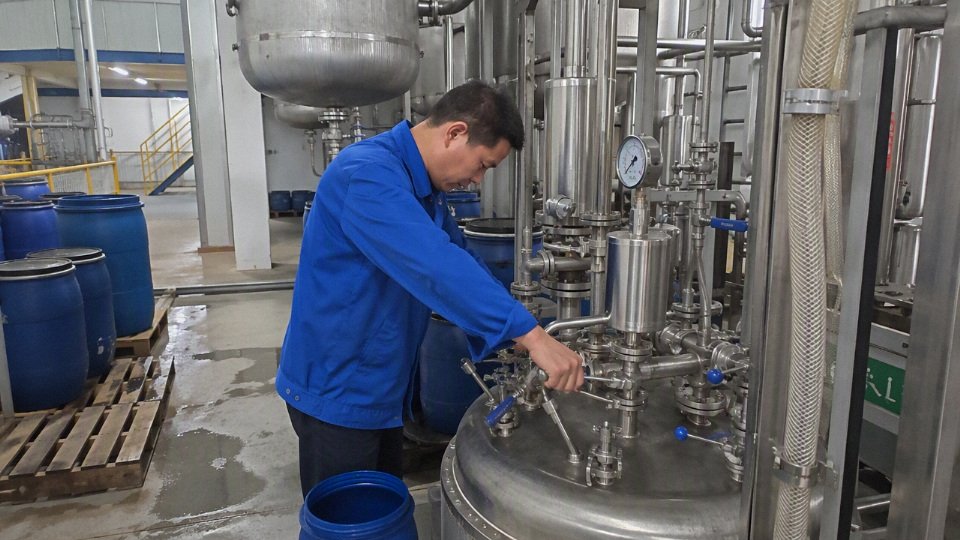
If you want a matched recommendation, sample, or quotation, send the application, substrate material, contaminant or function required, approximate layer thickness or dose, working area, required finish, target process rate, operating temperature range, and clear part photos or representative samples. SiliconChemicals can review the use case and respond with a suitable PDMS grade or, where standard PDMS is the wrong tool, a recommended modified silicone pathway together with sample and supply options.