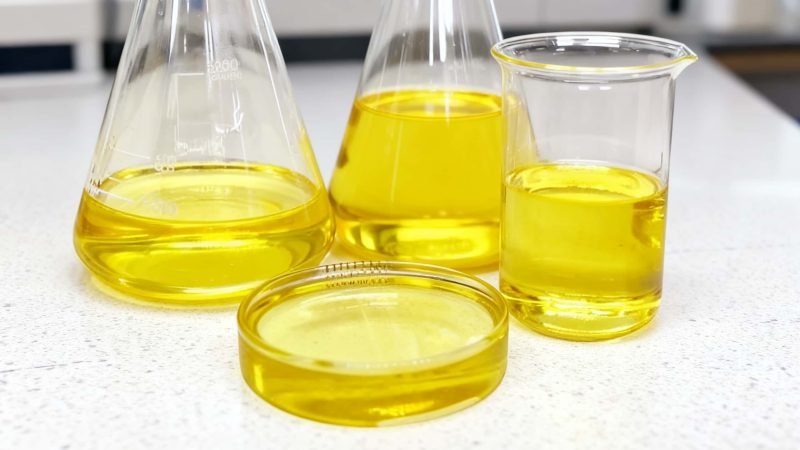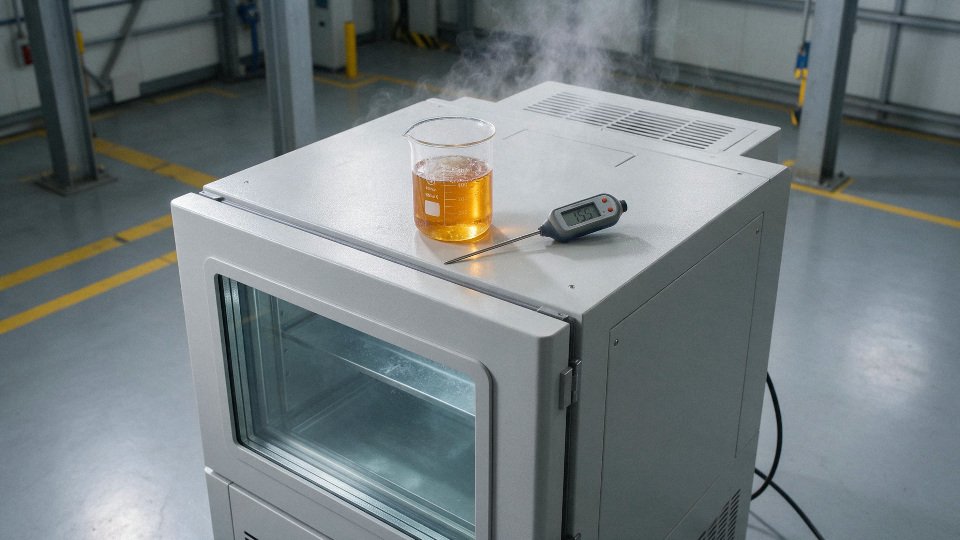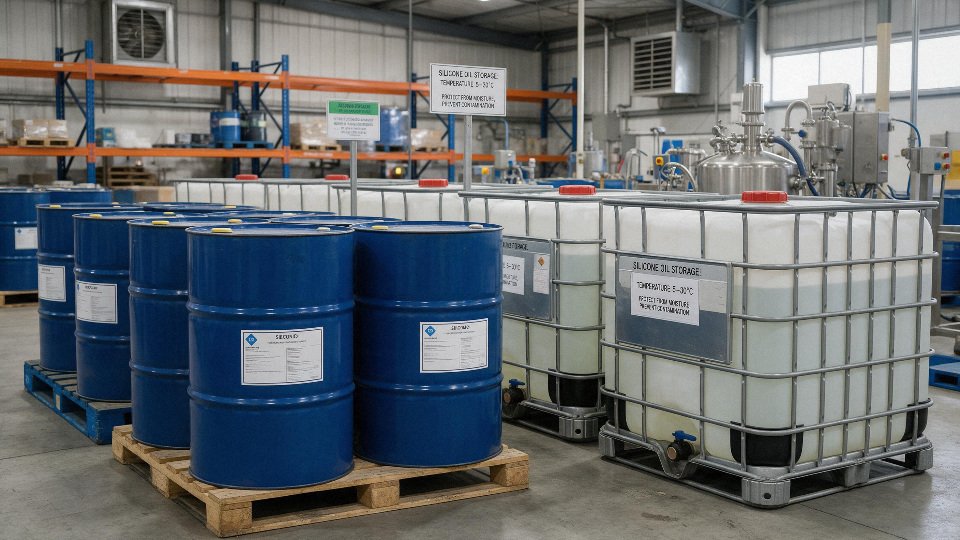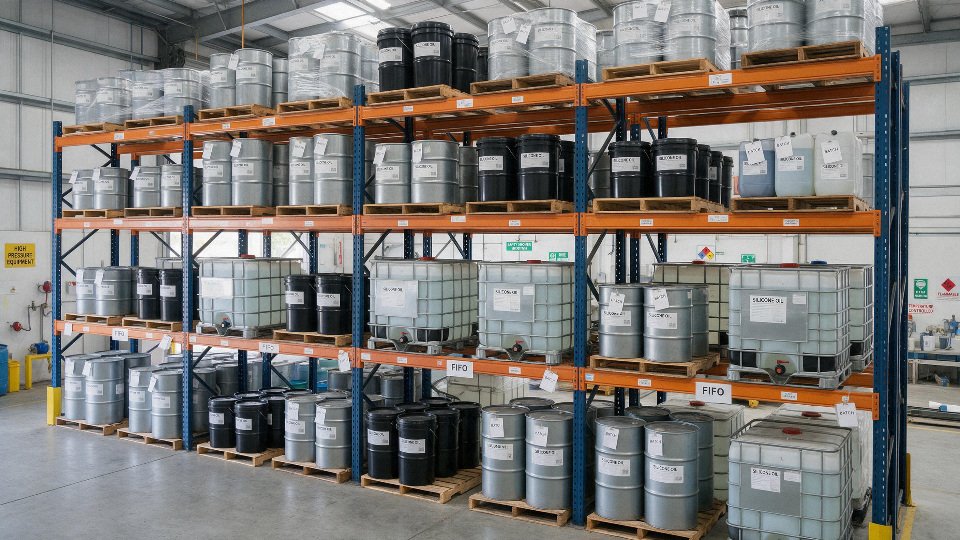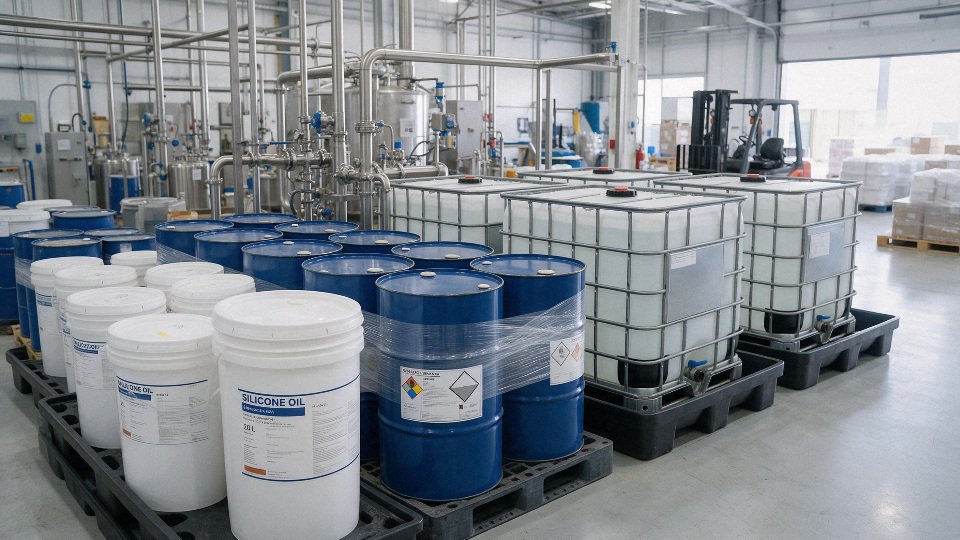
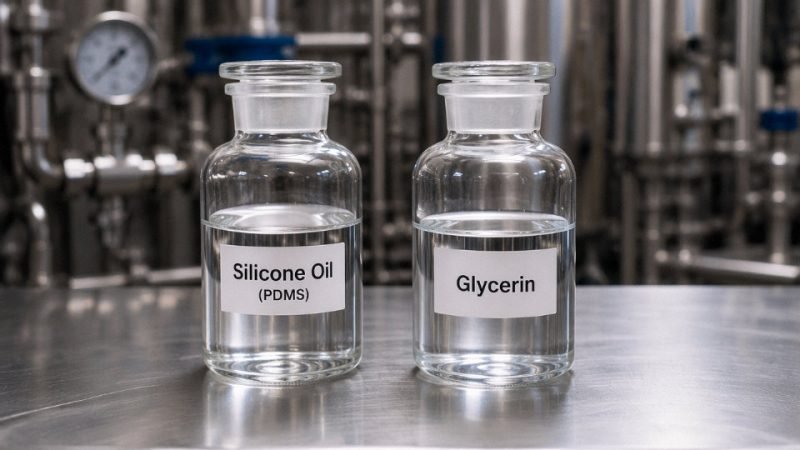
Specifying the wrong process fluid sounds like a minor technical oversight until the glycerin in your hydraulic dampener turns to near-solid at a cold startup, or the silicone oil you substituted in a food-contact application triggers a compliance audit. Either mistake costs real money — rework, unplanned downtime, scrapped batches, or a procurement emergency when your approved fluid is suddenly unavailable and you’re sourcing a substitute under pressure.
Silicone oil (PDMS) and glycerin serve overlapping but distinct roles. Glycerin costs roughly $0.60–$1.20/kg and handles water-soluble, biodegradable, or food-safe applications well, but its viscosity collapses from ~1,412 cSt at 20°C to around 2 cSt at 100°C, making it unreliable across wide temperature swings. Silicone oil runs $3.50–$6.00/kg in bulk but holds viscosity far more consistently from sub-zero to well above 200°C, which is why it dominates applications where thermal stability isn’t negotiable.
What makes this comparison genuinely tricky is that the two fluids occasionally look interchangeable on a spec sheet — both are clear, both are used as lubricants, plasticizers, and heat-transfer media — but their behavior under real operating conditions diverges fast, and the gap gets expensive at the edges: fire safety margins, regulatory approval, emulsification behavior, and long-term seal compatibility are all places where choosing on price alone tends to go wrong.
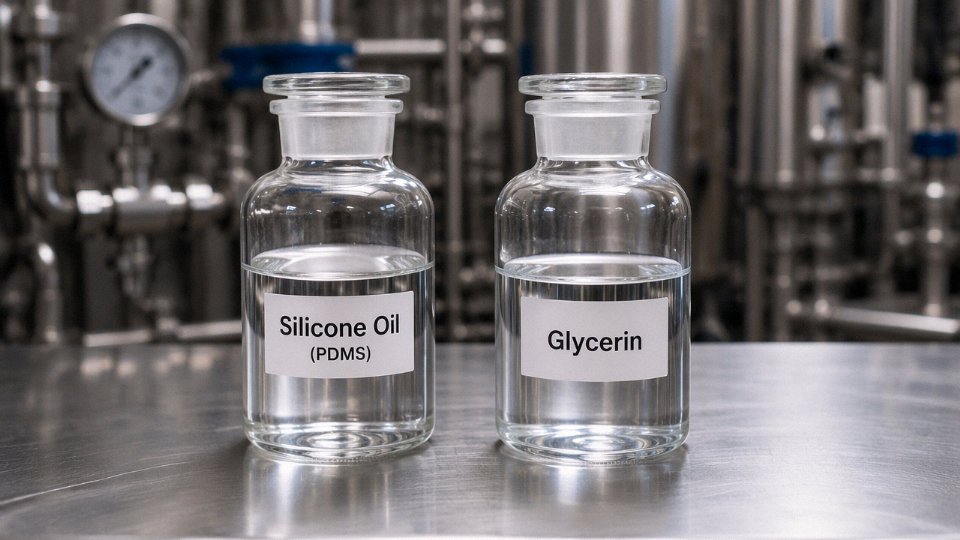
Molecular Architecture and Physical Property Profiles Compared
The reason these two fluids behave so differently in service comes down to structure — specifically, what’s happening at the bond level and how those bonds respond to temperature, water, and mechanical stress.
The Silicone Oil Backbone
Polydimethylsiloxane (PDMS) is built around a repeating Si–O–Si chain, with two methyl groups hanging off each silicon atom. That siloxane backbone is the key to almost everything useful about silicone oil. The Si–O bond energy is substantially higher than a typical C–C bond, which is why PDMS holds together at temperatures that would degrade most hydrocarbon fluids. The methyl side groups rotate freely and present a low-energy surface to the world — surface tension runs around 20–21 mN/m, depending on molecular weight, which is lower than water, most glycols, and glycerin by a wide margin. That low surface tension is why silicone oil spreads aggressively on metal and glass, why it’s used as a release agent, and why it’s also the reason silicone contamination in a paint shop is such a persistent headache.
The hydrophobic character follows directly from those methyl groups. Water doesn’t wet PDMS; it beads. There’s essentially no hydrogen bonding between the fluid and moisture in the environment, which gives silicone oil its dielectric stability and its resistance to washing out of lubrication points in humid or wet service.
Glycerin’s Hydrogen-Bond Network
Glycerin (1,2,3-propanetriol) is structurally the opposite case. Three hydroxyl groups on a three-carbon backbone means the molecule is almost entirely capable of hydrogen bonding — with itself, with water, with anything polar nearby. At 20°C that dense internal hydrogen bonding produces a viscosity around 1,400 cSt, which feels almost syrupy. Heat it to 100°C and viscosity crashes to roughly 2 cSt. That’s not a gradual slope; it’s a cliff. Any process that relies on glycerin’s flow resistance at ambient temperature needs to account for what happens when the product or the equipment gets warm.
Complete water miscibility cuts both ways. In pharmaceutical and food applications it’s a feature — glycerin is an excellent humectant and co-solvent precisely because it pulls water in. In a hydraulic or electrical context, that same affinity is a serious liability.
Side-by-Side Property Comparison
| Property | Silicone Oil (PDMS) | Glycerin |
|---|---|---|
| Molecular weight range | ~1,000–100,000+ g/mol (grade-dependent) | 92 g/mol |
| Density at 25°C | ~0.96 g/cm³ | 1.261 g/cm³ |
| Refractive index | 1.40–1.43 | 1.474 |
| Surface tension | ~20–21 mN/m | ~63 mN/m |
| Dielectric constant | ~2.6–2.8 | ~42–47 |
| Water solubility | Essentially zero | Fully miscible |
| Viscosity index (VI) | 150–400 (grade-dependent) | Effectively undefined — too steep |
Why the Viscosity-Temperature Curve Is the Engineering Crux
Silicone oil’s viscosity index — typically 150 to 400 depending on grade — is genuinely unusual. A mid-grade mineral oil might have a VI around 95–105. PDMS stays remarkably flat across a wide temperature span, which is why it’s the default choice for damping mechanisms, calibration baths, and any application where you need predictable resistance from, say, –40°C up through 150–180°C without reformulating or switching grades seasonally.
Glycerin’s steep exponential viscosity drop is operationally significant in a different way. A glycerin-filled pressure gauge works fine in a plant at 20°C. Run a steam line nearby and the gauge internals warm to 60–70°C — viscosity has already dropped by 80% or more, damping performance collapses, and the needle chatters. That’s a real failure mode, not a theoretical one.
Silicone oil (PDMS) remains pumpable and functional at temperatures as low as –60°C in appropriate low-viscosity gradesTrue
Low-molecular-weight PDMS grades (e.g., 0.65–5 cSt) have pour points well below –60°C. Higher-viscosity grades freeze at higher temperatures, so pour point is grade-specific, but the general claim holds for correctly selected grades.
Glycerin freezes at 17.8°C — roughly room temperature in a cold warehouse or an unheated northern facility in winter. Pure glycerin stored in an outdoor tank in January in a continental climate will solidify. Plants that use glycerin in jacketed reactors or as a heat-transfer medium in cold climates usually install drum heaters or trace heating on all transfer lines, which adds capital cost and energy load that rarely appears in the initial material cost comparison.
The dielectric constant difference — roughly 2.7 for PDMS versus 42 or higher for glycerin — matters immediately in any electrical or electronic application. Silicone oil is a genuine electrical insulator. Glycerin, polar and hygroscopic, is not suitable for transformer cooling or electronics immersion without serious caveats around moisture pickup and conductivity drift over time.
Thermal and Oxidative Stability Under Industrial Operating Conditions
Temperature is where the two fluids truly diverge — and where a wrong choice costs you more than product quality. It costs you safety incidents, unplanned shutdowns, and in some jurisdictions, regulatory exposure.
Continuous Service Temperature and the Practical Ceiling
Standard PDMS grades — the workhorse 50 cSt to 1,000 cSt viscosities you’ll find in most heat-transfer and mold-release applications — hold their properties reliably from roughly –60°C up to about 200°C in continuous service. That’s not marketing language; it’s the range where viscosity change per thermal cycle stays small enough to matter for process consistency. High-phenyl grades push that ceiling to around 250°C, though they cost noticeably more and flow differently at ambient — something to factor in if your system starts cold.
Glycerin’s practical ceiling is closer to 150°C in any application where fluid quality matters over time. Above that, you start seeing discoloration — first to pale yellow, then amber — driven by early-stage dehydration chemistry. At 180°C and above, that dehydration pathway produces acrolein, a lachrymatory, mucous-membrane irritant with an OSHA ceiling limit of 0.1 ppm. In an open mold-release or heated-bath scenario, that’s not a theoretical concern. Any facility running glycerin in an oven or heated platen above 160°C should have continuous air monitoring, not periodic spot-checks.
Glycerin heated above 180°C generates acrolein through dehydration, which is classified as a hazardous air contaminant under OSHA regulations.True
Acrolein (propenal) forms via glycerol dehydration at elevated temperatures. OSHA lists acrolein with a ceiling limit of 0.1 ppm (29 CFR 1910.1000 Table Z-1). This reaction is well-documented in food processing safety literature and industrial hygiene guidelines.
How Each Fluid Degrades — and Why It Matters Differently
PDMS doesn’t just stop working suddenly. What happens above 200°C — particularly in the presence of trace metal catalysts (think: mild steel fittings, certain pigment residues) — is gradual cyclic siloxane reversion. Low-molecular-weight cyclic species, primarily D4 and D5 siloxanes, volatilize out of the fluid. The bulk viscosity drifts downward slowly, fluid volume decreases, and in closed systems you may see pressure accumulation from vapor. In practice, a well-maintained stainless steel loop with clean PDMS 350 cSt can run at 180–190°C for thousands of hours with acceptable fluid loss. Add iron contamination — say, from a rusty drain valve — and that degradation rate accelerates noticeably.
Glycerin’s degradation is more abrupt and chemically messier. It doesn’t just thin out; it produces volatile byproducts that change the hazard profile of the entire workspace. In batch food processing or pharmaceutical mixing applications where glycerin is used as a plasticizer or humectant at elevated temperatures, operators sometimes underestimate how quickly a localized hot spot — a poorly calibrated band heater, a dead zone in a jacketed vessel — can breach that 150°C practical limit.
Fire Risk in Real Operating Conditions
The flash point gap between the two fluids deserves direct attention. Glycerin’s flash point sits around 177°C; PDMS typically 300–320°C depending on viscosity grade. In most bulk-heating applications this sounds comfortable for glycerin — 177°C seems high. But flash point figures assume a relatively calm liquid surface. In spray, mist, or atomized applications — mold-release sprays, certain coating processes, ultrasonic humidifiers — fine droplets can ignite at temperatures well below the stated flash point. Silicone oil’s 300°C+ flash point and autoignition temperature above 450°C give it a meaningful safety margin in those configurations.
The Counterintuitive Heat-Transfer Calculation
Glycerin’s thermal conductivity runs around 0.285 W/m·K versus roughly 0.15–0.16 W/m·K for PDMS. Per unit volume, glycerin moves heat nearly twice as efficiently. That’s a real advantage in low-to-moderate temperature heat-transfer applications — laboratory baths, food-process jacketing up to 120°C or so — where you can stay well below its degradation threshold. The error is assuming that better heat transfer means better at high temperatures. It doesn’t. If your process needs to run at 180°C continuously, glycerin’s thermal conductivity advantage is irrelevant because you can’t safely use it there.
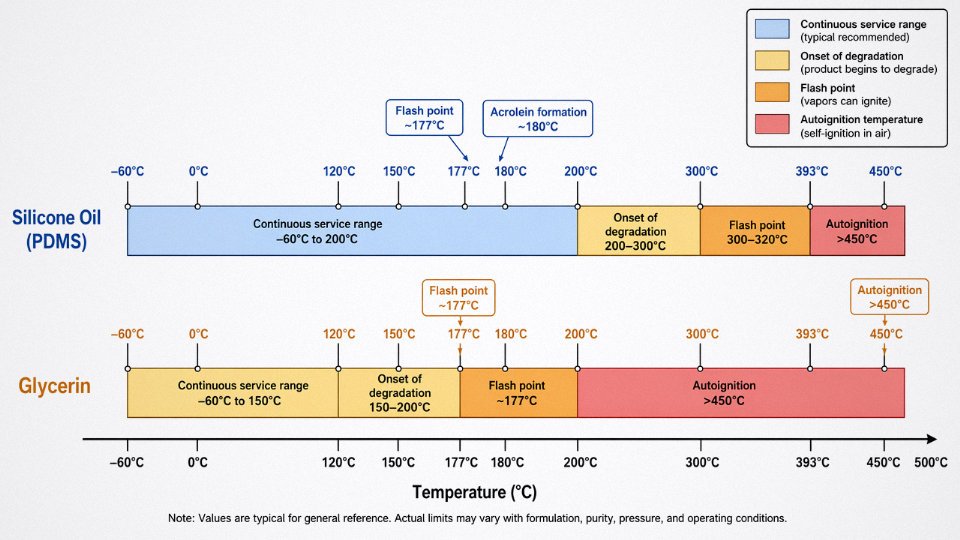
Benchmark Comparison: Thermal and Oxidative Properties
| Property | Silicone Oil (PDMS, standard grades) | Glycerin |
|---|---|---|
| Continuous service temp | –60°C to +200°C | Up to ~150°C practical limit |
| Flash point | 300–320°C (viscosity-dependent) | ~177°C |
| Autoignition temp | >450°C | ~393°C |
| Onset of degradation | ~200°C (siloxane reversion, catalyst-dependent) | ~150°C (discoloration); ~180°C (acrolein) |
| Cyclic thermal stability | Good to excellent through wide range | Moderate; degrades cumulatively above 140°C |
| Thermal conductivity | 0.15–0.16 W/m·K | ~0.285 W/m·K |
The right read of this table: if your operating temperature stays below 120°C and fire risk is low, glycerin’s heat-transfer advantage is real and the cost difference — roughly 5–8x cheaper per kilogram at bulk industrial pricing — may justify it. Push past 150°C, introduce any ignition risk, or run continuous cycling, and PDMS becomes the defensible choice regardless of price.
Viscosity Engineering: Selecting the Right Grade for Your Process
The viscosity catalog available in silicone oil is, frankly, unlike anything else in industrial fluids. PDMS runs from 0.65 cSt — that’s hexamethyldisiloxane, a fluid so thin it feels like water on your fingers — all the way up past 2,500,000 cSt, which is closer to a stiff gum than anything you’d recognize as a pourable liquid. That span covers roughly seven orders of magnitude, and it’s controlled almost entirely by polymerization chain length during manufacture. Longer Si–O backbone chains mean higher molecular weight, higher intermolecular entanglement, and sharply higher viscosity. Producers tune this during synthesis by controlling the ratio of cyclic siloxane monomer to chain-terminating endcapper — trimethylsiloxy groups for standard PDMS. The result is that a specifier can call out 50 cSt, 350 cSt, or 12,500 cSt and get a genuinely different product, not just a blend.
Glycerin offers no such catalog. It’s one compound, and its viscosity is fixed by temperature.
How Temperature Destroys Glycerin’s Usefulness as a Viscosity Reference
At 20°C, neat glycerin sits around 1,412 cSt — useful for some damping or calibration work, but already high enough to create pump cavitation headaches if your suction line is long. Warm it to 40°C and you’re down to roughly 280–290 cSt. At 80°C it’s somewhere in the 9–12 cSt range depending on purity, and at 100°C it behaves almost like light mineral oil. That’s a 150-fold drop across a temperature range that many industrial processes cross routinely, between a cold start-up in winter and steady-state operation.
A 350 cSt PDMS oil across that same range might shift from 350 cSt to maybe 180–200 cSt at 100°C. That’s a two-fold change versus glycerin’s hundred-fold swing. For any application where viscosity consistency matters — optical coupling, damping mechanisms, transformer fill — this difference is the whole ballgame.
A 350 cSt silicone oil maintains far more stable viscosity across 20–100°C than glycerin at equivalent starting viscosityTrue
PDMS has an exceptionally flat viscosity-temperature curve (high viscosity index), while glycerin's viscosity drops steeply and nonlinearly with temperature due to hydrogen bond disruption — well documented in ASTM and supplier viscometry data.
Blending Strategies and Compatibility Constraints
Glycerin is fully miscible with water, and that’s actually useful. A processor who needs, say, 80 cSt for a specific calibration bath or personal care base can dilute to a precise glycerin/water ratio and dial in the target viscosity with reasonable reproducibility. The caveat is that water activity increases with dilution, which creates microbial growth risk in any non-preserved system and changes the fluid’s thermal and electrical properties.
Silicone oil blending works differently. You can blend two PDMS grades together — mix a 100 cSt and a 1,000 cSt, and you’ll land somewhere between them, roughly predictable — but PDMS is incompatible with water and most polar solvents. It will not homogenize with glycerin. If you accidentally get water contamination into a silicone oil damping system (condensation in a poorly sealed reservoir is the usual culprit), you can get phase separation and emulsification artifacts that ruin viscosity uniformity. In cold climates especially, check your reservoir seals before winter shutdown.
Newtonian Behavior and What Happens When You Push Toward Gels
Both neat glycerin and standard PDMS oils are Newtonian across normal use conditions — shear rate doesn’t change their viscosity, which means your pump curves and flow calculations stay clean. This is worth stating plainly because some engineers assume high-viscosity fluids must be shear-thinning.
High-molecular-weight silicone gums and uncured silicone rubber precursors are a different story. Above roughly 500,000–600,000 cSt you’re entering territory where the fluid starts showing viscoelastic behavior, and the standard centrifugal or gear-pump sizing assumptions break down. If you’re handling ultra-high-viscosity PDMS in a production line — dispensing applications, for instance — expect significantly higher motor loads than a Newtonian viscosity calculation would suggest, and design in pressure relief accordingly.
Grade Selection by Application: A Working Reference
| Application | Recommended Fluid | Target Viscosity Range | Key Reason |
|---|---|---|---|
| Optical coupling fluid | Silicone oil (PDMS) | 50–1,000 cSt | Stable refractive index; no moisture ingress risk |
| Hydraulic damping | Silicone oil (PDMS) | 350–12,500 cSt | Flat viscosity-temperature curve; predictable damping force |
| Skin emollient base | Glycerin (diluted) | 5–50 cSt effective | Water miscibility; humectancy; regulatory acceptance |
| Food-grade mold release | Silicone oil (food-grade PDMS) | 350–1,000 cSt | Heat stability; non-reactive; FDA 21 CFR 178.3570 compliance |
| Transformer coolant | Silicone oil (PDMS) | 50–200 cSt | High flash point; electrical insulation; thermal range |
The emollient row is worth a note: glycerin itself isn’t typically used as a standalone emollient at its neat viscosity — it’s formulated in, and the “effective” flow behavior comes from the overall emulsion or gel system. Don’t confuse bulk glycerin viscosity with formulated product viscosity.
Regulatory, Safety, and Toxicology Status Across Key Industries
These two fluids sit in completely different regulatory universes, and that gap shapes procurement decisions as much as any viscosity curve does.
Glycerin: The Permissive Default
Glycerin’s regulatory story is almost uniquely clean. The FDA classifies it as Generally Recognized As Safe under 21 CFR 182.1320, which in practice means formulators can use it in food without a pre-market approval process — a meaningful time and cost advantage. The EU food additive listing is E422, with no numeric acceptable daily intake established because the toxicological profile simply doesn’t require one at normal use levels. In pharmaceuticals, USP and EP monographs cover it as a standard excipient, accepted as a solvent, humectant, and sweetening agent in oral liquids, topical creams, suppositories, and certain injectable formulations. That breadth is rare for any single raw material.
For facilities supplying Halal or Kosher markets, plant-derived glycerin — typically a co-product of biodiesel or vegetable oil refining — qualifies for certification with the right supply chain documentation. Animal-derived glycerin, usually from tallow, does not. Worth confirming the source every time you requalify a supplier, because crude glycerin lots can shift origin without obvious flagging.
Silicone Oil: Narrower Approvals, Higher Scrutiny
PDMS doesn’t enjoy the same blanket acceptance. The most practically important food-contact approval is FDA 21 CFR 173.340, which permits PDMS as an antifoaming agent in food processing at levels up to 10 ppm in the finished food. That sounds narrow, and it is — it covers uses like defoaming in sugar beet processing or fermentation, not general food contact. Equipment lubricants in food plants fall under NSF H1 certification, which covers incidental food contact. PDMS-based greases and oils can achieve H1 status, but you need to specify that grade explicitly from your distributor; standard industrial PDMS is not automatically H1-compliant, and the paperwork gap has caused audit failures more than once.
In cosmetics, EU Regulation (EC) No 1223/2009 governs the finished product rather than policing PDMS directly, but the 2020 restriction on cyclic siloxanes — specifically D4, D5, and D6 — in rinse-off cosmetics at concentrations ≥0.1% changed formulation strategies across the industry. Leave-on products are handled separately, and the regulatory picture continues to evolve. If your silicone oil supply contains detectable D4/D5/D6 as residual oligomers from polymerization (they often do at low levels), you need supplier analytical data confirming conformance, not just a safety data sheet.
PDMS (polydimethylsiloxane) has an oral LD50 in rats exceeding 50 g/kg body weight, placing it among the least acutely toxic industrial fluids tested.True
Multiple regulatory reviews, including assessments by the EU SCCS and EPA, confirm rat oral LD50 values >50 g/kg for PDMS, consistent with its classification as practically non-toxic by acute oral exposure.
Occupational Exposure and Thermal Decomposition
At ambient temperatures, neither fluid presents a serious inhalation hazard in normal liquid handling. Glycerin mist — generated by spray application or heated tanks — is subject to ACGIH TLV of 10 mg/m³ as a nuisance aerosol. PDMS has no established OSHA PEL, and acute toxicity is genuinely low. The hazard that catches plants off-guard is thermal decomposition: PDMS heated past roughly 150–200°C in confined, low-ventilation spaces can release formaldehyde and low-molecular-weight siloxane fragments. It’s not dramatic, but over months of operation in, say, an oven lubrication application, that’s a ventilation requirement, not a theoretical footnote.
Medical and Specialty Applications
Both fluids appear in ophthalmology and wound care, which says something about their biocompatibility — but through entirely different mechanisms. Glycerin is hygroscopic and osmotically active; it’s used in topical eye drops partly because it draws fluid toward the corneal surface. Silicone oil, particularly in retinal tamponade applications, works by occupying space and being inert. Injectable-grade silicone oil for syringe lubrication must meet USP requirements and is specifically tested on Type I borosilicate glass; using a standard industrial PDMS grade here is a regulatory and patient-safety error, not a cost optimization.
For medical device lubrication more broadly, ISO 10993 biocompatibility testing governs what can contact patient tissue. PDMS has extensive ISO 10993 data packages available from major suppliers, which is one reason it dominates catheter and seal lubrication. Glycerin is generally acceptable for mucous membrane contact but wouldn’t typically be chosen as a mechanical lubricant in device applications because of its water solubility and tendency to wash out.
Environmental Fate, Biodegradability, and Sustainability Trade-offs
Glycerin wins this round clearly — but not without caveats, and silicone oil’s picture is more nuanced than most ESG scorecards acknowledge.
Glycerin: The Biodegradability Case Is Solid
In standard OECD 301B testing, glycerin (glycerol) typically achieves greater than 90% biodegradation within 28 days, placing it firmly in the “readily biodegradable” category. Its BOD₅/COD ratio is favorable, which matters practically: it means a conventional activated-sludge wastewater treatment plant handles glycerin-contaminated effluent without special pre-treatment. If your facility already runs a biological effluent system, a glycerin spill or washdown stream usually integrates without upsetting the biology, provided loading rates stay reasonable.
Glycerin is readily biodegradable per OECD 301B, achieving >90% degradation in 28 daysTrue
Glycerol is a simple triol that aerobic bacteria metabolize efficiently; this result is well-documented in multiple independent OECD 301B test reports and consistent with its use as a carbon source in fermentation processes.
The sustainability story strengthens further when you trace the supply chain. Roughly 65–70% of industrial glycerin comes as a co-product of biodiesel (FAME) production, where it represents maybe 10% of output by weight. Its marginal carbon intensity in that context is genuinely low — most of the upstream agricultural and processing burden is allocated to the biodiesel fraction. Synthetic glycerin made via the propylene oxide route, which still exists in certain specialty supply chains, carries a substantially higher footprint; if your LCA methodology matters to a customer or certification body, confirming the production route with your supplier is worth the extra email.
Silicone Oil: Slower Degradation, but Not the Simple Villain
PDMS does not biodegrade quickly. In soil environments it undergoes slow abiotic hydrolysis to dimethylsilanediol (DMSD), which can then mineralize to silica, CO₂, and water over extended timeframes — months to years depending on soil moisture, pH, and temperature. It is not classified as PBT (persistent, bioaccumulative, and toxic) under EU REACH for most commercial viscosity grades, which is a meaningful regulatory distinction.
The real regulatory pressure sits on the cyclic volatile methylsiloxanes, specifically D4 (octamethylcyclotetrasiloxane) and D5 (decamethylcyclopentasiloxane). These are present as trace impurities or degradation intermediates in some PDMS formulations and are under active scrutiny for aquatic toxicity and persistence. The EU restricted D4 and D5 in wash-off cosmetics above 0.1% w/w. If your application involves any route to aquatic exposure — cooling systems with open-loop discharge, spray lubricants near drainage — verify the cyclic siloxane profile in your specific grade’s safety data sheet. Some suppliers now offer “low-cyclic” PDMS grades for exactly this reason.

Production Footprint: Where PDMS Carries Real Weight
PDMS synthesis involves silica reduction, chloromethane production, and the Müller-Rochow direct process — all energy-intensive steps. Life cycle assessment data from industry and academic sources consistently shows PDMS carrying a cradle-to-gate carbon intensity roughly 5–10× higher than biodiesel-derived glycerin, though the actual figure depends heavily on the energy mix at the production facility and the viscosity grade being manufactured. Higher-viscosity grades require more polymerization steps and tend to sit toward the upper end of that range.
Disposal and End-of-Life Realities
Used glycerin, even contaminated, has exit routes: anaerobic digestion, co-firing in industrial boilers as a supplemental fuel (heating value around 16–18 MJ/kg, give or take), composting in appropriate concentrations, or straight biological wastewater treatment. In practice, biodiesel producers and glycerin refiners have developed entire secondary markets around this.
Used silicone oil is a different problem. Landfill disposal is discouraged under the EU Waste Framework Directive, and in practice most facilities send spent silicone fluids to licensed incineration or industrial solvent recovery. Incineration works — PDMS burns cleanly to silica, CO₂, and water — but it requires appropriate equipment and adds cost that doesn’t show up in the purchase price comparison. Budget roughly €0.30–€0.80 per kg for compliant disposal in Western Europe, depending on contamination level and volume.
Procurement-Level Sustainability Levers
If your organization carries ESG reporting obligations or supplies into markets where customers require bio-based documentation, the tools exist. Bio-certified glycerin with RSPO-linked or palm-free chain-of-custody is commercially available, though at a modest price premium — expect to pay 10–25% above commodity crude glycerin pricing for certified grades, depending on supplier and order volume. For silicone, Ecocert has approved certain silicone alternatives (not PDMS itself, but some cyclopentasiloxane substitutes and polyglyceryl siloxanes), and a few specialty suppliers provide partial LCA datasets on request. The quality of that LCA data varies considerably; ask for ISO 14040/14044 conformance before treating it as credible for a product disclosure.
The honest summary: glycerin’s end-of-life burden on a procurement team is low. Silicone oil’s is manageable but requires planning, and the cyclic siloxane question deserves a direct conversation with your supplier rather than a reliance on a generic SDS.
Application-by-Application Decision Matrix: Where Each Fluid Wins
The sections above establish what each fluid is. This one answers the harder question: which one do you actually specify, and why does getting it wrong cost you money or a batch rejection?
Personal Care and Cosmetics
Glycerin and silicone oil are both ubiquitous in this space, but they do completely different jobs and are rarely interchangeable. Glycerin is a humectant — it pulls water from the dermis and atmosphere into the stratum corneum. That mechanism is the whole point in moisturizers, serums, and gel-based products, where concentrations typically run 2–15% depending on the base. No silicone fluid does that. It physically cannot; the mechanism isn’t there.
Silicone oil (primarily dimethicone and cyclopentasiloxane, or D5) addresses a different consumer expectation: slip, spreadability, and that dry, non-greasy after-feel that aqueous or natural-oil bases struggle to deliver. In hair care, dimethicone deposits on the cuticle and reduces friction between fibers — measurably cutting combing force in lab work. Heat-protectant sprays lean on the same property: dimethicone’s thermal stability creates a light insulating layer against styling tools running at 180–230°C. Glycerin at those temperatures would char and smell terrible.
In practice, many finished personal care formulations contain both — glycerin in the water phase for moisture retention, dimethicone emulsified or as a separate phase for sensory. They’re complementary, not competing.
Pharmaceutical and Medical Devices
Both fluids are compendial (USP, Ph. Eur.), but the use cases diverge sharply. Glycerin is the default for oral liquids, suppository bases, and otic (ear) preparations — well-established safety data, tolerable taste, and the right hydroscopic properties for mucosal contact. For parenteral applications, the picture flips. Silicone oil (specifically low-viscosity PDMS, usually 350–1,000 cSt grades with tight extractables specs) is the standard syringe barrel lubricant in pre-filled syringes. It allows the plunger to slide consistently at 0.2–0.8 N break-loose force without leaching into the drug product at levels that trigger immunogenicity concerns — a real regulatory flashpoint with some biologics.
Silicone oil is the standard lubricant in pre-filled syringes for parenteral drug products.True
PDMS is applied to glass and polymer syringe barrels as a functional lubricant in pre-filled syringe manufacturing; this is documented in FDA guidance on container-closure systems and widely referenced in parenteral packaging literature.
Intraocular tamponade (retinal reattachment surgery) uses silicone oil specifically because its refractive index and density are compatible with the vitreous cavity and it remains stable indefinitely without the osmotic complications a water-miscible fluid would cause.
Food Processing
Glycerin is a listed food additive (E422 in the EU, GRAS in the US) used directly in confectionery as a humectant and plasticizer, in soft-coated tablets, and as a solvent for flavor extracts. Silicone oil enters food processing almost exclusively as an anti-foam at trace concentrations — the permitted level in most jurisdictions is 10 ppm in the final food product, and the working concentration in a fryer or fermentation tank will be considerably lower than that. Both fluids have NSF H1 variants for incidental food contact lubrication on processing equipment, though glycerin-based lubricants tend to wash out faster and require more frequent reapplication, which is a real maintenance consideration on high-wash-down lines.
Thermal and Heat-Transfer Systems
Glycerin-water mixtures are a sensible, cost-effective choice for closed-loop HVAC and solar thermal collectors operating up to roughly 120–150°C. The low fluid cost matters when a system holds several hundred liters of heat-transfer medium. Above that temperature ceiling, glycerin’s viscosity becomes problematic at startup (especially in cold climates), and oxidative degradation accelerates noticeably above 150°C, leaving acidic byproducts that attack copper and aluminum components.
Silicone oil earns its price premium in high-temperature reactor heating jackets, oil baths running 200–300°C, and aerospace thermal loops where long service intervals and predictable viscosity across a wide temperature range matter more than fluid cost. The flat viscosity-temperature curve is the key advantage — a 100 cSt silicone oil at 20°C is still quite manageable at 200°C, whereas glycerin at 20°C is nearly solid and requires heating just to pump.
Electronics and Electrical Insulation
This is the clearest win column for silicone oil. Its dielectric constant sits around 2.6–2.8, volume resistivity is high (typically 10¹³–10¹⁵ Ω·cm), and it is chemically inert to copper, aluminum, and most polymeric insulation materials. Transformer cooling and high-voltage cable filling rely on exactly these properties.
Glycerin is unsuitable here — full stop. Its dielectric constant runs around 42–47, it is hygroscopic (absorbing ambient moisture rapidly once a system opens), and absorbed water dramatically worsens its electrical properties. It also promotes galvanic corrosion on copper and tin contacts. Anyone who has accidentally used a water-miscible fluid near energized components understands how quickly that goes wrong.
Decision Matrix
| Application | Glycerin Fit (1–5) | Silicone Oil Fit (1–5) | Recommended Choice |
|---|---|---|---|
| Skin moisturizer / humectant | 5 | 1 | Glycerin |
| Hair care slip / heat protection | 2 | 5 | Silicone oil |
| Oral / mucosal pharmaceutical | 5 | 2 | Glycerin |
| Pre-filled syringe lubrication | 1 | 5 | Silicone oil |
| Intraocular tamponade | 1 | 5 | Silicone oil |
| Food humectant / plasticizer | 5 | 1 | Glycerin |
| Anti-foam in food processing | 2 | 5 | Silicone oil |
| HVAC / solar thermal (≤150°C) | 4 | 3 | Glycerin (cost-driven) |
| High-temp reactor / bath (>180°C) | 1 | 5 | Silicone oil |
| Transformer / electrical insulation | 1 | 5 | Silicone oil |
Fit scores reflect performance match, not commercial availability. A “3” for silicone oil in low-temperature heat transfer reflects the fluid’s technical capability but ignores the cost penalty — which is real and, on large-volume systems, often decisive.
Cost Analysis and Total Cost of Ownership Beyond the Price Tag
Unit price is where most procurement conversations start — and, unfortunately, where too many of them end. A buyer sees glycerin at $0.60–$1.20/kg (industrial crude) versus PDMS 350 cSt at $3.50–$6.00/kg and closes the spreadsheet. That comparison is real, but it’s only the first chapter.
Unit Cost Benchmarks and Grade Premiums
The grade jump is brutal on both sides. USP-grade glycerin runs $1.80–$3.20/kg depending on purity, origin, and whether your supplier has the documentation infrastructure your QA team requires. Medical-grade silicone oil — the kind going into ophthalmology or implantable-adjacent applications — lands at $15–$40/kg, with the upper end driven almost entirely by lot traceability, DMF support, and batch release testing rather than the chemistry itself. For most industrial applications you’ll never touch those tiers, but the moment your process touches a regulated product stream, the material cost conversation completely changes shape.
Volume Efficiency: The Density Correction Nobody Does
Glycerin has a density of 1.261 g/cm³. Silicone oil (350 cSt PDMS) sits around 0.96 g/cm³. Procurement buys by weight; systems fill by volume. That gap matters more than it looks.
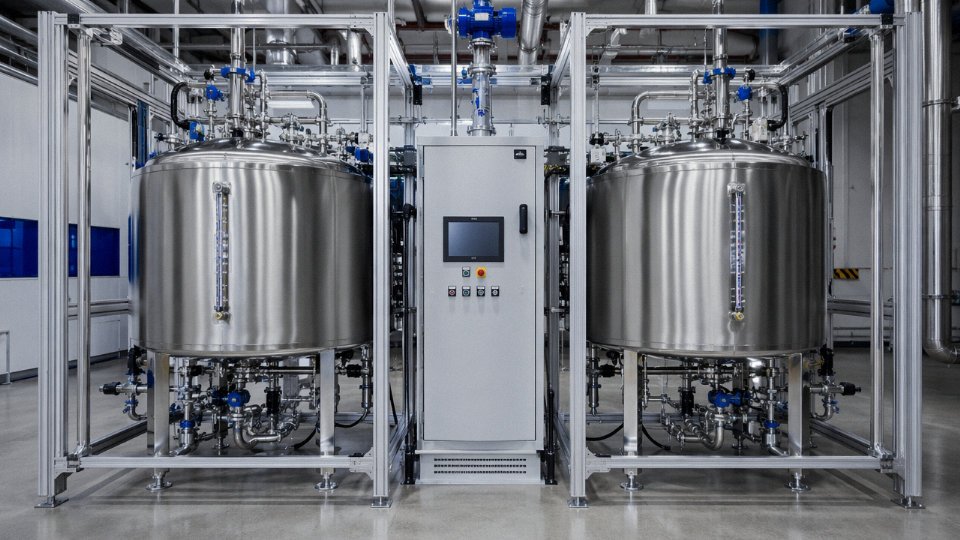
Take a 200 L closed heat-transfer loop — a modest size for a reactor jacket or a temperature-controlled process skid. At 1.261 g/cm³, a 200 L glycerin fill weighs roughly 252 kg. At industrial crude pricing of $0.90/kg, that’s about $227 for the fluid. The same 200 L of 350 cSt silicone oil weighs approximately 192 kg. At $4.75/kg mid-range, that’s roughly $912. The silicone fill is still around four times the upfront material cost. No sleight of hand there — silicone is genuinely more expensive to fill.
But that’s one fill.
Service Life and Replacement Frequency
In a properly sealed thermal system, PDMS silicone oil is almost boring in its stability. Five to ten years between fluid changes is realistic in practice, assuming no seal failures introduce water or process contamination. The chemistry doesn’t acidify, doesn’t support microbial growth, and doesn’t darken appreciably unless you’re running temperatures above its rated ceiling.
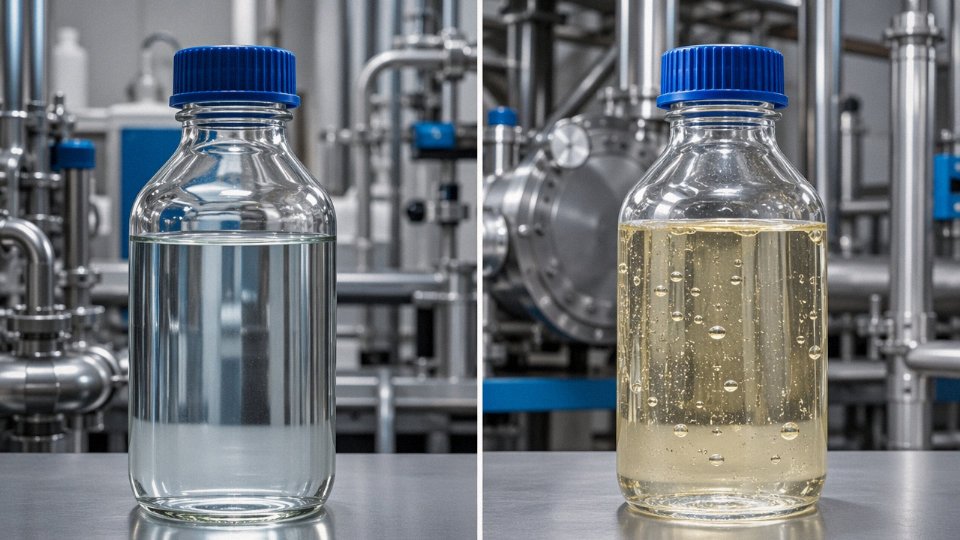
Glycerin in the same application is a different story. It’s hygroscopic, so water ingress — through vent ports, pump seals, expansion tank exposure — is a when, not an if. Once water content climbs, you’ve created a growth medium. Microbial fouling, acidification from organic degradation, and progressive color change are all documented failure modes in glycerin thermal systems that aren’t maintained aggressively. Annual fluid replacement is common. Some high-humidity plants push that to every six to nine months.
Run the 200 L example over a ten-year horizon. Ten glycerin fills at $227 each: roughly $2,270 in material, plus labor, flushing solvent, and downtime for each changeover — call it $150–$400 per event depending on your plant’s labor rate and system complexity. That’s potentially $1,500–$4,000 in change-out costs on top of fluid. The single silicone fill at $912, with no planned replacements, starts looking different.
Glycerin in closed thermal systems routinely requires annual replacement due to microbial growth and acidificationTrue
Glycerin's hygroscopicity promotes water ingress, and its organic structure supports microbial activity. Industry maintenance records and fluid-testing services consistently flag microbial contamination and pH drop as leading causes of glycerin system fluid changes, typically within 12–18 months in non-hermetic systems.
Compliance Cost Adder
This is the line item that disappears in a standard purchase order but shows up in your quality budget. Pharma-grade or food-grade certification doesn’t just mean paying more per kilogram — it means Certificate of Analysis review, supplier qualification audits, incoming QC testing, and documentation retention. Depending on your regulatory environment, a single fluid qualification can run $5,000–$25,000 in internal and external costs before you’ve ordered a single drum. Both fluids carry that burden at medical or food grade, but because food-grade glycerin is far more widely available from qualified suppliers, the supply-chain qualification cost is usually lower and the approved supplier list is longer.
Disposal Cost Differential
Used glycerin from a non-food process typically goes to wastewater treatment or composting streams, often at $0.05–$0.15/L depending on local jurisdiction and contamination level. Some facilities running biodiesel-derived crude glycerin can arrange zero-cost or even paid-collection arrangements with waste processors, though that depends heavily on regional market conditions.
Used silicone oil is a different disposal category in most jurisdictions. It doesn’t biodegrade readily, and many waste contractors classify it as a non-hazardous but regulated industrial waste requiring licensed disposal — typically $0.30–$0.80/L, with the high end applying if there’s any cross-contamination with process chemicals. For the 200 L system, that’s $60–$160 for a single silicone drain, versus $10–$30 for glycerin. Over a ten-year service life with one silicone drain, the disposal cost is a minor factor. For glycerin with ten drains, cumulative disposal costs are $100–$300 — roughly comparable.
The TCO model, done honestly, usually closes the gap between glycerin and silicone oil considerably once you account for replacement cycles, change-out labor, and regulatory overhead. It doesn’t always flip the decision, but it almost always changes the margin. Build the full model before you sign the purchase order.
Frequently Asked Questions About Silicone Oil and Glycerin
Can silicone oil be substituted for glycerin in a cosmetic formulation?
Not on a 1:1 basis — and the reason goes deeper than viscosity matching. Glycerin is a humectant: it draws water from the dermis and atmosphere into the stratum corneum, actively increasing skin hydration. Silicone oil (typically cyclopentasiloxane or PDMS at 5–50 cSt for personal care) is an emollient and occlusive agent — it sits on the skin surface, reduces transepidermal water loss, and imparts slip, but it contributes essentially zero moisture-attracting capacity on its own.
Swapping them directly collapses your water-activity balance and will typically leave the finished product feeling either tacky (if you compensate with extra humectant from another source) or dry and film-like (if you don’t). Formulators who want both effects usually run a hybrid: glycerin at 3–8% for humectancy alongside a low-viscosity silicone at 2–10% for skin feel and spreadability. That combination is well-established in moisturizer and serum development and genuinely earns its place on the ingredient list rather than being a compromise.
Is glycerin safe to use at high temperatures in industrial equipment?
Glycerin begins generating acrolein — a lachrymatory, mucous-membrane irritant classified as a probable human carcinogen — above roughly 180°C under dehydration conditionsTrue
Acrolein (prop-2-enal) forms when glycerol undergoes acid-catalyzed or thermal dehydration. OSHA ceiling limit is 0.1 ppm. This is a well-documented decomposition pathway confirmed in food-frying and industrial processing literature.
At process temperatures above 180°C, glycerin is a poor choice for heat-transfer or lubrication duties regardless of its low cost. OSHA’s ceiling limit for acrolein is 0.1 ppm — a threshold that can be exceeded in poorly ventilated equipment bays running hot glycerin in open or semi-open systems. Silicone oil (PDMS) is the straightforward engineering answer above that threshold: flash point in the 300–320°C range, autoignition above 450°C, and no meaningful decomposition products at temperatures that would already be destroying most organic fluids. If your process runs heat-transfer loops at 150–250°C, silicone oil isn’t the premium option — it’s the correct one.
Which fluid performs better in sensitive skin and dermatological applications?
Glycerin has a long clinical track record in wound care and barrier-repair formulations; it’s non-comedogenic, non-sensitizing in the overwhelming majority of patients, and is used in products for neonatal and eczema-prone skin. Silicone oils — particularly the cyclics like D4 and D5 — carry more regulatory scrutiny in the EU (D4 and D5 are restricted in wash-off cosmetics above 0.1% under REACH). Linear PDMS and phenyl silicone fluids have a cleaner current regulatory profile and low comedogenicity ratings, but neither fluid category causes significant allergic contact dermatitis at use levels. In practice, dermatologists tend to reach for glycerin-based formulations for compromised or reactive skin because the mechanism of action is better understood and the regulatory picture is simpler.
Can glycerin and silicone oil be blended together?
They are immiscible under ambient conditions — pour them together and you get phase separation within minutes. Stable blends require an emulsifier system, usually a silicone-based emulsifier such as PEG-dimethicone or cetyl PEG/PPG-10/1 dimethicone, combined with adequate shear during manufacture. Silicone-glycerin emulsions are commercially used in skin-conditioning serums and some release-agent sprays where you want both the lubricity of silicone and the humectancy or water-miscibility of glycerin. Getting the emulsion stable across a temperature cycle from 5°C to 40°C (realistic warehouse-to-consumer shelf swing) takes formulation work; stability testing at 45°C for 8–12 weeks is the minimum most contract manufacturers will accept before sign-off.
What shelf life can I realistically expect under warehouse storage?
Glycerin is hygroscopic — left in an opened or poorly sealed container, it will absorb atmospheric moisture and dilute itself, which matters for any application where concentration is specified. In sealed HDPE drums with a desiccant-equipped vent, industrial glycerin is generally stable for roughly 2 years before you should retest moisture content and microbial load. Silicone oil is considerably more forgiving: sealed stainless or HDPE containers, away from tin or platinum catalysts (which can trigger crosslinking), away from direct UV, and you’re looking at 5–10 years of usable shelf life depending on grade. The 350 cSt general-purpose grade tends to sit at the longer end of that range; very low-viscosity grades (below 5 cSt) are slightly more susceptible to contamination effects.
Are food-grade versions of both fluids available?
Yes, for both — but the pathways differ. Glycerin (glycerol) holds FDA GRAS status and is listed in 21 CFR 182.1320 with no specific use-level cap in most food categories; EU food additive number E422. Food-grade silicone (dimethylpolysiloxane, E900 in the EU) is approved as an antifoaming agent in frying oils and certain beverages at up to 10 mg/kg under EU regulations, and under FDA 21 CFR 173.340 for specific defoaming applications. The labeling and documentation burden is higher for silicone because use-level limits are tighter and application-specific — procurement teams need to verify the specific food-contact use case against the applicable regulation rather than assuming blanket GRAS coverage.
Which fluid is less harmful if discharged to a municipal sewer?
Glycerin wins here, clearly. It is readily biodegradable — BOD/COD ratios typically above 0.5, meaning it breaks down quickly in aerobic wastewater treatment. Most municipal discharge permits in North America and Europe do not specifically restrict glycerin at low concentrations, though high COD loads from bulk spills still require reporting. PDMS silicone oils are not readily biodegradable; they adsorb onto sewage sludge and persist in the environment, and some municipal treatment works specifically restrict them. If your process involves any realistic drain-to-sewer loss pathway — cleaning, spillage, product rinse-down — glycerin is the operationally safer choice from a discharge-permit standpoint. Budget for proper silicone waste segregation and licensed disposal if you’re running silicone oil at any meaningful volume.
Engineering Selection Checklist and Final Recommendations
By the time you’ve worked through operating conditions, regulatory requirements, and TCO, the final call usually isn’t that hard — but having a structured checklist prevents the kind of specification errors that only show up six months into production, when the fluid you picked is gelling in an unheated tank or failing a food-contact audit.
Nine-Question Selection Checklist
Work through these in order. The first question that gives you a hard constraint tends to dominate the rest.
- Operating temperature range. If your process exceeds 150°C continuously, or cycles below –30°C, glycerin is effectively disqualified without significant formulation work. Silicone oil (PDMS) handles –60°C to +200°C in standard grades; high-phenyl variants push that ceiling further. Glycerin’s sharp viscosity drop above 60–80°C is manageable in some heat-transfer loops but creates real problems in precision lubrication or damping applications.
- Required viscosity stability. If viscosity must stay within a tight band across seasonal temperature swings — say, a damper or a float-level gauge that runs in an unheated outdoor enclosure — glycerin’s steep viscosity-temperature curve is a liability. Silicone oil’s viscosity index is genuinely one of the flattest of any industrial fluid.
- Regulatory approval needed. List every market and every contact surface before specifying. FDA 21 CFR, EU Reg 10/2011, Halal/Kosher, NSF H1 — glycerin clears most of these with minimal documentation burden. PDMS food-contact approval exists (FDA 21 CFR 172.888, 178.3570) but is grade- and application-specific, and supplier paperwork is thicker.
Water compatibility. Glycerin is miscible with water across all ratios — a feature in aqueous formulations, a hazard in moisture-sensitive electrical or lubrication environments. Silicone oil is hydrophobic. Know your system.
Environmental disposal requirements. Glycerin biodegrades readily; silicone oil does not, and in some jurisdictions PDMS waste requires licensed collection. If your facility runs a lean waste program or operates under strict discharge permits, glycerin’s end-of-life cost can be near zero compared to a $0.80–$2.50/kg disposal contract for spent silicone fluid (rate depends on volume, location, and contamination level).
Budget tier. Glycerin runs roughly $0.60–$1.20/kg at industrial crude grade. PDMS 350 cSt runs $3.50–$6.00/kg in bulk. For large-volume, single-use or high-loss applications, that spread is decisive.
Service life expectations. In a sealed, recirculating system with controlled temperature, silicone oil service intervals measured in years are realistic. Glycerin in open or semi-open systems absorbs moisture, supports microbial growth if contaminated, and needs more active monitoring.
Electrical insulation needs. If the fluid contacts live components — transformer cooling, electronics potting, capacitor fill — silicone oil is the answer. Glycerin’s ionic content and hygroscopicity make it a poor insulator in practice.
Food or pharma direct-contact status. If the answer is yes and the process is aqueous or involves direct ingestion risk, glycerin is almost always faster to approve and simpler to defend in an audit.
Four Definitive Recommendations
Choose glycerin unambiguously when you need food- or pharma-safe direct contact, operating temperatures stay below 120°C, the application is aqueous-based, and volume is high enough that the five-to-one price difference over silicone is meaningful. Cosmetic humectants, pharmaceutical tablet coating lubrication, and food-processing heat-transfer fluids in this envelope are glycerin’s domain.
Choose silicone oil unambiguously when operating temperature exceeds 150°C, electrical insulation is required, long service intervals are a maintenance priority, or viscosity must remain predictable below 0°C. High-temperature mold release, transformer cooling, precision damping instruments, and conformal coating baths belong here. No reasonable glycerin formulation competes in these conditions.
A glycerin-water blend is optimal when you need to trim viscosity for pump compatibility in a food-contact heat-transfer loop, or when you’re using it as a freeze-point depressant down to roughly –15°C to –20°C (depending on concentration). A 60/40 glycerin-water blend hits a workable viscosity in the 5–15 cSt range at 25°C and stays GRAS-compliant — that combination is genuinely hard to beat for moderate-duty food-plant cooling circuits.
A silicone oil grade upgrade over standard mineral oil is justified when you’re seeing unacceptable viscosity drift across seasons, when mineral oil carbonization is fouling heater surfaces, or when a process pushes past 120°C and you’re already replacing mineral oil charges every few months. The price premium over mineral oil is real — expect to pay two to four times more per kilogram — but one avoided unplanned shutdown in a high-OEE environment typically recovers that cost fast.
PDMS silicone oil is approved for direct food contact in all applications under FDA regulationsFalse
FDA approval for PDMS in food contact is application- and grade-specific under 21 CFR 172.888 and 178.3570. Not all PDMS grades or use scenarios are covered, and regulatory review is required for each application.
Hybrid and Emerging Alternatives
For anyone building a five-year procurement roadmap: glycerin-based ionic liquids are being actively developed for high-temperature heat-transfer and lubrication where biodegradability is mandated — still largely pre-commercial at scale, but worth watching. Phenyl-modified silicone oils (diphenyl or methyl-phenyl PDMS) are commercially available now and extend the useful temperature ceiling significantly while improving radiation resistance — relevant for aerospace, nuclear adjacent, and some semiconductor process environments. Bio-silicone hybrids, which attempt to graft silicone functionality onto bio-derived backbones, are in early-stage commercial testing; the value proposition is silicone-like stability with improved biodegradability, but independently verified field data is thin as of this writing.
Sourcing Note
Before locking in a specification, request a third-party Certificate of Analysis confirming viscosity at your actual operating temperature — not just the standard 25°C test point. Verify flash point independently if the application involves any heat source. Review the supplier SDS carefully for glycerin crude grades, since biodiesel-derived glycerin can carry methanol or catalyst residues that affect food-contact and pharmaceutical compliance. For silicone oil, confirm the grade’s regulatory status in writing; “cosmetic grade” and “food grade” are not interchangeable with industrial PDMS even when the viscosity is identical.