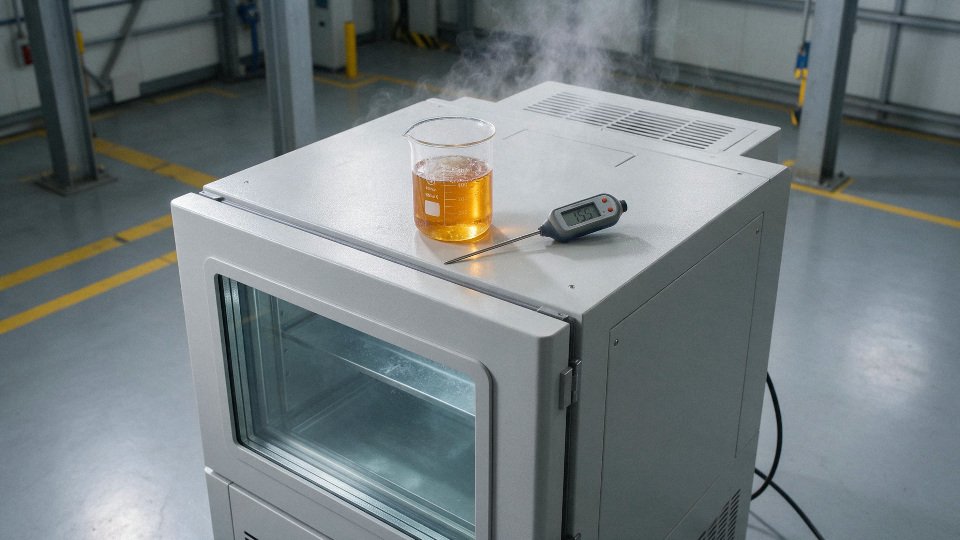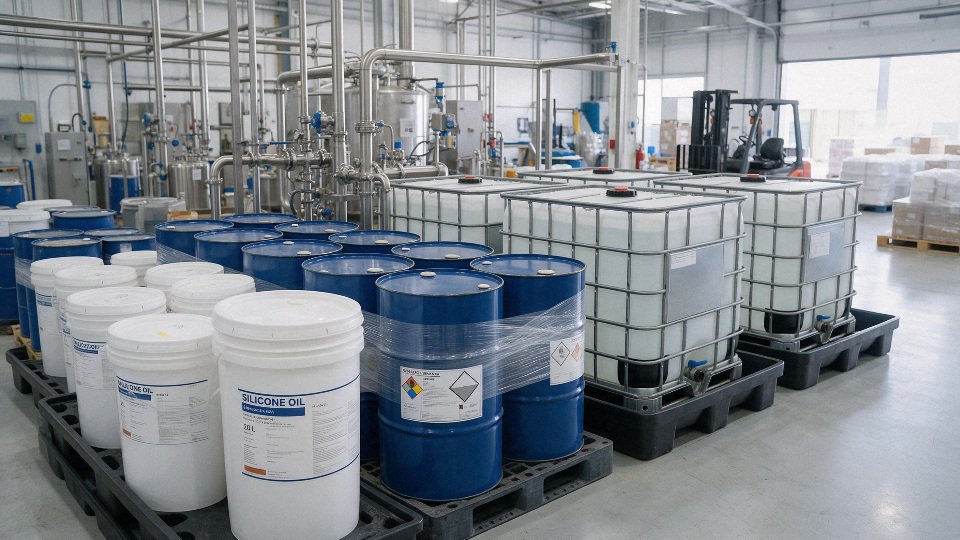
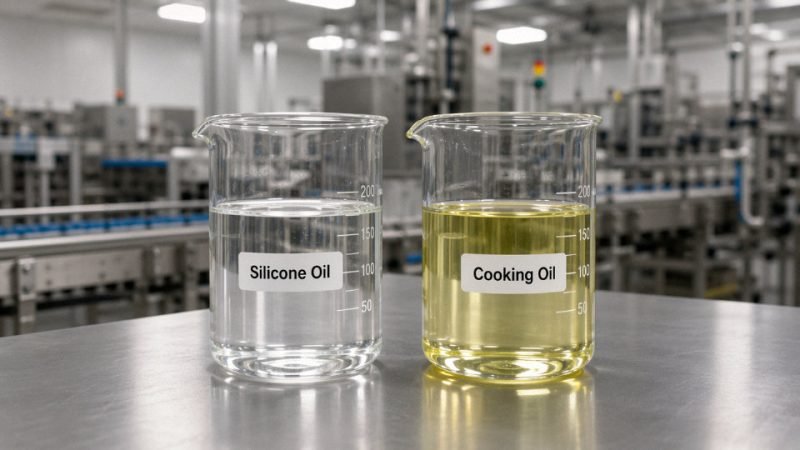
Someone grabbed the wrong drum off the shelf — it happens more than most plants admit. One is food-grade, one is a precision industrial fluid, and by the time the mix-up shows up, you’re looking at contaminated product, seized bearings, or a failed FDA audit. The confusion is understandable: both are clear or pale-yellow liquids, both feel slippery, and in a pinch some maintenance techs have genuinely used one where the other belongs. That “patchwork fix” mindset costs real money — rework, unplanned downtime, and in food-processing environments, potential recall exposure.
Silicone oil (polydimethylsiloxane, PDMS) and cooking oil differ fundamentally in thermal stability, viscosity range, chemical inertness, and regulatory status. Silicone oil stays stable from roughly -50°C to 200°C continuous use and spans viscosities from under 1 cSt to over 2,000,000 cSt, while cooking oils degrade above their smoke points — typically 230°C or below — and cluster in a narrow 30–84 cSt band. They are not interchangeable.
What makes this comparison genuinely interesting, though, is where the lines blur — not in the obvious industrial-vs-kitchen split, but in the overlapping territory: heat-transfer baths, mold-release applications, cosmetic formulations, and food-equipment lubrication, where the choice between these two fluid families carries consequences that aren’t immediately obvious from a spec sheet alone. The global silicone fluid market sits around USD 3.2 billion and is still growing; edible oils command over USD 220 billion. Those numbers reflect entirely different demand structures, and understanding why tells you most of what you need to know about how each fluid actually behaves under load.
Molecular Architecture: Siloxane Backbone vs. Triglyceride Ester Chains
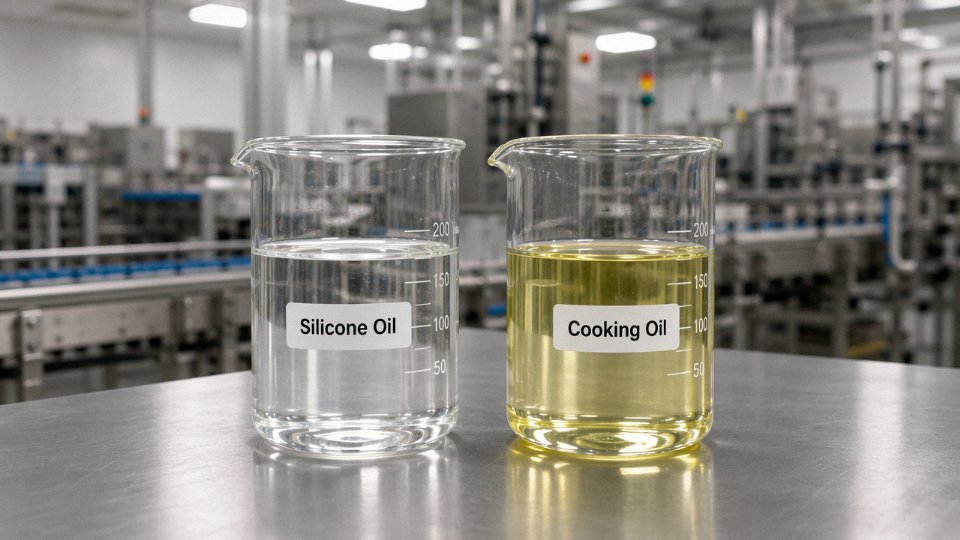
The visual similarity between these two liquids evaporates the moment you look at their molecular structure. Everything — thermal behavior, oxidation resistance, food safety status, surface behavior — flows directly from what’s happening at the bond level.
The Siloxane Backbone: Why Si-O Changes Everything
Polydimethylsiloxane (PDMS) is built on an alternating silicon-oxygen spine: -Si(CH₃)₂-O- repeating units, sometimes thousands of them in a single chain. The Si-O bond carries an energy of roughly 452 kJ/mol, compared to about 360 kJ/mol for a typical C-C bond in an organic molecule. That’s not a marginal difference — it means the backbone resists thermal cleavage and oxidative attack at temperatures that would shred most organic lubricants. Bond length runs around 1.64 Å, slightly longer than a C-C bond, and the Si-O-Si angle is wide (~143°), which gives the chain unusual rotational freedom. That flexibility is part of why silicone oil maintains workable viscosity at -50°C when a hydrocarbon fluid has already turned to sludge.
The methyl side groups sitting off the silicon atoms are hydrophobic and tightly packed enough to shield the backbone from moisture and oxygen. In practice, on a plant floor, this translates to a fluid that you can leave in an oven-chain lubrication system at 180°C for months without meaningful viscosity drift or deposit formation. Not indefinitely — high-phenyl variants push the ceiling higher, but straight PDMS does start to oxidize above 200°C with sustained exposure.
Triglycerides: A More Complex, More Vulnerable Architecture
Cooking oils are principally triglycerides: a glycerol molecule with three fatty acid chains esterified at its hydroxyl groups. The fatty acids vary — palmitic and stearic for saturated chains, oleic for monounsaturated, linoleic and linolenic for polyunsaturated. That variation matters enormously. Each double bond in an unsaturated chain is a reactive site where atmospheric oxygen can initiate a free-radical cascade. Sunflower oil, high in linoleic acid (two double bonds per chain), oxidizes considerably faster than high-oleic versions or a mostly-saturated coconut oil. Degree of unsaturation is essentially a proxy for oxidation risk.
The ester linkage itself — C(=O)-O — is also more vulnerable than Si-O under heat. Hydrolysis splits it in the presence of water and heat; thermolytic cracking produces acrolein, aldehydes, and polymerized gum. Any food manufacturer who’s let a fryer oil go too many cycles knows what that smells like.
The Si-O bond in PDMS is meaningfully stronger than the C-C bonds found in triglyceride fatty acid chains, contributing to superior thermal stability.True
Si-O bond dissociation energy is approximately 452 kJ/mol versus roughly 347–360 kJ/mol for C-C bonds, a difference that directly explains why PDMS resists thermal degradation at temperatures that cause fatty acid chain scission in vegetable oils.
Polarity, Surface Tension, and Why That Matters Operationally
Silicone oil is non-polar, with surface tension sitting around 20 mN/m. It spreads aggressively on most surfaces and doesn’t play well with polar solvents. Cooking oils are semi-polar — surface tension roughly 30–35 mN/m — which makes them better candidates for emulsification with water-based systems and explains why they interact with food matrices in ways silicone oil never could.
On a mold-release line, that low surface tension in silicone is an asset: you get even, thin coverage. In a food-contact scenario, it becomes a contamination risk if the wrong fluid gets near product.
Side-Chain Engineering: A Design Freedom Nature Doesn’t Offer
Silicone fluid manufacturers can substitute phenyl groups for methyl groups to raise refractive index and improve high-temperature oxidative stability further. Vinyl or hydrogen substituents enable crosslinking for gel and elastomer applications. This is deliberate molecular tuning — viscosity, compatibility, thermal ceiling, and optical properties are all adjustable. A refinery produces triglycerides with a composition governed by the crop, the growing season, and the extraction process. There is no “phenyl-modified canola oil.” Natural triglycerides also carry minor compounds — tocopherols, phospholipids, phytosterols — that provide genuine nutritional value but in a high-heat industrial context accelerate oxidation rather than retard it, since they denature and contribute to deposit formation well before the bulk oil degrades.
Thermal Performance and Smoke Point: Where Each Liquid Fails Under Heat
Heat is where the two fluids diverge most sharply — and where using the wrong one has real consequences, whether you’re running a jacketed reactor or a commercial fryer.
Smoke Point Is Not a Single Number
Most procurement specs and food-safety guides quote smoke point as if it were a fixed property. It isn’t. The smoke point of a cooking oil shifts depending on its free fatty acid (FFA) content, how thoroughly it was refined, and how long it’s been sitting in storage or recirculating through a frying system. A fresh, highly refined sunflower oil might hold to roughly 232°C before visible smoke appears. The same oil after several hours of frying — FFA content now elevated from hydrolysis — can start breaking down 20–30°C lower than that. Extra-virgin olive oil, barely refined and higher in natural FFAs, smokes around 190°C under typical conditions. Refined coconut oil sits near 204°C; clarified butter (ghee), with most milk solids removed, reaches around 250°C.
| Oil Type | Approximate Smoke Point | Key Variable |
|---|---|---|
| Refined sunflower | ~232°C | Refining level, FFA content |
| Extra-virgin olive oil | ~190°C | High natural FFA, unrefined |
| Refined coconut | ~204°C | Saturated fat content stabilizes it somewhat |
| Clarified butter (ghee) | ~250°C | Milk solid removal; batch quality varies |
These figures assume fresh oil. In practice, any oil cycling through process equipment degrades progressively, so the real operational limit drops with use.
What Overheating Actually Does to Cooking Oil
Past the smoke point, the triglyceride structure doesn’t just discolor — it fragments. Acrolein forms from glycerol decomposition; aldehydes and polycyclic aromatic hydrocarbons (PAHs) appear as fatty acid chains oxidize and crack. From a food safety standpoint, some of these compounds are classified as probable carcinogens. From a machinery standpoint, they polymerize. The result is a varnish-like carbonaceous deposit that coats heat exchanger surfaces, clogs valves, and in recirculating systems can foul sensors. I’ve seen fryer heat exchangers that looked clean from the outside but had a millimeter-thick lacquer layer on internal surfaces — enough to drop heat transfer efficiency measurably and force an unplanned cleaning shutdown.
Cooking oil smoke point is a fixed value regardless of oil age or FFA contentFalse
Smoke point decreases as free fatty acid content rises during storage and use; a refined oil may lose 20–30°C of thermal headroom after extended frying service.
Silicone Oil’s Thermal Envelope — and How It Fails
Standard polydimethylsiloxane (PDMS) fluid is rated for continuous service in the 150–200°C range, with short excursions to around 250°C depending on the specific grade and supplier. Phenyl-modified silicones push that ceiling to 250–300°C continuous, which is why they show up in high-temperature bath applications and certain solar thermal collector circuits. Fluorosilicone variants handle chemical aggression — ketones, fuels, chlorinated solvents — up to roughly 200°C, trading some thermal headroom for solvent resistance.
When silicone oil does overheat, the degradation pathway is specific and worth knowing. Oxidative chain scission produces volatile cyclic siloxanes — D4, D5, D6 — which off-gas and can deposit downstream. Pushed further, the fluid leaves behind silicon dioxide (SiO₂) residue. That’s essentially fine abrasive grit on precision bearing surfaces or heat exchanger walls. It doesn’t just foul — it wears.
Heat Transfer Fluid Applications: One Works, One Doesn’t
Jacketed reactors, laboratory temperature baths, and solar thermal collectors all demand a fluid with low vapor pressure across a wide liquid range and predictable viscosity behavior. Silicone oils fit that profile. A typical PDMS bath fluid remains pumpable from around -50°C to well above 150°C without flashing or gelling — a range no cooking oil can match. Cooking oils thicken significantly below 10–15°C, start oxidizing with any sustained heat exposure, and have vapor pressures that make closed-loop thermal systems impractical.
Verifying What You’re Actually Buying
When qualifying a silicone fluid for a thermal application, the SDS flash point and autoignition temperature are starting points, but thermogravimetric analysis (TGA) data tells you far more. TGA shows the actual onset temperature of mass loss under your expected atmosphere — air versus nitrogen matters enormously, since oxidative degradation accelerates in air. A reputable supplier will provide TGA curves; if they don’t, ask. A fluid rated “200°C” by one manufacturer may show measurable mass loss beginning at 180°C in air on a TGA trace. That 20°C gap can be the difference between a six-month maintenance interval and a monthly cleaning cycle on a process bath.
Viscosity, Lubrication Mechanisms, and Film Strength Under Load
Viscosity is the number most engineers reach for first, and it’s where the two fluids immediately diverge in ways that matter on the plant floor.
Viscosity Index and Temperature Stability
Silicone oil’s most practically useful lubrication property isn’t its viscosity at a given temperature — it’s how little that viscosity changes as temperature swings. Polydimethylsiloxane grades typically carry a viscosity index above 200, sometimes reaching 300+ for higher-molecular-weight fluids. What that means in practice: a 100 cSt silicone oil at 25°C will still be roughly 30–40 cSt at 100°C, retaining a workable film. A comparably viscous refined vegetable oil, with a VI somewhere in the 80–120 range depending on the crop and refining process, can shed viscosity much more aggressively — thin enough at operating temperature to break the hydrodynamic film before you realize there’s a problem.
For any machine cycling through wide temperature swings — a conveyor running through a blast-freezer tunnel and then a 90°C pasteurizer zone, for instance — that stability isn’t a nice-to-have. It’s the difference between acceptable wear rates and premature bearing failure.
Cold-End Performance and Pour Points
Most cooking oils start to cloud and thicken somewhere between -5°C and +5°C depending on their saturated fat content; palm oil begins solidifying close to +20°C, which rules it out entirely as a lubricant in any refrigerated environment. Silicone oils in the common 50–1,000 cSt range typically remain fully fluid down to -50°C or beyond. In cold-storage machinery, refrigerated packaging lines, or outdoor equipment in northern climates, cooking oil as a lubricant isn’t just suboptimal — it will physically seize moving parts when temperatures drop overnight.
Stribeck Curve Behavior and the Boundary Lubrication Gap
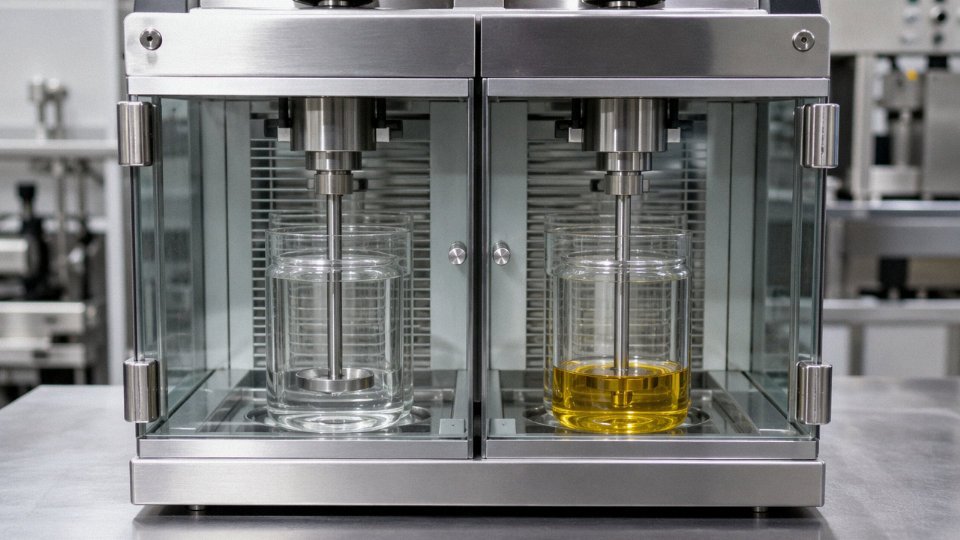
Both fluids can support hydrodynamic lubrication under sufficient speed and load — the oil wedge forms, surfaces separate, job done. The trouble starts at low speeds, high loads, or during start/stop cycles, where you move left on the Stribeck curve into mixed and boundary lubrication regimes. Here, silicone oil has a well-documented weakness: its very low surface energy means poor adhesion to metal surfaces, thin adsorbed films, and inadequate extreme-pressure (EP) performance in metal-on-metal contacts. Without EP additives — sulfur-phosphorus packages, for example — straight PDMS will allow scuffing under loads that a good mineral oil or even an oxidation-stabilized ester would handle without complaint.
Silicone oil performs poorly in boundary lubrication without EP additivesTrue
PDMS has low surface energy and does not form strong chemisorbed films on metal surfaces, making it inadequate for heavily loaded sliding contacts unless formulated with extreme-pressure or anti-wear additives.
Cooking oil, interestingly, shows the opposite profile here. The polar ester groups in triglycerides adsorb reasonably well onto metal oxide surfaces, giving better boundary film performance than plain silicone. That’s actually why cooking oils — lard, rapeseed, linseed — were used as machinery lubricants in early textile mills and on wooden-bearing equipment into the early twentieth century. They worked well enough under moderate, slow-speed loads. The problem is oxidation.
Why Cooking Oil Ruins Modern Precision Equipment
Unsaturated fatty acids — the polyunsaturated fractions particularly — oxidize and polymerize when exposed to air, heat, and metal catalysts. The result is lacquer and gum deposits that clog tight clearances, stick valves, and in severe cases seize components entirely. A hydraulic system or precision gearbox that runs on cooking oil won’t fail dramatically on day one; it’ll slowly accumulate varnish until something stops moving. Maintenance crews sometimes misdiagnose this as a seal failure or contamination issue before they trace it back to the original lubricant choice.
Food-Grade Lubrication Categories — A Critical Legal Distinction
In food and beverage manufacturing, the NSF International categories define what goes where. Silicone oils meeting NSF H1 certification are acceptable for incidental contact with food — they’re widely used at bearing points on filling machines, conveyor pivot pins, and mixer shaft seals precisely because of their chemical inertness and thermal stability. Cooking oil itself falls under NSF H3, meaning edible release agent for direct food contact surfaces like baking pans or mold release. H3 products are not classified as machinery lubricants; using cooking oil at a bearing point isn’t a pragmatic cost-saving measure, it’s a food-safety audit finding waiting to happen.
Comparative Data: Representative Fluids Side by Side
| Fluid | Viscosity at 25°C (cSt) | Viscosity at 100°C (cSt) | Viscosity Index | Pour Point (°C) | Flash Point (°C) |
|---|---|---|---|---|---|
| Silicone oil, 50 cSt grade | ~50 | ~18–22 | ~200–250 | ≤ -50 | ~300 |
| Silicone oil, 350 cSt grade | ~350 | ~75–90 | ~250–300 | ≤ -50 | ~320 |
| Silicone oil, 1,000 cSt grade | ~1,000 | ~200–240 | ~290–310 | ≤ -50 | ~340 |
| Sunflower oil | ~28–33 | ~7–9 | ~85–100 | -16 to -12 | ~220–230 |
| Refined olive oil | ~70–84 | ~10–13 | ~90–110 | -6 to 0 | ~210–220 |
| Canola (rapeseed) oil | ~33–38 | ~8–10 | ~90–105 | -10 to -3 | ~220–230 |
| Refined coconut oil | ~26–30 | ~5–7 | ~70–85 | +20 to +25 | ~230 |
| Palm olein | ~38–45 | ~8–10 | ~75–95 | +5 to +12 | ~220–230 |
Flash point and pour point for cooking oils depend on refining grade and free fatty acid content. Silicone viscosity-index figures vary with molecular weight distribution and are higher for linear, narrow-distribution PDMS.
The viscosity figures tell a clear story: at 100°C, cooking oils have lost roughly 70–80% of their room-temperature viscosity. The silicone grades lose 50–75% too, but they started with more working range, and the film that remains is chemically inert rather than on its way to becoming varnish.
Chemical Resistance, Oxidation Stability, and Shelf Life in Storage
Shelf life sounds like a purchasing department problem until you find a drum of degraded fluid that’s gummed up a gearbox or contaminated a batch. Both silicone oil and cooking oil can sit in a storeroom for months — the outcomes couldn’t be more different.
Silicone Oil Oxidation Stability
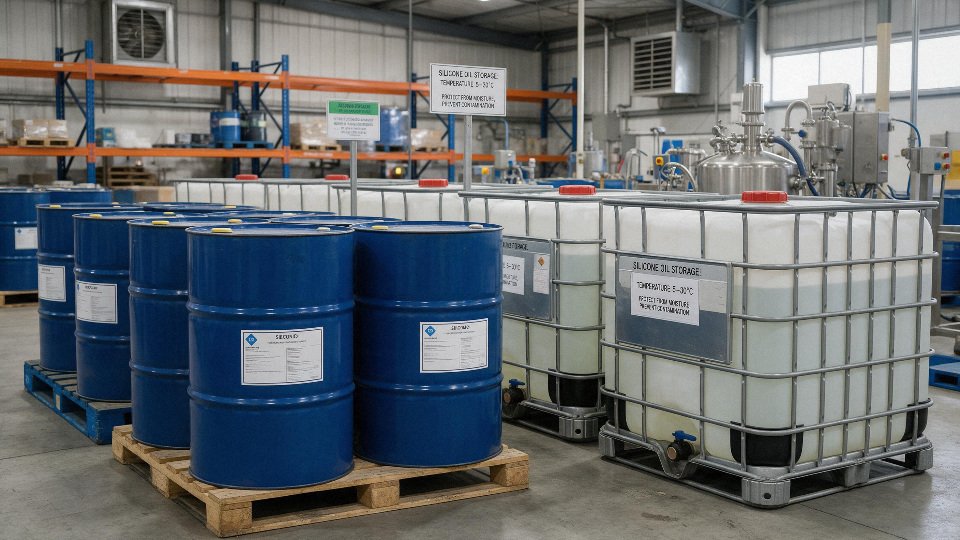
The Si-O-Si backbone in polydimethylsiloxane is simply not reactive with oxygen under normal ambient conditions. Unlike hydrocarbon or ester-based fluids, PDMS has no labile hydrogen atoms at the tertiary carbon positions where autoxidation typically initiates. In practice, peroxide value on a sealed drum of silicone fluid stored at room temperature stays near zero even after several years of storage — industrial suppliers routinely quote shelf lives of 5 to 10 years in sealed HDPE or stainless containers, and in dry, UV-shielded conditions that figure is conservative. The main enemies are UV exposure (photolytic Si-O cleavage) and contamination from amine-based catalysts, which can trigger depolymerization at ambient temperature. Keep the drums sealed, away from windows, and below about 40°C, and the fluid is essentially unchanged from day one.
Silicone oil (PDMS) does not undergo autoxidation at ambient temperatures and maintains near-zero peroxide value over multi-year storage in sealed containers.True
The Si-O backbone lacks the reactive tertiary C-H sites that initiate radical chain oxidation; this is well established in polymer chemistry literature and confirmed by industrial TDS sheets from major silicone fluid manufacturers.
Cooking Oil Oxidation Pathways — and Why They Matter Operationally
Cooking oils oxidize through a classic free-radical chain mechanism. Initiation requires an energy input — heat, UV light, or a trace metal catalyst (copper ions being particularly aggressive). Once a peroxy radical forms, the propagation step is self-sustaining; each radical abstracts a hydrogen from another unsaturated fatty acid chain and generates a new radical. The termination products are what cause real problems: rancid short-chain aldehydes, ketones, and eventually high-molecular-weight polymeric oxidation products that are practically insoluble in most common solvents.
Three standard measures track this deterioration. Peroxide value (PV) tracks primary oxidation products — anything above roughly 10–20 meq O₂/kg is already compromised for most industrial uses. p-Anisidine value (AnV) captures secondary products, the aldehydes that form after peroxides break down. TOTOX (= 2×PV + AnV) combines both into a single number; for reference, fresh refined vegetable oil typically runs below TOTOX 10, while oil that has sat in an unblanketed drum through a warm summer can exceed 40–60, depending on the base oil, storage temperature, and whether the drum was repeatedly opened.
For bulk storage, nitrogen blanketing is the single most effective intervention — it eliminates the oxygen supply and can extend usable storage life by a factor of two or three relative to air-exposed drums. Dark, cool, dry conditions help, but they only slow the process; nitrogen blanketing stops it.
Hydrolysis Resistance
Silicone fluids are strongly hydrophobic. Water doesn’t hydrolyze the Si-O backbone under normal service conditions — not at ambient temperature, not at mildly elevated temperature, and not at the dilute acid or base concentrations you’d encounter in most process environments. Cooking oils, by contrast, hydrolyze readily wherever you combine elevated temperature with water and pH extremes. The products are free fatty acids (FFA) and glycerol. Elevated FFA content in a lubricating oil isn’t just a quality number — free fatty acids attack zinc and cadmium platings, accelerate oxidation of the remaining oil, and create acidic deposits in porous materials like cast iron. Polymerized oxidation residues in cast iron bores are a genuine maintenance headache; in my experience, solvent flushing often isn’t enough and mechanical cleaning becomes necessary.
Chemical Compatibility — Seals, Metals, and Surfaces
Silicone oil handles water, dilute acids, and most dilute bases without issue. The vulnerabilities are concentrated chlorinated solvents (methylene chloride, trichloroethylene), aromatic solvents, and strong oxidizing acids — all of which will swell or degrade silicone elastomers and attack the fluid itself. For seals, PTFE or silicone elastomers are the right call; avoid natural rubber, which swells badly, and check the compatibility data sheet for any nitrile grades before assuming they’ll hold.
Cooking oils bring a different compatibility problem set. Copper and copper alloys catalyze oxidation at a rate that’s noticeably faster than with steel contact — this matters in heat exchangers and older hydraulic components. Cadmium and zinc platings are attacked by the free fatty acids that form as the oil degrades, which is a non-obvious failure mode if someone substitutes a food-grade lubricant into equipment that wasn’t designed for it.
| Factor | Silicone Oil (PDMS) | Refined Cooking Oil |
|---|---|---|
| Oxidation stability | Excellent; near-zero PV over years | Poor to moderate; PV rises rapidly above ~30–40°C or with metal contact |
| Hydrolysis resistance | Very high | Low-moderate; worsens at high temp and pH extremes |
| Seal compatibility | PTFE, silicone elastomer; avoid natural rubber, some nitrile | Most elastomers tolerate it initially, but FFA buildup degrades compatibility over time |
| Metal attack risk | Low under normal conditions | Copper alloys, zinc/cadmium platings at risk from FFA |
| Recommended storage | Sealed HDPE or stainless, below 40°C, UV-shielded | Dark, cool, dry; nitrogen blanket for bulk storage |
| Practical shelf life | 5–10+ years sealed | 12–24 months without blanketing; varies significantly with unsaturation level |
The shelf-life gap matters most in procurement scenarios where you’re carrying safety stock of a specialty lubricant that turns over slowly. A drum of silicone fluid bought for a quarterly top-up on a transformer bath can sit without worry. The same assumptions applied to a food-grade white mineral or vegetable oil used in incidental food-contact applications can quietly push a fluid past its usable window — and a TOTOX check before use costs almost nothing compared to the alternative.
Food Safety Regulations, Toxicology, and Industrial Compliance Requirements
Cooking oil carries FDA GRAS status under 21 CFR as a refined vegetable oil — which leads some plant operators to treat it as a universally safe, no-questions-asked fluid. That assumption holds, but only within tight operational boundaries. Once cooking oil is thermally abused — repeatedly cycled past its smoke point, contaminated with food particulates, or held at temperature for extended periods — it generates measurable concentrations of 4-hydroxynonenal (4-HNE) and acrolein, both documented cytotoxins. 4-HNE accumulates in reused frying oil at concentrations that vary with oil type, temperature, and reuse frequency; high-linoleic oils like sunflower degrade faster than high-oleic or palm-based alternatives. Acrolein, the aldehyde responsible for the harsh, eye-irritating smoke you get from an overheated fryer, is classified as an acute inhalation hazard. Neither compound makes used cooking oil “safe” to reuse indefinitely just because the base oil started as food-grade. Any food plant running continuous frying lines needs a formal oil quality monitoring protocol — FFA content, color index, polar compound percentage — not just a visual check.
Silicone oil occupies a narrower but clearly defined regulatory lane. FDA 21 CFR 172.880 permits dimethylpolysiloxane (PDMS) as a defoaming agent in food at up to 10 ppm. A separate pathway — 21 CFR 178.3570 — covers lubricants with incidental food contact, which is where most H1-certified silicone lubricants sit. On the EU side, E900 (dimethylpolysiloxane) is listed as an approved food additive under Regulation (EC) No 1333/2008, with specific use levels by food category. The regulatory intent in all these frameworks is the same: incidental, trace-level contact is acceptable; silicone oil is not a food ingredient, and treating it as one would take you well outside permitted use.

The NSF International certification framework is where plant-floor confusion tends to create the most expensive problems. H1 covers lubricants acceptable for use where incidental food contact may occur — think conveyor chains in a bakery, or mixer bearings in a dairy. H2 is for lubricants applied where there is no possibility of food contact. H3 applies to soluble or edible oils used as release agents, which is the category that includes some refined vegetable oils. The critical compliance error I’ve seen more than once: a maintenance tech grabs a cooking spray or food-grade vegetable oil to lubricate a conveyor drive because it’s “natural” and “food safe,” while the H1 silicone lubricant is on a different shelf. An H3 oil used in an H1 application is not a compliant substitute. It has different film strength, different relubrication intervals, and it can polymerize under heat onto bearing surfaces. The paperwork consequences alone — a failed HACCP audit, a corrective action report, potential third-party notification — are worth avoiding.
Dimethylpolysiloxane (PDMS) used in food-contact applications is entirely free of regulatory concern.False
Standard linear PDMS grades have low hazard profiles, but cyclic siloxanes D4 (octamethylcyclotetrasiloxane) and D5 (decamethylcyclopentasiloxane), which can be present as residuals in some PDMS grades, are classified as Substances of Very High Concern (SVHC) under REACH due to PBT and vPvB properties. Procurement teams must request low-cyclic-content specifications and verify via SDS and supplier certification.
On the occupational health side, neither fluid is entirely benign under heated conditions. NIOSH has flagged cooking oil mist from commercial frying operations as a potential respiratory hazard, with airborne aldehydes and particulates of concern in poorly ventilated kitchens and food processing areas. Silicone oil mist at elevated temperatures can cause mild respiratory irritation, though it is not classified as a serious inhalation hazard for most linear PDMS grades. Both situations require adequate local exhaust ventilation — not a general-purpose recommendation, but an actual engineering control.
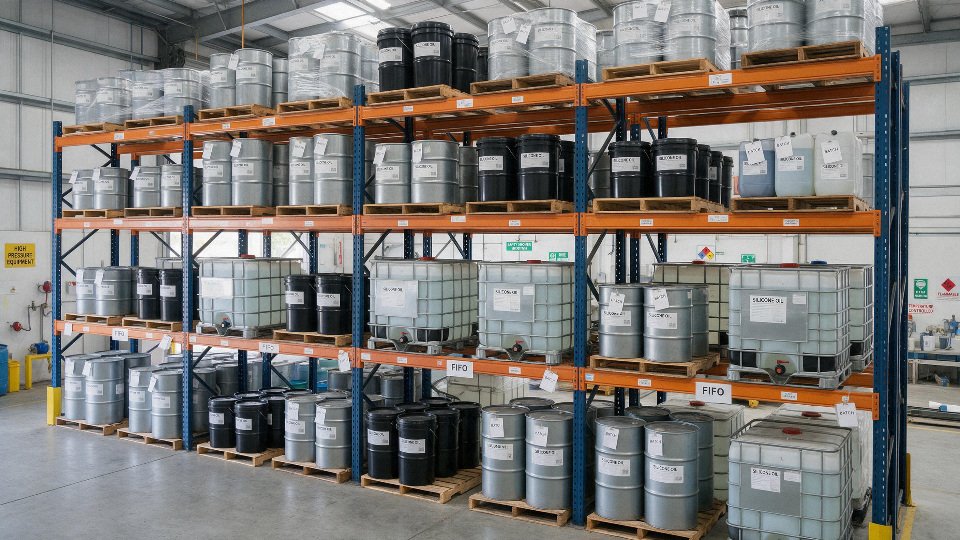
Practical compliance documentation should include four things: current SDS on file for every fluid in use (verify revision date — supplier reformulations happen and an SDS from three years ago may not reflect current composition), written segregation procedures that physically separate food-grade and non-food-grade fluids in the storeroom and on maintenance carts, a fluid identity log tied to equipment records so an auditor can trace what lubricant is in which bearing or gearbox, and a requalification trigger when a supplier changes product specifications. For facilities operating under ISO 22000 or FSSC 22000, lubricant control is a prerequisite program, not optional. Auditors will ask for it, and “we use the food-safe one” is not a sufficient answer.
Cost Analysis, Sourcing, and Total Cost of Ownership in Industrial Operations
Unit price is almost always the first number a procurement manager looks at, and it’s almost always the wrong number to optimize on. Refined soybean and sunflower oils run roughly USD 1–2/kg in bulk industrial quantities — that figure depends on contract volume, regional refinery proximity, and commodity market swings, which can be substantial. Food-grade PDMS silicone oil at 350 cSt with NSF H1 certification typically lands in the USD 6–15/kg range, depending on supplier tier, drum vs. IBC packaging, and whether you’re buying 200 kg or 20,000 kg per year. That’s a 5–10× premium at the point of purchase, and it will stop most procurement conversations before they start. It shouldn’t.
The Change Interval Math Changes Everything
Cooking oil used as a lubricant — and this does happen, usually in small bakeries or food plants where someone substituted in a pinch — degrades fast. Oxidation begins almost immediately at any temperature above ambient, polymerization accelerates sharply above roughly 120°C, and within hours to a few days in a warm, load-bearing application you have a sticky, acidic residue rather than a functional lubricant. Bearing replacement cycles tighten, gearboxes run hotter, and maintenance starts spending real labor hours on fluid-related calls.
Silicone oil in a properly matched application — correct viscosity grade, operating temperature within PDMS limits, sealed reservoir — routinely runs 1–5 years between changes. That range is wide because it depends heavily on contamination exposure, whether the system is open or closed, and whether temperature cycling induces moisture ingestion. Even at the conservative end, one change per year versus multiple changes per week is a cost structure that completely inverts the unit-price comparison. Do the math for a single lubrication point: 50 kg of cooking oil replaced eight times annually versus 12 kg of silicone oil changed once in three years. The silicone fluid wins on fluid cost alone before you count labor.
Equipment Damage Is Where the Real Exposure Lives
The scenario that rarely appears in procurement spreadsheets is the cost of getting it wrong. A seized stainless-steel bearing in a food-grade conveyor, traced to oxidized oil residue blocking the lubricant film, can pull down a full packaging line. Unplanned downtime in a mid-scale food processing facility — conservatively estimated — runs USD 50,000–500,000 per event once you account for lost production, product already in the affected zone, sanitation teardown, and the time your QA team spends on the incident report. If the wrong fluid triggers an FDA or USDA inspection finding, add regulatory remediation costs and the possibility of a voluntary recall. One event like that funds a decade of silicone oil purchases.
A single contamination-related shutdown in food processing can cost more than the entire annual silicone oil budget for a mid-size plant.True
Lost production, sanitation costs, regulatory response, and potential product recall in a food processing environment routinely reach six figures per incident, while annual silicone fluid spend at a typical plant is measured in thousands of dollars.
Disposal and Waste Compliance Aren’t Free Either
Spent cooking oil from industrial processes typically requires grease trap management and, depending on discharge volume, may fall under EPA pretreatment standards before it can enter the wastewater system. Many municipalities charge for high-FOG (fats, oils, grease) waste streams by volume. Spent silicone oil is chemically stable and doesn’t biodegrade readily, so it’s managed as industrial waste — drummed and collected by a licensed hauler. Neither option is zero-cost, and both vary meaningfully by jurisdiction and annual volume. Budget roughly USD 0.30–1.20/kg for disposal depending on your region and whether a recycler will take it.
High-volume pharmaceutical and electronics users do have a reconditioning option for silicone heat transfer fluids: vacuum distillation can recover 70–85% of the original fluid value, which materially changes the TCO picture at scale. No equivalent pathway exists for degraded cooking oil in industrial service — once it’s polymerized and acidic, it’s waste.
Decision Framework: Three-Year Cost Per Lubrication Point
| Application Type | Recommended Fluid | Temp Range Fit | Regulatory Requirement | Typical Change Interval | Estimated 3-Year Fluid Cost |
|---|---|---|---|---|---|
| Food-contact incidental (bearings, chains) | PDMS silicone, NSF H1 | Up to 200°C continuous | NSF H1 mandatory | 1–2 years | USD 80–200 |
| High-temp oven conveyor | PDMS silicone, NSF H1 | Up to 200°C continuous | NSF H1 mandatory | 6–18 months | USD 150–400 |
| Non-food industrial lubricant, ambient | Either; cooking oil only if very low cost is priority | Below 80°C | None if no food contact | Days to weeks | USD 30–90 (cooking oil) vs. USD 60–150 (silicone) |
| Heat transfer fluid, closed loop | PDMS silicone | -50°C to +200°C | Industrial waste regulations apply | 3–5 years | USD 300–900, reconditionable |
| Emergency/one-time food-safe use | Cooking oil acceptable short-term | Below 120°C | Verify food-grade source | Hours | Under USD 10 — replace promptly |
The table above uses rough three-year estimates that depend on system size and local labor rates. Treat them as order-of-magnitude guides, not budget line items. The core takeaway holds across most scenarios: silicone oil’s longer service life and dramatically lower equipment damage risk make it the economically rational choice anywhere the operating temperature exceeds about 80°C or food safety compliance applies — even though it costs more per kilogram at the supplier’s dock.
Correct Application Selection Guide: Which Fluid Belongs Where
By the time you’ve worked through the chemistry, thermal limits, and regulatory landscape, the practical question is still the same one every maintenance planner and procurement engineer eventually asks: which one goes in what piece of equipment, and what actually happens if I get it wrong? Here’s the application-by-application answer.
Food Processing Machinery — Gearboxes, Chains, and Conveyors
Any lubrication point with a realistic path to incidental food contact requires either NSF H1-certified silicone oil or a food-grade white mineral oil. Full stop. Cooking oil is not a substitute, and the failure mode is ugly: vegetable-based triglycerides polymerize under the mild heat of a continuous conveyor drive — temperatures as low as 60–80°C over days — leaving a varnish-like deposit that locks up chains, contaminates product, and, in a worst case, creates an undeclared allergen situation if the oil was, say, peanut or rapeseed-derived. The cleanup alone can shut a line for a shift. NSF H1 silicone fluids (typically 100–350 cSt grades for chain applications, depending on speed and load) handle this environment cleanly and carry the regulatory cover you need for a USDA or BRC audit.
Mold Release and Anti-Stick in Baking and Confectionery
Here the calculus flips. Refined vegetable oil sprays — properly applied — are correct, cost-effective, and approved for direct food contact. A light canola or sunflower release spray costs a fraction of silicone-based release agents and is entirely appropriate for standard baking tin temperatures below roughly 190°C. Above 200°C, particularly in continuous tunnel ovens or high-output confectionery lines, silicone-based release agents earn their premium: they hold up through more bake cycles before reapplication is needed, reduce buildup on mold surfaces, and don’t leave the slightly rancid residue that refined oils develop over extended production runs. For most small bakeries, vegetable spray is fine. For a high-throughput croissant or wafer line running 12 hours a day, silicone release agent pays back through reduced cleaning frequency and fewer rejected units from sticking.
Laboratory and Industrial Heat Transfer Baths
Silicone oil. No reasonable argument for cooking oil here. A circulating bath operating between -40°C and +180°C needs a fluid that stays stable, doesn’t smoke, and doesn’t change viscosity in a way that disrupts flow rate through the bath. Cooking oil fails on all three counts simultaneously — it oxidizes, smokes above roughly 180–220°C depending on refinement, and its viscosity curve is steep enough that bath temperature uniformity becomes unreliable. A 100 cSt PDMS fluid is the industry standard for this range; move to 50 cSt if you need low-end performance below -30°C, though you’ll want to verify with your bath manufacturer’s specs.
Rubber, Elastomers, and O-Ring Assembly
Cooking oil swells nitrile rubber (NBR) O-rings and accelerates their degradation.True
Vegetable triglycerides and free fatty acids penetrate NBR's polymer network, causing volumetric swell of roughly 10–25% depending on oil type and exposure temperature, leading to seal failure and leakage.
Use silicone grease or a compatible silicone fluid. Cooking oil will swell nitrile seals, wash out of the contact area quickly, and leave oxidized residue that acts as an abrasive. Even for a quick assembly lube on an NBR O-ring during maintenance, a small tube of silicone grease is the right call — it’s roughly $8–15 for a tube that lasts a year in a typical maintenance room.
Textile Machinery, High-Speed Spindles, and Precision Bearings
Elevated operating temperatures (commonly 100–140°C on high-speed spindle bearings) eliminate cooking oil within days via oxidative thickening. A low-viscosity silicone oil — 10–50 cSt depending on shaft speed and bearing clearance — with an appropriate EP additive package is the correct choice. The relubrication interval extends dramatically compared to any vegetable-based fluid, and you avoid the gummy deposits that vegetable oxidation products leave on bearing races.
Home and Light-Duty Food Equipment
Stand mixer gearboxes and manual meat grinder threads are a different world from plant-floor machinery. Food-grade silicone grease is technically the right answer — it won’t go rancid, won’t wash out, and won’t degrade rubber seals on the few that have them. That said, for extremely light use on stainless-to-stainless contact that sees food, a thin wipe of neutral cooking oil is acceptable in practice. The hard caveat: it needs replacing every few months, because it will oxidize in place. Don’t use olive oil — too many free fatty acids, it goes rancid faster than refined sunflower or light vegetable oil.
Emergency and Field-Expedient Substitution — The Red Lines
Cooking oil as a short-term mechanical lubricant is tolerable in a narrow set of conditions: low speed, low temperature (below 50°C), non-critical stainless-on-stainless sliding contact, and only until a proper lubricant arrives. That’s it.
Never substitute cooking oil in these situations regardless of urgency:
| Equipment / Application | Why Cooking Oil Fails | Minimum Acceptable Substitute |
|---|---|---|
| Sealed gearboxes or enclosed sumps | Polymerizes, no drain path; requires full teardown | NSF H1 gear oil |
| Any elastomer seal contact | Swell, extrusion, leakage | Silicone grease |
| Heat transfer bath above 100°C | Smokes, oxidizes, viscosity shift | PDMS silicone fluid |
| Electrical switchgear or contacts | Conductive residue after oxidation | Silicone dielectric grease |
| Food contact with allergen-sensitive product | Undeclared allergen risk, regulatory violation | NSF H1 certified fluid only |
Silicone oil as a cooking-oil substitute is a different kind of wrong — it’s not toxic at low levels in an incidental-contact scenario, but it’s also not approved for intentional food use in most jurisdictions, and using it on a baking surface instead of a food-grade release agent creates a compliance gap that can invalidate your food safety certification on audit.
The practical takeaway: when the application involves heat above 80°C, elastomers, chemical exposure, or any regulatory scrutiny, silicone-based fluids win. When the application involves direct, intentional food contact and temperatures stay modest, food-grade vegetable products are legitimate and often cheaper. The dangerous territory is the middle — someone reaching for whatever’s on the shelf because it “looks like oil.” That’s where lines go down and audits get uncomfortable.
Environmental Impact, Biodegradability, and Sustainability Considerations
Neither fluid is clean. That’s the honest starting point, and any procurement team that walks into a sustainability audit assuming cooking oil wins on environmental grounds is going to get surprised.
Biodegradability: The Numbers and What They Hide
Refined vegetable oils — sunflower, canola, soy — are readily biodegradable by OECD 301B criteria, typically exceeding 60% mineralization within 28 days under test conditions. That sounds like a win. In practice, a large spill of cooking oil into a drainage ditch or waterway creates a severe biochemical oxygen demand (BOD) event. Microbial populations explode trying to consume the oil, stripping dissolved oxygen out of the water column faster than natural reaeration can replace it. Fish kills from vegetable oil spills are well-documented in environmental enforcement records. The oil degrades, yes — it just does serious ecological damage while doing so. Biodegradability and environmental safety are not the same thing.
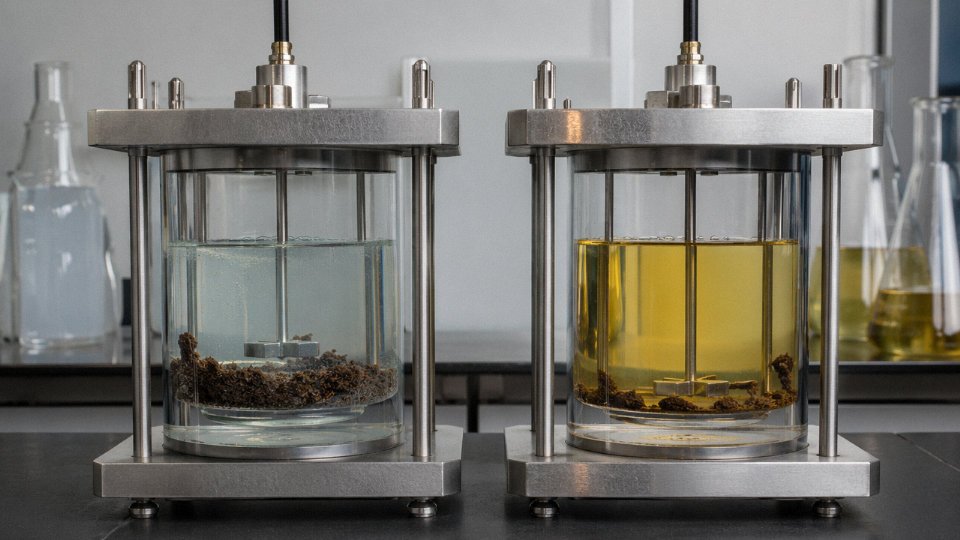
PDMS silicone oil is not readily biodegradable under OECD 301 test conditions. That classification sounds alarming until you look at the actual environmental fate data. PDMS adsorbs strongly to soil and sediment particles — it tends to stay put rather than migrate through groundwater or bioaccumulate up the food chain. Chronic ecotoxicity studies at realistic environmental concentrations have generally not shown significant bioaccumulation in aquatic organisms. The more legitimate concern is cyclic siloxane impurities, specifically D4 (octamethylcyclotetrasiloxane) and D5 (decamethylcyclopentasiloxane), which are present in some lower-grade PDMS fluids at trace levels and which the EU has flagged as substances of very high concern (SVHC). High-purity linear PDMS has a substantially cleaner regulatory profile than blended or cyclic-containing grades — and this distinction matters when specifying fluids for procurement.
PDMS silicone oil does not bioaccumulate significantly in aquatic food chains under typical environmental exposure conditionsTrue
Multiple peer-reviewed environmental fate studies confirm strong soil/sediment adsorption of PDMS and low bioconcentration factors in aquatic organisms, though cyclic siloxane impurities (D4, D5) present in some grades are a separate concern under ongoing EU regulatory review.
Carbon Footprint: Neither Side Looks Good
Palm oil and soy oil, two of the most common feedstocks for both food and industrial bio-lubricant applications, carry significant land-use change emissions. Deforestation-linked greenhouse gas releases from tropical palm expansion are orders of magnitude larger than the direct processing energy involved. High-oleic sunflower and jatropha-based bio-lubricants have a considerably better profile when sourced from non-land-clearing supply chains, but “bio-based” on a supplier data sheet tells you almost nothing without a proper lifecycle assessment (LCA) behind it.
Silicone oil production is energy-intensive — chloromethylsilane synthesis, distillation, polymerization — and it is petrochemical-derived. Nobody should call PDMS green. But per kilogram of lubricant delivered, longer service life and infrequent change intervals affect the LCA outcome meaningfully. A silicone bath fluid running for three to five years without replacement may carry a lower cumulative carbon burden than a vegetable-based fluid changed every few months, depending on the application. LCA is the only honest methodology here; rule-of-thumb comparisons mislead.
Emerging Alternatives and What’s Actually Available Now
High-oleic sunflower oil has gained ground as an industrial bio-lubricant base stock because its oxidative stability is substantially better than standard sunflower — useful where you need biodegradability without the rapid degradation of conventional oils. Jatropha-based lubricants are technically interesting but supply chain reliability remains inconsistent outside a few specialty suppliers. Bio-based silicone intermediates are under development at a research scale, but nothing is commercially mainstream yet. Procurement managers chasing “bio-silicone” claims in 2024 should ask for hard data on the bio-based carbon fraction and not accept marketing language as a substitute.
Regulatory Trends Worth Tracking
The European Chemicals Agency (ECHA) has been progressively tightening restrictions on D4 and D5 in wash-off and industrial products. If your current silicone fluid specification doesn’t already require a Certificate of Analysis with cyclic siloxane content limits, add that requirement now — requalifying a fluid after a regulatory change costs considerably more time than specifying correctly upfront. Separately, revisions to industrial lubricant regulations under the EU Green Deal framework and emerging single-use plastic restrictions are creating a shifting compliance landscape that affects disposal and labeling obligations.
Practical Steps for Operations and Procurement Teams
Run a fluid inventory audit first. Most plants I’ve seen are carrying more fluid SKUs than they realize — three or four different release agents, two viscosity grades of heat transfer fluid, a couple of food-grade lubricants that may or may not overlap in application. Consolidating fluid types reduces storage risk, simplifies training, and gives you leverage with suppliers on sustainability commitments. Quantify annual consumption volumes by fluid type, because that data is required for any credible carbon footprint disclosure. Build a supplier sustainability questionnaire that specifically asks for PDMS cyclic impurity data, LCA summaries, and end-of-life take-back options. End-of-life matters: spent cooking oil has an established waste-to-biodiesel pathway in most regions; spent silicone fluid disposal routes are narrower, and landfill restrictions on non-biodegradable fluids are tightening in several EU jurisdictions.
Neither fluid is a sustainability free pass. The right choice depends on application, service life, disposal infrastructure available at your facility, and which regulatory trends are most exposed in your supply chain geography.
Frequently Asked Questions About Silicone Oil vs. Cooking Oil
Can I use cooking oil instead of silicone oil on a treadmill belt?
No — and this mistake is more common than it should be. Cooking oil oxidizes and polymerizes quickly once it’s spread thin across a warm deck surface, often within three to five days of application depending on ambient temperature and how hard the machine is being run. What starts as a lubricating film turns into a tacky, gummy residue that binds to the underside of the belt, dramatically increases friction, and can score both the belt and the MDF deck beneath it. Repair costs for a treadmill deck and belt together typically run $150–$400, depending on the machine, which dwarfs the cost of a $12 bottle of manufacturer-specified silicone lubricant. Use 100% silicone-based treadmill lubricant — the clear, low-viscosity kind, not a spray can of silicone mixed with carrier solvents that can swell rubber components.
Is silicone oil safe if it contacts food accidentally?
PDMS is FDA-approved as a food additive at levels up to 10 ppm for use as a defoamerTrue
FDA 21 CFR 173.340 permits polydimethylsiloxane as a defoamer in food processing applications at concentrations not exceeding 10 ppm in the food.
NSF H1-registered silicone lubricants are specifically formulated and approved for incidental food contact in commercial kitchens and food processing plants — trace contamination from a lubricated conveyor chain or mixer bearing is considered acceptable at those registration levels. That said, silicone oil is not a food. It has no nutritional value, no metabolic function, and should never be deliberately used as an ingredient or cooking medium. Incidental trace contact from properly applied H1 lubricant: not a crisis. Using it as a pan coating or dietary supplement: genuinely inadvisable.
Can cooking oil substitute for silicone oil in a laboratory water bath?
Reluctantly, yes — but only for low-temperature work, and with serious caveats. Below about 150°C, a refined, high-smoke-point oil like refined sunflower or peanut oil can serve as a crude thermal bath fluid in a pinch. Above that, you’re generating oxidation byproducts, acrolein vapor, and a legitimate fire hazard in a space that probably has open reagents nearby. The smoke point of most refined vegetable oils sits roughly between 200°C and 232°C depending on refining quality; lab conditions that push a bath anywhere near those temperatures make cooking oil the wrong choice, full stop. Silicone bath fluid rated for the target temperature range is the correct tool, and in most labs it’s not expensive enough to justify the risk of improvising.
Why does silicone oil feel different from cooking oil on skin?
Silicone oil — particularly low-viscosity PDMS around 5–50 cSt — has unusually low surface tension, somewhere in the range of 20–21 mN/m, and spreads into an extremely thin film that feels almost dry compared to conventional oils. Cooking oil sits much higher in surface tension and leaves the greasy, persistent feel most people associate with oil. Both show up in cosmetics formulations as emollients and skin conditioners, but they’re used for different sensory profiles: silicone for a light, non-greasy slip; vegetable oils for richness and occlusion. Neither belongs anywhere near eyes in quantity, but otherwise skin contact with either is generally harmless.
Does silicone oil go rancid?
No. Rancidity requires unsaturated fatty acid chains undergoing oxidative chain reactions — triglycerides breaking down into aldehydes, ketones, and short-chain carboxylic acids. Silicone oil contains none of that chemistry. A sealed drum of PDMS sitting in a warehouse for two or three years will emerge essentially unchanged, which is one of the practical reasons maintenance teams with long service intervals prefer it for grease-filled or sealed-for-life bearing applications where you can’t easily schedule frequent relubrication.
Can silicone oil be used for cooking or frying?
No. The FDA defoamer approval for trace PDMS doesn’t mean it functions as a cooking fat — it has no fatty acid profile, no caloric value, and doesn’t behave thermally the way triglyceride-based fats do in cooking. It won’t brown food, it won’t carry fat-soluble flavors, and consuming it in meaningful quantities is not something any regulatory body has approved or that basic nutritional logic supports.
What’s the real fire risk difference between the two?
Cooking oils have flash points typically between 280°C and 320°C depending on the oil type and its free fatty acid content, but they can reach auto-ignition temperatures during deep frying accidents if thermostat controls fail — which is how chip pan fires start. Standard silicone fluids generally flash above 300°C and auto-ignite above roughly 350°C, making them meaningfully less fire-prone in industrial heating applications. Less prone is not the same as non-flammable; a silicone fluid bath running at 280°C still demands proper thermal management and overflow containment. The practical industrial advantage is the wider margin between operating temperature and the fire threshold.
How do you remove silicone oil contamination from a surface?
Water and soap won’t do much — PDMS is hydrophobic and non-polar, so aqueous cleaning chemistry barely touches it. Isopropyl alcohol works reasonably well for light contamination; acetone works better for heavier deposits or machined metal surfaces. Purpose-formulated silicone degreasers (several brands make them specifically for this, Dow and Momentive supply technical guidance on their products) are the right answer for production environments where silicone contamination causes coating adhesion failures or weld porosity. Cooking oil residue is comparatively easy: hot water above 60°C and an alkaline detergent saponify the triglycerides and lift the grease in one pass.
Summary Comparison and Final Selection Decision Framework
Everything covered in this article reduces to a single engineering truth: silicone oil and cooking oil are not interchangeable, and the cost of confusing them — even once — can range from a scrapped batch to a regulatory shutdown. This section pulls the key data into one place so your team can make the call quickly and confidently.
Master Comparison Table
| Property | Silicone Oil (PDMS) | Refined Cooking Oil |
|---|---|---|
| Chemical family | Polydimethylsiloxane (inorganic siloxane backbone) | Triglyceride ester (organic, fatty acid chains) |
| Continuous thermal range | −50°C to roughly +200°C | Typically −10°C to ~180–200°C usable; degrades above 230°C smoke point |
| Viscosity range | 0.65 cSt to ~2,500,000 cSt — tunable by grade | ~30–84 cSt at 25°C; narrow, fixed by species |
| Viscosity index | Very high (stable across temperature swings) | Moderate; drops sharply with heat |
| Oxidation stability | Excellent; resists polymerization | Poor to moderate; oxidizes within weeks at elevated temps |
| Shelf life (sealed, ambient) | 3–5 years, sometimes longer depending on storage conditions | 1–2 years; accelerates if exposed to light or heat |
| Biodegradability | Low; persists in environment | Moderate to high (depends on refining level) |
| Food safety status | Not for direct ingestion; NSF H1 grades permitted incidental contact | Inherently edible; NSF H3 designation for food-contact lubrication |
| NSF H1 certification available | Yes, from several formulators | No (H3 is the applicable category for edible lubricants) |
| Typical price per kg | USD 4–25+ depending on viscosity grade and purity spec | USD 1–4 depending on oil type and food-grade refining |
| Recommended service interval | 6–24 months in most industrial applications; depends heavily on temperature cycling and contamination exposure | Days to weeks in any lubrication role; months only in very light, cool, sealed conditions |
| Primary industrial applications | Transformer cooling, mold release, instrument damping, food-equipment lubrication (H1), heat transfer baths | Food processing incidental lubrication (H3), baking pans, short-term conveyor dressing in bakery environments |
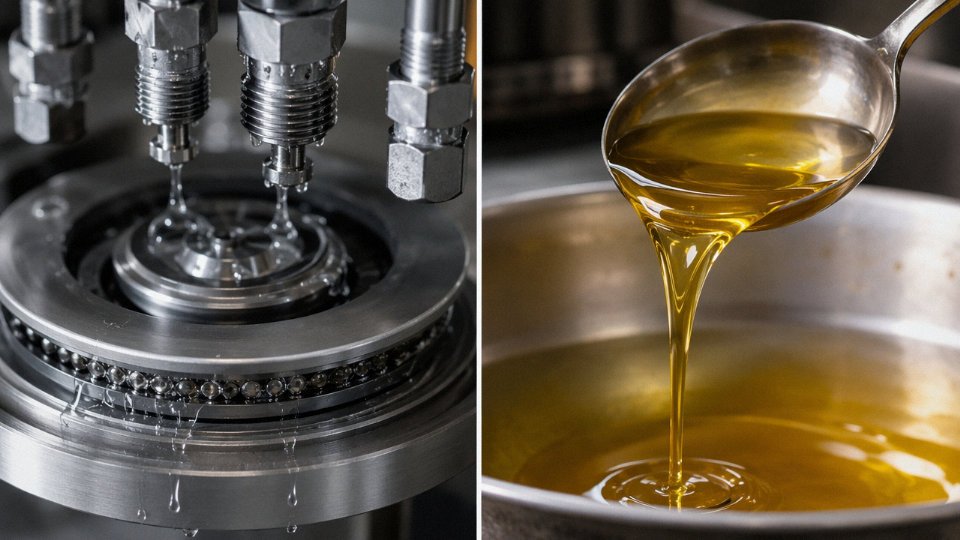
The Three Questions Before You Select a Fluid
Before anything else — before you even look at price — answer these three questions.
What is the maximum continuous operating temperature? If the answer is above 150°C, cooking oil is out. It will oxidize, polymerize, and leave varnish deposits that cost far more to remove than the fluid ever saved. Silicone oil’s continuous rating of up to 200°C (and short-term tolerance to around 300°C) makes it the only rational choice in that thermal range of the two options discussed here. Below 150°C with light loads and frequent relubrication cycles, cooking oil can technically function — but that brings you to question two.
Is there any possibility of food contact, and what regulatory standard applies? This is where legal exposure lives. In a regulated food or pharmaceutical environment, the fluid in any lubrication point that could migrate to product must carry the appropriate certification — NSF H1 for incidental contact, NSF H3 if it’s literally an edible oil used as a lubricant. Using an uncertified or wrong-category fluid at a food-contact point is not a judgment call. It’s a compliance failure.
What is the required service interval and total cost of ownership? Cooking oil in an industrial lube point needs replacement on a scale of days to a few weeks before oxidation products become a problem. A silicone lubricant at the same point might last 6–18 months. Run the labor cost on that arithmetic and the unit-price gap usually closes fast, often inverting entirely.
The Non-Substitution Rule
In any application running continuously above 150°C, in any regulated food-contact lubrication point, or inside any precision instrument where damping consistency matters, silicone oil and cooking oil cannot be substituted for one another under any circumstance. That’s not a preference — it’s a consequence of fundamentally different chemistry, degradation pathways, and legal frameworks.
NSF H1-certified silicone lubricants are approved for incidental food contact in food processing equipment.True
NSF International's H1 category covers lubricants acceptable for use in food processing environments where incidental contact with food is possible. This is distinct from NSF H3, which applies to soluble or edible oils used directly on food-contact surfaces. Verification with the current NSF White Book or your supplier's current certification documentation is always required before application.
The Niche Overlap: When Both Are Technically Permissible
There is a narrow zone where the choice is genuinely open: low-temperature, light-duty, short-service-interval food-contact points — think a bakery conveyor guide rail operating at ambient temperature, touched up weekly anyway. In that scenario an NSF H3 edible oil and an NSF H1 silicone lubricant are both compliant. The practical decision usually comes down to what your maintenance crew already stocks, how aggressive your relubrication schedule is, and whether a slightly cheaper edible oil makes sense given the frequency of application. In my experience, plants that relube daily or every shift often find food-grade vegetable-based oils more convenient and marginally cheaper at that volume. Plants running weekly or monthly maintenance cycles nearly always come out ahead with silicone-based H1 products on total cost once labor is counted.
Where This Space Is Heading
The regulatory floor for food-safety lubrication keeps rising — more countries are aligning with NSF/ANSI 61 or equivalent standards, and enforcement is tightening. Meanwhile, bio-based synthetic lubricants derived from modified plant esters are beginning to close the thermal and oxidation stability gap that has traditionally separated them from silicone fluids. Enhanced silicone formulations with extreme-pressure (EP) additive packages are expanding silicone’s applicability into moderate load-bearing points that were previously off-limits. None of this changes the fundamental decision logic above, but it does mean the specific products available in each category are evolving. Always verify current NSF certification status directly through the NSF White Book or your supplier’s live documentation — a certificate that was valid eighteen months ago may have lapsed or had its scope revised.