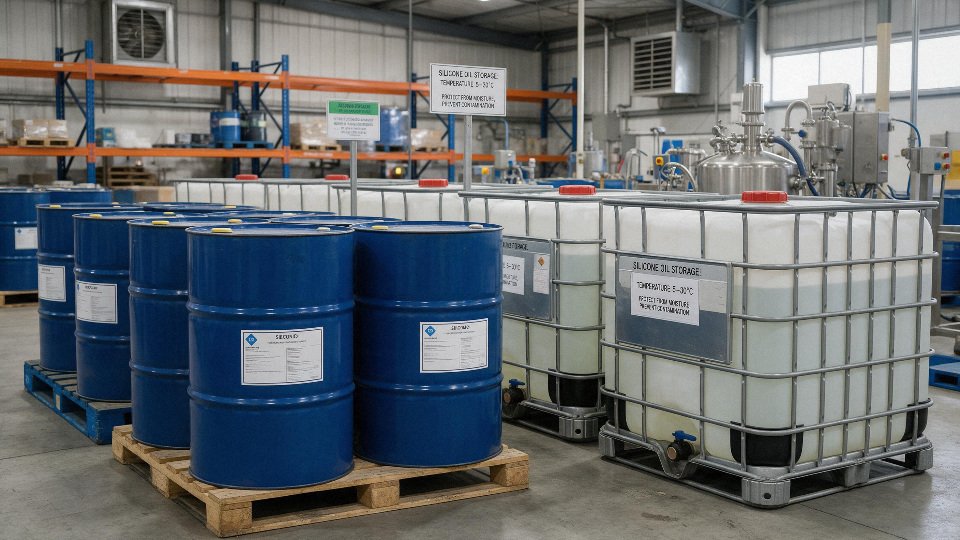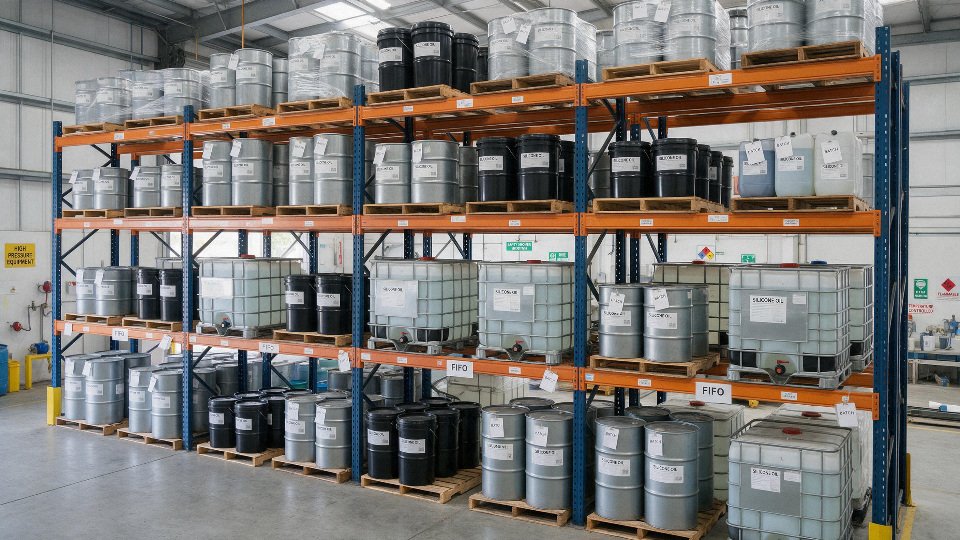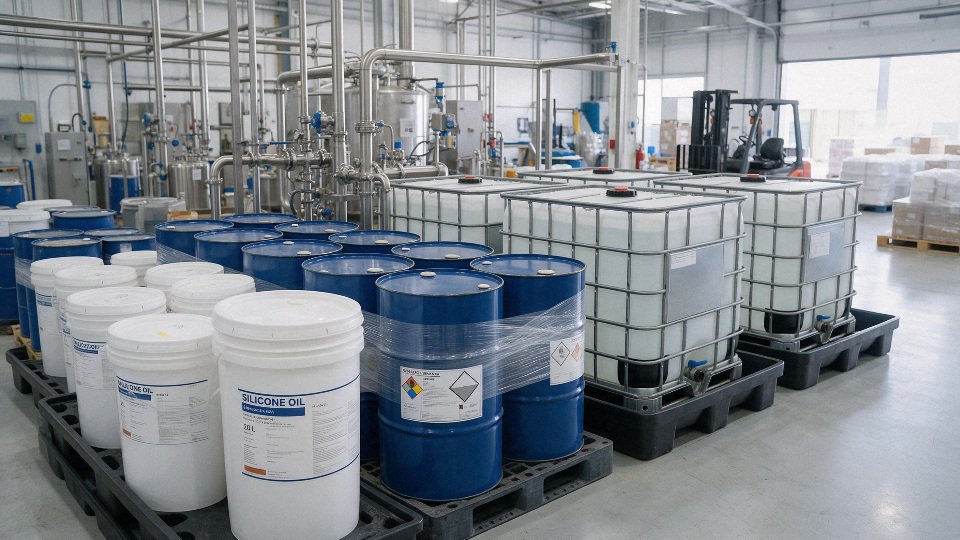
Silicone oil sits in an awkward procurement position: it touches dozens of industries simultaneously — personal care, textiles, electronics, automotive, food processing — which means supply tightness in one sector ripples into yours with almost no warning. A cosmetics surge in Southeast Asia can quietly drain the same polydimethylsiloxane grades your maintenance team uses as a hydraulic damping fluid or release agent on the press line. When that happens, lead times stretch from the usual 2–4 weeks to 10 or more, spot prices jump 15–30% depending on viscosity grade and regional availability, and plants running lean inventory find themselves either substituting an inferior product or scheduling unplanned downtime. Understanding where global demand actually sits — and where it’s heading — is genuinely useful procurement intelligence, not just market-report noise.
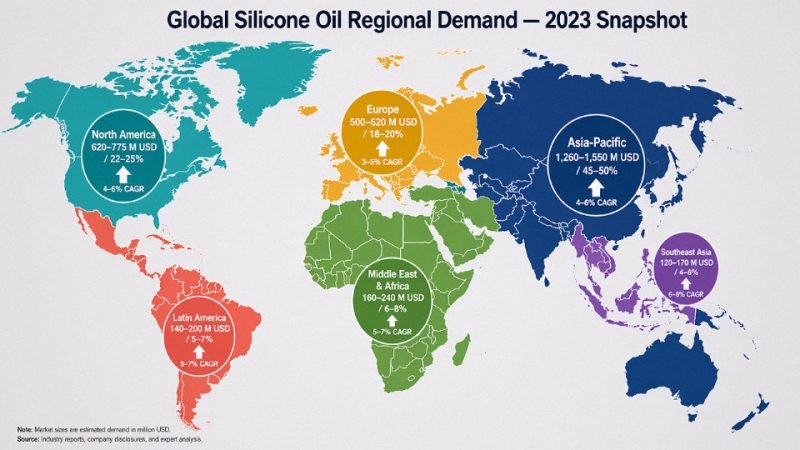
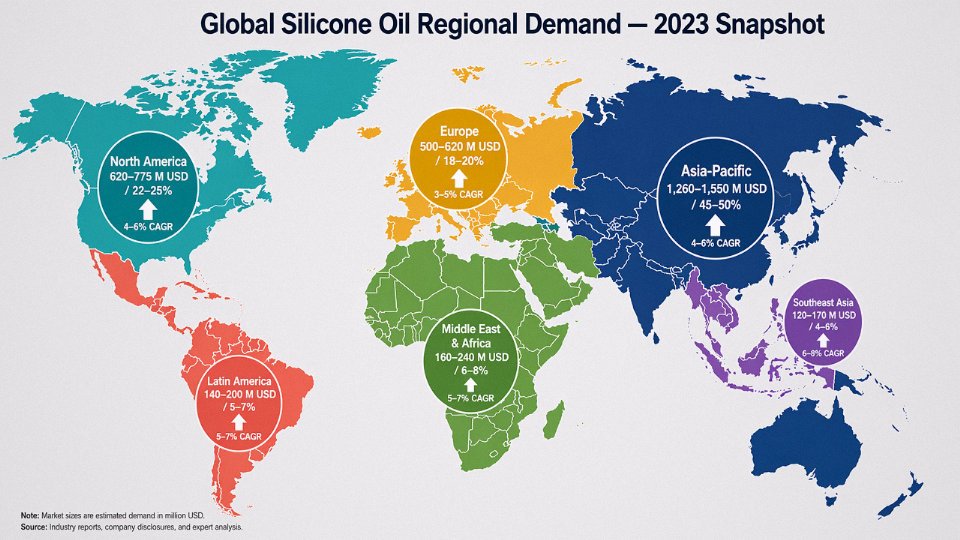
Global silicone oil demand was valued at roughly USD 2.8–3.1 billion in 2023 and is projected to reach USD 4.5–5.2 billion by 2032, growing at a CAGR of around 5.2–6.1%. Asia-Pacific drives nearly half of all consumption, with China, Japan, South Korea, and India as the dominant markets. Personal care and cosmetics alone account for 22–26% of total end-use demand worldwide.
What makes those numbers more interesting than they look is the structural reason behind them — demand isn’t growing uniformly across grades, regions, or applications. The viscosity range your plant buys is probably not experiencing the same pressure as the volatile cyclomethicone grades under regulatory scrutiny in Europe, and the growth story in India looks nothing like the mature, margin-compressed picture in Japan. The geography and the chemistry both matter here.
Regional Demand Breakdown: Where Silicone Oil Is Consumed and Why
Global silicone oil consumption is not evenly spread. Understanding where volume actually moves — and why — matters more than headline market figures if you’re managing procurement exposure or planning capacity.
Asia-Pacific: The Center of Gravity
Asia-Pacific accounts for roughly 45–50% of global silicone oil consumption, and that share has been creeping upward, not holding flat. China sits at the core of this — it is simultaneously the world’s largest producer of siloxane monomers (the upstream building block) and the largest downstream consumer. Domestic Chinese demand is driven by textiles, personal care, construction sealants, and a rapidly expanding electronics sector. The country’s integrated silicone supply chain, anchored around producers in Xinjiang, Zhejiang, and Shandong provinces, gives Chinese converters a structural cost advantage that Western buyers simply can’t replicate.
Japan’s demand profile looks different. Volume is lower but quality requirements are tighter. Precision-engineering applications — semiconductor fabrication, optical coatings, high-performance damping fluids — push Japanese buyers toward narrow-viscosity-specification polydimethylsiloxane grades where batch-to-batch consistency matters more than unit price. In practice, a Japanese electronics subcontractor might qualify a single supplier for a specific 100 cSt grade and not switch for years regardless of price movement.
India is the growth story right now. Personal care manufacturing is expanding fast, with domestic brands scaling up and multinational contract manufacturers relocating from higher-cost regions. Pharmaceutical-grade silicone oil demand is also climbing, tied to parenteral drug packaging and medical device production. India’s CAGR for silicone oil consumption is running toward the higher end of the regional range — probably 7–8% annually through the late 2020s, though that depends heavily on how quickly domestic API and formulation capacity matures.
North America: Lower Volume, Higher Specification
North America holds roughly 22–25% of global demand. The volume is lower than Asia-Pacific but the value per kilogram is generally higher, because the dominant end-uses pull toward specialty grades. Aerospace lubrication (wide-temperature-range fluids, often MIL-spec), EV thermal management fluids, and FDA 21 CFR-compliant pharmaceutical grades all command meaningful price premiums over commodity dimethicone.
The EV angle is worth watching closely. Thermal interface materials and dielectric cooling fluids for battery packs use silicone oil formulations that didn’t exist at commercial scale five years ago. Several Tier 1 automotive suppliers have told procurement teams to dual-qualify suppliers specifically because silicone fluid supply has historically been single-sourced. That’s changing.
Europe: Regulation Is Reshaping the Product Mix
Europe’s silicone oil demand is growing more slowly than other regions — call it 3–4% annually — but the composition of that demand is shifting substantially. REACH restrictions on cyclic siloxanes D4, D5, and D6 in rinse-off cosmetics have pushed European personal care formulators toward high-molecular-weight linear polydimethylsiloxane grades. This isn’t a small adjustment; it required reformulation across most major shampoo and conditioner lines. Germany, France, and the UK remain the anchor markets, weighted toward industrial lubricants, release agents, and specialty coatings rather than cosmetics volume.
REACH restrictions ban D4/D5/D6 siloxanes in all cosmetic products sold in EuropeFalse
The restrictions apply specifically to rinse-off cosmetic products above defined concentration thresholds. Leave-on cosmetics and industrial uses follow different regulatory pathways under current REACH rules.
Emerging Regions: Where Growth Is Fastest
The Middle East, Southeast Asia, and Latin America collectively represent a relatively small share of current volume but are growing at 7–9% annually — the fastest of any grouping. This is driven by infrastructure buildout (construction sealants, foam control in cement), cosmetics manufacturing migrating from Europe and Northeast Asia into lower-cost hubs in Vietnam, Indonesia, and Mexico, and expanding pharmaceutical packaging capacity across all three regions.
Regional Snapshot: 2023 vs. 2028 Forecast
| Region | Est. Market Size 2023 (USD million) | Forecast 2028 (USD million) | Dominant End-Use | Leading Local Producer |
|---|---|---|---|---|
| Asia-Pacific | 1,260–1,550 | 1,800–2,300 | Textiles, personal care, electronics | Xintech / Hoshine (China) |
| North America | 620–775 | 850–1,050 | Aerospace, EV fluids, pharma | Dow, Momentive |
| Europe | 500–620 | 650–820 | Industrial lubricants, release agents | Wacker Chemie |
| Middle East & Africa | 140–190 | 230–310 | Construction, foam control | SABIC (limited silicone capacity) |
| Latin America | 100–150 | 160–240 | Personal care, agrochemicals | Elkem (import-dominant) |
| Southeast Asia | 130–180 | 220–320 | Cosmetics MFG, electronics assembly | Regional toll blenders |
The Supply Concentration Risk That Procurement Managers Tend to Underestimate
Upstream siloxane monomer production — the methylchlorosilane intermediates that everything else derives from — is concentrated in China to a degree that creates genuine single-point-of-failure exposure for Western converters. Estimates vary, but China likely accounts for 60–70% of global methylchlorosilane capacity. When Chinese export pricing shifts or logistics disruptions hit (as happened in 2021–2022), European and North American buyers with no secondary supplier qualification found lead times stretching from 6–8 weeks to 20+ weeks almost overnight.
The practical response isn’t to avoid Chinese supply — that’s usually not commercially realistic. It’s to maintain qualified secondary sources, even at a cost premium, and to hold 8–12 weeks of safety stock on high-criticality grades rather than running lean. Procurement managers who treat silicone oil as a commodity and optimize purely for unit cost tend to learn this lesson the hard way during the first supply disruption they encounter.
End-Use Sector Analysis: Which Industries Drive the Most Silicone Oil Volume
Industrial lubrication and release agents sit at the top of the volume stack, accounting for somewhere between 28 and 32% of total silicone oil consumption globally — the exact share depends heavily on how you classify boundary cases like textile finishing versus textile machinery lubrication. In injection molding shops, polydimethylsiloxane (PDMS) release sprays are practically ubiquitous; a mid-sized automotive plastics line might burn through 200–400 liters of silicone mold-release fluid per month, depending on shot complexity and mold temperature. Textile machinery is another serious volume sink — rapier looms and warp-beam assemblies in high-throughput weaving mills use silicone-based lubricants because they resist the fiber contamination that disqualifies petroleum oils. Metalworking applications are smaller but growing, particularly in wire drawing where silicone emulsions reduce die wear without the residue problems of older mineral-oil formulations.
Personal care and cosmetics consume roughly 22–26% of global silicone oil volume, making it the second-largest end-use category. Dimethicone grades (typically 50–1000 cSt viscosity) dominate hair serums and leave-on conditioners because the sensory payoff is hard to replicate with alternatives — that slip, that frizz suppression, that immediate consumer perception of “product working.” Cyclomethicone (D4, D5, D6 cyclic siloxanes) was the preferred carrier in spray deodorants and some color cosmetics for years, but EU restrictions on D4 and D5 concentrations above 0.1% in rinse-off and, more recently, leave-on products have forced reformulation across most European-market SKUs. In practice, many formulators have shifted toward higher-MW linear PDMS blends or phenyl silicone fluids, which typically cost 15–40% more per kilogram. That reformulation pressure hasn’t collapsed volume; it’s redirected it toward different silicone oil grades.
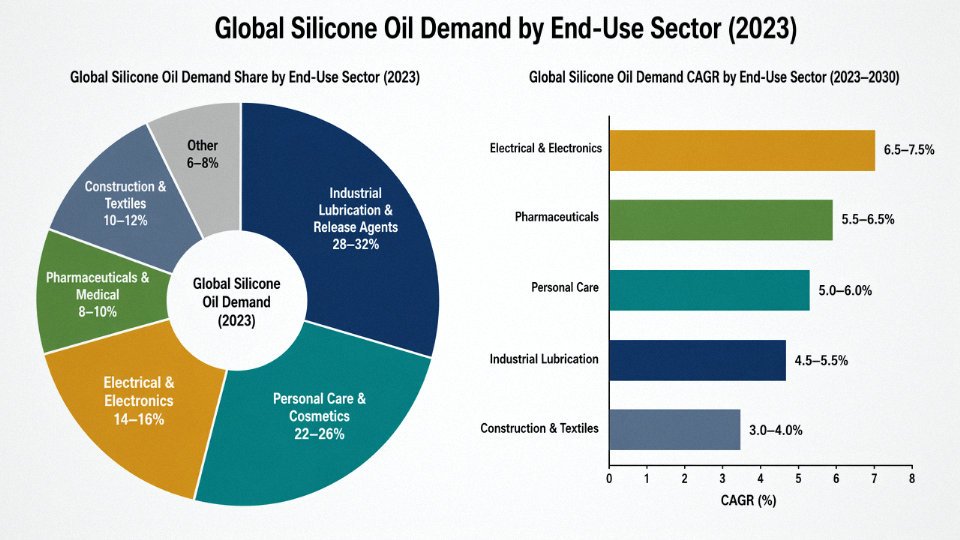
Electrical and electronics is where the growth curve turns steep. Estimated CAGR in this segment runs 6.5–7.5%, well above the market average, and EV battery thermal management is the clearest driver. Silicone dielectric fluids are being evaluated or already deployed in immersion-cooled battery modules because they combine electrical insulation, thermal conductivity in the 0.15–0.20 W/m·K range, and the wide service temperature window that lithium-ion packs demand. Transformer oils and conformal coatings for high-humidity electronics are more established but still growing steadily alongside grid infrastructure investment in Southeast Asia and India.
Pharmaceuticals and medical devices occupy a small but unusually valuable slice of the market. Silicone antifoam emulsions in bioreactor fermentation, syringe-barrel lubrication (where contamination limits are measured in parts per billion), and wound-care emulsions are all tightly regulated under FDA 21 CFR and EU MDR frameworks. Volume is relatively inelastic to price — a formulation that passes qualification doesn’t get cheapened easily. Gross margins in this segment are substantially higher than in industrial lubrication; the trade-off is a qualification cycle that can run 18–36 months.
Construction and textiles are mature, full stop. Concrete mold-release agents, masonry water repellents, and fabric softeners collectively grow at maybe 3–4% per year in volume terms, roughly tracking construction activity indices and textile output rather than any special silicone-specific pull. Steady, not exciting.
The segment worth watching for long-term positioning is immersion cooling for data centers. Hyperscale operators running GPU clusters for AI inference workloads have heat flux densities that air cooling can’t economically handle above certain rack densities. Single-phase silicone dielectric fluids are one of two or three serious candidates for this application, and pilot deployments are already running in facilities across North America and Europe. Solar panel anti-soiling coatings and aerospace fluid applications are smaller niches but carry premium pricing that makes them attractive to specialty producers even at modest volumes.
EV battery thermal management is among the fastest-growing applications for silicone dielectric fluidsTrue
Multiple OEM battery pack programs and cooling system suppliers have publicly documented transition to dielectric fluid immersion or indirect silicone-fluid cooling to manage thermal runaway risk and charging-cycle heat loads, consistent with above-average CAGR projections for the electrical and electronics segment.
Supply Chain Architecture: Raw Materials, Key Producers, and Capacity Expansion Plans
The silicone oil value chain starts with a deceptively simple raw material — quartzite or quartz sand — and runs through several energy-hungry, capital-intensive conversion steps before anything resembling a finished fluid exists. Understanding where costs originate and where capacity is concentrated tells you more about long-run pricing than any market report summary will.
The Raw Material Pathway and Where Costs Actually Accumulate
Metallurgical-grade silicon (MG-Si) is smelted in electric arc furnaces at roughly 11,000–13,000 kWh per metric ton of silicon produced — energy cost is the dominant variable, so silicon metal prices track electricity tariffs closely. That single input accounts for somewhere between 35–55% of dimethyldichlorosilane (M2 monomer) production cost, depending on the plant’s energy mix and whether it operates in a low-cost power region like Xinjiang or Yunnan in China, or in a European facility paying market electricity rates.
From MG-Si, the Müller-Rochow process converts silicon with methyl chloride over a copper catalyst to produce a crude mixture of chlorosilanes, of which dimethyldichlorosilane (M2) is the highest-value fraction. Typical M2 yield from the reaction mix runs 70–85% by weight, with the remainder being trimethylchlorosilane, methyltrichlorosilane, and heavier residues — all of which need homes in the product slate, so integrated producers with broad silicone portfolios handle this better than narrow-focus plants. M2 then undergoes hydrolysis and condensation to form linear polydimethylsiloxane (PDMS) oligomers and eventually the full range of silicone fluids by molecular weight. Each step adds capital depreciation and utility cost; a greenfield integrated site from quartz to finished silicone oil typically requires USD 400–700 million in capital depending on scale and integration depth.
Who Controls Nameplate Capacity
Dow, Wacker Chemie, Shin-Etsu Chemical, Elkem, and the major Chinese integrated producers — Hoshine Silicon Industry, Wynca Group, and Dongyue Organosilicon — collectively hold roughly 70% of global siloxane intermediate nameplate capacity. The remaining 30% is fragmented across mid-size Chinese producers and a handful of regional players in India, South Korea, and Russia.
Chinese producers Hoshine Silicon, Wynca Group, and Dongyue Organosilicon are among the largest siloxane capacity holders globallyTrue
These three companies have each announced and commissioned major siloxane expansion projects and are consistently cited in industry capacity tracking; Hoshine in particular controls a significant share of upstream silicon metal supply in China's Xinjiang region
The Western majors are not trying to win a volume race with China. Wacker and Shin-Etsu have been investing in higher-purity grades — pharmaceutical-grade PDMS, electronics-encapsulation fluids, medical-device lubricants — where specifications are tight enough that price matters less than batch-to-batch consistency and regulatory documentation. That’s a deliberate strategic retreat from commodity volume, not a capacity weakness.
China’s Expansion Wave and What It Means for Pricing
Between 2023 and 2027, Chinese producers have announced capacity additions in the range of 600,000–800,000 metric tons of siloxane intermediate capacity. How much actually comes online on schedule depends heavily on domestic demand growth, permitting, and whether power curtailments in heavy-industry provinces continue. In practice, announced capacity and commissioned capacity diverge by 15–30% over a five-year window — so treat the upper end of that range skeptically.
When this volume does hit the market, commodity silicone oil grades — low-viscosity PDMS in the 100–1,000 cSt range used in personal care, release agents, and textile softeners — face sustained downward price pressure. Mid-tier formulators who source on the spot market will benefit short-term. The risk is supplier dependency: if a procurement manager shifts 80% of volume to the lowest-cost Chinese producer to capture a 12–18% unit cost advantage, they’re exposed when that producer gets hit with an export restriction, energy curtailment, or logistics disruption.
The M2 Monomer Volatility Problem
The 2021–2022 period illustrated how fast this chain can break. M2 monomer spot prices swung roughly ±40% within roughly 18 months, driven by a combination of Chinese energy rationing (which idled arc furnaces), pandemic-era logistics compression, and a surge in silicone demand from the EV battery and personal care sectors simultaneously. Downstream formulators on annual fixed-price contracts absorbed the hit initially, then either passed it through with a lag or watched margins compress severely. Spot buyers paid 30–50% premiums over contract at the peak.
The lesson most procurement teams drew — or should have drawn — is that silicone oil is not a commodity in the purchasing sense of “always available at stable price.” Its cost structure is directly linked to energy markets and silicon metal supply, which are themselves subject to policy and weather-driven disruption.
Vertical Integration and the Make-vs-Buy Decision
For a mid-size formulator consuming 2,000–8,000 metric tons of silicone oil annually, full backward integration to M2 production is almost never economic — the minimum efficient scale for a chlorosilane plant is well above what most formulators need. The realistic question is whether to secure long-term offtake agreements with integrated producers, maintain dual sourcing across at least one Chinese and one non-Chinese supplier, and hold 60–90 days of safety stock on critical grades rather than running lean. In my experience, plants that kept 45 days of PDMS inventory in early 2022 came through without a production stoppage; plants running on just-in-time had to reformulate or halt lines for weeks.
The trade flow pattern reinforces this. China net-exports commodity silicone oil to Southeast Asia and Latin America — these are price-sensitive markets buying standard viscosity grades. Meanwhile, China imports high-purity pharmaceutical and electronic-grade fluids from Shin-Etsu (Japan) and Wacker (Germany), because domestic producers haven’t yet achieved consistent batch quality at the specification levels those applications demand. That gap is narrowing, but it hasn’t closed.
Regulatory Pressures and Sustainability Requirements Reshaping Demand Patterns
The regulatory landscape around silicone oils has shifted more in the past five years than in the previous two decades combined, and that shift is visibly redirecting procurement decisions, reformulation budgets, and supplier qualification processes across multiple industries.
EU REACH Restrictions on Cyclic Siloxanes and the Reformulation Wave
The European Chemicals Agency’s restriction on D4, D5, and D6 cyclic siloxanes in wash-off cosmetics — enforceable since January 2020 — forced a faster-than-expected pivot toward linear polydimethylsiloxane (PDMS) grades and phenyl-functional silicone fluids. Formulators who had relied on D5 as a carrier for skin feel and spreadability had to rebuild base formulations largely from scratch. That reformulation demand, concentrated in the EU but rippling through global supply chains serving European brands, is estimated to represent somewhere between USD 180 million and USD 240 million in incremental linear PDMS specification and qualification activity — the upper end applies if proposed extensions to leave-on products (rinse-free moisturizers, sunscreens, deodorants) clear the legislative process, which most regulatory affairs teams I’ve spoken with treat as a matter of when, not if.
The proposed leave-on extension matters enormously to procurement because leave-on categories use higher loadings per unit and have longer reformulation cycles. A wash-off shampoo can be reformulated in six to nine months. A premium leave-on serum with a stable emulsion matrix might take eighteen to twenty-four months to revalidate at the same sensory profile, which means demand for compliant linear PDMS grades will be sustained rather than one-time.
US EPA TSCA Evaluations and Their Practical Effect
The US EPA’s TSCA risk evaluation program has high-molecular-weight PDMS fluids under scrutiny, primarily for worker inhalation exposure and environmental persistence in mist-lubrication and textile applications. The anticipated outcome — based on how EPA has handled analogous polymers — is likely tiered: low-viscosity grades used in spray applications will face more restrictive handling requirements, while high-viscosity greases and encapsulants will probably clear with standard workplace controls. That distinction matters for industrial buyers. A transformer fluid buyer in the 50–200 cSt range faces different compliance overhead than a manufacturer using 60,000 cSt silicone gel for electronics potting.
EU REACH restrictions on D4/D5/D6 apply only to wash-off cosmetics in their current enforceable form, not yet to leave-on personal care productsTrue
The REACH restriction entry 70 covers rinse-off cosmetics at ≥0.1% concentration. Extension to leave-on products has been proposed and is under evaluation but has not been adopted into Annex XVII as of mid-2025.
The Permissive-Regulation Belt and Regulatory Arbitrage Risk
Contrast all of this with Southeast Asia, the Gulf Cooperation Council states, and parts of Latin America, where cyclic siloxane restrictions either don’t exist or exist only as voluntary guidelines. That regulatory gap is already producing what some supply chain auditors call “compliance tourism” — production or formulation shifted to jurisdictions where D5-containing products can still be manufactured and exported, sometimes back into restricted markets through complex distribution chains. The quality assurance risk here is real. Silicone oil specifications depend heavily on producer-level process control, and a facility optimizing for regulatory arbitrage rather than consistent synthesis is not the same facility that built the reference quality data in your approved vendor list.
ESG Pressure, LCAs, and What OEMs Are Actually Demanding
Automotive and electronics OEMs have moved well past voluntary sustainability gestures. Tier-1 suppliers now routinely receive requests for Environmental Product Declarations and full Scope 3 lifecycle assessments for silicone-containing components — thermal interface materials, mold release agents, damping fluids. Wacker Chemie and Dow have both invested in process energy reduction and are developing bio-attributed silicone pathways. The fundamental constraint is that silicon itself is mineral-derived and always will be, but green chemistry approaches targeting chlorine reduction in the Müller-Rochow synthesis and renewable-energy-powered distillation stages are advancing, with bio-attributed mass-balance certifications beginning to appear in commercial offers. Don’t expect bio-based silicone oil to compete on price with conventional material any time soon — the premium runs roughly 15–35% depending on certification scheme and order volume — but for OEM customers with hard Scope 3 targets, that premium is increasingly justifiable in a bill-of-materials negotiation.
Electric Vehicles and Electronics Manufacturing as High-Growth Demand Catalysts
The commodity-grade silicone oil story — release agents, textile softeners, basic lubricants — is well understood. What’s shifting the demand curve meaningfully upward over the next several years is a narrower, higher-value set of applications clustered around electrification and advanced electronics. These two verticals don’t just consume more silicone fluid; they consume specific grades at performance thresholds that most producers can’t reliably hit.
EV Thermal Management: Why Viscosity Grade Selection Matters More Than Volume
Battery electric vehicles using immersion cooling — where the battery module or power electronics sit directly in a dielectric fluid bath — require silicone oils typically in the 5–50 cSt viscosity range at 25°C. The lower end of that range (5–10 cSt) favors heat transfer rate; the upper end (up to 100 cSt in some inverter applications) provides better film protection for rotating or sliding components. In practice, most passenger EV architectures land somewhere around 10–20 cSt for the battery pack itself, with slightly higher viscosity specified for on-board charger modules where thermal cycling is more aggressive.
Per-vehicle fluid loading varies considerably depending on whether the architecture is direct immersion, cold-plate adjacent, or a hybrid. Rough estimates run 0.5 kg on the lean end for a compact EV with cold-plate cooling all the way up to 1.2 kg or more for a full immersion pack in a performance or commercial-fleet vehicle. Multiply that across an IEA-projected fleet approaching 145 million EVs on global roads by 2030, and even conservative uptake assumptions point to somewhere between 70,000 and 175,000 metric tons of silicone dielectric fluid demanded annually by decade-end — a number that didn’t exist as a market segment ten years ago.

The catch is that automotive OEMs and their Tier 1 thermal system integrators specify fluid performance tightly: low ionic contamination (often sub-1 ppm chloride), oxidative stability across at least 10–15 years of service life, and compatibility with elastomer seals and copper bus bars. Meeting those specs consistently rules out most undifferentiated producers. IEC 60836 and MIL-PRF-27617 are the most-cited qualification frameworks, and qualifying under either takes time and lab infrastructure that smaller Chinese commodity producers generally haven’t invested in yet.
Silicone dielectric cooling fluids for EV battery immersion systems must meet IEC 60836 or equivalent dielectric strength and ionic purity specifications, which limits qualified suppliers to a small number of specialty chemical producers.True
IEC 60836 specifies dielectric strength, viscosity, and contamination thresholds for insulating liquids including silicones. Automotive immersion cooling applications layer on additional requirements around long-term material compatibility and thermal stability that few commodity-grade producers can certify against.
Electronics, 5G, and Data Center Cooling: The High-Value Tier
In semiconductor packaging, silicone oils show up as underfill flow aids and heat spreader interfaces where low dielectric loss (loss tangent typically below 0.001 at GHz frequencies) is non-negotiable. The volumes per unit are small — we’re talking milligrams in some cases — but the margin is not small. A liter of qualified low-loss silicone fluid for advanced packaging might run 10 to 15 times the price of a standard 350 cSt release-agent grade.
Data centers are a different geometry. Single-phase immersion cooling, which a growing cluster of hyperscale operators are piloting and deploying at scale, needs large fluid volumes — typically hundreds of liters per rack — and near-zero particulate contamination to avoid fouling server boards. The economics are still being worked out industry-wide, but the premium over commodity lubricant-grade silicone oil is real and structural, not just a launch premium.
Taken together, electronics and EV cooling could realistically add USD 600–900 million in incremental annual market value by 2030. That figure depends heavily on EV adoption rates in China and Europe, hyperscaler immersion cooling rollout pace, and whether lower-cost synthetic alternatives like engineered fluorocarbon fluids chip away at the lower end of the performance envelope. So far, silicone’s thermal stability and environmental profile give it a durable position — but this is a space worth watching closely.
Pricing Dynamics, Contract Structures, and Procurement Benchmarks
Silicone oil pricing is genuinely tiered, and conflating grades in a sourcing conversation will waste everyone’s time fast. Commodity PDMS at 350 cSt — the workhorse viscosity for textile softeners, release agents, and basic lubricant blending — traded in the USD 2.80–3.60/kg range on spot markets through most of 2023, though that spread widens considerably depending on order volume (below 5 MT versus above 50 MT), port of origin, and whether the buyer is accepting technical-grade certification or demanding full CoA traceability. Electronic-grade fluids with tight viscosity tolerance, low ionic contamination, and controlled volatility sit in a completely different bracket: USD 12–28/kg is a reasonable working range, with the upper end driven by sub-ppm metal content specs demanded by semiconductor cooling and transformer applications. Pharmaceutical-grade antifoam emulsions, which require full USP/EP compliance and the documentation overhead that goes with it, typically land somewhere between USD 15–35/kg depending on concentration and pack format.
How Prices Are Actually Set
The mechanism most buyers underestimate is the silicon metal cost pass-through. There’s no directly traded silicon metal futures contract equivalent to LME aluminum, but producers use a blend of internal silicon metal cost indices and regional spot references — Norway, China Yunnan province — to anchor raw material clauses in supply agreements. Long-term contracts written since 2022 almost universally contain quarterly price adjustment language tied to M2 monomer (dimethyldichlorosilane) indices, which themselves track silicon metal and methyl chloride pricing. Energy cost pass-throughs are embedded in the same clause structures, particularly from European producers whose chlorosilane synthesis is energy-intensive enough that natural gas prices noticeably move their conversion costs. If your contract doesn’t explicitly define the adjustment index and the lag period, you’re likely absorbing producer cost shielding without realizing it.
What the 2021–2022 Crunch Changed Permanently
The supply disruption that ran from roughly mid-2021 through early 2023 — driven by Chinese silicon metal output curtailments and logistics bottlenecks — reshaped contract norms in ways that haven’t fully unwound. Before 2020, a 30-day safety stock was considered adequate for most industrial users, and annual fixed-price agreements were the default for mid-volume buyers. Post-crunch, the standard ask from major producers shifted to quarterly floating-price contracts, and safety-stock requirements of 60–90 days became embedded in supply agreement language or, more quietly, in buyers’ internal purchasing policies. That extra inventory carries a real cost: at USD 3/kg for commodity PDMS and a 50 MT safety-stock position, you’re talking roughly USD 150K tied up in working capital, plus temperature-controlled warehouse space (storage must stay above 5 °C to prevent viscosity drift and water condensation in drums).
Silicone oils are classified as non-hazardous for standard transport under most international freight regulationsTrue
Dimethyl silicone oils (PDMS) are generally classified as non-hazardous under IMDG, ADR, and IATA regulations at standard viscosities, though specific formulations with additives or very low-viscosity grades require individual review.
Total Cost of Ownership — The Numbers Buyers Miss
Landed cost calculations need to account for EU MFN import duty, currently around 5.5% for most silicone oil HS codes, plus inbound quality testing at goods receipt. That testing isn’t optional for regulated applications: viscosity verification, refractive index, and flash point typically run USD 150–400 per lot through a contract lab, depending on the test panel. For high-throughput operations receiving multiple lots monthly, that expense accumulates.
Qualifying a second-source supplier costs real money — roughly USD 8,000–25,000 in laboratory testing, formulation validation, and plant audit time, depending on application criticality. One-time. The question is whether that’s cheaper than a six-week supply gap, which, for a cosmetics filling line running 200,000 units per week, it almost certainly is.
Negotiation Levers That Actually Move Price
Volume commitment tiers are the most straightforward. Producers typically offer step discounts at roughly 20 MT, 50 MT, and 100 MT annual volumes, though the breakpoints vary by producer and grade. Co-development agreements — where a buyer commits R&D bandwidth alongside purchase volume in exchange for preferred pricing on a new specialty grade — have become more common as producers try to lock in differentiated margin rather than compete purely on commodity PDMS price. Take-or-pay provisions cut both ways: useful in an oversupply market (2019–2020, early 2024 in some grades) when you want to lock low prices, but potentially punitive when your demand forecast misses. Get the volume tolerance bands right — typically ±15–20% is negotiable — before signing anything with take-or-pay language.
Competitive Landscape and Innovation Pipeline Among Leading Silicone Oil Manufacturers
The silicone oil industry at the producer level is not as consolidated as casual observers assume. Five Tier 1 names dominate conversation — Dow, Wacker Chemie, Shin-Etsu Chemical, Momentive Performance Materials, and Elkem Silicones — but their collective share of global revenue is probably somewhere in the 55–65% range, depending on how you count tolling arrangements and private-label volumes. The remainder is split across a long tail of Asian producers, several of whom are quietly closing the quality gap.
Tier 1 Producer Postures
Dow’s silicone oil business sits inside a broader silicones division generating multi-billion-dollar revenues annually; their edge is breadth of grades and deep application engineering support for North American and European OEM accounts. Wacker has historically dominated pharmaceutical and food-grade PDMS in Europe — their Burghausen site runs some of the tightest GMP silicone production in the world — and they’ve been methodical about expanding specialty grades rather than competing on commodity volume. Shin-Etsu is probably the most vertically integrated of the five, controlling quartz to finished fluid, and their grip on Japanese electronics and semiconductor customers is tight enough that displacing them on those accounts is genuinely difficult even at a meaningful price discount.
Momentive, post its various restructuring episodes, has sharpened focus on high-performance specialty fluids: reactive functional grades, fluorosilicone for aerospace, and thermal interface applications. Elkem’s acquisition of BlueStar Silicones (the former Bluestar New Chemical Materials silicone business) gave it a credible integrated platform spanning Europe and China simultaneously — that deal was strategically sound because it gave Elkem access to Chinese methanol-route raw materials while retaining the French formulation expertise BlueStar carried.
The Chinese Producer Pressure
This is where procurement managers should pay close attention. Hoshine Silicon’s backward integration into polysilicon and metallurgical silicon gives it a raw-material cost floor that most Western producers simply cannot match at scale. Dongyue Organosilicon has been systematically pursuing pharmaceutical-grade certifications — DMF filings, ISO 10993 biocompatibility testing — and once those credentials are established, the conversation shifts from “can they make it?” to “why are we paying a 30–45% premium for the same specification?” That’s a real question, and some European contract manufacturers in pharma are already asking it quietly.
The honest caveat: batch-to-batch consistency on ultra-high-purity grades remains a legitimate differentiator for the Tier 1 Western players, at least for now. But the gap is narrowing, and mid-tier specialty pricing — say, dimethyl silicone oils in the 350–1000 cSt range for industrial and personal care — is already under pressure from Chinese volume.
Chinese silicone oil producers have achieved full equivalence with Western Tier 1 manufacturers on pharmaceutical-grade PDMS specificationsFalse
While producers like Dongyue are actively pursuing pharmaceutical certifications, Western Tier 1 producers such as Wacker and Dow still maintain advantages in regulatory track record, DMF filing depth, and audited GMP consistency for the most sensitive pharma applications. Equivalence is application-specific and not yet universal.
R&D Directions Worth Watching
Reactive silicone oils — amino-functional, epoxy-functional, carbinol-terminated — are where a lot of the interesting application development is happening. Textile softener formulations using amino-PDMS have been growing for years, but the push now is toward reactive grades that covalently bond to fiber surfaces rather than just coating them, which changes the wash-durability equation entirely. Coatings formulators are looking at carbinol-functional silicone oils as crosslinkable modifiers for UV-cure systems; the patent filings in this sub-category roughly doubled between 2019 and 2024 compared to the prior five-year period.
Fluorosilicone oils for aviation fuel-system lubrication deserve a separate note. The performance envelope — wide service temperature, fuel resistance, low volatility — is hard to replicate with organic alternatives, and with narrow-body aircraft production rates recovering, this is a genuine volume driver even if it’s a small niche by tonnage.
Hydrophilic-modified PDMS for medical device lubrication and catheter coatings is another active space. Standard PDMS is inherently hydrophobic, which creates problems in blood-contact and fluid-handling applications. Modified grades with polyether or betaine grafts are being developed specifically to address this, and regulatory agencies are scrutinizing the leachable profiles of these materials carefully — so the barrier to entry is high but the margin profile reflects it.
Patents, M&A, and Emerging Disruption
Patent analytics from 2019–2024 show a clear acceleration in two clusters: thermal-management fluid formulations (driven by EV battery cooling and data-center immersion cooling), and silicone-organic hybrid lubricants targeting the boundary between synthetic PAO and silicone fluid performance. Several filings suggest work on blends rather than pure silicone fluids, which could create interesting supply-chain complexity for formulators who’ve historically kept these chemistries separate.
On the acquisition side, the mid-tier specialty space looks ripe for consolidation. Companies with niche positions in reactive grades or in specific geographic markets — India, Southeast Asia — are logical targets for either Tier 1 players looking to fill application gaps or for Chinese producers wanting a Western regulatory beachhead.
The startup and academic layer is less immediately threatening than it sometimes appears in press coverage. Enzymatic siloxane synthesis is genuinely interesting science but the process economics at industrial scale remain unfavorable; enzymatic routes work at mild conditions but enzyme cost, reactor throughput, and product purity for anything above 200 cSt are unsolved problems. Silicone oil reclamation and recycling programs — notably closed-loop industrial programs where used transformer or heat-transfer fluid is reclaimed, redistilled, and re-certified — are more operationally mature and are already reducing virgin material demand in some large industrial accounts by roughly 10–20% on an annual basis, depending on contamination levels and the customer’s quality tolerance.
10-Year Demand Forecast: Volume, Value, and Structural Shifts to 2034
The threads running through this analysis — EV thermal management, electronics-grade purity requirements, Asia-Pacific demographics, regulatory attrition of cyclic siloxanes, and chronic silicon metal price volatility — all converge on a single planning question: what does silicone oil demand actually look like by 2034, and which scenario should a procurement manager or capacity planner use as their working assumption?
Base-Case Trajectory
The base case puts global silicone oil market value somewhere in the USD 4.6–5.0 billion range by 2034, with USD 4.8 billion as the midpoint. Volume reaches roughly 1.75–1.85 million metric tons. That translates to a value CAGR of around 5.5% and a volume CAGR closer to 3.8% — and the gap between those two numbers is the most important signal in the forecast.
Value growing faster than volume means the product mix is shifting upward. Commodity polydimethylsiloxane (PDMS) for mold release or general lubrication will still move in tonnage, but it will be priced harder by Chinese overcapacity. The dollars accumulate in electronic-grade fluids, dielectric immersion coolants for data centers, and pharmaceutical-grade silicone oils where purity specifications are tight enough to keep most Chinese commodity producers out of the conversation — at least for now.
Bull Case: USD 5.5 Billion and Above
If EV production runs ahead of IEA baseline projections — say, global annual output crossing 40 million units before 2030 rather than after — silicone oil demand for thermal interface materials and battery thermal management fluids tightens the specialty-grade supply picture considerably. Layer on faster-than-consensus adoption of single-phase immersion cooling in hyperscale data centers (some operators are already piloting this; the engineering jury is still out on maintenance complexity), and the high-purity dielectric fluid segment could sustain 12–15% annual growth rather than the 8–10% in the base case.
Strong personal care market expansion across India, Indonesia, and Vietnam adds further upside. The bull case CAGR of around 7.2% gets the market to USD 5.5–5.8 billion by 2034. Reaching that ceiling requires most of the favorable variables arriving roughly simultaneously, which is not impossible but is not something to build a plant around.
Bear Case: Structural Pressure from Regulation and Oversupply
The bear case is underappreciated by most market reports. A full EU restriction on leave-on cosmetic applications of cyclic siloxanes — D4, D5, D6 — is already partially in force; if that extends aggressively to rinse-off products and pulls US EPA action in the same direction, the personal care segment (currently 22–26% of total demand) takes a meaningful volume hit. Pair that with Chinese integrated producers running below-cost to maintain market share — commodity PDMS prices collapsing below USD 2.00/kg are not a theoretical scenario, they are what happens when capacity utilization drops to the 65–70% range and producers need cash flow — and the value side of the market deflates even if tonnage holds.
Bio-based alternatives gaining traction before 2030 is the third pressure. Unlikely to be large in absolute volume terms by 2034, but even 3–5% substitution in personal care would reinforce the pricing floor problem. The bear case CAGR of roughly 3.1% leaves total market value around USD 3.8–4.0 billion by 2034.
A full EU ban on leave-on cyclic siloxanes is already partially implemented and could extend further, materially affecting silicone oil demand in personal care.True
EU Regulation 2020/1149 restricted D5 in wash-off cosmetics; ongoing ECHA evaluations cover leave-on applications of D4/D5/D6, making further restriction a credible regulatory scenario rather than speculation.
The Product-Mix Shift Is the Real Structural Story
Commodity lubrication and release-agent grades will likely grow at only 2–3% in volume and slower in value. Electronic-grade fluids, EV thermal management fluids, and pharmaceutical-grade silicone oils are tracking 8–12% annually in the base case — and that differential compounds hard over a decade. A distributor or toll blender whose book is weighted toward commodity grades faces a structurally different business by 2032 than one who has repositioned toward high-purity and functional grades.
| Segment | Volume CAGR (Base) | Key Risk |
|---|---|---|
| Commodity PDMS (release, lubrication) | 2–3% | Chinese oversupply, bio-alternatives |
| Personal care silicone fluids | 3–5% | Cyclic siloxane regulation |
| Electronic/dielectric grade | 9–12% | Purity qualification barriers |
| EV thermal management | 10–13% | EV adoption pace, competing chemistries |
| Pharmaceutical grade | 7–9% | Regulatory approval timelines |
Geographic Rebalancing
India overtaking Japan as the third-largest national silicone oil market around 2028–2030 is realistic given current growth rates in Indian personal care manufacturing and the government’s push on domestic electronics assembly. Southeast Asia’s combined market — Thailand, Vietnam, Indonesia, Malaysia principally — looks like it roughly doubles from roughly USD 280 million today to somewhere around USD 500–580 million by 2034, driven by electronics contract manufacturing relocation and an expanding regional cosmetics industry.
Sensitivity Checkpoints
A ±10% swing in silicon metal prices (which depend heavily on Chinese energy costs and production quotas) shifts total market value by roughly USD 150–220 million in any given year — material but not decisive at the portfolio level. A ±1 million unit swing in annual global EV production moves silicone oil demand by perhaps 8,000–14,000 metric tons annually depending on battery chemistry and thermal management architecture, with the value impact concentrated entirely in high-margin specialty grades. A comprehensive EU ban on cyclic siloxanes across all leave-on cosmetic categories would, in isolation, subtract roughly USD 180–250 million from total market value annually within three to four years of implementation.
None of these sensitivities individually break the base-case trajectory. In combination — which is the bear-case scenario — they do.
Frequently Asked Questions About Global Silicone Oil Demand

What viscosity grades carry the highest global demand?
350 cSt PDMS — polydimethylsiloxane — is the single highest-volume grade by a significant margin. It sits in a sweet spot: viscous enough for effective lubrication and release applications, fluid enough to blend readily in cosmetic formulations, and cheap enough to specify without much hand-wringing. Mold-release concentrates, textile softener intermediates, and mass-market skin-care emulsions all converge on this grade. If a drum of silicone oil is moving somewhere in the world right now, odds are it’s 350 cSt.
The growth story, though, belongs to the low end of the viscosity range. Fluids between 5 and 50 cSt are seeing accelerating pull from electronics thermal management and EV battery cooling circuits, where low viscosity equals lower pumping energy and better penetration into tight geometries. These grades have tighter purity specs — metallic ion contamination limits that commodity 350 cSt product routinely fails — so they command a meaningful price premium and tend to be sole-sourced or dual-sourced under long-term agreements rather than spot-purchased.
Is silicone oil demand cyclical or structural?
Primarily structural. The breadth of end-use industries insulates total demand from any single sector downturn, and for high-temperature lubrication or biocompatible device applications there simply isn’t a cost-competitive substitute at scale. That said, commodity-grade 100–1000 cSt fluids used in general industrial lubricants and construction sealant systems do show mild cyclicality — you can watch global manufacturing PMI indices and get a rough directional read on spot demand within a quarter or two. Specialty grades in pharma, semiconductor fab, and EV cooling behave more like contract chemicals: volume is locked in, price is negotiated annually, and short-term macro noise barely registers.
How does the EU restriction on D4, D5, and D6 siloxanes affect global demand?
The restriction redirects cosmetic-grade procurement from cyclic siloxanes toward linear PDMS — mainly low-viscosity dimethicone and phenyl-functional variants. Reformulation costs are real and front-loaded; expect a 6–18 month qualification cycle for finished-product producers. Net effect on total silicone oil volume is roughly neutral to slightly positive, because linear PDMS typically requires higher loading to achieve comparable skin-feel aesthetics. The restriction is a category reshuffling event, not a demand destruction event.
The EU D4/D5/D6 restriction eliminates silicone oil from cosmetics entirelyFalse
The restriction targets specific cyclic siloxanes, not linear PDMS (dimethicone). Most cosmetic formulators are switching to linear grades, which are explicitly permitted under the current regulatory framework.
Which certifications matter for pharmaceutical and food-grade procurement?
USP Class VI and FDA 21 CFR 178.3570 are the non-negotiable floor for food-contact and pharmaceutical applications — no reputable buyer should accept substitutes or self-declarations here. European Pharmacopoeia and British Pharmacopoeia monograph compliance applies for regulated drug manufacturing. For medical device lubrication specifically, ISO 10993 biocompatibility testing data should be part of the supplier documentation package, not something you chase down after a purchase order is issued.
How do Chinese producers compare to Western suppliers on quality and traceability?
Tier-1 Chinese producers — Hoshine, Wynca, Dongyue — have genuinely closed the gap on ISO 9001 quality management, and several have achieved IATF 16949 certification for automotive-grade fluids. For general industrial and cosmetic applications, they’re competitive. Pharmaceutical and semiconductor grades are a different situation. Traceability documentation — batch genealogy, raw silicon purity records, contamination testing protocols — still presents qualification barriers at many Western OEMs and CMOs. That gap is narrowing, but a procurement manager sourcing for a regulated application should budget 12–24 months for a thorough supplier qualification and not shortcut the audit process.
What storage and handling requirements affect total landed cost?
High-MW silicone oils have flash points typically above 300 °C and are not classified as hazardous goods for standard freight, which meaningfully lowers logistics cost compared to many specialty chemicals. The practical requirements that bite are less dramatic but still operationally important: sealed containers to prevent moisture ingress and particulate contamination, dry storage away from strong acids or alkalis, and temperature management in climates with harsh winters (viscosity increases sharply below about –40 °C for standard PDMS, which can create handling and pump-cavitation problems). Shelf life in unopened original packaging runs 24–36 months depending on grade and storage conditions. Once opened, re-sealing properly and tracking partial-drum age is one of those maintenance habits that small plants routinely skip — until a batch fails incoming QC and someone has to figure out why.