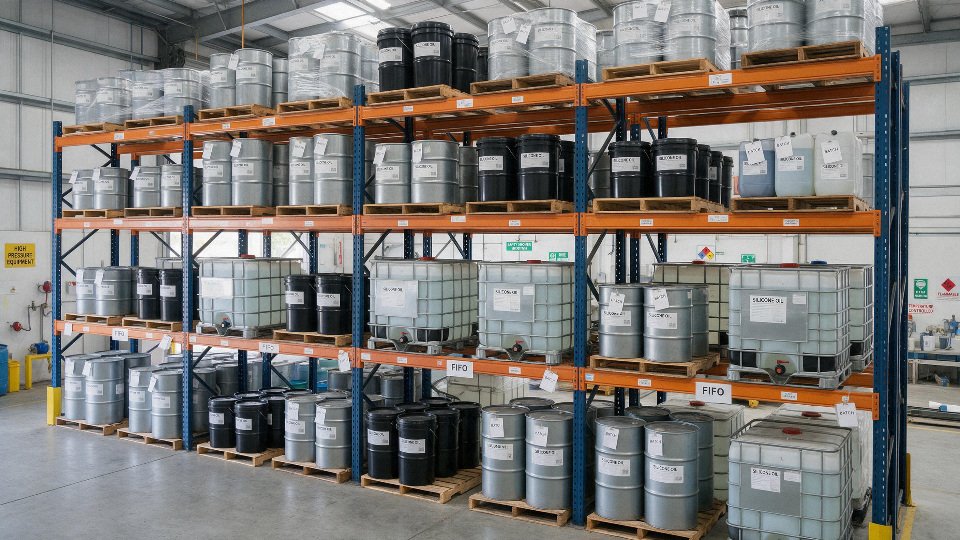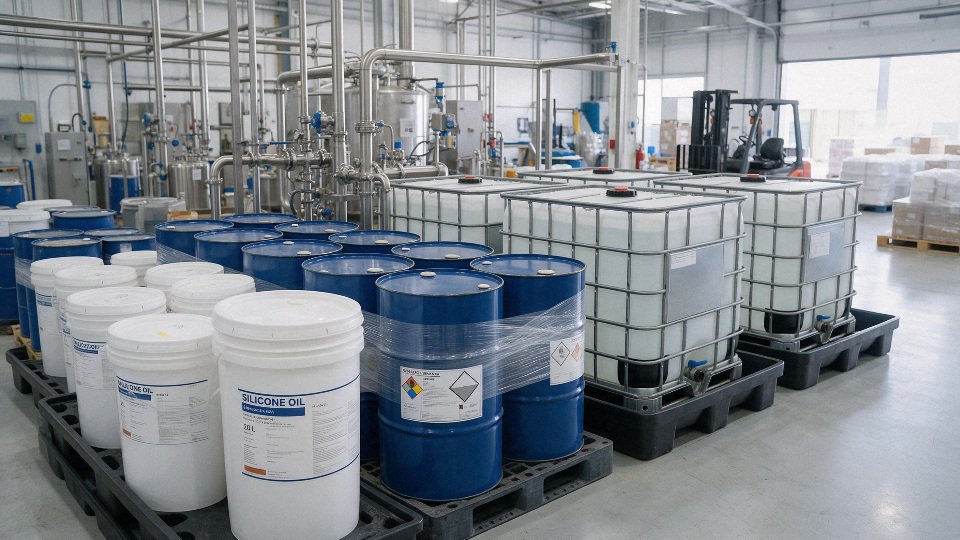
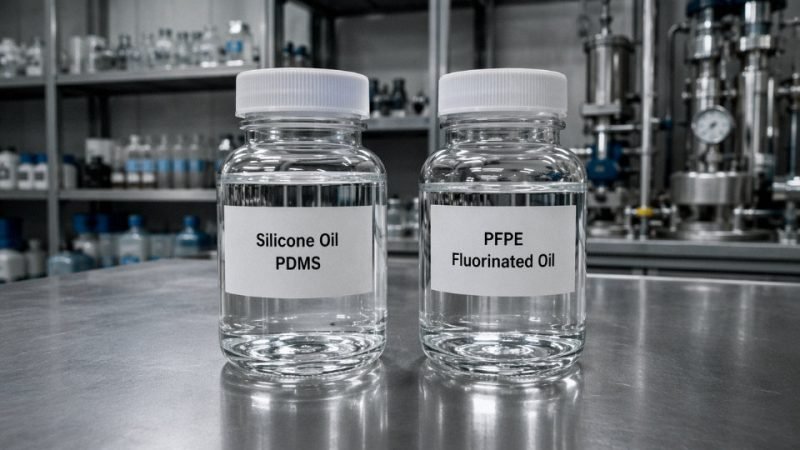
Picking the wrong specialty lubricant or dielectric fluid can quietly wreck a production line. A silicone oil that swells your elastomer seals, or a fluorinated oil spec’d where a cheaper silicone would have done fine — both create the same outcome: unplanned downtime, contaminated product batches, and a maintenance invoice that lands on someone’s desk at the worst possible moment. The cost gap between these two fluid families is substantial, and the performance gap is real in both directions depending on the application.
Silicone oils (PDMS) and fluorinated oils (PFPE) overlap in some uses but are not interchangeable. Silicone oil covers a far wider viscosity range — 0.65 cSt up to roughly 2,500,000 cSt — and handles continuous service from about -60°C to +200°C at a fraction of PFPE’s cost. PFPE fluorinated oils push to -90°C on the cold end and +350°C continuous on the hot end, resist virtually all chemicals, and carry a dielectric strength of 18–22 kV/mm versus silicone’s roughly 15 kV/mm. The right choice depends on temperature extremes, chemical exposure, and what the fluid costs per kilogram against the value of what it’s protecting.
What makes this comparison genuinely tricky is that both fluids look inert and unremarkable sitting in a drum — clear, odorless, seemingly interchangeable to anyone who hasn’t seen what happens six months after the wrong one gets installed. The differences show up in service life data, seal compatibility reports, and, eventually, in failure modes that are expensive to diagnose if you don’t already know where to look.
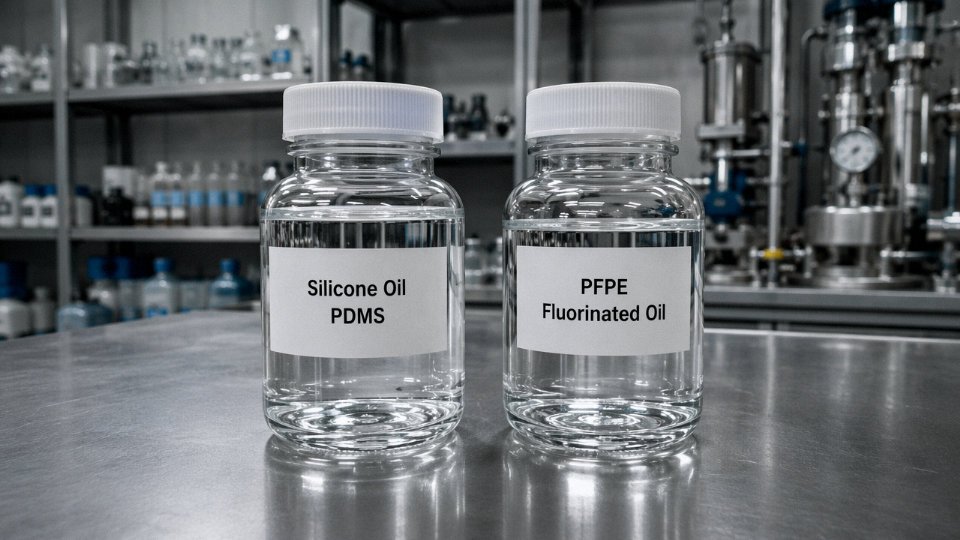
Molecular Architecture: How PDMS and PFPE Structures Drive Performance Differences
The performance gap between silicone and fluorinated oils isn’t mysterious once you look at the backbone chemistry. Every macroscopic property engineers argue about on the plant floor — thermal stability, chemical resistance, vapor pressure, lubricating film strength — traces back to bond-level decisions made by the polymer chemist.
The Silicone Backbone: Si–O and What It Buys You
Polydimethylsiloxane (PDMS) is built on an alternating silicon–oxygen chain. That Si–O bond carries an energy of roughly 452 kJ/mol, meaningfully higher than the ~360 kJ/mol of a standard C–C backbone. The practical result: PDMS resists thermal scission at temperatures that would degrade a hydrocarbon fluid within hours. The pendant methyl groups along that backbone are the other key variable. They’re nonpolar, loosely packed, and highly mobile — which is why silicone oil has a surface tension in the 20–21 mN/m range and spreads aggressively across metal and polymer surfaces. Useful in release and damping applications; occasionally a nuisance in assemblies where you don’t want creep migration.
Swap those methyl groups for phenyl groups, even partially, and the molecule stiffens. Phenyl-substituted silicones push the low-temperature viscosity curve upward, but they extend the usable upper temperature range to around 250°C short-term. Formulators also tune viscosity almost independently of chemistry by adjusting the degree of polymerization — this is why PDMS is commercially available from 0.65 cSt up to viscosities so thick they’re closer to gels. End-group choice matters too: trimethylsilyl-capped chains remain chemically inert and resist further condensation, while hydroxyl-terminated or vinyl-functional grades are designed for crosslinking. Using a functional-grade silicone where a trimethylsilyl-capped grade was specified is the kind of substitution error that shows up weeks later as seal swelling or unexpected gelation in a heated reservoir.
The PFPE Backbone: Full Fluorine Shielding and Its Consequences
Perfluoropolyether oils replace that Si–O-with-pendant-carbon structure with a fully fluorinated carbon–oxygen ether chain. The C–F bond energy sits around 485 kJ/mol — already higher than Si–O — and the geometry of fluorine atoms along the chain creates a dense electron cloud that physically shields the backbone from attack. No unsatisfied bond sites. No oxidizable positions. This is why PFPE oils are genuinely non-flammable, not just flame-retardant, and why they’re unfazed by concentrated acids, aggressive oxidizers, and most solvents that would compromise silicone in hours.
Three main structural families dominate the market: Fomblin-type (random PFPE, good low-temperature fluidity), Krytox-type (branched hexafluoropropylene oxide units, slightly higher traction coefficient), and Demnum-type (linear perfluoroethylene oxide, notably low volatility at high temperature). Each has different end-group options — carboxylic acid and alcohol functionalized PFPEs accept specific additive packages and bond to metal surfaces, while neutral-end variants stay chemically passive. In practice, choosing between them isn’t just a chemical decision; Krytox-grade fluids have historically carried a price premium significant enough to change a procurement manager’s specifications, and Demnum remains harder to source outside specialty distributors.
PFPE fluorinated oils are non-flammable across their full service rangeTrue
PFPE oils have no combustible C–H bonds. They will not ignite under standard flammability testing (ASTM D92, D93) and are used precisely in applications — aerospace actuators, semiconductor plasma environments — where ignition risk must be eliminated.
The low vapor pressure of PFPE is a direct structural outcome: those heavy, fully fluorinated chains don’t volatilize readily. This matters in vacuum systems and high-temperature sealed bearings where a silicone oil of equivalent viscosity would gradually evaporate and contaminate adjacent surfaces — or simply leave the bearing dry.
Neither fluid family performs these tricks by accident. The backbone is the specification.
Thermal Stability and Operating Temperature Envelopes Compared
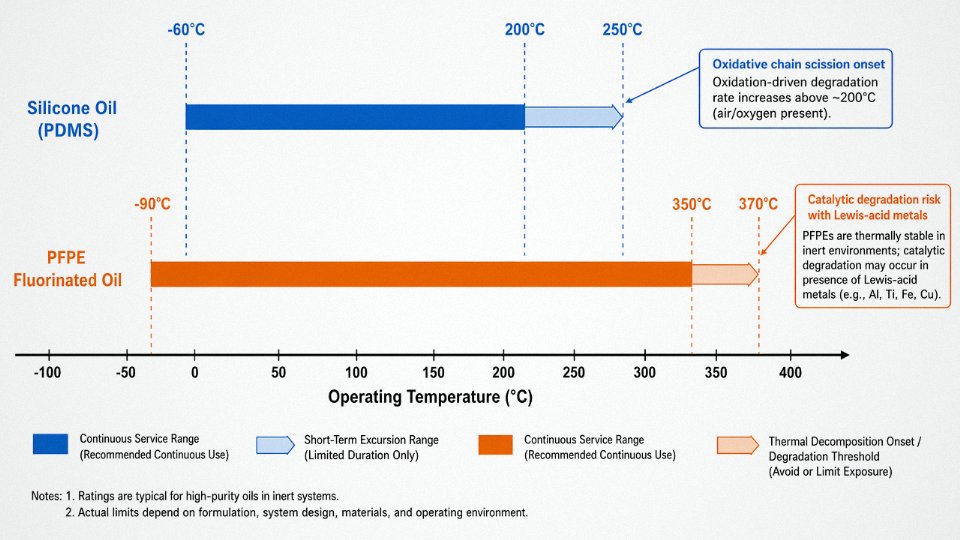
Silicone oil’s reputation for heat resistance is legitimate — up to a point. Polydimethylsiloxane (PDMS) fluids carry a continuous-use ceiling of roughly 200°C, with short-term excursions to around 250°C tolerable if exposure is brief (think minutes, not hours) and oxygen access is limited. Push past that, and the degradation pathway is predominantly oxidative chain scission: the Si–O backbone fragments, producing low-molecular-weight cyclic siloxanes — D4, D5, and related oligomers — that volatilize out of the sump. You lose fluid volume, viscosity drops, and the acid number climbs. A TAN reading above 0.5 mg KOH/g is a practical trigger for fluid change; in a sealed gearbox running at 195°C with marginal ventilation, you can hit that threshold in under 1,000 hours. In my experience, plants running silicone-cooled transformer baths or heating-media loops near the 200°C boundary often underestimate how fast the fluid degrades when there’s any ingress of humid air — the combination of heat and moisture accelerates hydrolysis of chain ends alongside the oxidative mechanism.
PFPE oils operate in a different league. Depending on grade — Fomblin Z and Krytox GPL series sit at opposite ends of the viscosity-versus-thermal-stability trade-off within the PFPE family — continuous-use ceilings range from about 260°C up to 350°C, and thermal decomposition by random chain scission doesn’t begin until somewhere above 370°C in a clean, inert environment. That gap between operating limit and decomposition onset is valuable; it gives a genuine safety margin that PDMS simply can’t match.
The catch with PFPE is catalytic degradation, and it catches engineers off guard more often than it should.
PFPE fluorinated oils can suffer catalytic decomposition and release corrosive fluoride byproducts at temperatures as low as 200°C when in contact with Lewis-acid metals such as aluminum or titanium.True
Lewis-acid metal surfaces — aluminum oxide, titanium alloys, and certain steel alloys with reactive surface states — can catalyze PFPE backbone cleavage well below the thermal decomposition threshold. The fluoride and oxyfluoride byproducts are corrosive and can attack both metal hardware and elastomeric seals. This is well-documented in aerospace and semiconductor literature and is a primary reason PFPE fluid selection must account for wetted materials, not just bulk thermal limits.
In practice, this means specifying PFPE into an aluminum-bodied actuator or a titanium vacuum chamber without checking wetted-material compatibility is a real failure mode. The fluoride byproducts attack anodized surfaces and degrade nitrile or EPDM seals, sometimes producing a grey-black sludge that looks superficially like carbon contamination. If your maintenance team hasn’t seen it before, they’ll chase the wrong root cause for months.
The table below maps both fluids against four common application environments where the temperature question is genuinely binary — either the fluid survives or it doesn’t.
| Application | Typical Fluid Temp | Silicone (PDMS) Viable? | PFPE Viable? | Notes |
|---|---|---|---|---|
| Aerospace actuator (hydraulic) | 150–180°C peak | Yes, with monitoring | Yes, preferred if titanium parts absent | Check seal compatibility either way |
| Semiconductor vacuum pump | 100–160°C, near-zero O₂ | Marginal; volatile oligomers contaminate vacuum | Yes — standard choice | Outgassing of cyclic siloxanes is disqualifying for PDMS |
| Food-processing convection oven (heat-transfer loop) | 180–220°C | Borderline; NSF H1 grades exist but life is short | Yes, if NSF-approved PFPE grade used | Regulatory compliance often decides this before performance does |
| Automotive e-drive cooling loop | 80–130°C continuous | Yes, adequate margin | Unnecessary; cost premium unjustified | Silicone dielectric fluid well-suited here |
The e-drive case is worth dwelling on. At 80–130°C, PDMS is nowhere near its degradation threshold, dielectric requirements are met comfortably, and the cost gap between silicone and PFPE — which can run three to ten times higher per kilogram depending on grade and volume — makes PFPE genuinely hard to justify unless a secondary requirement (chemical inertness to a specific refrigerant, for instance) forces the issue. Spend the budget difference on better thermal interface management instead.
Lubrication Performance: Film Strength, Wear Rates, and Boundary Lubrication Limits
Silicone oil gets specified in applications where its thermal stability, dielectric properties, or damping behavior are the primary requirement — and that’s often the right call. But there’s a persistent assumption on the shop floor that if a fluid can handle 200°C, it must be a capable all-around lubricant. With PDMS-based silicone oils, that assumption will cost you.
Why Silicone Oil Underperforms in Sliding Contact
The core problem is molecular. PDMS chains are non-polar and have virtually no affinity for metal oxide surfaces. Under hydrodynamic conditions — a fully flooded bearing spinning at speed with adequate film thickness — silicone oils perform reasonably well, because the load is carried by the fluid wedge rather than metal-to-metal contact. Reduce speed, increase load, or let the system start dry even briefly, and you’re in boundary or mixed lubrication territory. That’s where PDMS falls apart.
Under ASTM D4172 four-ball wear test conditions, neat silicone oils typically produce wear scar diameters in the range of 0.8–1.2 mm. Actual figures depend on viscosity grade and test load, but that compares poorly to conventional mineral oil at roughly 0.4–0.6 mm under the same protocol. The practical consequence: unprotected steel-on-steel sliding contacts lubricated with neat silicone will show accelerated surface fatigue, adhesive wear, and in some cases micro-welding at contact asperities.
Neat silicone (PDMS) oil performs comparably to mineral oil as a boundary lubricant for metal-on-metal sliding contactsFalse
PDMS molecules are non-polar and do not adsorb onto metal oxide surfaces. Four-ball wear scar diameters for neat silicone oil run 0.8–1.2 mm under ASTM D4172 conditions, roughly double the 0.4–0.6 mm typical of mineral oil, reflecting poor boundary film formation.
Anti-wear additive packages can close that gap, but here’s the catch: the same thermal and chemical inertness that makes silicone oils attractive also makes them poor carriers for conventional EP and AW additives. Many zinc dithiophosphate (ZDDP) and sulfur-phosphorus additives that work well in mineral oil don’t perform reliably in PDMS, partly because the additive’s activation chemistry assumes a more interactive base fluid. Formulators working with silicone base oils often have to lean on specific additive chemistries — borate esters, certain phosphate esters — and validate them against the actual substrate materials. Don’t assume a mineral-oil additive package transfers.
Where PFPE Pulls Ahead — and Where It Doesn’t
PFPE oils, by default, aren’t dramatically better boundary lubricants than silicone in their base form. The fluorinated backbone is also fairly inert toward steel surfaces, and unmodified PFPE grades show moderate wear performance on their own. The real differentiator is functional end-group chemistry.
Hydroxyl (–OH) or carboxyl (–COOH) terminated PFPE grades adsorb onto metal oxide layers — the iron oxide and aluminum oxide surfaces that are always present on engineering alloys in ambient conditions. That chemisorption mechanism creates a genuinely tenacious boundary film even at nanogram-scale film thicknesses. Wear scar diameters for functional-end-group PFPE grades typically fall in the 0.5–0.7 mm range under four-ball test conditions, which is competitive with well-formulated mineral oils. This is exactly why functional PFPEs found their way into hard-disk drive spindle bearings and aerospace gyroscope gimbals, where film thickness is measured in molecular layers and there’s no tolerance for wear debris.
Viscosity Index and the Practical Consequence for Bearing Design
Viscosity index matters because it tells you how much your film thickness is going to change across the operating temperature range. Silicone PDMS oils carry VI values typically between 150 and 400 — genuinely excellent, especially at higher molecular weights. A 100 cSt PDMS grade at 25°C might only thin to 40–60 cSt at 100°C, depending on molecular weight distribution. That consistency is a real advantage in wide-temperature hydrodynamic bearings where you want predictable film geometry across startup and running conditions.
PFPE oils are more modest here, with VI values generally in the 80–150 range depending on grade and manufacturer. The viscosity-temperature relationship is steeper, which means your film thickness calculations need to account for a wider spread. In a bearing running from -40°C ambient startup to +150°C steady state — not unusual in aerospace or high-speed spindle applications — a PFPE fluid might deliver a very different viscosity at each extreme than a PDMS fluid of nominally similar grade.
The practical decision logic: if the lubricant will face chemical aggression (strong oxidizers, aggressive process fluids, reactive gases), or if operating temperatures exceed what any hydrocarbon or silicone additive package can survive, PFPE wins on chemical durability even if its VI is less convenient. If the application is a hydrodynamic bearing in a relatively benign environment and wide temperature range stability is the priority, silicone with a compatible additive system is harder to beat on cost. Using either fluid in boundary-lubricated metal sliding contact without understanding the surface adsorption chemistry first is a straightforward path to premature wear.
Chemical Resistance and Material Compatibility: Seals, Plastics, and Process Fluids
Material compatibility is where silicone oil’s low cost advantage gets quietly eroded on the plant floor. Engineers sometimes assume that because silicone rubber and silicone oil are both “silicone,” they must play well together. They do not.
Silicone Oil and Elastomer Swelling
PDMS fluids cause severe swelling in silicone rubber (VMQ, PVMQ) — volume increases in the 30–60% range are realistic under prolonged immersion, depending on oil viscosity, temperature, and the specific elastomer formulation. Low-viscosity grades (below roughly 50 cSt) are the worst offenders because they diffuse faster into the elastomer network. The practical consequence: a shaft seal or O-ring that started at 2.0 mm cross-section swells enough to pinch, then extrudes, then fails — usually not catastrophically at first, just leaking enough to contaminate a bearing cavity or a food-contact surface before anyone notices on a weekly inspection round.
EPDM fares better but still shows moderate swelling, typically 10–25% depending on the compound. PTFE and PVDF are essentially unaffected. FKM (Viton) shows only minor volume change with PDMS oils. Most unfilled engineering thermoplastics — nylon 66, acetal, polycarbonate, PEEK — are compatible under normal service temperatures, though you should always run a 72-hour coupon soak before committing to a new design, especially with filled or blended grades.
Silicone oil (PDMS) causes 30–60% volume swelling in silicone rubber elastomersTrue
PDMS fluids are chemically identical in backbone to VMQ/PVMQ elastomer networks, so the fluid readily diffuses into and swells the crosslinked matrix. Observed volume increases of 30–60% under prolonged immersion are consistent with published swell data and field experience.
The immediate design implication: if your existing equipment specifies silicone-rubber O-rings anywhere in the fluid circuit — and many pneumatic valve manufacturers and food-grade pump makers do exactly that — specifying a silicone oil fill is asking for a warranty call within one service interval.
PFPE’s Broad Elastomer Compatibility
PFPE fluorinated oils are genuinely compatible with almost every common seal material: silicone rubber, FKM, EPDM, PTFE, and PEEK all show negligible swell. This is one of the main operational reasons PFPE commands a price premium well above PDMS. When you’re running a multi-axis vacuum robot with mixed seal materials, or a semiconductor diffusion furnace where maintenance access is expensive, you really do not want to audit every O-ring specification before changing fluid. PFPE lets you standardize on one fluid and stop worrying about it.
One hard caveat: PFPE must not contact strong Lewis-acid catalysts, alkali metals (lithium, sodium), or certain metal fluorides at elevated temperature. Under those conditions the fluorinated backbone can crack and generate hydrofluoric acid or other corrosive fluoride species — a low-probability but high-consequence failure mode. This is rarely an issue in conventional mechanical applications, but it matters in specialized chemical processing environments.
Cross-Contamination: The Hidden Cost of Silicone Oil in Mixed Facilities
This is probably underappreciated in procurement conversations. Silicone oil contamination at concentrations as low as 0.1% — or even a few parts per million in some cases — is enough to poison platinum-group catalysts used in automotive exhaust treatment, fuel cell electrodes, and silicone-curing ovens. Silicone migrates easily: it volatilizes at elevated temperatures, transfers on hands and tools, and wicks along surfaces. A shared fill pump that was used for PDMS oil last Tuesday can contaminate a platinum-cure silicone batch next Thursday even after a rinse.
Paint fisheye defects are another real-world result. Bodyshop managers track silicone contamination obsessively because a single droplet dispersed by compressed air can ruin an entire panel’s topcoat. PFPE carries essentially none of this cross-contamination risk, which is one reason aerospace and electronics assembly facilities sometimes specify it even in non-demanding lubrication roles — purely to keep silicone out of the building.
| Seal / Plastic Material | Silicone Oil (PDMS) | PFPE Fluorinated Oil |
|---|---|---|
| Silicone rubber (VMQ) | Severe swell (30–60%) | Compatible |
| EPDM | Moderate swell (10–25%) | Compatible |
| FKM (Viton) | Minor swell | Compatible |
| PTFE | Compatible | Compatible |
| PVDF | Compatible | Compatible |
| Nylon 66 | Compatible | Compatible |
| PEEK | Compatible | Compatible |
| Polycarbonate | Caution (filled grades) | Compatible |
Procurement note: specifying PFPE solely for seal compatibility in a standard industrial pump is almost certainly over-engineering. But if your facility runs any platinum-catalyzed process, or if maintenance already uses silicone-rubber seals throughout and a redesign is off the table, PFPE’s material promiscuity earns its price difference fast.
Electrical and Dielectric Properties for Power Electronics and High-Voltage Applications
Dielectric fluid selection is one of those decisions that looks straightforward on paper — until you have a transformer fault, a server rack fire event, or a warranty dispute over an EV drive unit. Both silicone and fluorinated oils outperform mineral oil electrically, but they don’t perform the same way, and choosing between them on dielectric strength alone misses most of the real engineering picture.
Silicone Oil in Transformer and Switchgear Service
PDMS-based silicone oils carry a dielectric constant of roughly 2.2–2.8 at 25°C — the exact value shifts with viscosity grade and temperature, so a 100 cSt fluid will test slightly differently than a 50 cSt grade. Dissipation factor typically comes in below 0.001 at 25°C under clean, dry conditions, which is acceptable for most distribution transformer applications. Dielectric strength lands around 15 kV/mm in standardized testing, though in-service values depend heavily on moisture content and particulate contamination; a transformer that hasn’t been properly sealed during a wet-season maintenance window can see that number drop meaningfully.
What actually drives silicone oil adoption in power infrastructure isn’t the dielectric constant — it’s the flash point. Closed-cup flash points above 300°C make silicone oil a legitimate fire-resistant transformer fluid, and utilities operating substations near buildings or in fire-prone regions have used this as a direct replacement argument against naphthenic mineral oils. The autoignition temperature is also substantially higher than mineral oil, which matters when you’re designing protection coordination and thinking about what happens after an internal fault rather than just during normal operation.
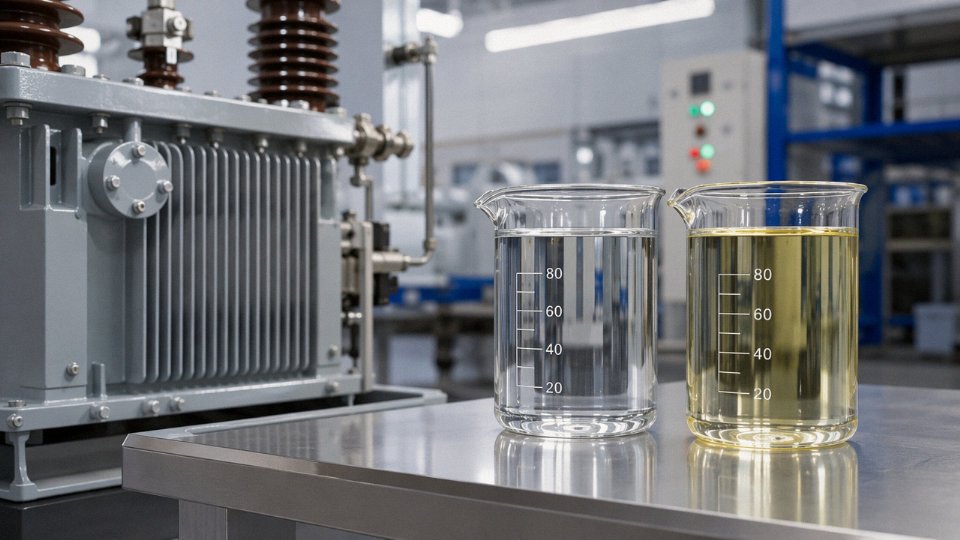
Silicone oil has a flash point above 300°C (closed cup) and is classified as a fire-resistant dielectric fluid.True
PDMS silicone oils typically exhibit closed-cup flash points of 300°C or higher, well above the 180°C threshold used by IEC standards to classify a fluid as fire-resistant, making them suitable for fire-sensitive transformer installations.
PFPE Oils: Where Non-Flammability Is Non-Negotiable
PFPE fluorinated oils push the electrical properties further in almost every column. Dielectric constant drops to 1.9–2.1, which is actually useful beyond just insulation — lower permittivity reduces parasitic capacitance in high-frequency power electronics and improves signal integrity in mixed-signal environments. Dissipation factor is typically below 0.0001, roughly an order of magnitude better than silicone, which matters in RF and microwave adjacent applications where loss tangent contributes directly to thermal load. Dielectric strength reaches 18–22 kV/mm depending on grade and test geometry.
The defining property, though, is that PFPE has no flash point. It simply doesn’t ignite. That makes it the default choice in oxygen-enriched environments, spacecraft electronics cooling, and anywhere that a fire suppression system can’t be relied upon or isn’t practical. Immersion-cooled server infrastructure in high-density deployments — particularly where power densities exceed what air or water-block cooling can manage — has used PFPE for this reason, accepting the cost premium in exchange for fire safety and extremely low fluid reactivity.
EV Drive Unit Immersion Cooling: Where the Thermal Gap Bites Back
This is where the comparison gets uncomfortable for PFPE advocates. In EV drive unit immersion cooling, thermal transport properties matter as much as electrical properties, and silicone oil wins clearly on both key metrics. Silicone oil heat capacity runs around 1.46 J/g·K versus roughly 1.0 J/g·K for PFPE. Thermal conductivity is approximately 0.16 W/m·K for silicone against about 0.07 W/m·K for PFPE — more than twice as effective at moving heat away from windings and power modules.
In practice, that gap translates to higher steady-state junction temperatures or larger heat exchanger requirements when using PFPE. For a drive unit pushing 150–200 kW peak output, the difference in fluid thermal capacity isn’t trivial. Silicone oil’s lower dielectric strength (15 kV/mm versus 18–22 kV/mm for PFPE) is rarely the limiting constraint in a well-designed 800V drive unit, so engineers specifying immersion cooling for high-power-density EV applications generally favor silicone oil unless flammability risk in the specific installation genuinely demands otherwise.
The honest engineering position: PFPE wins on dielectric margin and fire safety; silicone wins on thermal transport. Know which constraint actually governs your design before writing the fluid specification.
Environmental Profile, Regulatory Status, and Sustainability Considerations
The regulatory landscape around specialty lubricants and dielectric fluids has shifted faster in the last three years than in the previous two decades, and procurement teams who were comfortable specifying PFPE or silicone oil on purely technical grounds are now fielding questions from EHS departments, customers, and in some cases regulators. The situation is genuinely asymmetric between the two fluid families — but neither is entirely clean.
PFPE Fluids and the PFAS Classification Problem
PFPE oils fall squarely within the “per- and polyfluoroalkyl substances” (PFAS) definition as written by both the US EPA and under EU REACH. That classification is based on the presence of fully fluorinated carbon chains — the same structural feature that makes PFPE thermally and chemically inert. High-molecular-weight PFPE grades, such as the longer-chain variants used in vacuum pump fluids and aerospace bearings, show very low acute ecotoxicity in standard aquatic tests and negligible bioaccumulation in typical screening studies. That matters, but it no longer settles the regulatory argument.
High-molecular-weight PFPE oils show negligible bioaccumulation in standard OECD screening testsTrue
High-molecular-weight PFPEs have low water solubility and large molecular size that limit biouptake, which is consistently reflected in standard OECD 305 and 117 test results. However, regulatory bodies are increasingly looking beyond standard bioaccumulation metrics when assessing PFAS persistence.
What regulators are increasingly focused on is persistence. C–F bonds essentially do not hydrolyze under environmental conditions. A PFPE molecule released to soil or water will remain structurally intact for timescales that are, for practical purposes, indefinite. Under the EU REACH universal PFAS restriction proposal — which was under active consultation through 2023 and 2024 — persistence alone can trigger restriction, independent of acute toxicity data. Mandatory reporting obligations in several EU member states and US states (Minnesota and Michigan being early movers, others following) already apply to PFPE-containing products. If your plant operates in regulated watersheds or discharges to municipal treatment systems, you may already have reporting obligations you have not fully mapped.
The practical implication: any application that has a realistic pathway to environmental release — open-system lubrication, frequent oil changes without closed-loop disposal, flood cooling — deserves a hard look before specifying PFPE.
Where Silicone Oil Stands
PDMS-based silicone oils are not classified as PFAS. In most aquatic toxicity classifications they fall into low-hazard categories, and the end-of-life degradation pathway — slow hydrolysis in soil, eventually yielding silica, CO₂, and water — is environmentally benign in most jurisdictions. In practice, “slow” means decades for bulk fluid, so it is not biodegradable in any meaningful operational sense, but it is not persistent in the PFAS regulatory sense.
The real wrinkle with silicone oils is cyclic siloxanes, specifically D4 (octamethylcyclotetrasiloxane), D5 (decamethylcyclopentasiloxane), and D6. These can be present as trace impurities in some commercial PDMS grades or can form as degradation products under certain conditions. D4 and D5 are already restricted in rinse-off cosmetics under EU REACH Annex XVII, and D5 and D6 are on the monitoring list for industrial wastewater discharges in several European countries. If your silicone oil supplier cannot provide a cyclic siloxane content specification — and some commodity suppliers cannot — that is a procurement risk worth flagging.
Disposal, Lifecycle, and What’s Coming Next
On the disposal side, the asymmetry is stark. Spent PFPE should go to high-temperature incineration in a facility qualified to fully mineralize C–F bonds — typically above 1,000°C with acid gas scrubbing. Incomplete combustion generates hazardous fluorinated breakdown products. That adds disposal cost (roughly two to four times the cost of incineration for standard mineral oil, depending on region and volume) and logistics complexity. Silicone oil is more forgiving: re-refining is commercially available for larger volumes, and co-incineration in cement kilns or industrial burners is generally acceptable because the combustion products are low-hazard.
Several industrial fluid suppliers are piloting bio-based esters and refined hydrocarbon polyalkylene glycols (PAGs) as drop-in alternatives in moderate-temperature applications where neither silicone nor PFPE is necessary on technical grounds. Realistic upper service temperatures for these alternatives run 150–180°C continuous, which covers a surprisingly large fraction of industrial use cases. They are not drop-in replacements for cryogenic or high-vacuum applications — that claim does not hold up — but for general heat-transfer fluid duties or moderate-load enclosed gearboxes, the case for a simpler fluid is worth making before defaulting to either specialty chemistry.
The honest summary: PFPE carries real and growing regulatory risk that is not proportional to its direct toxicity. PDMS carries lower regulatory risk today but is not zero-risk, particularly around cyclic impurities and the absence of meaningful biodegradation. Both warrant a lifecycle inventory before specification, and neither should be treated as a permanent default just because it was the right answer five years ago.
Total Cost of Ownership: Price per Liter Is Only the Starting Point
The unit price gap between silicone oil and PFPE fluorinated oil is genuinely startling the first time you see a procurement quote. Food-grade PDMS in bulk runs roughly $3–$8/kg depending on viscosity grade, order volume, and whether you need NSF H1 certification. Krytox and Fomblin — the two PFPE grades that dominate industrial procurement — land somewhere between $150 and $600/kg in comparable bulk quantities, with the high end reserved for ultra-high-viscosity or aerospace-spec grades. That’s a 20x to 75x unit price premium, and any procurement manager who signs off on PFPE without building a proper TCO case is taking an unnecessary political risk inside their organization.
But price per kilogram is a procurement shortcut, not an engineering decision.
Fluid Service Life Changes the Arithmetic Entirely
Silicone oil in a sealed transformer or rough-vacuum pump typically needs a full change-out every 3–5 years under normal operating conditions — sooner if the system runs hot, sees moisture ingress, or cycles frequently through its upper temperature range. PFPE in equivalent service regularly runs 10–20 years with nothing more than periodic contamination monitoring: particulate counts, viscosity spot-checks, and the occasional acid-number test if the application involves oxidizing process gases. In a cleanroom dry pump or a semiconductor fab tool that requires a full decontamination protocol before any maintenance window, that difference in drain intervals is enormous. The labor cost alone for a glovebox teardown can run several times the cost of the fluid itself.
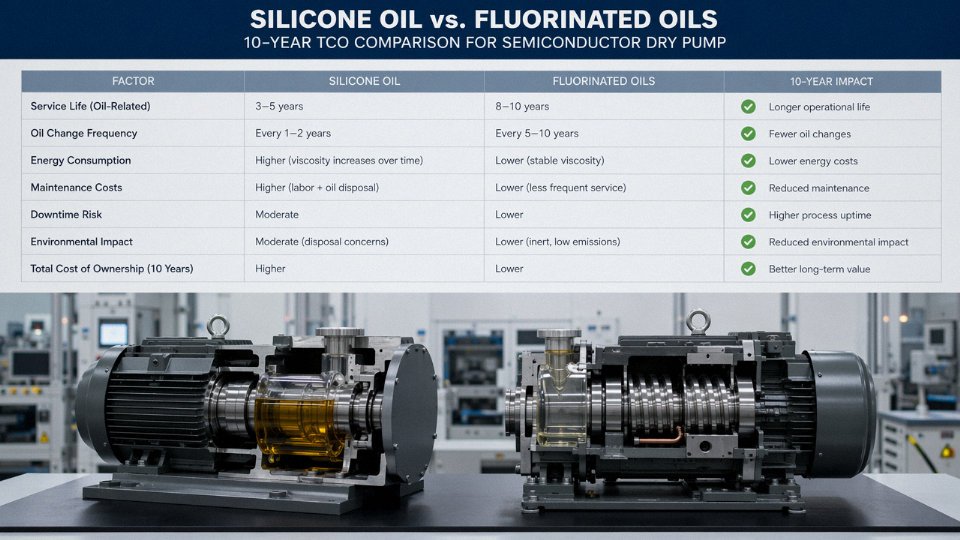
PFPE fluorinated oils can achieve a lower 10-year total cost of ownership than silicone oils in semiconductor dry pump applications despite a unit price premium of 40x or more.True
PFPE's extended service life (10–20 years vs. 3–5 years for silicone oil), elimination of multiple drain/refill cycles, reduced downtime in cleanroom-qualified equipment, and avoided regulatory disposal costs can offset the raw material premium when the full cost model is applied over a realistic service horizon.
The Four-Variable TCO Model
A workable 10-year cost model needs at least four inputs: initial fill volume (liters or kg), annual top-up rate as a percentage of fill volume, equipment downtime cost per hour, and regulatory disposal cost per kg. That last variable catches people off guard. In jurisdictions where spent lubricants require hazardous-waste manifesting and licensed disposal — increasingly common in the EU and several US states for fluorinated or silicone-contaminated waste streams — disposal can add $5–$25/kg to the effective cost of a change-out, depending on local disposal contractor pricing and waste classification.
A realistic worked example: a semiconductor dry pump with a 4 kg PFPE fill at $400/kg costs $1,600 upfront. One change-out over a 10-year window adds roughly $1,600 plus disposal and perhaps 8–12 hours of cleanroom maintenance labor — call it $2,500–$4,500 total depending on the fab’s labor rate. The equivalent silicone fill at $6/kg costs $24 upfront, but two to three change-outs over the same decade, each requiring cleanroom protocol, bumps that figure to $1,800–$3,500 when you include labor, disposal, and the downtime cost of the tool sitting idle. And that calculation assumes no unplanned maintenance from fluid degradation — which, in my experience, is optimistic for silicone oil in a pump that sees process gas back-migration.
Where Silicone Oil Still Wins on TCO
None of this means PFPE is the default right answer. In a large-volume open-system application — a heat transfer bath, a hydraulic system with routine maintenance access, a food-processing line where incidental contact requires frequent fluid replacement anyway — the unit price premium for PFPE is almost never recoverable. Silicone oil’s TCO advantage in high-volume, frequently-serviced, or non-critical applications is real and should not be argued away by a vendor pushing premium fluids.
The honest procurement question is not “which fluid is cheaper?” It is: what does an unplanned outage cost per hour, how often will this system realistically be serviced, and does the regulatory environment add disposal overhead that tips the balance? Run those numbers before the purchase order goes out.
Industry-Specific Selection Guide: Aerospace, Semiconductor, Food Processing, and EV Manufacturing
The right fluid in one industry is occasionally the wrong fluid in another — not marginally wrong, but dangerously or expensively wrong. What follows is a vertical-by-vertical breakdown, written to be actionable rather than exhaustive.
Aerospace and Defense
PFPE is the mandatory choice anywhere liquid oxygen or high-pressure gaseous oxygen is present. This isn’t a preference — it’s a safety and specification issue. MIL-PRF-27617 covers PFPE-based oils specifically for oxygen-compatible hydraulic and lubricant applications, and there’s a reason that specification exists: silicone oil in contact with oxygen under pressure is a combustion hazard. Actuators on cryogenic fuel systems, gyroscope bearings, and any mechanism that might see LOX splatter or oxygen-enriched atmospheres need PFPE, full stop.
PFPE oils are non-flammable in liquid oxygen service, whereas silicone (PDMS) oils are not approved for oxygen-compatible applications under MIL-PRF-27617.True
PFPE fluids are fully fluorinated and essentially non-reactive with oxygen even under pressure, which is why MIL-PRF-27617 specifies them for oxygen-compatible lubrication. Silicone oils can ignite under oxygen-enriched high-pressure conditions and are not listed in that specification.
Silicone oil does have a legitimate aerospace role. Non-oxygen hydraulic dampers, optical bench thermal control loops, and some avionics cooling paths use PDMS-based fluids — particularly where elastomer seal compatibility with fluorosilicone is already designed in, and where procurement wants to avoid the cost premium of PFPE. The working temperature range for those applications usually stays well under 200°C, which suits silicone fine. The key decision driver, practically speaking, is a single question: is this system or any adjacent system ever exposed to oxygen at elevated pressure? If yes, use PFPE.
Semiconductor and Flat-Panel Display Manufacturing
Fabs are unforgiving environments for fluid selection mistakes. Silicone oil is explicitly excluded from most semiconductor tool specifications — not because it fails tribologically, but because siloxane vapor contamination deposits on wafer surfaces and gate oxides, causing yield failures that are difficult to trace. A single contaminated vacuum pump can affect an entire tool bay for weeks before anyone identifies the source.
PFPE is the de-facto standard. Fomblin Y grades (Solvay) and Krytox 143 series (Chemours) dominate vacuum pump lubrication, wafer-handling robot harmonic drives, and any lubricated mechanism inside a process chamber or adjacent load lock. These fluids are chemically inert to fluorine, chlorine, ozone, and most other reactive gases encountered in etch and deposition processes. The viscosity grades used in harmonic drives typically fall in the 150–500 cSt range at operating temperature, selected to match the specific drive manufacturer’s recommendation — this is not a place to substitute grades freely.
In flat-panel display manufacturing the same contamination logic applies, and most tool OEMs carry the PFPE requirement through their service manuals directly.
Food Processing and Pharmaceutical Manufacturing
This is silicone oil’s home territory for most applications. PDMS-based food-grade fluids hold NSF H1 and FDA 21 CFR 178.3570 registration, and at $8–25 per liter (depending on viscosity grade and volume), the cost is manageable in a cost-sensitive production environment. Oven conveyor chains, heat seal bar guides, filling machine cams — all typical silicone oil applications running at moderate loads and temperatures up to around 180–200°C.
PFPE earns its place in food processing only when conditions genuinely demand it: continuous service above 200°C (rotary ovens, some retort equipment), aggressive CIP chemicals that degrade silicone, or direct contact with aggressive oxidizing sanitizers. The NSF H1 registration for PFPE products is real, but the cost premium — typically 8x to 15x silicone on a per-liter basis — means you need a clear technical justification before writing it into a maintenance spec.
EV Battery Manufacturing and Immersion Cooling
This segment is still sorting itself out, honestly. Direct immersion cooling of battery modules and power electronics uses both fluid types depending on which engineering constraints dominate the design.
Silicone oil’s thermal conductivity (roughly 0.15–0.16 W/m·K at 25°C) and heat capacity are adequate for many single-phase immersion designs, and at $5–20 per liter in volume it’s compatible with the cost targets of high-volume battery production. Most current large-format cell immersion cooling pilots use silicone oil for exactly this reason. The dielectric strength (~15 kV/mm) is sufficient for most 400V–800V battery architectures when the fluid volume and geometry are sized correctly.
PFPE comes into the picture where dielectric margin is non-negotiable — some high-voltage power electronics and transformer immersion cooling applications require the 18–22 kV/mm range — and where wider operating temperature extremes are part of the design spec. The tradeoff is real: fluid fill cost on a large immersion-cooled battery pack using PFPE can run 3x–5x higher than the silicone equivalent. For a 100 kWh commercial vehicle pack that’s not a rounding error.
The trend in cost-sensitive high-volume EV production is currently tilting toward silicone oil for immersion cooling, with PFPE retained for specific power electronics modules where the dielectric and thermal stability requirements can’t be met otherwise.
Frequently Asked Questions About Silicone Oil vs. Fluorinated Oils
Can you mix silicone oil and PFPE in an emergency top-up?
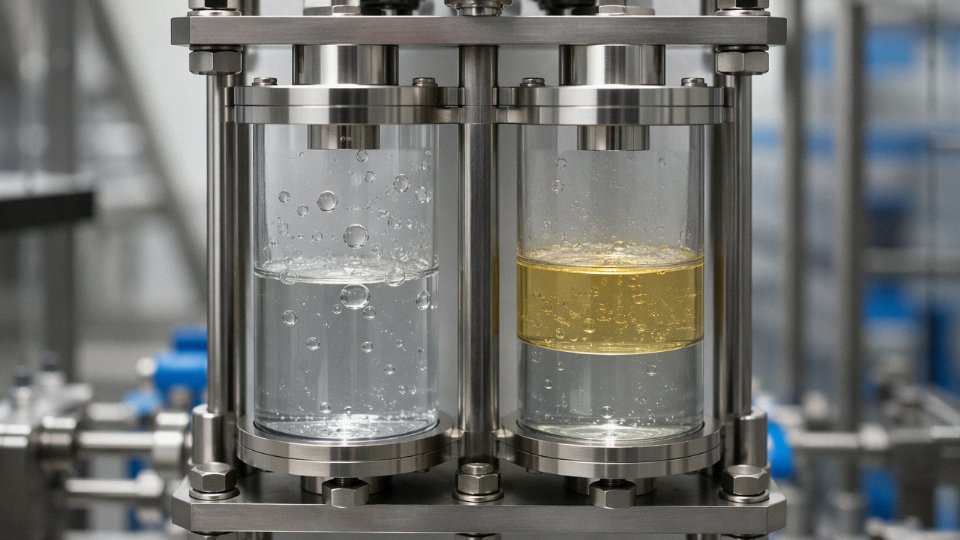
No. Full stop. PDMS and PFPE are mutually immiscible — they will phase-separate almost immediately, producing a two-layer or emulsified mess depending on how much agitation the system provides. In a circulating lubrication loop, that means inconsistent viscosity delivery to bearings, erratic pump suction, and a real risk of cavitation if the pump inlet draws the lighter phase preferentially. Neither fluid’s performance guarantees survive the mixture. The only correct remediation is a full drain, flush with a compatible solvent (confirm compatibility before you use anything), and recharge with a single fluid. Topping up with whatever is on the shelf to get through a shift is the kind of shortcut that shows up two weeks later as a failed bearing or a contaminated dielectric bath.
Is PFPE the same as PFAS, and should I be planning for a ban?
Technically, yes — PFPE falls within the broad PFAS definition because it contains multiple C–F bonds. But the regulatory conversation around PFAS is largely driven by short-chain compounds like PFOA and PFOS, which are mobile, bioaccumulative, and acutely toxic at low concentrations. High-molecular-weight PFPE used in industrial applications is fundamentally different in persistence and toxicity profile.
High-molecular-weight PFPE lubricants pose the same environmental and health risk as PFOA or PFOS.False
PFOA and PFOS are short-chain, highly mobile, and bioaccumulative. Industrial PFPE grades are high-molecular-weight polymers with significantly different environmental fate and toxicology. Regulatory agencies treat them differently, though PFPE is technically within the PFAS chemical class.
That said, the regulatory trajectory in the EU (REACH universal PFAS restriction proposal) and the US EPA’s evolving PFAS framework creates real uncertainty for equipment designs with 15-year-plus service horizons. If you are specifying fluid chemistry today for a system that will run until 2040, proactive substitution planning — even if PFPE is currently compliant — is a defensible engineering decision, not paranoia.
Why does silicone oil cause paint fisheye defects, and does PFPE do the same thing?
PDMS spreads as a monomolecular film across surfaces because its surface energy sits around 20 mN/m — well below most paint systems. Even nanogram-level contamination prevents proper adhesion and creates the characteristic circular depressions that painters call fisheyes. The contamination can travel through air as vapor or transfer via skin contact with a tool handle that was wiped with a silicone-lubricated rag.
PFPE is not a safe substitute here. Its surface energy runs around 17 mN/m, meaning it spreads just as aggressively and causes identical defects. Neither fluid belongs anywhere near automotive body painting lines, aerospace composite coating operations, or furniture finishing environments without rigorous containment — dedicated tools, separate storage areas, and clear labeling. In practice, some plants ban both fluids from entire production buildings rather than trying to manage zone-by-zone protocols.
Which fluid is safer for incidental skin contact during maintenance?
Both have low acute dermal toxicity. Silicone oil (PDMS) is used in cosmetics, topical barrier creams, and medical devices, so incidental maintenance contact is generally not a health concern. PFPE is similarly benign at ambient temperatures.
The important distinction is thermal decomposition. If PFPE is heated above roughly 370°C, or if PFPE-contaminated clothing or surfaces contact an open flame or a lit cigarette, it can generate highly toxic decomposition products including perfluoroisobutylene. This is not a theoretical concern — it has caused serious incidents in industrial settings. Smoking and any open-flame work must be strictly prohibited in areas where PFPE is handled or stored. That rule needs to be in your site safety procedure, not just the SDS.
What viscosity grade should I start with for transformer cooling using silicone oil?
IEEE C57.111 and IEC 60836 are the governing documents, and both are worth reading before you specify anything. For a typical distribution transformer without forced-oil cooling, 50 cSt at 25°C is the standard starting point — it gives adequate convective heat transfer while remaining pumpable down to around -40°C, which matters if the transformer sits outdoors in northern climates. Heavier grades in the 100–350 cSt range are used in large power transformers where forced-oil cooling handles the viscosity penalty, and where the priority shifts toward film strength and longer fluid life between maintenance intervals. Going heavier than necessary on a naturally cooled unit will hurt heat dissipation and is a common over-specification mistake driven by the assumption that thicker always means better protection.