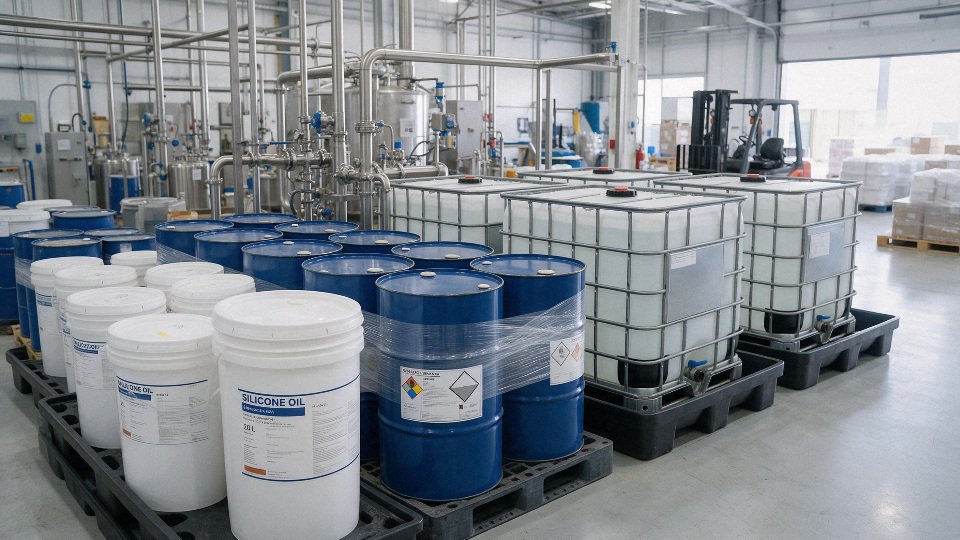
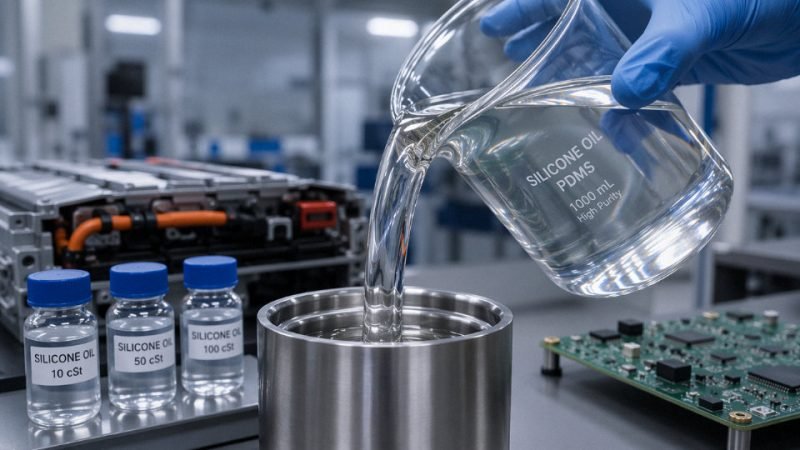
Silicone oil has been a workhorse fluid for decades — damping, lubricating, releasing, insulating — and most procurement specs haven’t changed since the 1990s. The problem is that the industries pushing hardest on thermal management, implantable medical devices, and high-voltage power electronics are running into the limits of conventional fluids fast. Mineral oils oxidize, synthetic esters absorb moisture, fluorinated alternatives cost three to five times more per liter and create supply chain headaches. When your thermal interface compound fails at 150 °C junction temperatures or your ophthalmologic tamponade agent causes unexpected viscosity drift in the OR, the consequences aren’t just engineering embarrassment — they’re unplanned line shutdowns, regulatory holds, and scrap costs that compound quietly until someone finally looks at the numbers.
Silicone oil is expanding into high-growth applications including EV battery thermal management, power transformer insulation, ophthalmologic surgery, personal care encapsulation, and advanced semiconductor cooling. Grades from 50 to 60,000 cSt serve different functions, and filled silicone compounds can push thermal conductivity from the baseline ~0.15 W/m·K to above 1.0 W/m·K. The right grade and formulation depend entirely on the operating temperature range, dielectric requirements, and regulatory environment of the target application.
What makes this moment different from previous cycles of interest in silicone fluids is that the demand is coming from multiple unrelated sectors simultaneously, each with its own viscosity window, purity threshold, and certification burden. That convergence is already reshaping how producers price specialty grades and how procurement teams need to think about supply security — and it’s worth understanding which applications are genuinely mature enough to specify today versus which ones are still burning through R&D budgets.
Immersion Cooling for High-Density Data Centers and AI Compute Clusters
The data center industry has a heat problem that air handlers simply cannot solve anymore. An NVIDIA H100 GPU draws roughly 700 W per card, and a fully loaded 10U tray of eight cards pushes past 5.6 kW in a footprint that would have housed a modest file server five years ago. Scale that to a 10 MW AI training cluster and the physics of moving air through hot aisles stops working — not theoretically, but practically, in terms of fan power, floor space for CRAC units, and the PUE penalties that show up on the monthly power bill.
Single-phase immersion cooling addresses this by submerging entire server boards — CPUs, GPUs, VRMs, memory, the lot — directly into a bath of dielectric fluid, with a liquid-to-liquid heat exchanger pulling heat out of the bath and rejecting it to a facility cooling loop. No fans on the boards, minimal airflow in the room. Properly engineered systems handle 40–60 kW per rack depending on the heat exchanger sizing and the facility’s supply water temperature; PUE values in the 1.02–1.05 range are achievable at steady state, compared with 1.3–1.5 for a well-run air-cooled facility and considerably worse for older builds.
Why Silicone Oil Beats Mineral Oil in This Application
Mineral oil was the first fluid people tried in immersion tanks — it’s cheap and available. The problem is flash point. Mineral oil typically ignites somewhere around 130–150 °C; in a fault condition where a voltage regulator fails and dumps significant heat locally, that matters. Silicone oil has no measurable flash point under standard test conditions, which is why insurers and fire marshals in several jurisdictions are starting to treat mineral-oil immersion tanks differently from silicone-based ones.
Silicone oil used in immersion cooling has no detectable flash point under standard ASTM test conditions, unlike mineral oil.True
Polydimethylsiloxane fluids do not produce a measurable flash point per ASTM D92 (Cleveland Open Cup) testing. This is a documented material property, not marketing language, and is one reason silicone oil is preferred where fire risk classification matters.
Oxidation stability is the other issue that shows up after year two or three of operation. Mineral oil oxidizes and forms sludge that coats heat exchanger surfaces, degrading thermal transfer. Silicone oils — particularly linear PDMS grades in the 100–1,000 cSt range that suit electronics thermal interface work — hold their viscosity and dielectric properties through 50,000-hour operational cycles far better, which matters when you’re designing a system you expect to run for eight to ten years without a fluid changeout.
Engineered fluids like 3M Novec products offer excellent thermal properties and very low viscosity, but replacement cost runs USD 40–80 per liter depending on grade and contract volume. Silicone oil at comparable purity runs USD 8–20 per liter. For a tank holding 800–1,200 liters of fluid, that gap is not trivial, especially when hyperscalers are deploying hundreds of tanks.
Materials Compatibility — the Catch Nobody Advertises Up Front
Here’s where operators get surprised. Silicone oil causes measurable swell in EPDM and certain nitrile elastomers. Seals on legacy server components — power connectors, cable entry grommets — weren’t designed with silicone immersion in mind. Over a two- to three-year exposure window, compromised seals create fluid ingress paths or, worse, electrical contact contamination. Board designers working on immersion-native hardware are moving toward PTFE and silicone-rubber seals specifically, and some are eliminating elastomer seals at vulnerable locations entirely.
FR4 PCB laminates present a slower but equally real problem. Prolonged silicone oil exposure can degrade the epoxy resin matrix, particularly if the fluid operates at elevated temperatures — say, 50–55 °C bath temperature, which some operators push to squeeze PUE lower. The degradation isn’t dramatic quarter-over-quarter, but at the five-year mark, delamination risk increases. Immersion-optimized board designs now specify halogen-free laminates with higher Tg ratings, partly for this reason.
Adoption Trajectory and What the Open Compute Project Is Drafting
Pilot deployments from hyperscale operators — including cloud segments running large-scale AI training infrastructure — have validated the energy numbers. Cooling energy reductions of 30–40% compared with equivalent air-cooled capacity are consistently reported, with the lower end of that range applying to facilities where ambient cooling conditions are already favorable and the upper end to hot-climate sites where chiller load savings dominate.
The Open Compute Project is actively working on fluid recovery and reuse standards — essentially defining what “used” silicone oil can be reclaimed for, what contamination thresholds trigger disposal, and how fluid should be filtered and reintroduced. This matters because one of the valid criticisms of immersion cooling at scale is the waste stream when tanks are decommissioned or fluid is replaced after contamination events. Silicone oil is not biodegradable in the conventional sense, and landfill disposal of large fluid volumes is increasingly regulated. A closed-loop reuse standard would significantly change the sustainability calculus.
Projected adoption through 2027 leans heavily on AI compute build-outs. If GPU power density continues climbing — and the roadmaps suggest it will — single-phase immersion with silicone oil is likely to move from niche pilot to mainstream option for any facility above roughly 5–10 MW of AI-specific load. The fluid economics, fire safety profile, and long service life all point in the same direction.
Electric Vehicle Thermal Management: Battery Packs, Motors, and Power Electronics
The EV drivetrain is, thermally speaking, a genuinely hostile environment. You have a battery pack cycling between near-freezing and around 45 °C during fast charge, a motor that spikes past 150 °C in the windings under hard acceleration, and a SiC inverter that needs to shed heat fast enough to avoid throttling power output — all in a package where an electrical fault means a fire, not just a failure. Glycol-water mixtures handle bulk heat well enough, but they conduct electricity. Mineral oil is cheap but gels badly below –20 °C. That gap is exactly where silicone oil is finding real traction.
Direct Oil Cooling of Stator Hairpin Windings
Modern EV motors increasingly use hairpin stator windings rather than round-wire designs, and the tightly packed copper creates hot spots that external jacket cooling simply cannot reach. The solution gaining ground is circulating silicone oil — typically a 5–10 cSt grade at operating temperature — directly through the stator at flow rates of roughly 4–8 L/min, depending on motor size and peak torque demand. At those flows you can pull somewhere in the range of 15–20 kW of resistive heat out of a motor that would otherwise throttle at sustained highway speeds.
The dielectric requirement is non-negotiable here. The oil is in direct contact with energized copper, so sustained dielectric strength needs to stay above 20 kV/mm even after thermal aging. Standard-grade silicone oil sits at 14–16 kV/mm fresh; properly specified motor-grade formulations exceed 20 kV/mm with appropriate contamination controls in the circuit. That is not a figure to round up casually — particulate contamination from seal wear can drop dielectric strength by 30–40%, which is why in-line filtration down to 10–15 microns is essentially mandatory in these loops.
Battery Pack Immersion: Enabling 4C Fast Charging
Cell-level immersion cooling with low-viscosity silicone oil — typically in the 5–20 cSt range, with the lower end preferred for fast-charge applications — lets you extract heat from each cell individually rather than waiting for it to conduct through a module structure to a cold plate. The practical payoff is real: it enables sustained charge rates up to around 4C without lithium plating, because you are keeping cell skin temperatures within roughly 5–8 °C of each other across the pack, which is the tolerance window where lithium plating risk drops sharply.
Silicone oil immersion cooling enables 4C battery charging without lithium plating by maintaining tight cell-to-cell temperature differentialsTrue
Cell-level immersion cooling suppresses thermal gradients to roughly 5–8 °C across the pack. Lithium plating initiates preferentially in cells running cooler than their neighbors during fast charge; equalizing temperature eliminates this differential. This is documented in battery thermal management research and is the engineering rationale behind immersive cooling adoption in high-C-rate applications.
Compare that to refrigerant-based direct cooling, which achieves similarly tight temperature control but introduces refrigerant containment complexity, compressor parasitic load, and a separate refrigerant circuit that adds cost and failure modes. For a vehicle spending most of its life in moderate climates, the refrigerant system’s coefficient of performance advantage over passive silicone oil immersion is real but probably not worth the added system complexity — though in hot desert operating environments the calculus shifts.
Wide Temperature Range: Arctic Deployment and Under-Hood Electronics
Silicone oil stays pourable from around –60 °C to beyond +200 °C, which matters more than it might seem. In northern Scandinavia or Canada, a glycol-water system parked overnight at –40 °C needs a pre-heat cycle before you can safely circulate coolant at high flow rates. Silicone oil at –60 °C has viscosity roughly 200–500 cSt depending on the grade — flowable under pump pressure without a warm-up delay. For fleet operators running EVs in cold climates, the morning warm-up penalty on a glycol system can eat 8–15% of usable range in severe conditions.
On the high end, SiC power modules in inverters routinely see junction temperatures above 175 °C. The fluid path through the inverter cooling cavity needs a coolant that won’t degrade, oxidize, or deposit varnish at those temperatures over a 200,000 km service life. This is where silicone oil has a structural advantage over ester-based dielectric fluids, which can hydrolyze at sustained high temperatures if moisture ingress occurs — and moisture ingress in an automotive system is not a hypothetical.
OEM Adoption Signals
Porsche’s second-generation Taycan and the Lucid Air both use dielectric thermal fluids in their inverter cooling cavities. BYD’s higher-end platforms have moved toward dielectric immersion for battery modules in their performance lineup. None of these decisions were made lightly — OEM fluid approval processes typically involve 3,000–5,000 hours of accelerated aging tests, material compatibility screening across every seal and polymer in the circuit, and sign-off from the battery cell supplier on fluid-cell interaction. The fact that multiple OEMs have cleared those hurdles signals the technology is past the proof-of-concept stage.
Regulatory Tailwinds and Total Cost of Ownership
UN ECE R100 and China’s GB/T 18384 both tighten requirements around electrical isolation in EV powertrain systems, not by explicitly mandating any coolant type, but by setting isolation resistance floors and fault-protection requirements that are much easier to meet with a non-conductive coolant. That shifts the compliance burden subtly in silicone oil’s favor.
On cost: silicone oil runs roughly 3–6× the purchase price of PAO per liter, and ester-based dielectric fluids land somewhere in between. Over a 200,000 km vehicle lifetime, the fluid volume in a typical EV thermal system is 4–10 liters, so the raw fluid cost difference is a few hundred dollars at most — not the dominant TCO factor. The real TCO comparison comes down to service intervals, which for silicone oil in a well-sealed system can stretch to the vehicle lifetime versus 60,000–100,000 km change intervals often required for ester fluids in high-temperature service. That service elimination, plus the reduced risk of insulation degradation claims, is where the economics close the gap.
Advanced Medical Devices: Intraocular Tamponades, Drug Delivery, and Implantable Lubrication
Silicone oil’s role in medicine has quietly shifted from passive processing aid — think mold release on syringe barrels — to active therapeutic agent. That distinction matters enormously from a regulatory standpoint, and it changes everything about how purity is specified, tested, and enforced.
Retinal Tamponade: Where Viscosity Grade Is a Clinical Decision
In vitreoretinal surgery, silicone oil isn’t a lubricant. It’s the repair mechanism. Surgeons inject 1,000–5,000 cSt polydimethylsiloxane directly into the vitreous cavity to physically press a detached retina back against the choroid and hold it there while scar tissue consolidates. The viscosity grade isn’t arbitrary — lower grades around 1,000 cSt are easier to inject through small-gauge instruments but carry a somewhat higher emulsification risk; higher grades (4,000–5,000 cSt) stay intact longer but require more surgical force and can be harder to remove cleanly at the second operation, typically scheduled 3–6 months post-fill.
Clinical reattachment rates in complex cases — giant retinal tears, proliferative vitreoretinopathy, trauma — run roughly 80–90% with modern technique, though that figure depends heavily on case complexity, surgeon experience, and whether the patient can maintain the required prone positioning post-op. The oil itself isn’t magic; positioning compliance is often the limiting variable.
The Emulsification Problem and Heavier Alternatives
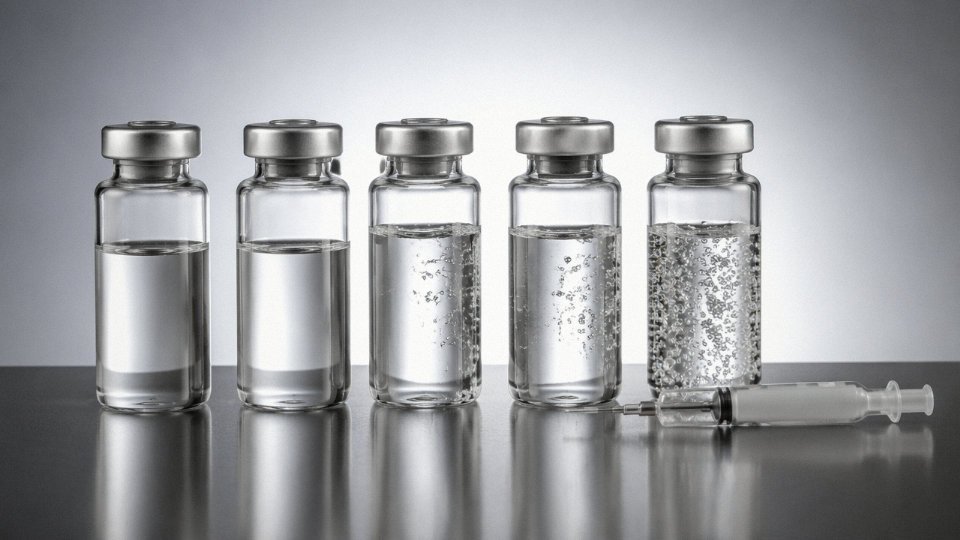
After 2–3 years in the vitreous cavity, standard silicone oil tends to emulsify. Sub-micron droplets migrate into the anterior chamber and trabecular meshwork, elevating intraocular pressure and, in persistent cases, contributing to secondary glaucoma or corneal decompensation. This isn’t a theoretical concern — it’s one of the main reasons surgeons remove the oil electively rather than leaving it indefinitely.
Heavier-than-water formulations like oxane HD, a partially fluorinated silicone oil blend with a density slightly above 1.0 g/cm³, are being evaluated specifically to tamponade inferior retinal breaks without relying on patient positioning. The density advantage is real, but long-term emulsification data in humans is still accumulating. Perfluorocarbon liquids offer even greater density and optical clarity but are generally used only as intraoperative tools, not long-term tamponades, because of their toxicity profile at sustained contact. Silicone oil’s refractive index (~1.40) closely approximates the natural vitreous (~1.336), which matters for the patient’s postoperative vision — perfluorocarbons sit at roughly 1.30, creating more optical distortion in the interim period.
Standard 1,000–5,000 cSt silicone oil achieves 80–90% retinal reattachment success in complex vitreoretinal casesTrue
This range is consistent with published vitreoretinal surgery outcome studies for complicated detachments including PVR grades C and D; simpler detachments show higher rates, and outcomes vary significantly with surgeon experience and patient compliance.
Drug Delivery: Slow-Release Depots and Injectable Carriers
The pharmaceutical industry is using medical-grade silicone oil as a suspension medium for long-acting injectable depots — particularly relevant for HIV antiretrovirals and some antipsychotics where monthly or bimonthly dosing dramatically improves adherence compared to daily oral regimens. The mechanism is essentially kinetic: drug particles suspended in silicone oil release slowly as the oil depot sits in muscle tissue, because the surrounding aqueous environment doesn’t readily penetrate or disperse the hydrophobic matrix. Release profiles can be tuned somewhat by adjusting particle size and oil viscosity, typically in the 50–500 cSt range for injectable depot applications where injectability through a standard gauge needle is a hard constraint.
Purity requirements here are severe. Platinum catalyst residuals — left over from hydrosilylation cure processes — must typically be below 1 ppm for biomedical grades, and many drug manufacturers specify lower still. FDA 21 CFR 888.3780 governs vitreous substitutes; ISO 11979 sets broader requirements for ophthalmic viscosurgical devices including identity testing, viscosity verification, and particulate limits. Getting a new silicone oil formulation through these frameworks takes years and considerable analytical investment.
Joint Lubrication: Early-Stage Research, Real Skepticism Warranted
Research into silicone oil microsphere injection for temporomandibular joint and small finger joint osteoarthritis has been ongoing sporadically for decades, mostly at the bench and small animal trial level. The premise is viscosupplementation — similar in concept to hyaluronic acid injections — with silicone microspheres acting as persistent lubricating particles that don’t degrade as rapidly as HA in the synovial environment. In practice, regulatory approval for this application remains distant. Earlier clinical attempts with bulk silicone implants in the TMJ produced enough adverse events that the FDA is cautious, and any microsphere product would face intense scrutiny around particle migration and local tissue response. Worth watching, but not worth specifying into any near-term product development roadmap.
Flexible and Stretchable Electronics: Encapsulation, Dielectric Layers, and Soft Robotics Actuators
Rigid materials have an obvious problem in body-worn and soft-robotic applications: the human body isn’t rigid, and neither is a strawberry. Silicone oil’s role here isn’t as a standalone fluid but as a functional additive swollen into elastomeric matrices — primarily PDMS — where it modifies mechanical compliance, dielectric response, and interfacial adhesion in ways that no solid filler can replicate.
Dielectric Elastomer Actuators
Dielectric elastomer actuators (DEAs) work by sandwiching a thin elastomeric membrane between compliant electrodes and applying a high voltage — the resulting Maxwell stress compresses the film and forces it to expand laterally. Swelling the PDMS membrane with silicone oil, typically in the 500–5,000 cSt viscosity range depending on target softness, lowers the elastic modulus enough to push area strains into the 30–60% range at drive voltages of roughly 2–5 kV. That’s a meaningful operating window for peristaltic micropumps, where the membrane itself becomes the pumping element without any rotating parts, seals, or valves to wear out.
Haptic feedback skins and prosthetic grip systems are the applications getting the most research attention right now. A prosthetic hand that can “feel” surface texture requires fast, localized actuation — DEA arrays can cycle at 10–50 Hz, which aligns well with the bandwidth of tactile perception. The catch is voltage. Operating at 3–4 kV on a wearable device demands careful insulation design, and oil bleed-out from the swollen matrix is a genuine lifetime concern that nobody has fully solved yet.
Stretchable Circuit Encapsulation
Epidermal electronics — patches that sit against skin and monitor biosignals continuously — stretch and compress with every movement. Conventional encapsulants crack or delaminate under strains above 10–15%. Low-viscosity silicone oil, typically below 100 cSt, fills the microchannels around serpentine metal interconnects and acts as a stress-relief medium that keeps the metal traces from seeing the full mechanical load.
Silicone oil-encapsulated stretchable interconnects can maintain contact resistance below 1 Ω under 30% tensile strain.True
Published work on liquid-metal and thin-film serpentine interconnects embedded in silicone oil-wetted PDMS channels demonstrates sub-1 Ω resistance retention at 30% strain, attributed to the oil preventing delamination at the metal-elastomer interface.
In practice, the challenge is keeping that oil in place. At elevated temperatures — even body temperature over weeks of continuous wear — lower-viscosity grades can migrate toward the device perimeter. Most groups working on this are gravitating toward 50–200 cSt oils as a compromise between adequate penetration of micron-scale channels and acceptable bleed-out rates.
Soft Robotics Grippers in Food Automation
A rigid pneumatic claw exerts force in a way that’s difficult to modulate below about 2–5 N without expensive proportional valve control. Oil-filled soft fingers, by contrast, distribute pressure across the contact surface and can be tuned to operate below 0.5 N by adjusting the oil fill ratio and elastomer wall thickness. For handling strawberries or shelled eggs on a high-speed packing line — objects that bruise or crack with any concentrated point load — this compliance isn’t a nice-to-have, it’s the whole design requirement.
Food-grade certification for the silicone oil matters here. Not all grades qualify, and procurement teams sometimes miss this until the line is already commissioned.
Wearable Health Monitors and Signal Fidelity
Rigid ASIC chips bonded directly to skin create an air-gap problem. Skin is irregular, hair follicles and surface texture break contact, and the resulting impedance can sit anywhere from 2–10 kΩ depending on skin condition and electrode pressure. Silicone oil gels — essentially high-viscosity silicone oil thickened with a compatible crosslinked phase — act as a conformal interface layer that drops electrode-skin impedance reliably into the 200–500 Ω range. That improvement translates directly into cleaner ECG and EMG signals, particularly in the low-frequency bands below 20 Hz where motion artifact is worst.
The Oil Bleed-Out Problem
Crosslink density in the PDMS matrix is the primary lever. Higher crosslink density retains oil more effectively but stiffens the elastomer, which partially defeats the purpose of swelling it in the first place. Groups at MIT, ETH Zurich, and KAUST are each approaching this differently — grafting silicone oil molecules to the network rather than leaving them free, using bottlebrush polymer architectures, and exploring interpenetrating network designs. None of these is commercially mature yet, but the trajectory looks credible over a 3–5 year horizon.
The soft robotics sector as a whole is projected to reach roughly USD 6.5 billion by 2030, with silicone-based actuation accounting for an estimated 35–40% of actuator material demand — a share that will depend heavily on whoever solves the bleed-out problem at production scale first.
Photovoltaic and Concentrated Solar Power Systems: Optical Enhancement and Heat Transfer
Solar energy is, at its core, a materials performance game. Every fraction of a percent of efficiency recovered across a utility-scale installation translates into real revenue over a 25-to-30-year asset life. That framing is why silicone oil is getting serious engineering attention in photovoltaics and concentrated solar — not as a curiosity, but as a measurable contributor to system economics.
Bifacial PV Encapsulants: A Small Addition With a Legible Payoff
Standard ethylene vinyl acetate (EVA) and polyolefin elastomer (POE) encapsulants have a refractive index mismatch at the cell surface that scatters a meaningful share of incoming light before it ever reaches the junction. Blending in trace silicone oil — typically under 0.5 wt%, and the exact loading depends heavily on the base polymer and the cell architecture — reduces that mismatch enough to recover roughly 0.3–0.8% absolute module efficiency. On a bifacial module already running 21–23% efficiency, that range sounds modest. Across a 200 MW field, it is not modest at all.
The processing wrinkle is real: silicone oil must be pre-dispersed into the encapsulant compound before lamination, and getting uniform distribution without phase separation during the cure cycle requires some formulation discipline. Plants that skip the dispersion step and just add it at the extruder tend to see streaking and patchy optical performance. IEC 62782 governs cyclic mechanical loading tests for encapsulants, and silicone oil additives at these trace levels have generally shown neutral-to-positive effects on compliance outcomes — the plasticizing effect actually helps with delamination resistance under thermal cycling, though each new formulation still needs its own qualification run. Don’t assume.
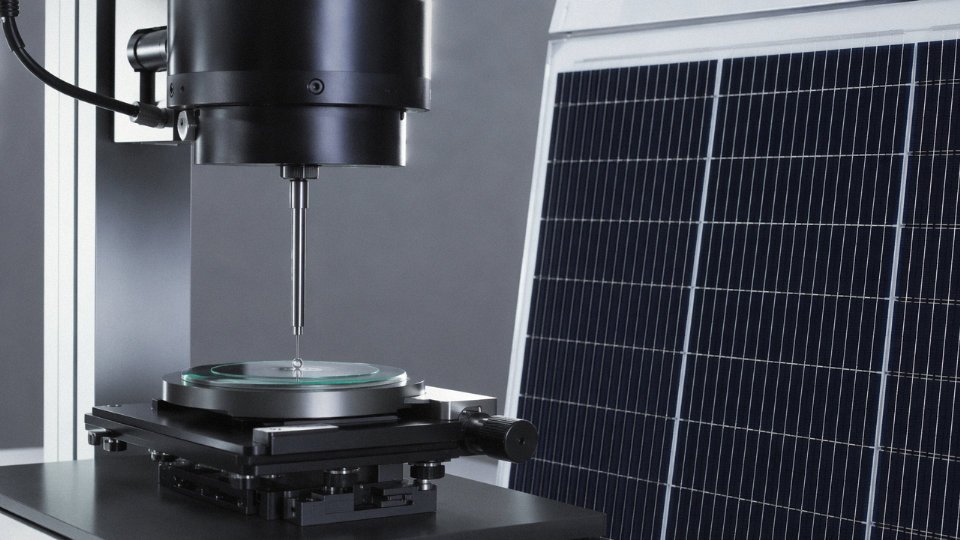
CSP Heat Transfer Fluid: Where the Temperature Envelope Matters
Parabolic trough collectors in utility CSP plants run their heat transfer fluid at temperatures that eliminate most organic options outright. Phenyl-modified silicone oils — Syltherm 800 is the reference product most plant engineers will recognize — remain stable to around 400 °C and carry a thermal degradation half-life exceeding 25 years under normal operating conditions. Synthetic aromatic fluids like Dowtherm A have a comparable upper temperature limit but are more sensitive to oxidation ingress and require tighter fluid management. In practice, CSP operators who have switched to phenyl silicones report meaningfully longer drain intervals and lower acid number accumulation, which reduces corrosion risk in the collector loop.
Phenyl-modified silicone oils such as Syltherm 800 maintain thermal stability up to approximately 400 °C with degradation half-lives exceeding 25 years under controlled CSP operating conditions.True
This is consistent with published thermal stability data from Dow and independent CSP fluid testing; phenyl substitution raises the thermal ceiling significantly versus dimethyl grades.
The lifecycle CO2 math is worth running. Mineral oil in solar thermal systems typically requires annual or biennial replacement. Accounting for fluid manufacture, transport, and disposal, switching to a silicone fluid stable for 25+ years can cut cumulative emissions from fluid management by roughly 60–80% per MW installed over the asset life — the actual figure depends on plant location, transport distances, and local disposal regulations, but the directional case is strong.
Anti-Soiling Coatings in Arid Environments
Dust losses in the Atacama, Sahara, and Gobi can degrade output by 1–3% per week between cleaning cycles depending on season and wind patterns. Ultra-thin silicone oil surface treatments on module glass — applied by roller coat or spray at thicknesses in the low-micron range — reduce particle adhesion by roughly 40–60% in controlled field trials. The mechanism is straightforward: silicone oil’s low surface energy prevents electrostatic bonding of fine particulates. Less dust sticks, and what does land clears more easily with wind or light rinsing. Water consumption for cleaning drops by as much as 50% in some desert installations, which is not a trivial operational saving in water-scarce regions.
The durability of these coatings under continuous UV exposure was a legitimate concern early on. UV-stabilized silicone oil formulations now routinely clear 18–24 months of outdoor service before reapplication is needed, compared to fluoropolymer alternatives that cost significantly more and pose end-of-life disposal challenges.
Concentrator PV Optical Coupling
Multi-junction cells in CPV systems need optical coupling between the Fresnel lens and the cell surface to minimize Fresnel reflection losses. Silicone oil fills that interface effectively — its refractive index (roughly 1.40–1.46 depending on grade and temperature) bridges glass and the cell’s AR coating well, and its optical transmittance stays above 98% after 10,000 hours of UV exposure in accelerated testing. Mineral oils yellow. Silicone oil does not, which in a CPV system where the concentrating optics are already imposing high optical efficiency demands, makes it the practical default for this application even at the premium price point.
The operating warning here: any moisture ingress at the lens-to-oil interface causes haze and efficiency loss that is not recoverable without disassembly. Sealing integrity at the coupling cell is non-negotiable, and it is worth specifying elastomeric seals that are chemically compatible with the specific silicone oil grade rather than assuming any EPDM or silicone rubber seal will work — some formulations with phenyl content will swell certain seal compounds.
Aerospace, Satellite Propulsion, and Extreme-Environment Lubrication
Space is arguably the harshest qualification test any lubricant can face — hard vacuum, temperature swings that would crack most polymers, and radiation doses that degrade conventional organic chemistry within months. Silicone oil has earned its place here not through marketing but through failure analysis: engineers found out the hard way what happens when the wrong fluid goes into a reaction wheel bearing at –100 °C.
Momentum and Reaction Wheel Bearings
Attitude control on a satellite depends on spinning wheels maintaining near-frictionless, predictable torque. Any torque noise above roughly 10 μN·m shows up as pointing error — unacceptable on an imaging or communications satellite. In practice, most wheel bearing lubricants are multiply-alkylated cyclopentane (MAC) base fluids blended with low-viscosity silicone oil fractions, typically in the 50–200 cSt range at 25 °C. The silicone component stabilizes viscosity across the –100 °C to +120 °C orbital swing; MAC alone gets too viscous in shadow zones. The blend has to be qualified individually for each wheel design because the ratio affects both torque noise floor and evaporation rate in vacuum — there’s no universal recipe.
Outgassing is where aerospace-grade silicone oil separates from industrial-grade. NASA’s ASTM E595 protocol sets hard limits: total mass loss (TML) below 1% and collected volatile condensable material (CVCM) below 0.1% after 24 hours at 125 °C in vacuum. Standard silicone oils fail this comfortably — they contain low-molecular-weight cyclic siloxane fractions (D4, D5, D6) that volatilize and redeposit as insulating films on optical sensors or solar cell contacts. Aerospace-grade formulations strip those fractions through wiped-film evaporation or molecular distillation; the better commercial products achieve TML below 0.3%, with some specialty batches below 0.15%.
Aerospace-grade silicone oils routinely achieve total mass loss below 0.3% per ASTM E595, versus the 1% limit.True
Low-molecular-weight cyclic siloxane removal through molecular distillation or wiped-film processing consistently brings TML to 0.2–0.3% in qualified aerospace formulations; this is verified in published NASA and ESA material screening databases.
Deployable Structure Dampers
Solar array hinges and antenna deployment mechanisms are single-event mechanisms — they fire once, correctly, or the mission is over. Silicone oil-filled viscous dampers are the standard approach to controlling deployment rate and absorbing shock during LEO injection, where loads can spike to 15–20 g in under 50 milliseconds. The critical design constraint is the shadow zone: a satellite in low orbit can sit at –150 °C for stretches of 30–40 minutes. A damper fluid that gels or dramatically increases viscosity in that window will overstress the hinges on the sunny-side deployment. Silicone oils in the 500–5,000 cSt range (at 25 °C) maintain workable viscosity down to around –60 °C to –80 °C for standard grades, and specially formulated trimethylsilyl-terminated fluids push that lower still. The tradeoff is always viscosity-temperature coefficient versus outgassing — lower-viscosity grades outgas more aggressively.
Hypersonic Seals and High-Temperature Actuators
For hypersonic vehicles, skin temperatures above 250 °C are sustained for minutes, not momentary spikes. Petroleum-based greases carbonize — literally form solid carbon deposits — within a few hours at those conditions, seizing actuator mechanisms. Silicone oil-based greases with phenyl-modified polysiloxane base stocks retain measurable lubricity past 250 °C and in some formulations to 300 °C, depending on filler package and contact load. This isn’t a new discovery; it’s been known since the X-15 program era. What’s changed is the volume requirement, driven by hypersonic demonstrators and the push toward reusable vehicles where you actually need to service and re-lubricate these systems rather than discard them after one flight.
Radiation Tolerance
Nuclear reactor instrumentation and space telescope mechanisms share a problem: accumulated radiation dose degrades lubricant chemistry, increasing viscosity and eventually causing bearing failure. After exposure to roughly 10 MGy of gamma irradiation — a dose relevant for high-orbit satellites or reactor control rod actuators operating over decades — mineral oils show viscosity increases on the order of 200–400% depending on base stock. Silicone oils, under the same dose, typically show 30–40% lower viscosity increase. That difference isn’t just a materials science curiosity; it translates directly to whether an actuator motor is undersized or not when you’re designing for a 15-year service interval with no maintenance access.
Commercial Space Volume Pressure
The Starlink constellation (over 6,000 active satellites as of recent counts, with filings for tens of thousands more) and the OneWeb network have changed the procurement dynamic. Space lubricants were historically a cottage industry — small batches, hand-blended, extreme lead times. The constellation operators are pushing suppliers toward repeatable high-volume production with lot-to-lot viscosity consistency within ±5% and documented outgassing data on every batch. That qualification pressure is actually good for the broader market: it forces silicone oil formulators to tighten process control they historically didn’t need, and the resulting higher-quality base fluids flow downstream into defense and industrial nuclear applications.
Personal Care Innovation: Waterless Formulations, Active Delivery, and Sustainable Replacements
The personal care industry’s relationship with silicone oil is more complicated than the headlines suggest. Yes, there are bans. Yes, formulators are under real pressure from both regulators and marketing teams chasing “clean beauty” positioning. But the response from serious formulation chemists hasn’t been to strip silicone out — it’s been to engineer around the specific compounds that drew regulatory attention while doubling down on what silicone still does better than any natural alternative.
The Cyclic Siloxane Situation and What It Actually Means for Formulators
EU REACH restrictions on D4, D5, and D6 in rinse-off products have been enforced since January 2020, with concentration limits set at 0.1% w/w. Leave-on restrictions are advancing through the regulatory pipeline and are broadly expected to take effect within the next few years, depending on which product categories end up in scope. D5 (decamethylcyclopentasiloxane) was the workhorse of premium skin-feel in foundations and serums — its loss is not trivial to replace.
The practical shift is toward linear polydimethylsiloxane (dimethicone) grades and trimethylsiloxysilicate resins. Linear dimethicone at low viscosity — typically 5–20 cSt grades — delivers comparable spreadability without the bioaccumulation profile that flagged D4 and D5. Trimethylsiloxysilicate adds a film-former dimension that cyclic grades never offered well anyway, so in leave-on applications like long-wear foundations, the reformulation can actually improve performance if done properly. “If done properly” is doing a lot of work in that sentence; plenty of reformulations have shipped with noticeably inferior skin feel because the brief was rushed.
Waterless Formats: Not a Niche Anymore
Anhydrous formats — serum sticks, solid cleansing balms, oil-to-milk textures — are growing fast enough that procurement teams at mid-tier contract manufacturers are now running dedicated waterless production lines. Silicone oil is the structural enabler here. In a water-based emulsion you need a preservative system (typically phenoxyethanol or a paraben blend), you need emulsifiers, and your packaging has to handle aqueous content. Strip the water out and much of that disappears.
The packaging weight reduction is real: estimates from contract manufacturers typically run 30–40% lower fill weight per functional dose, which matters for both shipping carbon footprint and direct logistics cost. The tradeoff is that anhydrous manufacturing requires extremely dry raw material inputs and more stringent temperature control during filling — silicone oils above roughly 100 cSt can behave unpredictably during hot-fill if the wax phase isn’t properly matched.
Encapsulated Actives: Solving the Oxidation Problem
Retinol degrades fast. Vitamin C is worse. Formulators have been chasing stable delivery of these actives for decades, and silicone oil shell microcapsules — particle sizes usually landing between 5 and 30 μm in commercial cosmetic grades — offer a genuinely useful solution. The oil shell is chemically inert to both the active ingredient and the surrounding formula matrix, protecting contents from oxidative degradation through most of the product’s shelf life.
Release happens via pressure rupture on skin contact, which is an elegantly simple mechanism that doesn’t require pH triggering or enzymatic action. Encapsulation efficiency varies considerably with manufacturing process — spray-congealing versus coacervation gives different shell integrity — but well-made capsules can extend retinol stability by a meaningful margin compared to free-dispersed retinol in an emulsion.
Silicone oil microcapsules improve retinol stability compared to unencapsulated dispersion in emulsionsTrue
The chemically inert silicone shell limits oxygen and moisture ingress to the active core; independent stability studies in cosmetic literature consistently show slower retinol degradation in encapsulated formats versus free dispersion, though the magnitude depends heavily on shell thickness, storage temperature, and packaging oxygen barrier.
SPF Efficiency and the TiO₂ Loading Problem
Phenyl trimethicone is underused in sunscreen formulation, in my opinion. It has a refractive index of roughly 1.46, which sits close enough to that of titanium dioxide particles to reduce scattering losses at the particle-air interface when TiO₂ is dispersed in it. The practical outcome is an SPF boost — typically 15–25% depending on particle size distribution and loading — without adding more UV filter. For mineral sunscreen brands facing the whitening/ghosting complaint that plagues high-TiO₂ formulas, this is directly useful: you can hit SPF 30 with noticeably less TiO₂ than a water-based carrier requires, and the ghost effect drops with it.
Bio-Based Competitors and the Honest Comparison
Fermentation-derived alternatives — Evonik’s Rheance One being the most commercially visible — are entering real production volumes. These biosurfactant-adjacent materials address the naturalness narrative convincingly. The honest functional comparison, though, shows gaps. Film durability across temperature swings, long-wear retention on skin through humidity and sebum exposure, and non-comedogenicity data for linear dimethicone are all well-documented over decades of use. Squalane and jojoba are excellent emollients but they’re not film formers, and their oxidative stability is a liability in high-vitamin-C formulas.
On lifecycle CO₂, the picture is genuinely mixed. Linear dimethicone synthesis is energy-intensive — siloxane polymerization from chlorosilane feedstocks is not a low-carbon process. Squalane from sugarcane fermentation comes in lower on a per-gram basis. But performance-equivalent comparisons shift the calculus: if you need twice the loading of jojoba to achieve the same skin feel and wear duration as dimethicone, the per-use CO₂ gap narrows considerably. This is the comparison regulators and brand sustainability teams should be demanding, and mostly aren’t.
Food Processing, Agricultural Films, and Edible Coating Carriers
Food-grade silicone oil sits in an unusual regulatory position: it has been accepted by the FDA, the EU, and Codex Alimentarius long enough that the compliance paperwork is largely settled, yet the actual application engineering is still catching up with what the chemistry can do. That gap is where most of the interesting work is happening right now.
Baking and Confectionery Release
Dimethylpolysiloxane — listed as E900 in the EU, regulated under FDA 21 CFR 173.340 — has been used as a mold release in industrial baking for decades, but the way it’s being applied is changing. Older practice was to spray a petroleum-based or PAO release onto pans between every cycle. At usage rates of 1–10 ppm (exact level depends on pan temperature, dough composition, and conveyor speed), food-grade PDMS reduces pan cleaning frequency by somewhere in the 50–70% range on continuous tunnel-oven lines. That’s not a minor housekeeping win. Pan washing on a high-output biscuit or bread line typically requires hot-water or steam cleaning, caustic chemistry, and real downtime — often 45 minutes to two hours per shift depending on the soil load. Cut that frequency by half and you’re looking at meaningful energy savings and a measurable bump in line utilization. The film’s thermal stability up to around 200–250 °C means it doesn’t polymerize or char at typical baking temperatures the way some PAO blends can.
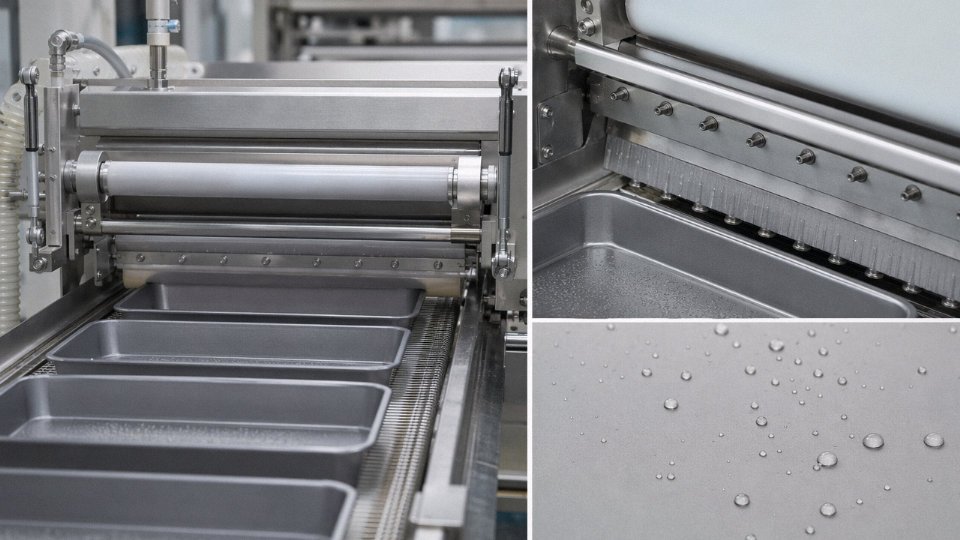
One operational warning worth flagging: over-application is a real problem. Excess PDMS can migrate into the product surface, creating a greasy mouthfeel and interfering with icing adhesion in confectionery lines. Most process engineers who’ve dealt with this recommend metered spray systems with flow verification rather than manual application, precisely because the effective concentration window is narrow.
Edible Coating Carriers for Fresh Produce
This application is newer and, frankly, more technically interesting. Silicone oil emulsions — water-in-oil or oil-in-water depending on the antimicrobial agent’s solubility — are being explored as secondary carriers for botanical antimicrobials like thymol and carvacrol on high-respiration produce including strawberries and tomatoes. The basic value proposition is shelf-life extension: controlled-release of the antimicrobial from the silicone matrix versus a straight aqueous wash, which evaporates or drains off within hours. Bench and pilot data suggest 5–8 additional days versus uncoated controls, though that range is highly dependent on storage temperature, humidity, and initial microbial load. At 4 °C with good humidity control, you’re closer to the high end; at ambient distribution temperatures, expect less.
Silicone oil emulsion coatings can extend strawberry shelf life by 5–8 days compared to uncoated fruit under equivalent storage conditionsTrue
Published pilot studies on PDMS-thymol emulsion coatings on Fragaria × ananassa show statistically significant reductions in Botrytis cinerea development and moisture loss versus untreated controls; the range reflects variability in storage temperature, relative humidity, and initial inoculum level
Natural wax alternatives — carnauba, beeswax, shellac — are well established, and no one should pretend silicone oil is about to displace them wholesale. Carnauba in particular is deeply embedded in regulatory frameworks and consumer acceptance. The real competitive advantage for silicone oil emulsions is formulation flexibility: you can tune the hydrophobicity of the coating independently of the active ingredient loading, which is awkward to do with natural waxes. Supply chain volatility for carnauba (which depends heavily on northeastern Brazil’s harvest conditions) is a secondary but genuine commercial argument.
Agricultural Mulch and Greenhouse Films
LDPE films used for mulching or greenhouse covering degrade primarily through UV-initiated chain scission. Surface treatment with silicone oil — applied either during extrusion or as a post-extrusion bath — acts as a UV-barrier enhancement layer, slowing the degradation pathway. Functionally, treated films can reach 3–4 seasons of useful life versus roughly 2 seasons for untreated LDPE under comparable solar exposure in Mediterranean or high-UV agricultural climates. That translates directly to less plastic waste per hectare per year, which is increasingly a procurement criterion for large agribusiness operations working under EU Farm to Fork targets or similar sustainability reporting frameworks.
The treatment is not complicated, but it requires even distribution. Uneven silicone coating leaves thin spots that degrade faster than the surrounding film, creating tear initiation sites right around the second season — which is probably the worst possible failure timing since the crop may still be in the ground.
Anti-Foam in Fermentation
Foam control in industrial fermentation is one of those unglamorous applications that causes enormous grief when it goes wrong. Foam overflow contaminates downstream equipment, creates cleaning validation headaches in regulated facilities, and can cause oxygen sensor fouling that ruins a batch. Silicone oil at 5–10 ppm, operating within its FDA 21 CFR 173.340 allowance, breaks foam without the yeast viability or flavor-profile impacts that some polyether antifoams can introduce at higher concentrations. The mechanism is purely physical — surface tension disruption — so it doesn’t interfere with fermentation biochemistry at these concentrations. Brewers and industrial fermentation engineers have been using this for years, but the transition from batch to continuous fermentation in bioethanol and precision fermentation facilities is pulling silicone antifoam into higher-volume, more critical process roles.
Regulatory Convergence as a Commercial Accelerator
The alignment of FDA GRAS status, EU Regulation 10/2011 on food-contact materials, and Codex Alimentarius standards around food-grade PDMS means that a producer qualifying a silicone oil grade for one major market doesn’t face a completely different approval pathway for the next. This convergence is genuinely useful — it reduces the compliance cost that typically slows adoption of novel food-contact chemistries and gives procurement managers a defensible, auditable basis for approving the material without needing to commission new toxicological dossiers in each jurisdiction. Not every food-contact material has this. It’s a real structural advantage for global rollout.
Quantum Computing, MEMS, and Nanophotonics: Enabling Precision at the Microscale
These applications sit at the far edge of what most procurement managers will encounter this decade — but the engineers designing tomorrow’s quantum processors, AR headsets, and photonic chips are already specifying silicone oil grades that barely existed five years ago. The common thread is extreme purity combined with properties that no competing fluid reliably delivers at the scales involved.
Cryogenic Thermal Interfaces in Quantum Processors
Dilution refrigerators cool qubit chips to operating temperatures in the 10–15 mK range. At those temperatures, almost every conventional thermal interface material either becomes mechanically rigid, thermally inadequate, or outgasses trace contaminants that detonate the refrigerator’s carefully managed vacuum. Ultra-purified silicone oil–based thermal greases — typically low-molecular-weight PDMS blends with sub-ppm volatile content — maintain compliant, gap-filling contact between the cold plate and the qubit substrate without hardening. Achieved thermal resistance is typically below 5 mm²·K/W, which sounds modest until you consider that the total heat budget for a dilution refrigerator’s mixing chamber stage is measured in microwatts. A single poor contact can saturate the cooling capacity of a unit costing several hundred thousand dollars.
The outgassing specification here is genuinely brutal. Standard aerospace-grade silicone oils pass NASA’s 1.0% TML / 0.1% CVCM thresholds with room to spare; cryogenic quantum applications routinely require another order of magnitude beyond that. Supplier qualification is slow and expensive, and in practice only a handful of fluid suppliers worldwide can consistently meet it.
MEMS Stiction and Yield in Consumer Inertial Sensors
Stiction — the capillary adhesion between a MEMS proof mass and its substrate after wet processing — is one of the nastier yield killers in accelerometer and gyroscope fabrication. Vapor-phase deposition of silicone oil–derived self-assembled monolayers onto silicon MEMS surfaces can reduce capillary stiction forces by roughly 90–95%, depending on surface roughness and the specific siloxane chemistry used. That translates directly into yield improvement, and for a high-volume fab running millions of inertial sensor dice per month, even a two- or three-point yield gain is worth serious attention.
The process is not trivially integrated. Vapor-phase deposition requires tight temperature and partial-pressure control; flooding a MEMS chamber with liquid silicone oil would obviously defeat the purpose entirely. The “right” siloxane precursor also depends on the substrate oxide chemistry — what works well on thermal oxide may perform differently on PECVD oxide. Get it wrong and you passivate the wrong surfaces, shift the resonant frequency, or introduce unexpected damping.
Tunable Refractive Index in Nanophotonic and AR/VR Optics
Silicone oil’s refractive index — adjustable between roughly n = 1.39 and 1.43 by temperature — turns out to be useful in two distinct photonic contexts. In reconfigurable photonic integrated circuits, a liquid silicone oil cladding layer over a silicon nitride waveguide allows the effective index of a guided mode to be tuned thermally, enabling wavelength routing or phase shifting for optical computing and LiDAR beam steering without any moving parts. The tuning range is modest compared to electro-optic crystals, but the fabrication simplicity and compatibility with standard CMOS-adjacent processes makes it attractive for research-stage devices.
The AR/VR angle is more immediately commercial. Silicone oil–filled tunable liquid lenses — a sealed polymer membrane enclosing a precisely controlled volume of silicone oil — can sweep a focal range of 0 to roughly 10 diopters in under 5 ms by applying an electrowetting or pressure-actuated boundary deformation. Replacing a mechanical voice-coil actuator and lens stack with a liquid lens cell saves several grams of mass and meaningfully reduces assembly complexity in a device category where both matter enormously.
Silicone oil–filled liquid lenses can achieve sub-5 ms focal adjustment across a 10-diopter range, outperforming conventional mechanical actuator stacks in response speed and form factor.True
Multiple peer-reviewed studies on electrowetting and pressure-actuated liquid lenses using PDMS-based fluids confirm response times in the 2–5 ms range; the focal range and speed advantage over voice-coil actuator stacks is well established in optics literature.
Cleanroom Compatibility and the Contamination Threshold Problem
Semiconductor wafer handling is unforgiving. ISO Class 1 environments require silicone oil grades with particle counts below roughly 1 particle per mL at sizes above 0.5 µm. Most industrial silicone oil production is nowhere near this — standard drum-fill material from a bulk supplier might carry particle counts two or three orders of magnitude higher. Qualifying a fluid supplier for semiconductor-compatible grades requires extensive lot-by-lot particle count verification, full metals analysis (Na, K, Fe, Al at sub-ppb levels), and documentation of container cleanliness that most fluid suppliers simply aren’t set up to provide. Expect long lead times and limited supplier options. This is a procurement problem as much as a chemistry problem.
Programmable Photonic Arrays at the Research Frontier
At the laboratory scale, silicone oil nanodroplet arrays are being investigated as programmable photonic pixels in spatial light modulators. Research groups — including teams at institutions such as Stanford and Caltech — have reported demonstrations at pixel densities approaching 1,000 × 1,000 arrays, where each droplet’s optical state is individually addressable. The mechanism leverages silicone oil’s low surface energy and tunable wettability to switch droplets between scattering and transmissive states. Whether this scales to manufacturable devices is genuinely unclear; the droplet uniformity requirements are severe, and long-term stability of nanoscale silicone oil features under repeated optical cycling hasn’t been fully characterized. Worth watching, not yet worth procurement planning around.
Frequently Asked Questions About Emerging Silicone Oil Applications
Is silicone oil biodegradable, and how do you handle spent fluid from an immersion cooling loop?
Silicone oil is not readily biodegradable in the conventional 28-day BOD test sense, but that framing slightly misrepresents what actually happens in the environment. PDMS degrades abiotically — adsorption onto soil particles, UV exposure, and hydrolysis eventually break it down to silica, CO₂, and water over timescales measured in years to decades depending on UV intensity and soil composition. Aquatic toxicity is very low. That said, “low toxicity” is not a disposal license.
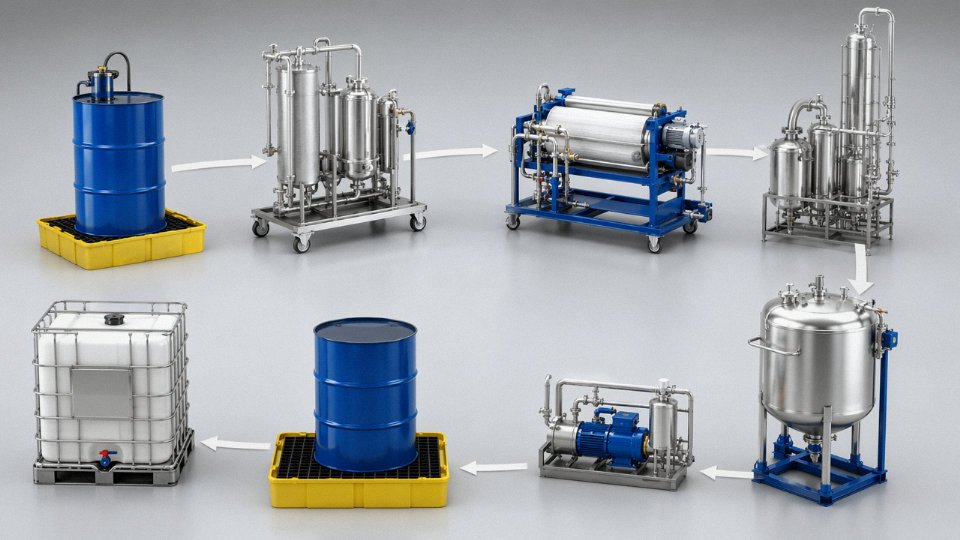
Spent immersion cooling fluid picks up particulate contamination, trace metals from PCB surfaces, and potentially halogenated flame-retardant residues from component coatings. That mix rules out sewer discharge categorically. The correct route is a specialist silicone reclaimer — several operate across Europe and North America who will re-refine or thermally depolymerize the fluid for raw material recovery. Some silicone OEMs run their own take-back programs; worth asking about at procurement stage, before you’re sitting on 4,000 liters of contaminated fluid with no plan. Budget for reclamation costs at roughly 15–40% of virgin fluid price depending on contamination load and regional logistics.
Which viscosity grade for EV motor direct cooling versus battery immersion?
These are genuinely different operating regimes and the wrong choice costs you real energy or real thermal margin. Motor direct-oil cooling needs the fluid moving fast through narrow stator channels and across winding surfaces — low viscosity, typically 5–20 cSt, keeps pumping parasitic losses manageable and maximizes convective heat transfer coefficient. At 100 °C motor operating temperature the viscosity will drop further, which actually helps flow but means your pump sizing has to account for the cold-start condition at –30 °C or wherever your low-temperature requirement sits.
Battery immersion is different. Cell surfaces are large, flow velocities are low, and the bigger concern is capillary wicking of fluid into the cell through pressure relief vents or hairline seams at the tab. Higher viscosity — 50–200 cSt range — reduces that bridging risk without meaningfully hurting thermal performance at the low flow velocities involved. Some programs land at 100 cSt as a practical compromise. Verify pour point for your lowest ambient, and confirm compatibility with whatever pouch film, tab adhesive, or can coating your cell supplier uses. This is not a detail to skip.
Can standard PDMS silicone oil work in cryogenic quantum computing environments?
Short answer: no, not reliably. Standard dimethyl PDMS fluids start to devitrify — effectively go glassy and crack — somewhere below –120 °C, which is well above the operating range of dilution refrigerator stages. Phenyl-capped silicones and methyl-phenyl copolymer grades shift that transition down to around –130 °C or below by disrupting the regularity of the polymer backbone. For any interface material at the 4 K plate or mixing chamber, even these grades are only a partial answer; the application is still specialist territory requiring cryogenic-specific qualification testing, not just a data sheet check.
Standard PDMS silicone oil remains fluid and functional at cryogenic temperatures used in quantum computing dilution refrigerators.False
Standard PDMS devitrifies below approximately –120 °C. Dilution refrigerators operate at millikelvin temperatures; even phenyl-modified grades are only suitable for certain intermediate-temperature interface roles and require application-specific qualification.
What purity certifications should procurement require for medical or semiconductor silicone oil?
For medical device applications, USP/NF compendial grade is the baseline, but read the monograph carefully — it specifies viscosity limits and heavy metals but does not fully address volatile siloxane content, which regulators are increasingly scrutinizing for inhalation-risk applications. Ask your supplier for GC-MS volatiles data, particularly D4, D5, and D6 cyclic siloxanes. For implantable-grade material, platinum catalyst residuals matter; some manufacturers will provide ICP-MS data on request, others won’t unless you write it into the purchase spec.
Semiconductor and MEMS applications should reference SEMI C12 and SEMI F57 frameworks as a baseline for ionic contamination and particle count requirements. Particle count in particular is easy to overlook — a silicone oil that looks perfectly clear can still carry sub-micron particulate at levels that will contaminate a cleanroom process. Require a certificate of conformance with lot-specific data, not just a product-level spec sheet.
How does silicone oil compare to PFAS-based thermal fluids being phased out?
The regulatory pressure on PFAS fluids under EU REACH restrictions and EPA PFAS frameworks is real and accelerating. Silicone oil’s main structural advantage here is straightforward: no C–F bonds, so none of the environmental persistence mechanism that makes PFAS problematic. For single-phase immersion and many heat transfer loop applications, a switch to a comparable-viscosity silicone oil is largely a drop-in from a chemical hazard standpoint.
The engineering complication arises in two-phase applications. Fluorinated fluids like those historically used in electronics cooling have boiling points and heats of vaporization that silicone oils simply do not replicate. You can’t do a straight fluid swap in a two-phase loop without redesigning the evaporator geometry, condenser sizing, and probably the operating pressure. Budget for that system redesign work upfront rather than discovering it mid-project.
Are there supply chain risks for high-purity silicone oil?
Yes, and procurement teams who discovered this during 2021–2022 allocations remember it clearly. Silicon metal — the upstream feedstock — is produced predominantly in China, which accounts for somewhere above 70% of global output, with Brazil and Norway as the main alternative sources. Chlorosilane intermediates are similarly concentrated. When Chinese production curtailed during the energy rationing period, lead times for some silicone grades stretched from 6–8 weeks to 6+ months.
The practical response is dual-source qualification, ideally across geographic regions. Watch fumed silica and chlorosilane spot prices as leading indicators; they tend to signal tightening 8–12 weeks before the finished fluid market feels it. For high-purity or specialty grades — phenyl-modified, medical, or semiconductor — the supplier base is genuinely narrow, sometimes two or three qualified manufacturers globally. If your application depends on one of those grades, a consignment stock agreement or minimum inventory buffer is not excessive caution; it’s basic supply security.