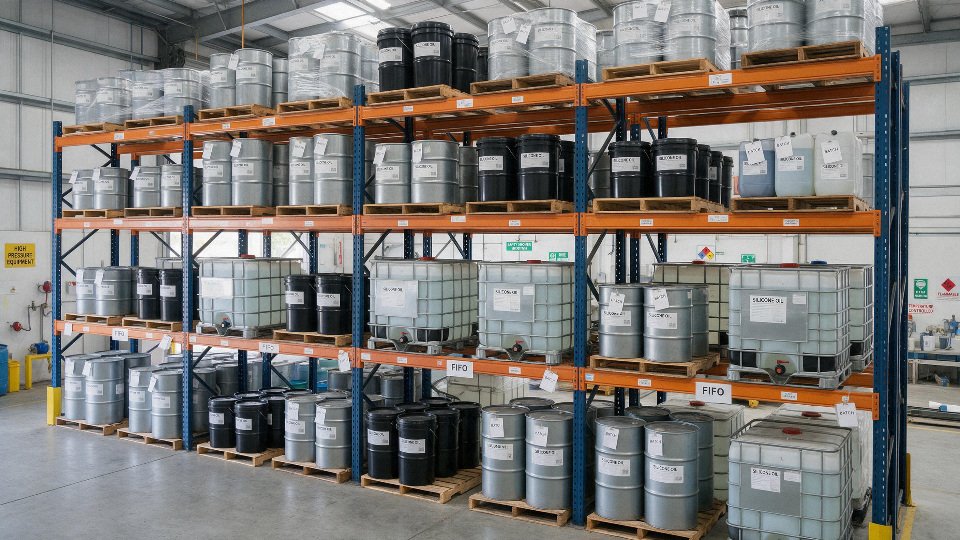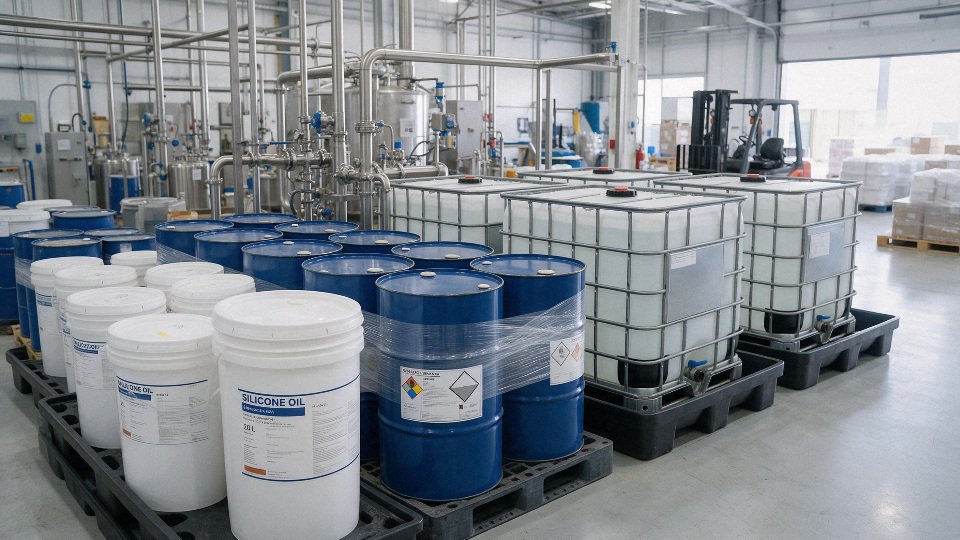

Procurement teams and plant engineers who treat silicone oil as a commodity bin item — one SKU, one viscosity, one supplier — tend to find out the hard way why that’s wrong. The wrong grade slips past incoming inspection, goes into a batch, and the consequences range from a cosmetic emulsion that breaks on the shelf to a hydraulic damper that locks up at low temperature. Scrap, rework, line stoppages. In a market sitting somewhere between USD 2.8 and 3.2 billion annually and growing at roughly 5.5–6% per year through the end of the decade, the variety of industries pulling on silicone oil supply is exactly why grade confusion and allocation crunches happen in the first place.
Silicone oil demand is spread across at least eight distinct industrial sectors, with personal care and cosmetics alone consuming roughly 28–32% of global volume. Automotive, electronics, textiles, food processing, construction, pharmaceuticals, and energy each pull on different viscosity grades and purity specs — meaning a shortage or price spike in one sector can ripple directly into sourcing constraints for unrelated industries.
What makes this more than a supply-chain trivia question is the sheer viscosity range involved. PDMS grades run from 0.65 cSt — thin enough for diffusion pump fluid — up past 2,500,000 cSt for heavy damping compounds. The same base chemistry, radically different end uses, and in some cases the industries driving demand have almost nothing to say to each other until they’re competing for the same intermediate at a Wacker or Momentive plant during a tight quarter.

Personal Care and Cosmetics: The Largest Single Consumer of Silicone Oil
Personal care consistently absorbs somewhere between 28 and 32% of global silicone oil volume — the exact share shifts year to year depending on which premium skin care lines are launching and whether hair care markets in Asia are growing faster than European regulatory headwinds are shrinking wash-off formulations. Either way, no other single end-use sector comes close to that consumption figure. For context, that fraction of a market valued at roughly USD 2.8–3.2 billion in 2023 represents a substantial absolute tonnage, and the formulators driving it are not about to switch materials easily.
Why [Silicone Oils](https://siliconchemicals.com/silicone-oil/) Work Where Other Ingredients Fail
The functional logic is straightforward once you’ve sat through a few formulation reviews. Dimethicone — low- to mid-viscosity PDMS, typically anywhere from 5 cSt up to about 350 cSt for leave-on products — gives skin-feel that no petrochemical emollient fully replicates. It spreads without grease, it doesn’t oxidize on shelf, and it doesn’t sensitize at normal use levels. Formulators generally dose it at 1–8% w/w in lotions and creams, stretching toward 10–15% in premium serums or silicone-heavy foundation formulas where slip and film-forming are both required. That upper range is heavily product-dependent — a matte foundation needs a different rheological balance than a dewy serum, and the viscosity grade matters as much as the loading level.
Cyclomethicone (predominantly D4, D5, D6 cyclic siloxanes) played the volatile carrier role for roughly two decades — low viscosity, fast evaporation, clean skin feel with no residue. The EU’s restriction on D4/D5/D6 in rinse-off products above 0.1% w/w, phased in from 2020 onward, hit that application hard. The cosmetic industry’s response has been to reformulate wash-off products — shampoos, shower gels, cleansing conditioners — toward high-molecular-weight linear PDMS grades and certain low-viscosity non-cyclic alternatives. The net effect on overall silicone oil demand has been roughly neutral to slightly positive: the cyclic volume that left was partially replaced by higher-MW linear grades that, by mass, are not dramatically lighter. Some formulators will tell you they actually ended up using slightly more material to get equivalent sensory performance with the linear grades.
Amino-functional silicone oils are the hair conditioning workhorse. The mechanism is electrostatic adsorption onto damaged (negatively charged) hair fiber, and the effect — reduced combing force, increased shine, heat protection — is difficult to replicate with cationic conditioners alone at equivalent cost. Use levels in leave-on conditioners and heat protectants run roughly 0.5–5% w/w, depending on molecular weight and amine equivalent weight of the specific grade.
High-Growth Sub-Segments Pulling Specific Viscosity Grades
Color cosmetics — foundations, BB creams, primers — demand medium-viscosity PDMS in the 20–350 cSt range for slip and pigment dispersion. Sun care is a different story. SPF formulations benefit from silicone oils’ ability to form a water-resistant film that anchors UV filters; high-viscosity grades (10,000–60,000 cSt) show up in water-resistant sunscreen sticks and emulsions where staying power on wet skin matters. Premium anti-aging serums have pushed demand for very-low-viscosity, fast-spreading grades (5–20 cSt) that deliver active ingredients without occlusive feel.
EU regulations restricting cyclic siloxanes D4/D5/D6 in rinse-off cosmetics have reduced total silicone oil consumption in personal careFalse
The restriction applies to wash-off products above 0.1% concentration, and the industry response has largely been to substitute with high-molecular-weight linear PDMS grades rather than exit silicone chemistry entirely. Total silicone oil demand in personal care has remained stable or grown slightly as a result.
Substitution risk is genuinely low in this sector. Biobased emollients, certain esters, and plant-derived silicone mimics have carved out a niche in clean-beauty positioning, but none replicate the full sensory profile and formulation stability of PDMS across the viscosity range formulators actually need. The premium skin care segment in particular has shown no meaningful defection from silicone chemistry — the performance gap is too visible on a consumer’s skin for most brands to absorb.
Electrical and Electronics Manufacturing: Dielectric Fluids and Thermal Interface Materials
The electrical sector’s relationship with silicone oil is older than most people realize — transformer manufacturers were specifying PDMS-based dielectric fluids decades before anyone was talking about immersion-cooled data centers. What’s changed is the scale and the urgency. Electrification across three converging markets — power infrastructure, data centers, and electric vehicles — is pulling specialty silicone oil demand upward faster than general industrial grades, and the qualification requirements in each segment make switching fluids mid-program genuinely painful.
High-Voltage Transformers, Capacitors, and Cable Joints
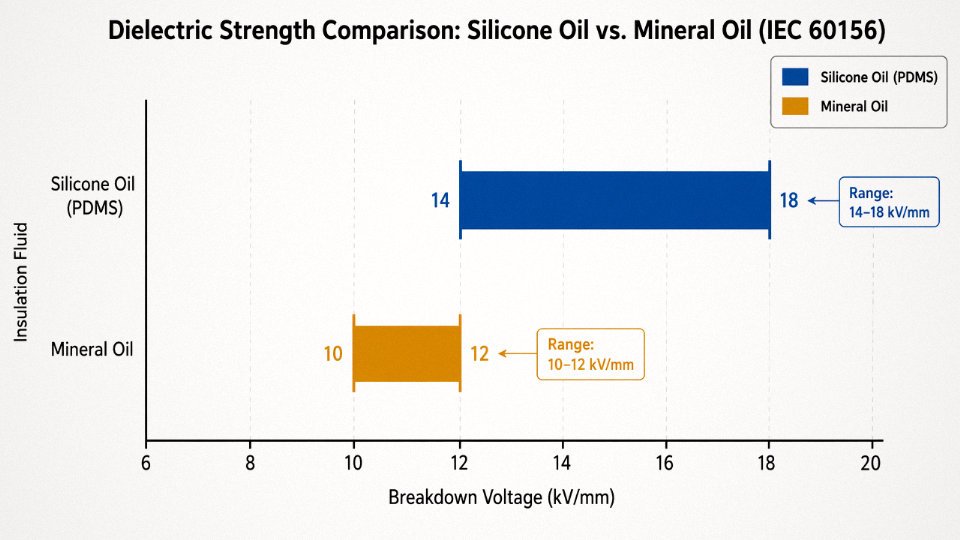
Dielectric strength is where silicone oil earns its premium over conventional mineral oil. Measured in breakdown voltage per unit thickness, PDMS dielectric fluids typically test at 14–18 kV/mm depending on viscosity grade, fluid purity, and moisture content at time of testing. Mineral oil sits at roughly 10–12 kV/mm under comparable conditions. That gap matters most in compact, high-voltage designs where the insulation gap has to stay tight — distribution transformers in dense urban substations, high-voltage cable joint fill fluids, and film capacitors in power conversion equipment.
The fire safety argument reinforces the electrical argument. Silicone oil flash points run well above 300°C for mid-to-high viscosity grades, compared to mineral oil in the 140–160°C range. For indoor switchgear rooms or basement transformer vaults, that difference can determine what the local fire code even allows. In practice, this is why utilities in Japan and parts of Western Europe shifted indoor transformer fill fluids toward silicone alternatives starting in the 1990s, and the installed base now generates a steady replacement fluid demand that procurement teams sometimes underestimate when doing total cost of ownership calculations.
Silicone oil dielectric fluids offer higher breakdown voltage strength than conventional mineral oil.True
PDMS dielectric fluids typically achieve 14–18 kV/mm breakdown strength versus 10–12 kV/mm for mineral oil, a difference confirmed across multiple IEC 60156 test datasets and cited by fluid manufacturers including Wacker and Shin-Etsu in their technical datasheets.
Immersion Cooling for Data Centers
This is the segment getting the most attention right now, and the numbers justify it. Air cooling tops out practically around 10–15 kW per rack in a well-engineered facility. Single-phase silicone oil immersion systems — where server hardware sits directly submerged in a dielectric fluid bath — can support rack densities exceeding 100 kW, sometimes significantly more depending on the thermal loop design and how aggressively the hardware is configured. The bath typically runs at 50–70°C, warm enough that heat recovery for building systems or process heating becomes viable. That changes the facility economics in ways that a straightforward CapEx comparison misses.
The fluid specification in immersion cooling is unforgiving. Viscosity grade selection directly affects how heat moves through the bath and how drag loads on pumping circuits behave — a mismatch here shows up as hot spots or pump energy consumption that nobody budgeted for. Low-viscosity PDMS grades in the 5–10 cSt range dominate single-phase designs. Fluid oxidative stability matters too; bath replacement cycles affect operating cost in ways that don’t appear in the initial procurement quote.
EV Battery Thermal Management and On-Board Chargers
Battery thermal management in EVs uses silicone oil in two distinct roles, and conflating them causes procurement headaches. As a direct module coolant — flowing through channels integrated into the cell assembly — the fluid has to meet very specific viscosity-temperature behavior down to cold-start conditions around -40°C, because poor low-temperature flow means uneven warming during winter charging and, in worst cases, localized lithium plating that degrades cycle life. Separately, on-board charger designs increasingly use dielectric silicone oil for immersion cooling of the power electronics stack, where the same dielectric strength advantages that apply in transformer applications become relevant again.
OEM qualification for either application is a multi-year process. Most EV manufacturers lock fluid suppliers into long-term supply agreements precisely because requalification mid-platform is expensive and carries warranty risk. That structure insulates incumbent silicone oil suppliers from spot-market price pressure but creates a high barrier for new entrants, which shapes how the specialty end of this market prices itself.
Medical Devices and Pharmaceutical Manufacturing: Biocompatibility as the Core Value Proposition
The medical sector does not buy silicone oil in the largest volumes — personal care wins that contest handily — but it pays the highest price per kilogram and applies the most demanding qualification requirements of any end market. A cosmetics blender can switch cyclomethicone grades with a few reformulation runs. A prefilled syringe manufacturer cannot swap lubricants without triggering a regulatory submission. That asymmetry is why medical-grade silicone oil is effectively a captive market, and why the suppliers who hold USP and ISO 10993 certifications for their PDMS fluids operate with pricing power that commodity chemical producers rarely see.
Syringe Lubrication: Small Dosage, Enormous Scale
The numbers here are easy to underestimate. Each syringe barrel — whether a standard 1 mL prefillable glass unit or a 10 mL autoinjector — receives somewhere between 0.5 and 2 mg of silicone oil, depending on barrel diameter, plunger design, and the required break-loose and glide forces specified by the device OEM. That sounds trivial. Multiply it across the roughly 40–50 billion syringes manufactured annually worldwide, including prefilled formats that now account for a growing share of biologics delivery, and aggregate consumption runs into thousands of metric tons per year from this application alone.
The grade used is almost always in the 350–1,000 cSt range — fluid enough to spread uniformly during the siliconization step (baked-on, sprayed, or both), viscous enough to stay put through sterilization and shelf life. Getting this wrong is not a minor inconvenience. Too little silicone oil and plunger force exceeds specification, which can cause injection failure or patient discomfort. Too much and you risk silicone oil migration into the drug product, which for protein-based biologics can trigger aggregation and immunogenicity concerns. The industry has been dealing with that second problem for over a decade, which is partly why baked-on siliconization — where the oil is thermally bonded to the glass at 250–300 °C — has largely displaced spray-on methods for high-value biologics.
Silicone oil migration into injectable biologics can cause protein aggregation.True
Multiple peer-reviewed studies and regulatory guidance documents, including FDA communications on subvisible particles, have identified silicone oil droplets as potential nucleation sites for protein aggregation in biologic drug products.
Ophthalmic Tamponade and Implantable Coatings
Retinal surgery uses high-viscosity PDMS — typically 1,000 to 5,000 cSt — as a tamponade agent to mechanically hold a detached retina against the choroid during healing. Volume per procedure is small (roughly 0.5–2 mL per eye), but the purity requirements are extreme. Any low-molecular-weight siloxane fraction remaining in the fluid can cause emulsification inside the vitreous cavity, leading to a complication called silicone oil emulsification that surgeons spend considerable effort trying to avoid. Suppliers to this segment run fractional distillation tight enough to hit narrow molecular weight distributions, and that process cost shows up directly in price.
Implantable device coatings — pacemaker leads, catheter shafts, orthopedic instrument sleeves — use thin silicone oil films or silicone-based tie coats to reduce insertion friction and tissue trauma. These applications consume modest volumes but require ISO 10993 biocompatibility dossiers and often device-specific qualification testing that locks in a single-source supplier for the product lifetime.
Pharmaceutical Manufacturing: Bioreactors and Tablet Presses
In biologics manufacturing, silicone oil shows up as an antifoam agent in stirred-tank and rocking-motion bioreactors. Dosing runs roughly 10–100 ppm by weight, added in small increments to control foam generated by aeration and agitation without suppressing cell viability. The pharmacopeial monographs — USP , EP 3.1.7 — govern which grades are permissible in contact with drug products, and process development teams spend real time validating antifoam protocols because overdosing can coat cell membranes and tank sensors alike.
Tablet compression uses silicone oil as a mold release aid on punch faces, usually applied as a dilute emulsion. The volume here is small and the regulatory path well-established under existing excipient monographs. Topical pharmaceutical products — barrier creams, wound care formulations — use PDMS as a functional excipient in its own right, subject to the same pharmacopeial identity and purity tests as active ingredients.
Demand growth in this sector tracks three things: the aging population driving higher device implant rates and injectable drug volumes, the rapid expansion of biologics and biosimilar capacity globally (large-scale bioreactors running continuously need continuous antifoam supply), and the shift toward single-use bioprocessing assemblies, which specify silicone oil-lubricated tubing clamps, connectors, and pump heads as part of the validated system. Single-use growth is particularly interesting because it converts what was once a durable-equipment maintenance item into a per-batch consumable, structurally increasing silicone oil demand per unit of drug produced.
Automotive and Aerospace Sectors: High-Temperature Damping and Sealing Fluids
The defining challenge in both automotive powertrains and aerospace systems isn’t just heat or pressure in isolation — it’s the combination of sustained mechanical stress, wide thermal cycling, and service intervals measured in hundreds of thousands of kilometers or decades of airframe life. Silicone oil handles that combination in ways that mineral oils and synthetic hydrocarbons simply can’t sustain long-term.
Viscous Crankshaft Dampers in Commercial Trucks and Marine Engines
High-viscosity PDMS — typically in the 100,000 to 2,000,000 cSt range, with the exact grade chosen based on engine displacement, firing order, and resonance frequency — is the working fluid inside torsional vibration dampers fitted to diesel crankshafts. Every reciprocating engine generates torsional harmonics; at certain RPM bands those harmonics can tear apart a crankshaft or fatigue the front-end accessory drive within tens of thousands of kilometers if they’re not absorbed. The silicone fluid inside a viscous damper housing does that absorption through controlled shear, converting vibrational energy to heat across a relatively small temperature rise.
What makes silicone oil hard to replace here is the flat viscosity-temperature curve. A mineral oil that starts at 500,000 cSt cold morning in Saskatchewan is nearly water-thin at operating temperature — the damper stops working at exactly the moment the engine needs it most. PDMS grades used in these dampers typically show a viscosity change of maybe 10:1 across a −40 °C to +150 °C range. A comparable mineral oil might swing 1,000:1. That’s not a marginal advantage; it’s the reason the specification exists.
Service life targets for these dampers in Class 8 trucks and medium-speed marine diesels run to 500,000 km or roughly 15,000–20,000 operating hours, depending on load cycles and maintenance rigor. The fluid doesn’t get changed — it lives in a sealed housing for the engine’s working life, which puts real pressure on thermal stability and oxidation resistance.
Automotive Climate Control and Drivetrain: A Market in Transition
Silicone oil has historically appeared in several places under the hood that are easy to overlook: viscous fan clutches on cooling systems, power steering dampers, and the hydraulic actuators inside certain limited-slip differentials. Each of these relies on a specific viscosity grade to deliver the right amount of slip or resistance at operating temperature.
The EV transition is creating an uneven demand picture. Fan clutches are effectively disappearing — electric motors don’t need them the same way, and many EV thermal systems use electric coolant pumps rather than belt-driven fans. Some power steering applications have already moved to electric assist, eliminating the hydraulic damper entirely. A procurement manager who’s been buying silicone oil for an ICE-focused OEM supply chain should genuinely plan for volume erosion in those categories over the next 8–12 years.
The offset is thermal management. Battery pack cooling systems, power electronics thermal interface layers, and immersion cooling circuits for high-performance EV drivetrains are creating new demand for lower-viscosity dielectric and thermal-grade silicone fluids. It’s not a one-for-one replacement, and the fluid grades involved are different — but the net effect is a shift rather than a collapse.
Aerospace: Specification-Locked Demand and Long Qualification Cycles
Gyroscope damping fluids used in aerospace inertial navigation systems must meet MIL-PRF-27617, which specifies performance across a −65 °C to +200 °C operational range.True
MIL-PRF-27617 is a genuine U.S. military performance specification covering silicone damping fluids for gyroscopes and related instruments, with the cited temperature range reflecting standard aerospace environmental requirements.
Aerospace is a small-volume, high-value slice of silicone oil demand. The applications are narrow but extremely stable: gyroscope damping fluids, hydraulic fluid additive packages, and the base stocks used in aircraft window sealants and fuel-resistant gasket compounds. The MIL-PRF-27617 specification for gyro damping fluids is essentially a guarantee of long-term demand — the qualification process for a new fluid against that spec takes 3–5 years and costs well into seven figures, so no procurement team is switching casually.
Hydraulic fluid additives represent a less obvious vector. Full-silicone hydraulic fluids aren’t common in primary flight control systems, but silicone-based anti-foaming and lubricity additives appear in phosphate ester fluids like Skydrol, which dominates commercial aviation. The volumes per aircraft are modest; the qualification stability means reliable, predictable reorder cycles rather than volatile demand swings.
Aircraft window sealants deserve a mention because the performance bar is severe — resistance to Skydrol, jet fuel, UV, and ozone simultaneously, across temperature swings that can exceed 100 °C within a single flight cycle. Polysulfide sealants are the traditional choice in some applications, but silicone-based systems have taken meaningful share where weight and flexibility at low temperatures matter.
The practical reality in aerospace procurement is that once a silicone fluid or sealant compound is qualified into an aircraft type certificate or maintenance manual, it stays there. Demand fluctuates with production rates and MRO cycles, not with material price. That predictability makes aerospace a strategically valuable segment for silicone oil producers even though it doesn’t move the volume needle the way automotive or personal care does.
Industrial Process Manufacturing: Anti-Foam, Mold Release, and Heat Transfer Fluids
Process manufacturing is where silicone oil earns its volume. Not the glamorous end of the market — nobody’s writing case studies about antifoam dosing in a kraft pulp mill — but collectively this sector moves serious tonnage and, critically, it’s the segment where switching away from silicone tends to cause immediate, measurable production problems rather than just theoretical risk.
Anti-Foam Applications: Paper, Fermentation, Wastewater, and Food
Foam is one of those process problems that looks trivial until it shuts down a line. In paper and pulp mills, foam in the white water loop or black liquor system can cause sheet defects, reduce drainage rates, and trigger pump cavitation within minutes of onset. Wastewater treatment plants face similar dynamics — biological foam in aeration basins can overflow weirs and create regulatory headaches that dwarf the cost of the antifoam itself. Fermentation operations, whether producing antibiotics, ethanol, or food-grade enzymes, must control foam without poisoning the microorganism culture, which immediately narrows the chemistry options.
Silicone-based antifoams — typically PDMS emulsions or silicone-silica compounds — dominate these applications because they work at extremely low dose rates, usually 10–100 ppm depending on the system, and they don’t degrade the product stream or interfere with downstream separations the way some surfactant-based alternatives do. Global consumption of antifoam-grade silicone oil runs roughly 18,000–22,000 metric tons per year, though that figure shifts depending on how much of it is counted as diluted emulsion versus neat active content; procurement teams should clarify with suppliers which basis they’re quoting.
In food processing specifically, the regulatory picture matters more than the chemistry. FDA 21 CFR 173.340 permits PDMS antifoam at up to 10 ppm in food contact applications — cooking oils, sugar refining, beverage processing, vegetable washing operations. In practice, well-run facilities dose well below that limit, often 1–3 ppm, and use inline turbidity or surface tension monitoring to avoid overdosing, which can actually stabilize certain foam structures rather than break them.
FDA 21 CFR 173.340 permits silicone (PDMS) antifoam use in food processing at up to 10 ppm in the finished foodTrue
21 CFR 173.340 explicitly lists dimethylpolysiloxane as a defoaming agent permitted in food at a maximum of 10 ppm, applicable across listed food processing applications including processing of beet sugar and yeast.
Mold Release in Rubber and Plastics Processing
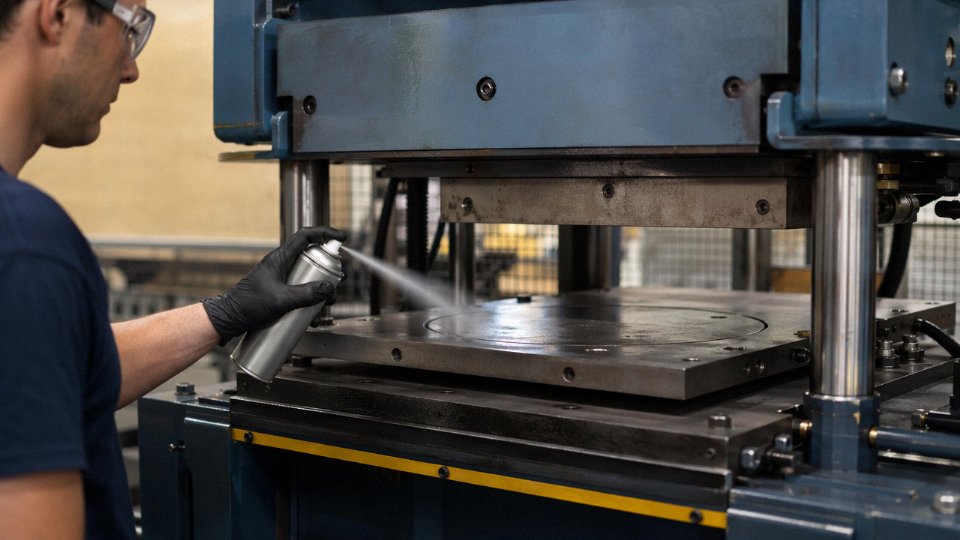
Silicone oil’s low surface energy makes it an effective mold release agent across rubber compression molding, injection molding of thermoplastics, and polyurethane foam production. Concentrations in carrier solvents typically run 1–5% for spray-applied external release agents and up to 20–30% for heavier paste formulations used in large compression molds with deep draw geometries. Internal mold release systems — where a low-viscosity silicone oil (typically 50–200 cSt) is blended directly into the compound — are cleaner to operate but require careful optimization; too much internal release migrates to the part surface and causes adhesion failures downstream in painting or bonding operations.
Compared to carnauba wax or PTFE-based dry release coatings, silicone oil releases more consistently across wide temperature ranges and doesn’t leave buildup that requires periodic mold cleaning shutdowns. That said, PTFE coatings win on longevity for high-volume commodity parts, and some automotive molders prefer them precisely because they resist silicone contamination concerns in paint shops. The choice usually comes down to part geometry, surface finish spec, and whether downstream bonding operations are in the same facility.
Heat Transfer Fluid Systems: Closed-Loop High-Temperature Loops
This is arguably where silicone oil delivers its clearest engineering advantage over alternatives. Closed-loop heat transfer systems in chemical reactors, specialty polymer processing lines, and solar thermal installations increasingly operate in the 200–300°C range — above the practical ceiling of most mineral oils and well into the degradation zone for many synthetic hydrocarbon fluids like white oils or alkylated aromatics.
PDMS-based heat transfer fluids, particularly in the 50–1,000 cSt viscosity range, show thermal stability that genuinely sets them apart. Well-documented testing puts viscosity change at less than 2% after 5,000 hours of continuous operation at 250°C — a number that holds for properly specified, oxygen-free closed systems with adequate expansion volume. Open systems tell a different story; surface oxidation accelerates gel formation and can require fluid replacement in a fraction of that time. The lesson most maintenance engineers learn once: design the system sealed, not vented to atmosphere, and specify a food-grade or inhibited fluid grade if there’s any moisture ingress risk.
For solar thermal collectors in industrial process heat applications, silicone fluid loops are displacing glycol-water mixtures at the high end because they can reach higher collection temperatures without pressurization, which simplifies the balance-of-plant engineering. Mineral oil alternatives remain cheaper upfront — sometimes by a factor of 3–4× on fluid cost alone — but the total cost picture shifts when you account for more frequent fluid changes and the energy penalty of operating at lower maximum temperatures.
Textiles and Leather: Softening, Waterproofing, and Performance Finishing Agents
The textile industry rarely makes headlines in silicone oil trade coverage — the conversation gravitates toward EVs and electronics — but on a pure volume basis, fabric finishing is one of the most consistent demand drivers the sector has. Mills run finishing baths continuously across three shifts. Even a modest change in application rate ripples into significant tonnage.
Fiber-Bonding Chemistry: Amino and Epoxy Functional Grades
Standard PDMS gives you slip and softness, but it washes out. What textile finishers actually specify for durable soft-hand treatments are amino-functional silicone oils — where pendant amine groups react with hydroxyl and carboxyl sites on cotton cellulose or with the amide linkages in wool and nylon — and epoxy-functional grades that cross-link under mild heat cure, typically 150–170 °C for 60–90 seconds in a stenter frame. The bond isn’t perfect and never claimed to be permanent, but it survives 20–30 wash cycles at commercial laundry conditions, which is the commercial threshold most garment buyers specify.
Typical application rates run 0.5–3% on weight of fabric (owf), depending on the substrate and the desired handle. Lightweight polyester wovens for linings sit at the low end; heavy cotton terry toweling or technical wool suiting gets pushed toward 2.5–3% to hit the target softness and elasticity recovery the finishing spec requires. Getting that rate wrong in either direction costs money. Under-application produces a hand that fails customer touch panels at QC; over-application leaves a greasy surface that causes stitching skips downstream and can clog needle coolers in the sewing room.
Elasticity recovery — the ability of a knit fabric to spring back after stretching — is where amino-silicone finishing genuinely outperforms most alternatives. Polyester jersey treated with a well-formulated amino silicone emulsion shows measurably better recovery versus untreated fabric or fabric finished with conventional softeners. This matters for sportswear and athleisure, where the technical performance claim has to hold through repeated wear and wash cycles, not just off the bolt.
Hydrophobic Finishing: Methyl Hydrogen Silicone Oil and the Contact Angle Target
Durable water repellency (DWR) finishing is where methyl hydrogen silicone oil (MHS) earns its place. When applied to a fabric surface and cured — usually with a metal salt catalyst such as zinc acetate or titanium chelate at 160–180 °C — MHS cross-links into a continuous hydrophobic network on the fiber surface. Done correctly, water contact angles exceed 120°, sometimes reaching 140–145° on tightly woven nylon or polyester, which translates to good bead-off performance in field conditions.
Methyl hydrogen silicone oil cross-linked on fabric can achieve water contact angles above 120°.True
Cross-linked MHS creates a low-surface-energy network on fiber surfaces; contact angles of 120–145° are reproducibly measured on treated polyester and nylon substrates in peer-reviewed textile chemistry literature and routinely verified in mill QC labs using sessile drop goniometry.
Applications span outdoor technical gear, hospital barrier textiles, and automotive interior fabrics — the last of which has tightened its specifications considerably as OEM seat fabric suppliers face stricter fogging and VOC requirements. A poorly formulated MHS finish that hasn’t fully cured contributes to volatile siloxane emissions that show up in climate control fogging tests, which is an expensive failure mode to discover at vehicle assembly audit.
Asia-Pacific Consumption: Where the Volume Actually Lives
China, India, and Bangladesh collectively consume an estimated 35,000–45,000 metric tons of textile-grade silicone oil annually. That range is wide because the figure is sensitive to fast-fashion production cycles, export order volumes, and how aggressively mills in these regions are upgrading from commodity softeners to functional silicone finishes. In years when Western apparel sourcing shifts heavily toward Bangladesh — which has happened in cycles tied to cost pressures — local silicone oil consumption in that country jumps noticeably, and the regional trading houses that supply finishing chemicals feel it in their order books within a quarter or two.
China remains the single largest consumer by a significant margin, driven by both export production and a growing domestic technical textile sector that includes filtration fabrics, geotextiles, and protective workwear. India’s consumption growth has been faster on a percentage basis, roughly tracking its apparel export expansion, with several large spinning and weaving clusters in Gujarat and Tamil Nadu running silicone finishing lines that weren’t there five years ago. The per-kilogram price sensitivity in these markets is real — buyers will switch between amino silicone grades from different suppliers for a few cents per kilogram — which keeps margins tight for silicone oil producers serving the textile channel compared to, say, medical or electronics grades.
Renewable Energy Infrastructure: Emerging Demand from Solar, Wind, and Green Hydrogen
Clean energy build-out is quietly becoming one of the more interesting demand vectors for silicone oil — interesting because it’s genuinely new territory, not just an extension of existing industrial fluid applications. The volumes are still modest compared to personal care or automotive, but the growth trajectory and the technical specificity of the requirements make this sector worth watching closely.
Concentrated Solar Power: Where Heat Transfer Fluid Selection Actually Matters
In parabolic trough and linear Fresnel CSP plants, the heat transfer fluid (HTF) circulating through the receiver tubes is the operational core of the entire system. Operating temperatures typically run 300–400°C depending on the plant design and the solar irradiance profile of the site. Most older installations use synthetic diphenyl/biphenyl-based fluids — Dowtherm A being the canonical example — which work, but come with real handling headaches: vapor pressure high enough to require pressurized expansion tanks, a flash point low enough to warrant serious fire suppression infrastructure, and freeze points around 12°C that create cold-weather startup problems in desert sites where nights can get colder than engineers initially planned for.
High-viscosity silicone HTFs sidestep several of those problems. Vapor pressure at operating temperature is substantially lower, freeze points can run below −50°C depending on the grade, and non-flammability removes a meaningful insurance and safety infrastructure cost. The trade-off is thermal stability ceiling — some silicone fluid grades start degrading meaningfully above 350°C under continuous cycling — and per-liter cost that’s higher than diphenyl blends. So silicone HTFs tend to be specified where freeze risk is real, where safety classification of the plant matters for permitting, or where the operator has had a bad experience with a diphenyl system crystallizing in a cold header.
Silicone heat transfer fluids used in CSP systems have a flash point high enough to be classified as non-flammable under standard OSHA and NFPA criteria.True
High-molecular-weight polydimethylsiloxane fluids typically have flash points exceeding 300°C and are classified as non-flammable under NFPA 30 and OSHA 29 CFR 1910.106, which is a meaningful safety and permitting advantage over diphenyl-based HTFs whose flash points can be near or below operating temperatures.

Wind Turbines: Nacelle Hydraulics and Electronics Encapsulation
Offshore wind is where silicone oil demand growth is most concentrated in this sector. Pitch and yaw control systems — the hydraulics that adjust blade angle and orient the nacelle — need a damping fluid that stays functional across the full ambient temperature swing: from −30°C winter conditions to summer heat soak inside a sealed nacelle that can reach 60°C or higher. Mineral hydraulic oils work fine onshore where maintenance access is reasonable. Offshore, service intervals stretch to 18–24 months given vessel charter costs, so fluid longevity under thermal and oxidative stress matters a lot more. Silicone damping fluids, typically in the 100–1,000 cSt viscosity range, hold their viscosity-temperature relationship better than mineral oils and resist oxidation without the additive packages that deplete over time.
Separately, the nacelle electronics — power converters, pitch controllers, condition monitoring systems — increasingly use silicone potting compounds and encapsulants that are PDMS-based at their core. Offshore salt air and humidity are brutal to unprotected PCBs. Demand from this application alone is estimated to grow at roughly 8–10% annually through 2030, driven almost entirely by offshore wind capacity additions in Europe and East Asia.
Green Hydrogen: A Small but Strategically Important Niche
Alkaline electrolyzers — still the dominant technology in large-scale green hydrogen projects — use a concentrated potassium hydroxide electrolyte that foams aggressively under high current density. Anti-foam agents dosed into the KOH wash towers are often silicone-based, because the alternatives either degrade in strongly alkaline environments or introduce contamination that poisons the electrode stack. Rotary shaft seals on the gas separation equipment similarly benefit from silicone-lubricated seal faces that handle both the chemical environment and the pressure cycling without swelling or hardening.
The volumes today are small — electrolyzer capacity globally is still in single-digit gigawatts. But with projections putting installed capacity at 300 GW or beyond by 2040, even a modest silicone oil intensity per installed gigawatt adds up to something procurement managers at silicone producers are already modeling. It’s a nascent demand niche, but one with unusually clear line-of-sight to sustained growth.
Supply Chain Architecture and Grade Segmentation Across Demand Sectors
The silicone oil supply chain is longer and more concentrated than most procurement teams realize until something breaks. Trace it back far enough and you hit silicon metal — a commodity smelted at high temperatures from quartzite ore — and roughly 85–92% of global silicon metal production is controlled by facilities in China, Norway, and Brazil, depending on the year and energy pricing. Norwegian and Brazilian production tends to be higher-purity, which matters for downstream chlorosilane synthesis, but the volume story is dominated by Chinese capacity. That concentration doesn’t disappear as you move downstream; if anything, it sharpens.
From silicon metal, producers react with methyl chloride (via the Rochow-Müller direct process) to generate chlorosilane intermediates — primarily dimethyldichlorosilane (M2) and the cyclic oligomer D4 (octamethylcyclotetrasiloxane). This is the critical chokepoint. D4 and the related D5 monomer are the buildingblocks for polymerizing PDMS, and the production assets capable of doing this at commercial scale sit with a short list of fully integrated producers: Dow, Wacker Chemie, Shin-Etsu Chemical, Momentive, and Elkem (which expanded its silicones position significantly after acquiring the former Bluestar Silicones assets). There are smaller regional producers — a few in China, one or two in India — but for consistent pharmaceutical or electronics-grade product, the qualified supplier list gets short fast.
Grade Segmentation: Where Specification Meets Price
The spread between commodity industrial PDMS and medical-grade material is not trivial. Rough market price ranges, which shift with methanol and energy costs, look approximately like this:
| Grade | Key Specification | Typical Price Range (USD/kg) | Primary Demand Sector |
|---|---|---|---|
| Commodity industrial | No cyclic content limit | 2.50 – 4.50 | Process mfg., textile finishing |
| Food-contact grade | FDA 21 CFR compliant, low extractables | 4.50 – 7.00 | Food processing, packaging |
| Electrical grade | Ionic impurities < 1 ppm, low moisture | 6.00 – 10.00 | Electronics, EV thermal management |
| Cosmetic/personal care | Cyclic D4 content < 10 ppm (EU REACH) | 5.00 – 9.00 | Haircare, skincare formulations |
| Pharmaceutical/USP grade | USP/ISO 10993 compliant, full CoA documentation | 18.00 – 25.00 | Medical devices, drug delivery |
Prices depend heavily on viscosity grade, order volume, and whether the supplier is providing lot-specific analytical documentation. A 1,000 cSt electrical-grade product from a qualified source carries a very different cost structure than 350 cSt commodity fluid bought in bulk from a distributor.
Pharmaceutical-grade silicone oil (USP grade) commands a price premium of 4–8× over commodity industrial-grade PDMS.True
The premium reflects costs of raw material purity control, GMP manufacturing conditions, full analytical traceability (CoA per lot), and regulatory compliance testing against USP and ISO 10993 standards — not simply a higher-purity base polymer.
Demand Volatility and Portfolio Management
Electronics demand for silicone fluids — particularly low-viscosity, high-purity thermal interface and dielectric grades — swings with semiconductor capital expenditure cycles. Personal care demand, by contrast, is remarkably stable quarter to quarter; haircare formulations don’t go on hold because of a macro slowdown the way data center build-outs do. In practice, this means the blended revenue stream across a major integrated producer is more stable than looking at any single end market would suggest.
Wacker and Shin-Etsu, both deeply integrated from chlorosilane to finished specialty fluid, manage this by maintaining wide product portfolios — sometimes 50 or more distinct viscosity and purity grades in active production. That breadth is a genuine competitive moat. A smaller toll manufacturer buying D4 on the open market has no buffer when monomer prices spike, which they do, sometimes 30–60% within a single quarter during supply disruptions.
Procurement managers sourcing beyond commodity grades should treat approved-supplier qualification as a supply security asset, not a paperwork exercise. Qualifying a second source for USP-grade PDMS takes 6–18 months including device manufacturer validation. Starting that process after your primary supplier allocates is too late.
Frequently Asked Questions About Silicone Oil Demand Across Industries
What viscosity grade is most widely used industrially, and why?
350 cSt PDMS is the de facto workhorse grade across general-purpose industrial applications — mold release, anti-foam, textile finishing, basic heat transfer, and general lubrication. The reason is practical rather than theoretical. At 350 cSt, the fluid sits at a sweet spot where pour-point behavior is manageable down to around -50 °C, vapor pressure is low enough that volatility losses during open-bath processing are negligible, and the cost per kilogram is typically 15–30% lower than specialty high-viscosity grades, depending on order volume and supplier tier.
Thinner grades — say, 10–100 cSt — dominate personal care and certain dielectric coating applications where spreading behavior matters. Heavy grades from 12,500 cSt upward are reserved for damping and vibration isolation. But if a procurement manager asks a distributor for “standard silicone oil” without further specification, they will almost always receive 350 cSt. That tells you something about where the volume sits.

Can bio-based or mineral alternatives replace silicone oil in EVs and data centers?
Not at current performance levels, and the gap is meaningful rather than marginal. The two properties that matter most in immersion cooling and high-voltage insulation — dielectric strength and thermal stability across a wide temperature range — are where bio-based esters and mineral oils fall short in practice.
Bio-based dielectric fluids can fully replace silicone oil in EV battery immersion cooling systems at equivalent performance levels today.False
Current bio-based ester fluids typically show lower dielectric breakdown voltages and narrower stable operating temperature ranges compared to linear PDMS grades used in high-voltage immersion cooling. They are viable in some transformer applications but not yet equivalent for EV battery thermal management at the performance specifications most OEMs require.
Mineral oils oxidize and form sludge at temperatures above roughly 120–130 °C — a real problem in densely packed battery modules that routinely see thermal excursions. Silicone fluids, by contrast, remain stable through 200 °C or beyond depending on grade and oxygen exposure. For a procurement team evaluating total cost of ownership rather than unit price, the math usually doesn’t favor substitution.
How do EU cyclic siloxane restrictions actually affect demand?
The short answer is that D4, D5, and D6 restrictions under REACH SVHC listings are accelerating demand for linear PDMS rather than suppressing silicone oil consumption overall. Formulators who built product lines around cyclic siloxanes — especially in personal care and certain textile finishing products — have been shifting toward linear dimethicone grades. That shift is volume-neutral to slightly volume-positive for silicone oil producers who already manufacture linear grades at scale. Regulatory pressure here reshapes the product mix inside silicone oil demand; it doesn’t shrink the market.
What MOQs and lead times should procurement teams realistically plan around?
Expect 1–20 metric tons minimum order for specialty or high-viscosity grades from tier-1 producers like Dow, Shin-Etsu, or Wacker. Pharmaceutical-grade material — USP or equivalent — typically has lower volume thresholds, often 200 kg, but higher qualification overhead. Standard grades from Chinese producers through trading intermediaries sometimes allow smaller minimums, though quality consistency warrants extra incoming-inspection effort.
Lead times run 4–12 weeks for stocked standard grades under normal conditions. Custom viscosity blends or certified pharmaceutical batches stretch to 16–24 weeks, sometimes longer if the producer is running campaigns on a shared vessel. Seasonal demand peaks — typically Q3 in personal care manufacturing — can add 2–4 weeks even for catalog items. Build buffer into your planning cycle accordingly.
Is silicone oil classified as hazardous waste at end of life?
Under most major regulatory frameworks — US EPA RCRA, EU waste directives, most Asian national regulations — used silicone oil is not classified as hazardous waste, which simplifies disposal logistics considerably compared to mineral or synthetic ester fluids. The practical end-of-life routes depend on contamination level. Clean, single-grade used silicone oil can be re-refined and resold at lower specification levels; several specialty recyclers in Europe and North America handle this. Heavily contaminated fluid, or mixed-grade waste, typically goes to high-temperature incineration. Combustion of PDMS generates silica — essentially fine amorphous SiO₂ — so incinerator operators need to account for residue handling. It is inert but accumulates in combustion chambers over time. A few industrial users in food processing and plastics have set up in-plant filtration loops to extend fluid service life and reduce disposal frequency, which is worth considering if you are running large-volume continuous operations.