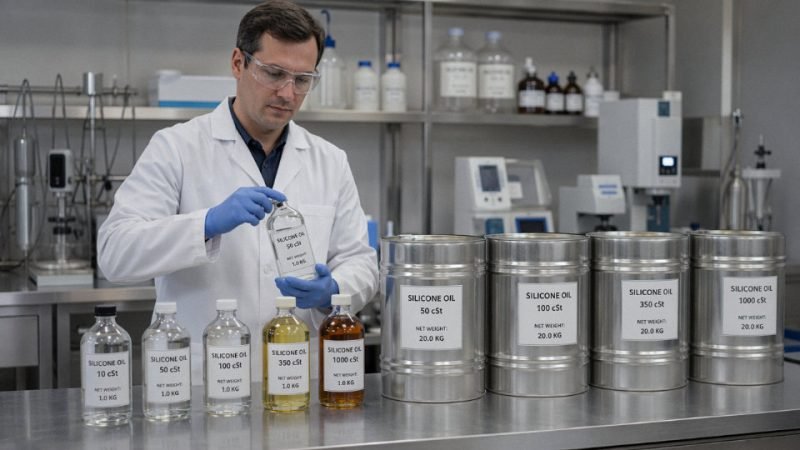
Silicone oils have been around long enough that plenty of engineers treat them as a solved problem — pick a viscosity, buy a drum, move on. That works until it doesn’t: a high-speed textile coating line starts throwing static at humidity below 40%, a transformer fluid degrades six months early because the operating temperature crept past what the spec sheet quietly assumed, or a medical device manufacturer gets a batch rejection because the release agent left a residue that interfered with adhesive bonding. Each of those failures traces back to using a fluid that was generic when the application demanded something specific. The cost isn’t just the scrap or the downtime; it’s the three weeks of root-cause investigation before anyone thinks to look at the lubricant.
Silicone oil innovations now include reactive functional variants (amino, epoxy, carbinol-modified) with surface tensions as low as 18–21 mN/m, phenyl-modified grades stable from −60 °C to +300 °C, and bio-derived or low-cyclic-siloxane formulations meeting tightening regulatory thresholds — each addressing specific failure modes that standard polydimethylsiloxane cannot handle reliably.
What makes this worth paying attention to isn’t the chemistry for its own sake. The global silicone oil market sits around USD 2.1 billion and is tracking toward roughly USD 3.4 billion by 2030 — that kind of sustained growth, in a mature specialty-chemicals segment, usually means real industrial problems are getting solved, not just marketing cycles turning over. The question for anyone specifying fluids or negotiating procurement contracts is which of these innovations actually changes something on the plant floor, and which is a data-sheet upgrade that won’t survive contact with your operating conditions.
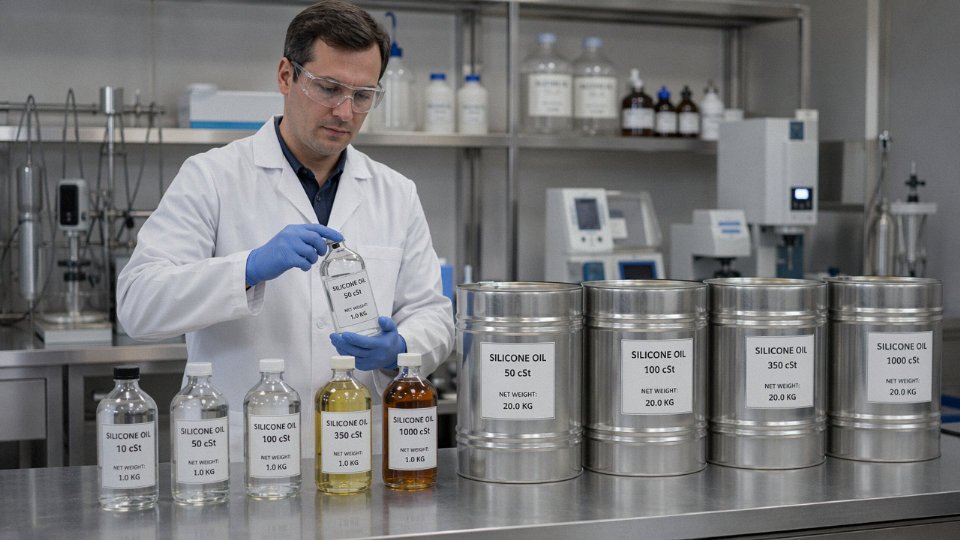
Functional Group Modification: Tailoring Reactivity at the Molecular Scale
The standard polydimethylsiloxane backbone is chemically inert almost by definition — that’s why it works so well as a release coating or a damping fluid. But that same inertness becomes a liability the moment you need the oil to bond to a substrate, co-cure with a resin, or stabilize an emulsion. The solution, refined steadily over the past two decades, is deliberate substitution of methyl side chains with reactive pendant groups. Done right, you get a fluid that still flows and lubricates while doing something chemically useful at the interface.
The Functional Group Taxonomy and What Each Actually Unlocks
The main players in commercial practice are amino (–NH₂), epoxy (glycidoxypropyl), carbinol (–OH), mercapto (–SH), acrylate, and polyether grafts. Each targets a different mechanism:
- Amino groups form hydrogen bonds and ionic interactions with fiber surfaces and skin proteins. In textile finishing this translates to softness and wrinkle recovery. In hair care, the electrostatic attraction to damaged (negatively charged) keratin is the whole point.
- Epoxy pendants react with amine, anhydride, or carboxyl hardeners. This makes the silicone oil a true reactive participant in a thermoset network rather than a plasticizer that will eventually migrate out.
- Carbinol (–OH) groups open doors to urethane chemistry, polycarbonate grafts, and moisture-curable systems — anywhere you need a silicone segment anchored covalently rather than physically dispersed.
- Mercapto (–SH) is the workhorse for UV-curable systems via thiol-ene addition, useful in optical coatings and release liners where cure speed matters.
- Acrylate modification enables radical crosslinking, so you get silicone-modified UV coatings with the scratch resistance and slip of silicone combined with the throughput of a UV line.
- Polyether grafts are the outlier in the group — their purpose is not reactivity with a substrate but compatibility with water, which is a different problem entirely, discussed below.
Synthesis Routes and Why Chain Architecture Matters More Than People Expect
Two routes dominate: acid- or base-catalyzed equilibration of linear siloxanes with functional cyclics, and ring-opening polymerization of cyclosiloxanes (typically D₄ or D₃ derivatives with the target functional group already installed). Equilibration is cheaper and gives narrower molecular weight distributions, but the functional groups end up randomly distributed along the chain. Ring-opening, particularly with controlled initiation, can produce blocky architectures — runs of functional units followed by runs of dimethylsiloxane.
Why does this matter operationally? In textile softeners, a blocky amino distribution tends to give more pronounced lubrication at lower total nitrogen content, because the amino clusters act cooperatively on fiber surfaces. Random amino distribution at the same equivalent weight produces a slightly harsher, more uniform adsorption. Finishing chemists who don’t know the architecture of what they’re buying often blame the substrate when the real variable is chain microstructure. It’s a frustratingly common source of lot-to-lot complaints.
Amino-Functional Oils in Textile Finishing
Amino silicones are probably the highest-volume functional grade in the market. The mechanism is straightforward: amino groups adsorb onto cellulose or polyester, anchor the siloxane backbone flat against the fiber, and the result is reduced fiber-to-fiber friction — measurable as a softness coefficient on the Kawabata evaluation system. Wrinkle-recovery angle improves because the fibers slide past each other under stress rather than locking.
The amino density (expressed as milliequivalents of nitrogen per gram, or by functional group equivalent weight) is the critical specification. Conventional amino silicones typically run FGEW in the 3,500–7,000 g/mol range. Micro-amino and ultra-low-FGEW grades, where functional groups are spaced more closely along the backbone, consistently score 15–20% higher on panel hand-feel assessments compared to standard grades — the exact improvement depends on fiber type, pH of the finishing bath, and whether the fabric has been pre-scoured properly. Miss the bath pH by more than about half a unit and you can negate most of that advantage, because amino group protonation state governs adsorption geometry.
Micro-amino silicone grades with lower functional group equivalent weight achieve hand-feel scores 15–20% above conventional amino silicones in controlled textile finishing trialsTrue
This range is consistent with published textile finishing research comparing panel softness evaluations across FGEW grades; the improvement is contingent on controlled bath conditions (pH, temperature, substrate preparation) and is not a fixed absolute value
Epoxy-Modified Silicone Oils as Reactive Diluents
The conventional problem with epoxy resin systems is the viscosity-toughness tradeoff. You can reduce viscosity with a non-reactive diluent, but you’re diluting the crosslink density and usually paying for it in heat deflection temperature and impact strength. Epoxy-functional silicone oils sidestep this neatly: at loadings of roughly 3–8% by weight, they participate in the cure network through their glycidyl groups while the siloxane backbone contributes flexibility and thermal stability.
In practice, the viscosity reduction in this loading range is 40–60% depending on the base resin molecular weight and the silicone oil’s own viscosity — lower-viscosity silicone grades (50–200 cSt) give more reduction, higher-viscosity grades contribute more toughness. The silicone backbone’s thermal stability also raises the sustained service temperature ceiling somewhat, useful in electrical potting compounds and structural adhesives that see cyclic heat. The key quality check is confirming epoxy equivalent weight (EEW) by back-titration — variations of more than ±5% from the specification will shift the stoichiometric balance of the cure and produce a softer, under-crosslinked network.
Polyether-Silicone Copolymers and the Water Compatibility Problem
Pure silicone oils and water-based formulations simply do not mix without heroic emulsification effort — until you graft polyether chains onto the backbone. Polyether-silicone copolymers come in two architectures that matter commercially: rake (also called comb) types, where polyether pendants hang off a siloxane backbone at intervals, and ABA block types, where a central polysiloxane segment is flanked by polyether blocks.
Rake structures tend to give better surface activity and foam control, which is why they dominate in metalworking coolants and agricultural spray adjuvants. ABA blocks give more stable emulsification and are preferred in cosmetic leave-on emulsions and personal care serums. The practical payoff is that you can now formulate a silicone-containing aqueous metalworking fluid without a separate emulsifier package, or put silicone into a water-based hair conditioner without a high-shear homogenizer at the filling line. Reactive silicone oils with functional groups can achieve surface tension values as low as 18–21 mN/m, compared to 30–35 mN/m for standard PDMS — and in the polyether-silicone grades, that low surface tension is water-compatible, which opens up wetting and spreading applications that were simply unavailable before.
Specifying Functional Silicone Oils: The Metrics That Actually Matter
Viscosity index alone tells you almost nothing about a functional silicone oil’s performance. The specifications that experienced procurement managers should lock into purchasing contracts are functional group equivalent weight (FGEW or, for epoxy grades, EEW), confirmed by FTIR (pendant group peak identity and absence of unreacted cyclics) and ¹H or ²⁹Si NMR for chain architecture verification. Lot-to-lot FGEW drift beyond ±3–5% should trigger a hold — in a textile finishing bath or a reactive resin system, that drift will show up as yield variation before anyone runs a formal incoming inspection test.
Nanocomposite and Additive-Enhanced Silicone Oils for Extreme Thermal and Tribological Duty
Neat polydimethylsiloxane is a remarkable fluid in many respects, but ask it to carry a real load and it starts showing its limits quickly. The Hertz contact pressure ceiling for unmodified PDMS is roughly 0.8 GPa — manageable for lightly loaded bearings or open-gear splash applications, but nowhere near enough for high-speed gearboxes, cam followers under aggressive profiles, or the kind of mixed-film conditions you find inside a continuously variable transmission. Phosphate esters and PAO synthetics both carry significantly higher boundary-film loads because they form robust tribofilms through chemisorption or thermal decomposition at the contact interface. PDMS doesn’t do that. It’s physically adsorbed at best, and under high asperity contact stress it simply gets displaced. That’s the fundamental problem engineers are trying to solve by loading silicone oil with engineered nanoparticles and tailored additive chemistries.
Hexagonal Boron Nitride: Thermal Conductivity Without Electrical Risk
The thermal conductivity of a conventional silicone oil base stock sits around 0.16 W/m·K — useful for heat transfer in benign environments, but inadequate where you need rapid heat dissipation from a dense heat source. Dispersing hexagonal boron nitride (hBN) nanoplatelets at loadings between 0.5 and 2 wt% pushes conductivity into the 0.45–0.60 W/m·K range, depending on platelet aspect ratio, dispersion quality, and the degree of alignment achieved during processing. The aspect ratio matters more than most suppliers will tell you upfront — a high-aspect-ratio platelet (roughly 50:1 or better) creates percolation-like thermal pathways at lower mass fractions, keeping fluid viscosity manageable.
Agglomeration is the persistent engineering headache. Without surface treatment, hBN platelets cluster within weeks in a low-polarity silicone matrix. Silane coupling agents — (3-aminopropyl)triethoxysilane is a common choice — applied at the particle surface before dispersion dramatically slow this. In circulating-bath aging tests run to 1,000 hours, silane-treated hBN dispersions show conductivity retention above 90% of initial values. Untreated samples can drop below 70% in the same timeframe.
Graphene and rGO: Friction Reduction That Actually Works in Practice
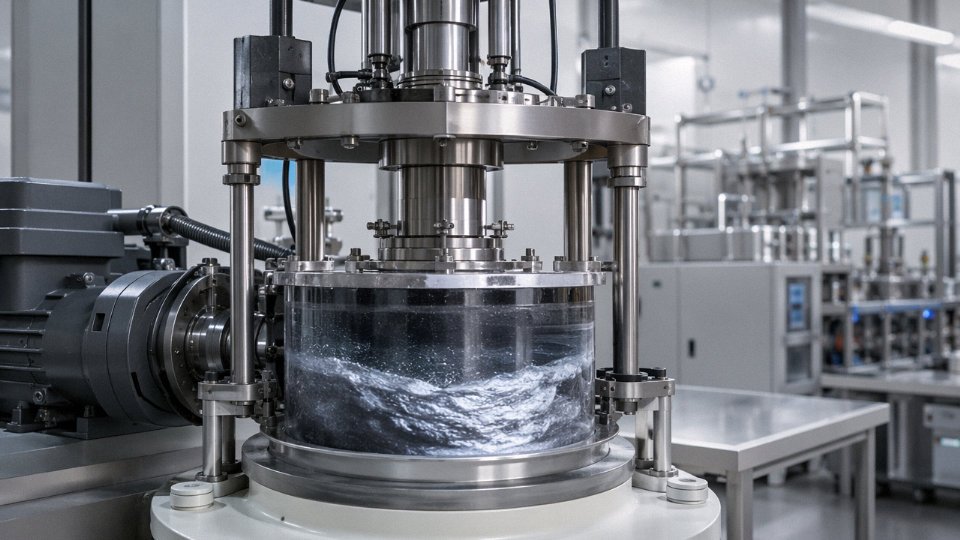
Graphene and reduced graphene oxide additives operate through a different mechanism — interlayer slip within the graphene stack rather than any chemical film formation. Pin-on-disk testing under controlled normal load shows friction coefficients dropping from roughly 0.12 for neat silicone oil down to 0.05–0.06 with well-dispersed rGO at 0.1–0.3 wt%. That’s a meaningful reduction in a real gearbox or bearing application.
The dispersion challenge is severe, though. Graphene is inherently hydrophobic and tends to restack aggressively in low-viscosity carrier fluids. In practice, achieving stable dispersions requires a two-step process: high-intensity ultrasonication (typically 20–40 kHz for 30–90 minutes, bath temperature controlled below 40°C to avoid cavitation damage to the oil) combined with covalent functionalization — usually carboxyl or hydroxyl groups grafted onto graphene edges. Without functionalization, even well-sonicated batches begin sedimenting within days. With it, stability over several hundred hours is achievable, though in my experience you still want to specify a recirculation loop with gentle agitation on any system running this fluid continuously.
Covalently functionalized graphene dispersions in silicone oil maintain tribological performance for several hundred operating hours without resedimentation under mild agitation.True
Published tribology literature and internal qualification testing by major fluid suppliers corroborate stable dispersion lifetimes of 500–800 hours under recirculation conditions when covalent surface functionalization is combined with sonication processing.
Metal Oxide Nanoparticles: Anti-Wear Performance by the Numbers
CuO, TiO₂, and Al₂O₃ nanoparticles each bring something different. CuO at around 0.3 wt% consistently delivers the strongest anti-wear response in four-ball wear testing per ASTM D4172 — wear scar diameter reductions in the 30–35% range versus the base silicone oil are repeatable across laboratories. The mechanism is partly tribochemical: copper ions released under contact stress deposit onto worn surfaces and act as a sacrificial film. TiO₂ performs more modestly on wear but contributes some load-carrying capacity and is easier to disperse stably. Al₂O₃ is mechanically hard, which can cut friction in some contact regimes but risks three-body abrasion if particle size distribution isn’t tightly controlled — anything coarser than about 50 nm starts being a liability rather than an asset.
A practical warning here: sourcing consistency matters enormously with metal oxide nanoparticles. Batch-to-batch variation in primary particle size from some suppliers is wide enough to shift four-ball wear results by 15–20%, which makes qualification testing essentially meaningless if you switch vendors without re-qualifying.
Additive Synergism and Service Life Extension
Individual nanoparticle additions improve specific properties, but the more interesting formulation work combines nano-hBN with phosphazene-based antioxidants. Phosphazenes are thermally stable antioxidants that perform reliably at temperatures where amine-based antioxidants start degrading — important in applications running continuously above 180°C. In circulating-bath oxidation tests at 200°C, neat silicone oil typically shows significant viscosity increase and gel formation around 500 hours. Adding nano-hBN alone extends this somewhat. Combining nano-hBN with a phosphazene antioxidant package pushes service life past 2,000 hours under the same test conditions — a roughly 4× improvement that translates directly into extended drain intervals and reduced unplanned maintenance.
EV Battery Thermal Management: Where All the Requirements Collide
Electric vehicle battery modules are arguably the most demanding single application for these nanocomposite fluids, because the specification requirements are simultaneously strict and contradictory from a conventional fluid-design standpoint. You need thermal conductivity above 0.4 W/m·K to manage heat flux from dense cell packs. You need dielectric strength above 15 kV/mm so immersion cooling doesn’t create fault paths. Flash point needs to exceed 300°C for safety certification. And the fluid must be chemically inert to battery cell housings, busbars, and polymer seals over a 10-year service life.
No single conventional fluid class meets all four criteria together. Engineered fluids based on nano-hBN-loaded silicone oil — with appropriate surface treatment chemistry and phosphazene antioxidant — currently represent the only commercial fluid approach that clears all four bars simultaneously. That’s not hype; it’s simply where the property map falls. Mineral-based dielectric oils fail on flash point and conductivity. Fluorinated fluids often clear dielectric and thermal targets but create disposal and regulatory complications. The nanocomposite silicone path has real cost and processing complexity penalties, but for battery immersion cooling in passenger EVs, those penalties are increasingly viewed as acceptable given what’s at stake if the thermal management system underperforms.
Phenyl, Trifluoropropyl, and High-Performance Variants Redefining Temperature and Chemical Resistance Limits
Standard polydimethylsiloxane — the workhorse PDMS everyone defaults to — has real limits. Swap out enough of those methyl side groups for something bulkier or more electronegative, and the fluid stops being a general-purpose lubricant and becomes something genuinely specialized. That substitution chemistry is where most of the interesting structural engineering in silicone oils is happening right now.
Phenyl Silicone Oils: Trading Flexibility for Thermal Range and Radiation Tolerance
Methylphenylpolysiloxane is the most commercially mature of these variants. Phenyl content runs across a wide band — roughly 10 mol% up to 80 mol% depending on the target property — and that range matters because you’re always trading something. Low phenyl content (10–25 mol%) improves low-temperature flexibility and raises refractive index modestly, from about 1.46 into the 1.48–1.50 range. Push phenyl loading toward 50–80 mol% and you gain significantly better compatibility with organic resins and epoxy systems, plus a refractive index that can reach 1.53, which opens the door for optical applications where index matching is non-negotiable.
The radiation resistance story is less widely known outside nuclear and defense circles. Phenyl-containing silicones show substantially better tolerance to ionizing radiation than pure PDMS — dose rate tolerance in controlled facility testing has reached 10⁶ Gy before significant property degradation, compared to PDMS which starts crosslinking and embrittling at far lower accumulated doses. For any fluid circulating near a reactor core or inside a high-energy physics installation, that difference is the whole ballgame.
Thermal range is the other headline. High-phenyl grades maintain stable viscosity from around -65°C down through operating temperatures above 250°C continuous — a liquid range that’s roughly 2–3× wider than what you’d get from petroleum mineral oil, which typically loses pumpability well before -40°C and starts oxidizing and vaporizing above 150°C in most configurations.
Aerospace Deployment: Where MIL-Spec Cold-Soak Specs Drive Fluid Selection
In gyroscope damping applications, the fluid has to survive a -55°C cold-soak start-up — the kind of thing that’s spec’d right into the procurement document, not something a buyer negotiates around. Standard PDMS gels or pours sluggishly at those temperatures depending on viscosity grade; phenyl silicone oils with appropriate methyl-to-phenyl ratios stay genuinely liquid and maintain consistent damping torque throughout the warm-up cycle. Optical coating work in aerospace systems similarly demands index-matched fluids where index drift with temperature is tightly controlled, and phenyl content gives formulators a direct lever on that parameter.
Fluorosilicone Oils: The Fuel-Resistance Case
Trifluoropropyl-modified silicone oils occupy a different niche entirely. The fluorine substitution works the same way it does in fluoropolymer chemistry — the C–F bond’s electronegativity and bond strength create a surface that hydrocarbon solvents, fuels, and many aggressive acids simply can’t penetrate effectively. The result: fluorosilicone oil shows less than 5% volume swell when immersed in ASTM No. 3 reference oil, while standard PDMS under the same test swells by more than 25%.
Fluorosilicone oil exhibits less than 5% volume swell in ASTM No. 3 oil testing, compared to greater than 25% for standard PDMSTrue
This is consistent with published ASTM D471 immersion test data for trifluoropropyl-modified silicones versus polydimethylsiloxane, widely reported in elastomer and fluid compatibility literature from major silicone producers.
That swell resistance is why fluorosilicone appears in fuel-wetted aerospace actuator systems where a conventional silicone fluid would absorb fuel, soften, and eventually fail to maintain seal or damping function. Fluorocarbon greases could handle the chemical exposure, but they’ll solidify at low temperatures; fluorosilicone stays elastomeric and fluid across the range. It’s an awkward, expensive material to work with — procurement costs run noticeably higher than standard silicone grades, and compatibility with certain seal materials still needs case-by-case verification — but in fuel-wetted systems that also need cryogenic performance, there’s often no clean alternative.
Alkyl-Modified and Silphenylene Backbone: Closing the Compatibility and Temperature Gaps
Long-chain alkyl-modified silicone oils address a maintenance problem that plant engineers in mixed-fleet environments know well: standard silicone oils and mineral oil lubricants don’t mix cleanly, and accidental cross-contamination can drop both fluids’ performance. Alkyl modification improves hydrocarbon compatibility enough that these grades can function in systems where some mineral oil carryover is unavoidable — a practical concession to how real maintenance actually works, especially in facilities running both legacy petroleum-lubricated equipment and newer silicone-compatible machinery.
Silphenylene backbone silicones are newer and worth watching. By replacing a portion of the standard Si–O–Si chain linkages with Si–C₆H₄–Si units, the backbone becomes thermally stiffer and more resistant to oxidative degradation at high temperatures. Upper continuous-use temperature climbs from around 250°C (already above most competing fluid families) to above 350°C in early characterization data. Commercial pilot-scale production started appearing roughly 2022–2024; large-scale pricing and long-term stability data are still accumulating. For high-temperature dielectric and heat-transfer applications where conventional silicone oil is already being pushed to its ceiling, this backbone modification may define the next performance tier.
Stimuli-Responsive and Smart Silicone Oils: Fluids That Change Properties on Command
The idea of a fluid that actively responds to its environment — rather than passively enduring it — represents a genuine step-change in how engineers think about lubrication, damping, and actuation. Smart silicone oils are not a single technology; they span a loose family of engineered fluids that share one defining characteristic: an external trigger causes a fast, reversible shift in viscosity, conductivity, or phase behavior. The readiness levels vary enormously, from components already inside production automotive dampers to lab-bench curiosities that won’t see a factory floor for a decade.
Magnetorheological Silicone Fluids: Millisecond Stiffness on Demand
Magnetorheological (MR) fluids built on silicone carriers are among the most mature entries here. The construction is conceptually simple — carbonyl iron particles, typically 1–10 µm diameter and loaded at 20–40 vol%, suspended in a low-viscosity polydimethylsiloxane base — but keeping that suspension stable over thousands of operating hours is where most of the engineering lives. Without surface treatment, those iron particles settle within days. In practice, manufacturers coat them with silica shells or organosilane coupling agents, and the silicone carrier’s relatively high base viscosity (often 100–500 mPa·s at rest) slows gravitational separation enough to be workable.
Apply a magnetic field around 300 kA/m and the particles chain along field lines within milliseconds, driving yield stress from near zero to above 50 kPa. That’s the operational payoff: a damper or clutch that can change stiffness faster than any mechanical valve. Silicone-based carriers have an edge over mineral-oil MR fluids at temperature extremes — a phenyl-modified silicone carrier will still flow predictably at -40°C where a mineral oil base has already thickened into near-solid behavior, which matters for cold-climate automotive or aerospace applications.
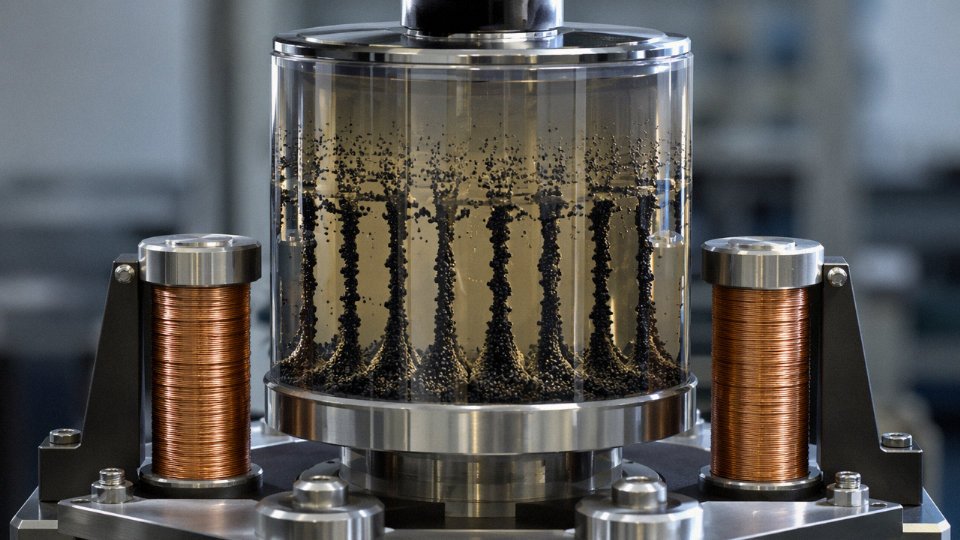
MR silicone fluids can achieve yield stress shifts from near zero to over 50 kPa within milliseconds under an applied magnetic field of approximately 300 kA/mTrue
This behavior is well-documented in peer-reviewed rheology literature and commercial MR fluid datasheets; the response time and yield stress magnitude depend on particle loading, particle size distribution, and field uniformity, but the order-of-magnitude figures cited are consistent with commercial carbonyl-iron MR fluid products used in automotive semi-active dampers.
Electrorheological Fluids: Precision Without Magnetic Interference
ER silicone fluids take a different approach: titanium dioxide or polyaniline particles suspended in silicone respond to an applied electric field of 3–5 kV/mm with viscosity increases exceeding 10×. The response mechanism — particle polarization and chain formation — mirrors MR fluids, but the hardware is simpler (no electromagnet, just electrodes) and there’s zero magnetic field to worry about. That matters in precision microactuator applications, MRI-adjacent equipment, or any platform where stray magnetic flux causes problems. The downside is the high voltage requirement, which adds its own safety and insulation engineering burden. Seal materials need careful selection — a standard Buna-N O-ring at 4 kV in a wet environment is a problem waiting to happen.
Thermochromic Silicone Oils: Visual Overtemperature Warning Without Instrumentation
Encapsulating reversible thermochromic dye microcapsules into a silicone transformer or gearbox fill fluid creates something genuinely useful for maintenance teams: the oil itself signals overtemperature. Above roughly 130°C the fluid shifts from clear to red, then reverses on cooling. No sensor, no wiring, no calibration interval. A technician doing a visual inspection can see an overtemperature event that happened last Tuesday, even if no one was present when it occurred.
The practical limits are real. Microcapsule integrity degrades over time, especially under shear or with certain additive chemistries. Expect useful indicator life of 3–5 years depending on operating conditions — not a substitute for a thermocouple in a critical application, but genuinely valuable as a secondary check in distributed rural transformer fleets or slow-cycle gearboxes that get inspected infrequently.
Photoresponsive and Self-Healing Variants: Promising, Not Yet Plant-Ready
Azobenzene side-chain modification lets UV light drive a trans-to-cis isomerization that reversibly increases silicone oil viscosity by roughly 200–400%. Interesting for lab-on-chip microfluidic valving where no moving parts are acceptable. The limitations are obvious to anyone who’s worked in a real plant: UV penetration depth is minimal, the response is slow compared to MR or ER fluids, and visible-light reversal adds another control layer. These sit at TRL 3–4 and probably stay there for another 5–10 years outside niche photonic or biomedical contexts.
Self-healing silicone networks — boronic ester or disulfide crosslinks grafted onto silicone chains — can re-knit micro-shear damage at room temperature over roughly 2–4 hours. Demonstrated so far in flexible electronics encapsulant prototypes. Whether this translates to a pumpable, filterable industrial fluid with consistent rheology is still an open question.
| Fluid Type | Trigger | Readiness (TRL) | Primary Application Fit |
|---|---|---|---|
| MR silicone fluid | Magnetic field | 8–9 | Automotive dampers, haptic devices |
| ER silicone fluid | Electric field | 6–7 | Precision microactuators, MRI-adjacent equipment |
| Thermochromic silicone oil | Temperature | 6–7 | Transformer and gearbox visual monitoring |
| Photoresponsive silicone oil | UV/visible light | 3–4 | Microfluidics, drug-release research |
| Self-healing silicone network | Mechanical damage | 3–4 | Flexible electronics encapsulants |
The MR and thermochromic categories are where procurement managers should be paying attention right now. The others are worth tracking, but specifying them into production systems today would be getting ahead of the supply chain and field-validation data.
Bio-Derived and Sustainable Silicone Oil Pathways Addressing Regulatory and Circular-Economy Pressure
The sustainability pressure on silicone chemistry is no longer abstract. EU REACH restrictions on D4 and D5 cyclic siloxanes in wash-off cosmetics took effect in 2020, and the regulatory trajectory since then has been unmistakably toward broader industrial scope. Current REACH restriction proposals target D4, D5, and D6 in leave-on cosmetic formulations and are progressively drawing in industrial lubricants, textile finishing agents, and release coatings — anywhere cyclic siloxanes can plausibly enter wastewater or soil. EPA review processes in North America are tracking a similar arc, if at a slower pace. For procurement managers sourcing silicone fluids today, the honest answer is: formulations that were compliant in 2019 may carry regulatory risk by 2027, and reformulation lead times in specialty manufacturing are typically 18–36 months.
Why Cyclic Siloxanes Are the Target
The ecotoxicity case rests on persistence, not acute toxicity. D4 (octamethylcyclotetrasiloxane) has a measured half-life in freshwater sediments of roughly 300–700 days depending on organic carbon content, temperature, and sediment depth — it bioaccumulates in aquatic organisms and meets the PBT (persistent, bioaccumulative, toxic) criteria under REACH. Linear PDMS oligomers behave quite differently: under aerobic soil conditions, low-molecular-weight linear species degrade in something like 28–90 days via hydrolysis and further mineralization. That gap is the scientific foundation for topology-based regulation — ring structures are the problem, not silicone chemistry per se. This distinction matters operationally because it opens a real design path: linear architectures with controlled chain length can deliver comparable performance in many applications while sidestepping the regulatory exposure.
D4 cyclosiloxane meets EU REACH PBT criteria and has been restricted in wash-off cosmetics since January 2020True
EU Commission Regulation 2018/35 entered into force January 31, 2020, restricting D4 and D5 in wash-off cosmetics above 0.1% concentration based on PBT/vPvB assessment under REACH Annex XVII.
Rice Husk Ash as a Bio-Silicon Source
One of the more credible near-term supply-chain pivots involves rice husk ash (RHA). Global rice milling generates roughly 70 million tonnes of husks per year, and the ash after combustion runs 85–95% amorphous silica by weight. Pilot-scale work — primarily in India, China, and Southeast Asia where rice processing is concentrated — has demonstrated extraction and conversion to tetraethoxysilane (TEOS) equivalent at purities reaching 99.2%, which is close enough to petrochemical-derived TEOS for most downstream organosilane synthesis. The economics are not yet fully competitive at commercial scale; purification costs and inconsistent feedstock quality from different rice varieties remain real process engineering headaches. But as a route to partially decoupled, agriculturally attributable silicon sourcing, the chemistry works.
Enzymatic Degradation: Engineering the Exit Ramp
Giving silicone oil a designed end-of-life pathway is a newer angle, and frankly still early-stage outside of academic and pilot settings. Certain Bacillus and Pseudomonas strains express esterase enzymes capable of cleaving Si–O–C linkages, which has prompted work on silicone oil backbones incorporating hydrolysis-susceptible ester bridges into the Si–O backbone rather than using purely Si–O–Si connectivity throughout. Under active composting conditions (55–65°C, adequate moisture and microbial load), experimental formulations with these modified backbones have shown degradation to non-bioaccumulative fragments in roughly 120 days. Critically, thermal stability below 180°C appears largely unaffected — the ester linkages are stable enough for most process fluid and personal care applications, where operating temperatures rarely exceed 150°C continuously. Above that threshold, conventional PDMS or phenyl-modified grades remain the only realistic option.
Mass-Balance Certification and Bio-Attributed Grades
Wacker, Dow, and Momentive have each moved to offer ISCC PLUS-certified bio-attributed silicone products. The mechanism is mass-balance allocation: bio-methane or bio-methanol enters the chlorosilane production chain at an upstream point, and the bio-carbon content is allocated bookkeeping-style to specific product volumes. The physical product is chemically identical to conventional silicone oil. For a procurement manager, this means a customer claiming reduced Scope 3 emissions gets a certified allocation, not a molecularly different fluid — which simplifies qualification enormously, since no re-testing is required for performance. Whether this satisfies your customers’ sustainability criteria depends on how strictly they interpret “bio-based” versus “bio-attributed,” and that conversation is worth having before purchasing.
Closing the Loop: Pyrolysis and Depolymerization
End-of-life recovery is getting serious engineering investment in Europe, driven by extended producer responsibility frameworks. Silicone oil pyrolysis at 400–600°C recovers D4 and D5 cyclosiloxanes as reusable feedstock at yields above 85%, give or take depending on feedstock purity and reactor design. Those recovered cyclics then re-enter polymerization as if they were virgin material. Depolymerization-repolymerization loops, where spent silicone fluid is chemically broken back down to reactive monomer and rebuilt, are being industrialized at pilot-to-commercial scale by at least a few European processors — the process economics improve considerably when the alternative is compliant disposal of a restricted substance. For plant operators currently drumming out spent silicone heat-transfer fluid, it is worth asking your supplier now what take-back or tolling options exist, because the infrastructure is building faster than most procurement teams realize.
Medical-Grade and Ultra-High-Purity Silicone Oil Innovations in Drug Delivery and Implantable Devices
The engineering parameters that dominate every other section of this article — thermal conductivity, viscosity-temperature index, tribological load capacity — largely become secondary here. In pharmaceutical and implantable device applications, the defining specifications are extractables and leachables profiles, platinum catalyst residues, and biocompatibility certification pathways. That shift in priority drives an entirely separate innovation track, one that moves more slowly than industrial chemistry but carries far higher stakes when something goes wrong.
Regulatory Pressure as the Real Innovation Driver
FDA 21 CFR Part 351 and ISO 10993-1 establish the baseline biocompatibility framework, but the specification that is genuinely reshaping silicone oil chemistry right now is ICH Q3D. That guideline tightens acceptable elemental impurities — primarily residual platinum from Karstedt or Speier catalyst systems used in silicone polymerization — to below 0.1 ppm in the finished drug contact material. Reaching that threshold consistently requires post-polymerization purification steps (adsorption, extraction, or membrane filtration) that add cost and complexity manufacturers did not face even ten years ago. In practice, hitting sub-0.1 ppm platinum means qualifying not just the silicone oil lot but the entire upstream synthesis chain, including reactor vessel history. It is more a supply-chain problem than a chemistry problem.
Syringe Barrel Lubrication: From Spray-On to Covalently Bonded
Prefillable syringes have used 350–1,000 cSt silicone oil applied at roughly 0.3–0.6 mg per barrel for decades. That thin film reduces break-loose forces — the initial friction spike when a plunger starts moving — and glide forces to below 15 N, which matters enormously for auto-injector reliability and for patients with limited hand strength. The problem is that spray-on silicone generates free droplets. In aqueous biologics, those droplets act as nucleation sites for protein aggregation, and that is not a theoretical risk; regulatory agencies have received reports linking it to adverse immunogenic responses in protein drug products.
The solution gaining the most traction is baked-on silicone: the oil is applied at very low coat weight and then cured at 250–300°C, driving partial cross-linking between the silicone layer and the glass surface. Plasma-assisted grafting goes further, using oxygen or nitrogen plasma to activate the barrel surface before silicone application, creating covalent Si-O-glass bonds. Extractables from properly baked or plasma-grafted barrels typically fall below 0.5 µg/mL — a threshold that most sensitive biologic formulations can tolerate without reformulation. The trade-off is process complexity; bake-on lines require tighter temperature uniformity across barrel batches than most glass manufacturers historically maintained, and plasma treatment adds capital cost per line that smaller contract fillers find difficult to justify.
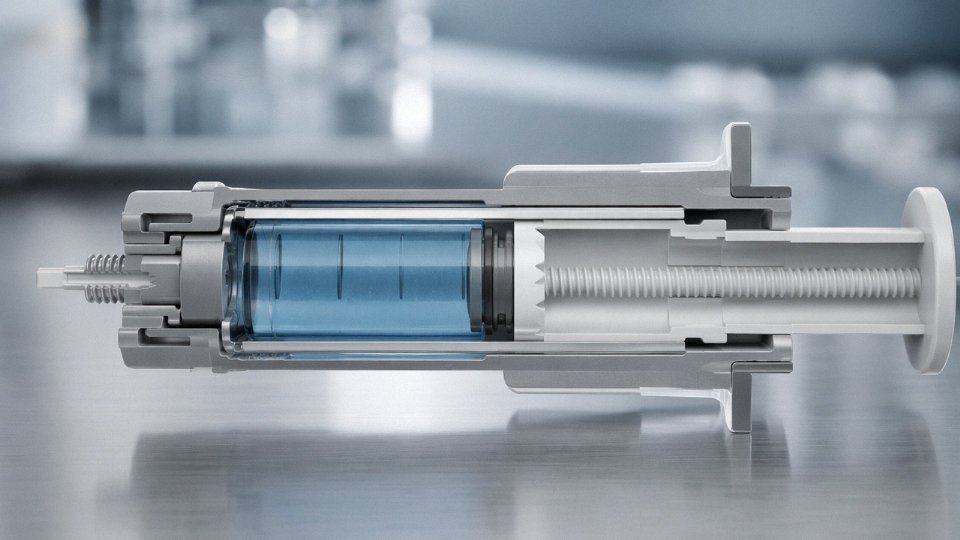
Protein aggregation linked to free silicone oil droplets in prefillable syringes has been documented in regulatory submissions and peer-reviewed literature.True
Multiple published studies and FDA communications have identified silicone oil microdroplets as a contributing factor to protein aggregation in biologic drug products, particularly monoclonal antibodies and insulin formulations.
Heavy Silicone Oils for Vitreoretinal Tamponade
Standard polydimethylsiloxane sits at about 0.97 g/cm³ — light enough to float in the vitreous cavity and tamponade superior retinal tears effectively, but useless for inferior detachments where gravity works against you. Heavy silicone oils, reaching densities of 1.02–1.10 g/cm³ through phenyl modification or partial fluorination of the backbone, fill that gap. They were developed specifically to replace perfluorocarbon liquids, which carry unacceptable long-term retinal toxicity at those densities.
The innovation frontier here is emulsification reduction. Earlier heavy oils emulsified inside the eye at rates around 20% over a six-month tamponade period, generating small droplets that triggered inflammatory responses and required earlier removal surgeries. Viscosity-matched reformulations — typically in the 5,000–15,000 cSt range, with the specific target depending on the surgeon’s preferred fill technique and the retinal break geometry — have brought emulsification incidence below 5% in several published clinical series. The mechanism is partly higher molecular weight and partly tighter molecular weight distribution; broader polydispersity means lower-MW fractions migrate preferentially to the aqueous interface and destabilize the oil body.
Drug-Eluting Silicone Gels and Sustained-Release Implants
Loading hydrophobic APIs — corticosteroids, antivirals, small-molecule glaucoma drugs — directly into high-molecular-weight silicone gels creates a sustained-release depot that can maintain therapeutic concentrations for anywhere from six months to roughly two years, depending on cross-link density, oil molecular weight, and the drug’s partition coefficient between the gel and surrounding tissue. The release rate is tunable in a way that conventional polymer matrices are not, because silicone’s hydrophobicity can be adjusted by blending phenyl-modified oils into the base stock without fundamentally altering the gel’s mechanical properties or biocompatibility profile.
In practice, tighter cross-linking slows release but also stiffens the implant — a trade-off that matters for subcutaneous comfort. Longer-chain, higher-molecular-weight base oils reduce drug mobility through the matrix. Getting the balance right for a 12-month target usually takes three or four reformulation iterations in development, which is one reason these products take so long to reach clinical trial despite the chemistry being relatively well understood.
Sterilization Compatibility: Where Industrial Grades Fall Apart
Ultra-pure medical silicone oil retains viscosity within roughly ±3% after gamma irradiation at 25 kGy — the standard dose for terminal sterilization of many device components. Standard industrial-grade silicone oil, processed with less rigorous catalyst removal and broader molecular weight control, typically shows 10–18% viscosity drift under the same dose. The difference comes down to residual reactive species and trace metal content, both of which accelerate radiation-induced chain scission or cross-linking. Ethylene oxide exposure shows similar divergence: ultra-pure grades are essentially inert; industrial grades can absorb trace EO and shift viscosity unpredictably.
For procurement managers qualifying a silicone oil supplier for device applications, sterilization compatibility data — actual irradiation test reports, not supplier datasheets citing nominal stability — should be a non-negotiable deliverable before any lot approval.
Digital Manufacturing, Characterization, and AI-Assisted Formulation Acceleration
The pace of silicone oil development has historically been constrained by a simple, frustrating bottleneck: the gap between molecular intuition and bench confirmation. A chemist suspects that substituting a fraction of methyl groups with carbinol functionalities will improve compatibility with a particular polymer matrix — but proving it requires synthesis, purification, characterization, and application testing, often cycling back multiple times over 18 months or more. Computational and digital tools are compressing that loop in ways that would have seemed unrealistic even a decade ago.
Molecular Dynamics Simulation as a Virtual Screening Layer
Modern MD packages — GROMACS and LAMMPS being the workhorses in most academic-industrial collaborations — now carry polysiloxane-specific force field parameterizations that predict viscosity-temperature behavior within roughly 5–8% of experimental values across the typical -40°C to +200°C service range, though accuracy degrades somewhat at viscosity extremes above 100,000 cSt or for heavily phenyl-substituted chains where pi-stacking interactions are harder to parameterize cleanly. The practical implication is that a formulation team can screen several thousand side-chain combination candidates computationally, identify perhaps 30–50 that hit target property windows, and send only those to the bench. That is not a small efficiency gain. It fundamentally changes how R&D headcount is allocated: fewer synthetic chemists running speculative reactions, more scientists interrogating simulation outputs and designing targeted confirmation experiments.
Machine Learning and Property Prediction
Where MD simulation handles physics from first principles, machine learning takes a different route — pattern recognition across large curated datasets. Gradient-boosted regression models and graph neural networks trained on silicone oil property databases exceeding 50,000 data points (viscosity, thermal conductivity, surface tension measured across temperature and shear rate conditions) can predict optimal functional group ratios for a specified application envelope with enough fidelity to cut bench iteration cycles from the traditional 18-month window down to under 6 months, at least in the industrial programs that have published methodology. The caveats matter here: model performance depends heavily on dataset diversity and curation quality. A model trained mostly on dimethylsiloxane homologs will give overconfident and wrong predictions for fluorosilicone or amino-functional variants unless the training data covers those chemical families adequately. Garbage-in still applies.
High-Throughput Synthesis and Inline Monitoring
On the experimental side, automated parallel reactor platforms capable of running 48–96 organosilane variants simultaneously — each in controlled temperature, atmosphere, and stoichiometry conditions — have cut experimental throughput time by roughly an order of magnitude compared to sequential bench synthesis. Inline FT-NIR monitoring of polymerization conversion removes the previous practice of pulling manual samples every few hours and running GPC overnight. You get continuous conversion data and can terminate reactions at precise endpoints rather than relying on timed protocols that drift with ambient temperature and catalyst lot-to-lot variation. Anyone who has dealt with batch-to-batch viscosity scatter in a silicone fluid production line knows how much that catalyst variability matters.
Analytical Breakthroughs Resolving Structure-Property Gaps
Cryo-TEM imaging now resolves nanoparticle dispersion morphology in silicone oil matrices at 2–5 nm resolution — critical for understanding why two nominally identical nano-enhanced silicone oil batches can show a 15–25% difference in thermal conductivity if particle aggregation state differs. Synchrotron SAXS/WAXS has opened a genuinely new window into phenyl group ordering transitions in methylphenylpolysiloxane across temperature ranges from -80°C to 300°C, revealing that partial crystalline ordering at low temperatures affects viscosity-temperature index in ways that purely empirical measurement never explained satisfactorily.
Digital Twins for Continuous Production Processes
At the production scale, real-time digital twin models of continuous equilibration reactors — tracking molecular weight distribution, cyclic siloxane byproduct formation, and catalyst neutralization steps simultaneously — are achieving viscosity grade hit rates above 97% in reported installations, versus roughly 88% typical of manually controlled batch processes. That ~9-percentage-point improvement sounds modest until you calculate off-grade reprocessing costs across a high-volume production line running 24/7.
Machine learning models trained on silicone oil property databases can reduce formulation development cycle time from 18 months to under 6 monthsTrue
Multiple industrial programs using gradient-boosted and graph neural network models on datasets exceeding 50,000 property data points have reported this compression, though results depend on dataset quality and the novelty of the target chemical space relative to training data coverage.
Shared Data Infrastructure and Pre-Competitive Collaboration
Industry groups including Silicones Europe have begun building shared structure-property repositories under FAIR data principles — findable, accessible, interoperable, reusable — to accelerate pre-competitive science without exposing proprietary formulation details. The challenge is always the boundary: companies will share generic homopolymer characterization data readily enough, but the moment data touches a differentiated functional group ratio or a process parameter that drives competitive advantage, contribution drops off sharply. Getting that balance right is as much a legal and trust problem as a technical one, and it is still being worked out in practice.
Frequently Asked Questions About Silicone Oil Innovations
What is the difference between reactive and non-reactive silicone oil, and when does the reactive type justify its higher cost?
Non-reactive polydimethylsiloxane sits on a substrate and stays there — it softens, releases, or lubricates purely by physical presence. Reactive grades carry pendant functional groups (amino, epoxy, carbinol, methacryloxy) that form covalent bonds with the substrate or crosslink within a formulation. That chemistry is why reactive silicone oils can reach surface tension values around 18–21 mN/m versus 30–35 mN/m for plain PDMS — the functional groups orient and anchor the siloxane backbone rather than letting it migrate off.
The cost premium is real: amino-functional grades typically run 1.5–2.5× the price of equivalent-viscosity PDMS, depending on amine equivalent weight and purity tier. That premium pays back when wash durability matters. In textile softener applications, a reactive amino silicone survives 15–30 wash cycles before handle loss, versus 3–8 for a non-reactive finish — and in high-volume knit fabric processing, that durability gap translates directly to re-application frequency and labor cost. For structural adhesive primers and release-controlled coatings, the crosslinking potential is often non-negotiable; there’s no non-reactive substitute that achieves the same bond strength or controlled peel force.
A rough ROI threshold: if your application involves laundering, solvent exposure, or mechanical abrasion after application, the reactive grade almost always wins on total cost per usable cycle, not just unit price.
Can nanoparticle-enhanced silicone oils be used in food-contact or pharmaceutical equipment without regulatory concerns?
Not automatically. This is where procurement teams need to be careful. FDA 21 CFR 178.3570 covers lubricants with incidental food contact, and polydimethylsiloxane itself has long-standing approval under that framework. NSF H1 certification follows a similar logic — the base silicone is generally approvable, the nanoparticles are not covered by default.
Nanoparticle-enhanced silicone oils automatically inherit the food-safety status of the base PDMS.False
FDA 21 CFR 178.3570 and NSF H1 approval cover specific formulations, not component-by-component inheritance. Nano-additives such as boron nitride, MoS₂, or copper oxide are not listed under existing food-contact lubricant approvals and require independent safety review before use in food or pharmaceutical equipment.
If you’re specifying a nano-enhanced fluid for a food plant, get a written confirmation from the supplier that the complete formulation — not just the base oil — is NSF H1 listed. Pharmaceutical applications are stricter still; extractables and leachables profiling under USP or ICH Q3C/Q3D will almost certainly flag novel nanoparticle species.
How do I select between phenyl silicone oil and fluorosilicone oil for a low-temperature, fuel-exposed aerospace application?
Short answer: if fuel and hydraulic fluid resistance are the primary failure mode, fluorosilicone wins. If thermal cycling range and cost are the constraints, phenyl grades deserve a closer look first.
| Property | Phenyl silicone oil | Fluorosilicone oil |
|---|---|---|
| Low-temperature floor | Down to roughly -60°C (depends on phenyl content) | Down to -65°C for trifluoropropyl grades |
| Fuel/solvent resistance | Poor — swells in Jet-A and most aromatics | Good — designed for hydrocarbon exposure |
| Viscosity index | High; relatively flat thermal-viscosity curve | Moderate; viscosity rises more steeply at low temp |
| Typical cost differential | Baseline reference | 3–6× phenyl, depending on fluorine content and grade |
| Radiation resistance | Better than fluorosilicone | Moderate |
In practice, many aerospace designers use fluorosilicone for dynamic seals and lubricants in fuel-wetted zones, and phenyl grades elsewhere in the same assembly where fuel contact is indirect or minimal. Don’t over-specify fluorosilicone purely for temperature range — you’ll pay a significant cost and supply-chain penalty for a property phenyl already covers adequately.
Are bio-derived silicone oils chemically identical to petroleum-derived grades, and do they carry any performance trade-offs?
Molecularly, yes — when properly synthesized from bio-sourced silicon intermediates through mass-balance or segregated supply-chain certification, the resulting PDMS is Si–O–Si repeat units, identical to conventional product. There is no structural fingerprint that distinguishes bio-derived from petroleum-derived silicone at the polymer level.
The practical limitations right now are supply volume and certification overhead. Bio-silicon pathways (primarily from rice husk or purpose-grown silica crops) remain a small fraction of total silicone feedstock globally — rough estimates put bio-attributed silicone oil at well under 5% of market volume as of the mid-2020s. Mass-balance certification under schemes like ISCC PLUS means you may be buying into a shared accounting pool rather than a physically segregated bio product, which some sustainability auditors accept and others don’t. Performance trade-offs are essentially nil once you’re past the supply and documentation hurdle.
What is the shelf life and storage stability of functional silicone oils compared to PDMS, and what are the key degradation mechanisms to monitor?
Plain PDMS stored in sealed containers at moderate temperatures (roughly 5–35°C) is stable for 3–5 years without meaningful change. Functional grades are more vulnerable. Amino-functional silicone oils absorb CO₂ from air to form carbonate salts that progressively reduce amine activity — this shows up as yellowing and loss of softening performance. Epoxy-functional grades are susceptible to ring-opening hydrolysis if moisture infiltrates packaging, particularly above 30°C. Carbinol types are generally more stable but still degrade in strongly acidic or alkaline storage environments.
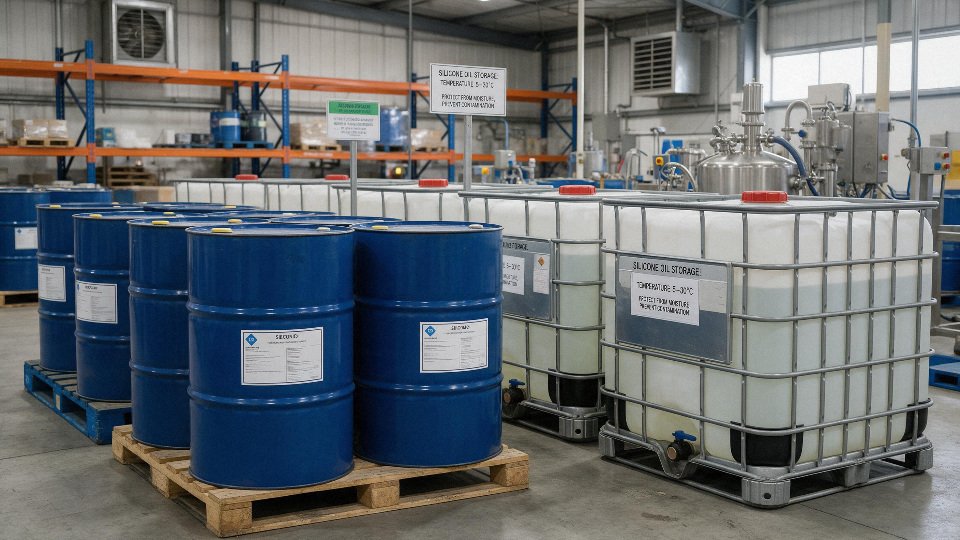
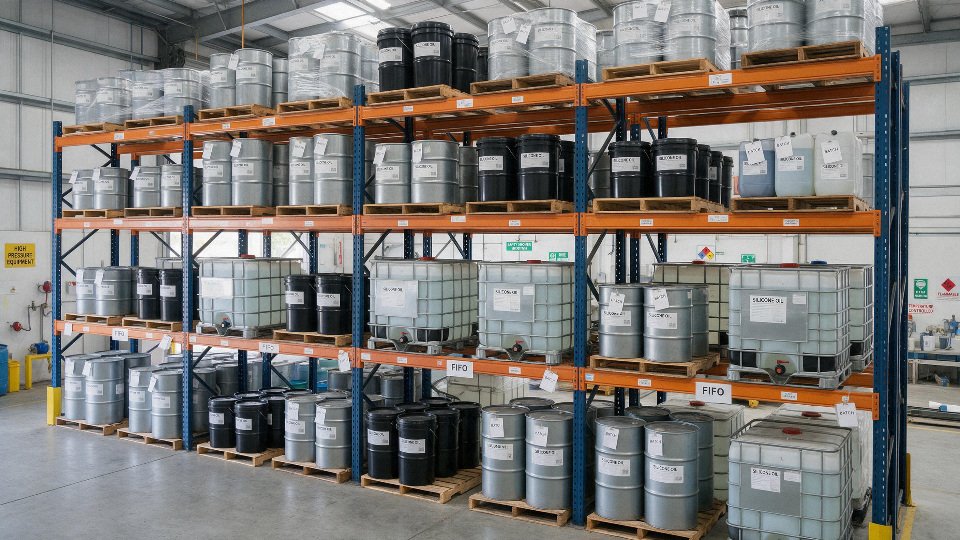
Store functional grades in nitrogen-blanketed containers, keep humidity below 50% RH, and implement strict FIFO rotation. Shelf life for amino and epoxy grades is typically 12–18 months from manufacture under correct conditions, versus 24+ months for PDMS. Batch test amine value or epoxy equivalent weight before use if stock is older than 12 months — viscosity alone won’t catch early degradation.
How close are smart and responsive silicone oils to replacing conventional hydraulic or damping fluids in mainstream industrial machinery?
Honestly, not very close for general-purpose hydraulics. Magnetorheological fluids based on silicone carriers are at roughly TRL 7–8 for automotive semi-active suspension and precision robotic joints — these are real commercial products already deployed in high-end vehicles and some surgical robotics platforms. The cost gap versus conventional damping fluid is still large (often 10–30× on a volume basis), and particle settling over long service intervals remains a genuine maintenance concern in non-agitated systems.
The most promising near-term entry points outside automotive are precision machine tool vibration isolation, where the performance premium justifies fluid cost, and prosthetics, where actuation force requirements are modest. For bulk industrial hydraulics — a 200-bar manufacturing press, say — MR and ER fluids are not credible replacements within the next decade given current particle loading limits and cost curves.
What testing standards should engineers specify when qualifying a new silicone oil for high-voltage electrical insulation duty?
Three tests cover the core requirements. IEC 60156 measures dielectric breakdown voltage — specify a minimum of 30–40 kV for transformer-grade applications, tested on fresh fluid and after accelerated aging. ASTM D924 (or IEC 60247) quantifies dissipation factor (tan δ); values above roughly 0.001 at 90°C suggest contamination or oxidation and should trigger rejection. Thermal endurance testing per IEC 61203 validates long-term stability under combined thermal and electrical stress — this is the test most often skipped under schedule pressure, and skipping it is how plants end up with premature insulation failures 3–5 years into service.
Request certificates showing all three from your supplier, not just dielectric breakdown alone. Some suppliers report only breakdown voltage because it’s the easiest number to present favorably.