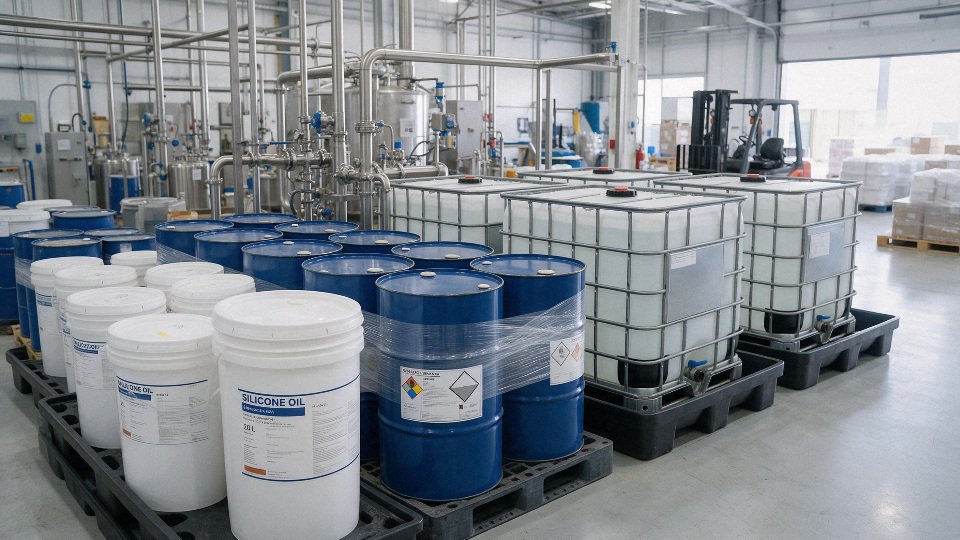
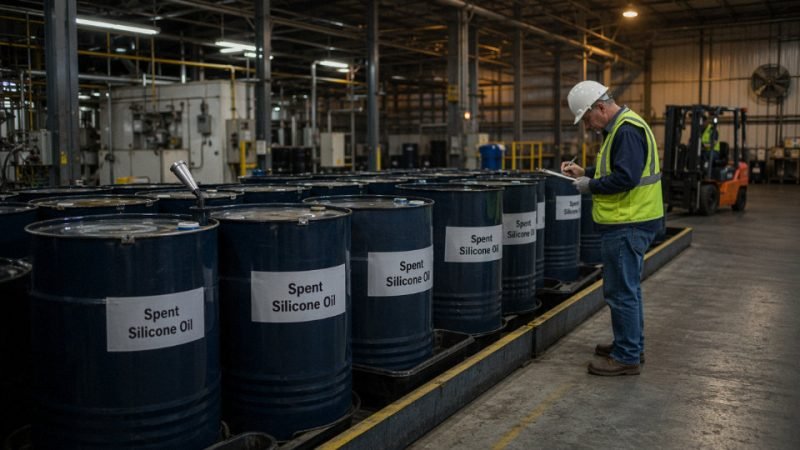
Spent silicone oil piles up fast in any plant running transformer cooling systems, release agent applications, or hydraulic dampers at scale — and most facilities just drum it and call a waste hauler. That habit costs more than it looks. Contaminated PDMS doesn’t degrade the way mineral oil does, so it sits in storage, tying up containers and compliance budget, while the procurement team keeps buying virgin fluid at full price. The global market turns over roughly 1.2 million metric tons of silicone oil annually, and a significant slice of that ends up as recoverable waste that gets incinerated or landfilled simply because the recovery options aren’t well understood on the plant floor.
Yes, silicone oil can be recycled through two practical routes: re-refining lightly contaminated fluid back to its original viscosity grade (typically within ±5% of virgin spec at 30–50% of replacement cost), or thermally cracking heavily degraded oil at 300–450°C under vacuum to recover 70–85% of usable cyclic siloxane fractions. Which route makes sense depends on contamination type, viscosity grade, and your available volume.
What makes this topic slippery — and worth reading past the obvious answer — is that silicone oil isn’t one thing. A 5 cSt release agent pulled off a molding line looks nothing chemically like a 500 cSt transformer fluid that’s been running hot for three years, and treating them the same way is exactly how recycling programs fail to close the loop.
Chemical Properties That Control Recyclability: What Engineers Must Understand First
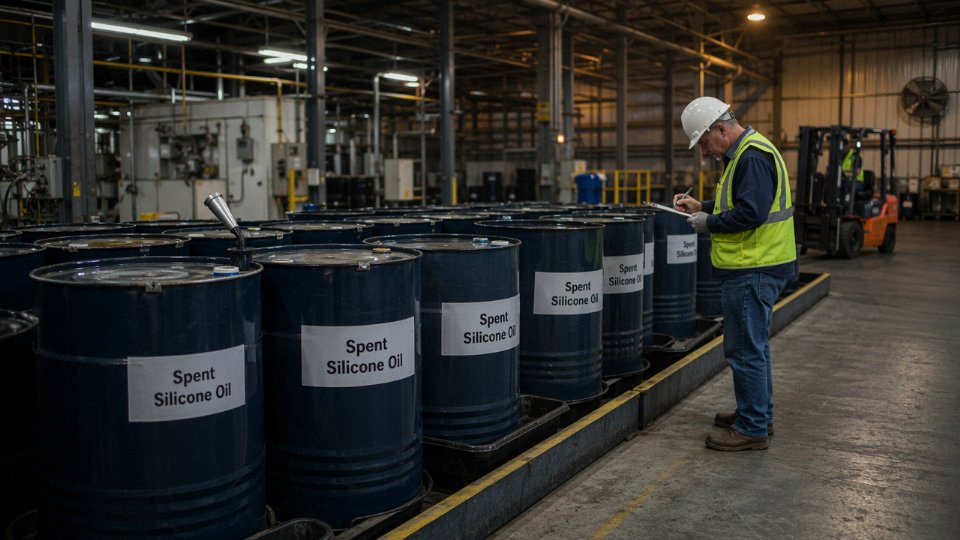
The recycling route you choose — or attempt — for spent silicone oil is almost entirely determined by the chemistry of the base fluid and what happened to it in service. Get this wrong and you’re sending re-refinable oil to a cracker, or worse, feeding crosslinked sludge into a filtration unit and wondering why throughput dropped to nothing by Tuesday morning.
Why Silicone Oil Resists Conventional Re-Refining
PDMS — polydimethylsiloxane — is built around a Si–O backbone with bond energies around 452 kJ/mol, meaningfully higher than the C–C bonds that form the structural spine of most mineral and synthetic organic oils. That backbone gives PDMS its famously low surface energy, wide thermal service range (roughly −60°C to 200°C for standard grades, higher for phenyl-modified variants), and near-indifference to oxidative attack under normal operating conditions. These are the properties that make silicone oils attractive for transformer insulation, release agent systems, damping fluids, and cosmetic manufacture.
They are also exactly what makes silicone oil annoying to recycle.
Organic lubricants — Group I mineral oils, PAOs, even most esters — degrade through chain-scission and oxidation pathways that respond well to hydrotreatment, clay adsorption, or vacuum distillation. Re-refining infrastructure worldwide is calibrated for those chemistries. Silicone oil doesn’t crack cleanly at mild temperatures, doesn’t respond to hydrotreating, and its degradation products aren’t the kind of polar compounds that activated clay easily adsorbs. You need different process chemistry, and most regional waste-oil recyclers simply don’t have it.
Phenyl-modified silicone oils (methylphenylpolysiloxane grades, used in high-temperature and radiation-resistant applications) add another complication: the phenyl groups increase viscosity and alter thermal cracking behavior, shifting the recoverable cyclic fraction distribution compared to straight PDMS. If you’re buying mixed drums from multiple plant sources, you may not know what you have until you run GC-MS.
How Silicone Oil Actually Fails in Service
Understanding degradation mode is not academic — it directly determines which recovery path is viable and which ones will waste your time and money.
Thermal oxidative crosslinking is the most common failure mode in heat-transfer and release-agent applications. Extended exposure above service limits causes Si–O backbone rearrangements and methyl group oxidation, gradually building molecular weight and viscosity. Mild crosslinking is still potentially recoverable. Heavy crosslinking produces a gel-like material with no practical re-refining path — at that stage you’re looking at energy recovery or silica precursor production, not fluid reclamation.
Particulate contamination — metal fines, carbon, mold-release residues — is probably the most recoverable contamination type. Filtration down to 1–3 µm, sometimes preceded by centrifugation, can restore a lightly fouled transformer-grade or hydraulic silicone oil to within usable viscosity tolerance. The key qualification is “lightly”: if the oil has also thermally degraded, particulate removal alone won’t restore the fluid.
Moisture ingress matters more than most plant engineers expect. Silicone oil is hydrophobic but not infinitely so, and in humid environments or systems with inadequate sealing, dissolved water promotes hydrolysis of the Si–O chain — especially in the presence of trace acids. Karl Fischer titration should be part of any incoming quality check on collected oil; water above roughly 200–500 ppm (the threshold depends on the intended reuse application) usually requires vacuum dehydration before any further processing.
Acid number rise (measured via ASTM D974) is a useful proxy for overall degradation severity. Fresh silicone transformer fluid typically sits below 0.01 mg KOH/g. Oil coming out of a failed or overloaded system can reach 0.1 mg KOH/g or higher, indicating hydrolysis byproducts and oxidized species that will interfere with re-refining yield.
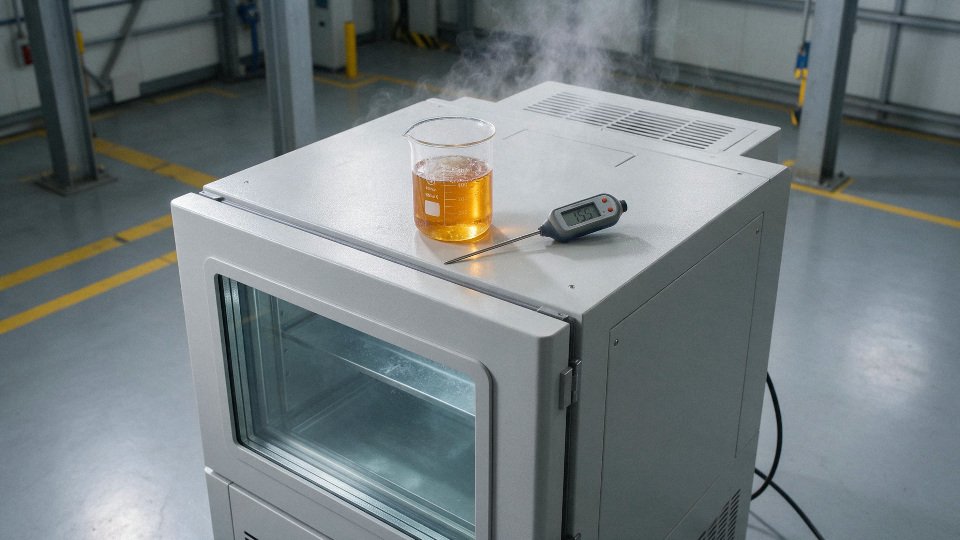
Kinematic viscosity measured per ASTM D445 can identify viscosity drift in spent silicone oil and help determine whether re-refining to original grade specifications is feasible.True
Viscosity is the primary functional specification for most silicone oil applications, and ASTM D445 is the standard capillary method used to measure kinematic viscosity across the relevant range (5 cSt to 1000 cSt). A drift beyond ±10–15% from nominal typically flags thermal degradation or crosslinking that may push oil into thermal cracking rather than re-refining territory.
The Mixed-Grade Problem at Collection
This is where most industrial recycling programs quietly fail. Plant sumps, waste-oil drums, and maintenance collection systems routinely accumulate silicone oils from different viscosity grades — 10 cSt damping fluid mixed with 350 cSt release-agent fluid, or a 5 cSt transformer oil contaminated with a few liters of 100 cSt hydraulic fluid from a nearby reservoir. Once blended, viscosity segregation is expensive. Fractional distillation under vacuum can partially separate cyclic siloxane fractions during thermal cracking, but re-refining a blended intermediate-viscosity fluid back to a specific grade specification becomes difficult or impossible without knowing the blend ratio.
The practical implication: label and segregate by viscosity grade at the point of collection, not at the recycling facility. A 50-gallon drum of clean, single-grade 100 cSt silicone oil is worth meaningfully more to a re-refiner than a 50-gallon drum of mixed-grade fluid at the same total volume — and the downstream yield difference usually more than offsets the handling cost of maintaining separate containers.
Analytical Gates Before Committing to a Process Route
A quick four-test screen should precede any recycling decision: kinematic viscosity (ASTM D445) to quantify drift from nominal grade; acid number (ASTM D974) to flag hydrolytic or oxidative degradation; Karl Fischer moisture to catch water contamination; and GC-MS to identify volatile siloxane content and distinguish PDMS from phenyl-modified or other specialty grades. None of these tests is expensive relative to the cost of running the wrong batch through the wrong process.
| Test | Standard | What it tells you | Decision trigger |
|---|---|---|---|
| Kinematic viscosity | ASTM D445 | Grade drift, crosslinking extent | >±15% → cracking route, not re-refining |
| Acid number | ASTM D974 | Hydrolysis / oxidation level | >0.05 mg KOH/g → deacidification step required |
| Karl Fischer moisture | ASTM E1064 | Water contamination | >300–500 ppm → vacuum dehydration first |
| GC-MS volatile siloxanes | — | Grade ID, D3–D6 fraction profile | Phenyl content → adjust cracking temperature profile |
Running oil blind into any recycling process is how you turn a recoverable asset into a disposal liability.
Re-Refining and Filtration: Recovering Lightly Degraded Silicone Oil to Near-Virgin Spec
For the majority of spent silicone oil coming off industrial equipment — transformer cooling systems, hydraulic actuators, heat transfer loops — outright disposal or thermal cracking is overkill. The oil isn’t chemically destroyed. It’s contaminated: water picked up during seasonal condensation cycles, fine metallic particulates from pump wear, oxidation byproducts that darken the fluid and nudge the acid number upward. A well-designed re-refining train handles all of that, and the economics are genuinely hard to ignore once you run the numbers against virgin replacement cost.
The Process Train, Step by Step
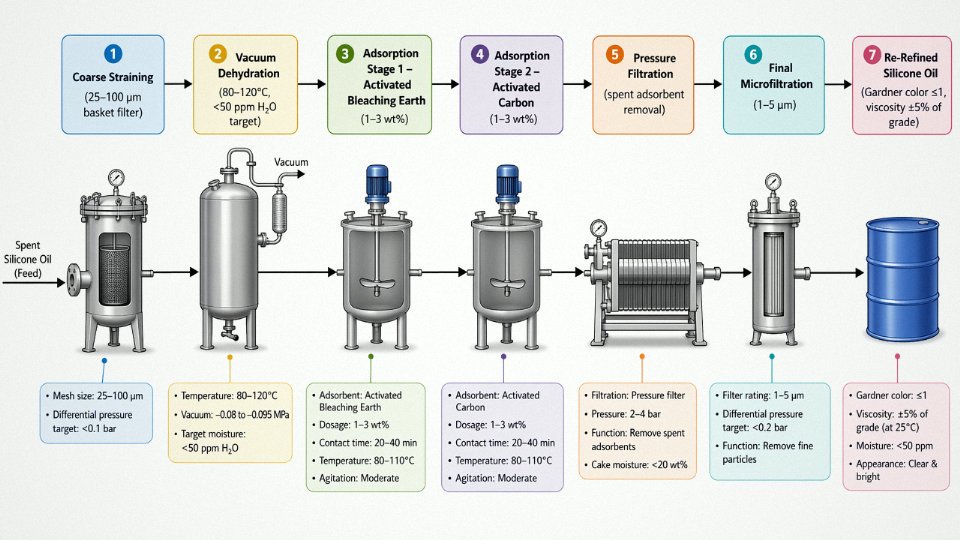
The sequence matters. Skipping steps or reordering them — running adsorption before dehydration, for instance — wastes adsorbent capacity and produces inconsistent results.
Start with coarse straining, typically 25–100 micron basket or bag filters, to pull out visible particulates: metallic fines, elastomer fragments, process debris. This step protects everything downstream. Then move to vacuum dehydration at 80–120°C; the temperature ceiling depends on the oil’s viscosity grade, since higher-viscosity PDMS (say, 500 cSt or above) needs more heat to achieve adequate vapor pressure differential. Targeting moisture below 50 ppm is realistic at this stage, and it’s worth measuring with Karl Fischer titration rather than relying on visual clarity — silicone oil can look perfectly clear at 200 ppm water.
Adsorption is where color and acid number get corrected. Activated bleaching earth works well for oxidation products and light colorants; activated carbon handles darker, more aromatic contamination. Dosage rates typically run 1–3% by weight of the oil charge, contact time 30–60 minutes with agitation, followed by pressure filtration to remove the spent adsorbent. In practice, some toll re-refiners use a two-stage combination — earth first, carbon second — to maximize color removal without excessive carbon loading.
Final microfiltration to 1–5 micron polishes the product and catches any adsorbent fines that bleed through. At this point, a properly processed batch should come back to Gardner color 1 or water-white, acid number at or below 0.1 mg KOH/g, and viscosity within ±5% of the original grade specification. That last point is significant: PDMS doesn’t depolymerize under normal service conditions, so viscosity loss in lightly contaminated oil is usually dilution or measurement error, not actual chain scission.
Where Re-Refined Oil Is Accepted — and Where It Isn’t
Transformer cooling and hydraulic actuator service are the low-friction applications. Plant engineers and equipment OEMs in these segments generally accept re-refined silicone oil provided the re-refiner supplies a certificate of analysis showing viscosity, acid number, moisture, and dielectric strength. Mold release blending is similarly tolerant. Nobody in those industries is running GPC on every drum.
Pharmaceutical and food-contact applications are a different story. If your plant runs silicone oil as a heat transfer fluid in a direct food-contact zone, or uses it in tablet press lubrication, expect to run a full batch retest — including extractables screening — before your QA group will sign off. Some simply won’t, regardless of analytical results, because the regulatory paper trail becomes complicated. That’s a practical reality, not a knock on the re-refining process itself.
The Economic Case and Supplier Programs
Re-refining cost at a toll processor typically runs $0.40–$0.80 per liter, depending on contamination level, lot size, and whether you’re paying for collection logistics. Compare that to virgin silicone oil at $3–$8 per liter — the range is wide because a 5 cSt fluid and a 1,000 cSt fluid are genuinely different products with different feedstock economics. For a plant consuming 2,000–5,000 liters per year, the annual saving is material enough that a small on-site dehydration and filtration skid (costing roughly $15,000–$40,000 installed, depending on throughput and automation level) can pay back within 12–24 months.
Re-refined silicone oil can be restored to within ±5% of virgin viscosity specifications through filtration and adsorption processesTrue
PDMS viscosity is determined by polymer chain length, which is not significantly altered by typical service conditions or re-refining steps; the process removes contaminants rather than modifying the base polymer, so viscosity recovery to near-original spec is technically sound for lightly degraded material
Major silicone oil producers run supplier take-back programs, though the minimum lot sizes — usually 200–1,000 liters in clean drums — screen out smaller operations. Independent toll re-refiners tend to be more flexible on lot size but vary considerably in process rigor, so ask for a process description and reference customers before shipping anything. Drummed spent oil that’s been stored more than 12 months or co-mingled with mineral oil is typically rejected or downgraded to fuel blending, so good housekeeping at the collection point saves real money downstream.
Thermal Cracking and Cyclic Siloxane Recovery: Closing the Loop to Chemical Feedstock
When re-refining isn’t viable — because the oil is too oxidized, too heavily blended, or simply too contaminated to clean economically — thermal cracking offers a fundamentally different exit: break the polymer back down to its building blocks and sell or reuse those monomers. It’s a higher-capital, higher-complexity route, but for large silicone producers or specialist recycling operations sitting on consistent feedstock volumes, the economics can close surprisingly well.
How Vacuum Pyrolysis Actually Works
The chemistry is straightforward, even if the engineering isn’t. Spent PDMS, when heated to roughly 300–450°C under vacuum (typically 1–10 mbar), undergoes random-scission depolymerization along the Si–O backbone. The chain breaks apart not into linear fragments but predominantly into cyclic siloxanes — D4 (octamethylcyclotetrasiloxane) and D5 (decamethylcyclopentasiloxane) dominate, with smaller amounts of D3 and D6 also distilling over depending on temperature profile and residence time. These cyclics are volatile enough at process temperature to vaporize continuously, get drawn overhead by the vacuum system, and condense in a series of fractional condensers into relatively pure product streams.
The vacuum is doing two things simultaneously: lowering the boiling point of the cyclics so they escape before they crack further, and protecting the product from oxidation. Run the process at atmosphere and you’ll get a mess of partially oxidized fragments. The equipment — a heated jacketed reactor, a vacuum train, condensers — isn’t exotic, but it has to be sealed well and the temperature uniformity matters more than people expect when first commissioning a unit.
Mass Balance: What You Actually Recover
From a reasonably clean feed — pure PDMS transformer oil, hydraulic oil, or diffusion pump fluid with minimal additives — expect 70–85% cyclics yield by mass. The remainder is a silica-rich solid residue that accumulates in the reactor, essentially inorganic ash that formed during whatever thermal or oxidative service the oil saw. That residue has limited value (some finds use as filler or goes to landfill), but it’s inert and manageable.
Feed quality degrades the numbers fast. Heavily oxidized PDMS, or blends that contain silicone-organic copolymers, release agents with fatty acid residues, or cosmetic-grade silicone waste carrying UV filters and emulsifiers, typically yield only 50–65% cyclics — and what comes over is contaminated enough that downstream customers in silicone polymerization may reject it outright without a secondary purification step. In practice, cosmetic and personal care silicone waste is almost always the wrong feedstock for a cracker targeting polymer-grade cyclics. The organic contamination doesn’t just lower yield; it fouls condensers and poisons catalysts downstream.
Thermal cracking of clean spent PDMS can recover 70–85% of usable cyclic siloxanes.True
Vacuum pyrolysis at 300–450°C under 1–10 mbar causes PDMS depolymerization to predominantly D4/D5 cyclics; the yield range reflects feed purity and process optimization, and is consistent with published silicone recycling process data.
The D4 Regulatory Complication
Here’s where European operators need to pause. D4 is classified as a substance of very high concern (SVHC) under REACH — persistent, bioaccumulative, toxic — which means any cracking operation producing or handling it at scale needs to be properly permitted and monitored. That doesn’t make the process illegal, but it does mean compliance costs are real: containment requirements, exposure monitoring, reporting obligations, and potential authorization requirements for certain uses. Operators outside Europe face fewer immediate hurdles, though regulatory attention to cyclic siloxanes is increasing in other jurisdictions.
The recovered D4 and D5, once purified, can be fed directly into ring-opening polymerization to manufacture fresh PDMS — effectively closing the loop entirely for a vertically integrated silicone producer. That’s the genuine circular economy case here, not just diverting waste to a lower-value application.
Who Should Consider Building or Using a Cracker
Small batch crackers handling 500–2,000 kg per day run roughly $150,000–$500,000 USD in capital cost, depending heavily on materials of construction (stainless versus carbon steel), automation level, and whether vacuum and condensation equipment is new or reconditioned. That range assumes a competent engineering contractor; a turnkey quoted from scratch by a major process engineering firm will often exceed it. Payback depends on local feedstock cost, cyclics offtake price, and utilization rate — a unit running at 60% capacity on inconsistent feedstock will rarely pencil out.
The streams best suited to a cracker: pure-PDMS transformer oils collected from electrical utilities, hydraulic and heat-transfer fluids from industrial users, and diffusion pump oils from semiconductor and vacuum equipment maintenance. Low additive content, known viscosity grades, and industrial collection infrastructure make these predictable feedstocks. The worst suited: mixed waste from silicone sealant production cleanup, cosmetic manufacturing residues, or anything blended with mineral oil during used oil collection — contamination in, contamination out.
For most individual plants, building a captive cracker isn’t justifiable. The realistic path is consolidating spent oil into a tolling arrangement with a specialist operator who can aggregate enough consistent volume to run the unit economically. That market is thin in most regions outside Germany, Japan, and parts of the US Southeast, which is itself an argument for the industry to invest more deliberately in collection infrastructure.
Silicone Oil in Waste Electrical Equipment: Transformer Oil Reclamation Standards and Practice
Transformer coolant is probably the single most traceable, highest-volume stream of spent silicone oil in industrial use — and unlike process bath oils or release agents, it arrives at end-of-life with a documented service history, known contamination profile, and a clear regulatory classification. That makes it one of the more manageable recycling cases, if you know which tests to run and which service vendors to trust.
Why Silicone Fluid Ends Up in High-Voltage Transformers
Utilities and industrial facilities running transformers in fire-sensitive locations — tunnels, high-rise buildings, underground substations, chemical plants — have been specifying silicone transformer fluid since at least the 1970s. Products like Dow Corning 561 and the Wacker Silicone Fluid AK series displaced PCB-based fluids and, in some applications, pushed mineral oil out on flammability grounds. The fluid’s fire point runs above 300°C, which matters enormously when a transformer fault inside a building becomes a containment problem rather than just an equipment loss.
Degradation in service is slow but real. The signatures that prompt removal are well defined: dielectric loss tangent (tan δ) climbing above roughly 0.001 at 90°C, breakdown voltage dropping below 30 kV under IEC 60156 test conditions (1 mm gap), moisture ingress above 30–50 ppm depending on voltage class, and particulate loading from electrical discharge or seal degradation. Oxidation products and trace metallic contamination from copper windings accumulate over years, not months. A fluid that tests clean at five years may be borderline at fifteen, especially in transformers running near rated load in humid climates — seasonal humidity effects on sealed-but-breathing transformer tanks are genuinely underappreciated in maintenance schedules.
Testing Standards That Determine the Reclamation Decision
IEC 60666 covers sampling and analysis of silicone insulating liquids in service; ASTM D4652 defines the baseline property requirements. Together they give you the acceptance criteria that separate three outcomes: return to service as-is, reclamation, or disposal. Breakdown voltage ≥30 kV (IEC 60156), tan δ ≤0.001 at 90°C, water content ≤30 ppm, and visual clarity are the headline pass/fail gates. If a fluid fails on moisture and particles but still has reasonable dielectric strength, on-site reclamation is usually viable. If tan δ has climbed significantly — say above 0.005 — you’re likely looking at oxidative degradation that simple drying and filtration won’t reverse, and the fluid needs either chemical re-refining or replacement.
In practice, a transformer service company will pull a 1-liter sample before recommending any action. Do not skip this step and assume age equals condition. Lightly loaded standby transformers sometimes show near-virgin fluid after twenty years.
On-Site Reclamation: Fuller’s Earth and Vacuum Drying
For fluids that fail mainly on moisture and particulates, reclamation without removing fluid from the transformer is practical and cost-effective. Mobile Fuller’s earth treatment units — essentially a packed adsorption column circulated through the live or de-energized transformer — can restore dielectric strength to ≥30 kV and moisture to ≤30 ppm in a single pass on many units. Treatment time depends on fluid volume and initial contamination; a 5,000-liter transformer might run 8–16 hours. The Fuller’s earth itself becomes a waste stream requiring proper disposal, which responsible vendors account for in their service pricing. This on-site route costs roughly 30–50% of a full fluid exchange, depending on fluid volume and mobilization charges — the mobilization component dominates on smaller transformers, which is why batching multiple units in a single site visit matters for procurement economics.
On-site Fuller's earth reclamation of silicone transformer fluid can restore dielectric strength to IEC 60156 acceptance criteria without draining the transformerTrue
Mobile reclamation units circulate fluid through adsorptive columns while connected to the transformer, removing moisture and particulates in-situ. This is standard practice among transformer service companies and is consistent with IEC 60666 guidance on in-service fluid treatment.
Regulatory Classification and What It Means Operationally
In North America, non-PCB silicone transformer fluids are not classified as hazardous waste under RCRA, provided they have not been contaminated with PCBs above 50 ppm — which is the threshold that triggers TSCA, not RCRA, regulation. This distinction matters to procurement teams because it affects disposal routing and vendor certification requirements. Always get a PCB screening result before specifying a disposal pathway; misclassification carries real liability.
The EU Waste Framework Directive places reclamation above disposal in the hierarchy, and in practice this means European utility procurement contracts increasingly require documented reclamation-first attempts before any fluid is sent to waste treatment. Germany and the Netherlands have the most developed silicone fluid reclamation infrastructure. Asian markets are less standardized — Japan has relatively rigorous testing requirements for electrical insulating fluids; China’s GB standards for transformer fluid maintenance are evolving but enforcement varies considerably by region and utility ownership structure.
Evaluating Transformer Service Vendors
The bundled service model — fluid sampling, reclamation, exchange, and certified disposal — is now standard among the larger transformer service companies. When evaluating vendors, ask for IEC 60666 sampling documentation, chain-of-custody records for removed fluid, and disposal certificates that specify the actual processing route (re-refining vs. incineration vs. landfill). A vendor who cannot produce a certified disposal manifest for the old fluid is a liability, not a service partner. References from utilities or industrial operators with similar transformer inventories are worth more than any ISO certification on a brochure.
Controlled Incineration and Energy Recovery: When Recycling Is Not Feasible
Not every batch of spent silicone oil is worth chasing through a re-refining column or a thermal cracker. That’s a fact some recycling advocates are slow to admit, but any engineer who’s stared at a drum of silicone emulsion contaminated with hydraulic fluid, heavy metals, and god-knows-what solvent residue knows the score. Sometimes incineration is the correct answer — not a failure mode, not a last resort you apologize for, but the right engineering decision given what’s actually in the waste stream.
What Burns, and What Stays Behind
PDMS combustion chemistry is genuinely cleaner than most industrial waste oils, and it’s worth understanding why. The carbon and hydrogen oxidize to CO₂ and H₂O just as you’d expect. The silicon backbone, though, converts to amorphous SiO₂ — fine silica ash, effectively the same stuff as fumed silica, and that’s where facilities get caught out. Unlike chlorinated waste oils, which generate HCl and potentially dioxins under imperfect combustion, silicone oil combustion doesn’t produce chlorinated or sulfurous acid gases. That’s a real advantage in permitting conversations.
The silica ash is the operational problem. Particle sizes are typically submicron to a few microns, and uncontrolled release clogs refractory, can damage downstream heat exchangers, and obviously fails particulate emission limits. Any facility co-processing silicone oil as supplemental fuel needs either a well-maintained baghouse or an electrostatic precipitator downstream. A fabric filter with a proper pulse-jet cleaning cycle is usually preferred in my experience — silica fines blind the bags more aggressively than coal ash, so cleaning frequency may need to increase by 20–40% over baseline intervals. Budget for that in the operational plan.
Calorific Value and Viable Combustion Venues
PDMS silicone oil carries roughly 25–30 MJ/kg — the upper end of that range applies to high-molecular-weight, relatively pure material; heavily emulsified waste with significant water content will land toward the lower end or below it. For context, low-grade thermal coal often runs 20–25 MJ/kg, so clean silicone oil waste is a credible supplemental fuel rather than a burner-fouling liability.
Cement kilns are the most industrially elegant destination. Kiln flame temperatures run 1,450–1,500°C, residence times are long, and critically, the silica ash doesn’t exit as a residual waste — it becomes incorporated into the clinker matrix. Silicon is a mineral component in Portland cement anyway. You’re converting a waste disposal problem into a minor raw material input. Hazardous waste incinerators permitted for alternative fuel co-processing and large industrial boilers with the right air pollution control train are also viable, though neither offers the same ash utilization benefit.
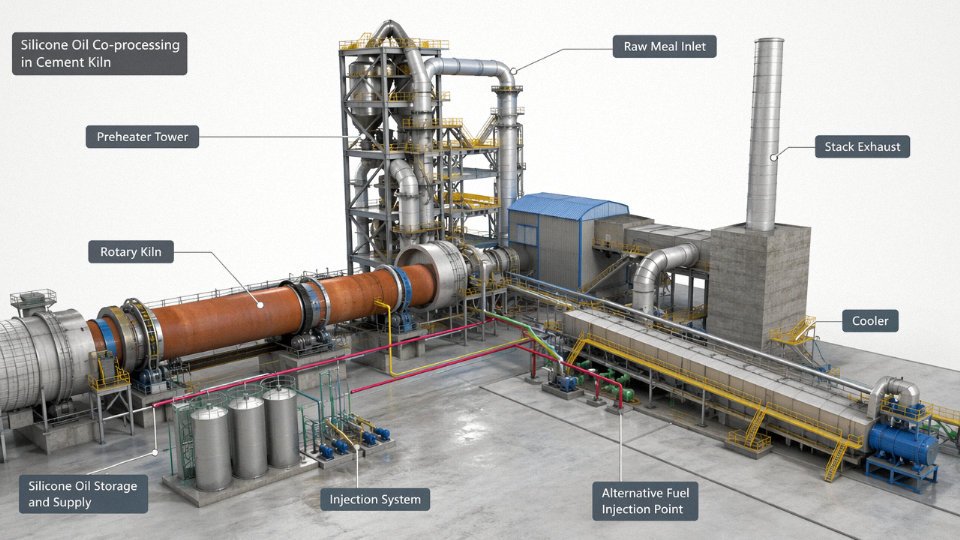
Regulatory Framework: What “Permitted” Actually Means
In the EU, co-processing of waste-derived fuels falls under the Industrial Emissions Directive (2010/75/EU), with specific emission limit values for particulate matter, CO, and NOₓ that the facility must demonstrate compliance with continuously. The silicone waste stream itself will likely be classified as hazardous waste in most member states, triggering the Waste Incineration requirements within the IED rather than the simpler combustion plant provisions.
In the US, spent silicone oils used as supplemental fuel are typically regulated under 40 CFR Part 279 (Standards for the Management of Used Oil) if they meet used-oil specifications, or if they’re off-spec, they fall under 40 CFR Part 63 NESHAP requirements for hazardous waste combustors. The distinction matters enormously for permitting burden and cost.
Southeast Asian regulatory frameworks vary considerably — Singapore’s National Environment Agency has relatively rigorous requirements, while permitting in some other markets relies more on facility-level environmental impact assessments. If you’re evaluating a vendor in the region, ask specifically for the waste incineration permit number and the most recent stack test results. A legitimate co-processor won’t hesitate.
Burning silicone oil in a cement kiln generates no solid residual waste stream from the silicon fraction.True
At cement kiln temperatures above 1450°C, the amorphous SiO₂ produced by PDMS combustion is chemically incorporated into the calcium silicate phases of Portland cement clinker, meaning the silica ash becomes part of the product rather than a separate waste requiring disposal.
When Incineration Is the Correct Call
The decision isn’t complicated once you lay out the actual contamination profile of the waste:
| Waste Condition | Recommended Route | Reason |
|---|---|---|
| Lightly contaminated, single viscosity grade | Re-refining / filtration | 30–50% cost vs. virgin replacement |
| Heavily emulsified, water content >15% | Incineration | Emulsion breaks recovery economics |
| Mixed with PCBs or heavy metals | Permitted hazardous waste incineration only | Co-processing facilities require specific permits for these co-contaminants |
| Pharmaceutical or semiconductor processing residues | Incineration with metallic contaminant analysis first | Trace organics and metals can disqualify kiln co-processing |
| Thermally cracked but D-fraction recovery uneconomical at volume | Incineration | Below roughly 500 kg/batch, cracking plant economics rarely close |
Pharmaceutical and semiconductor waste silicone oils deserve a specific note. They often carry trace organometallic catalysts, fluorinated compounds, or proprietary organic residues that a kiln operator needs disclosed upfront. Showing up at a cement kiln gate with undeclared fluorine contamination will end that relationship permanently and potentially trigger regulatory scrutiny you don’t want.
The bottom line is straightforward: incineration done in a properly permitted facility with adequate particulate control is not environmentally irresponsible. Sending heavily contaminated silicone waste to a re-refiner who can’t actually process it — which happens — is far worse for both the environment and your liability exposure.
Collection Logistics, Contamination Control, and Waste Stream Segregation at the Plant Level
The most common reason recyclable silicone oil ends up in a permitted incinerator has nothing to do with chemistry. It gets mixed with something else during collection. A technician drains a hydraulic reservoir into whatever drum is nearby, a maintenance contractor tops off the wrong container, or a single jerry can of mineral-based cutting fluid gets emptied into a 200-liter silicone waste drum. At that point, the batch is almost certainly disqualified from re-refining, and the economic damage is real: even 5% mineral oil contamination typically renders a batch incompatible with re-refining filtration trains because the hydrocarbon fraction interferes with the polarity-selective adsorbents used downstream.
Even 5% mineral oil contamination can disqualify a silicone oil batch from re-refining, destroying roughly $4–7 of recoverable value per liter depending on grade and regional solvent-recycling market rates.True
Re-refining processes for silicone oil rely on adsorption media and membrane stages tuned for PDMS chemistry; hydrocarbon contamination at this level disrupts selectivity, forces media replacement, and typically makes batch salvage uneconomical compared to incineration gate fees.
That loss compounds fast across a year of plant operations.
Building a Segregated Collection System
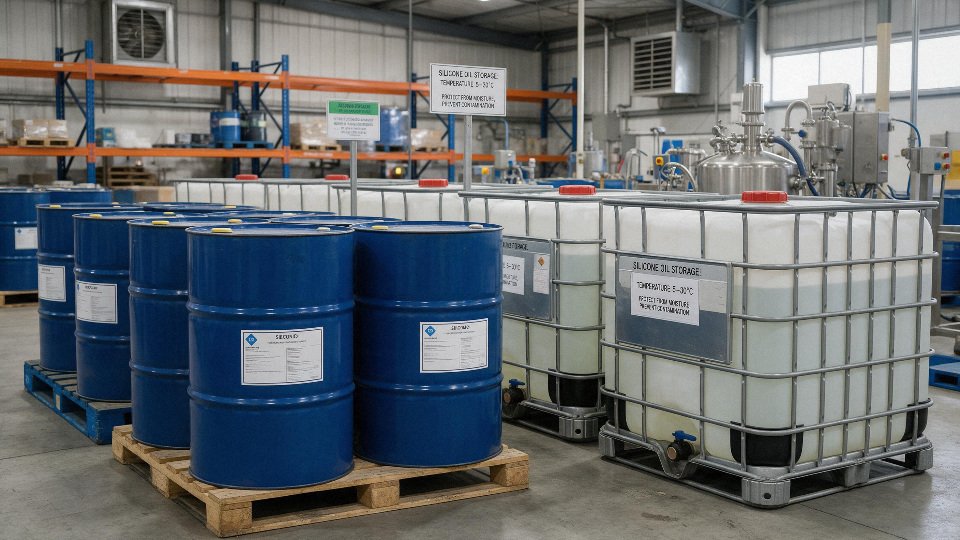
Start with dedicated containers for each silicone oil grade in use. HDPE drums work for most PDMS grades below 350 cSt; for higher-viscosity or high-temperature service oils, stainless steel IBCs are worth the capital because they tolerate wider temperature swings and clean more reliably between uses. Label every container with the product grade, viscosity, and a hard prohibition against mixing — not a polite suggestion, an actual lock-and-tag protocol in facilities where multiple fluid types are handled in the same bay.
Color-coded funnels are a low-cost, high-return investment. Pick a color — orange is common in European transformer maintenance operations — and make it silicone-only. Every drip tray under a silicone-oil-cooled machine should drain to a dedicated sump, not the shared floor drain. A quarantine zone for suspect batches, physically separated and marked, prevents an ambiguous drum from quietly contaminating a confirmed-clean accumulation while it waits for analysis.
Water contamination is underrated as a problem. Condensation in a partially empty drum over a humid summer — common in coastal plants or unheated warehouses — can raise moisture content enough to complicate re-refining and cause stratification in high-viscosity grades above roughly 500 cSt. Nitrogen blanket on storage drums for long-dwell batches is worth doing if the facility already has a nitrogen distribution system.
Storage Duration, Container Integrity, and Transport Manifests
PDMS itself is stable from −40°C to well above +200°C, but the container is the limiting factor. Standard UN-rated 1H2 HDPE drums rated for non-hazardous liquids are usually acceptable for silicone oil storage, but verify the container’s rated temperature ceiling — some cheaper HDPE drums soften above 60°C in direct summer sun, which matters for outdoor staging areas. Secondary containment at 110% of drum volume is standard practice and in most jurisdictions legally required even where silicone oil is classified non-hazardous at point of use.
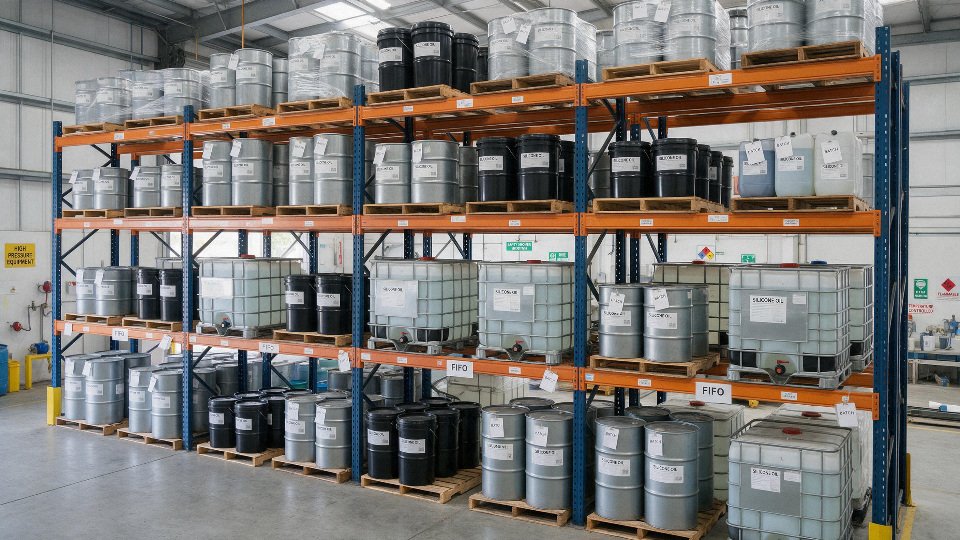
Storage duration before viscosity stratification becomes problematic depends on grade: lower-viscosity oils (5–50 cSt) are relatively stable for six to twelve months; heavier grades above 500 cSt can show detectable stratification within three to four months if temperature cycling is significant. Rotate older drums first and label fill dates.
Transport manifests deserve attention even where silicone oil is not formally regulated as hazardous waste. Many recycling processors require chain-of-custody documentation as a condition of accepting material — they need to demonstrate to their own regulators that incoming feedstock is traceable. A simple batch log recording origin machine, drain date, volume, visual check result, and container ID protects you in an audit and protects your recycler downstream.
On-Site Triage: A Working Decision Tree
Before any drum leaves the facility, a basic two-test screen takes under an hour with bench equipment most quality labs already have.
| Test Result | Interpretation | Routing Decision |
|---|---|---|
| Acid number ≤ 0.1 mg KOH/g, moisture ≤ 200 ppm, no visible hydrocarbon sheen | Lightly degraded, uncontaminated | Quarantine for re-refining |
| Acid number 0.1–0.5 mg KOH/g, pure silicone, oxidized but no foreign fluid | Thermally stressed, chemically intact | Route to thermal cracking feedstock |
| Any mineral oil, solvent, or cutting fluid contamination detected | Mixed waste, re-refining not viable | Route to permitted incineration |
| Unknown provenance, no documentation | Treat as contaminated | Incineration until proven otherwise |
The acid number threshold and moisture limit shift depending on which re-refiner you’re working with — get their acceptance specification in writing before you build your internal protocol around a number they haven’t confirmed. In practice, the “unknown provenance” category is where most plant-level silicone oil value gets destroyed, which is an argument for starting the documentation habit before the drums accumulate rather than trying to reconstruct history afterward.
Regulatory Landscape and Environmental Compliance Across Major Markets
Compliance with silicone oil waste regulations is not uniform globally, and assuming your domestic framework applies to overseas operations — or vice versa — is a common and expensive mistake. Here is how the major jurisdictions actually treat this material.
United States
Under RCRA, silicone oil is generally classified as a non-hazardous solid waste, which sounds like good news until you account for what it was used with. If spent silicone oil has been mixed with a listed hazardous waste — chlorinated solvents, PCB-containing equipment fluids, or certain metal-working lubricants — the mixture rule pulls the entire batch into hazardous waste management. That changes storage, transport, and disposal costs dramatically.
State-level variance is real and matters. California’s DTSC applies the hazardous waste criteria more aggressively than federal minimums, and a silicone transformer fluid that tests clean under EPA methods may still require a Hazardous Waste Manifest in California depending on metal content or flash point thresholds. Texas TCEQ guidance is somewhat more permissive for industrial lubricating oils but still requires generator status determinations when viscosity-grade silicone oils are co-mingled with petroleum-based waste streams. Always do a site-specific review before assuming non-hazardous status.
The EPA Safer Choice program is worth tracking for procurement teams reformulating toward silicone-based release agents or process fluids. Products carrying that designation have pre-screened for aquatic toxicity, which has downstream implications for how washdown water from equipment cleaning is handled — increasingly relevant as facilities using silicone mold release agents face scrutiny over surface water discharge.
European Union
The Waste Framework Directive hierarchy — prevention, reuse, recycling, recovery, disposal — functions as a legal priority order, not just a guidance document. Facilities that can demonstrate reuse or re-refining are in a stronger position during permit renewals and environmental audits than those defaulting to incineration without documenting why alternatives were evaluated.
Spent silicone oil typically gets assigned EWC code 13 02 08 (other engine, gear, and lubricating oils) as a default, though some member state implementations deviate depending on application. The REACH restriction on D4 and D5 cyclic siloxanes is the bigger operational pressure point right now. If your re-refining or thermal cracking process produces recovered fractions containing D4 or D5 above the 0.1% w/w threshold, those fractions face restriction in rinse-off consumer products — and regulators are watching whether similar restrictions extend to industrial processing aids.
Extended Producer Responsibility schemes in France (under the REP framework) and Germany (expanding interpretation of the Kreislaufwirtschaftsgesetz) are beginning to capture specialty chemicals, including silicone formulations. This is still evolving, but compliance officers at major silicone users should monitor it now rather than reactively.
China
China’s classification is the one that most surprises multinational operators. Contaminated silicone oil waste falls under HW08 (waste mineral oils) in the National Hazardous Waste List, which triggers a significantly more burdensome licensing and transport regime than most Western frameworks impose on equivalent materials. This matters enormously given China’s scale — the country hosts the largest concentration of silicone production and consumption globally, meaning the volume of waste subject to HW08 controls is substantial. Unlicensed disposal is a genuine enforcement risk, not just a theoretical one, particularly in coastal provinces where environmental inspections have intensified since 2017.
Southeast Asia, India, and the IFC Baseline
Regulatory frameworks across Southeast Asia and India are evolving faster than most compliance manuals reflect. Transformer oil reclamation in these markets has historically been driven by cost savings rather than regulatory pressure, but that is shifting as India’s Hazardous and Other Wastes Management Rules (2016, amended 2019) tighten and ASEAN nations align with Basel Convention obligations. For multinational operators without a single clear local standard to follow, IFC Performance Standard 3 on resource efficiency and pollution prevention functions as a defensible operational baseline — particularly for project financing purposes.
Voluntary Frameworks and Scope 3 Accounting
ISO 14001 integration is the floor, not the ceiling. Facilities running a certified EMS have the documentation infrastructure to track silicone oil waste streams systematically, which is increasingly what corporate sustainability teams need to feed Scope 3 emissions reporting. Silicone oil incineration carries a CO₂-equivalent burden that shows up in Category 5 (waste generated in operations) under the GHG Protocol — roughly 1.5–2.5 kg CO₂e per kg of PDMS incinerated, depending on combustion efficiency and whether SiO₂ ash displacement credit is claimed. The Ellen MacArthur Foundation CE100 metrics for circular economy performance now have enough industry adoption that large silicone consumers face informal pressure from customers and investors to report material recovery rates. That pressure will not stay informal for long.
Silicone oil waste is automatically classified as non-hazardous in all US states under federal RCRA rulesFalse
Federal RCRA classification is non-hazardous by default only if the oil is uncontaminated and not mixed with listed hazardous wastes. State programs, particularly California DTSC, can impose stricter classifications based on constituent testing, flash point, or co-mingling history. Generator status determinations must be made at the facility level.
Economic Case and Carbon Footprint Comparison: Recycling vs. Virgin Production vs. Incineration
The numbers here are stark enough that they tend to shift internal debates fairly quickly — once someone actually puts them on a spreadsheet.
Life Cycle Carbon: Where the Gap Is Enormous
Producing 1 kg of virgin PDMS silicone oil carries an embodied carbon burden of roughly 8–12 kg CO₂ equivalent, cradle to gate. The wide range reflects real variables: whether the chlorosilane synthesis uses grid electricity or captive gas-fired power, the methyl chloride source, and regional grid intensity at the siloxane polymerization facility. Plants in regions with coal-heavy grids sit at the top of that range. That figure is not controversial — it follows directly from the energy demands of the Rochow process and the chlorine chemistry upstream of it.
Re-refining spent silicone oil — filtration, vacuum dehydration, mild thermal treatment for lightly degraded transformer or hydraulic grades — comes in at approximately 0.5–1.2 kg CO₂ equivalent per kg of recovered product. That is an 85–94% carbon reduction per kilogram of usable oil delivered back to service. The lower end applies to simple filter-and-dehydrate operations on clean transformer oil; the higher end reflects more intensive re-refining involving adsorbent clay treatment and multi-stage distillation on more contaminated hydraulic fluid.
Incineration sits at roughly 1.7 kg CO₂ equivalent per kg of PDMS combusted, once you account for the SiO₂ ash handling and auxiliary fuel requirements to sustain combustion temperature. Lower than burning diesel, yes — but you get zero material back, and you still have to buy virgin oil to replace what you incinerated. On a total carbon accounting basis, incineration followed by virgin repurchase looks like this: 1.7 kg (combustion) + 8–12 kg (virgin replacement) = roughly 10–14 kg CO₂ equivalent per kg of working fluid maintained. Re-refining delivers that same kilogram of working fluid at under 1.2 kg CO₂ equivalent. There is no scenario where incineration wins on carbon when re-refining is technically available.
Re-refining spent silicone oil generates approximately 85–94% less CO₂ equivalent per kilogram than producing virgin PDMS from the Rochow process.True
Virgin PDMS production requires energy-intensive chlorosilane synthesis (Rochow process) plus polymerization, totaling roughly 8–12 kg CO₂e/kg. Re-refining via filtration and mild thermal treatment requires approximately 0.5–1.2 kg CO₂e/kg, yielding a reduction of 85–94% depending on process intensity and regional grid carbon intensity.
The Total Cost of Ownership Case
Take a mid-size manufacturer running 5,000 liters per year of silicone hydraulic fluid — not unusual for a press shop or a food-processing line with multiple silicone-lubricated systems. Under a baseline program of buying virgin oil and routing waste to a licensed incinerator, annual costs typically land around $22,000, give or take depending on regional disposal fees and current silicone oil spot pricing. That figure includes purchase price, drumming, transport, and incineration gate fees.
A structured re-refining program — contract collection, off-site re-refining, and return of product meeting viscosity spec within ±5% — runs closer to $9,000 per year for that same volume. That is roughly $13,000 in annual savings before any carbon value is credited.
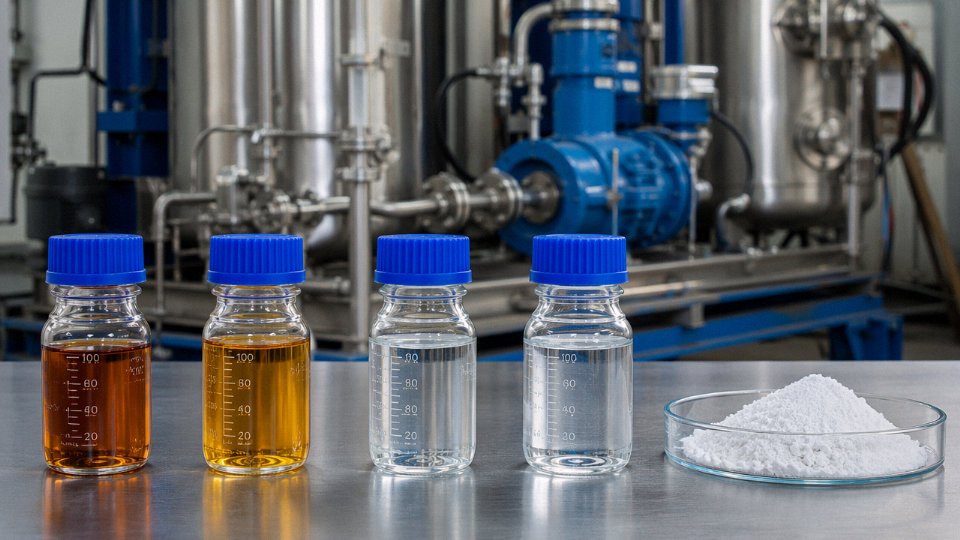
At EU ETS carbon prices of €60–€90 per tonne CO₂, the carbon saving from re-refining that 5,000-liter annual stream adds €250–€400 in avoided Scope 3 emissions cost. Modest as a standalone number, but sustainability directors will recognize that Scope 3 audits are increasingly scrutinized by customers and investors, and every documented abatement action carries reporting weight that scales across a product portfolio.
Why the Economics Keep Improving
Virgin silicone oil pricing is not stable. Polysilicon supply chain dynamics — the same upstream pressures that affect photovoltaic manufacturing — directly influence metallurgical silicon availability, which feeds into chlorosilane production costs. When polysilicon demand spikes, as it does during aggressive solar panel manufacturing cycles, silicone intermediate costs follow. Energy-intensive Rochow synthesis also means that European and North American virgin PDMS prices respond sharply to natural gas and electricity price volatility, as seen clearly in 2021–2022.
Re-refining costs, by contrast, are largely labor, transport, and modest processing energy. They do not track polysilicon markets. That structural decoupling means the cost differential between virgin and re-refined silicone oil tends to widen in exactly the market conditions — energy shocks, supply chain tightness — when procurement managers are already under pressure. Building a re-refining supply chain now, before the next price spike, is the kind of procurement decision that pays dividends in optionality alone.
In practice, the CFO argument is simple: lower spend, lower carbon liability, less exposure to upstream commodity volatility. The sustainability argument is the same numbers, labeled differently.
Emerging Technologies and Future Directions in Silicone Oil Circularity
The recycling routes covered in earlier sections — re-refining, thermal cracking, transformer oil reclamation — represent mature or at least established practice. What’s coming over the next five to ten years is meaningfully different: lower energy thresholds, biological pathways that were science fiction a decade ago, and digital infrastructure that finally makes waste-stream quality legible in real time. None of this is commercially deployed at scale yet, but engineers specifying new plants or updating waste management contracts now should be watching these developments closely.
Catalytic Depolymerization: Better Selectivity at Lower Temperatures
Thermal cracking at 300–450°C gets the job done, but the energy cost is substantial and the product distribution across cyclic siloxane fractions (D3 through D6) is relatively broad. Base-catalyzed depolymerization using KOH or CsOH — and to a lesser extent Lewis acid systems — operates in the 200–280°C range and produces a much tighter D4/D5 product mix. In practice, the energy reduction versus conventional pyrolysis runs roughly 30–40%, though the actual figure depends heavily on feed contamination level and reactor residence time. Higher cyclic purity matters commercially: D4 and D5 are the preferred feedstocks for silicone polymer re-synthesis, so a cleaner crackate commands better pricing from silicone resin manufacturers.
The catch is catalyst management. KOH is cheap but aggressive; it attacks stainless steel at elevated temperatures and creates a separation headache downstream. CsOH gives better selectivity but costs more per kilogram of catalyst. Lewis acid systems (certain aluminum and titanium complexes) are still mostly lab-scale. Expect the first semi-commercial catalytic depolymerization units to run on base catalysis with lined reactors, probably co-located with existing silicone resin plants that already handle cyclic siloxane inventories.
Supercritical CO₂ Extraction
This is a genuinely elegant approach for lightly degraded transformer and hydraulic silicone oils where the bulk PDMS fraction is still serviceable but high-molecular-weight crosslinked species are dragging down dielectric or viscosity performance. Supercritical CO₂ at roughly 31–74°C and 74–300 bar acts as a selective solvent, pulling out the crosslinked gels and oxidized oligomers while leaving the linear PDMS largely intact — no thermal input that could further degrade the oil.
The economics don’t yet favor standalone scCO₂ units for silicone oil alone. The technology makes more sense as a shared asset in a facility that already uses supercritical extraction for other applications (decaffeination, pharmaceutical extraction). A contract processing arrangement is more realistic for most industrial waste generators in the near term.
Biological Degradation: Distant but Real
No one is bioremediating silicone oil at industrial scale today. That said, peer-reviewed work on Rhodotorula mucilaginosa and certain Bacillus strains has documented limited oxidative activity on PDMS side chains under specific conditions — basically nicking methyl groups off the silicon backbone. The kinetics are slow and the organisms need carefully controlled pH and nutrient environments to show any meaningful activity. The practical relevance right now is narrow: dilute silicone wastewater streams from emulsion processing or cosmetics manufacturing, where concentrations are low enough that biological activity could complement conventional treatment rather than replace it.
Biological treatment can currently replace thermal or chemical recycling for bulk spent silicone oilFalse
No commercial biological process exists for concentrated PDMS waste streams. Microbial silicone degradation research is real but limited to dilute aqueous streams and early-stage laboratory conditions as of current published literature.
Digital Waste Tracking and AI-Assisted Routing
One of the most persistent problems in silicone oil recycling is contamination by the time the drum reaches a processor. A single drum of chlorinated solvent mixed into a silicone oil collection doesn’t just ruin that drum — it can contaminate a whole tote batch and force incineration of material that was otherwise re-refineable. IoT-enabled drum sensors now exist that can report viscosity, water content, and basic conductivity continuously through a drum’s lifecycle. Paired with a simple routing algorithm, this data can flag suspect drums before they reach the consolidation point. The hardware cost per drum is still relatively high, roughly $80–200 depending on sensor suite, which makes it hard to justify for low-value waste streams but defensible for transformer oil or high-purity PDMS grades where virgin replacement costs hundreds of dollars per liter.
Design for Recyclability in Silicone Formulation
This one is slower-moving but potentially the highest-leverage trend. Branched or vinyl-functional silicone oils are harder to depolymerize cleanly; the crosslinks and pendant vinyl groups produce mixed crackate that is harder to sell back into polymer production. Several formulators are quietly evaluating whether linear PDMS can replace functional silicone oils in applications — certain release agents, some textile finishes, lower-spec damping fluids — where the functional groups were adding performance margin rather than necessity. Industry consortia in Europe and Japan are working on recyclability labeling analogous to plastic resin identification codes, which would at minimum make waste stream segregation more reliable. Whether this gains traction depends on whether downstream recyclers offer enough of a price differential to motivate formulators to change their recipes. In my experience, that price signal has to be consistent over at least two or three purchasing cycles before a formulator will commit to a reformulation project.
Frequently Asked Questions About Silicone Oil Recycling
Can silicone oil be mixed with mineral oil for disposal?
No — and this is one of the more costly mistakes made at the plant level. Even small silicone oil contamination (as low as a few hundred ppm) will disqualify a mineral oil batch from standard lubricant re-refining, because silicone compounds foul the clay treatment and hydrotreating catalysts used in those processes. The silicone oil side is equally damaged: once it picks up hydrocarbon contamination, it typically fails the purity thresholds required for thermal cracking feedstock recovery and re-refining alike. Both streams end up routed to incineration — at higher disposal cost than if they’d been kept separate from the start. Strict drum labeling, dedicated collection points, and a no-exceptions segregation rule at the draining or oil-change step are the only reliable controls. In practice, the mixing usually happens during a rushed maintenance shift or when a technician grabs the nearest empty container. Prevent it procedurally, not after the fact.
Is silicone oil biodegradable, and does that affect disposal choices?
PDMS does break down in the environment, but slowly — hydrolysis and photocatalytic pathways in soil and surface water convert it to silicic acid and CO₂ over timescales ranging from a few years to several decades depending on soil moisture, UV exposure, and particle size. That is not biodegradation in any meaningful regulatory sense. Bulk silicone oil cannot be landfilled and treated as inert, because concentrated PDMS in a landfill cell resists the slow degradation pathways and can migrate. Regulatory disposal requirements in the EU, US, and most of East Asia apply regardless. The slow environmental breakdown rate is also why spill containment matters: a silicone oil spill on soil does not simply disappear within a season the way some people assume.
PDMS silicone oil degrades completely and safely in soil within a few months, making landfill disposal acceptable for small quantities.False
PDMS degrades via hydrolysis and photocatalysis over years to decades, not months. Regulatory disposal requirements apply to bulk quantities in all major industrial jurisdictions, and landfill is not generally accepted as a compliant disposal route.
How can I tell if my spent silicone oil is worth re-refining or should go straight to incineration?
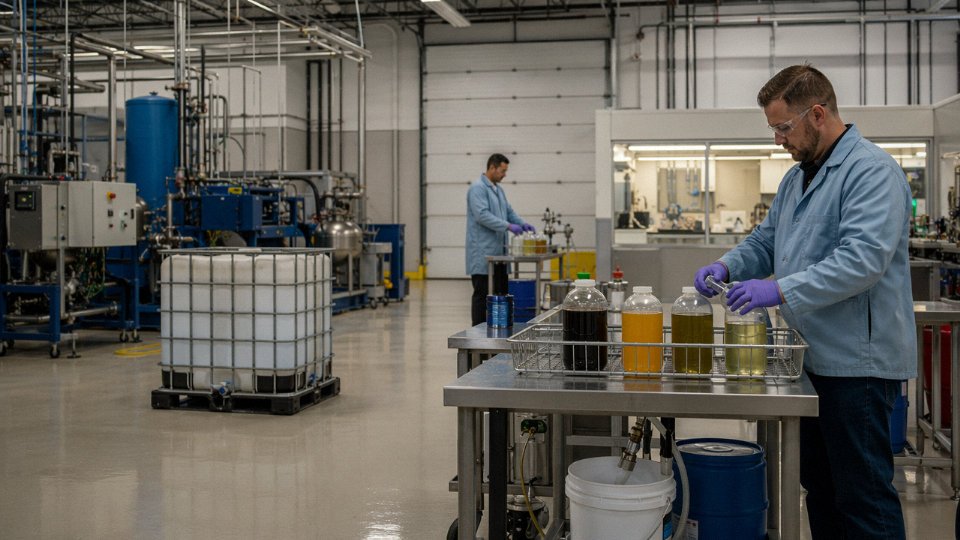
Three quick tests answer most of that question. Acid number should come in at or below roughly 0.3 mg KOH/g for re-refining to be practical; higher values indicate thermal oxidation that re-refining cannot fully reverse. Karl Fischer moisture should be under about 200 ppm — wetter oil needs drying pre-treatment that eats into cost savings. Visual clarity matters too: a cloudy or particulate-laden sample signals contamination worth investigating before committing to a re-refining contract. If organic contamination is suspected (process contact with solvents, cutting fluids, or reactive chemicals), a GC-MS volatile screen typically runs $50–$150 per sample through an industrial analytical lab and takes a day or two. That small spend can save a rejected batch and a wasted re-refining run.
Are there any silicone oil grades that cannot be recycled?
Several. Heavily filled silicone fluids that contain fumed or precipitated silica thickeners are the main offenders — separating the filler cleanly enough for re-refining is generally uneconomical. Silicone greases compounded with PTFE or metal soap thickeners carry the same problem. Silicone emulsions with high residual water content are difficult to dewater cost-effectively at small batch volumes. These materials are best routed to energy recovery via controlled incineration. In practice, if the original product was labeled a “compound,” “grease,” or “emulsion” rather than a straight fluid, assume it needs closer evaluation before assuming re-refining is viable.
What certifications should I look for in a silicone oil recycling vendor?
At minimum: ISO 9001 for quality management, ISO 14001 for environmental management, and the relevant national waste carrier and treatment facility licenses for your jurisdiction — in the EU that means appropriate permits under the Waste Framework Directive; in the US, applicable EPA and state-level hazardous waste handler registrations. For transformer fluid reclamation specifically, ask for documented IEC 60422 compliance — that standard covers maintenance and supervision of insulating mineral and silicone oil in service, and a competent reclaimer should be able to demonstrate conformance with its testing protocols. References from comparable industrial customers are worth more than certificates alone.
Does recycled silicone oil perform the same as virgin?
For most industrial applications, yes — when re-refined to specification on viscosity (typically verifiable to within ±5% of the target grade), acid number, dielectric strength, and color, the functional performance is equivalent to virgin material. The caveat is at the regulated ends of the application spectrum. Pharmaceutical-grade silicone fluids used as antifoams or as components in drug manufacturing equipment, and food-contact applications governed by FDA 21 CFR or equivalent EU food-contact regulations, may require batch-level certification that most re-refiners are not set up to provide. Some regulatory guidance in those sectors simply restricts use to virgin material. Know your end application before assuming recycled is a drop-in substitute.
What is the shelf life of collected spent silicone oil awaiting recycling?
Lightly contaminated PDMS fluid stored in sealed, clean, dry containers at ambient temperature is quite stable — 12 to 24 months without meaningful further degradation is a reasonable working figure, though actual stability depends on the degree of original contamination and whether the fluid has already undergone significant oxidative or thermal stress in service. The main storage risk is moisture ingress: a loosely sealed drum sitting outside through seasonal temperature swings will pump humid air in and out with each thermal cycle, raising Karl Fischer moisture values to the point where the batch may require pre-drying before re-refining. Use sealed containers, keep them under cover, and label with collection date. Simple habits, but the ones that get skipped.