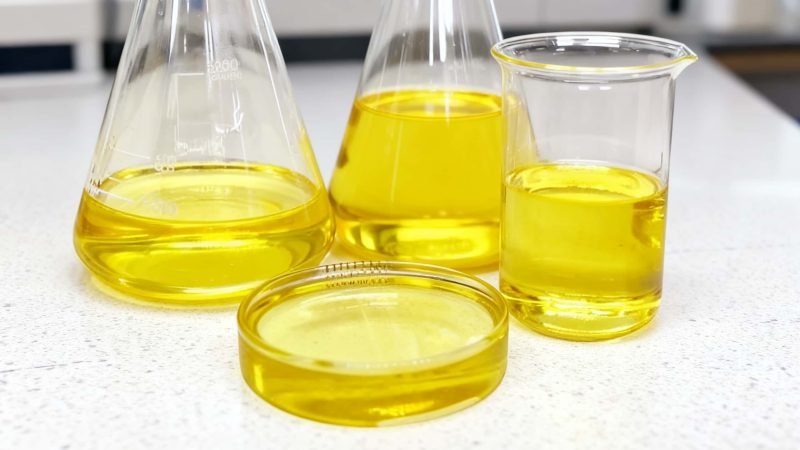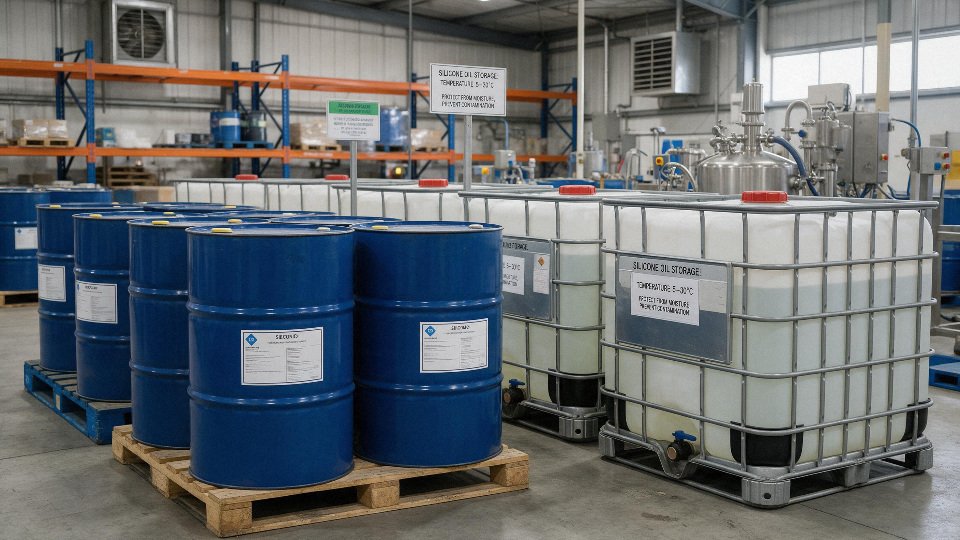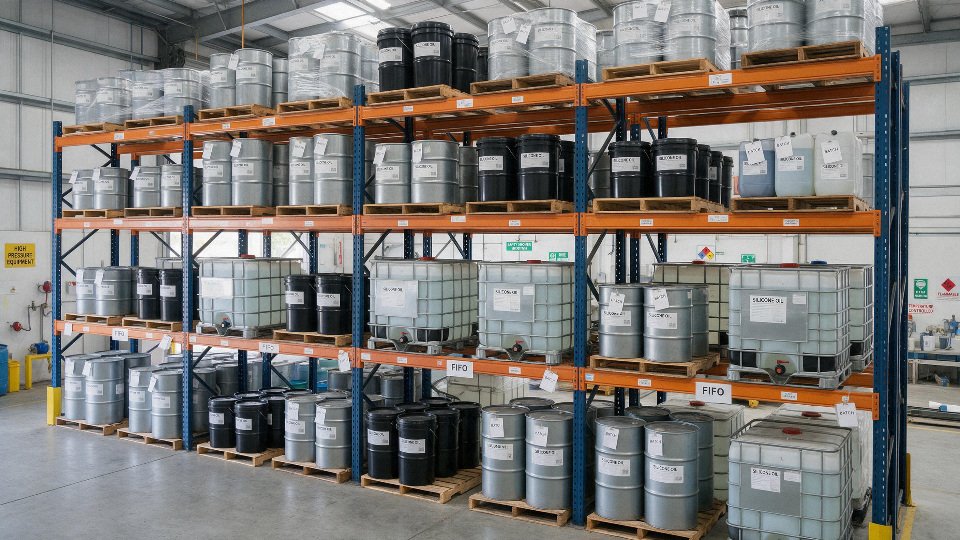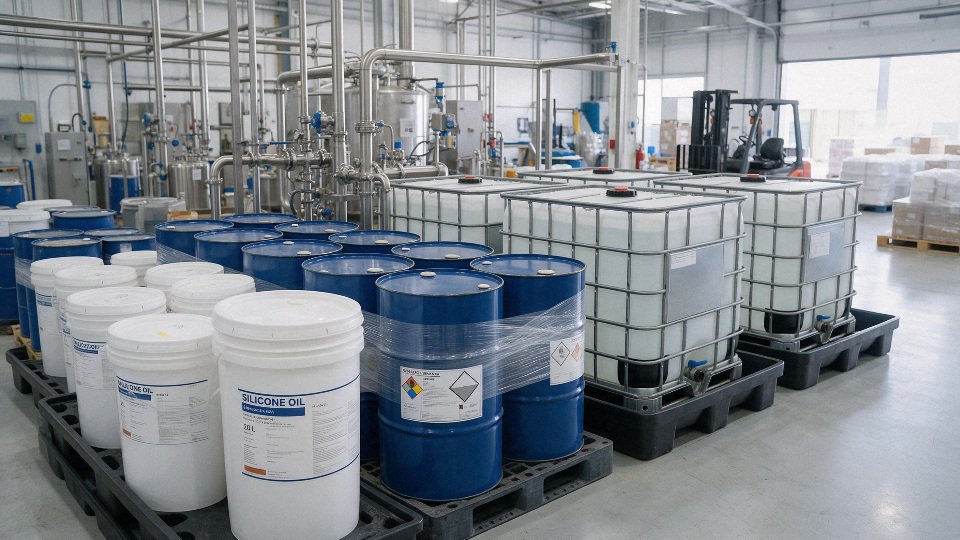
Silicone oil gets specified into processes because it’s thermally stable, chemically inert, and doesn’t react with most substrates — all genuinely useful properties. The problem shows up later, usually during a regulatory audit or when a wastewater discharge report flags an unusual compound accumulating in sediment downstream of the facility. At that point, procurement and engineering teams often discover they’ve been treating PDMS the same way they’d treat a quickly-biodegrading mineral oil, which it emphatically is not. The operational consequence is real: facilities face compliance risk, potential permit suspension, and the cost of retrofitting containment or switching to a more regulatorily defensible fluid — none of which is cheap mid-production.
Silicone oil (polydimethylsiloxane, PDMS) degrades extremely slowly in the environment, with soil half-lives estimated anywhere from 50 to over 200 years depending on temperature, moisture, and microbial community. Acute aquatic toxicity is low — LC50 values in fish typically exceed 1,000 mg/L under OECD test protocols — but sediment accumulation is a documented and growing concern, particularly near high-volume industrial and personal care discharge points. With global silicone fluid production above 500,000 metric tonnes per year, the cumulative environmental loading is not trivial.
What makes silicone oil genuinely tricky from an environmental standpoint isn’t a single catastrophic failure mode — it’s the slow, quiet accumulation that doesn’t trigger an alarm until it’s already a problem. The acute toxicity numbers look reassuring on a safety data sheet, and they’re not wrong exactly, but they tell only part of the story. Understanding where the real risks sit, and where they’ve been overstated, requires looking at the full lifecycle of the fluid from production through disposal.
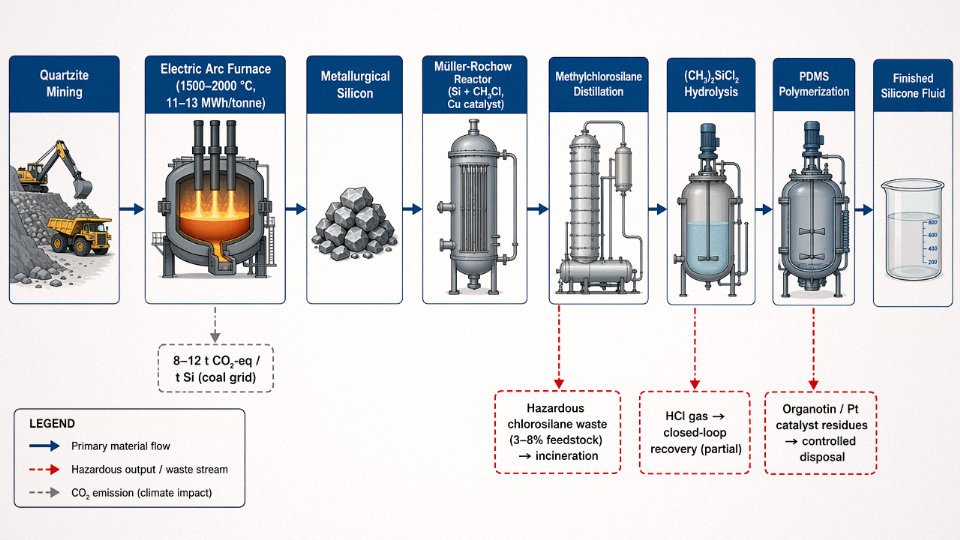
From Chlorosilane Feedstocks to Finished Fluid: Environmental Costs Along the Production Chain
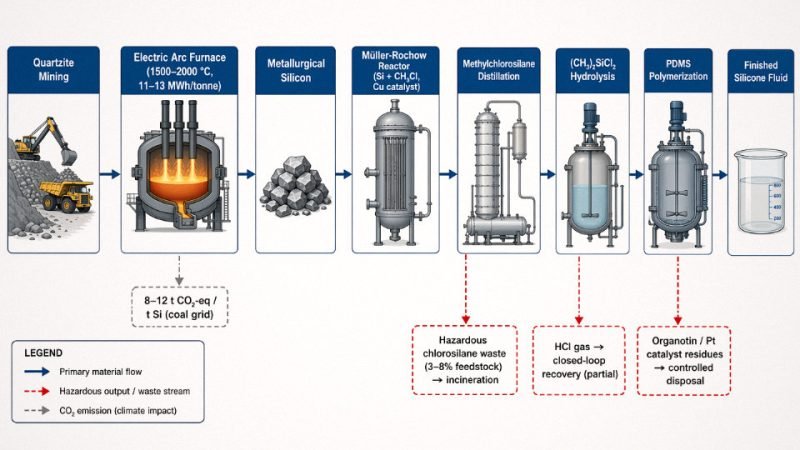
The environmental story of silicone oil doesn’t start at the drum on your plant floor. It starts in a quartzite mine.
Quartz to Metallurgical Silicon: The First Energy Debt
High-purity quartz sand — typically sourced from deposits in Norway, the United States, and parts of Brazil and China — is the feedstock for metallurgical-grade silicon. That silicon gets produced in electric arc furnaces running at roughly 1,500–2,000°C, and the energy bill is not small. Smelting one tonne of metallurgical silicon draws somewhere between 11 and 13 MWh of electricity, depending on furnace efficiency, electrode quality, and whether the operation is running on grid power or captive hydro (a few Scandinavian smelters do have access to relatively clean power, which changes the carbon calculus significantly). For the majority of global production, though, this step alone can contribute 8–12 tonnes of CO₂-equivalent per tonne of silicon when the regional grid mix leans on coal.
That’s before any chemistry has happened. You haven’t made silicone oil yet. You’ve made a raw material.
The Müller-Rochow Process and Its Hazardous Outputs
From metallurgical silicon, manufacturers use the Müller-Rochow direct synthesis to react silicon with methyl chloride (CH₃Cl) over a copper catalyst — producing a mixture of methylchlorosilanes, primarily dimethyldichlorosilane ((CH₃)₂SiCl₂), which is then hydrolyzed and polymerized into PDMS. The process is elegant in a chemical engineering sense, but it generates real hazardous streams.
The most significant is hydrogen chloride gas. Hydrolysis of the chlorosilane intermediates releases HCl in substantial volumes, and while modern facilities operate closed-loop HCl recovery systems that capture and recycle this back into CH₃Cl production, the loop is never perfectly tight. Stack emissions, fugitive releases during maintenance cycles, and upset conditions during startup or shutdown all represent pathways where HCl can reach the atmosphere or, more critically, runoff water near the site. Chloride loading in local waterways adjacent to production facilities is a documented regulatory concern in Germany and China, the two largest production regions.
Residual methylchlorosilane fractions that don’t make it cleanly through the distillation train end up as hazardous waste requiring incineration or controlled disposal. The volume is typically 3–8% of feedstock input by mass, depending on reactor selectivity and distillation efficiency — that range matters, because a poorly optimized plant at the high end is generating substantially more waste per tonne of product.
Then there are the catalysts. Platinum-based catalysts appear in hydrosilylation steps; tin compounds — historically dibutyltin dilaurate and similar organotin species — have been widely used in condensation curing systems. Organotin residues in production waste streams are acutely toxic to aquatic organisms at concentrations orders of magnitude below the relatively benign LC₅₀ figures cited for PDMS itself. Regulatory pressure in the EU has driven some substitution away from tin, but it hasn’t disappeared globally.
Closed-loop HCl recycling in modern Müller-Rochow plants eliminates atmospheric contamination risk from chlorosilane productionFalse
Closed-loop systems significantly reduce HCl emissions but do not eliminate them. Fugitive releases, maintenance purges, and process upsets create ongoing atmospheric and waterway contamination pathways at production sites, which is why regulatory monitoring at these facilities remains active.
How Silicone Oil’s Carbon Footprint Compares
Life-cycle CO₂-equivalent estimates for silicone fluid manufacturing range from roughly 6 to 10 kg CO₂-eq per kilogram of finished product, depending on plant energy mix, process efficiency, and system boundaries used in the LCA. Mineral oil lubricants typically sit in the 0.5–1.5 kg CO₂-eq per kilogram range for production alone — a meaningful difference. Bio-based lubricants (ester-based, plant-derived) tend to land in the 1–3 kg CO₂-eq range per kilogram, though end-of-life biodegradation partially offsets that when credited in the system boundary.
The functional unit matters enormously here. If silicone oil’s longer service life and wider temperature range mean one kilogram does the work of two or three kilograms of mineral oil over a year, the per-service-unit comparison narrows or even flips. That calculation is application-specific and worth running rather than assuming.
The upstream burden is real, concentrated at the smelting and chlorosilane synthesis stages, and not fully offset by in-service performance in every application context.
Fate and Transport: How Silicone Oil Moves Through Soil, Water, and Air
The way PDMS behaves once it leaves a factory or a drain is governed almost entirely by its physical chemistry — and those properties don’t flatter it from an environmental standpoint, even if acute toxicity numbers look reassuring on paper.
Physicochemical Properties That Drive Environmental Distribution
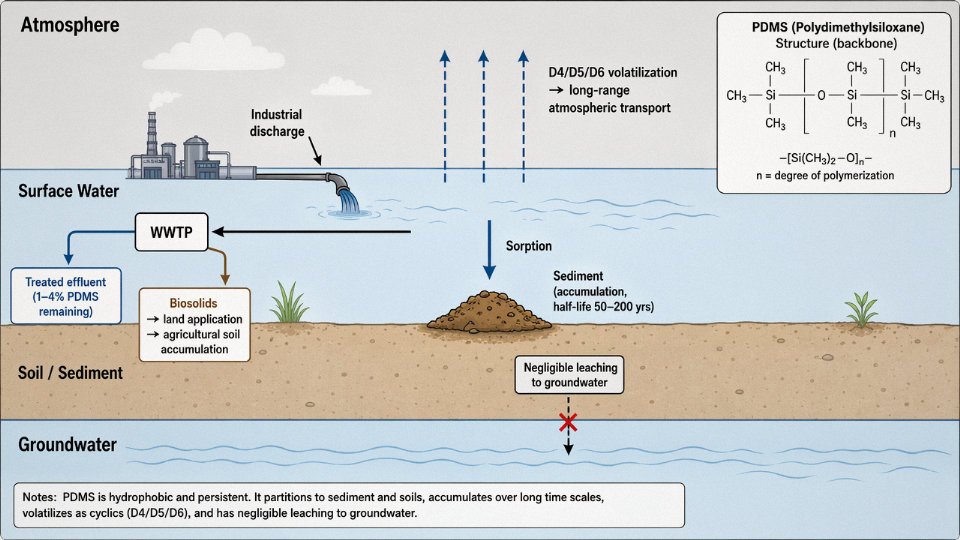
High-molecular-weight PDMS carries a log Kow typically above 7, sometimes well above that depending on chain length and viscosity grade. What that means in practice: the material has an overwhelming preference for organic phases over water. Water solubility sits below 1 mg/L for most commercial grades — effectively insoluble for engineering purposes. Vapor pressure at standard conditions is very low for PDMS itself, so you won’t see it evaporating off a contaminated soil surface in any meaningful timeframe. These three properties together mean that once PDMS reaches the environment, it goes looking for the nearest lipid-rich or organic-carbon-rich phase and stays there. It doesn’t migrate, doesn’t evaporate, and barely dissolves. It simply accumulates.
Soil Sorption: Tight Binding, Long Residence
In soil, PDMS partitions aggressively onto clay minerals and humic fractions. The sorption is strong enough that leaching to groundwater is generally negligible under most soil types — which sounds positive until you consider the other side of that coin. Tight binding means the material doesn’t degrade easily either. Hydrolysis of the Si–O–Si backbone is the primary abiotic breakdown pathway, producing silanols as intermediates, but this reaction is almost painfully slow at neutral pH and ambient temperature. Lab studies suggest meaningful hydrolysis only kicks in below pH 4 or above pH 9 — conditions you’d rarely sustain in a receiving agricultural soil. Under realistic conditions, half-lives in soil run from roughly 50 years on the optimistic end to well over 200 years in cool, near-neutral environments. That isn’t a typo.
Field measurements bear this out. Peer-reviewed studies have reported PDMS concentrations in river sediments near industrial discharge points ranging from around 0.1 mg/kg dry weight in background areas up to over 100 mg/kg dry weight in heavily impacted zones. The spread depends on proximity to point sources, sediment organic carbon content, and flow regime — but concentrations at the high end of that range represent a genuine long-term sink, not a temporary contamination event.
Cyclic Siloxanes: The Mobile Fraction
The cyclic volatile methylsiloxanes — D4, D5, D6 — behave differently and are arguably the fraction that deserves more regulatory attention. Unlike high-MW PDMS, these compounds have sufficient vapor pressure to volatilize from surfaces and water, enter the atmosphere, and travel. Detection in Arctic air masses and remote marine sediments isn’t hypothetical; it’s documented. D5 in particular has been found in biota from ecosystems with no nearby industrial sources, which tells you something about the transport range. The irony is that these are often present as residual impurities or lower-boiling fractions in industrial silicone fluids, not the bulk product itself — so procurement specs that focus only on viscosity and purity miss the environmental picture entirely.
Wastewater Treatment: Removal That Creates a Different Problem
Wastewater treatment plants do remove PDMS efficiently — typically 96–99% by sorption onto sewage sludge, depending on hydraulic retention time and sludge composition. That looks like a solution. It isn’t, quite. The PDMS removed from the water column concentrates in the biosolids fraction, and those biosolids are routinely land-applied to agricultural fields as a soil amendment. You’ve moved the contamination from one compartment to another, and now it’s on farmland with a 100-year residence time.
Wastewater treatment plants effectively eliminate PDMS as an environmental concernFalse
WWTPs achieve high removal rates from water (96–99%), but sorption transfers PDMS into sewage sludge. Land application of that sludge returns PDMS to agricultural soils, where its extreme persistence means it continues to accumulate rather than being eliminated.
The combined picture — strong soil sorption, negligible hydrolysis under ambient conditions, atmospheric transport of cyclic fractions, and biosolids recycling — means that environmental loading of silicone compounds is functionally cumulative over decades of industrial use.
Bioaccumulation and Ecotoxicology: What the Data Actually Show
The argument you hear most often from silicone suppliers — that PDMS is “practically non-toxic” — is technically accurate in a narrow sense and genuinely misleading in a broader one. Understanding why requires separating acute toxicity from accumulation behavior, and separating PDMS polymer from the cyclic siloxane impurities that ride along with it.
Why High Kow Doesn’t Automatically Mean Biomagnification
Bioaccumulation factor (BAF) describes the ratio of a chemical’s concentration in an organism to its concentration in the surrounding water at steady state. Biomagnification factor (BMF) tracks whether that concentration increases as you move up the food chain. For lipophilic compounds, a high octanol-water partition coefficient (log Kow) is usually a red flag — it predicts fat-tissue affinity. PDMS has an extraordinarily high log Kow, somewhere in the range of 6–8 depending on molecular weight, which looks alarming on paper.
The catch is molecular size. High-molecular-weight PDMS chains are simply too large to passively cross biological membranes at meaningful rates. Membrane permeation is roughly constrained by molecular weight above about 700–800 Da, and most commercial silicone oils — viscosities from 50 cSt upward — sit well above that threshold. So the polymer itself tends not to bioaccumulate efficiently despite its lipophilicity. That distinction matters enormously when reading industry safety data sheets, which almost always characterize the polymer fraction rather than the cyclic oligomer impurities.
D4 and D5: Where Regulatory Bodies Drew the Line
The cyclic siloxanes D4 (octamethylcyclotetrasiloxane) and D5 (decamethylcyclopentasiloxane) are a different story. Both have lower molecular weights and genuinely do accumulate in aquatic organisms. Environment Canada classified D4 as bioaccumulative under the Canadian Environmental Protection Act, with measured BAF values in fish exceeding 5,000 — the regulatory threshold for “bioaccumulative” classification. ECHA went further on D5, designating it vPvB (very persistent, very bioaccumulative) in the EU under REACH, triggering Substance of Very High Concern status.
D5 siloxane has been classified as very persistent and very bioaccumulative (vPvB) by ECHA under REACH.True
ECHA's Member State Committee reached unanimous agreement on vPvB classification for D5 (decamethylcyclopentasiloxane), leading to its inclusion on the SVHC candidate list. This is documented in ECHA's published SVHC support documents.
These aren’t trace impurities at negligible concentrations, either. Residual D4 and D5 in finished silicone fluids typically run in the low hundreds of ppm range, and in personal care applications — rinse-off and leave-on products alike — they enter wastewater streams at significant aggregate volumes given global production tonnage above 500,000 metric tonnes per year.
Sediment Exposure Routes and Invertebrate Sensitivity
The standard fish LC50 data look reassuring: values above 1,000 mg/L put PDMS in the “practically non-toxic” category by OECD criteria. But those tests are conducted in the water column. Sediment-dwelling organisms face a fundamentally different exposure route. Chironomid larvae and amphipods living in and on sediment contact PDMS and cyclic siloxanes at concentrations that accumulate due to the strong sediment-sorption behavior described in partitioning studies. Observed effects in chironomid studies — emergence inhibition, developmental delays — appear at concentrations several orders of magnitude below water-column LC50 values. That gap is not a rounding error. It reflects a genuine difference in exposure geometry that standard acute tests were never designed to capture.
Endocrine Effects and Terrestrial Signals
D4 has attracted particular attention for endocrine activity. Multiple independent studies have linked D4 exposure in fish to impaired reproductive endpoints — reduced fecundity, altered gonadal development — at concentrations in the 1–10 µg/L range. That sits uncomfortably close to measured environmental concentrations in receiving waters near industrial discharge points.
On land, the picture is less studied but not clean. Earthworm avoidance behavior and shifts in soil microbial community structure have both been documented in soils amended with biosolids carrying PDMS at concentrations achievable through routine agricultural application of sewage sludge. Soil microbiome disruption is easy to overlook because it doesn’t produce visible die-offs, but altered nitrogen cycling and decomposition rates have real agronomic consequences over multi-season timescales.
The Low-Hazard, High-Exposure Problem
This is the part that doesn’t fit neatly into a safety data sheet. A substance can show moderate toxicity in any individual exposure scenario and still generate substantial cumulative ecological risk if it is released diffusely at massive global scale, persists in sediment and soil for decades, and concentrates in organisms through sediment pathways that standard testing underweights. PDMS and its cyclic derivatives fit that profile more closely than the “safe industrial fluid” framing suggests. The individual risk numbers look benign; the aggregate environmental loading does not.
Industrial Release Pathways: Where Silicone Oil Enters the Environment Most
Understanding where silicone oil actually gets into the environment — not in theory, but in practice — changes how you allocate monitoring resources and where you push for engineering controls. The release picture is fragmented across dozens of industries, which is part of why aggregate environmental loads are still poorly constrained. But the dominant pathways are identifiable, and for engineers with procurement or process responsibility, knowing which sector you’re in tells you most of what you need to know about your exposure profile.
Personal Care Products and Municipal Wastewater
Rinse-off products are the single largest diffuse release pathway in consumer markets. Shampoos and conditioners typically contain 1–5% cyclic volatile methylsiloxanes (cVMS, primarily D4 and D5) by weight, and the rinse-off fraction delivers an estimated 1,000–3,000 tonnes annually to European wastewater systems alone — a figure that scales with population density and product formulation trends, so it’s higher in urban catchments with older, combined sewer systems. Conventional activated-sludge treatment removes 70–95% of incoming cVMS through sorption to sewage sludge rather than true degradation, which just relocates the problem: that sludge often ends up land-applied, effectively converting a water pathway into a soil pathway. The residual 5–30% passes through to receiving waterways.
Rinse-off personal care products are the dominant consumer release route for cyclic siloxanes (D4/D5) into municipal wastewater systemsTrue
Multiple regulatory assessments, including ECHA restriction dossiers for D4 and D5, identify rinse-off cosmetics as the primary point of entry for cVMS into wastewater infrastructure, supported by measured influent concentrations at European WWTPs.
Textile and Leather Finishing
Silicone softening agents — usually amino-functional or polyether-modified PDMS emulsions — are applied in aqueous exhaust baths at 2–8 g/L, and the spent bath effluent can carry 10–200 mg/L of silicone species before treatment. That’s a wide range; it depends heavily on bath exhaustion rates, the specific product, and whether the facility recycles or dumps. Many smaller dye-houses and finishing operations in South and Southeast Asia, and some in Southern Europe, discharge with minimal silicone-specific treatment because conventional biological treatment is largely ineffective for high-molecular-weight PDMS emulsions. Coagulation-flocculation helps, but removal efficiency in practice sits around 40–70% unless the plant has been specifically tuned for it.
Metalworking and Hydraulic Systems
Leaks and spills from hydraulic systems, cutting fluids, and compressor oils represent a chronic, diffuse terrestrial pathway. A single mid-sized machining facility running silicone-based hydraulic fluid might release 20–150 liters per year through seal failures, drip pans that overflow during peak production, and coolant disposal — often to sumps that eventually discharge to stormwater. Facilities sited near rivers or with aging containment infrastructure are the highest-risk cases. The contamination tends to be linear PDMS rather than cVMS, which is less volatile but also less studied in terms of sediment fate near industrial outfalls.
Construction and Building Materials
Silicone sealants and facade coatings are a slow-release pathway that most environmental assessments underweight. Weathering, UV photolysis, and mechanical abrasion progressively fragment cured silicone elastomers, releasing low-molecular-weight cyclic siloxanes and increasingly, micro- and nano-particles of cross-linked PDMS into stormwater runoff. A typical commercial building might have several hundred kilograms of silicone sealant installed; over a 20–30 year service life, the cumulative particulate release is non-trivial and routes directly to urban drainage systems, mostly untreated.
Electronics Manufacturing and Immersion Cooling
Point-source discharges from electronics cleaning operations have historically been managed reasonably well at larger OEM facilities. The emerging concern is immersion cooling in data centers — a sector scaling rapidly and still developing its fluid management protocols. Silicone dielectric fluids used in single-phase immersion systems are PDMS-based, and the industry lacks standardized spill containment and fluid recovery requirements. Early adopters are figuring out maintenance procedures as they go, which in practice means unquantified small-volume releases during server swaps and system maintenance.
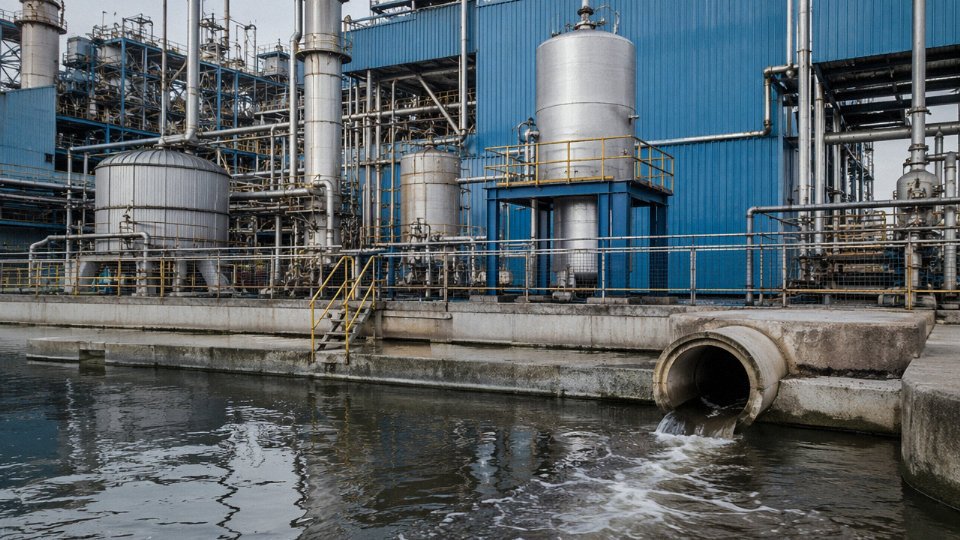
Comparative Release Pathways
| Release Pathway | Estimated Annual Mass Released (Global) | Primary Receiving Environment | Dominant Silicone Species |
|---|---|---|---|
| Personal care (rinse-off) | 3,000–8,000 tonnes | Surface water via WWTP effluent | D4, D5, D6 (cVMS) |
| Textile and leather finishing | 500–2,000 tonnes | Wastewater, sediment | Amino/polyether PDMS emulsions |
| Metalworking and hydraulic fluids | 200–800 tonnes | Soil, stormwater, surface water | Linear PDMS (low–mid MW) |
| Construction sealants and coatings | 100–500 tonnes (weathering fraction) | Stormwater, urban soil | Low-MW cyclics, PDMS micro-particles |
| Electronics and data center cooling | 50–300 tonnes (growing) | Soil, localized surface water | Linear PDMS, specialty dielectric blends |
Figures depend on regional production volumes, treatment infrastructure quality, and regulatory enforcement intensity. European and North American estimates tend to be better characterized; actual global totals are likely higher.
The pattern across all of these is worth naming directly: the industries with the highest release volumes — personal care, textiles — are also the ones where silicone is most dispersed and hardest to capture. The industries with more contained release potential, like electronics, are the ones where a relatively modest investment in fluid management protocols could close most of the gap. That asymmetry should inform where regulators and procurement teams apply pressure first.
Regulatory Status Across Major Jurisdictions: REACH, EPA, and Beyond
The regulatory picture for silicone oil is genuinely uneven — tight restrictions in a few jurisdictions, near-total silence in others, and a persistent lag between what environmental science is finding and what enforcement infrastructure can actually measure. For procurement managers sourcing across multiple regions, that patchwork creates real compliance risk.
EU REACH: The Furthest Along, but Still Incomplete
The EU moved first and most aggressively. Under REACH, D4 (octamethylcyclotetrasiloxane) and D5 (decamethylcyclopentasiloxane) are restricted to concentrations below 0.1% w/w in wash-off personal care products — shampoos, body washes, anything rinsed down a drain — with that restriction entering force in January 2020. The rationale was straightforward: wastewater treatment plants don’t efficiently remove cyclic siloxanes, so they pass through to receiving waters and accumulate in sewage sludge spread on agricultural land.
What’s less settled is what comes next. The SVHC (Substance of Very High Concern) assessment process is grinding forward on D6 (dodecamethylcyclohexasiloxane) and, more significantly, on certain linear PDMS oligomers. Industry has pushed back hard on the linear PDMS listings, arguing that higher-molecular-weight polymers behave fundamentally differently from the volatile cyclics. The European Chemicals Agency hasn’t closed that argument. In practice, any formulator or industrial fluid supplier selling into the EU should be watching the ECHA registry for SVHC additions — the restriction mechanism can move from candidate list to enforceable limit within a few regulatory cycles.
Canada: The Most Aggressive Stance on D4
Environment Canada’s 2008 assessment under CEPA 1999 concluded that D4 and D5 are toxic — meeting the statutory definition of persistence and bioaccumulation potential combined with harmful inherent toxicity. That finding triggered pollution prevention planning notices requiring industrial users above certain volumes to document and reduce releases. For D4 specifically, Canada has proposed Virtual Elimination, which targets reduction to the lowest achievable detection limit rather than a fixed concentration ceiling. In practice, Virtual Elimination is a very high bar; it effectively signals that D4 has no acceptable discharge pathway in Canadian jurisdiction. That has already influenced some formulators to reformulate away from D4 entirely rather than manage the compliance burden.
Canada's CEPA assessment classified D4 as toxic and proposed Virtual Elimination as the regulatory strategy.True
Environment Canada's 2008 Draft Screening Assessment and subsequent regulatory notices under CEPA 1999 identified D4 as meeting toxicity criteria for persistence and bioaccumulation, with Virtual Elimination proposed for D4 specifically.
United States EPA: Permissive on PDMS, Watching the Cyclics
PDMS itself sits on the TSCA inventory with no current use restrictions. The EPA’s posture has historically been that high-molecular-weight PDMS polymers are low concern — low bioavailability, low acute toxicity, not subject to reporting thresholds under most standard frameworks. However, cVMS (cyclic volatile methylsiloxanes) compounds are subject to Significant New Use Rules in specific applications, meaning any manufacturer trying to introduce a new use must notify EPA and wait for review. The 2023 regulatory attention on PFAS compounds has had an indirect effect: agency staff and environmental groups are now applying “persistent and mobile” framing more broadly, and silicone compounds are increasingly mentioned in that context even without formal PFAS classification. Whether that translates into rulemaking is unclear, but the direction of travel is visible.
Norway, Sweden, and the Industrial-Use Frontier
Norway and Sweden are the jurisdictions to watch if you’re in metalworking fluids, industrial cleaning, or release agents. Both countries have proposed or implemented restrictions extending beyond cosmetics — targeting siloxane-containing formulations in industrial cleaning applications where discharge to municipal wastewater is routine. That’s a meaningful expansion in scope. Most REACH-based restrictions have focused on consumer rinse-off products because the exposure pathway is obvious. Extending controls to industrial cleaning fluids is harder to enforce but signals where the regulatory trend is heading across Northern Europe.
China and Southeast Asia: The Regulatory Gap That Matters for Supply Chains
China is now among the largest producers and consumers of silicone fluids globally. Domestic environmental regulations on silicone discharge are largely absent or unenforced — no silicone-specific parameters appear in standard effluent discharge standards, and environmental monitoring infrastructure for PDMS in receiving waters is thin. The same is broadly true across Vietnam, Indonesia, and other manufacturing hubs where silicone use in textiles, electronics, and personal care manufacturing is growing. This creates a genuine regulatory arbitrage dynamic: a European formulator restricted from using D5 above 0.1% in a rinse-off product faces compliance cost that a manufacturer operating in Southeast Asia simply doesn’t. Procurement teams sourcing intermediates or finished fluids from these regions should not assume that “compliant in the EU” translates to compliant origin-point manufacture.
The Enforcement Gap Nobody Talks About Enough
Even in jurisdictions with formal restrictions, the monitoring infrastructure is weak. Standard effluent testing panels at most wastewater treatment plants don’t include PDMS or cyclic siloxanes. Detection requires gas chromatography with specific calibration standards — not cheap, not routine. So a facility could be discharging silicone-containing wastewater in technical violation of an SVHC-driven restriction and nobody would know, because the receiving water body isn’t being tested for it. That’s not a hypothetical; it’s a structural gap that regulators in the EU and Canada have acknowledged privately. Until silicone-specific parameters appear in standard effluent permits, much of the existing regulatory framework operates more as a design constraint on product formulators than as an actual discharge control mechanism.
Comparing Silicone Oil to Alternatives: Environmental Trade-Offs Engineers Must Weigh
Engineers reaching for a “greener” substitute for silicone oil often discover the swap is less straightforward than a single biodegradability figure suggests. Every alternative carries its own liability — different in character, not necessarily smaller in magnitude.
The Comparison Matrix
The table below covers the six parameters that matter most for a defensible substitution decision. Ranges reflect real variability depending on fluid grade, operating temperature, and test protocol — anyone quoting a single number here is oversimplifying.
| Parameter | Silicone Oil (PDMS) | Mineral Oil | Synthetic Ester (e.g., TMP trioleate) | Bio-based Vegetable Oil (rapeseed/sunflower) | PFAS-based Thermal Fluid |
|---|---|---|---|---|---|
| OECD 301B biodegradability | 60%, passes | >70%, passes | 1,000 mg/L (practically non-toxic) | 10–100 mg/L (moderately toxic) | >1,000 mg/L | >1,000 mg/L | Variable; some fractions highly toxic |
| Soil half-life | 50–200+ years | 1–6 months | Weeks to ~3 months | Days to weeks | Decades to effectively permanent |
| Bioaccumulation potential (BAF) | Low–moderate for cyclic impurities | Low–moderate; PAH fractions higher | Low | Low | High to very high for many PFAS |
| Carbon footprint (kg CO₂-eq/kg) | Roughly 6–10, depending on plant energy mix | 0.5–2 for base oil; refining adds more | 3–7, depending on feedstock sourcing | 1.5–4, highly dependent on land use | 8–20+; fluorination is energy-intensive |
| Regulatory risk trajectory | Tightening on cyclic siloxanes (D4, D5) | Stable but PAH scrutiny ongoing | Low current risk; watch ester hydrolysis products | Low; improving | High and worsening rapidly |
Mineral Oil: A Known Devil
Mineral oil biodegrades faster than PDMS — that 60–80% OECD 301B result looks compelling on paper. In practice, the story gets murkier. Petroleum-derived base stocks carry polycyclic aromatic hydrocarbon fractions whose aquatic toxicity is orders of magnitude worse than bulk PDMS, and a spill in a drainage ditch hits harder, faster. The dependency on petroleum feedstock also means the carbon cost of extraction is baked in whether you account for it or not. For high-volume industrial applications — transformer cooling, hydraulic systems in food-adjacent environments — mineral oil substitution away from silicone usually improves acute spill risk but trades one persistence problem for a toxicity one. Neither outcome is clean.
Synthetic Esters: The Closest Thing to a Win, With Caveats
Trimethylolpropane trioleate and similar synthetic esters genuinely pass OECD 301B, have low toxicity across most test species, and don’t carry PDMS’s persistence liability. The catch is operational. At temperatures above roughly 150–180°C (exact threshold depends on acid value and moisture exposure), ester hydrolysis generates free fatty acids that corrode soft metals and degrade seals — a real problem in gearboxes and transformer applications where silicone has historically earned its place. Total fluid consumption can rise if change intervals shorten, which partially offsets the biodegradability advantage on a per-service-hour basis. Cost premium runs 2–4× mineral oil depending on ester type and order volume. For many applications below moderate operating temperatures and away from high-moisture environments, synthetic esters are the most defensible switch.
Bio-based Vegetable Oils: Good Biodegradability, Honest Limitations
Rapeseed and sunflower oils biodegrade quickly and are essentially non-toxic in aquatic systems. The problem is oxidative stability. In open-system or high-temperature applications, rapid oxidation produces varnish, sludge, and acidic degradation products that can damage equipment and paradoxically increase total fluid throughput — meaning more product manufactured, more upstream agricultural and processing impact. Land use emissions also complicate the carbon footprint calculation in ways that rarely show up in a simple kg CO₂-eq/kg figure.
PFAS Fluids: The One Case Where Silicone Looks Good
In specific thermal management niches — electronics cooling, some aerospace applications — PFAS-based fluids compete with silicone oil on performance. On environmental grounds, this comparison is not close. PFAS persistence is effectively permanent on any engineering timescale, bioaccumulation potential for many variants is high, and the regulatory trajectory in the EU, US, and Canada is toward broad restriction. Silicone oil is genuinely the preferable option in this particular head-to-head, and that’s a defensible position to document in a procurement or compliance record.
Silicone oil is environmentally safer than all alternative fluidsFalse
Silicone oil has low acute toxicity and performs well against PFAS fluids, but its extreme persistence in soil (half-life 50–200+ years) and failure to biodegrade under OECD 301B conditions mean it carries significant environmental liabilities that synthetic esters and bio-based oils do not share. No single fluid wins across all impact categories.
Why a Life-Cycle Assessment Is Not Optional
No universal best alternative exists. The right answer depends on operating temperature range, spill risk profile, regulatory jurisdiction, service life and consumption volume, and how your organization weights persistence versus acute toxicity. A fit-for-purpose LCA — not a single-parameter comparison — is the only methodology that produces a defensible substitution decision, particularly for applications subject to regulatory scrutiny or customer environmental disclosure requirements. Shortcuts here tend to surface later as either equipment failures or compliance problems, sometimes both at once.
Engineering Controls and End-of-Life Strategies That Measurably Reduce Impact
The gap between knowing silicone oil persists in soil for decades and actually doing something about it inside a plant comes down to systems, not intentions. Most of the mitigation options that exist are proven, cost-justifiable, and already running in well-managed facilities. The challenge is implementation discipline, not technology.
Closed-Loop Fluid Management in Metalworking and Process Industries
Tramp oil contamination is the single biggest driver of premature silicone fluid degradation in machining and forming operations. Once hydraulic or release fluids pick up cutting oil and particulates, the emulsified mixture becomes difficult to reclaim and typically goes straight to waste disposal. Centrifugal disc separators — Alfa Laval and similar units are common on the floor — can continuously polish fluid back to near-virgin condition, and facilities running structured fluid life extension programs typically see consumption drop by 30–50%, sometimes more depending on sump volume, turnover rate, and how aggressively the plant tracks fluid quality by viscosity and contamination index rather than by calendar.
The consumption reduction isn’t the only win. Less fluid consumed means proportionally less discharged, less packaging waste, and fewer delivery movements. In a plant running 40,000 liters of silicone-based release fluid per year, cutting that by even 35% is roughly 14,000 liters not needing disposal treatment. That math adds up fast.
Wastewater Pre-Treatment Before Municipal Discharge
Sending PDMS-laden rinse water straight to a municipal treatment works is a problem because conventional activated sludge systems don’t break PDMS down — they concentrate it into biosolids, which then spread back onto agricultural land. Pre-treatment at source changes that picture substantially.
Coagulation-flocculation using polyaluminum chloride (PAC) followed by dissolved air flotation (DAF) achieves 85–95% PDMS removal from industrial wastewater before discharge.True
Multiple peer-reviewed water treatment studies and industrial wastewater audit reports confirm this removal efficiency range for PDMS under properly optimized PAC dosing and DAF hydraulic loading conditions.
Getting to the upper end of that range depends on PAC dosing (typically 40–80 mg/L depending on influent concentration and pH), retention time in the DAF cell, and whether a polymer aid is added to improve floc capture. Under-dosed systems often sit closer to 70–80% removal — still meaningful, but not sufficient for high-volume emulsion discharge. The float sludge from DAF goes to incineration or certified hazardous waste, not back to drain.
Thermal Depolymerization and Pyrolysis for End-of-Life Fluid
High-temperature pyrolysis above roughly 300–400 °C can crack end-of-life silicone fluids and recover D4 and D5 cyclic siloxanes that can re-enter synthesis as chemical feedstock. Industrial-scale feasibility is real but narrow: the process requires a controlled, oxygen-limited atmosphere, a consistent feed of relatively uncontaminated PDMS waste (mixed waste streams lower yield significantly), and a downstream condenser-scrubber train to capture the cyclic fraction cleanly.
Energy balance is roughly neutral to slightly positive on a mass basis if the off-gas is used to sustain the pyrolysis temperature — but don’t expect this to pencil out at volumes below roughly 500 tonnes per year without a captive recycler or tolling arrangement. For most mid-sized plants, this is a waste-stream aggregation problem before it’s a technology problem.
Incineration: The Practical Default
For mixed or contaminated silicone waste that can’t be reclaimed, incineration at a permitted high-temperature facility (850 °C minimum, 1100 °C preferred for complete oxidation) yields SiO₂, CO₂, and H₂O. The SiO₂ residue is chemically inert, but fine amorphous silica particulates require proper baghouse or ESP controls on the stack — this is non-negotiable, and auditing your waste contractor’s air emission permit is a reasonable procurement checkpoint.
Landfill is worse on every environmental dimension except immediate cost.
Product Reformulation: Switching Grades and Functional Alternatives
The cyclic volatile methylsiloxanes — D4, D5, D6 — are the regulatory and environmental problem fraction in most personal care and textile applications. Reformulating toward higher-molecular-weight linear PDMS (MW above roughly 5,000–10,000 g/mol) cuts volatilization and environmental mobility dramatically because these species sorb tightly to particles and don’t spread through drainage networks the way low-MW cyclics do. For textile softening specifically, amino-functional PDMS at higher MW performs comparably and has a substantially reduced cVMS release profile.
Switching to non-silicone alternatives — modified fatty acid esters in some textile finishing applications, or PAO-based fluids in certain hydraulic uses — requires honest functional testing. In my experience, formulators who skip that step and commit to a reformulation for sustainability reasons end up back-pedaling when line performance drops.
IoT-Enabled Leak Detection and Predictive Maintenance
Unplanned spills from hydraulic systems and cooling circuits are a disproportionately large source of silicone fluid soil and surface water contamination relative to their volume — because spill fluid is rarely recovered fully and often reaches a drain before containment activates. Predictive maintenance platforms that monitor flow balance, pressure differentials, and seal condition in real time have documented reductions in unplanned fluid release of 40–70% across industrial hydraulic systems, mostly by catching slow seep failures before they become ruptures.
The capital cost for a sensor network on a mid-scale hydraulic system is usually recovered within 12–24 months through fluid savings and avoided cleanup costs alone, without counting regulatory exposure. That’s a case most engineering managers can make to a CFO without much polish.
Frequently Asked Questions About Silicone Oil and the Environment
Is silicone oil biodegradable?
Technically, no — not by any conventional definition that matters for regulatory classification. Standard PDMS fails OECD 301B ready biodegradability tests decisively, typically achieving less than 10% mineralization within the 28-day window. That said, “fails biodegradability” doesn’t mean “inert forever.” Ultimate breakdown to SiO₂, CO₂, and H₂O does occur, but the pathway is slow: hydrolysis of the Si–O backbone, accelerated by soil acidity and clay mineral surfaces, followed by microbial uptake of degradation fragments. Depending on soil type, moisture, temperature, and molecular weight of the fluid, realistic half-lives run somewhere between 50 and 200+ years. Sandy, dry, low-microbial soils sit at the slow end of that range. The persistent misconception — that silicone oil is “naturally derived” from silicon and therefore benign in soil — doesn’t hold up under scrutiny.
PDMS passes standard ready biodegradability tests (OECD 301B)False
PDMS consistently fails OECD 301B, achieving minimal mineralization within the 28-day test window. Ultimate degradation to inorganic products does eventually occur but over decades, not weeks.
Does silicone oil harm aquatic life?
The acute toxicity picture is genuinely reassuring: LC50 values for PDMS in fish typically exceed 1,000 mg/L, which puts it in the “practically non-toxic” category under standard OECD criteria. In the water column, PDMS is barely soluble and poses little immediate risk to most organisms. The sediment story is different. PDMS and especially cyclic siloxanes — D4 in particular — have documented sediment toxicity for benthic invertebrates at concentrations that can realistically accumulate near discharge points. D4 also carries reproductive toxicity findings in fish at environmentally relevant concentrations, a result that came out of long-term exposure studies rather than acute tests. The industry tendency to cite only the LC50 number skips past the chronic and sediment endpoints, which is where the real regulatory concern is focused.
Is silicone oil safer than mineral oil for the environment?
Depends heavily on the application and the failure scenario. Mineral oils carry higher acute aquatic toxicity and are classified as hazardous to water in most jurisdictions. Silicone oil wins on that dimension clearly. But mineral oil degrades in weeks to months under favorable aerobic conditions; PDMS persists for decades. If a spill is a one-time, contained event in a well-drained, aerobic environment, mineral oil causes more immediate damage but recovers. A chronic, low-level silicone oil leak into a wetland or sediment-rich waterway builds up over years with essentially no natural recovery mechanism on any operational timescale. Context matters more than most procurement specs acknowledge.
What happens to silicone oil in a landfill?
Slow photolytic and hydrolytic degradation, and the breakdown products aren’t entirely harmless. Low-molecular-weight cyclic siloxanes can form and migrate, and there’s documented potential for leachate formation carrying these compounds through liner systems. Engineered liners perform well initially, but a 50–100+ year persistence window and the well-known finite service life of HDPE liner systems means some fraction of landfilled silicone fluid will eventually contact surrounding soil and groundwater. This isn’t a hypothetical worst-case — it’s the expected outcome if you run the timeline out honestly.
Are silicone oils regulated as persistent pollutants?
In the EU and Canada, D4 and D5 are now explicitly restricted under REACH and equivalent Canadian Environmental Protection Act listings, based on persistence and bioaccumulation criteria. The US EPA has no equivalent designation at this writing, and most Asian and South American markets have no specific siloxane regulation. That regulatory patchwork creates real compliance risk for manufacturers exporting into the EU market while sourcing or formulating globally.
Can silicone oil be recycled or reclaimed?
High-purity transformer and heat-transfer fluids can be reclaimed by vacuum distillation, and in practice some industrial operators do run closed-loop systems that extend fluid service life significantly — reducing both disposal cost and environmental load. The practical ceiling is contamination: particulates, water, or mixed fluid chemistry typically disqualify batches from reclamation before they’re truly exhausted. Collection logistics are the larger barrier; most silicone oil ends up in mixed industrial waste streams precisely because segregated collection wasn’t designed into the facility. In my experience, plants that specify reclamation from day one — dedicated drain-back sumps, clearly labeled collection points, supplier take-back agreements — achieve it. Plants that try to retrofit it rarely do.
How do I choose a lower-impact silicone oil grade?
Start with molecular weight. Higher-MW PDMS grades volatilize far less readily, reducing both atmospheric release and the cyclic volatile methylsiloxane (cVMS) fraction that carries the worst environmental flags. Request supplier data on D4/D5/D6 content specifically — reputable suppliers can provide this; vague answers are a red flag. Third-party eco-certification (the Nordic Swan, EU Ecolabel for applicable product categories, or Blauer Engel where relevant) at least imposes independent verification. For procurement decisions with significant volume, a life-cycle assessment comparing candidate grades on production energy, persistence, and end-of-life pathway is worth the engineering time. The difference between a well-specified low-cVMS fluid and an off-spec commodity grade can be substantial — often a 5–10× difference in cyclic siloxane content depending on the supplier’s distillation quality control.