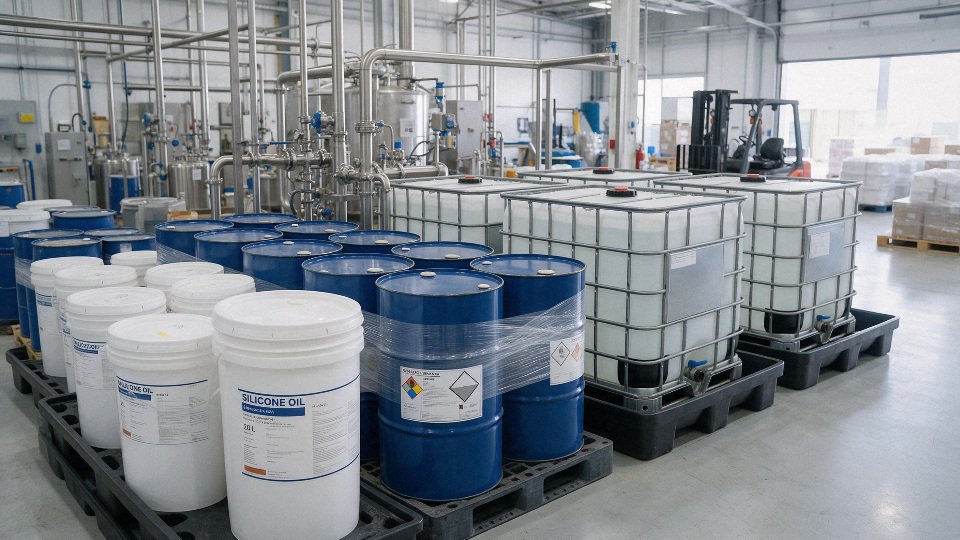
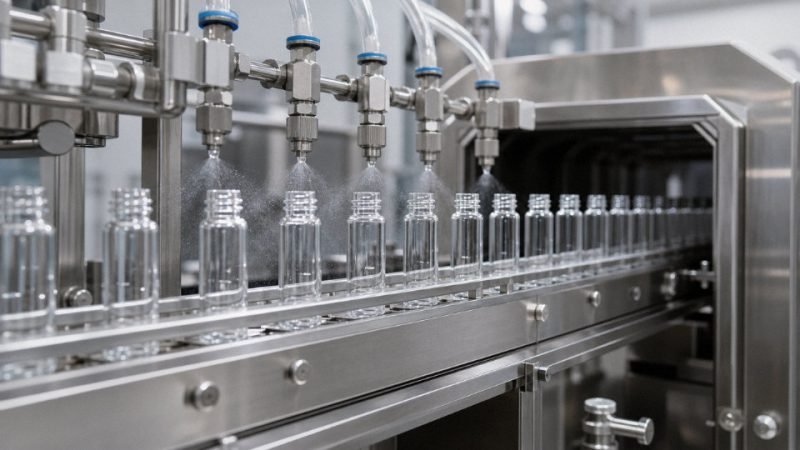
Specify the wrong silicone oil viscosity for a prefilled syringe line and you will find out quickly — needle force failures, inconsistent plunger travel, rejected batches, and a regulatory audit question you do not want to answer. Swap in an industrial-grade fluid instead of a properly tested pharmaceutical-grade PDMS to save a few dollars per kilogram, and you risk leachable contamination that can quietly invalidate your biocompatibility dossier. These are not edge cases. They happen on real fill-finish lines, usually when procurement pushes for a cost reduction without looping in the quality team.
Choosing silicone oil for pharmaceutical use means selecting a polydimethylsiloxane (PDMS) fluid that matches your application’s viscosity requirement — typically somewhere between 5 cSt and 60,000 cSt — meets USP or EP purity standards, and stays within the residual limits set by USP and EP 3.1.8, which allow roughly 0.1–10 mg per syringe barrel depending on barrel size and coating method.
What makes this harder than it looks is that viscosity, purity grade, application method, and regulatory pathway are all tangled together — a fluid that works perfectly for elastomer lubrication in a stopper-seating operation will cause problems if someone assumes it is interchangeable with the syringe barrel coating grade. The pharmaceutical silicone oil market sits somewhere around USD 280–320 million globally and has been growing steadily, which means more suppliers, more product claims, and more opportunities to pick the wrong one.
Mapping the Pharmaceutical-Grade Silicone Oil Landscape: PDMS Types, Grades, and Key Variants
Polydimethylsiloxane is the dominant chemistry here, and for good reason. The repeating Si–O–Si backbone gives PDMS a combination of properties that organic lubricants simply can’t match at scale: thermal stability from roughly -60°C to above 200°C without significant viscosity drift, a surface tension low enough to wet glass uniformly, and a hydrophobicity that resists aqueous drug formulations migrating into the lubricant layer. Biocompatibility isn’t incidental — it’s a direct consequence of the backbone’s chemical inertness. The methyl side groups present almost nothing for biological systems to react with, which is why PDMS has decades of implant, device, and injectable-contact history behind it.
What most procurement teams underestimate is how wide the PDMS viscosity range actually is in pharmaceutical practice — 5 cSt up to roughly 60,000 cSt, with each band serving a functionally distinct purpose.
Viscosity Grades and What They Actually Do
The 350 cSt grade is the workhorse. It’s the industry default for syringe barrel lubrication because it spreads as a thin, continuous film during high-speed baked-on siliconization, stays put during sterilization, and gives the plunger a break-loose and glide force that falls within the ISO 11040 and ISO 11608 acceptance windows. Specify something lighter without validating the process change, and you risk uneven film coverage and sticky plungers on the fill line — a defect you often won’t catch until functional testing downstream.
For stopper lubrication, 1,000 cSt grades appear more often. The higher viscosity holds better on the elastomer surface during handling and autoclave cycles. In practice, a 350 cSt oil can creep and redistribute on a bromobutyl stopper under thermal load; 1,000 cSt tends to stay where it was applied.
At the low end, 5–50 cSt grades are sprayed or applied as diluted emulsions onto packaging components, tubing, and mold surfaces. They evaporate or redistribute more freely, which is an asset in spray applications and a liability if someone mistakenly requisitions them for syringe barrels — you’ll get migration into the drug product well before the shelf life is up.
High-viscosity grades, 12,500 cSt and above up to around 60,000 cSt, are less common but serve genuine barrier and damping functions — certain combination device assemblies, autoinjector components, and specialized coating applications where you need the oil to function more like a grease than a lubricant film.
Phenyl-Modified Variants: Niche but Real
Phenylmethylsiloxane oils substitute some methyl groups with phenyl rings. This raises the refractive index, improves compatibility with certain nonpolar APIs, and reduces the pour point further at equivalent viscosity. Their primary pharmaceutical niche is ophthalmic: silicone oils used as vitreous tamponades in retinal surgery are typically phenyl-modified to bring optical properties closer to the vitreous humor. You also see them in some diagnostic device applications. For standard injectable device lubrication, phenyl variants rarely make the shortlist — they cost more and the regulatory history is thinner than straight PDMS.
Pharmaceutical-Grade Versus Industrial-Grade: The Differences That Matter
Pharmaceutical-grade and industrial-grade PDMS share identical base chemistry and are interchangeable in drug-contact applications.False
Pharmaceutical-grade PDMS is manufactured with tighter controls on platinum or tin catalyst residues, volatile fraction content (typically <0.5% at 150°C for 4 hours), and nitrosamine-forming impurities. Industrial grades carry none of these controls and lack the Certificate of Analysis traceability required for drug master file or device technical file submissions.
The Certificate of Analysis for a pharmaceutical-grade material should list volatile content, metal catalyst residues, viscosity measured to a traceable standard, and typically a reference to USP, EP, or JP monograph compliance. If a supplier’s CoA omits catalyst residue data, that’s a procurement red flag — not a minor documentation gap.
Major Suppliers and Grade Cross-Referencing
The four names you’ll encounter on most qualified supplier lists are Dow (formerly Dow Corning), Wacker, Shin-Etsu, and Elkem. Dow’s DC 360 Medical Fluid series is probably the most widely referenced in existing device DMFs. Wacker’s AK series covers overlapping viscosity grades. Shin-Etsu’s KF-96 line is common in Asian supply chains. Elkem’s Silbione Medical grades are particularly prevalent in European prefilled syringe manufacturing.
Cross-referencing these isn’t as clean as it sounds. A Wacker AK 350 and a Dow DC 360 at 350 cSt are nominally equivalent, but their volatile fraction specs and impurity profiles can differ slightly, and any substitution in a validated process requires a change control with at minimum a comparability study. Don’t assume equivalence from viscosity alone.
Key physical benchmarks for the standard 350 cSt pharmaceutical grade: pour point below -50°C, flash point above 300°C (which is why it handles steam sterilization without issue), density around 0.97 g/cm³ at 25°C, and surface tension roughly 21 mN/m — low enough to spread across borosilicate glass under typical siliconization conditions without requiring aggressive process temperatures.
Viscosity Selection Criteria: Matching cSt Grade to Specific Pharmaceutical End Uses
Viscosity is not a secondary specification you dial in after everything else is settled. Pick the wrong grade and you are looking at failed glide-force tests, silicone migration into the drug product, or a vitreous tamponade oil that disperses into the eye chamber instead of holding its position. The decision tree below is organized by application type because no single viscosity works across the board — not even close.
Syringe Barrel Lubrication: Why 350 cSt Became the Default
The industry largely converged on 350 cSt PDMS for prefilled syringe barrel coating, and for good reason. At that viscosity, silonizing produces a film in the 0.1–0.5 mg/cm² range (the actual film weight depends on application method — needle spraying versus dip-coating — and barrel geometry). That film thickness is what correlates with the break-loose and glide forces measured under ISO 11040-4: typical break-loose force runs 5–15 N, glide force 2–8 N, with the spread depending on plunger stopper compound, barrel diameter, and whether the syringe will sit in cold-chain storage for 18 months before use.
Go below 200 cSt and the film thins unevenly, especially on Type I borosilicate glass barrels with surface roughness variation. Go above 500 cSt and you start seeing silicone pooling at the barrel shoulder — a cosmetic defect that triggers visual inspection rejects and, more critically, raises extractable/leachable concerns under ICH Q3E. The 350 cSt standard is validated. Deviating from it requires a full change-control package and probably a new extractables study.
Stopper and Plunger Coating: Holding Position Through Autoclave
Stoppers and plungers need significantly heavier oil — typically 1,000–12,500 cSt — and the reason is thermal stability during terminal sterilization. At 121°C in a saturated steam autoclave cycle, a low-viscosity oil becomes mobile enough to flow off the elastomer surface and migrate toward the drug-contact zone. That is not a theoretical concern; regulatory agencies have flagged silicone-contaminated protein biologics where stopper coating viscosity was below specification.
The higher viscosity keeps the lubricant anchored to the rubber matrix during the 15–30-minute sterilization hold. Which end of that 1,000–12,500 cSt range you use depends on elastomer formulation (EPDM versus bromobutyl behave differently) and the geometry of the stopper flange. In my experience, most contract manufacturers default toward 12,500 cSt for stopper coating precisely because it provides margin against worst-case sterilization temperatures and long storage dwell times.
Antifoam in Oral Liquids and Injectables: Go Ultra-Low
For antifoam applications — simethicone in antacid suspensions, defoaming agents in parenteral manufacturing — you want emulsified PDMS in the 5–20 cSt range. Lower viscosity means faster spreading at the foam interface, which is the whole mechanism. FDA GRAS status covers simethicone (which is essentially PDMS with silicon dioxide) at levels up to roughly 500 ppm in oral products, and USP limits residual silicone in injectable preparations.
Higher-viscosity PDMS does not emulsify cleanly and can form discrete droplets rather than a coherent antifoam layer — the opposite of what you need.
Ophthalmic and Surgical Uses: The Ultra-High-Viscosity Tier
Vitreous tamponade and ophthalmic surgical applications sit at the opposite extreme: 5,000–60,000 cSt, regulated as medical devices under 21 CFR 880, not as drug excipients. The high viscosity is structural — the oil has to physically hold retinal tissue in apposition. This is entirely a different regulatory pathway from excipient-grade material, and suppliers must provide device-specific documentation accordingly.
Decision Table: Application vs. Viscosity vs. Regulation vs. Test Method
| Application | Recommended Viscosity | Key Regulatory Reference | Primary Test Method |
|---|---|---|---|
| Syringe barrel lubrication | 350 cSt (±50 cSt) | USP , EP 3.1.8 | ISO 11040-4 glide/break-loose force |
| Stopper and plunger coating | 1,000–12,500 cSt | ICH Q3E, supplier CoA | Post-autoclave migration visual + extractables |
| Antifoam excipient (oral/injectable) | 5–20 cSt emulsified | FDA GRAS, USP simethicone monograph | Foam suppression per USP |
| Ophthalmic / vitreous tamponade | 5,000–60,000 cSt | 21 CFR 880 (medical device) | Viscometry, tamponade efficacy per ISO 16672 |
Temperature Effects: Where PDMS Has a Genuine Edge
One underappreciated advantage of PDMS over organic lubricants is its viscosity-temperature coefficient — viscosity index around 200, which is unusually flat. A 350 cSt grade might drop to roughly 280–310 cSt at 40°C and rise to around 400–430 cSt at 5°C (cold-chain storage conditions). Organic lubricants can swing far more dramatically over that same range, which creates glide-force variability you will absolutely see in release testing if the syringes are tested at room temperature but stored at 2–8°C. PDMS largely sidesteps that problem, though it does not eliminate it — always validate glide force at the actual storage temperature, not just room temperature.
PDMS silicone oil has a viscosity index of approximately 200, making its viscosity significantly more stable across temperature ranges than most organic lubricantsTrue
PDMS is well-documented in polymer physics literature to have a high viscosity index (~200) due to the flexibility of the Si-O backbone and low intermolecular forces, which results in less viscosity change per degree Celsius compared to hydrocarbon-based lubricants.
Regulatory Compliance Requirements: USP, EP, JP, FDA, and ICH Standards for Pharmaceutical Silicone Oil
Regulatory compliance for pharmaceutical silicone oil is not a single checkbox — it’s a layered set of overlapping monographs, agency-specific filings, and application-dependent requirements that engineers need to cross-reference before locking in a specification. Getting this wrong at the development stage creates serious pain later: reformulation requests, DMF gaps flagged during BLA review, or an Annex 1 audit finding that your lubrication process isn’t documented in the contamination control strategy. Here’s how the major frameworks actually stack up in practice.
USP Dimethicone vs. USP Simethicone: Not Interchangeable
The USP monograph for Dimethicone specifies polydimethylsiloxane in viscosity grades from roughly 20 cSt up to 30,000 cSt, with identification by refractive index (typically 1.400–1.405 at 25°C, grade-dependent), nonvolatile residue content (usually ≥97.0%), and viscosity limits that must fall within ±10–15% of the labeled grade. Assay methods rely on kinematic viscosity measurement per USP and FTIR identification.
Simethicone is a different animal entirely — it’s a mixture of PDMS with silicon dioxide, specifically formulated as an antifoaming agent, and the monograph mandates 90.5–99.0% PDMS content with controlled particle size for the SiO₂ component. If your application is syringe lubrication or injectable suspension formulation, Simethicone is not the right grade to specify regardless of what a distributor’s catalog implies.
USP Dimethicone and USP Simethicone are interchangeable grades of pharmaceutical silicone oilFalse
They are distinct monographs with different composition requirements. Simethicone contains added silicon dioxide and is formulated for antifoaming applications; Dimethicone is pure PDMS intended for lubrication and other uses. Using the wrong monograph reference in a drug master file or formulation record is a regulatory error.
European Pharmacopoeia: What EP Adds Beyond USP
EP 04/2013:1100 (Dimethicone) aligns closely with USP on viscosity and refractive index requirements but diverges on heavy metals testing and on specific impurity controls — EP explicitly limits cyclic siloxane content (D4, D5, D6) at levels that some lower-purity industrial-adjacent grades can exceed. For primary packaging contact applications, you also need EP 3.1.8, which governs materials used in containers for aqueous parenteral preparations. EP 3.1.8 doesn’t specify silicone oil directly but sets migration limits and extraction test requirements that your supplier’s material must be demonstrated to meet. In practice, this means you need extractable silicon quantification data from your syringe vendor, not just a certificate of conformance to the Dimethicone monograph.
Japanese Pharmacopoeia and ICH Q4B Harmonization
JP requirements for dimethicone track reasonably closely with USP and EP under ICH Q4B harmonization efforts, but full mutual recognition of monographs isn’t complete. If you’re filing in Japan, verify with your regulatory affairs team whether the specific viscosity grade and test methods in your DMF have been accepted under Q4B Annex 9 or whether JP-specific testing is still required by the agency. This is one area where assuming harmonization has saved you work tends to generate a supplemental information request.
FDA DMF Verification and 21 CFR Relevance
FDA 21 CFR 176.200 and 21 CFR 573.900 cover indirect food and animal feed contact respectively — relevant context, but not the primary regulatory hook for injectable or topical pharmaceutical silicone oil. What matters operationally is whether your silicone oil supplier holds a valid Type III or Type IV Drug Master File with FDA. Before specifying any grade, request the DMF number and verify its status on FDA’s public DMF database. A DMF listed as “inactive” or under a deficiency letter is a procurement risk that procurement managers often don’t catch until a batch record audit.

ICH Q8 and CTD Module 3 Documentation
Under ICH Q8 pharmaceutical development guidelines, silicone oil appearing as a formulation component — even as a processing aid in prefilled syringes — must be characterized in CTD Module 3.2.P.2 (pharmaceutical development) and cross-referenced to material controls in 3.2.P.4. The characterization package regulators expect includes viscosity grade, supplier DMF reference, specification limits, and justification for the grade selected relative to the drug product’s stability and compatibility profile. Thin on any of these, and you’re inviting a question in the review cycle.
EU GMP Annex 1 (2022): The CCS Demand
The 2022 revision of EU GMP Annex 1 significantly tightened expectations around silicone oil management in aseptic fill-finish operations. The contamination control strategy must explicitly address silicone oil as a potential particulate and chemical contamination source, define the lubrication process parameters (oil grade, application method, quantity per barrel, validated application equipment), and link these to batch records with batch-level traceability. Facilities that had informal siliconization practices — a maintenance habit of eyeballing spray duration, for instance — have had to formalize and validate those processes. This is not optional for EU market access.
Extractables and Leachables: Favorable Profile, Still Required
PDMS has a genuinely favorable E&L profile compared to many polymeric materials, which is part of why it became the default syringe lubricant. Cyclic siloxanes are the primary extractable concern; well-characterized pharmaceutical grades show low D4/D5/D6 levels, and the USP residual silicone limits for prefilled syringe barrels (generally 0.1–10 mg per barrel, depending on barrel volume and intended drug product) are achievable with validated application processes. That said, for BLA or NDA submissions, E&L documentation per PQRI guidance and ISO 10993-18 is still required. “It’s PDMS, it’s inert” is not a regulatory argument that survives a submission review. Get the supplier’s extractables study data, confirm the test conditions match your intended use, and document it.
Protein Aggregation Risk and Biologic Drug Compatibility: A Critical Evaluation Framework
The interaction between silicone oil and protein-based biologics is where silicone oil selection stops being a lubrication engineering question and becomes a patient safety question. For small-molecule drugs, silicone compatibility is mostly a chemical inertness check. For a monoclonal antibody at 100 mg/mL in a prefilled syringe, it is an immunogenicity risk.
How Silicone Oil Triggers Protein Aggregation
The mechanism is interfacial. PDMS is hydrophobic, and the silicone-water interface inside a syringe barrel attracts hydrophobic patches on protein molecules — patches that are normally tucked inward in native conformation. Once a mAb adsorbs onto the silicone surface or onto a free silicone oil droplet, it can partially unfold. That conformational change exposes more hydrophobic residues, which then recruit neighboring protein molecules. You get nucleation, then growth: sub-visible aggregates first, then potentially visible particles, depending on protein concentration, agitation history, and available silicone surface area.
The kinetics depend heavily on protein concentration. Below roughly 20 mg/mL, the risk is usually manageable with standard siliconization. Above 50 mg/mL — which covers a significant share of modern high-concentration mAb products — the thermodynamic driving force for interfacial adsorption is strong enough that even a well-controlled siliconization process needs to be treated as a risk factor, not a background assumption.
Agitation compounds everything. Shipping vibration, even routine courier handling, generates new silicone oil droplets from the barrel coating and increases droplet-protein collision frequency. A syringe that passes stability at rest can fail after a simulated shipping study.
The Particle Size Problem
Droplet size distribution matters more than total silicone oil mass, up to a point. Sub-micron silicone oil particles present a disproportionately large surface area relative to their mass, and they are also the size range most likely to remain suspended in the drug product rather than settling out. Studies reviewed in regulatory agency assessments have consistently found that aggregation risk increases substantially when free silicone oil particles exceed roughly 2 µm in diameter and when the total silicone load exceeds around 1.5 mg per syringe barrel — though that threshold shifts depending on the specific protein and its formulation.
Silicone oil particle size distribution, not just total silicone oil mass, is the primary driver of protein aggregation risk in prefilled syringes.True
Peer-reviewed studies and regulatory guidance (including FDA and EMA technical documents on prefilled syringe siliconization) consistently identify sub-visible particle size distribution and surface area as the key mechanistic variable, since smaller droplets provide more interfacial area per unit mass and stay suspended longer in the drug product.
Mitigation Options and Their Trade-offs
Baked-on (cross-linked) silicone — where PDMS is heat-cured directly onto the glass barrel — dramatically reduces free silicone oil droplet generation compared to spray-on lubrication. The cross-linked network is less prone to delaminating under mechanical stress. In my experience, switching from spray-on to baked-on siliconization is the single highest-leverage change available to formulation teams dealing with aggregation in shipping studies. The trade-off is cost and supplier qualification effort; not every contract syringe manufacturer runs a validated baked-on process.
Surfactant excipients like polysorbate 20 and polysorbate 80 act as competitive interface blockers — they preferentially adsorb at the silicone-water interface and reduce the available area for protein contact. They work, but they introduce their own stability issues (polysorbate oxidation and hydrolysis are well-documented headaches), and their concentration needs to be co-optimized with the siliconization parameters rather than treated as an independent lever.
When neither approach resolves the compatibility problem, the realistic alternative is silicone-free primary packaging. Cyclic olefin polymer (COP) syringes and fluoropolymer-coated glass syringes both eliminate the silicone-water interface entirely. COP in particular has become a credible option for high-value biologics — it also addresses tungsten and adhesive leachable concerns simultaneously. The switching cost is real: new extractables and leachables studies, revalidation of filling line components, and potentially a regulatory filing amendment. For a product already in Phase III, that is a significant decision. For a new program still in early development, it is worth running the compatibility comparison before committing to a syringe platform.
Analytical Methods That Actually Tell You Something
Sub-visible particle counting using microflow imaging (MFI) is the current standard for characterizing silicone oil droplet populations in filled syringes — it can distinguish silicone oil droplets from protein aggregates by morphology. HIAC light obscuration covers the regulatory particle count requirements under USP but gives no morphological information, so use both. Dynamic light scattering (DLS) is useful for detecting early-stage aggregation in solution, particularly for catching nucleation before particles grow into the sub-visible range. SEC-HPLC monomer purity is the downstream confirmation that what you are seeing in particle assays is actually affecting protein integrity.
Quartz crystal microbalance (QCM) studies — where a silicone-coated sensor surface is exposed to protein solution under controlled conditions — are genuinely useful in early development for rank-ordering formulations by their propensity to adsorb at the silicone interface. It is not a standard release test, but as a development screening tool it can cut candidate selection time considerably.
Decision Framework for a New mAb Prefilled Syringe Program
The compatibility assessment should not wait until late development. A practical sequence:
| Development Stage | Study | Pass/Fail Trigger |
|---|---|---|
| Preclinical / early Phase I | QCM interfacial adsorption, DLS agitation stress | Aggregation onset concentration, rank-order vs. reference mAb |
| Phase I/II formulation lock | MFI particle count in aged/agitated syringes | Sub-visible particles: USP limits; silicone morphology |
| Phase II/III syringe platform lock | Full compatibility study: real-time + accelerated stability, shipping simulation | SEC monomer purity ≥98–99% depending on clinical risk profile |
| Commercial process validation | Siliconization process qualification (oil weight per barrel, uniformity, droplet size) | Specification narrow enough to catch process drift before product release |
Delaying compatibility work until Phase III is the common mistake. By that point, the syringe supplier, the fill-finish site, and the formulation are often locked, and discovering a silicone-driven aggregation problem means either an urgent process change under regulatory pressure or accepting a higher-risk product profile. Running even a lightweight early-stage assessment — DLS stress study, MFI baseline — takes a few weeks and a few hundred milliliters of drug substance. It is cheap insurance against a very expensive late-stage problem.
Sterilization Compatibility and Process Validation: Autoclaving, EO, Gamma, and E-Beam Impacts
Sterilization route selection isn’t a downstream afterthought — it’s a constraint that should inform silicone oil grade selection before the first component is ever ordered. Engineers who discover mid-validation that their chosen PDMS grade cross-links badly under gamma, or traps EO residues in a way that fails ISO 10993-7 limits, are looking at months of rework. The interactions are method-specific, grade-specific, and in some cases viscosity-specific in ways that aren’t always obvious from supplier datasheets.
Steam Autoclaving (121°C, 15 psi, 20–30 min)
PDMS is thermally stable in air up to roughly 200°C, so a standard autoclave cycle presents essentially no risk of viscosity breakdown or polymer degradation. That part is straightforward. What does cause problems — and what gets missed in early validation work — is moisture condensation on siliconized surfaces during the pressure/temperature cycle. Steam can redistribute the silicone film on stopper shoulders and needle shields, creating uneven coverage that shows up as lubricity failures in automated assembly lines. Quantified migration data, usually gravimetric before and after three bracketed cycles, is required to demonstrate the coating remains within your specified weight-per-unit range. If your siliconization line applies 0.5–2.0 mg per stopper, you need to show autoclaving doesn’t shift that below your lower functional threshold.
Ethylene Oxide Sterilization
PDMS is chemically inert to EO — the silicone itself doesn’t react, degrade, or change viscosity measurably. The actual risk is physical entrapment. High-viscosity grades (above roughly 12,500 cSt) have enough bulk that EO gas can become occluded, and standard aeration cycles designed for the primary substrate may be insufficient to degas the silicone layer. ISO 10993-7 sets residual EO limits at ≤25 mg per device and ethylene chlorohydrin at ≤25 mg per device (or proportional fractions for components), and a device carrying a thick silicone deposit on internal surfaces needs site-specific aeration validation — not just the default cycle time from your EO vendor. In practice, this matters most for large-bore stoppers with heavy silicone application or for components where the oil is applied in a cavity rather than as a surface film.
Gamma Irradiation (25–50 kGy)
This is where silicone oil selection gets genuinely complicated. Gamma irradiation induces free-radical cross-linking in PDMS chains, and the viscosity increase is not trivial — expect roughly 15–40% depending on starting grade, dose rate, and whether the oil is in a thin film or a bulk deposit. Lower-viscosity grades (5–100 cSt) tend to show proportionally larger relative increases; higher-viscosity grades shift less in relative terms but the absolute change can still push them outside specification. Validation must include dose-response data for each specific grade and lot — not generic PDMS data from literature — because chain-length distribution variability between lots affects cross-linking susceptibility.
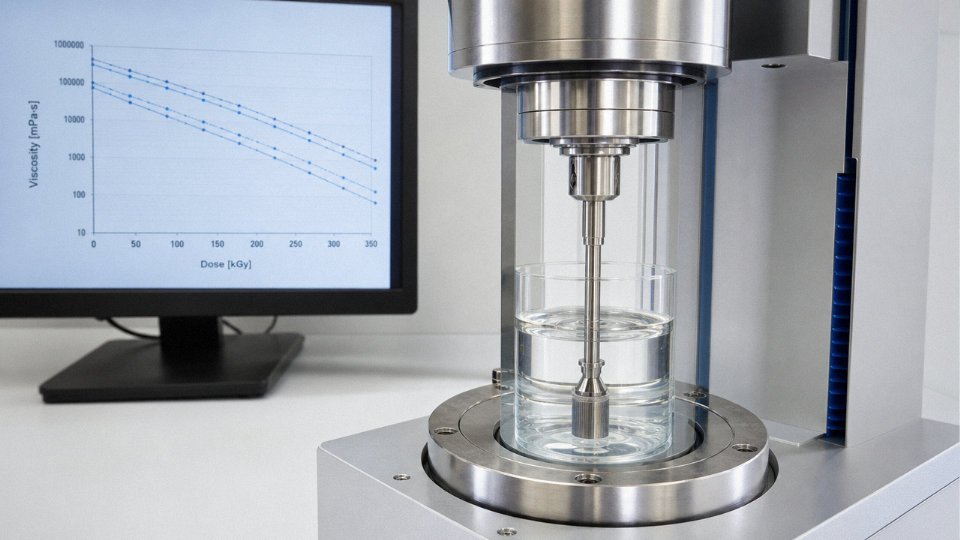
Gamma irradiation at standard sterilization doses (25–50 kGy) can increase PDMS viscosity by 15–40%True
Ionizing radiation induces free-radical cross-linking of polydimethylsiloxane chains; the magnitude depends on dose, dose rate, grade, and film geometry. This is well-documented in pharmaceutical packaging literature and supplier validation reports.
Electron Beam Sterilization
E-beam produces cross-linking through the same free-radical mechanism as gamma, so viscosity shift is a similar concern. The practical difference is penetration depth. E-beam at typical pharmaceutical processing energies (5–10 MeV) has limited depth of penetration through dense materials, which creates real treatment uniformity problems for syringe barrels where the silicone film is on the interior bore surface. Depending on barrel wall thickness and orientation on the conveyor, the dose received at the inner surface can vary enough that one side of the barrel gets a meaningfully different cross-linking dose than the other. Validation needs dosimetric mapping inside the barrel, not just surface dosimetry.
Dry Heat Depyrogenation (250°C, 30 min)
If glass vials or syringe barrels are siliconized before depyrogenation — which some lines do for logistical reasons — partial volatilization of the silicone oil is guaranteed. Low-viscosity fractions volatilize preferentially, which shifts the residual coating upward in average viscosity and downward in total mass. Loss-on-heating data for each viscosity grade at 250°C/30 min, compared against your minimum functional siliconization level, determines whether pre-depyrogenation siliconization is even viable for that grade. Usually it isn’t for anything below about 1,000 cSt. Most validated processes apply silicone after depyrogenation for exactly this reason, but if your line sequence doesn’t allow that, you need the volatilization numbers before you commit to a grade.
Validation Study Design and Regulatory Expectations
A minimum validation matrix should span three silicone oil lots (not three samples from one lot), bracketing cycles at the low and high ends of your qualified sterilization range, and it needs acceptance criteria that are actually tight enough to be meaningful. Viscosity retention within ±10% of the pre-sterilization specification is a reasonable starting point; particle generation limits should reference USP or depending on whether you’re dealing with small-volume or large-volume context. The FDA’s 2011 Process Validation Guidance expects process capability data — Cpk ≥ 1.33 is the standard benchmark for aseptic siliconization processes — which means you need enough cycles to generate a real capability estimate, not just three passing runs.
One thing that’s easy to underestimate: sterilization validation and siliconization process validation are not the same study, but they’re interdependent. Running them sequentially rather than in a coordinated design usually means one invalidates an assumption the other was built on.
Supplier Qualification, Quality System Requirements, and Certificate of Analysis Interpretation
Qualifying a silicone oil supplier deserves the same rigor you’d apply to an API source. In practice, procurement teams sometimes treat excipient suppliers as lower-risk — that’s a mistake that tends to surface during an FDA inspection or, worse, a stability failure.
Minimum Qualification Criteria Before You Approve a Source
At minimum, any pharmaceutical silicone oil supplier needs a current ISO 9001 certification, and ideally ISO 15378 if they’re supplying directly into primary packaging applications. Beyond certification paperwork, you want an active FDA Drug Master File (Type II or IV depending on the material’s role) or an EU Certificate of Suitability issued by the EDQM. Ask for the DMF number and confirm it’s in good standing — the FDA’s online DMF database makes this a five-minute check that’s worth doing before any other conversation.
Demonstrated cGMP compliance for pharmaceutical excipient manufacture matters more than the certificate hanging on the wall. Request the most recent inspection history, including any FDA Form 483 observations and responses. A supplier with one 483 observation and a credible CAPA is often preferable to one with a spotless record you can’t verify. IPEC-Americas publishes a Significant Change Guide specifically for excipients; check whether the supplier has adopted it or an equivalent.
Reading the Certificate of Analysis Without Guessing
Every incoming CoA should report, at minimum: appearance (clear, colorless, free of visible particulates), viscosity at 25°C with a tolerance of ±5% of nominal grade, refractive index, specific gravity, and pH of aqueous extract. The two parameters that get skipped most often are volatile content and heavy metals. Volatile content — measured as loss on heating at 150°C for three hours — should not exceed 0.5%; anything higher suggests incomplete polymerization or solvent carryover, both of which can cause problems in prefilled syringe lubrication and autoclave cycles. Heavy metals, reported as lead equivalents, should come in below 10 ppm.
Platinum group metal residues deserve their own line. If your supplier uses a platinum-catalyzed crosslinking process (common for higher-viscosity grades), insist on explicit PGM testing results — typically below 5 ppm is the accepted threshold, though some biologics programs have pushed specifications tighter than that based on their own compatibility work.
Volatile content above 0.5% in pharmaceutical silicone oil CoA is within acceptable limits.False
USP and EP specifications for pharmaceutical-grade PDMS set maximum volatile content at 0.5% loss on heating at 150°C for 3 hours. Values above this threshold indicate potential polymerization incompleteness or solvent contamination and should trigger rejection or supplier investigation.
Batch Traceability and Change Notification
Each delivered batch must be traceable back to raw material lot numbers — not just the finished-product batch. In practice, ask for a traceability matrix during qualification; if the supplier struggles to produce one for a reference batch, that’s a red flag for their document control systems.
Change notification is where supplier relationships often break down quietly. ICH Q10 and the IPEC-Americas Significant Change Guide both require suppliers to notify customers before implementing manufacturing process changes — not after. Audit the supplier’s change management SOP and verify they have a defined customer notification procedure with documented lead times. A process change that shifts the residual catalyst profile or shifts viscosity distribution even slightly can be enough to require a comparability study on your end.
Multi-Source Strategy and Switching Risk
Running a single approved source is a supply risk. Running two without proper equivalency data is a quality risk. If you’re qualifying a second supplier mid-product lifecycle, a viscosity match alone isn’t sufficient — you’ll need surface tension comparison, an extractables and leachables (E&L) profile comparison, and depending on your regulatory filings, a CBE-30 or prior approval supplement may be required. The equivalency study scope should be agreed with your regulatory affairs team before you initiate the switch, not after samples arrive.
Audit Checklist Essentials
During a site audit, verify cleanroom classification for any filling or packaging operations that contact the product directly, confirm dedicated pharmaceutical-grade production lines with no shared runs between industrial and pharma grades, inspect container integrity testing protocols for outgoing drums, and review environmental monitoring records for at least the prior twelve months. A shared line with industrial PDMS is not automatically disqualifying if there’s a validated cleaning and changeover procedure — but that procedure needs to be documented, monitored, and reviewed.
Re-Test Period and Storage Conditions
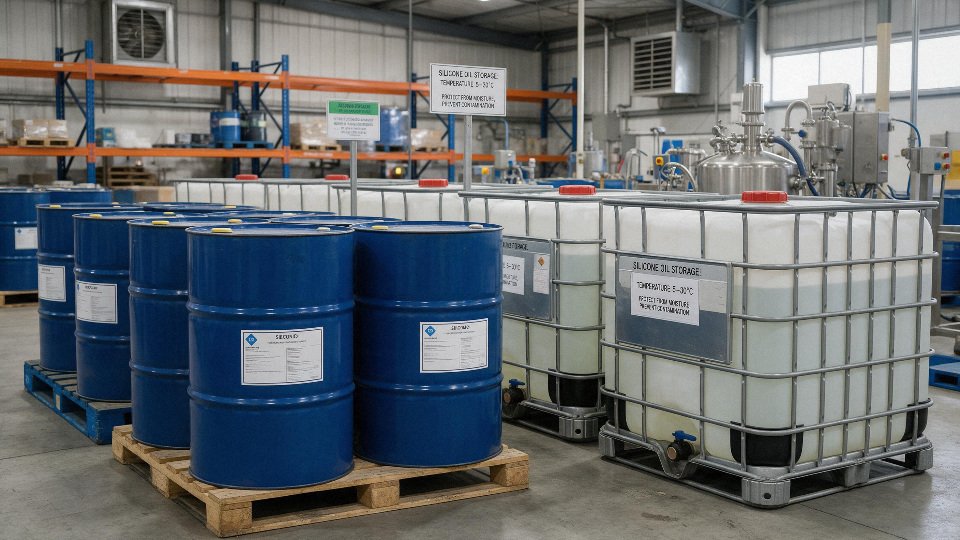
Pharmaceutical silicone oil typically carries a five-year re-test period rather than a defined expiry. Store in sealed containers at 15–30°C, away from oxidizing agents and direct sunlight. Drums that have been opened and improperly resealed can absorb moisture or particulate contamination over time — a mundane storage habit that can cause refractive index drift and visible haze on re-test. Some facilities re-test annually regardless; if your product lifecycle is long, that’s a reasonable precaution and easy to justify in a quality risk assessment.
Siliconization Process Engineering: Application Methods, Film Uniformity, and In-Process Controls
Getting silicone oil selection right is only half the job. How you apply it — and how tightly you control that application — determines whether a beautifully specified PDMS grade actually delivers consistent glide force, acceptable particle counts, and protein stability in the finished product. The gap between a well-chosen oil and a well-executed siliconization process has caused more than a few costly batch failures.
Three Application Methods and When Each Makes Sense
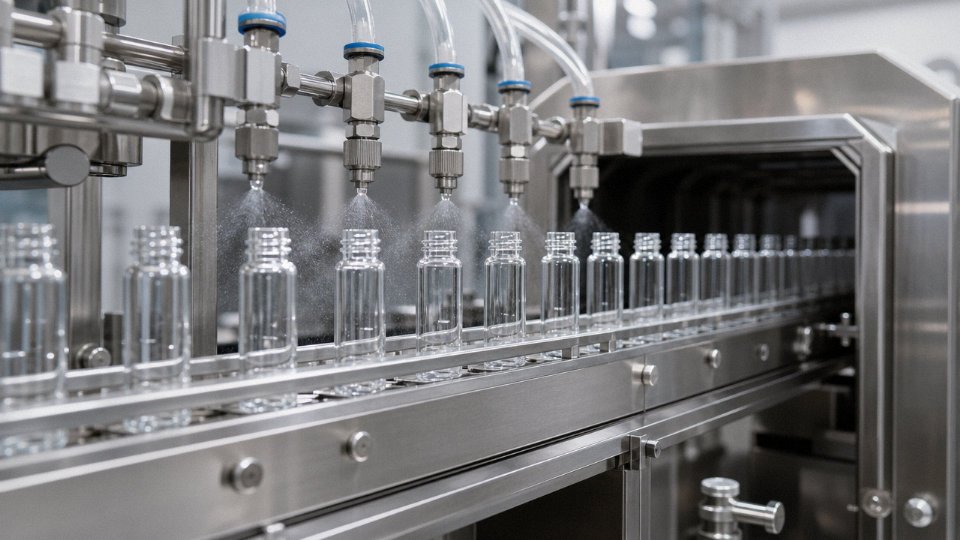
Spray siliconization is the dominant method for syringe barrels, and for good reason: it’s fast, scalable, and amenable to tight in-line control. The silicone oil is diluted in a volatile carrier — isopropanol or methylene chloride at typically 0.5–2% w/v, depending on target film weight and viscosity grade — and atomized onto the barrel interior. Atomization pressure runs 1.5–3.5 bar; go too low and you get uneven droplet distribution, too high and you lose material to overspray and create a variable film at the barrel ends. Nozzle-to-substrate distance matters more than most operators expect: the usual working range is 15–30 mm, and drifting toward the far end of that range in a drafty or temperature-variable environment will show up immediately in gravimetric checks.
Dip coating sees use primarily for rubber stoppers, plungers, and small elastomeric components where spray access is awkward. The component is immersed in a silicone oil bath — often a lower-viscosity grade, 100–1,000 cSt depending on the rubber compound and downstream contact time — then drained and dried. Film weight control is notoriously harder here; bath concentration and withdrawal speed are the main handles, and bath concentration drifts over a production shift unless it’s actively monitored.
Baked-on siliconization is the method that gets specified when biologics compatibility is the overriding concern. The syringe barrel receives a PDMS coating that is then oven-cured at 250–300°C, producing a cross-linked film with significantly lower migration potential than a non-cured spray coat. That migration reduction is what makes it attractive for monoclonal antibody and protein-based drug products. The trade-off is real, though: oven infrastructure is capital-intensive, cycle times extend from seconds to tens of minutes, and the process is less forgiving of barrel dimensional variation.
In-Process Controls That Actually Matter
For 1 mL long-format syringes, the gravimetric target for spray siliconization typically falls between 0.15 and 0.50 mg per barrel — the exact specification depends on the API, plunger material, and break-loose/glide force requirements. Weigh a sample before and after siliconization on a calibrated balance with sufficient resolution (0.01 mg or better); do it at a frequency your SPC plan can actually detect a process shift before a full nest of syringes is lost.
Film uniformity is harder to assess by weight alone. FTIR-ATR mapping across the barrel length will reveal whether the nozzle sweep is leaving thin spots — typically at the ends — that gravimetric averages completely mask. Fluorescence microscopy using a dye-doped silicone oil formulation is used during process development and at scale-up qualification to generate a visual uniformity map. Neither technique is fast enough for 100% in-line use at production speeds, which is why statistical sampling plans and SPC are essential.
Gravimetric silicone oil deposition measurement alone is sufficient to ensure syringe siliconization qualityFalse
Weight measurement confirms average film mass but cannot detect non-uniform distribution along the barrel length. Thin spots at syringe ends, which occur when nozzle dwell time is uneven, are consistently missed by gravimetric checks alone and require FTIR-ATR or fluorescence mapping to detect reliably.
Functional testing per ISO 11040-4 — break-loose force and glide force — closes the loop. These are the CQAs that connect siliconization directly to patient-usable device performance. Syringes that pass gravimetric and uniformity checks but fail glide force testing point to a viscosity-grade mismatch or an incompatibility between the PDMS and the specific rubber plunger compound, not a process control failure.
Sub-visible particle counts in the filled drug product are the downstream consequence that keeps quality teams up at night. Excess silicone oil — meaning both over-application and films that migrate post-fill — contributes to particle burden and, in protein formulations, can seed aggregation. Under-application drives high break-loose forces and potential loss of container closure integrity. The process window is genuinely narrow.
SPC Setup and Scale-Up Realities
Control charts for siliconization weight should carry ±3σ control limits derived from process qualification data, not from spec limits. Cpk targets of 1.33 or higher are typical for this CQA; some biologics-focused facilities target 1.67 given the downstream aggregation risk. A corrective action trigger at a run of seven points trending toward either limit — before actual control limit violation — will catch a drifting nozzle or a bath concentration drop far earlier than waiting for an out-of-control signal.
Lab-scale siliconization, where an engineer hand-loads individual syringes into a fixture and runs a single spray pass, produces data that transfers to production only partially. High-speed rotary lines running 300–600 syringes per minute introduce centrifugal effects on the wet film, changes in carrier solvent evaporation rate driven by the heat generated by the line itself, and spray-pattern interference between adjacent nozzles in multi-nozzle configurations. Viscosity grade and spray concentration must be revalidated at production scale — treating lab qualification data as a starting point, not a finished specification. In practice, you often need to adjust the carrier concentration down by 10–20% relative to lab scale to hit the same film weight target, simply because dwell dynamics change completely at speed.
Cost-Benefit Analysis and Total Cost of Ownership When Specifying Pharmaceutical Silicone Oil
Unit price is the number procurement managers see first and the one that matters least. Pharmaceutical-grade 350 cSt PDMS runs roughly USD 8–18 per kg in bulk drum quantities, depending on supplier tier, order volume, and whether the material carries a full drug master file (DMF). Industrial-grade PDMS of nominally the same viscosity costs USD 3–6 per kg. That 2–4× premium looks significant on a line item. It disappears entirely once you model the full cost picture.
Qualification Costs Are the Real Entry Fee
Before a single syringe ships with a new silicone oil source, someone has to pay for extractables and leachables (E&L) profiling, viscosity confirmation, biocompatibility testing per ISO 10993, and often a container closure integrity study. In practice, that package runs USD 30,000–80,000 per supplier per product — the range depends on whether you’re working with a primary packaging component versus a bulk processing aid, how many extraction conditions the E&L protocol requires, and whether your in-house lab can absorb any of it. Add internal quality engineering labor — a thorough supplier qualification audit and technical review ties up 3–6 weeks of a senior QE’s time, conservatively. Then there’s the regulatory submission side: a Type II DMF review at FDA, or the equivalent notification under EU Annex 1, adds months to the timeline before you can file a change. None of that appears in the unit price.
This is why standardizing on a single approved grade across multiple products is worth the discipline it takes. Manufacturers who maintain one qualified silicone oil across a syringe line, a vial line, and a cartridge product can bridge studies rather than run them in parallel. In my experience, that reduces cumulative qualification spend by 40–60% over a five-year product portfolio, and the change management burden during a CAPA or supplier switch drops proportionally.

Risk-Adjusted Failure Costs Dwarf Everything Else
A syringe recall triggered by silicone-related protein aggregation is a low-probability, high-consequence event — but “low probability” isn’t zero, particularly for high-concentration monoclonal antibodies in prefilled syringes where even a modest increase in sub-visible particles can trigger a clinical signal. Published analyses of biologics recalls put the all-in cost of a single silicone-related recall event at USD 5–20 million, accounting for regulatory response, product destruction, rework or remanufacture, and the harder-to-quantify brand and partnership damage. The range is wide because it depends on distribution depth, whether the issue reaches the market or is caught internally, and whether a formal FDA field action is required.
A single silicone oil-related pharmaceutical recall can cost USD 5–20 million when regulatory, destruction, and rework costs are combinedTrue
This range is consistent with published pharmaceutical recall cost analyses and FDA enforcement data for primary packaging-related biologics failures; the wide range reflects variation in distribution scope and severity classification
A structured TCO model should include at minimum: raw material cost per unit, qualification cost amortized over expected product lifetime units, in-process reject rate delta (a poorly specified or inconsistently applied silicone can shift reject rates by 0.5–2 percentage points at filling), customer complaint rate contribution, and regulatory submission resource cost for any future changes.
Build Versus Buy for Siliconization
If you’re still deciding whether to bring siliconization in-house or run it at a CDMO, the cost crossover in most scenarios sits somewhere above 20 million units per year. Below that volume, CDMO siliconization usually wins on capital and overhead terms even accounting for per-unit conversion fees. Above it, in-house control pays off — both financially and in process agility.
Sustainability Pressure Is Coming
PDMS is not readily biodegradable. That’s not a secret, but it’s becoming a procurement conversation in ways it wasn’t five years ago. EU REACH discussions are actively examining siloxane-containing waste streams, and some large pharma buyers now request supplier sustainability certifications as part of vendor qualification. This doesn’t change the selection logic today, but it’s worth building supplier documentation habits now rather than scrambling when a customer questionnaire arrives.
Frequently Asked Questions About Pharmaceutical Silicone Oil Selection
What is the difference between dimethicone and simethicone, and which one goes into injectable formulations?
Dimethicone is pure polydimethylsiloxane polymer — nothing added. Simethicone is a physical mixture of PDMS with roughly 4–7% colloidal silicon dioxide, which acts as a viscosity modifier and gives it antifoam stability in an oral or gastric environment. The silica component is what disqualifies simethicone from parenteral use outright. Injectables require pharmaceutical-grade dimethicone, full stop. You’ll occasionally see simethicone mislabeled or misquoted in general chemical databases, which causes confusion when newer procurement staff are sourcing from unfamiliar suppliers. If your Certificate of Analysis references “silicon dioxide” as a component, it’s not suitable for syringe barrel siliconization or any injectable application.
Can I use the same 350 cSt grade for both syringe lubrication and bulk antifoam?
This question comes up more often than it should. The short answer is no — and the reason isn’t just viscosity. Antifoam applications in bulk drug manufacture (bioreactor defoaming, for instance) call for a low-viscosity emulsified silicone oil, typically in the 5–20 cSt range, specifically formulated and registered as a formulation excipient with its own regulatory identity and impurity profile. A 350 cSt syringe-grade oil is optimized for film adhesion to borosilicate glass, not for dispersion in aqueous media. Using a syringe-lubrication grade as a process antifoam would likely fail on dispersion efficiency anyway, but more critically, it introduces a material with a different regulatory status into your API process stream — a CMC problem you don’t want in your BLA.
How do I justify a silicone oil supplier change without triggering a full biologic comparability exercise?
You usually can’t avoid one, at least partially. A supplier change requires a comparability package that covers, at minimum: viscosity equivalency testing across the full specification range, side-by-side extractables and leachables profiling, a sub-visible particle study using Micro-Flow Imaging to characterize both protein aggregates and silicone oil droplets, and functional syringe glide force testing under conditions representative of clinical use. The regulatory filing scope — whether it’s a Prior Approval Supplement, a Changes Being Effected supplement, or an annual report entry — depends on jurisdiction and on how different the new supplier’s material actually is. EMA and FDA have published comparability guidance, but in practice, a quality team that tries to underscope this based on “same spec, different supplier” logic often finds itself in a deficiency letter.
A supplier change for silicone oil in a licensed biologic prefilled syringe always requires at minimum a protein aggregation comparability study before implementation.True
Regulatory guidance from FDA (container closure guidance) and EMA (comparability guidelines) and the scientific literature on PDMS-induced protein aggregation all support this requirement. The extent of filing depends on jurisdiction and risk assessment, but the lab study cannot be skipped.
What particle specifications apply to silicone oil in a filled prefilled syringe?
USP governs therapeutic protein injectables specifically; USP covers parenteral products more broadly. Both set limits of no more than 6,000 particles per container at ≥10 µm and no more than 600 at ≥25 µm. The complication with silicone oil is that standard light-obscuration counters can’t distinguish oil droplets from protein aggregates — both scatter light. Polarized light microscopy exploits the optical isotropy difference, and MFI morphology parameters (aspect ratio, circularity) are increasingly used in QC methods to differentiate silicone oil populations from proteinaceous particles. If your method doesn’t make that distinction, your particle data is telling you less than you think.
Is baked-on siliconization always the right choice for biologic drugs?
Not automatically, despite the industry trend. Baked-on (also called cross-linked or heat-cured) silicone film does offer meaningfully lower migration risk compared with spray-on, and for high-concentration mAb products — say, above 100 mg/mL — the reduced free silicone oil in solution is a real advantage. But baked-on adds process validation complexity, requires precise temperature control during curing (typically in the 250–300°C range depending on the equipment and film weight target), and the film weight is harder to adjust post-process. Spray-on applied correctly with well-controlled deposition equipment can be appropriate for less aggregation-prone molecules. The decision should come from a formal protein compatibility risk assessment, not from a default assumption that baked-on is always safer.
What shelf life should I expect from a siliconized syringe component?
Component suppliers typically support 3–5 years based on real-time stability data, with accelerated aging per ASTM F1980 used to bracket extended claims. The critical endpoints are silicone oil film weight retention (verified by gravimetric or extraction methods) and functional glide force — specifically break-loose force and extrusion force — which must stay within the specification window throughout the claimed shelf life. Film that’s migrated, redistributed, or degraded will show up as glide force drift before it shows up as anything visible. In practice, testing intervals of 6 or 12 months are common; some programs also include a functional container closure integrity test at each interval.
Which sections of an NDA or BLA filing must address silicone oil?
Three CTD Module 3 sections are directly relevant. Module 3.2.P.2 (Pharmaceutical Development) should document why the silicone oil grade was selected, including any compatibility or risk assessment data. Module 3.2.P.4 (Excipients) addresses silicone oil when used as a formulation component. Module 3.2.P.7 (Container Closure System) covers the siliconized primary packaging components — this is where film weight ranges, application method, and supplier qualification information live. The supplier’s Drug Master File number is cited by reference in your submission; you don’t reproduce the full DMF content, but you do need a Letter of Authorization from the supplier authorizing FDA to cross-reference it. Missing or incomplete DMF citations are a common and avoidable source of deficiency letters.
Step-by-Step Decision Framework: Selecting the Right Silicone Oil for Your Pharmaceutical Application
Every preceding section in this article addresses a specific dimension — viscosity, regulatory compliance, protein aggregation risk, sterilization compatibility, supplier qualification, process engineering, cost. This section pulls those threads into a sequential workflow. Follow it in order. Skipping steps to save time is exactly how projects end up repeating expensive compatibility studies nine months into development.
Step 1 — Define the Use Case with Precision
Before you open a supplier catalog, you need a clear answer to one question: is this silicone oil functioning as a container closure lubricant, a formulation excipient, or a constituent material of a combination device? The answer determines everything downstream. A syringe barrel lubricant falls under container closure guidance and pharmacopeial extractables limits. A silicone oil used as a direct formulation component — some ophthalmic or topical preparations — requires full excipient qualification under ICH Q8 and potentially a separate regulatory filing. A device material (think catheter lubrication or implantable pump components) triggers ISO 10993 biocompatibility testing entirely distinct from the drug pathway. Getting this wrong at the start means redoing regulatory strategy later, usually under time pressure.
Step 2 — Characterize the Drug Product Risk Profile
Once the use case is defined, characterize how sensitive the API is to silicone oil contact. For small molecules with robust stability profiles, the risk is largely mechanical — glide force, leachables, particulate contamination. For high-concentration monoclonal antibodies, GLP-1 receptor agonists, or any protein biologic above roughly 5 mg/mL, silicone oil droplets become a genuine aggregation nucleation concern, and your specification tightness scales accordingly. Patient population matters too: a single-dose pediatric injectable demands more conservative limits than an adult topical. Shelf life compounds everything — a 24-month prefilled syringe stores at refrigerated conditions for two years, and silicone oil migration or viscosity drift over that period must be characterized, not assumed stable.
Step 3 — Generate a Candidate Grade Shortlist
Use the viscosity benchmarks and pharmacopeial compliance criteria covered earlier to narrow the field to two or three candidates. Typically this means confirming USP, EP, or JP compliance depending on your target markets, checking whether the supplier holds an active DMF (or its regional equivalent) that covers your intended application, and verifying the viscosity grade fits your application’s functional window — which for prefilled syringes usually falls in the 1,000–12,500 cSt range, though the exact target depends on barrel geometry, plunger stopper durometer, and glide force specification. Don’t evaluate six candidates. Two or three, assessed rigorously, is a better use of development resources.
Step 4 — Execute Compatibility and Performance Studies
Define your pass/fail criteria before you run a single test. This sounds obvious; it is routinely skipped. Studies to run in parallel where possible: protein aggregation risk assessment using sub-visible particle analysis (light obscuration per USP and MFI for morphological characterization), extractables and leachables testing per BPOG protocols, sterilization compatibility confirmation if the container will be autoclaved or gamma-irradiated, and functional performance testing per ISO 11040-4 covering break-loose and glide force across the intended temperature range and shelf-life timepoints. Statistical acceptance criteria — sample sizes, confidence intervals, action limits — get documented before testing, not reverse-engineered from results.
Step 5 — Qualify the Supplier and Manufacturing Process
Run the supplier audit against the checklist detailed in the supplier qualification section. Obtain the CoA for each lot and verify the key parameters: viscosity at 25°C, refractive index, specific gravity, and absence of reactive species. Get the DMF reference letter in writing. On the manufacturing side, validate your siliconization process parameters — spray nozzle pressure, conveyor speed, bake temperature and dwell time if using baked-on silicone — and generate process capability data (Cpk targets typically ≥ 1.33 for critical parameters) before locking process conditions.
Step 6 — Document for Regulatory Submission
The pharmaceutical development report section covering silicone oil must address grade selection rationale, compatibility study outcomes, and process validation summary in terms ICH Q8 reviewers expect. For combination products, coordinate with your device constituent team — FDA’s Office of Combination Products may require coordinated submissions. Don’t treat this section as a formality assembled at the end of development. Build it incrementally as each study closes.
Step 7 — Establish Lifecycle Management
Post-approval, silicone oil performance needs to be monitored, not assumed. Set annual product review criteria that include trending of glide force data, sub-visible particle counts, and any field complaints linked to device performance. Define your established conditions under ICH Q12 so that if a supplier changes a manufacturing parameter or you need to qualify a secondary source, you know in advance whether that triggers a prior approval supplement or can be handled as an annual reportable change. Build the post-approval change management plan before approval, not after your primary supplier sends you a change notification letter on a Friday afternoon.
Silicone oil grade selection for prefilled syringes is a purely engineering decision with no regulatory consequence if USP-grade material is used.False
Grade compliance is necessary but not sufficient. Route of administration, API sensitivity, container geometry, sterilization method, and shelf life all affect what additional characterization, extractables testing, and process validation are required beyond basic pharmacopeial compliance. Regulatory agencies expect data justifying the specific grade and process, not just a certificate of compliance.